For future specialists in international economic relations, understanding contemporary global trends, in particular the greening of markets and the implementation of circular models, is an essential component of professional competence. The modern global economy is increasingly oriented toward sustainability; therefore, direct familiarity with European environmental initiatives helps young people gain a deeper understanding of the relationship between economic development and environmental preservation.
Recognising these contemporary demands, Poltava Polytechnic consistently facilitates the integration of its students into the international educational space through non-formal learning programs. This enables future generations of specialists not only to adopt the advanced practices of their European colleagues but also to develop soft skills and adapt acquired knowledge to the future recovery of Ukraine.
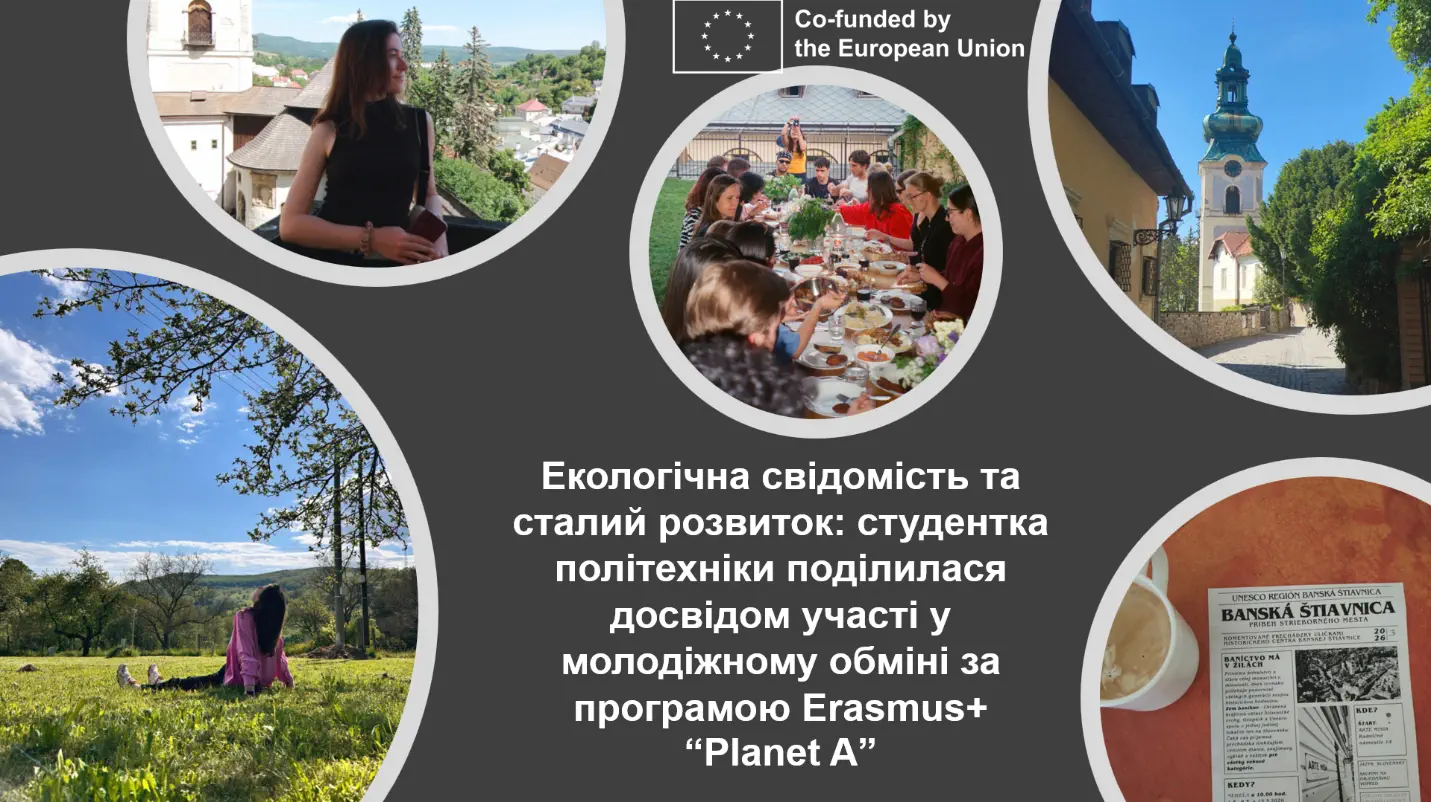
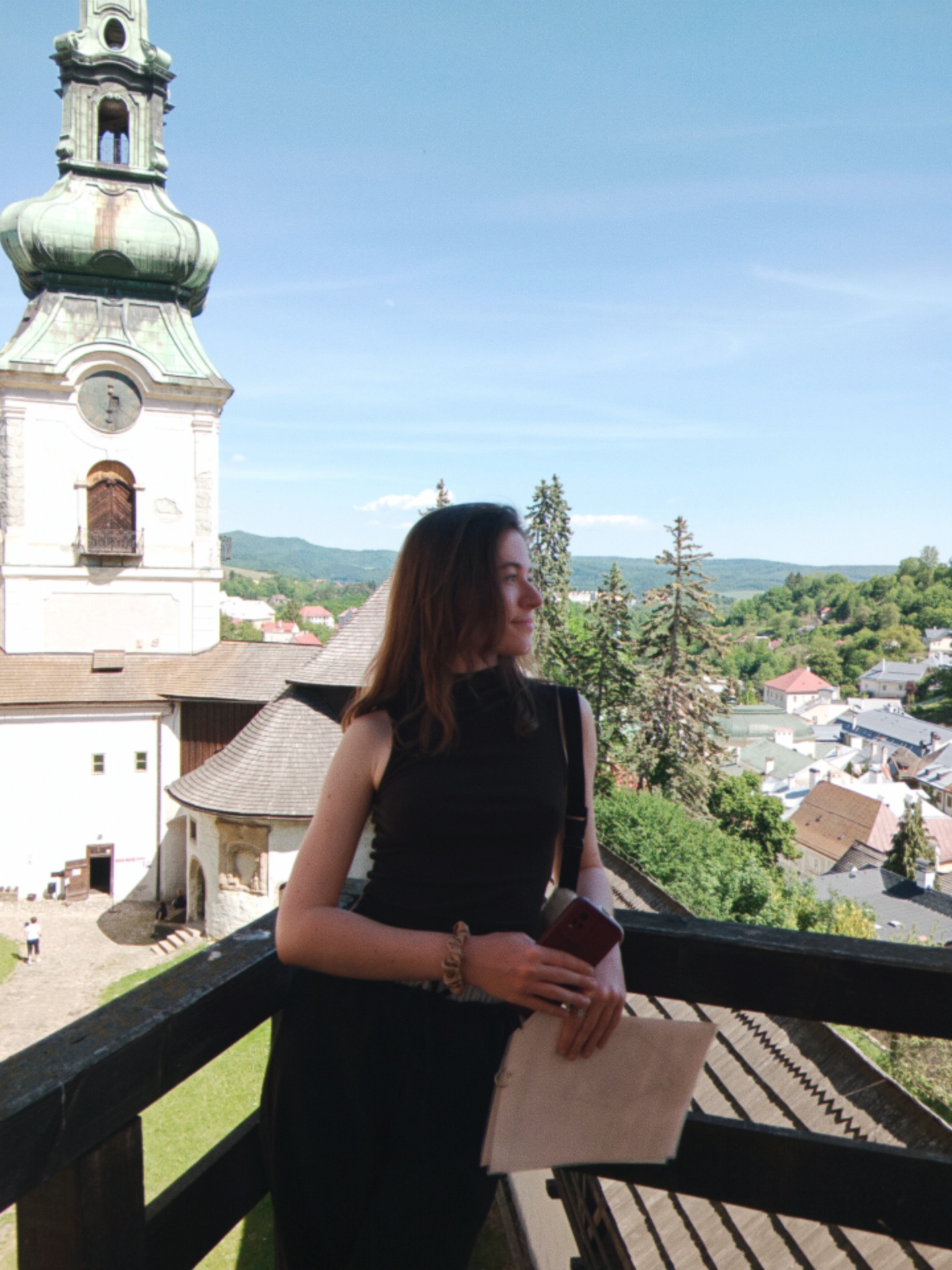
Thus, Vladyslava Herashchenko, a student of group 401-FM at the National University “Yuri Kondratyuk Poltava Polytechnic”, recently participated in the Erasmus+ “Planet A” youth exchange program held in Banská Štiavnica (Slovakia) from May 15 to May 25, 2026.
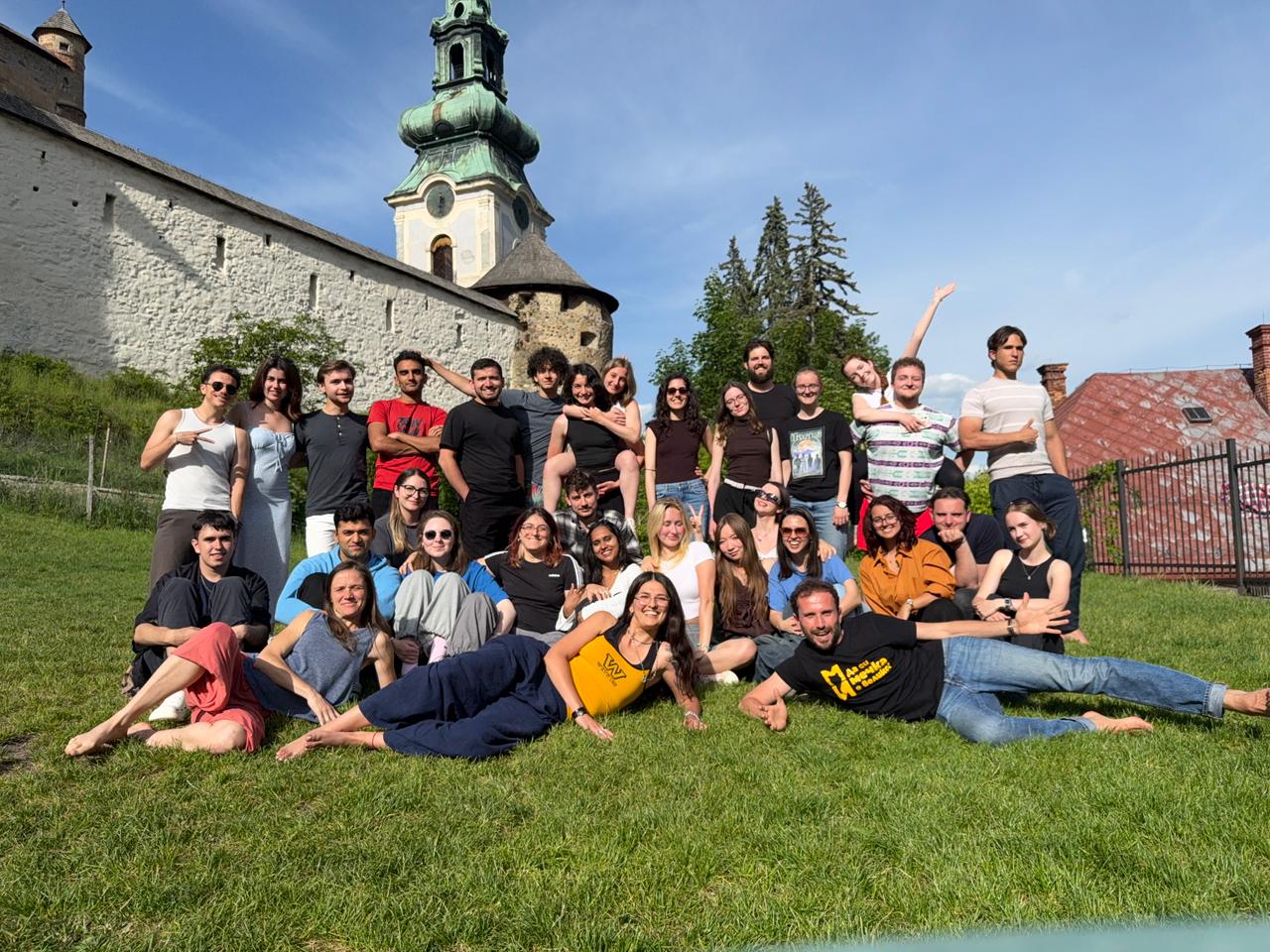
At the core of the project’s concept are issues of sustainable development, environmental responsibility, climate change, and the direct role of youth in addressing contemporary global challenges. Supported and co-funded by the European Union, this initiative was implemented by the Slovak organisation “Nature Life Organisation” in partnership with the Ukrainian non-governmental organisation “Forward for Future”. The project served as a platform for dialogue and experience sharing among active youth from six countries: Ukraine, Slovakia, Poland, Italy, Greece, and Bulgaria.
Over the course of nine days, participants aged 18 to 30 explored the principles of the circular economy and the concept of a sustainable lifestyle in detail, developing environmental awareness and emotional resilience. Thanks to the opportunities provided by the Erasmus+ program, participation in the project was fully funded by the organisers, covering accommodation, meals, and travel expenses for participants.
“Youth from six countries, an open dialogue on challenges that directly affect each of us, an introduction to vegetarianism, staying in a historic hostel whose owner guides tours of his own mines, Slovak mountains, and an ancient UNESCO town in the crater of an extinct volcano… All of this was wonderfully combined in the “Planet A” youth exchange,” – Vladyslava shares her impressions.
“From the very first days, this project was perceived as something much larger than a standard educational program. It became a special space where environmental topics, ideas of sustainable development, intercultural communication, and sincere human interactions intertwined into a single, cohesive, lived experience.
First of all, I am deeply grateful to the organisers and facilitators, who were truly motivated, deeply engaged in the subject, and genuinely sought not to “teach us through rules” but to captivate and immerse us through experience and genuine interest. And this was felt every single day.
The main organiser and, at the same time, the head chef of the project was Michal Filípek – someone who went from being a youth exchange participant to a plant-based chef, an advocate of a low-waste lifestyle, and a true enthusiast of sustainable living. It was he who showed us that a plant-based diet is not a limitation, but rather the opposite: variety, satiety, and care for oneself and the planet. An interesting insight regarding vegetarianism was that no one advocated that everyone become vegetarians; instead, they inspired us to reconsider our eating habits and how to change them for the better, both for ourselves and for the environment.
Our facilitators were also Atanas Genkov, Ivana Bartová, and Simona Nikolaeva – each bringing their own energy, experience, and style of interaction to the program. Thanks to them, the discussions were informal, lively, and of the kind that truly encourage thinking, reflecting, and sharing.
The program was highly intensive and initially seemed like quite a challenge. The new diet format, collective responsibility for household duties, cooking shifts, and helping with space organisation quickly fostered a sense of community. Not just a group of people, but a community where everyone matters and the comfort of all depends on each individual's contribution.
A special ritual was the morning circle, where we shared our state of mind, thoughts, or what we wanted to bring to the group. This created a very special atmosphere of trust and openness. We even held one of these circles in the mountains during an ascent, and this moment remained one of the strongest memories of the entire project.
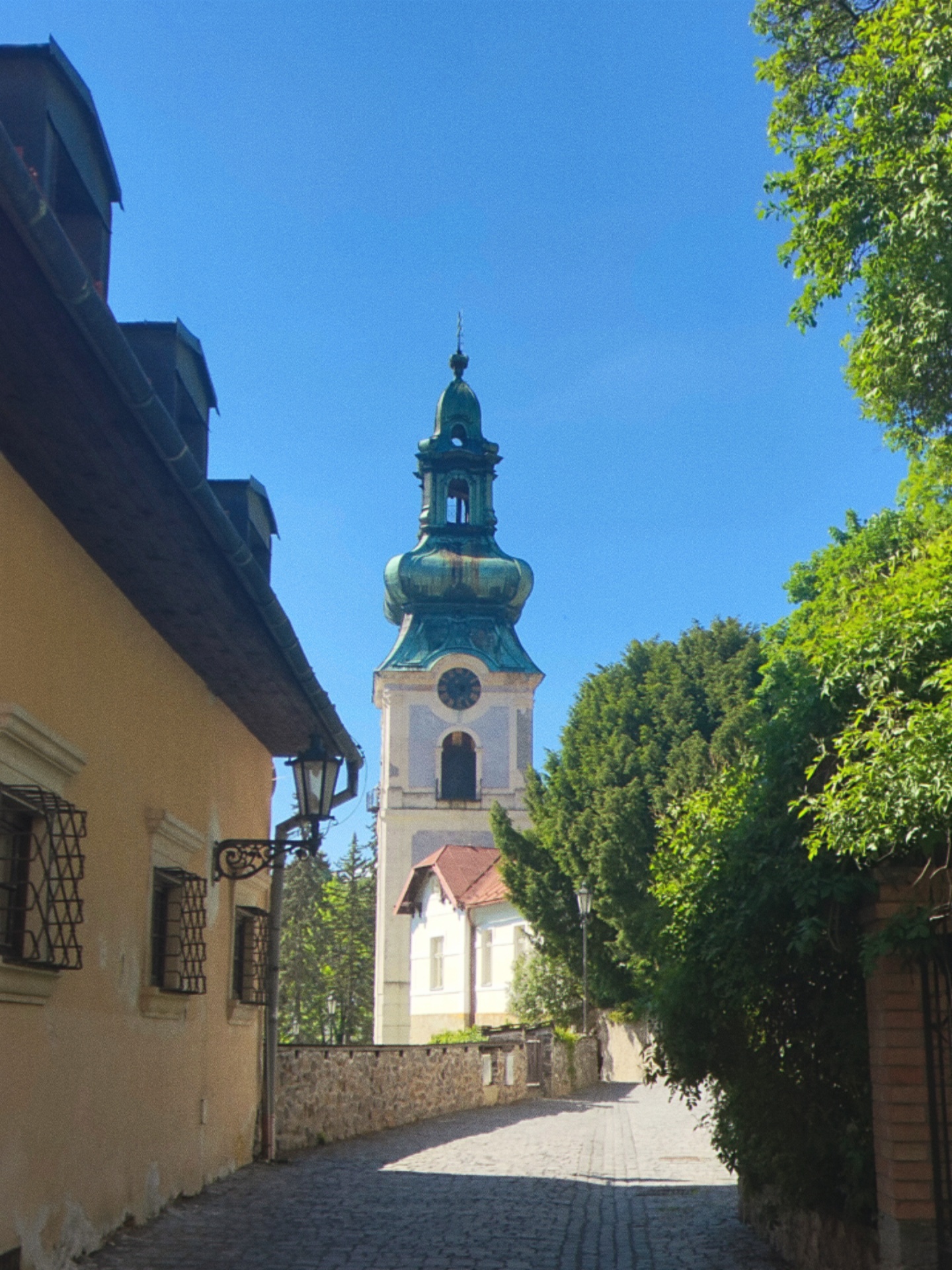
We stayed at the Scout House – a hostel with a history that is already part of the urban cultural landscape. The hostel itself is located near the Old Castle, and most of the sessions took place right in the garden on its territory – amidst nature, history, and silence, which set the tone for learning and reflection.
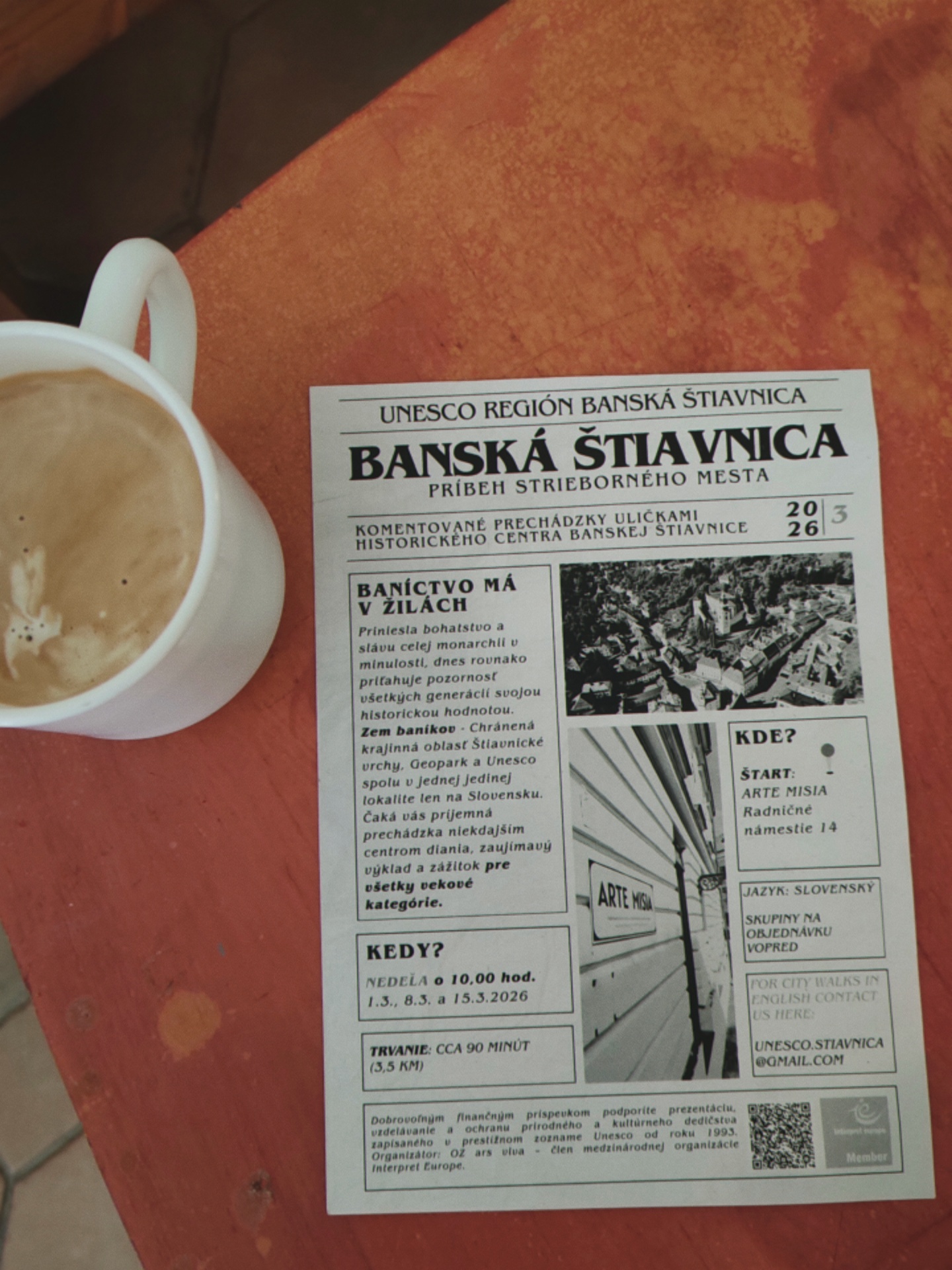
The town of Banská Štiavnica itself, located in the very heart of Slovakia, has an absolutely unique character. Before this trip, I had never heard of it and would hardly have visited it as an ordinary tourist, but now I am convinced that it deserves special attention. It is a unique UNESCO World Heritage site located right in the crater of an ancient volcano. Its elegant architecture, designed in its time by Italian craftsmen, gives the town’s streets the special charm of Italian mountain towns, and our daily walks through them became a separate source of inspiration.
One of the most striking locations was the Calvary – a complex of 22 sacred structures (19 chapels and 3 churches) situated on a hill with an incredible panoramic view of the town. After visiting this incredible place, several of the most resilient participants and I organised morning jogs here, which helped us make the most of our time in this town.
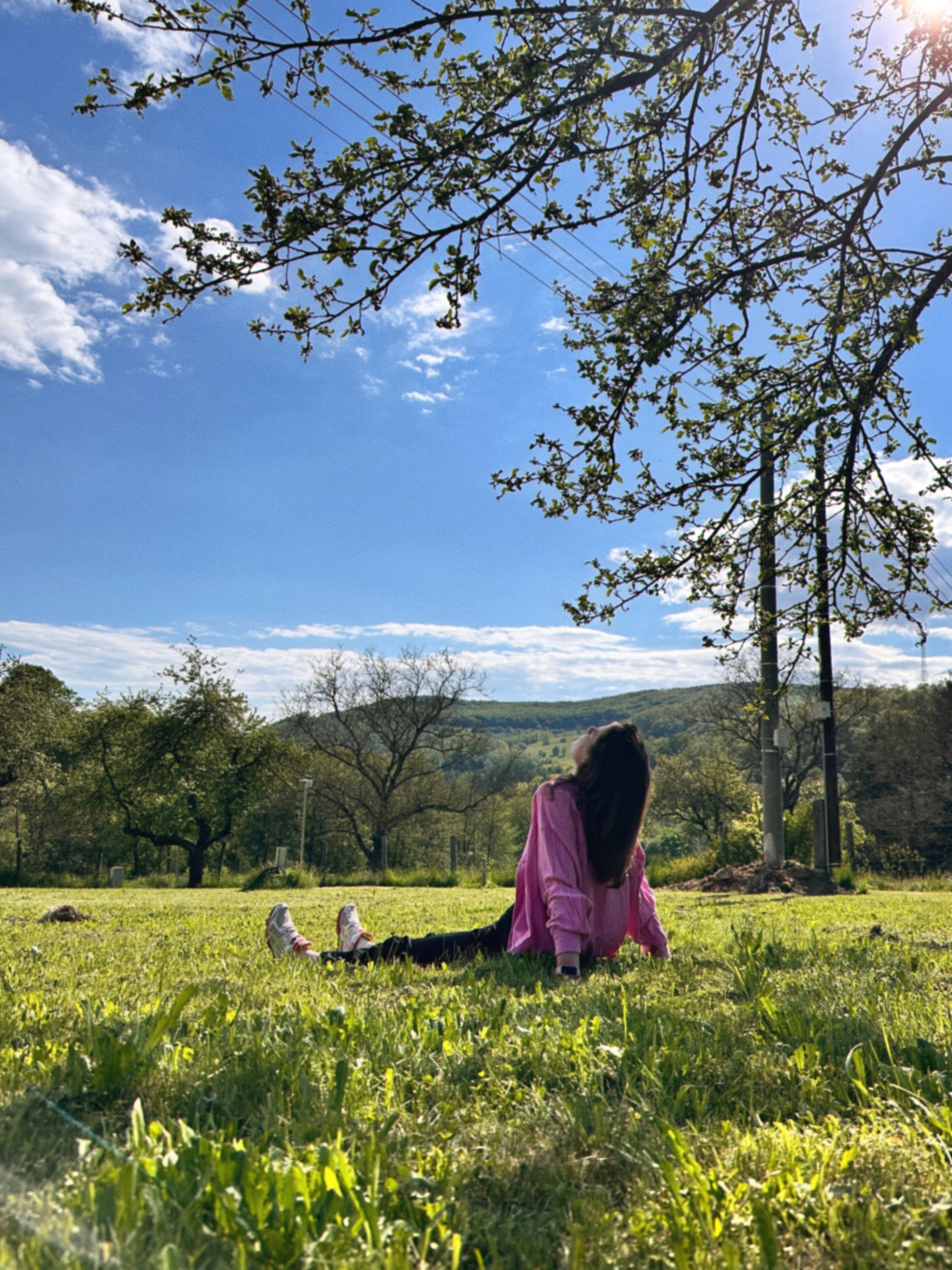
A distinct challenge and at the same time a pleasure was the hike to the region’s highest peak – Paradajs (938 m). Fatigue there literally dissolved into the vistas that opened up from the summit. I wanted to capture every moment in my memory and in photographs, as the views were truly enchanting.
Another very powerful experience was visiting the eco-village of Zaježová – a place where people live in harmony with nature, developing permaculture, alternative education, and a sustainable lifestyle. There, one can especially feel what an economy and entrepreneurship that support rather than destroy nature can look like. For me, as a student of international economics, this was a very valuable observation – to see business and tourism that exist through cooperation with the environment rather than its exploitation.
The program was structured around a continuous exchange of experience. We spoke extensively about how local actions can affect global processes, how responsibility is formed, and why sustainable development is not a theory but a daily practice.
Special mention should go to the simulation game, in which we acted as different countries and international institutions, attempting to resolve environmental challenges. This clearly illustrated the complexity of negotiations and how difficult it is to find common solutions at the global level.
One of the ideas that left a particularly strong impression on me was the following: instead of “Save the Planet”, it is more important to say “Support the Planet”, because it is not about heroic “saving”, but about daily responsibility and supporting what already exists. It is important to remember and realise that we do not have a Planet B.
The “Planet A” youth exchange left behind a sense of deep engagement, inspiration, and many internal changes. It was an experience that combined education, people, nature, and very honest conversations about the world and ourselves”, – says Vladyslava.
The experience gained during the youth exchange in Slovakia became for Vladyslava not only a source of relevant ecological and economic knowledge but also an important stage of personal growth. The insights gained, alongside practical skills in teamwork and project thinking, will undoubtedly prove useful during her studies at the university and in her future professional activities in international relations. Such an active stance by the student clearly illustrates how modern youth strive to expand their horizons and prepare to meet today’s challenges.
Previously, Vladyslava Herashchenko participated in an Erasmus+ youth exchange on developing leadership skills and in the “Feminist Academy for Ukraine” project. She also took part in the EU Study Days programme in Lviv.
As a reminder, Poltava Polytechnic academic staff can participate in academic mobility programmes and internships. At the same time, students can study abroad under the Erasmus+ ICM programme and other grant programmes for a semester or an entire academic year at leading universities in Austria, Greenland, Denmark, Estonia, Spain, Lithuania, Latvia, Norway, the Netherlands, Germany, Poland, Portugal, Romania, Slovakia, Finland, and the Czech Republic.
For more detailed information regarding current internship, teaching, and academic mobility programmes abroad, please get in touch with the International Relations Department (room 213-C, interoffice@nupp.edu.ua).