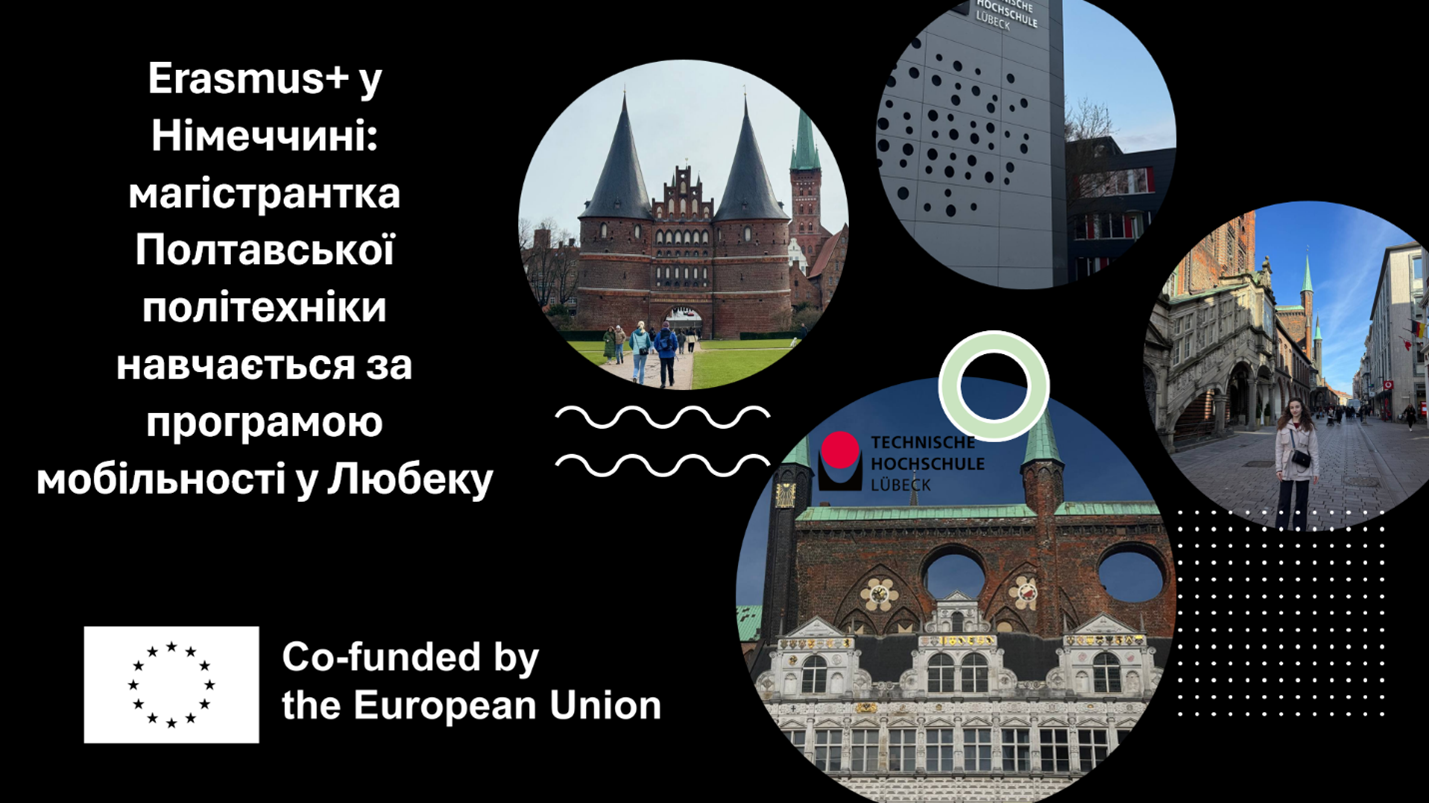
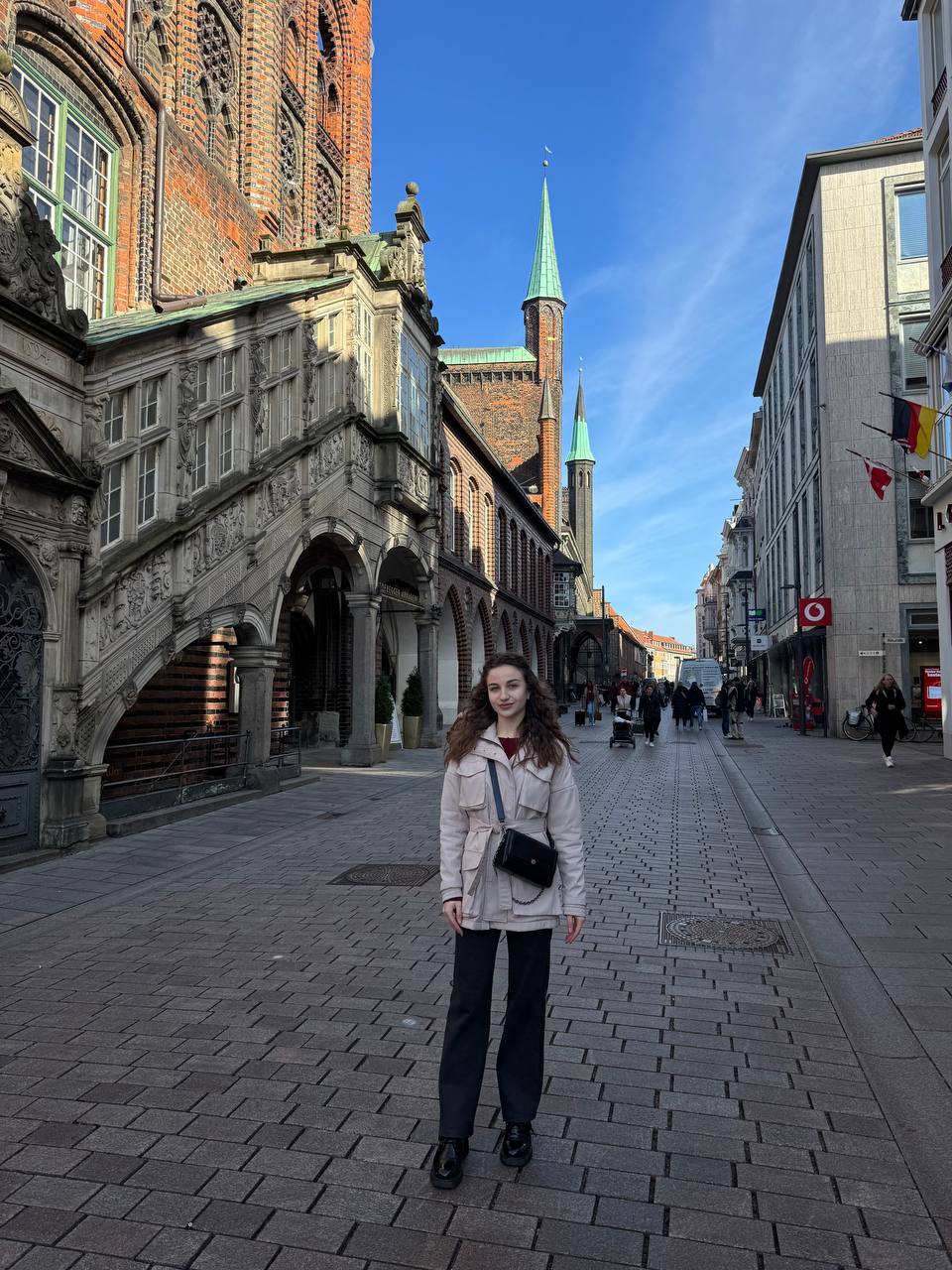
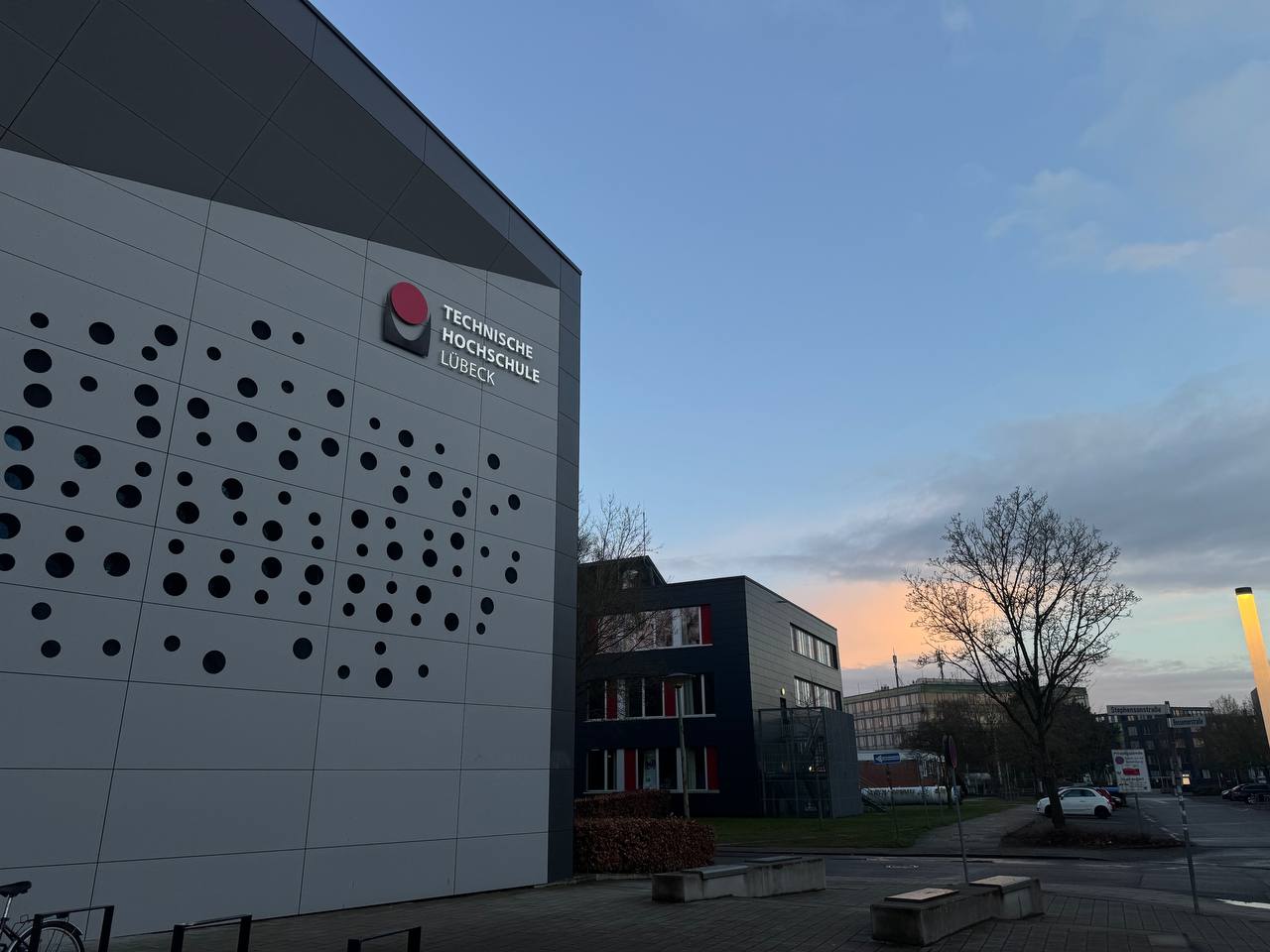
National University “Yuri Kondratyuk Poltava Polytechnic” continues to expand its horizons in international cooperation. Anastasiia Molodcha, a Master’s student in Petroleum and Gas Geology (group 501-NZ), is currently undertaking a credit academic mobility program under Erasmus+ at one of Germany’s leading technical institutions – Technische Hochschule Lübeck (Lübeck University of Applied Sciences).
The summer semester, running from March to July 2026, is dedicated to an in-depth study of the “Water Engineering” Master’s program. The studies take place at the Faculty of Architecture and Civil Engineering under the supervision of the renowned expert, Professor Christoph Külls.
Anastasiia shares her first impressions of the mobility program: “My first steps at Technische Hochschule Lübeck began with the incredibly dynamic “Welcome Weeks”. This was a period of deep immersion into the university’s academic ecosystem: from tours of futuristic campuses and innovative laboratories to mastering the internal digital environment. German higher education is impressive in its precision: here, digital discipline underpins everything. For instance, registration for exams or final projects takes place on a specialised portal, and this step is a mandatory requirement for admission to the defence. Even communication with professors has its own etiquette: to schedule a personal meeting, one must book a time slot through an electronic system, fostering high self-organisation and respect for others’ resources.
In parallel with the studies, there was a vibrant social life. Excursions through cosy Lübeck and majestic Hamburg, board game nights, and bowling served as the perfect backdrop for international networking. The intercultural workshop was particularly valuable – by discussing our differences, we discovered shared values that united us and helped establish sincere connections with students from all over the world.
A separate chapter of my memories is life in the dormitory, where discoveries are made every day. Although my student residence is located slightly away from the main campus, it is still bustling with energy and drive. However, the heart of our community has become the shared kitchen: it is here that my Erasmus+ friends and I turned ordinary evenings into real gastronomic journeys. We exchange recipes for national dishes, discover unknown flavours, and hold fierce board game tournaments. Such moments help one best understand that true friendship knows no borders.
The real centre of gravity for youth on the campus is “Dorfkrug” – a space that, in its philosophy and energy, closely resembles our StudHub. This is a place where life happens 24/7. Every week, new events take place here: from atmospheric movie screenings and upbeat dance classes to large-scale themed parties. Dorfkrug has become the ideal platform for informal communication, where every event is an opportunity to reset and recharge with inspiration for our studies.
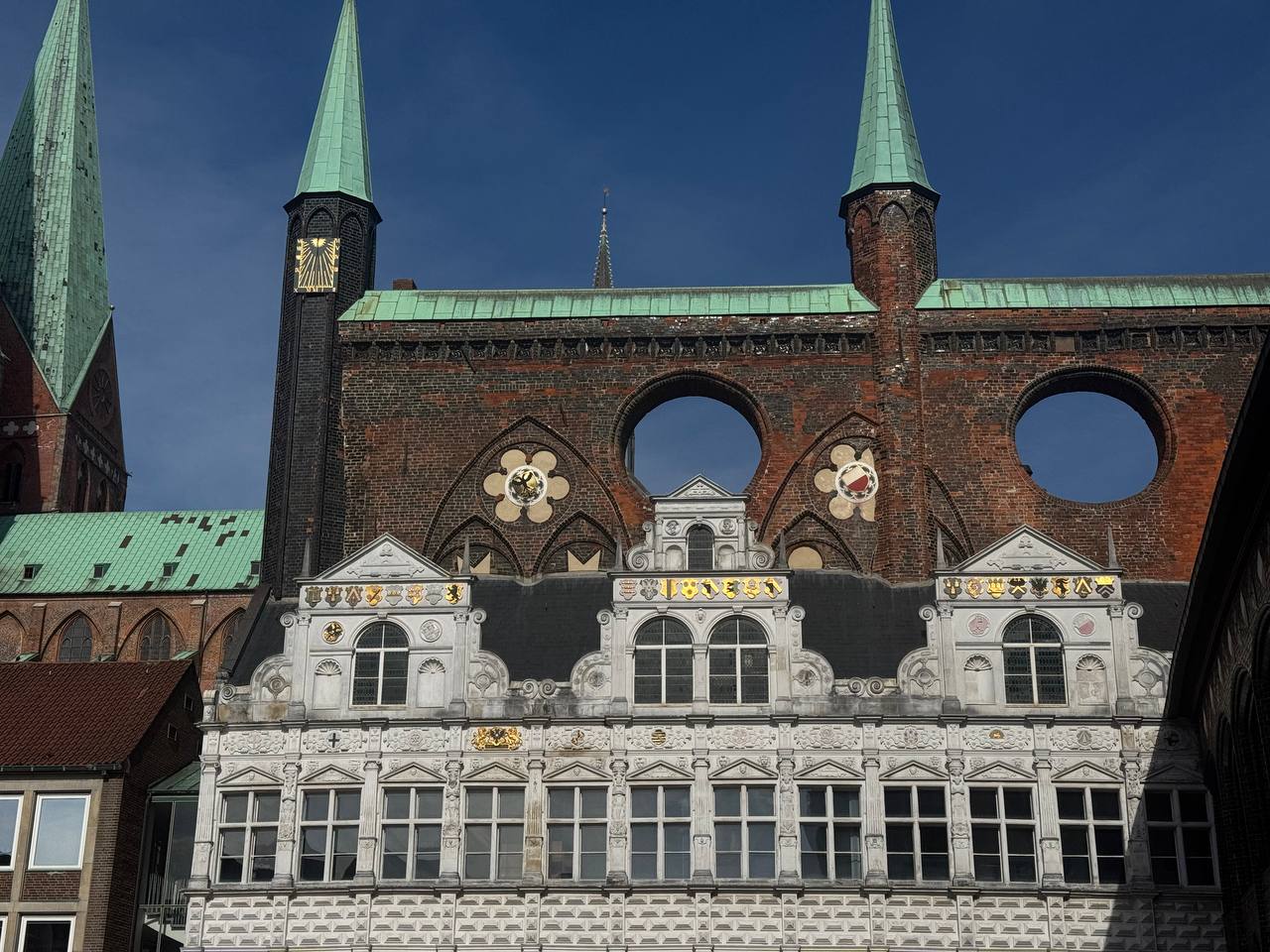
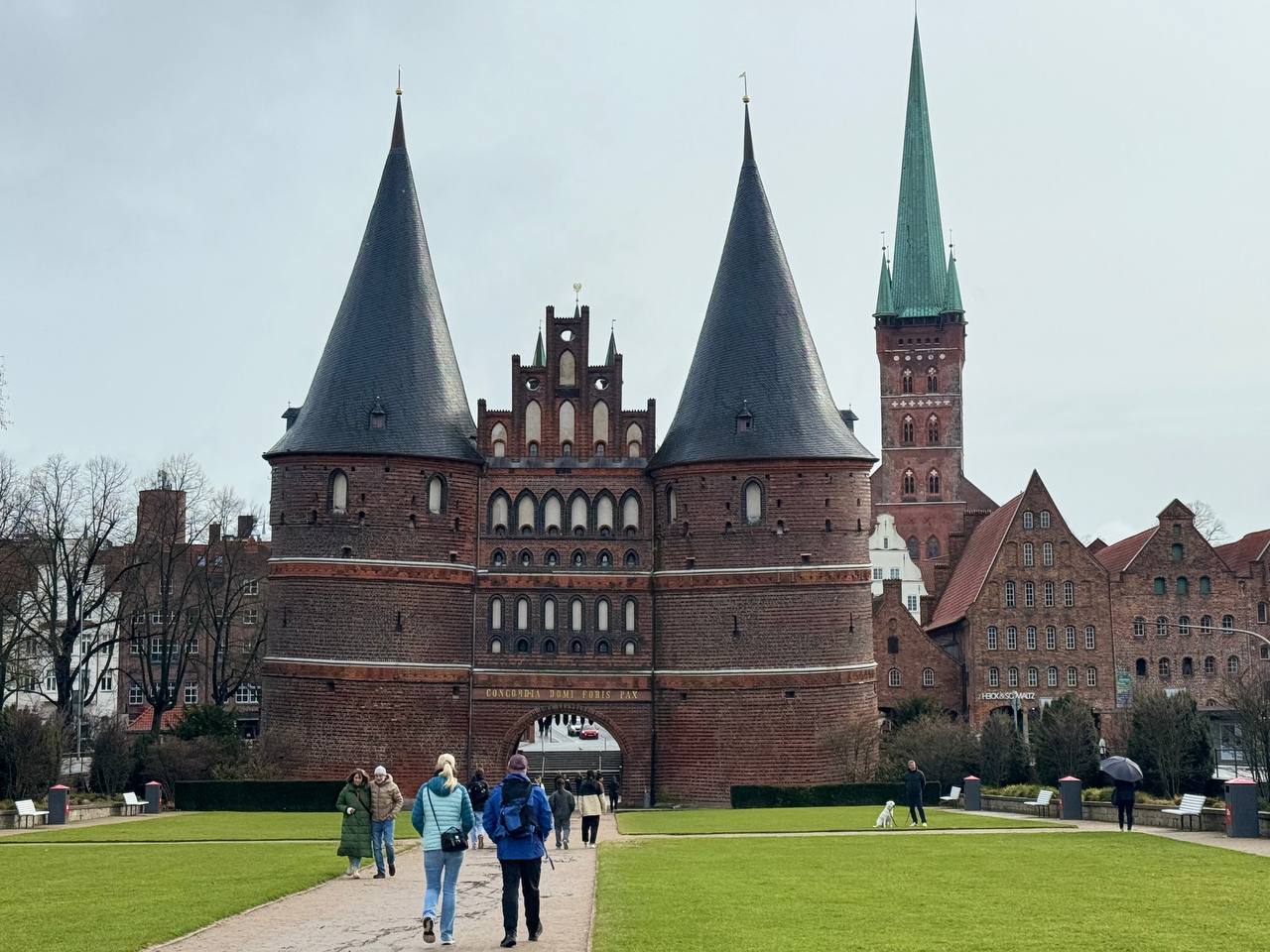
Lübeck is a city where history comes alive at every step. Its old town has preserved its authentic architecture over the centuries, evoking the times when Lübeck was the grand “capital” of the Hanseatic League. The Old Town island, carefully framed by the waters of the Trave River, creates a unique atmosphere of comfort and tranquillity. Just a 30-minute drive away is the picturesque seaside town of Travemünde – whose name literally means “the mouth of the Trave”. It was there, where the river meets the Baltic Sea, that we spent part of our introductory weeks. It was an ideal time: energetic beach volleyball and an introduction to the local gastronomic symbol – the famous sandwiches with freshly caught fish.
The semester’s curriculum covers strategic disciplines that currently define the vector of global engineering and rational water resource management. At the centre of my academic focus is mastering advanced technologies, including Geographic Information Systems (GIS), urban sustainability concepts, hydrological engineering, and complex computer modelling methods.
The current semester’s study plan is a harmonious combination of profound theory and applied engineering. Each of the five disciplines reveals new facets of the profession and requires maximum engagement:
1. “Hydrological Engineering”. The course is based on the principles of teamwork and critical analysis. The initial stage involves working with specialist literature on the Moodle platform. The semester will culminate in a comprehensive group project that integrates hydrological design solutions and programming languages to solve engineering problems.
2. “Geographic Information Systems (QGIS)”. Mastery of this powerful tool is achieved through practical application: we are already working on flood modelling and flood risk assessment in urban areas, generating accurate 2D cartographic images showing precipitation levels and analysing water flow direction. The combination of this knowledge will form the basis of our final examination project.
3. “Simulation and Modelling II”. This discipline requires a solid background in hydrodynamics and mathematics. We are learning to predict water-body motion and flows in 1D, 2D, and 3D. An interesting practical case is the analysis of specific rivers: each group develops a strategy to improve the water body’s ecosystem and measures to prevent floods. Such public presentations of findings allow us to master engineering forecasting methods quickly.
4. “Sustainable Urban Development”. This subject is taught in an intensive study-block format. In June, we anticipate full immersion into developing engineering solutions for the town of Malia in Africa. The uniqueness of the course lies in the role-reversal: first, we work in highly specialised groups (energy, water, waste), and later we form interdisciplinary teams in which everyone becomes an accountable expert in their field. This is an ideal simulation of the real-world work of international consulting agencies.
5. “German Language (Level A 1.2)”. Language training was highly intensive from the very first days: three hours of classes daily during “Welcome Weeks”. The learning is based on a blended learning model: working with classical textbooks is combined with the digital capabilities of Moodle and Quizlet. Great emphasis is placed on live communication, practising grammatical structures, and listening comprehension, which helps one feel confident in a German-speaking environment, – says Anastasiia.
Today, international cooperation is integral to the development strategy of the National University “Yuri Kondratyuk Poltava Polytechnic”. Student participation in Erasmus+ programs allows for the integration of Ukrainian education into the global scientific space. The experience Anastasiia is gaining in Lübeck is an investment in the future: the development of critical thinking, adaptability to change, and the ability to work in multidisciplinary teams are exactly the soft skills that define a leader in the modern world. Polytechnic continues to support the bold aspirations of young people and create conditions for the realisation of their intellectual potential without borders!
“International academic mobility is not just about studying abroad; it is a complete transformation of one’s worldview. Today, our students are becoming ambassadors for Ukrainian education around the world, demonstrating high intellectual potential and the ability to quickly master the most complex engineering technologies. Every success story, such as Anastasia’s, confirms that Poltava Polytechnic is moving in the right direction, integrating into the European research area. We are creating the conditions so that the future elite of our country has access to the best global practices today” – notes the university’s International Relations Coordinator Anna Pavelieva, PhD in Philology, Associate Professor of the Department of German Philology and Translation.
The real embodiment of this strategy is the long-standing and productive partnership between Poltava Polytechnic and Lübeck University of Applied Sciences. For instance, in the summer of 2024, Anna Kvasnevska, a third-year student of the Education and Research Institute of Architecture, Construction, and Land Management, participated in the summer school on urban planning, design, urbanism, and architecture “CHANGING CITIES LAB,” held at Lübeck University of Applied Sciences. Furthermore, in the spring semester of the 2024/2025 academic year, student Anton Filonenko studied there as part of the Erasmus+ ICM program.
As a reminder, faculty members of Poltava Polytechnic are eligible to participate in academic mobility and internship programs. Students can study abroad through Erasmus+ credit academic mobility grant programs for a semester or a full academic year at leading universities in Austria, Greenland, Denmark, Estonia, Finland, Germany, Lithuania, Latvia, Norway, the Netherlands, Poland, Portugal, Romania, Slovakia, Spain, and the Czech Republic.
For more detailed information on current internship, teaching, and academic mobility programs abroad, please get in touch with the International Relations Office (Room 213-C, interoffice@nupp.edu.ua).