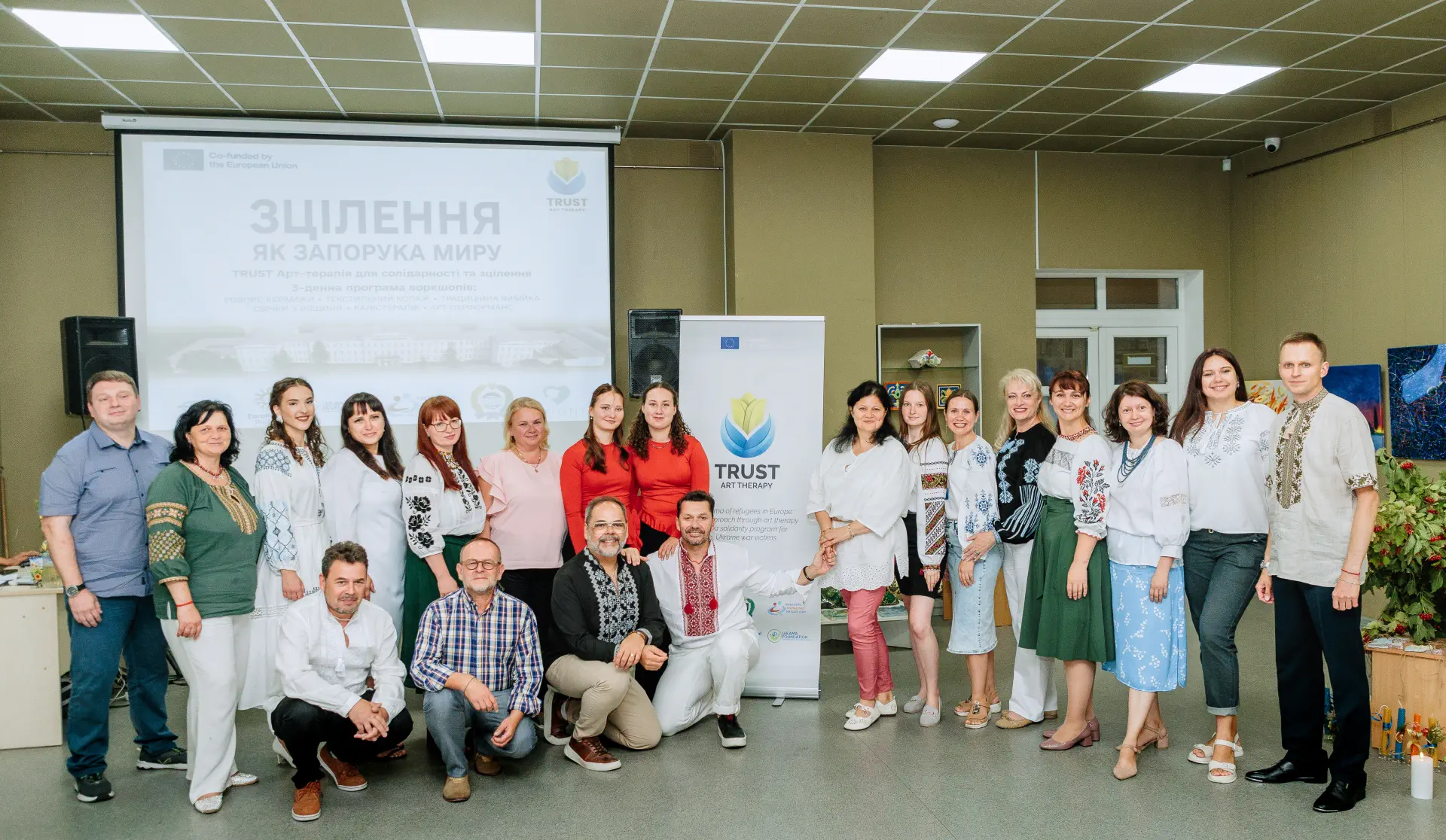
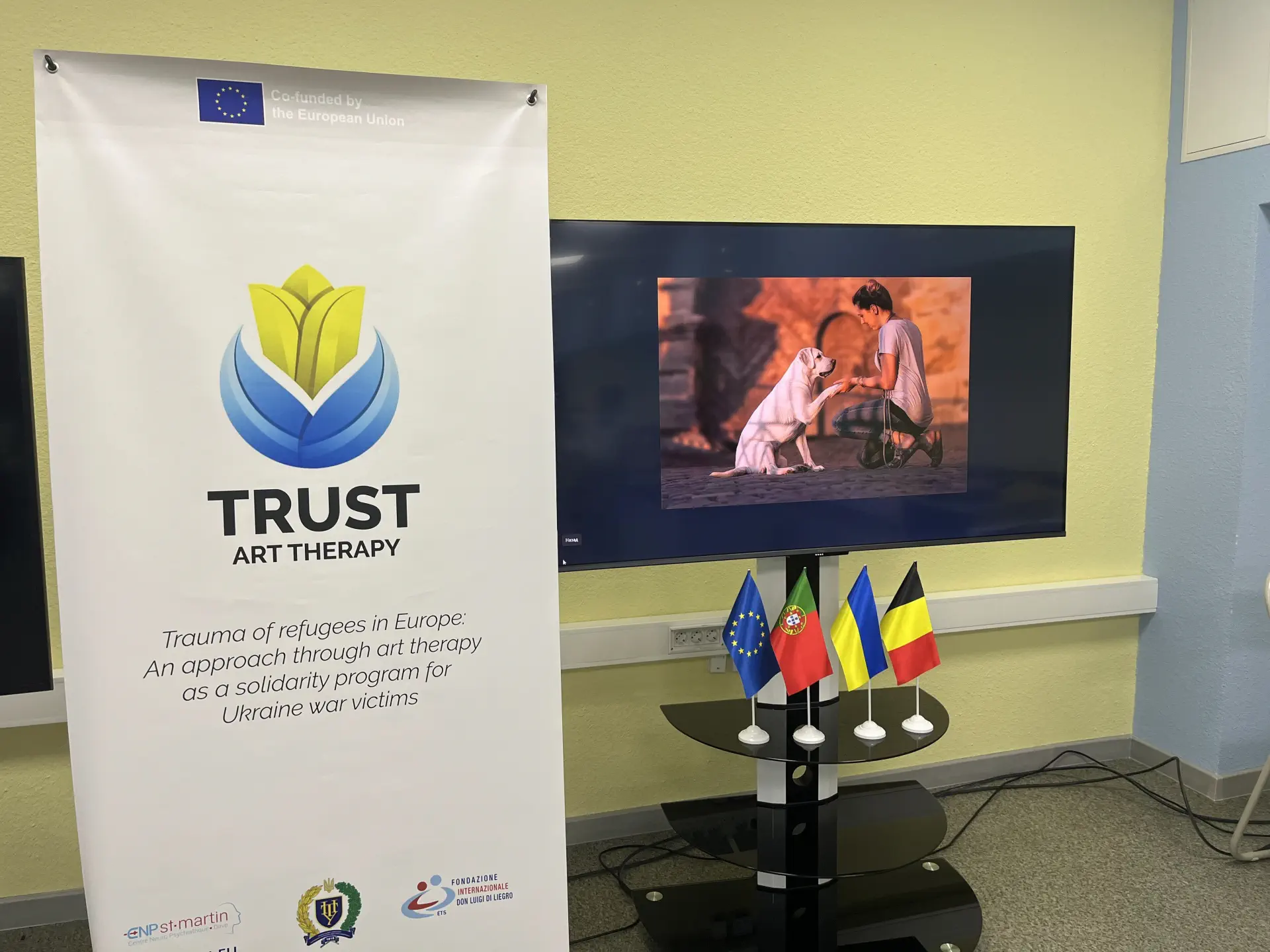
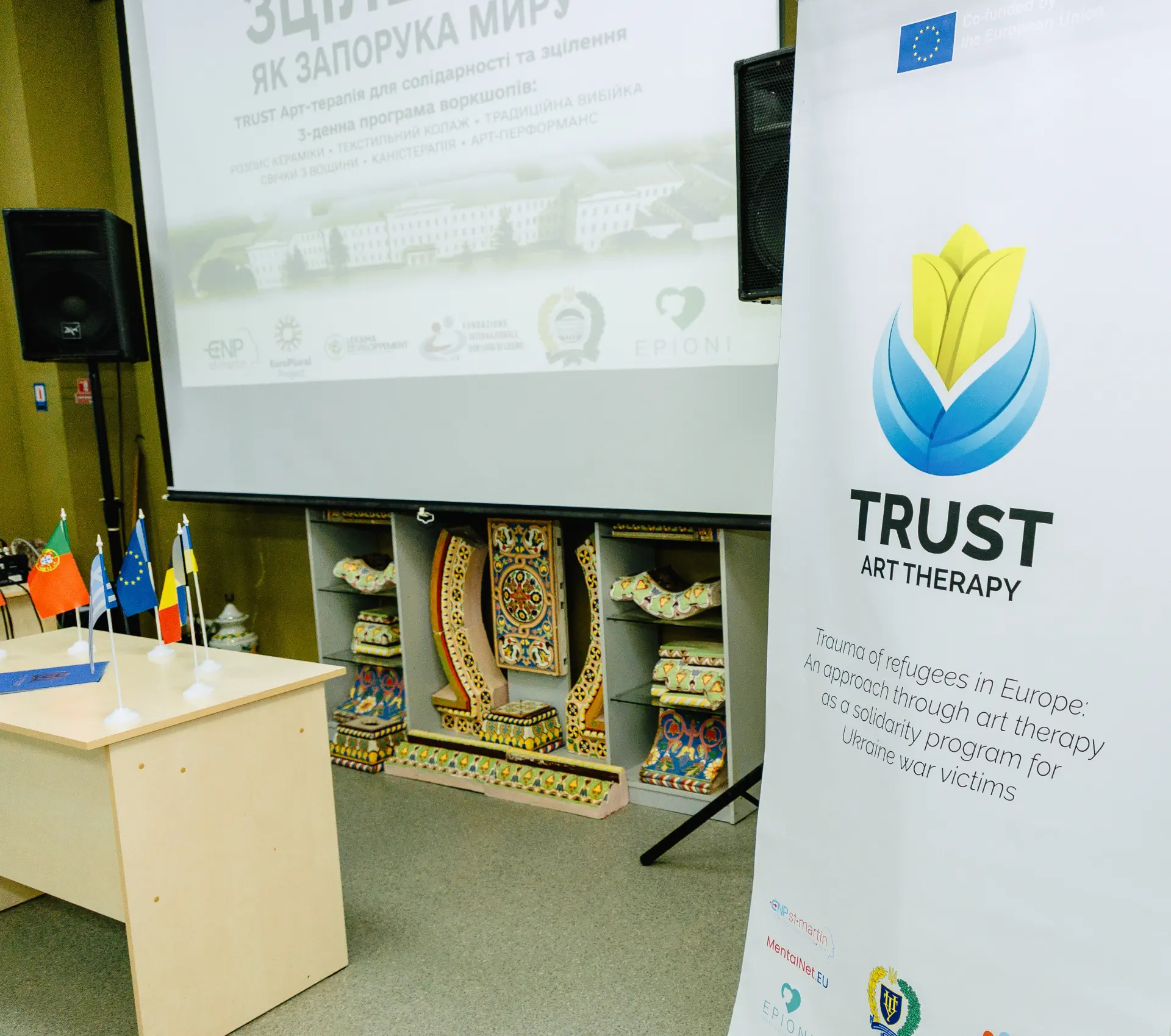
On September 3, 2026, the National University "Yuri Kondratyuk Poltava Polytechnic" hosted the final day of the practical programme of the fourth international transnational consortium meeting under the major European project Erasmus+ KA220-ADU “TRUST” (“Trauma of refugees in Europe: An approach through art therapy as a solidarity program for Ukraine war victims”, grant agreement No. 2024-1-BE01-KA220-ADU-000257527). Co-funded by the European Union, this initiative aims to develop and implement effective, culturally adapted art therapy methodologies to support and provide psycho-emotional rehabilitation for individuals affected by the consequences of war.
The project title “TRUST” stands for the following:
T – Trauma
R – Refugees
U – Ukraine
S – Solidarity
T – Therapy
The Centre Neuro Psychiatrique St-Martin (Belgium) leads the project in partnership with Poltava Polytechnic (Ukraine), Greek Carers Network EPIONI (Greece), Fondazione Don Luigi Di Liegro (Italy), LEKAMA DEVELOPPEMENT (Luxembourg), and EuroPlural Project (Portugal).
An esteemed international delegation arrived in Poltava to participate in the events. The comprehensive roster of meeting participants brought together specialists from three partner organisations:
- CNP Saint Martin (Belgium): Project Coordinator Claudio Marques, Senior Psychologist and European Projects Specialist Jocelyn Deloyer, alongside Hanna Samoilenko and Olena Tiptsova.
- EuroPlural Project (Portugal): Choreography and Dance Therapy Specialist Rubielson Medeiros, PhD and Psychiatrist João Alves Neto, alongside Galyna Ilyuk and Francisco Dias Oliveira.
- National University “Yuri Kondratyuk Poltava Polytechnic” (Ukraine): International Relations Coordinator Anna Pavelieva, Associate Professor of the Department of Psychology and Pedagogy Maryna Teslenko, Professor of the Department of Psychology and Pedagogy Olga Losiyevska, and University Practical Psychologist Olena Kryvenko.
On the morning of the third day, the group met in the secure shelter of Building A at Poltava Polytechnic (Lecture Room No. 1). Associate Professor Maryna Teslenko conducted an organisational briefing, outlined the daily schedule, and reviewed safety protocols. Yaroslav Perederii provided technical support for the session.
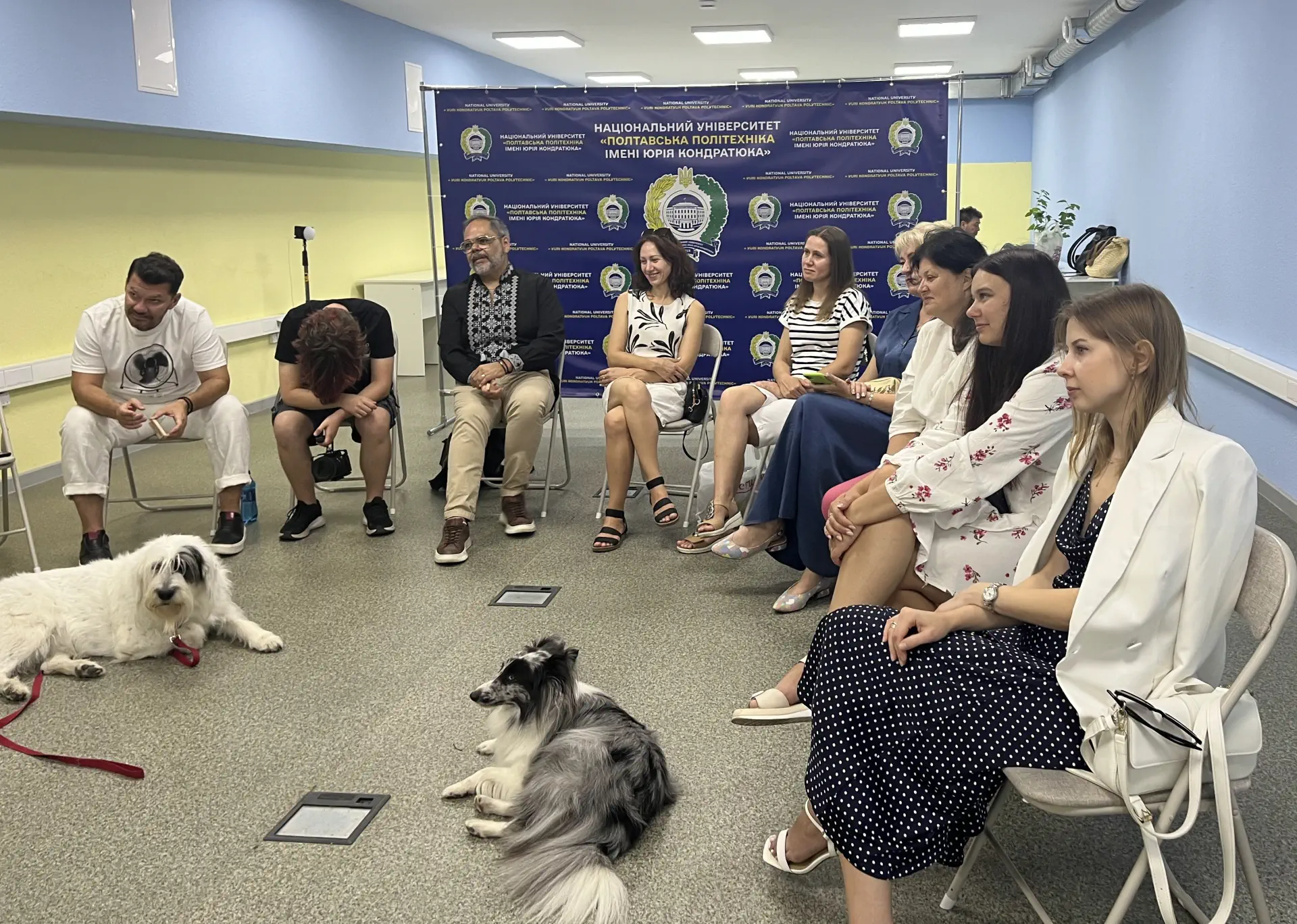
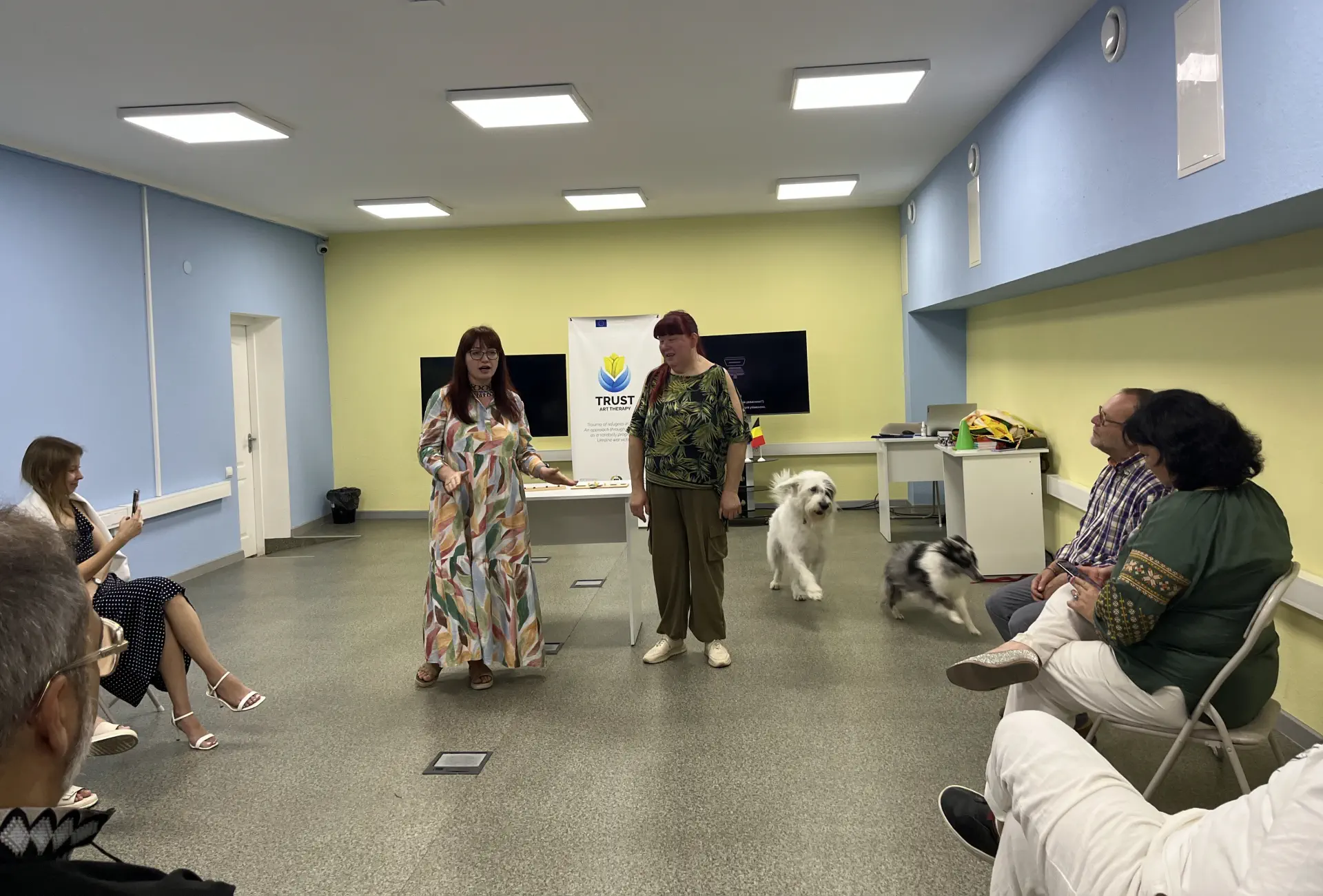
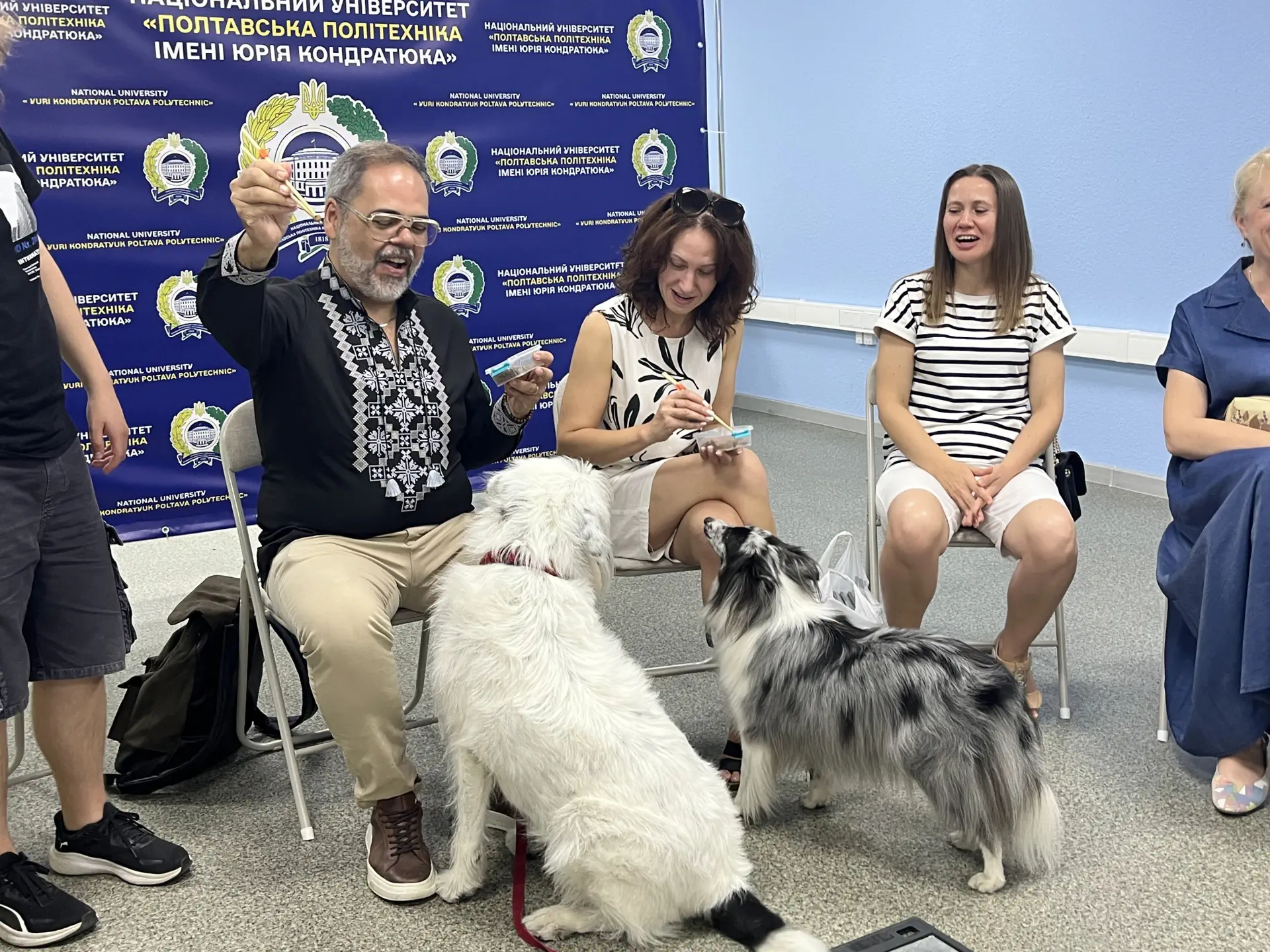
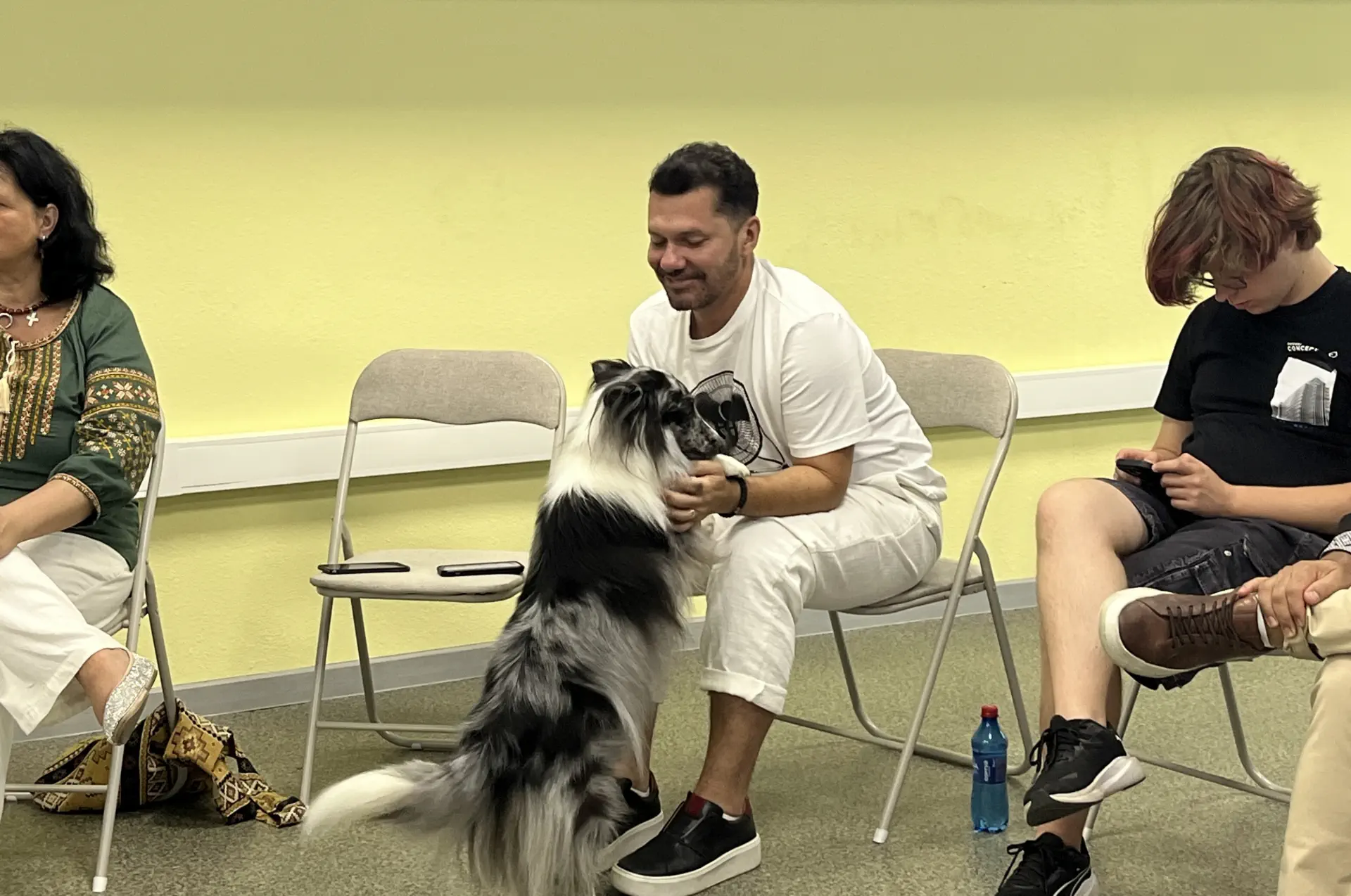
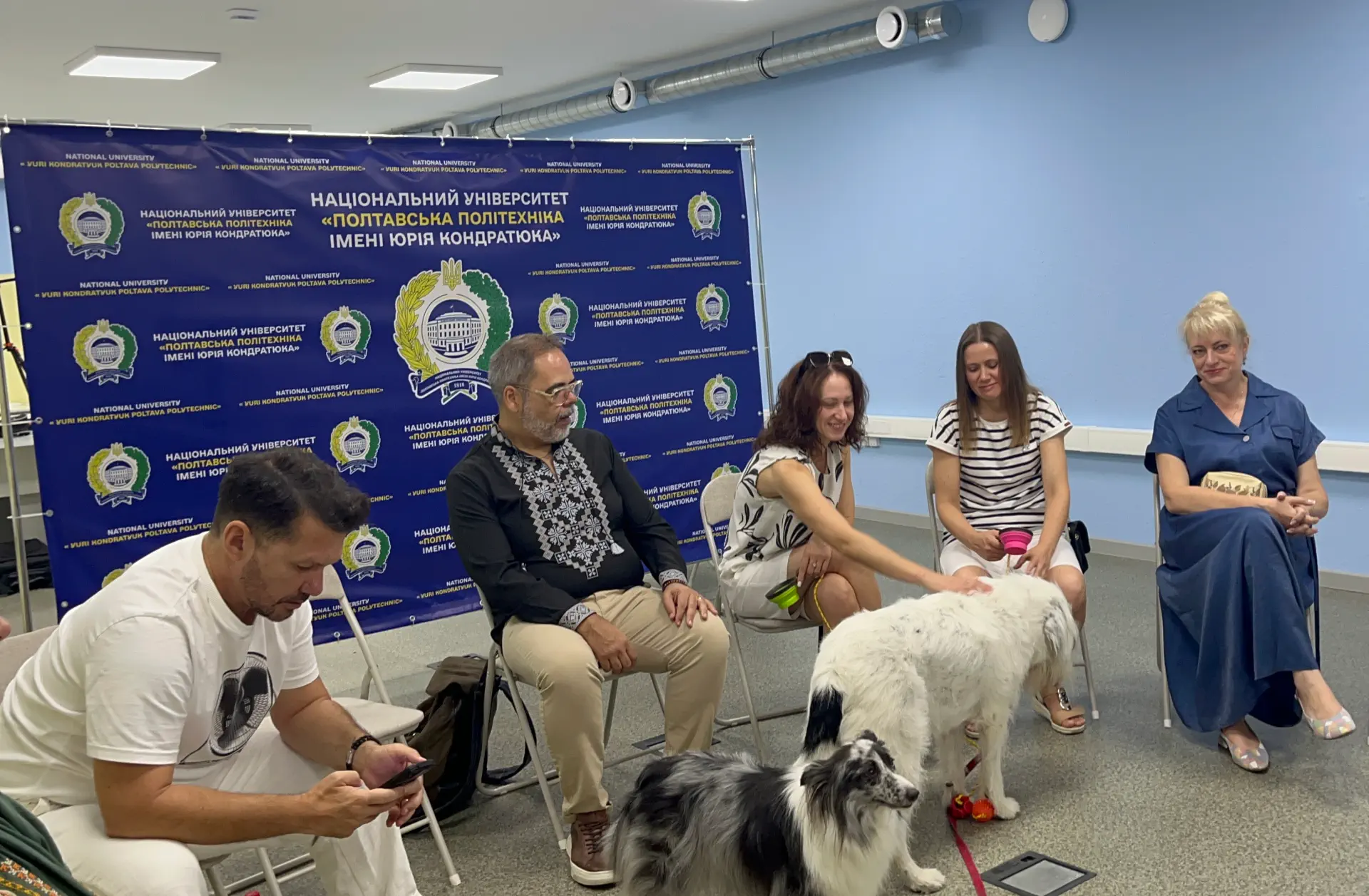
At 10:00, invited expert and certified trainer Elvira Popova led a hands-on canine therapy training session. The session engaged specially trained and certified therapy dogs. As an evidence-based animal-assisted intervention, canine therapy relies on direct tactile and emotional engagement between humans and animals. Under conditions of chronic distress and war-induced trauma, the therapy dog serves as a neutral, safe, and unconditionally accepting mediator.
Throughout the training, project participants learned somatic grounding techniques: synchronising personal respiration with the animal’s biorhythms, using gentle petting to ease muscular tension, and engaging in practices designed to restore a fundamental sense of safety. The European specialists experienced firsthand the therapy's pronounced anti-stress impact, noting a marked reduction in anxiety, stimulated oxytocin release, and genuine smiles across all members of the international cohort. This experience compellingly demonstrated how dogs help release repressed emotions in individuals who have lost the capacity to verbalise their pain.
Following a coffee break at 11:30 in Shelter Room No. 2, focus shifted to preparations for the central highlight of the entire visit – the final art performance. Beginning at 12:00, Room 302-C was converted into a creative workshop. Coordinators Hlib Kudriashov, Maryna Teslenko, Lesia Klevaka, Viktoriia Shevchuk, and Olena Kryvenko, together with representatives of the International Relations Department and student volunteers, designated roles, synchronised stage cues, and tested musical accompaniment and audio equipment.
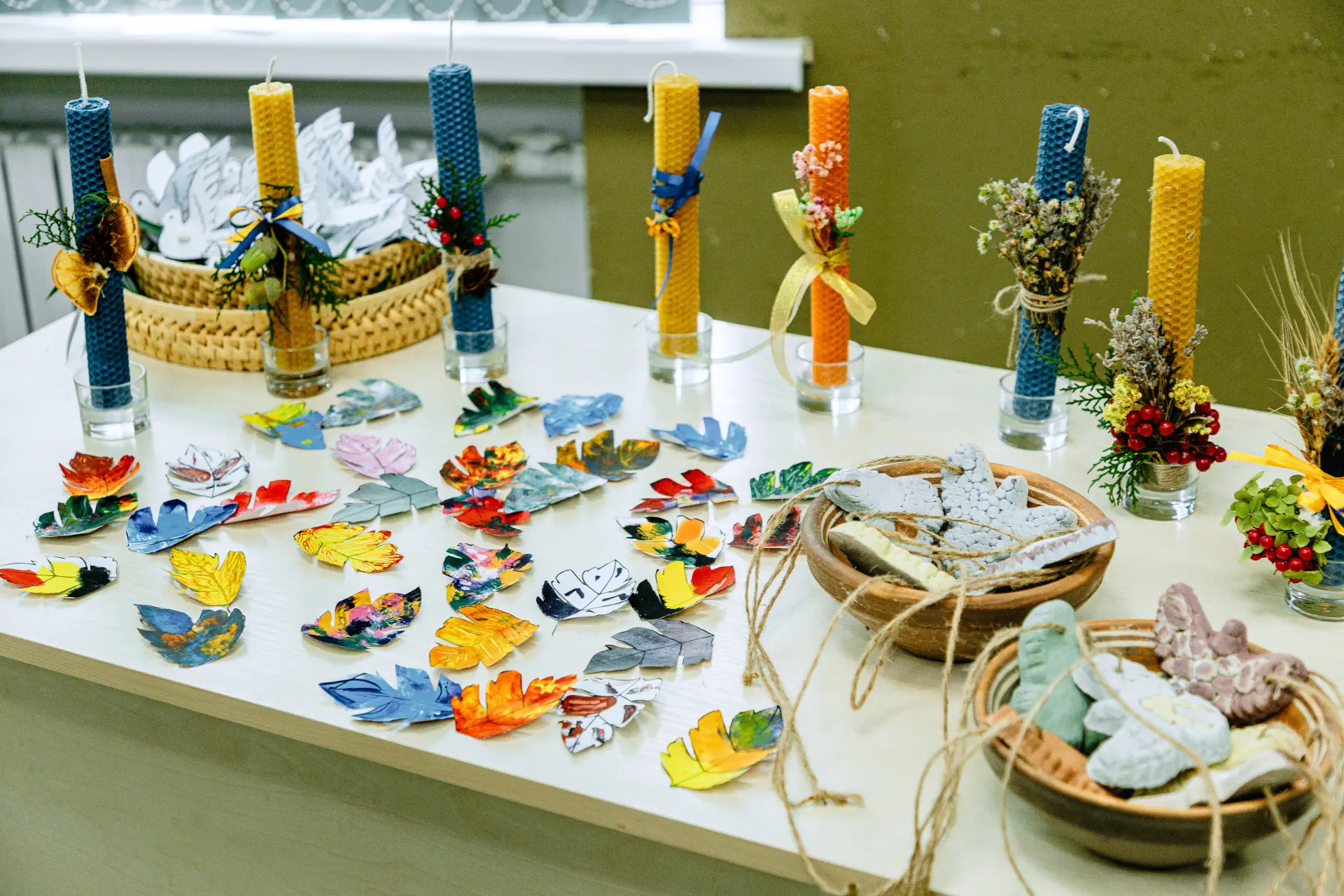
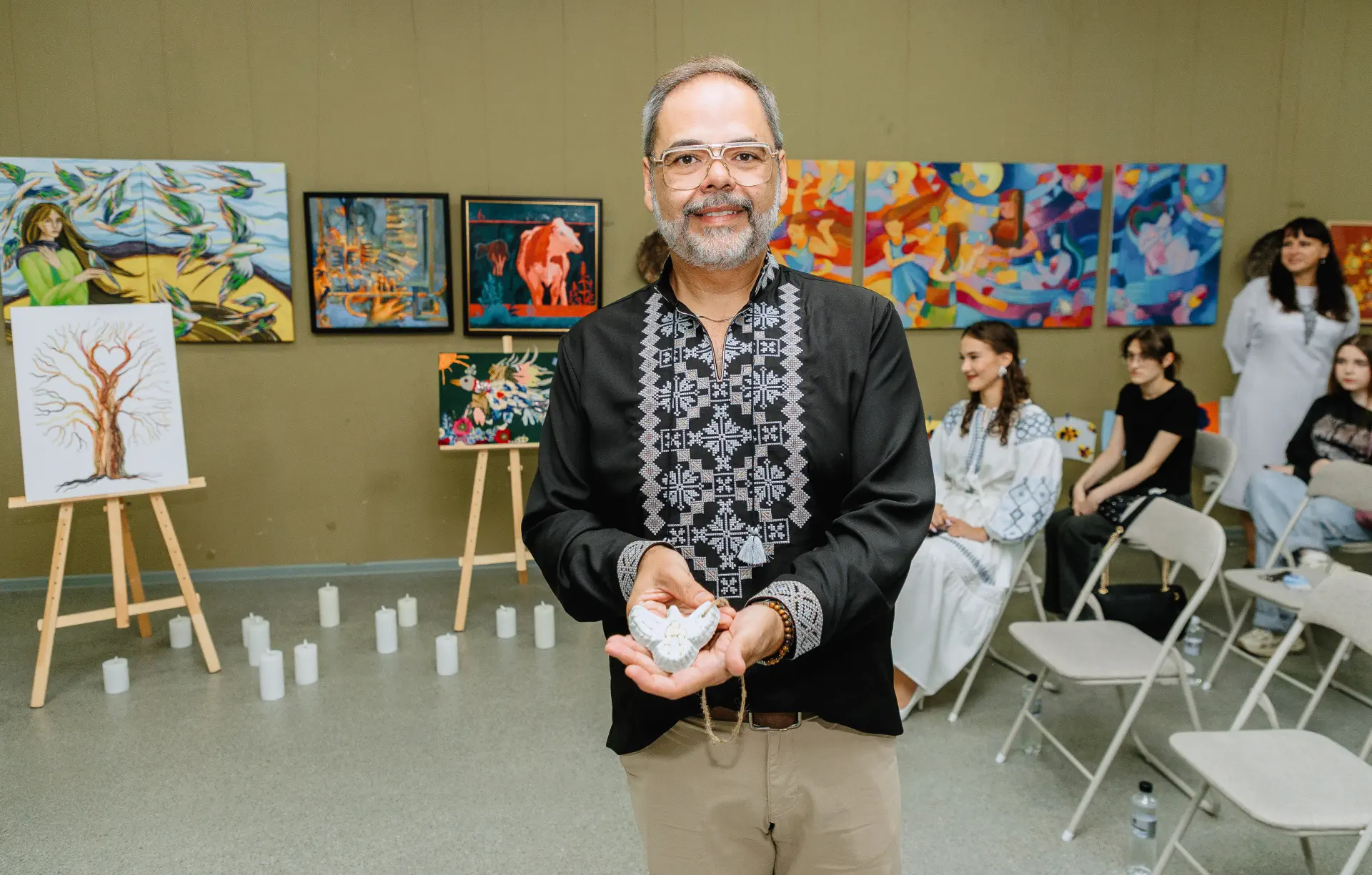
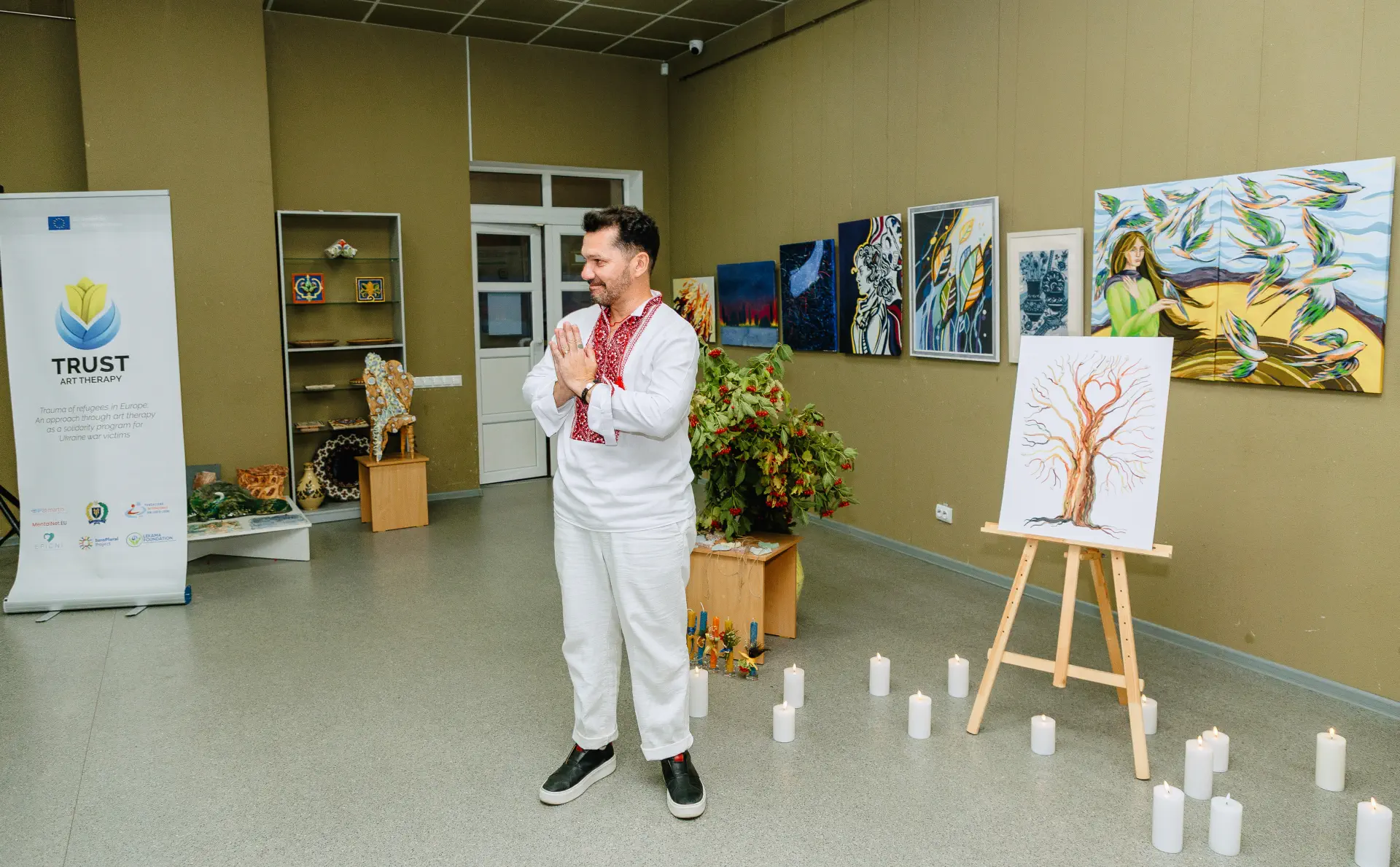
The team paid special attention to the conceptual stage properties: authentic clay vessels filled with sand, branches of red viburnum (kalyna) as a symbol of Ukraine, sage inflorescences, and an easel bearing the graphic silhouette of a majestic crane. The installation's primary elements comprised artefacts handcrafted by consortium participants over the preceding three days: hand-painted ceramic cranes, natural beeswax candles, and textile wings crafted from fabric remnants during a masterclass led by Olha Piliuhina.
Following an inspiring rehearsal, participants proceeded to lunch at the “Augustin” restaurant, where hospitality coordinator Anastasiia Vediuk ensured comfortable accommodations for the delegation, including tailored vegetarian options.
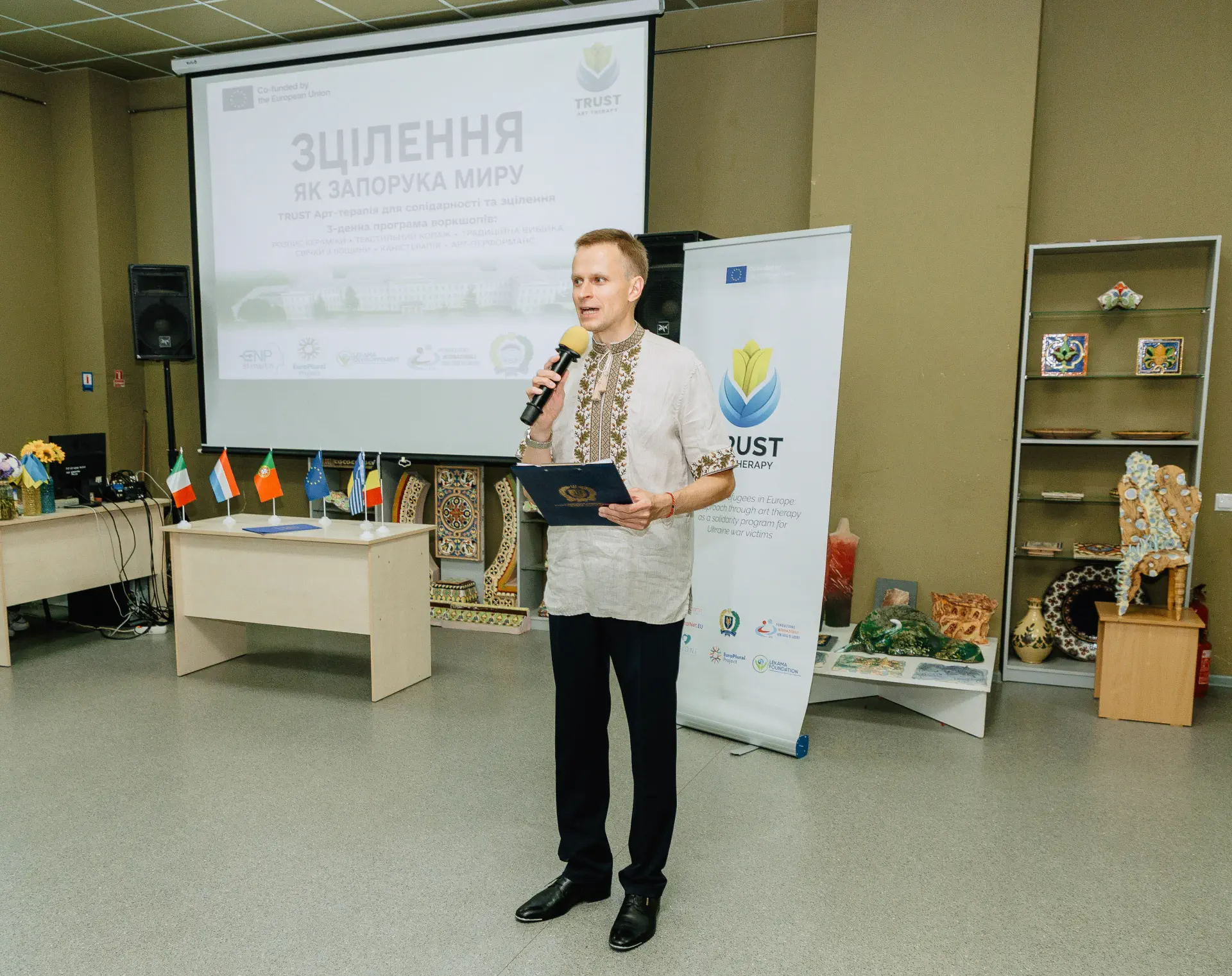
At 14:00, the final staging of the artistic installation and sound checks commenced. Promptly at 15:00, the master of ceremonies, Candidate of Science in Social Communications, Associate Professor Hlib Kudriashov, inaugurated the final art performance, “Cranes of Peace and Hope”.
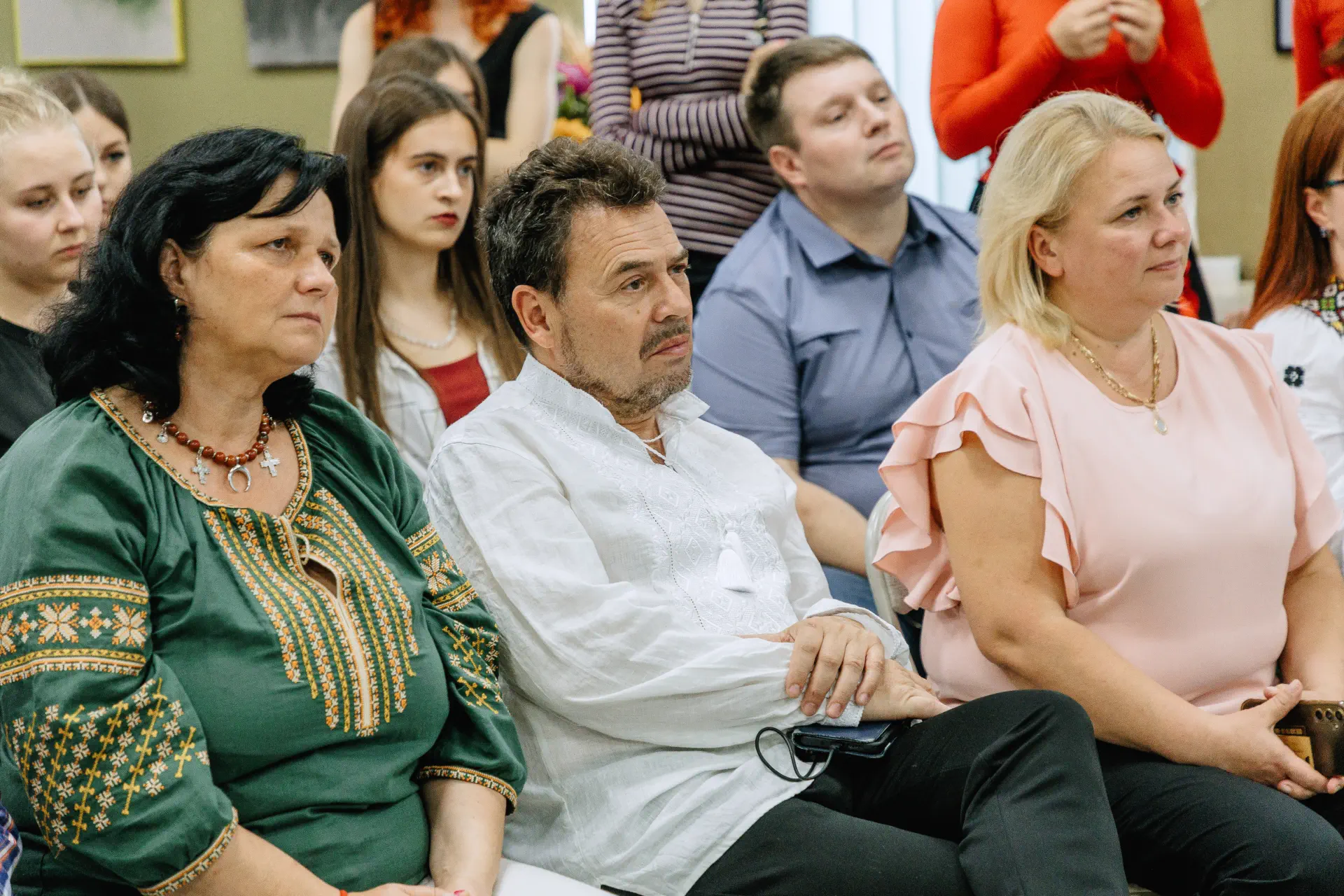
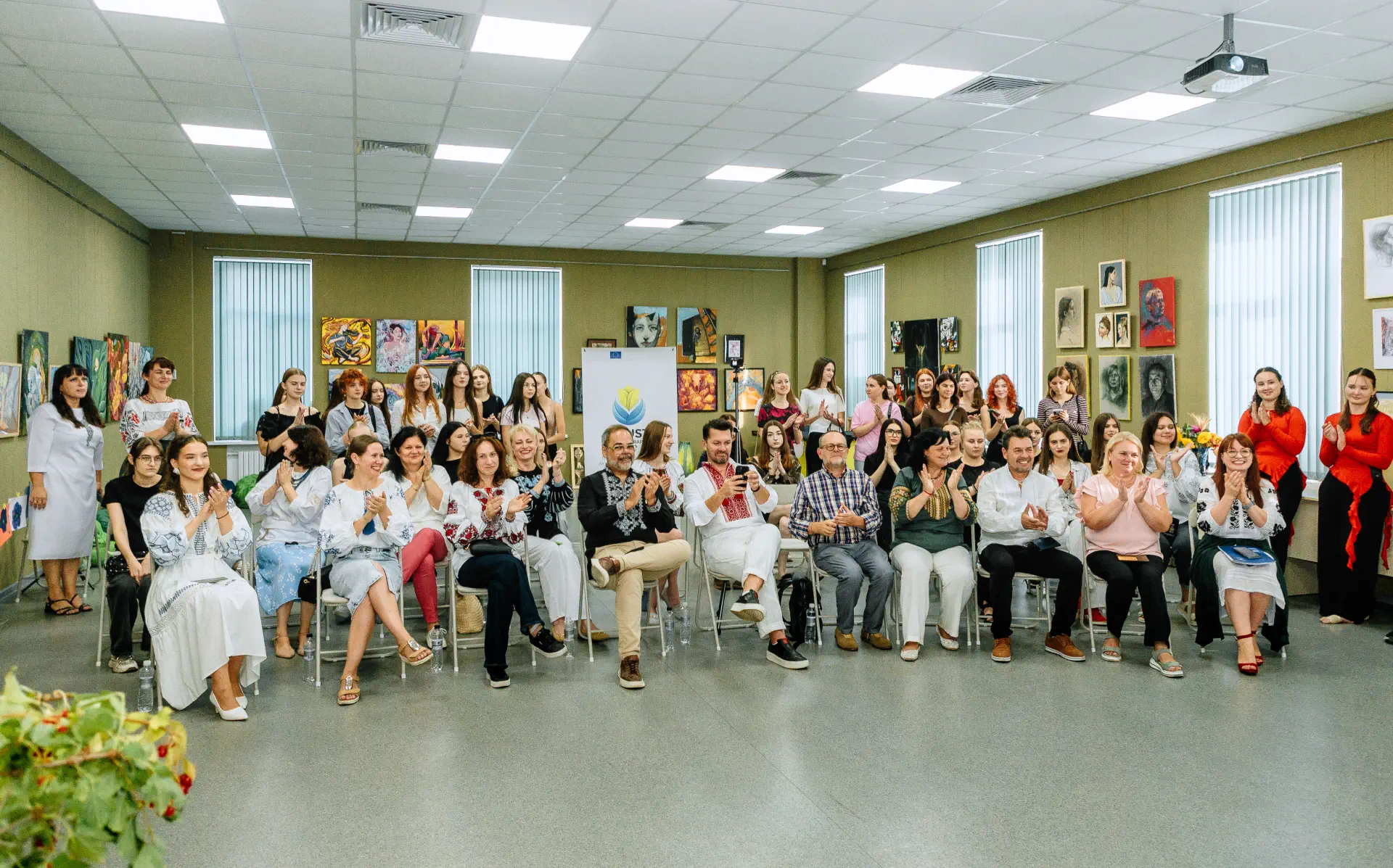
The event brought together nearly fifty participants: international guests from Belgium and Portugal, faculty members of Poltava Polytechnic, practising psychologists, and students from the Faculty of Philology, Psychology, and Pedagogy.
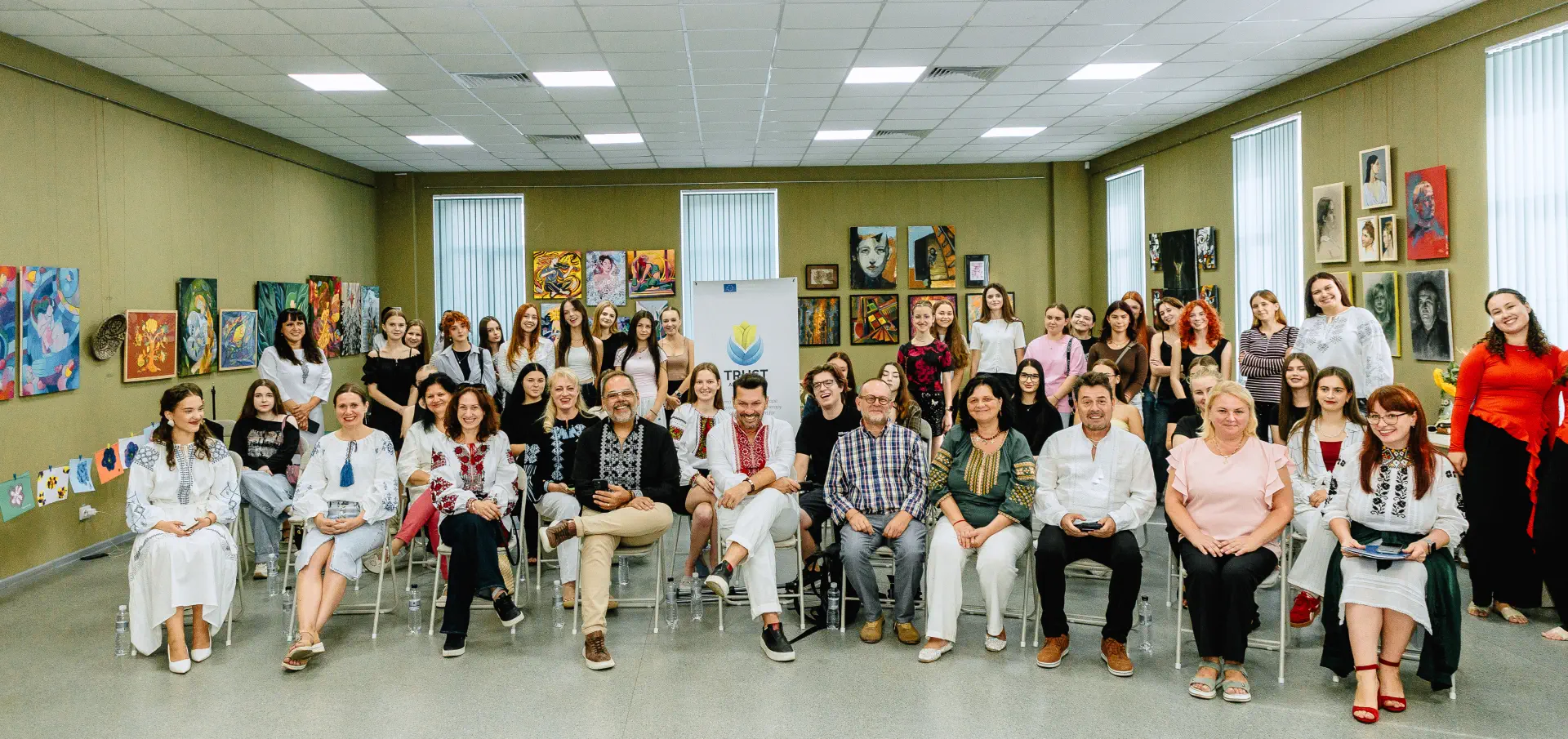
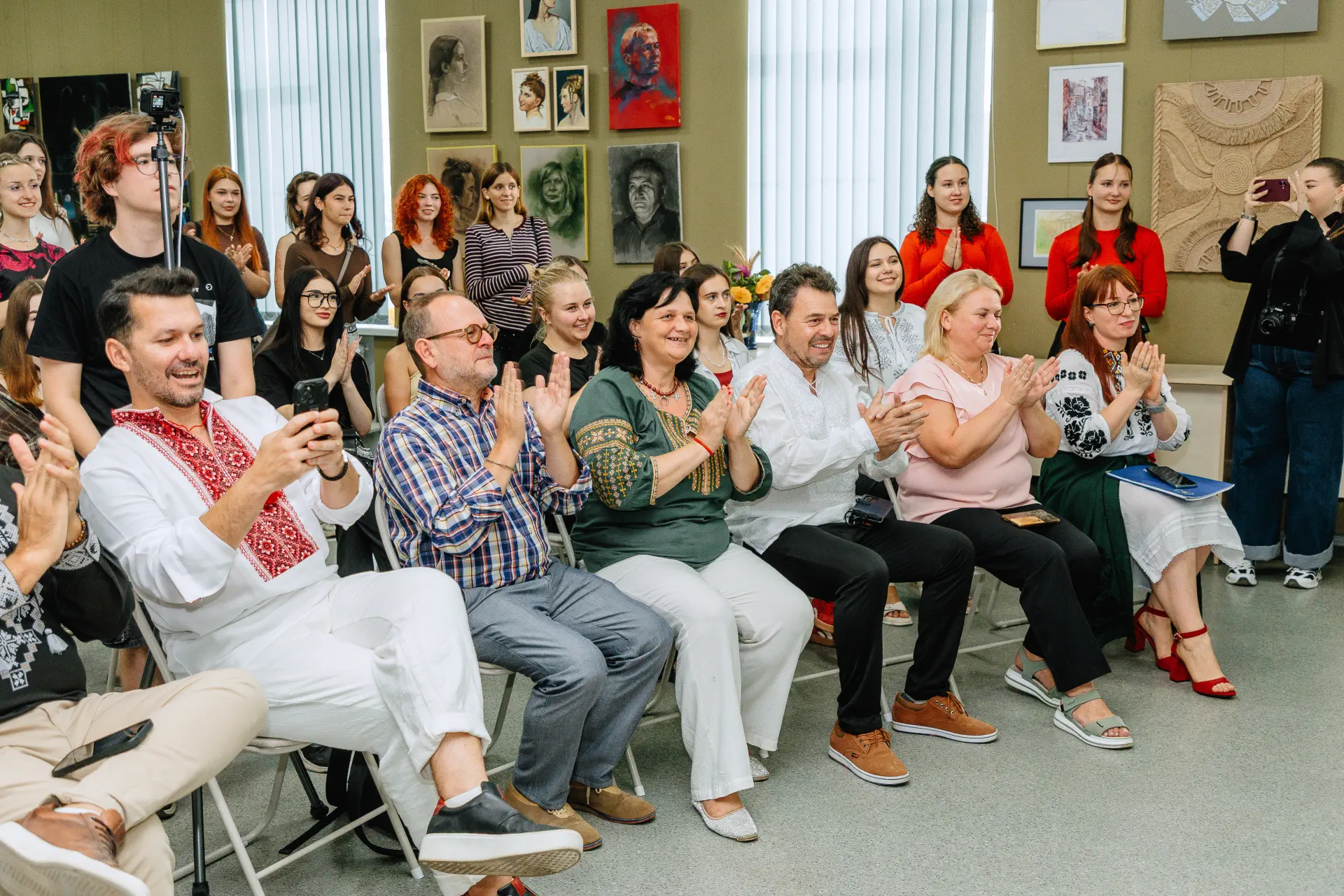
University students lent the final performance distinctive emotional depth, for whom the TRUST project served not only as an avenue for international dialogue but also as an introspective space to process war, bereavement, hope, and art's transformative agency. Notably, the performers in the creative segment had previously taken part in earlier international stages of the project held in Italy, Portugal, and Greece. Their artistic offerings thus represented an emotional continuation of the journey shared alongside TRUST partners across Europe, now brought to a symbolic culmination in Ukraine.
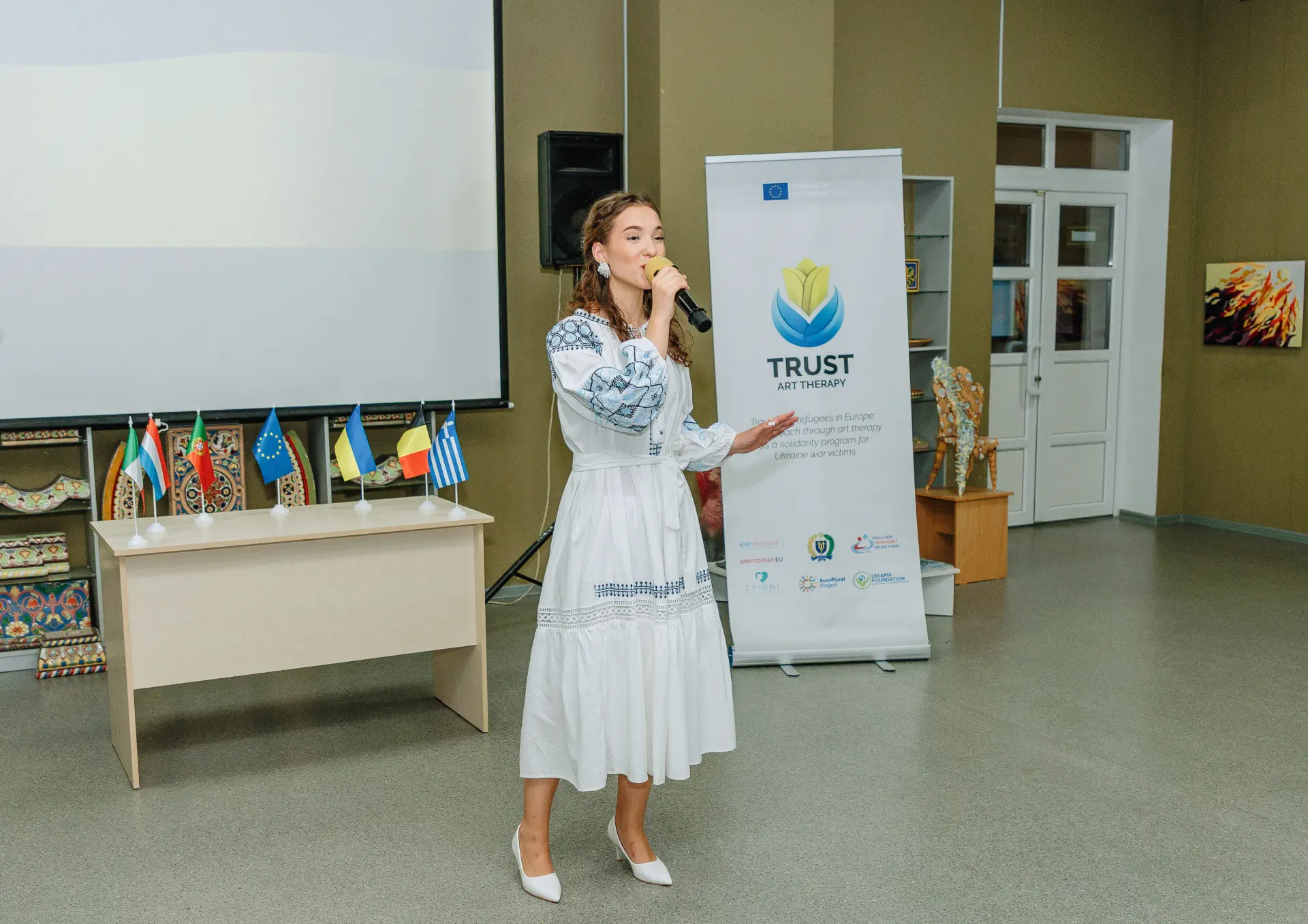
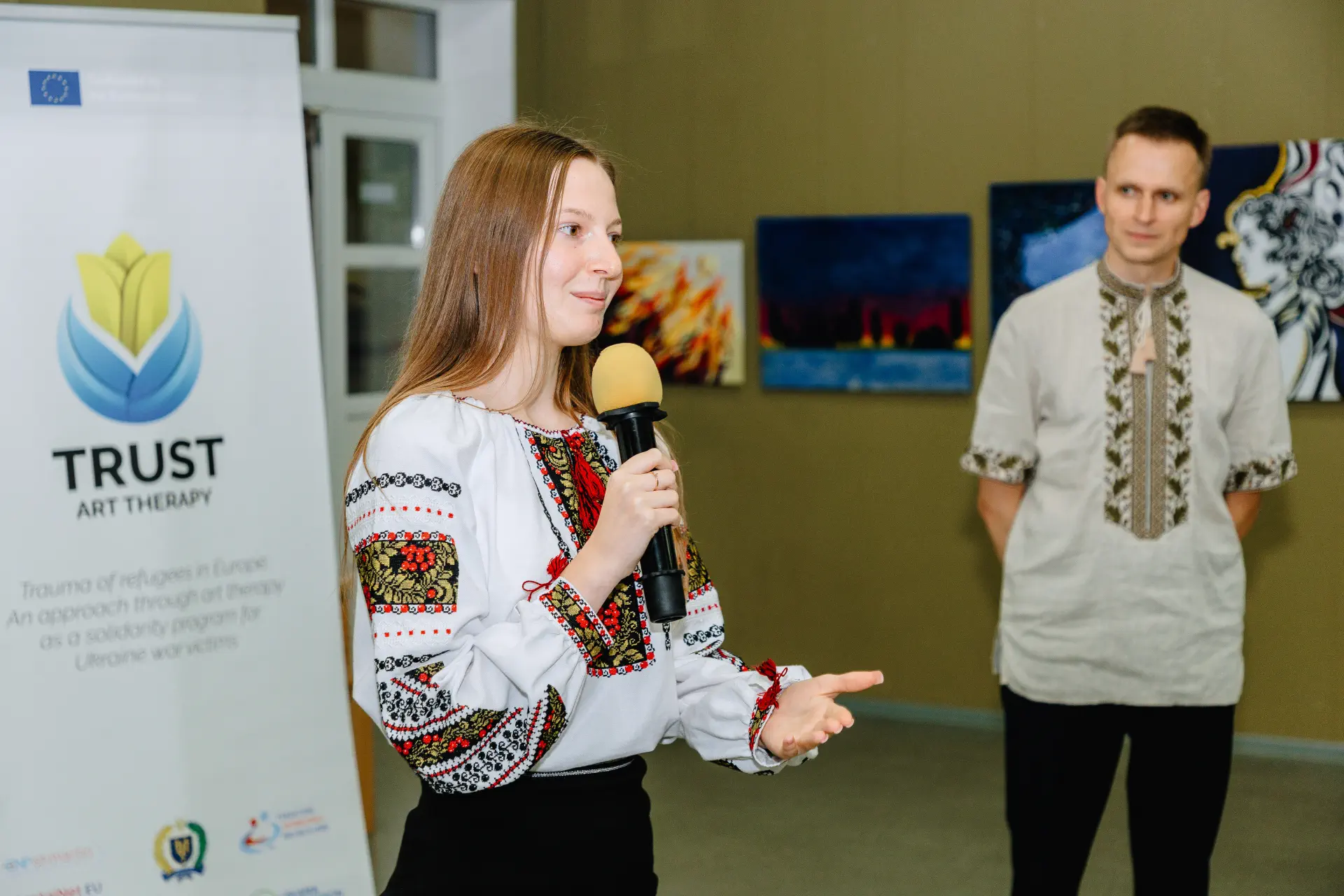
Yeva Rumiantseva delivered an evocative vocal performance of the song “My Ukraine”, infusing the venue with profound devotion to her native land and an abiding spiritual affinity with it. Anna Onopriienko recited a moving poem dedicated to Ukrainians dispersed across nations and continents by the war, who nevertheless retain an unbreakable bond with their Motherland. Interwoven with imagery of Paris, London, Berlin, Niagara, and the Mediterranean Sea, the verses consistently reflected Kyiv, Kharkiv, Odesa, Lviv, Dnipro, Vinnytsia, and the Sea of Azov. While foreign metropolises may offer beauty and security, memory unfailingly returns the displaced soul to familiar streets, pathways, and the sanctuary called home. The shared aspiration of millions of Ukrainians – to hear the long-awaited tidings of peace and embrace the prospect of returning home permanently – resonated with singular poignancy.
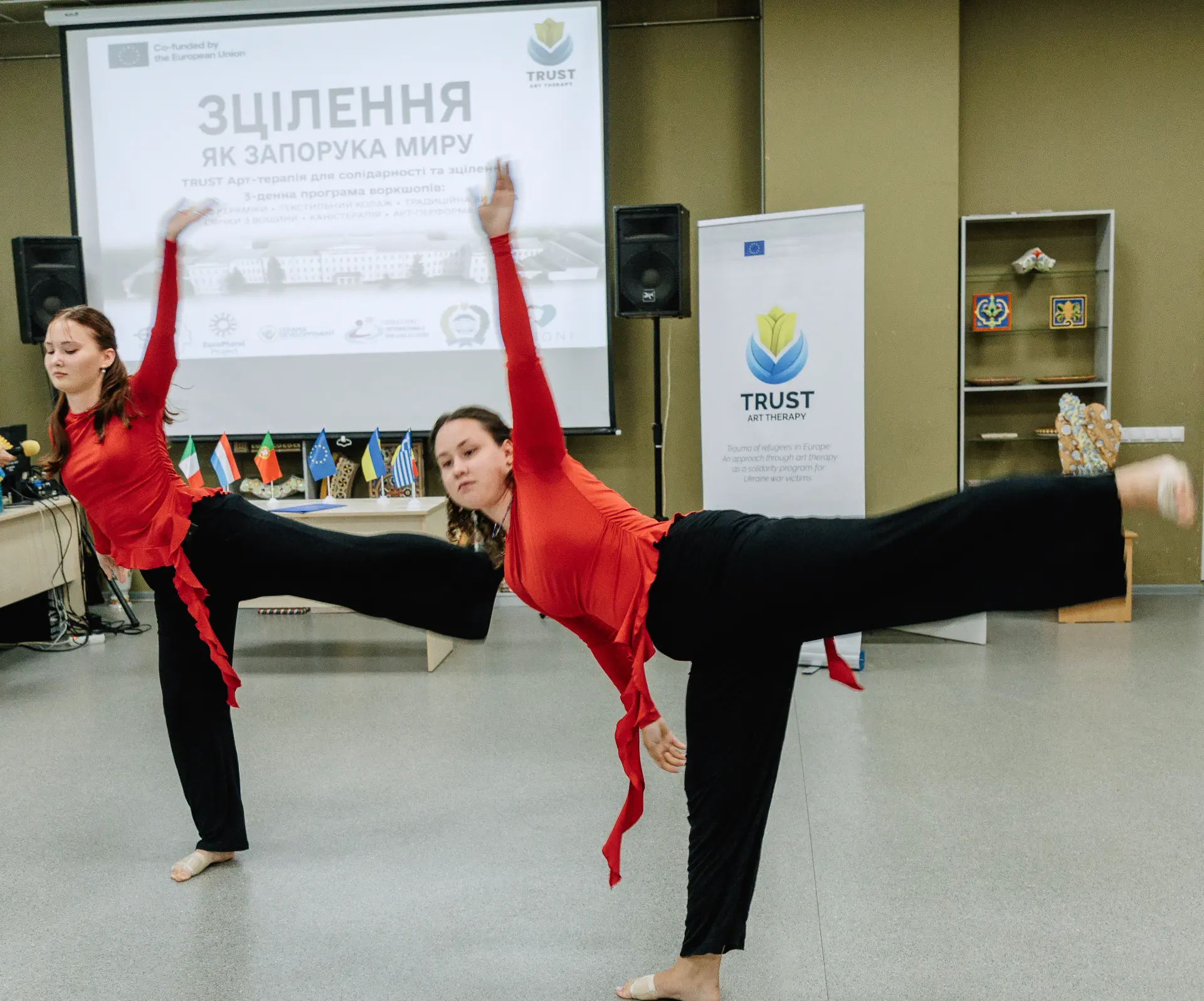
Through dance, Anastasiia Hryb and Anastasiia Kolodiazhna extended this emotive narrative. Their choreographic composition articulated the fragility of peace, the anguish of war-torn soil, the burden of grief, and, at the same time, an unyielding impulse toward revival and life. Thus, song, verse, and dance coalesced into a unified artistic testimony of Ukraine and its people, granting the personal lived experiences of these young participants a renewed resonance on their home soil.
The performance embodied a profound synthesis of choreography, live music, poetic expression, and interactive visual art. The expressive dance captured both the vulnerability of peace and an invincible, enduring faith in life's ultimate triumph.
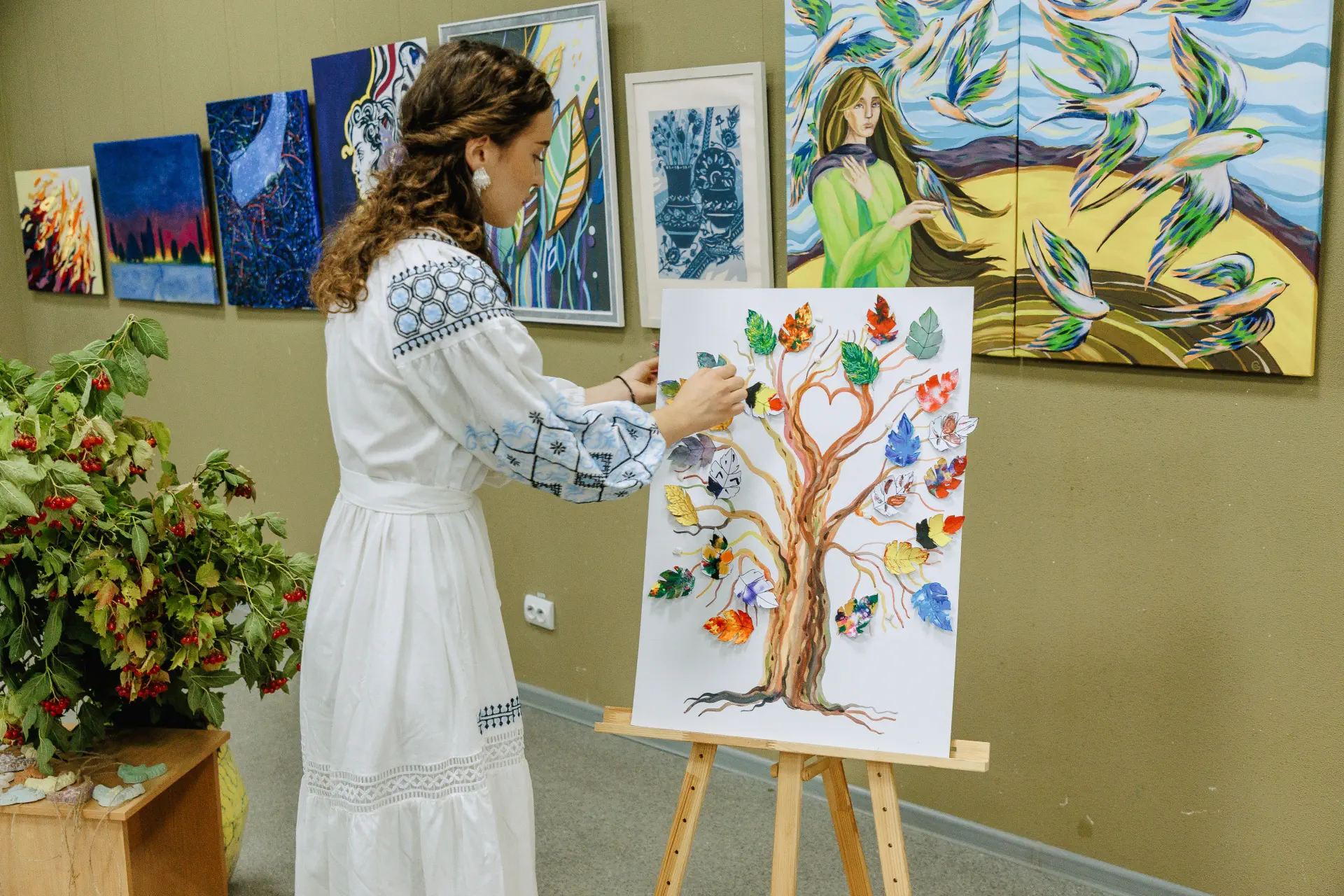
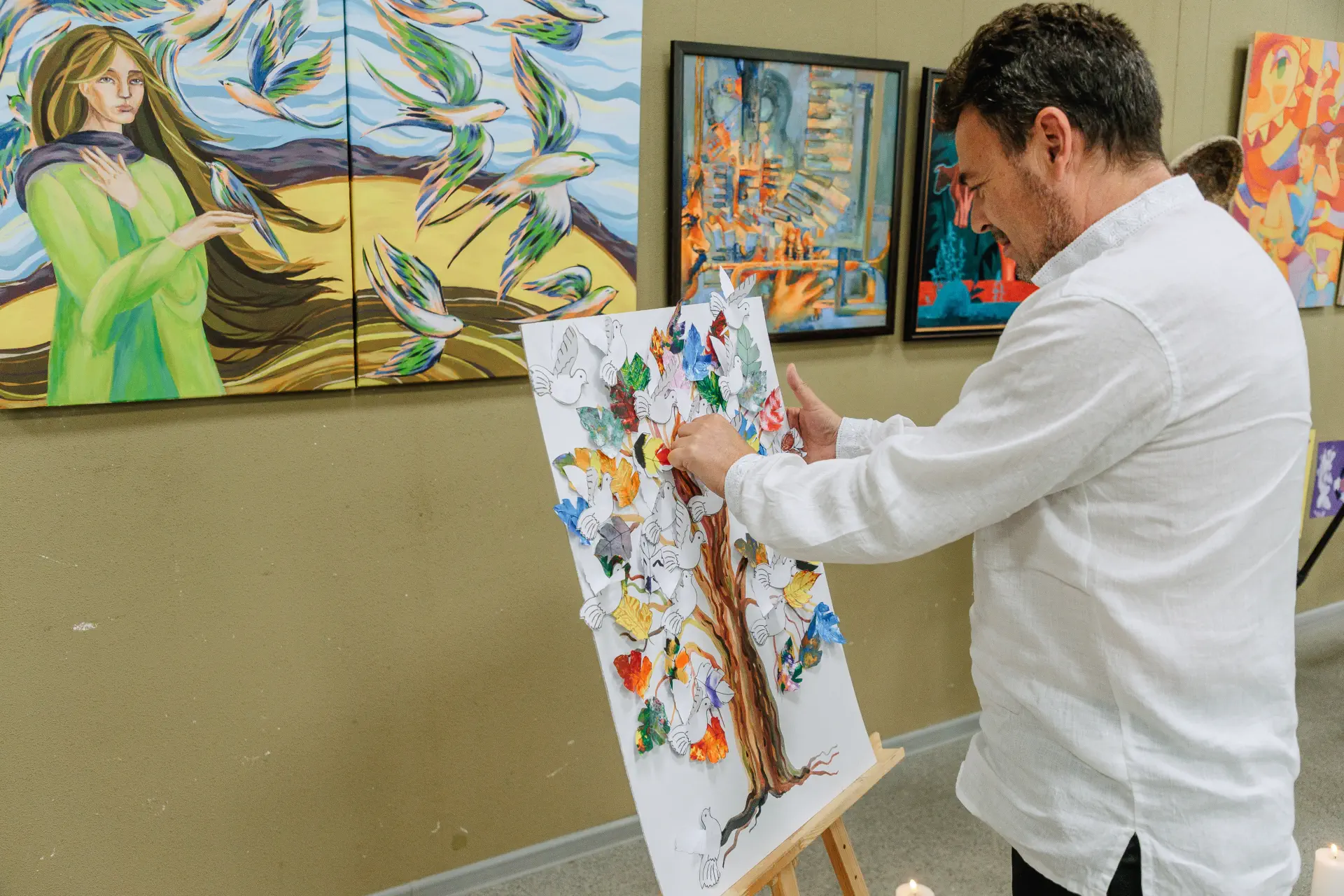
The culminating moment of the performance was the collective creation of a symbolic “Tree of Life”, in which all attendees of the international gathering participated: European partners, researchers, academic staff, and students. Here, the creative concept introduced on the previous day reached its ultimate fruition. During the preliminary session, each participant had individually fashioned an original leaf, selecting pigments and shades to encode a fragment of their personal history. Distinct in form, hue, and emotional tone, these leaves symbolised the singularity of individual destinies, lived experiences, national backgrounds, and life paths.
During the final performance, elements that had previously existed as fragmented individual narratives coalesced into an integrated whole for the first time. One by one, participants affixed their handcrafted leaves to the branches of the “Tree of Life”, gradually saturating its canopy with colour and symbolically uniting individual testimonies within a shared artistic continuum. Thus, the guiding metaphor established during the workshop was realised: just as a tree does not require uniform leaves to sustain a single canopy, human beings need not relinquish their distinct individuality to experience interconnectedness and belong to something greater than themselves.
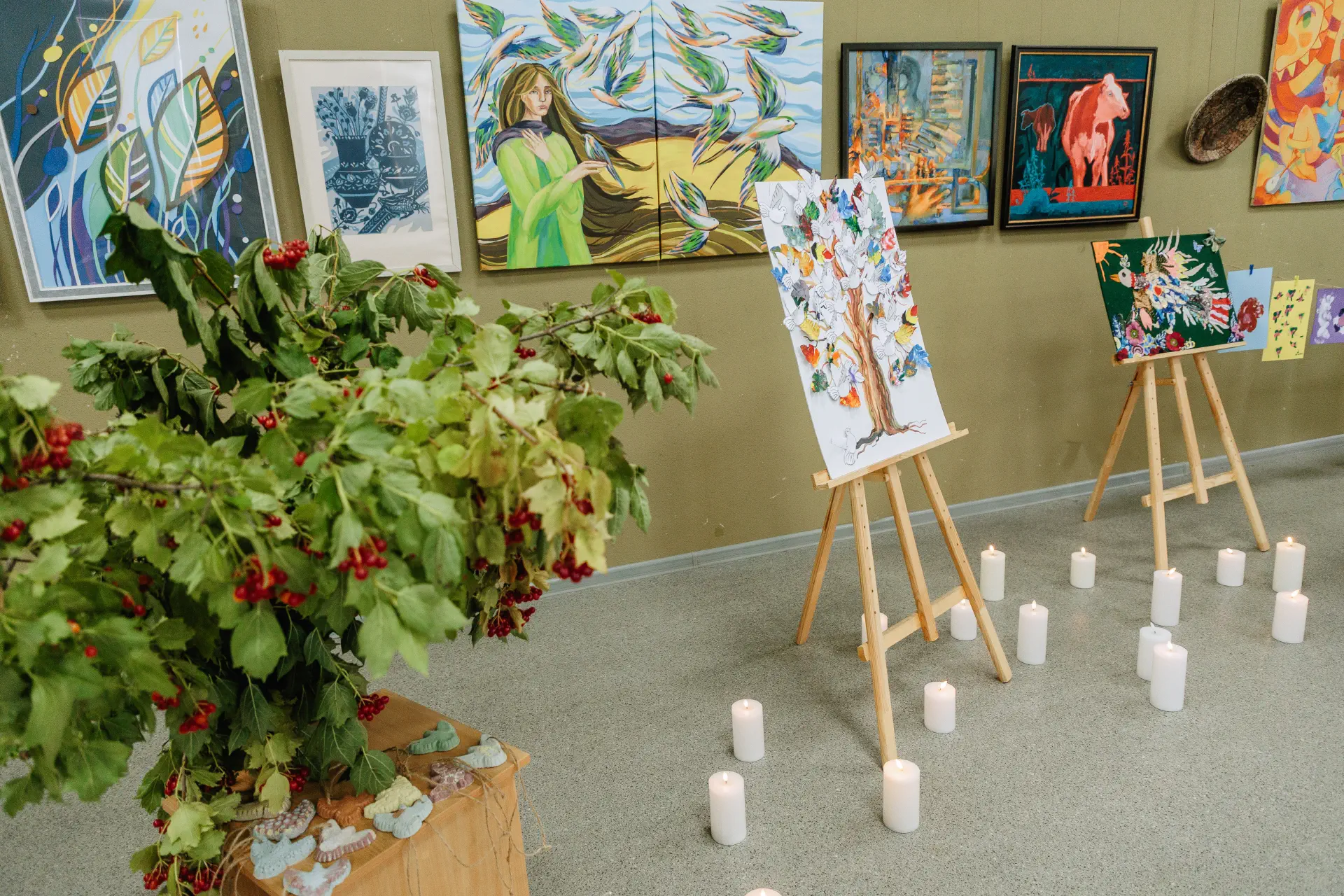
Subsequently, white birds emerged amidst the multifaceted foliage. Each participant contributed the silhouette of their own bird to the collective ensemble. Gradually, the “Tree of Life” evolved into an iconography animated by movement and hope. The white birds ascending above its canopy stood as emissaries of peace, liberty, and spiritual restoration, while simultaneously serving as an emblem of the journey home for millions of Ukrainians scattered across the globe. Through this collective gesture, the personal converged with the universal; disparate cultures and biographies met within a unified circle, establishing the collaboratively wrought tree as an enduring emblem of trust, solidarity, resilience, and faith in restoring a peaceful life.
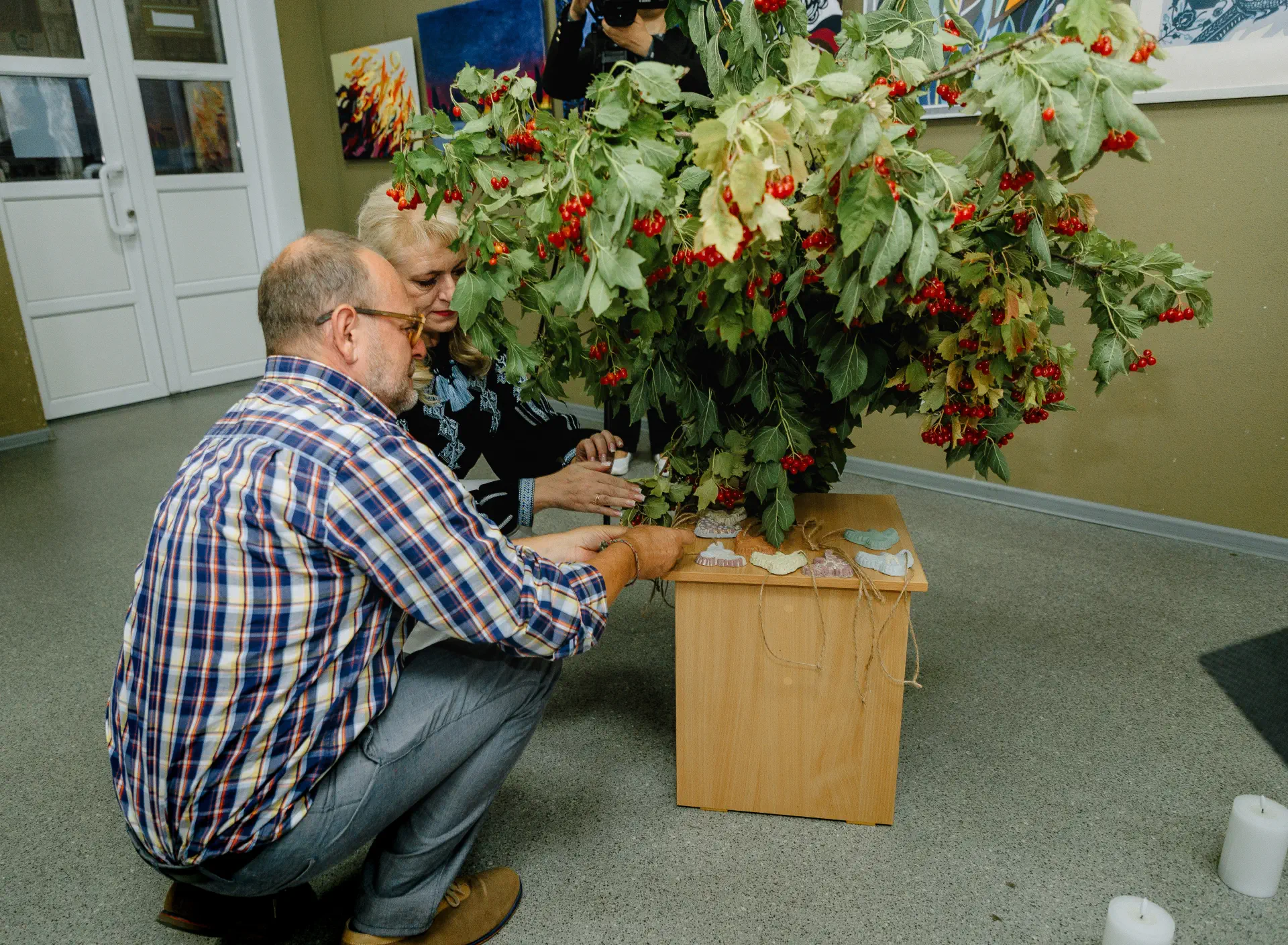
Concurrently, a living installation blossomed alongside, embellished with the vivid crimson clusters of guelder rose (kalyna) – the ancestral emblem of an unvanquished Ukraine. Project participants reverently placed their hand-painted clay cranes on this symbolic shrub. Illuminated by the warm glow of beeswax tapers at the base of the installation and underscored by an evocative musical score, this communal act took on the character of a sacred rite of unity, in which art served as an effective vehicle for healing afflicted souls and a triumph of international solidarity. European colleagues were moved to tears as the completed installation illuminated, uniting the assembly in a shared devotion to the victory of light over darkness. The performance demonstrated with absolute clarity that the idiom of art requires no translation when articulating fraternity and human compassion.
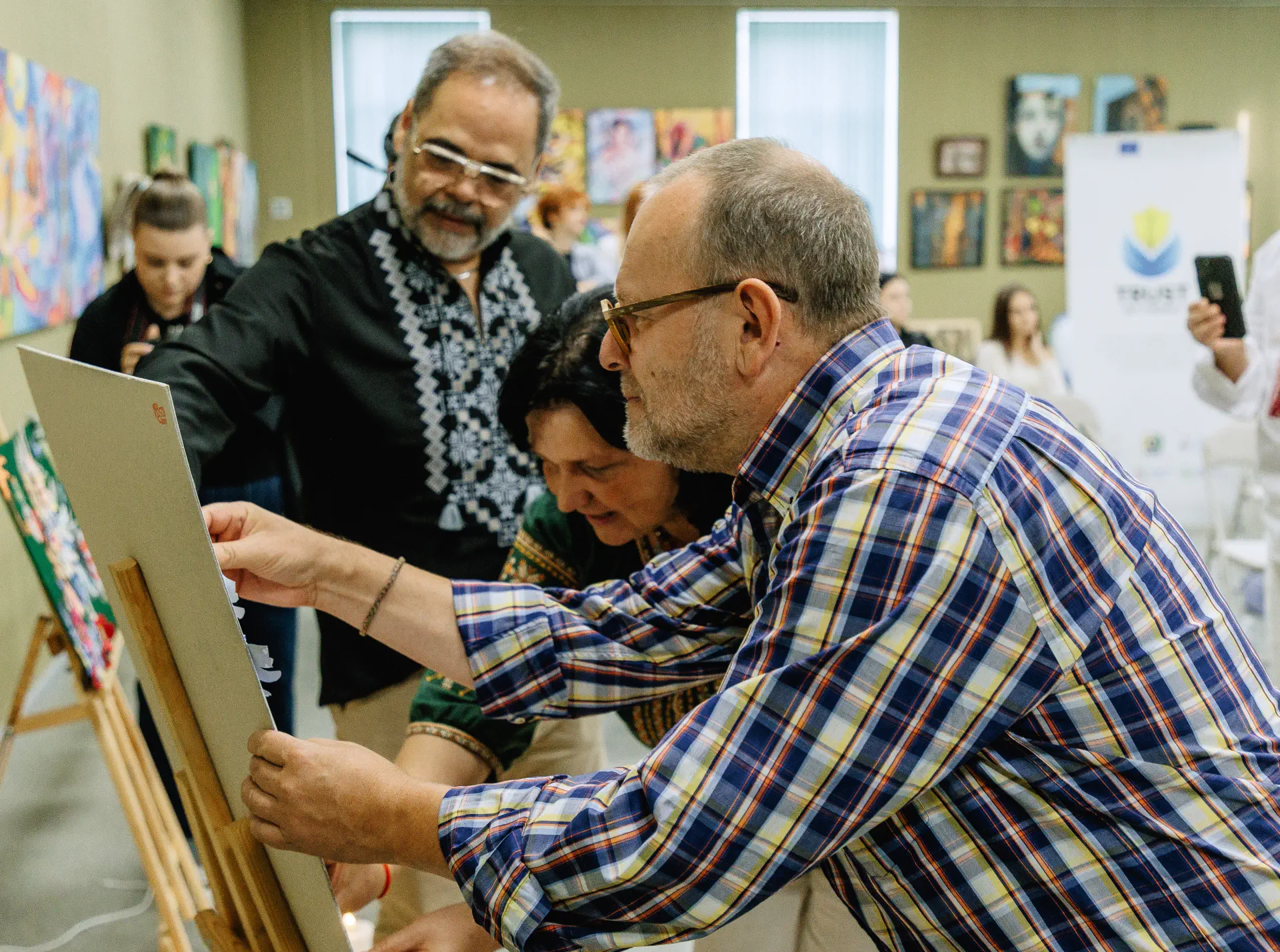
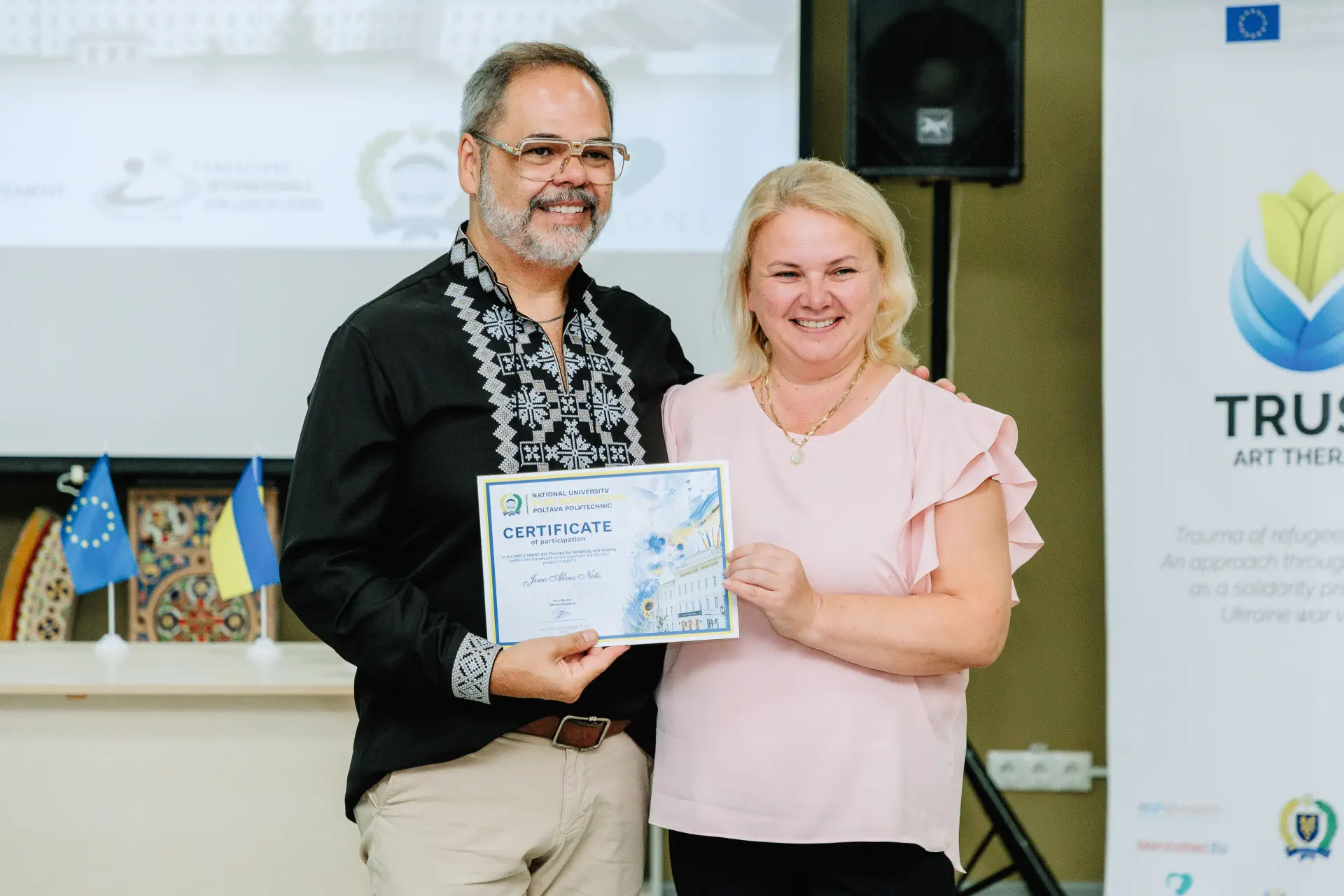
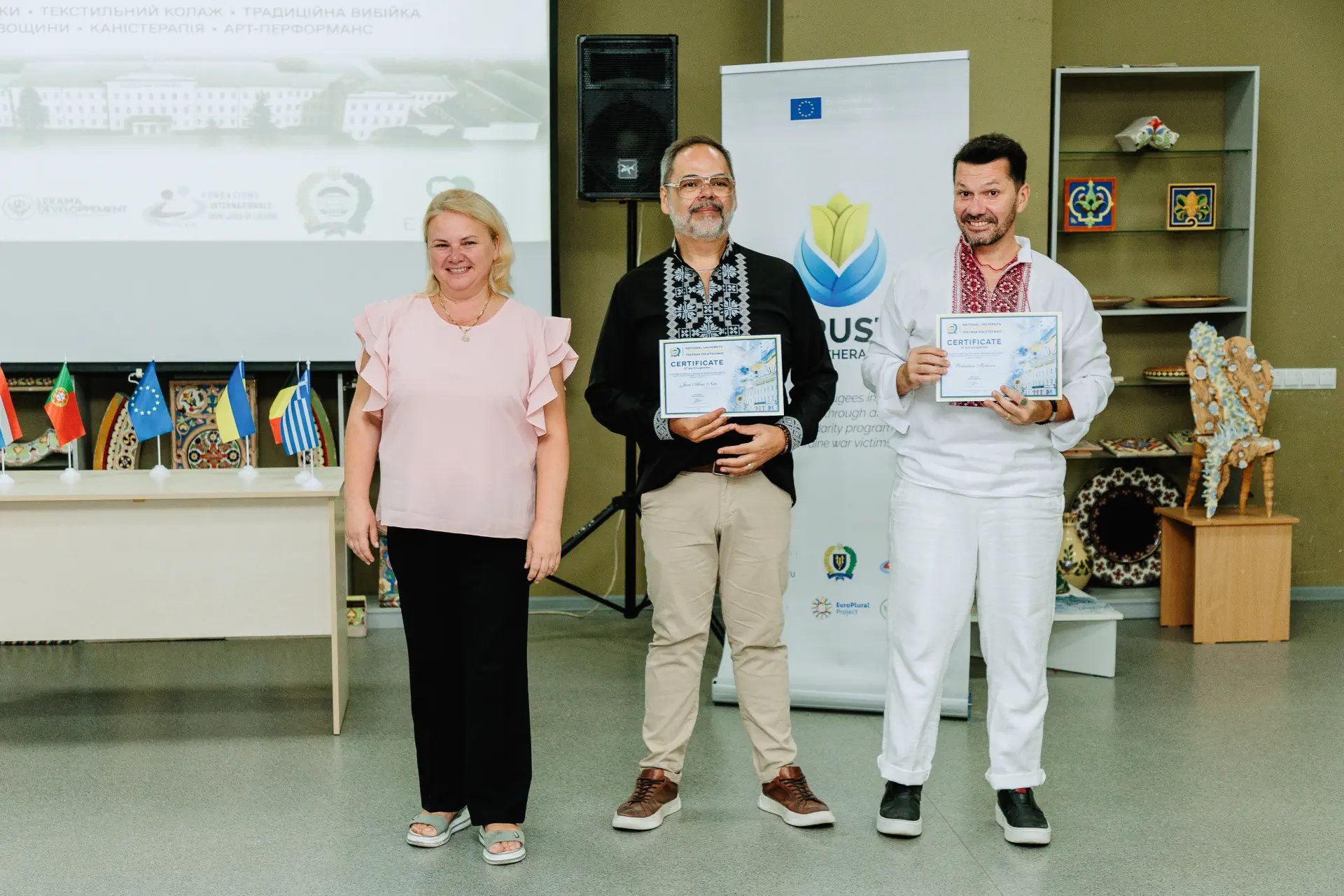
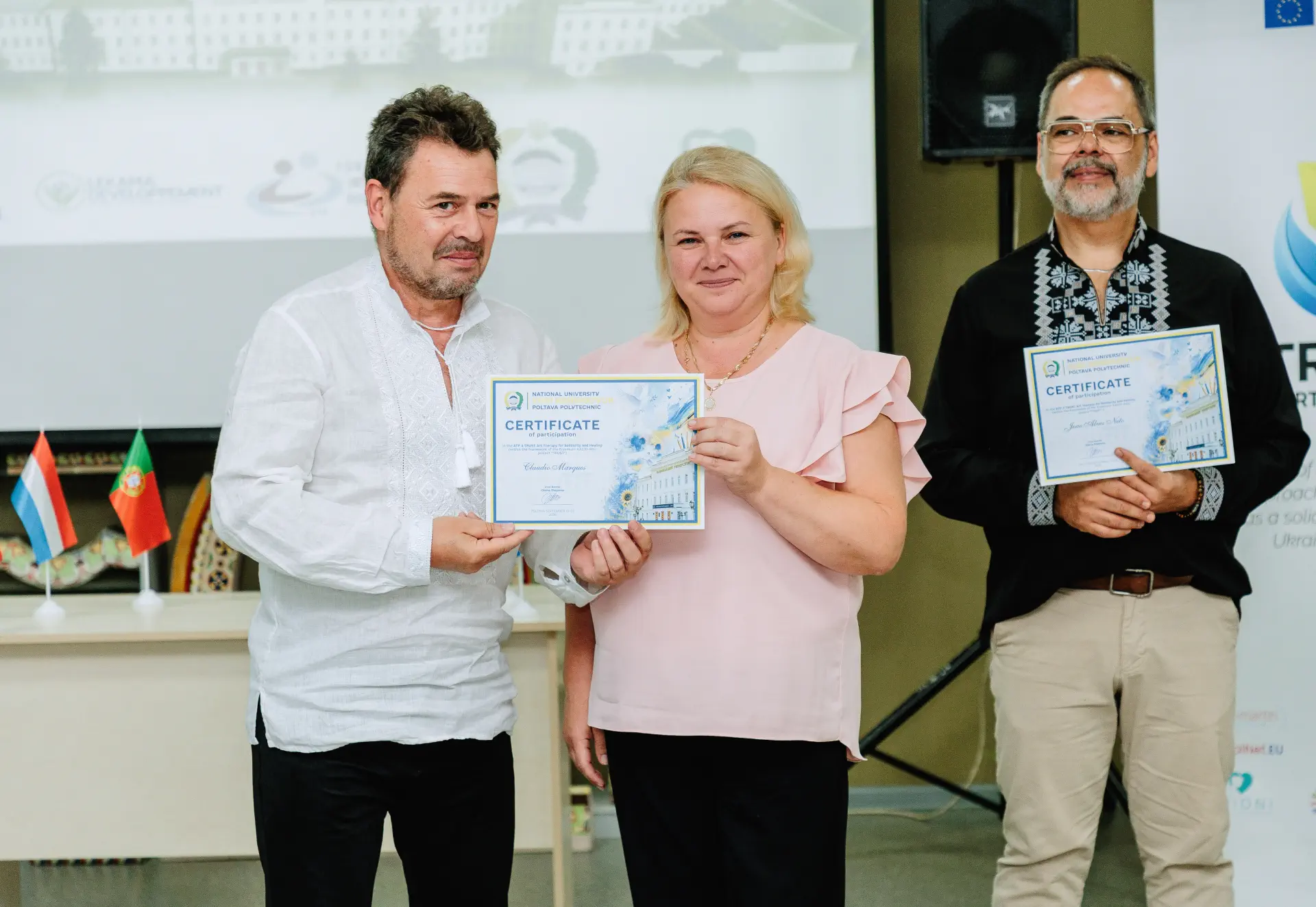
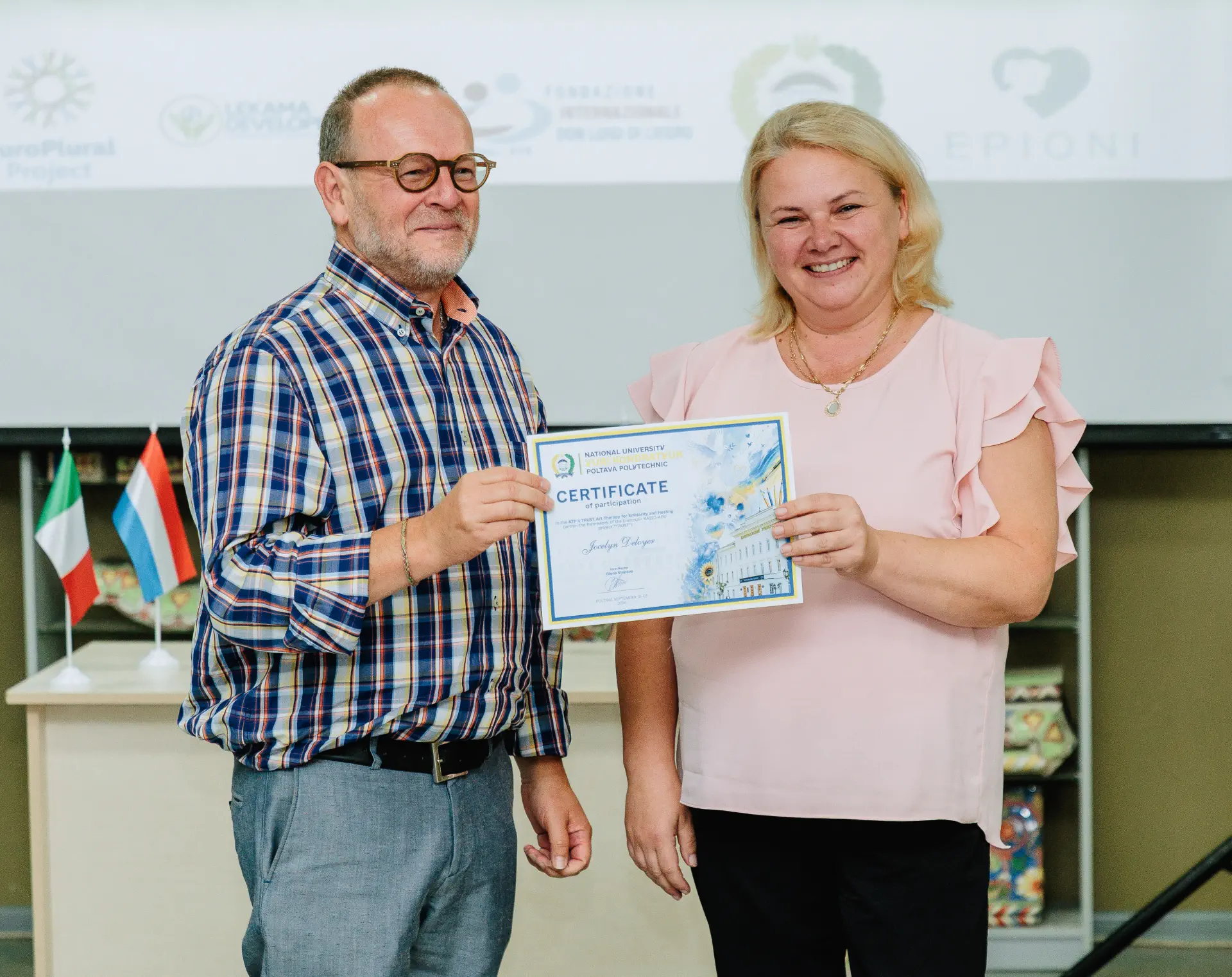
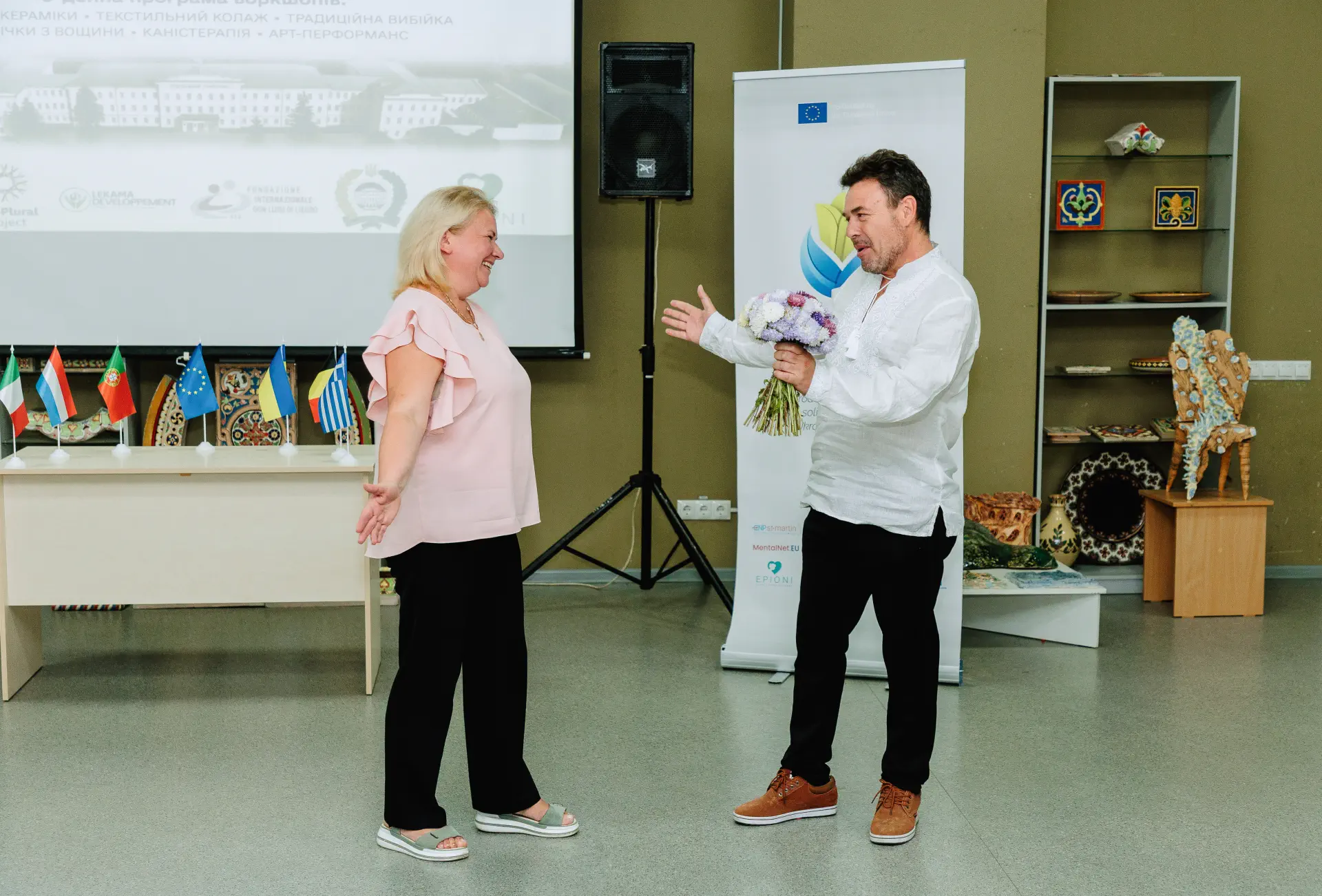
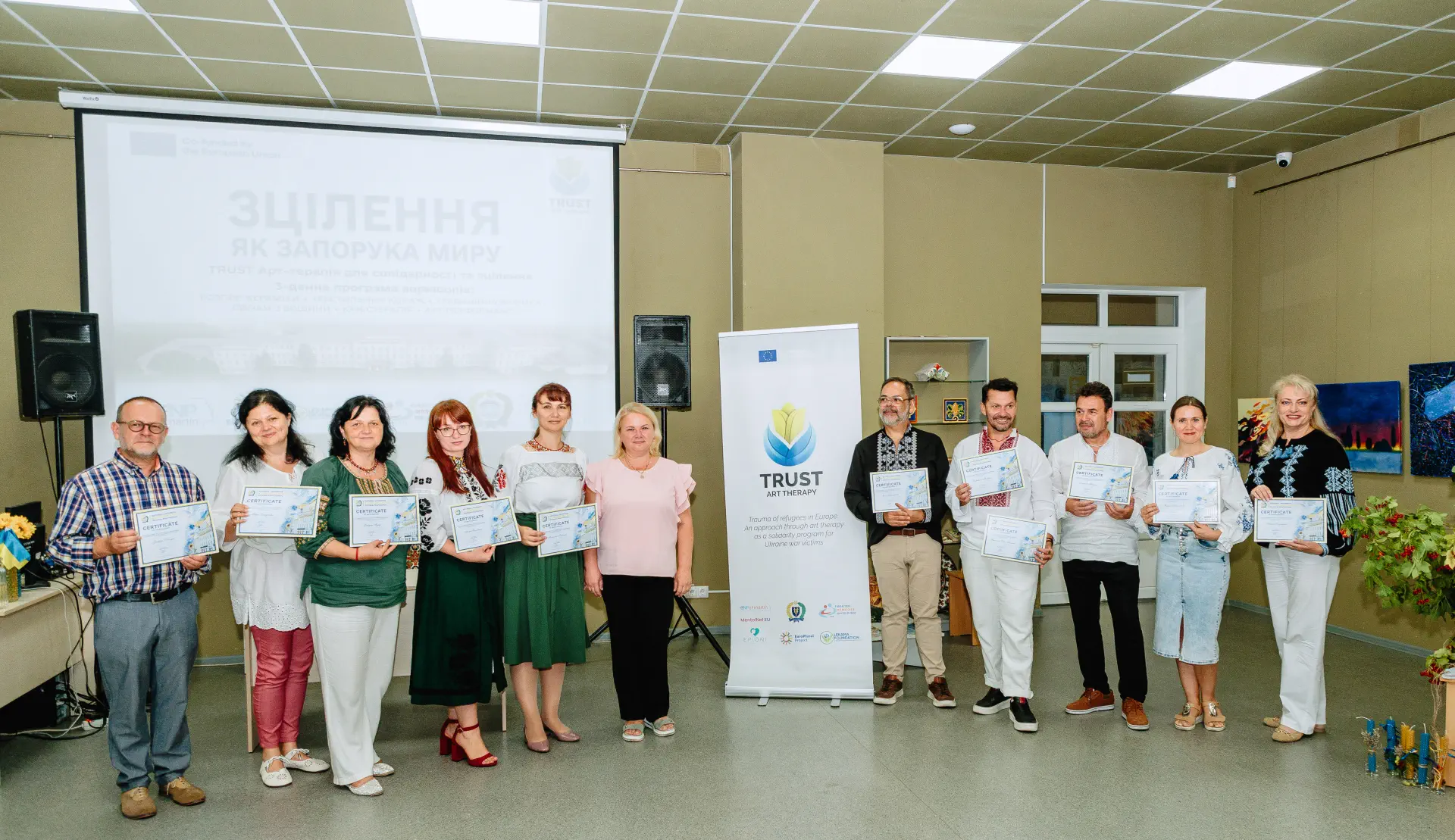
The final chord of the international meeting was the formal presentation of certificates attesting to the participation of partner-nation delegates in the ATP 4 international program, conducted in Ukraine under the auspices of the Erasmus+ TRUST project. The Vice-Rector for Scientific and Research Work of the National University “Yuri Kondratyuk Poltava Polytechnic”, Doctor of Technical Sciences, Professor Olena Stepova, conferred certificates on behalf of the university. This solemn occasion marked the symbolic culmination of three intensive days of joint labour, creative output, professional discourse, and intercultural engagement. At the same time, it marked another vital milestone in international cooperation centred on a unified objective: pursuing effective pathways to psychological support, rehabilitation, and recovery through artistic mediums.
The Ukrainian phase of the “TRUST” initiative drew to a close within the cordial atmosphere of a gala dinner. The evening focused on evaluating the outcomes of the delegation’s three-day stay in the hospitable Poltava region, mapping next steps within the project's work packages, and engaging in open exchanges of impressions.
The evening's highlight was a poignant psychological reflection circle, during which each participant concluded the deeply evocative statement: “To me, Ukraine today is...”. Devoid of superfluous rhetoric, with unfeigned sentiment and candid hearts, European guests and Ukrainian colleagues shared personal insights that had permanently reoriented their worldviews during their time in Poltava.
In their sincere reflections, international partners described contemporary Ukraine as an inexhaustible reservoir of valour, human dignity, and unyielding spirit. Foreign specialists spoke with particular reverence regarding the remarkable vitality of Ukrainian culture, which, amidst the ravages of war, does not merely preserve its heritage, but exerts tremendous therapeutic potency – comforting afflicted hearts, inspiring the European continent, and restoring confidence in tomorrow. Visitors conveyed their profound admiration for the scope and rigour of the Poltava programme's execution, the warmth of hospitality, and the steadfast capacity of Ukrainians to extend mutual care even amid air raid alarms and sounding sirens. For the international delegation, Ukraine stood as a testament to substantive solidarity, an unassailable devotion to life, and a sanctuary of unwavering light from which the global community must consistently draw lessons in steadfastness, humanity, and the defence of the paramount ideals of freedom.
In her formal remarks, International Relations Coordinator of Poltava Polytechnic Anna Pavelieva underscored the enduring historical significance of the accomplished work: “Today, we have brought to a successful conclusion a three-day practical session that will forever resonate in our hearts. We have demonstrated that even under the weight of the greatest trials, the university remains a vital citadel of education, scholarship, culture, and psychological care. We express our profoundest appreciation to our partners from Belgium – Claudio Marques, Jocelyn Deloyer, Hanna Samoilenko, and Olena Tiptsova – and our esteemed colleagues from Portugal – Rubielson Medeiros, João Alves Neto, Galyna Ilyuk, and Francisco Dias Oliveira. Your presence here, at the heart of Ukraine, represents an invaluable demonstration of solidarity.
I extend my sincere appreciation to our dedicated team: Maryna Teslenko, Hlib Kudriashov, Lesia Klevaka, Viktoriia Shevchuk, Olena Kryvenko, Anastasiia Vediuk, Yaroslav Perederii, Olena Ostrohliad, Oleksandr Khadartsev, Dariia Katrenko, Yuliia Nikolenko, trainer Elvira Popova, and our devoted students and volunteers.
I pay special homage and express my deepest gratitude to the President of our university, Professor Volodymyr Onyshchenko. His strong strategic leadership and unswerving conviction in our alma mater's European destiny have formed the enduring bedrock of Poltava Polytechnic's international standing. We convey our heartfelt appreciation to Volodymyr Oleksandrovych for his personal initiative and stewardship of major international grant endeavours, most notably the “TRUST” project, alongside his clear recognition that mental health, psycho-emotional restoration, and the rehabilitation of Ukrainians are critical imperatives of national security and sovereign resilience. Because of his unrelenting daily efforts to upgrade the material and technical base and establish an ultramodern, secure, and innovative infrastructure, our institution remains fully equipped—even amid the severe strains of full-scale war—to host international delegations at the highest diplomatic and academic standards. His boundless vigour, strategic foresight, ability to anticipate future demands, and personal example inspiring our community toward ambitious international achievements evoke the genuine esteem and deep respect of the entire university family.
I address separate, warmest expressions of gratitude to the Rector of the university, Associate Professor Olena Fylonych. Her direct patronage of the “TRUST” project, executive foresight, and genuine concern for the community provided the nurturing aegis under which this entire visit materialised. We are profoundly grateful to Olena Mykolaivna for her extensive day-to-day support of the project, her nuanced understanding of the essential need for psycho-emotional rehabilitation for Ukrainians in wartime, her holistic facilitation of innovative art-therapy methodologies, and for cultivating an advanced, secure environment for our European guests across the university campus. Her ability to motivate the team, unite the academic community around the principles of empathy, compassion, and solidarity, and infuse every undertaking with genuine human warmth commands admiration. Through her untiring devotion and compassionate leadership, Poltava Polytechnic is recognised globally today as a bastion of steadfastness and an inclusive European arena where wounded spirits find restorative solace.
Together, we laid a strong foundation for the next stages of the “TRUST” project, which will undoubtedly support the welfare of all individuals seeking psychological healing.
The day concluded with an evening walk through the historic centre of Poltava and an organised transfer to the hotel. The following day was designated for departure preparations and the journey home. Nevertheless, the spirit of fellowship forged within the halls of Poltava Polytechnic has henceforth established an enduring bond uniting Ukraine, Belgium, and Portugal in the noble pursuit of healing human hearts.
This synthesis of artistic expression, somatic therapy, and European solidarity affirmed that creativity can mend the wounds of war and chart a path toward comprehensive mental health recovery.