International academic mobility is a key instrument for integrating Ukrainian higher education into the European educational space. The European Union’s Erasmus+ programme offers students opportunities to study at partner universities, master new academic disciplines, enhance their foreign language competences, and develop the skills required to work in a multicultural environment. These opportunities take on particular significance during the full-scale war, when maintaining the continuity of education, international cooperation, and the professional development of Ukrainian youth is a vital investment in the future of the state.
For future specialists in tourism and recreation, such experience holds particular value. First-hand acquaintance with the cultural heritage, urban environment, tourism infrastructure, and socio-economic processes of European countries complements university training with practical observations and fosters intercultural sensitivity, independence, and readiness for professional cooperation with international partners.
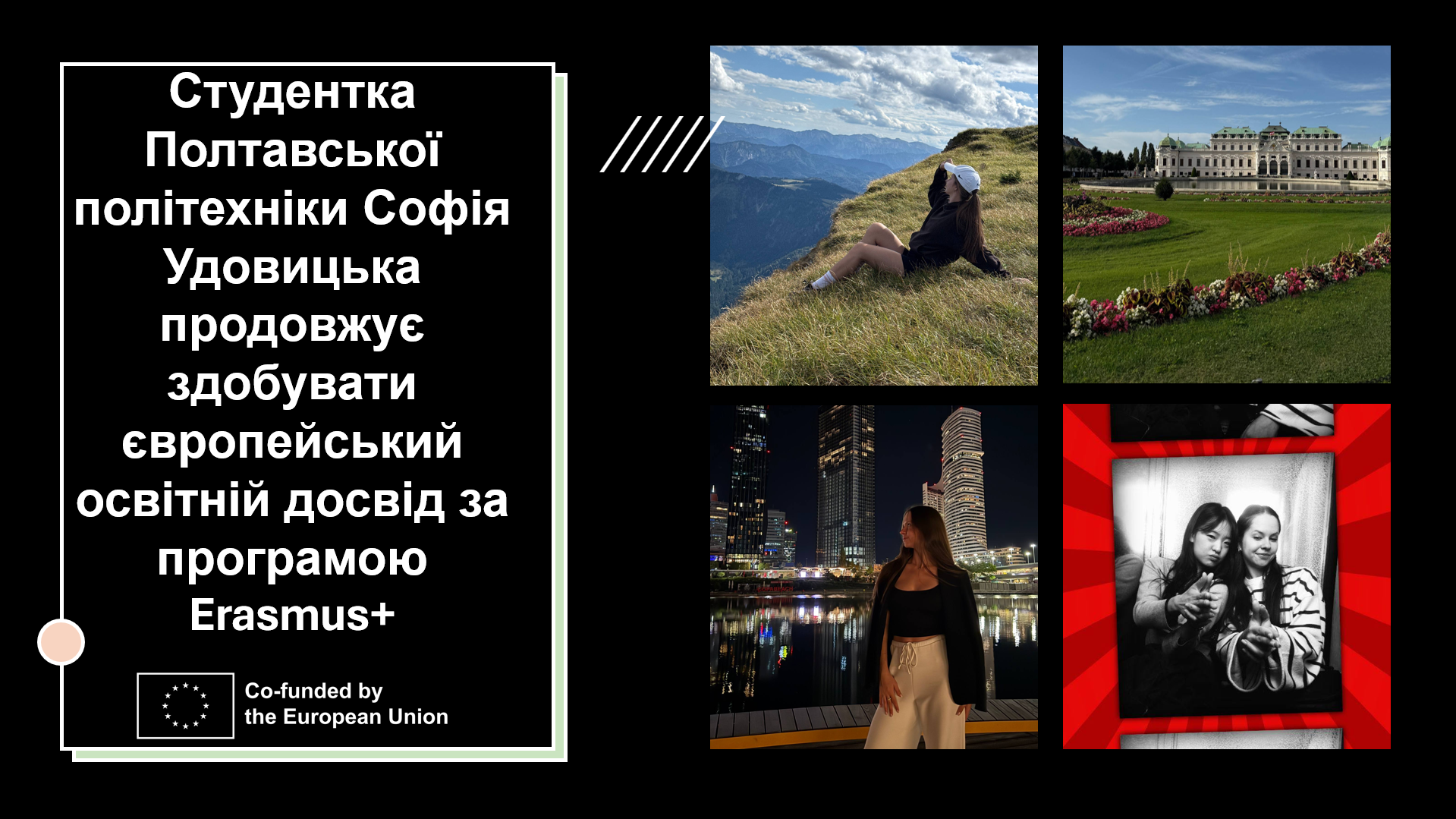
National University “Yuri Kondratyuk Poltava Polytechnic” consistently develops partnerships with foreign higher education institutions and facilitates the participation of its students in ICM programmes. One example is the educational trajectory of Sofiia Udovytska, a fourth-year student in Group 401-ET of Speciality 242 “Tourism and Recreation”, who has joined a semester-long study programme in Austria under the Erasmus+ programme for the second time.
During the autumn semester of the 2025/2026 academic year, Sofiia studied at the University of Applied Sciences Burgenland (Hochschule Burgenland) in Eisenstadt. During this time, she became acquainted with practice-oriented teaching approaches, completed group projects, developed intercultural communication skills, and explored Europe's cultural diversity. Further details about this stage of her academic journey can be found in publications on her initial impressions of her studies and the successful completion of her Erasmus+ semester.
The University of Applied Sciences BFI Vienna has become a new stage in Sofiia’s international experience. From 31 August 2026 to 30 January 2027, she is undertaking academic mobility there as part of the autumn semester of the 2026/2027 academic year. Her study programme combines international marketing, intercultural and project management, Austrian language and culture, and economic development and European integration.
Sofiia Udovytska shares her personal reflections on studying in Vienna, interactive classes, a team project dedicated to creating a book about the districts of the Austrian capital, her first acquaintances, and student life: “Studying abroad under an academic mobility programme has become for me not only an opportunity to acquire new knowledge, but also a genuine test of my own independence, openness, and readiness for change. Throughout this semester, I have been studying at the University of Applied Sciences BFI Vienna, and I can already state with confidence that this experience has exceeded my boldest expectations. I have been allowed to observe Europe’s economic and social processes from within while living in one of the continent’s capitals richest in cultural and historical heritage.
From my very first days in Vienna, I was impressed by the atmosphere of openness, respect, and support that prevails at the university. The educational process is structured so that students feel not like passive listeners, but like full-fledged participants in learning. The university’s lecturers are exceptionally professional and welcoming: they explain even complex material simply, logically, and coherently, and are always ready to answer questions and encourage discussion. This approach to teaching significantly reduces the distance between student and lecturer and motivates active engagement in class.
The curriculum comprises five disciplines, each with distinct value and contributing to an overall understanding of the international environment: “Austrian Language and Culture”, “Intercultural Project Management”, “International Marketing”, “Intercultural Management”, and “European Economic Development & EU Integration”. Studying Austrian language and culture has given me the opportunity to become better acquainted with the distinctive features of life in Austria, its traditions, and its cultural values. International marketing helps to understand the principles of promoting goods and services across different markets, researching consumer behaviour, and formulating marketing strategies. The discipline “Intercultural Management” focuses on interactions among people from diverse cultures, differences in business communication, and the management of international teams. “Intercultural Project Management” provides insight into the principles of planning, organising, and implementing projects in a multicultural environment. At the same time, “European Economic Development & EU Integration” deepens my understanding of economic development in European countries and integration processes within the European Union. This diversity in the curriculum allows me to combine theoretical knowledge with practical skills that will be valuable for my future professional career in tourism.
I would particularly like to highlight the modern teaching methodologies employed at the university. The learning process is not limited to traditional lectures and the assimilation of theoretical material; rather, it involves students actively engaging in practical work, discussions, real-world case analyses, and collaborative projects. Considerable attention is devoted to group work, through which students from different countries can exchange experiences, perspectives, and ideas, and learn to find common solutions and cooperate effectively.
For instance, in “International Marketing”, we work on practical case studies, analyse corporate operations, research markets, and develop marketing solutions tailored to the specific characteristics of different countries. The assignment in “Intercultural Project Management” is particularly engaging: our group is creating our own book comparing two districts of Vienna. To this end, we research their history, development patterns, cultural heritage, infrastructure, and contemporary life. This format allows us not only to consolidate our project management knowledge, but also to gain a deeper understanding of the city we study.
In addition, classes frequently incorporate presentations, team discussions, and practical tasks that foster critical thinking, communication skills, and the ability to apply acquired knowledge in real-life situations. In my opinion, this approach makes learning considerably more engaging, more effective, and closely aligned with future professional practice.
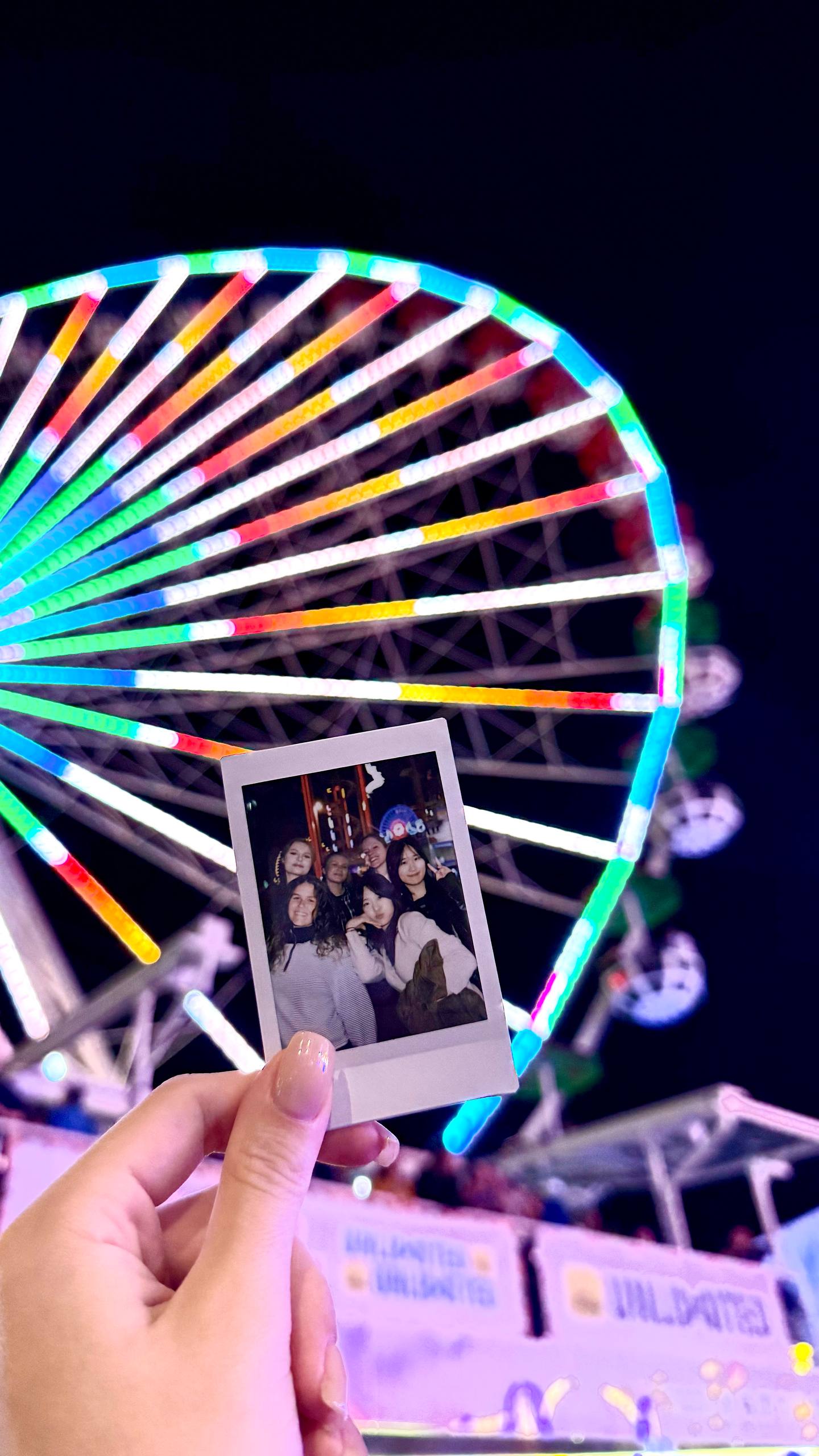
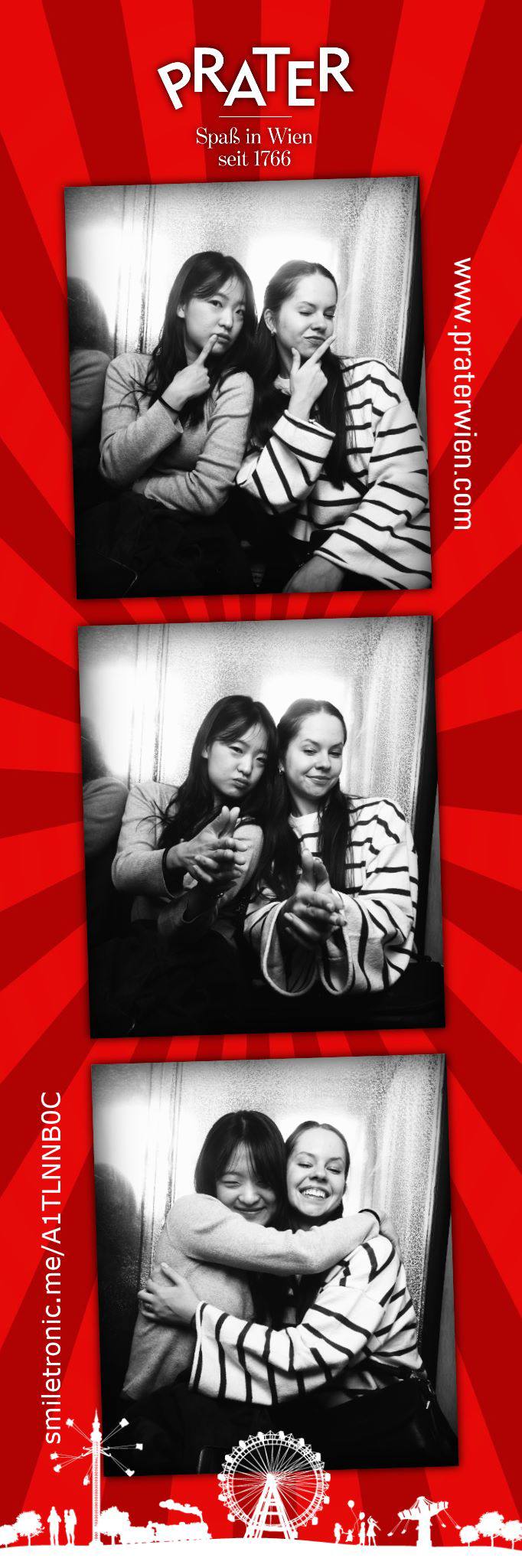
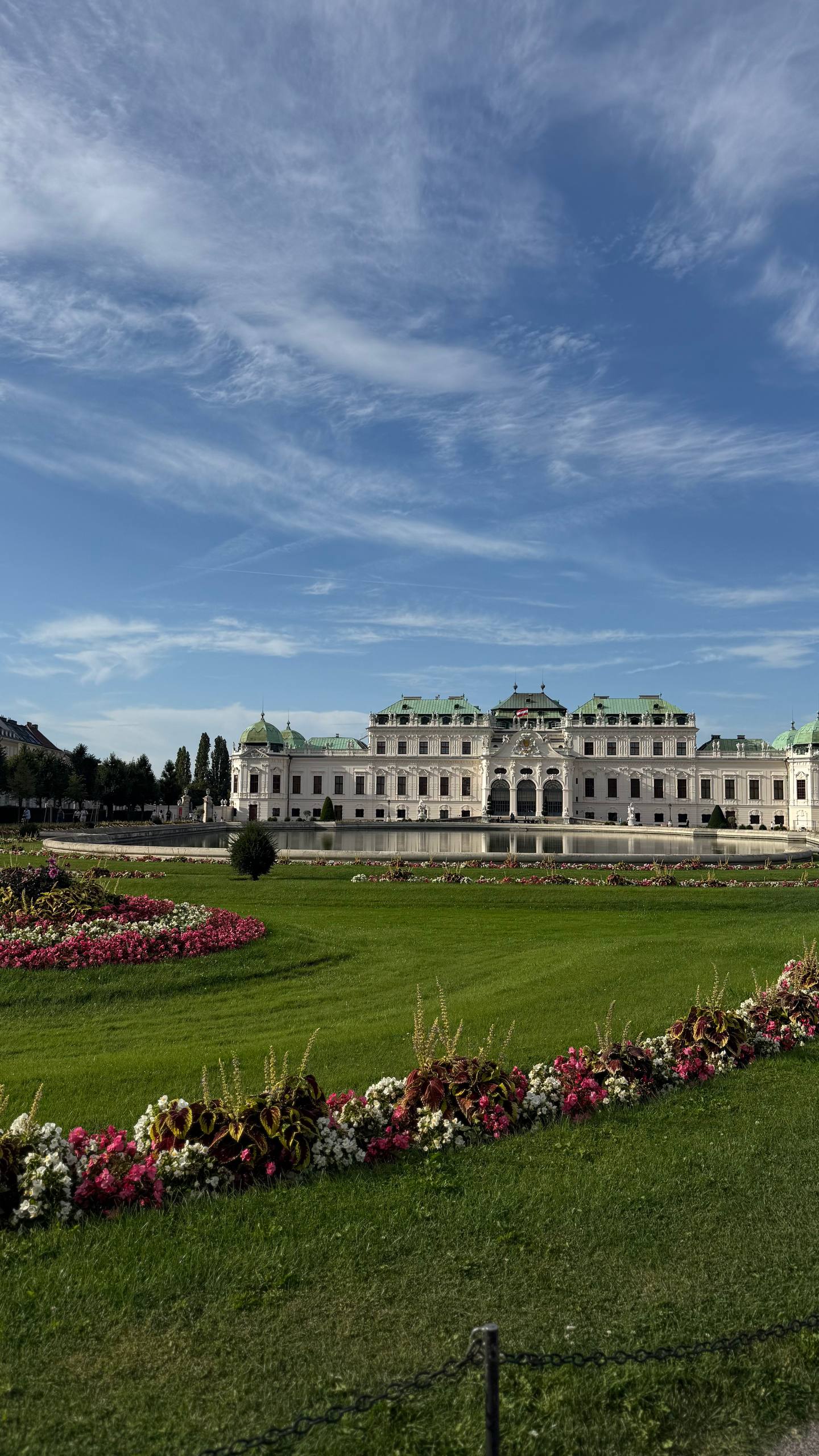
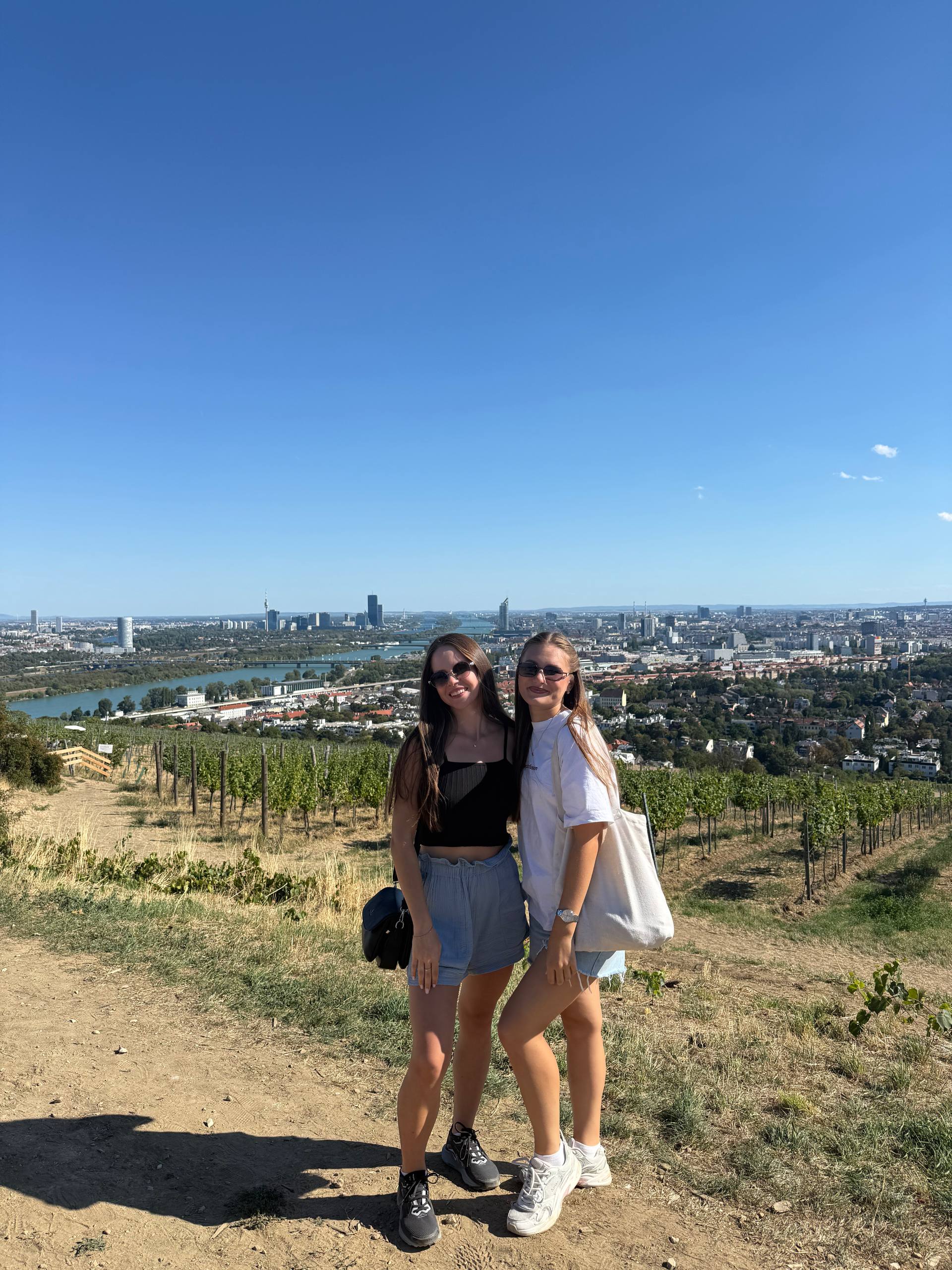
An equally important component of my experience was my first two weeks in Vienna, which remain in my memory as an exceptionally eventful and warm period. The university devoted substantial attention to helping international students adapt, enabling us to get to know one another calmly even before the main academic rhythm began. We talked, exchanged our initial impressions, and walked around the city together, discovering its streets, squares, parks, and cafés. These joint walks helped us quickly overcome natural shyness, make our first friends, and feel part of the international student community. Thanks to this, the adaptation period passed easily and pleasantly, and the new city soon stopped feeling unfamiliar.
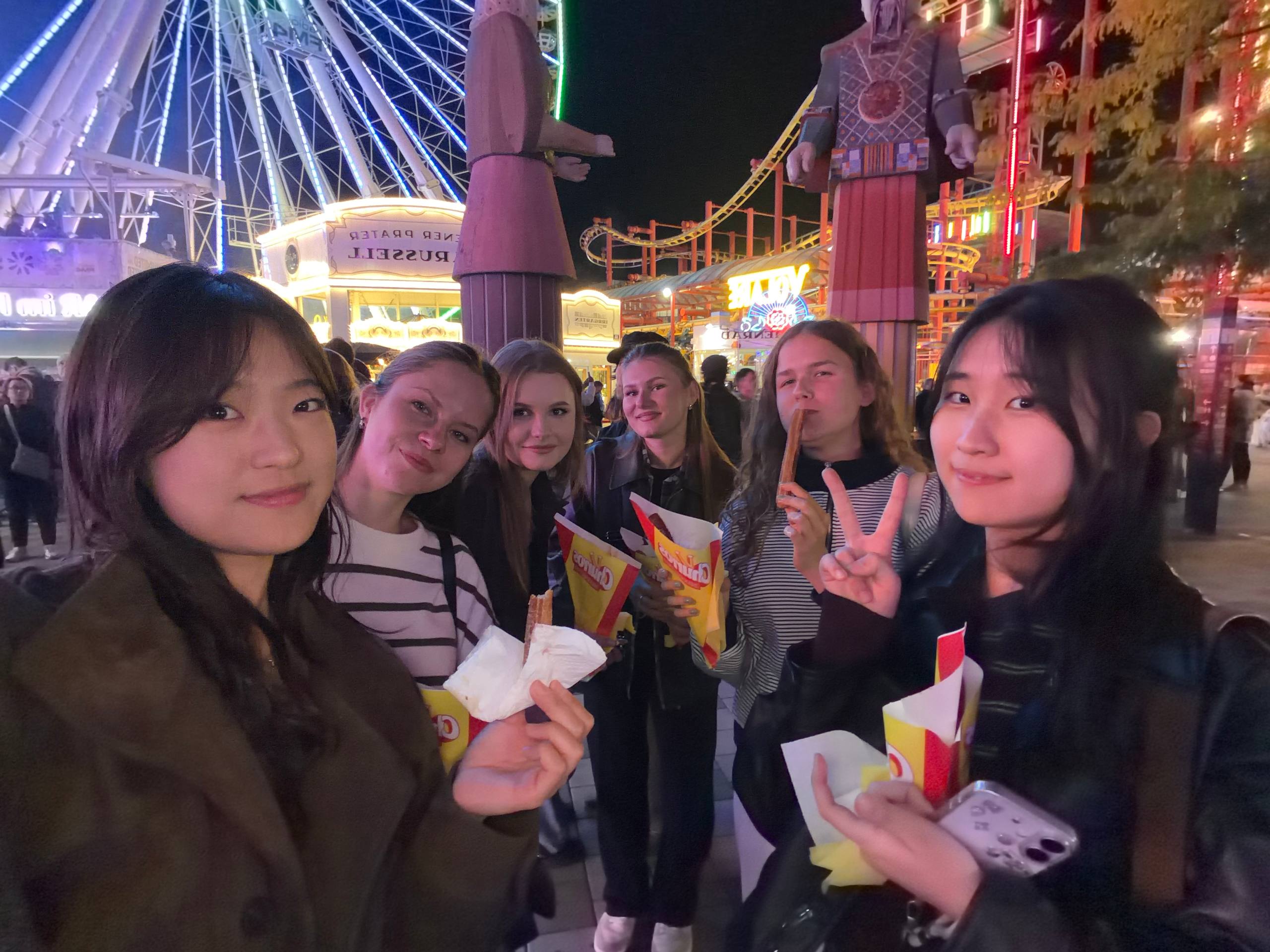
I want to express my special gratitude to the Erasmus Student Network (ESN) team, which plays an important role in international students' lives. This student organisation arranges various events, gatherings, and joint activities, and also organises trips across Austria, allowing students to explore the country beyond academic study. Participating in such travels makes it possible to see different regions of the country, become acquainted with local culture, traditions, and nature, and, most importantly, to do so in the company of students from diverse nations.
In conclusion, I would like to emphasise that studying at the University of Applied Sciences BFI Vienna brings me genuine satisfaction. The combination of high-quality education, professional and approachable lecturers, engaging disciplines, a friendly international atmosphere, and vibrant student life makes this semester one of the most significant stages of my education. I am convinced that the knowledge I gain here, the new acquaintances I make, and the experience of living and studying in another country will form a solid foundation for my future professional career.
I express my sincere gratitude to National University “Yuri Kondratyuk Poltava Polytechnic” for the opportunity to join the academic mobility programme and open new horizons for myself. I especially value the support of the university leadership, the International Relations Office, and my lecturers, thanks to which I can continue my international educational pathway, grow professionally, and represent my home university and Ukraine abroad”, – shares Sofiia.
Sofiia’s experience shows how consistent participation in academic mobility programmes gradually expands professional horizons: from becoming familiar with practice-oriented education in Eisenstadt to mastering international marketing, intercultural management, and European economics in Vienna. Such opportunities contribute not only to students' personal growth but also to strengthening long-term ties between Ukrainian and European universities.
Poltava Polytechnic’s partnership with the University of Applied Sciences BFI Vienna has a strong track record: students from various specialities have repeatedly gained international academic experience there, become familiar with modern educational approaches, and represented the university on the international stage.
In particular, Management student Kateryna Bondarenko continued her studies in Vienna under the Erasmus+ programme. You can read her initial impressions of studying at the University of Applied Sciences BFI Vienna here and here.
In previous years, Tetiana Holub and Karyna Kalnyk also participated in the academic mobility programme at this higher education institution. Their experience and impressions of studying there can be found in the first publication and the second publication. In the 2023/2024 academic year, Oleksandra Kurylo and Veronika Melnyk, as well as Kseniia Kolomiiets, studied at the university.
This continuity of student stories attests to the sustainability of the academic partnership and the importance of access to international educational opportunities. We are proud of Sofiia Udovytska, who represents Poltava Polytechnic and Ukraine with distinction, and we wish her a successful semester in Vienna, inspiration, new professional achievements, and continued application of the competences she has acquired in the field of tourism and recreation.
As a reminder, faculty members of Poltava Polytechnic are eligible to participate in academic mobility programmes and internships. At the same time, students may study abroad under Erasmus+ credit academic mobility grant programmes for a semester or a full academic year at partner universities in Austria, Greenland, Denmark, Estonia, Spain, Lithuania, Latvia, Norway, the Netherlands, Germany, Poland, Portugal, Romania, Slovakia, Finland, and the Czech Republic.
For more detailed information on current internship, teaching, and academic mobility programmes abroad, please contact the International Relations Office of Poltava Polytechnic (Room 213-C, interoffice@nupp.edu.ua).