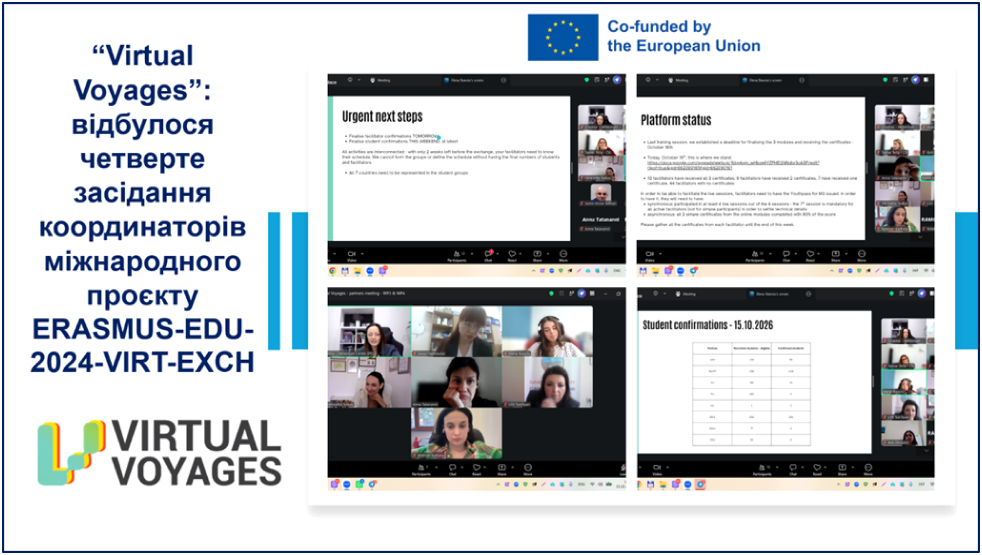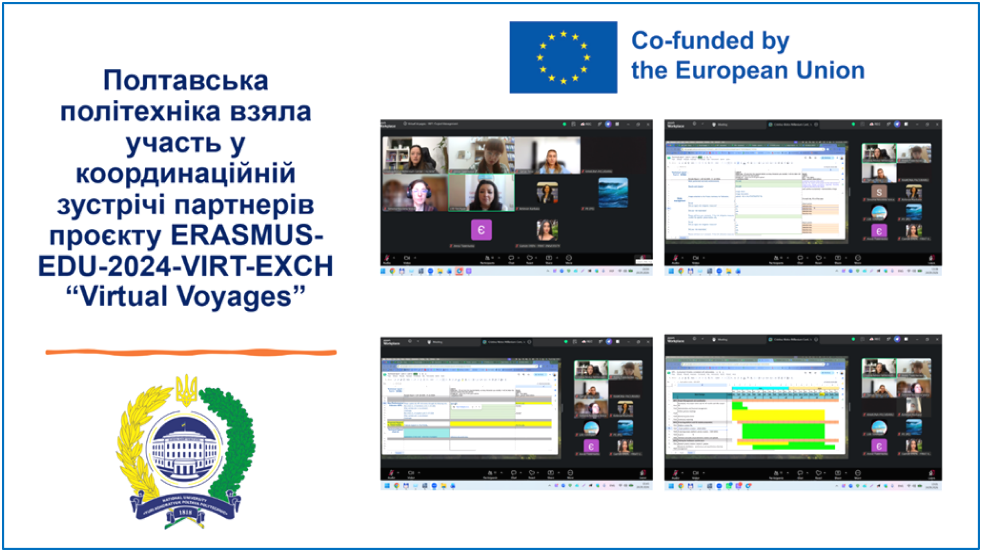
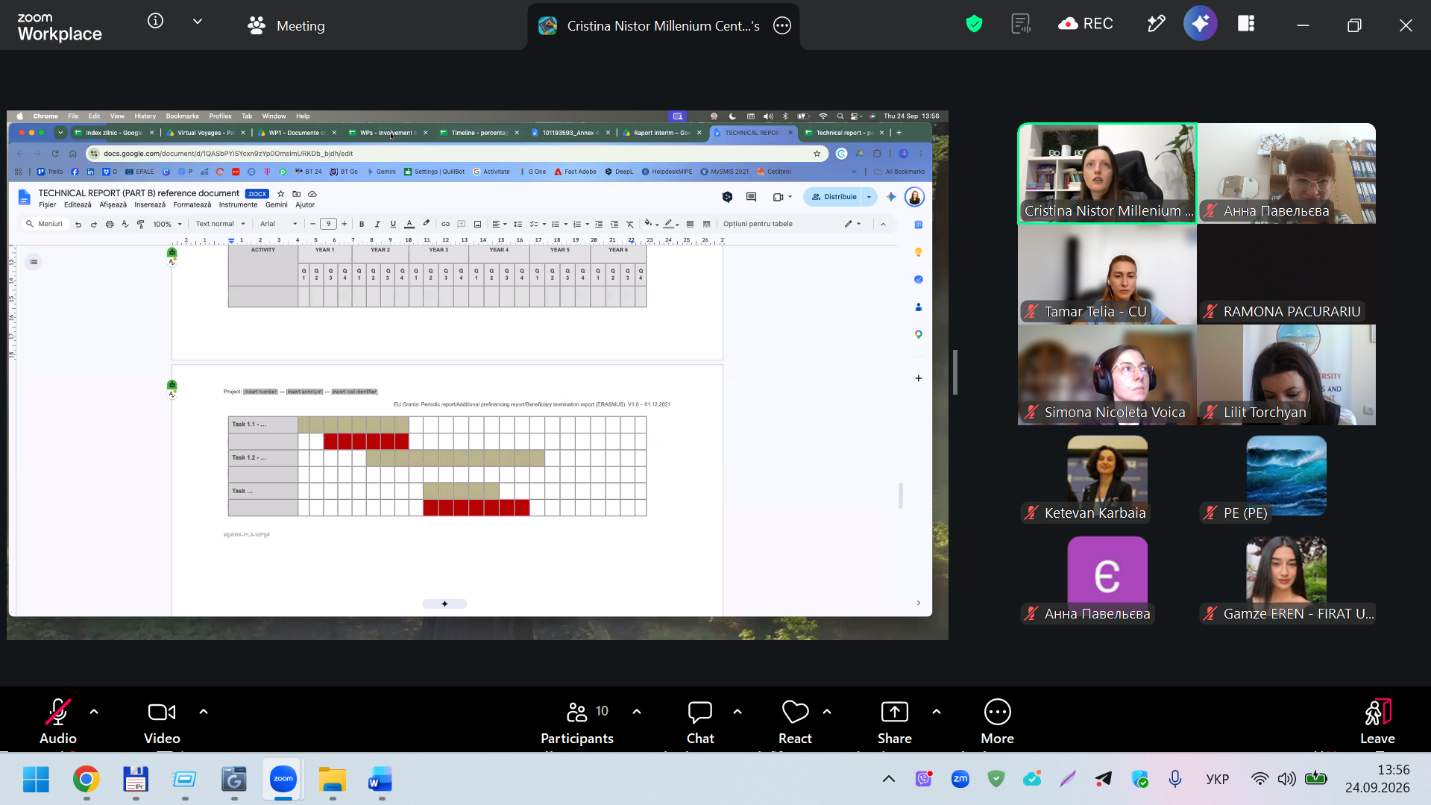
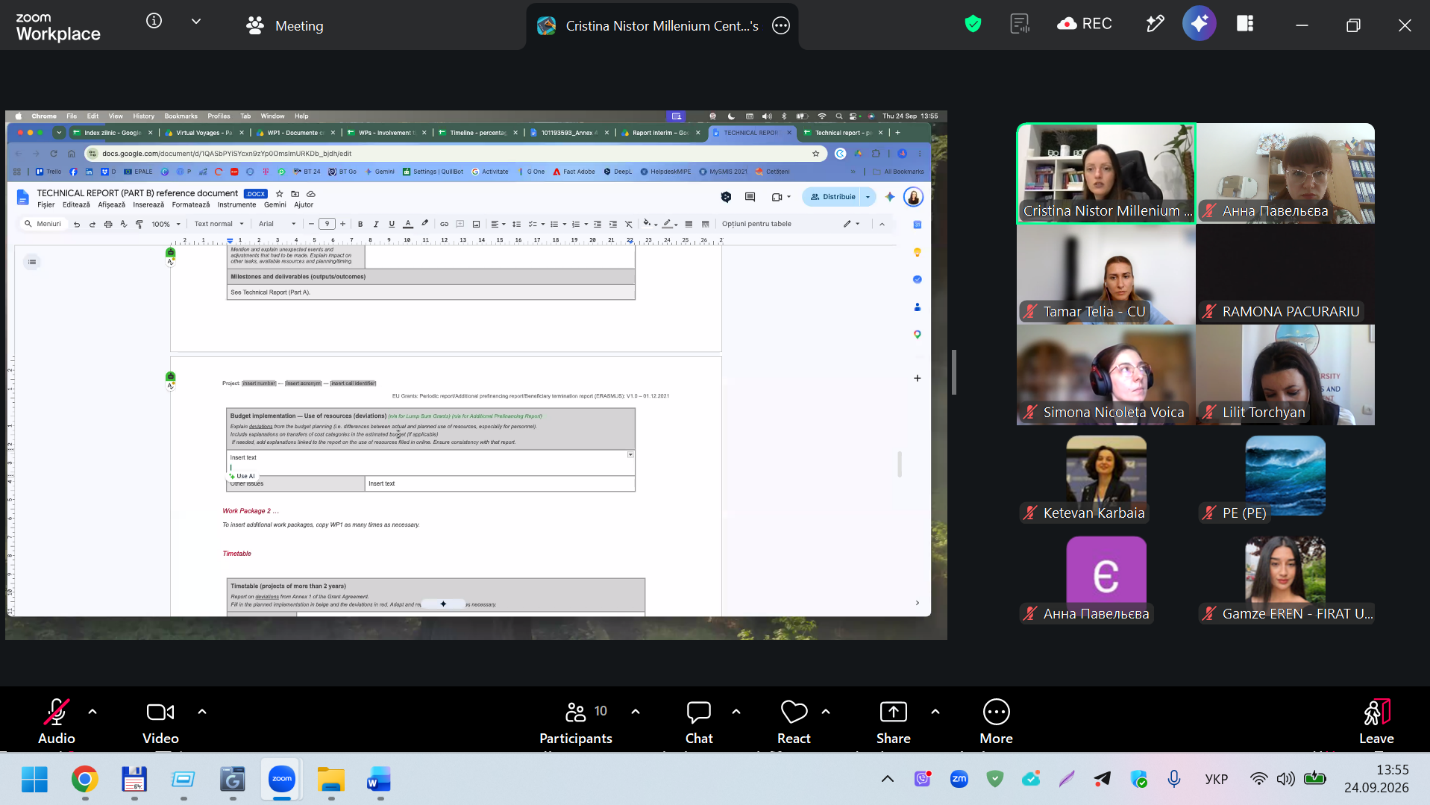
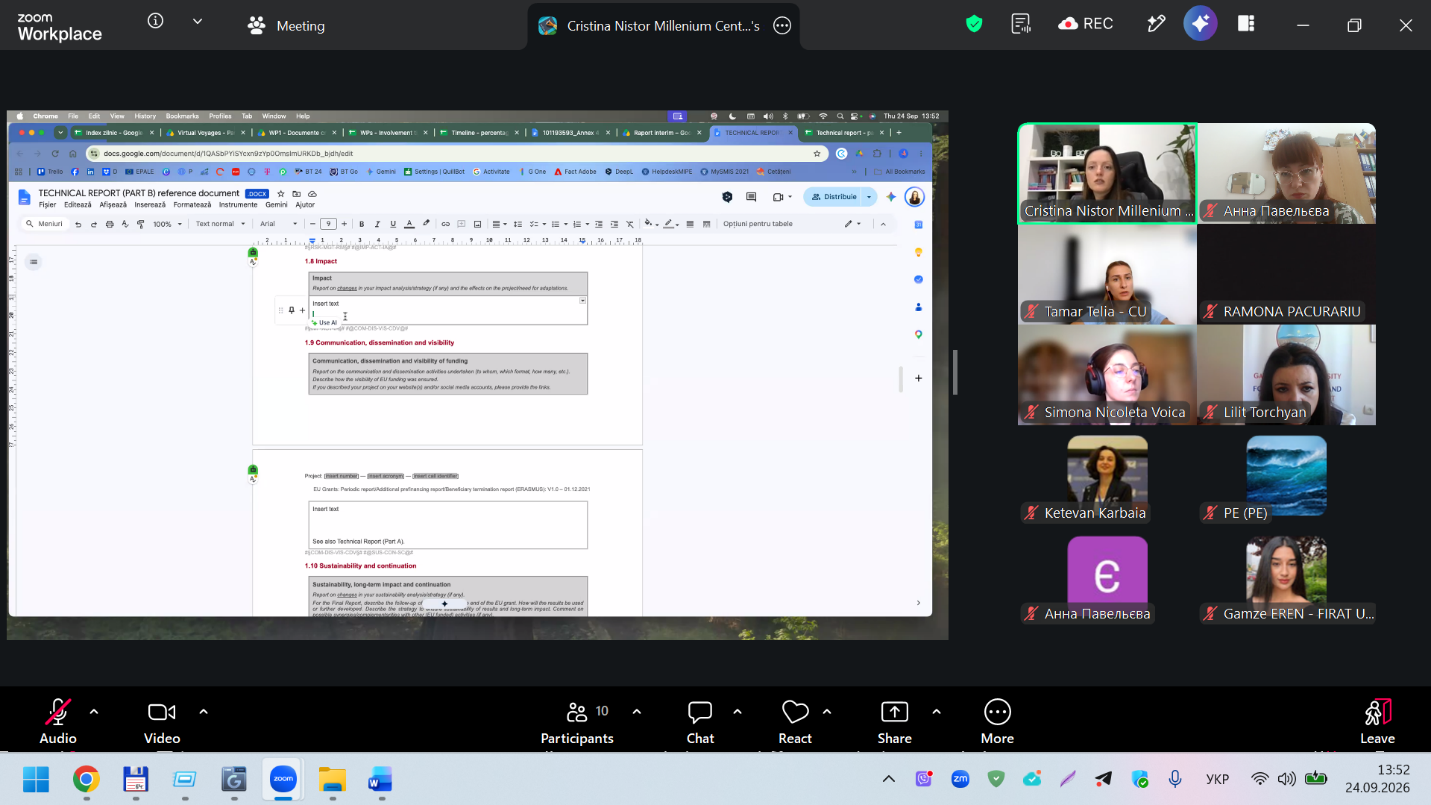
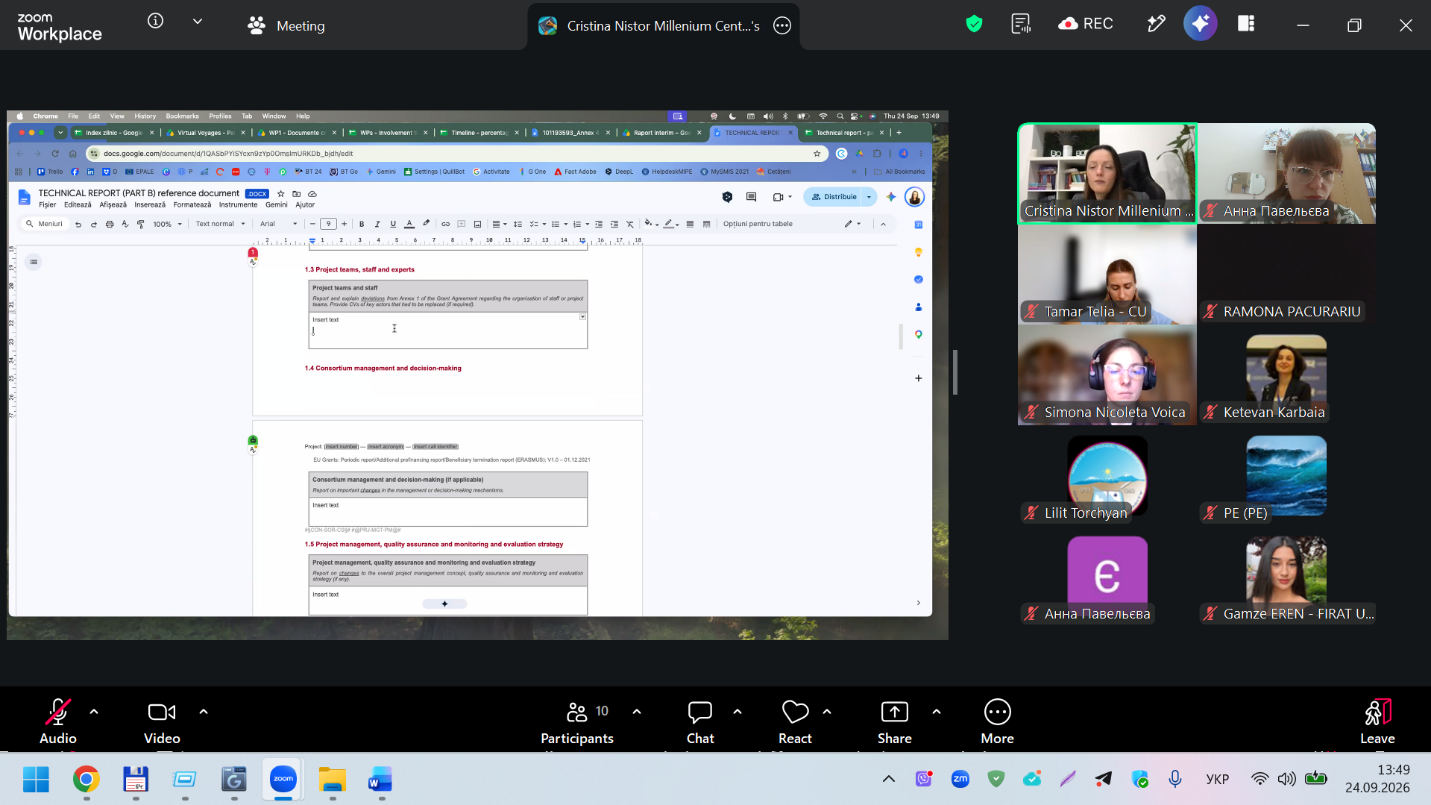
On September 24, 2026, the partners of the international project “Acquiring Transversal Competences through Virtual Voyages” (registration number ERASMUS-EDU-2024-VIRT-EXCH No. 101193593), implemented under the European Union’s Erasmus+ programme in the field of virtual exchanges in higher education and youth, held a regular extended online coordination meeting. The event brought together work package leaders, coordinators, and project managers from partner universities and non-governmental organisations to comprehensively evaluate the current project dynamics, summarise the outcomes of the completed phase, and agree on a roadmap for forthcoming joint actions.
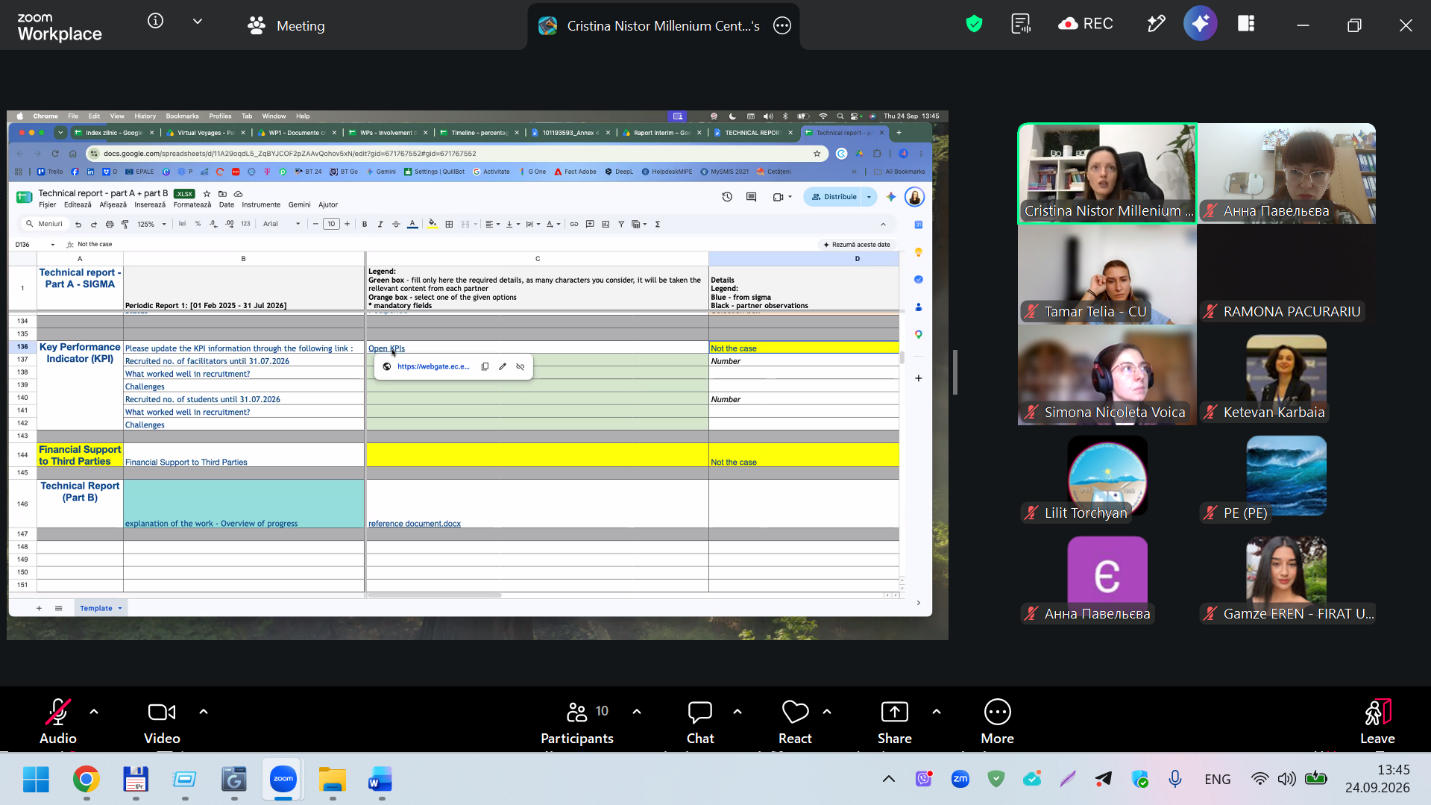
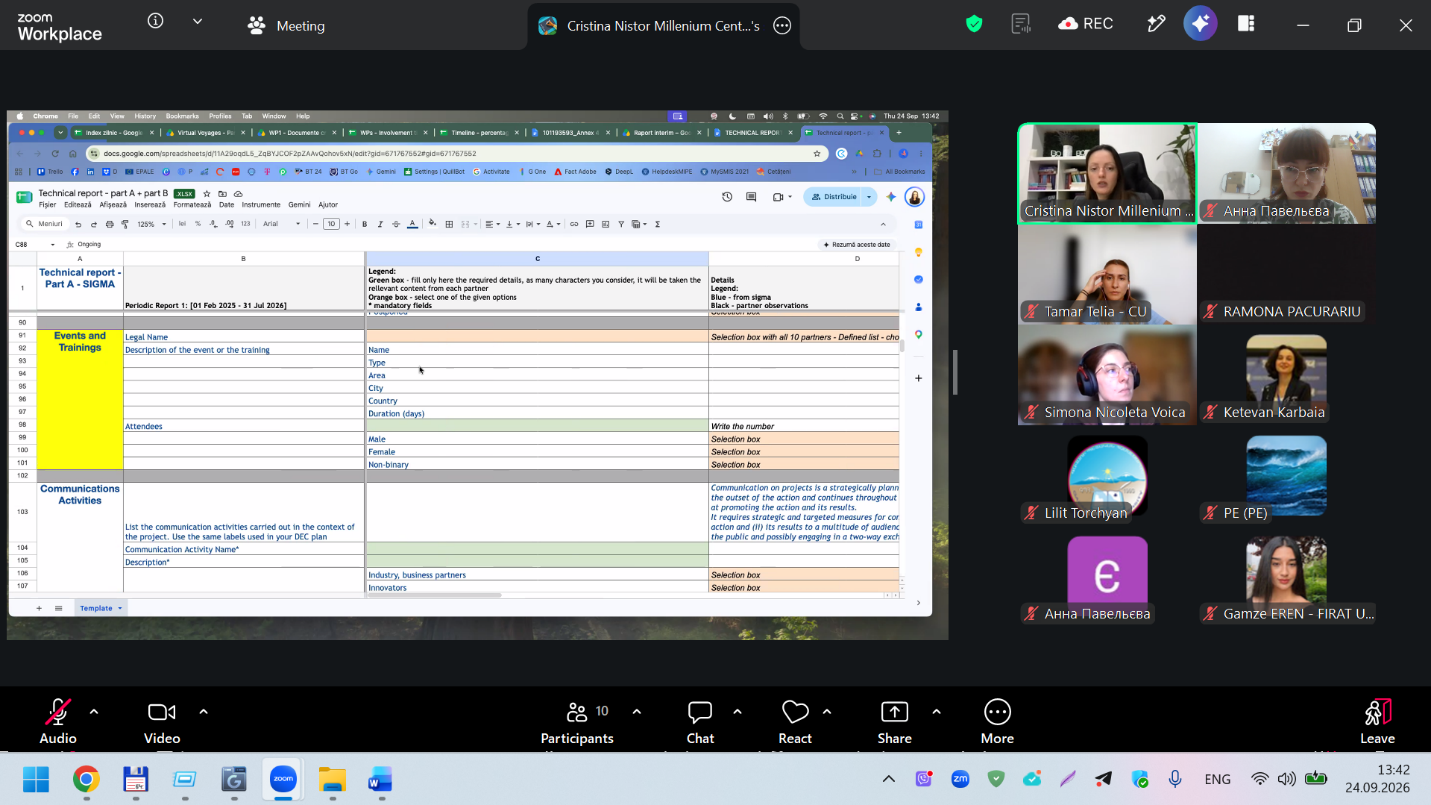
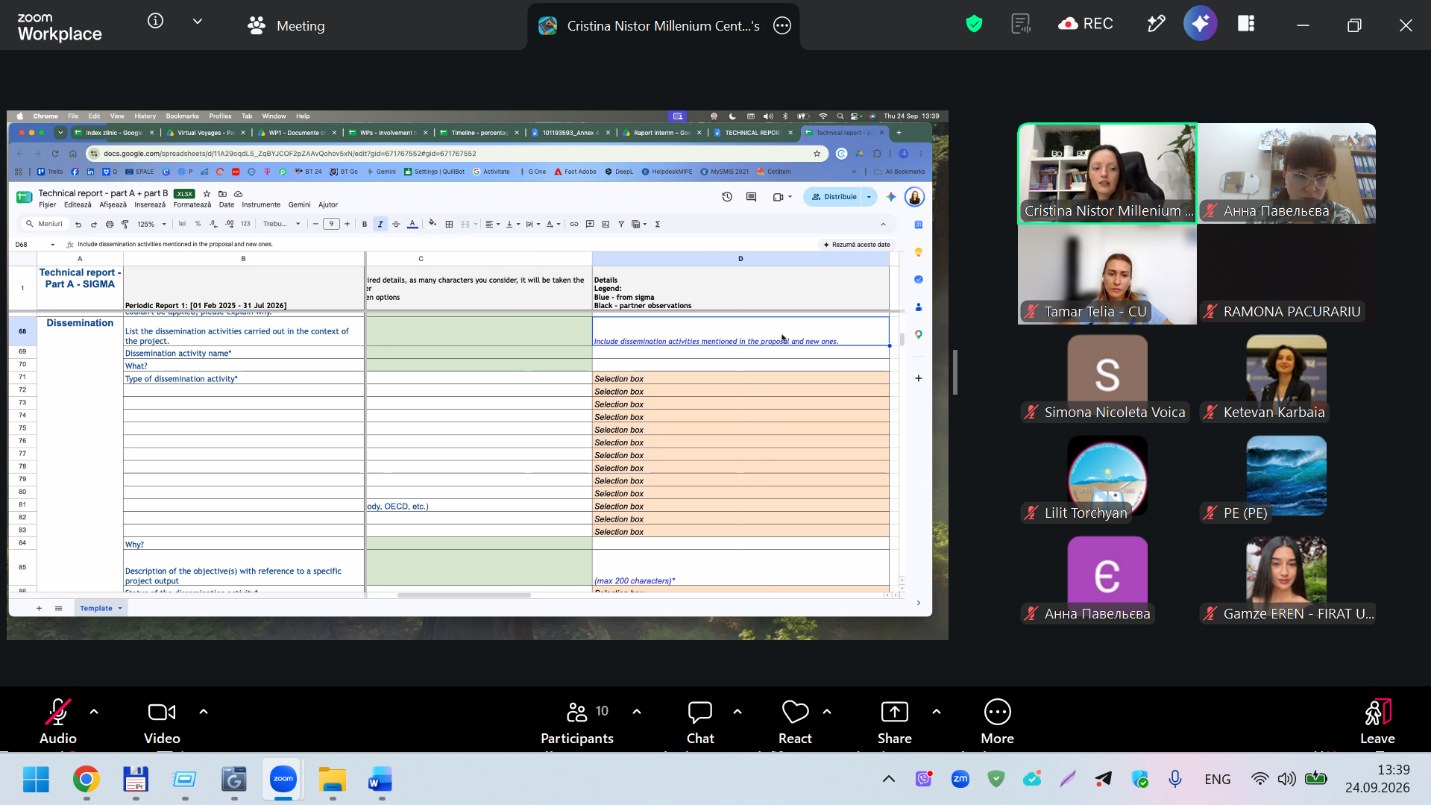
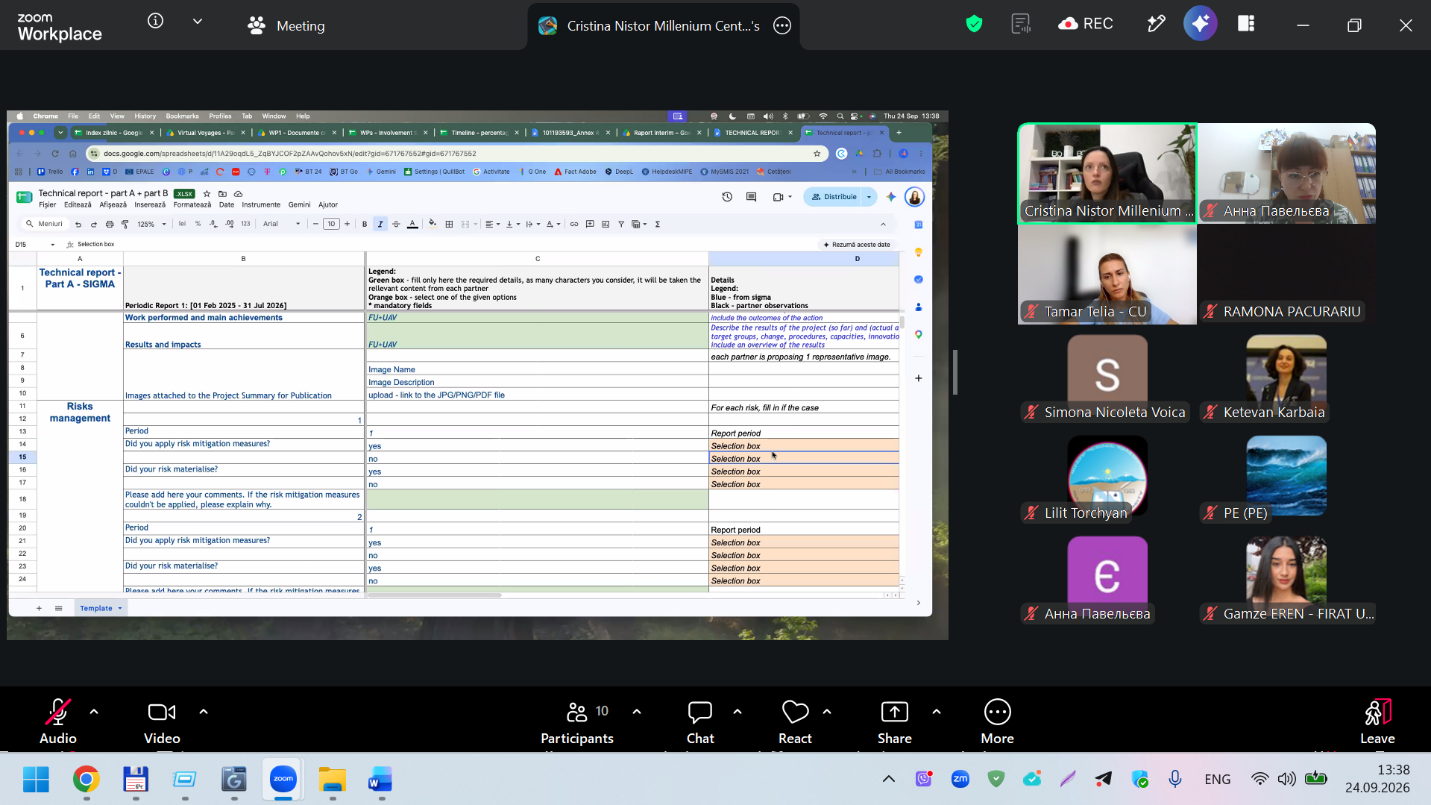
The central agenda item was preparing the consortium’s midterm report, documenting the international team’s achievements over the first eighteen months of project implementation. Participants thoroughly analysed progress against key performance indicators (KPIs), updated the Gantt chart timelines, and reviewed the status of technical documentation on the European Commission’s official platform. The partners focused on consolidating each partner's contributions, monitoring institutional milestones, managing potential risks, and ensuring transparency in resource allocation, enabling the consortium to advance steadily in line with the Grant Agreement's initial commitments.
A substantial portion of the discussion focused on the project's educational and digital ecosystem, which shows steady, high-quality progress. The partners commended the technical and methodological teams for their extensive work, which resulted in the full deployment of three interactive modules on the learning platform: “Learning to Learn”, “Career Box”, and “Train the Trainers”. The platform received an updated visual design, integrated digital educational games (e-games), and audiovisual materials designed to foster future participants' engagement. Concurrently, the team established next steps for electronic study guides: content will undergo cyclical refinement based on participant feedback after each educational phase, ensuring the resources remain academically high quality.
A key component of successfully implementing virtual exchanges is professional training for facilitators who will directly mentor student cohorts in cross-cultural dialogue. Consortium representatives reviewed the progress of training tracks, where participants are already successfully integrating asynchronous independent study on the digital platform with synchronous interactive live sessions. Enrolment rates across partner universities confirmed strong motivation among young professionals and academic staff to master online moderation methods, manage group dynamics, and address communication case studies, laying a robust foundation for comfortable interaction within future international teams.
In parallel, the team reviewed the outcomes of the student recruitment campaign conducted across higher education institutions in all participating countries. The partners verified the compiled rosters of participants for the first cohort, confirmed their eligibility against participation criteria, and discussed organisational procedures for actively engaging them in the learning journeys. The students will soon embark on collaborative work in intercultural groups, fostering critical thinking, teamwork capabilities, intercultural understanding, and digital literacy – essential transversal competences crucial to their future career paths.
The project devoted considerable attention to dissemination and ensuring the long-term sustainability of its results. Coordinators harmonised outreach initiatives, the scheduling of publications in the media and on the partner institutions’ social networks, as well as the promotion of project achievements on university portals. A vital strategic priority remains the institutionalisation of the developed modules: partners continue working to integrate these courses into the regular curricula of their home institutions, offering students formal ECTS credit transfer options.
The meeting took place in an open, cordial, and genuinely collaborative atmosphere, reaffirming the consortium’s steadfast dedication to the shared objective. In the near future, a series of focused meetings for virtual exchange coordinators will be held to finalise session timetables and initiate the active phase of student intercultural engagement. The project continues to make confident strides forward, opening new pathways for the internationalisation of education and the integration of the European higher education area.
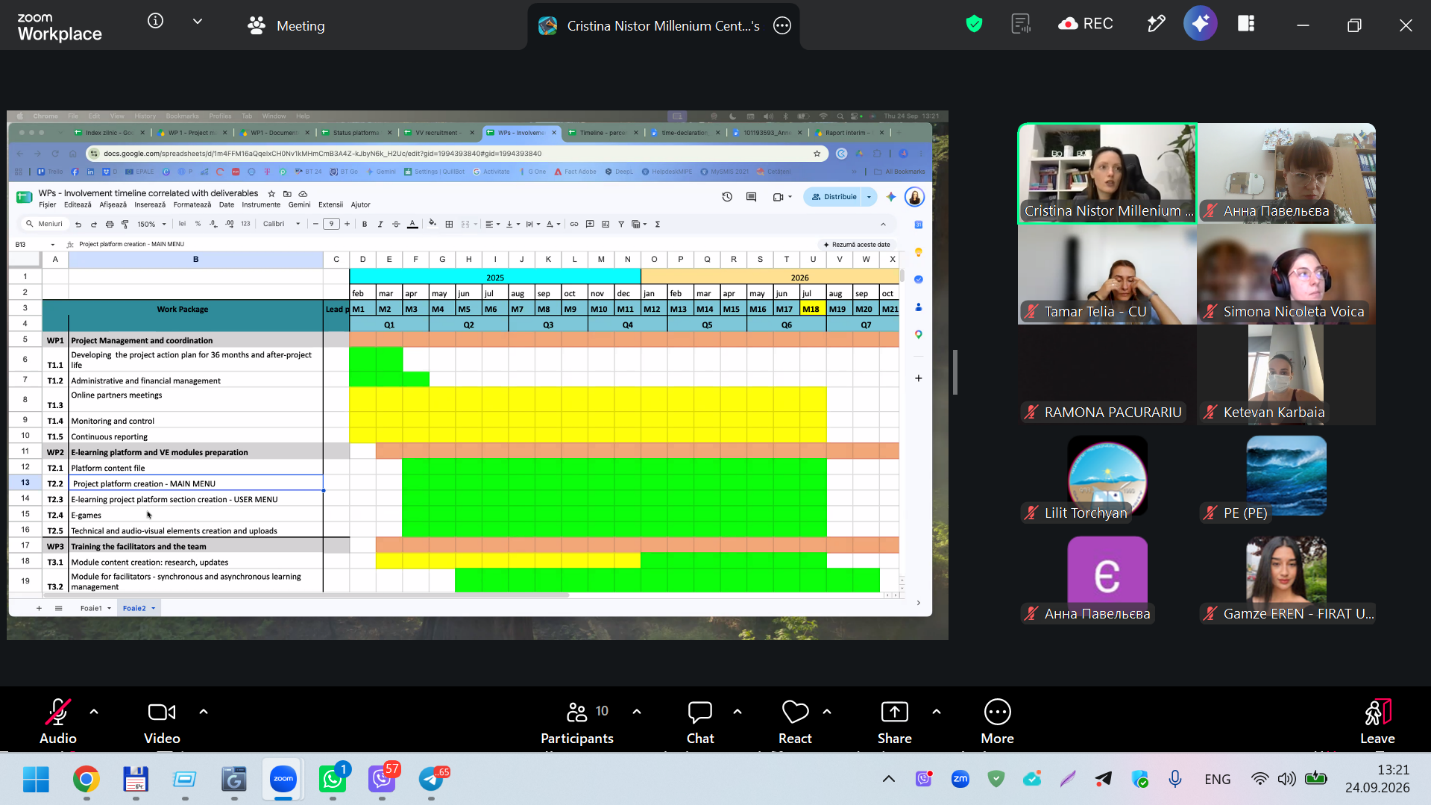
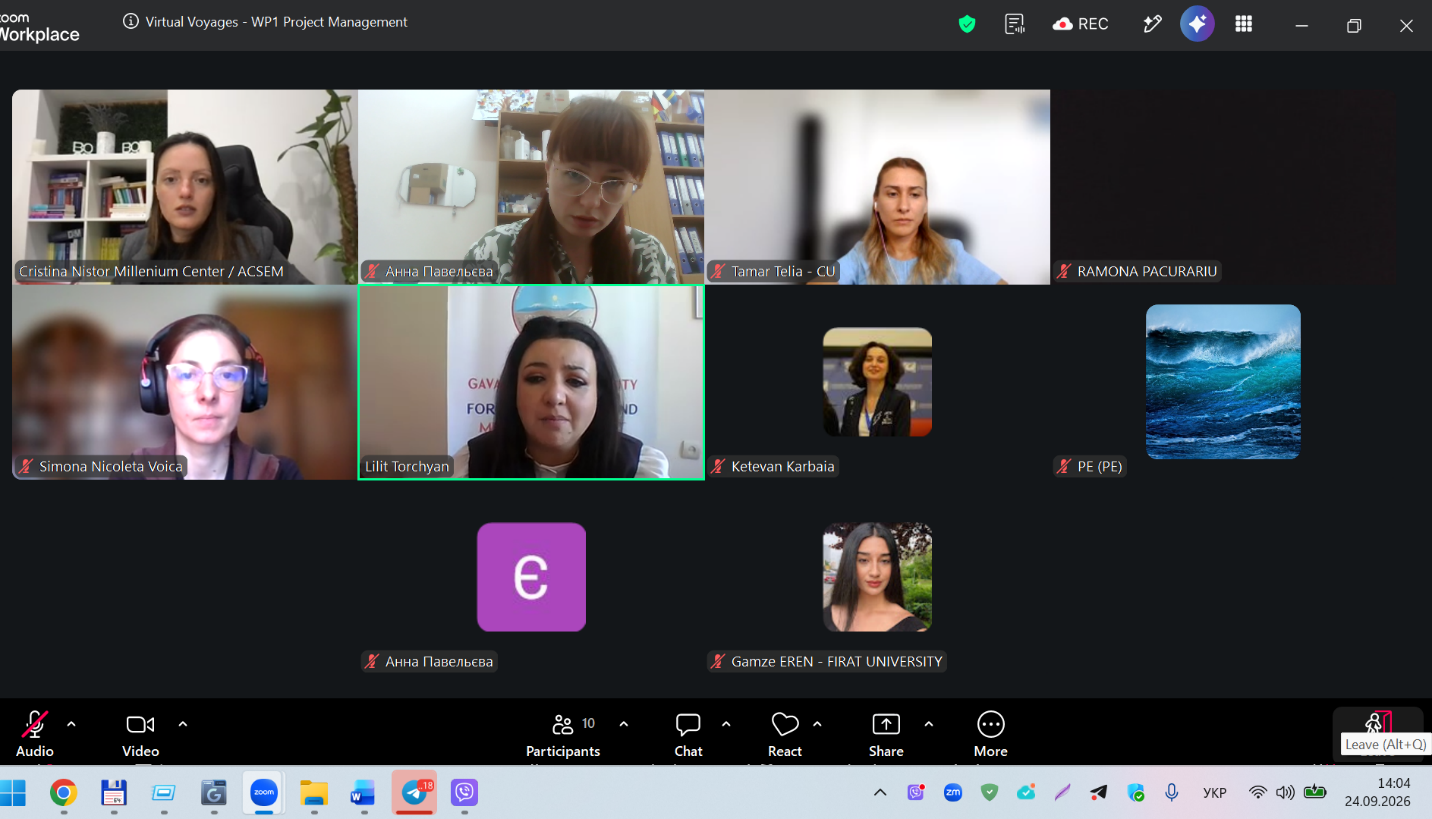
“I express my deep and sincere gratitude to Volodymyr Onyshchenko, President of National University “Yuri Kondratyuk Poltava Polytechnic”, and Rector Olena Fylonych for their comprehensive support and assistance in realising all project ideas and innovative undertakings within this Erasmus+ initiative. Thanks to your strategic vision, trust, and the provision of optimal conditions for institutional growth, our polytechnic once again demonstrates its leadership in adopting advanced international practices”, – stated Anna Pavelieva, Project Coordinator from Poltava Polytechnic.
The project continues to advance steadily, unlocking new prospects for the internationalisation of domestic higher education and fostering cohesion within the European academic community.
Practical activities at the local level are already well underway. Recently, 14 facilitator-lecturers from Poltava Polytechnic attended the inaugural session of the Erasmus+ project “Virtual Voyages”, mastering core online moderation techniques and AI tools to facilitate upcoming international cohorts.