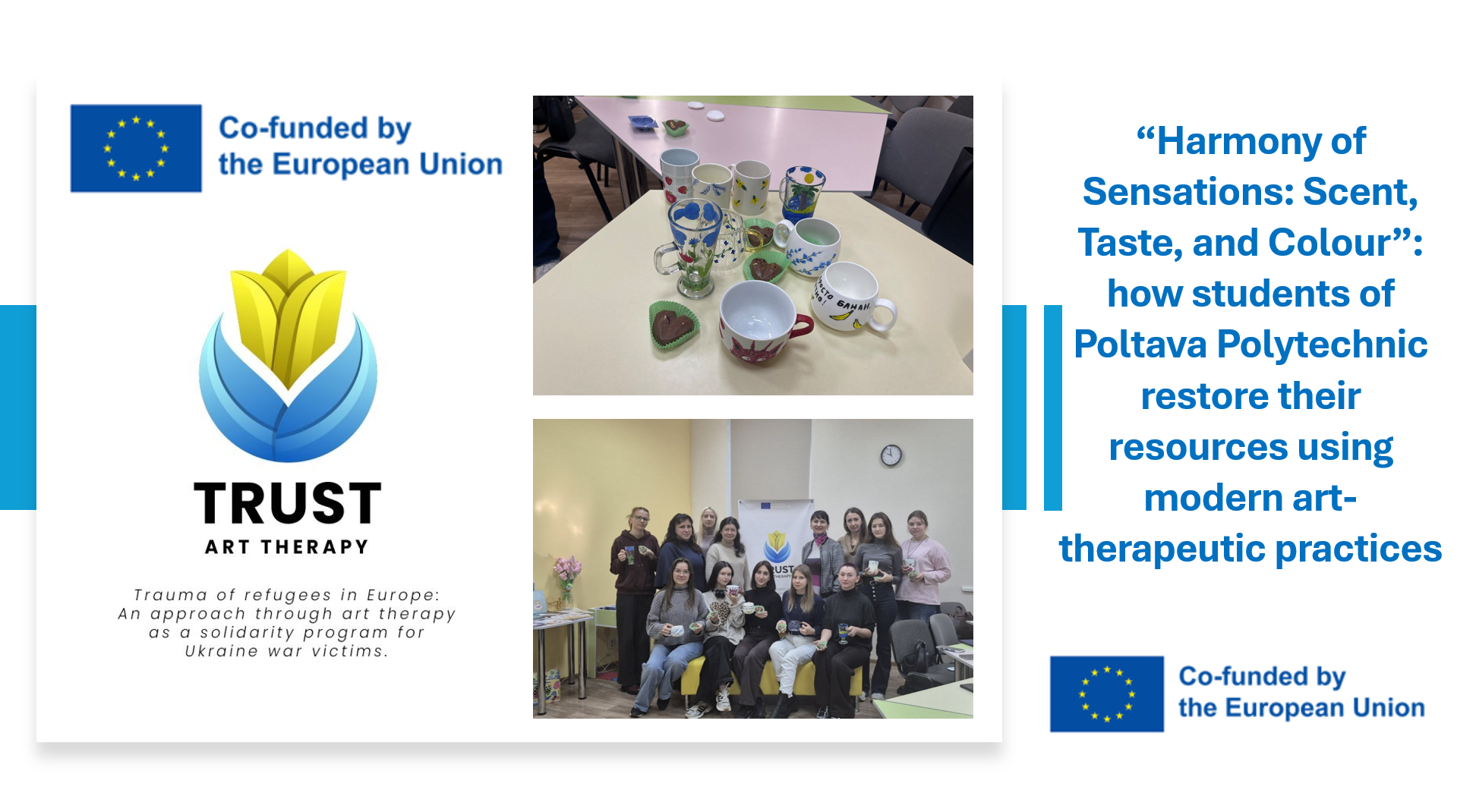
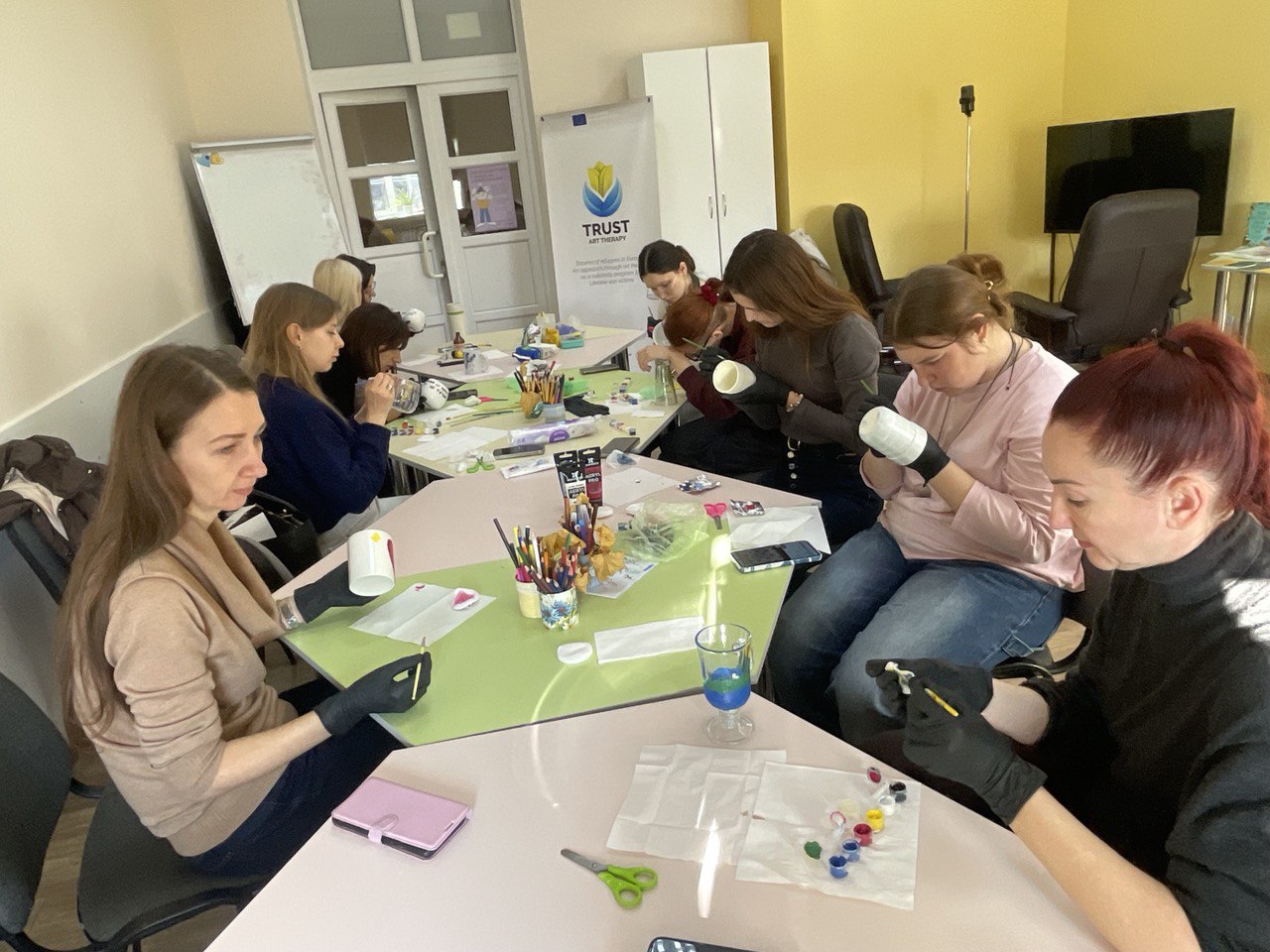
In today’s conditions, caring for the mental health of youth becomes a priority. On November 14, 2025, Poltava Polytechnic became a space for psychological recovery: a unique art-therapeutic session, “Harmony of Sensations: Scent, Taste, and Colour” was held there. The event demonstrated how the combination of multisensory techniques and creativity can become an effective tool for fighting stress.
Acting Head of the Department of Psychology and Pedagogy, Candidate of Pedagogical Sciences, Associate Professor Lesia Klevaka, Associate Professor of the Department of Psychology and Pedagogy, Candidate of Psychological Sciences Viktoriia Shevchuk and Associate Professor of the Department of Psychology and Pedagogy, Candidate of Pedagogical Sciences Maryna Teslenko acted as organisers and facilitators of the art therapy. The event was based on the principles of integrative art therapy, in which the involvement of different channels of perception (sight, smell, taste) allows for gentle, ecologically sound work with the emotional state.
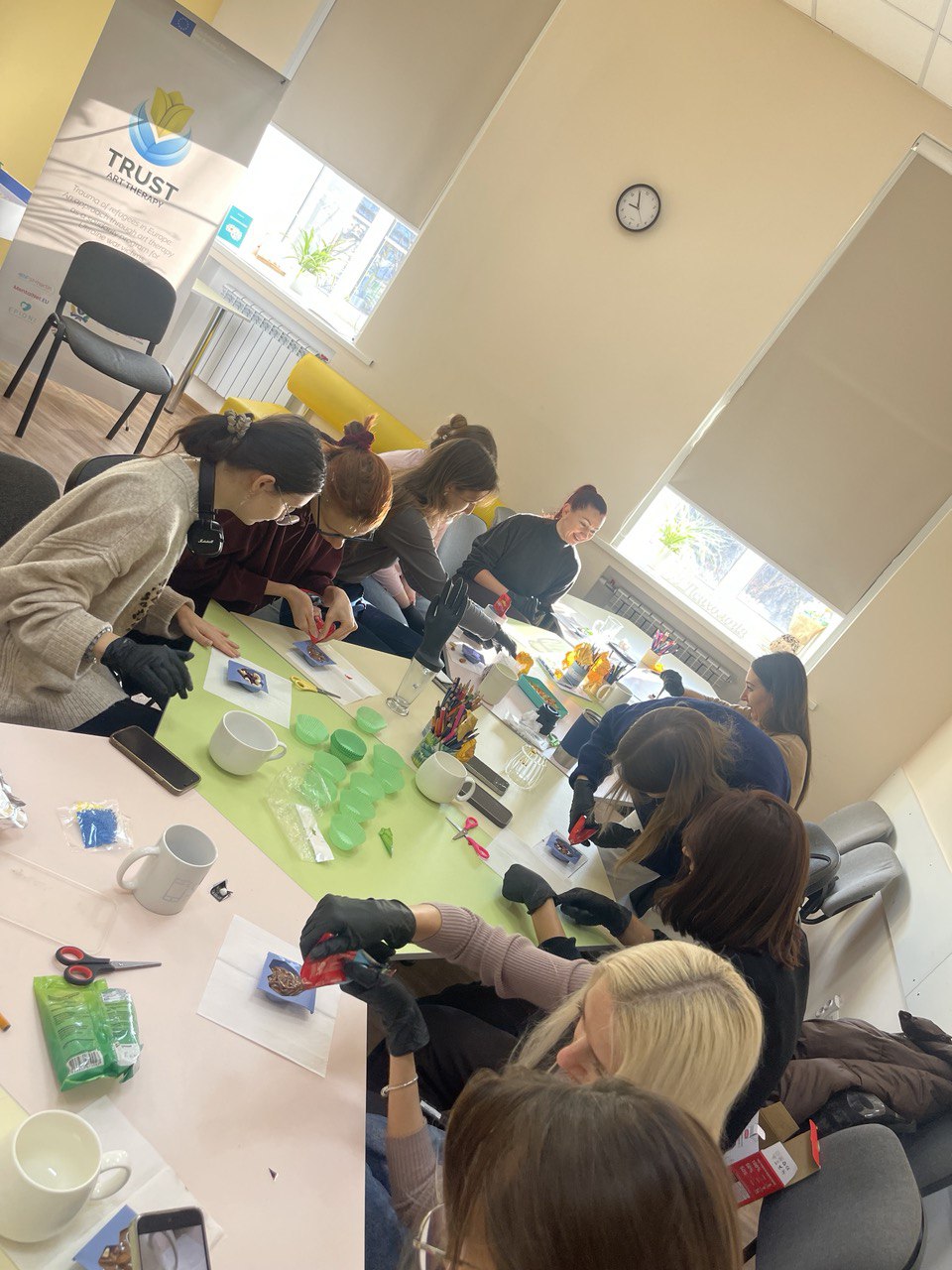
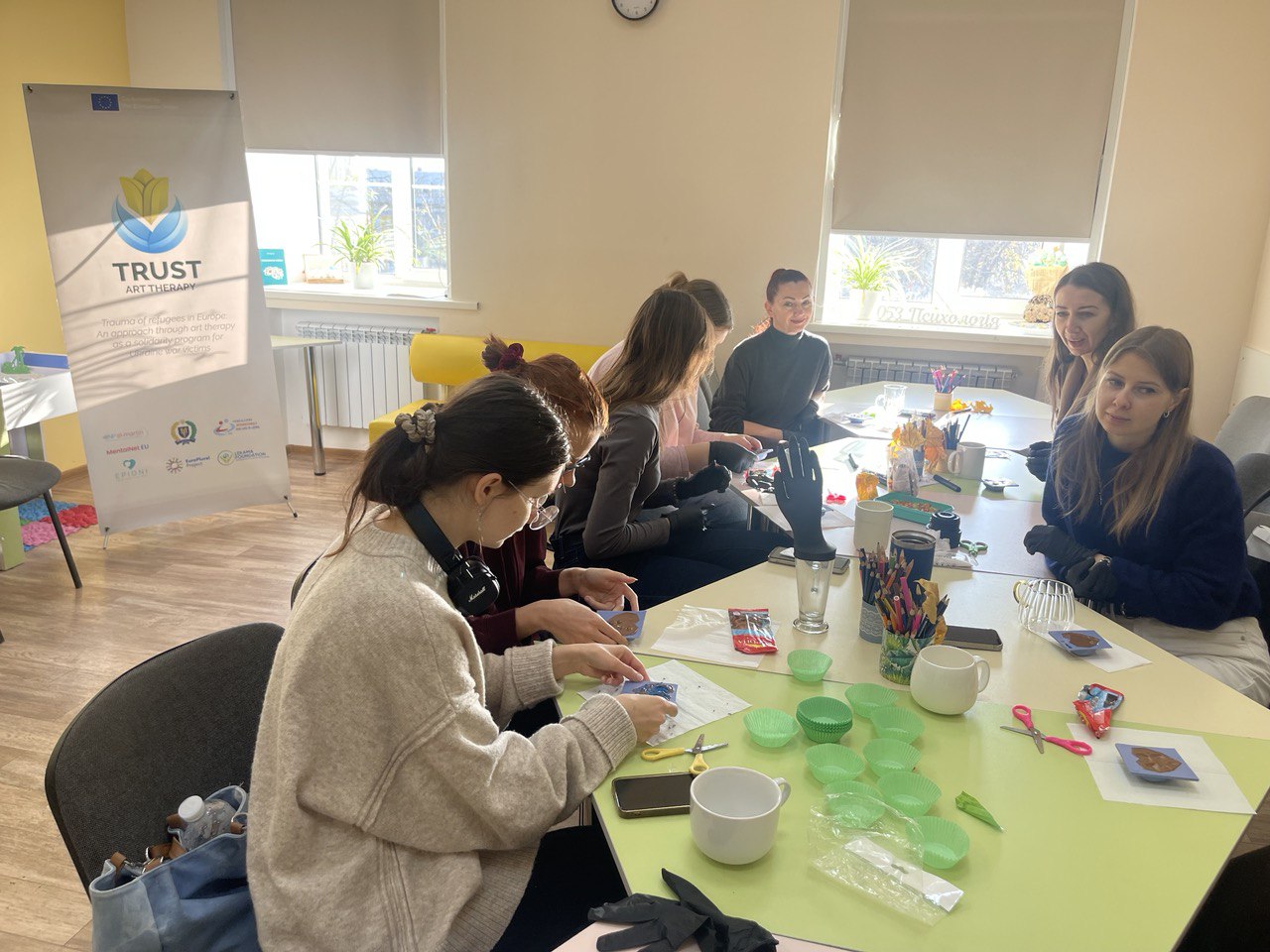
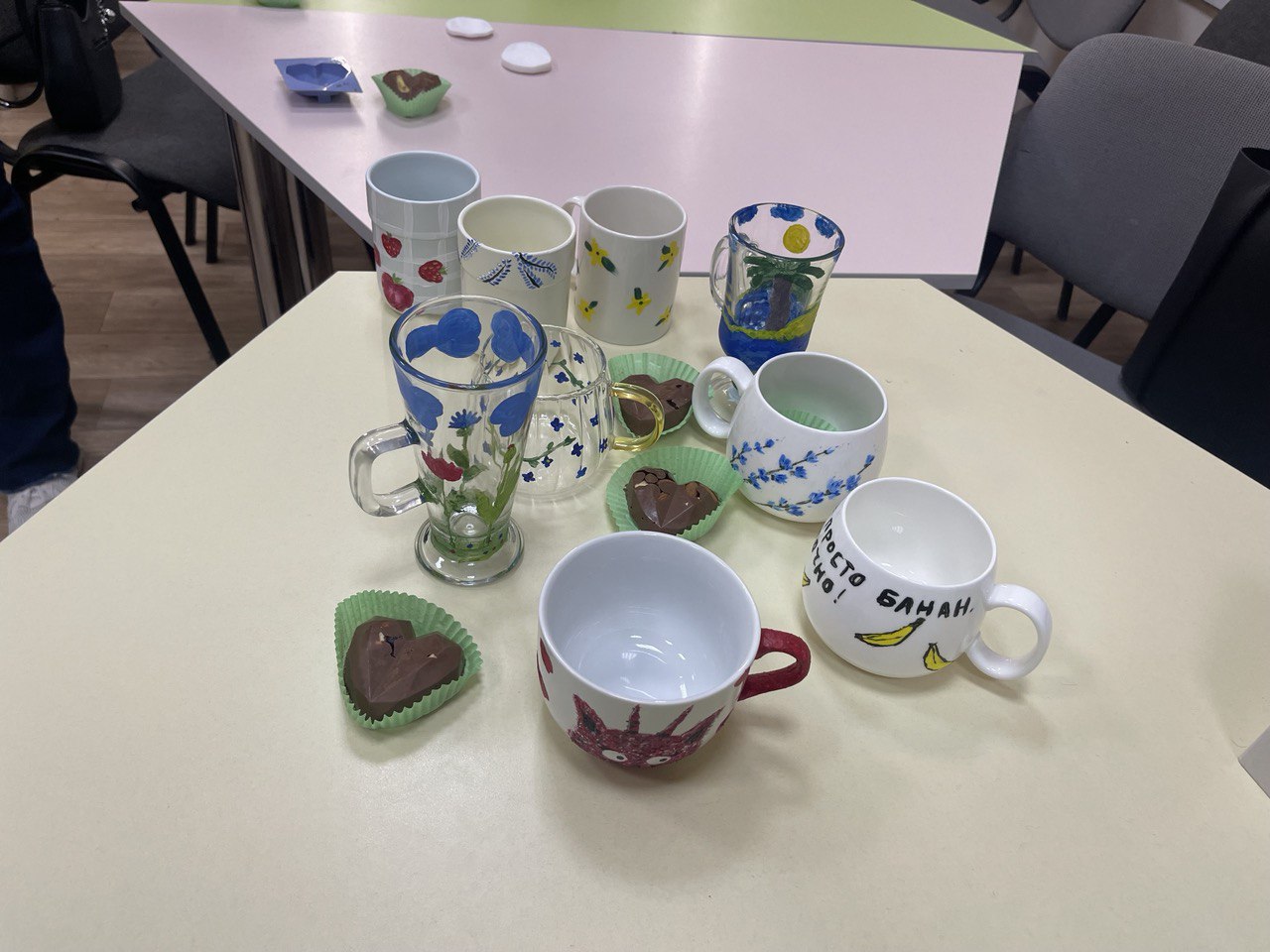
The art-therapeutic session consisted of two parts, each with its own therapeutic and educational effects. At the beginning, participants joined a workshop on making chocolate candies, where they could choose ingredients, aromatic additives, and moulds to create their own dessert. The preparation process was accompanied by a discussion of the roles of smell and taste sensations in mood regulation, as well as “mindful tasting” techniques that help reduce anxiety and stabilise emotions. The aroma of chocolate that filled the room created an atmosphere of warmth, cosiness, and creative interaction.
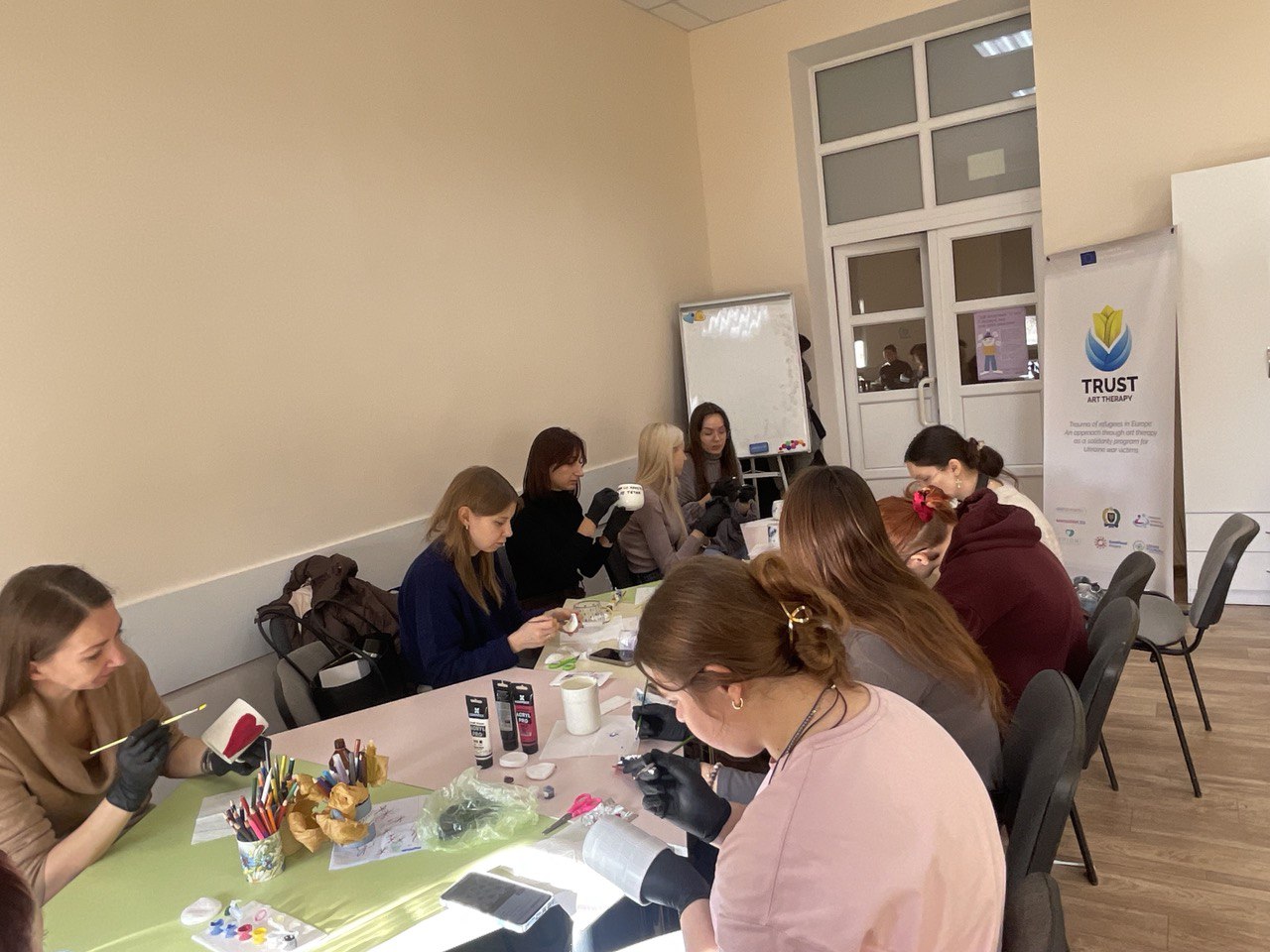
In the second part, students moved on to painting ceramic cups. The trainers spoke about the psychological meaning of colour, its influence on the emotional state, and the possibilities of using art-therapeutic techniques in daily self-development. Each participant could choose their own colour palette and symbols that reflect their emotional state, values, or associations. The cups became peculiar “personal artefacts” combining aesthetics, symbolism, and self-expression.
The event took place in a warm, casual atmosphere where students actively interacted with one another, exchanged ideas, supported one another, and created a shared space of psychological comfort. Many participants noted that the workshop format became for them not only an exciting creative process but also an opportunity for “rebooting” after the academic load.
The organisers emphasised that sensory and art-therapeutic practices in the student environment play an essential role in preventing stress, fostering emotional flexibility, and creating a favourable socio-psychological climate. Based on the results of the successful event, the trainers are already planning new thematic art therapeutic workshops and psychological practicums for student youth.
In the final part of the session, students shared their own experiences and emotions, passing a soft toy talisman around in a circle – a symbol of cosiness, mutual support, and a safe space where everyone can be heard.
Such meetings go far beyond ordinary creative classes. They become a path to self-knowledge, an opportunity to find new meanings and a point of inner balance. This is a delicate, yet at the same time effective way of caring for the mental health of youth, who face the challenges of the modern world daily while simultaneously continuing to seek their own guidelines.
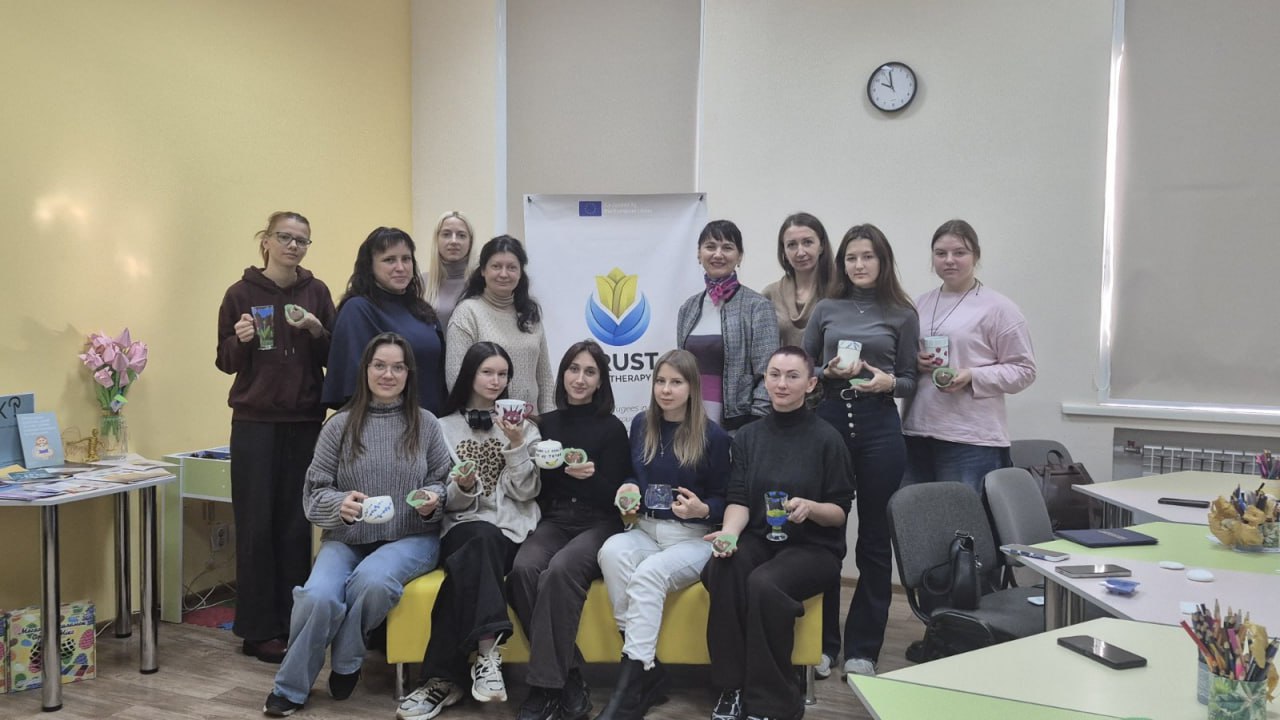
The event was held as part of the international, large-scale EU-funded Erasmus+ KA220-ADU project “TRUST” – Trauma of refugees in Europe: An approach through art therapy as a solidarity program for Ukraine war victims (Grant No. 2024-BE01-KA220-ADU-000257527).
The project title is decoded as follows:
TRUST
T – Trauma
R – Refugees
U – Ukraine
S – Solidarity
T – Therapy
The project is co-funded by the EU and led by the Centre Neuro Psychiatrique St-Martin from Belgium, in partnership with the National University “Yuri Kondratyuk Poltava Polytechnic” (Ukraine), Greek Carers Network EPIONI (Greece), Fondazione Don Luigi Di Liegro (Italy), Lekama Foundation (Luxembourg), EuroPlural Project (Portugal).
We express our sincere gratitude to our partners for their invaluable support, which makes it possible to implement such vitally important initiatives that bring the light of hope and healing to those who need it most.
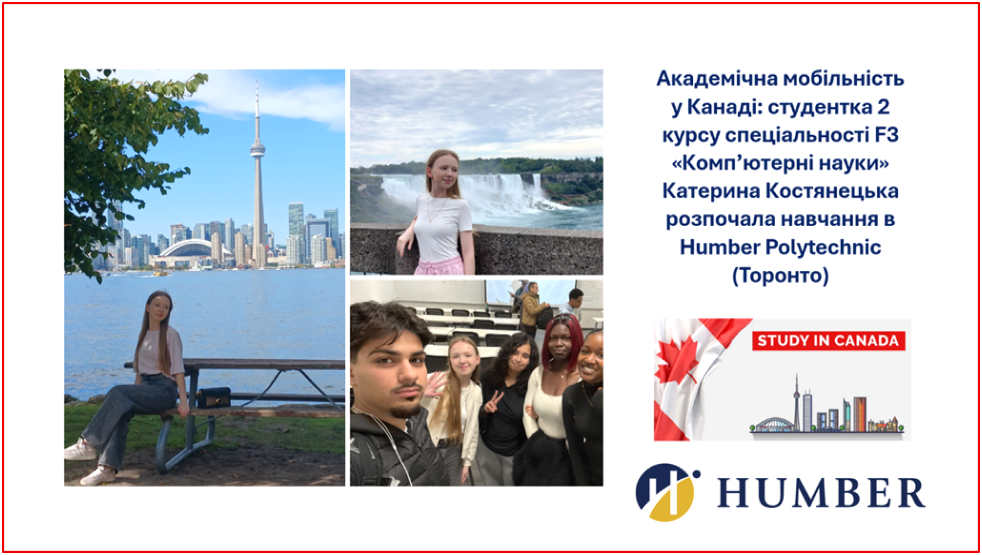
It is worth noting that Poltava Polytechnic lecturers are eligible to participate in academic mobility and internship programs. Students can study abroad through Erasmus+ credit academic mobility grant programs for a semester or a full academic year at leading universities in Austria, Denmark, Estonia, Finland, Germany, Greenland, Latvia, Lithuania, the Netherlands, Norway, Poland, Portugal, Romania, Slovakia, Spain, and the Czech Republic.
For more detailed information regarding current internship, teaching, and academic mobility programs abroad, please get in touch with the International Relations Department (office 213-C, interoffice@nupp.edu.ua) or Poltava Polytechnic’s International Relations Coordinator – Ph.D. in Philology, Associate Professor of the Department of Germanic Philology and Translation, Anna Pavelieva (email: kunsite.zi@gmail.com, phone: +38-(095)-91-08-192).
Media Centre of
National University “Yuri Kondratyuk Poltava Polytechnic”