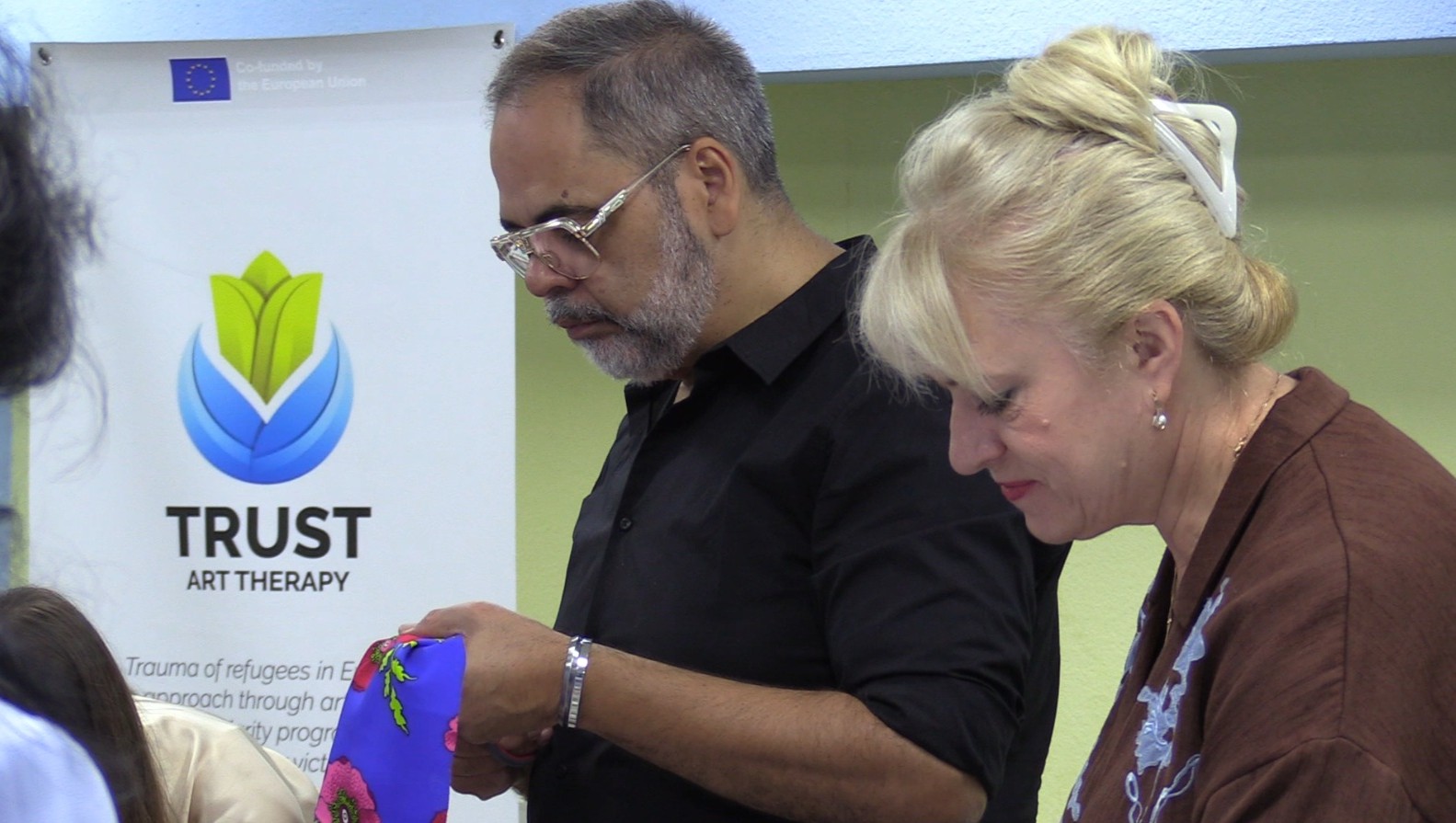
On September 2, 2026, National University “Yuri Kondratyuk Poltava Polytechnic” continued the practical program of the fourth international transnational meeting within the framework of the large-scale international project Erasmus+ KA220-ADU “TRUST” (“Trauma of refugees in Europe: An approach through art therapy as a solidarity program for Ukraine war victims”, grant agreement No. 2024-1-BE01-KA220-ADU-000257527). Co-funded by the European Union, this initiative aims to develop and implement effective, culturally adapted art therapy methodologies to support and provide psycho-emotional rehabilitation for individuals affected by the consequences of war.
The project title “TRUST” stands for the following:
T – Trauma
R – Refugees
U – Ukraine
S – Solidarity
T – Therapy
The Centre Neuro Psychiatrique St-Martin (Belgium) leads the project in partnership with Poltava Polytechnic (Ukraine), Greek Carers Network EPIONI (Greece), Fondazione Don Luigi Di Liegro (Italy), LEKAMA DEVELOPPEMENT (Luxembourg), and EuroPlural Project (Portugal).
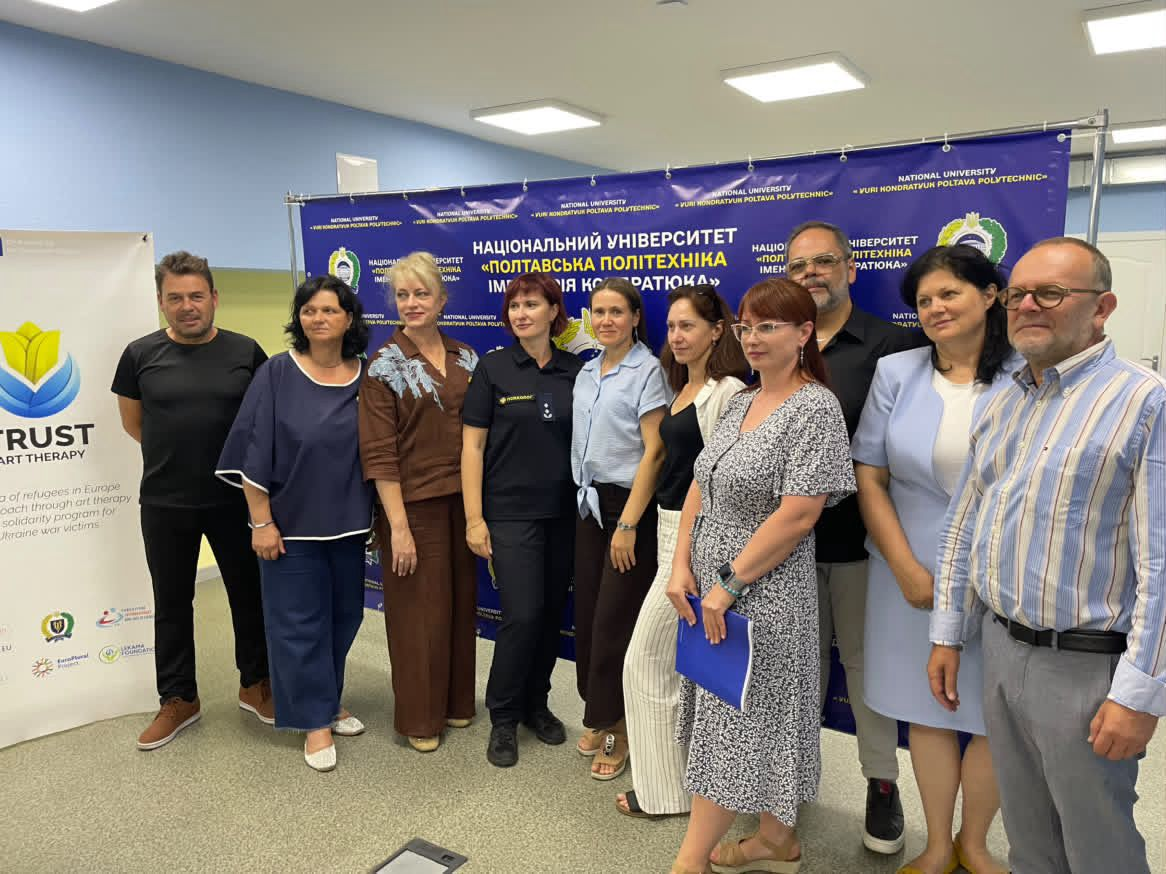
An esteemed international delegation arrived in Poltava to participate in the events. The comprehensive roster of meeting participants brought together specialists from three partner organisations:
- CNP Saint Martin (Belgium): Project Coordinator Claudio Marques, Senior Psychologist and European Projects Specialist Jocelyn Deloyer, alongside Hanna Samoilenko and Olena Tiptsova.
- EuroPlural Project (Portugal): Choreography and Dance Therapy Specialist Rubielson Medeiros, PhD and Psychiatrist João Alves Neto, alongside Galyna Ilyuk and Francisco Dias Oliveira.
- National University “Yuri Kondratyuk Poltava Polytechnic” (Ukraine): International Relations Coordinator Anna Pavelieva, Associate Professor of the Department of Psychology and Pedagogy Maryna Teslenko, Professor of the Department of Psychology and Pedagogy Olga Losiyevska, and University Practical Psychologist Olena Kryvenko.
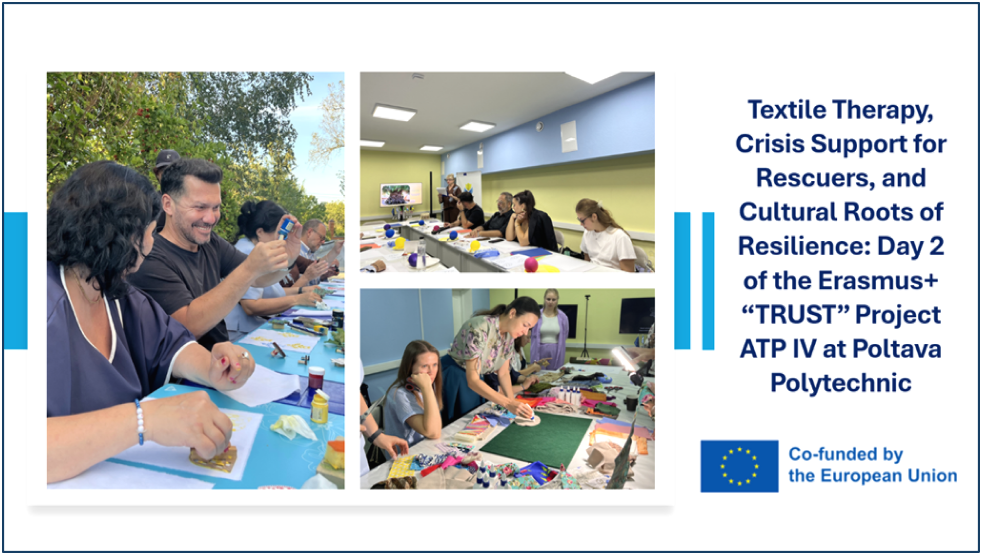
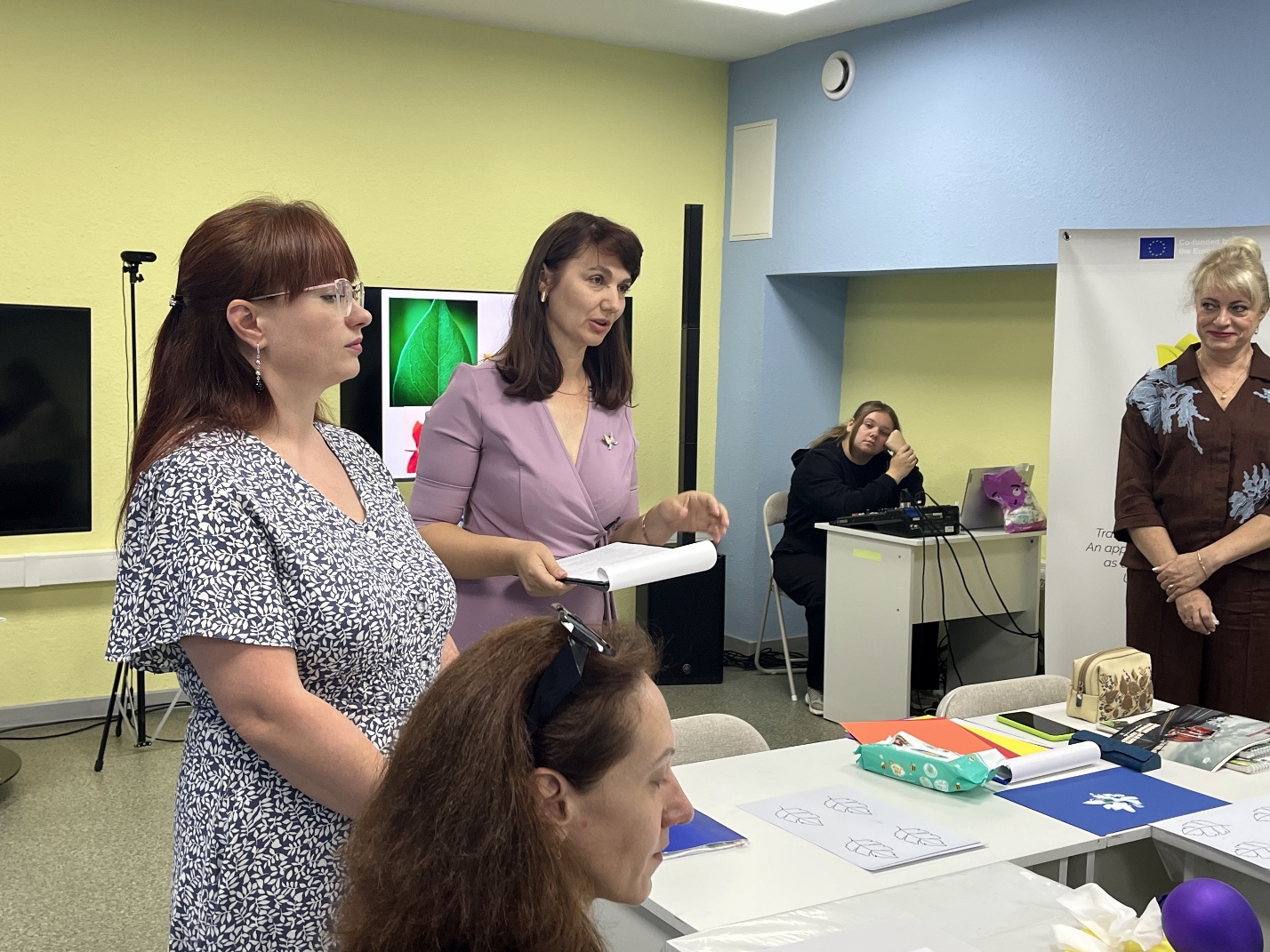
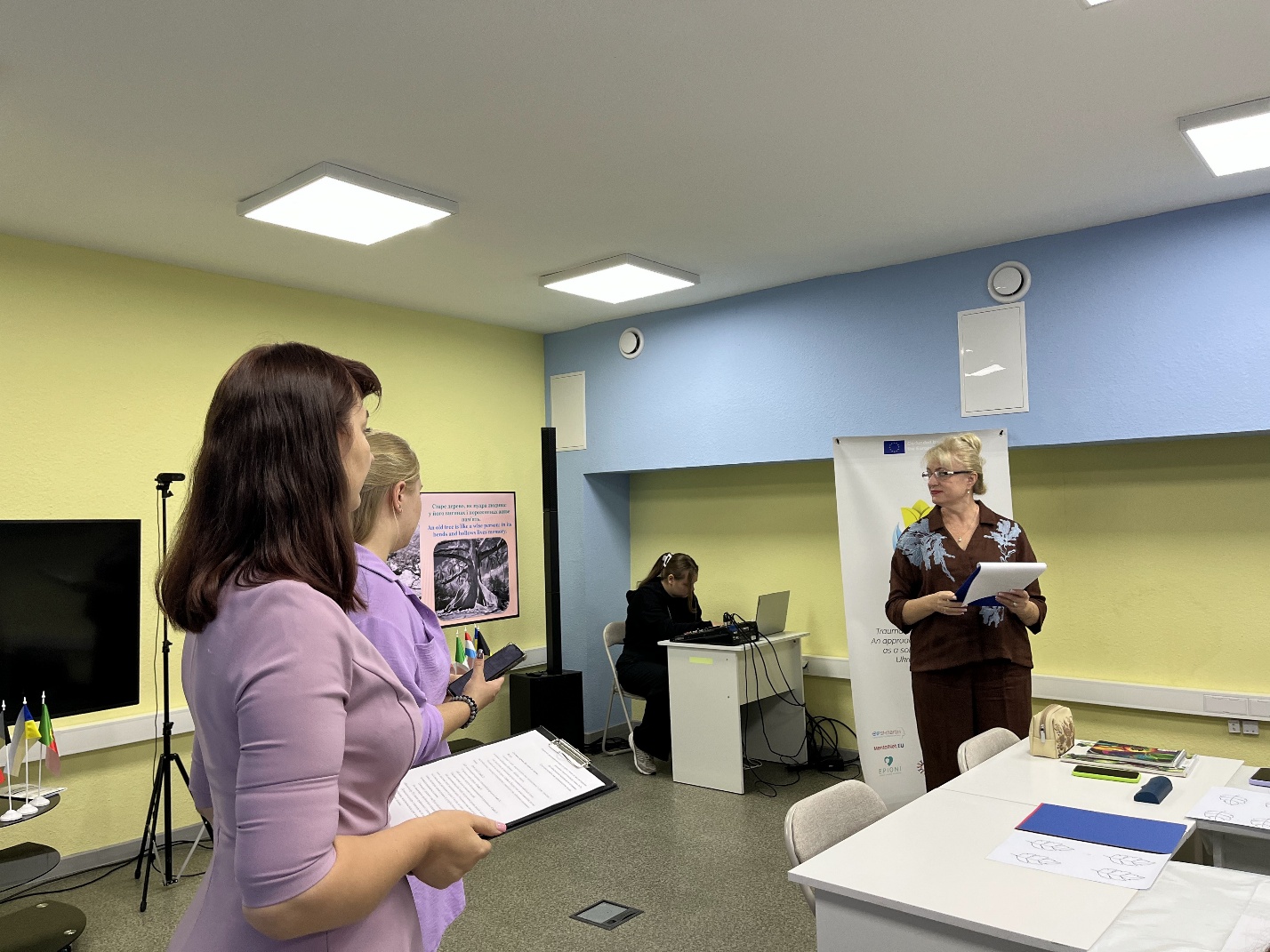
The second practical day of the meeting focused on strengthening professional expertise, exploring the specifics of psychological support under extreme conditions, and activating ethno-cultural resources of resilience. The work commenced in an equipped safe space – the shelter of Building A of Poltava Polytechnic (Room 1). Maryna Teslenko, Associate Professor of the Department of Psychology and Pedagogy, familiarised attendees with the day's intensive agenda, conducted the mandatory safety briefing, and invited participants to take part in a gentle resourcing exercise, “What Colour Is My Mood Today?”. Through this reflective practice, European and Ukrainian specialists expressed their feelings through the metaphor of colours, which helped alleviate morning anxiety, foster mutual empathy, and create an open environment of trust.
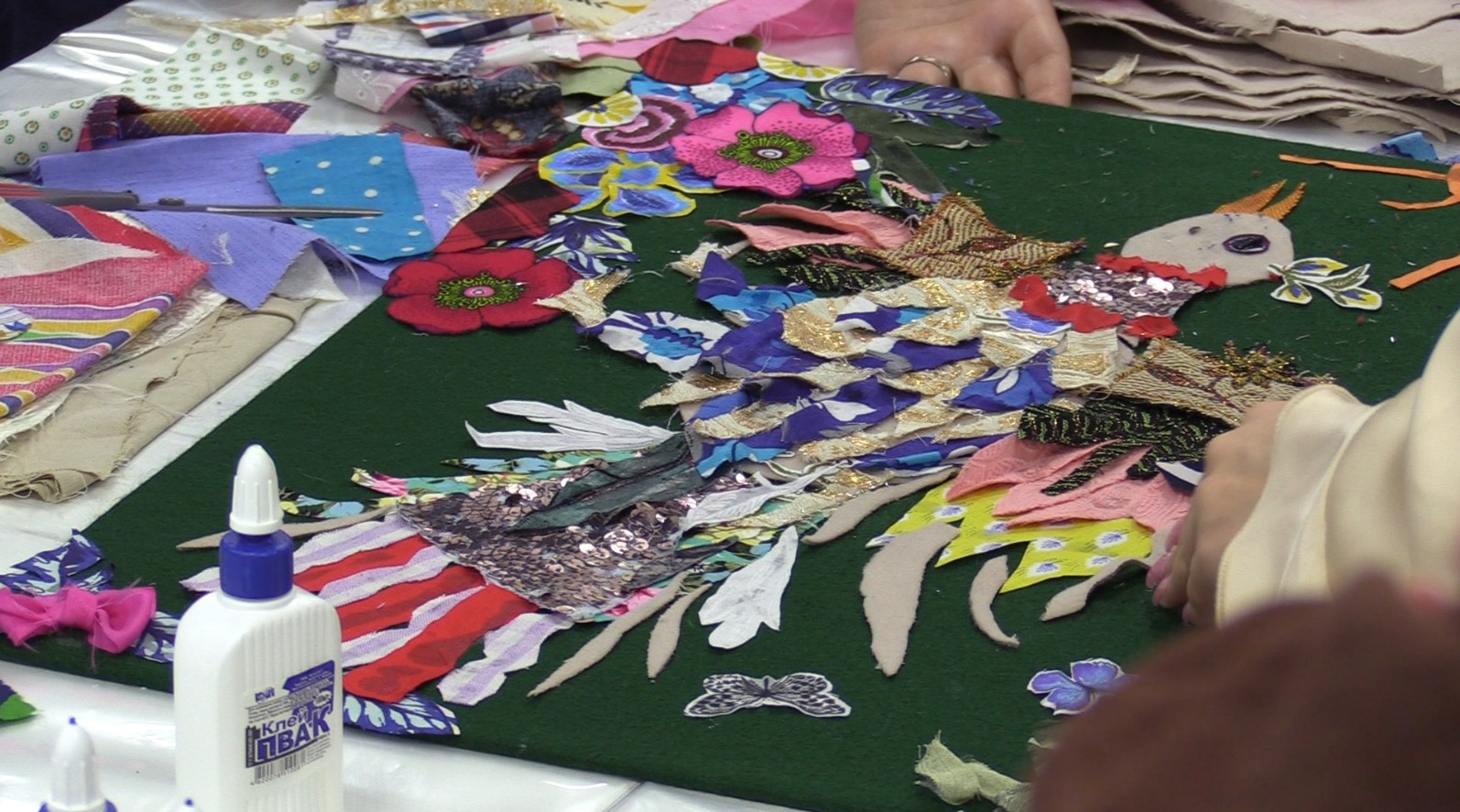
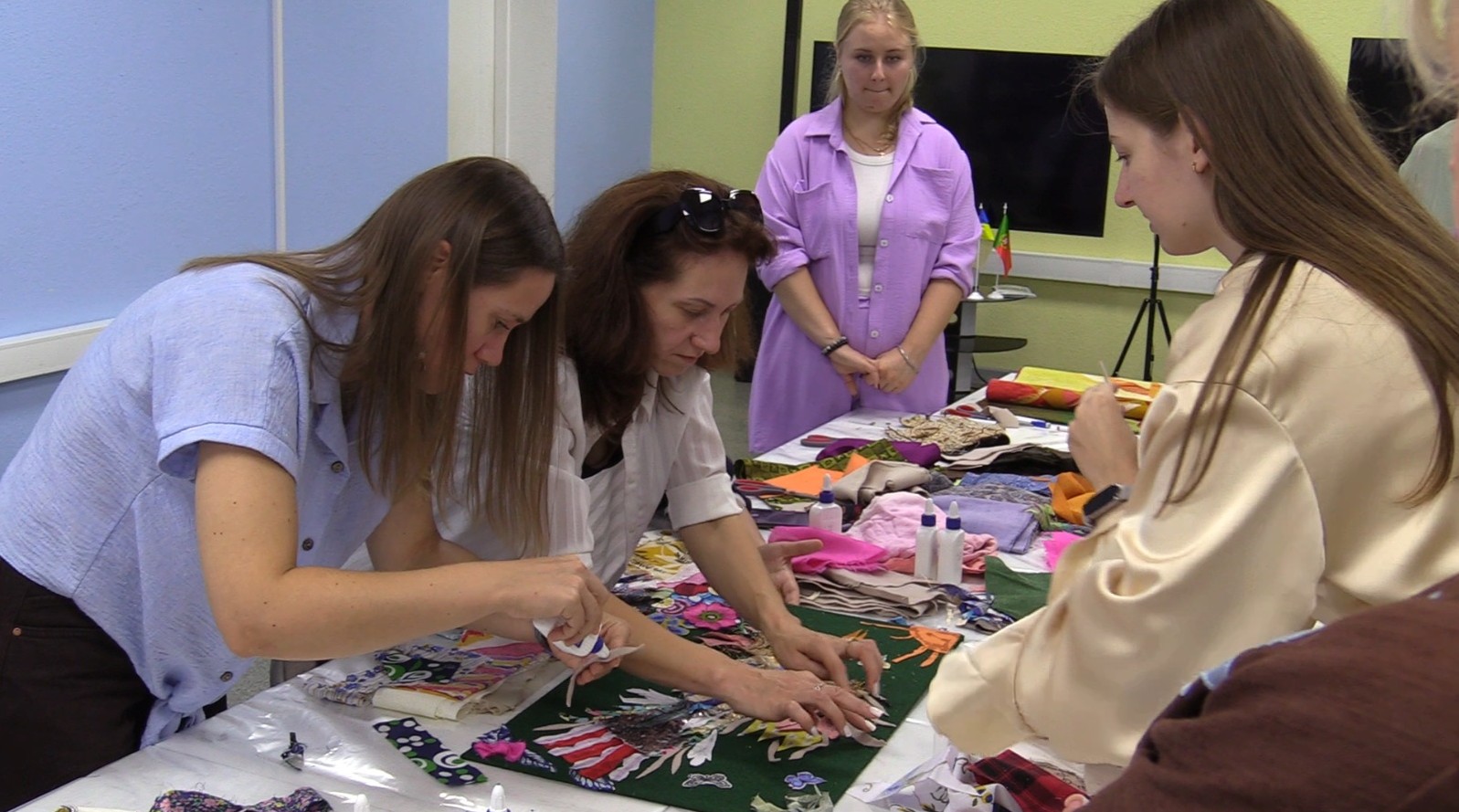
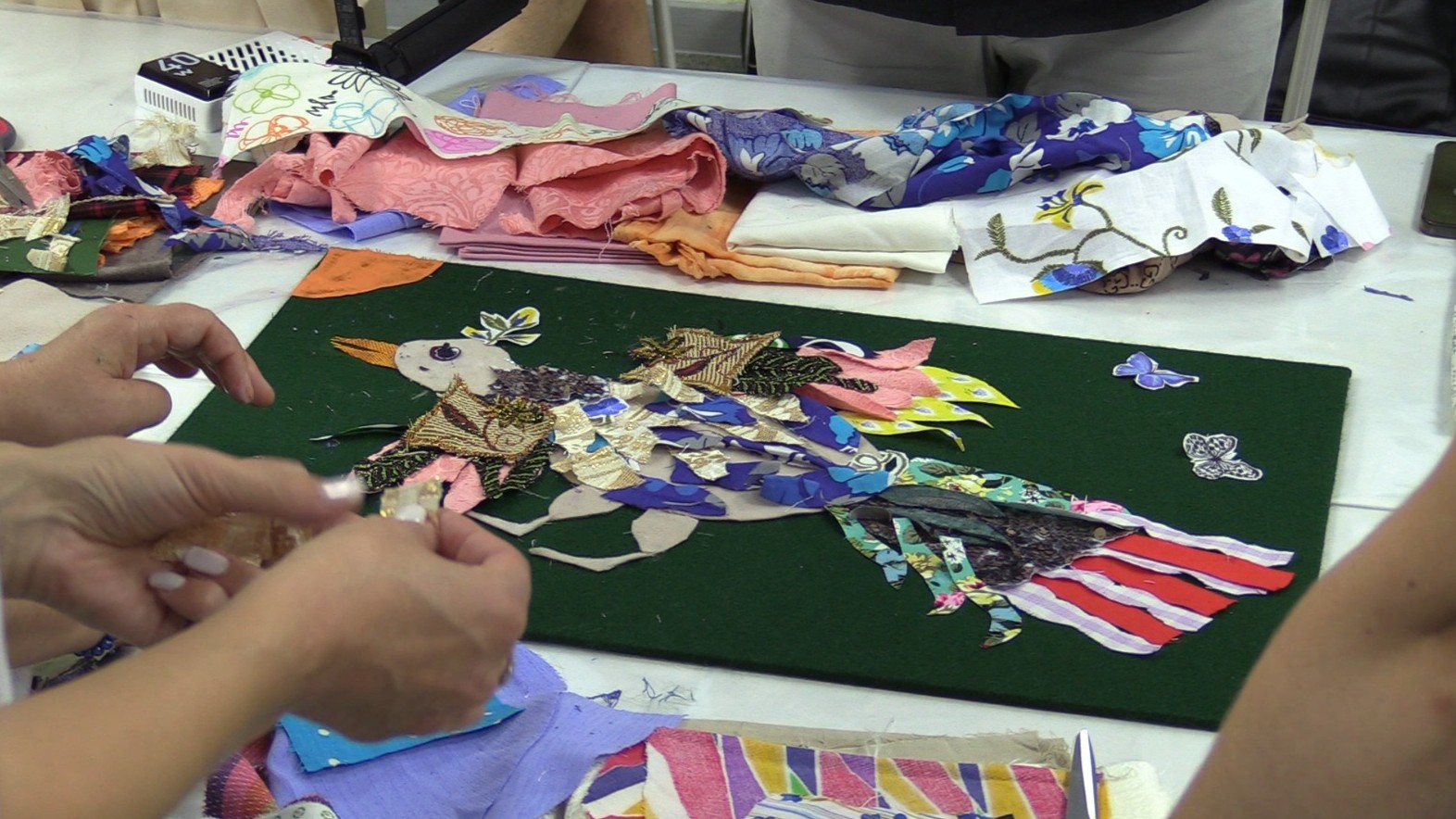
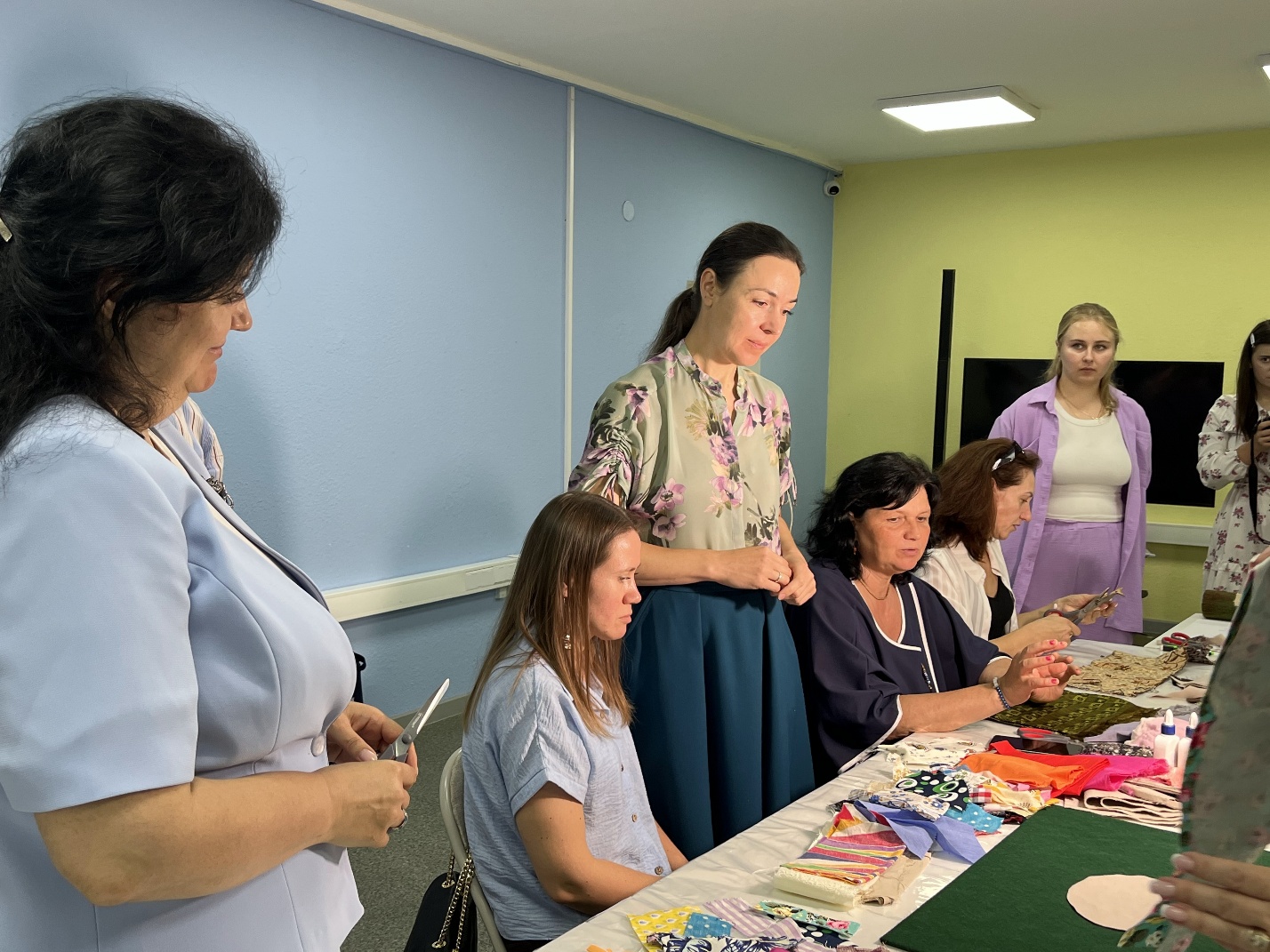
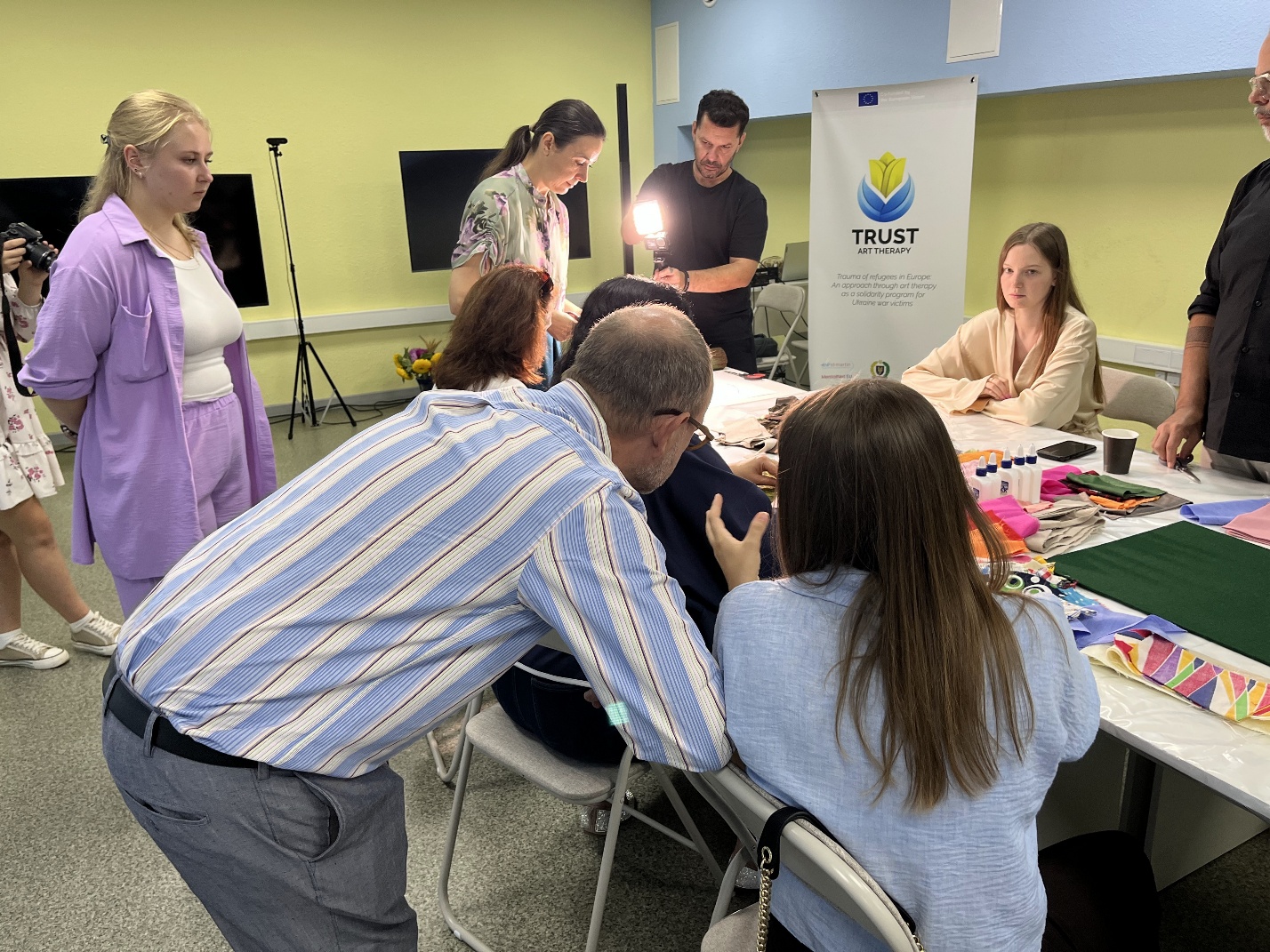
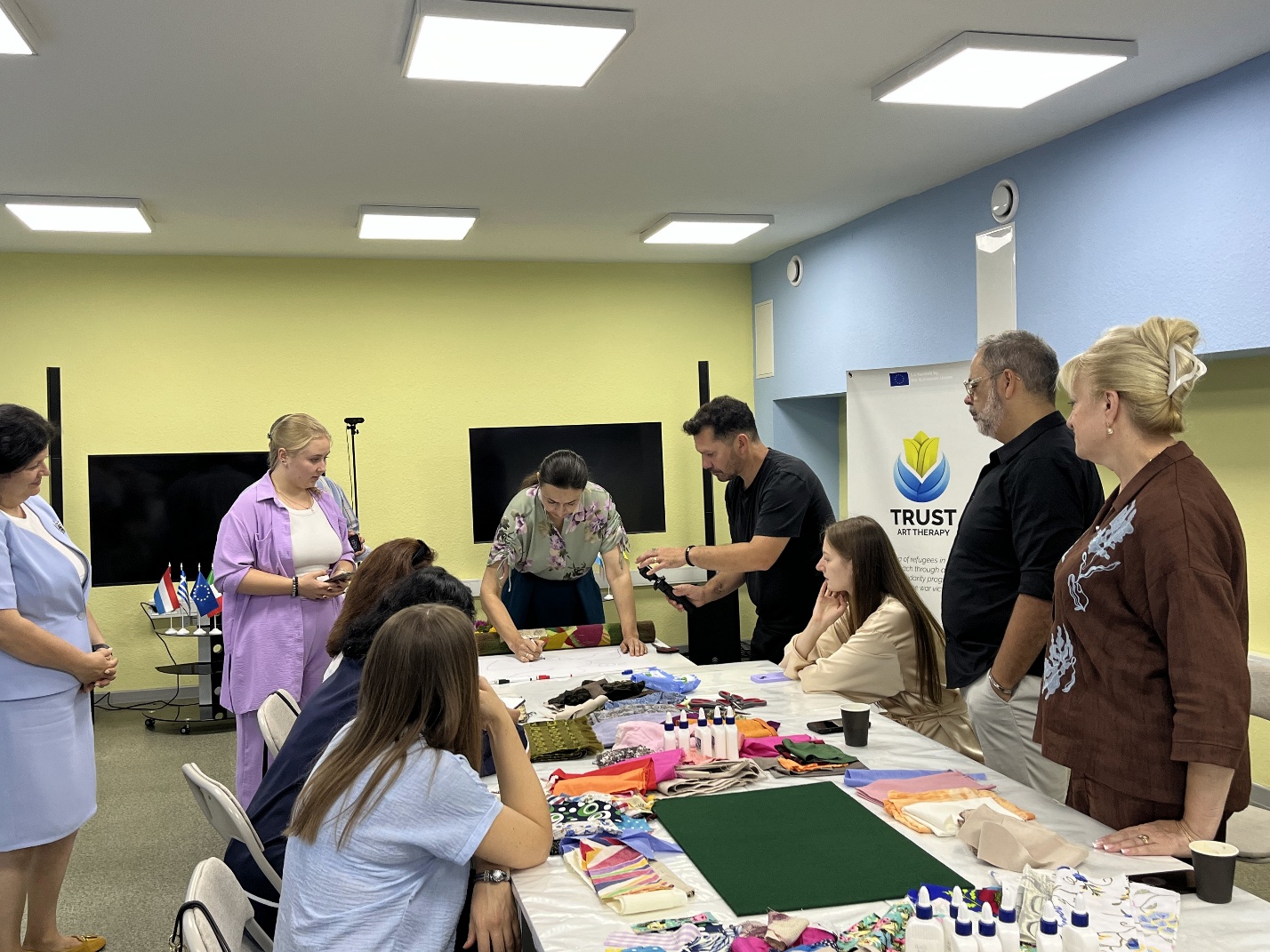
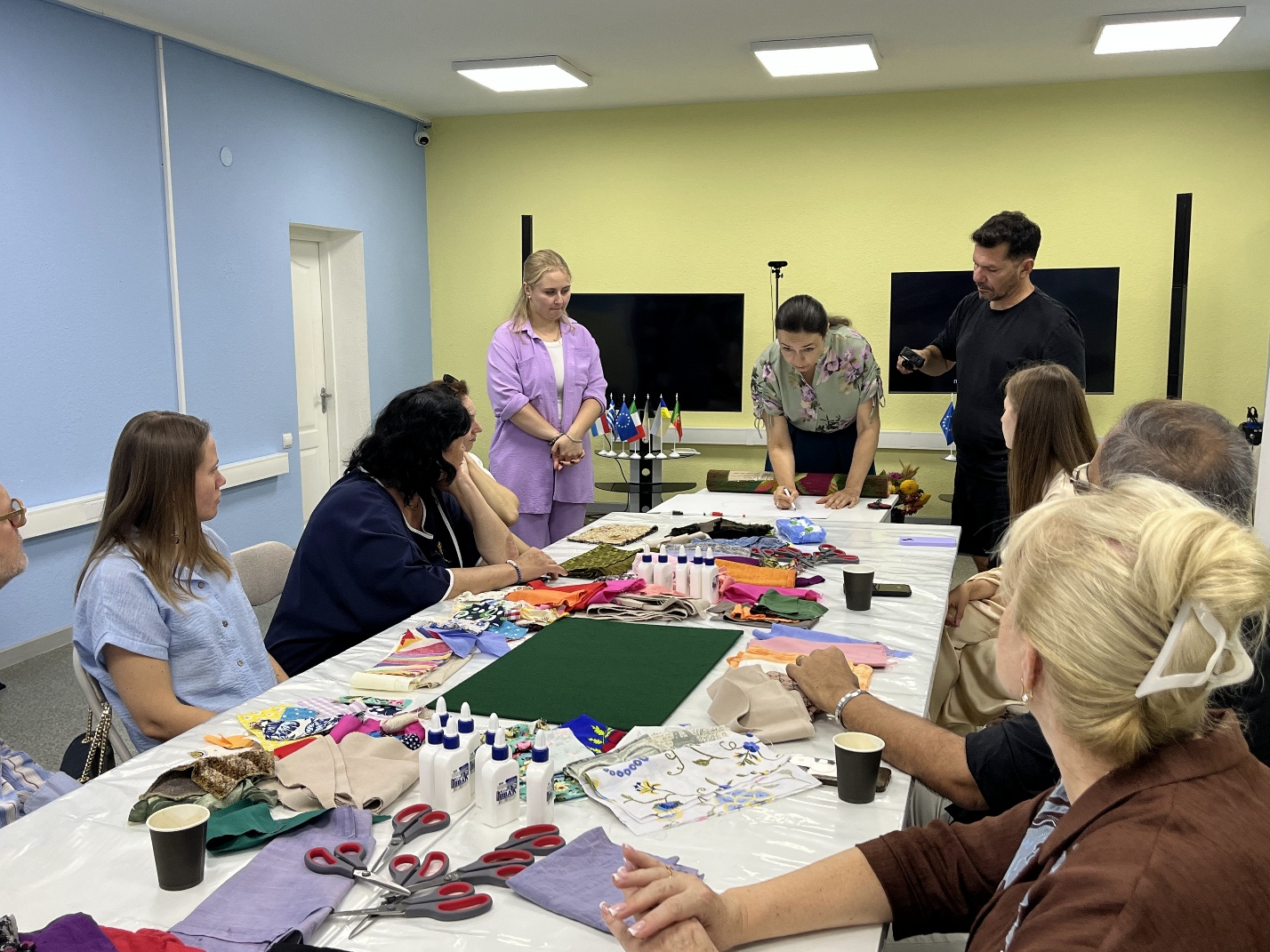
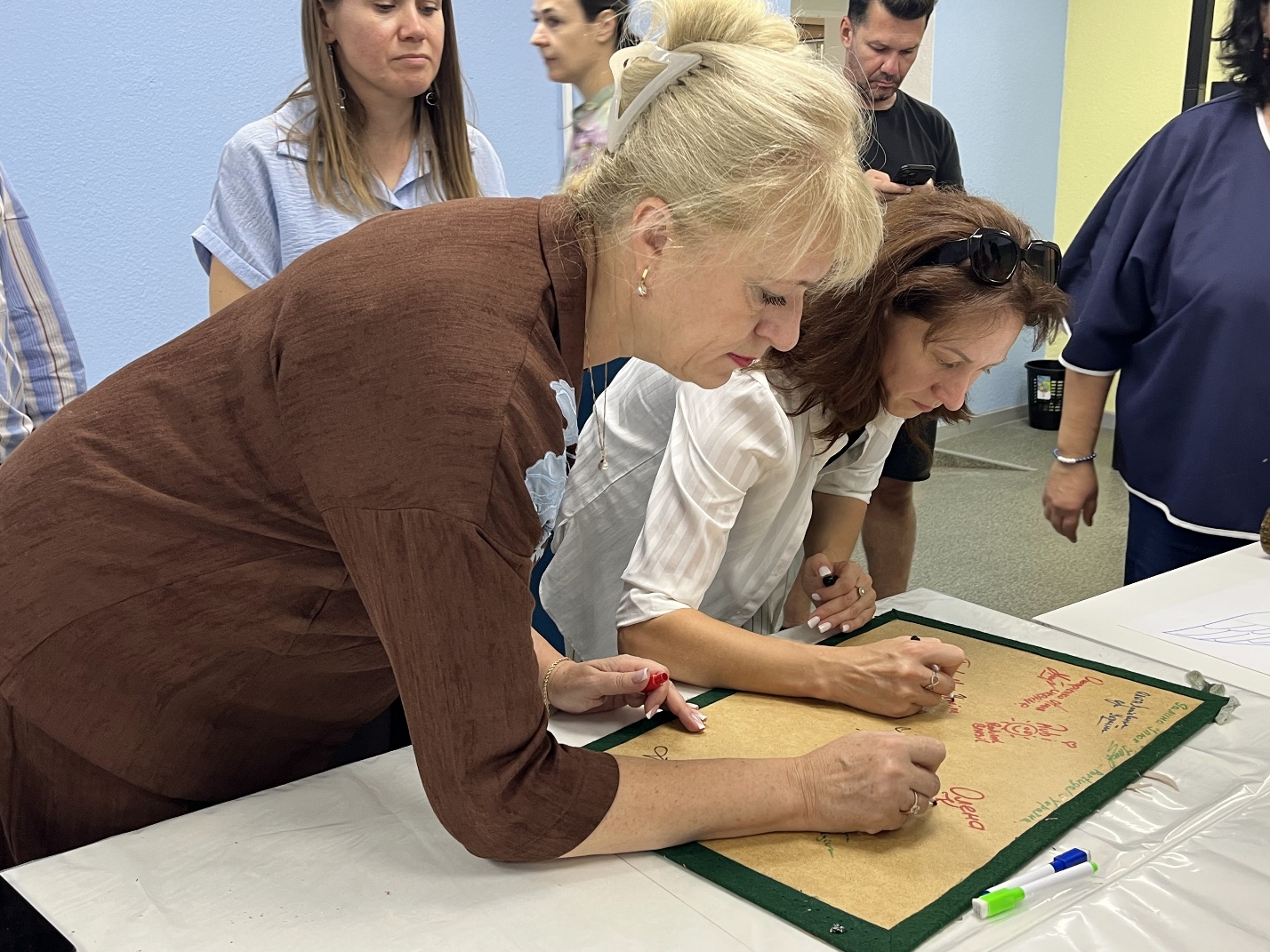
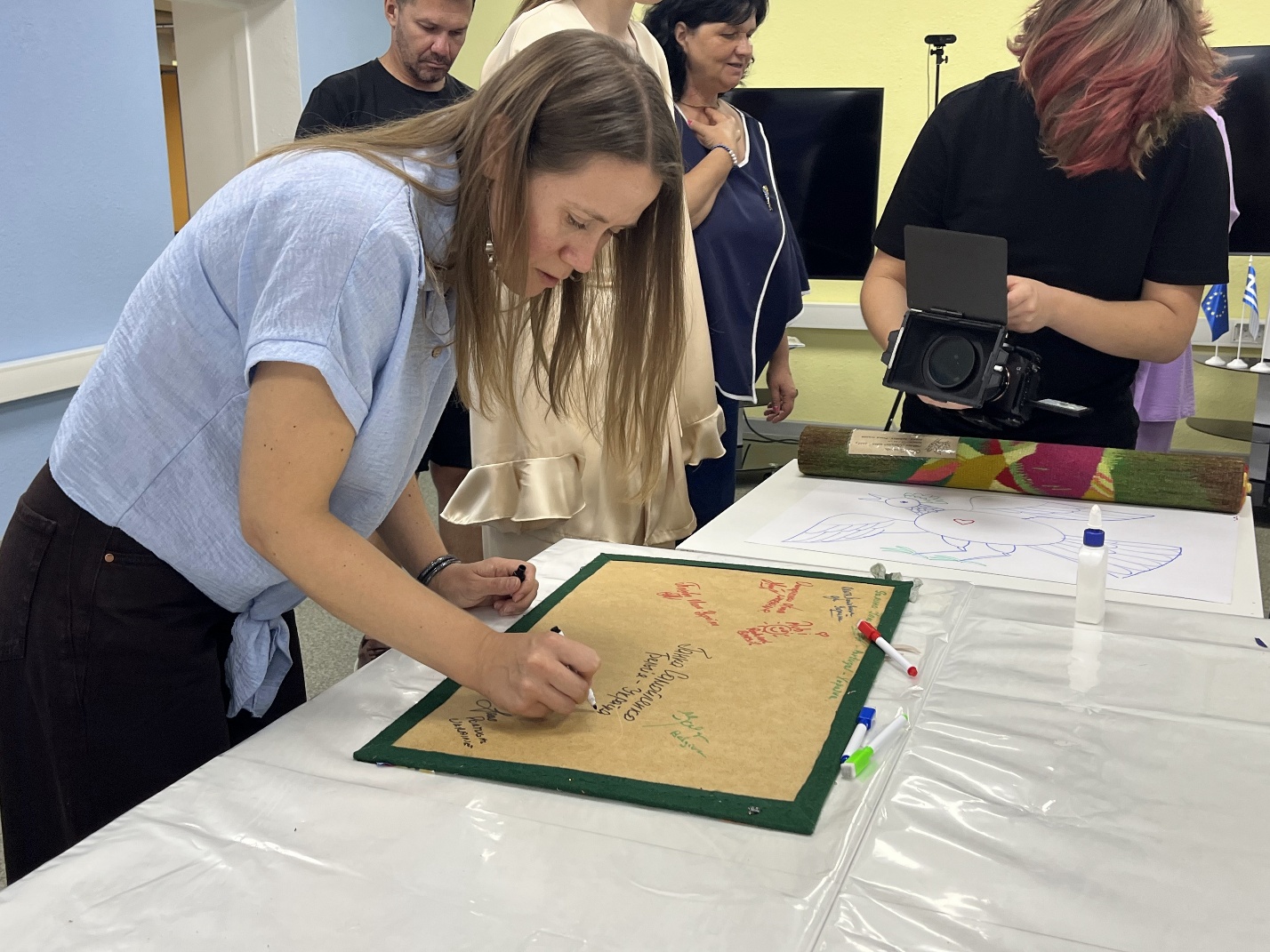
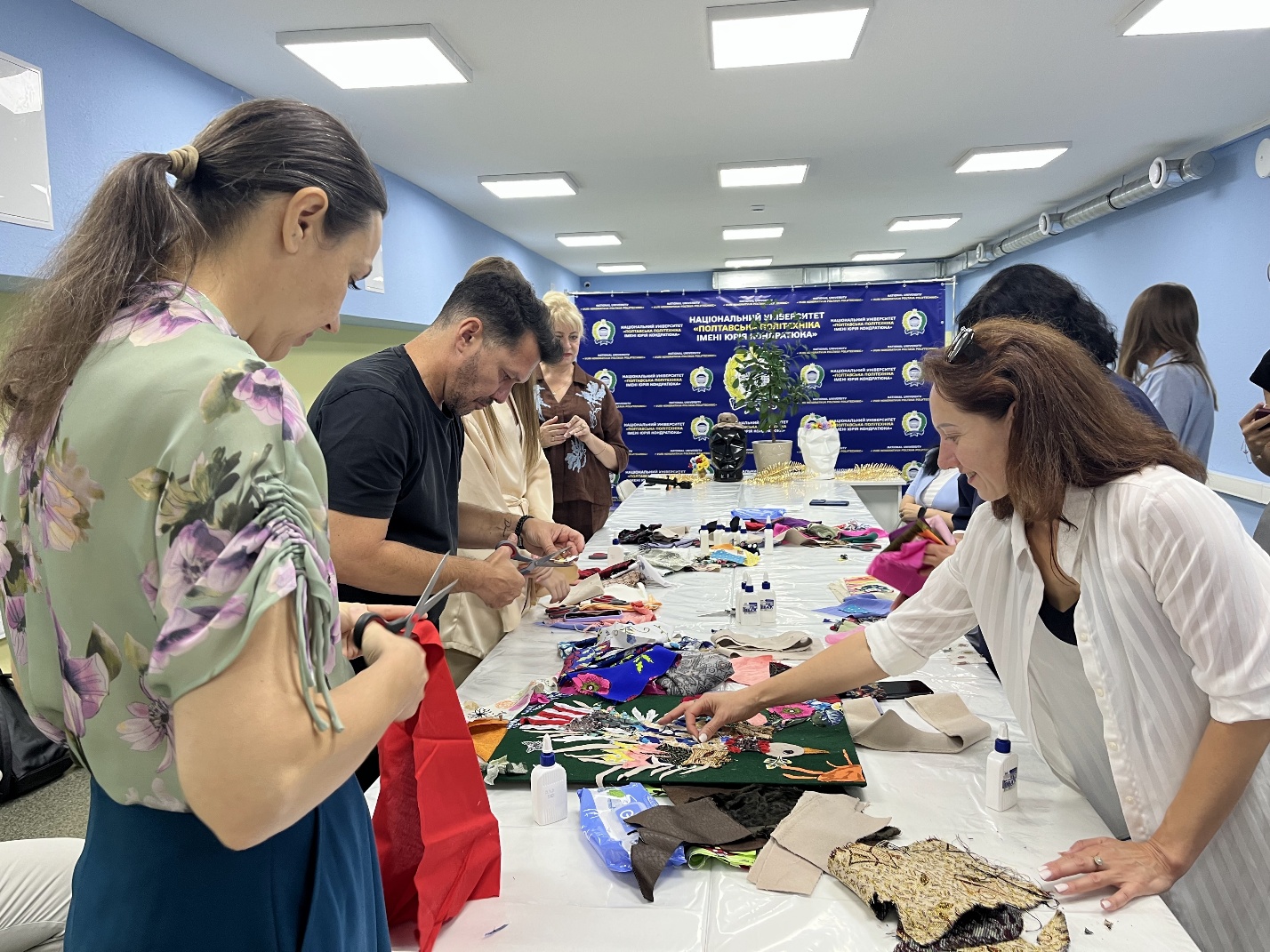
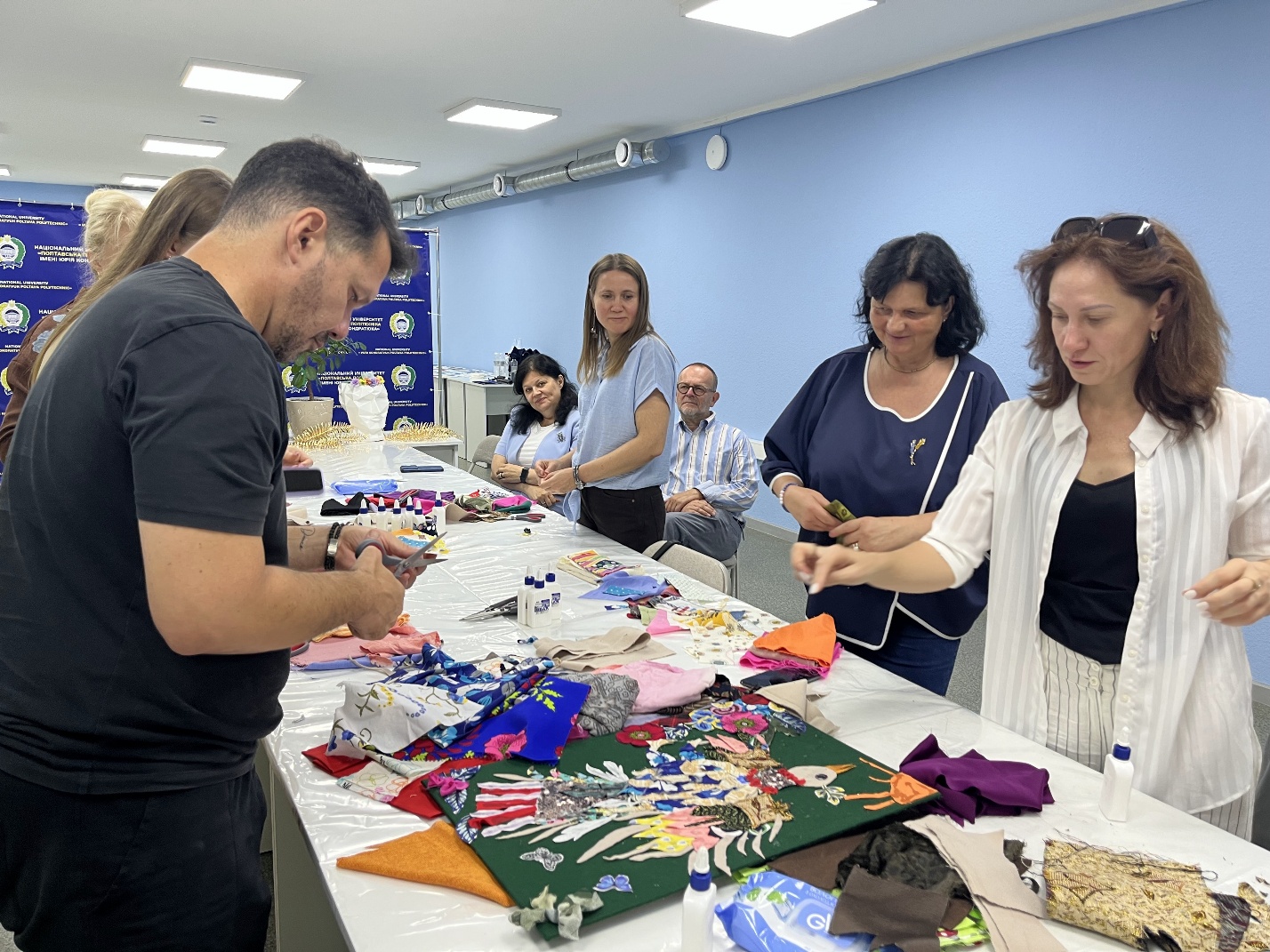
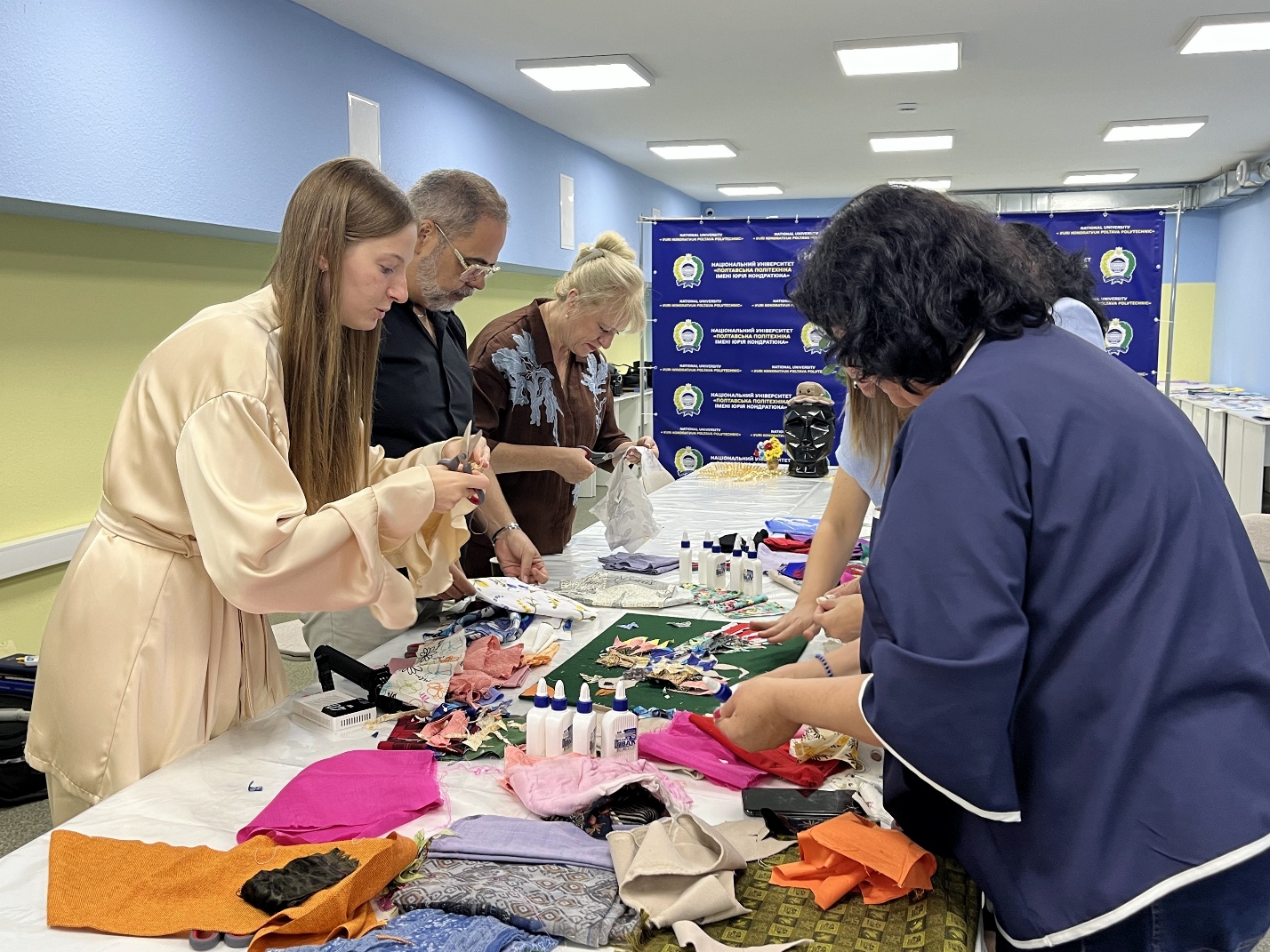
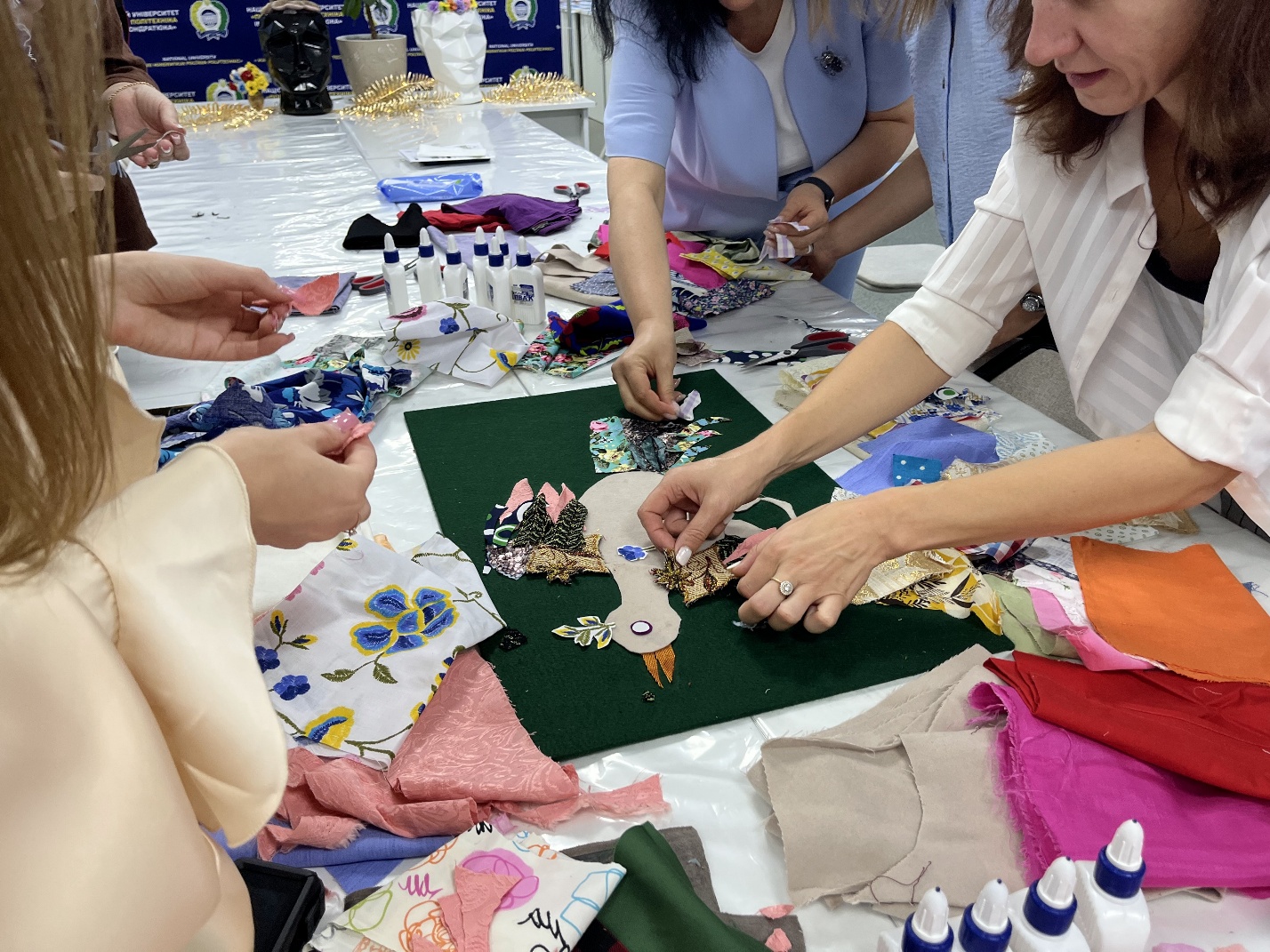
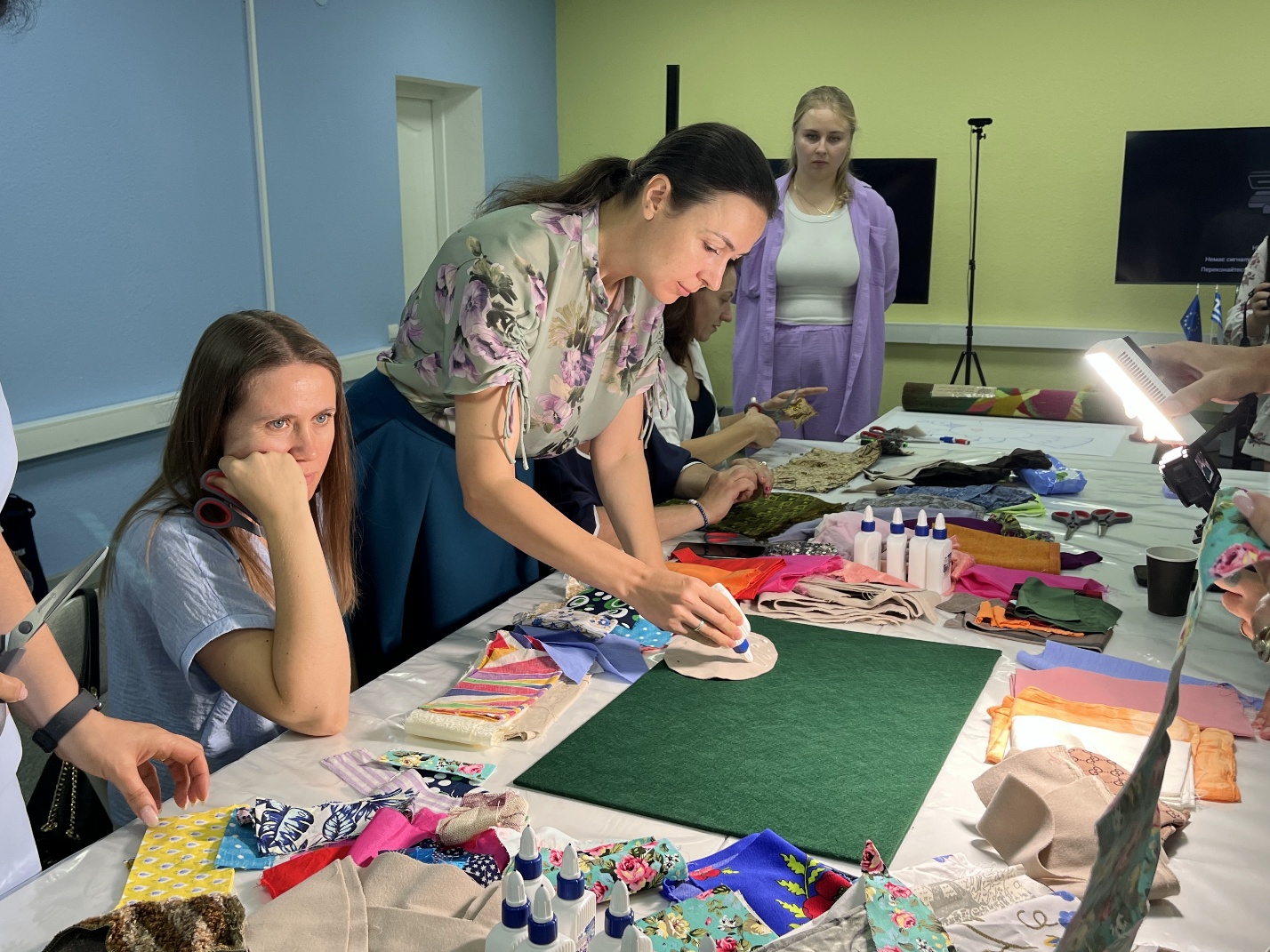
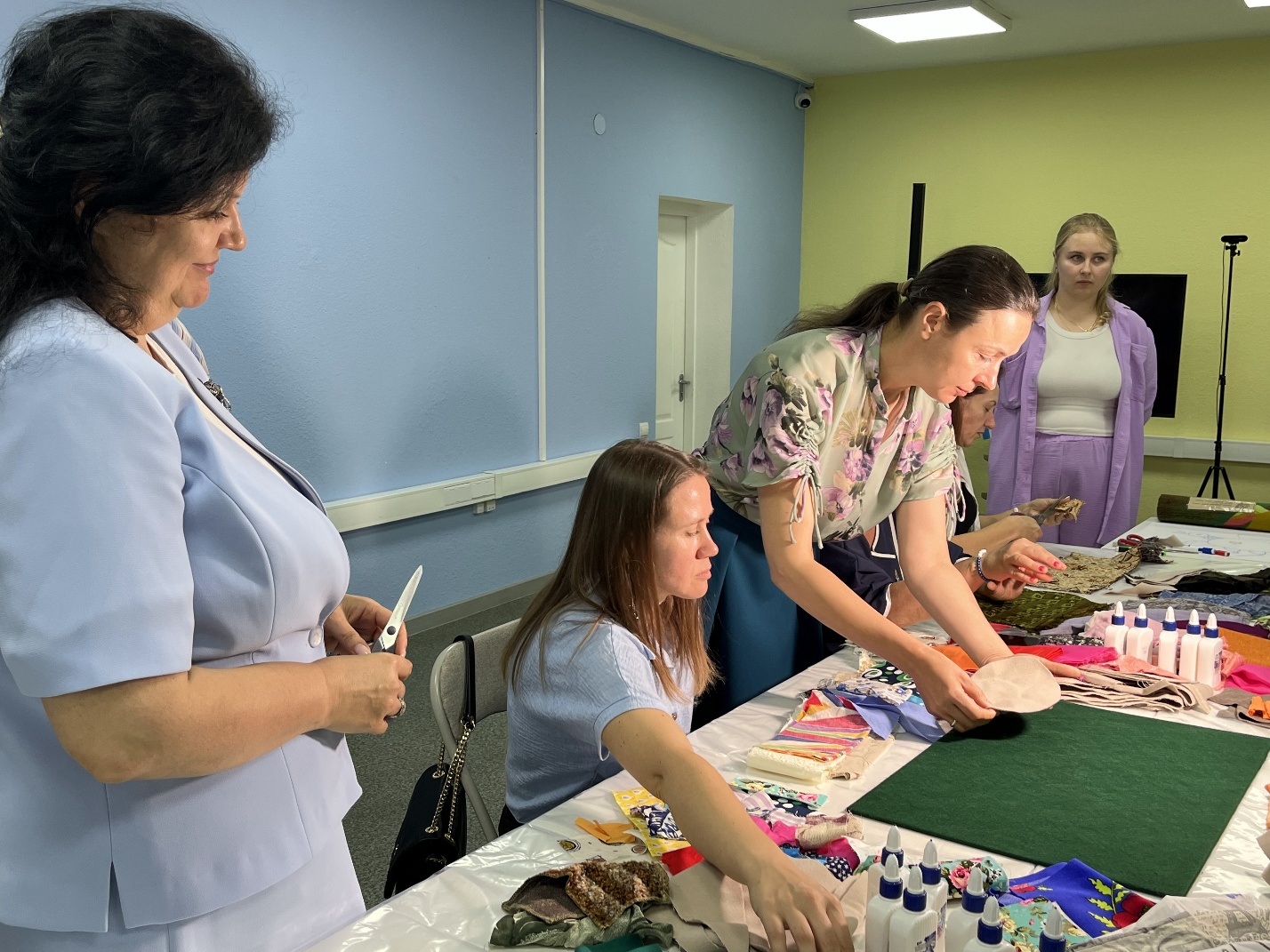
The program continued with an author’s masterclass in textile collage entitled “Wings Home”, conducted by the renowned Poltava artist, Honoured Master of Folk Art of Ukraine, member of the National Union of Artists of Ukraine and the National Union of Folk Art Masters of Ukraine, regular participant in international, national, and regional cultural and artistic projects and art exhibitions, artist who has created over 200 hand-woven tapestries, and Associate Professor of the Department of Fine Arts of National University “Yuri Kondratyuk Poltava Polytechnic” Olga Piliuhina.
Working with PVA glue, fabric scissors, a sturdy base, and various pieces of antique and contemporary canvas, participants assembled expressive silhouettes of outstretched wings with their own hands. Within the psychotherapeutic process, working with fabric fragments took on special symbolic meaning: a metaphor for gradually piecing together a person’s war-torn life experience, restoring a sense of wholeness, roots, and a safe internal sanctuary. Creative interaction with textured textiles helped participants feel grounded and convey complex emotions through touch and colour.
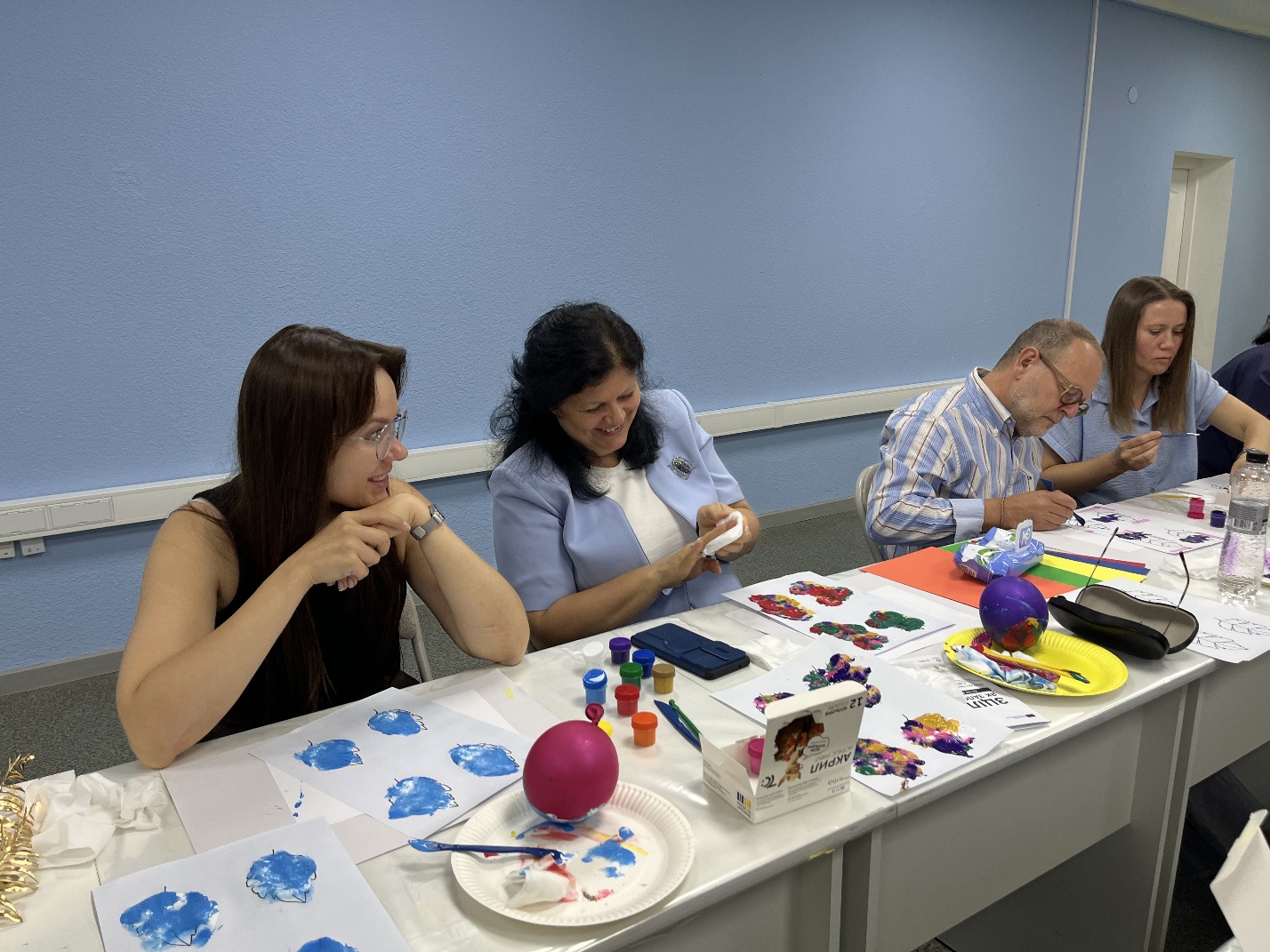
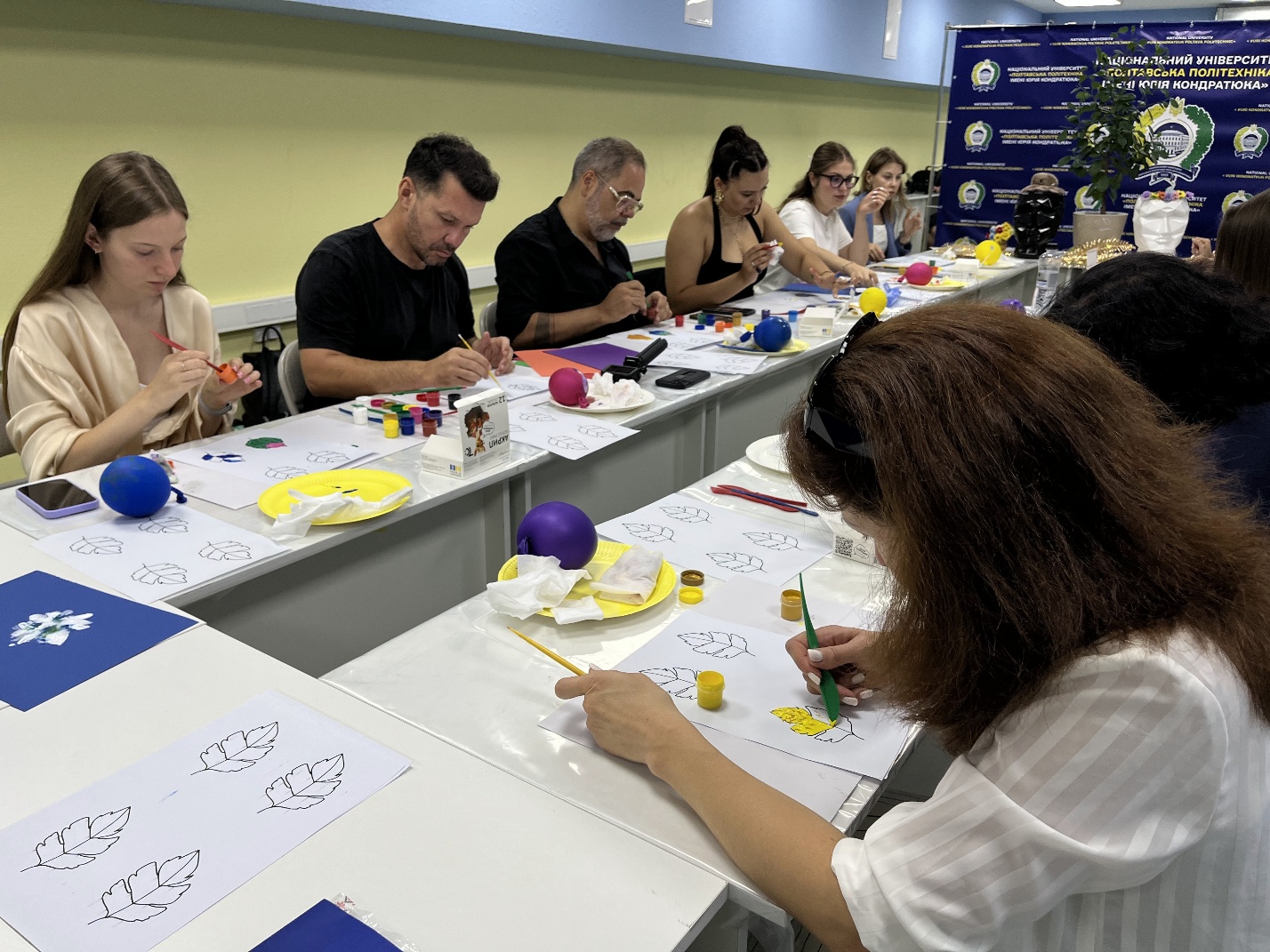
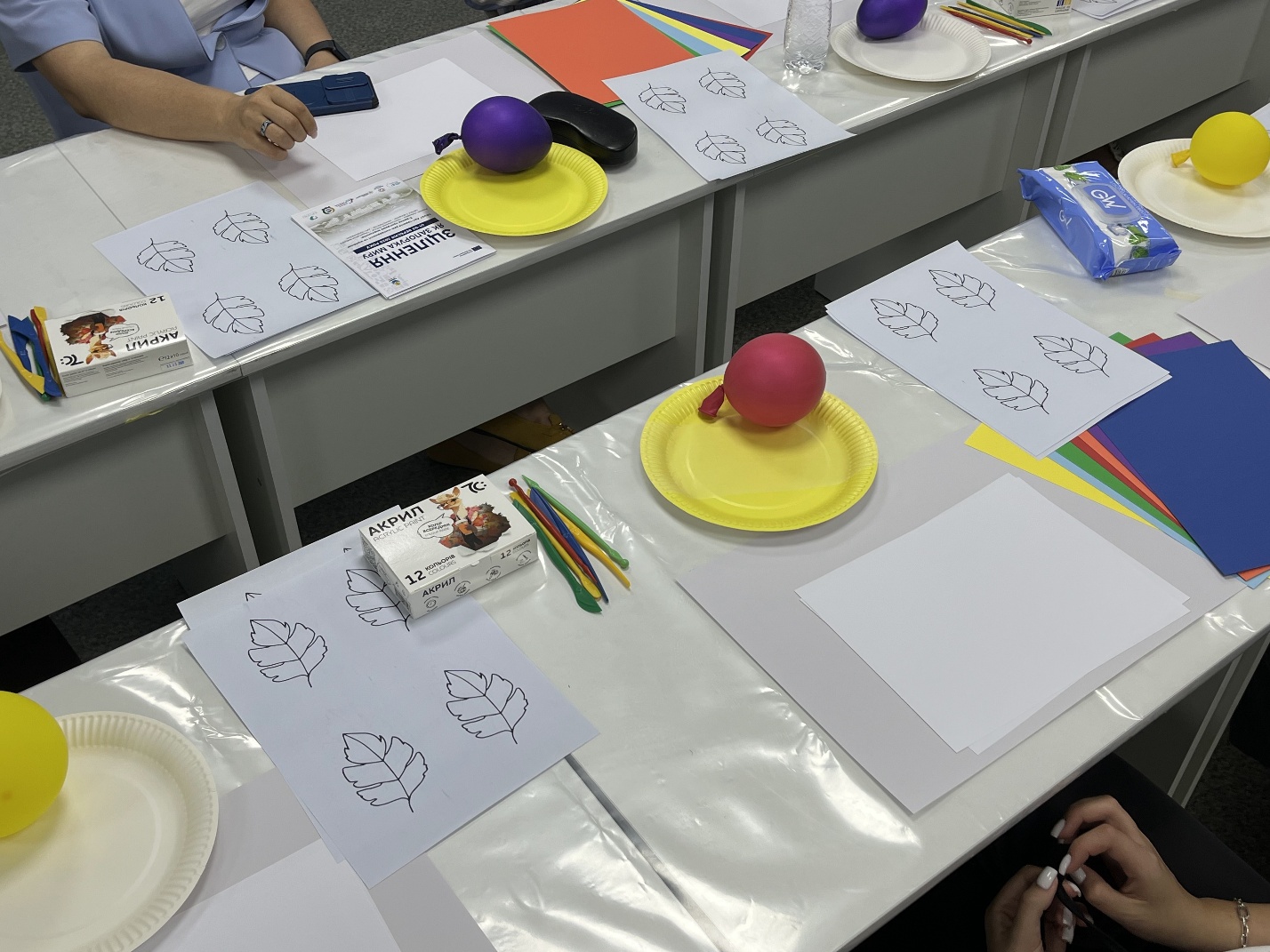
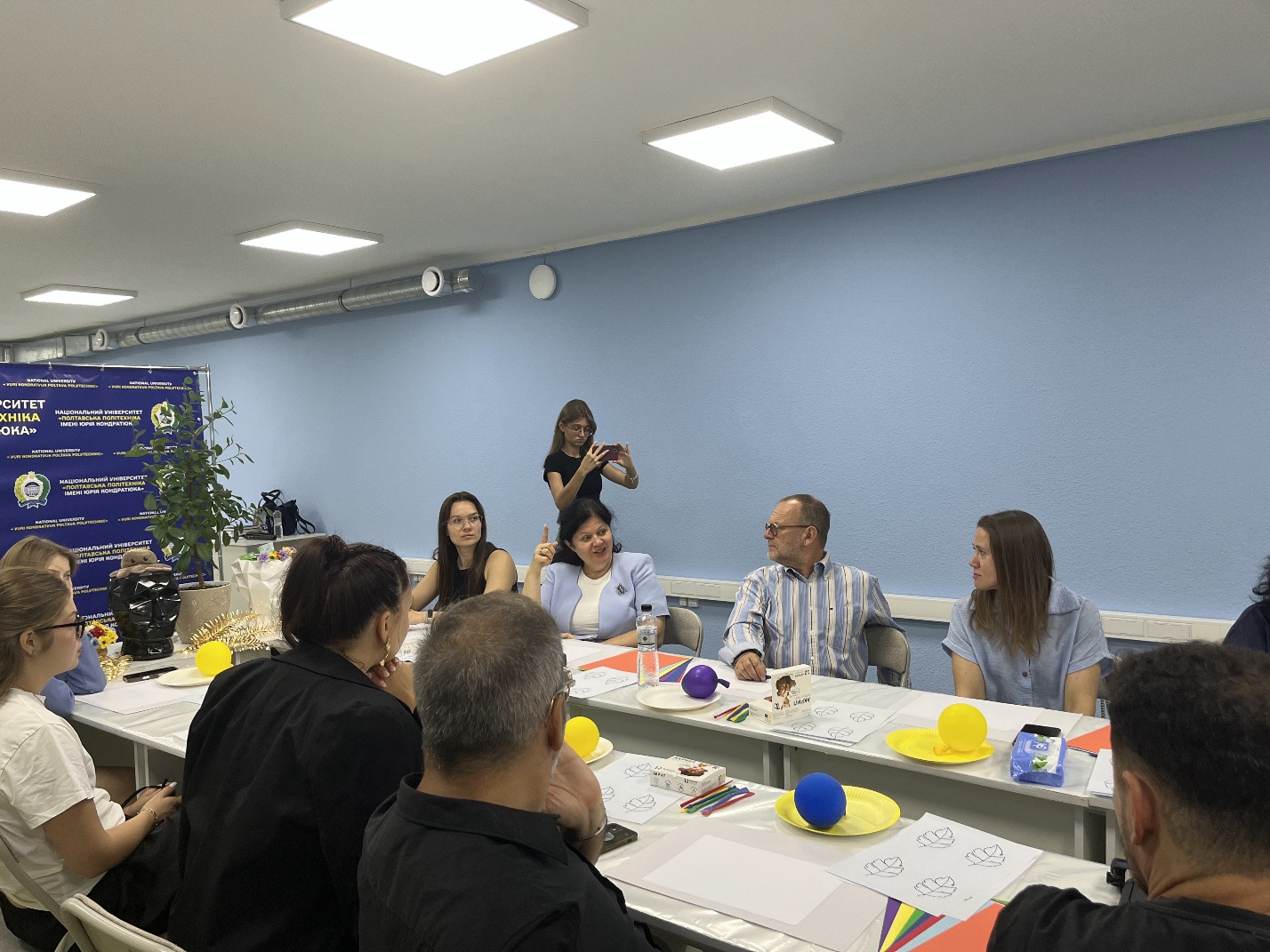
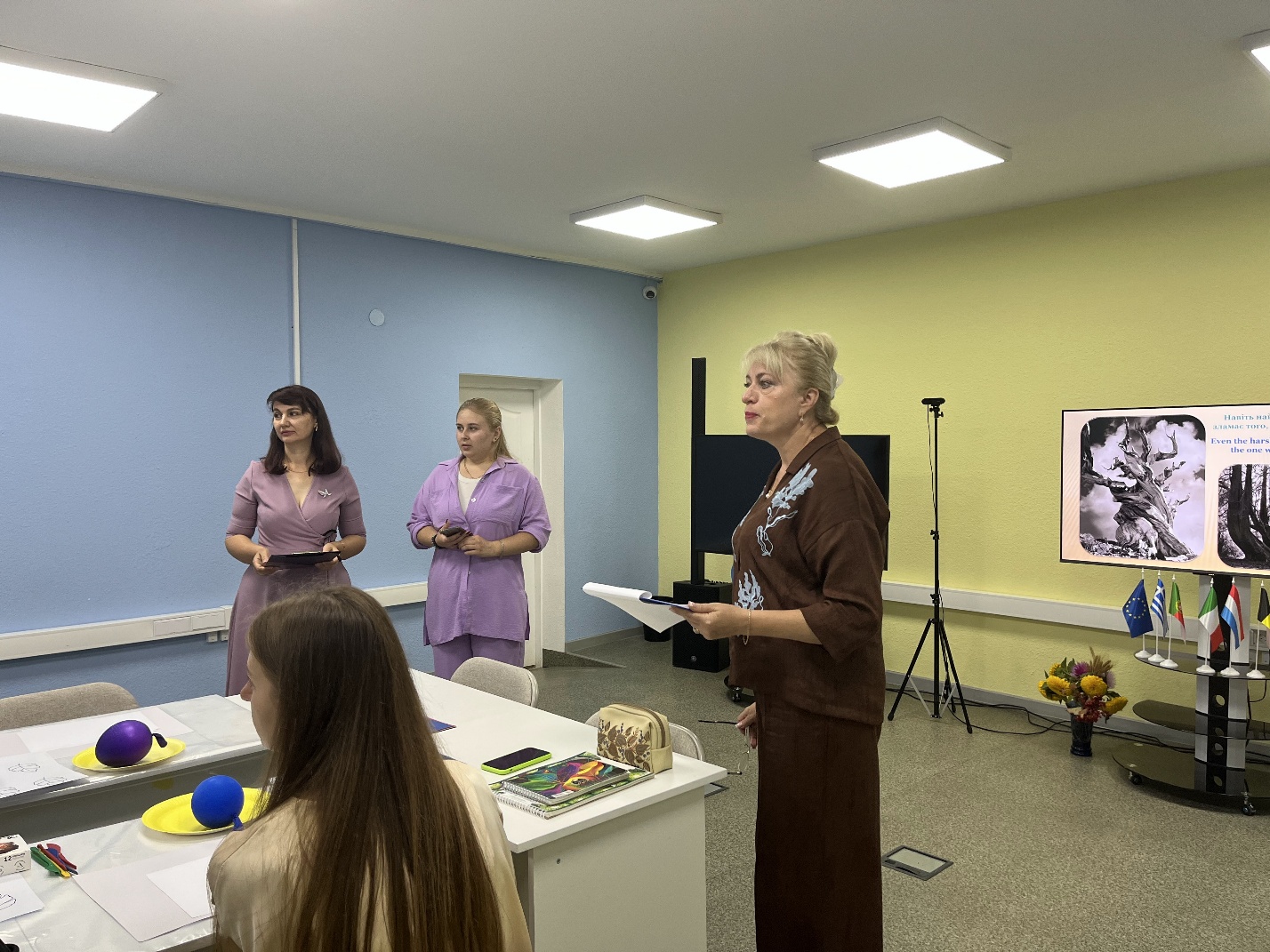
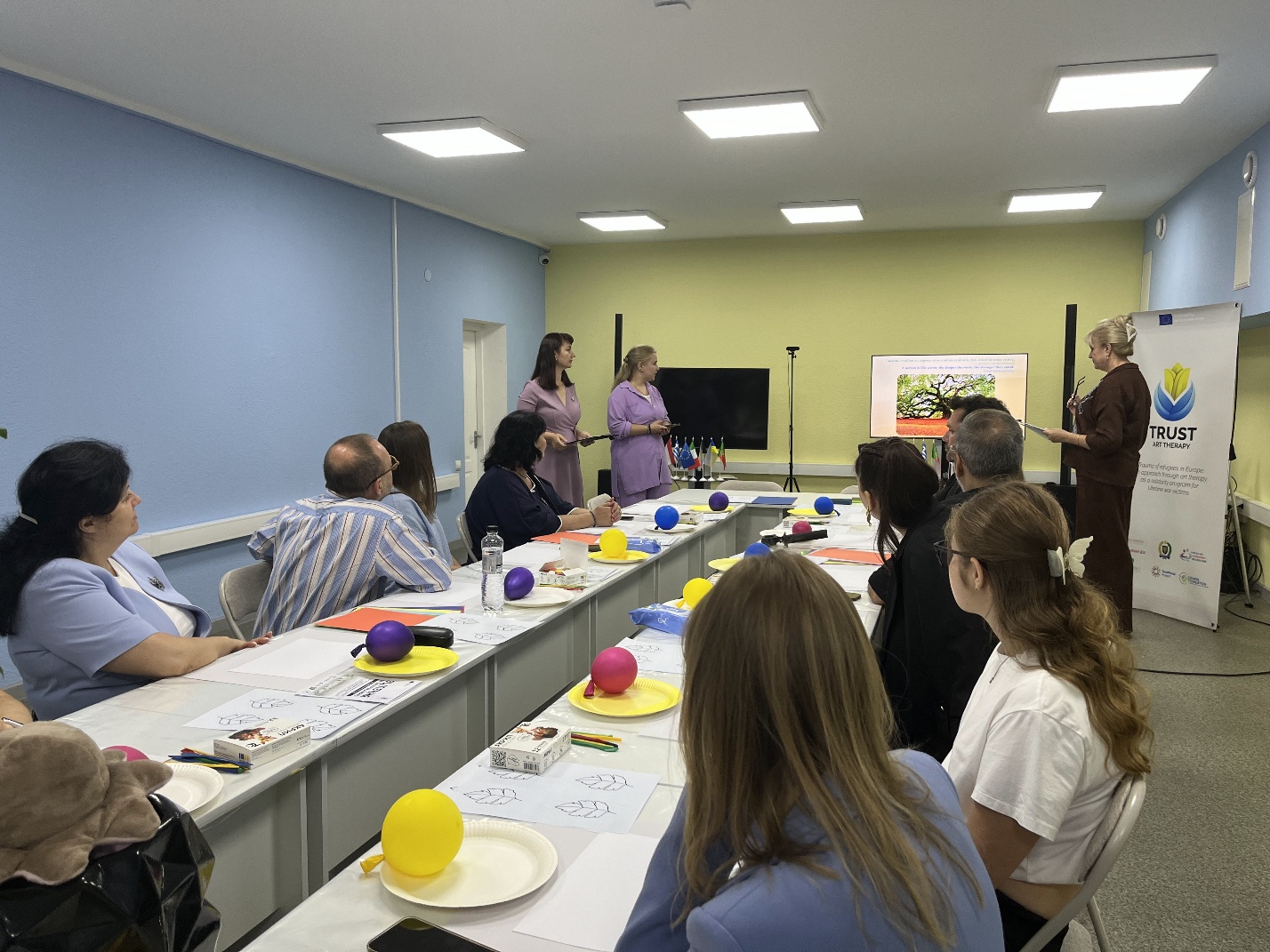
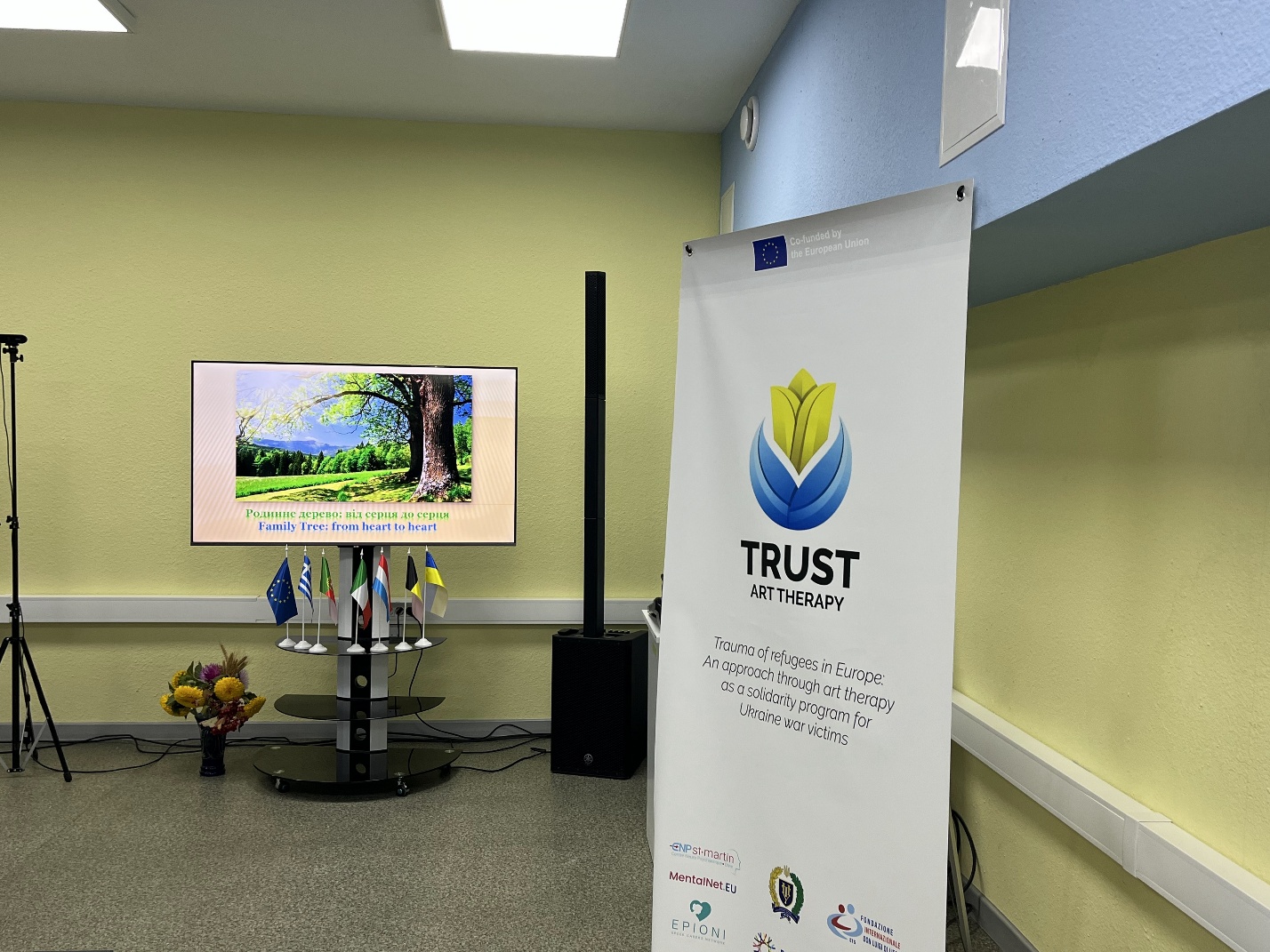
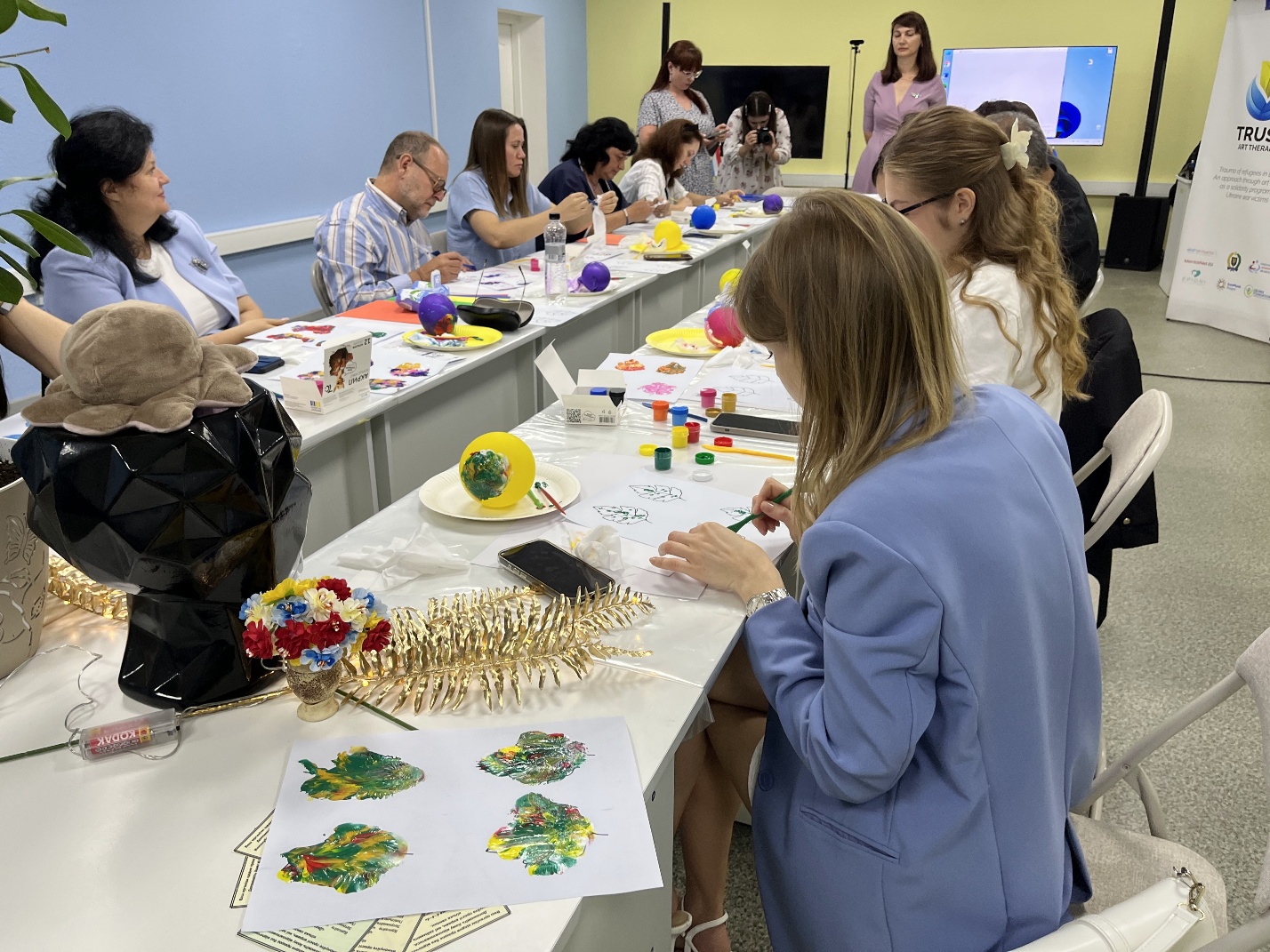
Following a brief coffee break, an art therapy masterclass entitled “Family Tree: From Heart to Heart”, moderated by University Practical Psychologist Olena Kryvenko and Associate Professor Maryna Teslenko, commenced in the shelter. Participants were introduced to an original expressive painting technique using balloons. The central symbol of this creative work was a leaf – unique in shape, colour, and pattern, reflecting the individual life story of each human being.
Working with colour, participants created their own leaves, allowing paints to converge, blend, leave marks, and even exceed defined boundaries. This creative process served as a metaphor for human encounters. Touching one another’s lives, we leave behind a part of ourselves while taking away something essential from another person. This is how an unseen connection is born from heart to heart.
The collaborative tree, whose crown brought together leaves of diverse colours and patterns, acquired profound symbolic significance. It visualised a simple yet vital truth: we do not need to become identical to be together. Everyone can preserve their own history, their own colour, and their own unique imprint while remaining part of something greater. After all, every tree begins with roots, and every community is born of trust, mutual openness, and a sense of connection.
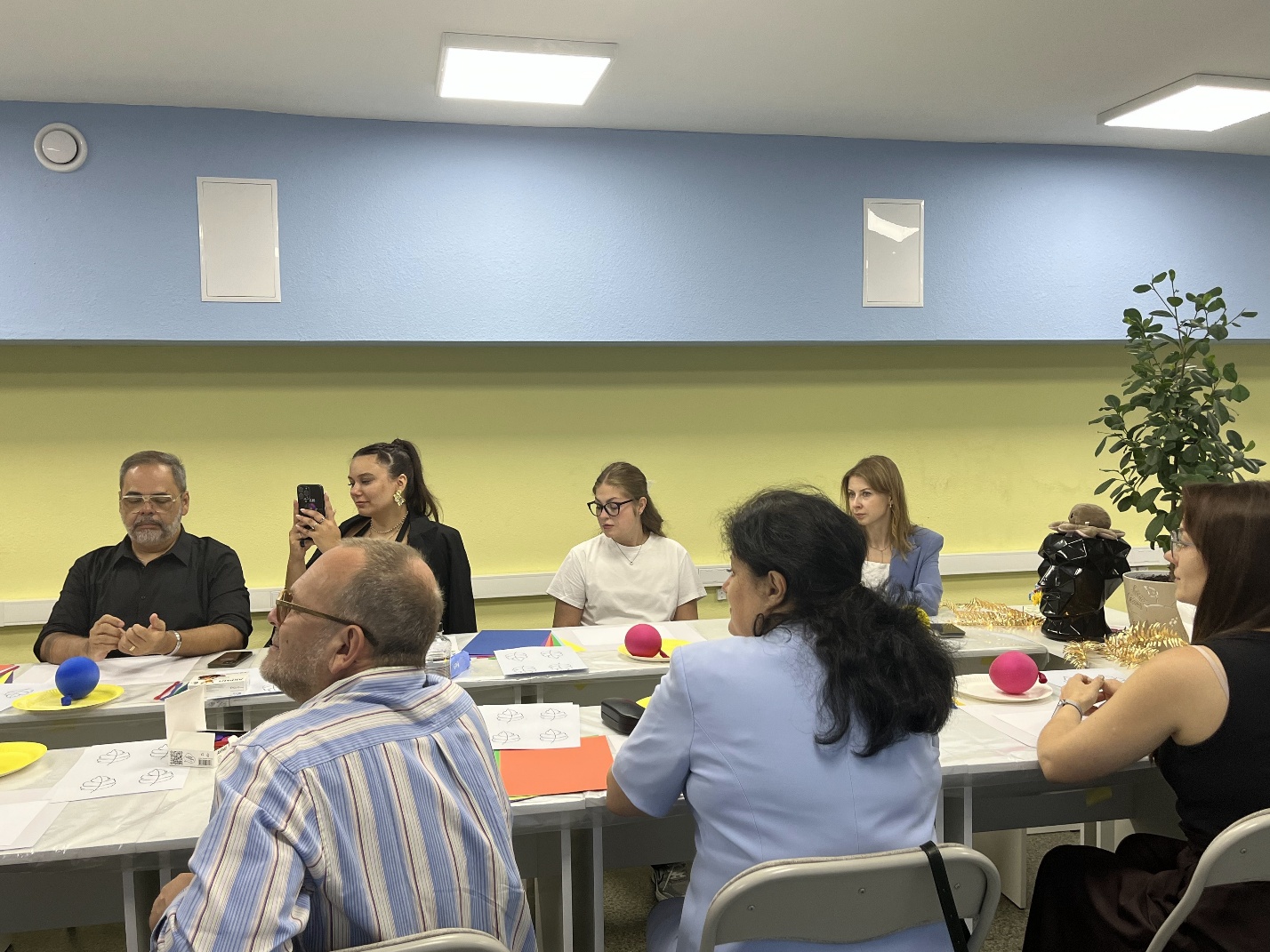
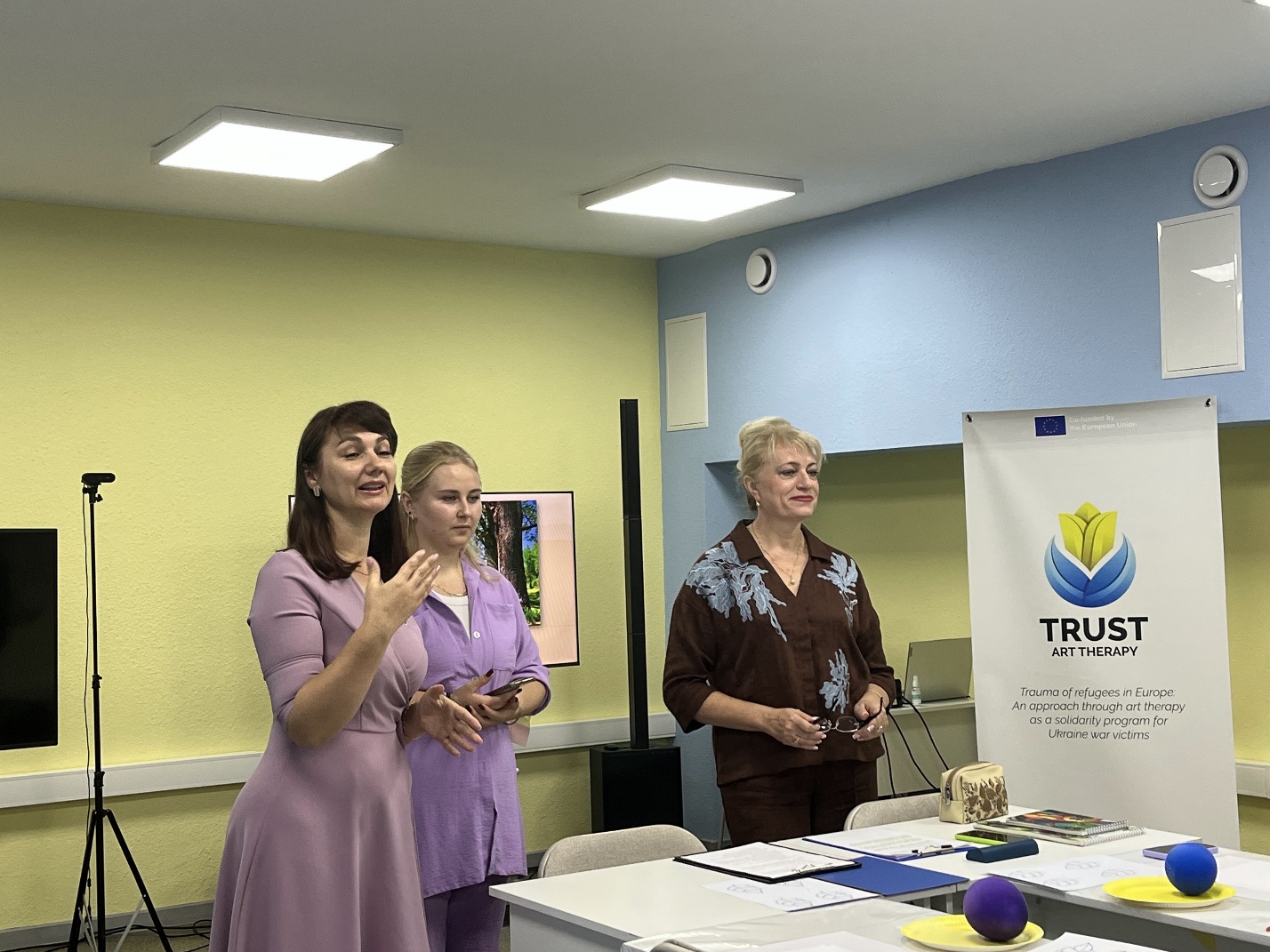
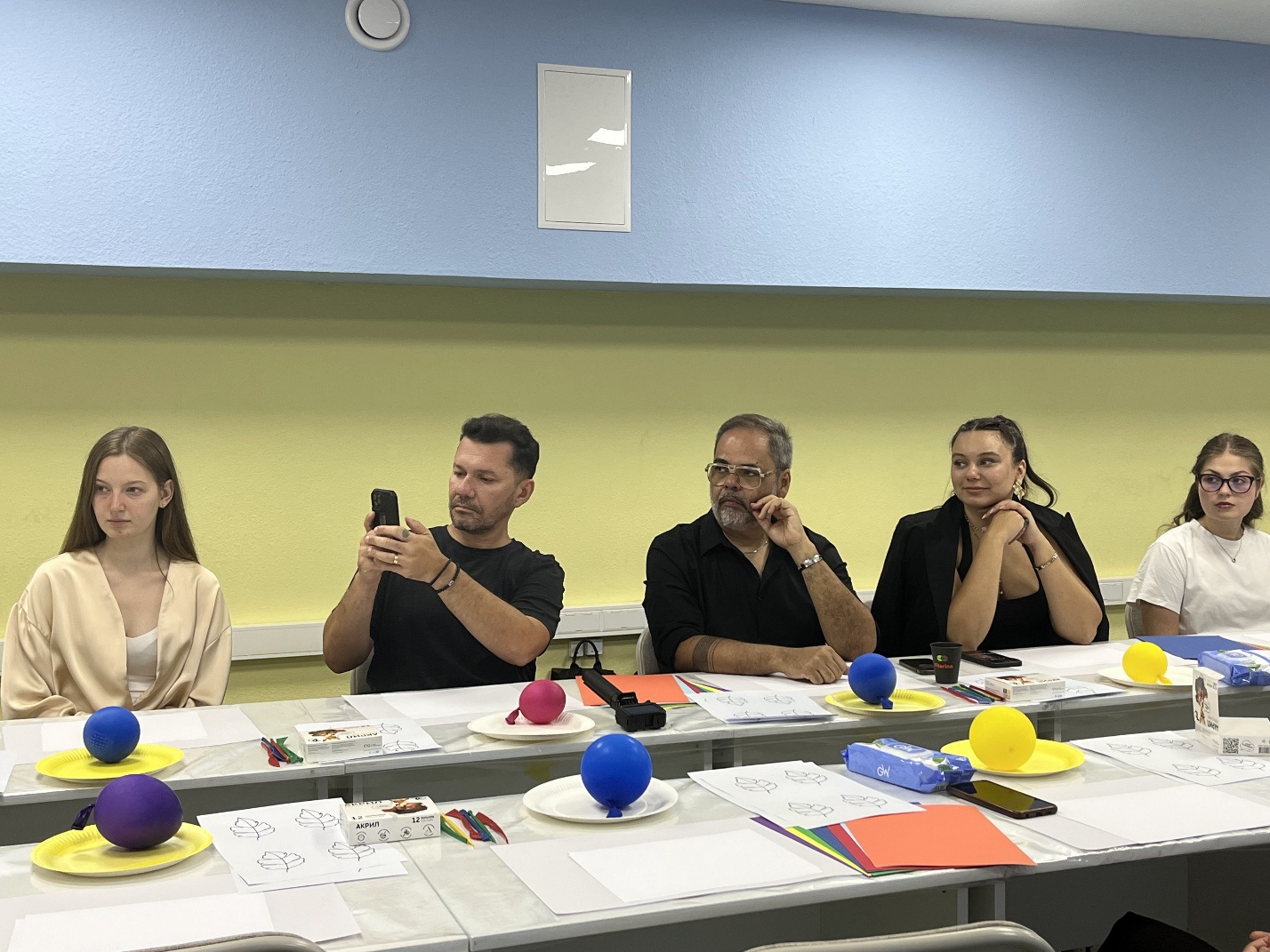
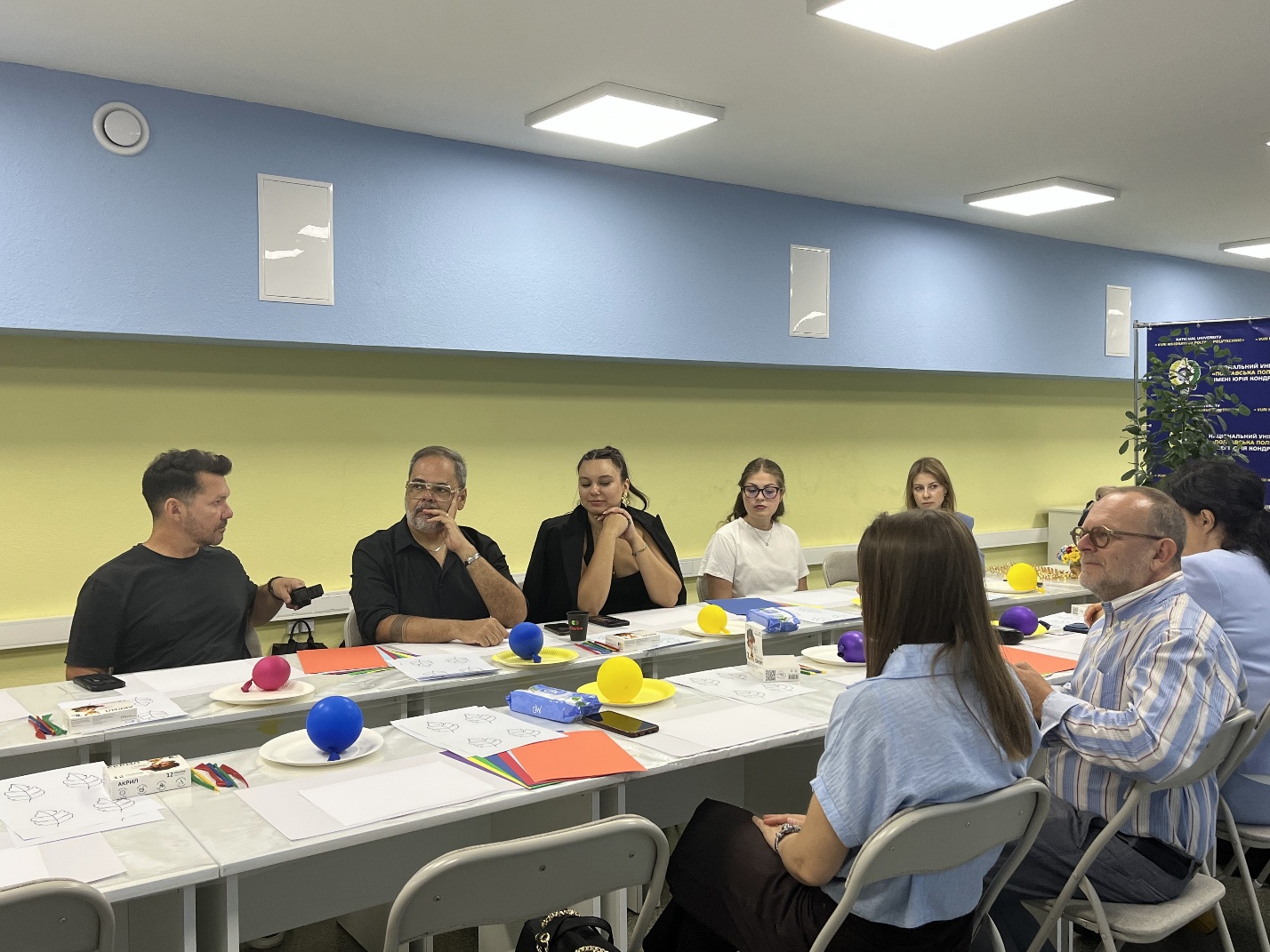
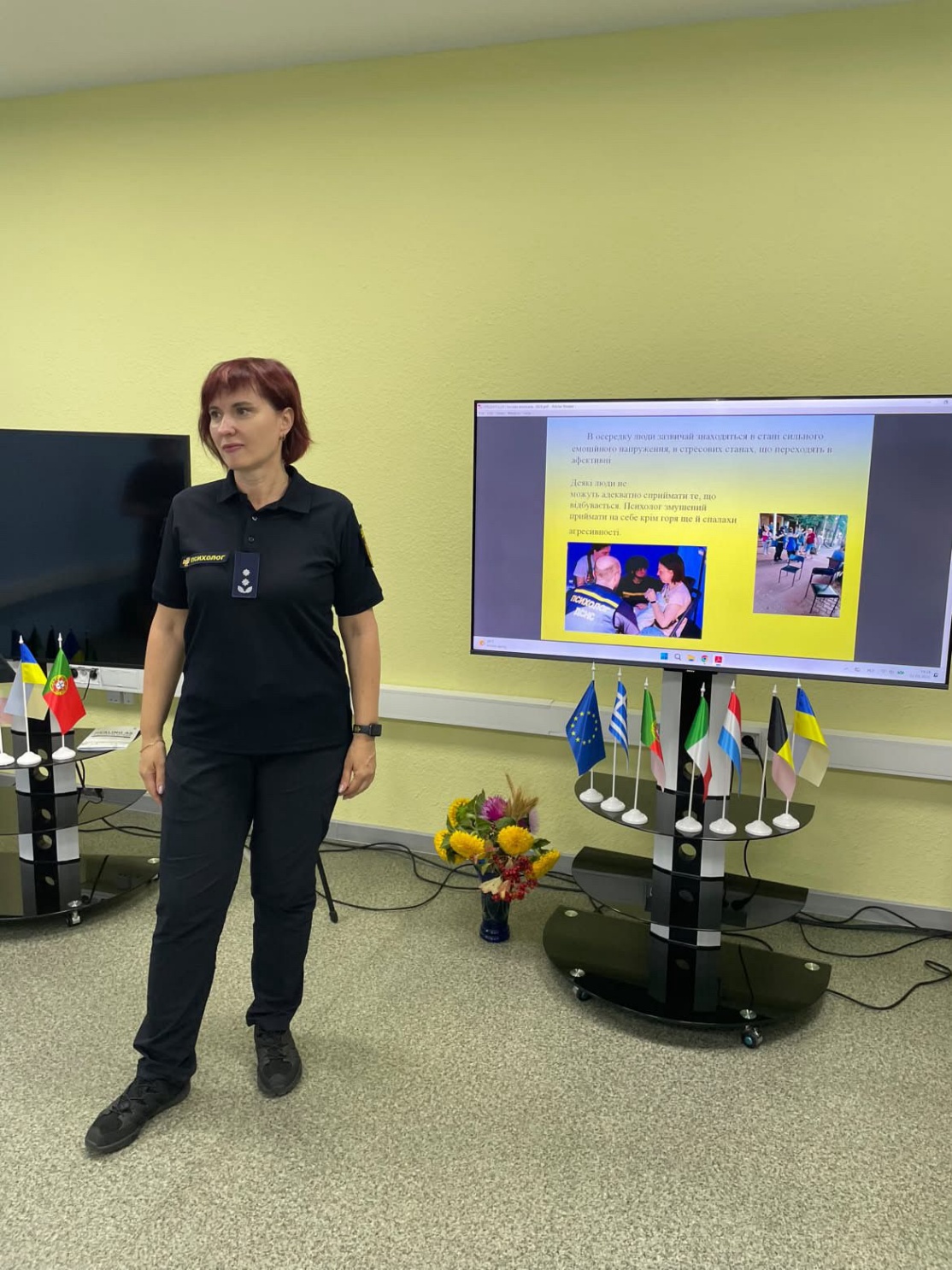
The afternoon session held exceptional practical significance for understanding the realities of contemporary Ukraine: the guests attended a critically important professional meeting with State Emergency Service (SES) crisis psychologist Yuliia Falieieva, who presented to European colleagues her unique firsthand experience of operating under the actual conditions of the full-scale invasion. The dialogue encompassed psychological first aid methodologies for victims at disaster sites, algorithms for stabilising acute stress reactions in the civilian population, the specifics of psychological decompression for rescue personnel, and support for the families of the fallen. European colleagues commended the unprecedented courage of Ukrainian specialists and emphasised that the response methodologies developed by the psychologists of the SES of Ukraine will serve as invaluable material for advancing pan-European protocols for emergency and rehabilitation assistance.
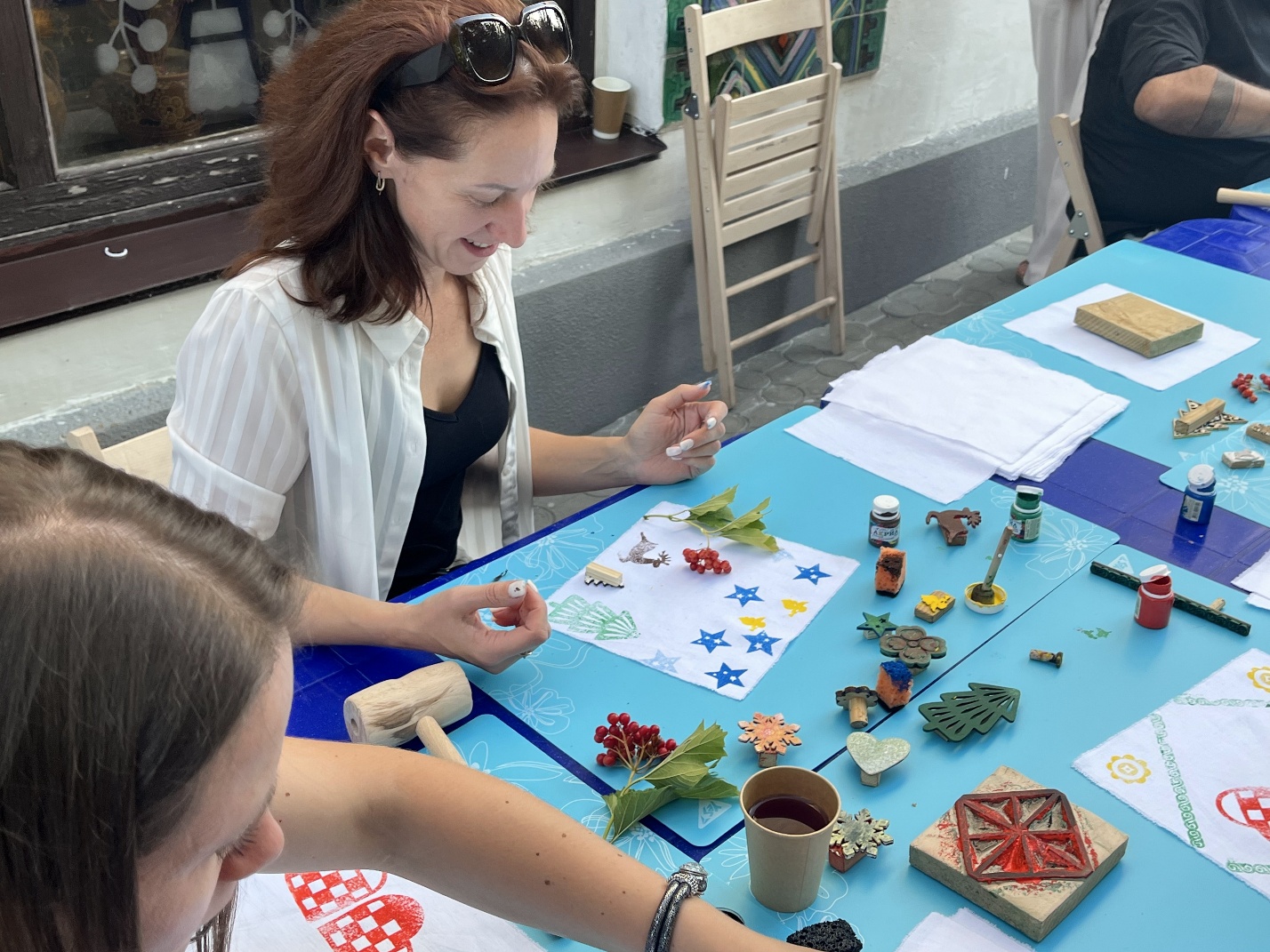
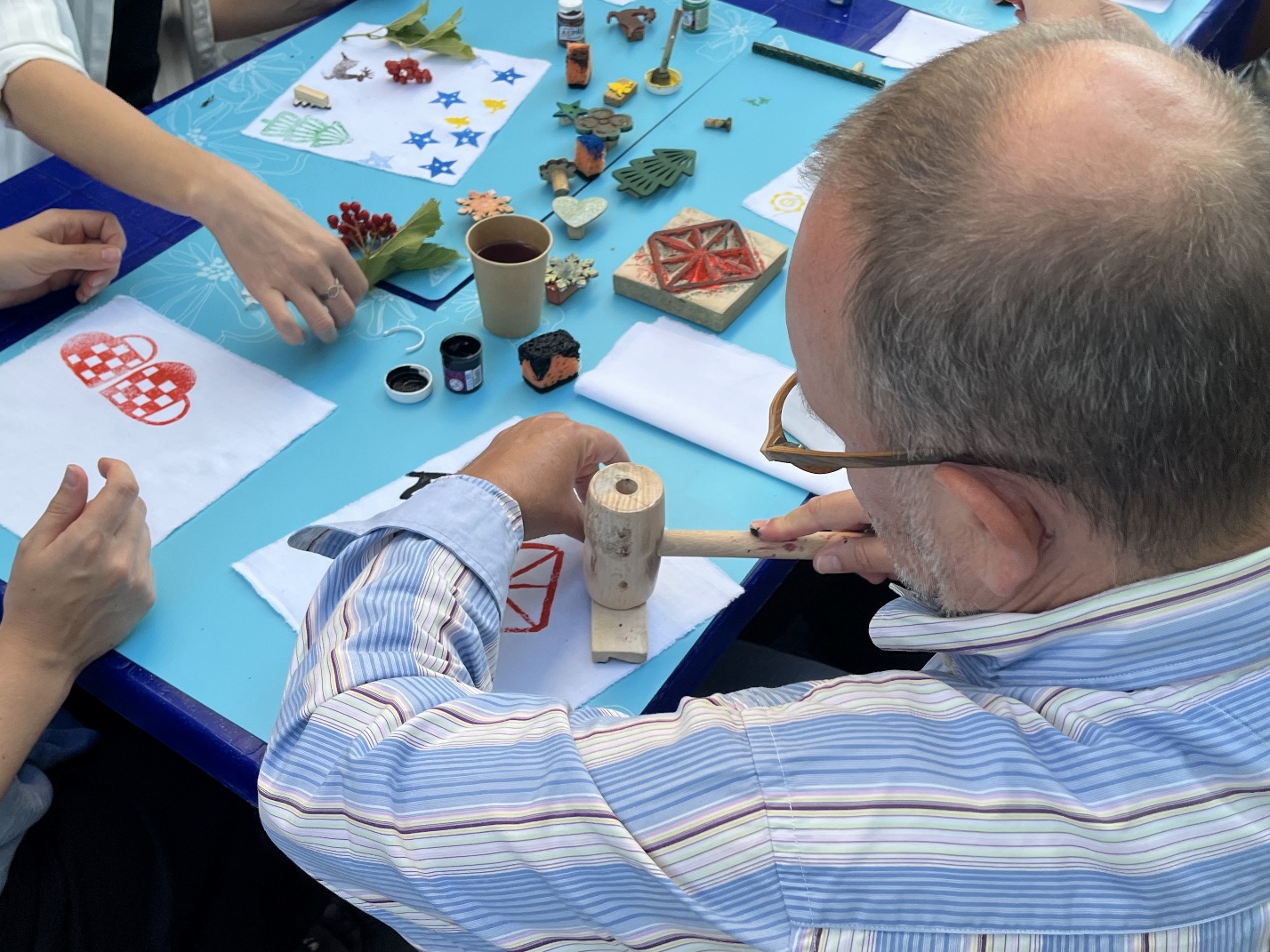
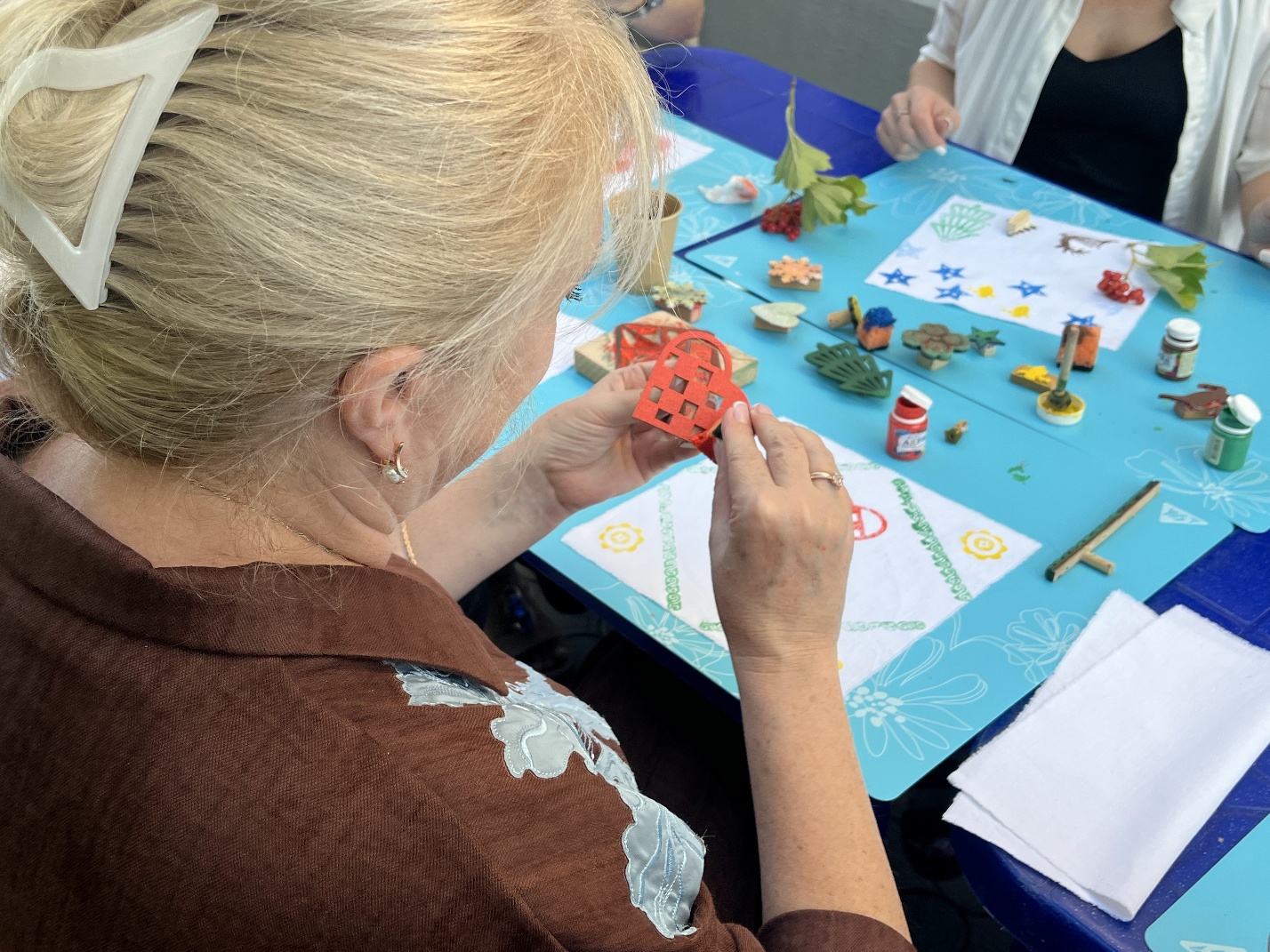
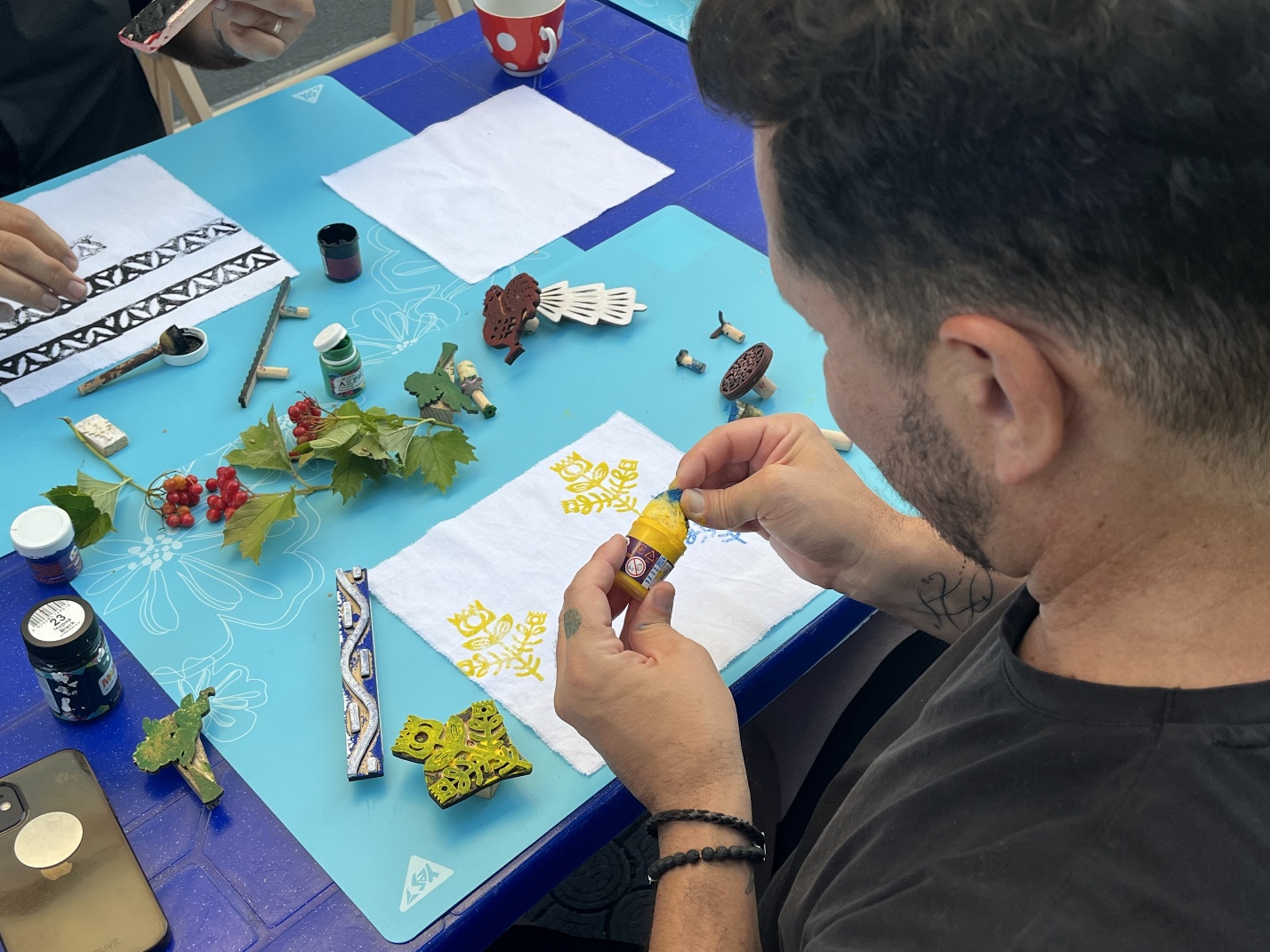
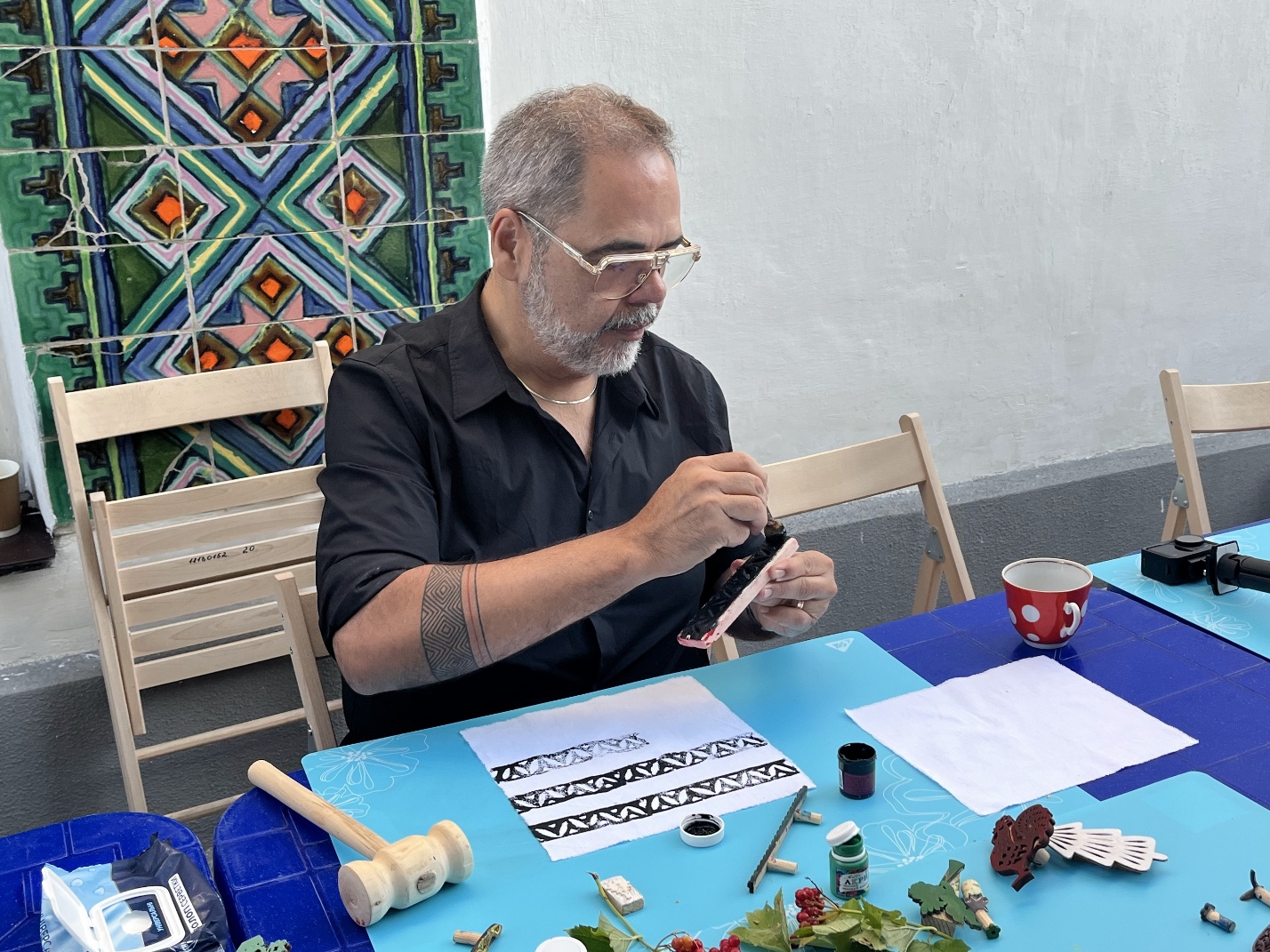
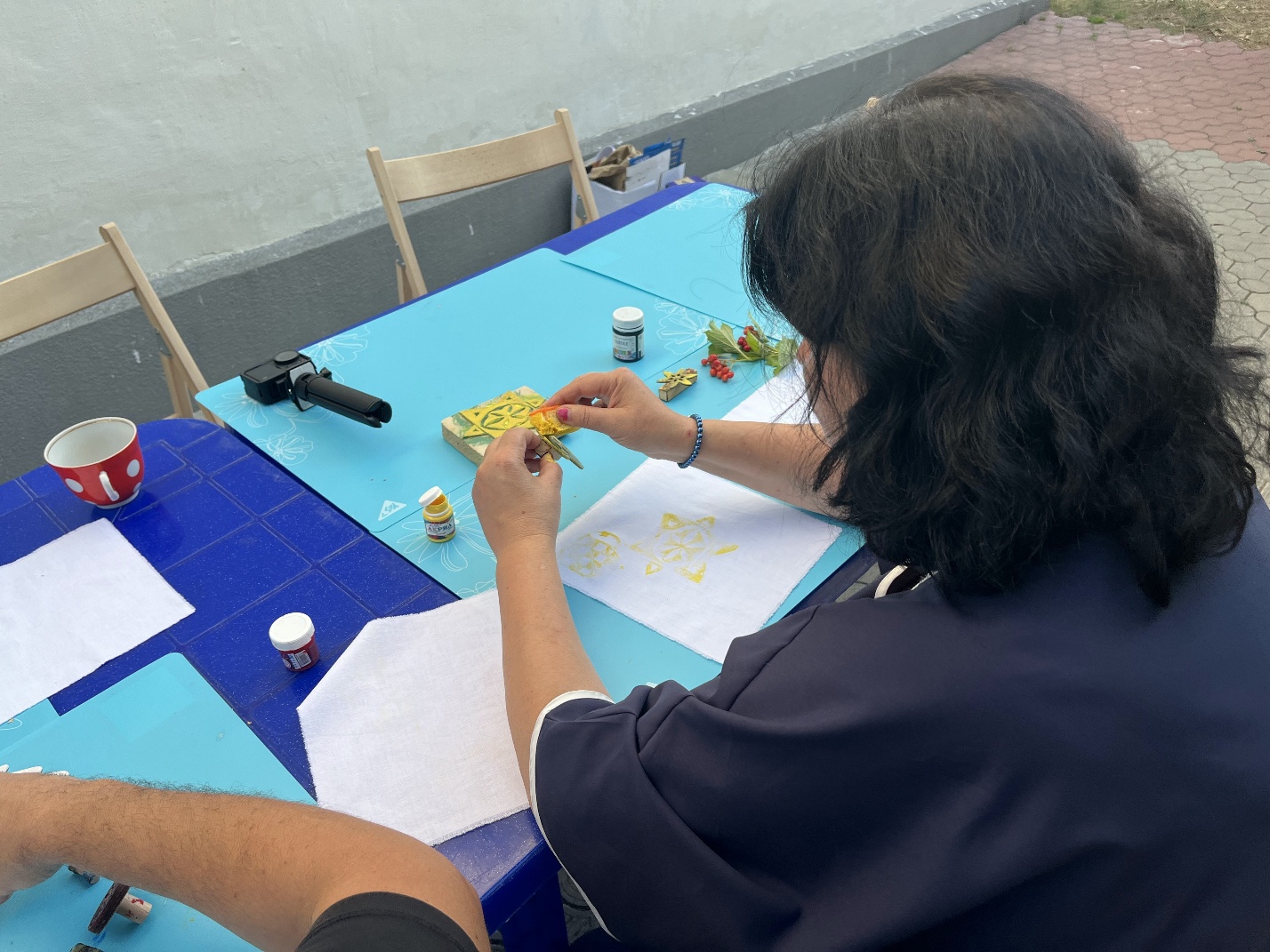
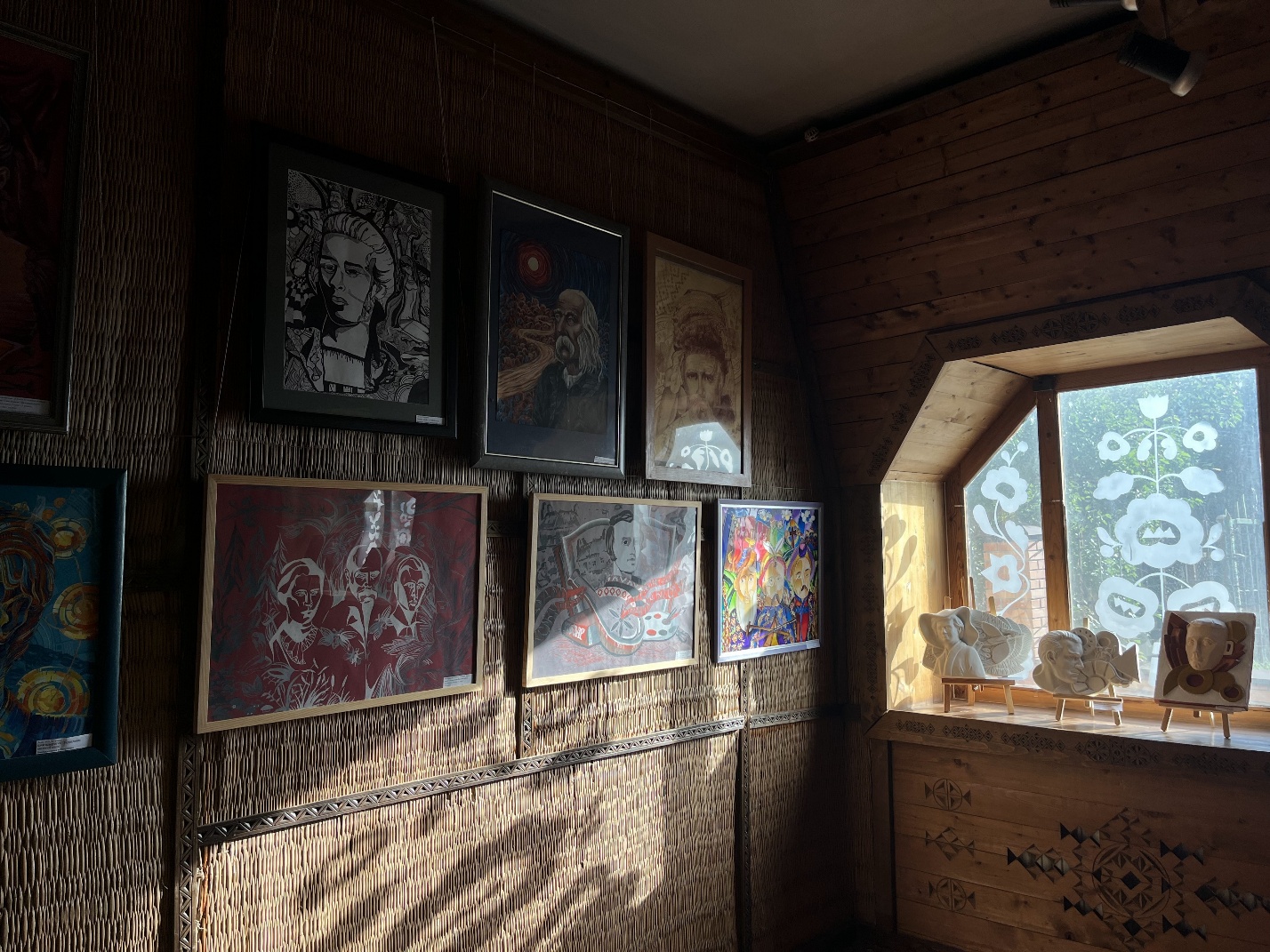
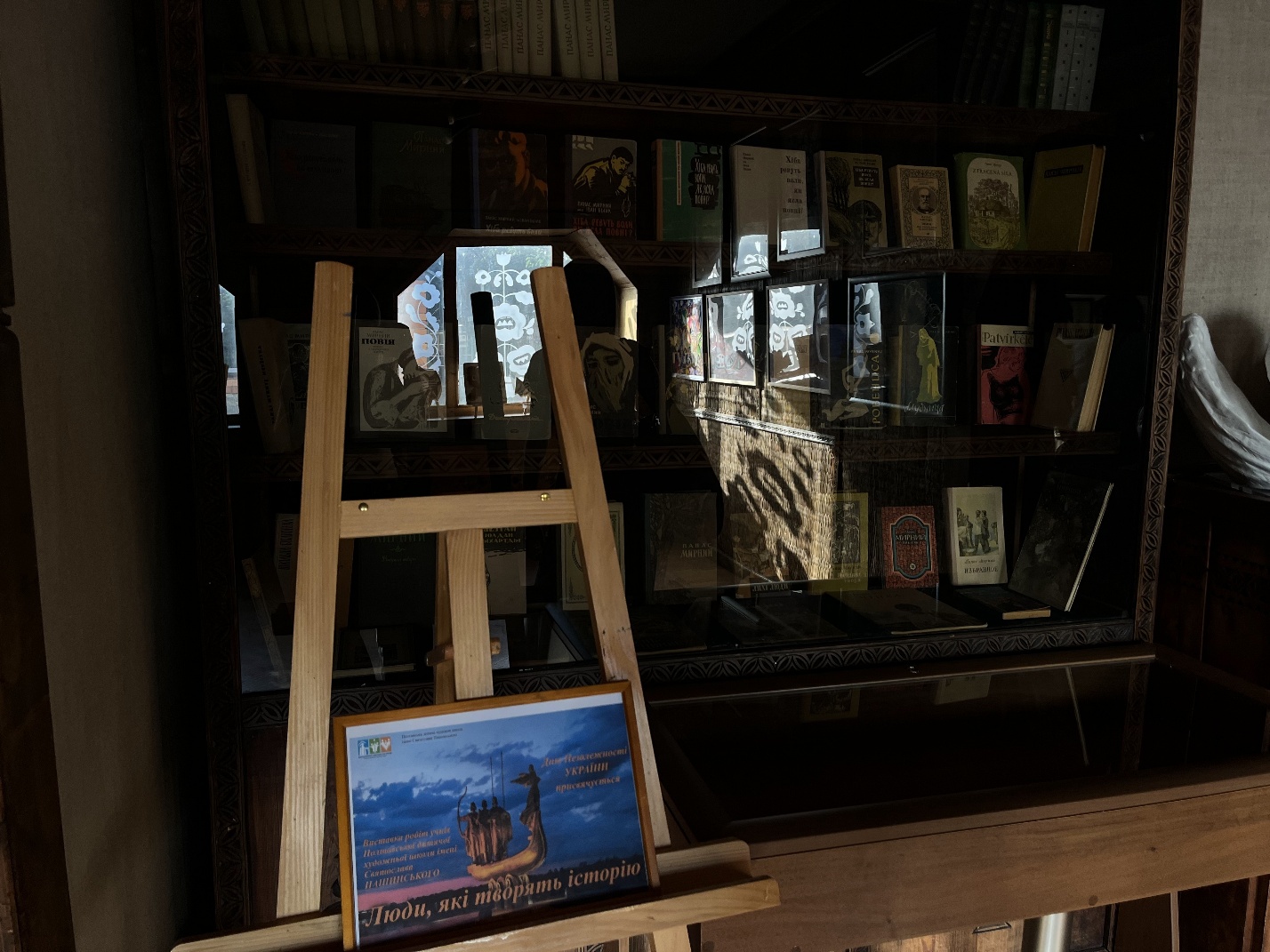
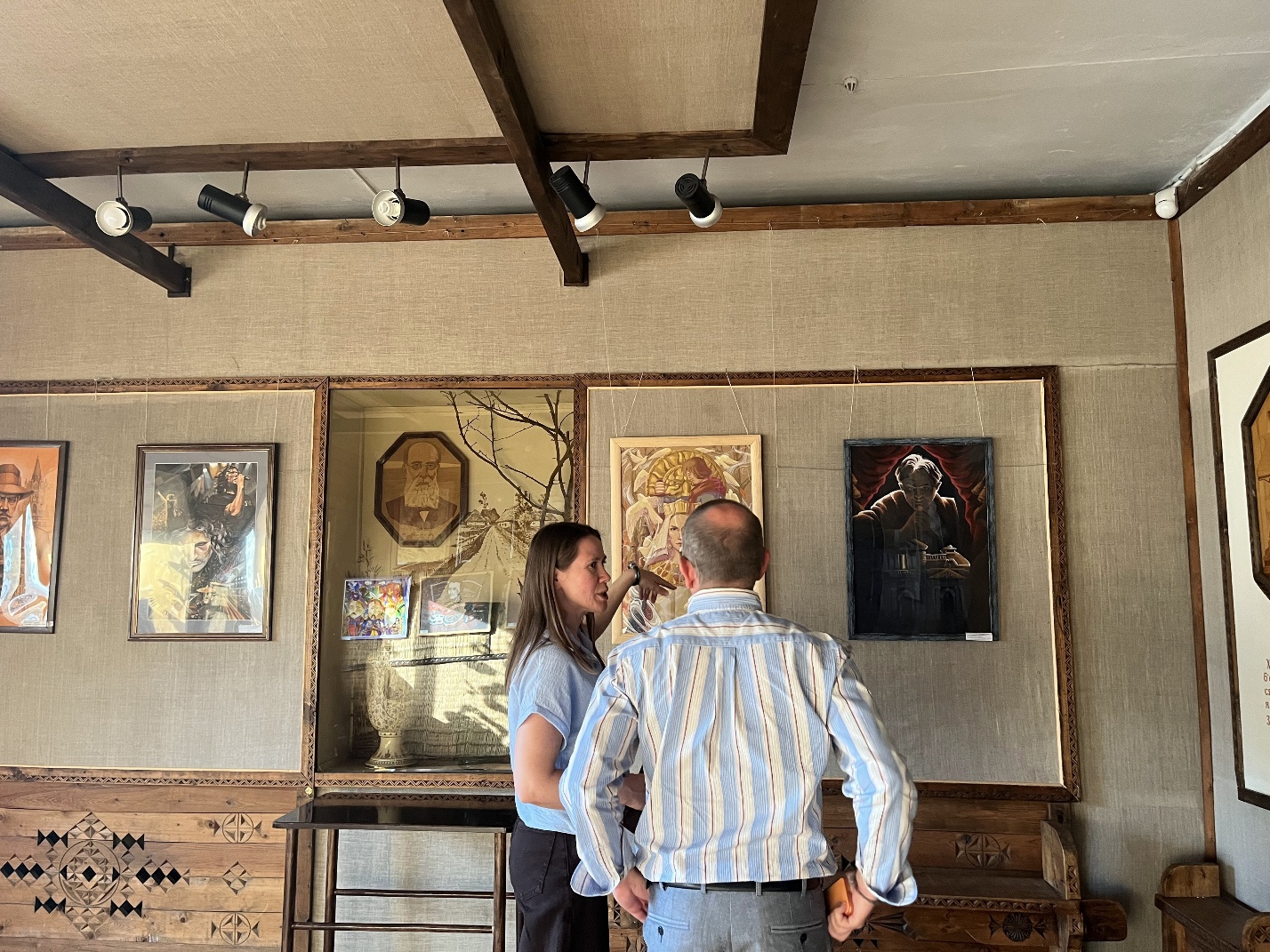
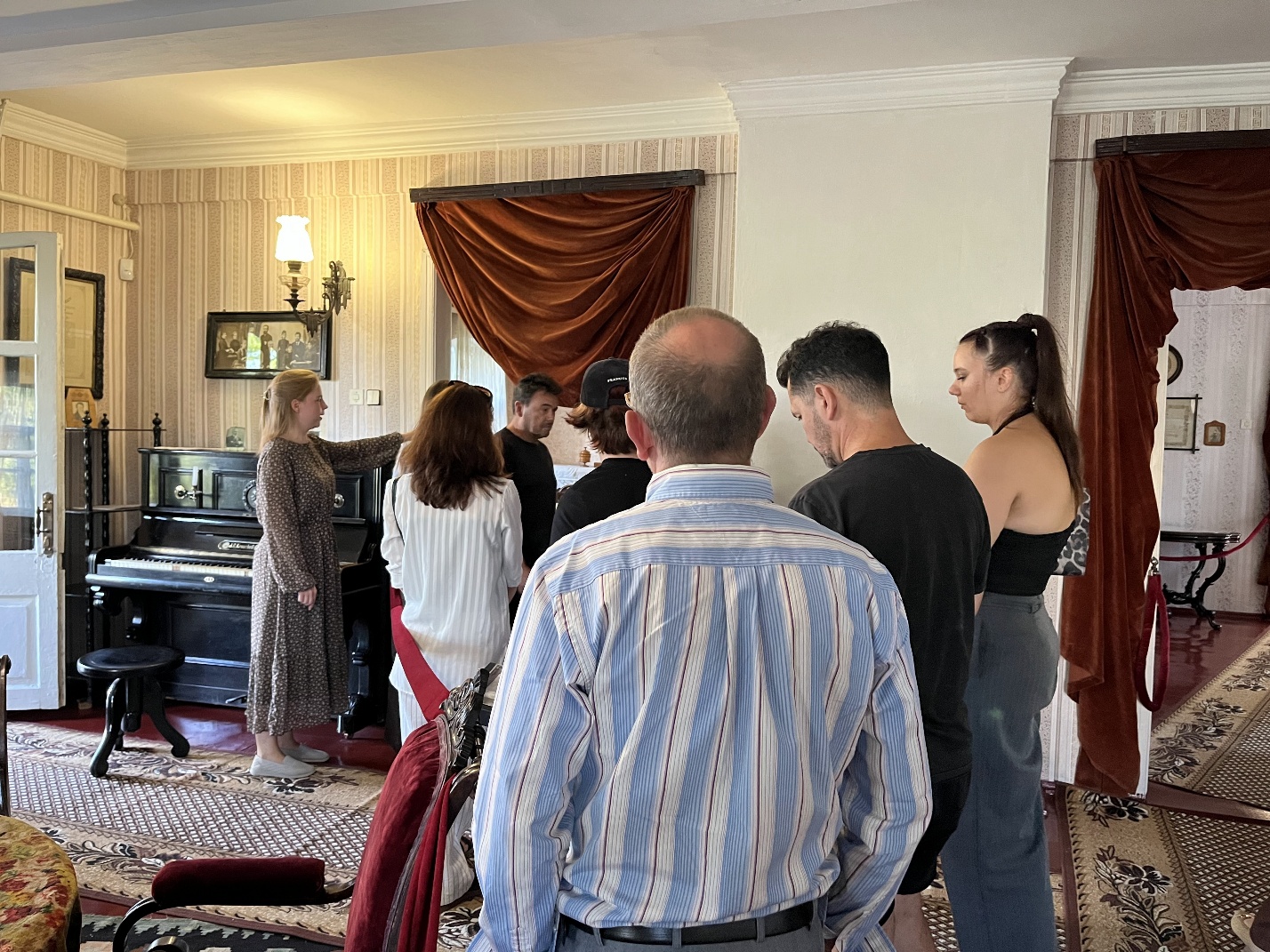
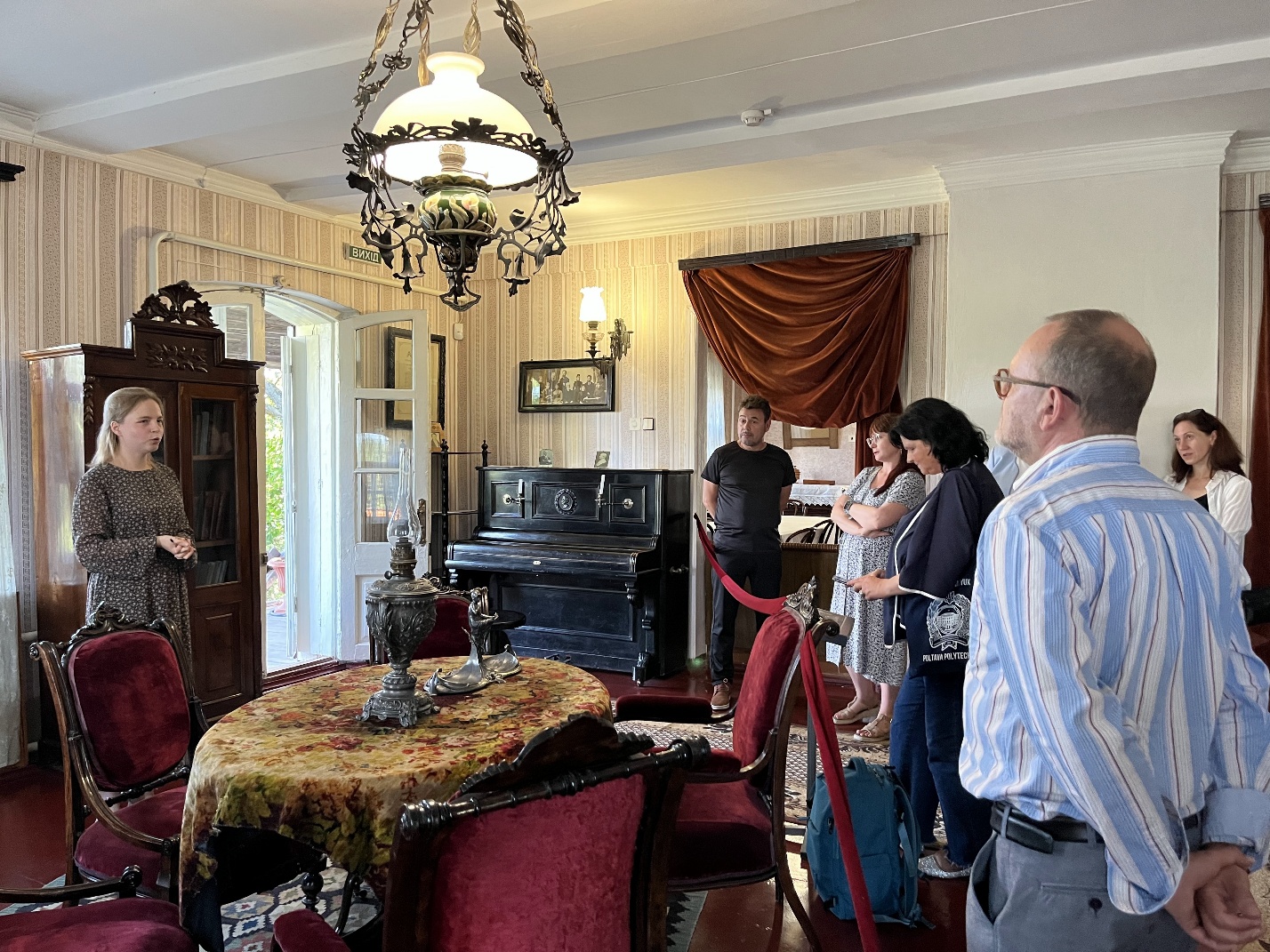
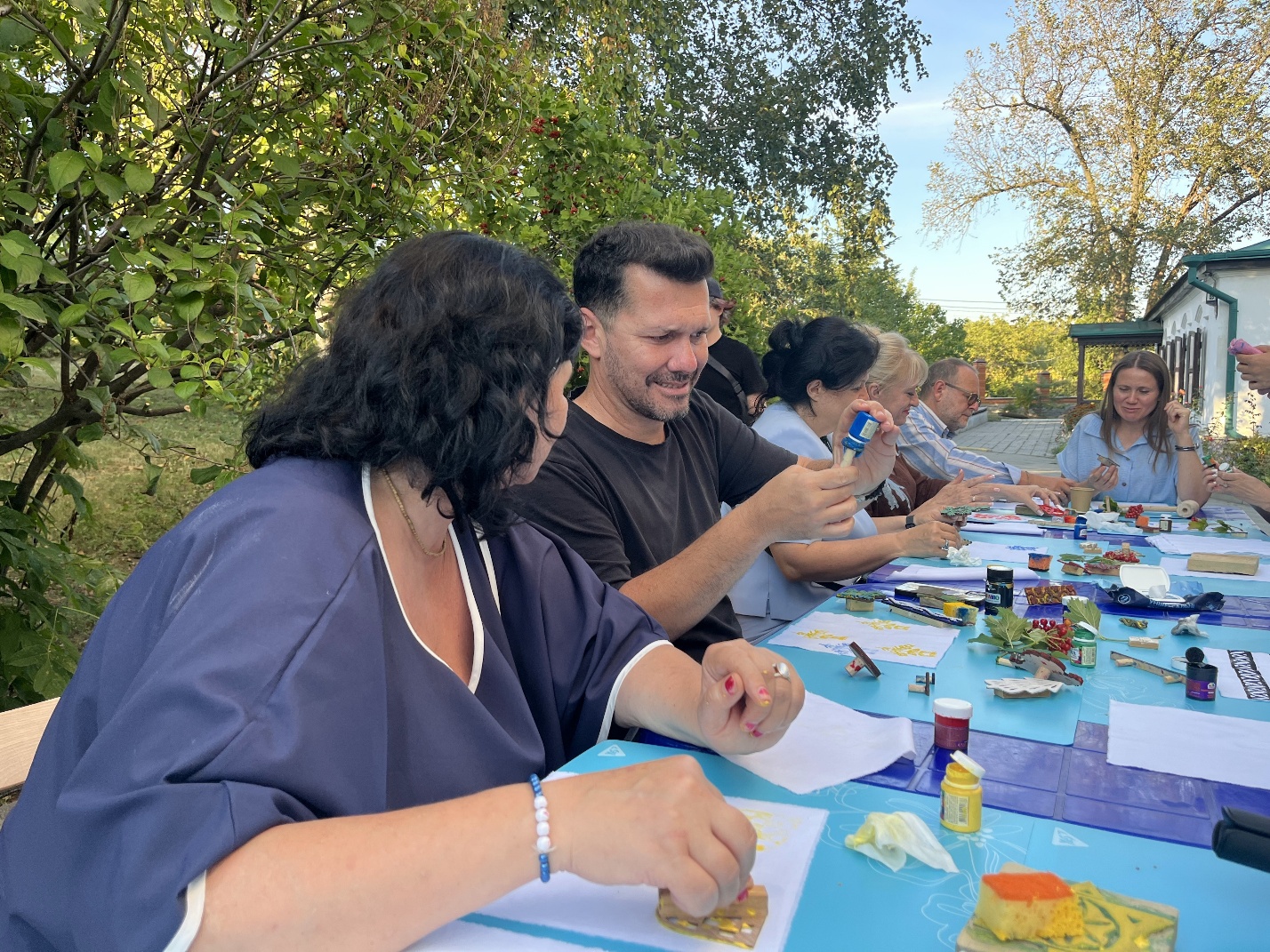
The next stage was exploring the therapeutic potential of Ukrainian cultural identity. The delegation arrived at the Poltava Literary and Memorial Museum-Estate of Panas Myrny. A tour of the memorial residence and an introduction to the life journey of this prominent classic of Ukrainian literature allowed the participants to experience the depth of the national cultural code and appreciate the role of the literary word as a safeguard of historical memory. On the estate grounds, surrounded by centuries-old trees, a practical masterclass in traditional Ukrainian woodblock printing (vybiika) took place. Working with natural textile bases, authentic carved wooden stamps, and paints, the guests manually applied ancient ornamental motifs. The rhythmic application of prints, the focus on the clean lines of folk patterns, and mindful concentration created a powerful meditative effect, demonstrating how traditional folk crafts can serve as an effective resource for overcoming internal tension. The visit to the estate concluded with a warm tea gathering in an outdoor gazebo.
The logical conclusion to this eventful day was a shared dinner, where the welcoming atmosphere smoothly transitioned into a profound closing reflection. Participants gathered in a friendly circle to answer a heartfelt question: “What Ukrainian tradition would you like to bring to your home country?”. European colleagues spoke with admiration about Ukrainians' steadfast mutual care, the warmth of family bonds, deep respect for cultural roots, and the capacity to find light and inspiration even during life's most challenging periods. In addition, we discussed organisational details for the final project day, dedicated to the concluding performance.
“The second day of our international meeting demonstrated an extraordinary synthesis of professional psychological depth and the healing power of Ukrainian culture. We are sincerely grateful to our international partners who share this path of support and solidarity with us: coordinators and specialists from Belgium, Claudio Marques, Jocelyn Deloyer, Hanna Samoilenko, and Olena Tiptsova, as well as our colleagues from Portugal, Rubielson Medeiros, João Alves Neto, Galyna Ilyuk, and Francisco Dias Oliveira. Your genuine engagement, readiness to study our experience, and steadfast solidarity with Ukraine command the highest respect.
Sincere thanks to our entire university team, particularly Maryna Teslenko, Lesia Klevaka, Viktoriia Shevchuk, Olena Kryvenko, Hlib Kudriashov, Anastasiia Vediuk, Olena Ostrohliad, Olga Losiyevska, Yaroslav Perederii, and Oleksandr Koval; international relations department staff Oleksandr Khadartsev, Daria Katrenko, and Yuliia Nikolenko; artist Olga Piliuhina, and SES psychologist Yuliia Falieieva for their high professionalism.
I express special gratitude to the President of our university, Professor Volodymyr Onyshchenko, for his strategic vision for developing international cooperation and his comprehensive support for mental health initiatives. I also sincerely thank the Rector of the university, Associate Professor Olena Filonych, for her care for the team, for facilitating a well-organised and safe visit for the consortium, and for her systematic support of innovative practices across our institution. Together, we have once again proven that mutual trust and a shared mission have the power to heal emotional wounds and open new horizons for the restoration of peace,” – noted Anna Pavelieva, International Relations Coordinator at Poltava Polytechnic.
Thus, the second practical day of the TRUST project’s ATP 4 meeting at Poltava Polytechnic formed an integrated and harmonious sequence of restorative practices. By uniting the tactile wisdom of textile collage, the metaphor of the family tree, the rigorous and courageous experience of emergency rescue psychologists, and the tranquillity of authentic woodblock printing, Ukrainian and European colleagues enriched their shared scientific and methodological framework, establishing a solid bridge of solidarity dedicated to the future recovery of individuals and society.