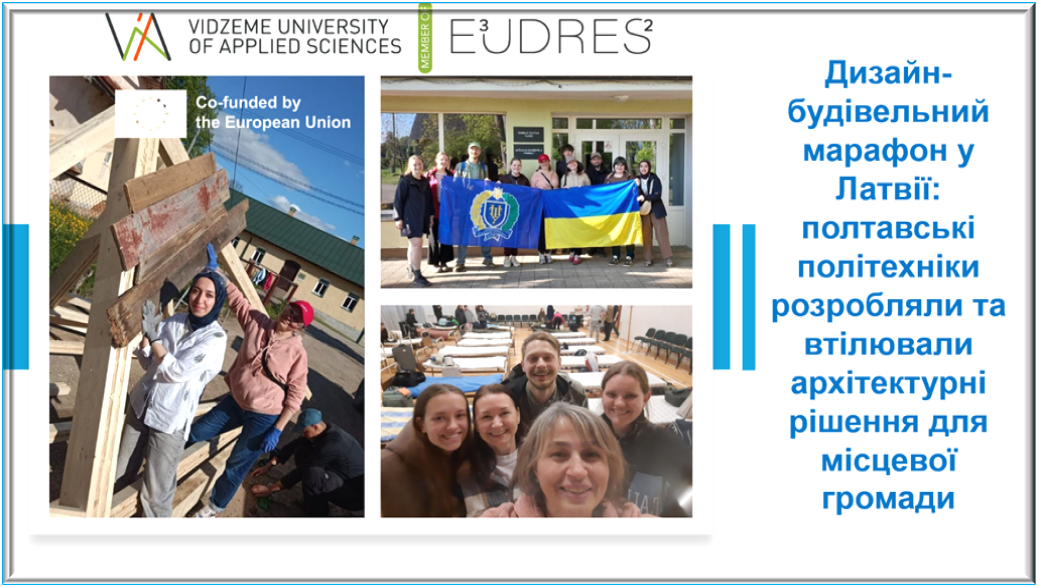
Teachers and students of the Education and Research Institute of Architecture, Construction, and Land Management participated in the Erasmus+ BIP mobility programme “Commons Under Constraint. Adaptive Reuse and Community Co-production in Borderland Territories, organised by Vidzeme University of Applied Sciences (Valmiera, Latvia). The programme took place from May 9 to May 16, 2026, in the town of Indra (Latgale region, Latvia), where participants took part in an international design-and-build workshop.
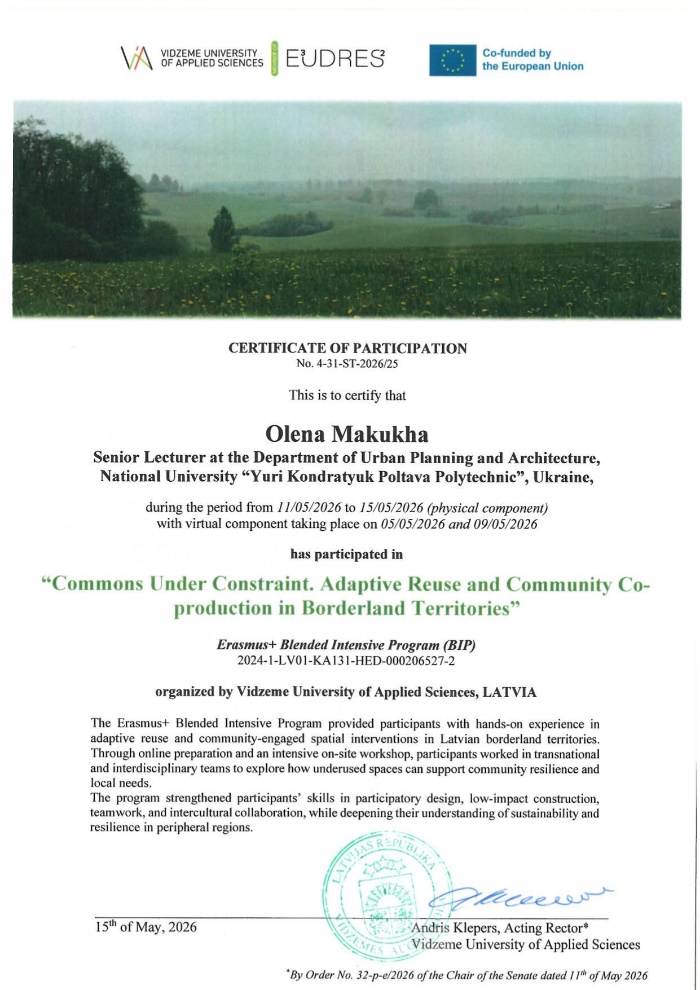
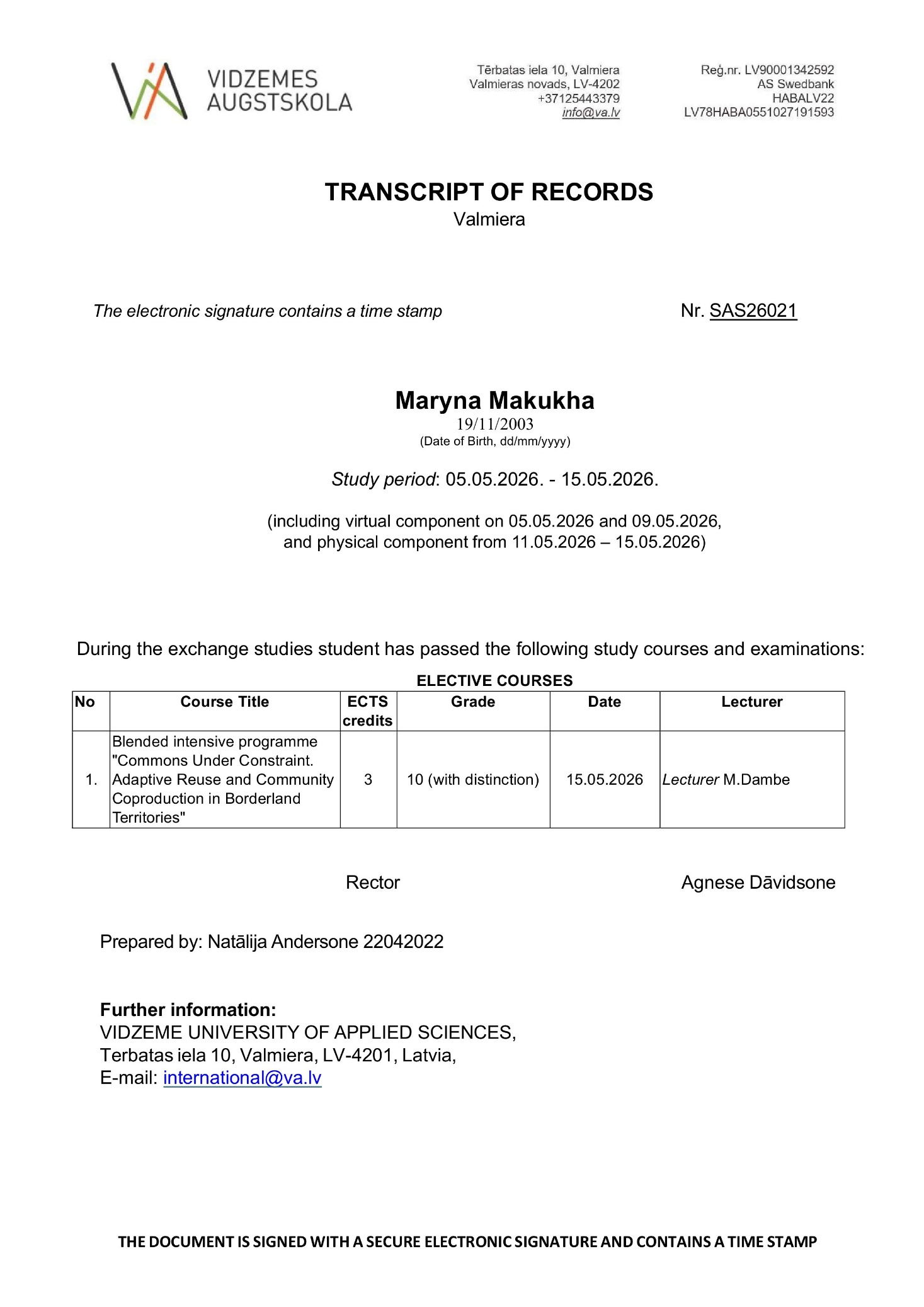
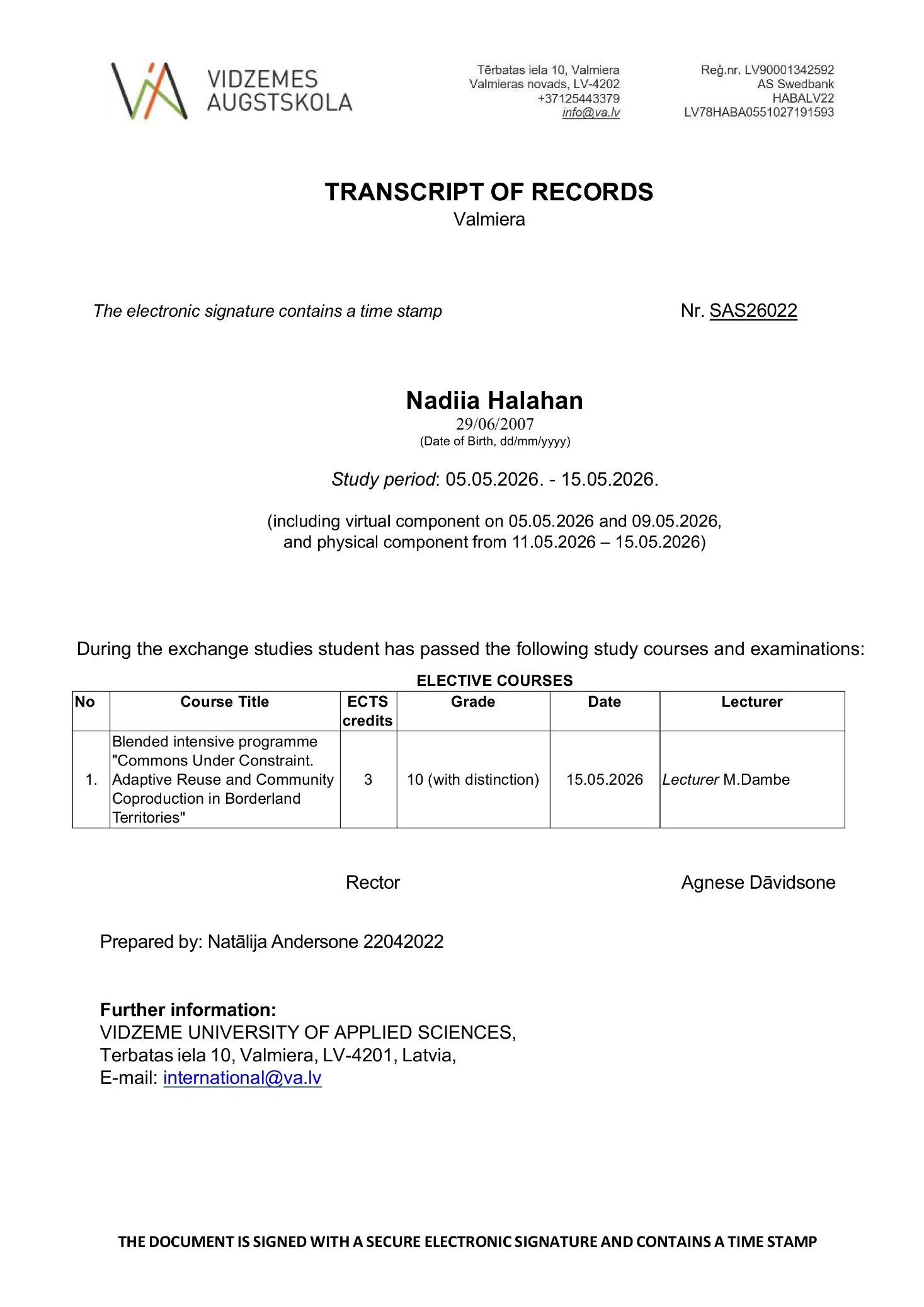
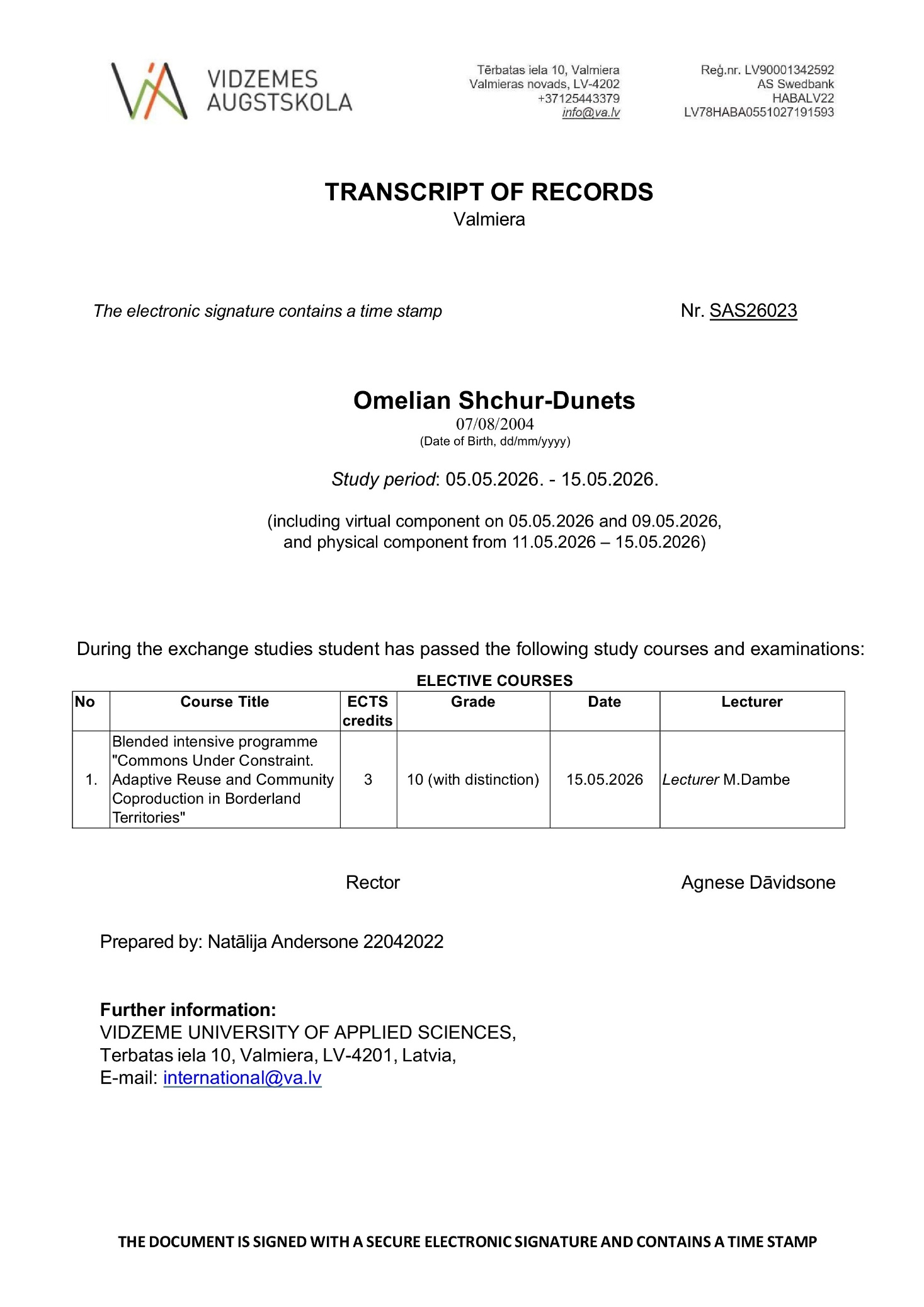
The participants of the event included Associate Professor of the Department of Architecture of Buildings and Design Liudmyla SHEVCHENKO, Senior Lecturer of the Department of Urban Planning and Architecture Olena MAKUHA, and students Nadiia HALAHAN (group 202-A), Maryna MAKUHA (group 501-AM), and Omelian SHCHUR-DUNETS (group 501-BP).
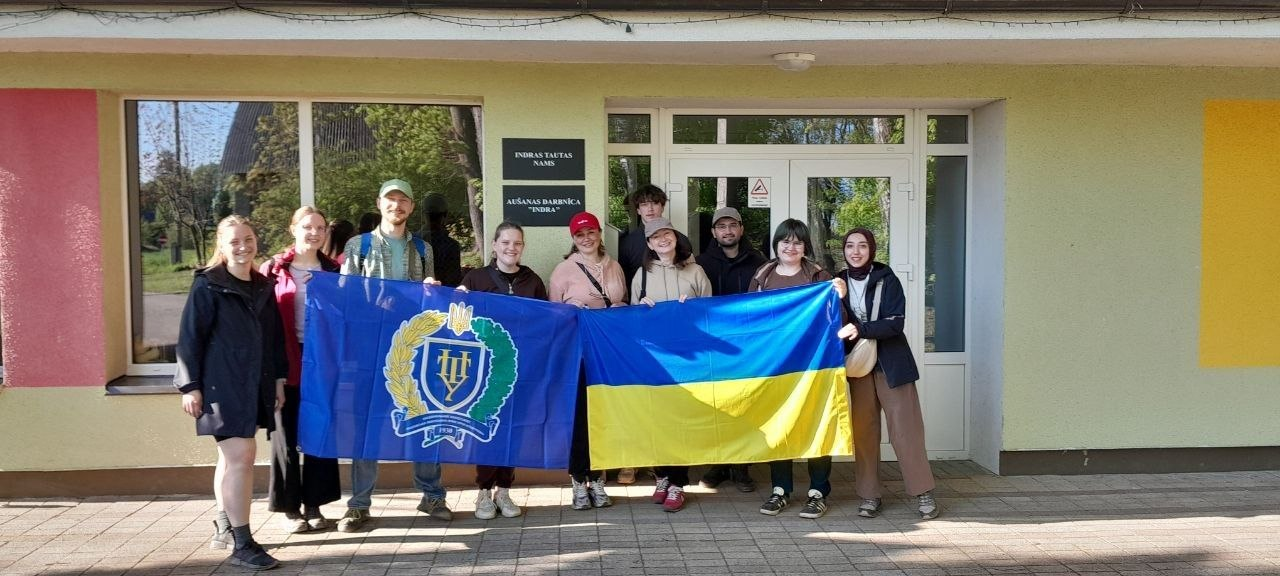
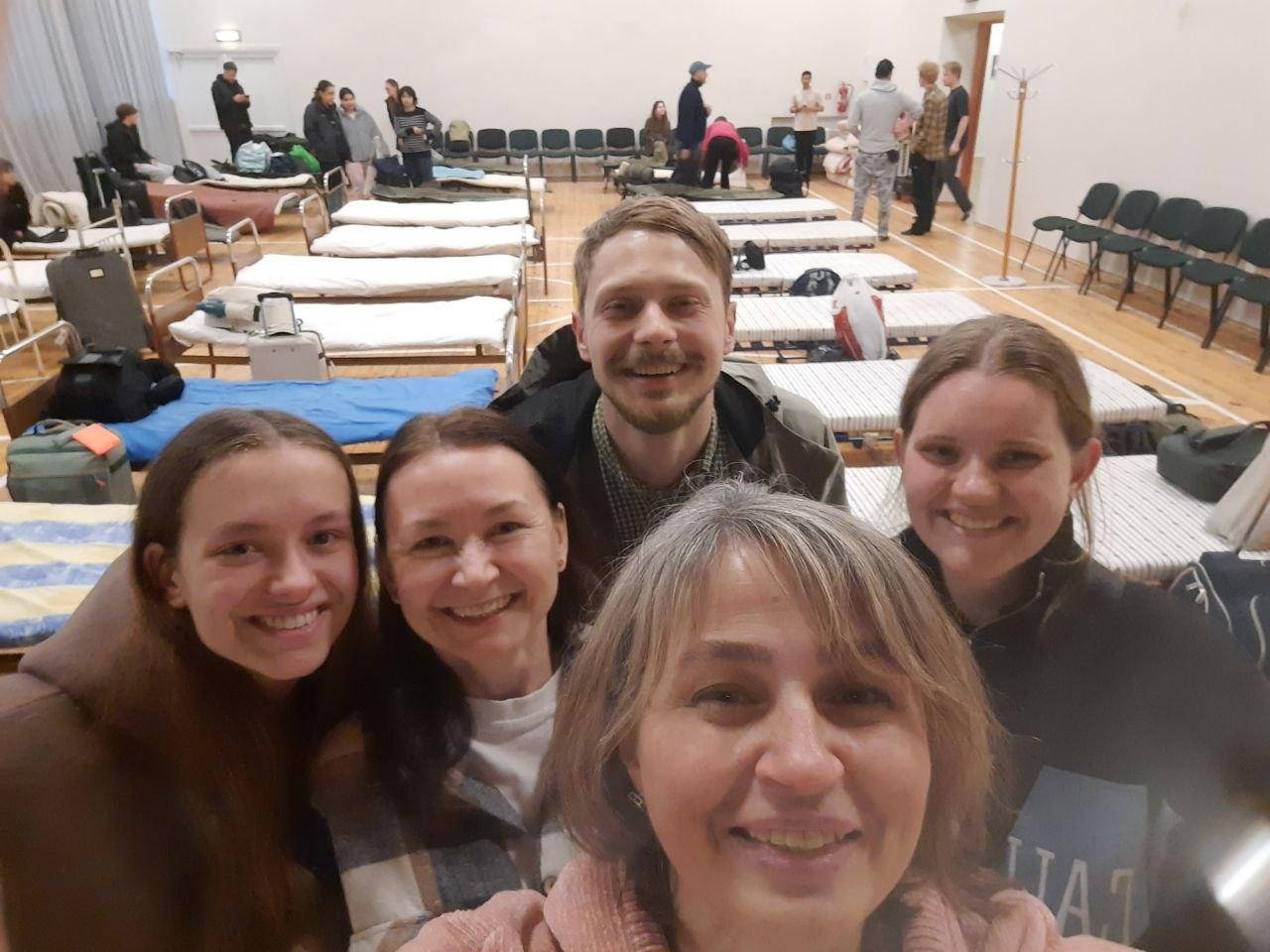
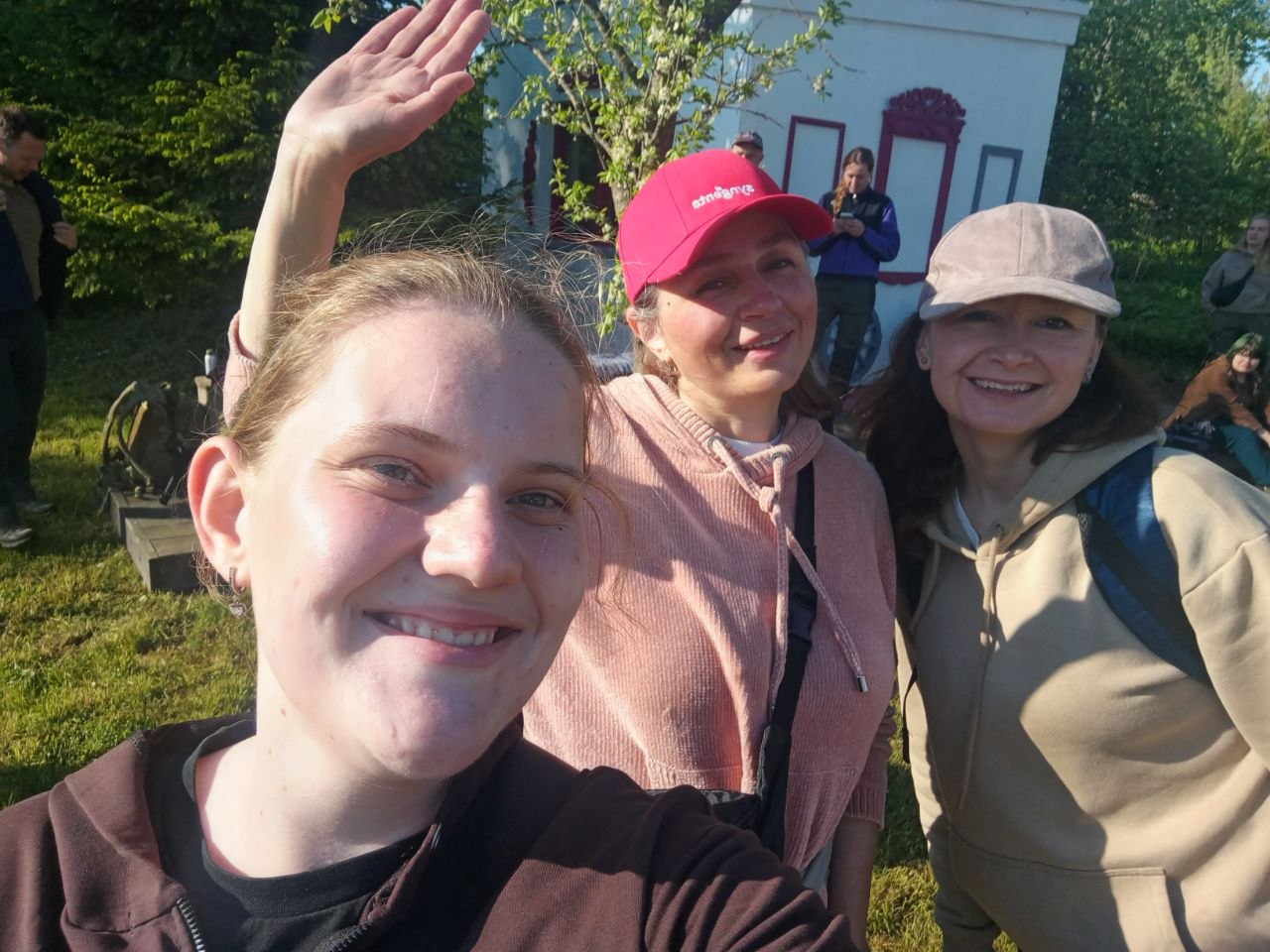
The purpose of the event was to study European experiences in adaptive resource reuse, test innovative methodologies for sustainable development, integrate architectural solutions into the specific context of borderland territories, and strengthen international academic and scientific cooperation between Poltava Polytechnic and Vidzeme University of Applied Sciences. The programme highlighted the themes of adaptive space utilisation, territory revitalisation, and cooperation with local communities, bringing together students, lecturers, and young researchers from various countries in Europe and South Asia, including Germany, Latvia, Austria, the Netherlands, Finland, Ukraine, Turkey, Iran, Albania, Pakistan, and Bangladesh. Ukraine was represented at this event by two higher education institutions: National University “Yuri Kondratyuk Poltava Polytechnic” and Chernihiv Polytechnic National University.
The programme curators were Marija Katrina Dambe (NOMAD architects) and Marta Ventere. Two participants in the design-and-build workshop, Liudmyla Shevchenko and Maryna Makuha, already had experience working with Marija Katrina Dambe. Previously (in 2024), they collaborated during the “WOOD TECHNOLOGY HACKATHON” and the Vidzeme University of Applied Sciences scientific event “ViA’s Research Evening 2024”. Thus, this workshop became a natural continuation of creative and scientific cooperation with colleagues from Vidzeme University of Applied Sciences.
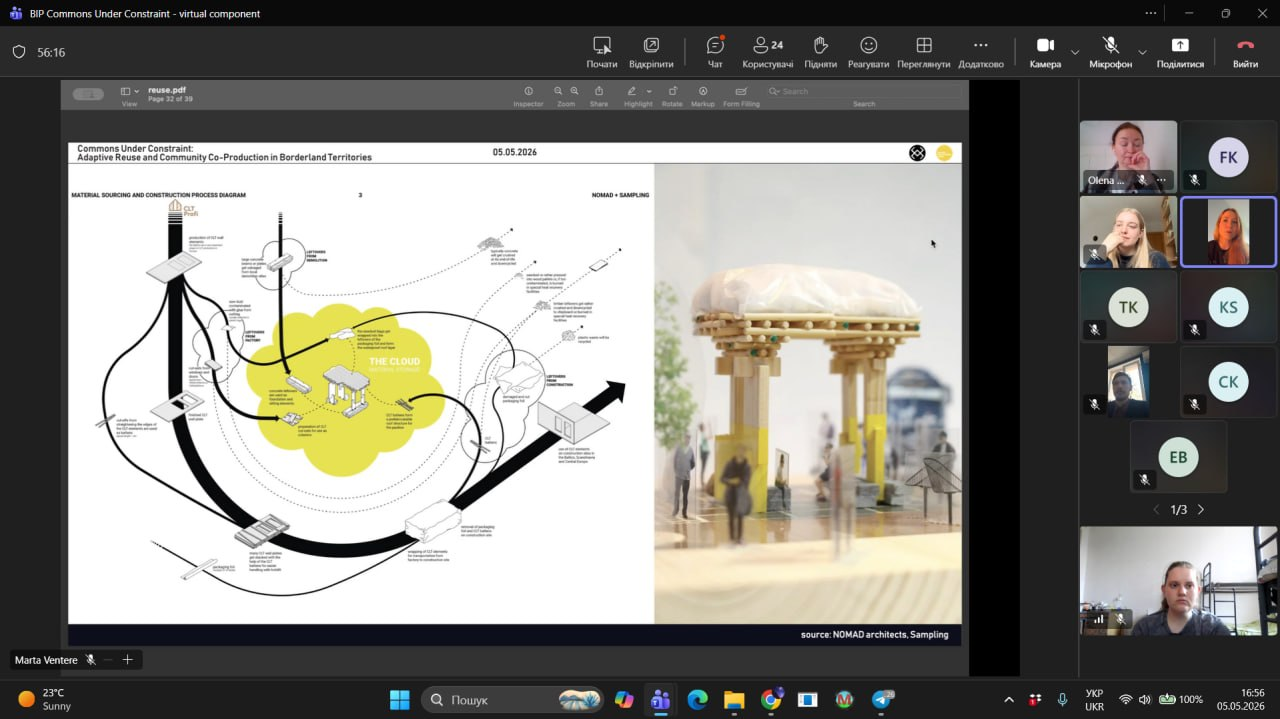
The programme curators, Marija Katrina and Marta, guided the participants through the schedule of activities for this period. The BIP “Commons Under Constraint. Adaptive Reuse and Community Co-production in Borderland Territories” programme had previously included remote content consisting of two lectures on relevant workshop topics related to sustainable development strategies and adaptive building reuse, environmental transformation through small-scale architectural interventions, addressing depopulation and neglected spaces, and studying and implementing low-impact construction methods and technologies for working with existing building materials. All participants of this academic mobility programme took part in these sessions.
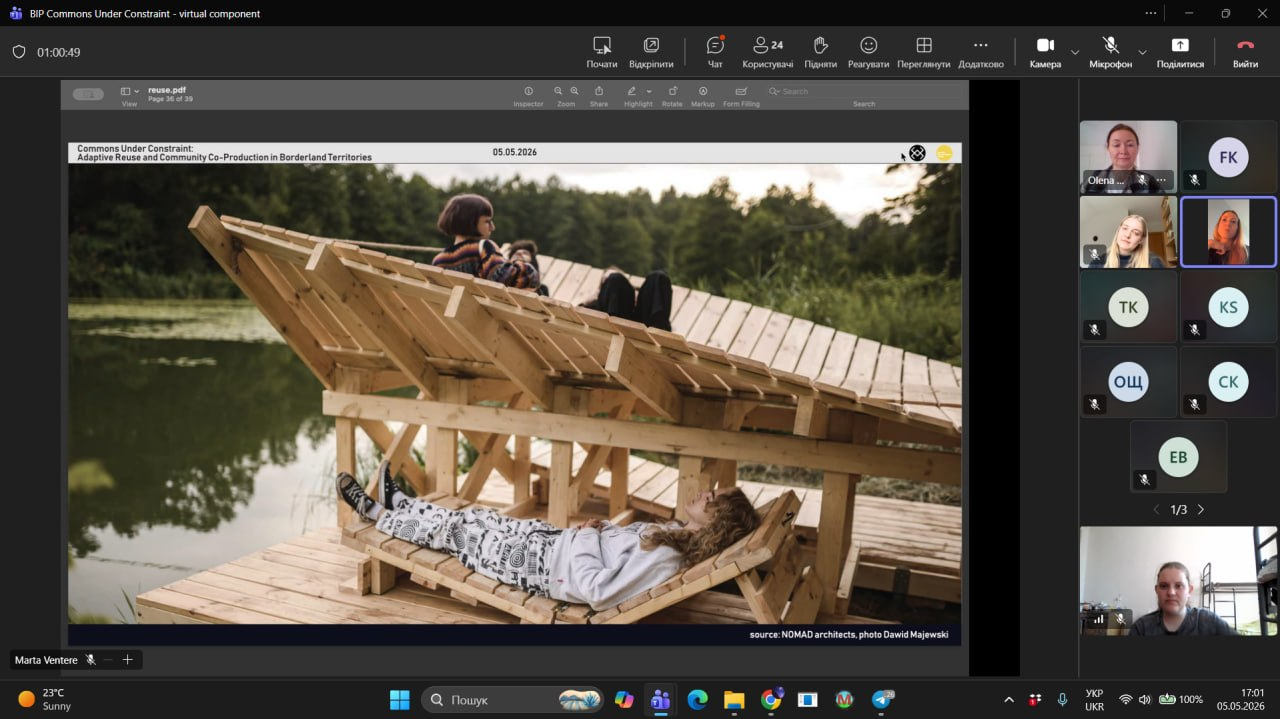
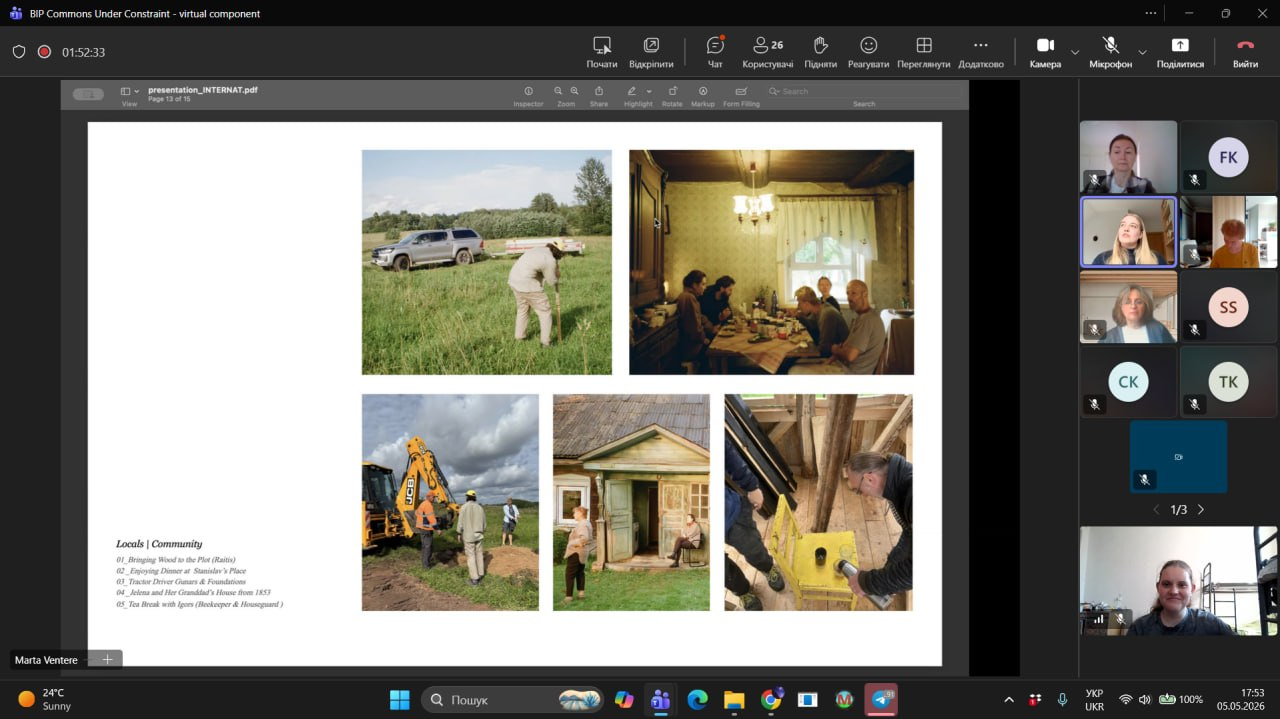
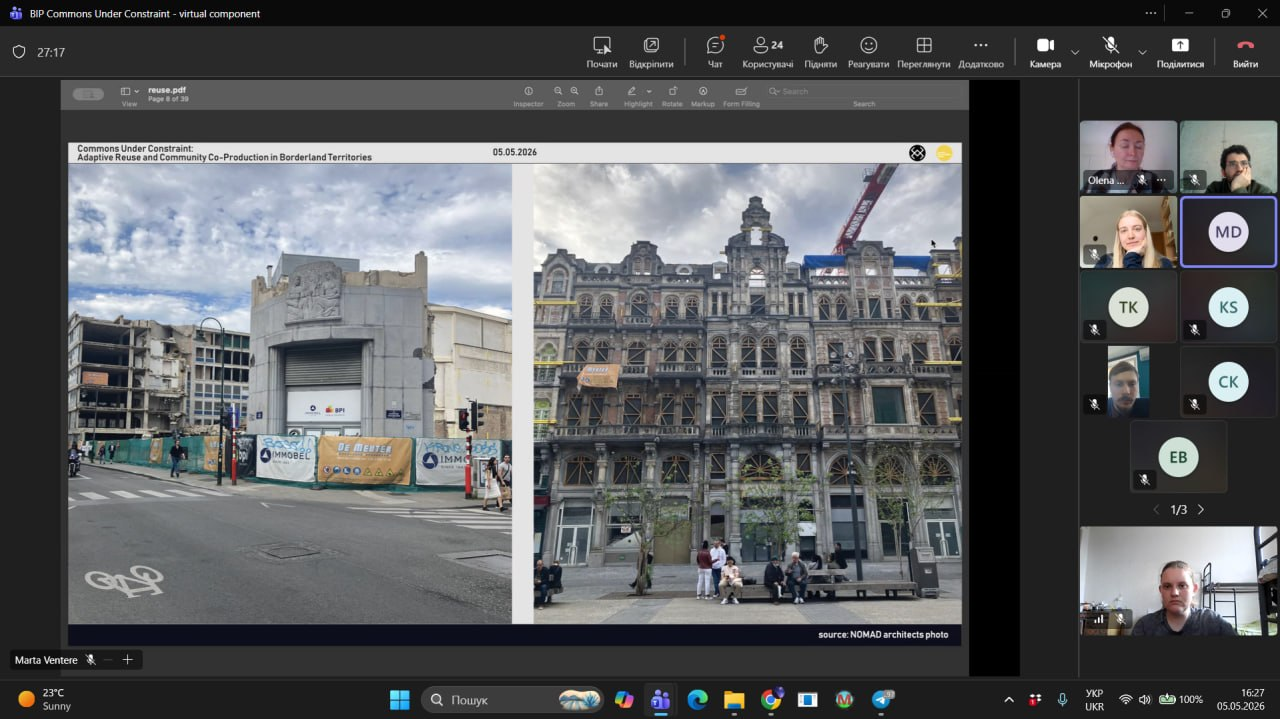
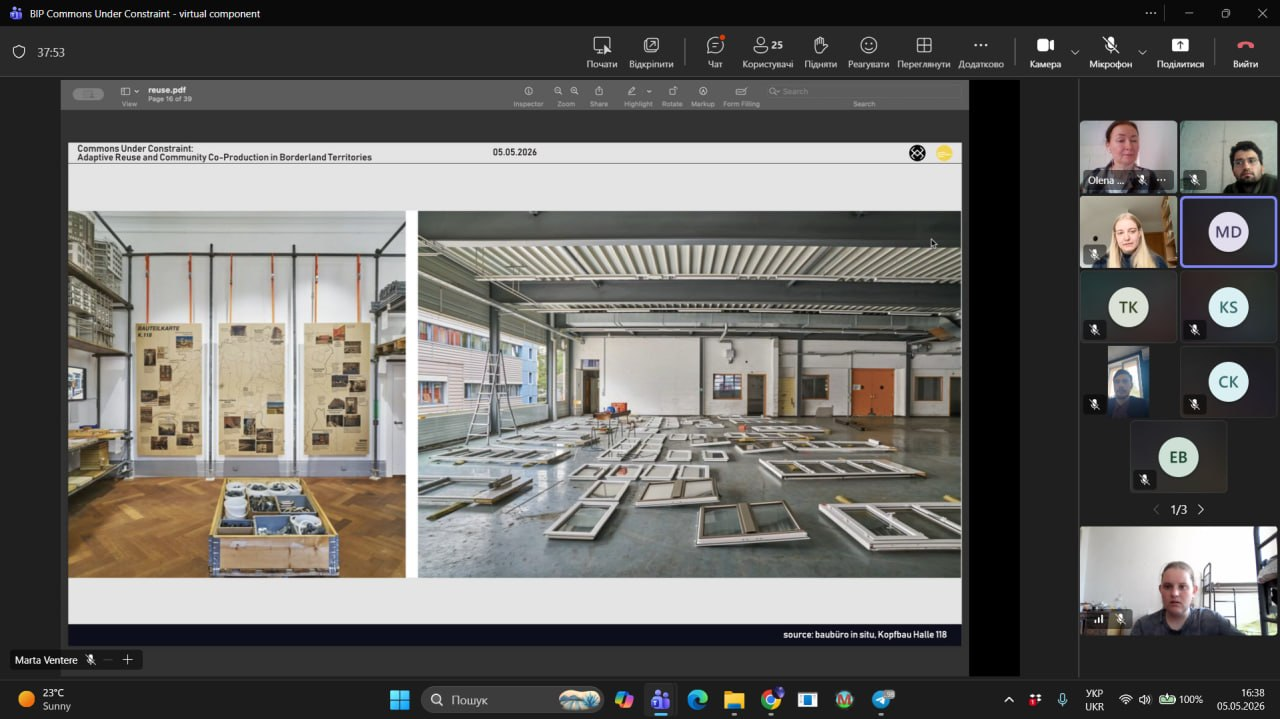
The practical part of the programme took place in Indra, a border settlement in Latvia, where participants worked to develop architectural and social solutions for the local environment. This part of the programme included registration, team division (4–6 participants per team) based on professional interests, active teamwork, morning check-points, and collaboration with event mentors and local community activists in a co-production format. The participants were grouped into different teams: “Reuse”, “Hands-on” (O. Shchur-Dunets), “Landscape” (L. Shevchenko), “Interior & Furniture” (O. Makuha, M. Makuha), and “Social Aspects” (N. Halahan). Each team focused on its own aspect of research and design, allowing for a comprehensive approach to territorial analysis and the formulation of future concepts. The participants included representatives of HEIs in architecture, construction, and engineering fields, practising designers, and members of creative woodworking groups.
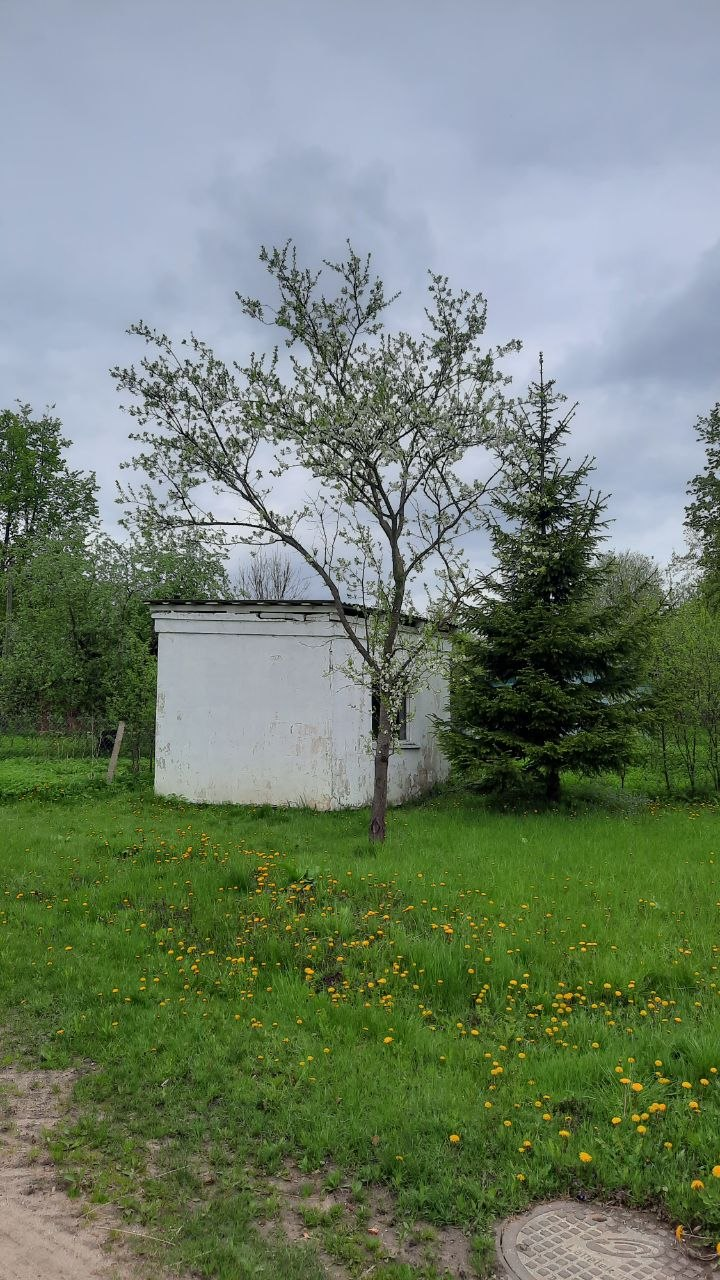
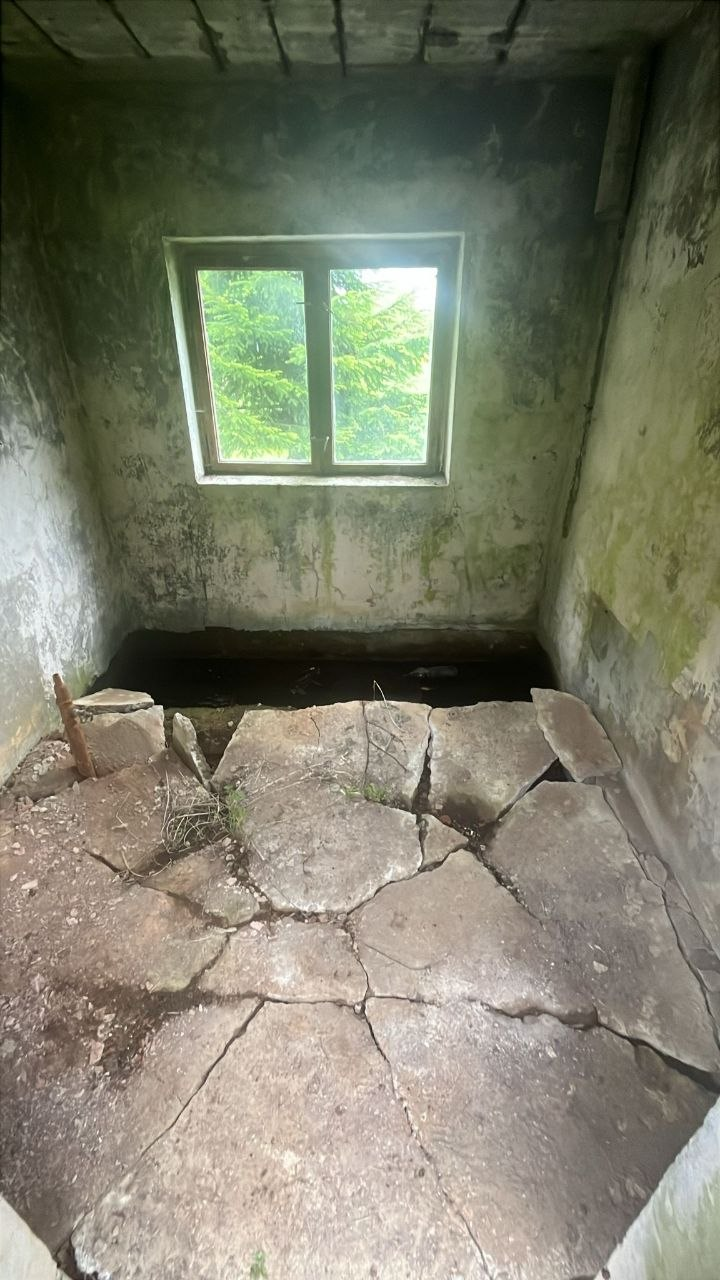
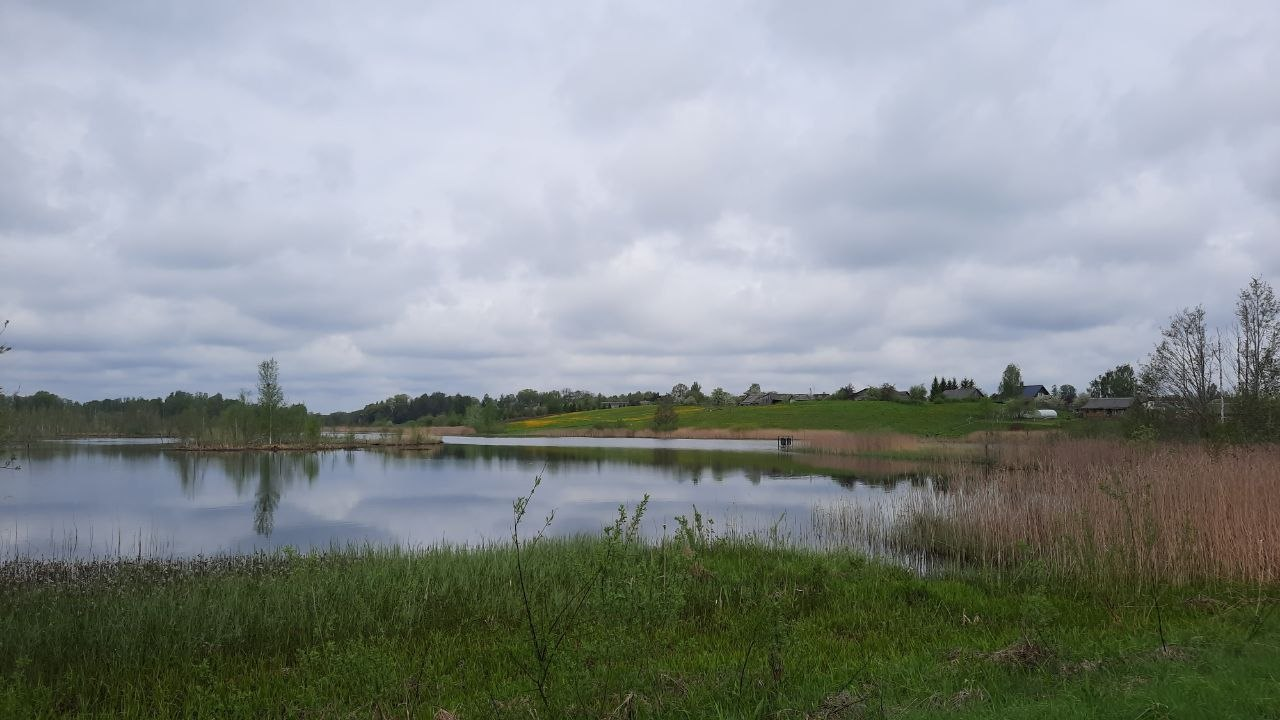
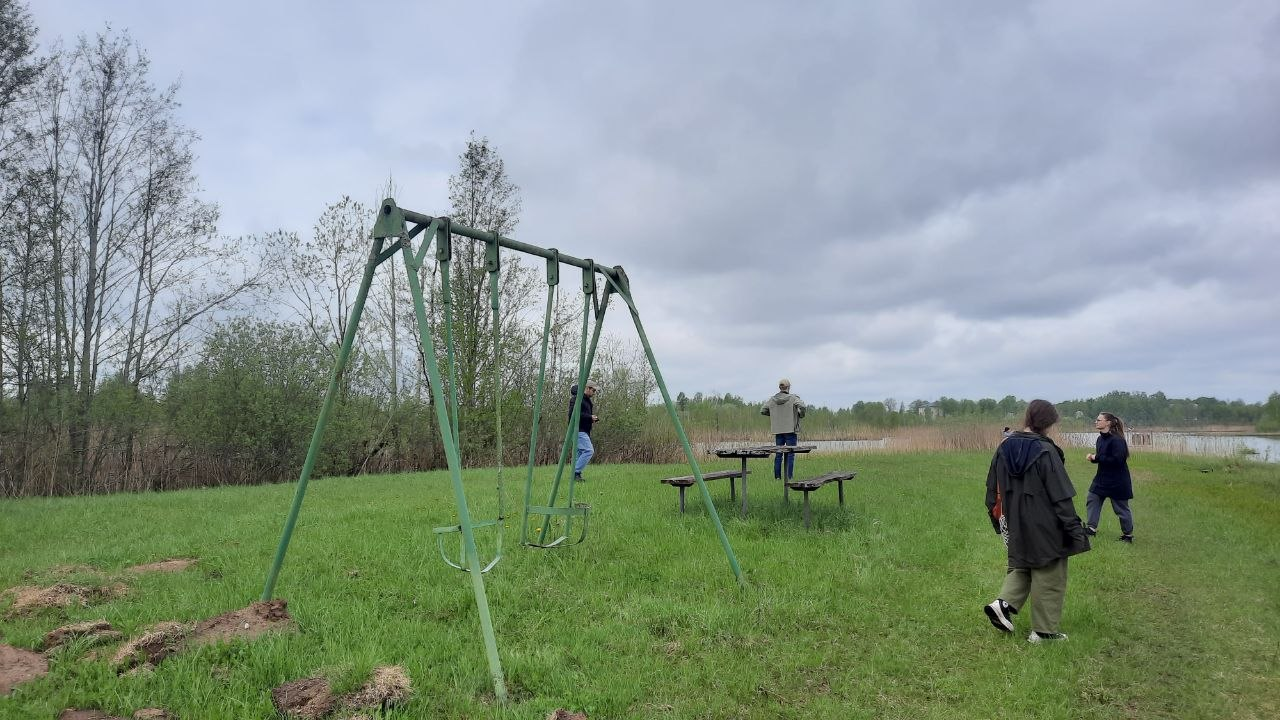
The BIP “Commons Under Constraint. Adaptive Reuse and Community Co-production in Borderland Territories” programme involved working at two locations important to the local community. The first is located in the community centre and is a small, single-story building awaiting renewal, transformation, and spatial reconfiguration (1). The other is an open landscape space on the shores of Lake Indras, which picturesquely winds around it and serves as a recreation spot for both Indra residents (2) and local birds, such as gulls and storks. This recreational area required renewal and modernisation through low-impact architectural interventions.
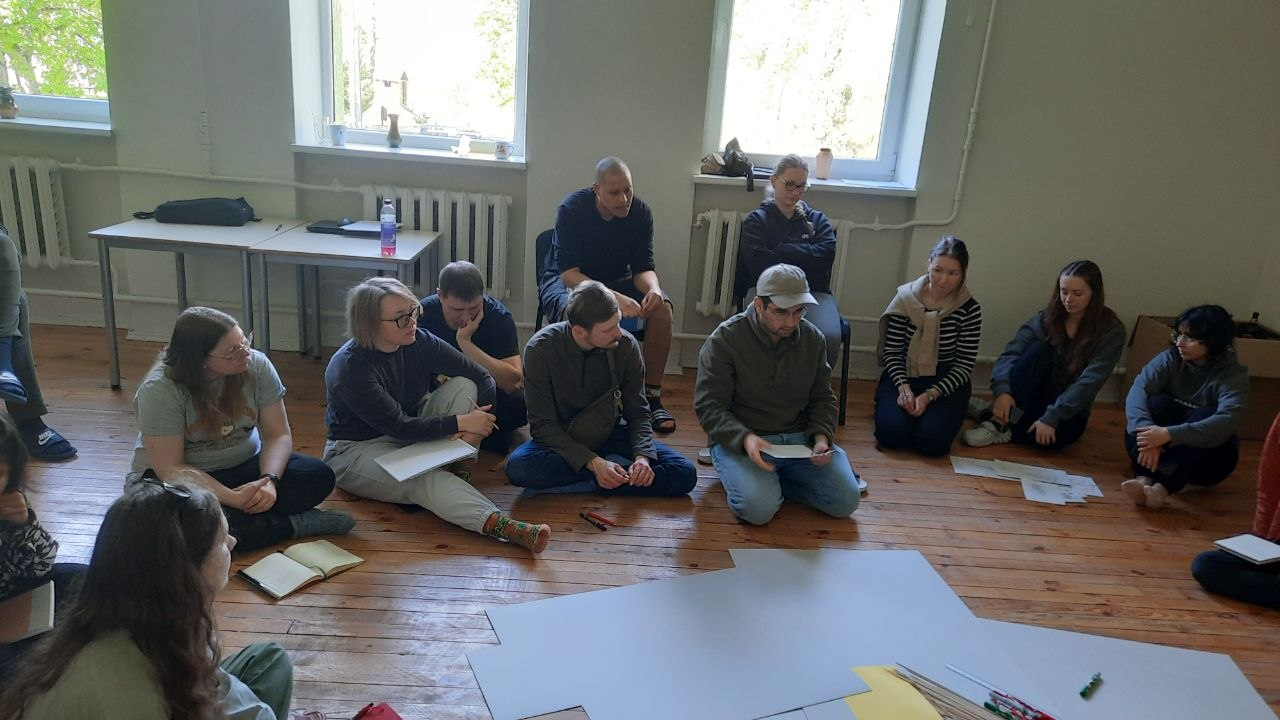
The initial phase of work was research-oriented. Participants of all groups analysed the territory of Indra as a space with specific geopolitical and resource constraints, conducted sociological surveys of local residents to study their needs, performed field research, studied the local context, and generated ideas for future interventions. The participants took measurements, photographed the territories, communicated with local residents, and discussed potential space utilisation scenarios.
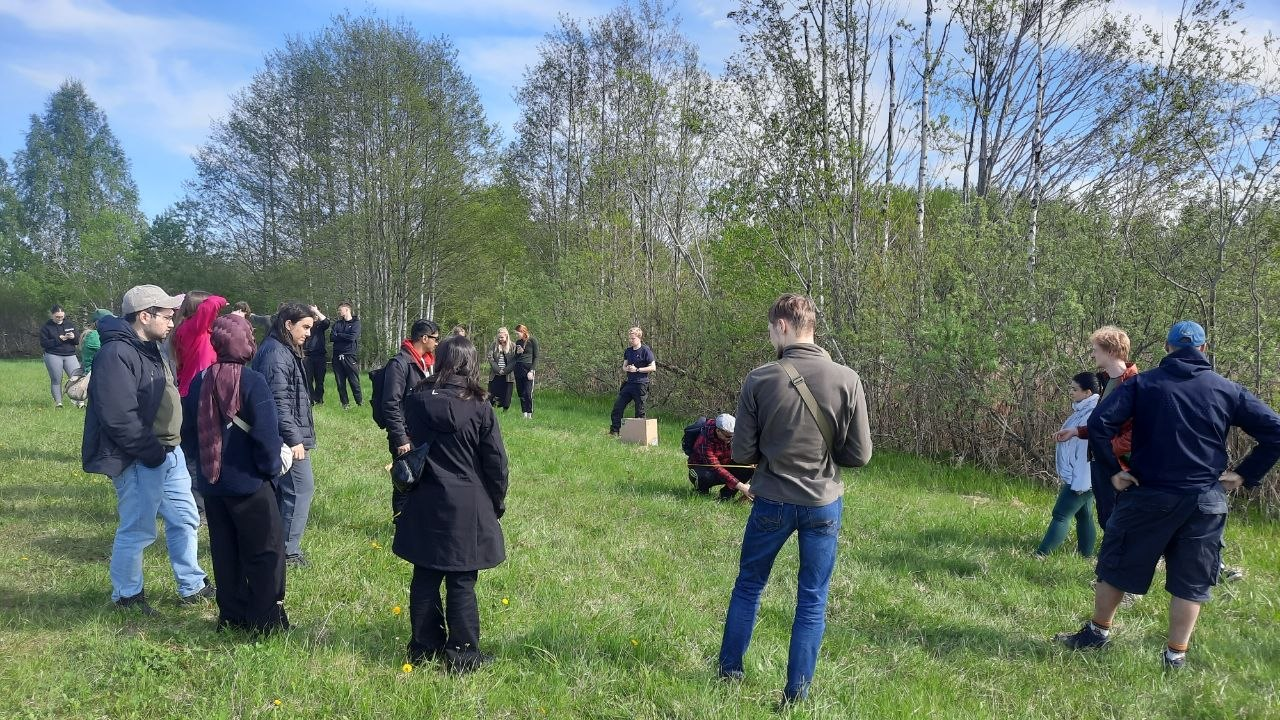
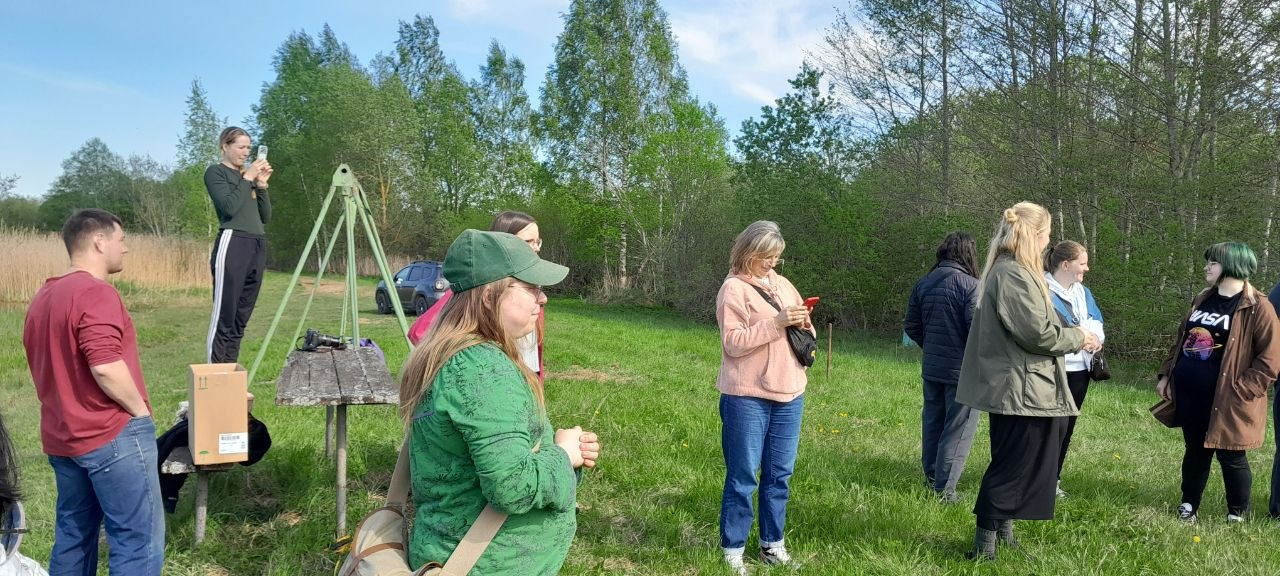
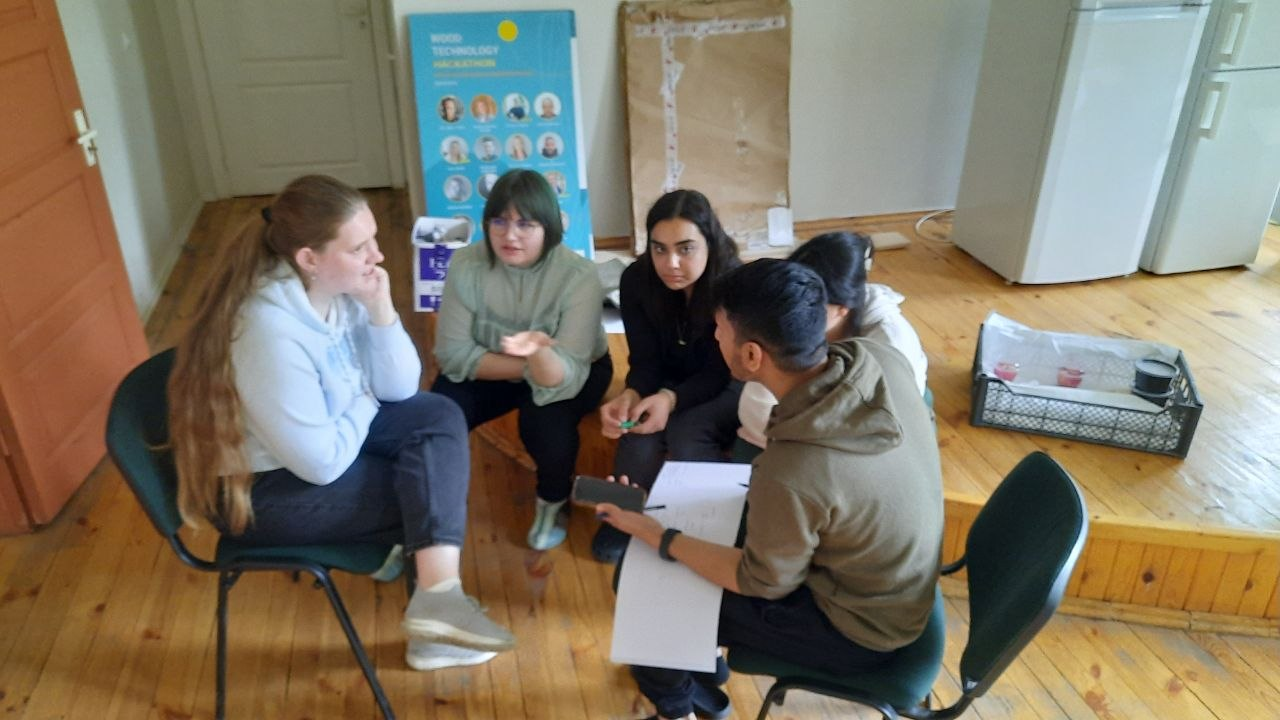
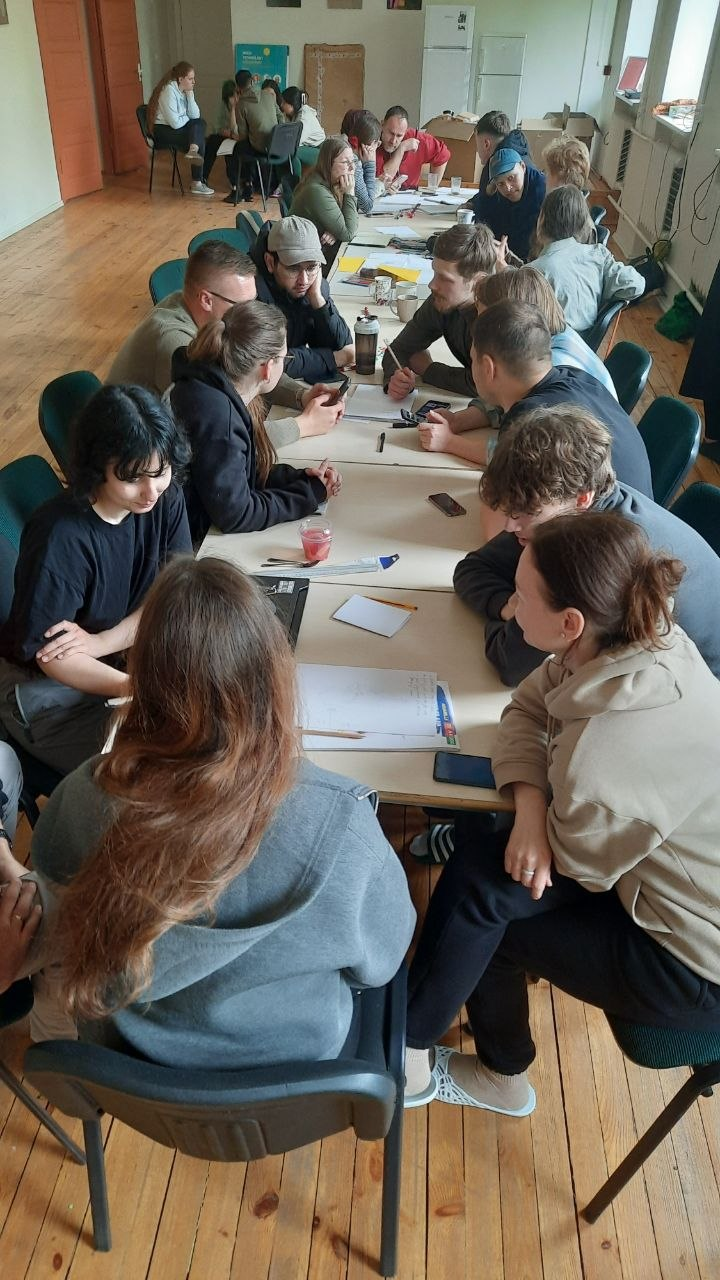
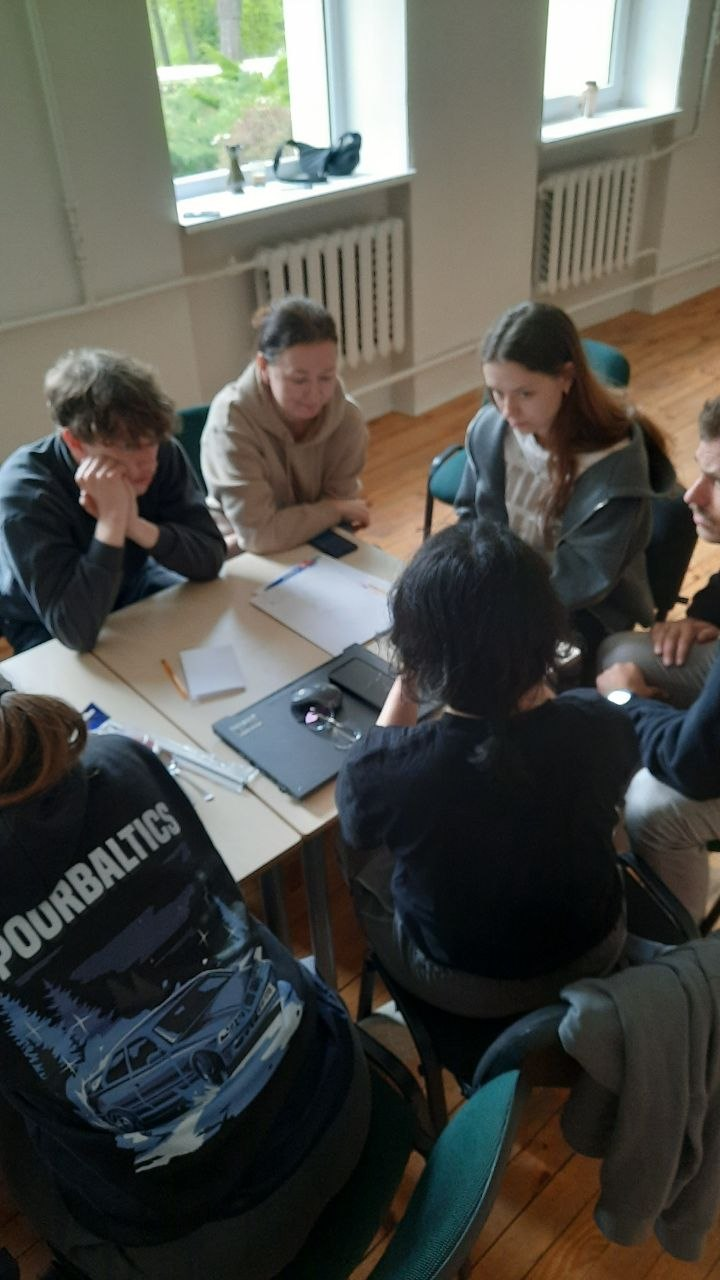
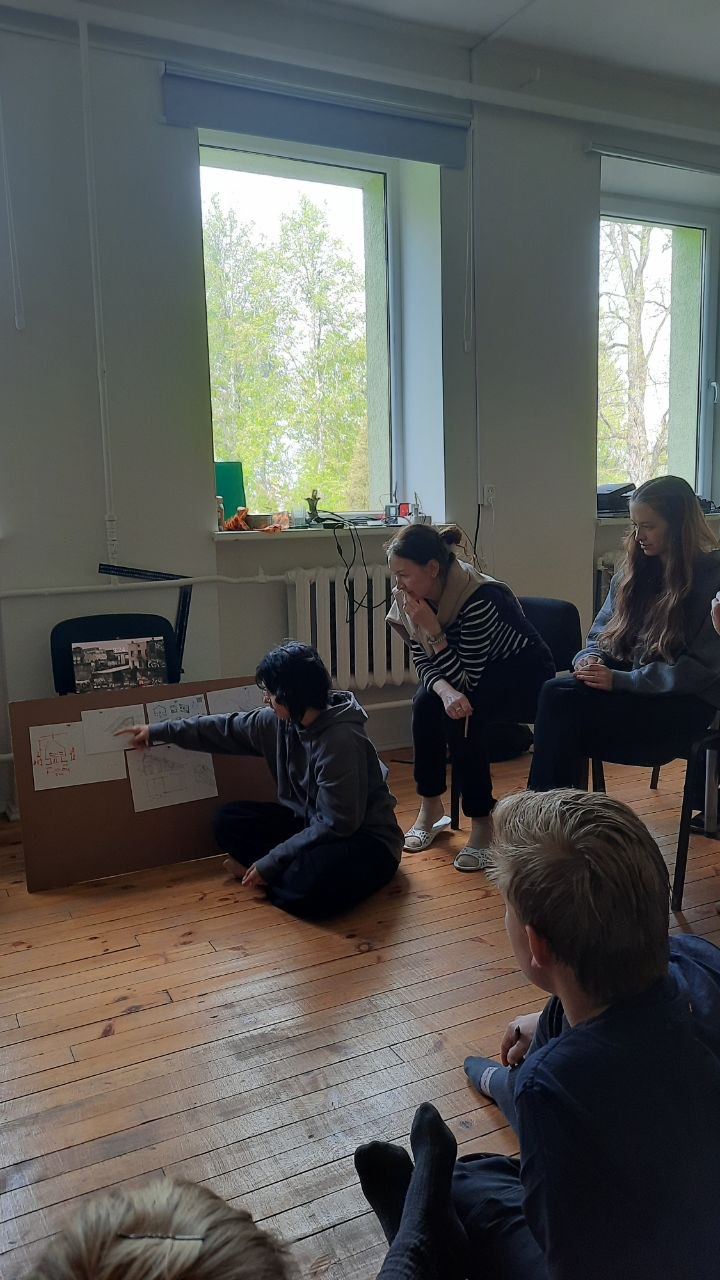
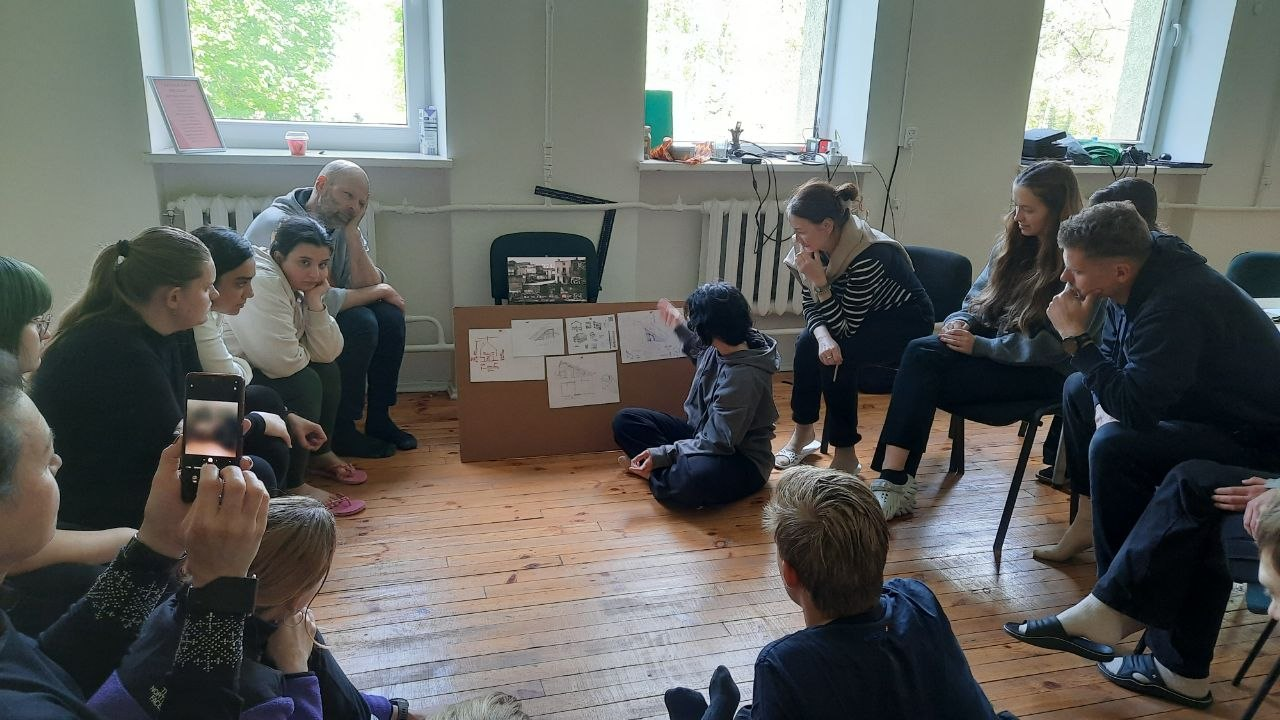
The work was conducted through active discussions, joint presentations, and a constant exchange of ideas among individual team members and across teams. Curators worked closely with the teams, providing practical advice on implementing their ideas, adjusting structural solutions, and translating concepts into real-life applications.
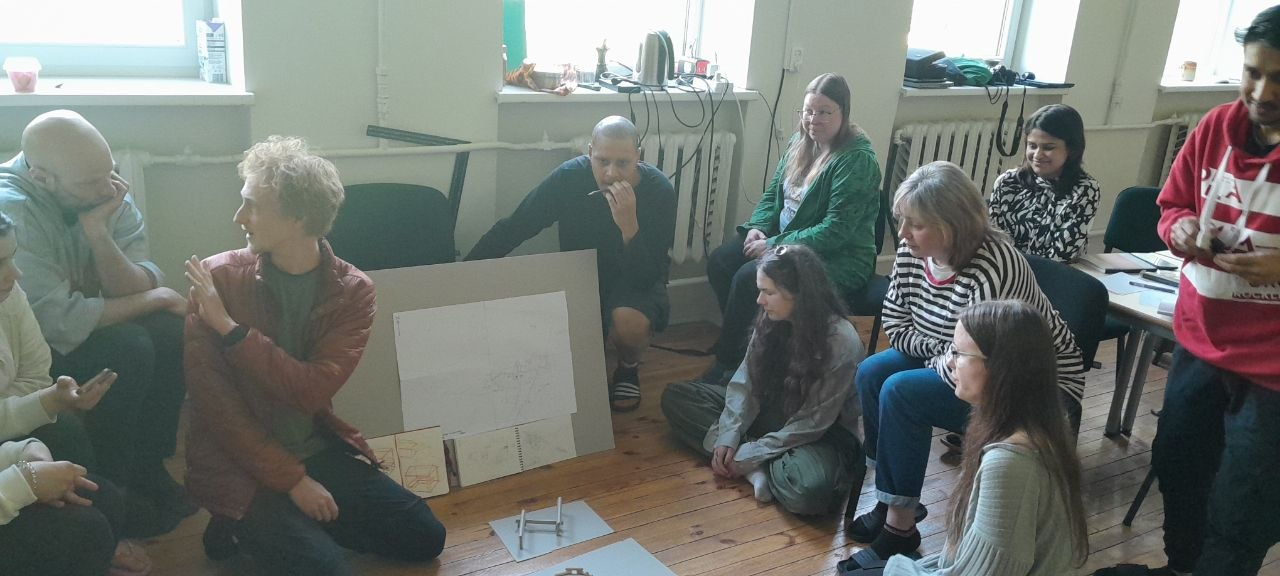
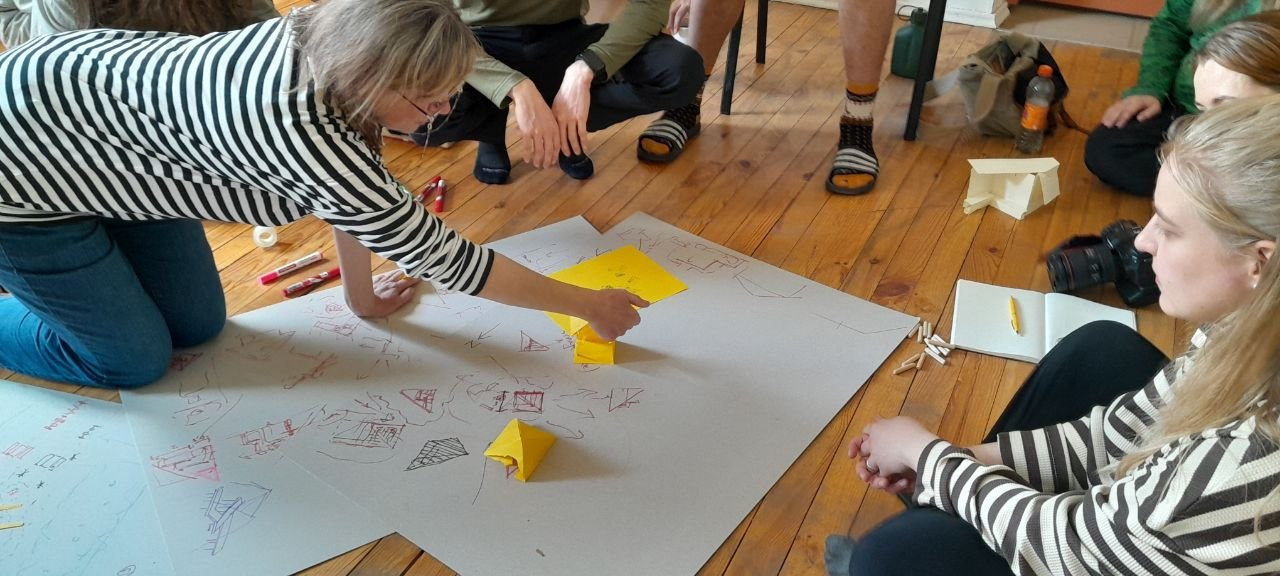
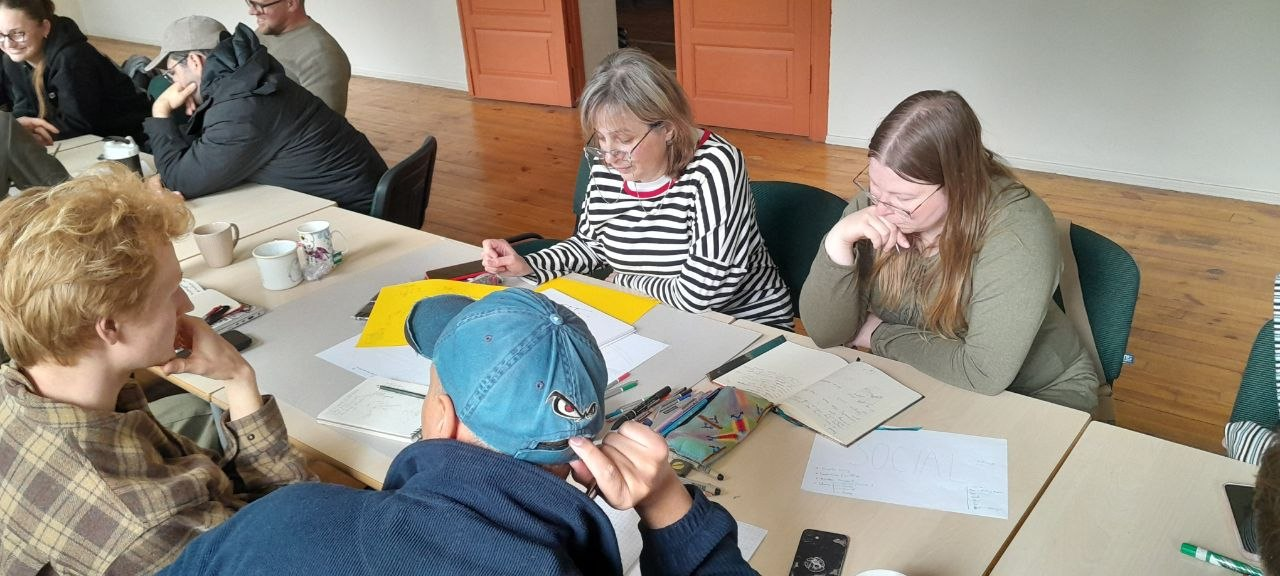
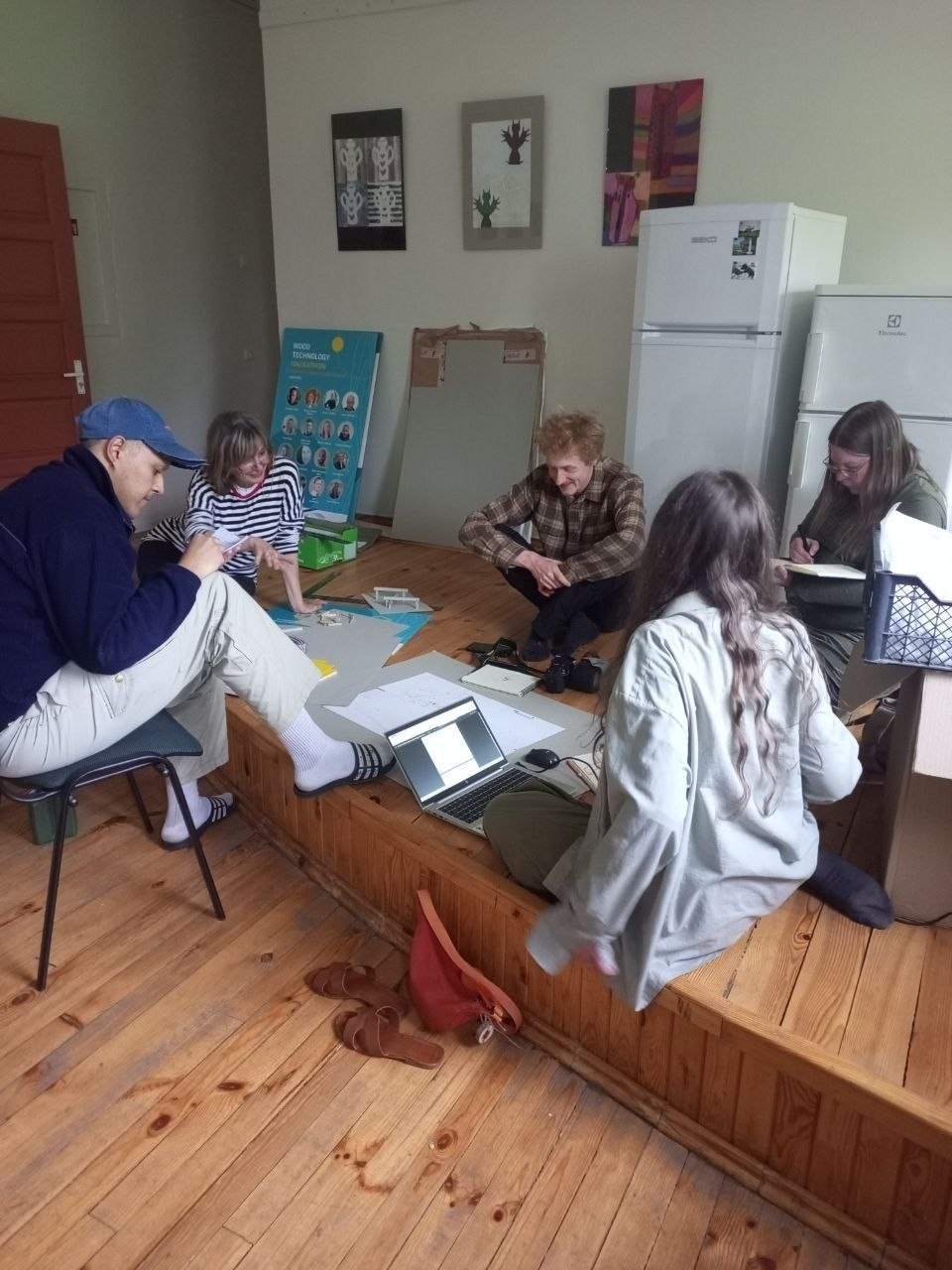
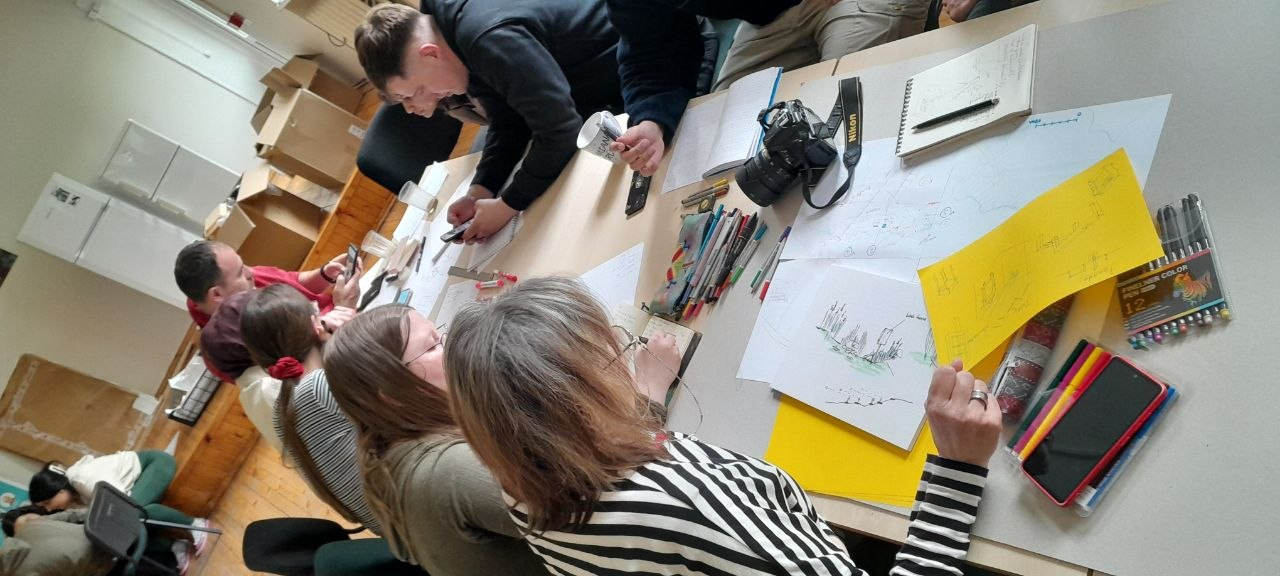
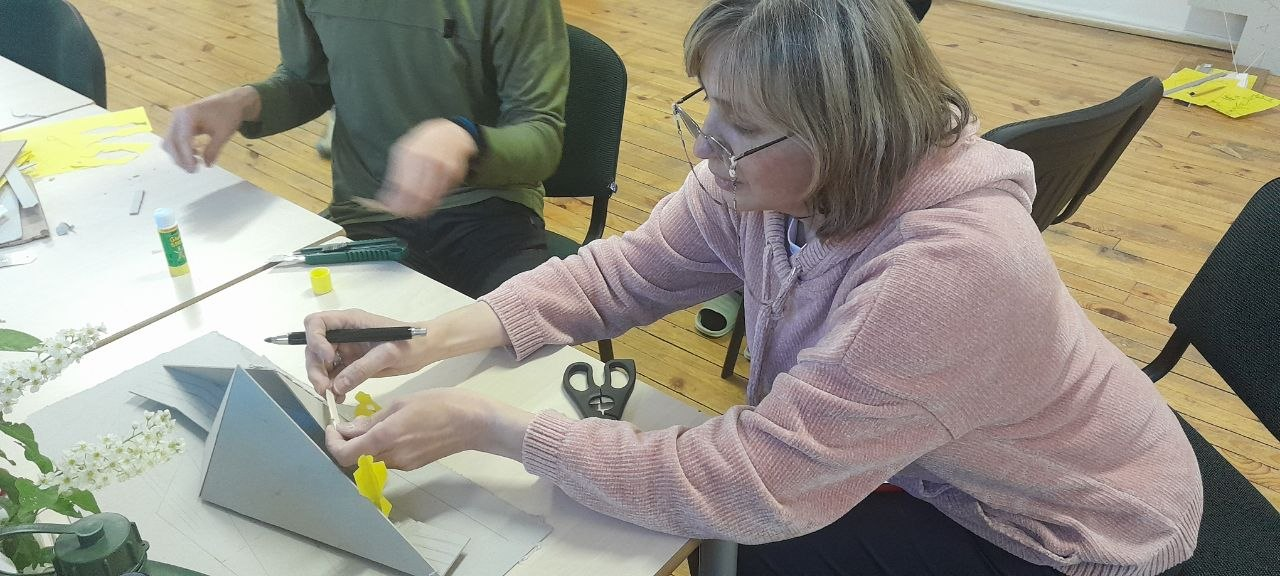
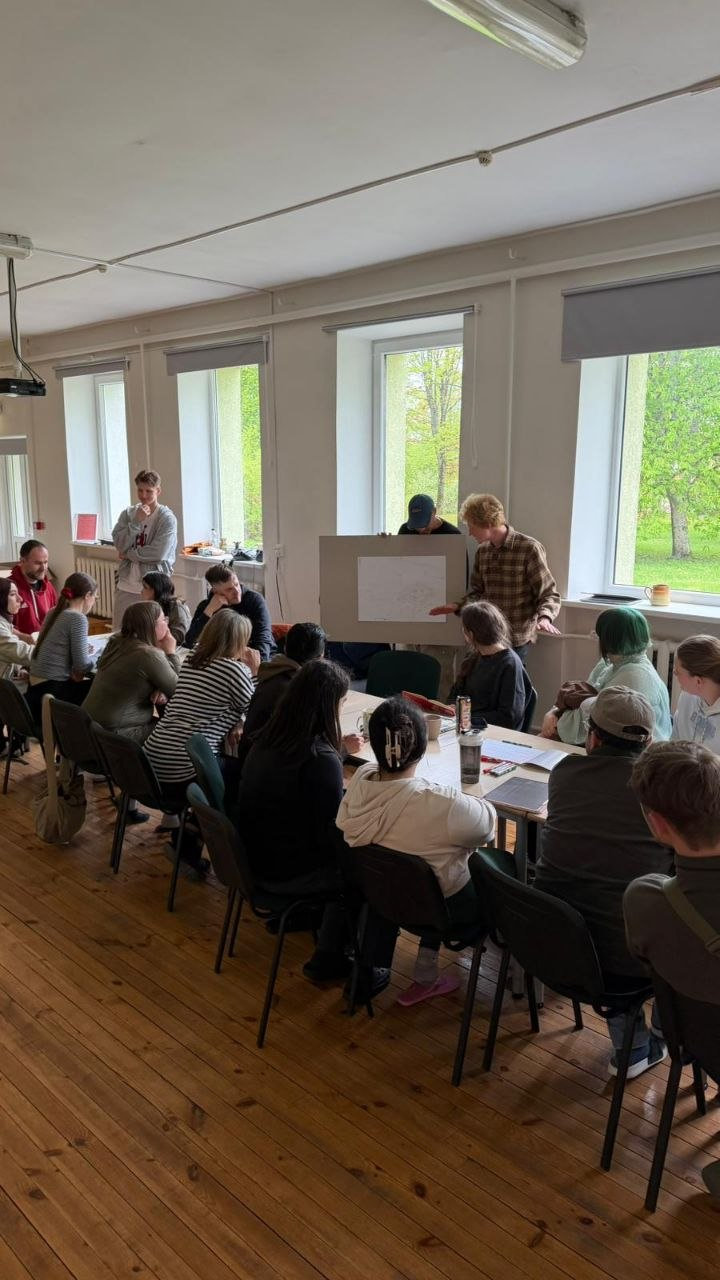
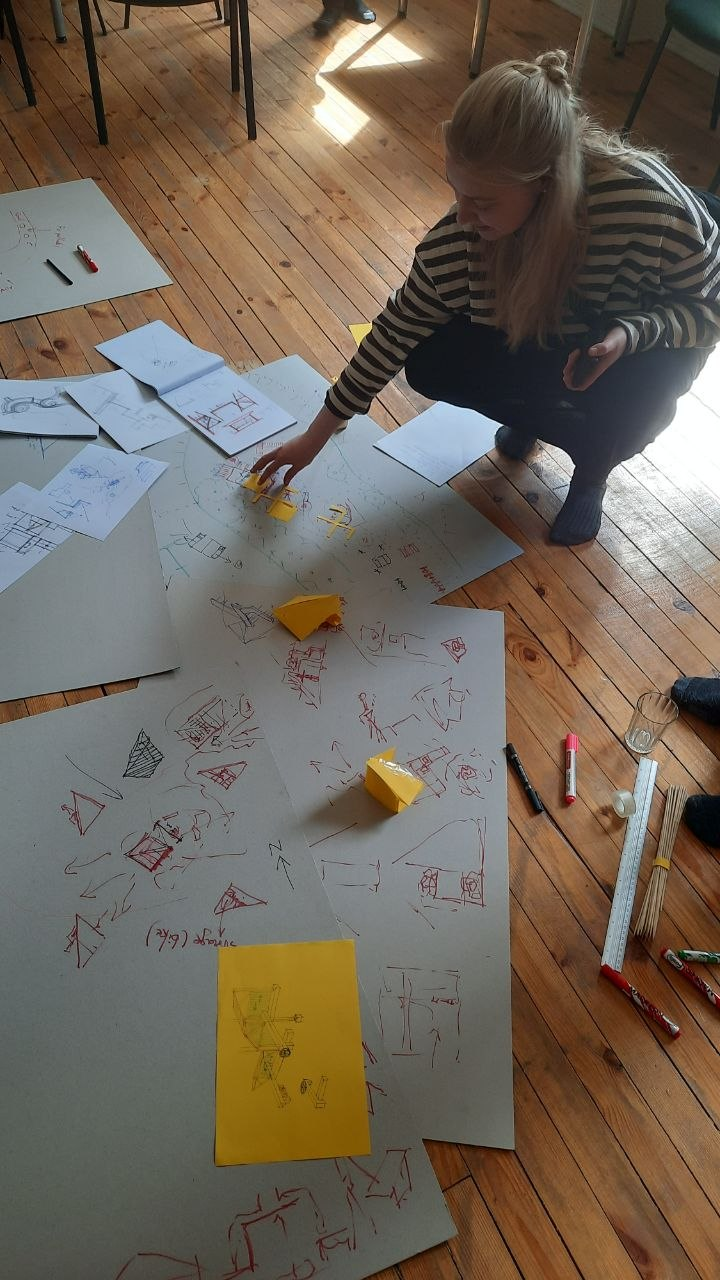
To complete their tasks, participants had access to various materials (wood, plywood, veneer, corrugated cardboard of different thicknesses, paper, etc.) and tools for both papercraft and woodwork. The organisers also conducted a safety briefing on working with tools and wood materials.
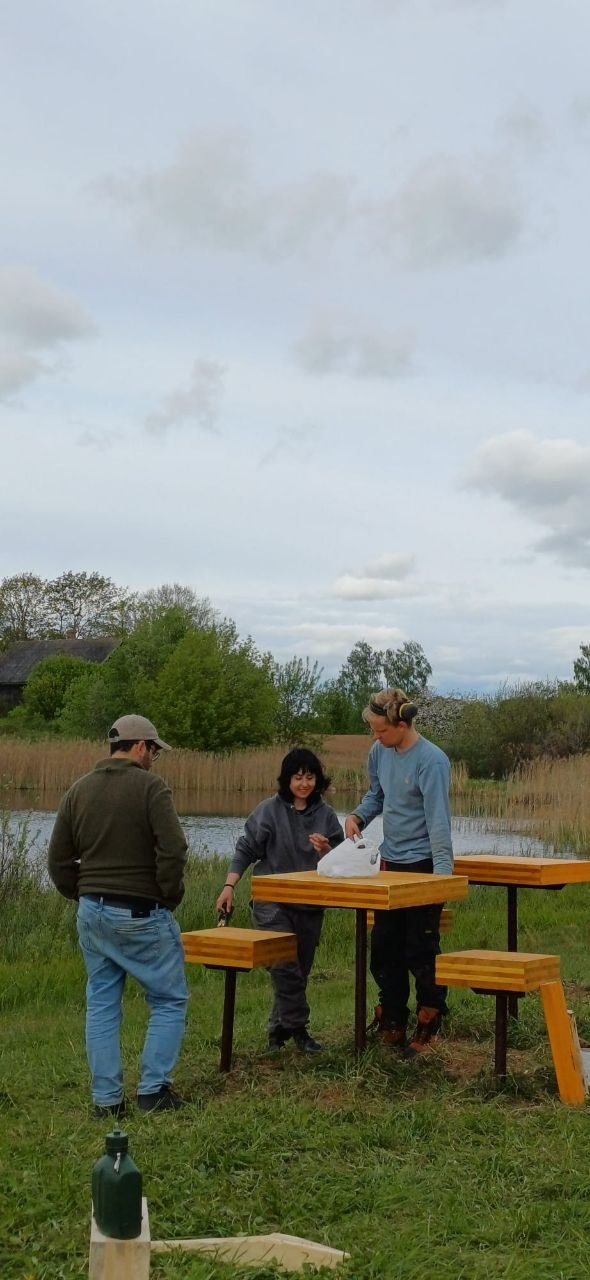
The result of two days of intensive work by the participants, split into two teams according to the designated locations, was a presentation of the developed solutions for both sites. Olena Makuha and Maryna Makuha actively engaged in modernising the existing building in the centre of Indra, developing a shelter for hiking enthusiasts. Liudmyla Shevchenko, Nadiia Halahan, and Omelian Shchur-Dunets joined the team responsible for the lakeside recreational area, designing a structure for daytime and overnight rest for hikers and modernising the existing small architectural forms.
The rainy weather on the third day did not prevent the workshop participants from moving on to the practical preparation of the projects. The teams set off to find materials for their structures, focusing on the principles of reuse and sustainable design. The foundations for implementing the design solutions were materials salvaged from abandoned wooden buildings in Indra, their characteristic joints, and a wide array of antiquities carefully collected by Ilona Kangizere, a local enthusiast and the museum's director.
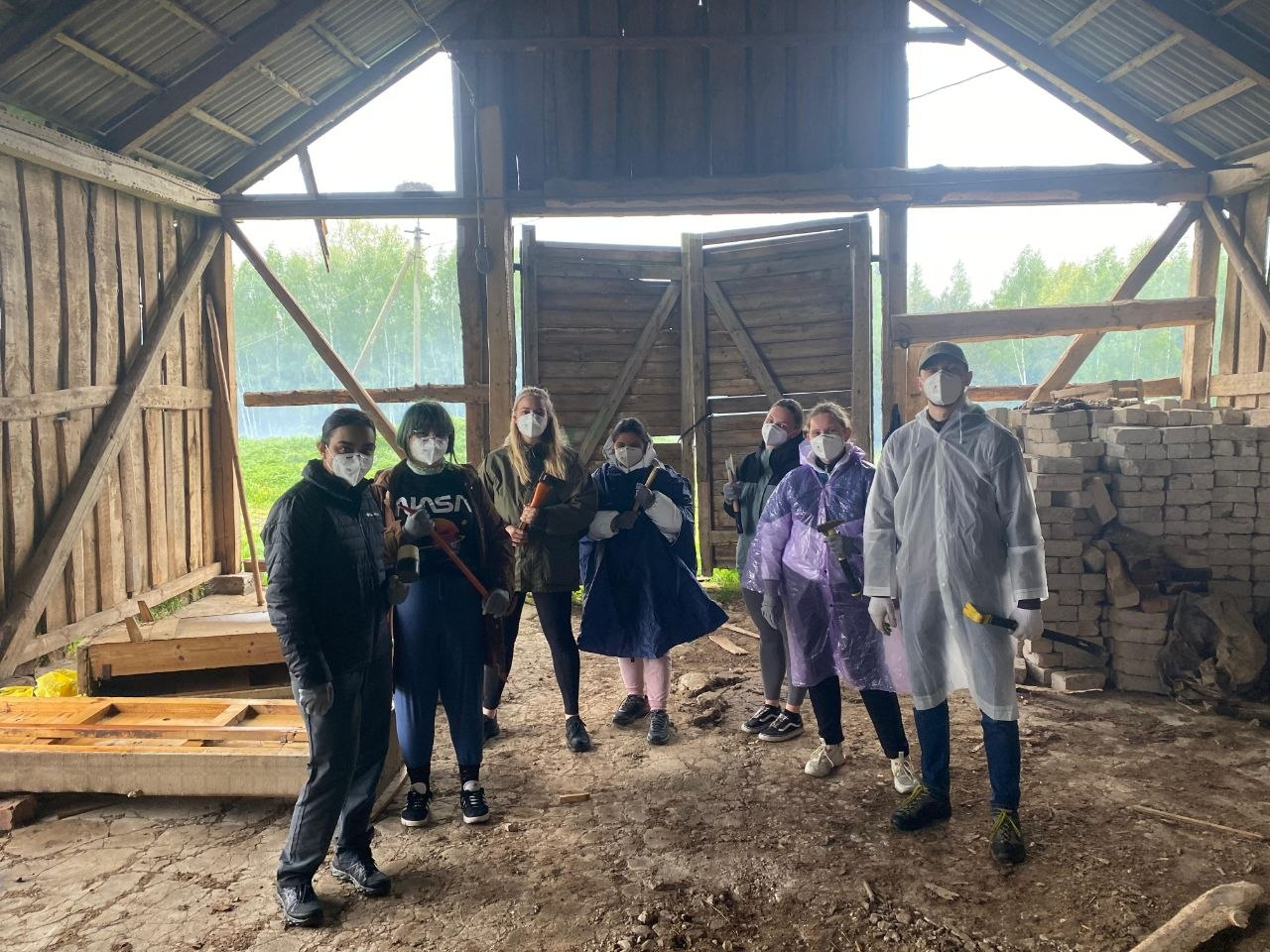
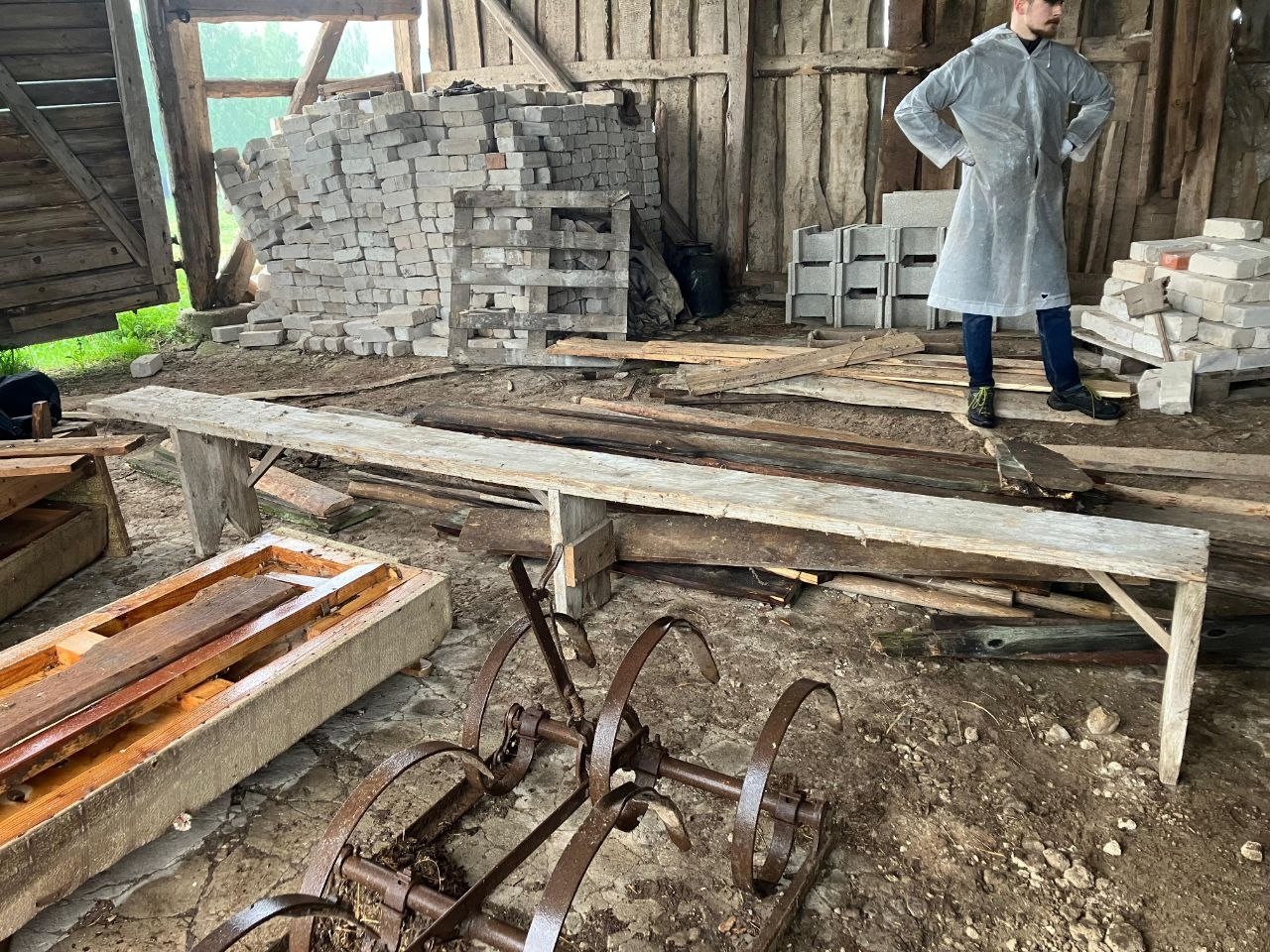
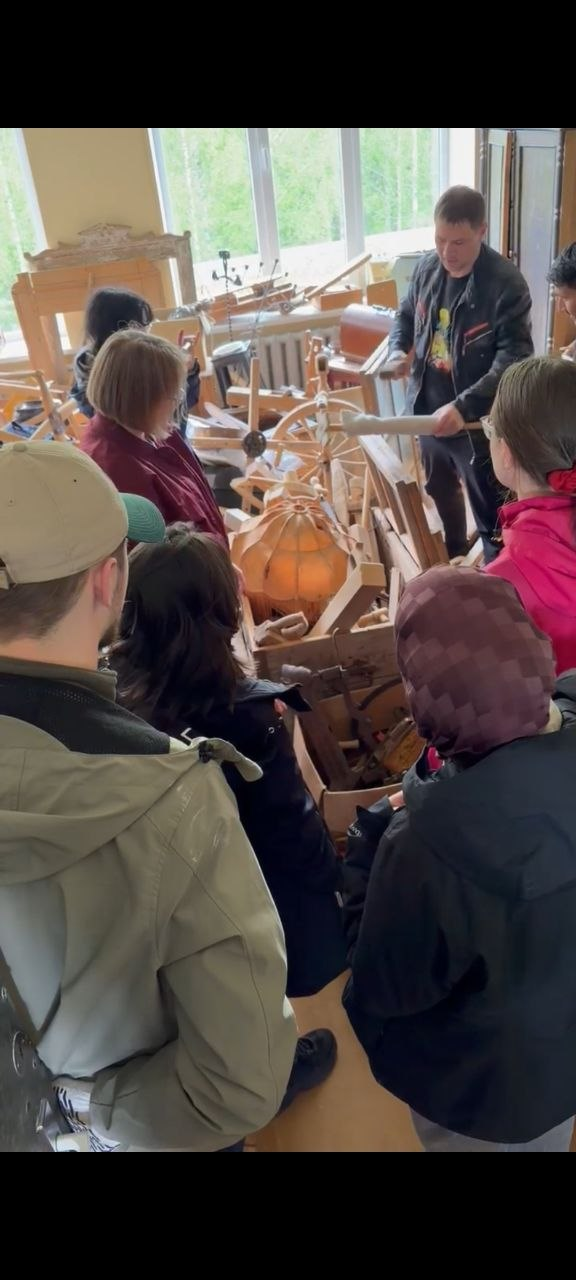
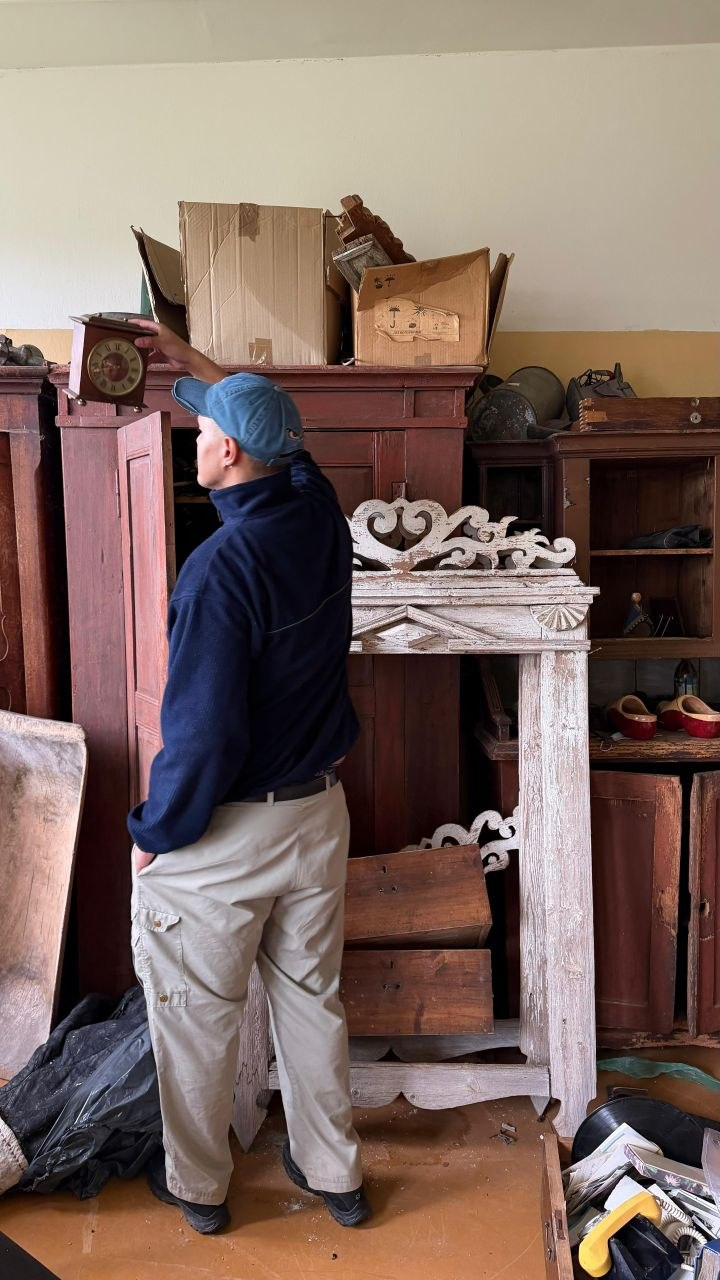
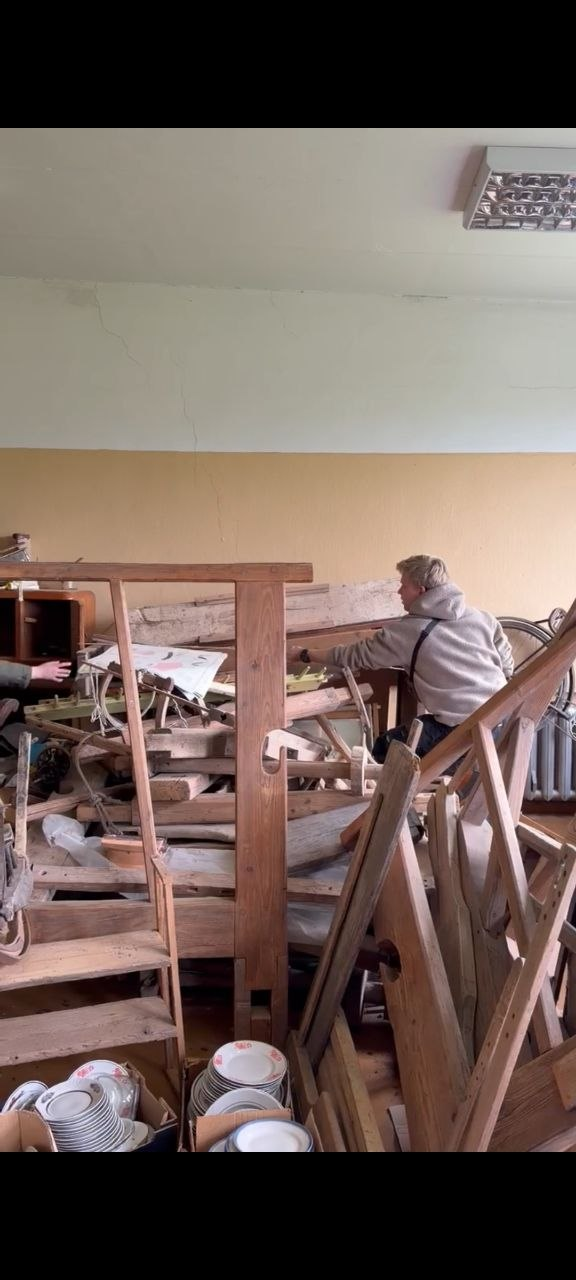
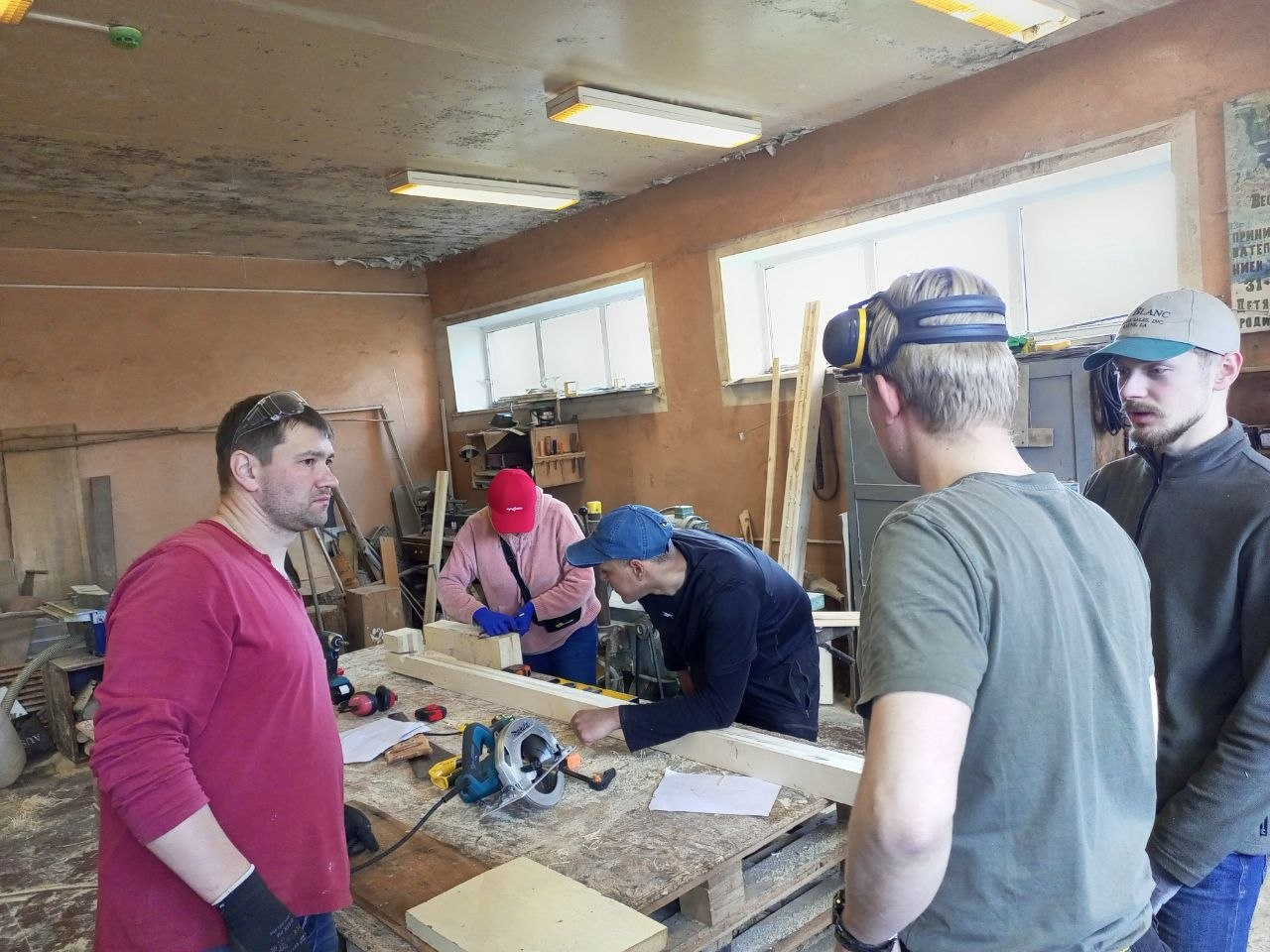
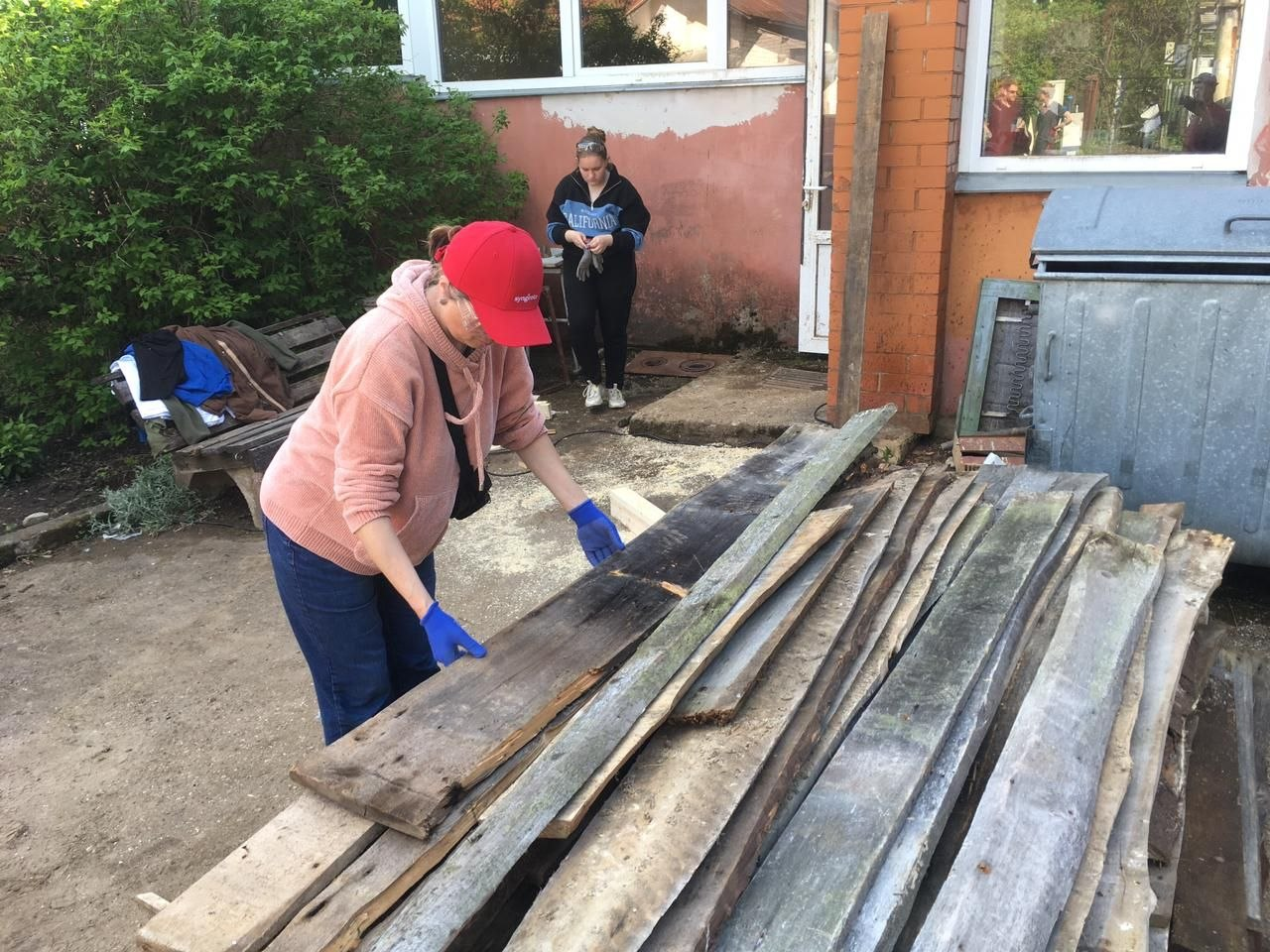
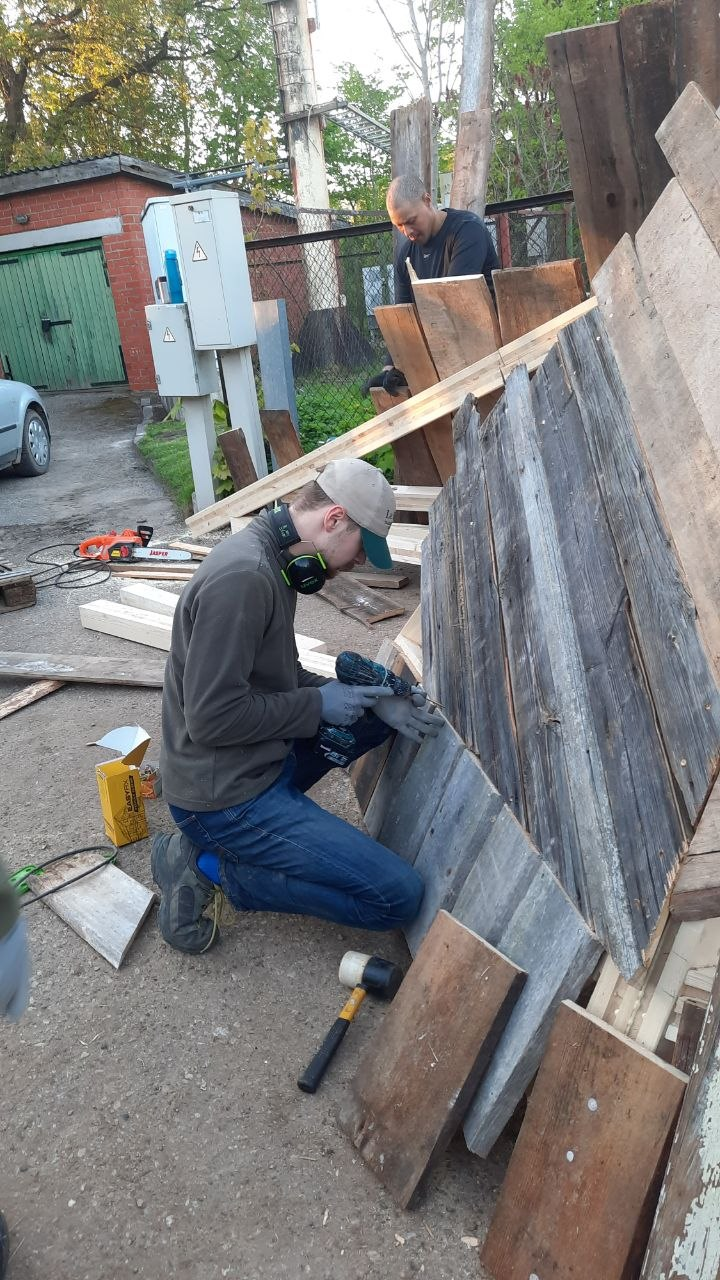
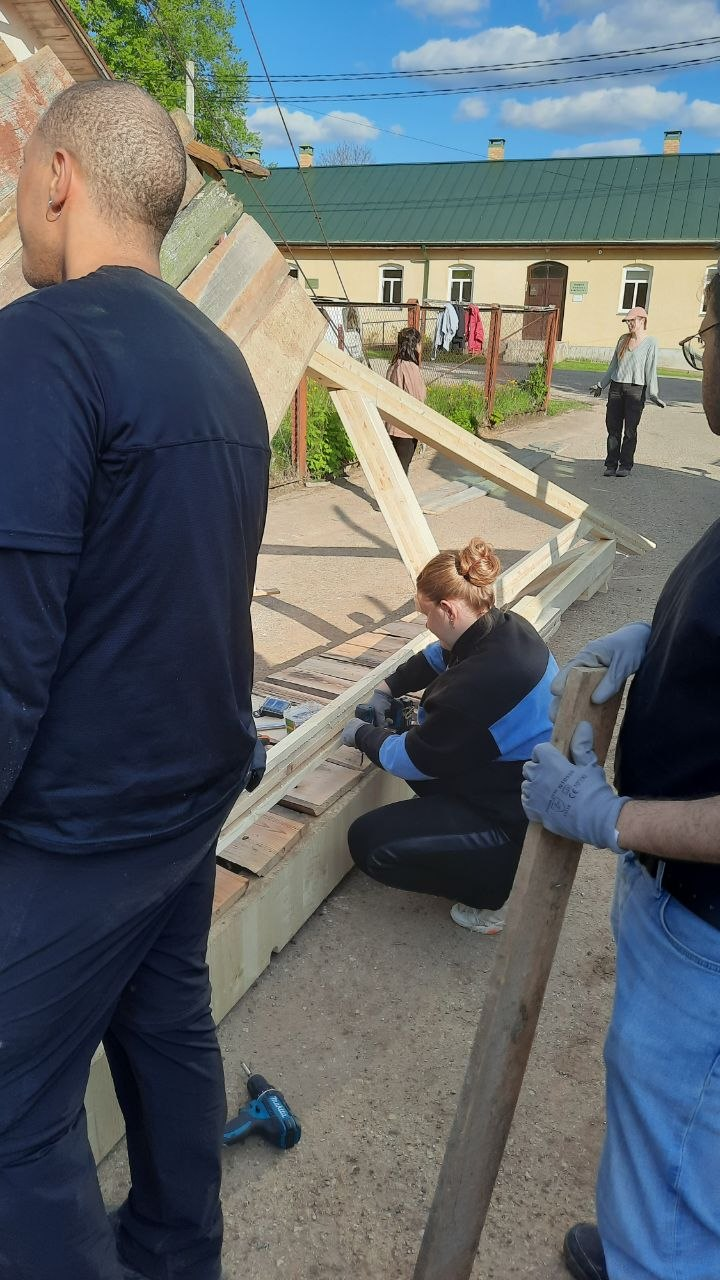
Concurrently, work continued on refining the structural solutions and modeling the objects based on the found materials and actual site conditions. A distinct stage of the programme was dedicated to the direct implementation of the concepts: first, in the carpentry workshop, salvaged wood materials were prepared for reuse (removing nails, sanding surfaces, sawing, and cutting into the required structural elements), and the structural frame of the future building was constructed. This process involved the use of appropriate machines, tools, and electrical equipment, which significantly accelerated the work. All participating individuals wore appropriate safety gear, including ear defenders, respirators, safety goggles, and gloves.
As a result of the coordinated efforts of the first team, the existing building, which was in a highly neglected state, was given new life and a functional purpose, becoming a centre of gravity for the local community. The proposed concept provides a comfortable space for communication, relaxation, and collaborative activities for the residents.
Through the team’s efforts, the building’s interior was comprehensively renewed. Specifically, the flooring was repaired, a wooden deck was installed, and the walls were finished and artistically decorated. To furnish the interior, furniture and decorative items discovered in abandoned buildings throughout the town of Indra were utilised. Following restoration and preparation in the carpentry workshop, these items were integrated into the space, which not only gave it a new functional and aesthetic meaning but also emphasised the principles of material reuse and the preservation of local identity.
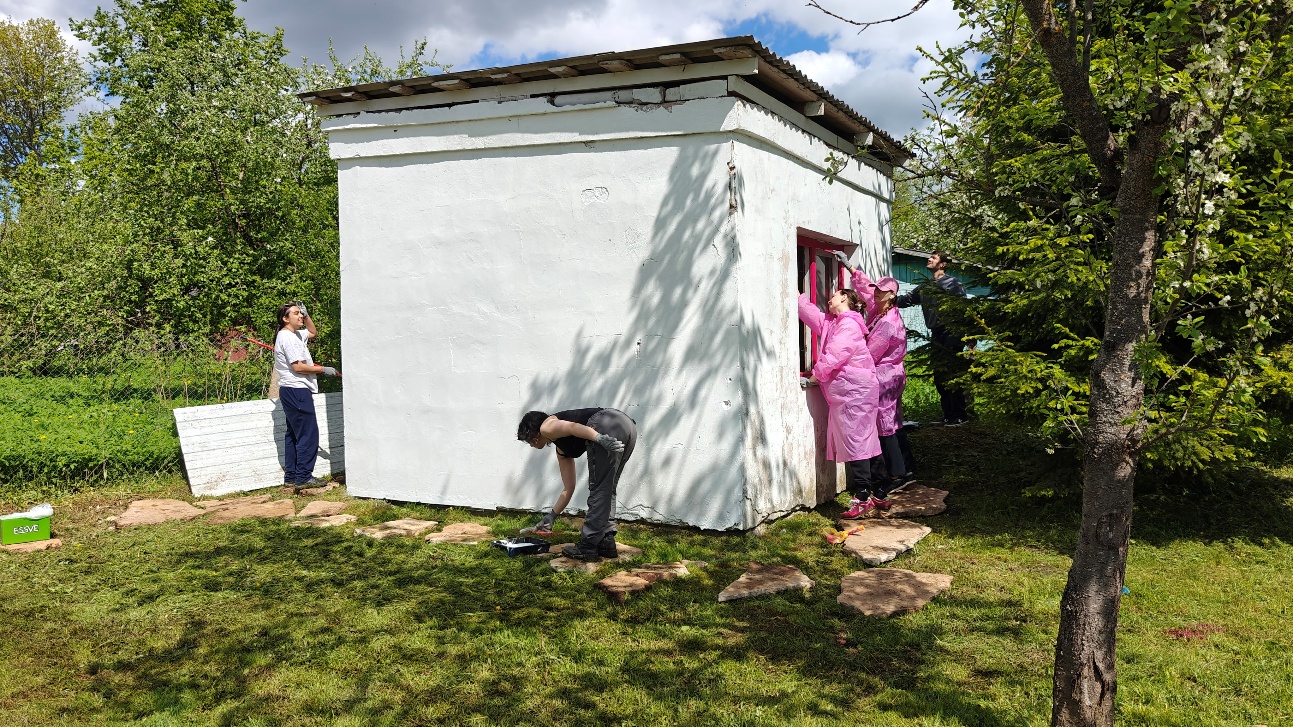
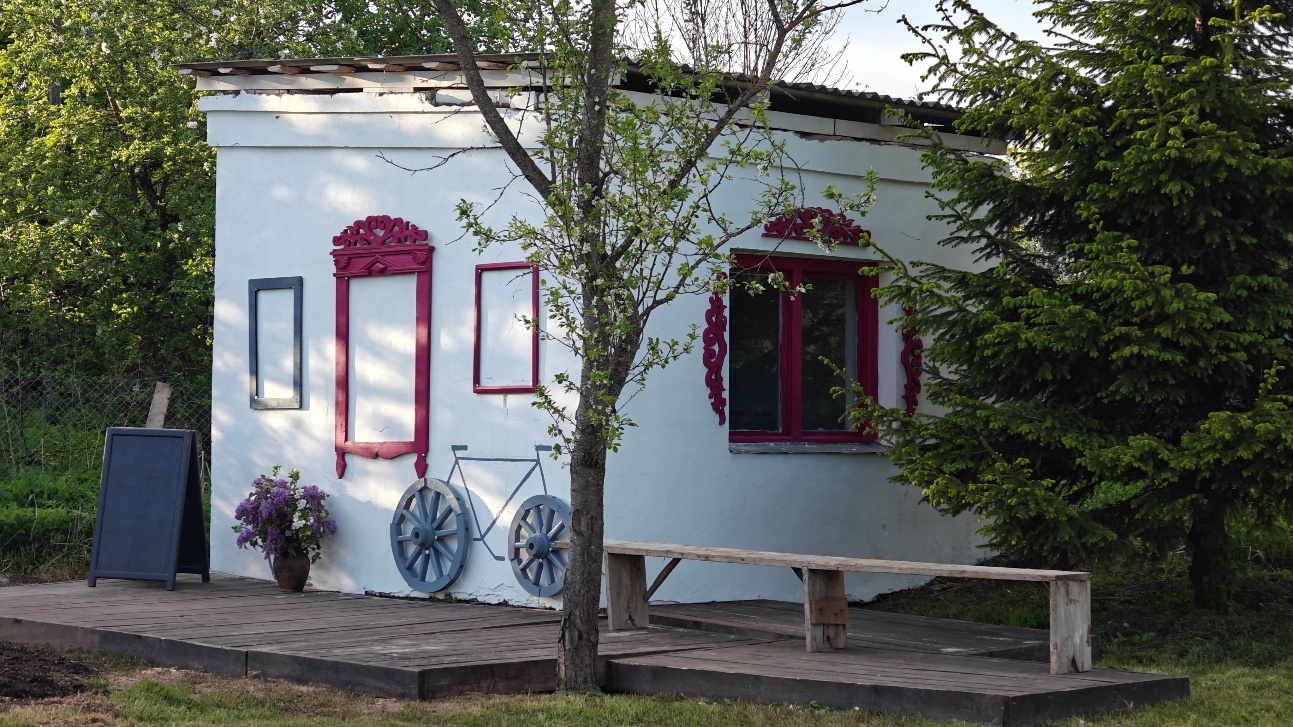
The exterior of the building also underwent significant changes. While the structure had been neglected and unattractive before the project, with worn facades and undeveloped adjacent space, the completed work transformed it into an orderly public facility with a distinctive local character.
As part of the renovation, the facade surfaces were restored, cleaned, and painted, significantly improving the building’s aesthetic appeal. Particular attention was paid to the decorative design: restored elements of old wooden window frames and details of traditional spinning wheels were used to decorate the facades, receiving a new lease of life in a contemporary design solution. This approach preserved the connection to local cultural heritage and highlighted the space's unique identity.
Concurrently, the adjacent territory was landscaped. A wooden platform was built in front of the building, serving as a recreational space for relaxation, socialisation, and small community events. The concept also includes bicycle parking spaces, thereby promoting sustainable mobility and improving the site's accessibility for residents and visitors.
Consequently, the neglected utility building was transformed into an attractive public space that combines the principles of material reuse, preservation of local cultural heritage, and the creation of a comfortable environment for local community interaction. The space is now suitable for hosting small festivals, cultural events, creative workshops, public meetings, educational activities, and other initiatives to activate social life and strengthen community bonds.
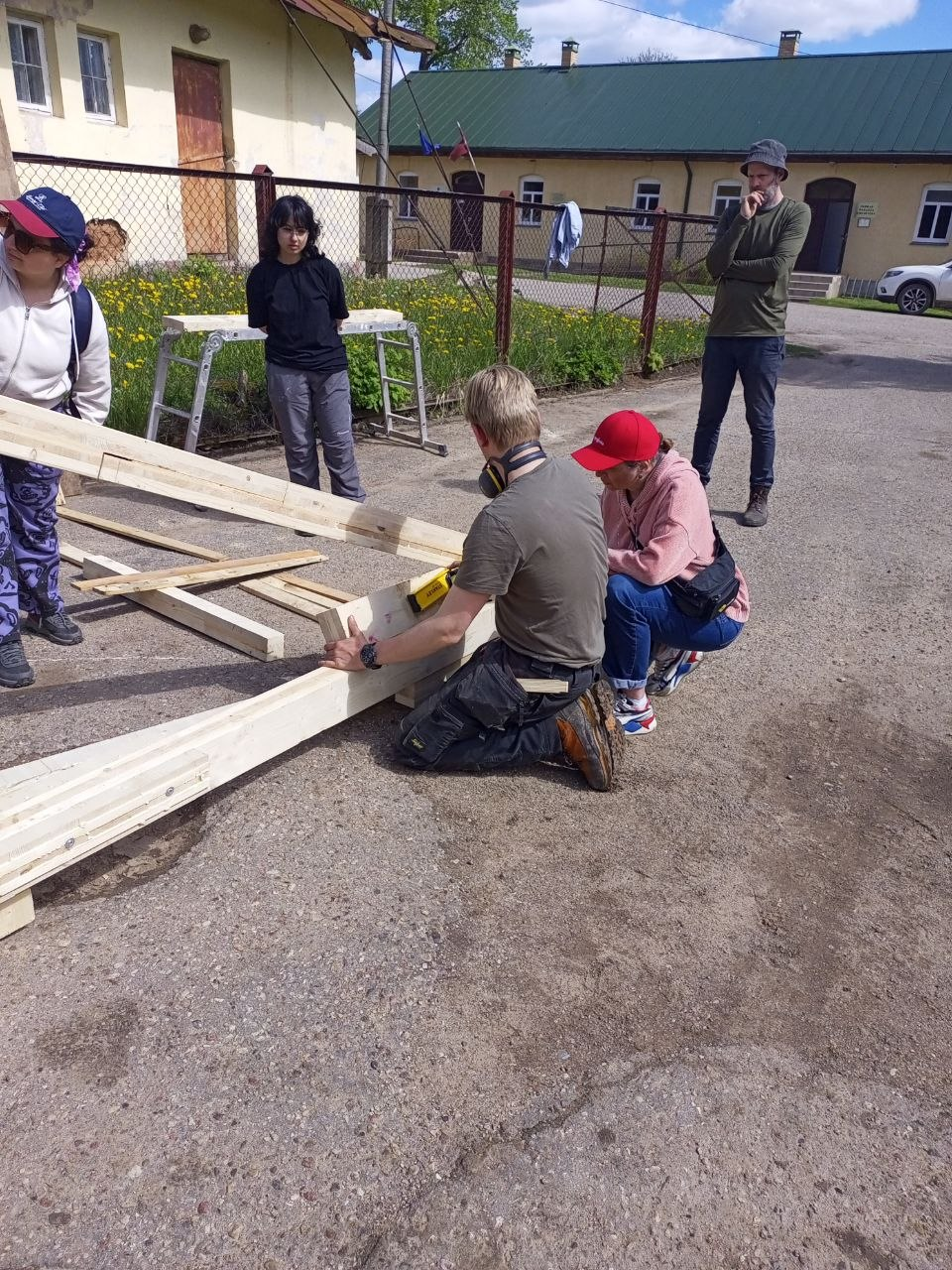
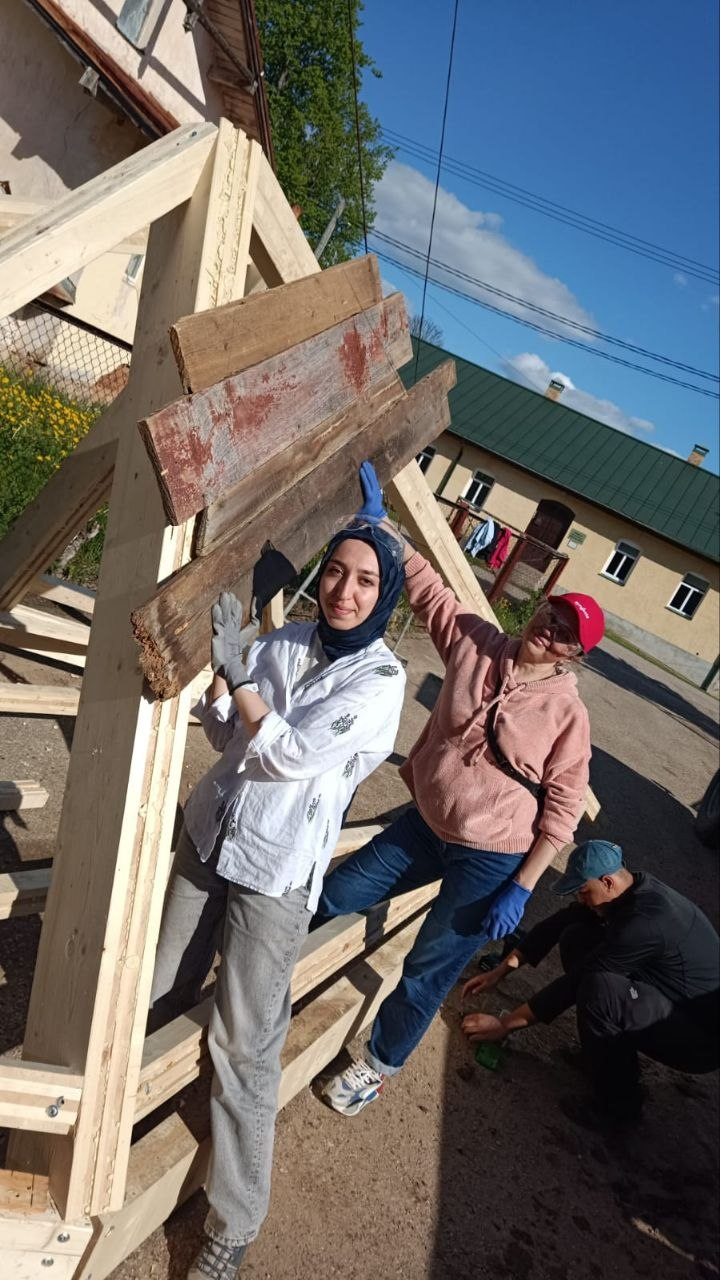
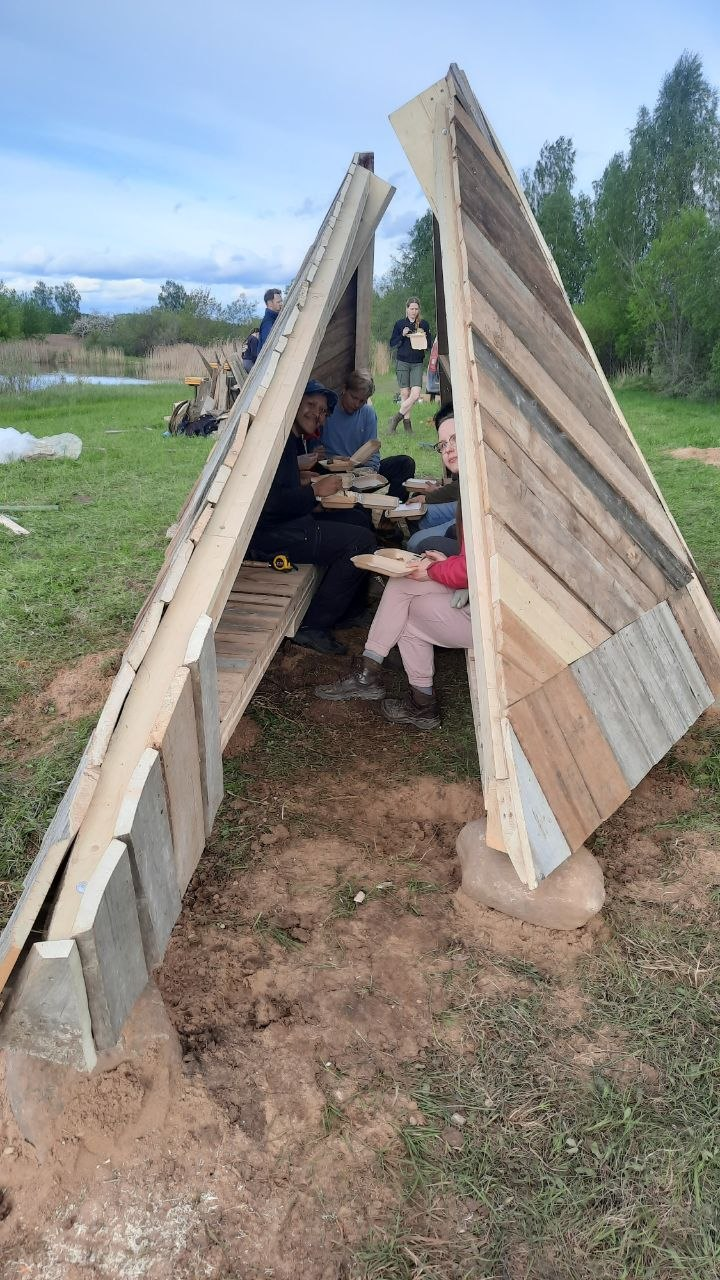
As a result of the second team’s coordinated efforts, a new rest area for hikers was built, and the recreational area for local residents was modernised. The design concept of the structure was guided by Latvia’s climatic conditions (a sloped roof) and an effort to seamlessly integrate it into the existing natural environment. The pitched roof reflects local traditions of finishing attic spaces with wood – a combination of vertical and inclined elements. The texture and colour of the reused wooden materials added a natural appearance to the constructed facility.
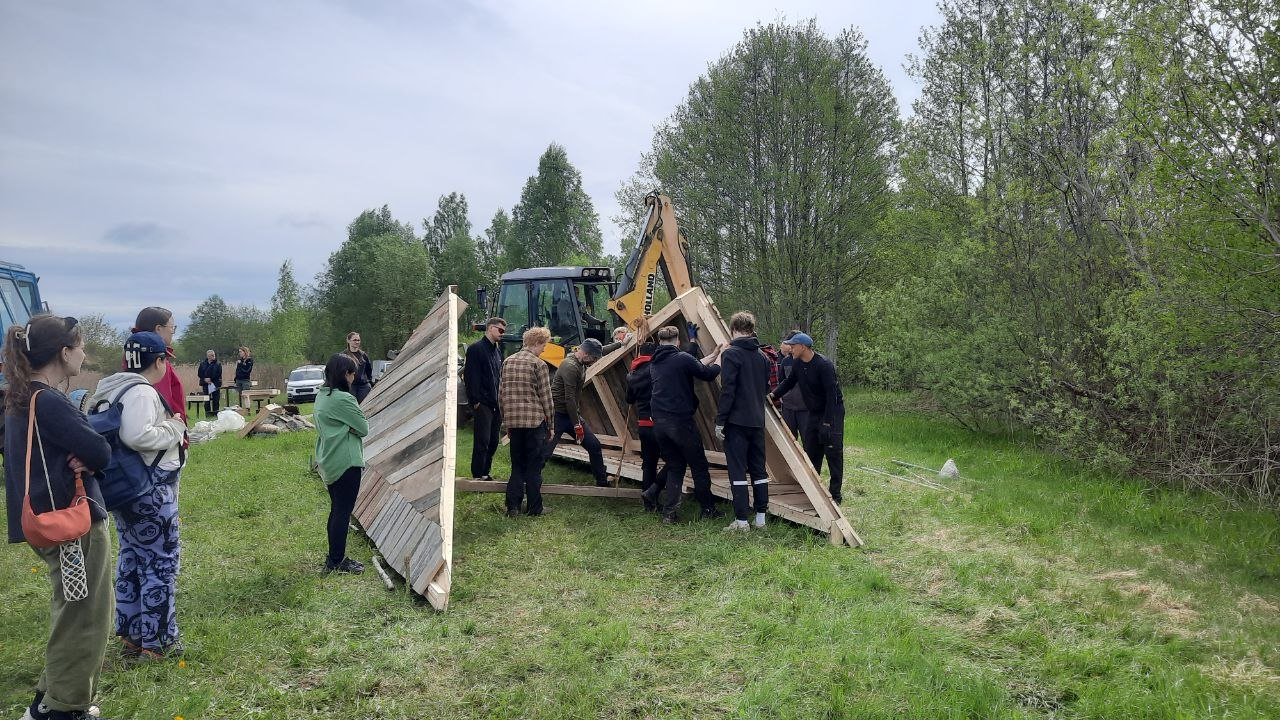
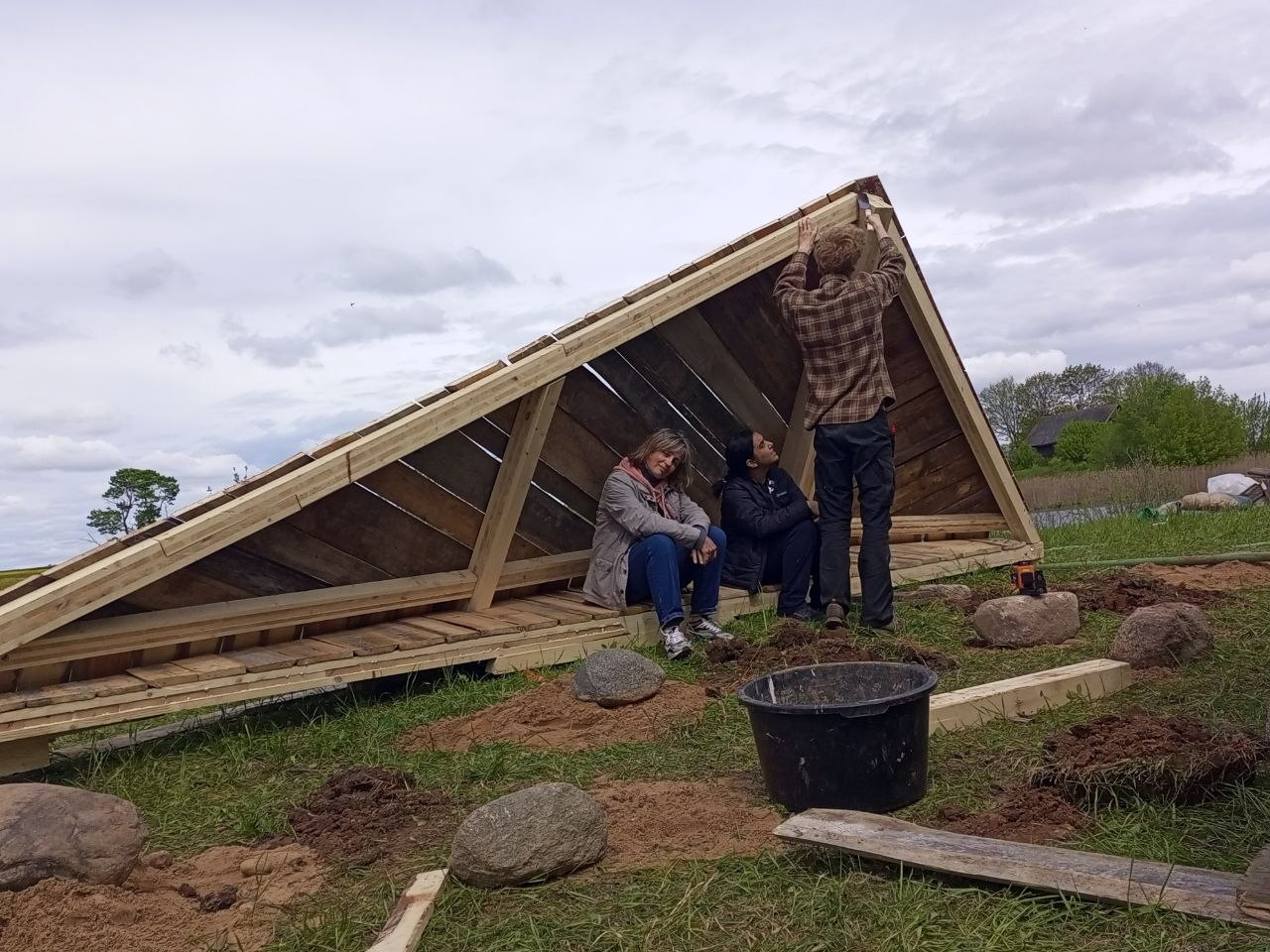
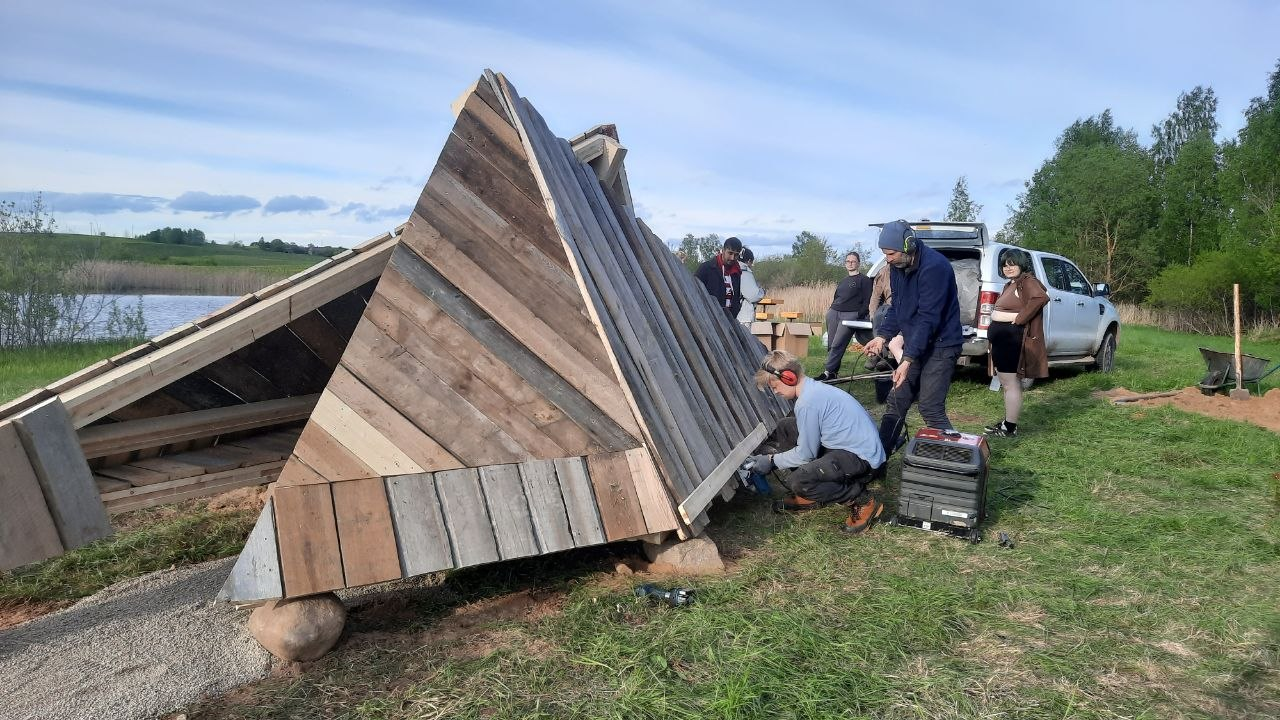
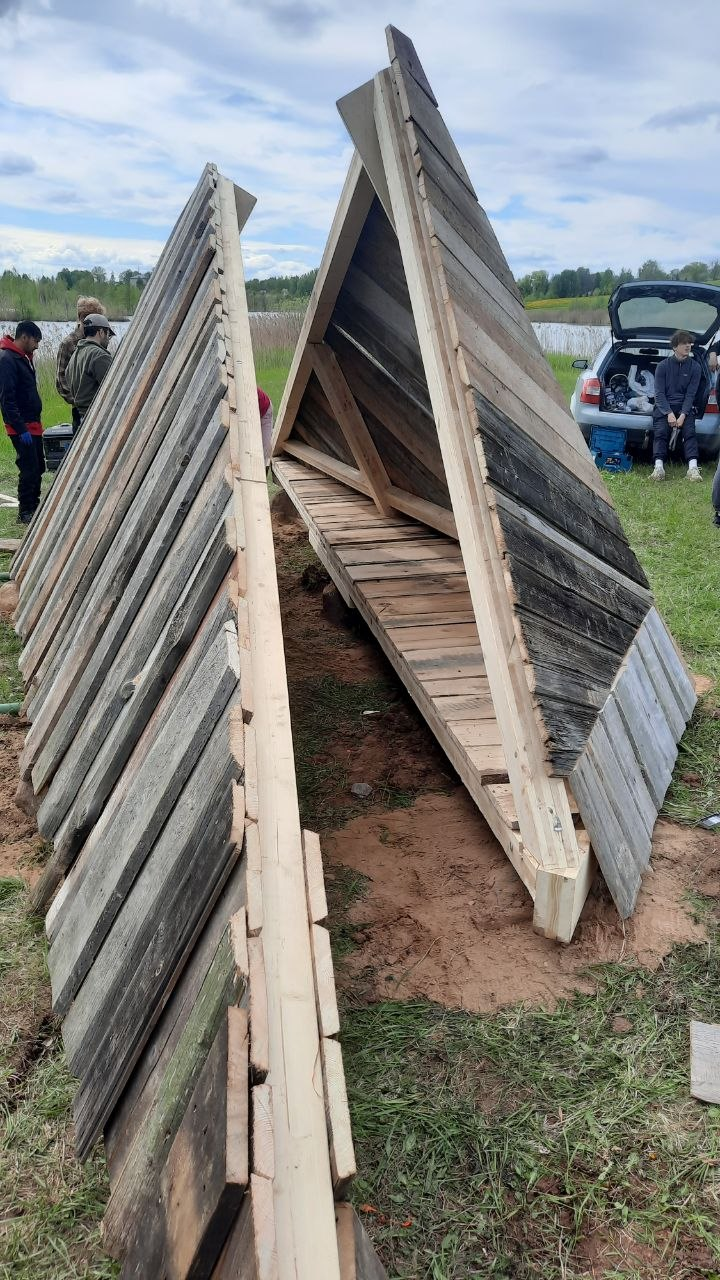
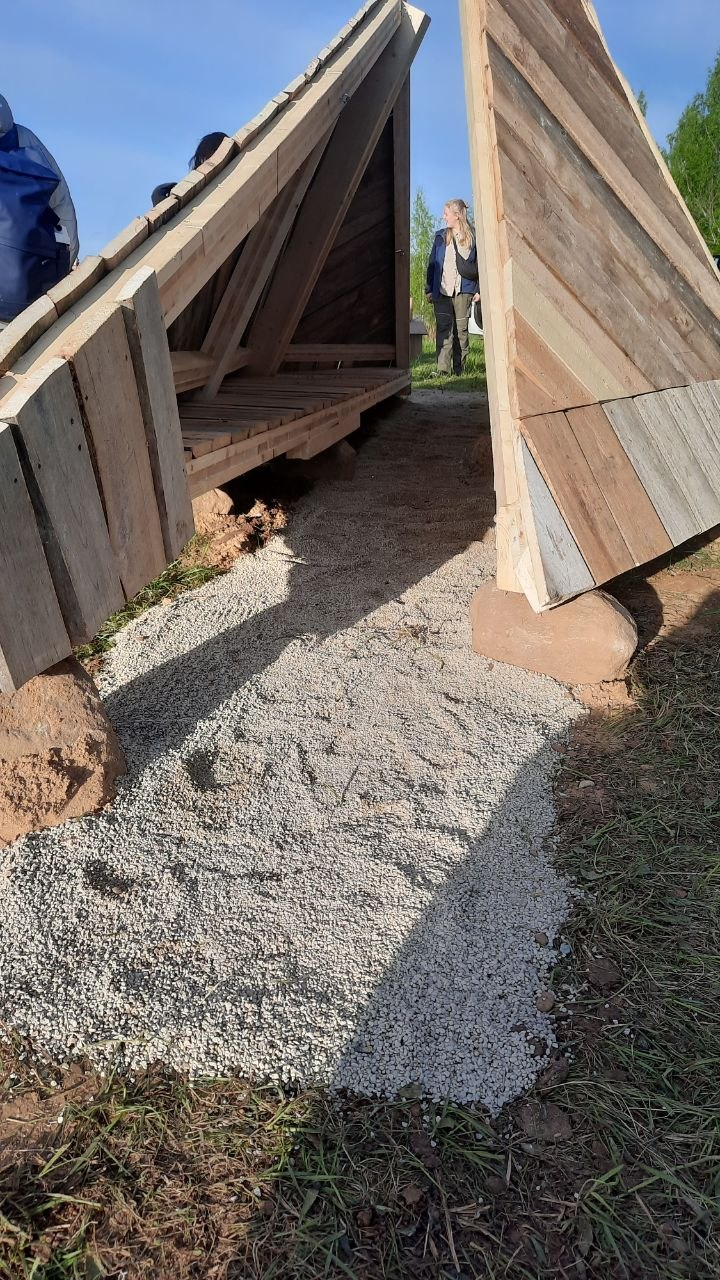
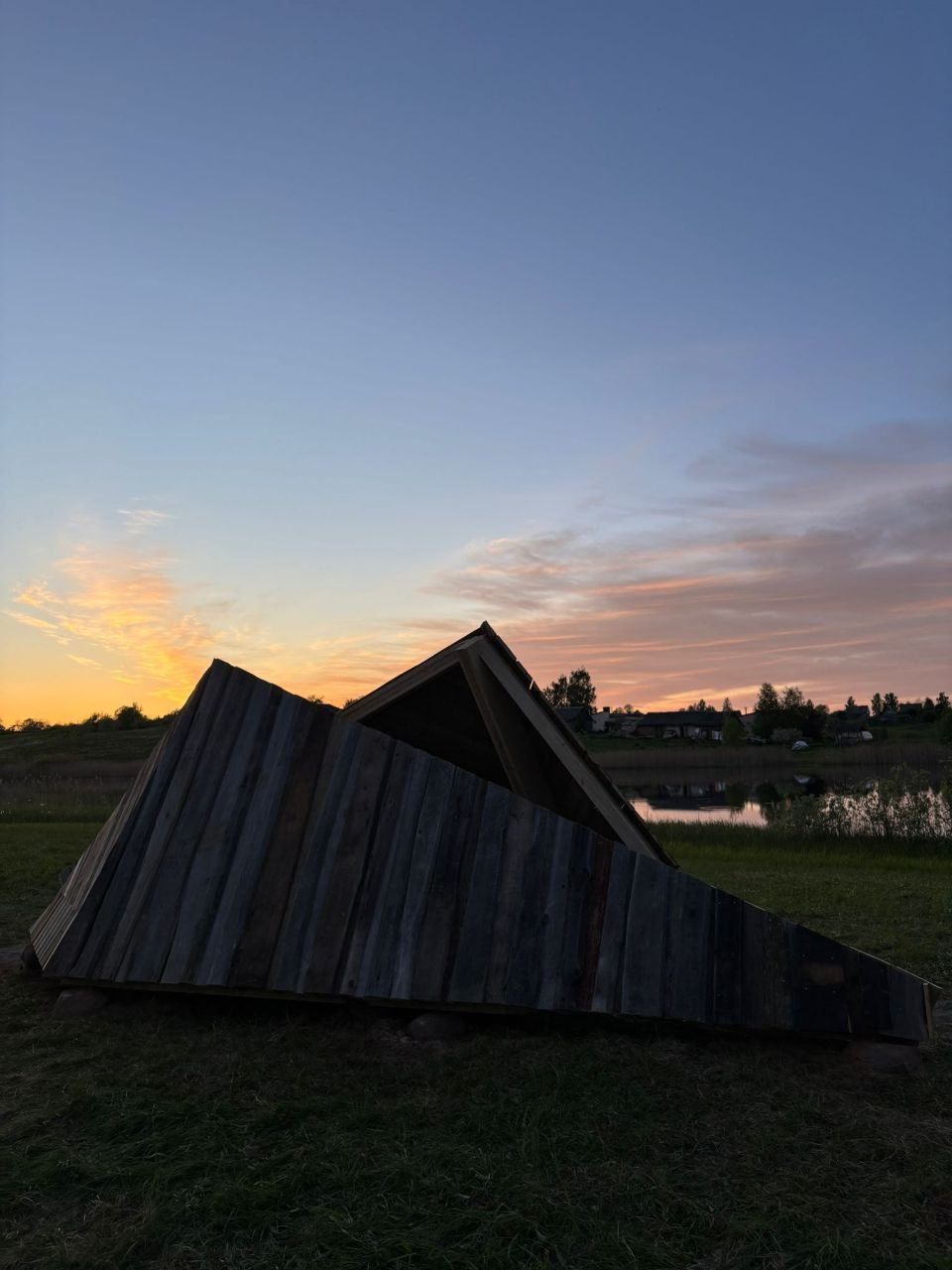
The structural system of the facility reflects local traditions, particularly in the foundation system on wet soils, which uses sand and large natural stones. This system settles over time, thereby adapting the structure to the specific natural site.
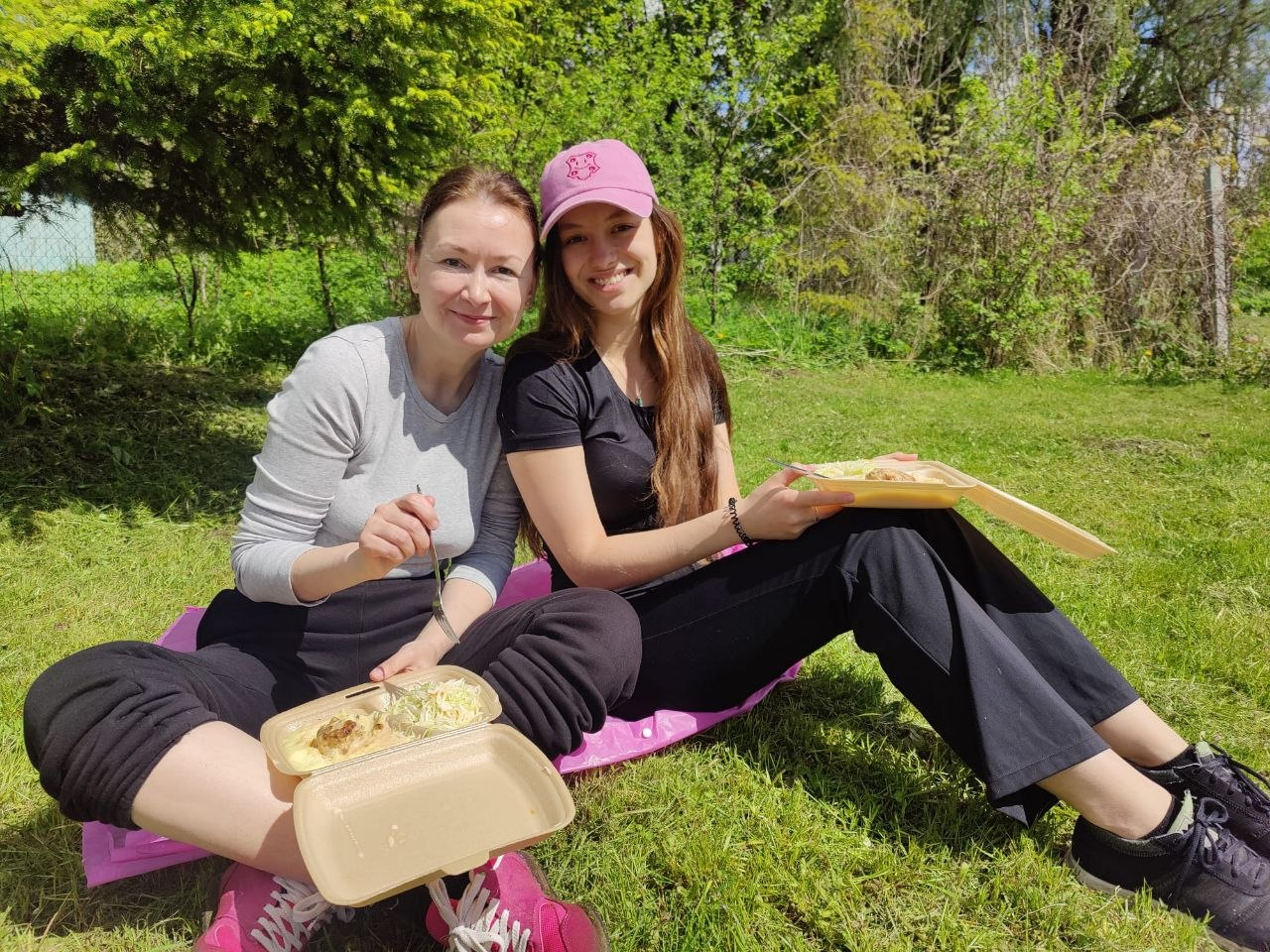
In just five days, the mobility participants managed to comprehensively analyse the situation, develop drafts and drawings of the future structure, locate and prepare building materials, and construct and install the structure on-site from wood. Regardless of age, gender, specialisation, or experience level, everyone demonstrated creativity, courage in implementation, cohesion, mutual support, and practical carpentry skills. The project became a genuine international creative “toloka” (collaborative community work). To maintain participants’ energy, the organisers provided meals at the Indra Local Cultural Centre and on-site when work extended beyond the standard schedule.
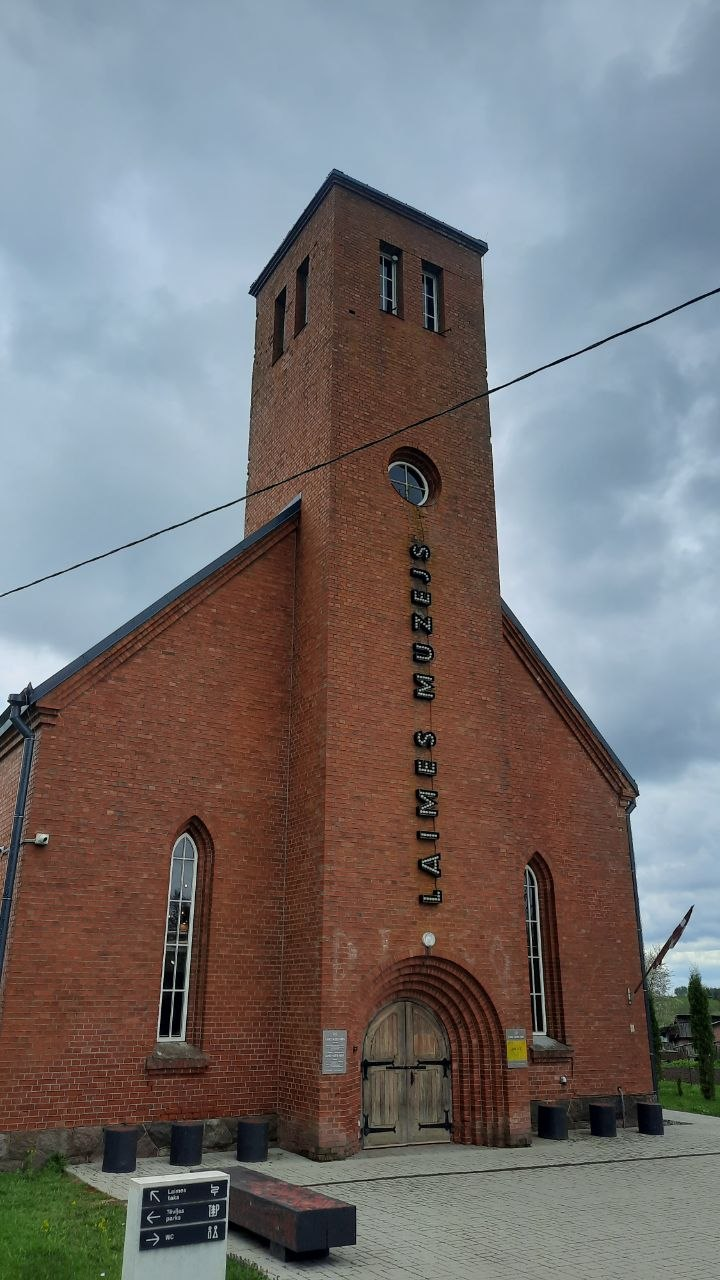
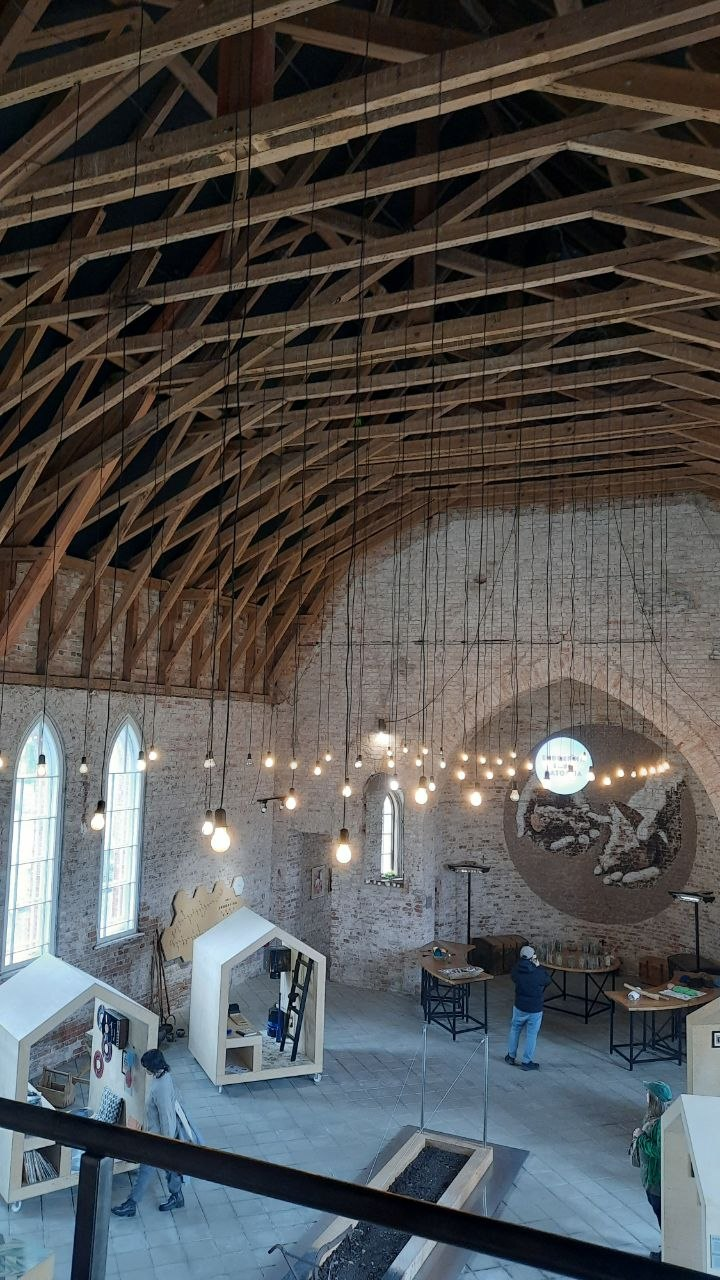
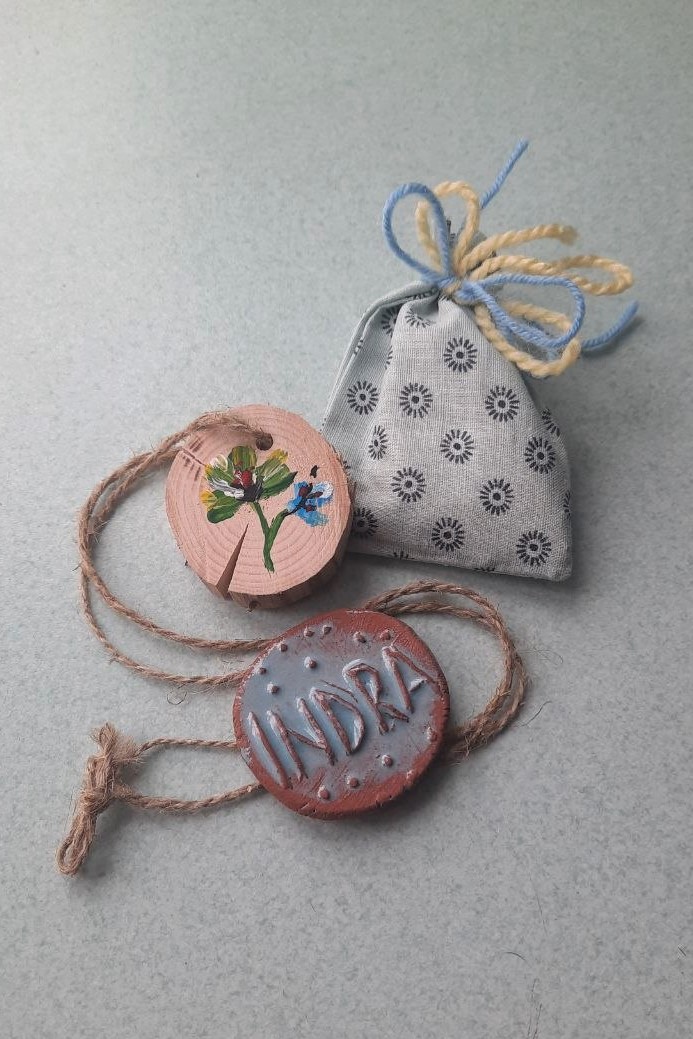
Yet, there was even more to experience. The mobility participants discovered joyful moments through this creative construction collaboration, which were further amplified at a real Museum of Happiness. Indeed, the small town of Indra has its own special attraction – the Museum of Happiness, located in a former, unfinished Lutheran church. Beyond the scientific background of happiness, based on endorphin production (the hormone of happiness), the participants had the opportunity to experience happy moments firsthand through creativity (crafting an amulet and a bag of happiness with its own fragrance) and even smashing plates “for good luck”!
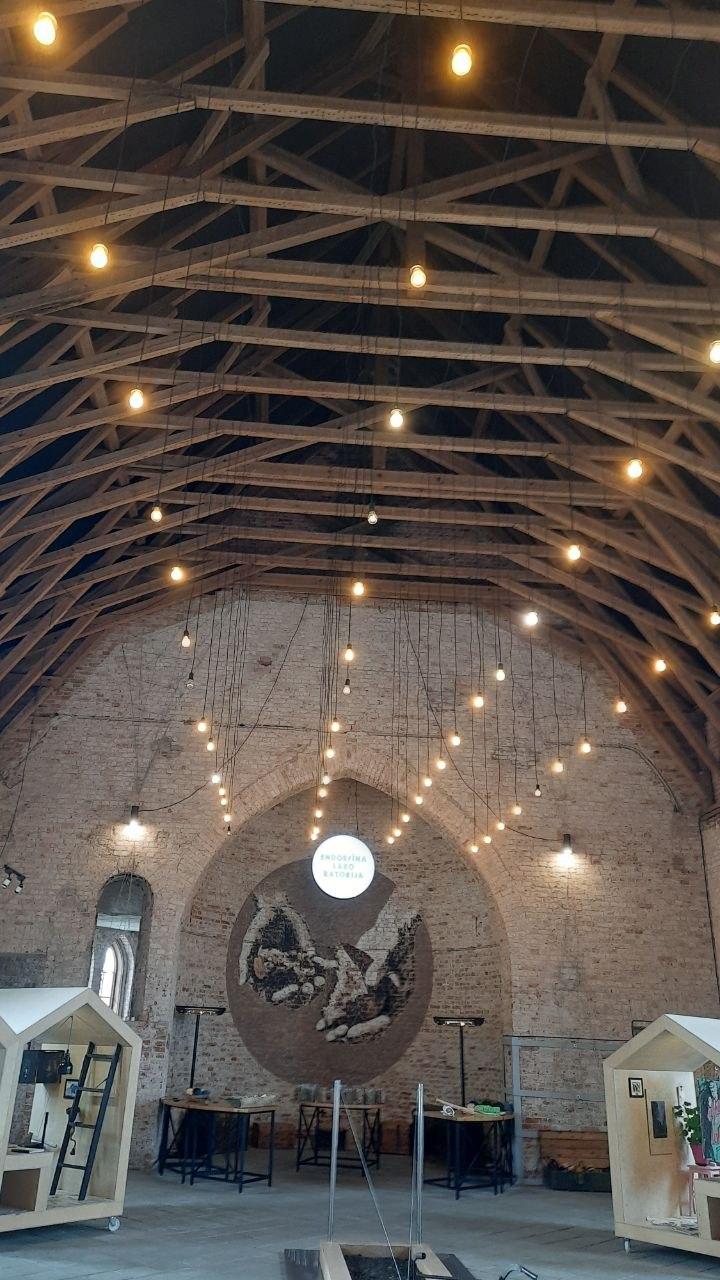
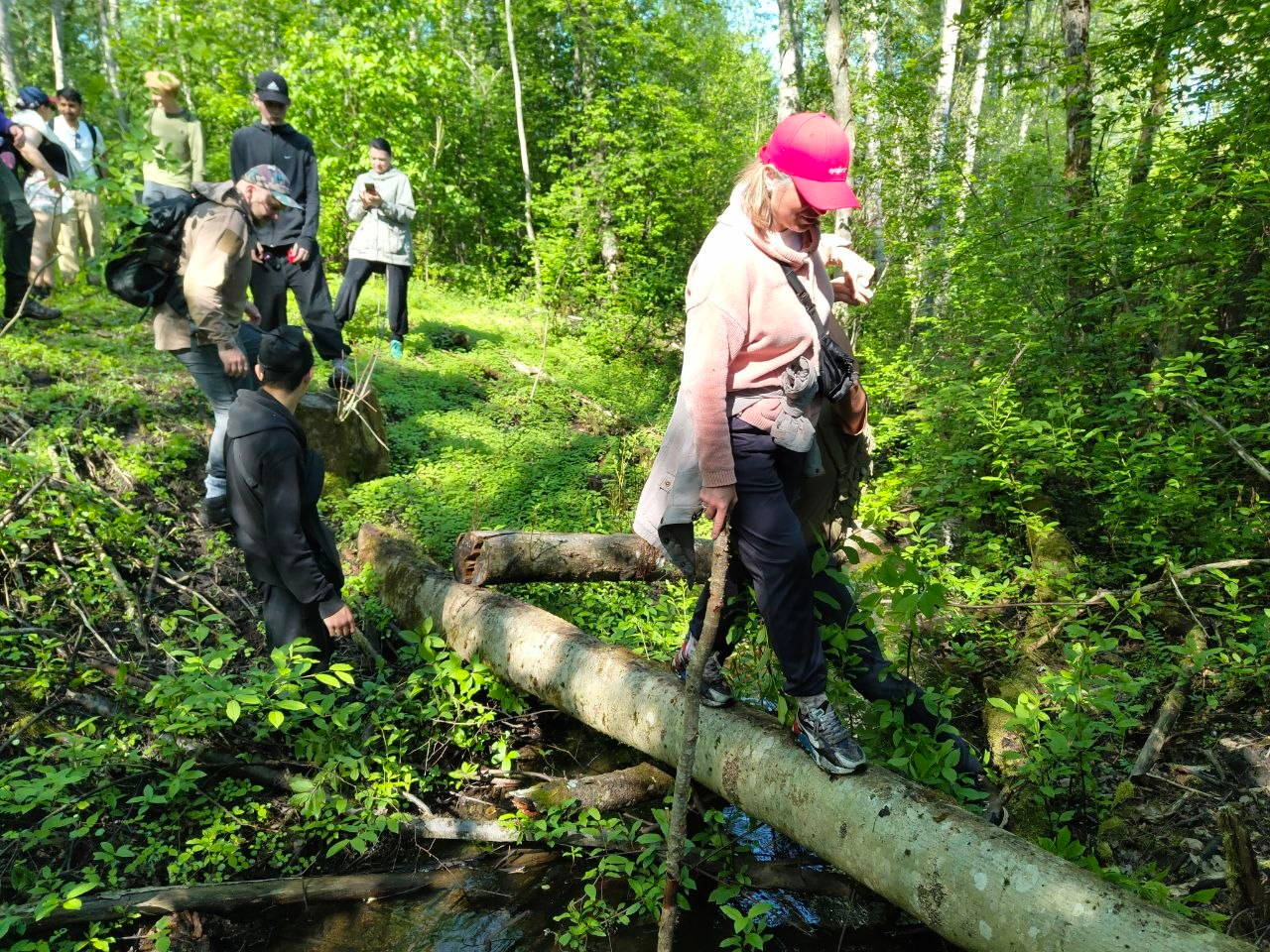
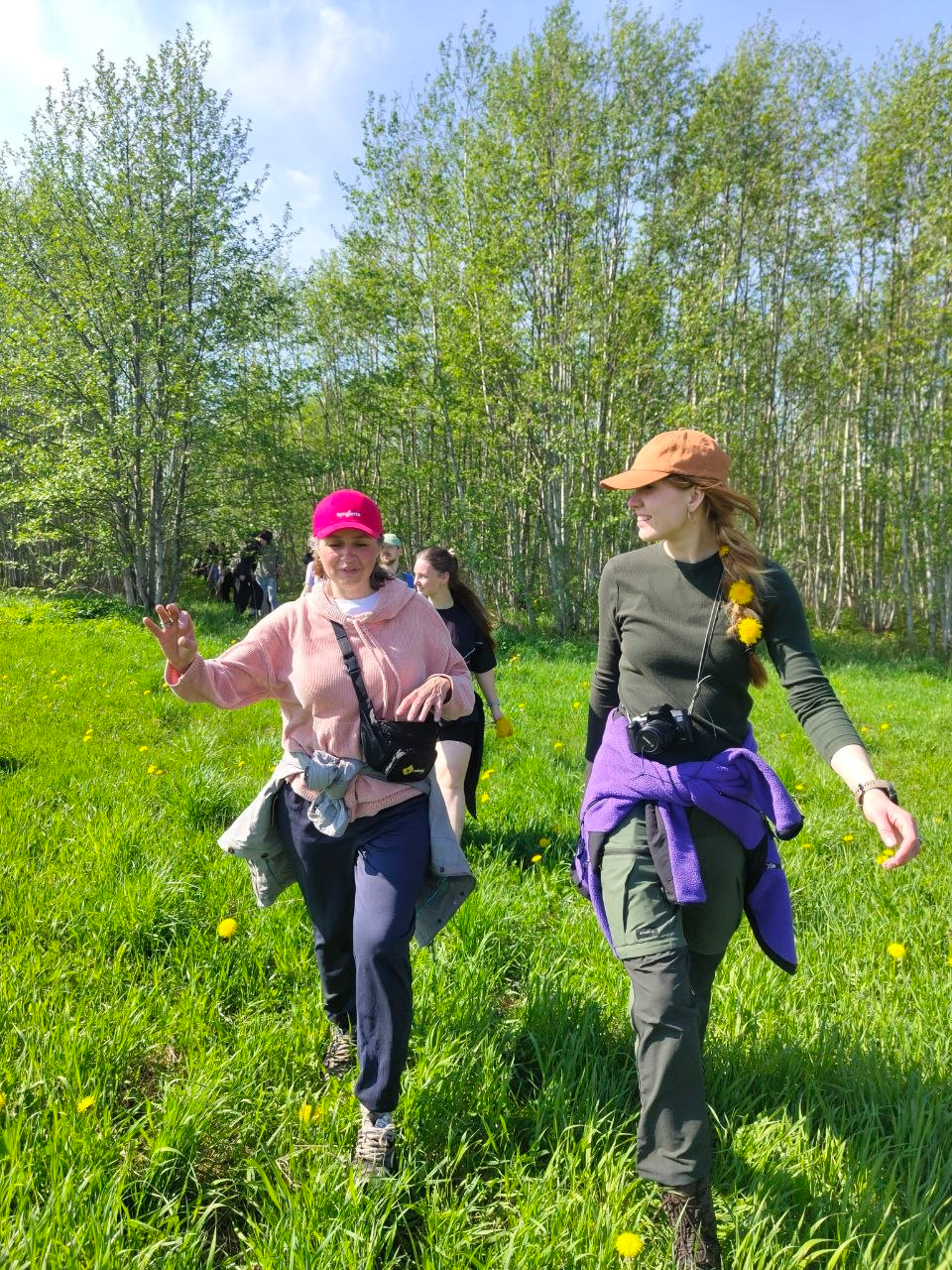
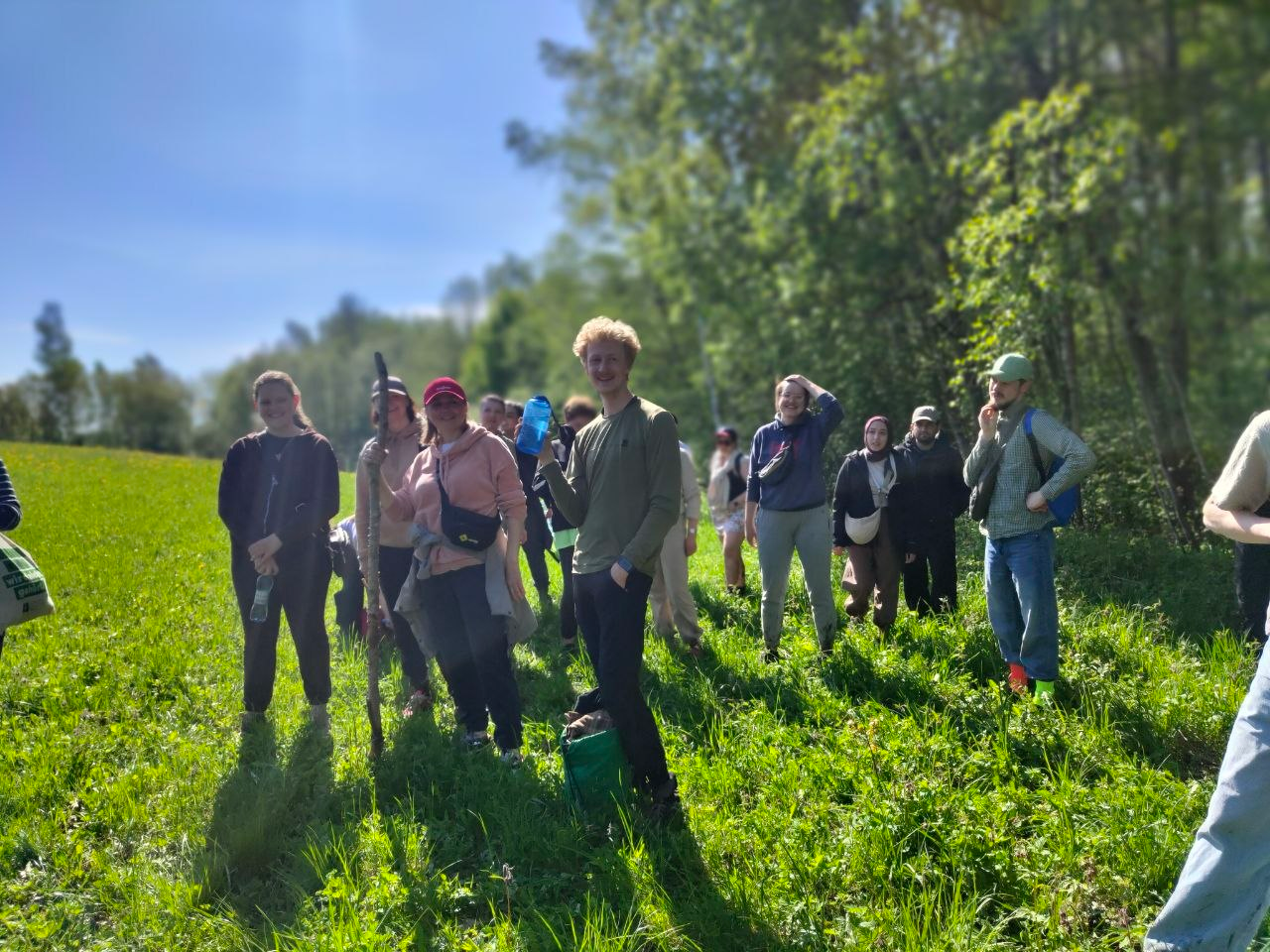
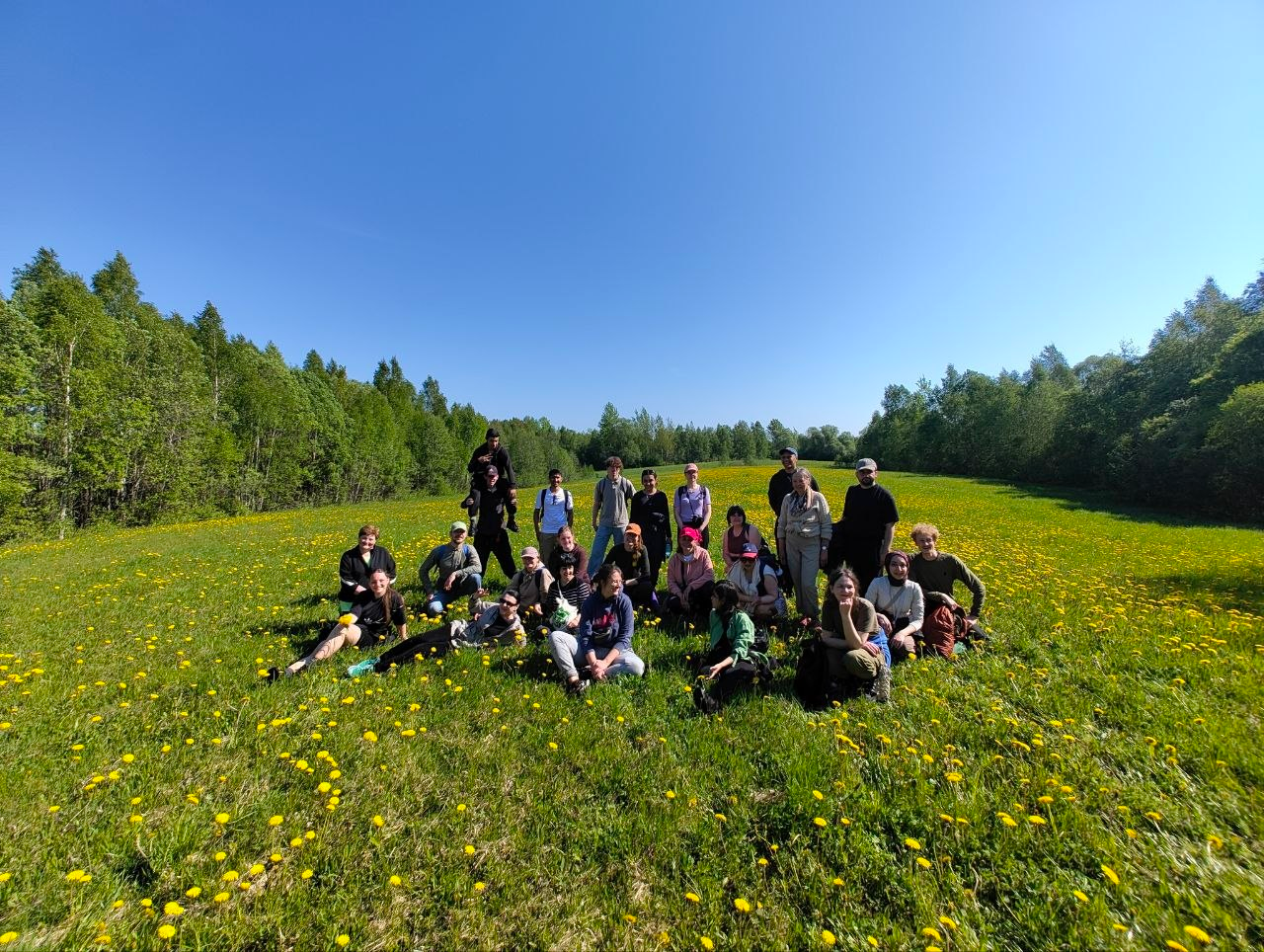
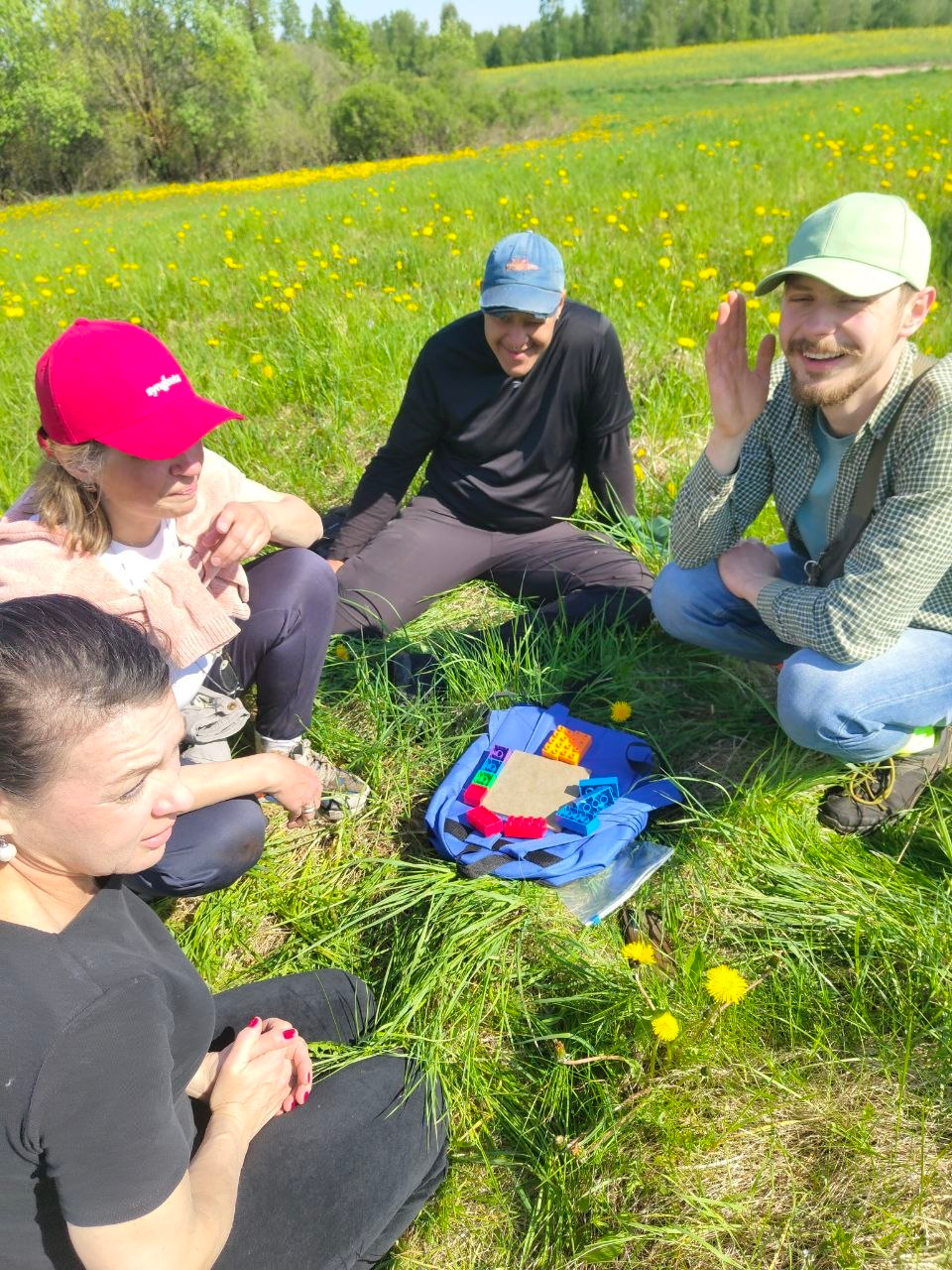
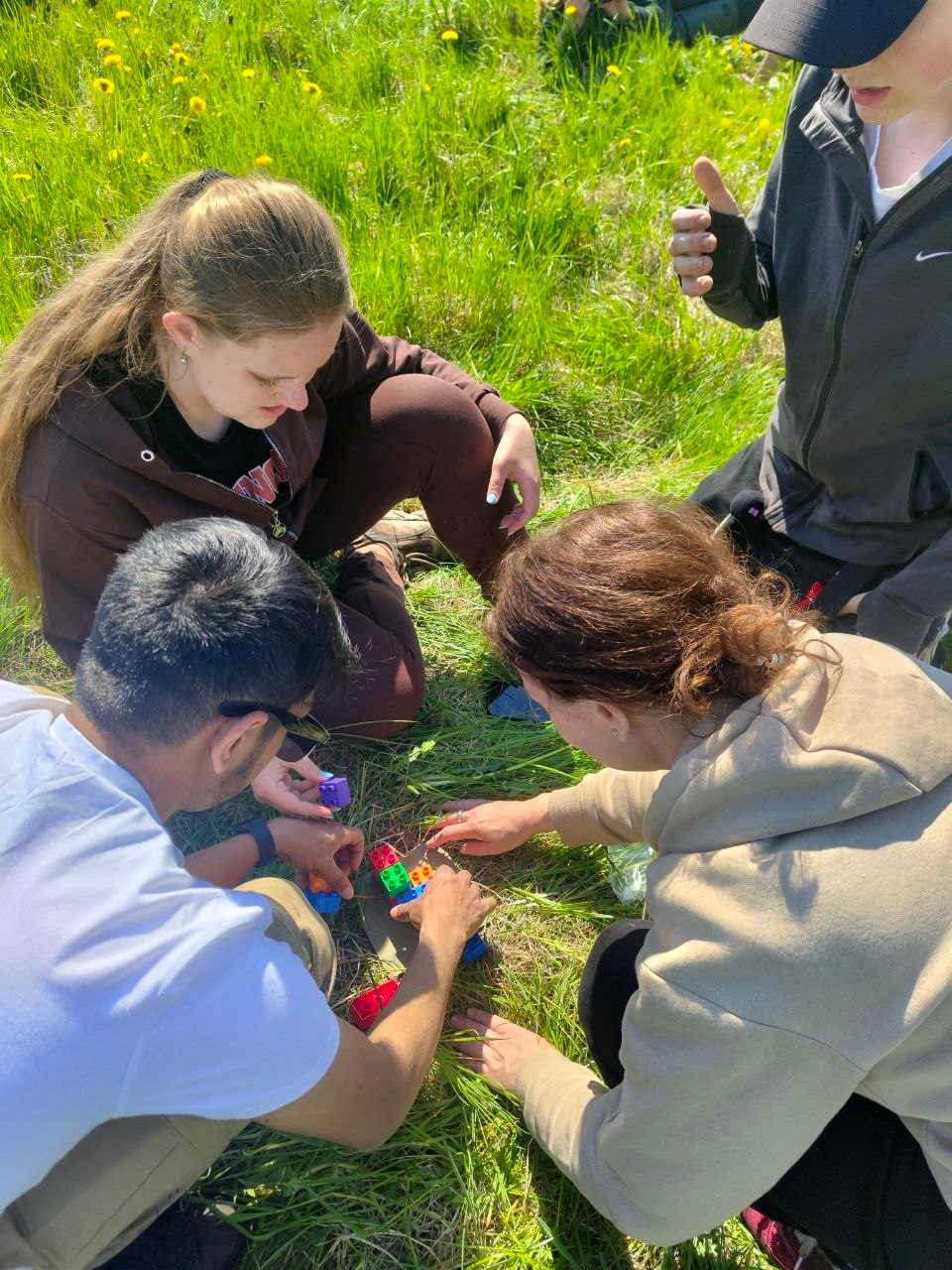
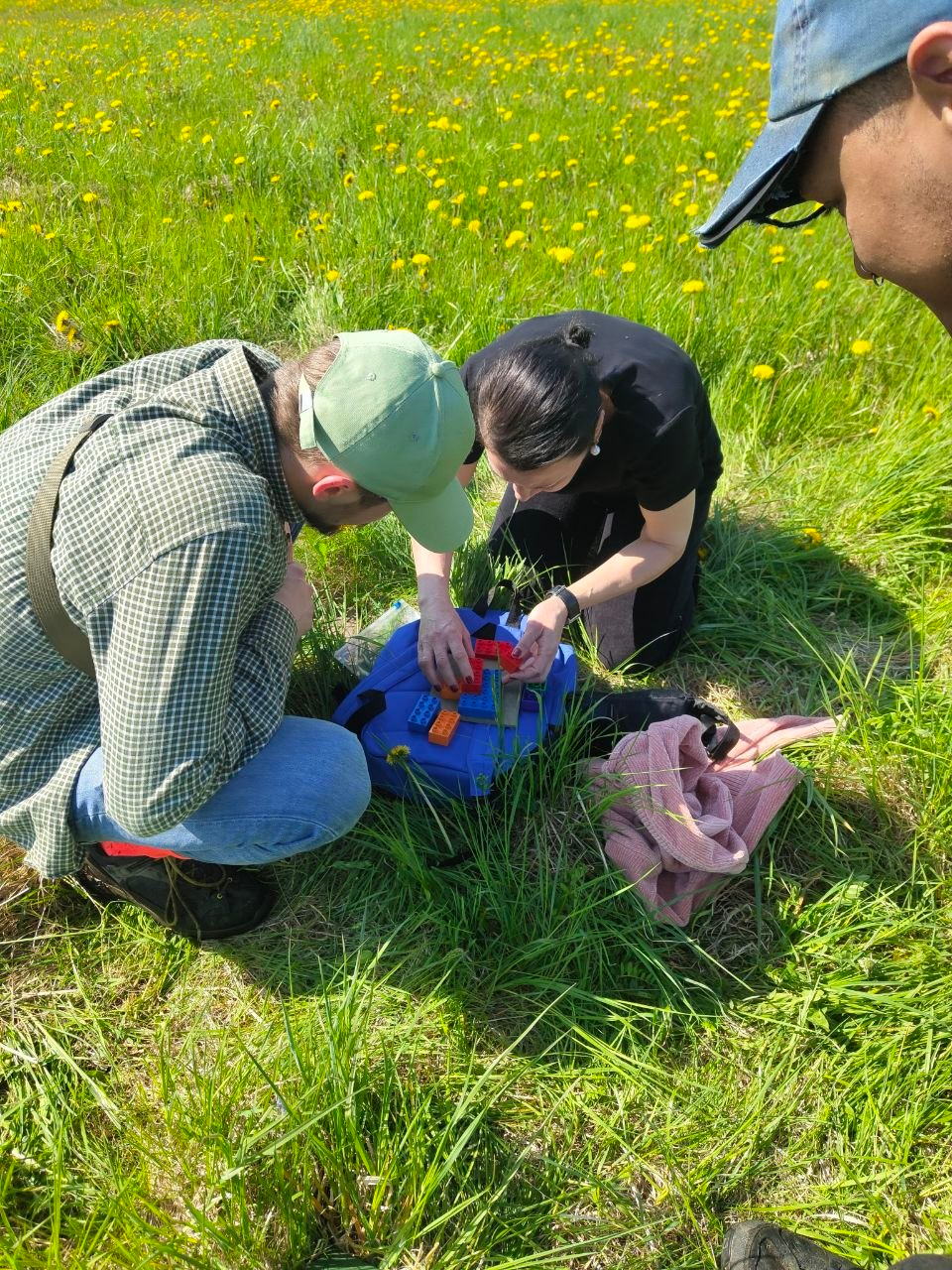
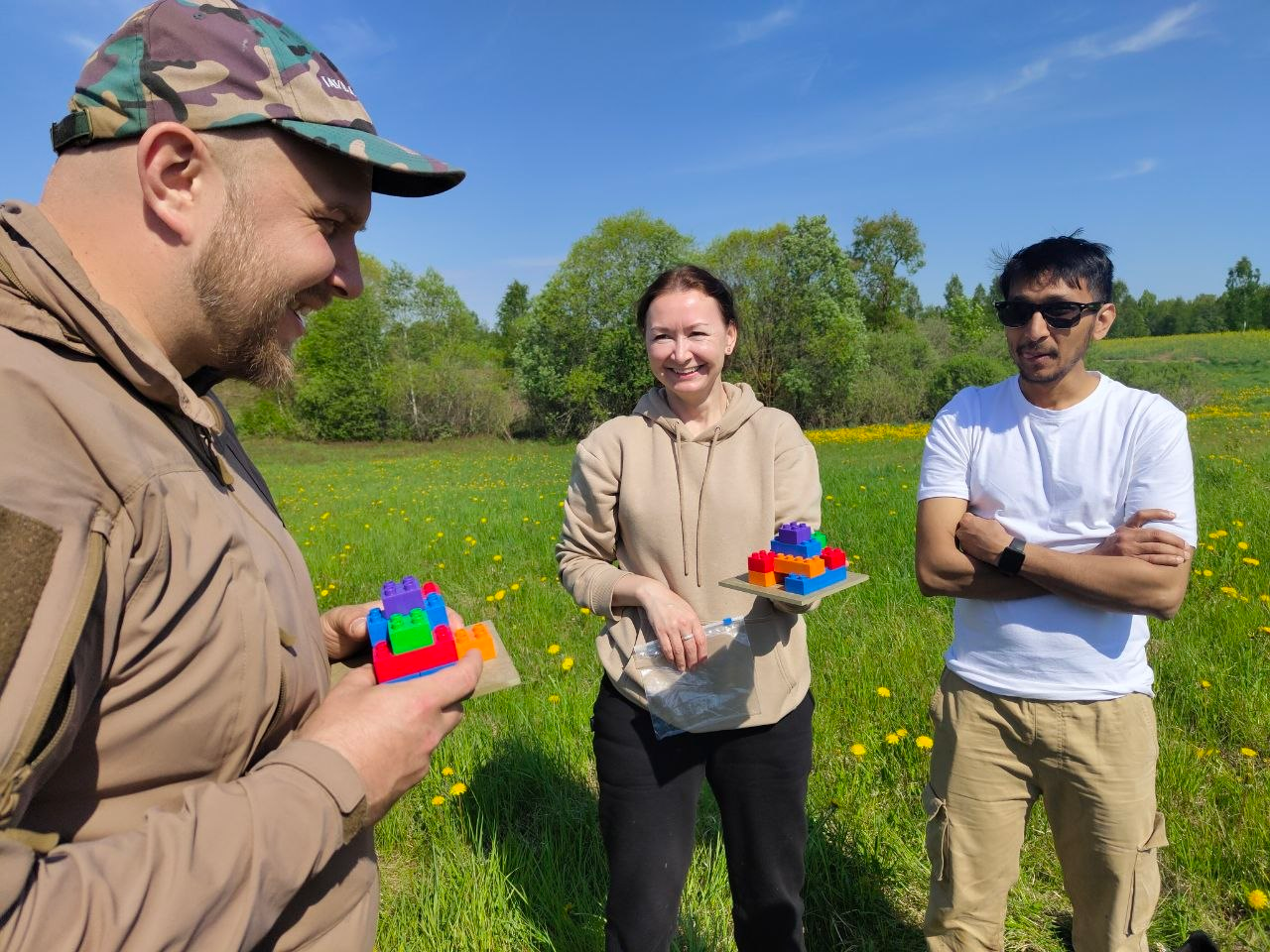
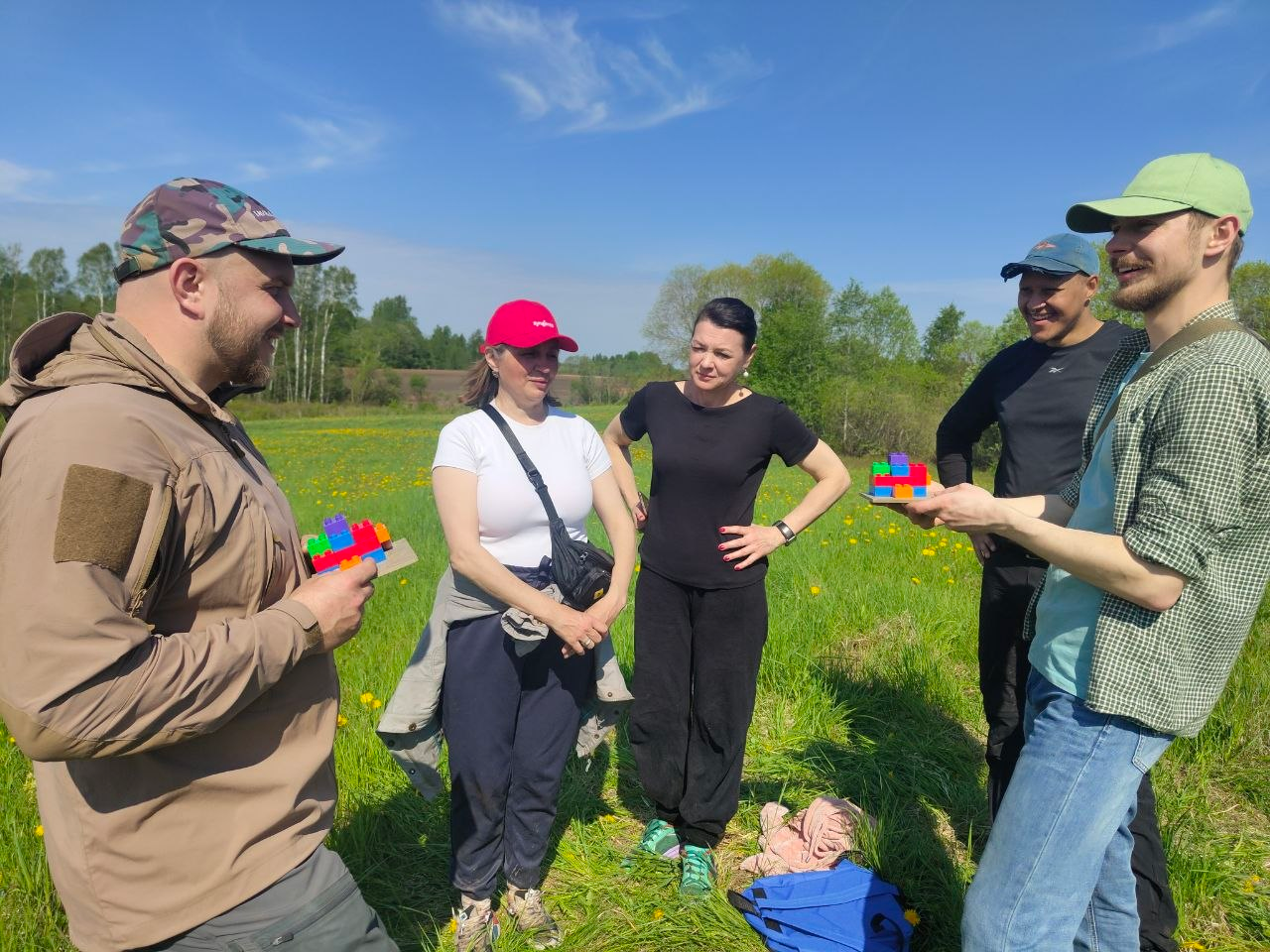
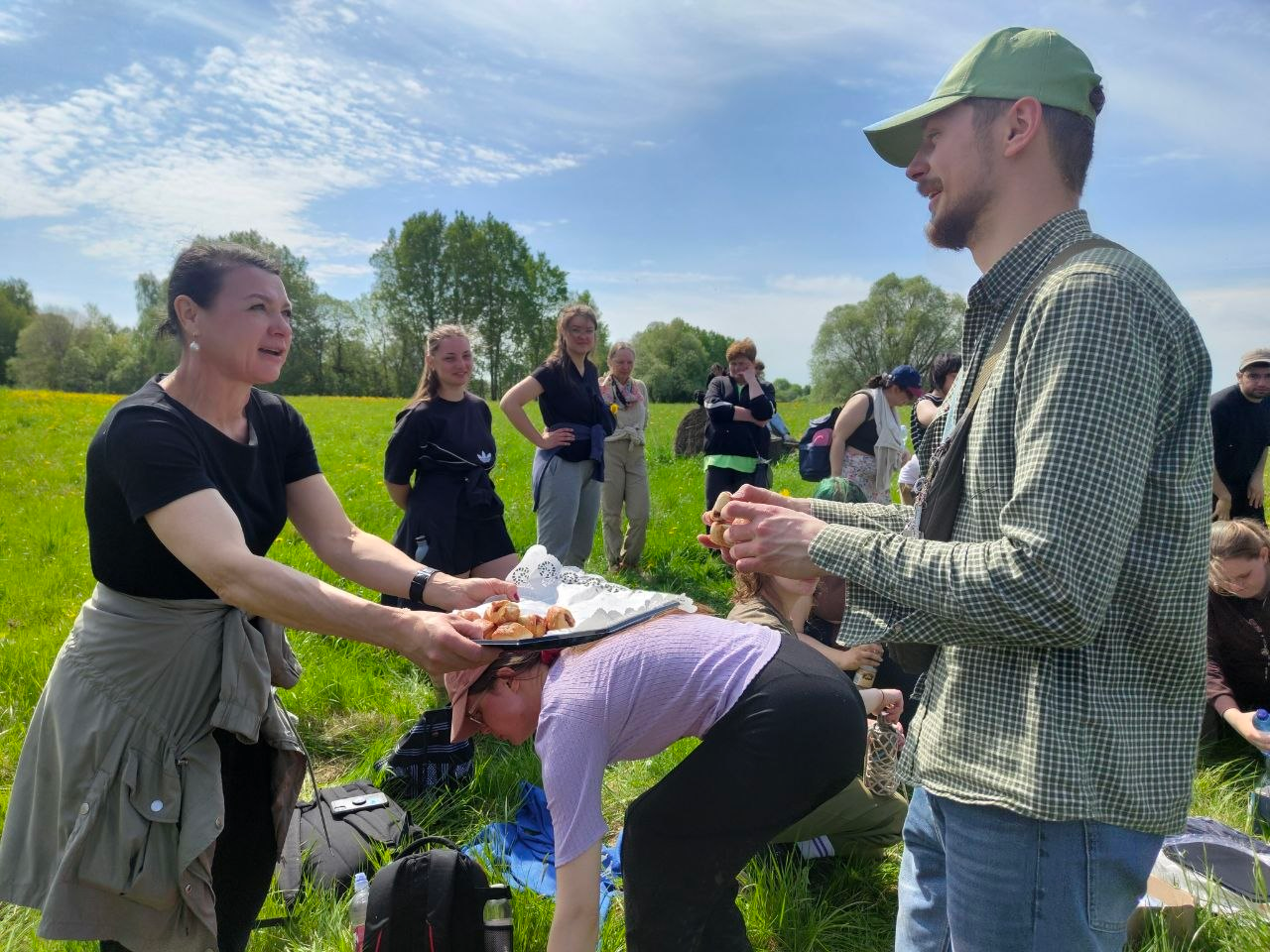
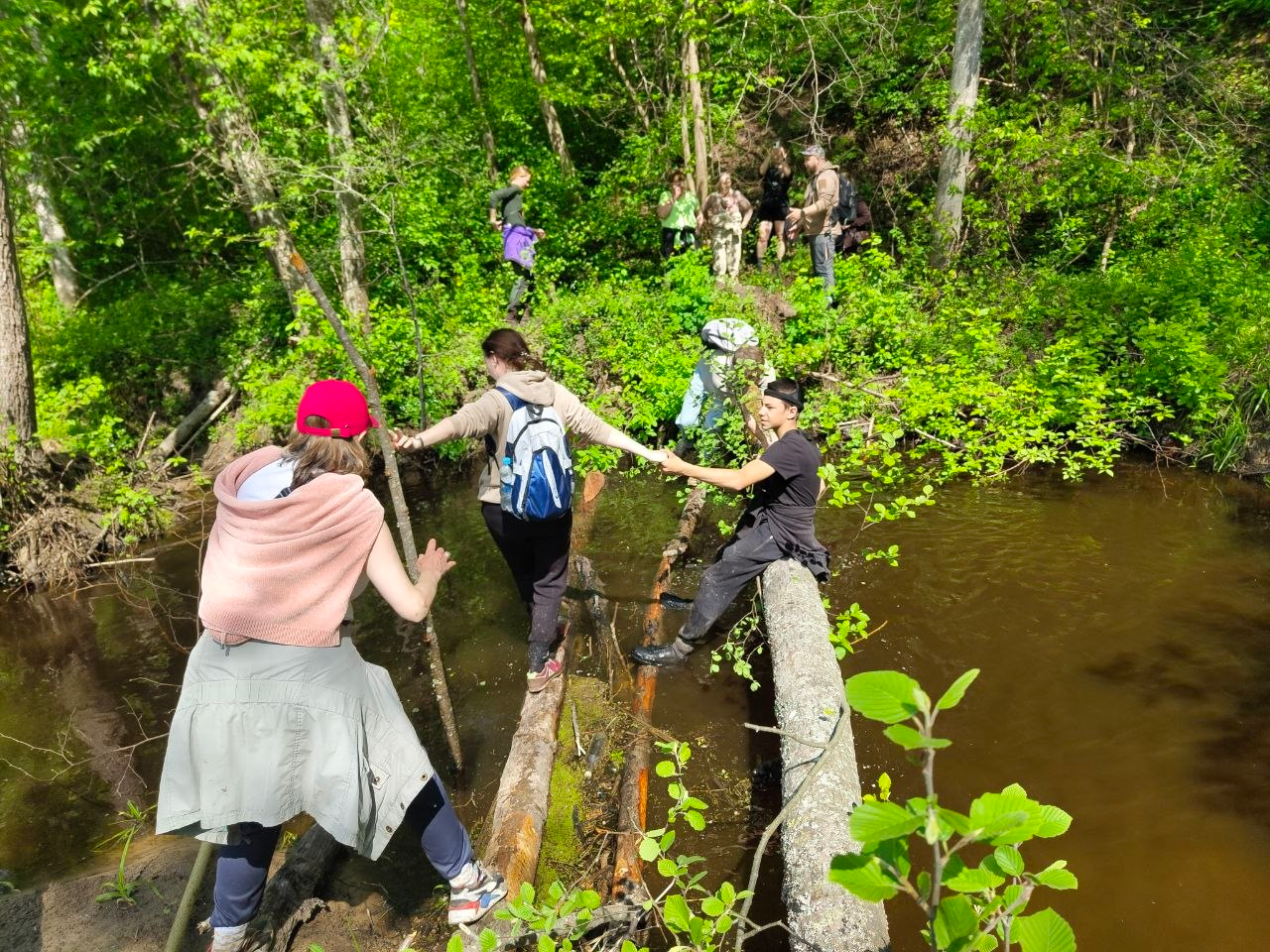
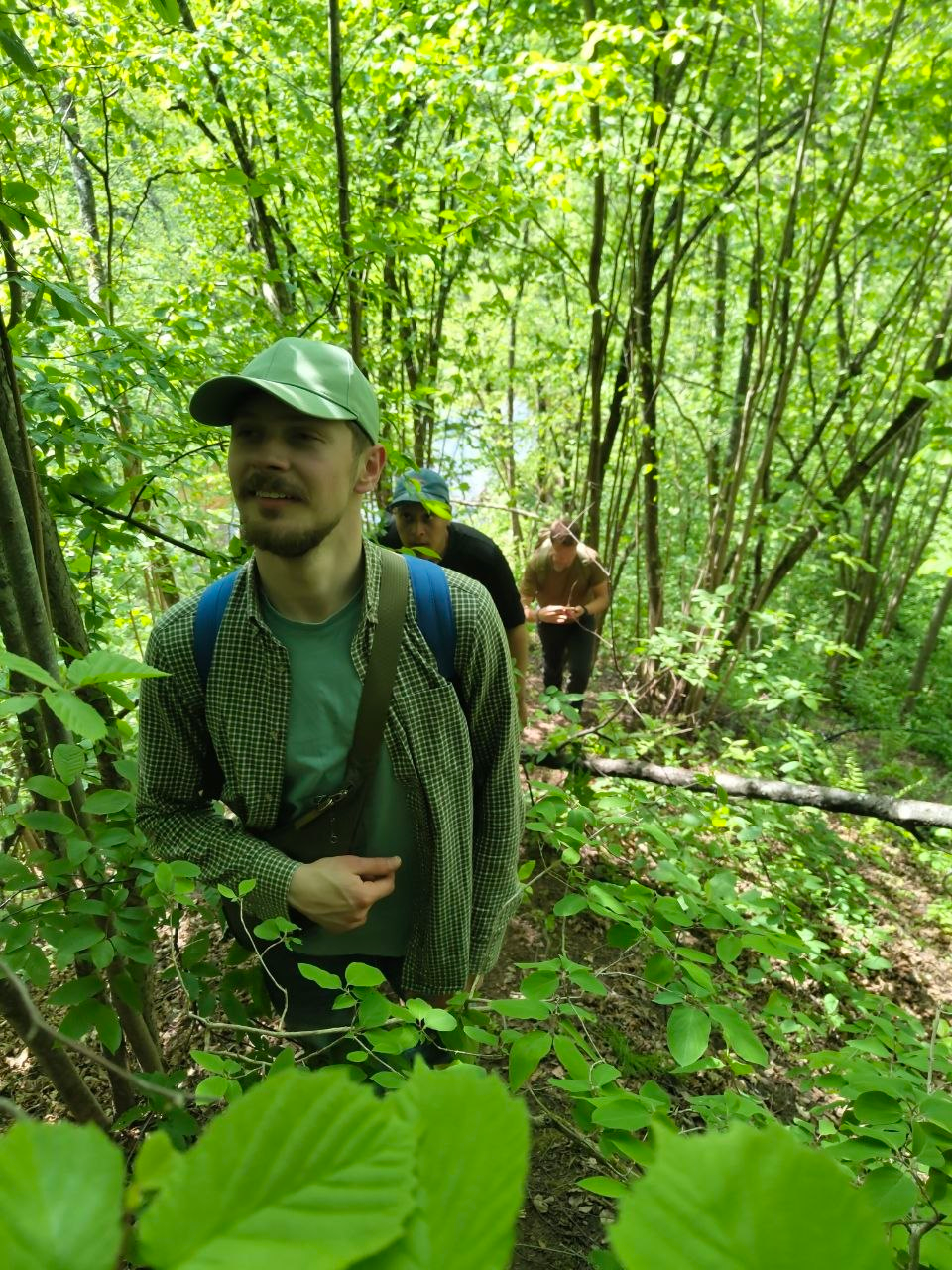
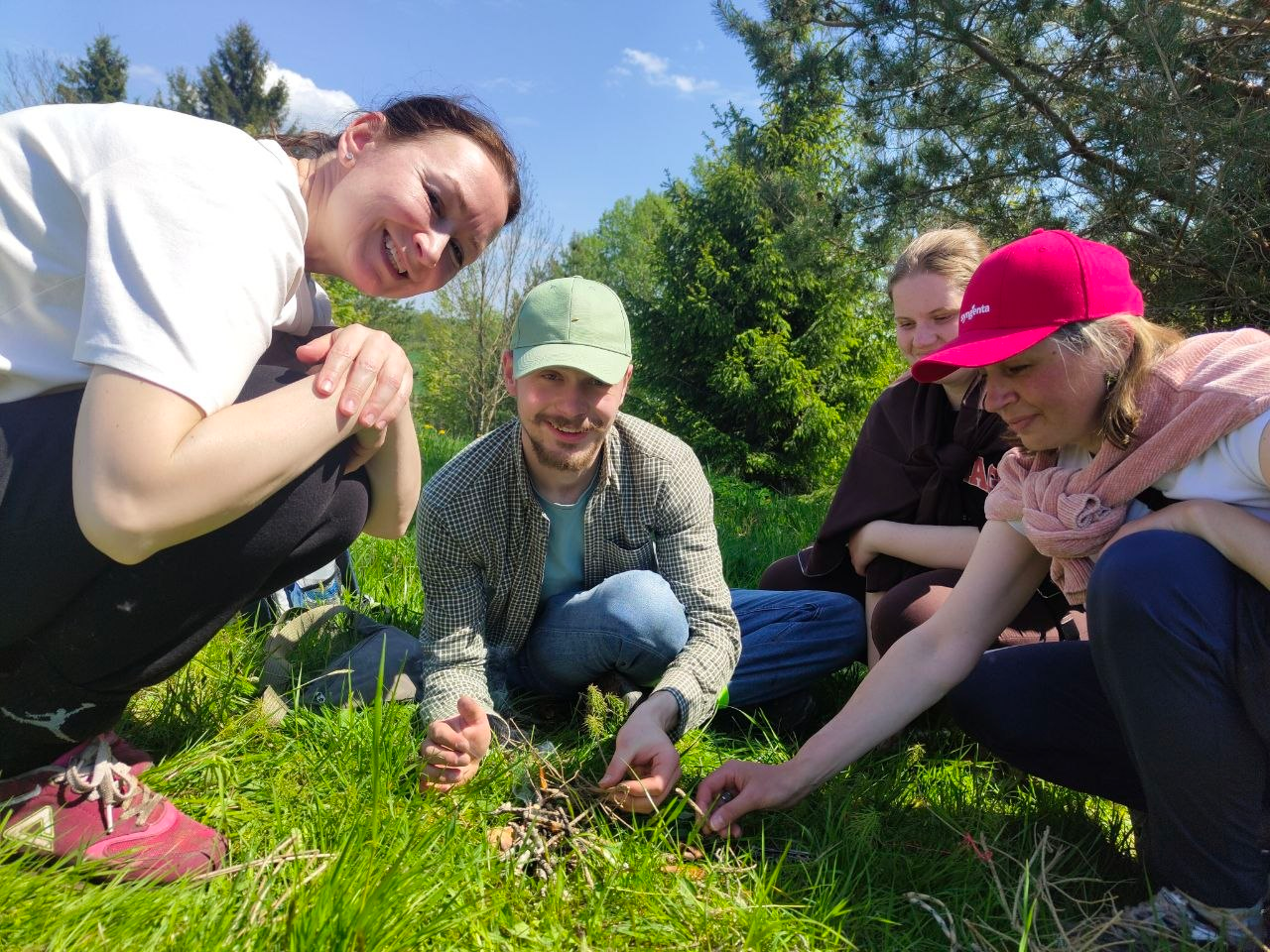
The final stage of the programme was the presentation of the implemented structures to the local community. The participants presented the results of their work, explaining the concepts and design principles behind the objects they created. Most importantly, they organised a joint tour of the two locations as a Saturday hike through the picturesque landscapes and surroundings of Indra, demonstrating the implemented solutions and discussing possibilities for further development of the spaces. This hike also served as an initiation for new hikers: a walk of over 12 kilometres through fields, dense forests, marshes, and water sources... Overcoming natural obstacles, supporting each other in difficult situations, and communicating along the way... The long hike was accompanied by educational and scientific dialogues on topics such as “What have we not yet achieved in life?”, “What important events have occurred in recent years?”, and “What is planned for the near future?”, alongside quests on 3D memory reconstruction of a specified model (teamwork in international groups), a practical workshop on lighting and maintaining a campfire in natural conditions, and a picnic featuring traditional Latvian dishes.
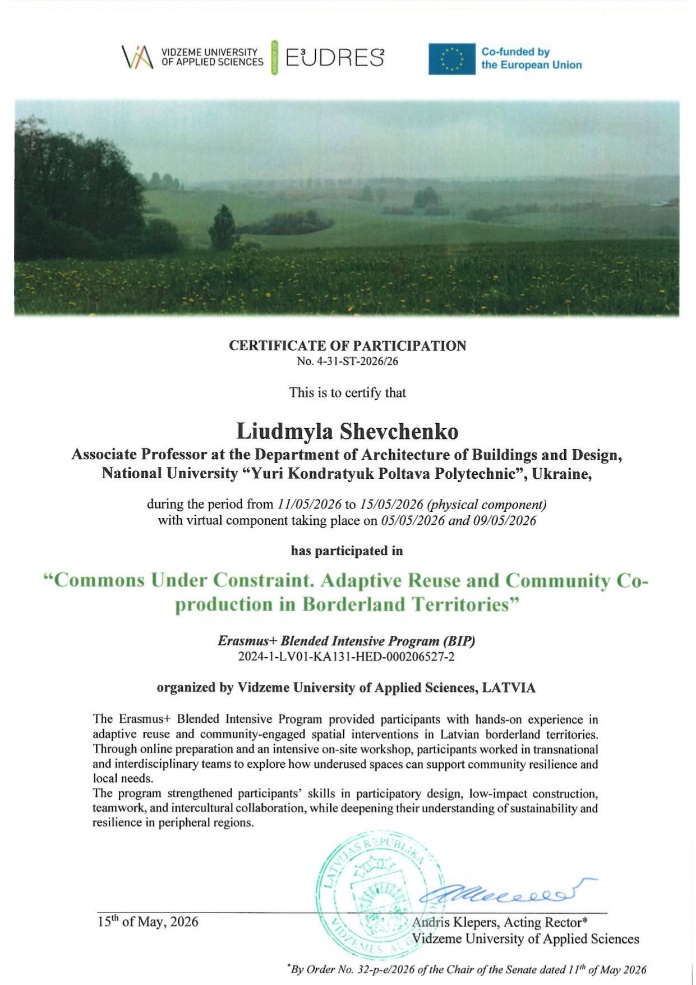
It was the first time the mobility participants had worked under such conditions and on such tight deadlines. The solution to the task had to be delivered as physical design projects within the spaces of Indra, a specific borderland territory with a layered identity, diverse cultural influences, and rich wooden architecture. The creative process was engaging, exciting, and occasionally demanding, yet it brought great satisfaction to everyone involved. All participants received certificates of participation in the Erasmus+ BIP academic mobility programme “Commons Under Constraint. Adaptive Reuse and Community Co-production in Borderland Territories”.
A significant outcome of the workshop was the international context, which enabled participants to master applied design-and-build methods under resource constraints and specific social challenges, to generate creative ideas rapidly, and to implement them using reused building materials. They developed and presented concepts for small-scale architectural interventions tailored to the specific needs of the Indra environment in Latvia’s borderlands. This design-and-build workshop once again demonstrated the shared professional interests and solidarity among representatives from various European and South Asian countries, as well as the absence of language barriers in achieving high-quality results. The experience and positive emotions gained by all workshop participants inspired and helped discover new creative and physical potential, both in architectural and construction design and in everyday life.
The participants of the academic mobility programme gained valuable experience in international teamwork, which they look forward to applying in their future studies and work at our university. They expressed their gratitude to the Latvian Erasmus+ coordinator, Katrīna Grigorjeva; the International Coordinator at Vidzeme University of Applied Sciences, Natālija Andersone; and the International Relations Office of Poltava Polytechnic, which, with the comprehensive support of President Volodymyr ONYSHCHENKO and Rector Olena FILONYCH, efficiently and promptly organised participation in this programme.
Cooperation between National University “Yuri Kondratyuk Poltava Polytechnic” and Vidzeme University of Applied Sciences (Latvia) within the Erasmus+ programme encompasses a range of educational and scientific initiatives for students and faculty. The practical aspect of this interaction is reflected in the participation of the Polytechnic's representatives in the “WOOD TECHNOLOGY HACKATHON”, where they developed innovative structural design solutions, as well as in the successful completion of a semester-long ICM programme by future specialists in international economic relations, Tetiana Holub and Maryna Kostenko. The scientific component of the partnership is developing through an active exchange of experiences: associate professors Olha Harkava and Liudmyla Shevchenko presented their developments in construction and architecture at “ViA's Research Evening 2024”, while Liudmyla Svystun and Yuliia Khudoliy participated in the E3UDRES2 science festival, where they established new contacts with foreign colleagues and served as experts evaluating student projects. Such comprehensive interaction supports the development of academic mobility, the exchange of modern educational practices, and the gradual integration of the Ukrainian higher education institution into the European research area.
As a reminder, lecturers of Poltava Polytechnic can participate in academic mobility programmes and internships. At the same time, students have the opportunity to study abroad under Erasmus+ credit academic mobility grant programmes for a semester or an entire academic year at leading universities in Austria, Greenland, Denmark, Estonia, Spain, Lithuania, Latvia, Norway, the Netherlands, Germany, Poland, Portugal, Romania, Slovakia, Finland, and the Czech Republic.
For more detailed information regarding current internship, teaching, and academic mobility programmes abroad, please get in touch with the International Relations Department (Room 213-C, interoffice@nupp.edu.ua).