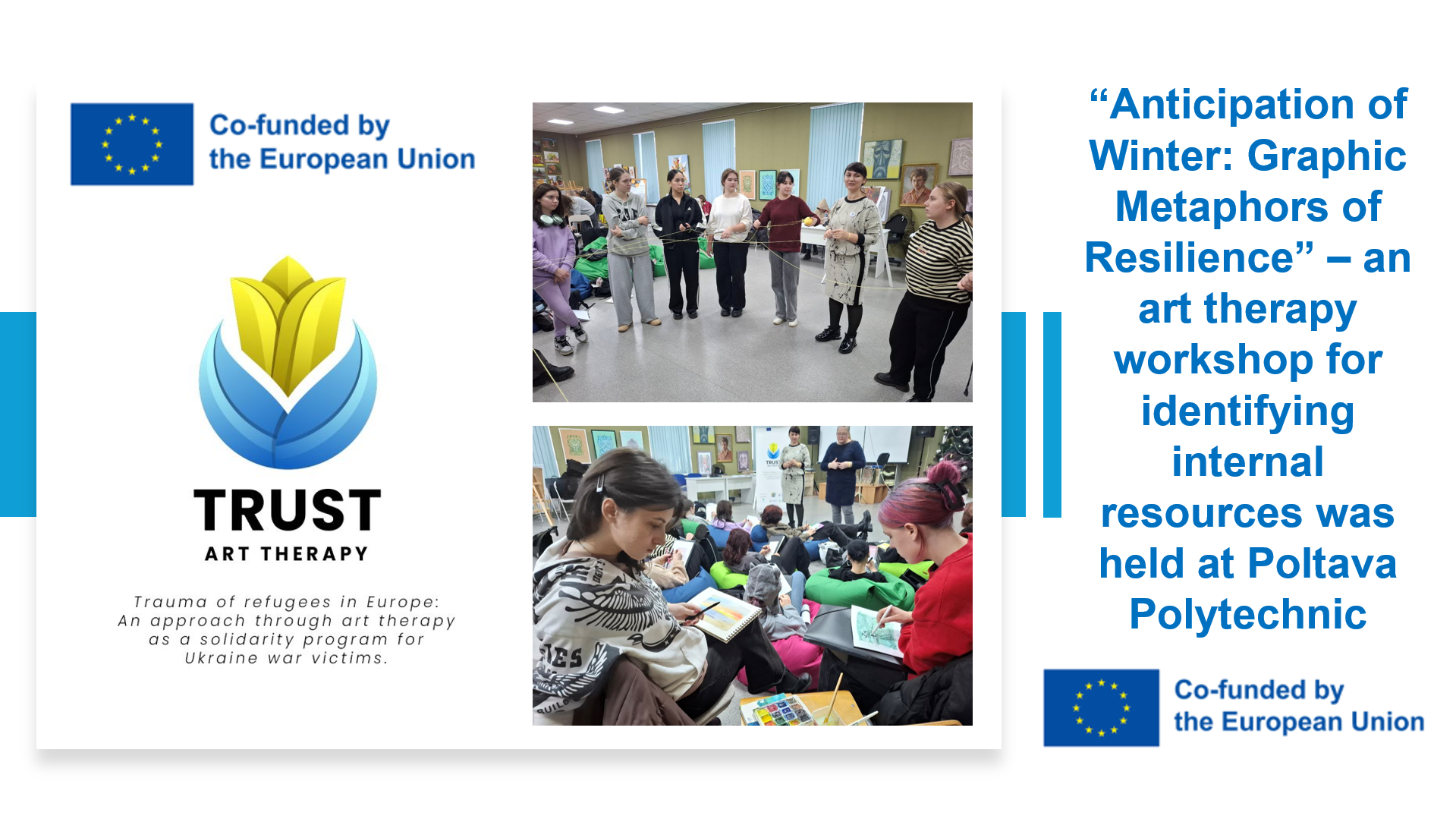
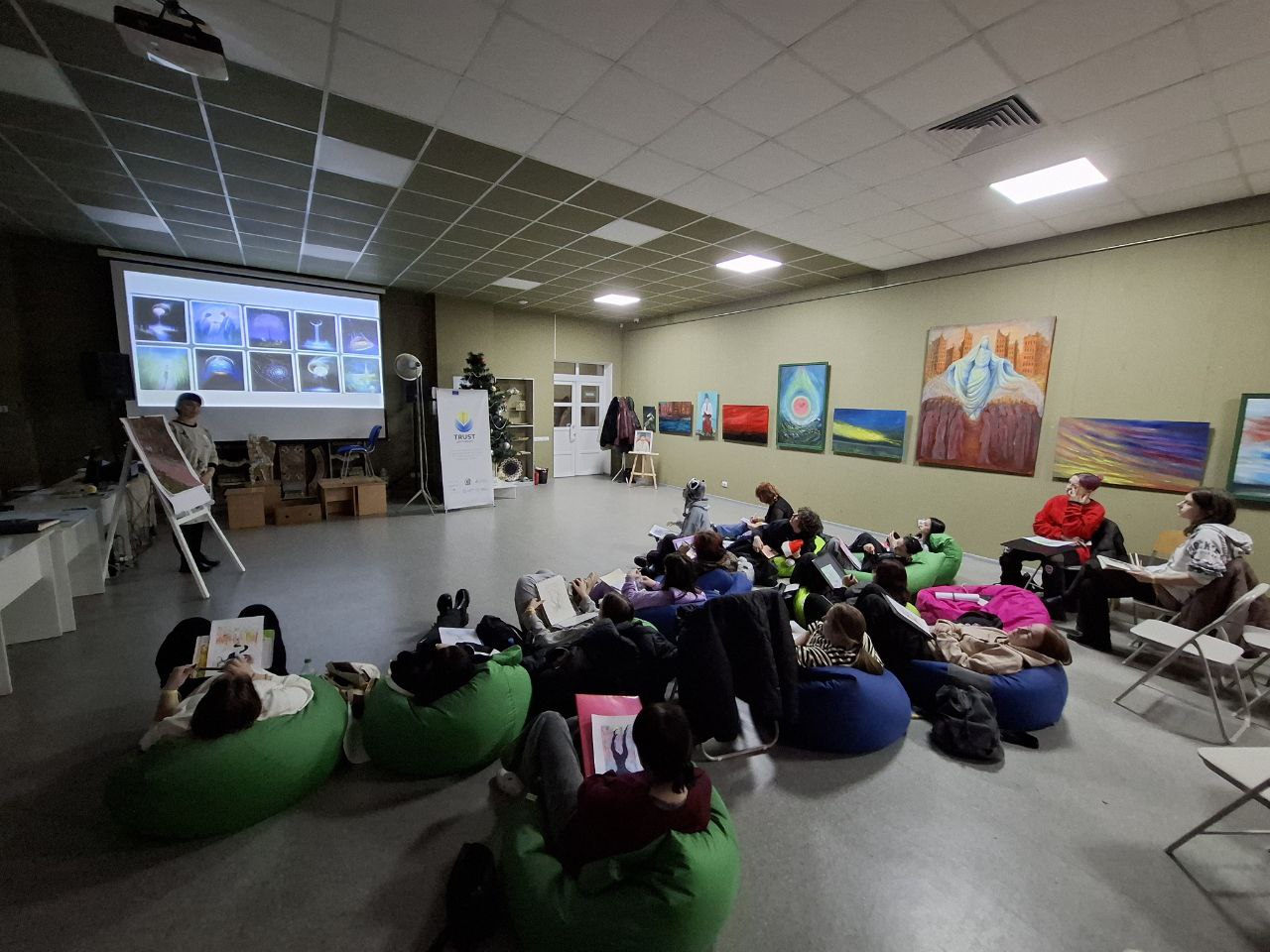
On December 4, 2025, National University “Yuri Kondratyuk Poltava Polytechnic” once again served as a platform for in-depth psychological work: an art therapy event, “Anticipation of Winter. Graphics of Trees”, was held in room 302-ts (Centre for Contemporary Art). The moderators and ideological inspirations of the meeting were Olena Ostrohliad, a senior lecturer in the Department of Fine Arts, and Maryna Teslenko, an associate professor in the Department of Psychology and Pedagogy. This interdisciplinary tandem enabled the integration of aesthetic mastery with professional psychological support, creating a space of complete safety and self-discovery for the participants.
The workshop was based on the concept of symbolic processing of the internal state of “wintering” – a period when external conditions become harsher, requiring a person to have a special concentration of internal strength. The event aimed to mobilise resilience resources, which are critically important for students, youth, and internally displaced persons who continue to adapt to wartime realities.
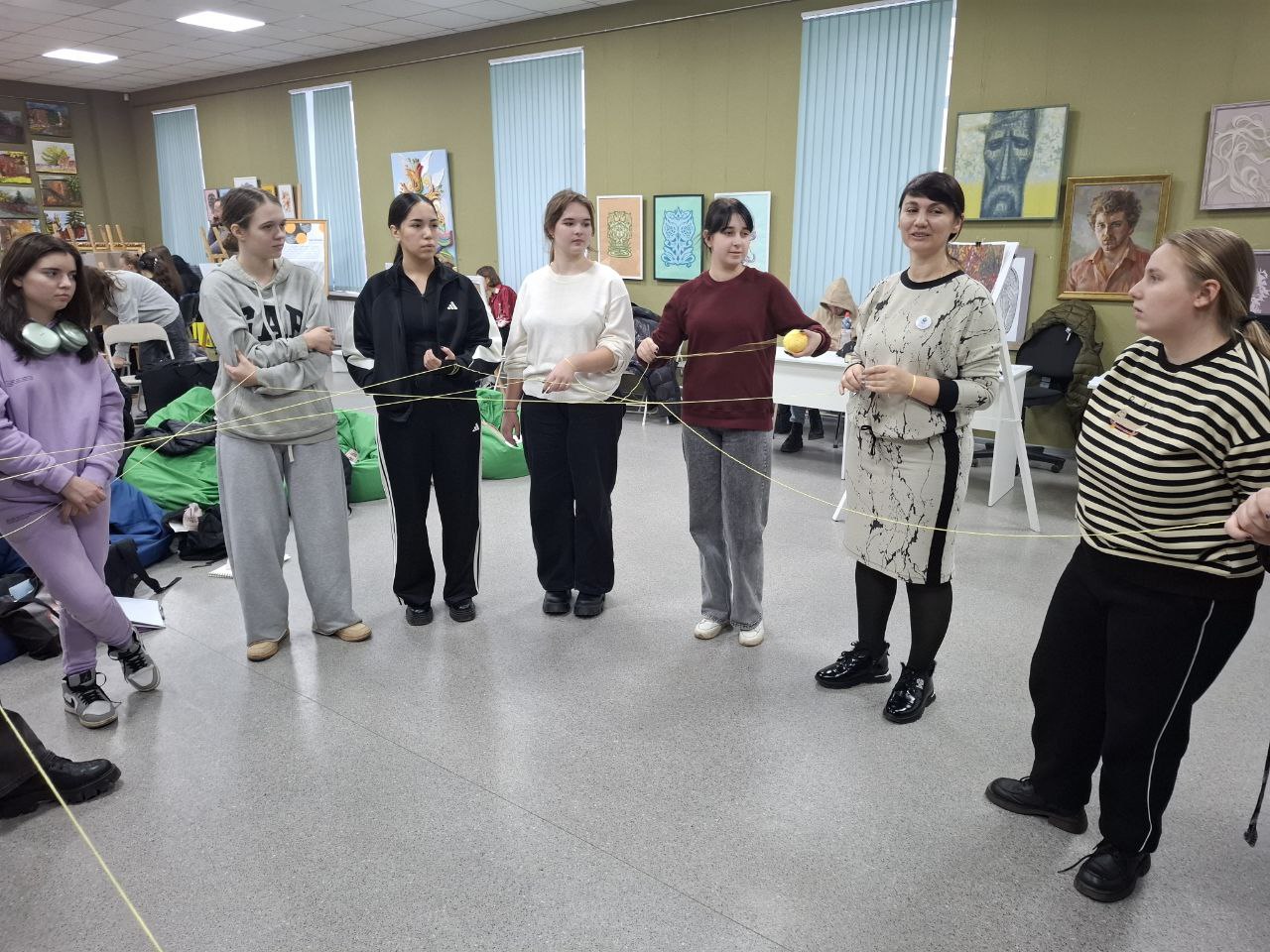
The art therapy began with emotional attunement through a symbolic, interactive exercise titled “My Superpower. Participants, united in a common circle, passed a ball of thread, creating a living network – a visual image of support and social cohesion. Each participant, tying a thread to their wrist, verbalised their inner pillar: endurance, empathy, and the ability to inspire. This psychological technique allowed for the activation of a sense of belonging to a community and the creation of an “amulet of strength,” which remained with each person as a reminder of their own invincibility. “Each of us has our own superpower. And together we create a network of talented, strong people capable of supporting one another”, – Maryna Teslenko addressed those present.
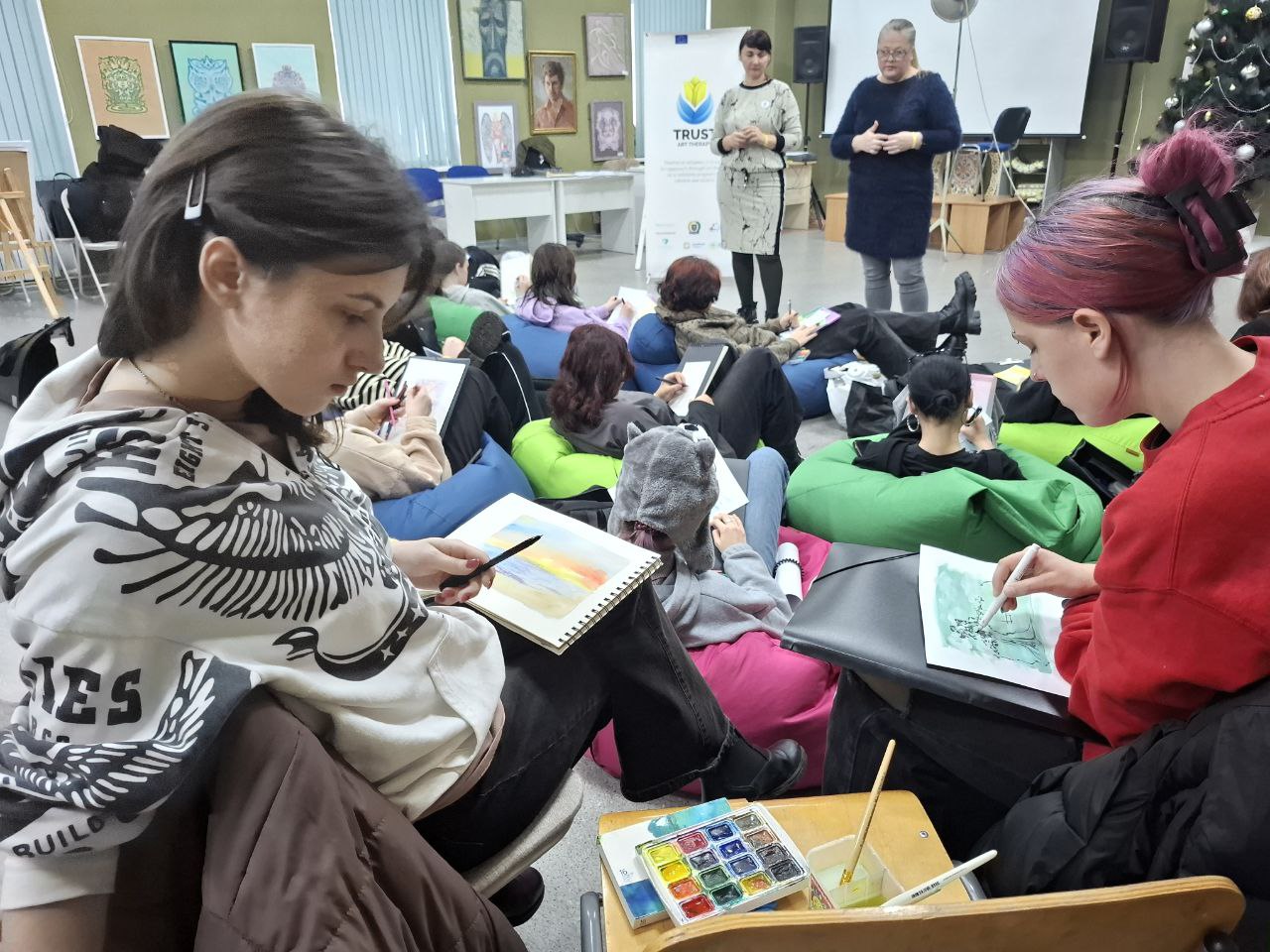
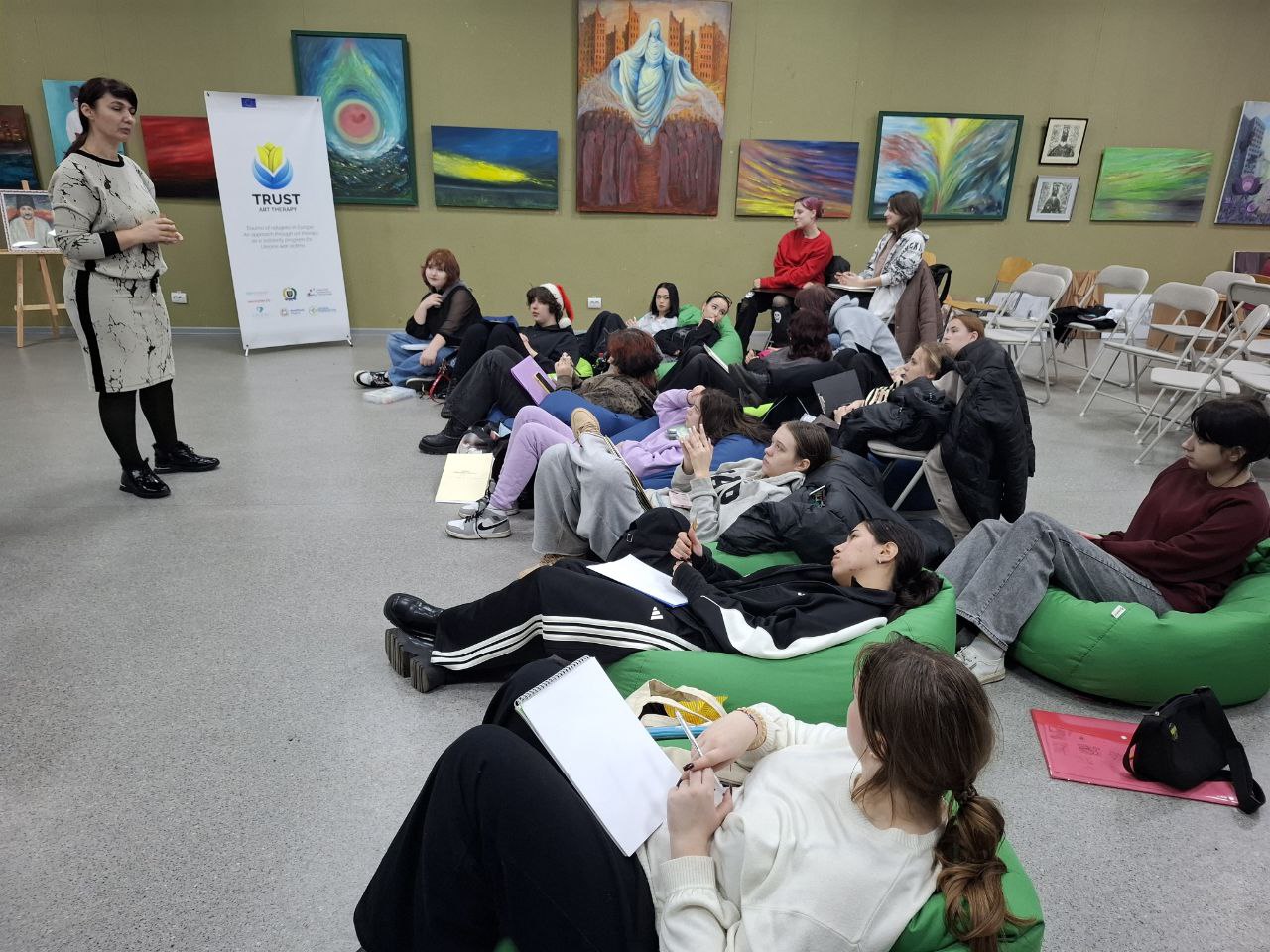
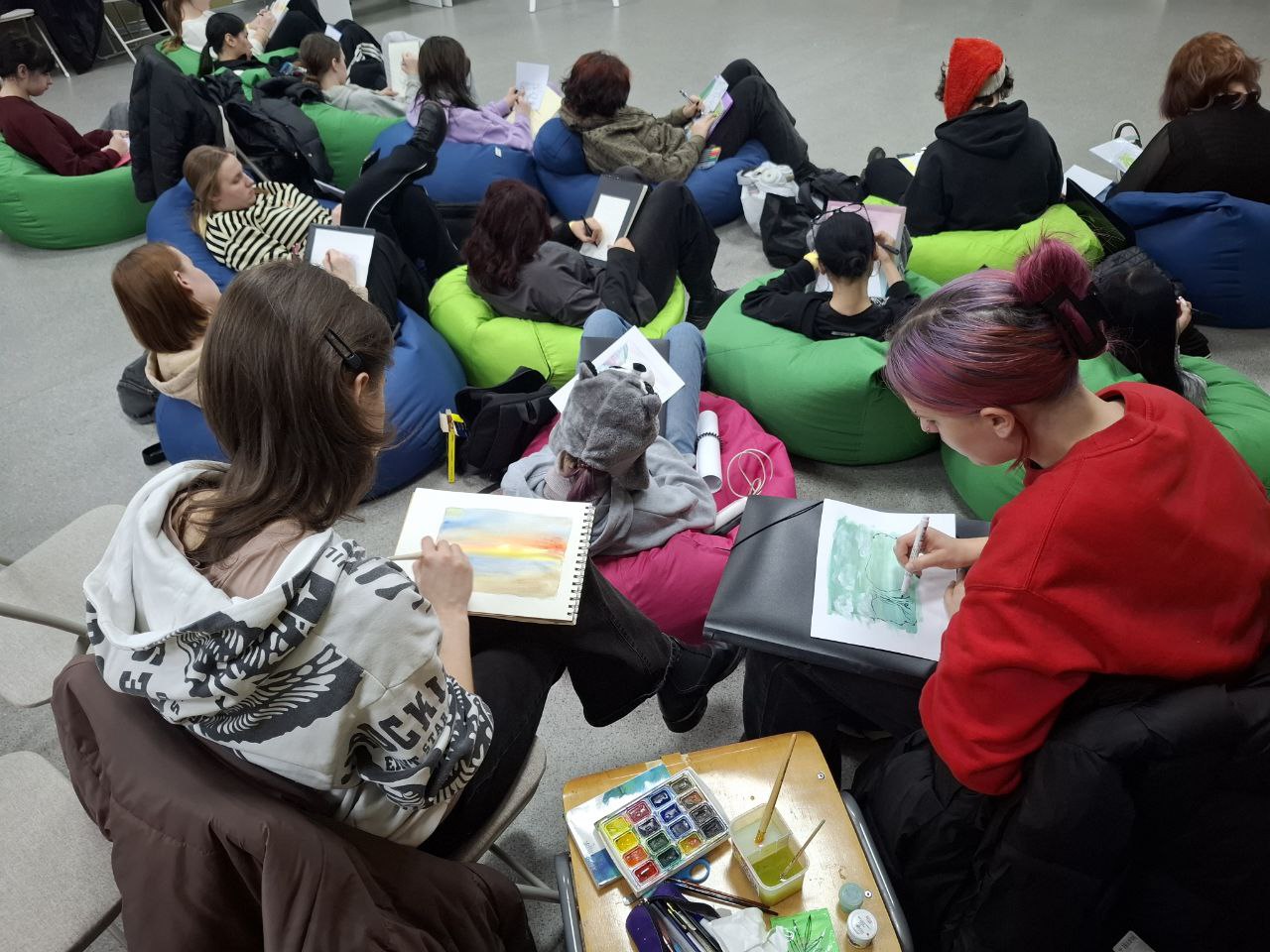
The central part of the event was a deep art therapy practice, “Graphics of Trees”, through an artistic metaphor, participants worked on visualising their own identity. The image of a tree in psychology is one of the most powerful archetypes, reflecting the integral structure of the personality, its history, and its potential. Under the professional guidance of Olena Ostrohliad and Maryna Teslenko, those present engaged in a creative process guided by a precise psychological algorithm. Each element of the drawing had a deep symbolic meaning, enabling participants to reflect on their internal resources and identify the support points necessary to overcome life crises.
The work began with a conscious depiction of roots, which, in an art therapy context, symbolises connection to the past, the strength of ancestral ties, and the foundation on which a person stands. Participants focused on the concept of “grounding”, seeking to convey a sense of stability and belonging to their land through their lines. The next stage was the formation of the trunk – the embodiment of the internal spine of the personality, its identity, and steadfastness under the pressure of external circumstances. By drawing the firm foundation of their “tree”, each participant essentially visualised their own ability to withstand the challenges of fate while maintaining the integrity of their “Self.
The depiction of branches assumed a particular emotional weight, serving as a vector of hope and a striving toward the future. Even in the context of “winter nakedness”, when trees shed their leaves, their branches remain open to the world, demonstrating flexibility and readiness for a new flowering. The psychological emphasis was on the idea that winter is not death but a period of accumulating strength. Through drawing branches, participants learned to accept uncertainty, transforming fear of the future into a calm expectation of an “inner spring” and faith in their own recovery.
The use of exclusively graphic means – lines, strokes, and contours – was intended to stabilise the emotional background. Unlike working with colour, which can provoke turbulent emotions, graphics allow the structuring of internal chaos, returning to the person a sense of control over the sheet’s space and, therefore, over their own life. The facilitators encouraged those present to pay special attention to small details, such as cracks in the bark, knots, or the direction of growth of individual branches. Each such stroke symbolically reflected “life scars” and complex experiences, transforming them from sources of pain into evidence of endurance and expertise.
For many participants, particularly internally displaced persons, this practice provided an opportunity to visualise their strength through a safe artistic image for the first time in a long while. The realisation that a tree can preserve vital energy beneath a layer of snow led those present to view their own trials differently. The graphic image of their own tree became a real “visual anchor” for them – a psychological tool to which they can mentally return in moments of anxiety to restore a sense of grounding and confidence in their own strength.
The final reflection of the event confirmed the high therapeutic value of the work performed. Participants openly shared insights, noting that through lines and textures enabled them to express what could not be put into words. Some noted that for the first time in a long while, they were able to visualise their strength, albeit through the image of a tree.

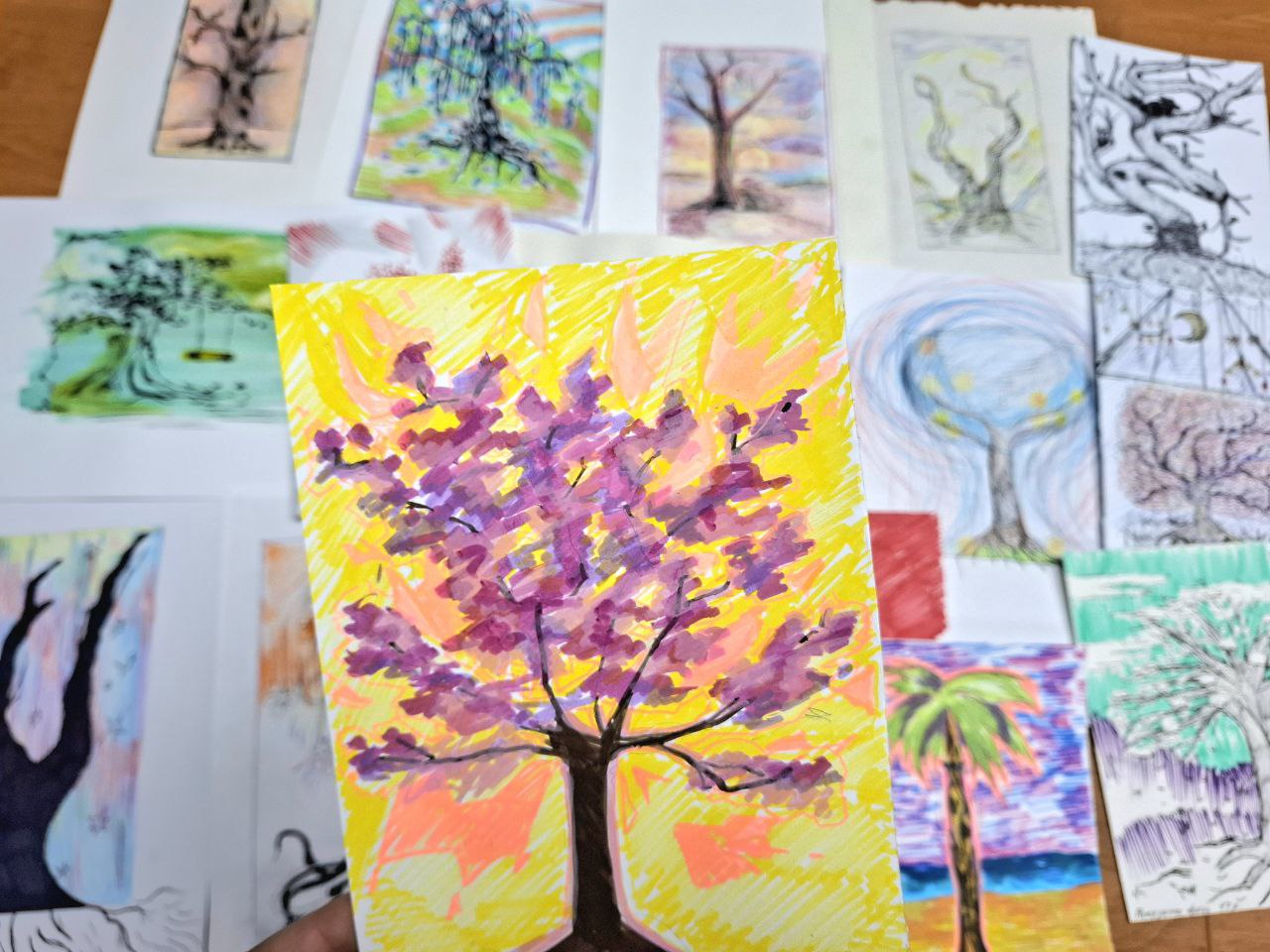
They also realised that, like a tree, they can preserve vital energy during the “cold season” and prepare for spring. This formed a positive mindset for overcoming difficulties and long-term resilience. The graphic image of the tree became a visual anchor of inner strength for them.
The art therapy event successfully achieved its goal, allowing participants to process fear of uncertainty and new challenges symbolically; visualise and activate internal resources of resilience; and restore a sense of grounding and connection with their “Self” through the metaphor of a tree.
The event was held as part of the international, large-scale EU-funded Erasmus+ KA220-ADU project “TRUST” – Trauma of refugees in Europe: An approach through art therapy as a solidarity program for Ukraine war victims (Grant No. 2024-BE01-KA220-ADU-000257527).
The project title is decoded as follows:
TRUST
T – Trauma
R – Refugees
U – Ukraine
S – Solidarity
T – Therapy
The project is co-funded by the EU and led by the Centre Neuro Psychiatrique St-Martin from Belgium, in partnership with the National University “Yuri Kondratyuk Poltava Polytechnic” (Ukraine), Greek Carers Network EPIONI (Greece), Fondazione Don Luigi Di Liegro (Italy), Lekama Foundation (Luxembourg), EuroPlural Project (Portugal).
We express our sincere gratitude to our partners for their invaluable support, which makes it possible to implement such vitally important initiatives that bring the light of hope and healing to those who need it most.
It is worth noting that Poltava Polytechnic lecturers are eligible to participate in academic mobility and internship programs. Students can study abroad through Erasmus+ credit academic mobility grant programs for a semester or a full academic year at leading universities in Austria, Denmark, Estonia, Finland, Germany, Greenland, Latvia, Lithuania, the Netherlands, Norway, Poland, Portugal, Romania, Slovakia, Spain, and the Czech Republic.
For more detailed information regarding current internship, teaching, and academic mobility programs abroad, please get in touch with the International Relations Department (office 213-C, interoffice@nupp.edu.ua) or Poltava Polytechnic’s International Relations Coordinator – Ph.D. in Philology, Associate Professor of the Department of Germanic Philology and Translation, Anna Pavelieva (email: kunsite.zi@gmail.com, phone: +38-(095)-91-08-192).