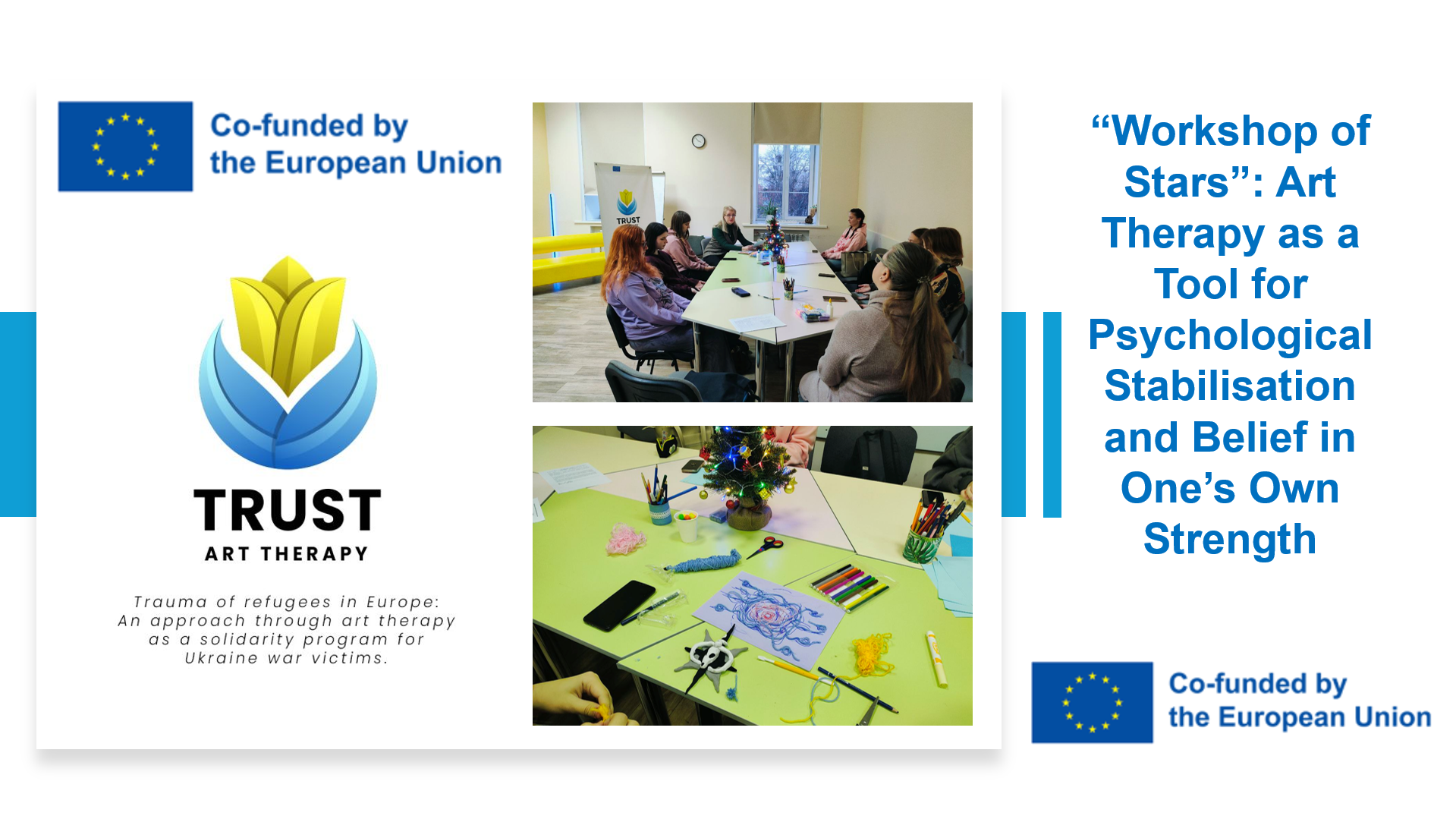
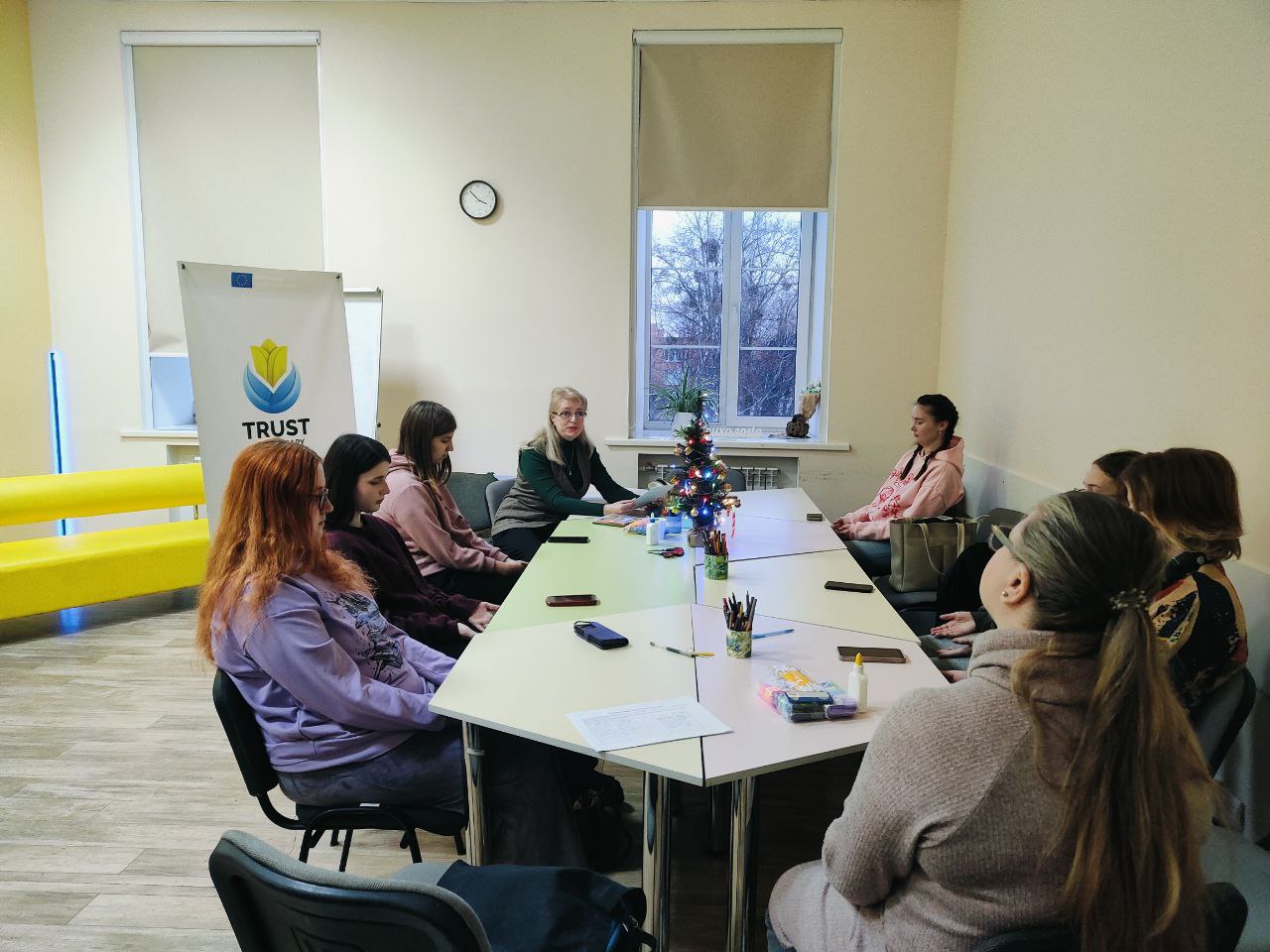
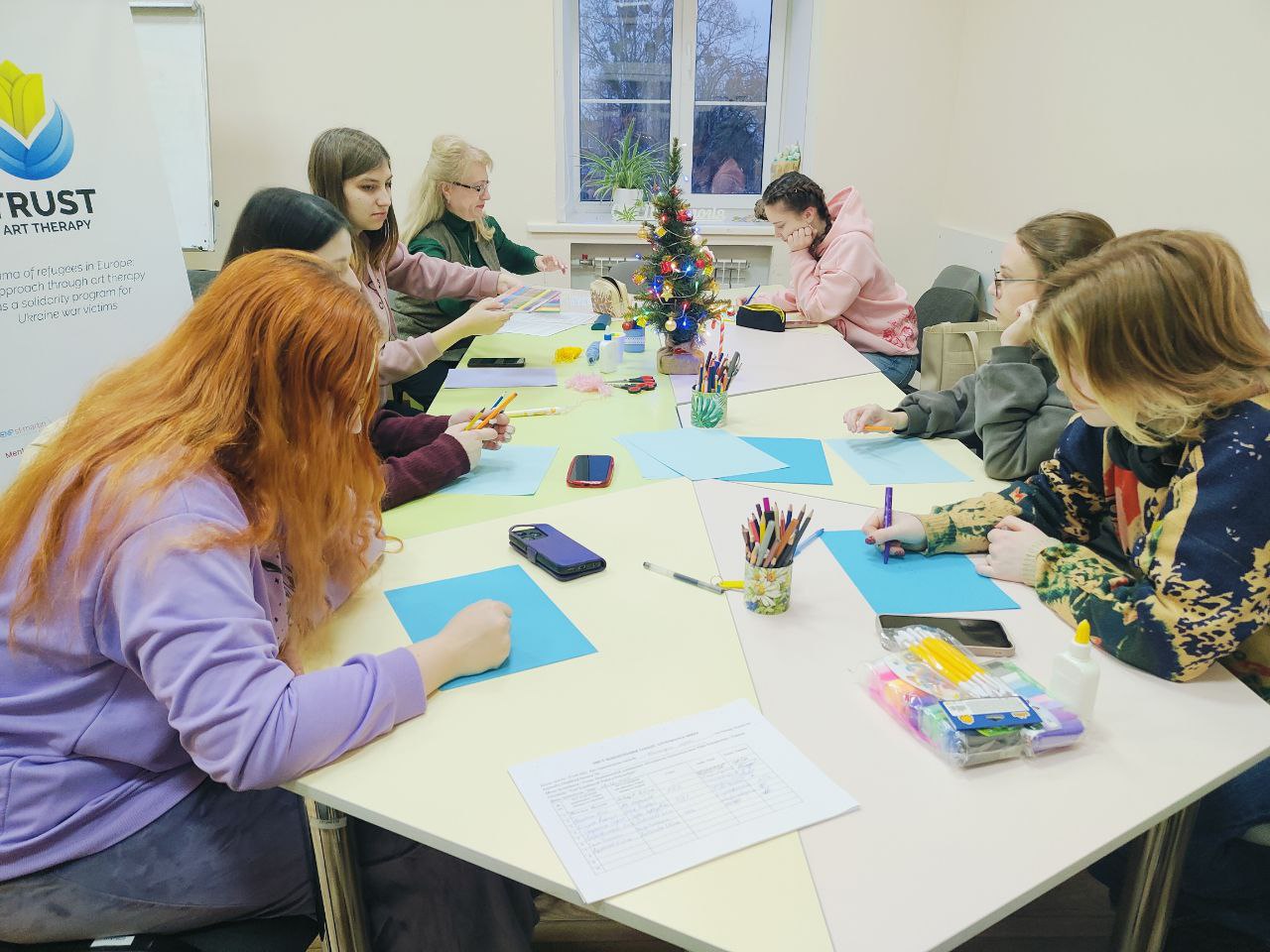
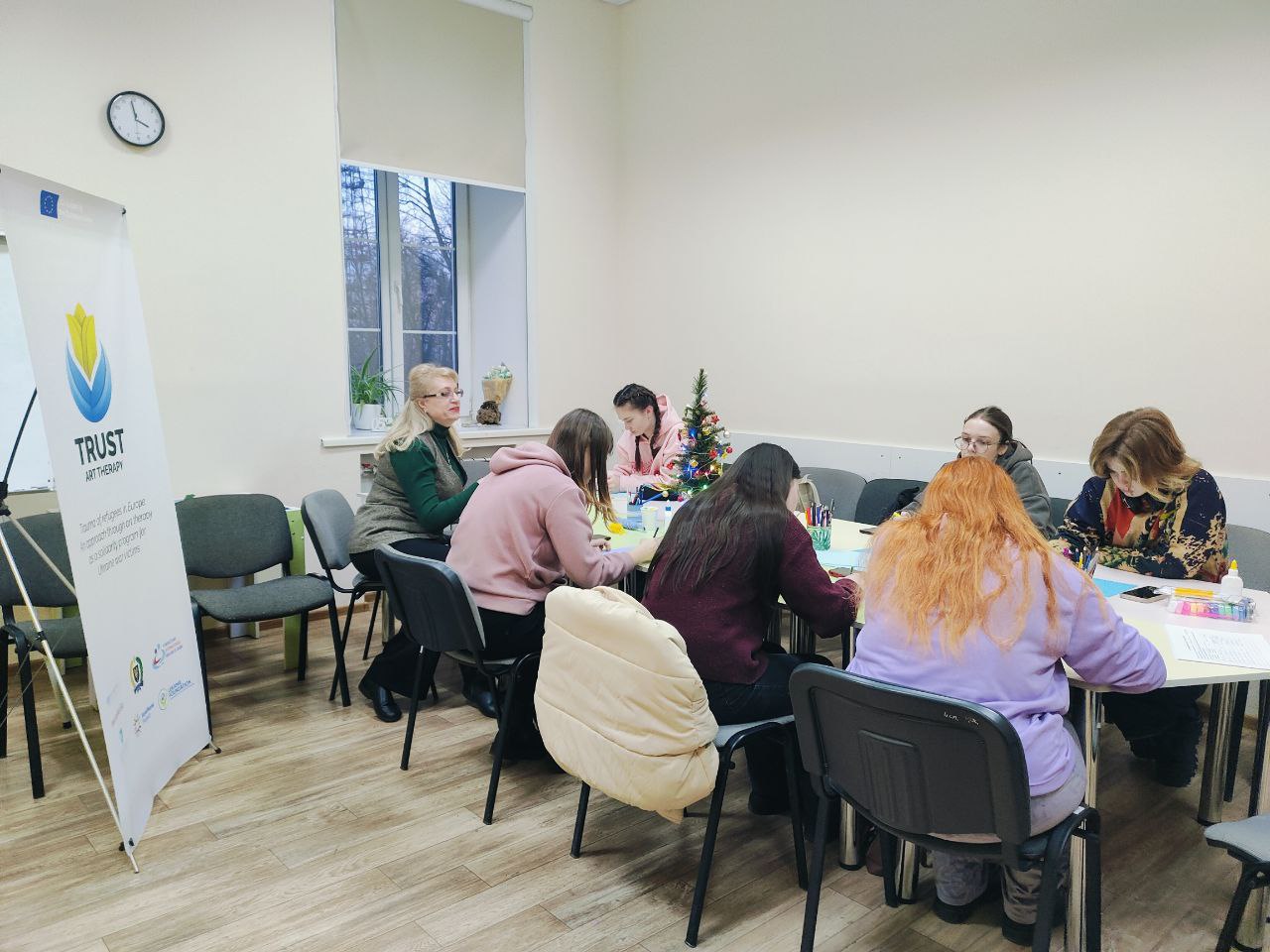
On December 24, 2025, at 15:30, a special art therapy session “Workshop of Stars” was held at Poltava Polytechnic for student youth belonging to the category of internally displaced persons (IDPs), orphans, as well as those whose parents are combatants or have died as a result of the war. The time and date of the event were chosen with particular attention to the participants’ psycho-emotional state, as the late afternoon of Christmas Eve is a moment when the outside world stands still in anticipation, and a person’s inner world becomes particularly vulnerable and open to the search for deep meanings. Within the mental health support group, this time slot provided an ideal opportunity to work with the resource of hope and light.
The moderators and visionary leads of the meeting were Olena Ostrohliad, a senior lecturer in the Department of Fine Arts; Maryna Teslenko, an associate professor in the Department of Psychology and Pedagogy; and Olena Kryvenko, the university’s practical psychologist.
The event began with a unique body-oriented practice that helped participants attune to a harmonious and trusting space for collective interaction. The starting point was a symbolic exercise called “The Star of Wishes”, designed to awaken internal intentions and dreams for the year 2026. In the centre of the room, the organisers placed a star whose rays resembled multicoloured ribbons, drawing the attention of everyone present. Participants took turns choosing one of the ribbons and worked together to untangle them carefully. This process was akin to a metaphorical release of one’s own desires from old limitations, fears, and doubts. The practice was conducted with complete focus: participants attended to sensations in their hands, body movements, breathing rhythm, and the harmony among those present. Once the ribbons were untangled, a new space for creative expression was created. Accompanied by music, everyone was invited to dance and move freely, allowing the body to reveal its emotions, dreams, and expectations for the coming year. These movements became a nonverbal conversation with oneself and other participants. At that moment, the coloured ribbons became an extension of each person’s inner energy: they symbolised the light of aspirations and the vital force that would become a source of new ideas and achievements in 2025.
In this atmosphere of openness and creative inquiry, we invited participants to take the next step by drawing on their internal resources through the metaphor of space. This led to the meditation exercise “Constellation of My Superpowers”, which helped everyone feel like part of the boundless Universe and see in it a reflection of their own talents and possibilities. Participants closed their eyes and imagined a starry sky in which each star represented their talents and resources. This journey helped boost self-esteem, discover internal strengths, and realise the wealth of personal opportunities. Through the metaphor of space, we invited them to view the future as a space that can be planned and created by leveraging their “superpowers”. It was from this realisation that the next step was the materialisation of internal light in a creative form.
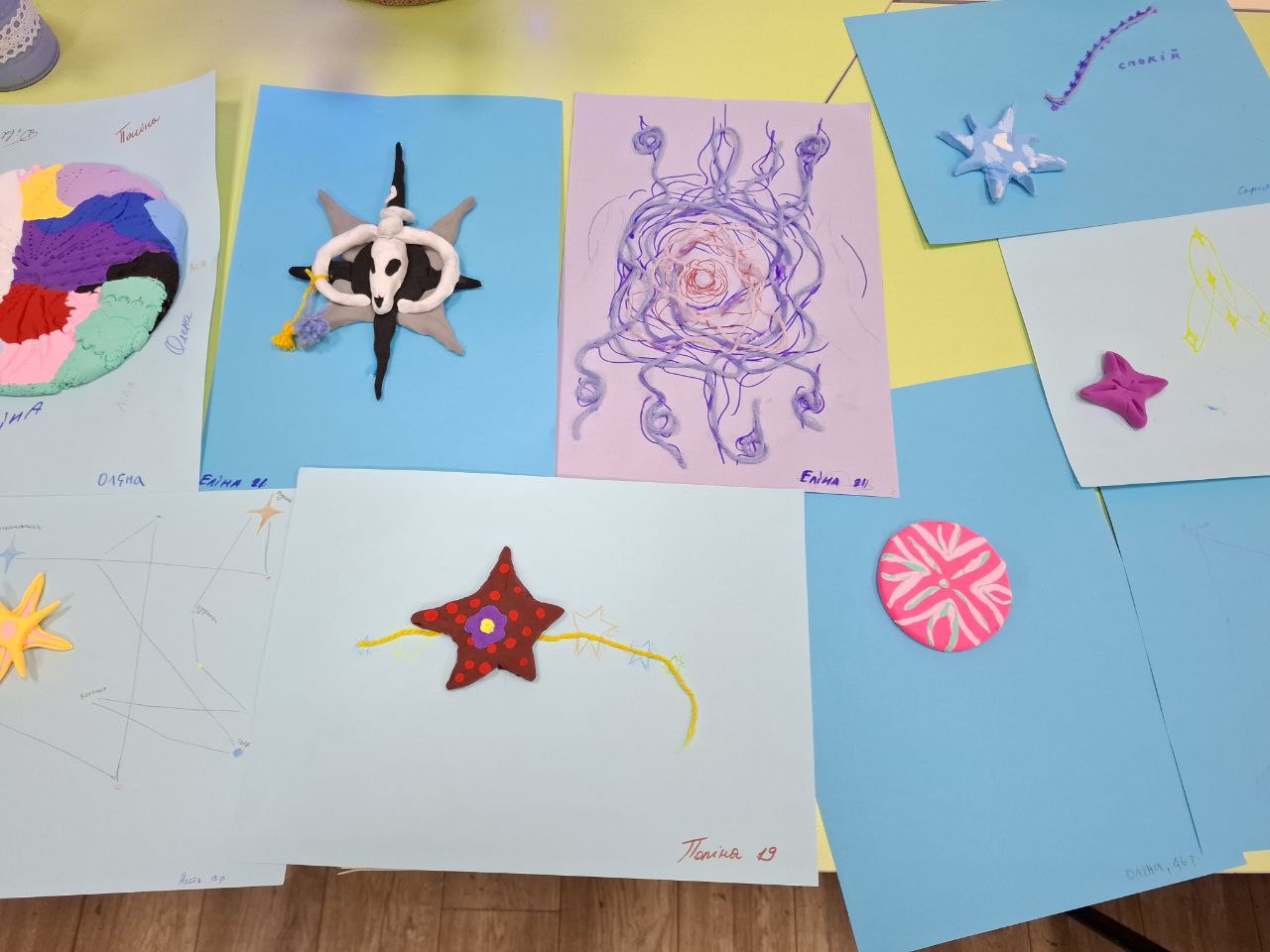
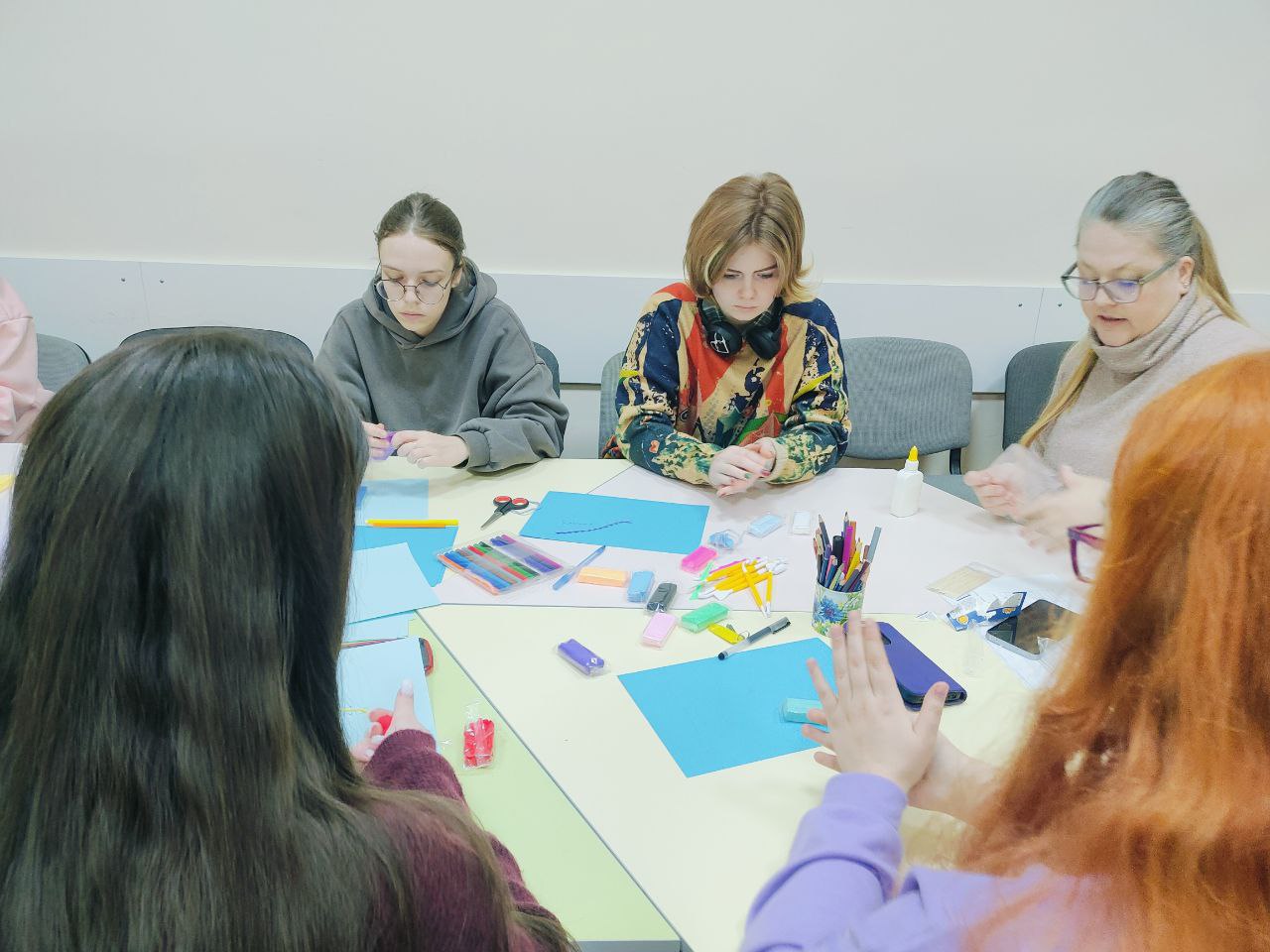
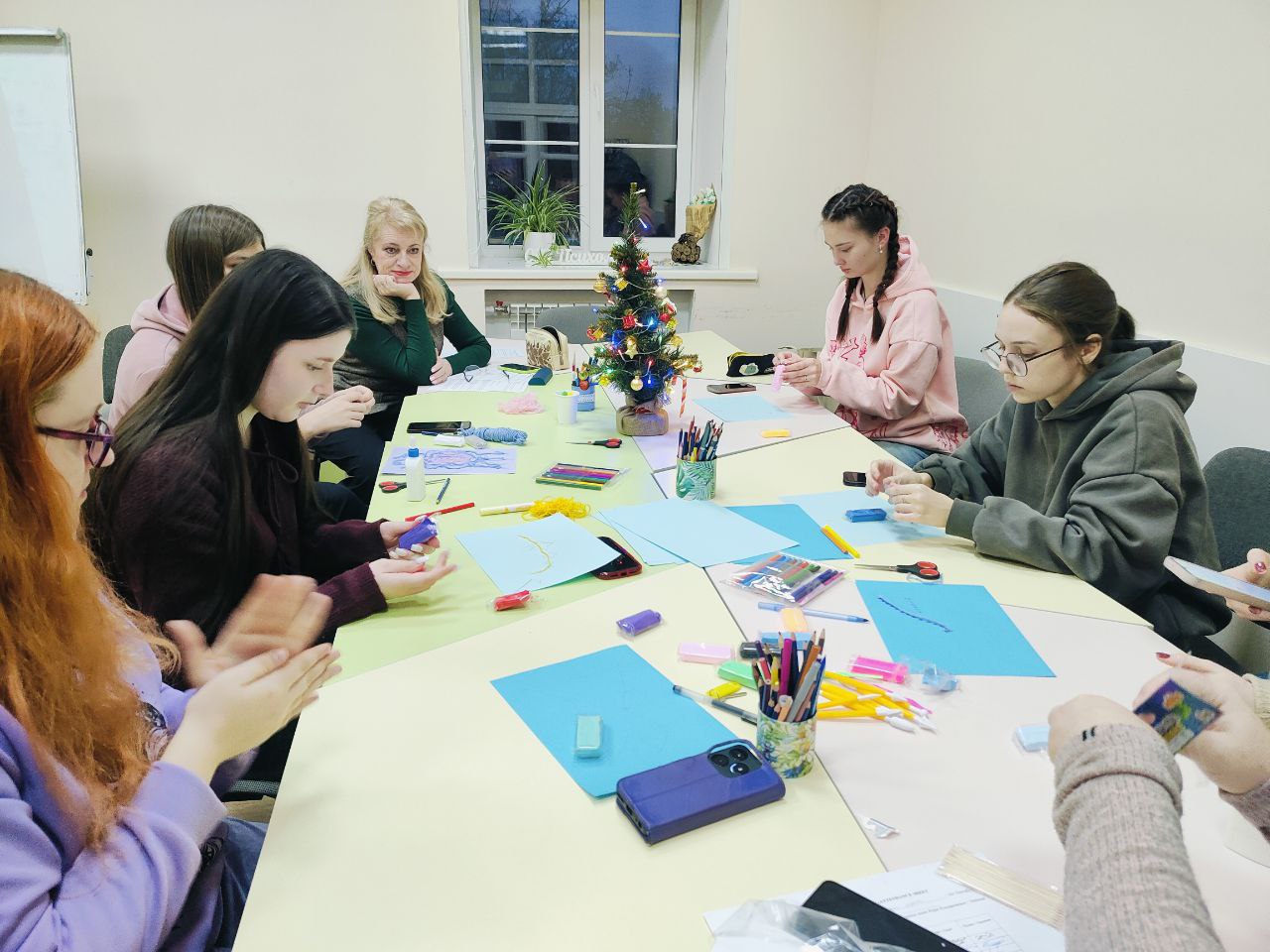
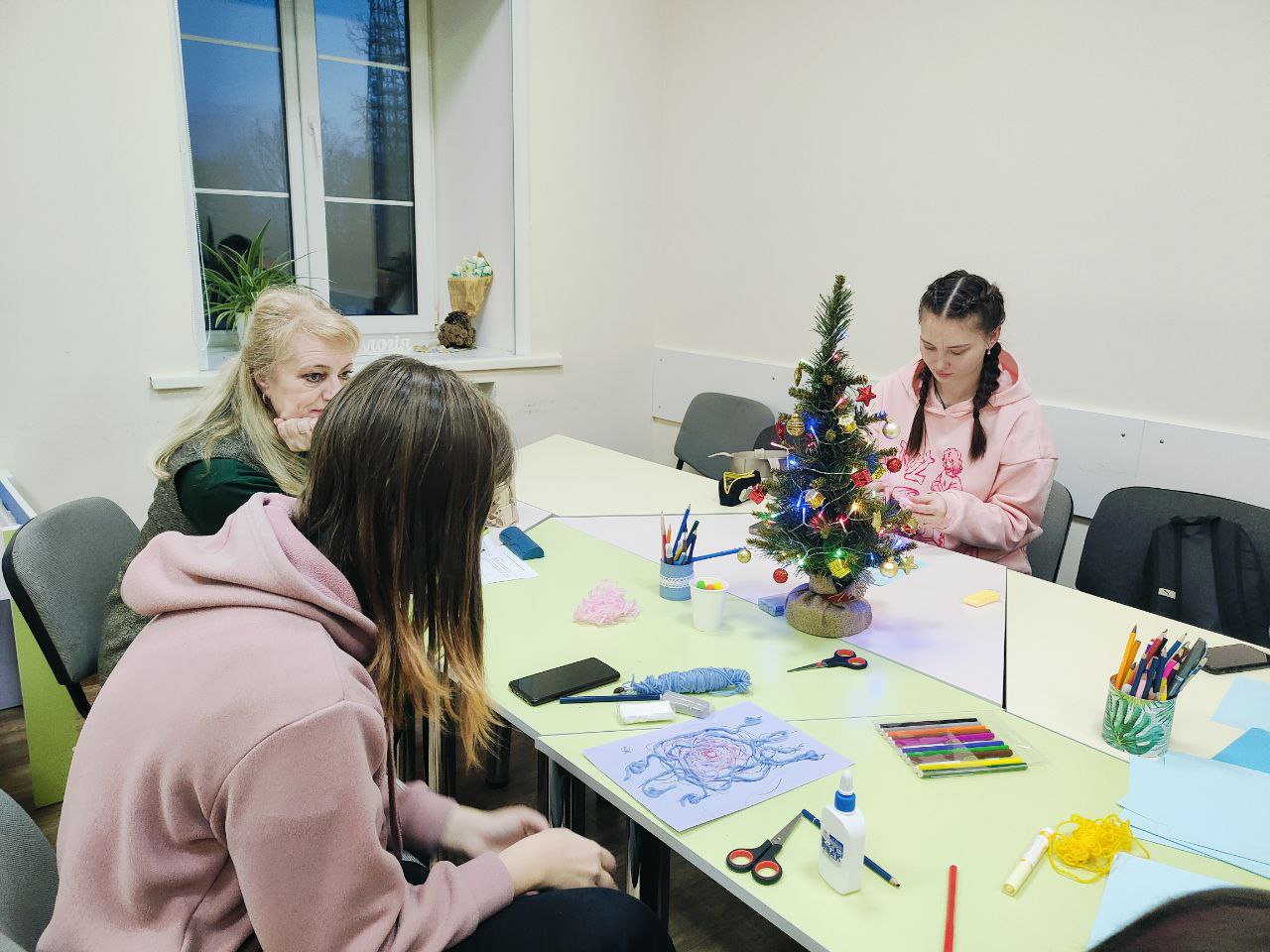
The next stage of the meeting was the creation of a three-dimensional symbol of an internal guide – one’s own – using air-dry clay, a material that combines the plasticity of the moment with the firmness of the future result.
The choice of material for this session was of fundamental importance to the therapeutic process. Air-dry clay is a unique medium for working with anxiety states and restoring contact with the body. Unlike drawing, modelling is a three-dimensional process that engages fine motor skills, activates sensory regions of the brain, and promotes grounding. For the mental health group, this was critically important: taking a formless mass and giving it a desired shape. This act of physical transformation of matter became a metaphor for psychological work on oneself: participants, in practice, felt that they had the power to change form, influence reality, and create structure where there had previously been chaos. The material, which hardens in the air, symbolised the fixation of intention – the created star will not dissolve or disappear; it will become solid, turning into a real physical object that can be held in one’s hands.
The process of creating the “Star” began with a stage of tactile acquaintance with the material, accompanied by a meditative immersion into one’s own sensations. Participants were encouraged not to rush with forming the rays, but first to feel the plasticity of the mass and its flexibility. An atmosphere of trust and concentration prevailed in the room. Every movement of the fingers was aimed at releasing internal tension and transferring it into the clay. Here, a unique dynamic of individual experiences emerged: some stars turned out with smooth, rounded edges, indicating a need for softness, safety, and the smoothing of sharp corners in life; others created stars with clear, sharp facets and elongated rays, demonstrating a readiness for active action, the protection of their boundaries, and expansion into the outside world.
Particular attention was paid to the volume of the figure. The group members learned not to be afraid to take up space with their creation. A flat drawing can be hidden in a folder, but a three-dimensional star demands space in the physical world. This became an essential therapeutic intervention for people who often tend to “diminish” themselves or their needs. By creating a tangible, substantial star, they asserted their right to be visible. Working with the centre of the star became a symbol of working with the core of the personality. Participants smoothed the surface, eliminating cracks and irregularities, a metaphorical reflection of the process of healing emotional wounds and restoring the integrity of the “Self”. The air-dry material required a certain speed and decisiveness, not allowing for endless reshaping, which taught acceptance of the result and trust in one’s own creative impulse “here and now”.
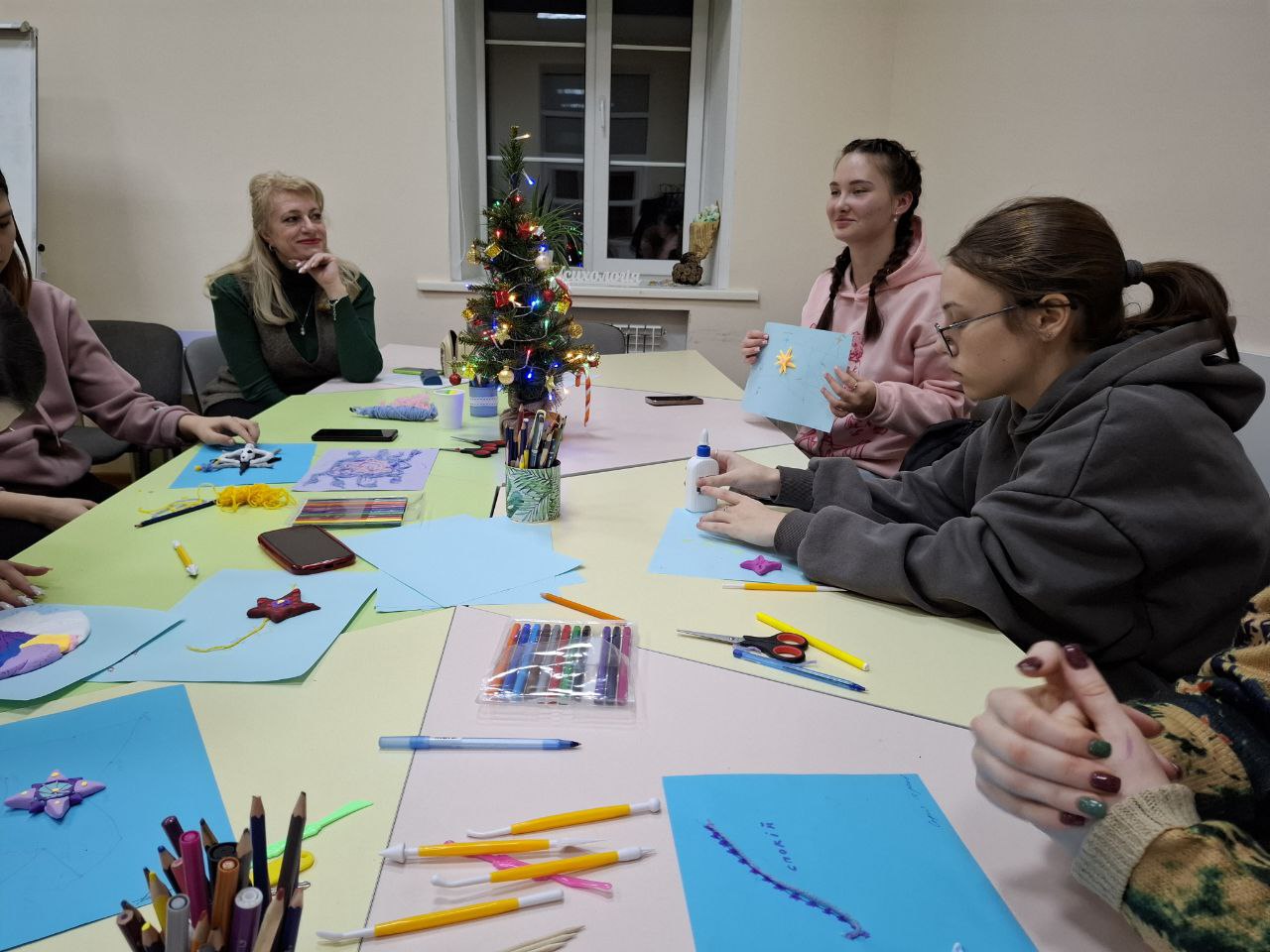
During the process, active nonverbal communication occurred between the participants and their creations. Some participants used sculpting tools to apply patterns to the surface of the rays, adding individual codes and symbols understood only by them. This transformed an ordinary product into a sacred artefact, a talisman of power. The moment of realising the object’s fragility and its future strength was pivotal. This resonated with the state of the mental health group members: the understanding that current vulnerability can transform into resilience, provided there is careful treatment and time for “hardening” and the integration of experience.
The stars were laid out on a shared surface to dry, forming a kind of group constellation. This sight had a powerful unifying effect: despite each star’s unique shape and size, together they created a common space of light. Participants shared what they had put into their works: for some, it was a guiding star; for others, a protective star; and for some, a symbol of their own inner light, which does not fade even in the most difficult times. The “Workshop of Stars” session served as an essential resource for stabilisation, providing participants with a sense of support and hope on the eve of a new life cycle.
To conclude the event, an integration exercise was conducted to strengthen interaction within the group. Participants formed a circle and were asked to imagine a gift they would like to pass on to another person. This imaginary gift, along with warm words and friendly gestures, was passed from one person to another, to the neighbour on the right. This format created an atmosphere of trust, acceptance, and mutual care. Through the exercise, it was possible not only to strengthen the sense of unity within the group but also to build an emotional connection between each individual's personal dreams and the support of others.
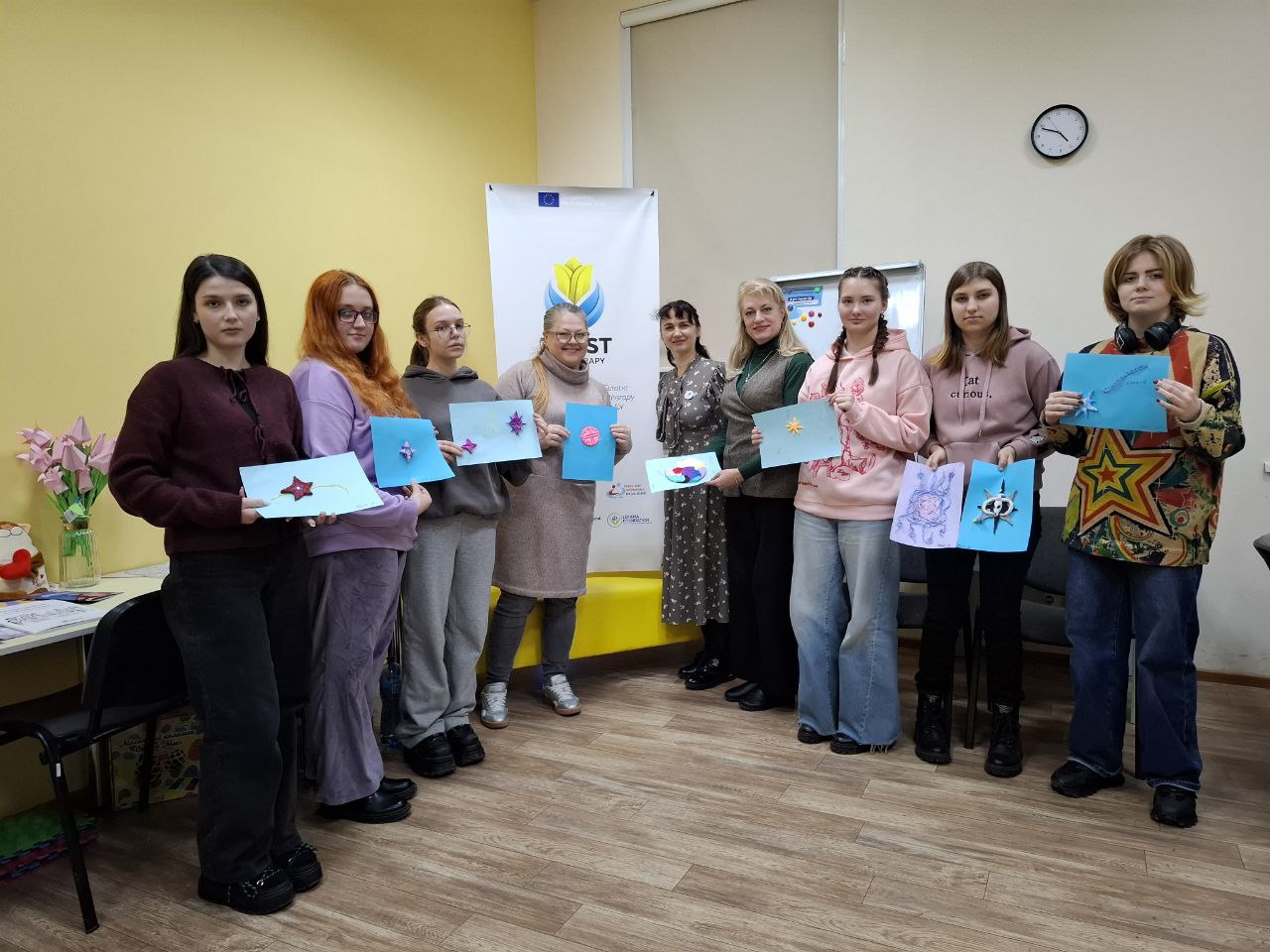
The event was held as part of the international, large-scale EU-funded Erasmus+ KA220-ADU project “TRUST” – Trauma of refugees in Europe: An approach through art therapy as a solidarity program for Ukraine war victims (Grant No. 2024-BE01-KA220-ADU-000257527).
The project title is decoded as follows:
TRUST
T – Trauma
R – Refugees
U – Ukraine
S – Solidarity
T – Therapy
The project is co-funded by the EU and led by the Centre Neuro Psychiatrique St-Martin from Belgium, in partnership with the National University “Yuri Kondratyuk Poltava Polytechnic” (Ukraine), Greek Carers Network EPIONI (Greece), Fondazione Don Luigi Di Liegro (Italy), Lekama Foundation (Luxembourg), EuroPlural Project (Portugal).
It is worth noting that Poltava Polytechnic lecturers are eligible to participate in academic mobility and internship programs. Students can study abroad through Erasmus+ credit academic mobility grant programs for a semester or a full academic year at leading universities in Austria, Denmark, Estonia, Finland, Germany, Greenland, Latvia, Lithuania, the Netherlands, Norway, Poland, Portugal, Romania, Slovakia, Spain, and the Czech Republic.
For more detailed information regarding current internship, teaching, and academic mobility programs abroad, please get in touch with the International Relations Department (office 213-C, interoffice@nupp.edu.ua) or Poltava Polytechnic’s International Relations Coordinator – Ph.D. in Philology, Associate Professor of the Department of Germanic Philology and Translation, Anna Pavelieva (email: kunsite.zi@gmail.com, phone: +38-(095)-91-08-192).