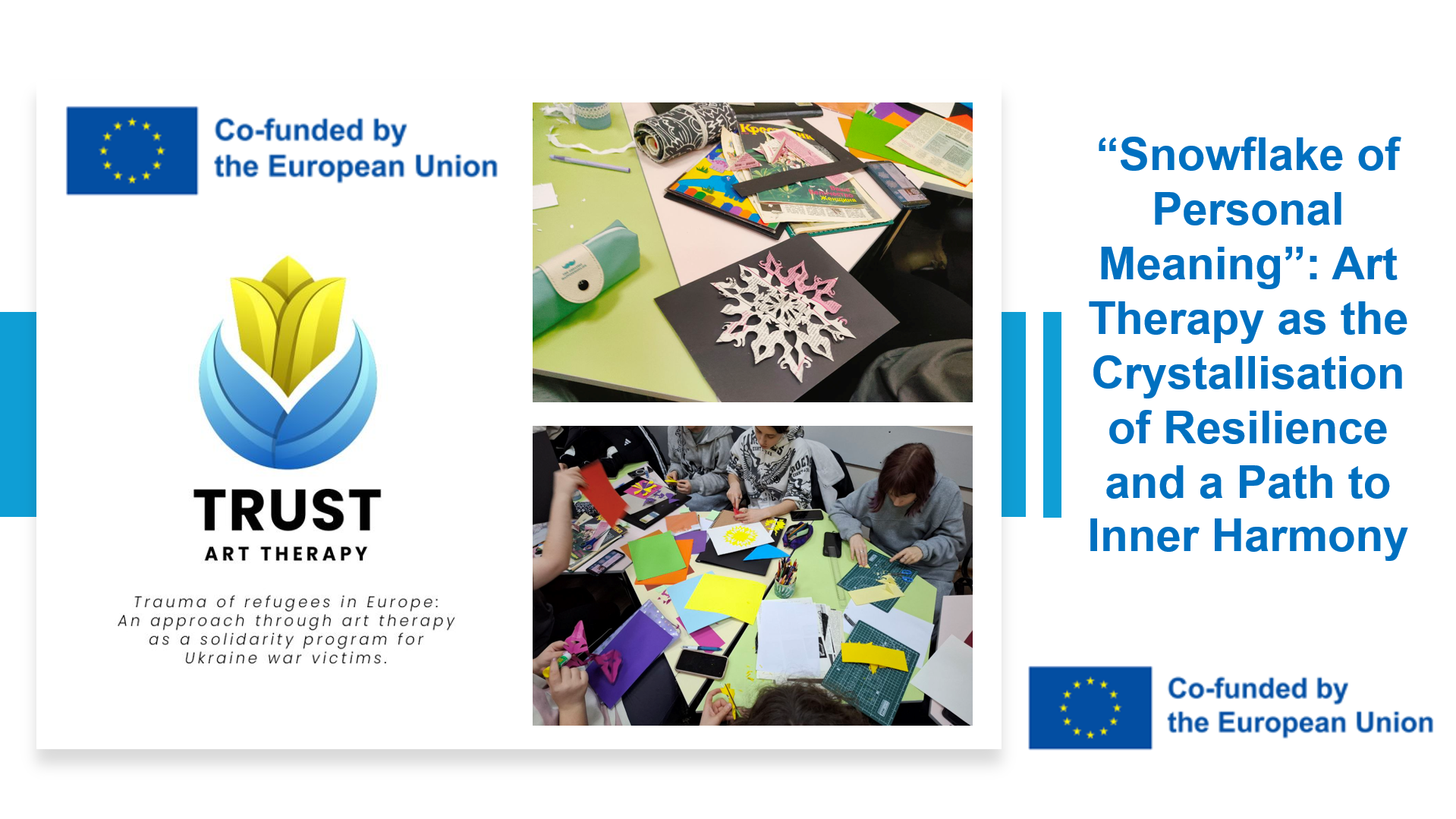
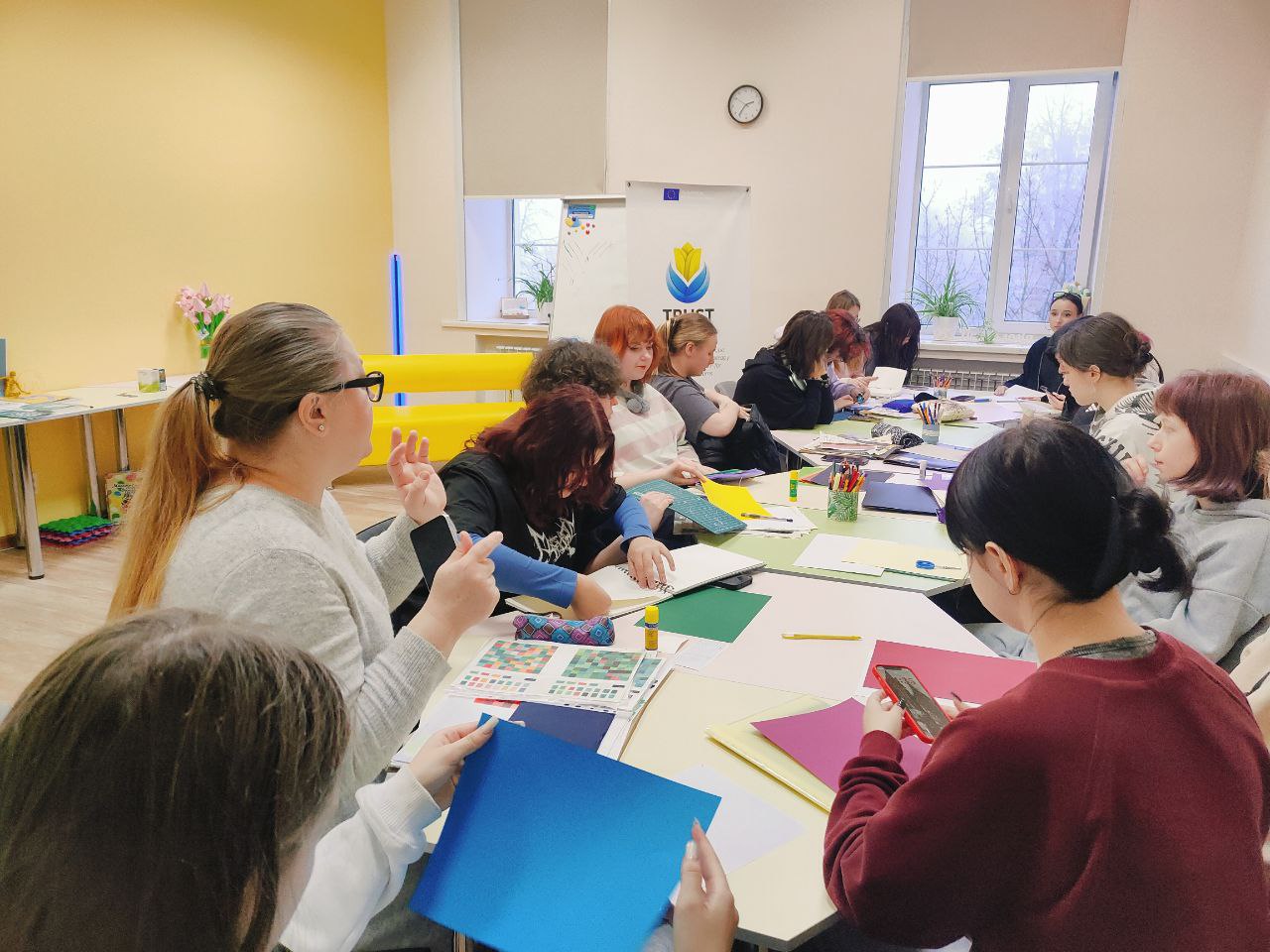
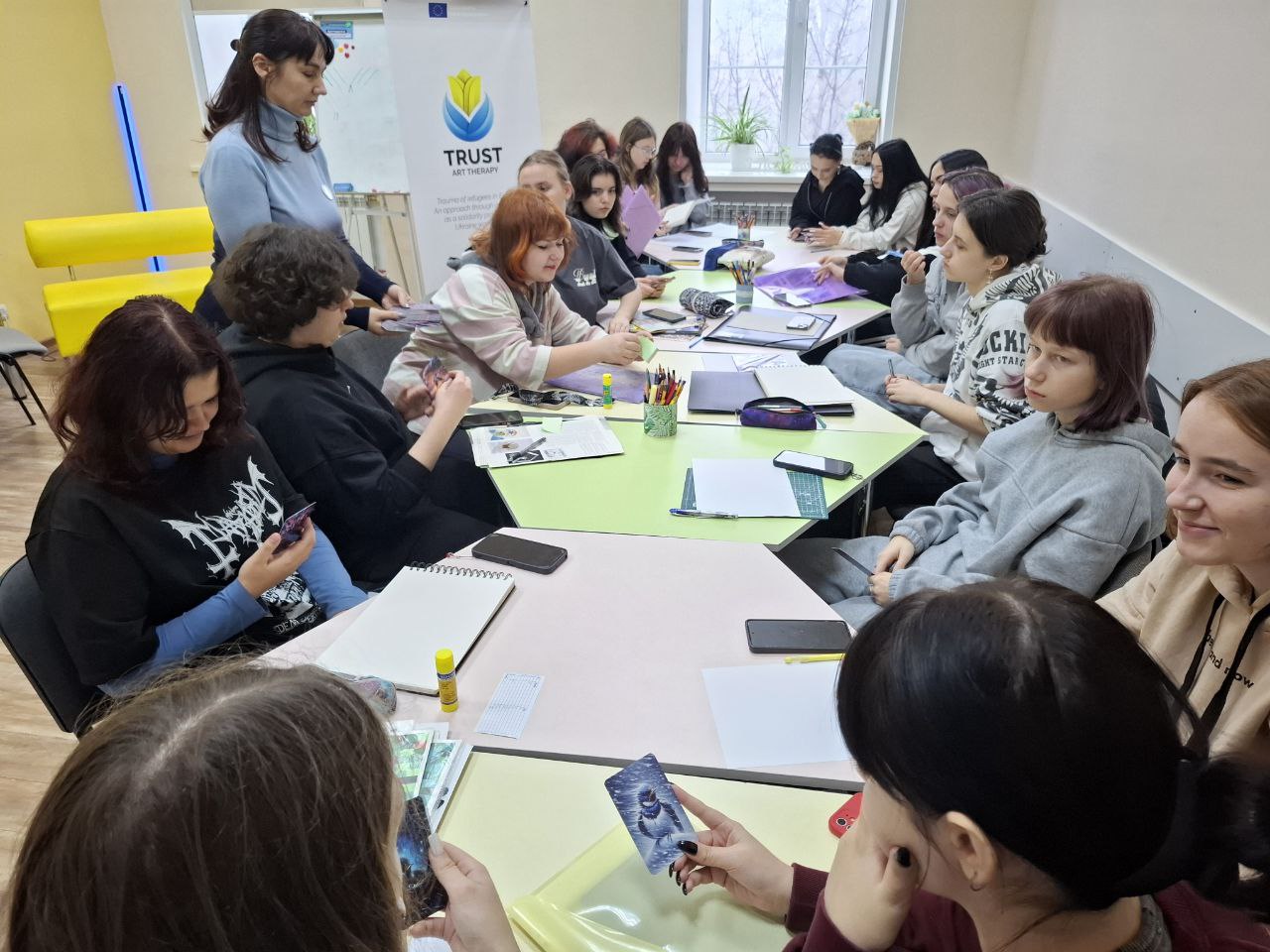
On December 11, 2025, at 1:30 PM in Room 315-C of the National University “Yuri Kondratyuk Poltava Polytechnic”, a special art therapy session titled “Snowflake of Personal Meaning” took place. It was aimed at providing comprehensive psychological support for individuals who have experienced trauma, offering them a safe space for internal transformation and emotional recovery through the integration of artistic practices. Such events are highly relevant, as they enable not only the provision of immediate assistance but also the development of a mental health culture within the educational environment.
Olena Ostrohliad, Senior Lecturer in the Department of Fine Arts, and Maryna Teslenko, Associate Professor in the Department of Psychology and Pedagogy, moderated the event.
The art therapy began with an insight session using Metaphorical Associative Cards (MAC), a widely used method in art therapy for projective diagnosis and correction. The use of cards allowed participants to gently bypass the rational filters of consciousness and enter a direct dialogue with their own subconscious. The primary vector of this work was the search for balance between two fundamental psychological poles: external support and internal resilience. Under conditions of chronic instability and external pressure, these categories become decisive in maintaining the integrity of the personality. Each card revealed individual layers of meaning, transforming into metaphorical images – some identified support through the symbol of an outstretched hand, some built an imaginary bridge to their own “self”, while for others, the key image was that of strong roots providing stability even under a storm of radical changes. This prelude allowed for the formation of a therapeutic safe space, where the verbalisation of hidden fears and doubts was transformed into the identification of real sources of support – ranging from external social connections to deep internal resources, such as faith and creative energy.
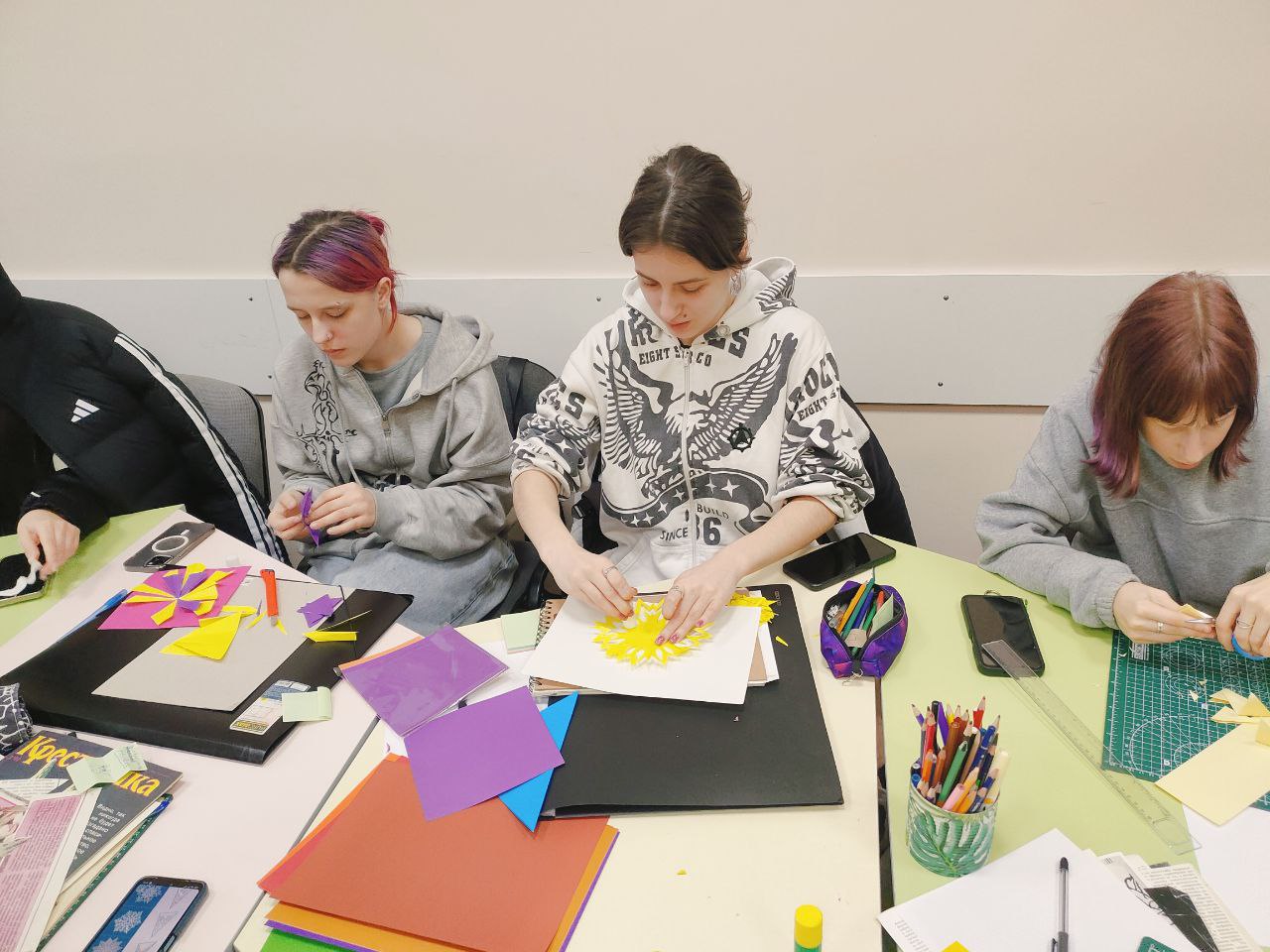
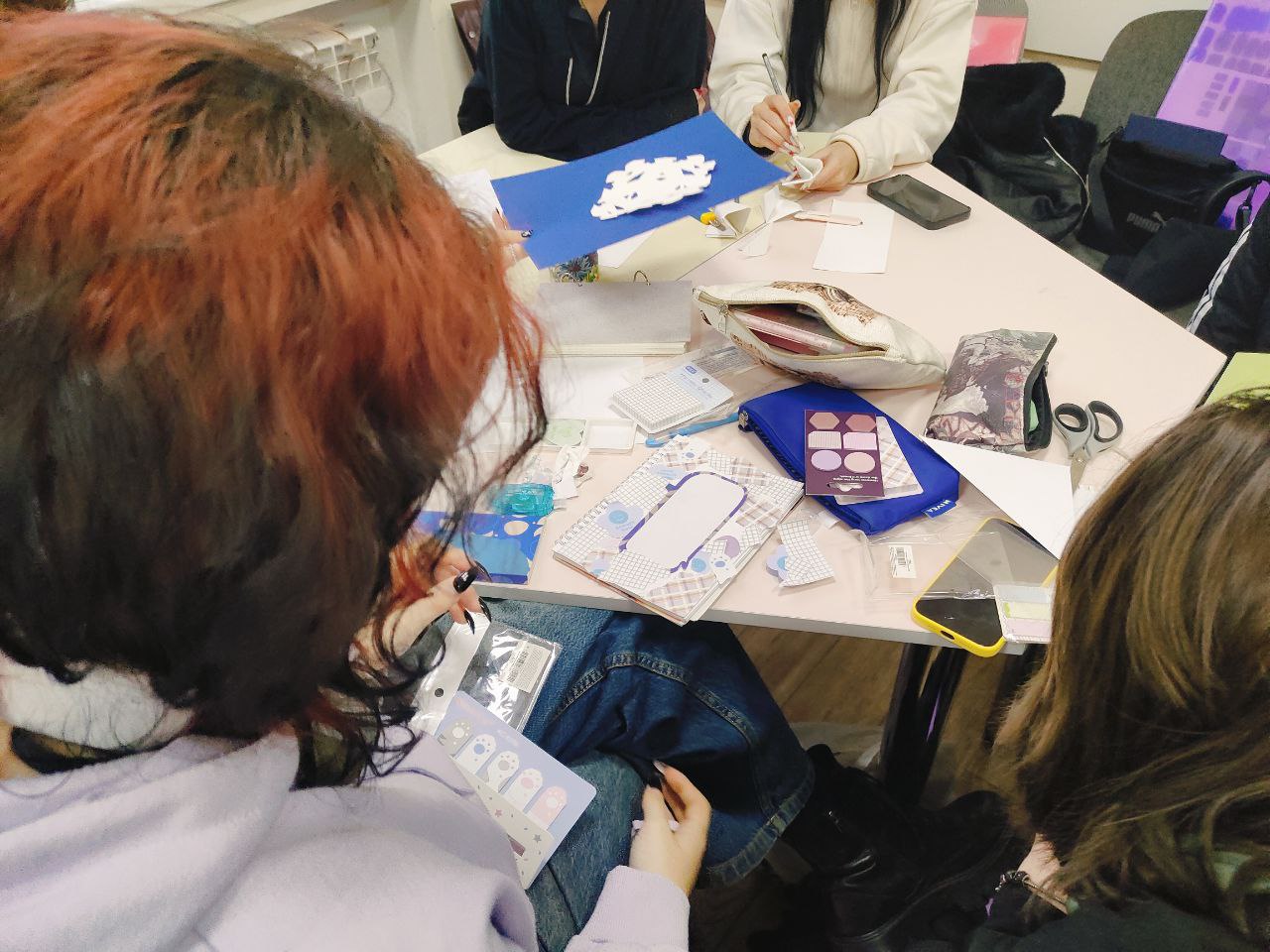
This stage served as the psychological foundation for the transition to the central part of the lesson – the creation of the “Snowflake of Personal Meaning” collage. From a psychological perspective, a snowflake is a powerful archetypal symbol that combines geometric order and natural chaos. In the context of art therapy, this image allows for the processing of the concepts of uniqueness and self-worth: every snowflake is symmetrical, yet its pattern never repeats, which is identical to the human experience, where each of us is part of the general structure of the world while remaining unique in our experiences. Participants created their own eight-pointed snowflakes, in which each line represented a distinct life sphere or a complex emotional state experienced during the year. The choice of textures, colour palettes, and shapes allowed for the externalisation of internal memories, turning them into aesthetic objects – crystals of memory that hold the depth and value of the path travelled.
The exceptional therapeutic value of this practice lies in the combination of rigid structure and absolute creative freedom. The requirement to maintain symmetry in the snowflake’s form activated cognitive processes and the prefrontal cortex, which is responsible for rationalisation and control, thereby providing a “grounding” effect and reducing anxiety. At the same time, the free artistic filling of these rays provided an outlet for emotional expression, allowing even complex experiences to be integrated into a harmonious whole. The session concluded with a reflection stage, during which participants shared their work and commented on their choice of specific visual elements. For many, this became a moment of accurate self-awareness, as they saw in the collage not just an artwork but a map of their own resilience and a symbolic picture of their inner year.
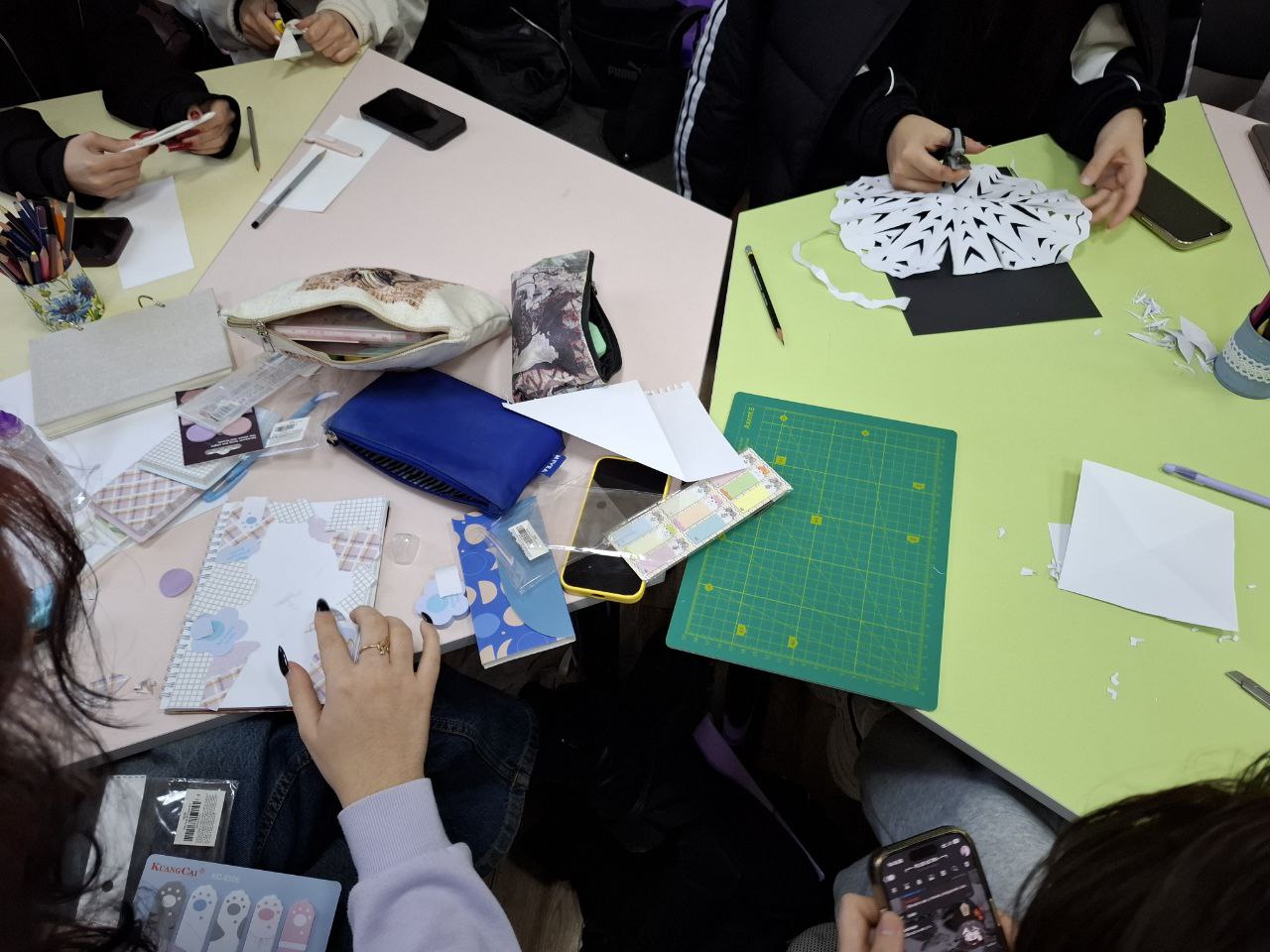
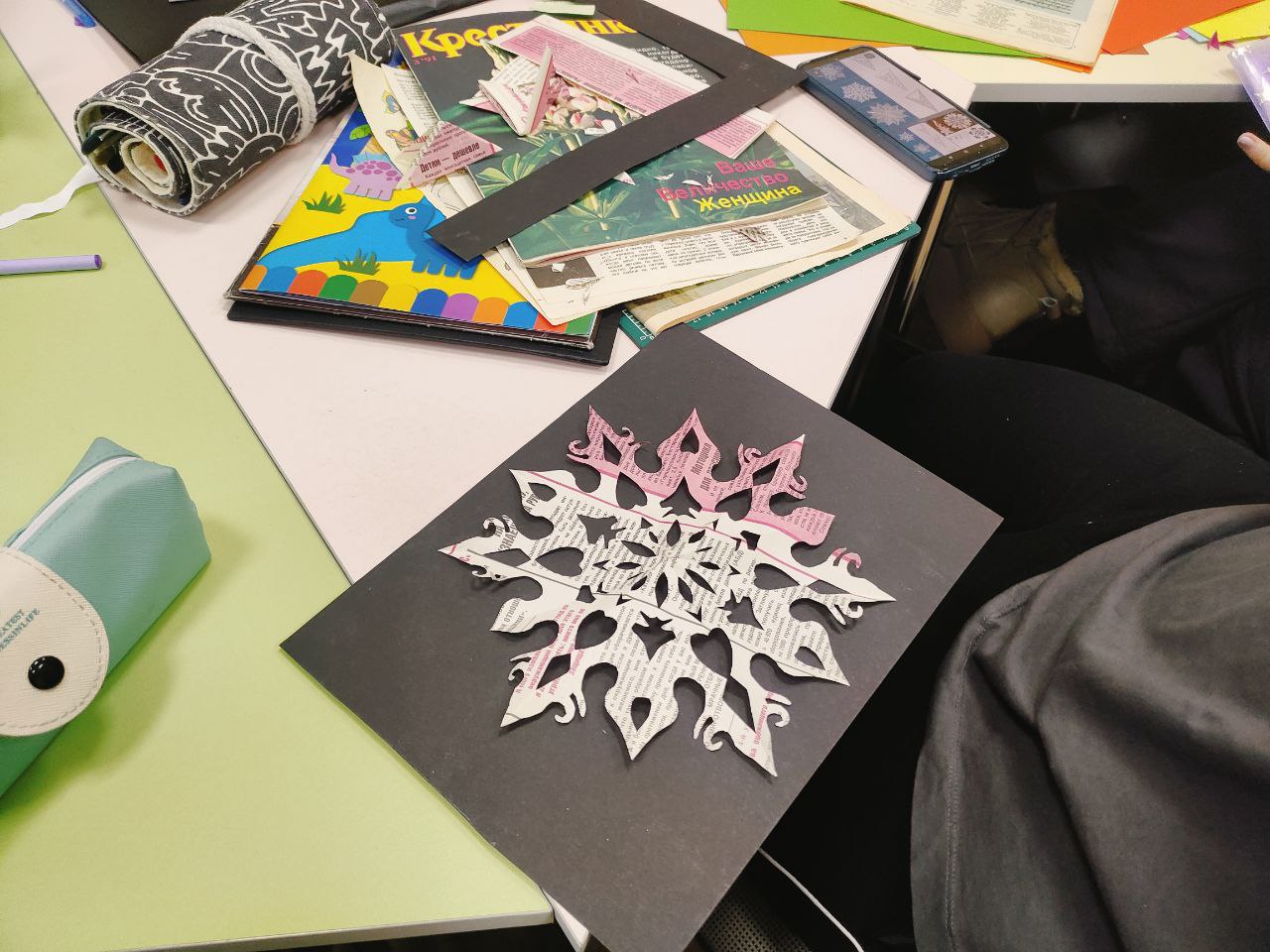
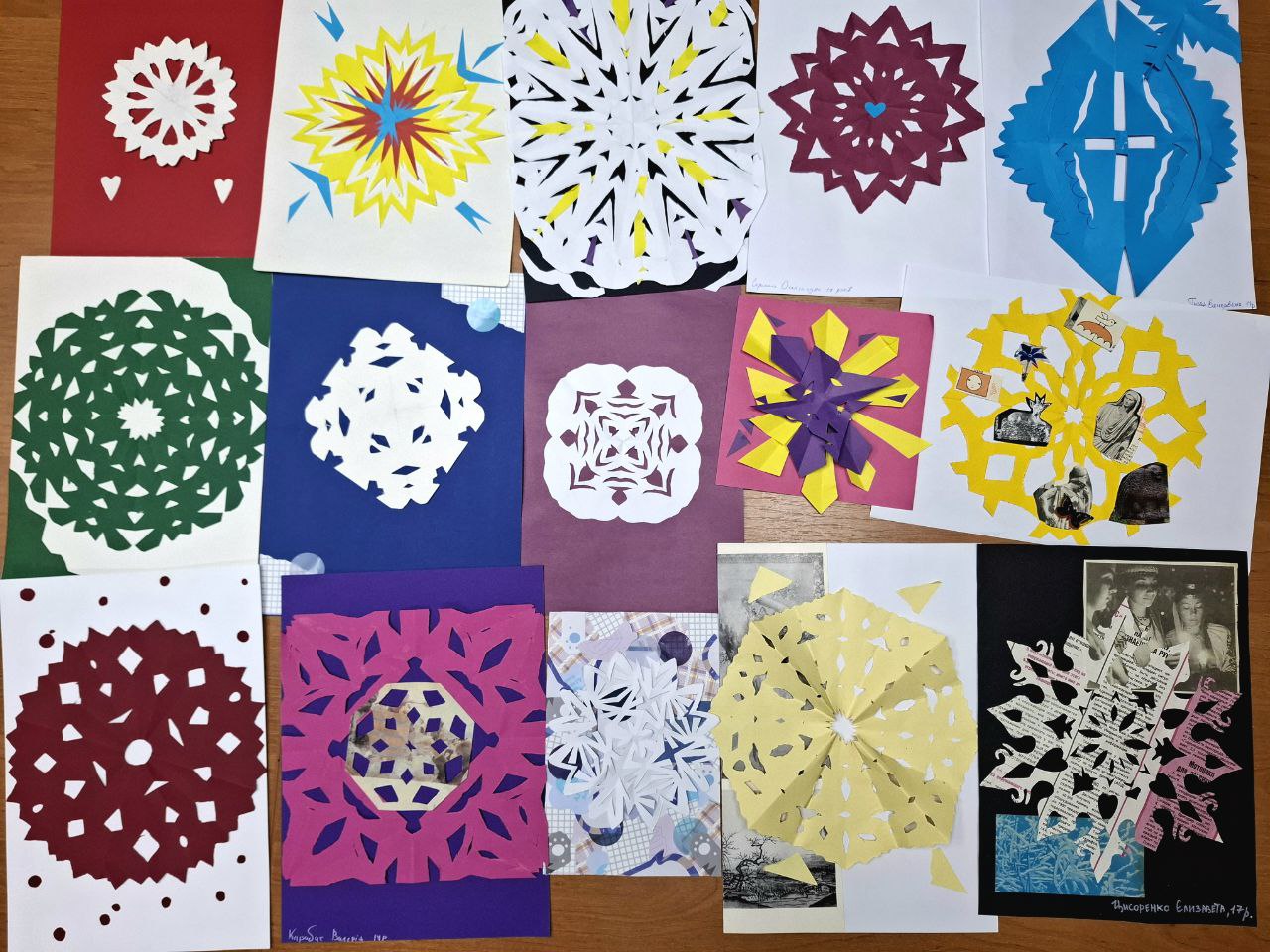
The event was not merely a creative meeting but a profound act of psychological integration of experience, enabling the completion of a complex life cycle and preparing the ground for a new stage of development. The snowflakes created by the participants remained with them as personal symbolic amulets, embodying internal support during the period of waiting for new life horizons.
The event was held as part of the international, large-scale EU-funded Erasmus+ KA220-ADU project “TRUST” – Trauma of refugees in Europe: An approach through art therapy as a solidarity program for Ukraine war victims (Grant No. 2024-BE01-KA220-ADU-000257527).
The project title is decoded as follows:
TRUST
T – Trauma
R – Refugees
U – Ukraine
S – Solidarity
T – Therapy
The project is co-funded by the EU and led by the Centre Neuro Psychiatrique St-Martin from Belgium, in partnership with the National University “Yuri Kondratyuk Poltava Polytechnic” (Ukraine), Greek Carers Network EPIONI (Greece), Fondazione Don Luigi Di Liegro (Italy), Lekama Foundation (Luxembourg), EuroPlural Project (Portugal).
We express our sincere gratitude to our partners for their invaluable support, which makes it possible to implement such vitally important initiatives that bring the light of hope and healing to those who need it most.
Poltava Polytechnic continues to develop this direction, planning to expand the methodological framework and develop innovative educational cases for facilitators in Ukraine and Europe, thereby establishing art therapy as a leading tool for psycho-emotional recovery in the modern academic and social space.
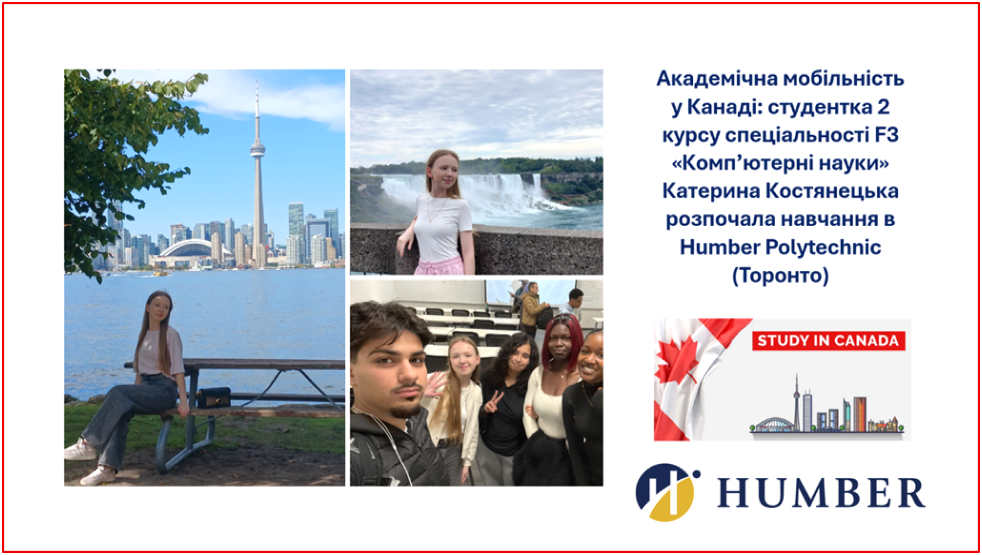
It is worth noting that Poltava Polytechnic lecturers are eligible to participate in academic mobility and internship programs. Students can study abroad through Erasmus+ credit mobility grants for a semester or a full academic year at leading universities in Austria, Denmark, Estonia, Finland, Germany, Greenland, Latvia, Lithuania, the Netherlands, Norway, Poland, Portugal, Romania, Slovakia, Spain, and the Czech Republic.
For more detailed information regarding current internship, teaching, and academic mobility programs abroad, please get in touch with the International Relations Department (office 213-C, interoffice@nupp.edu.ua) or Poltava Polytechnic’s International Relations Coordinator – Ph.D. in Philology, Associate Professor of the Department of Germanic Philology and Translation, Anna Pavelieva (email: kunsite.zi@gmail.com, phone: +38-(095)-91-08-192).