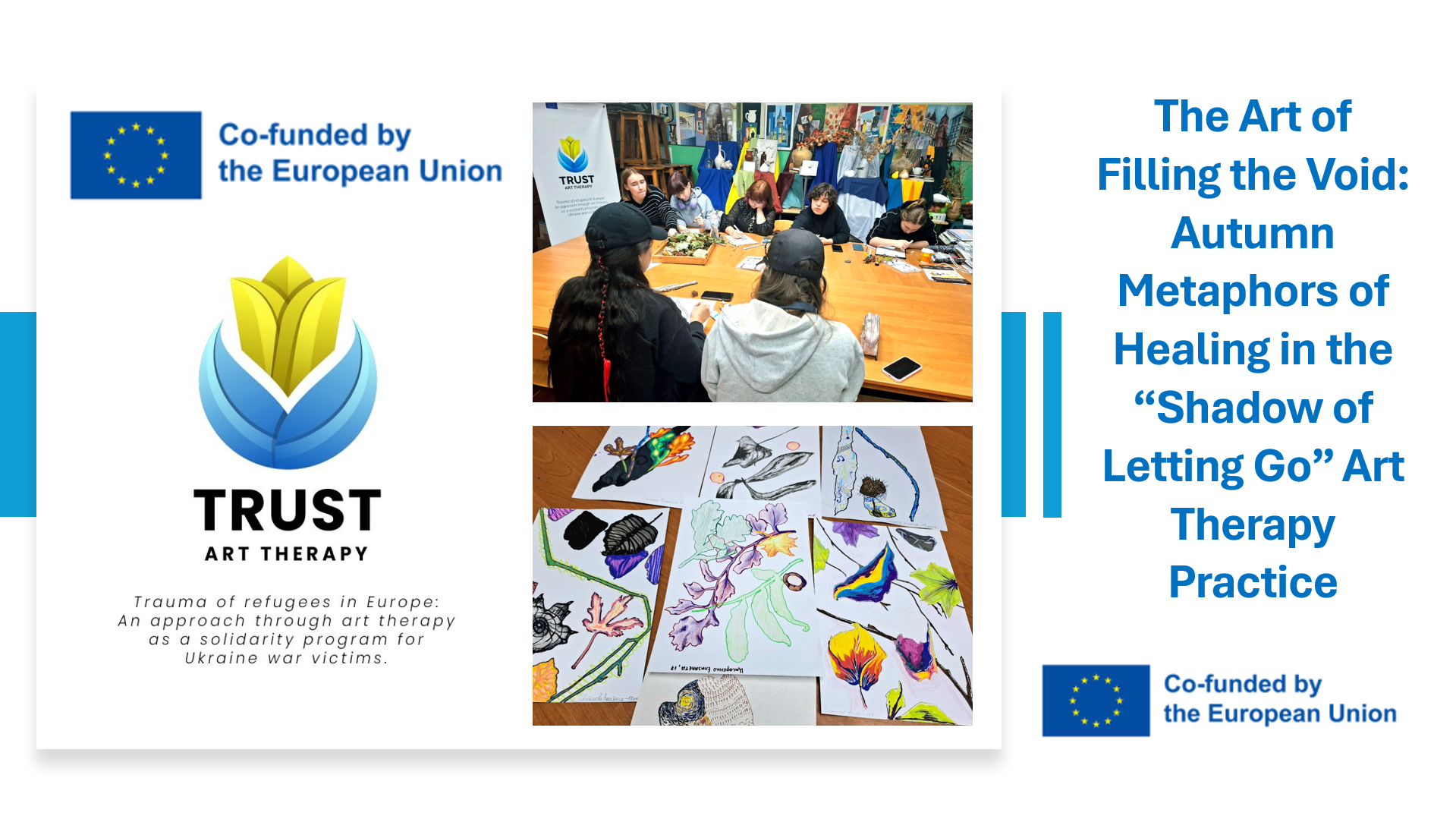
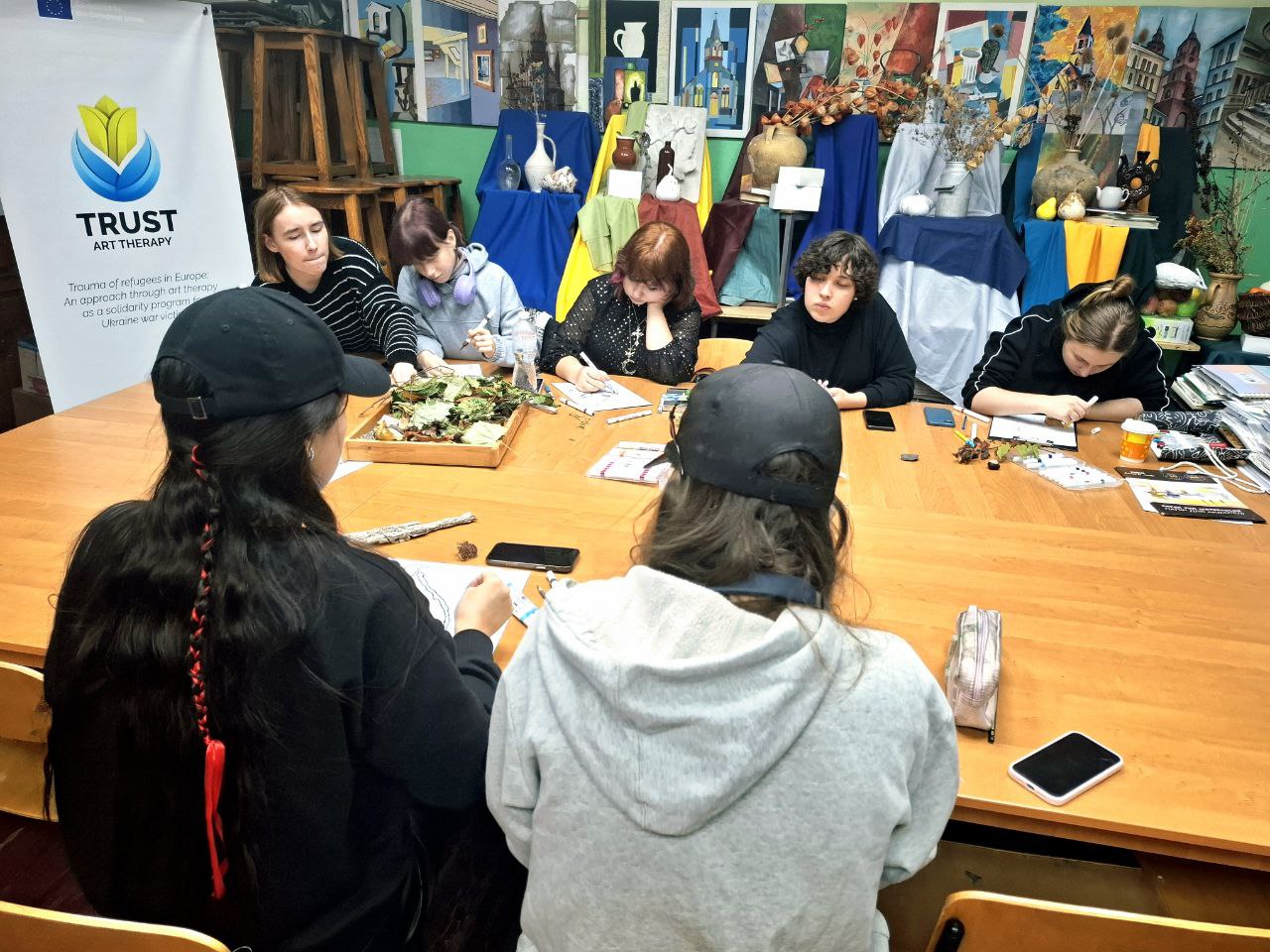
On November 20, 2025, the Centre for Contemporary Art at the National University “Yuri Kondratyuk Poltava Polytechnic” served as a safe environment for deep inner work, hosting the “Shadow of Letting Go” art therapy practice. The session was aimed at providing psychological support to people, particularly internally displaced persons (IDPs), who have faced the traumatic experience of losing their homes, their usual way of life, and the severing of social ties.
Olena Ostrohliad, Senior Lecturer in the Department of Fine Arts, and Maryna Teslenko, PhD in Pedagogy and Associate Professor in the Department of Psychology and Pedagogy at Poltava Polytechnic, moderated the event.
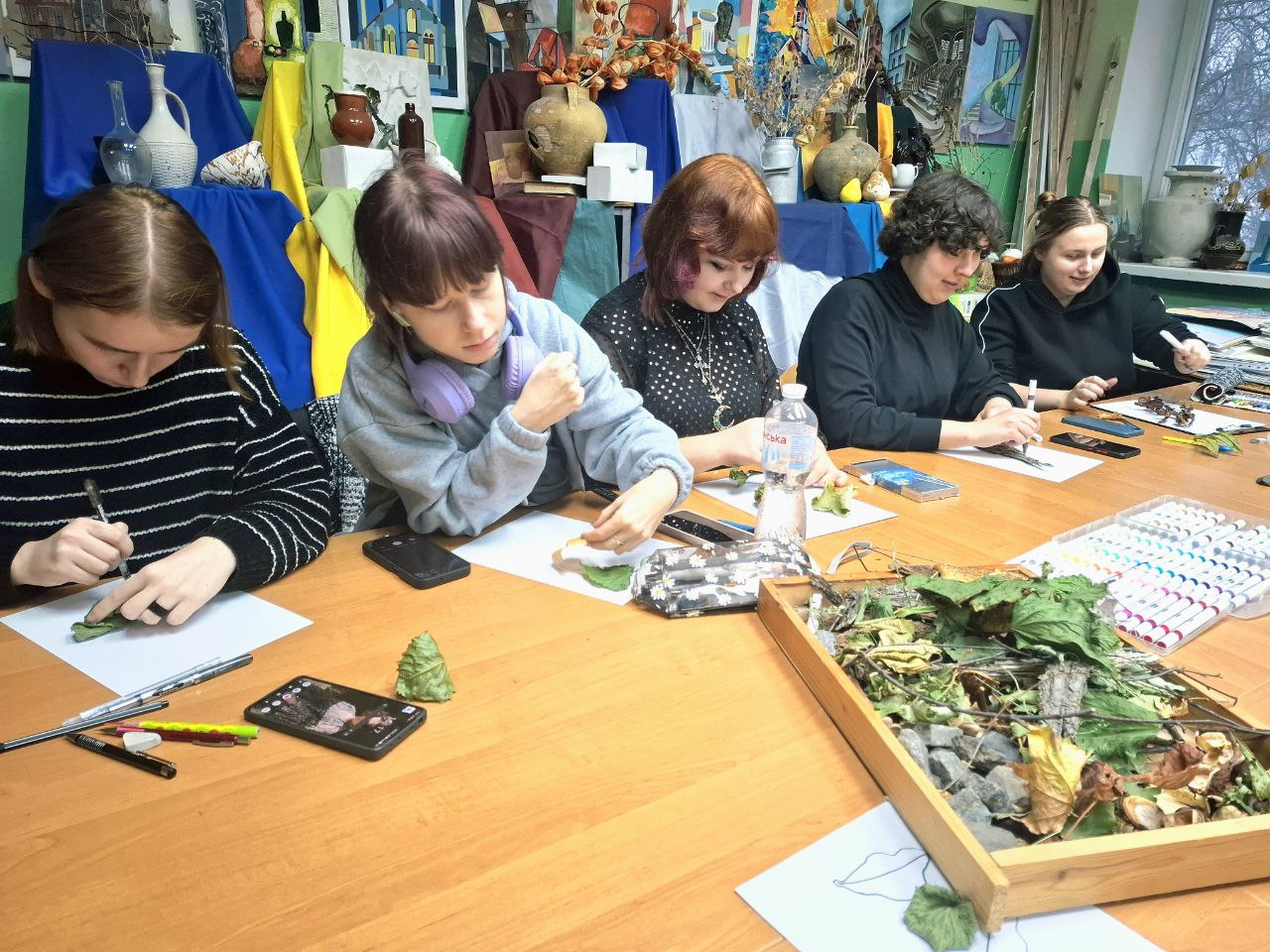
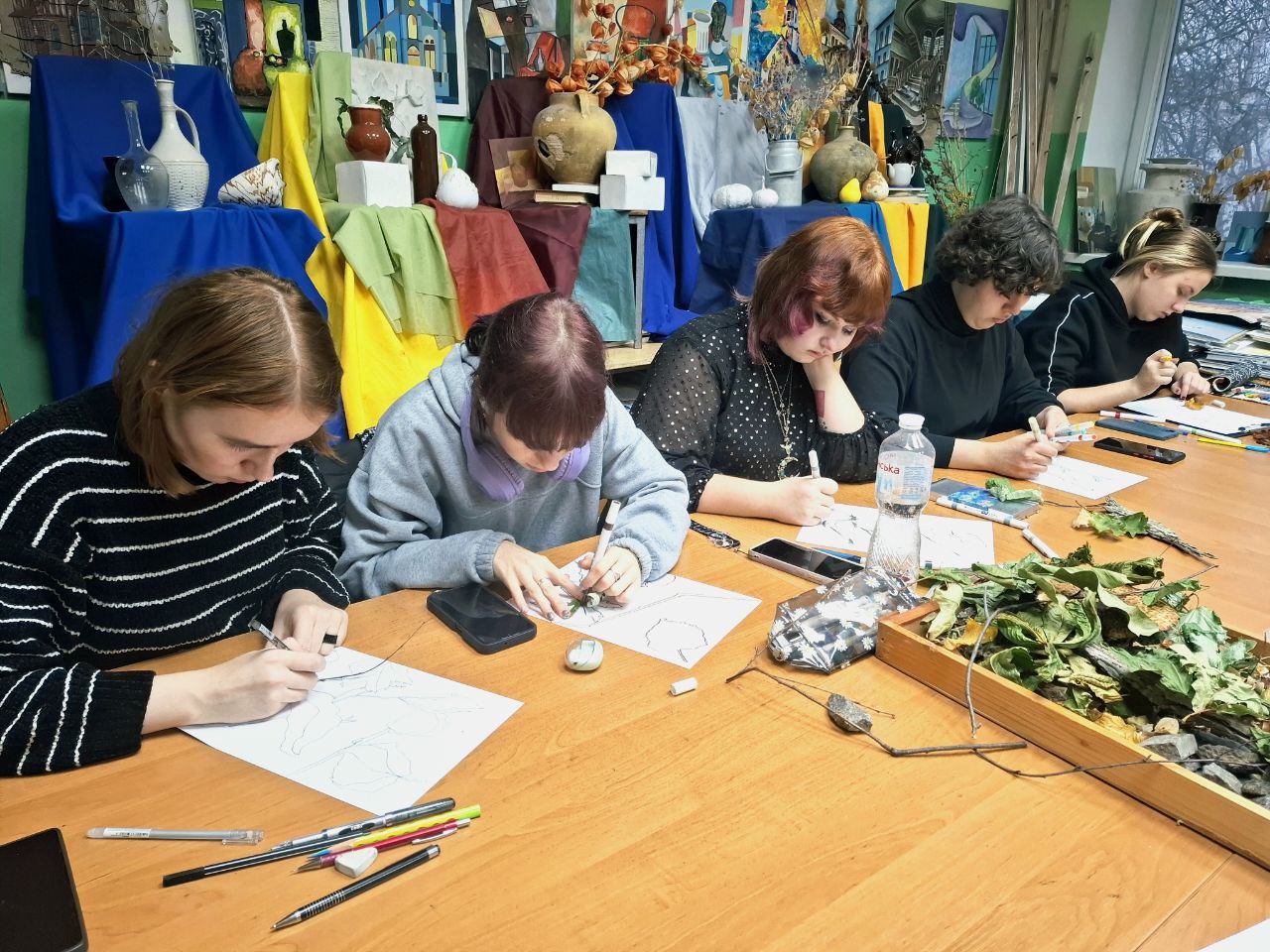
For their work, the participants used paper, graphic materials, and dry leaves –natural symbols of autumn. At the heart of the “Shadow of Letting Go” session lies work with grief through the symbolic completion of cycles. The goal of the session was to create the outline of what was lost (the “shadow”) on paper and subsequently fill this space with new, life-affirming symbols.
The metaphor of autumn was chosen deliberately: it illustrates the transition from fixation on loss to acceptance of change. This is especially important in working with war trauma, where the fear of internal emptiness often blocks the healing process. The session was structured to safely guide participants through this fear, using creativity as a tool to contain complicated feelings and transform pain into a resource.
The session began with the creation of a safe therapeutic space through a meditative conversation, during which the curators discussed with participants the symbolism of autumn: a time of completion, letting go, and transformation. Attendees were invited to turn to their own inner world and identify those experiences – difficult memories, feelings of guilt, or fears – that they were ready to leave in the past. This cognitive tuning was an essential prelude to the creative process, allowing unconscious or suppressed emotions to be brought to consciousness. The choice of dry leaves became an act of projection: participants intuitively selected natural objects whose shapes and textures resonated with their internal state or a specific life situation that required closure.
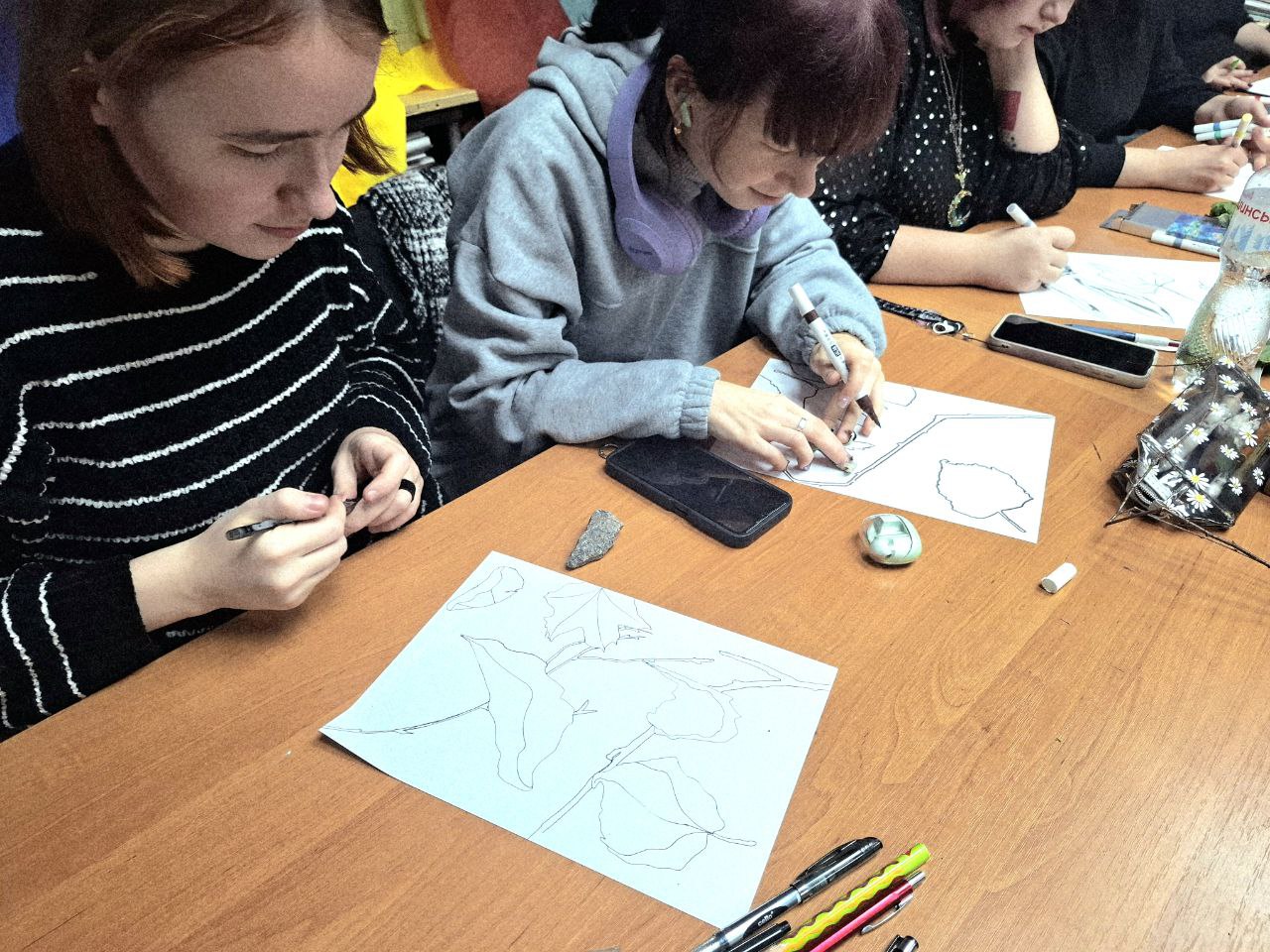
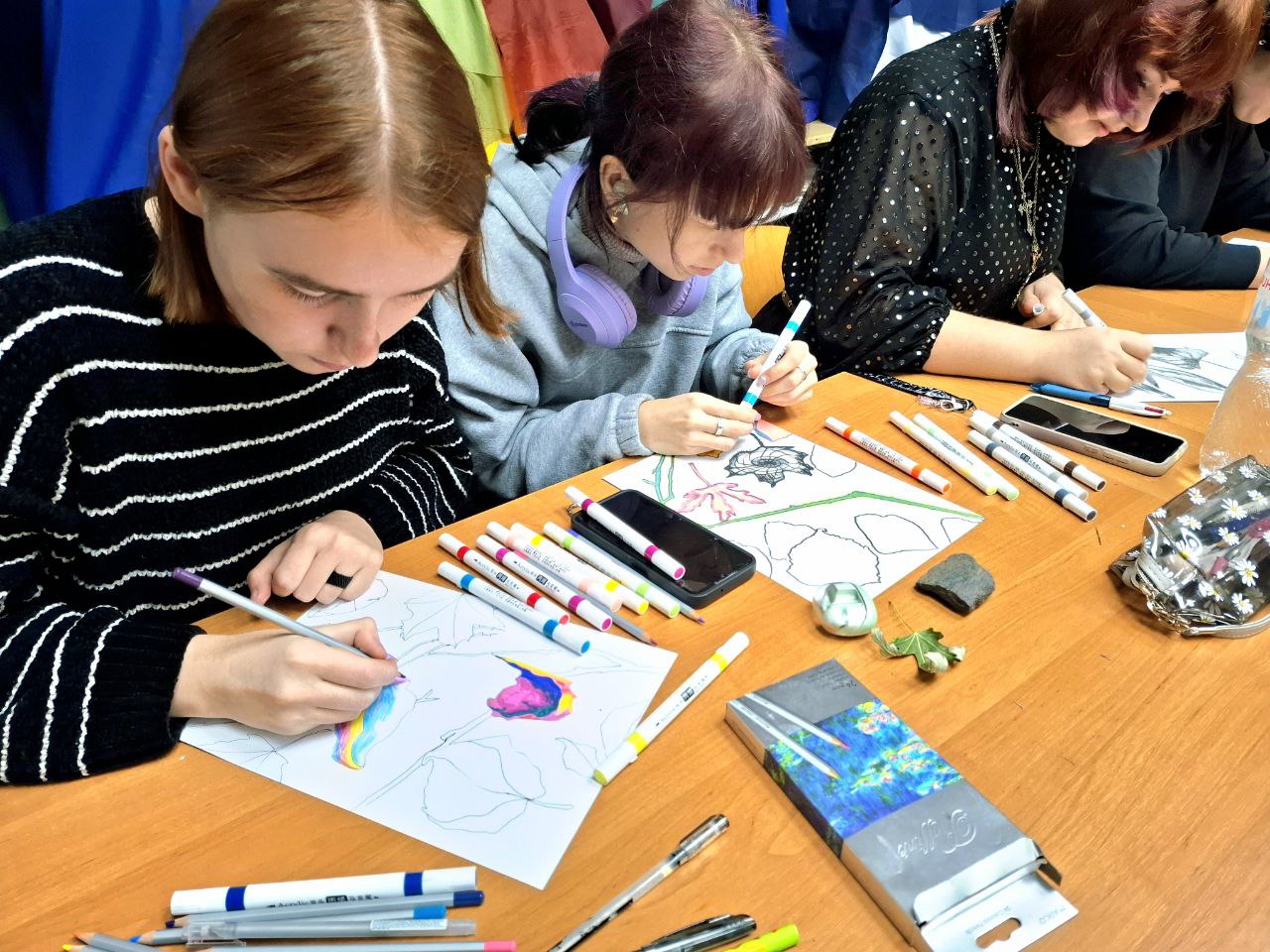
The key psychological mechanism of the first stage of practical work was the externalisation of experiences through tracing the outlines of the leaf. When a person uses a marker to delineate the boundaries of an object on paper, they symbolically give form to their feelings and establish the borders of the traumatic experience. This seemingly simple graphic gesture restores a sense of control, which is often lost in crises. Fixing the contour became an act of acknowledging reality: that which is part of life exists, has a form, but also has limits.
The most dramatic yet simultaneously most therapeutic moment of the practice was the physical removal of the leaves from the paper. Only the “shadow” remained on the sheet – an unfilled void defined by a precise contour, symbolising absence, the space vacated after the loss was acknowledged and accepted. In trauma psychology, it is precisely this moment of encountering absence (the “empty place” at the table, in the house, in the soul) that is the most painful. However, in the context of art therapy, this void was reinterpreted. Instead of a black hole of pain, participants saw a clean space (negative space) before them, ready for new filling. This allowed attention to shift from what was lost to what remained and could be transformed.
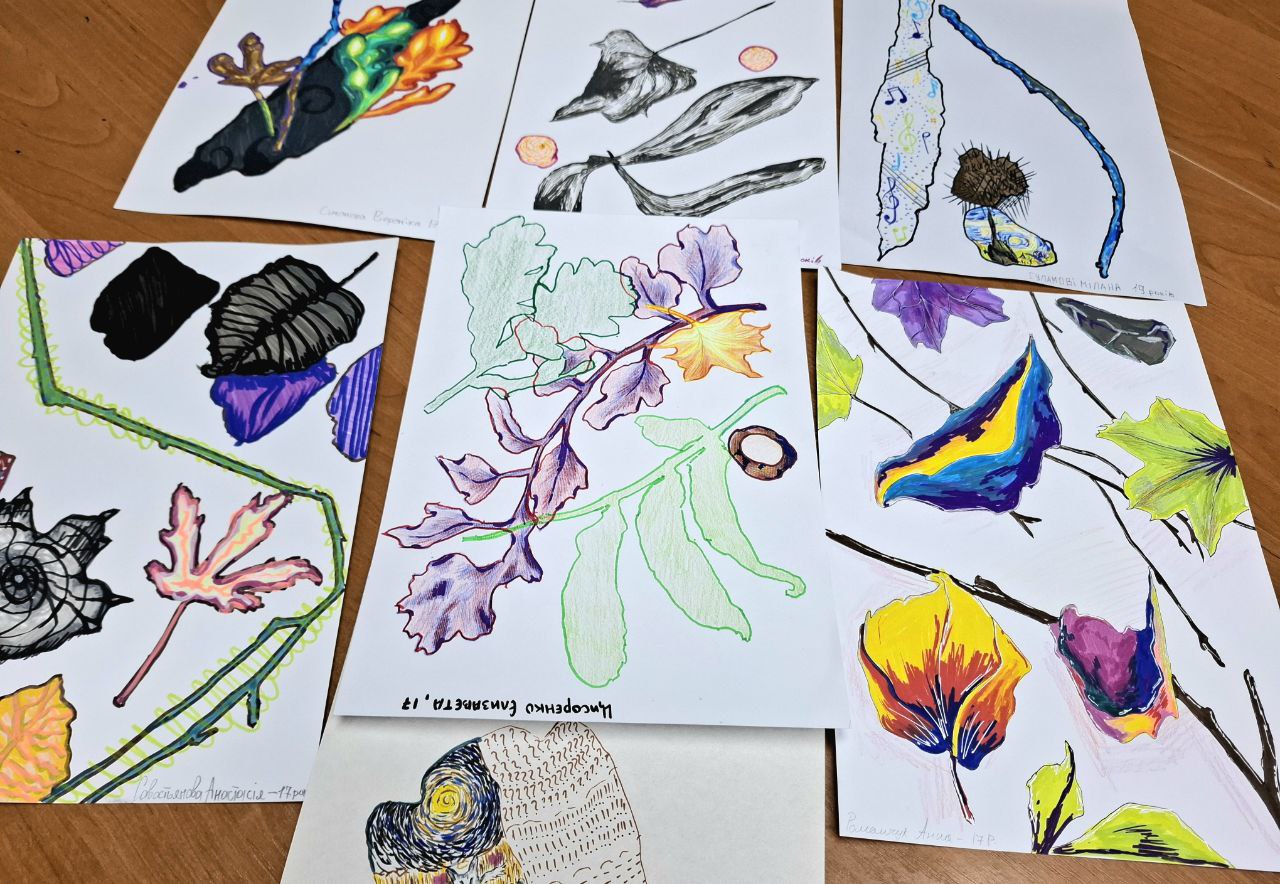
Filling the resulting graphic voids with patterns and hatching became an act of sublimation and resourcing. It was a metaphor for filling the place previously occupied by loss with life, resources, or new meanings. Participants employed various graphic techniques that reflected their individual stress-coping strategies: dense hatching served as a metaphor for protection and the construction of new supports, while lace-like, light patterns symbolised the search for beauty and inner light even in dark times. It was a process of active imagination in which the “white spot” became a personal space of strength. As one participant aptly noted, the realisation that the void can be filled with one’s own content, rather than imposed pain, became a turning point in the perception of her own trauma.
The results of the session demonstrated the high effectiveness of art therapy interventions in working with IDPs. This art therapy practice allowed participants to traverse the path from passive fixation on loss to the active creation of new meanings; to symbolically complete an important cycle; to realise the beauty and ephemerality of the transient; to transform the pain of loss into a space for a new life resource; and to restore a sense of control over their own inner world. Contemplating their drawings, filled with symbols of hope and resilience, people felt that the completion of one cycle inevitably opens space for the beginning of a new one.
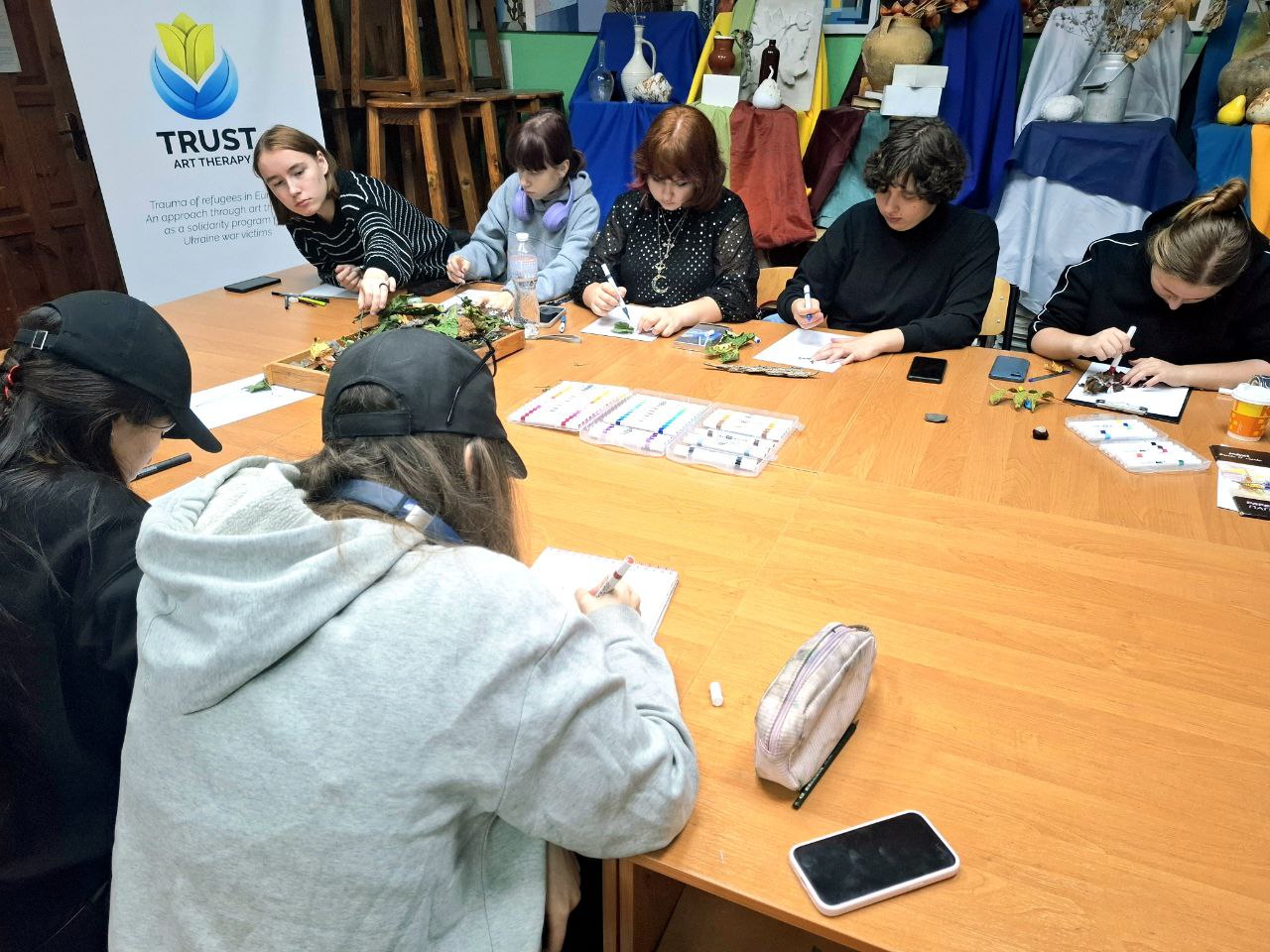
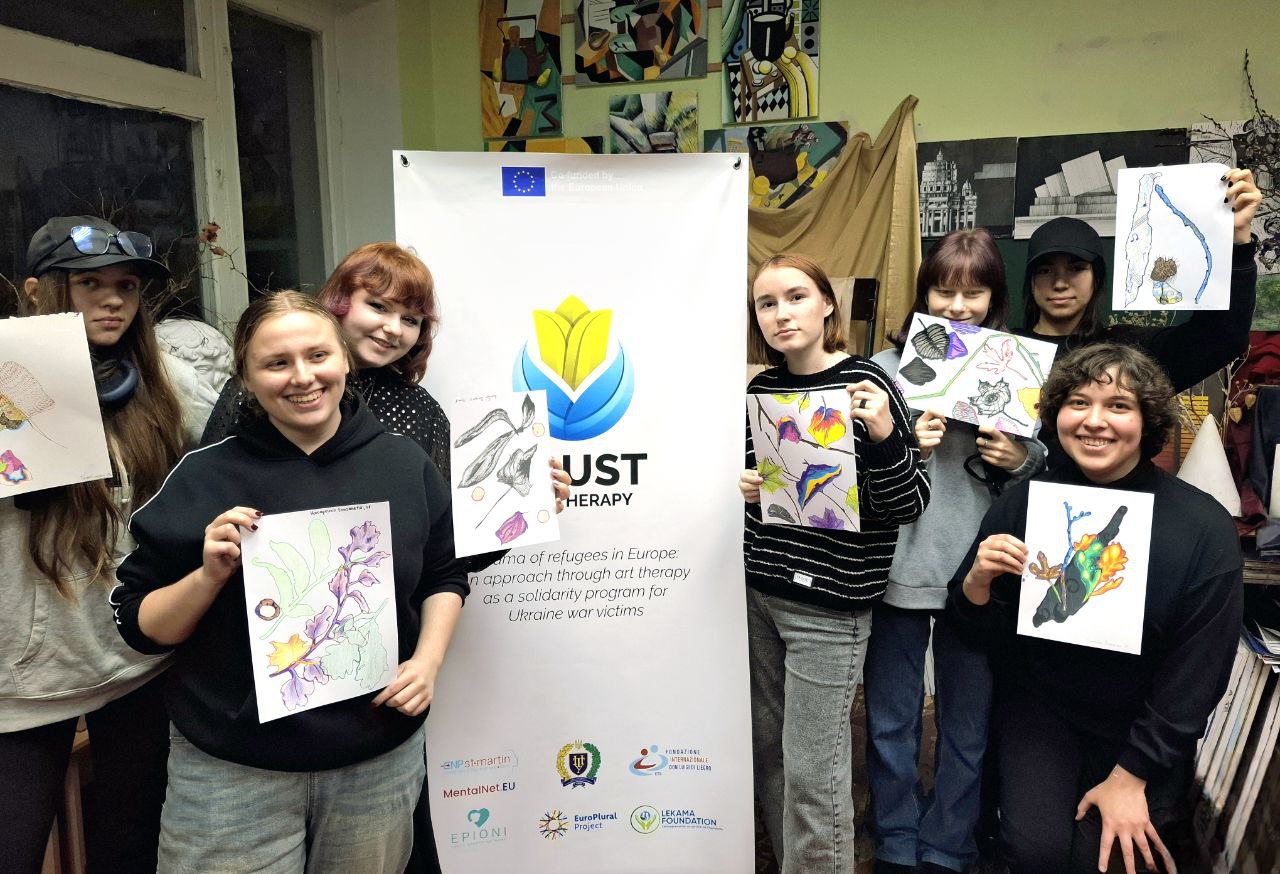
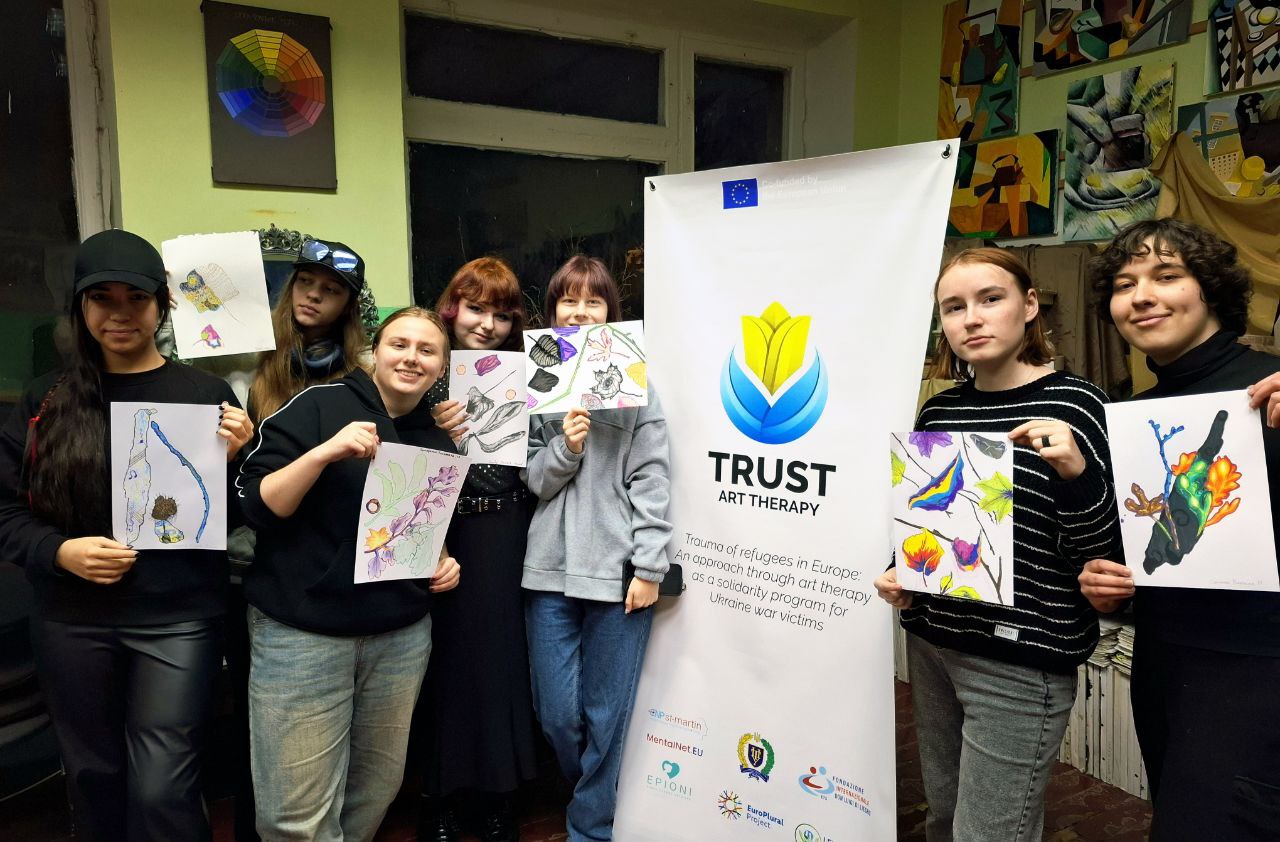
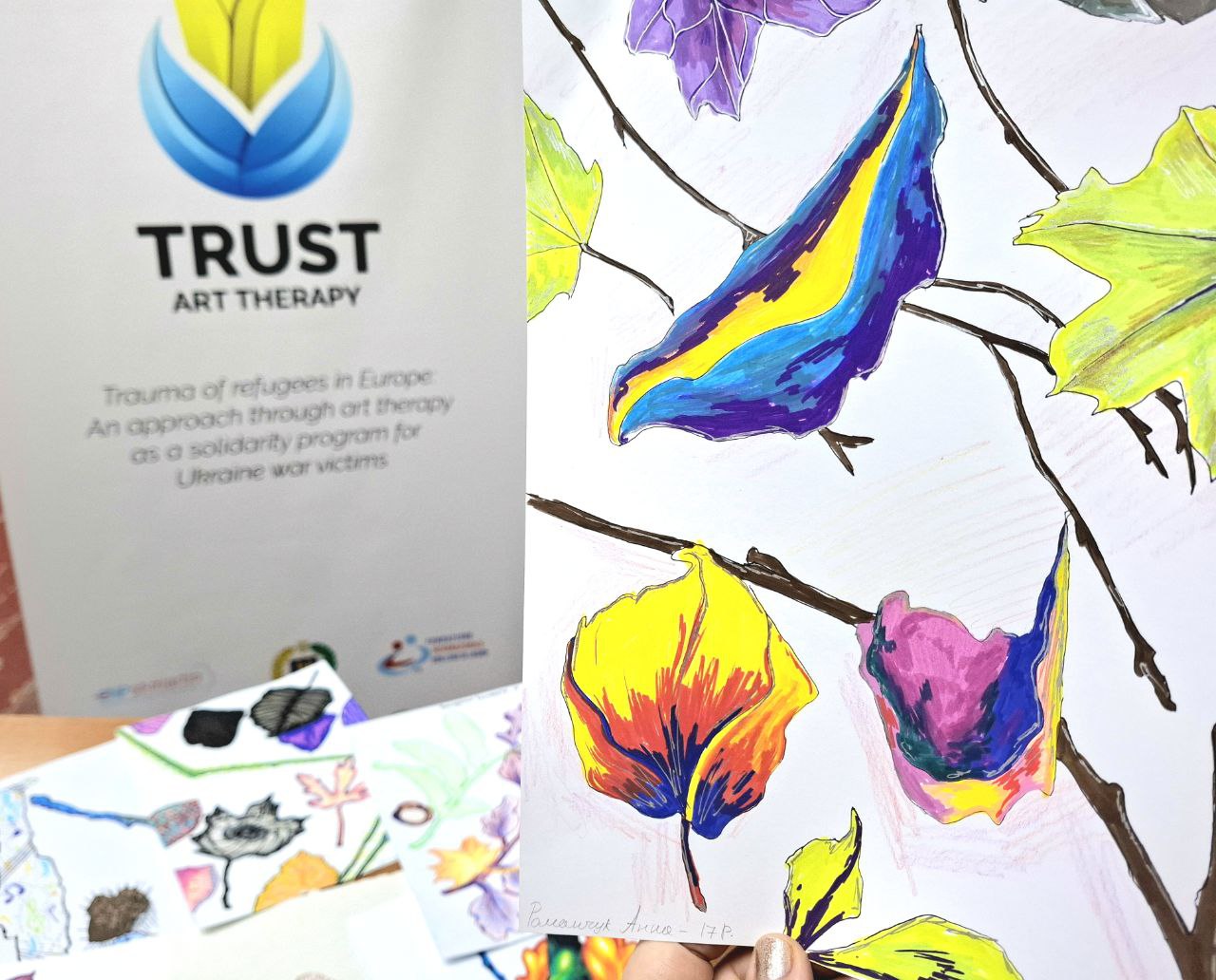
The event was held as part of the international, large-scale EU-funded Erasmus+ KA220-ADU project “TRUST” – Trauma of refugees in Europe: An approach through art therapy as a solidarity program for Ukraine war victims (Grant No. 2024-BE01-KA220-ADU-000257527).
The project title is decoded as follows:
TRUST
T – Trauma
R – Refugees
U – Ukraine
S – Solidarity
T – Therapy
The project is co-funded by the EU and led by the Centre Neuro Psychiatrique St-Martin from Belgium, in partnership with the National University “Yuri Kondratyuk Poltava Polytechnic” (Ukraine), Greek Carers Network EPIONI (Greece), Fondazione Don Luigi Di Liegro (Italy), Lekama Foundation (Luxembourg), EuroPlural Project (Portugal).
We express our sincere gratitude to our partners for their invaluable support, which makes it possible to implement such vitally important initiatives that bring the light of hope and healing to those who need it most.
It is worth noting that Poltava Polytechnic lecturers are eligible to participate in academic mobility and internship programs. Students can study abroad through Erasmus+ credit academic mobility grant programs for a semester or a full academic year at leading universities in Austria, Denmark, Estonia, Finland, Germany, Greenland, Latvia, Lithuania, the Netherlands, Norway, Poland, Portugal, Romania, Slovakia, Spain, and the Czech Republic.
For more detailed information regarding current internship, teaching, and academic mobility programs abroad, please get in touch with the International Relations Department (office 213-C, interoffice@nupp.edu.ua) or Poltava Polytechnic’s International Relations Coordinator – Ph.D. in Philology, Associate Professor of the Department of Germanic Philology and Translation, Anna Pavelieva (email: kunsite.zi@gmail.com, phone: +38-(095)-91-08-192).