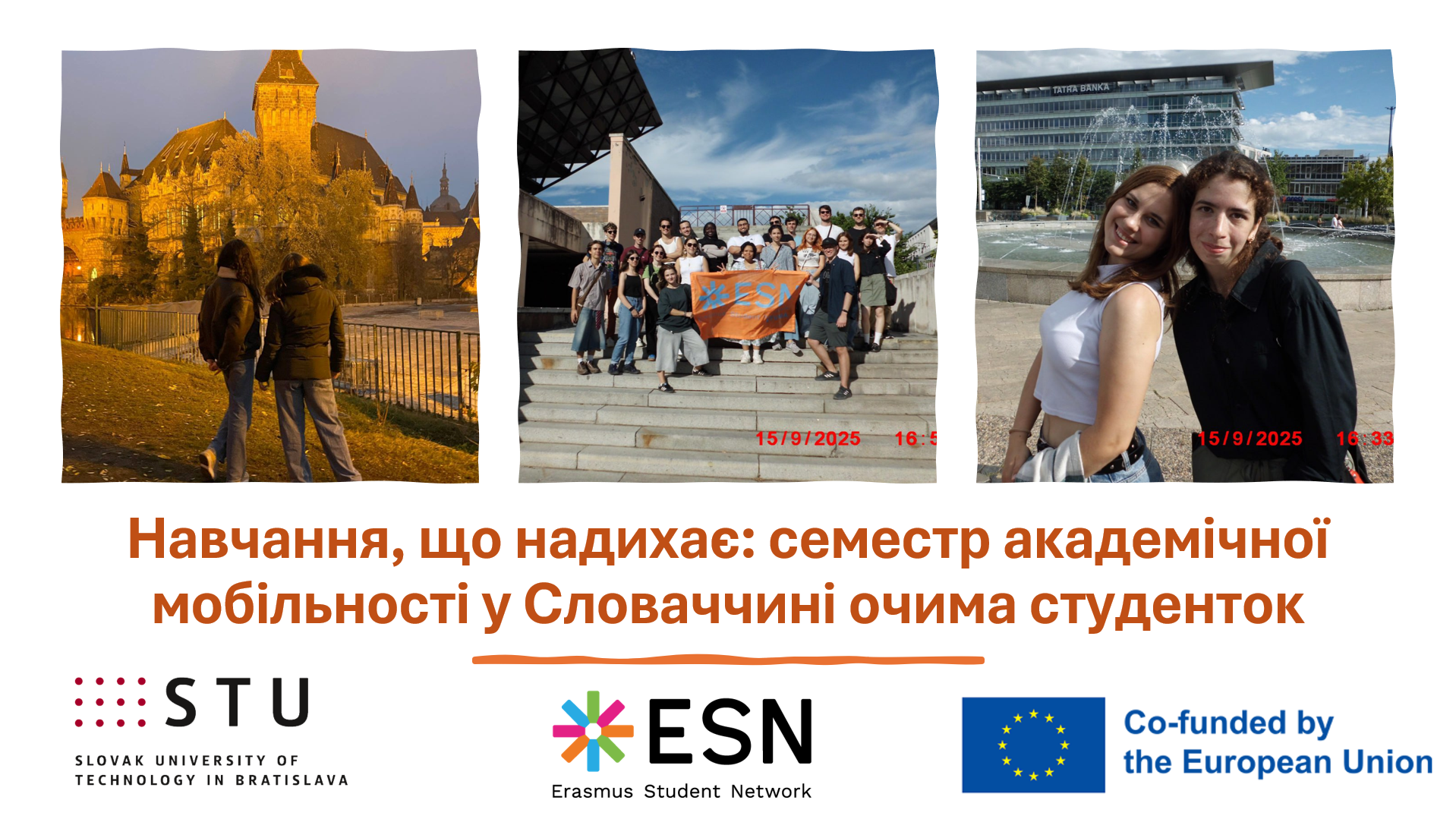
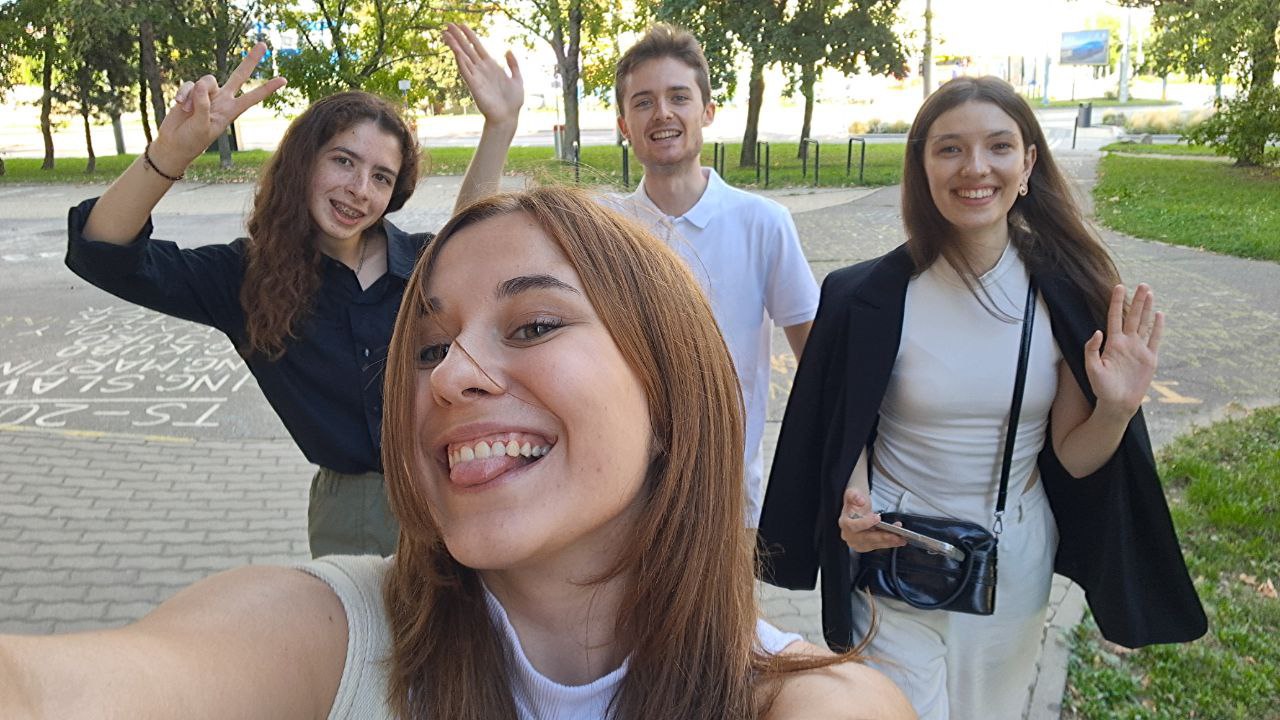
International academic mobility continues to open new horizons for Ukrainian students. In the autumn semester of the 2025–2026 academic year, two students majoring in “Construction and Civil Engineering” – Maryna Klymovych (group 203-B) and Alona Shapar (group 202-B) – are studying under the Erasmus+ credit academic mobility program at the Slovak University of Technology in Bratislava (Slovakia).
For Maryna and Alona, this internship became not just an educational trip, but a true immersion into a new cultural and professional environment. Several months of intense life are already behind them, filled with lectures, practical classes at real sites, volunteer initiatives, and travels across Europe. The students shared more details about the peculiarities of the educational process, the use of the latest technologies, the activities of the Erasmus Student Network, and their vivid impressions of life in the heart of Europe: “The third month of our academic mobility at the Slovak University of Technology in Bratislava is underway. The examination period is approaching, marking the gradual conclusion of the semester. Beyond the educational process, we actively participate in the student community: the Erasmus Student Network organises events that harmoniously combine sports, cultural development, and leisure activities.
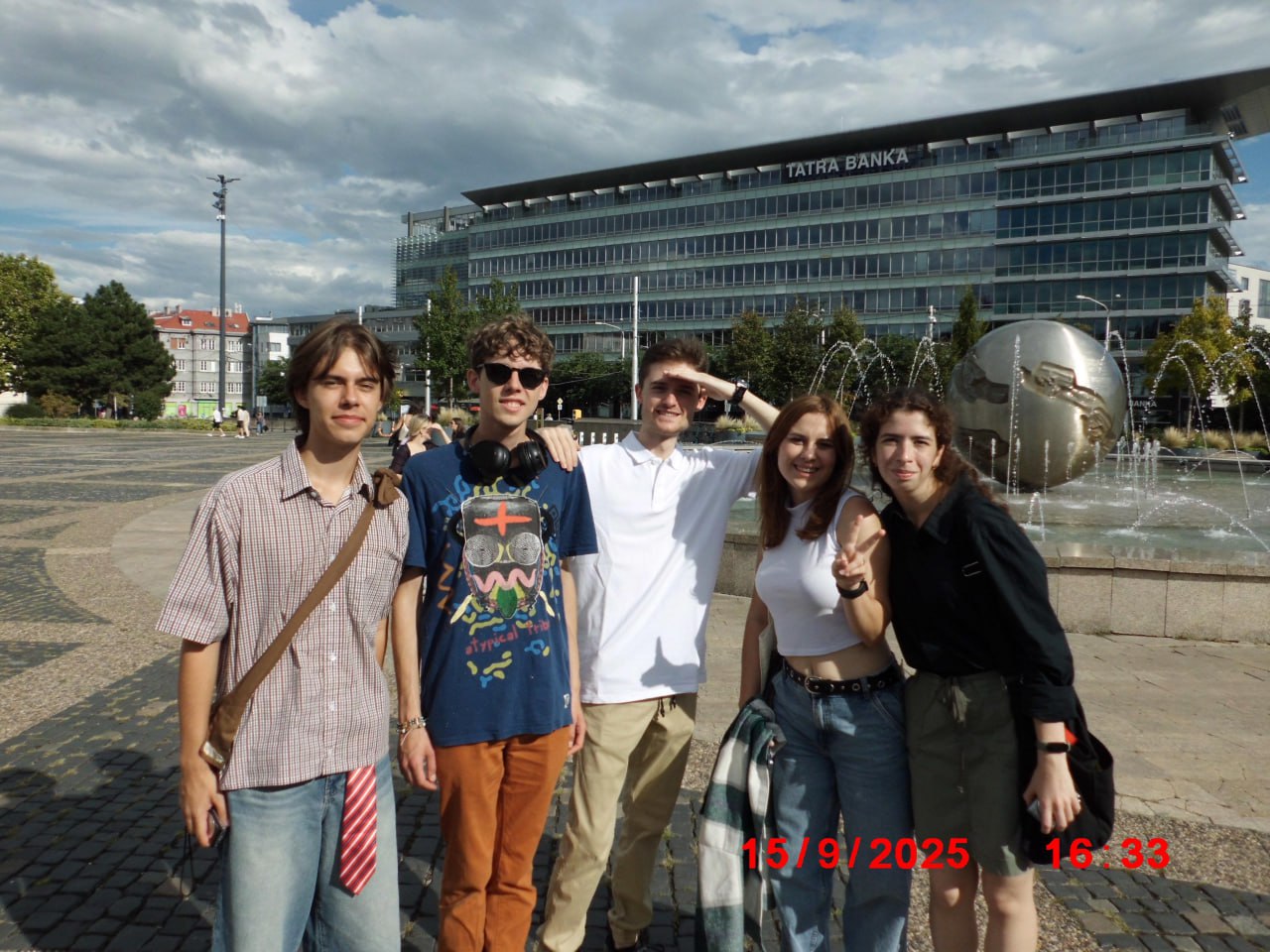
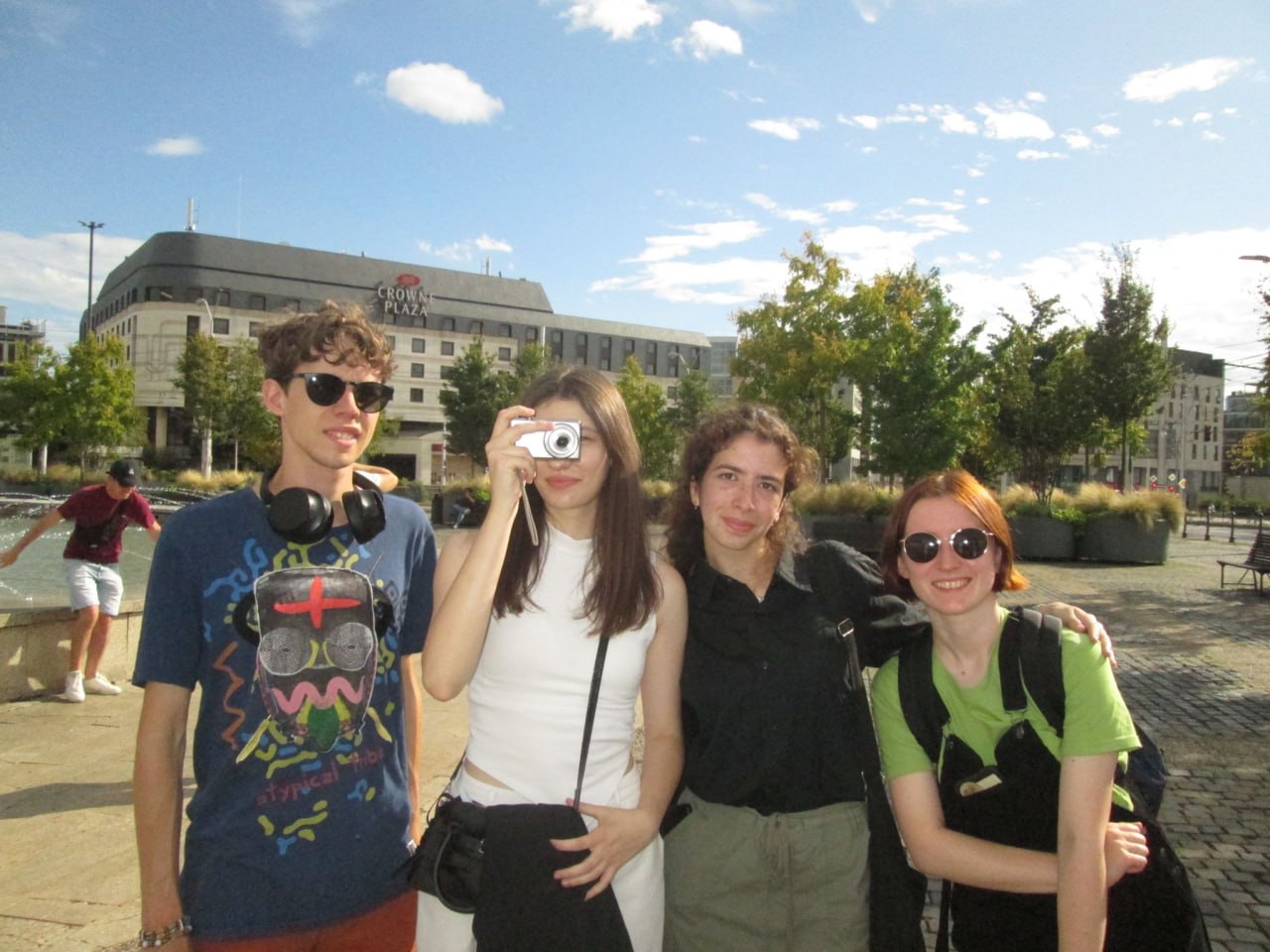
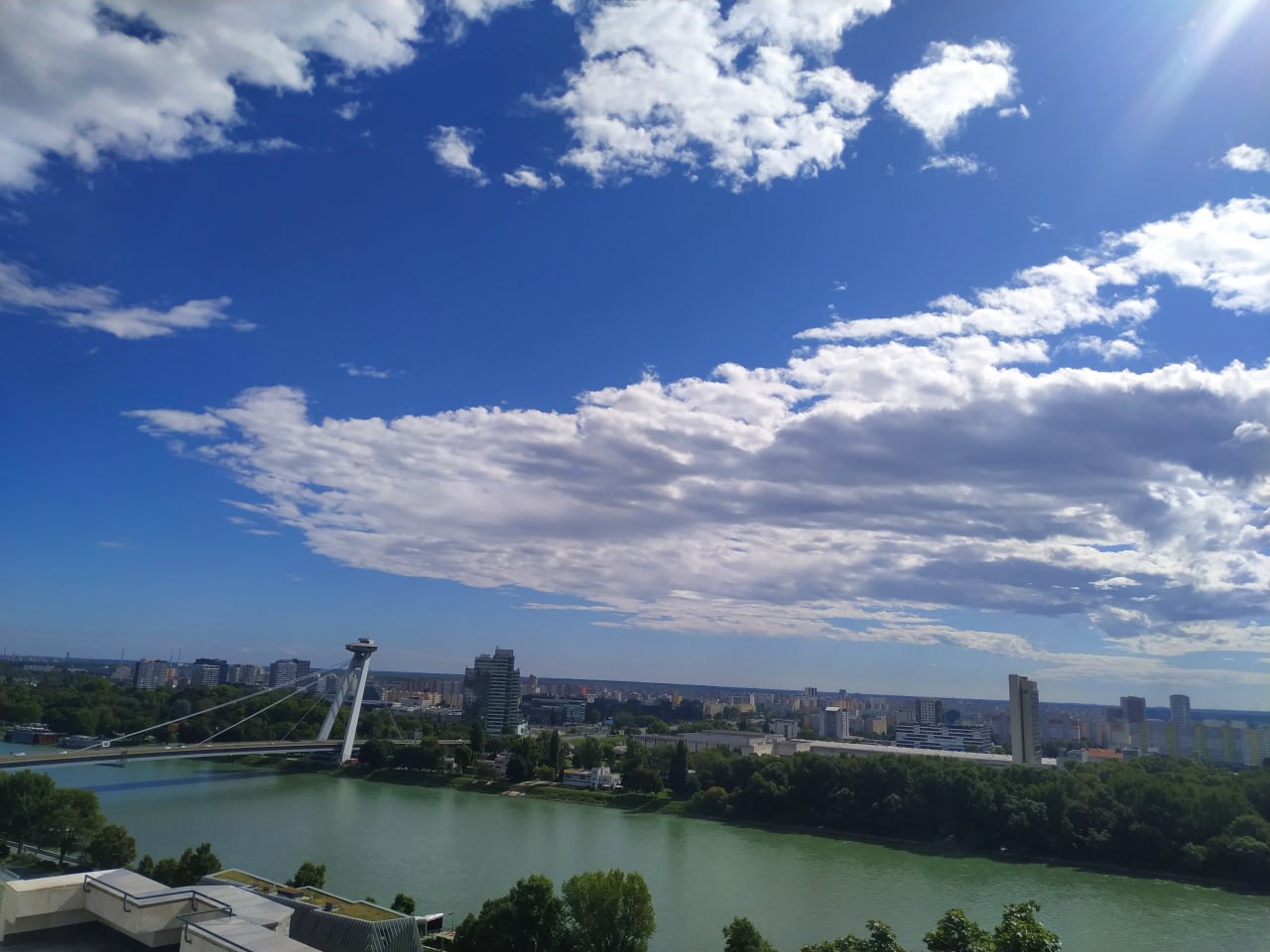
It all started with getting acquainted: with the city, the university, and, most importantly, with the people. ESN volunteers arranged an incredible Welcome Week for us, where they showed us everything: from academic buildings and lecture halls to the hidden “treasures” of the campus – a cosy café, a swimming pool, and an observation deck on the 22nd floor, which offers a fantastic panorama of the city.
The Welcome Day was especially memorable: we spent the evening on the banks of the Danube, getting to know each other better while playing volleyball in the evening sun. Those were the last carefree days before the start of studies, but even now, when classes have begun, the Erasmus community keeps us entertained, constantly coming up with new activities.
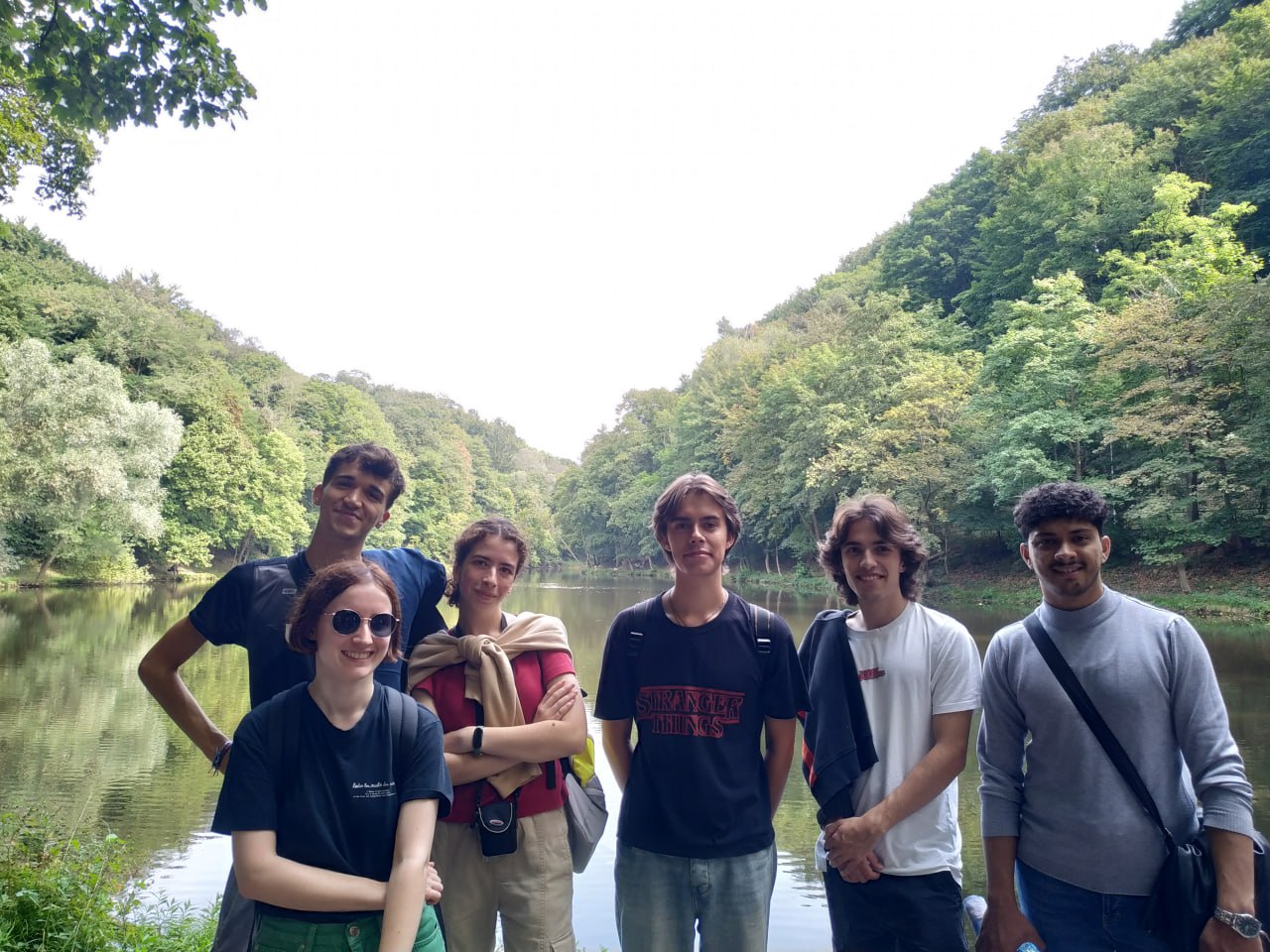
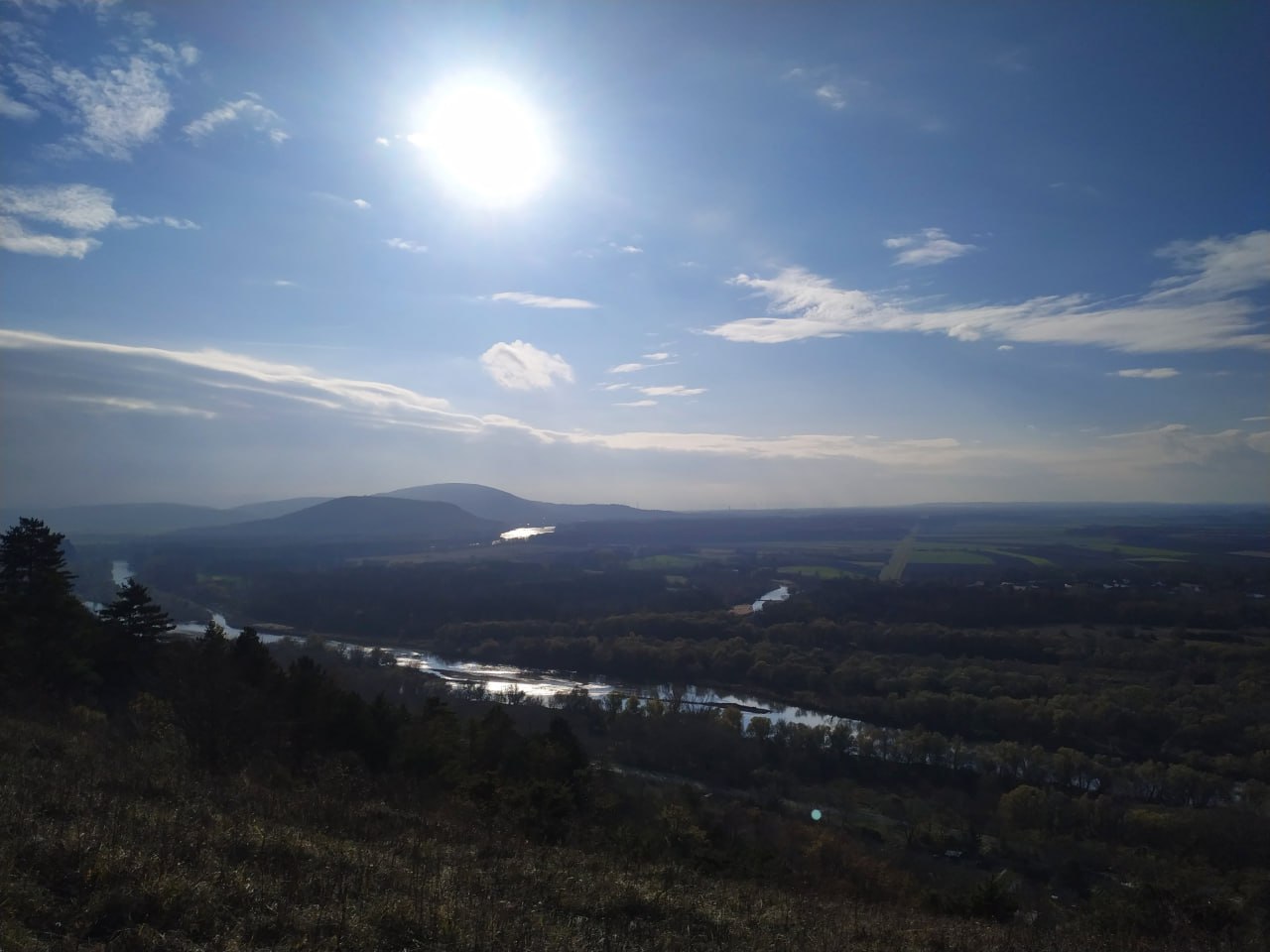
Finding ourselves in the embrace of mountains and forests, we could not waste the chance to explore these picturesque places. We joined hiking tours organised by both our university and colleagues from Comenius University. We managed to conquer the Kamzík peak when sunny greenery still prevailed around, and later, to ascend Devínska Kobyla in the Little Carpathians, when nature had already dressed in golden robes.
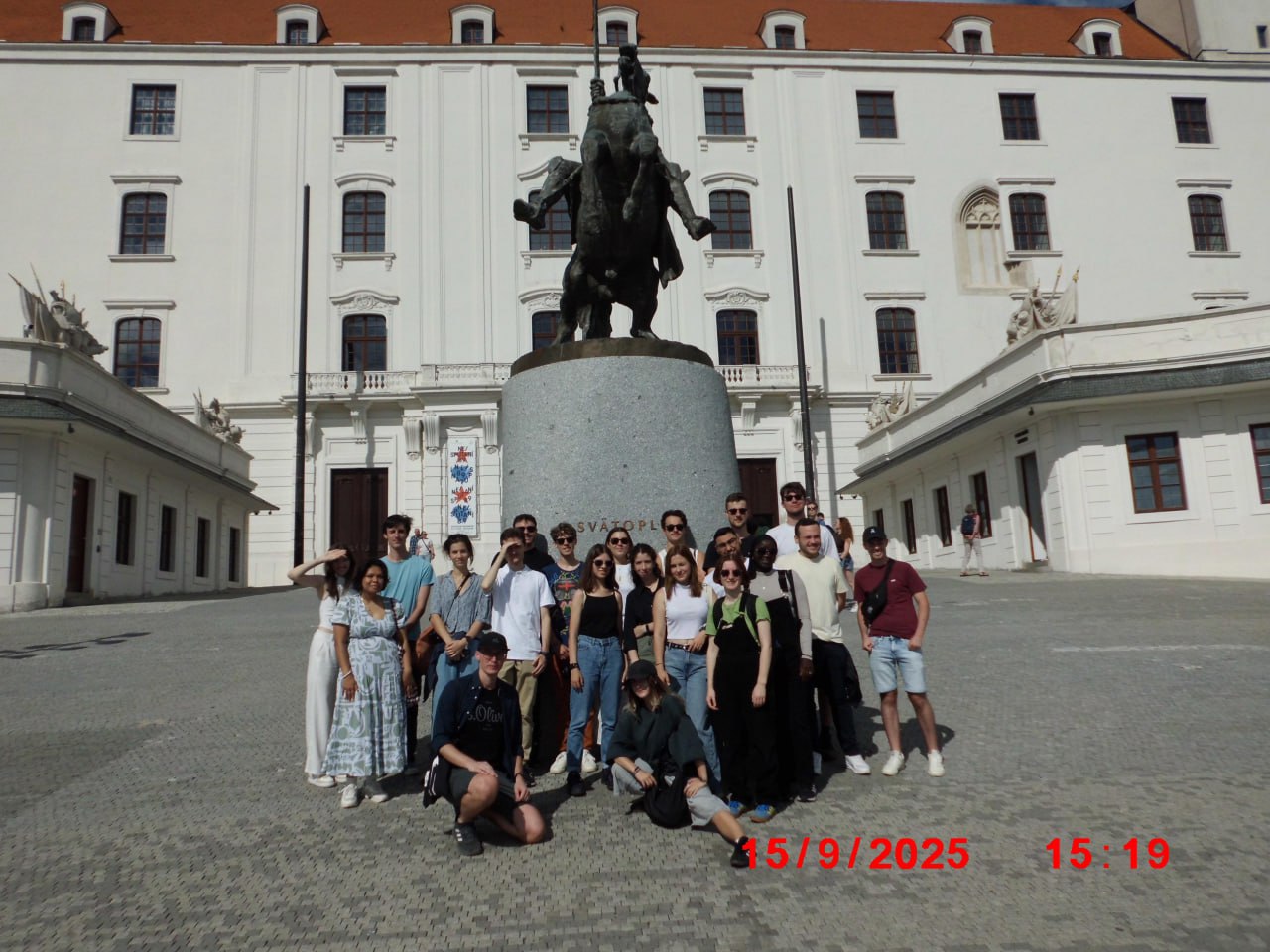
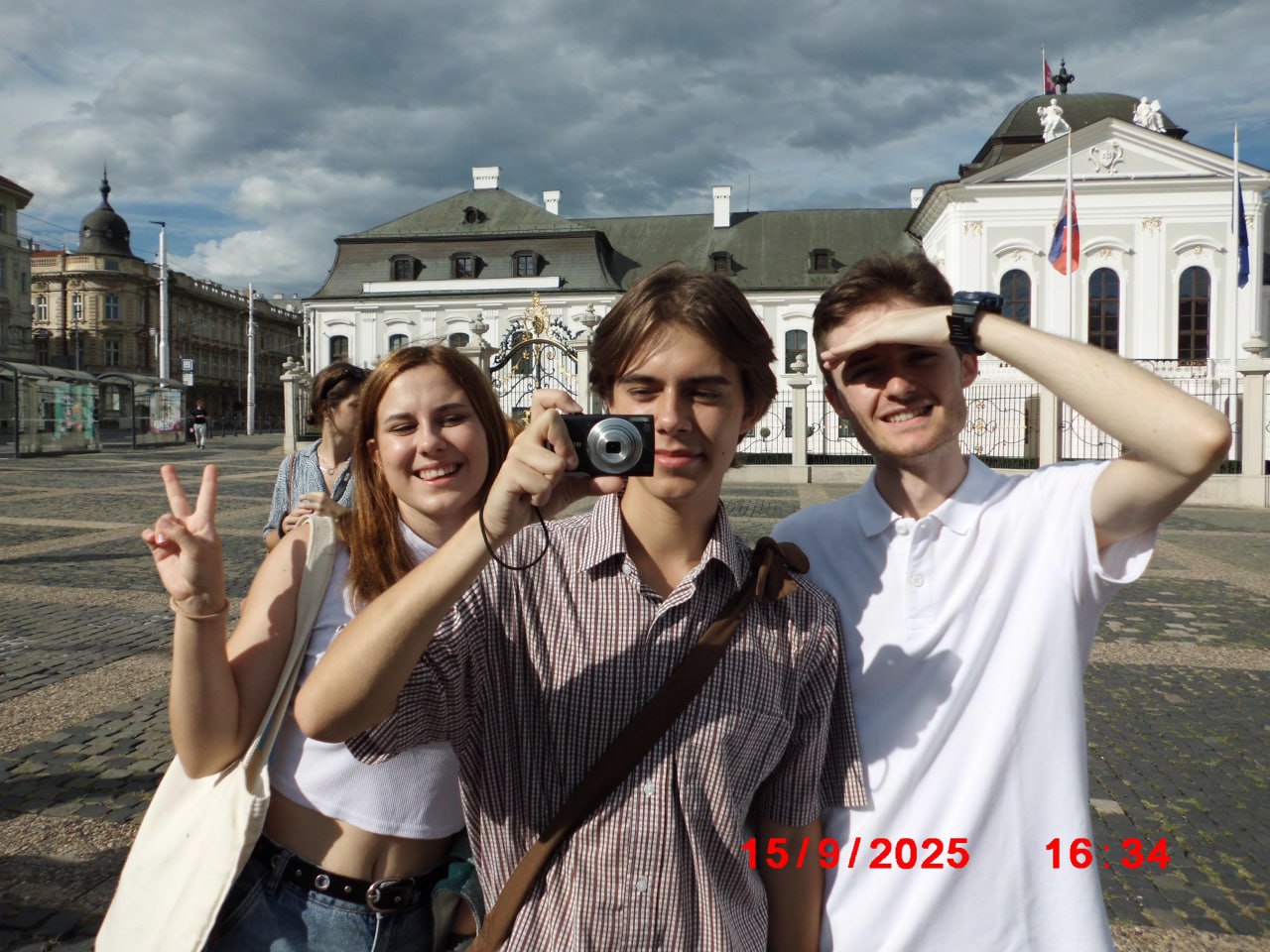
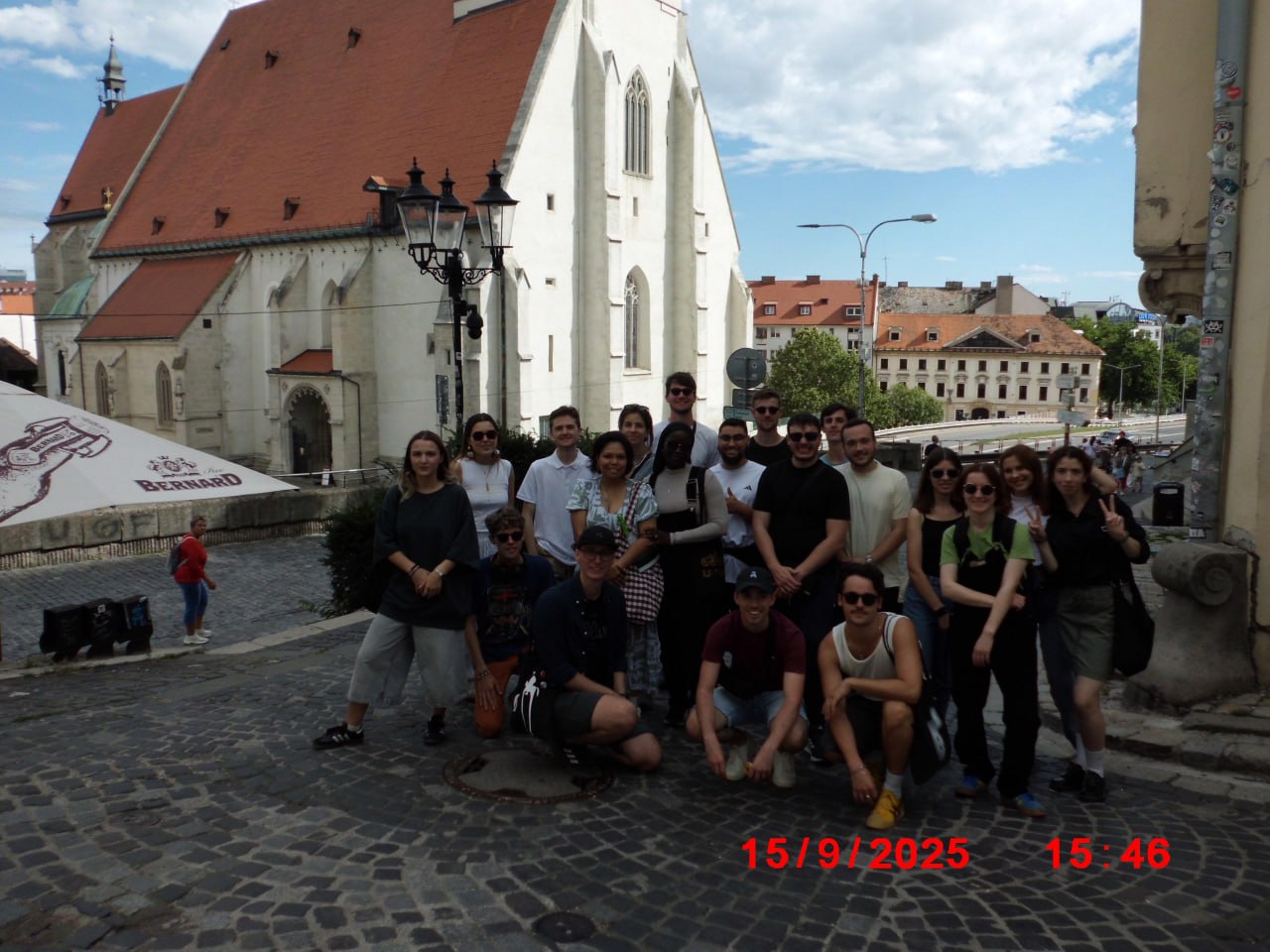
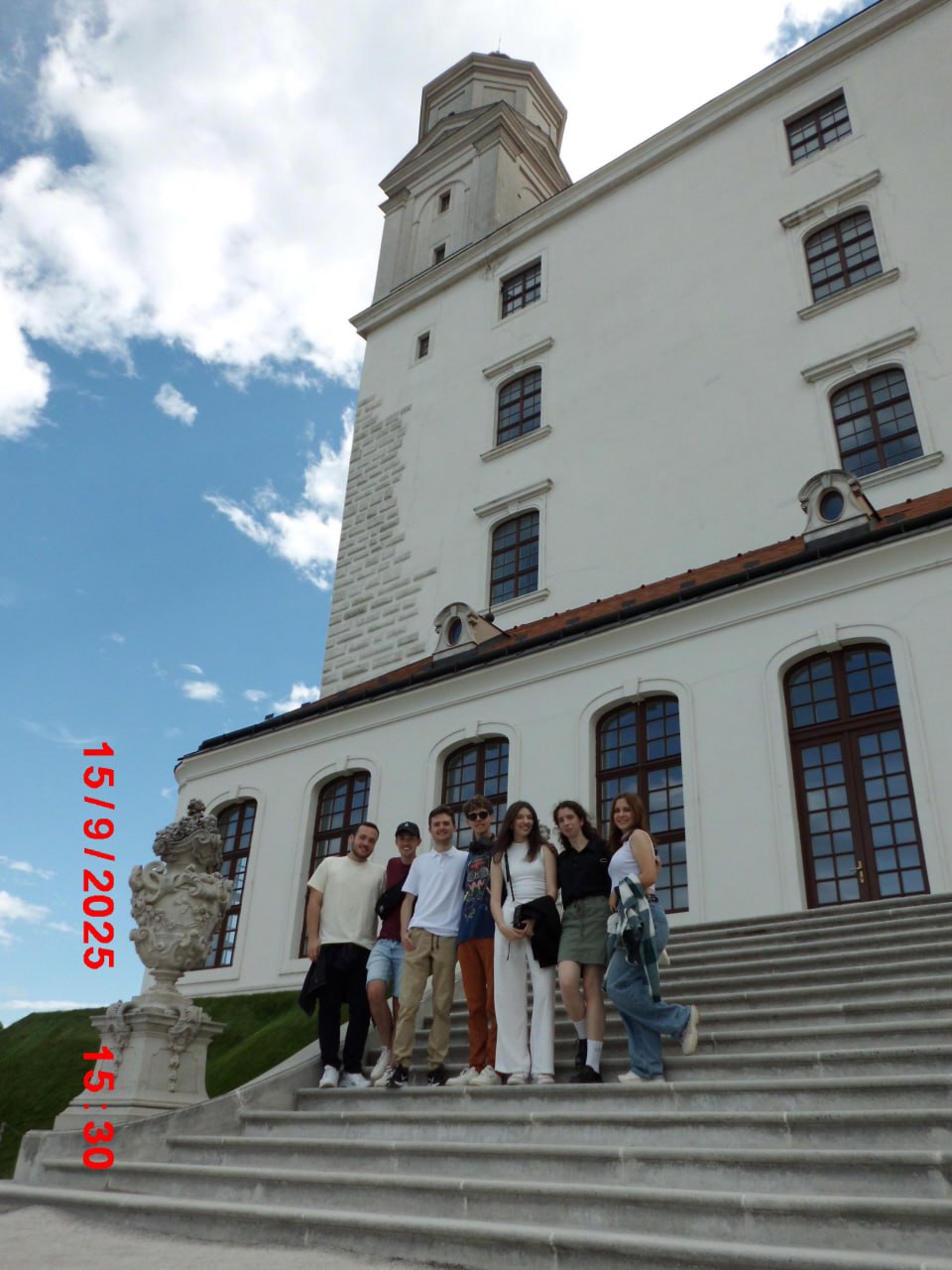
In addition to hikes, we arranged an exciting city tour that concluded with a welcome dinner. This was a valuable opportunity to get to know students from other countries better. Such events allowed us not only to breathe fresh air but also to “reboot”, enjoying mesmerising landscapes and great company. We discovered Bratislava and its surroundings from a new perspective.
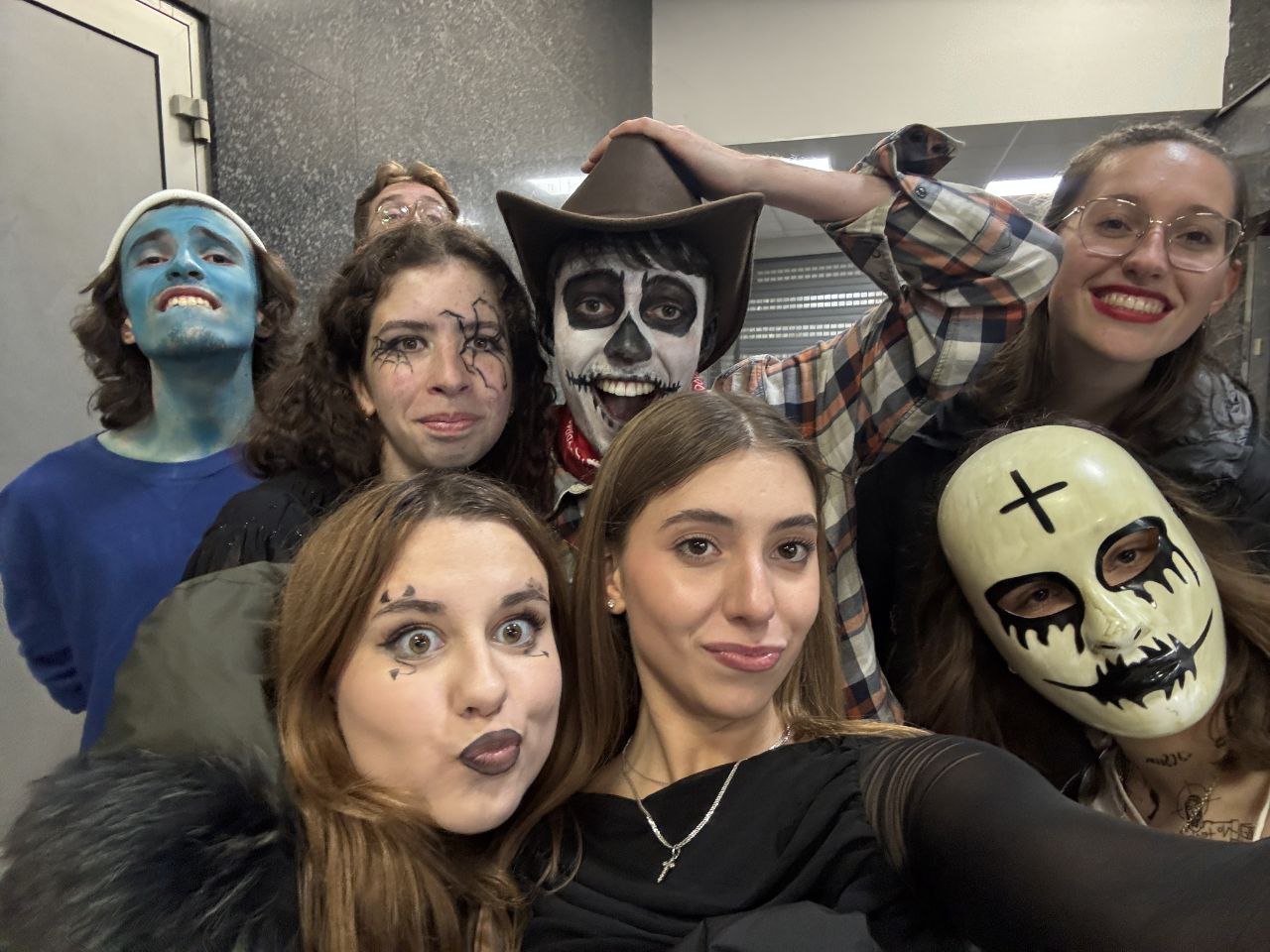
The Erasmus and ESN communities are a true kaleidoscope of cultures and nationalities, most vividly reflected in food. Every two weeks, we have the opportunity to embark on a gastronomic journey at Super Supper evenings. This is not just a dinner but a complete performance in which students from different countries cook national dishes, serve others, and share their traditions. We have already managed to appreciate Slovak, German, Polish, French, and Spanish cuisines – and we must admit, the competition is dire! It’s our turn ahead. We are already planning something truly extraordinary to represent Ukraine and make everyone fall in love with our unique and incredibly delicious cuisine.
The educational process deserves special attention, as theory is inextricably linked with practice. We work with real engineering cases. For example, in the road construction course, we take excursions to local plants that produce road surface materials. In classes on construction production technologies, we study modern European standards for the design and organisation of construction processes. The environmental engineering course enables us to analyse ecological challenges in Slovakia and Ukraine and to identify ways to preserve the environment jointly. A pleasant discovery was the university’s progressiveness: professors not only encourage the use of artificial intelligence but have also introduced separate disciplines that teach how to integrate the latest technologies into professional practice. The classroom environment promotes development: lecturers are open to discussion, and the continuous assessment system ensures an even workload distribution, reducing stress at the end of the semester.
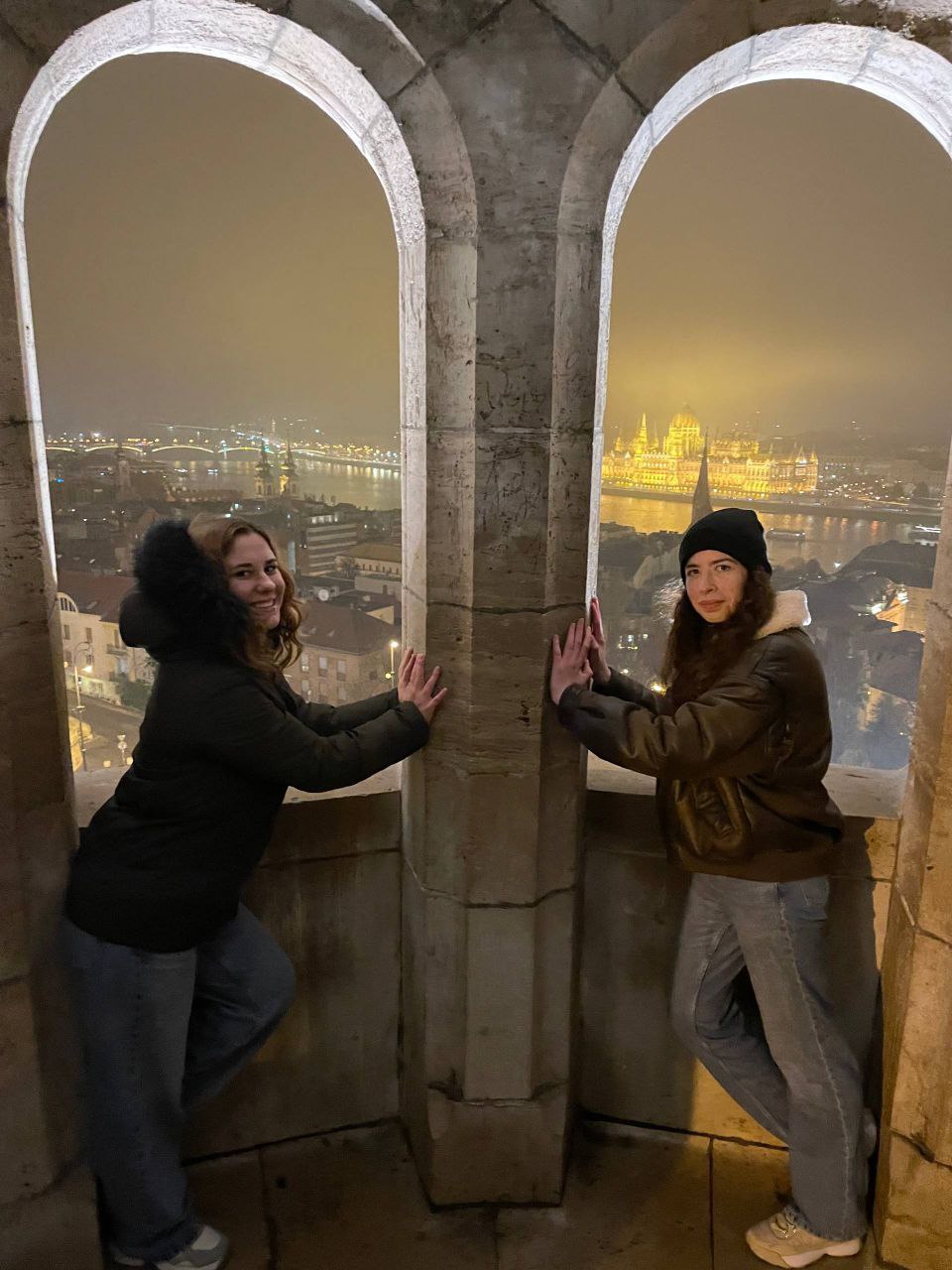
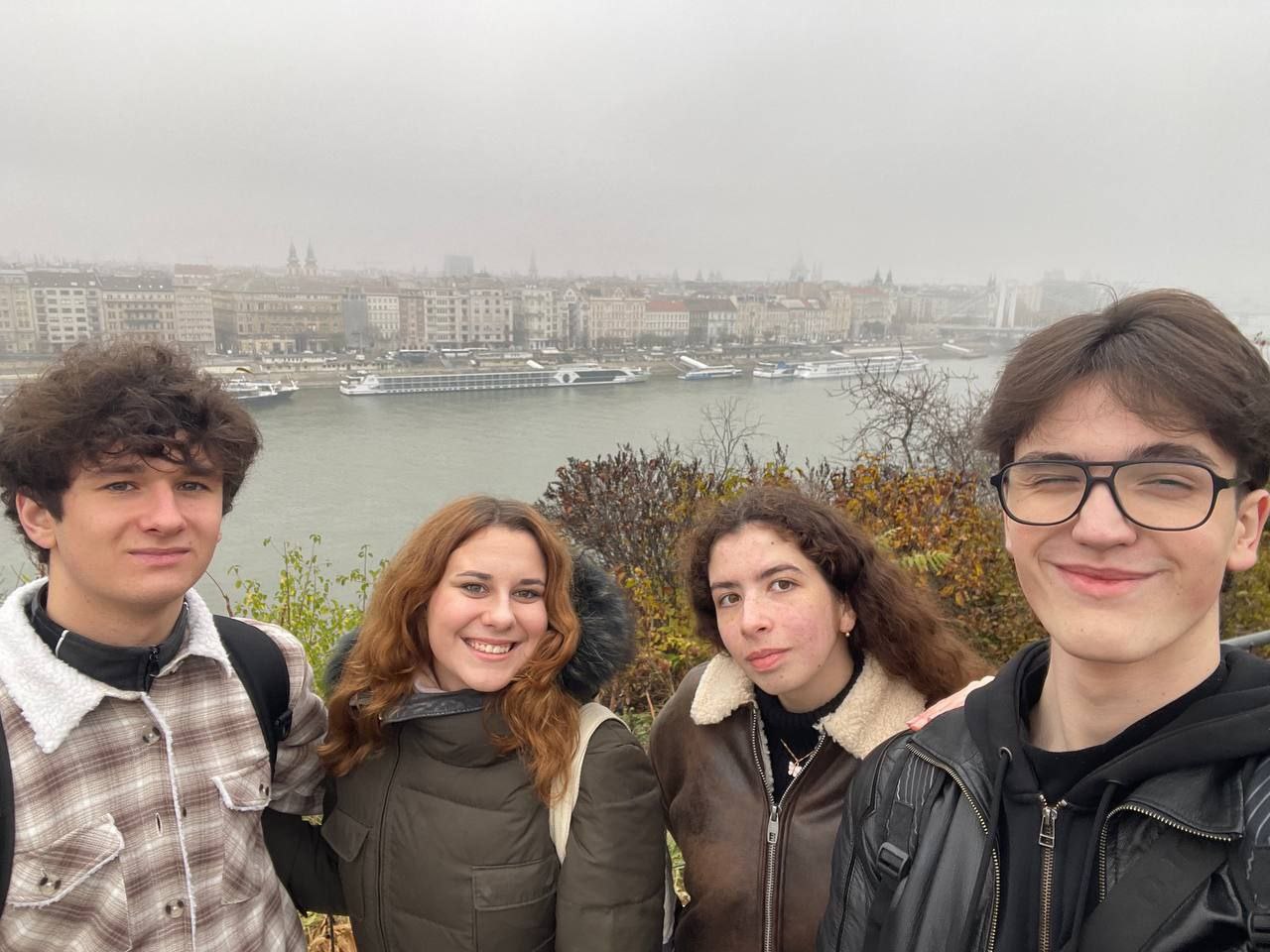
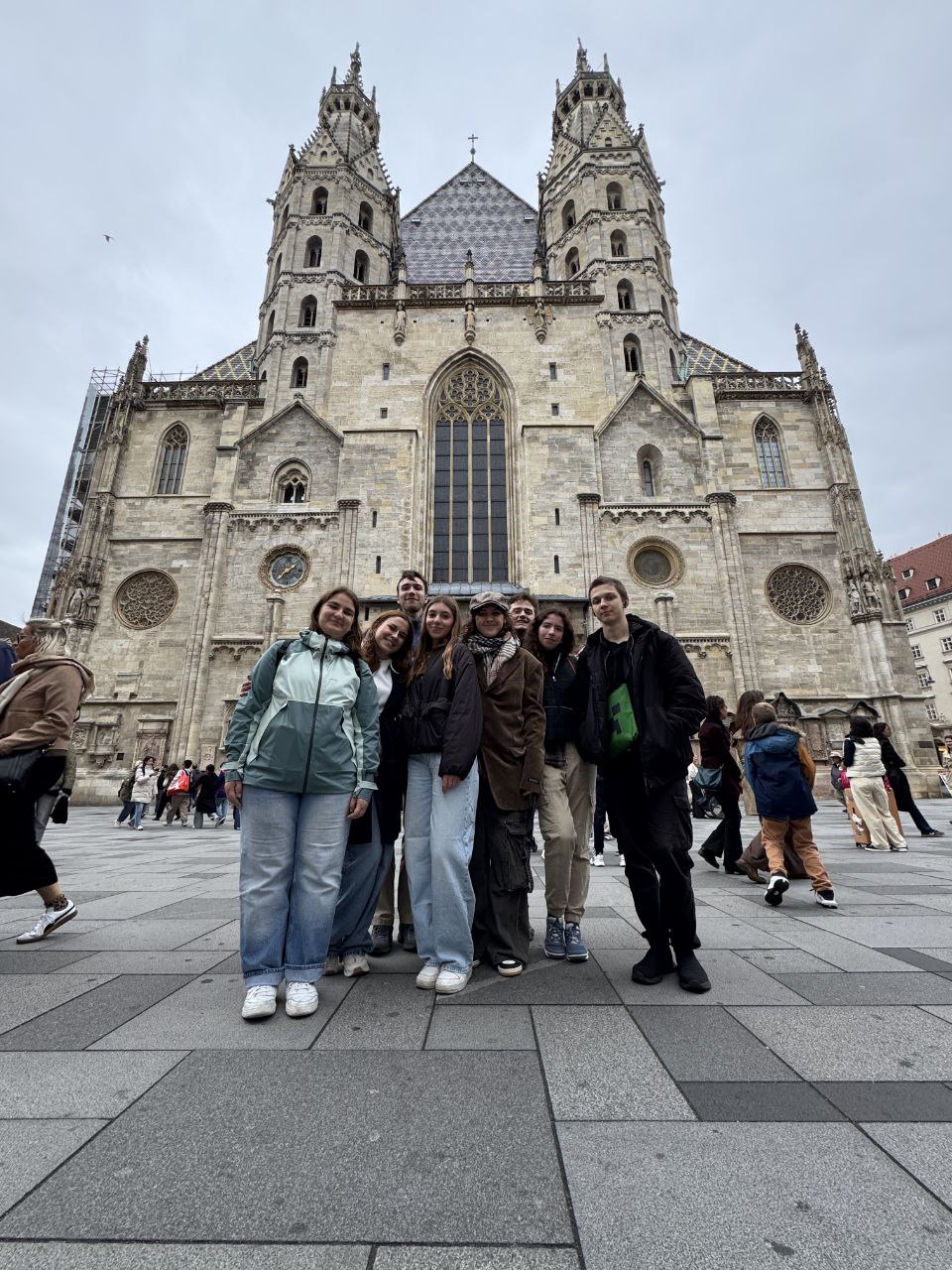
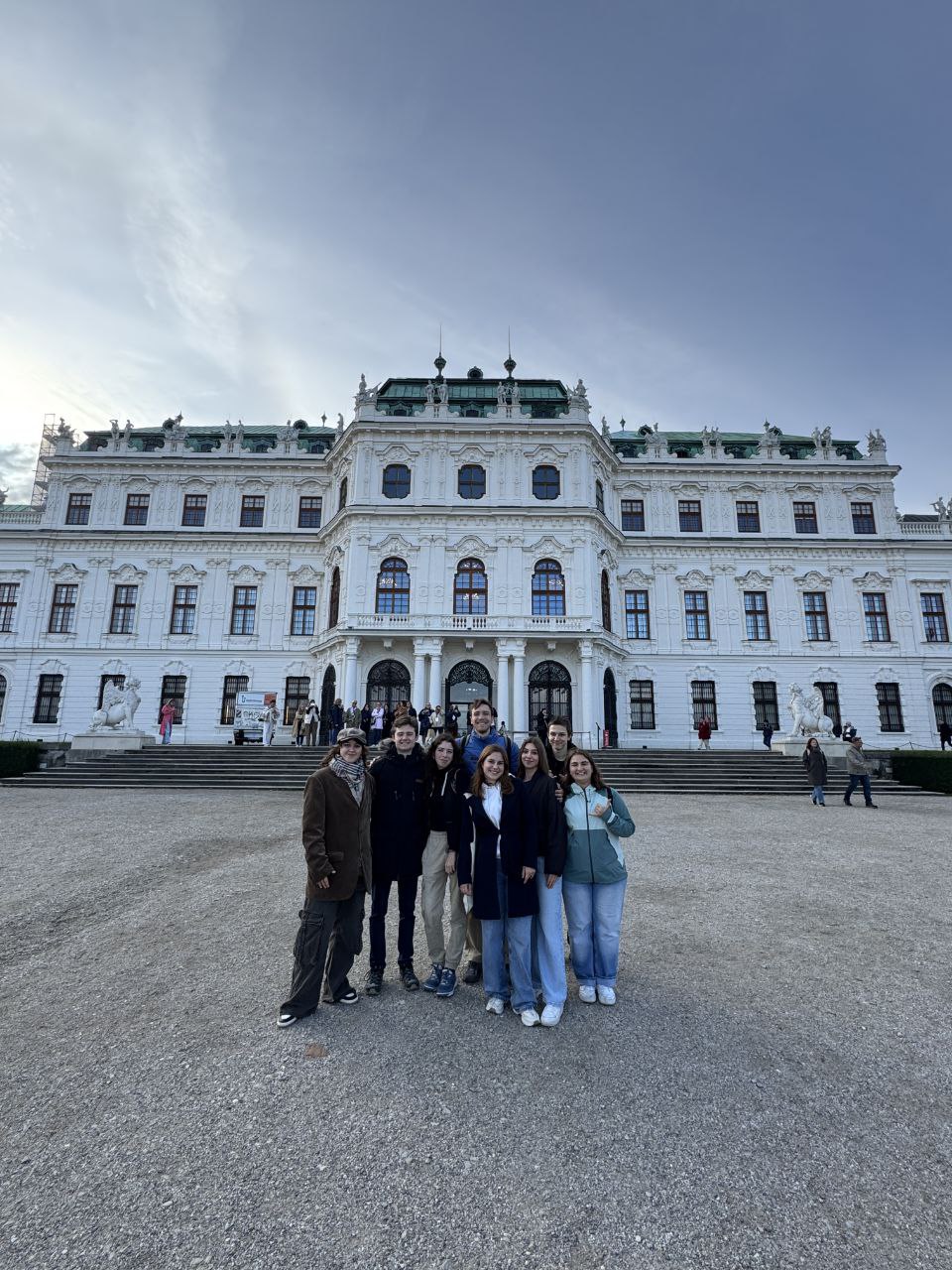
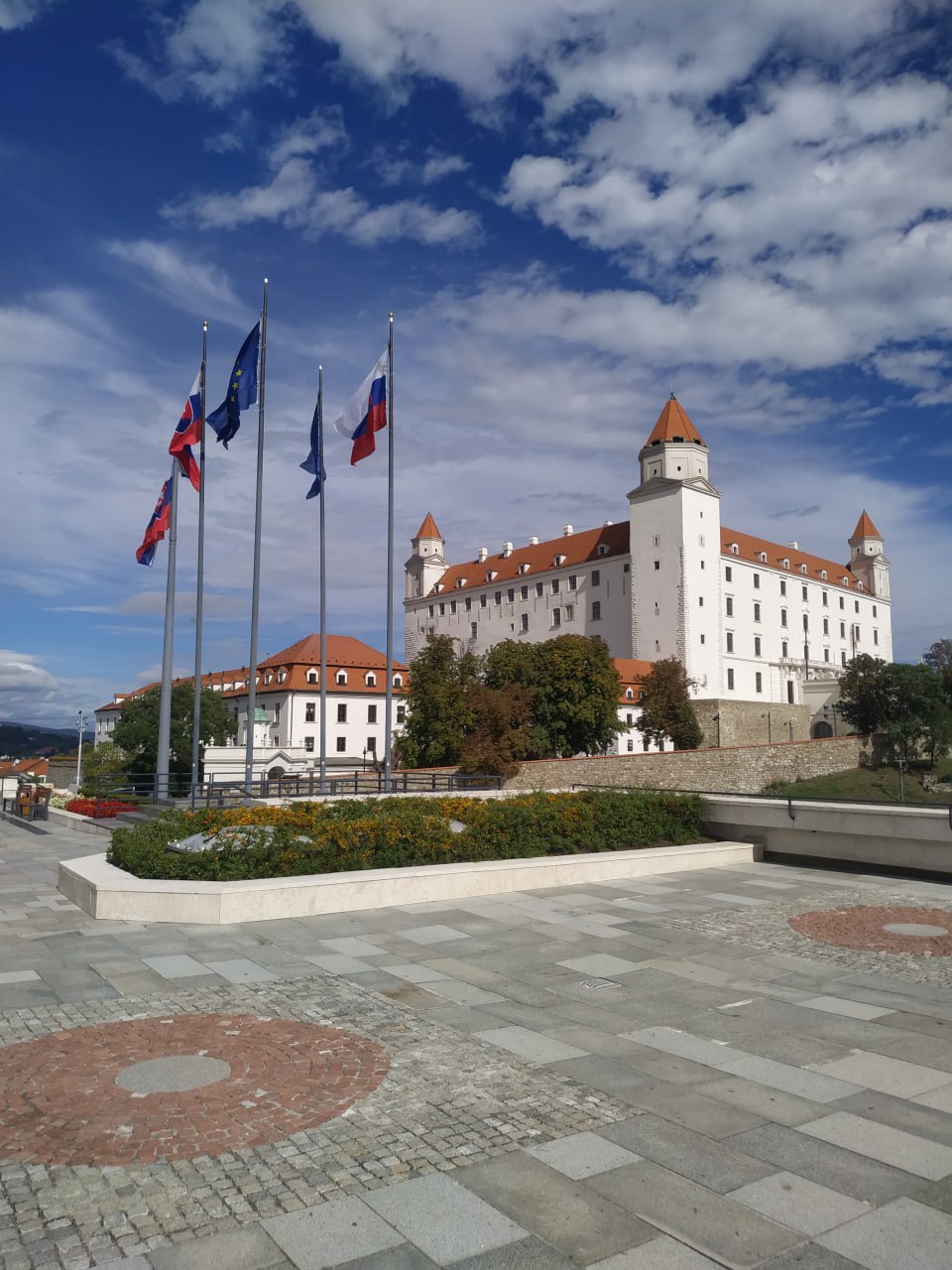
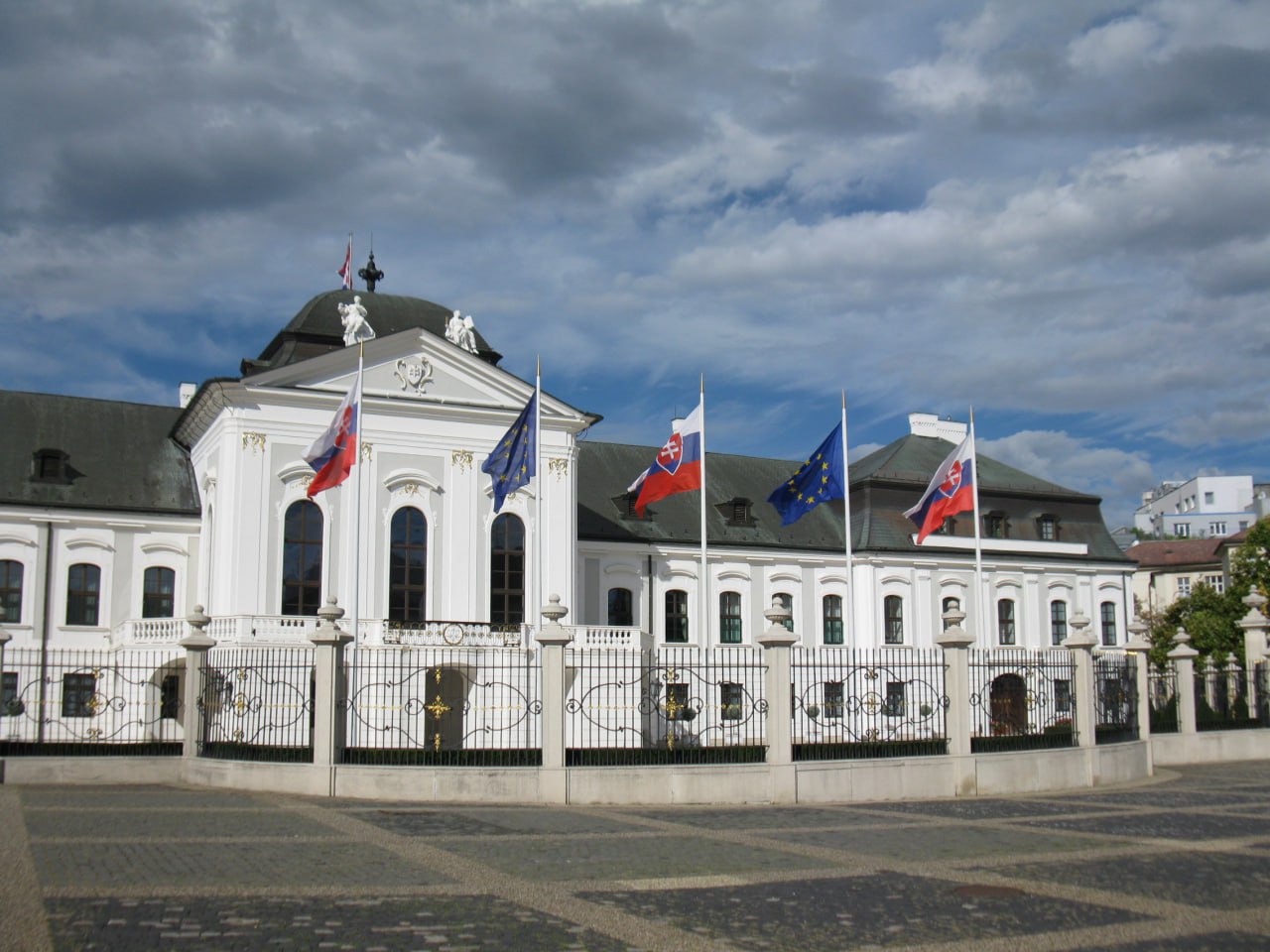
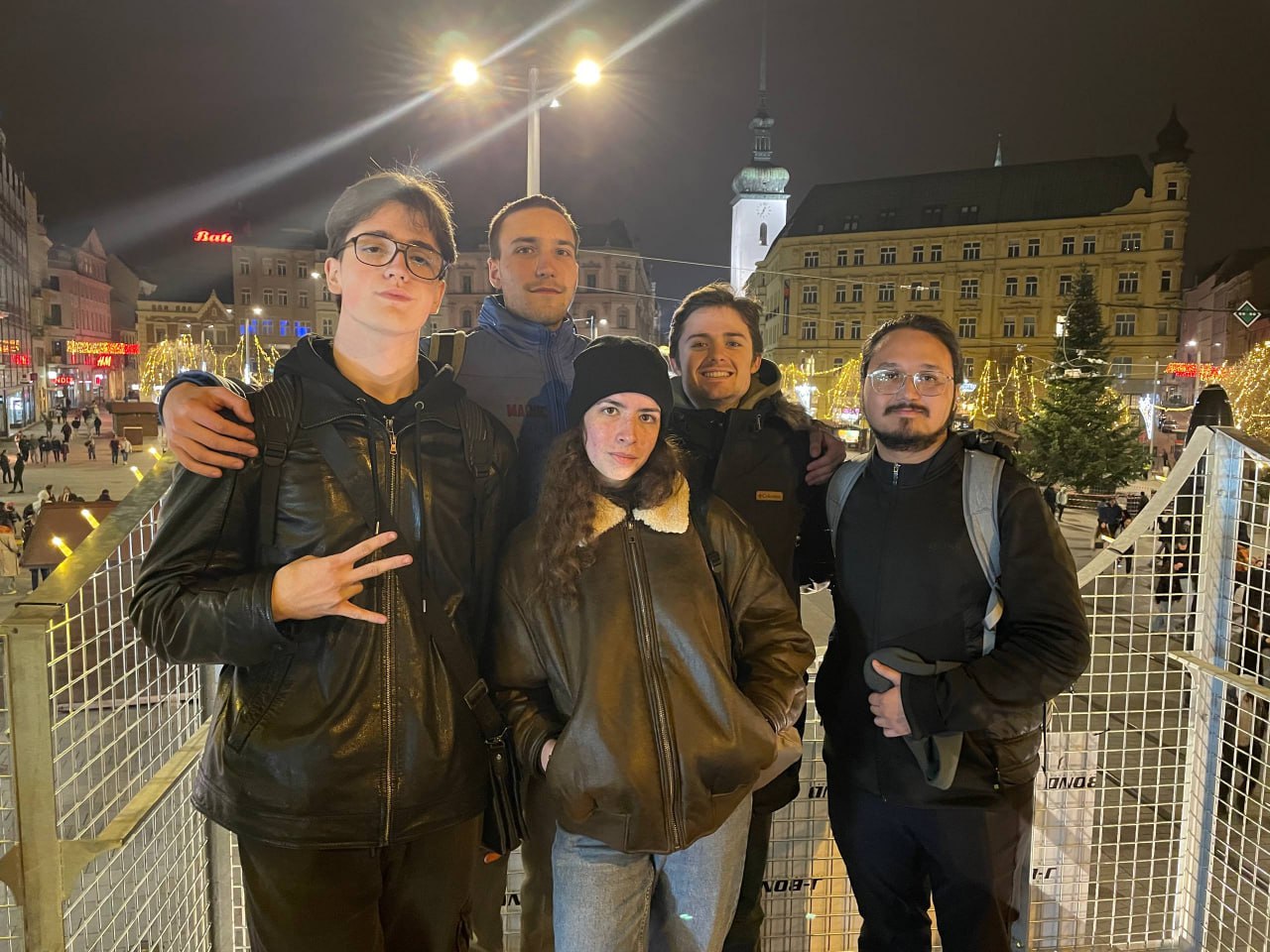
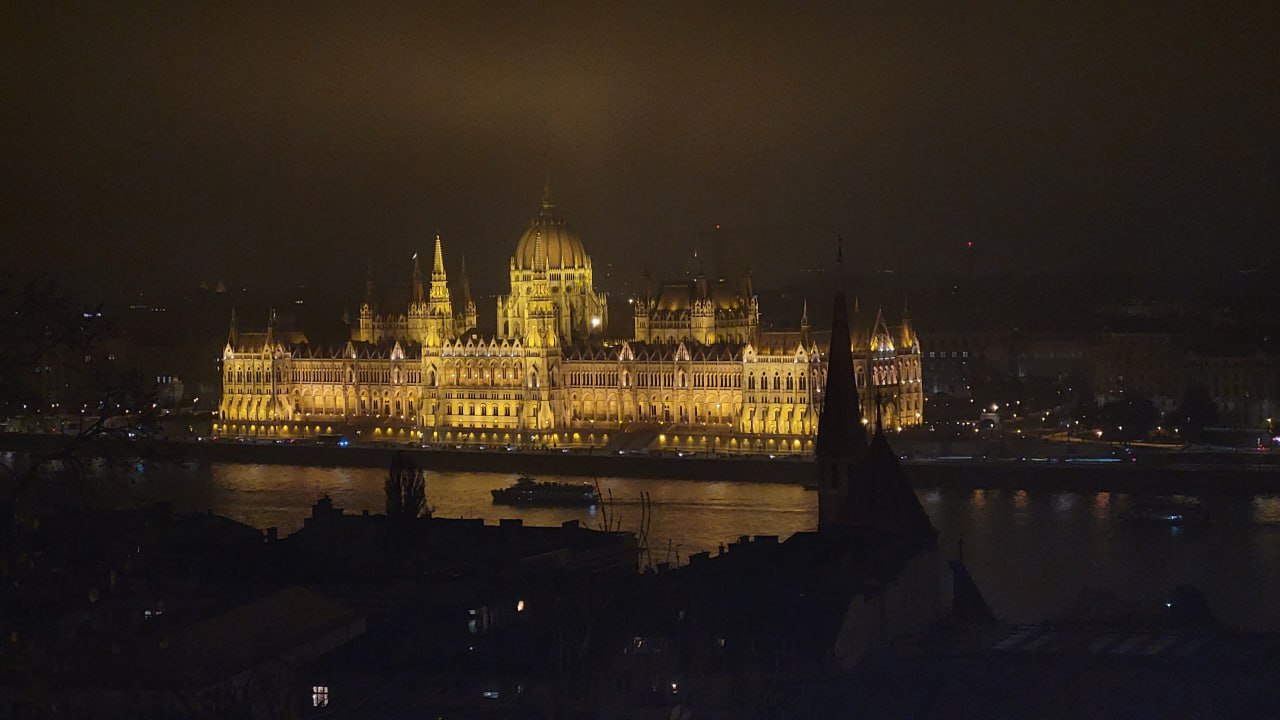
Staying in Slovakia offers great opportunities for us: combining the educational process with exciting travel. Since the country borders five states (Ukraine, Austria, Hungary, the Czech Republic, and Poland), we did not miss the opportunity to explore neighbouring gems. In our treasury of memories, there is already the refined restraint of Vienna, the grandiose luxury of Budapest, and the soulful peace of Brno. Our constant companions on these voyages are other Erasmus students, making every trip a celebration of intercultural communication.
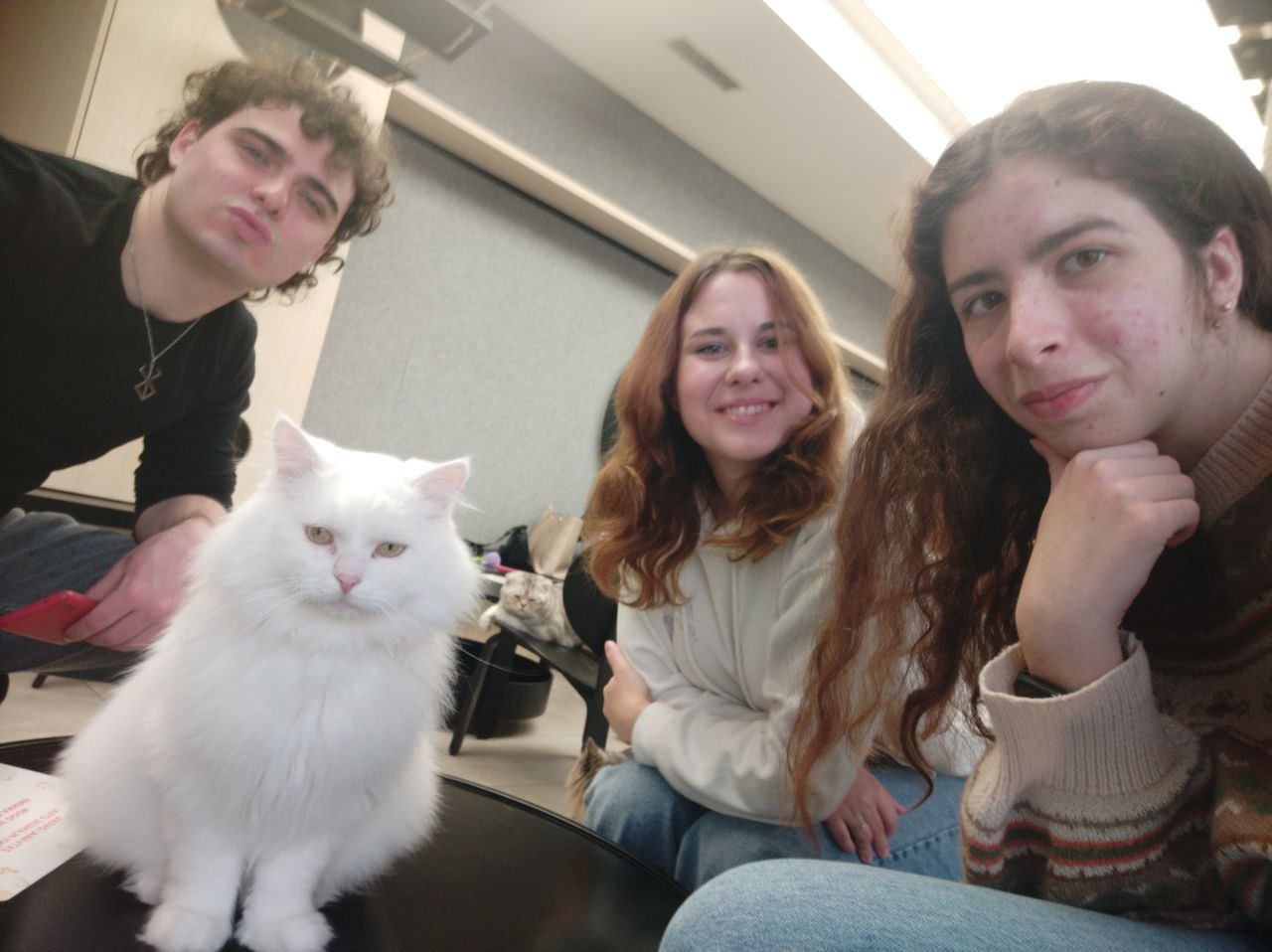
During travels, joint hikes in the mountains, evenings in the dormitory, or Erasmus Student Network events, we constantly communicate and share stories about our universities, traditions, and student life at home. English has become our “common language”, thanks to which we not only understand each other better but also gradually “level up” our proficiency. We often teach each other simple phrases in our native languages, joke about cultural differences, and every time discover something new – about Spain, France, Italy, Turkey, Slovakia, and, of course, about Ukraine.
So far, only a few months of our Erasmus semester are behind us, but we already feel how intense and vital this experience is. We are gradually getting used to the new university, a different education system, life in the dormitory, and the international environment. We know that many classes, projects, travel, and joint events lie ahead, so the most interesting part is just beginning. But it is already obvious now: participation in the Erasmus+ program in Slovakia is an opportunity that expands horizons, teaches responsibility and tolerance, and gives us a chance to represent Ukraine abroad worthily!” – the girls share their impressions.
The story of Maryna and Alona demonstrates that academic mobility is more than a semester of study abroad. It is a unique opportunity for professional growth, integration into the European community, and the worthy representation of Ukraine on the international stage. By combining modern engineering skills with cultural enrichment, Poltava Polytechnic students will return home with invaluable experience that will form the foundation of their future successful careers and the reconstruction of our state. Their example inspires and proves that for persistent, active young people, borders do not exist.
As a reminder, faculty members of Poltava Polytechnic are eligible to participate in academic mobility and internship programs. Students can study abroad through Erasmus+ credit academic mobility grant programs for a semester or a full academic year at leading universities in Austria, Greenland, Denmark, Estonia, Finland, France, Germany, Greece, Ireland, Italy, Latvia, Lithuania, Luxembourg, the Netherlands, Norway, Poland, Portugal, Romania, Slovakia, Spain, Sweden, and the Czech Republic.
For more detailed information on current internship, teaching, and academic mobility programs abroad, please get in touch with the International Relations Office (office 213-C, interoffice@nupp.edu.ua) or Poltava Polytechnic International Relations Coordinator – Anna Pavelieva, Ph.D. in Philology, Associate Professor of the Department of Germanic Philology and Translation (email: kunsite.zi@gmail.com, phone: +38-(095)-91-08-192).
Media Centre of
National University “Yuri Kondratyuk Poltava Polytechnic”