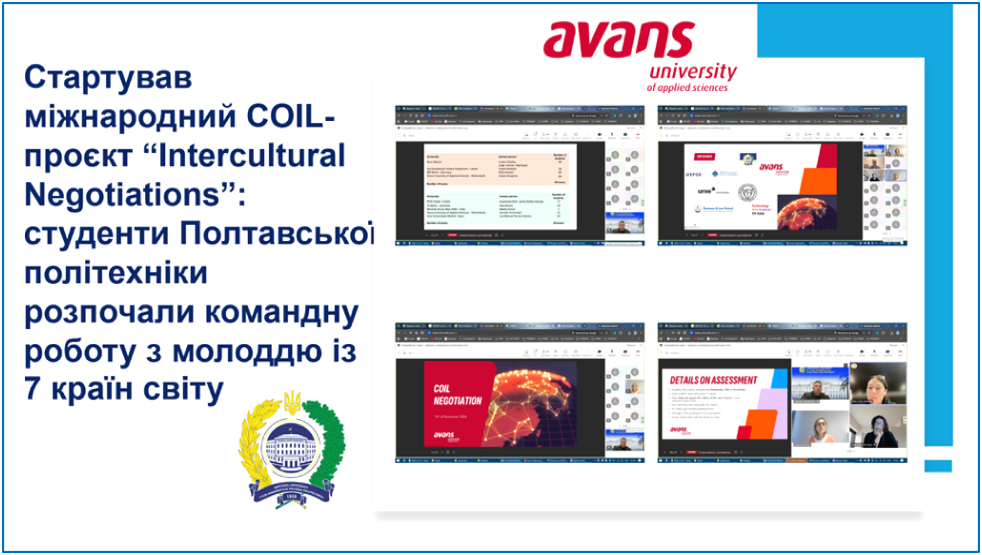
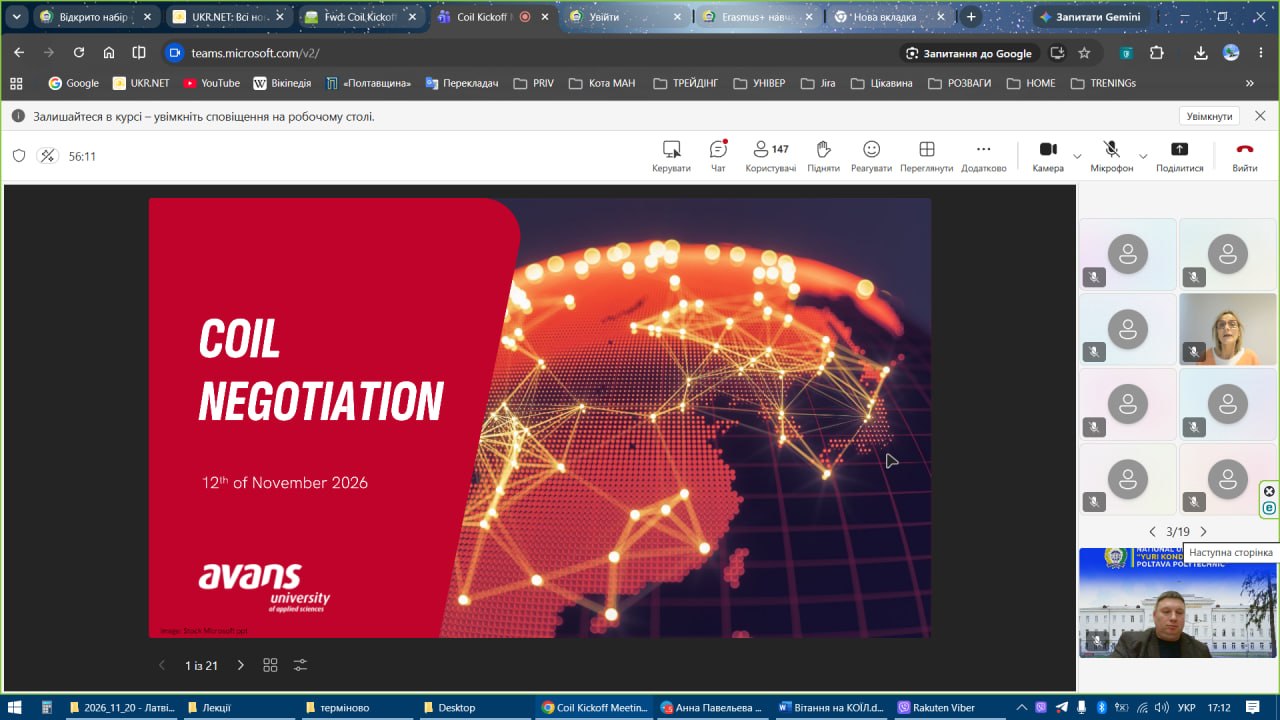
On November 12, 2026, the official online kick-off conference (Kick-off Meeting) of the international virtual academic mobility project Collaborative Online International Learning (COIL) “Intercultural Negotiations” took place. The initiative, organised by the long-standing partner of National University “Yuri Kondratyuk Poltava Polytechnic” – the Dutch Avans University of Applied Sciences (Den Bosch), marked the beginning of intensive practical work for students of the Educational and Research Institute of Finance, Economics, Management and Law alongside their peers from leading universities worldwide.
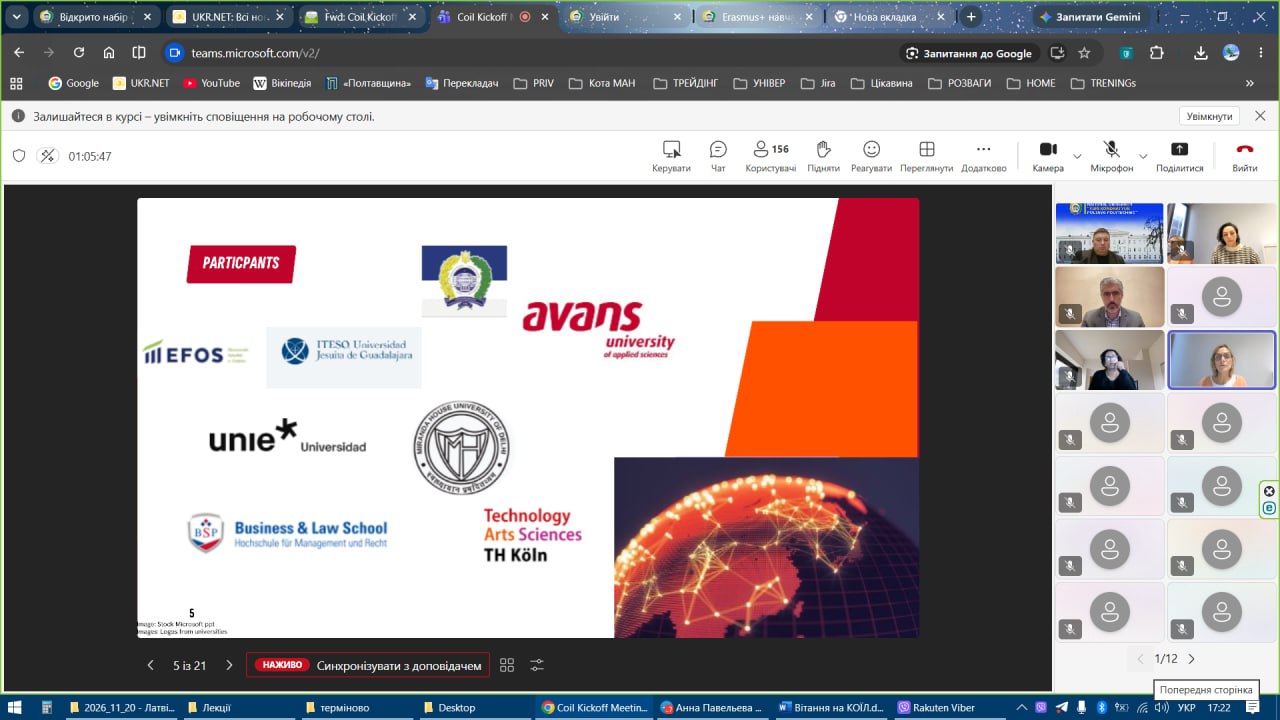
Following the inaugural coordination meeting of partner lecturers on October 5, the project moved into its active student phase and significantly expanded its geographical reach. The Autumn 2026 cohort has already brought together 8 higher education institutions from 7 countries across two time zones, forming 78 international teams with 281 participants. Specifically, in addition to Poltava Polytechnic (Ukraine), Avans University of Applied Sciences (the Netherlands), BSP Business and Law School (BSP Berlin, Germany), TH Köln – University of Applied Sciences (Germany), ITESO, the Jesuit University of Guadalajara (Mexico), the Faculty of Economics at Josip Juraj Strossmayer University of Osijek (Croatia), and Miranda House College of the University of Delhi (India), a new partner from Spain – UNIE Universidad Madrid – has joined the project.
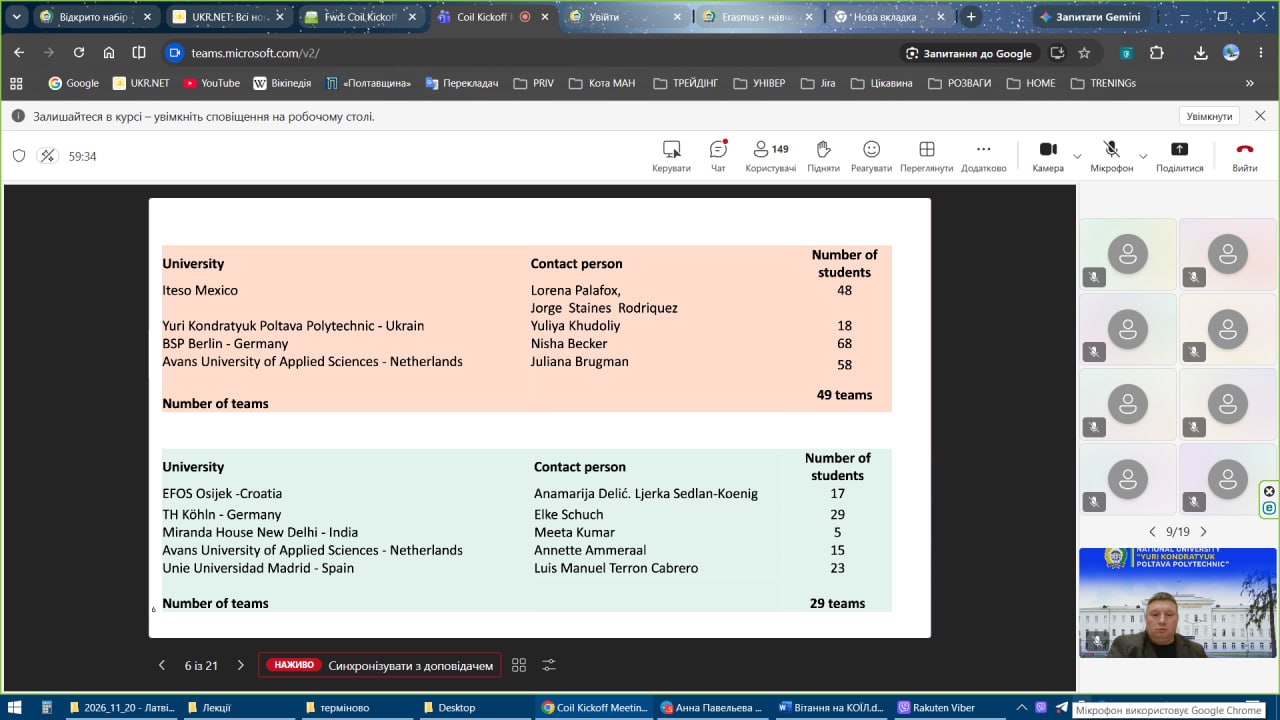
Higher education students from Poltava Polytechnic are working in the project's afternoon session, whose kick-off conference on Microsoft Teams brought together 156 participants at its peak. In total, 49 mixed micro-groups have been formed in this shift, comprising 192 students: 18 representatives of Poltava Polytechnic, 58 students from Avans University of Applied Sciences (the Netherlands), 68 students from BSP Business and Law School Berlin (Germany), and 48 students from ITESO (Mexico).
International Business lecturers and module coordinators from Avans University of Applied Sciences, Annette Ammeraal and Juliana Brugman Guerrero, moderated the online meeting, with participation from coordinators at partner institutions, including Jorge Staines Rodriguez from Mexico’s ITESO and Nisha Becker from Berlin’s BSP Berlin. In the current cycle, Poltava Polytechnic is represented by Anna Pavelieva, Acting Vice-Rector for Academic Affairs, International Relations and Cooperation; Yuliia Khudolii, coordinator of the student group, Candidate of Economic Sciences, and Associate Professor of the Department of Finance, Banking, and Taxation; Oleksandr Khadartsev, Candidate of Economic Sciences and Associate Professor of the Department of Economics, Entrepreneurship and Marketing; as well as 18 active students of the Educational and Research Institute of Finance, Economics, Management and Law.
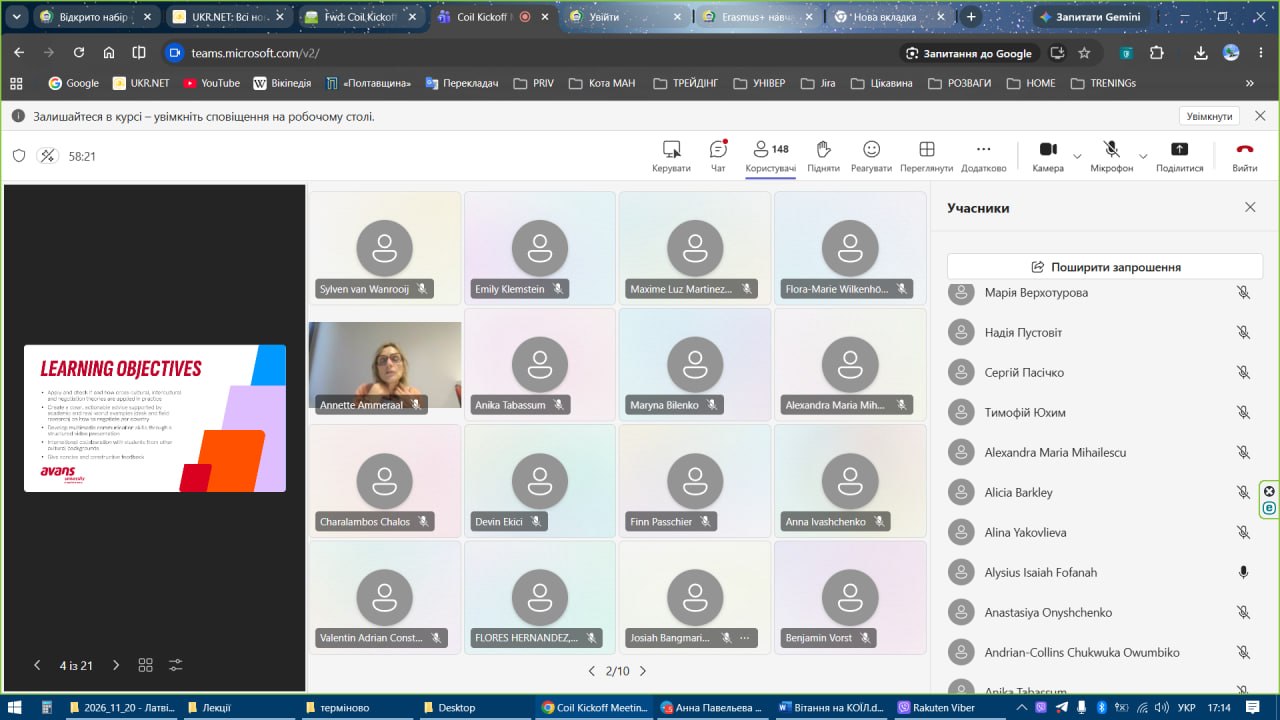
During the first part of the conference, the organisers outlined the module's key learning objectives. The primary goal is to apply theoretical concepts of cross-cultural management and negotiation in practice (in particular, the renowned approaches of Erin Meyer and Geert Hofstede, whose materials are hosted on the shared platform), to formulate clear practical recommendations (do’s and don’ts) for business interaction across different cultures based on a combination of desk and field research, and to develop multimedia communication skills and a culture of constructive peer assessment.
In an open discussion format, the moderators provided detailed instructions regarding the field research stage. Each international micro-group must jointly develop a single interview guide and conduct three (or four, if students from four countries are represented in the team) in-depth online interviews lasting about 30 minutes with entrepreneurs or business practitioners with real-world negotiation experience in sales, procurement, management, or raising funding for startups. Out of respect for respondents’ privacy, the organisers permitted recording the interviews in audio format without mandatory facial video recording, while emphasising the need to obtain the interviewee’s prior consent to record the conversation and to disclose their name, position, and contact details. It is recommended that the interviews be conducted in English with the participation of the entire team (or at least two members from different countries if time zone differences pose an obstacle), focusing on real negotiation cases, national peculiarities of business etiquette, dress code, traditions of exchanging business cards or gifts, the role of informal conversation (small talk), and methods of building trust.
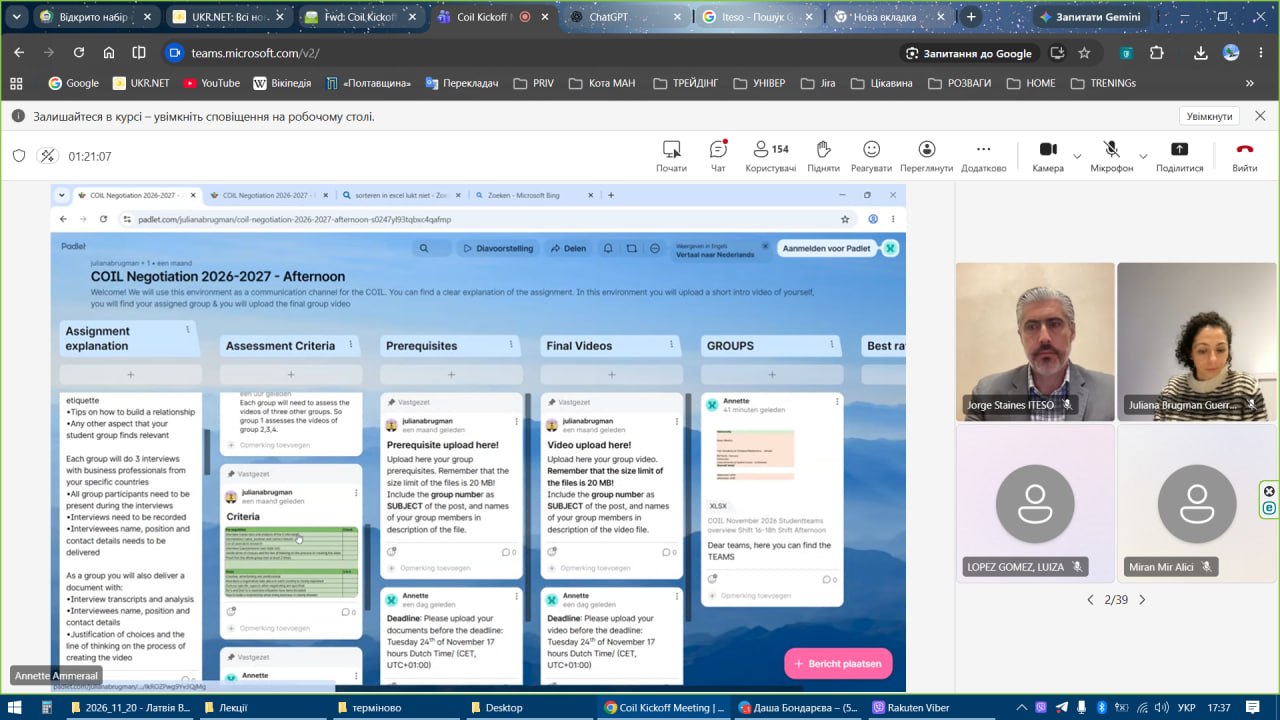
The project’s primary digital hub is the Padlet platform, which hosts all methodological guidelines, theoretical resources, team lists, and spaces for uploading materials. The final deliverable for each group will be a three-minute creative analytical video (up to 20 MB in size), the format of which students choose independently – ranging from a structured video presentation to coding or artificial intelligence tools. Along with the video, teams must upload a package of mandatory supporting documents (Prerequisites): the joint interview guide, a list of sources used for desk research, audio recordings and interview transcripts, respondent data, a rationale for the choice of format and the logic behind creating the video, as well as confirmation of at least two joint team working meetings in the form of screenshots.
In the second half of the kick-off conference, students moved to practical networking in Microsoft Teams virtual breakout rooms, while some groups promptly connected via email and messaging apps. Participants got acquainted with their international counterparts, agreed on channels for further communication, and outlined the initial steps of their collaboration. Furthermore, the organisers invited students to join a special supplementary session on conducting negotiations next week, led by Juliana Brugman Guerrero.
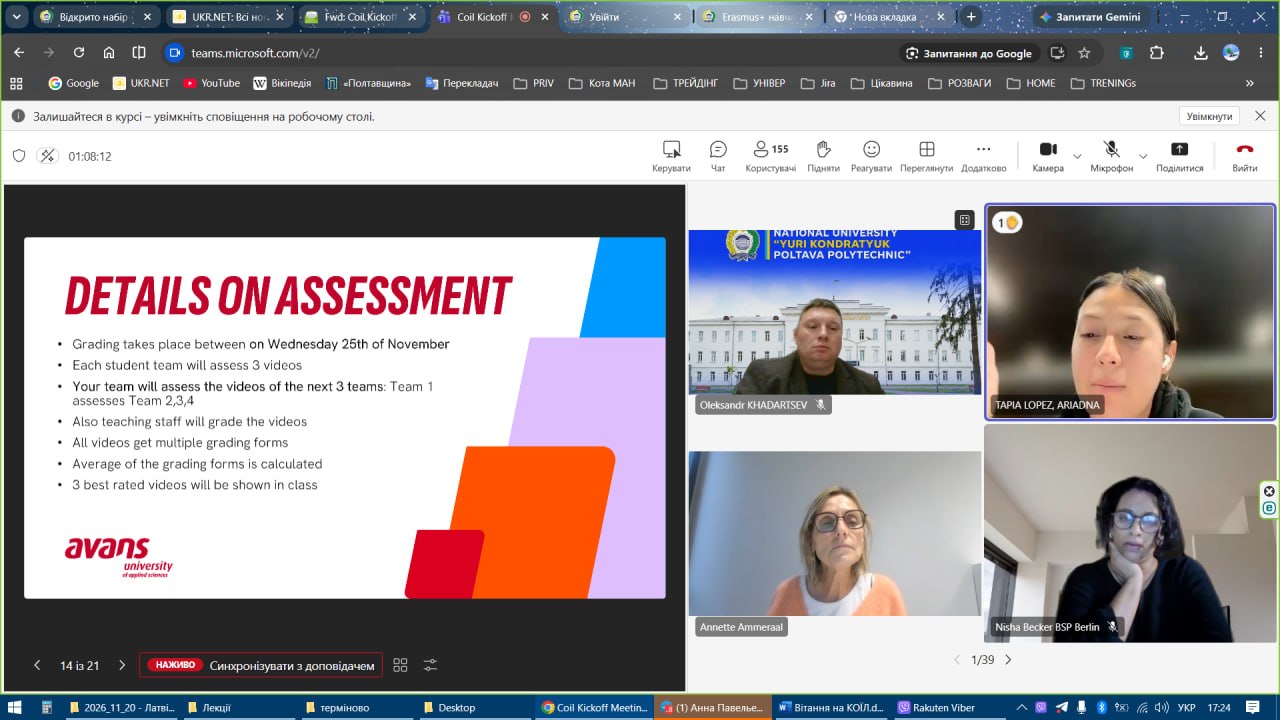
In conclusion, the moderators reminded participants of the strict schedule for the final stage of the module: by 17:00 Central European Time (CET) on Tuesday, November 24, 2026, teams must upload their completed videos and supporting documents to Padlet. The following day, on Wednesday, November 25, cross-peer assessment will take place: each student team will evaluate the work of the next three groups on the list, while lecturers from partner universities will concurrently assign their grades (the maximum score is 25 points across five criteria, including creativity, coverage of negotiation content, cultural aspects, and the practicality of the formulated rules of business conduct). The module will culminate in a ceremonial final online conference on November 26, 2026, during which the top three video projects based on the ranking results will be presented.
Participation in the COIL project “Intercultural Negotiations” once again testifies to the consistent implementation of the “internationalisation at home” strategy at National University “Yuri Kondratyuk Poltava Polytechnic,” opening up access for students to live intercultural business practice, the global academic community, and the opportunity to enhance their professional English directly while studying in Ukraine.
The “Intercultural Negotiations” project marks the second collaborative international online initiative implemented by National University “Yuri Kondratyuk Poltava Polytechnic” in partnership with the leading Dutch institution, Avans University of Applied Sciences. In May 2023, Polytechnic faculty and students successfully carried out their first large-scale online educational project focused on developing international business startups and youth entrepreneurship.
Furthermore, the university's students regularly earn competitive opportunities for semester-long and year-long on-campus study directly at Avans campuses. In particular, during the 2023/2024 academic year, Management student Yelyzaveta Kalashnyk completed the European Project Semester programme, while Environmental Studies student Anna Bulavenko completed a full one-year course of study at Avans under the Erasmus+ programme and presented a series of significant practical research projects