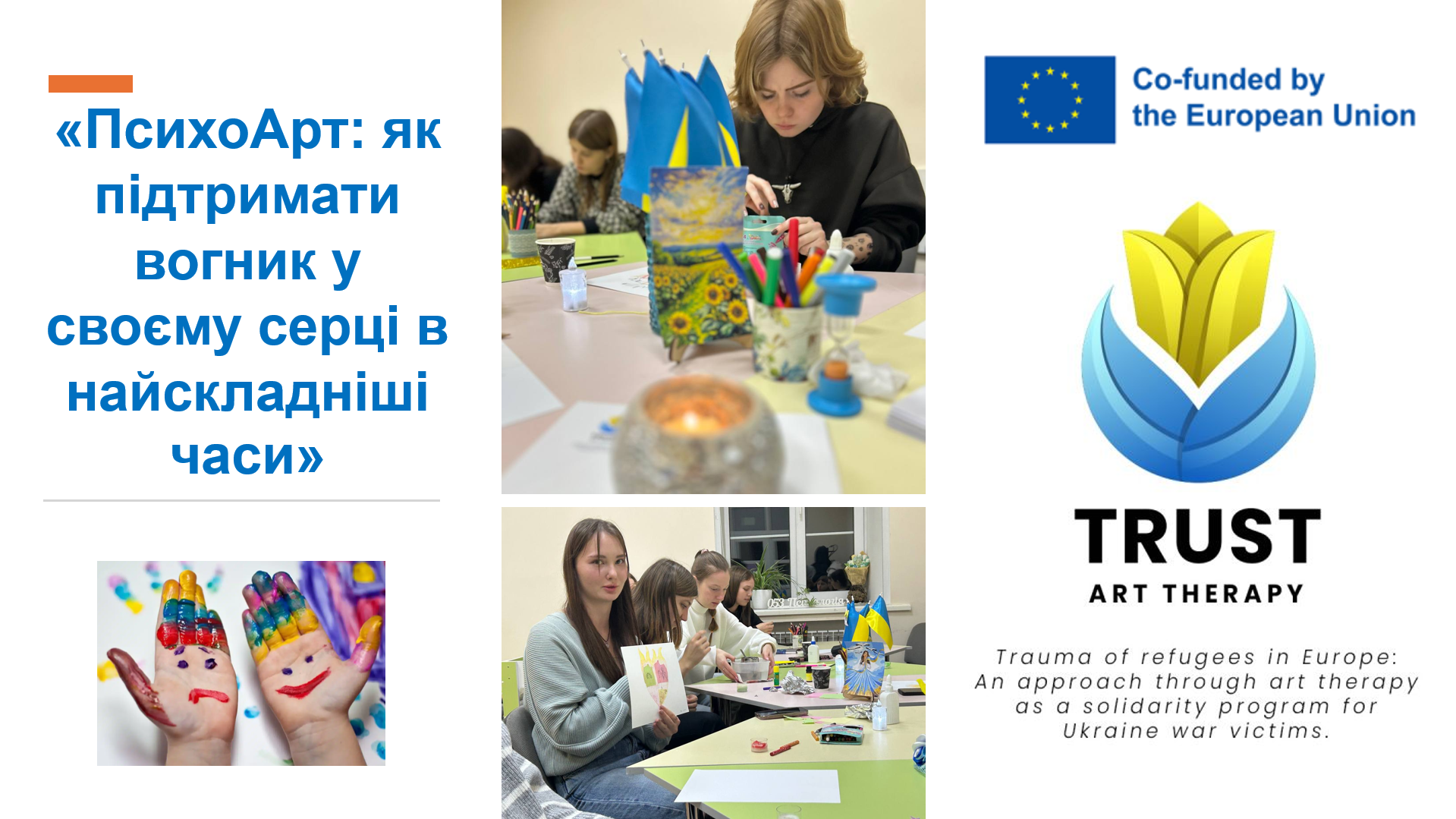
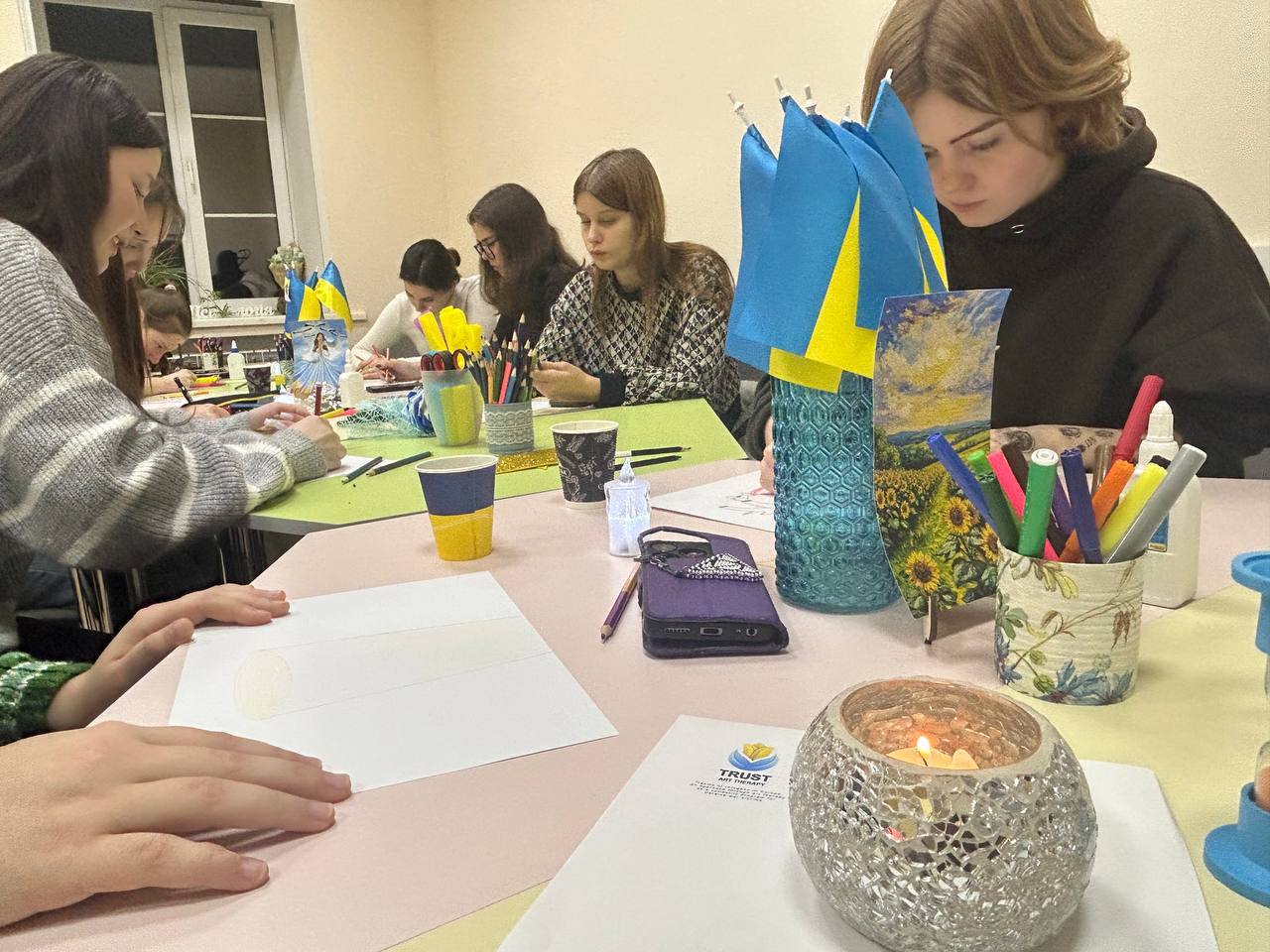
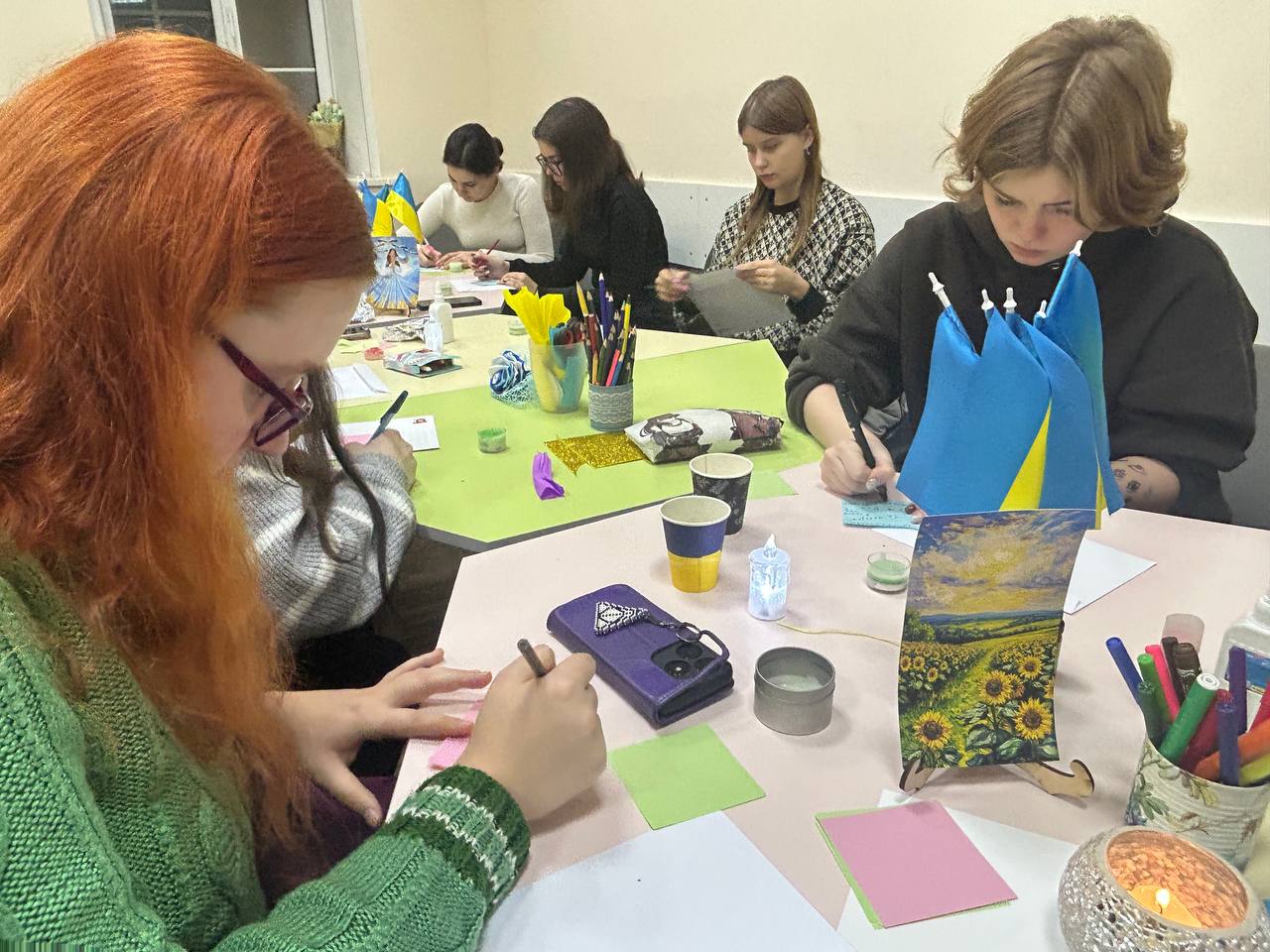
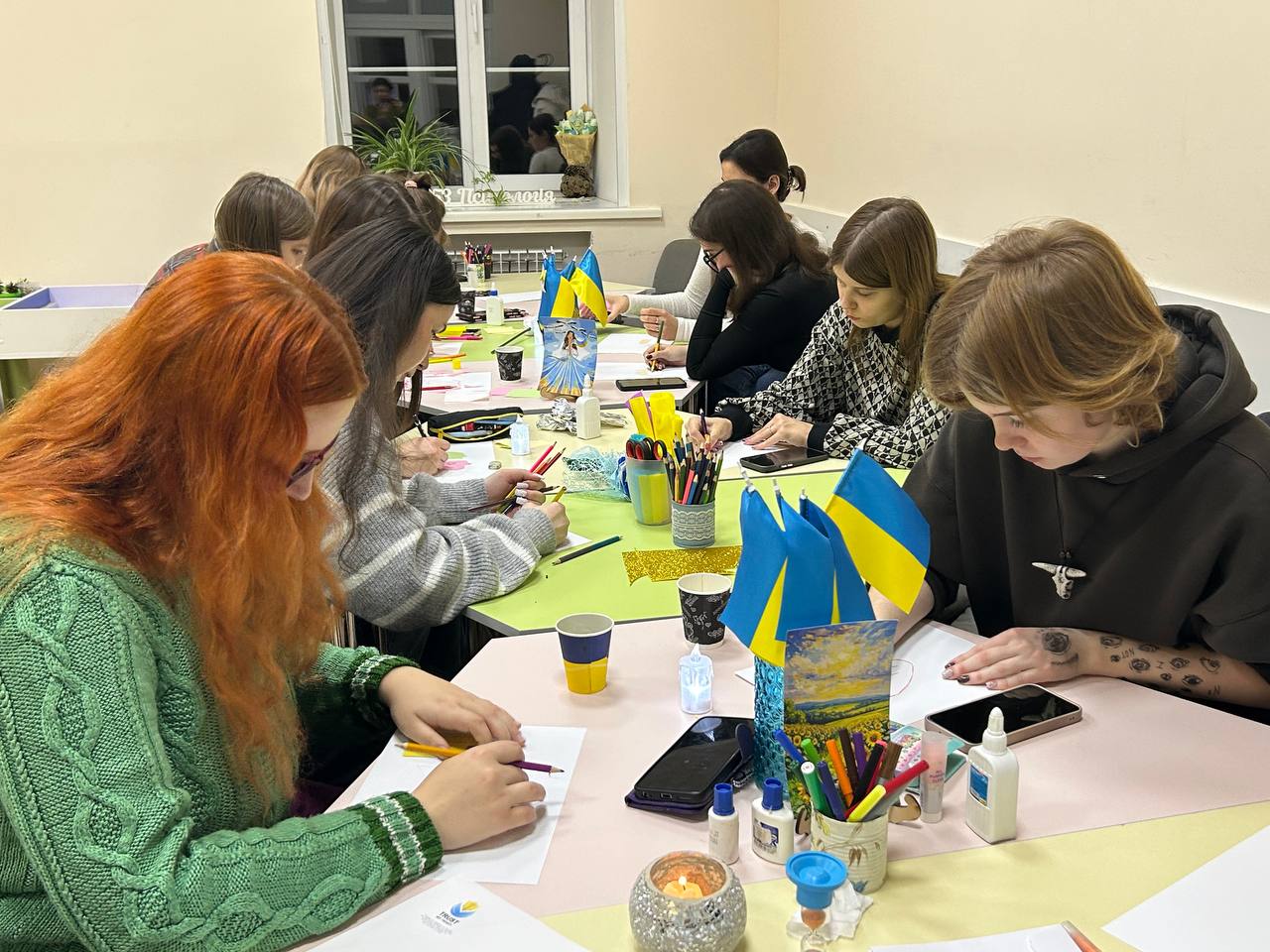
On December 3, 2025, an event combining creativity, psychology, and the pursuit of inner harmony took place at National University “Yuri Kondratyuk Poltava Polytechnic”. In Room 315 C at 16:30, a unique art therapy session titled “PsychoArt: How to Support the Fire in Your Heart in the Most Difficult Times” was held. This event was not just another meeting but a deep dive into psychological resilience, implemented within the large-scale Erasmus+ KA220-ADU TRUST project – “Trauma of refugees in Europe: An approach through art therapy as a solidarity program for Ukraine war victims”, aimed at providing practical support to those affected by the consequences of war through art therapy tools and solidarity.
Modern challenges require exceptional endurance from each of us; therefore, the organisers aimed to help IDP students and faculty explore their inner resources, reduce anxiety, and build a stable sense of inner strength. The trainers – Acting Head of the Department of Psychology and Pedagogy, PhD in Pedagogical Sciences, Associate Professor Lesia Klevaka, and Associate Professor of the Department of Psychology and Pedagogy, PhD in Psychological Sciences, Associate Professor Viktoriia Shevchuk – created an atmosphere of absolute trust and safety where every participant could open up without fear of judgment.
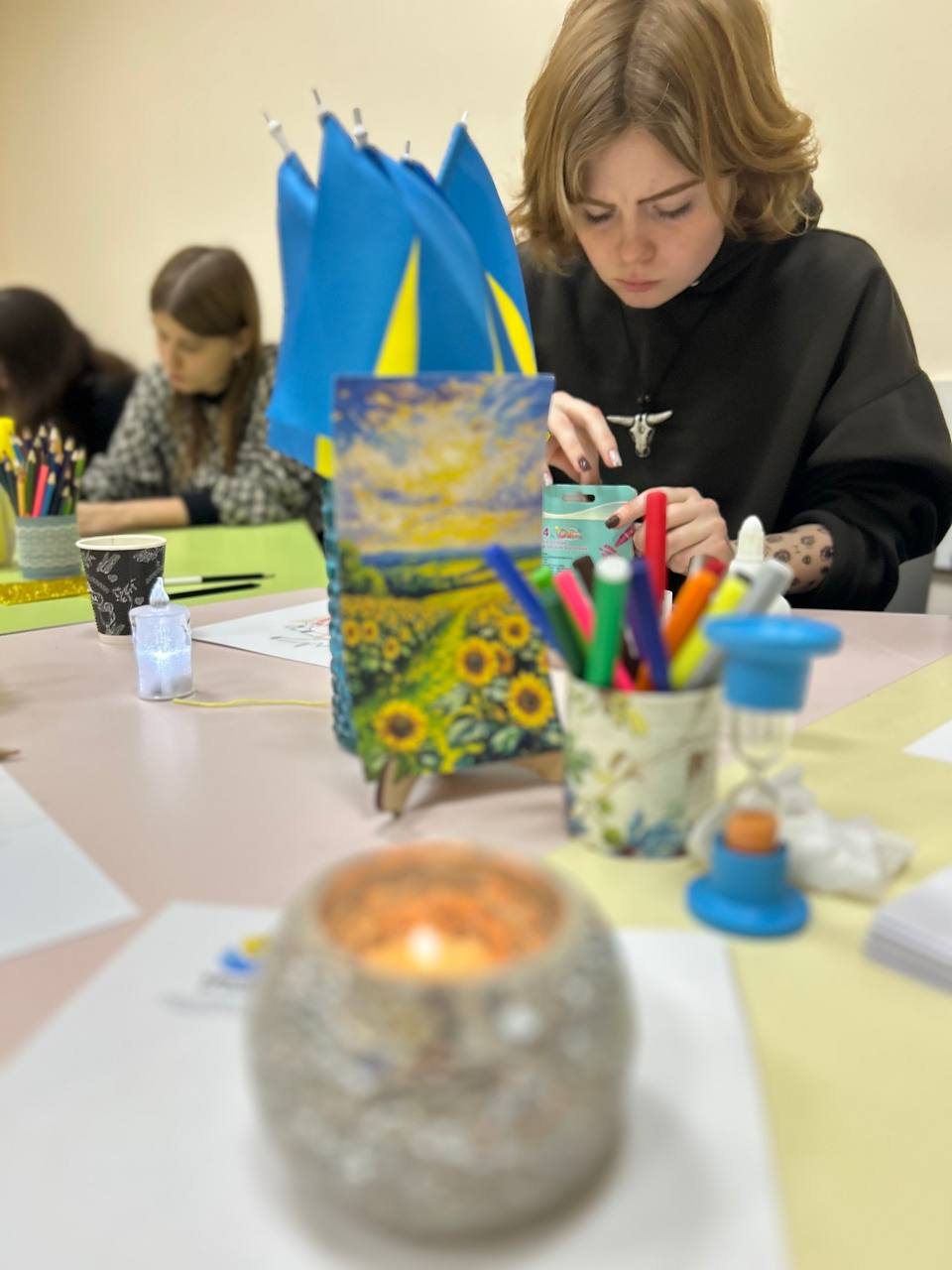
The meeting began with a deeply symbolic ritual: lighting a small candle in the centre of the room. This gesture became a metaphor for the human spirit – a “fire” that may flicker or dim under external circumstances but never truly disappears. Subsequent work was based on the idea of preserving and strengthening this inner light.
The first stage of psychological tuning was the “Warm Breath” breathing practice. Under the guidance of the trainers, participants learned to focus on their state, imagining how each breath fills the body with calm and each exhale releases tension. This laid the foundation for the metaphorical discussion “What is my fire?” In an open dialogue format, participants reflected on the sources of their support: for some, it was warm childhood memories; for others, loved ones, creativity, or professional aspirations. The psychological focus was on recognising that, even in the darkest times, we have sources of support that enable us to persevere and move forward.
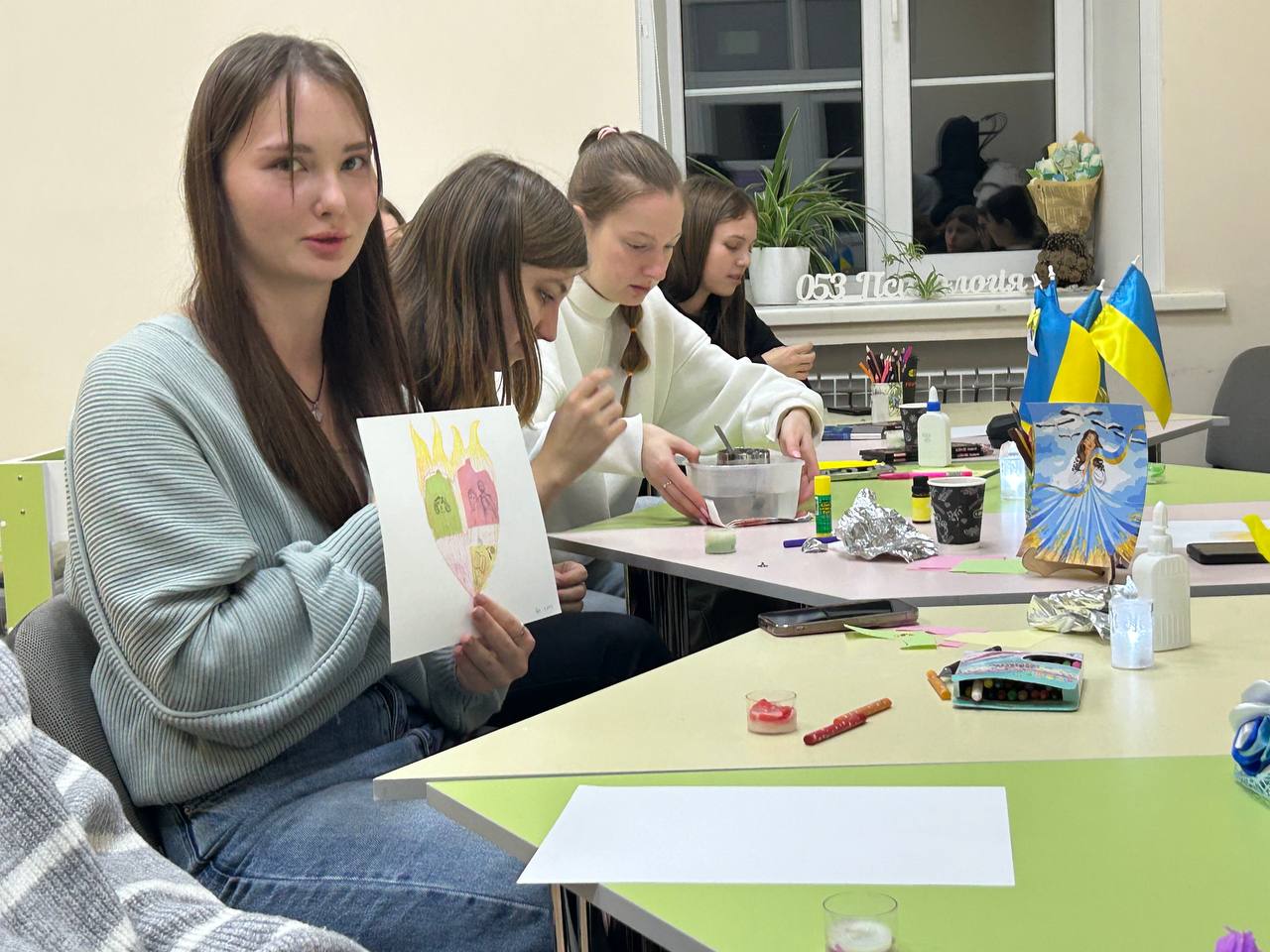
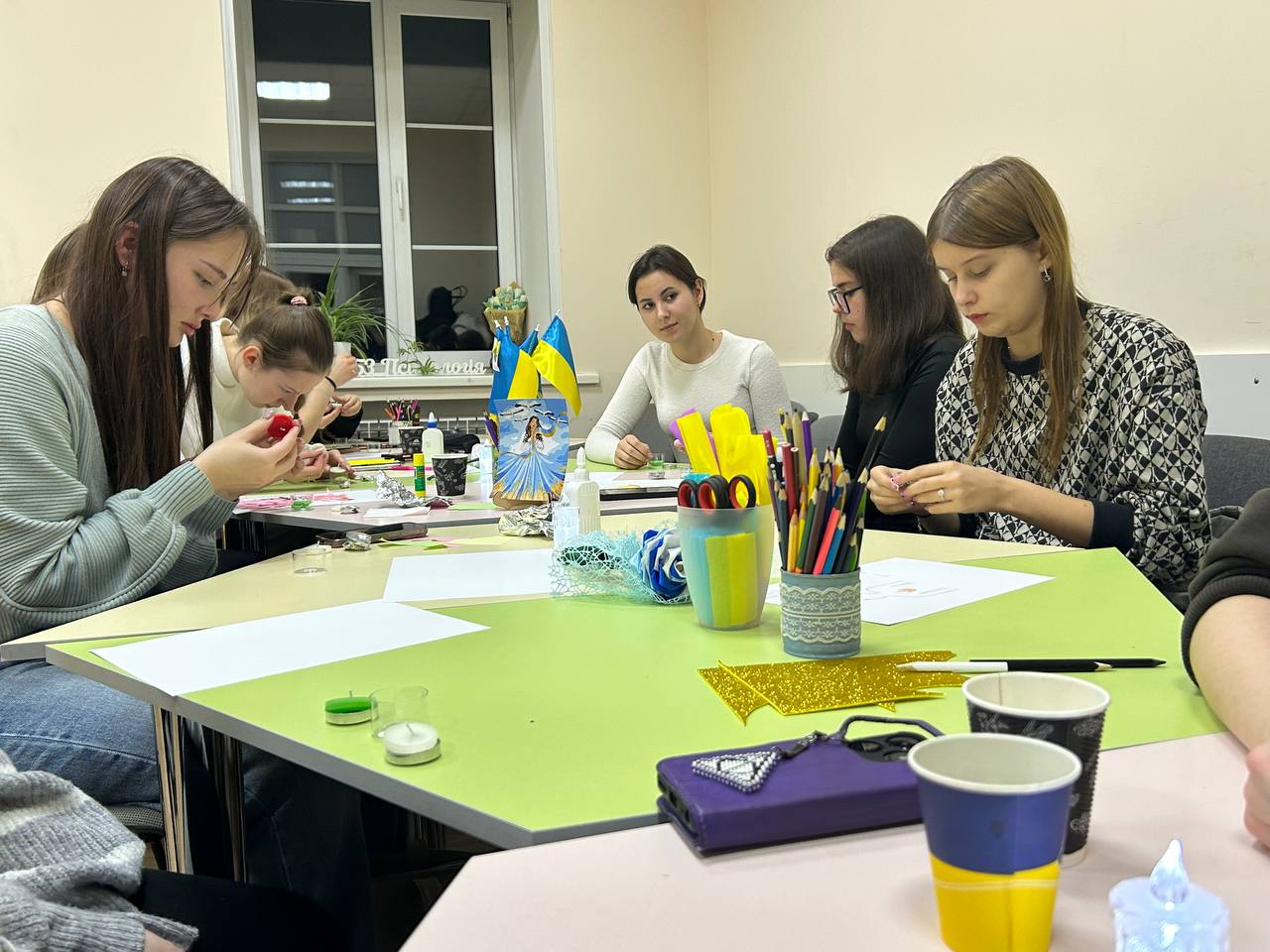
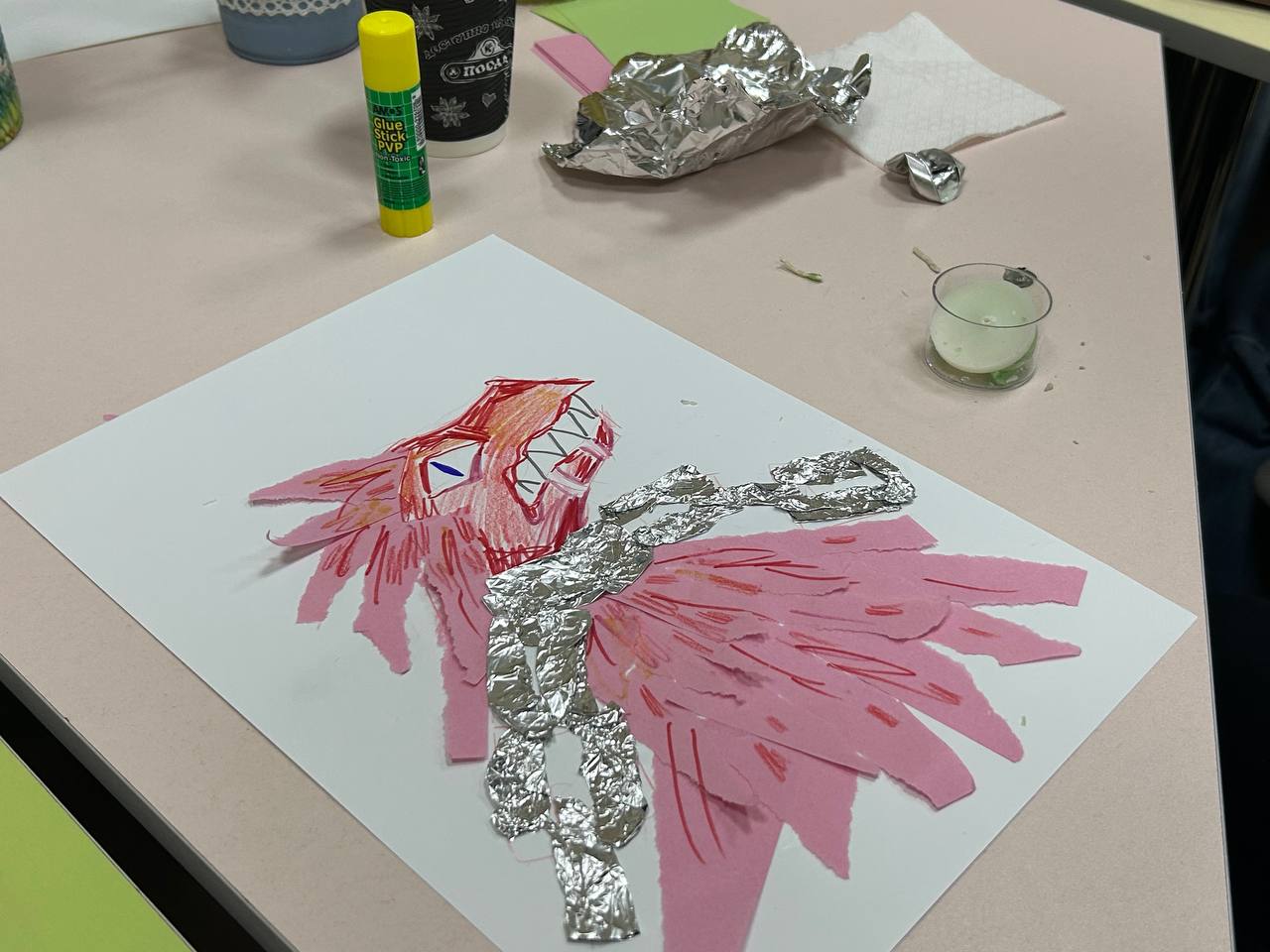
The central part of the session was dedicated directly to art therapy – the “My Inner Fire” exercise. Participants were invited to extend verbal communication by transferring their feelings to paper or to a 3D object. Using a wealth of mixed techniques, combining drawing, appliqué, and collage, students created visual images of their inner state. A “warm” palette dominated the work: bright yellow, rich orange, deep red, and soft coral. The use of various textures – soft threads, shiny foil, scraps of fabric – allowed each art object to be unique and tactilely pleasant. During the creative process, participants engaged in self-reflection, answering the internal question: what precisely is the fuel for my fire, and how can I maintain it daily, preventing routine or stress from extinguishing it?
A special component of the program was the practical session on creating and decorating a personal candle. Psychologically, this process serves as a means of externalising an inner resource: the participant transforms an internal feeling of resilience into a tangible, physical object. Such a talisman candle serves as an “anchor” that can return a person to a state of balance upon a single glance. Additionally, each participant prepared “words of warmth” – short written messages/affirmations hidden in envelopes. These short phrases, such as “My fire lives, even when it is dark” or “There is enough strength in me”, became symbolic “fuel” for the future, which participants took with them as an emotional resource for recovery under challenging moments.
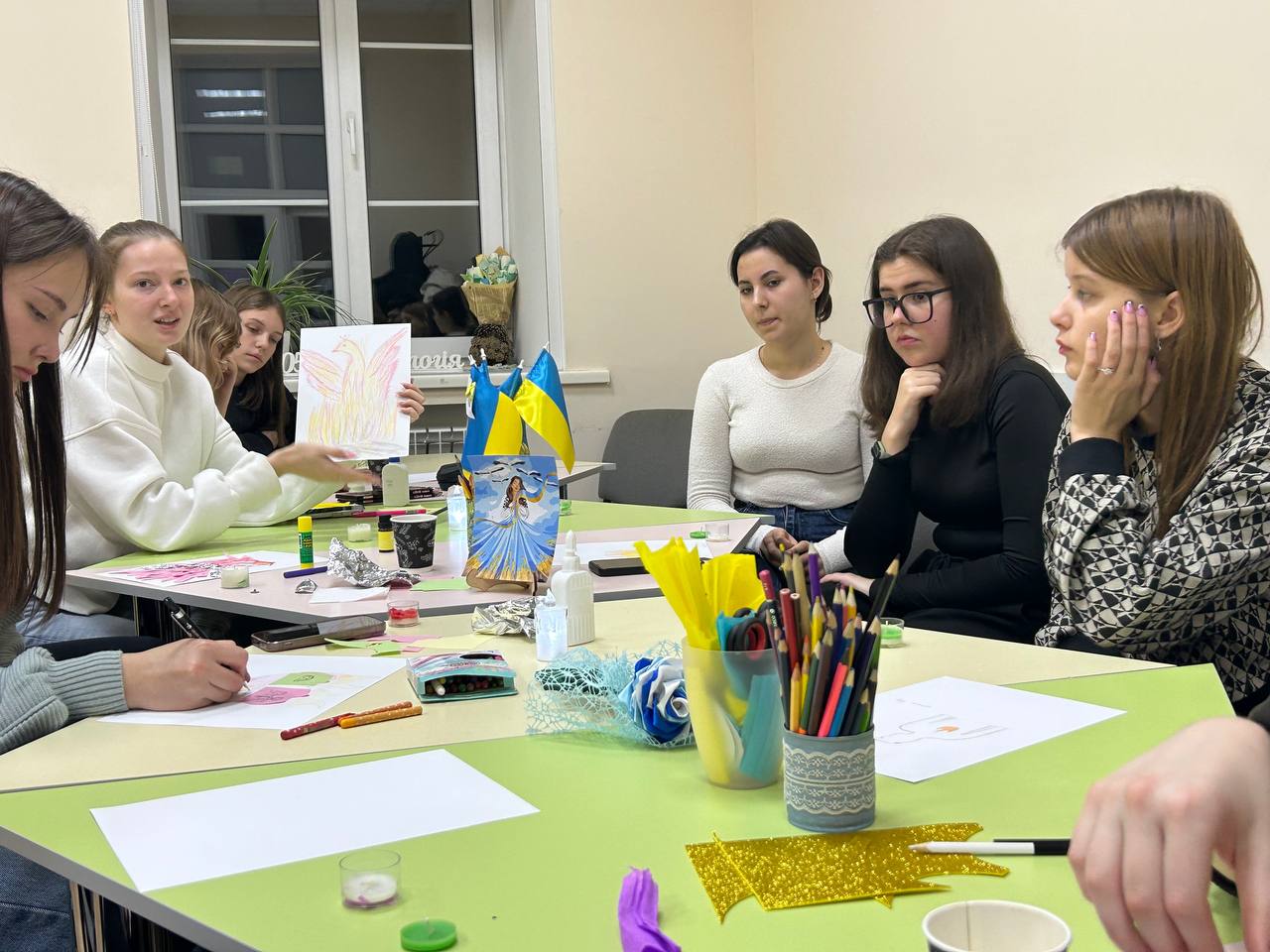
To conclude the meeting, participants gathered in a “support circle”. This was an emotional moment of solidarity in which those who wished could present their work or briefly describe their feelings through a metaphor. Some compared their fire to a fireplace in a cosy home, some to a distant star pointing the way, and some to a small but stubborn flame capable of growing into a large bonfire. Importantly, even those who preferred to remain silent experienced a sense of commonality and the group’s support. The closing ritual was equally symbolic: the trainers extinguished the central candle, emphasising that the light had not disappeared but had moved inside each person present.
The art objects created during the session became symbols of light’s victory over darkness, reminding us that our inner resilience prevents us from giving up even in the most difficult times. The warm and inspiring atmosphere left a deep mark on the participants’ hearts, giving them confidence in their own strength and a sense that they are not alone in their experiences. The “PsychoArt: How to Support the Fire in Your Heart in the Most Difficult Times” session was another step toward creating a resilient, emotionally mature community capable not only of surviving but also of creating and flourishing despite life's trials.


The event was held as part of the international, large-scale EU-funded Erasmus+ KA220-ADU project “TRUST” – Trauma of refugees in Europe: An approach through art therapy as a solidarity program for Ukraine war victims (Grant No. 2024-BE01-KA220-ADU-000257527).
The project title is decoded as follows:
TRUST
T – Trauma
R – Refugees
U – Ukraine
S – Solidarity
T – Therapy
The project is co-funded by the EU and led by the Centre Neuro Psychiatrique St-Martin from Belgium, in partnership with the National University “Yuri Kondratyuk Poltava Polytechnic” (Ukraine), Greek Carers Network EPIONI (Greece), Fondazione Don Luigi Di Liegro (Italy), Lekama Foundation (Luxembourg), EuroPlural Project (Portugal).
We express our sincere gratitude to our partners for their invaluable support, which makes it possible to implement such vitally important initiatives that bring the light of hope and healing to those who need it most.
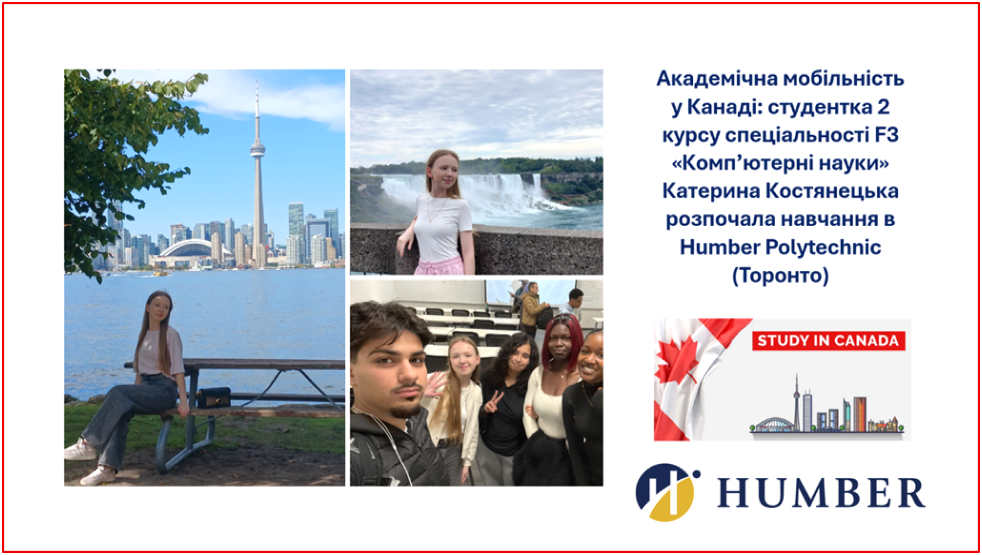
It is worth noting that Poltava Polytechnic lecturers are eligible to participate in academic mobility and internship programs. Students can study abroad through Erasmus+ credit academic mobility grant programs for a semester or a full academic year at leading universities in Austria, Denmark, Estonia, Finland, Germany, Greenland, Latvia, Lithuania, the Netherlands, Norway, Poland, Portugal, Romania, Slovakia, Spain, and the Czech Republic.
For more detailed information regarding current internship, teaching, and academic mobility programs abroad, please get in touch with the International Relations Department (office 213-C, interoffice@nupp.edu.ua) or Poltava Polytechnic’s International Relations Coordinator – Ph.D. in Philology, Associate Professor of the Department of Germanic Philology and Translation, Anna Pavelieva (email: kunsite.zi@gmail.com, phone: +38-(095)-91-08-192).