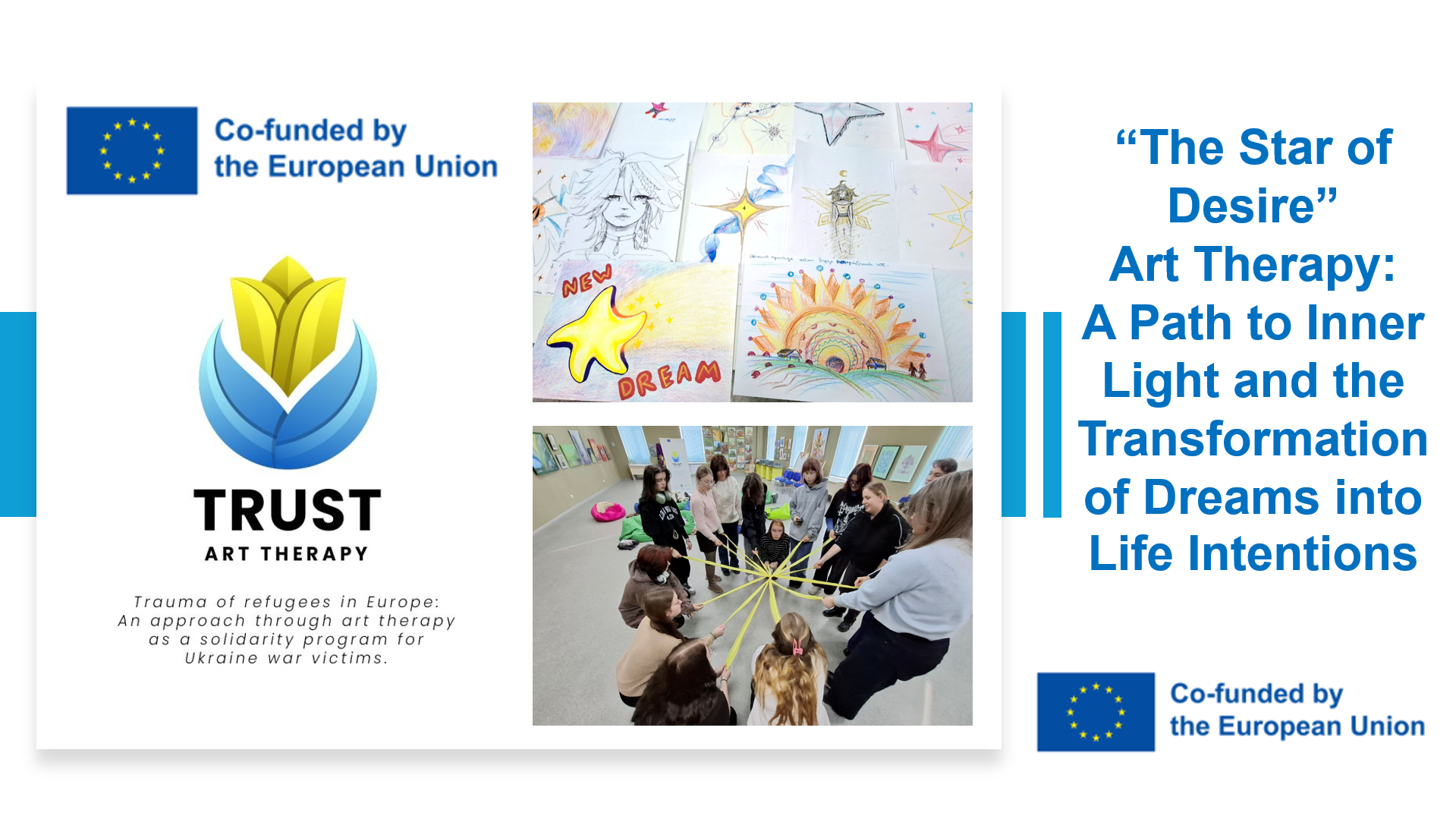
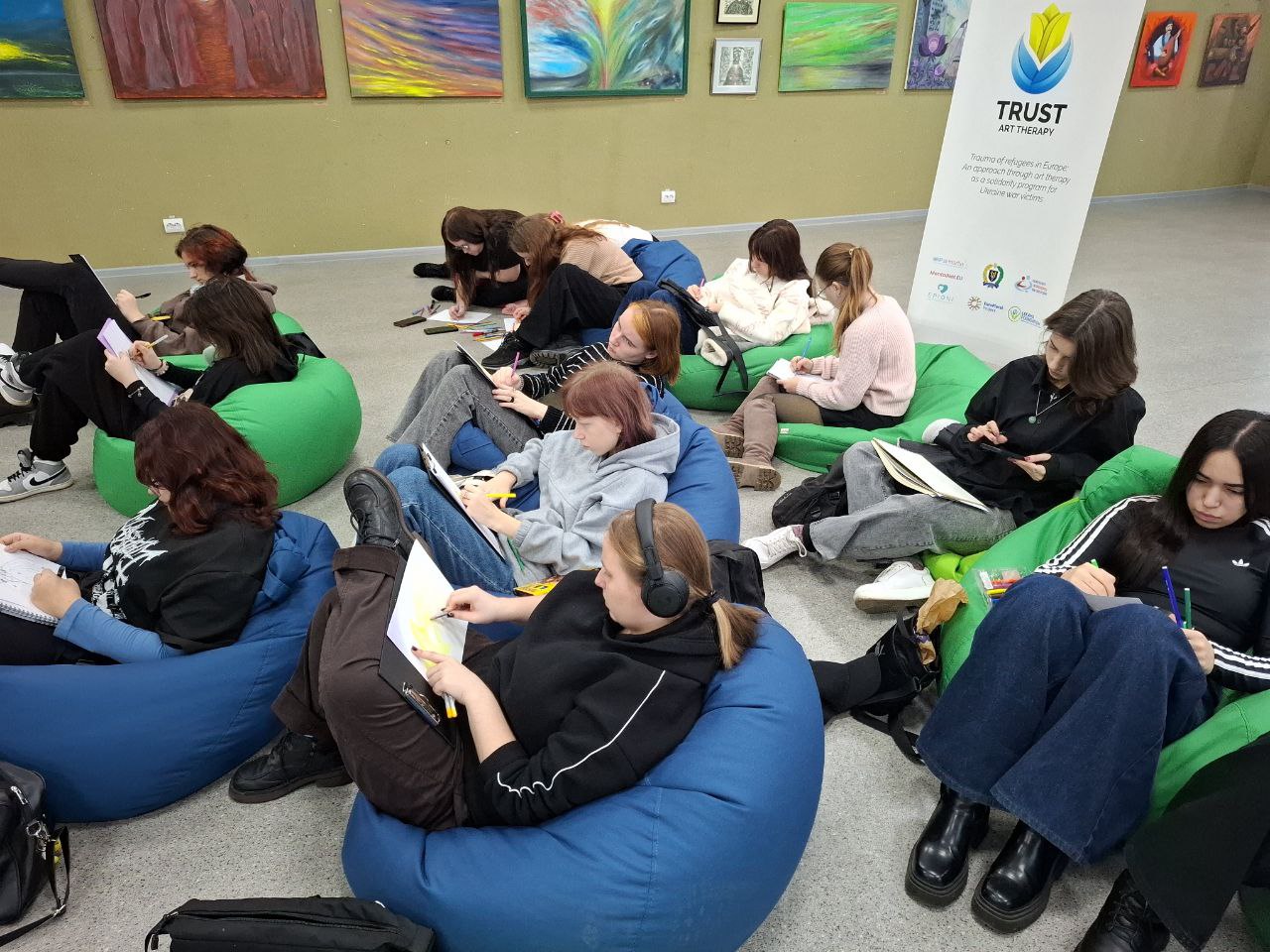
On December 24, 2025, on Christmas Eve, when the boundary between reality and miracles becomes almost imperceptible, the space of the Centre for Contemporary Art at Poltava Polytechnic was filled with a special energy. This was the venue for the “Star of Desire” art therapy event.
The moderators and ideological inspirations of the meeting were Olena Ostrohliad, a senior lecturer at the Department of Fine Arts, and Maryna Teslenko, an associate professor at the Department of Psychology and Pedagogy.
The choice of date was no coincidence: the winter solstice and the magic of the holidays create ideal conditions for looking inward, reflecting on results, and daring to dream boldly. Within the walls of the art centre, where the atmosphere itself encourages participants to step beyond the mundane, participants immersed themselves in a creative flow. Through the concision of graphic lines and the powerful archetype of the star, individuals visualised their innermost aspirations, translating them into clear intentions for a future life scenario.
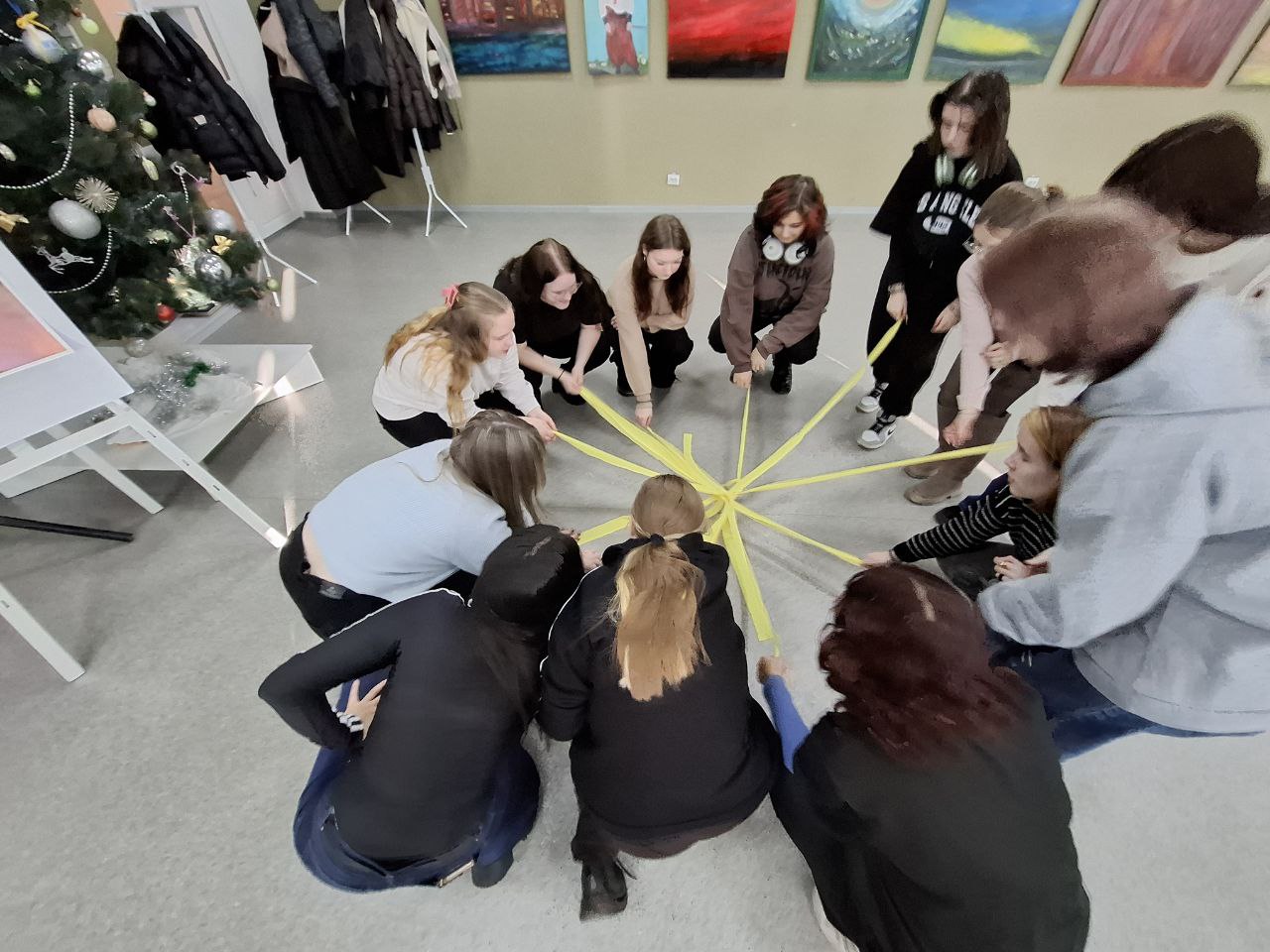
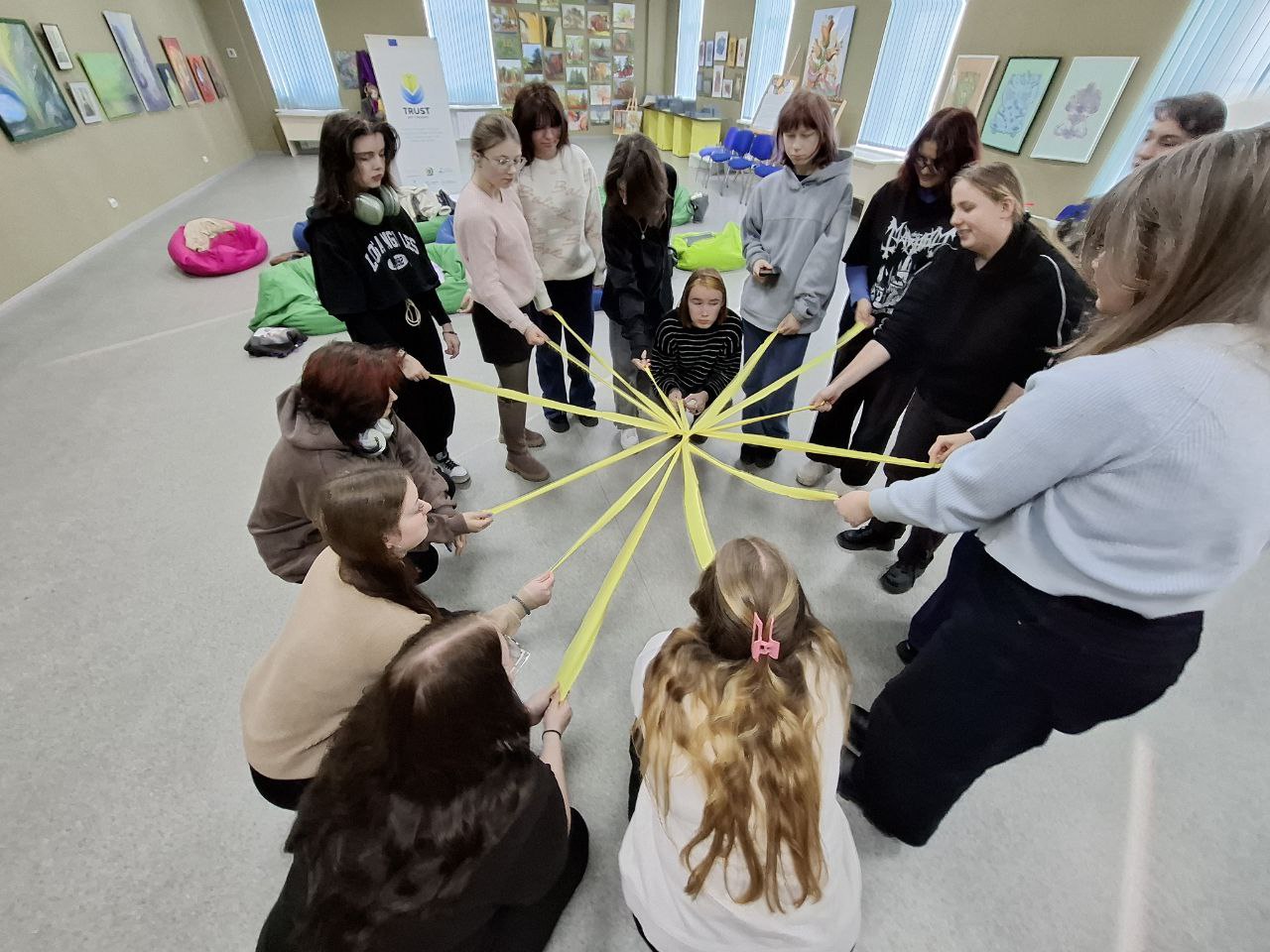
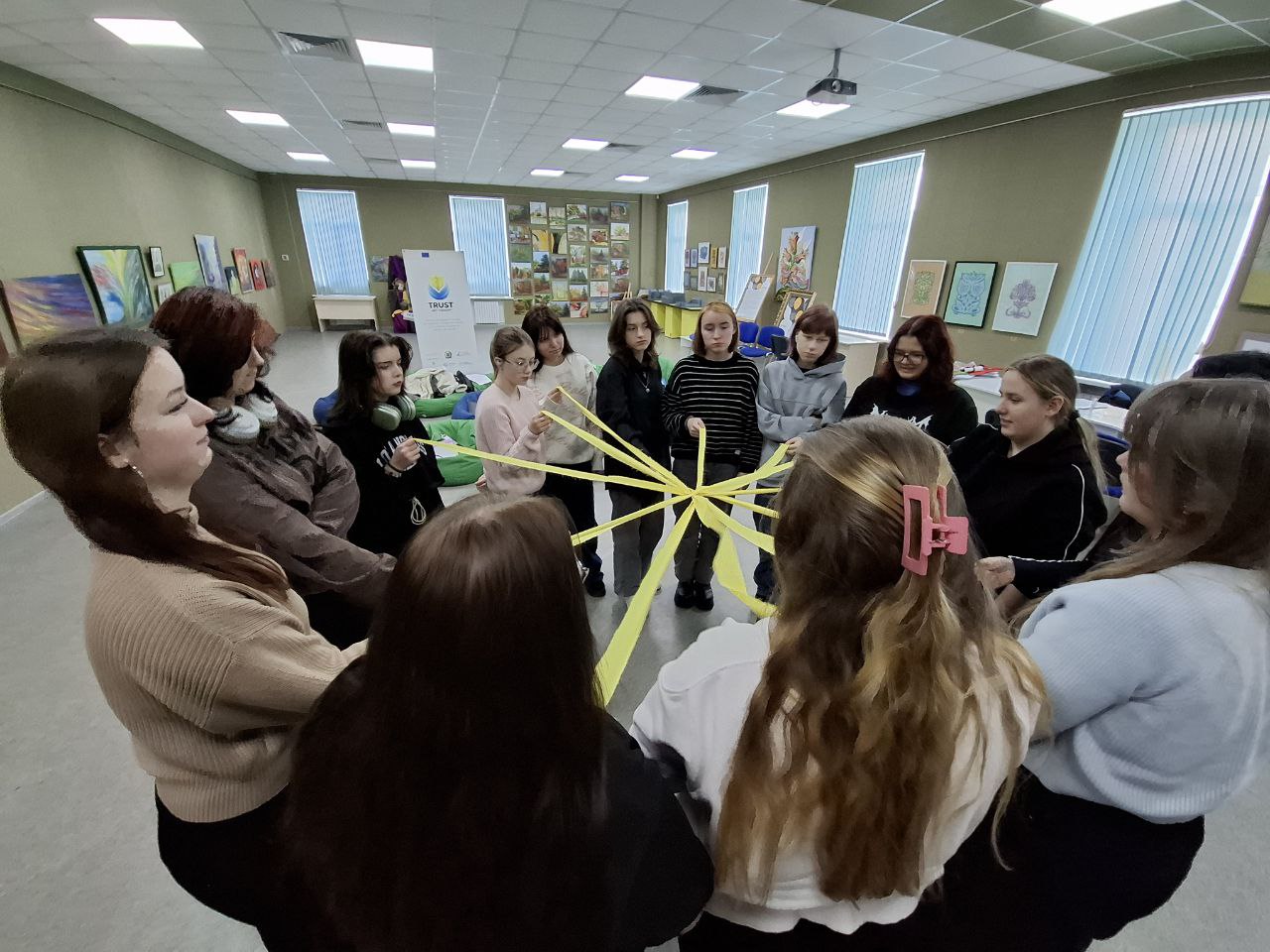
The event began with a body-oriented practice focused on interaction and tuning participants into a shared space of trust and openness. The first exercise was the symbolic “Star of Desires” practice, intended to actualise intentions for 2026. A star was placed in the centre of the room, its rays made of colored ribbons. Each participant chose one “ray”, held onto it, and, together with the others, gradually untangled the ribbons, as if freeing their own desires from internal constraints and doubts. This process was accompanied by concentration and attentiveness to body movements, sensations in the hands, breathing, and the group’s rhythm.
Once the ribbons were untangled, participants were invited to move and dance freely with their “rays” to music, allowing the body to express emotions, hopes, and expectations associated with the coming year. Movement became a form of nonverbal dialogue with oneself and the group, and the ribbons served as an extension of an inner impulse, symbolising life energy and the light of desire.
The next stage was an integrative interaction exercise: participants stood in a circle and were tasked with “creating” an imaginary gift they wished to pass to another. This virtual gift, accompanied by warm words and gestures, was passed around the circle to the neighbour on the right, forming an atmosphere of acceptance, mutual care, and community. The exercise strengthened the sense of group unity and created an emotional bridge between personal desires and others' support.
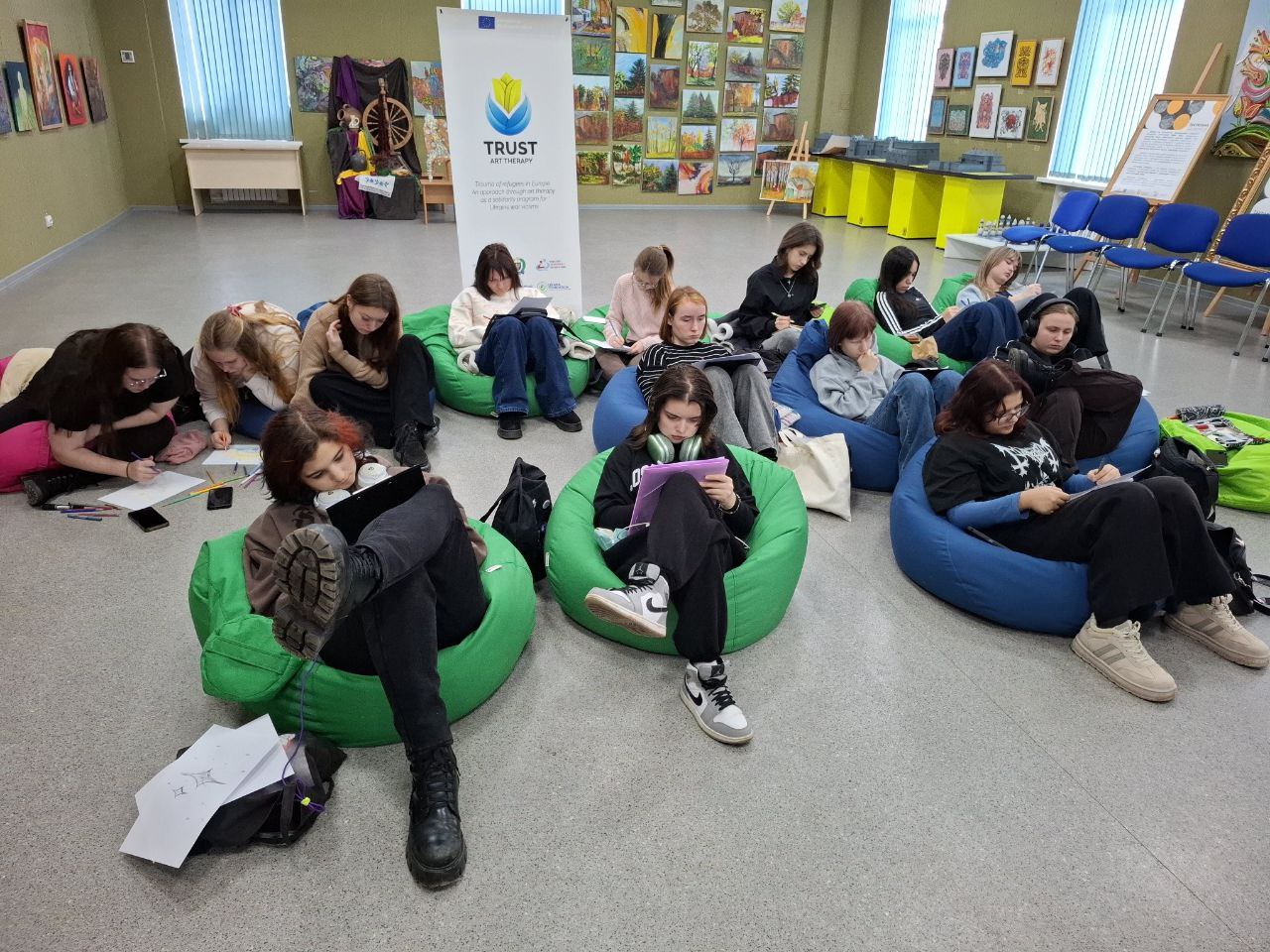
Following this somatic and emotional attunement, participants moved to the central art therapy component – the graphic creation of their own “Star of Desire” – which continued the already activated inner process of awareness, visualisation, and crystallisation of intentions for the upcoming year. Graphic materials were specifically selected for the work: pencils of varying softness, liners, markers, and gel pens. This choice of tools was deliberate. Unlike painting, in which colours can blend to create half-tones, graphics require clarity, specificity, and decisiveness. A line is a trace of movement, a recorded impulse of will. Therefore, graphics became the ideal medium for working with desires: it helped participants transform vague dreams (“I would like something good”) into clear, structured intentions (“I see my goal like this”).
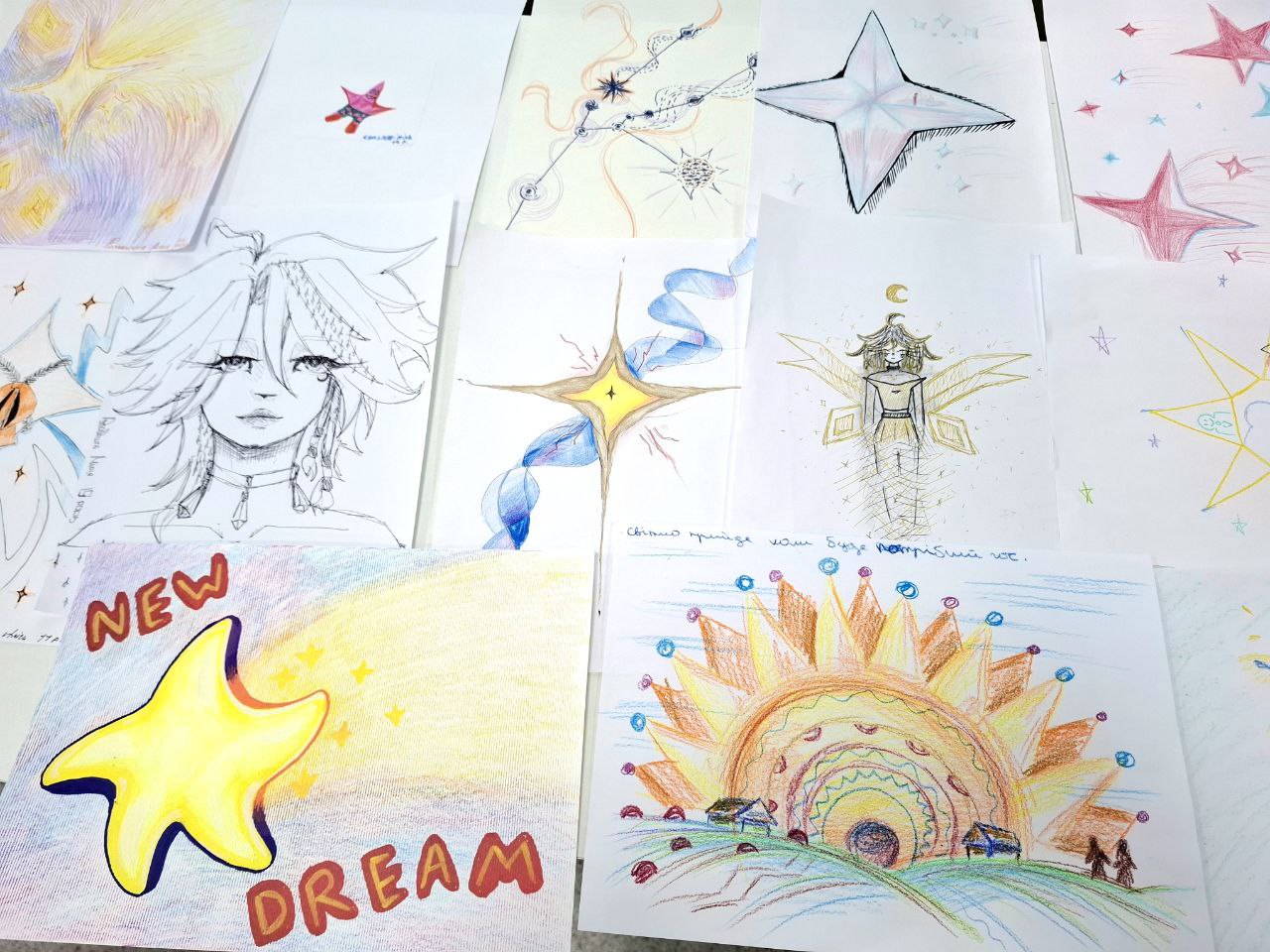
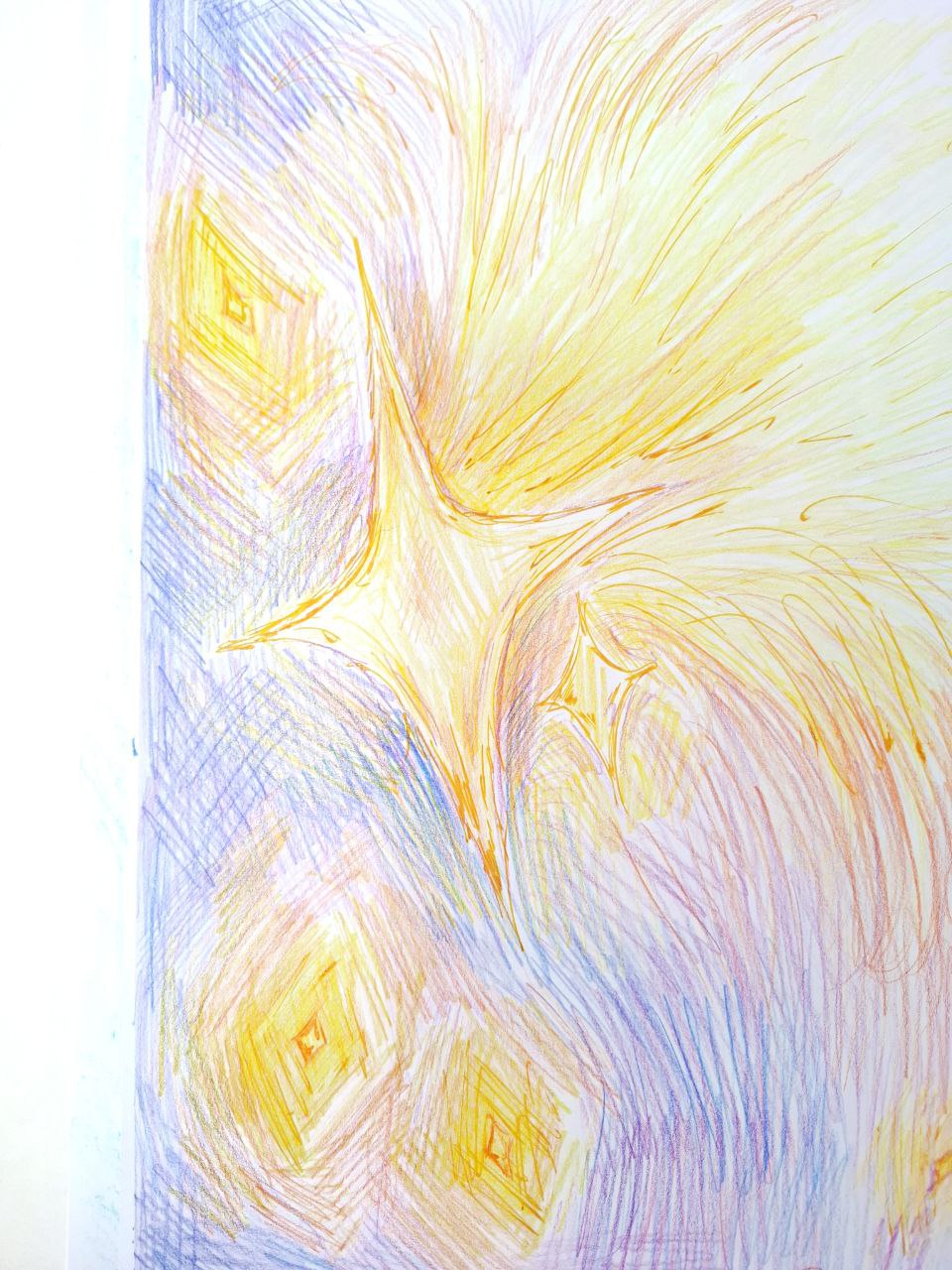
The process of creating the “Star of Desire” began with immersion and visualisation. Participants were invited to close their eyes and imagine their future a year from now as a starry sky where one, the brightest star, gradually ignites – their main, genuine desire. This allowed them to filter out socially imposed goals and focus on what truly resonates with the individual’s deep needs. Once the internal image was formed, the stage of transferring it to paper began. The blank sheet symbolised the space of the upcoming year – a “terra incognita” to be explored and illuminated by one’s own radiance. Participants explored the shape of their star: for some, it was classic, with sharp rays symbolising active expansion and achievement; for others, it was soft, resembling a flower or a flash of light, indicating a need for harmony, acceptance, and inner peace.
Special attention was paid during the work to the centre of the star and its rays. The centre symbolised the personality itself, the source of energy and resources, while the rays embodied the directions for realising this desire in the external world. Using graphic techniques such as hatching, stippling, and the contrast between light and shadow allowed the drawings to gain volume and depth. Participants worked with the concept of “light” on paper, often leaving white, untouched areas as the brightest points of their stars. This was a powerful metaphor: for a desire to shine, it is sometimes necessary not to add anything extra, but to preserve the purity of thought and the simplicity of intention. Graphic materials enabled each participant to create a unique structure of their own design, transforming an ephemeral thought into a visible, material object.
The atmosphere in the room was characterised by intense concentration and creative energy. The silence was broken only by the rustle of paper, creating an almost ritualistic atmosphere. An important psychological aspect was the use of a scale: participants were allowed to let their star occupy as much space on the sheet as it needed. Those who drew large stars extending beyond the edges of the paper implicitly signalled their readiness for personal growth and to step out of their comfort zone in the new year. Those who created smaller, detailed objects focused on depth, concentration, and the value of the moment. The Centre for Contemporary Art, as a space, encouraged participants not to fear experimentation, moving away from realism toward abstraction and symbolism, allowing their desires to take on the most unexpected visual forms.
The final part of the event was dedicated to integrating the created image. Looking at their drawings, participants attempted to articulate the message their star conveyed. The graphic image became a kind of “anchor” – a visual reminder of the state of inspiration and confidence they felt during the work. Many noted that the black-and-white (monochrome) palette helped them discern the essence of the desire without unnecessary emotional embellishment, making it more realistic and achievable. The drawing evolved into a map-diagram: clear lines indicated the path, while light and shadow indicated possible obstacles and resources to overcome them.
In conclusion, the “Star of Desire” event was an essential stage of psychological preparation for the new year. It allowed participants to step out of the pre-holiday bustle, stop, and connect with their actual needs through the creative act of graphic representation. The works created became not merely drawings but artefacts of hope and faith in one’s own strength. Participants left the Centre for Contemporary Art with a sense of inner structure, clarity, and inspiration, carrying their paper stars with them as guideposts for future achievements in the coming year.



The event was held as part of the international, large-scale EU-funded Erasmus+ KA220-ADU project “TRUST” – Trauma of refugees in Europe: An approach through art therapy as a solidarity program for Ukraine war victims (Grant No. 2024-BE01-KA220-ADU-000257527).
The project title is decoded as follows:
TRUST
T – Trauma
R – Refugees
U – Ukraine
S – Solidarity
T – Therapy
The project is co-funded by the EU and led by the Centre Neuro Psychiatrique St-Martin from Belgium, in partnership with the National University “Yuri Kondratyuk Poltava Polytechnic” (Ukraine), Greek Carers Network EPIONI (Greece), Fondazione Don Luigi Di Liegro (Italy), Lekama Foundation (Luxembourg), EuroPlural Project (Portugal).
We express our sincere gratitude to our partners for their invaluable support, which makes it possible to implement such vitally important initiatives that bring the light of hope and healing to those who need it most.
It is worth noting that Poltava Polytechnic lecturers are eligible to participate in academic mobility and internship programs. Students can study abroad through Erasmus+ credit academic mobility grant programs for a semester or a full academic year at leading universities in Austria, Denmark, Estonia, Finland, Germany, Greenland, Latvia, Lithuania, the Netherlands, Norway, Poland, Portugal, Romania, Slovakia, Spain, and the Czech Republic.
For more detailed information regarding current internship, teaching, and academic mobility programs abroad, please get in touch with the International Relations Department (office 213-C, interoffice@nupp.edu.ua) or Poltava Polytechnic’s International Relations Coordinator – Ph.D. in Philology, Associate Professor of the Department of Germanic Philology and Translation, Anna Pavelieva (email: kunsite.zi@gmail.com, phone: +38-(095)-91-08-192).