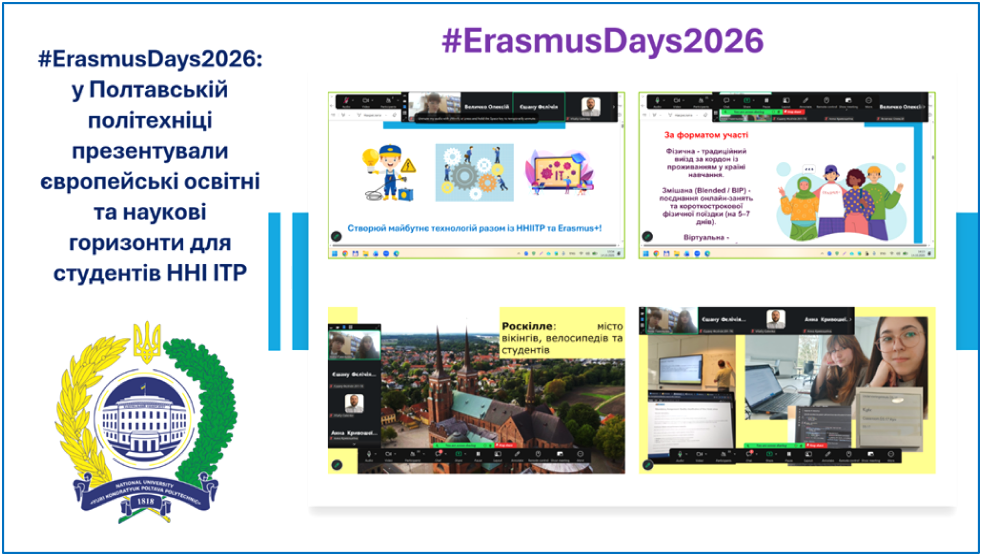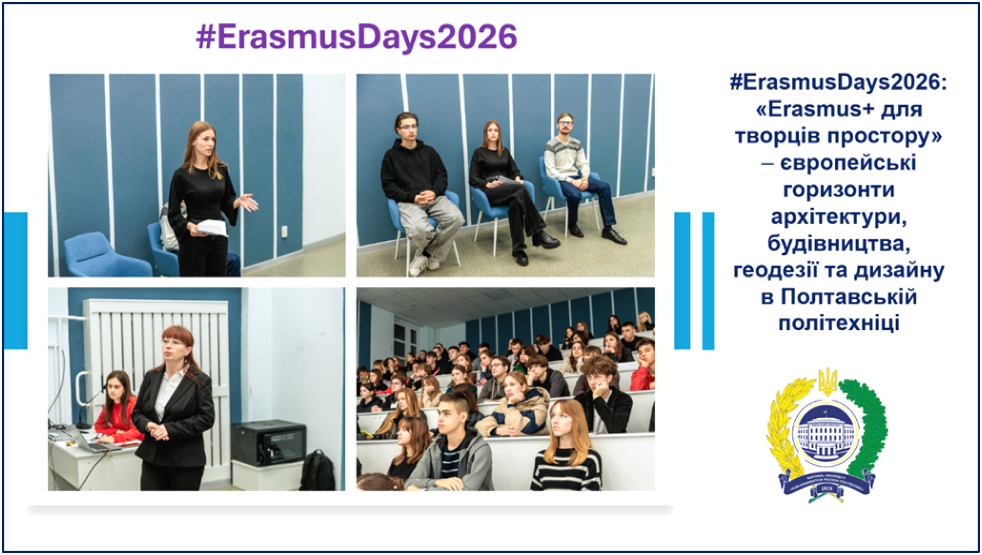
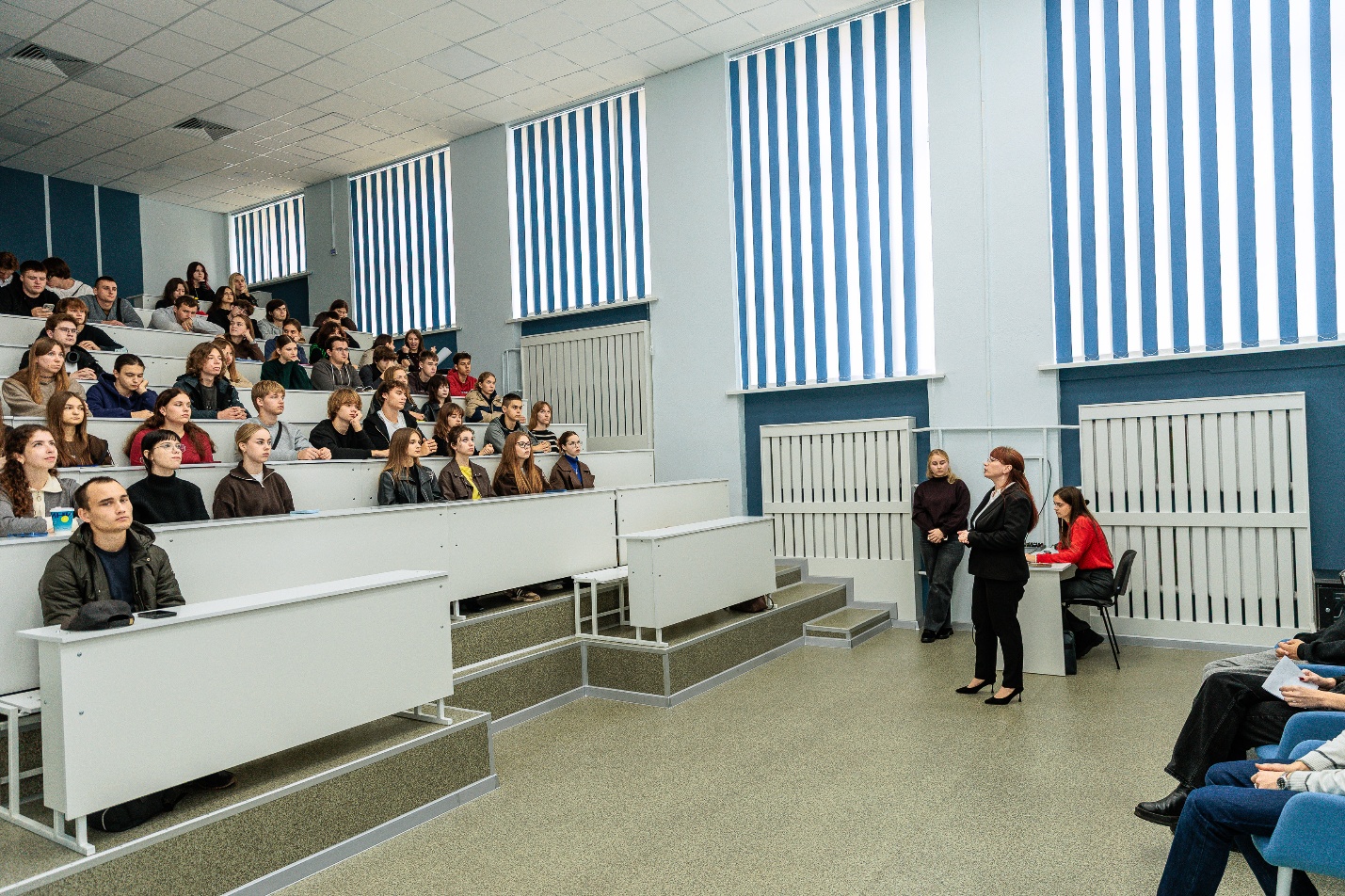
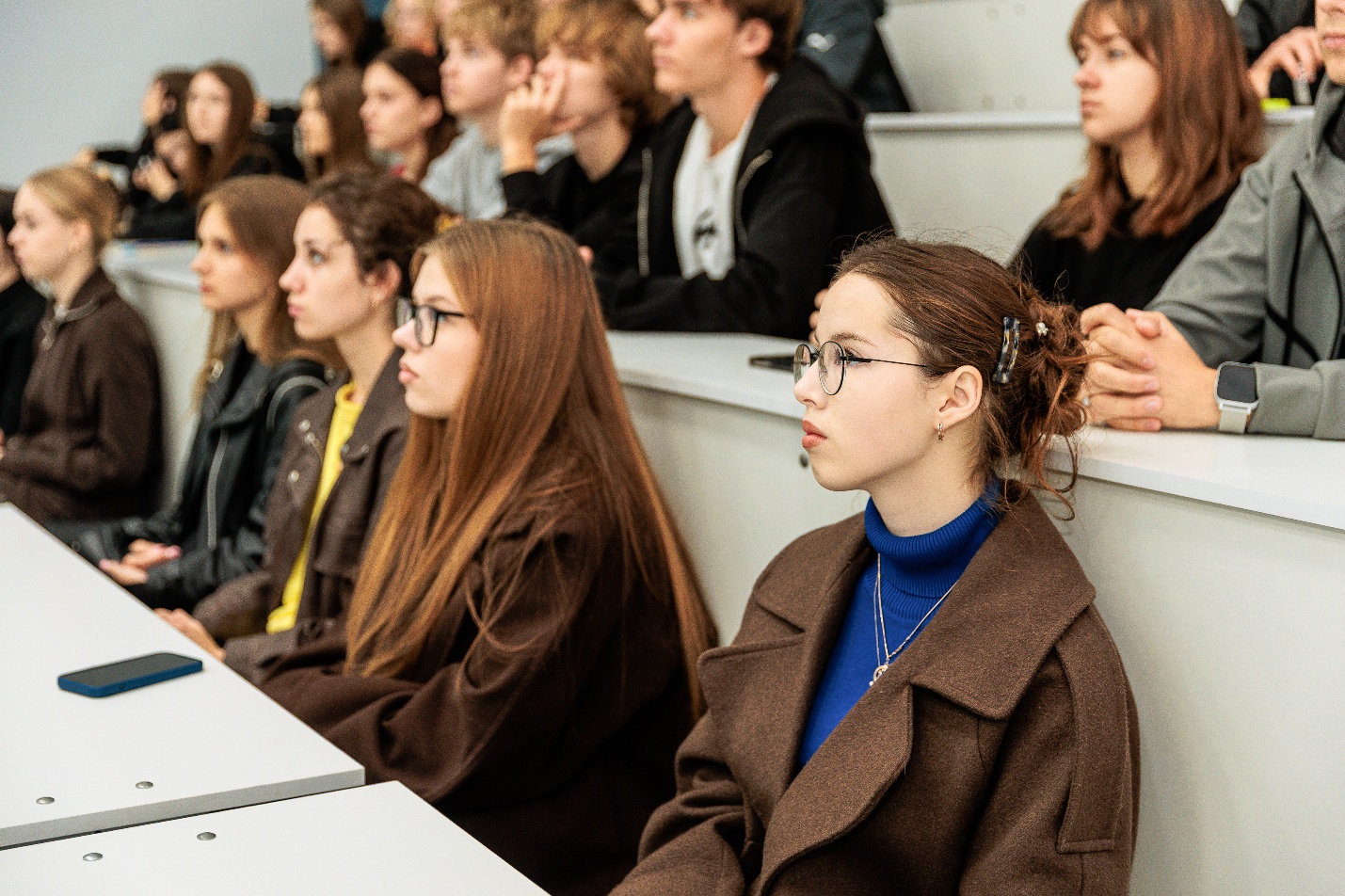
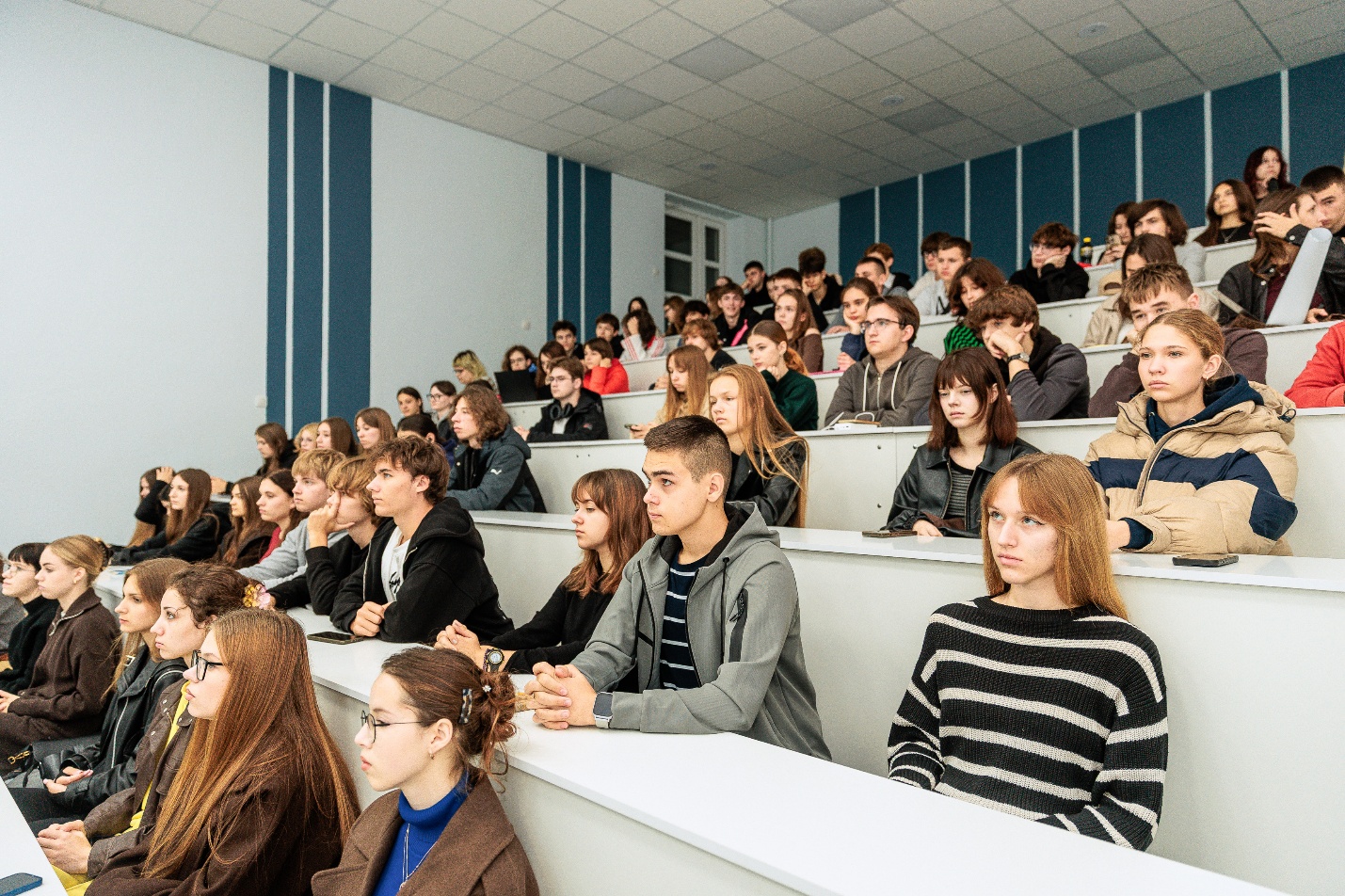
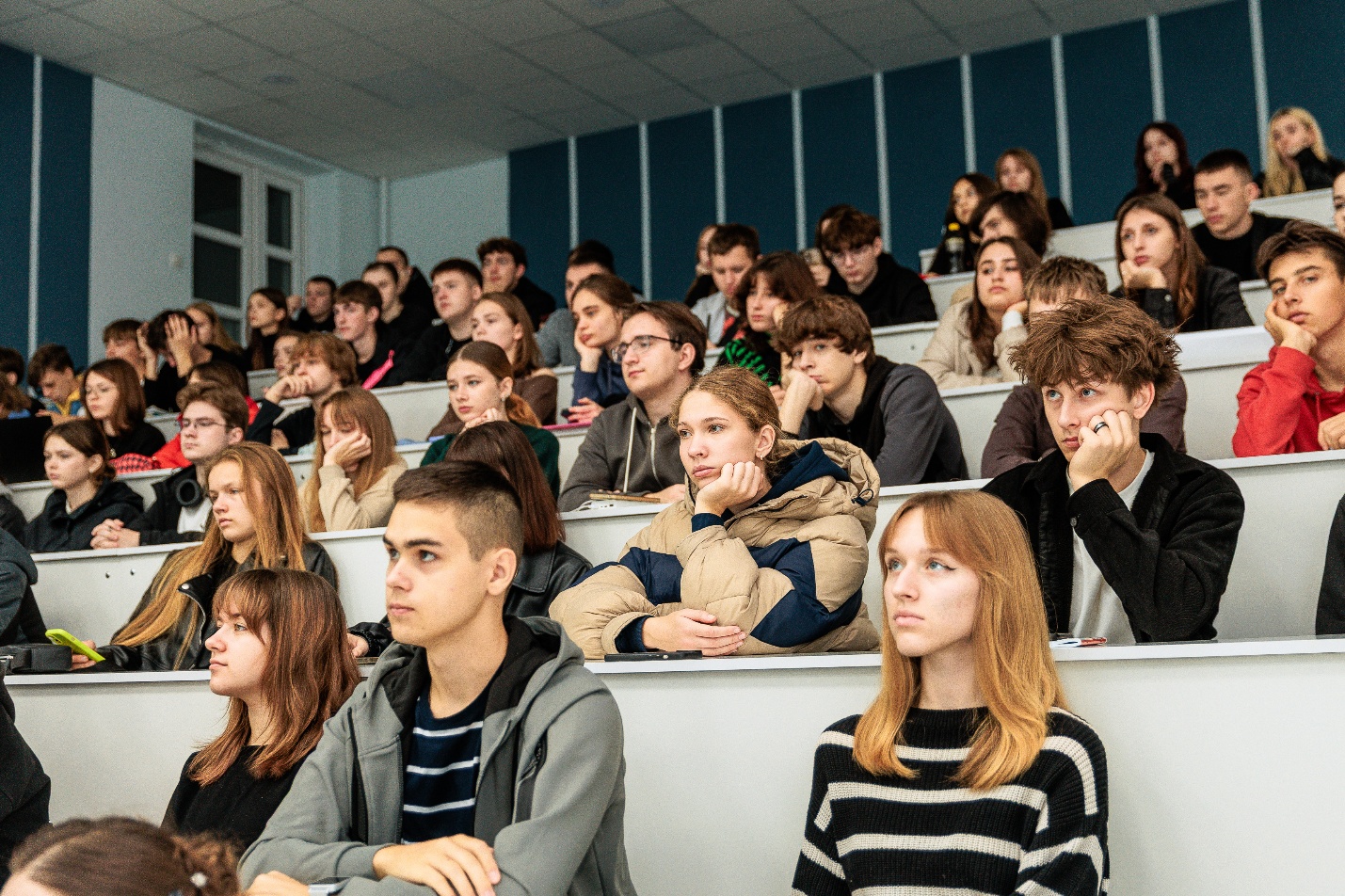
As part of the celebrations for the anniversary of the 10th global European Union initiative #ErasmusDays2026, National University “Yuri Kondratyuk Poltava Polytechnic” hosted a large-scale informational and motivational meeting entitled “Erasmus+ for Space Creators: Architecture, Design, Civil Engineering, and Geodesy”. Geared toward higher education students of the first (Bachelor’s) and second (Master’s) levels from the Educational and Research Institute of Architecture, Civil Engineering and Land Management (ERI ACELM), the event brought together future architects, civil engineers, surveyors, and designers seeking to acquire advanced international experience for the rebuilding and modernisation of post-war Ukraine.
The meeting took place on October 14, 2026, in person during the 3rd class period (11:30 AM – 12:50 PM) in Room 204-A. The keynote speaker, Anna Pavelieva, PhD, Associate Professor, and International Relations Coordinator at Poltava Polytechnic, moderated the event.
Opening the meeting, Anna Pavelieva emphasised that spatial development professionals currently face unprecedented challenges: the comprehensive reconstruction of destroyed Ukrainian cities and infrastructure, the design of comfortable and barrier-free urban environments, the implementation of innovative energy-efficient construction technologies, Building Information Modelling (BIM), and the processing of vast amounts of geospatial data using GIS technologies.
“A modern Ukrainian architect or engineer cannot be confined solely to desk-bound theory. Our state is heading toward full membership in the European Union; therefore, the harmonisation of domestic regulations with European standards, proficiency in digital tools, and a practical grasp of sustainable development principles are fundamental requirements of the labour market”, – noted Anna Pavelieva. – “The Erasmus+ program offers our students a unique opportunity to study at Europe's leading technical universities and laboratories, acquiring world-class skills that they can already invest today into the recovery of Ukraine”.
The participants learned about the key benefits and grant support mechanisms of Erasmus+:
• Complete financial independence: a monthly non-repayable grant of at least €1,150, travel expense reimbursement, and a 100% tuition fee waiver at the host higher education institution.
• Academic guarantee and recognition of results: retention of student status at Poltava Polytechnic, study under an individual academic plan, and the official transfer (recognition) of all acquired ECTS credits.
• Diversity of pathways: traditional semester credit mobility (3–12 months), Blended Intensive Programmes (BIP), and practical internships in research laboratories.
• A clear four-step participation algorithm: English language proficiency at the B1/B2 level (certified by an international certificate or internal assessment at the polytechnic), successful completion of at least one academic year with a high grade point average, preparation of the application package (Europass CV, motivation letter, academic transcript of records), and timely application submission.
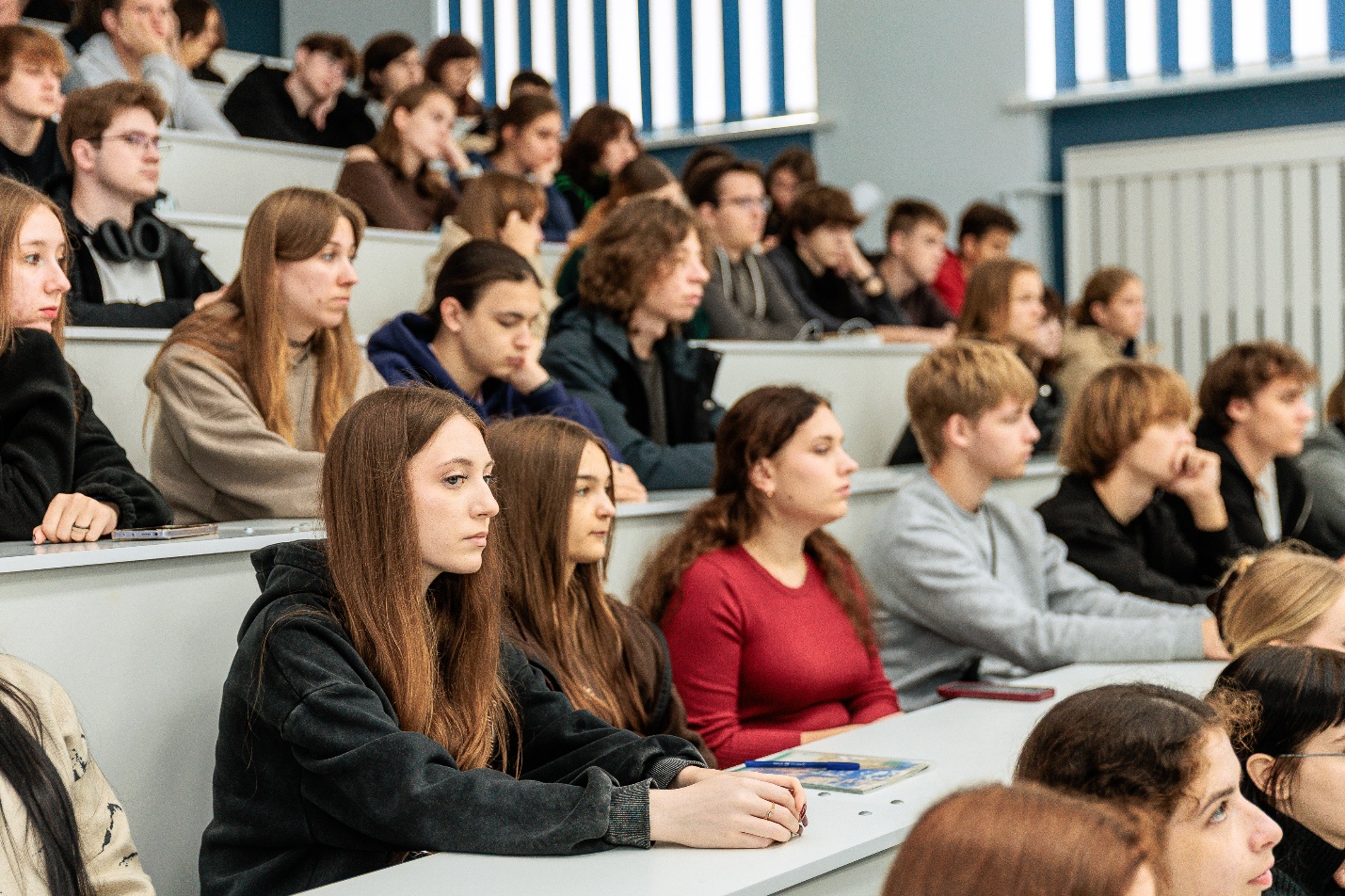
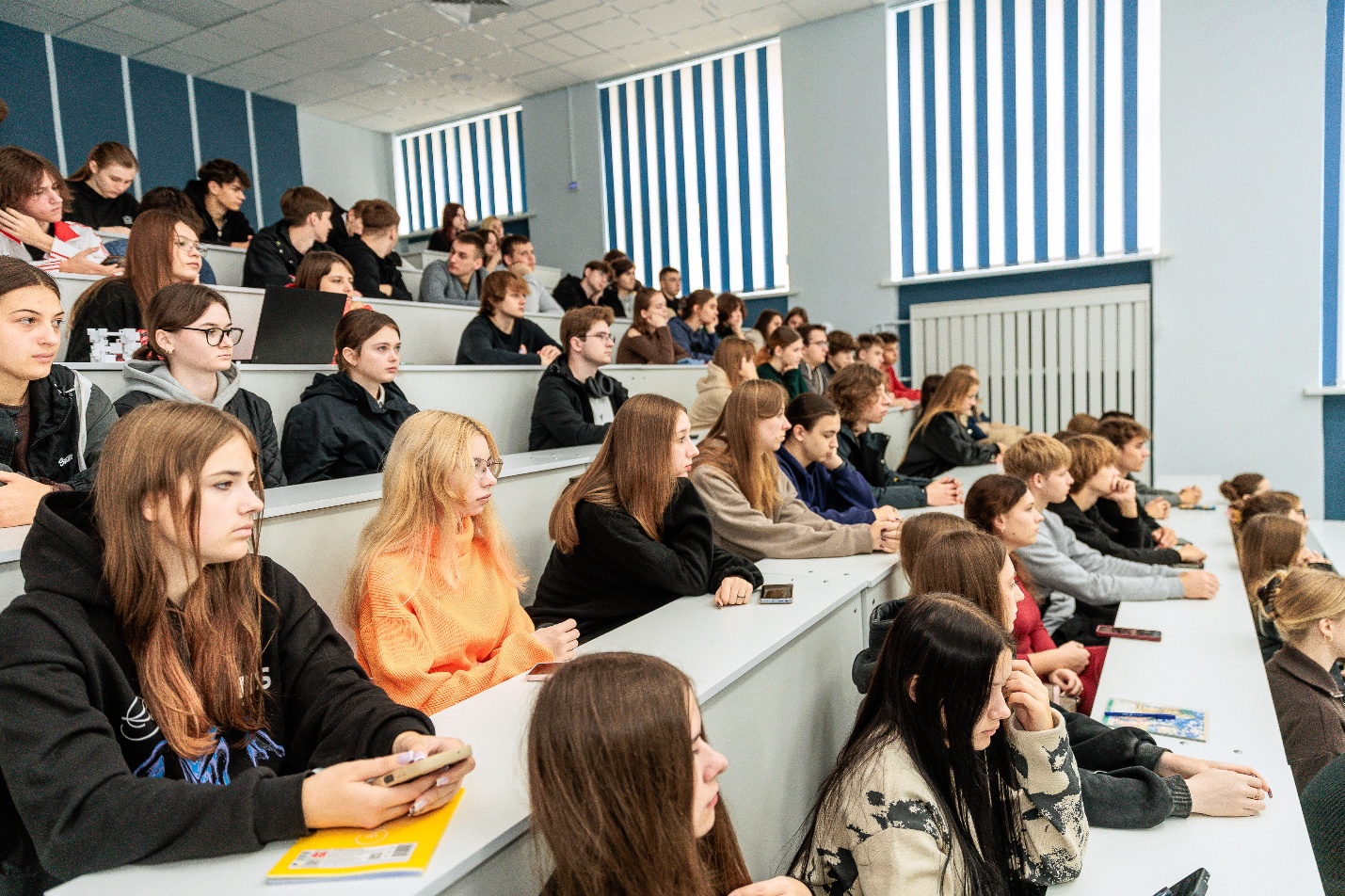
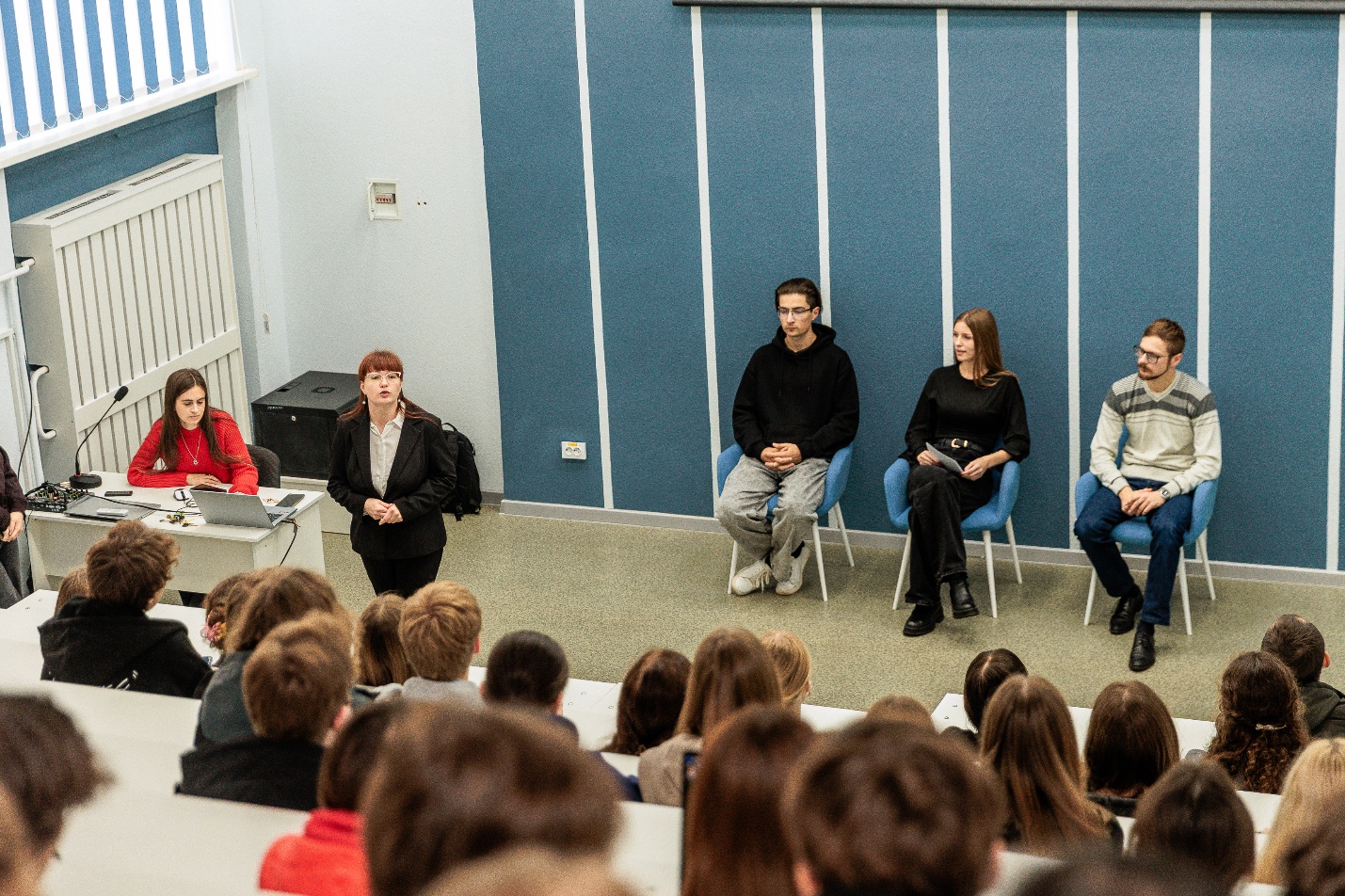
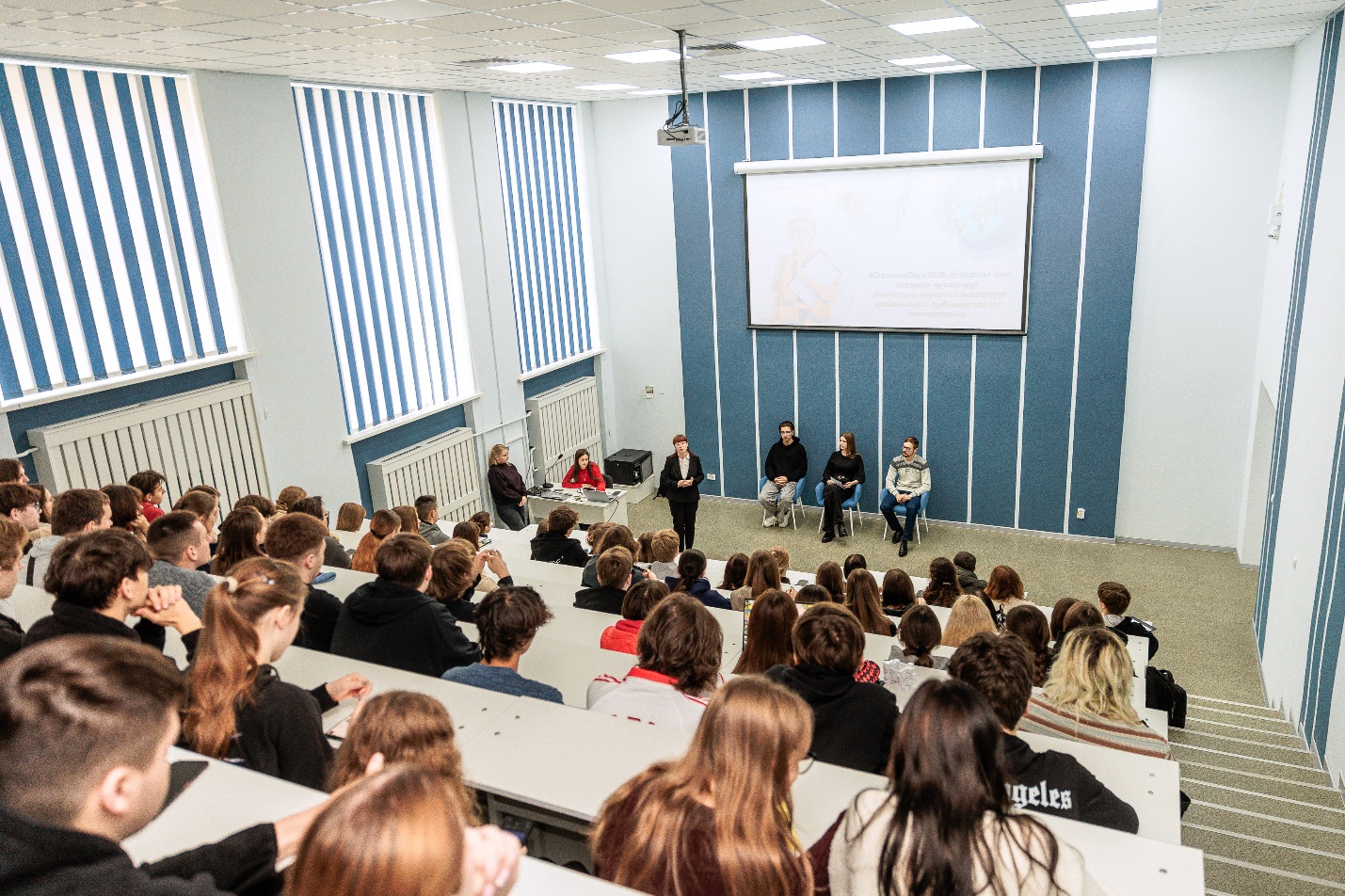
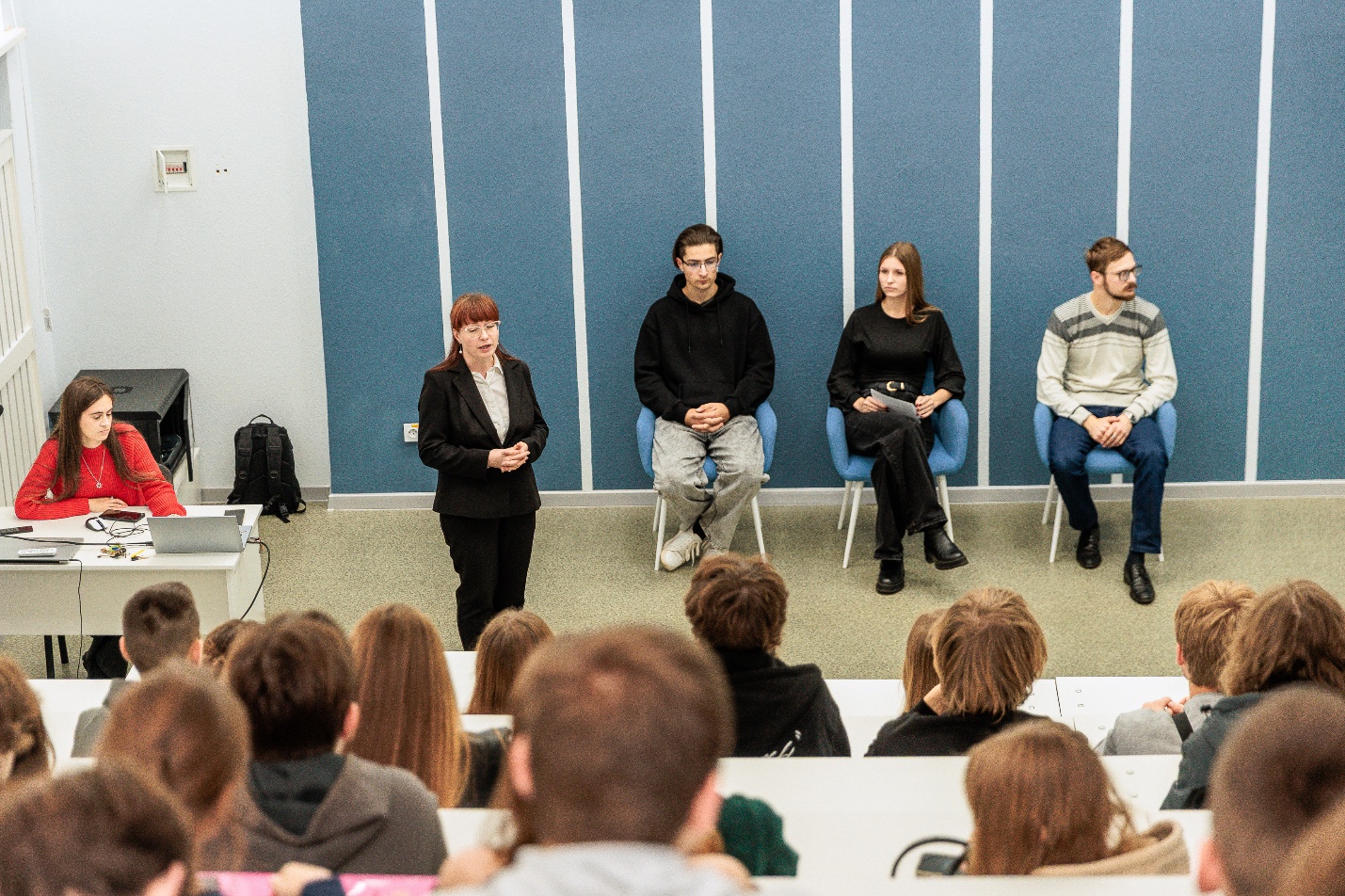
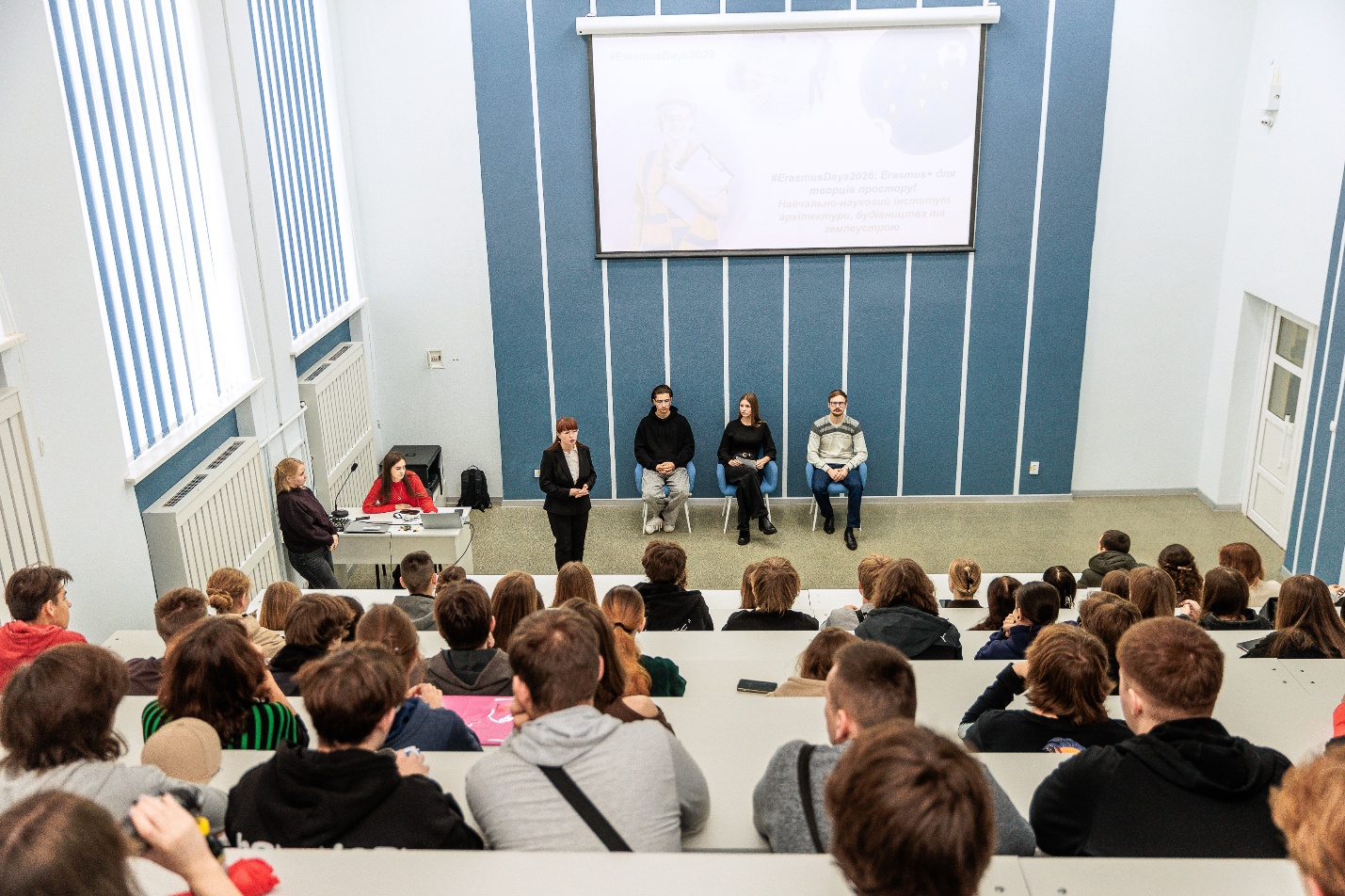
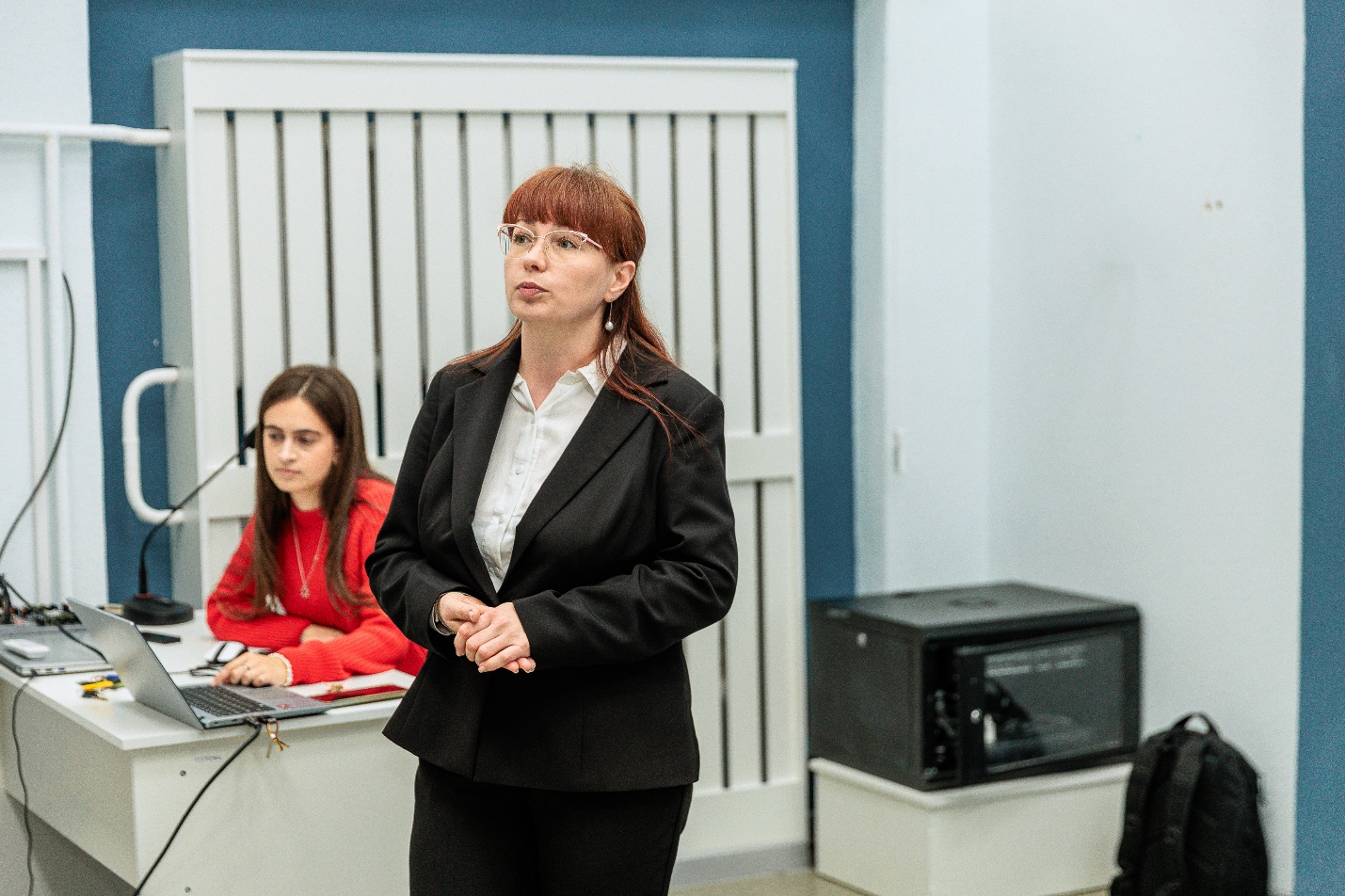
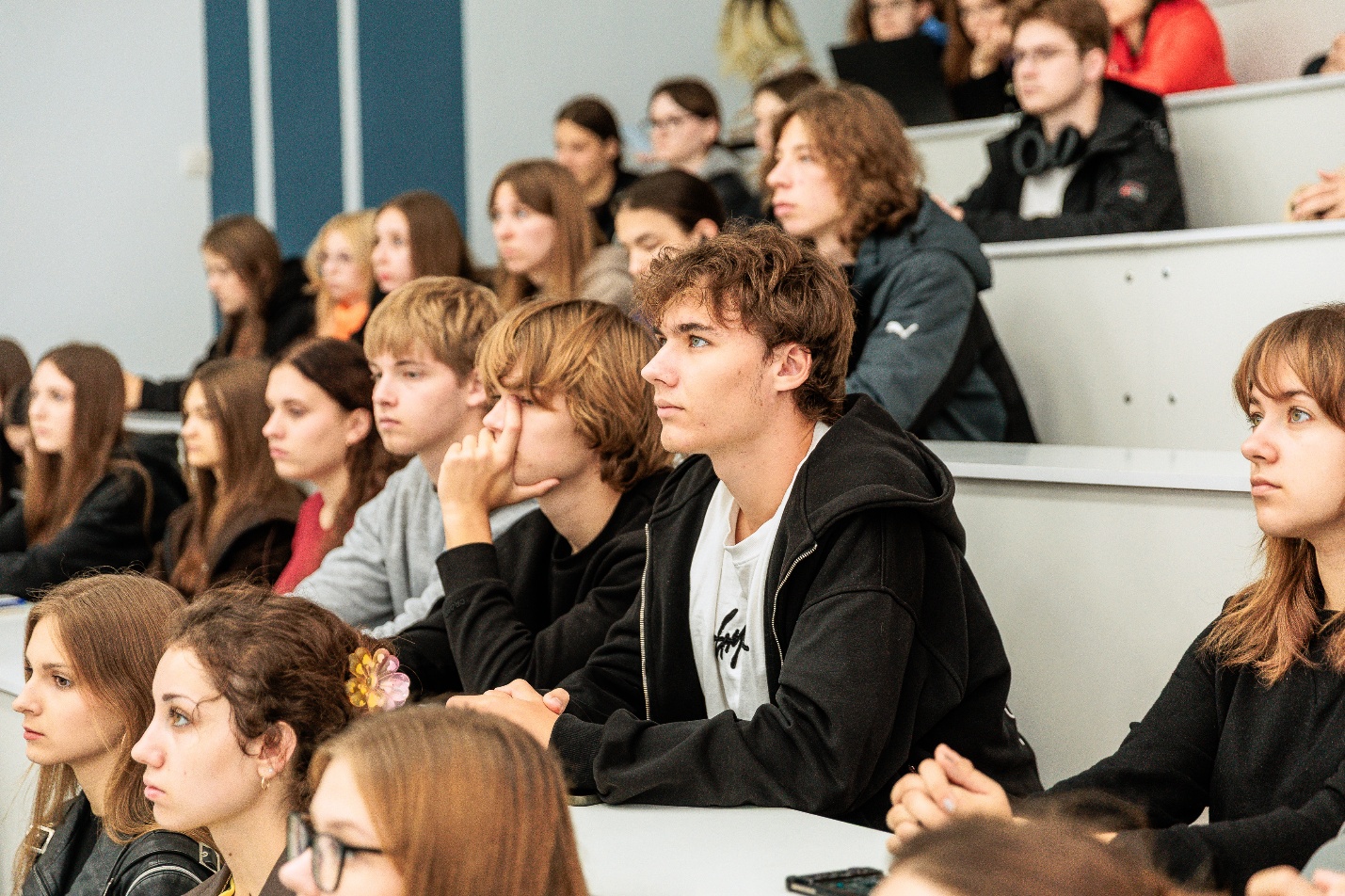
A key highlight of the event was an engaging “students-for-students” dialogue in which institute representatives shared their successful experiences studying and interning in Germany, Latvia, Denmark, and Slovakia.
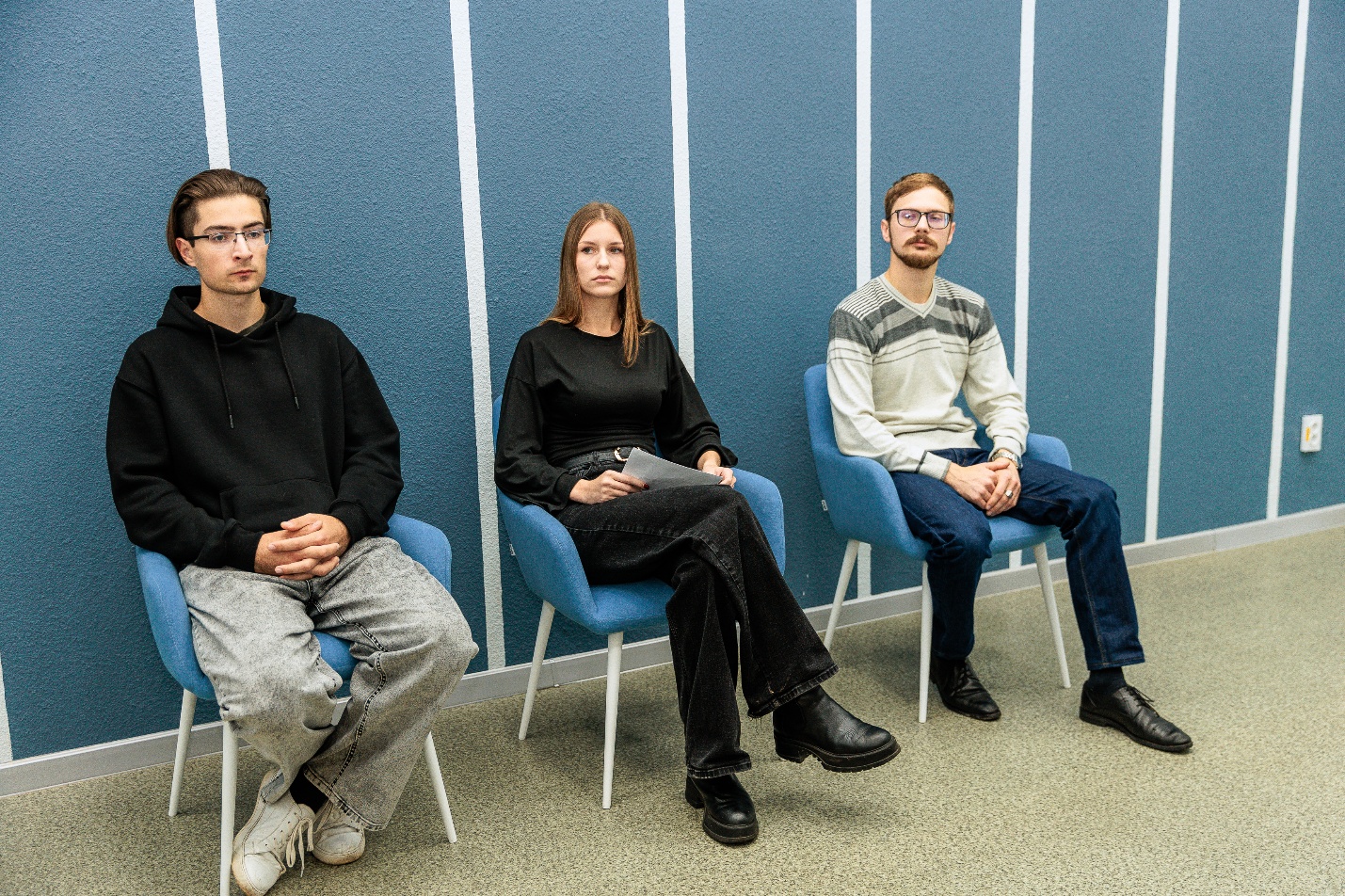
Anton Filonenko, a 4th-year student in group 401-B majoring in speciality 192 “Building and Civil Engineering”, shared his experience of a semester of study at Technische Hochschule Lübeck (TH Lübeck) during the spring semester of the 2024/2025 academic year.
The student described the distinctive features of German applied higher education: the joint campus brings together three higher education institutions (the University of Lübeck, the Technical University of Applied Sciences, and the Academy of Music) and offers advanced laboratory facilities, research buildings, and design workshops.
Among his academic breakthroughs, Anton highlighted mastering the RStudio environment (where he developed interactive web maps displaying precipitation intensity across Germany) and the QGIS geographic information system for detailed layer analysis of utility networks, building footprints, riverbeds, and the spatial zoning of the Lübeck region. A source of genuine enthusiasm for the student was the university engineering project SIGUL, where a multidisciplinary student team designs and builds a “Formula Student” racing car from scratch: engineers construct the mechanical powertrain and chassis, designers model the vehicle's bodywork, and management students formulate the business plan for corporate sponsorship. One such race car costs as much as a brand-new Ferrari; the team has already built four internal-combustion versions and is actively engineering a fifth, an entirely electric model.
Anton also described the comfortable living conditions in a nine-story, suite-style dormitory with panoramic views and modern conveniences. He shared his impressions of medieval Lübeck, a UNESCO World Heritage historic city surrounded by the Trave River.
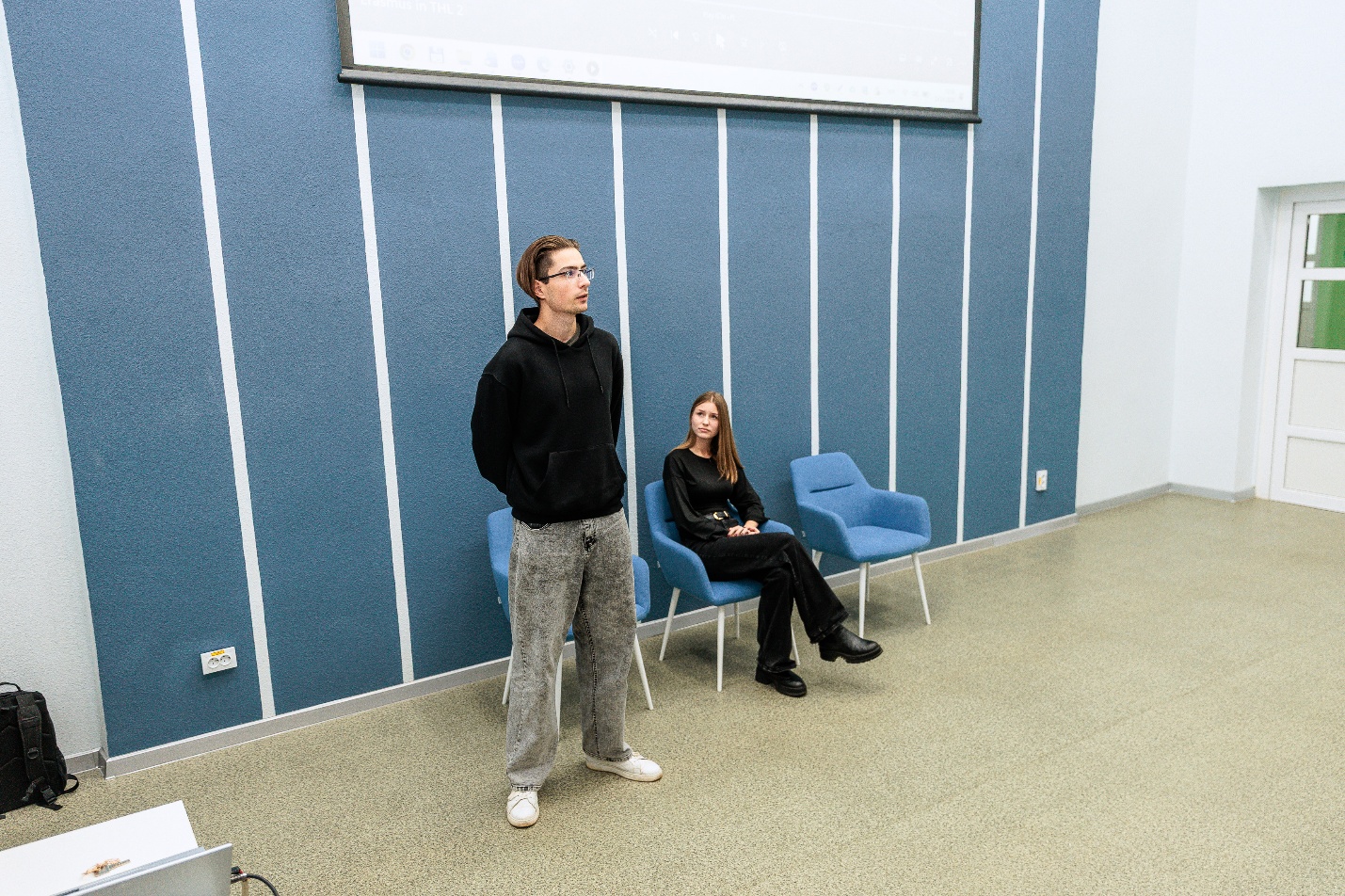
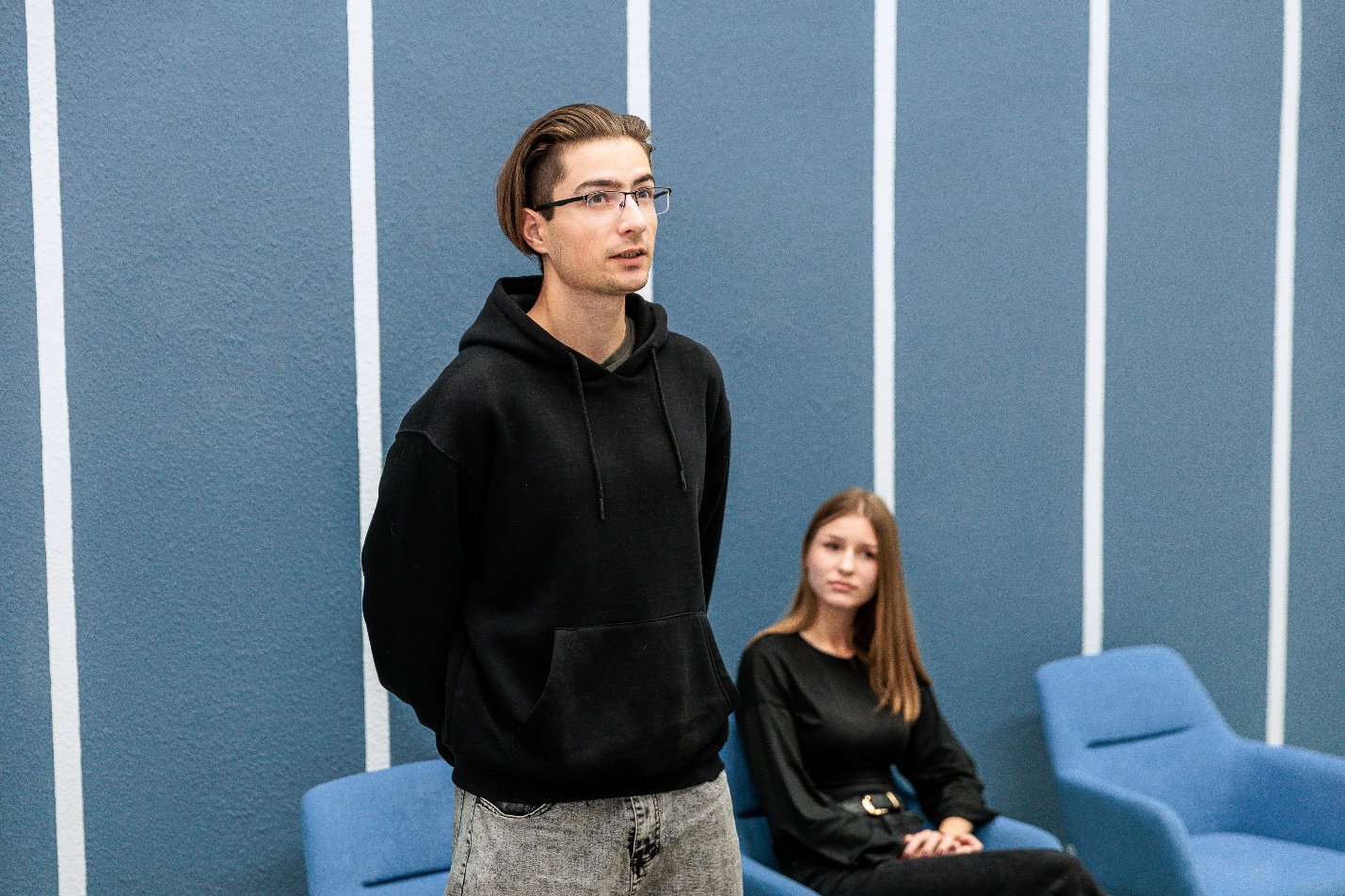
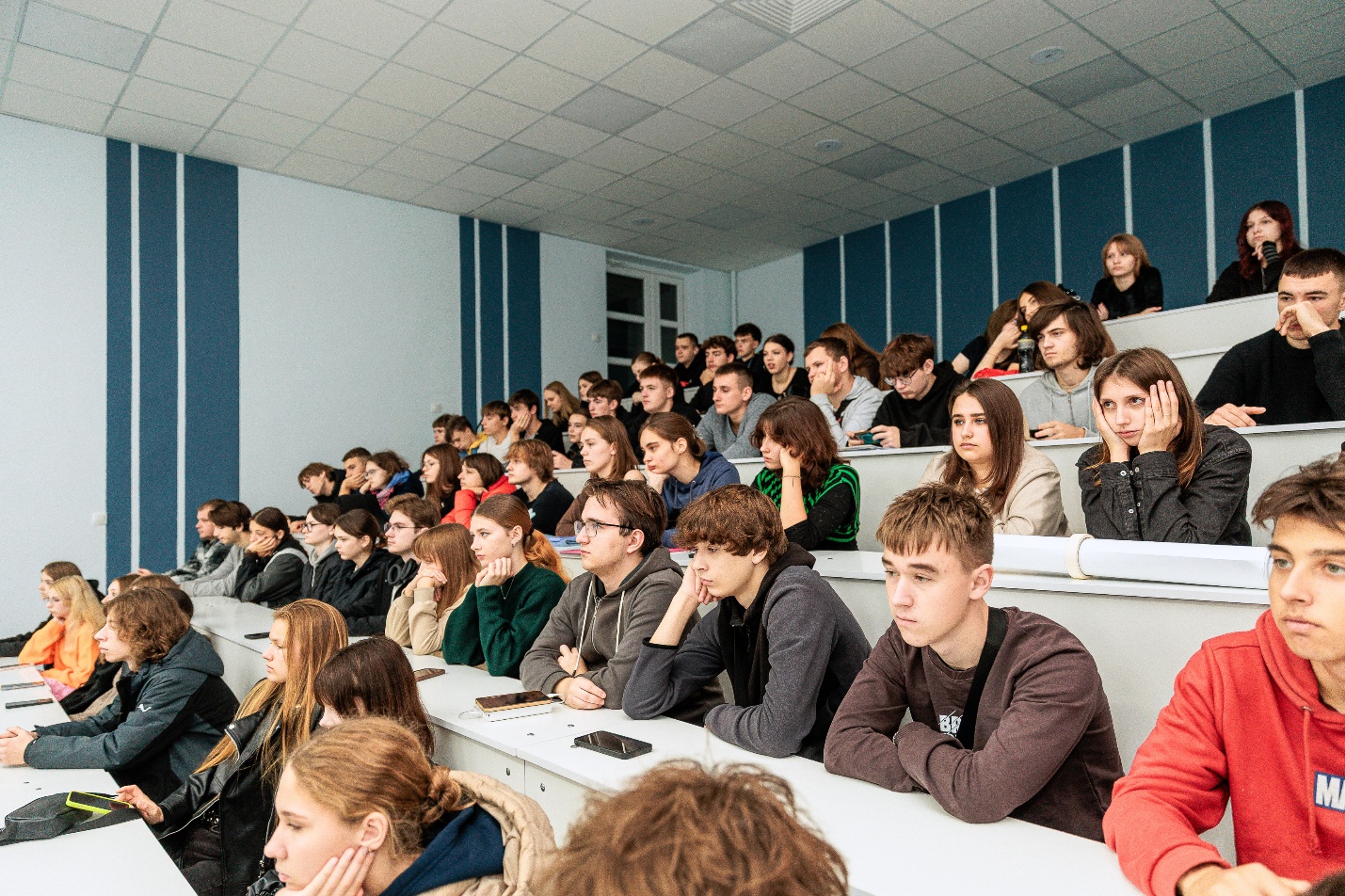
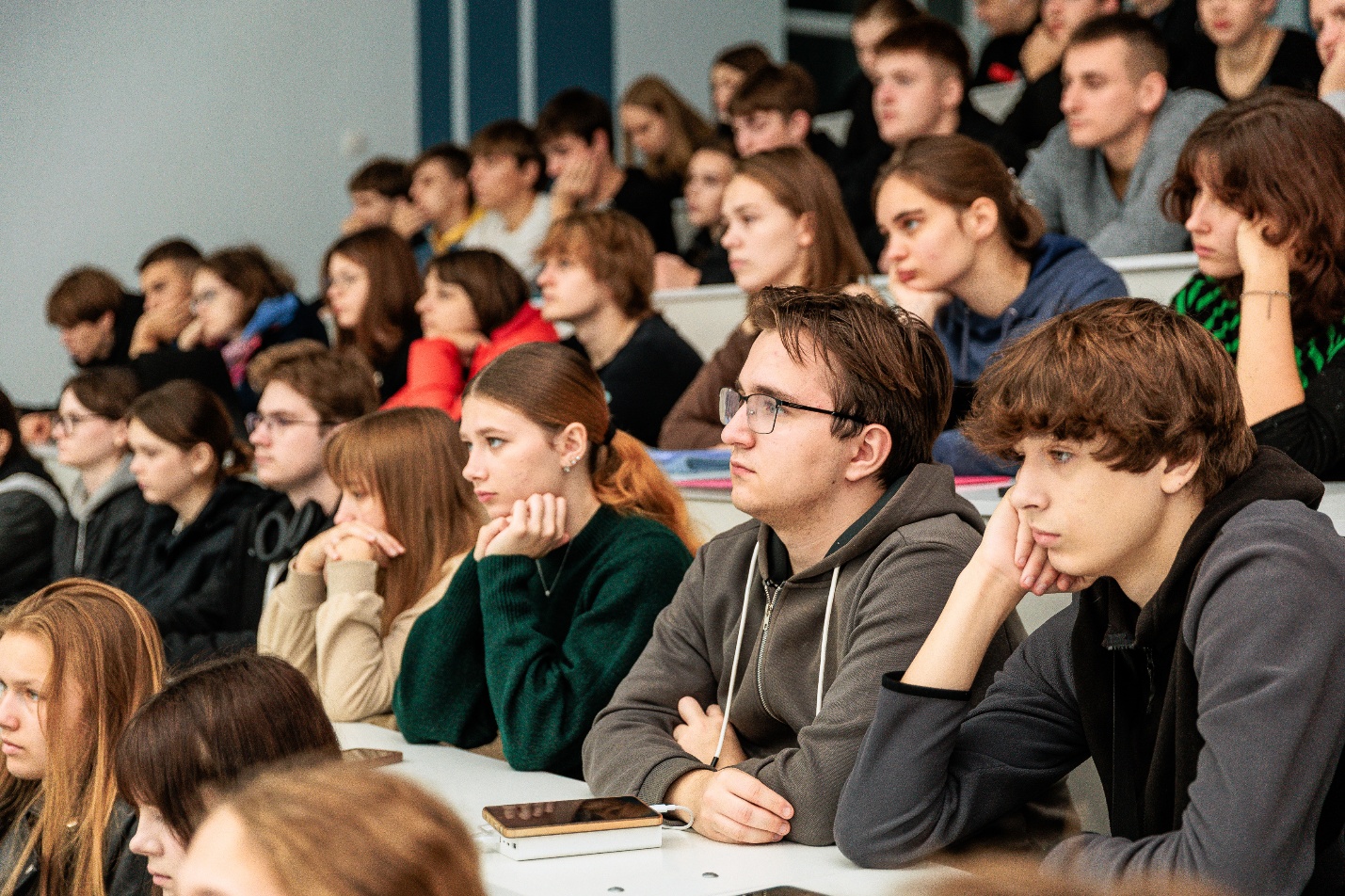
Omelian Shchur-Dunets, a 2nd-year student in group 601-BP majoring in speciality 192 “Building and Civil Engineering”, reported on his participation in the Erasmus+ BIP (Blended Intensive Programme). He participated in the international design-and-build workshop “Commons Under Constraint: Adaptive Reuse and Community Co-production in Borderland Territories”, organised by Vidzeme University of Applied Sciences (Latvia).
The program comprised two interconnected components: a virtual phase on the MS Teams platform (May 5–9, 2026) and a practical hands-on phase directly at the construction site (May 11–15, 2026) in the town of Indra, Krāslava Municipality, near Latvia’s eastern border. The intensive course aimed to explore architecture's role under resource and spatial constraints and show how small-scale interventions and the adaptive reuse of materials can revitalise public spaces and support local community life.
Students completed a comprehensive field cycle: engaging with residents and assessing their needs; sorting and pre-processing materials at mobile workstations; preparing structural sketches; and assembling physical structures using heavy machinery (excavators and tractors). The workshop concluded with a morning hike, a communal meal with residents, the official unveiling of the completed urban amenity installations, and an educational excursion to Riga.
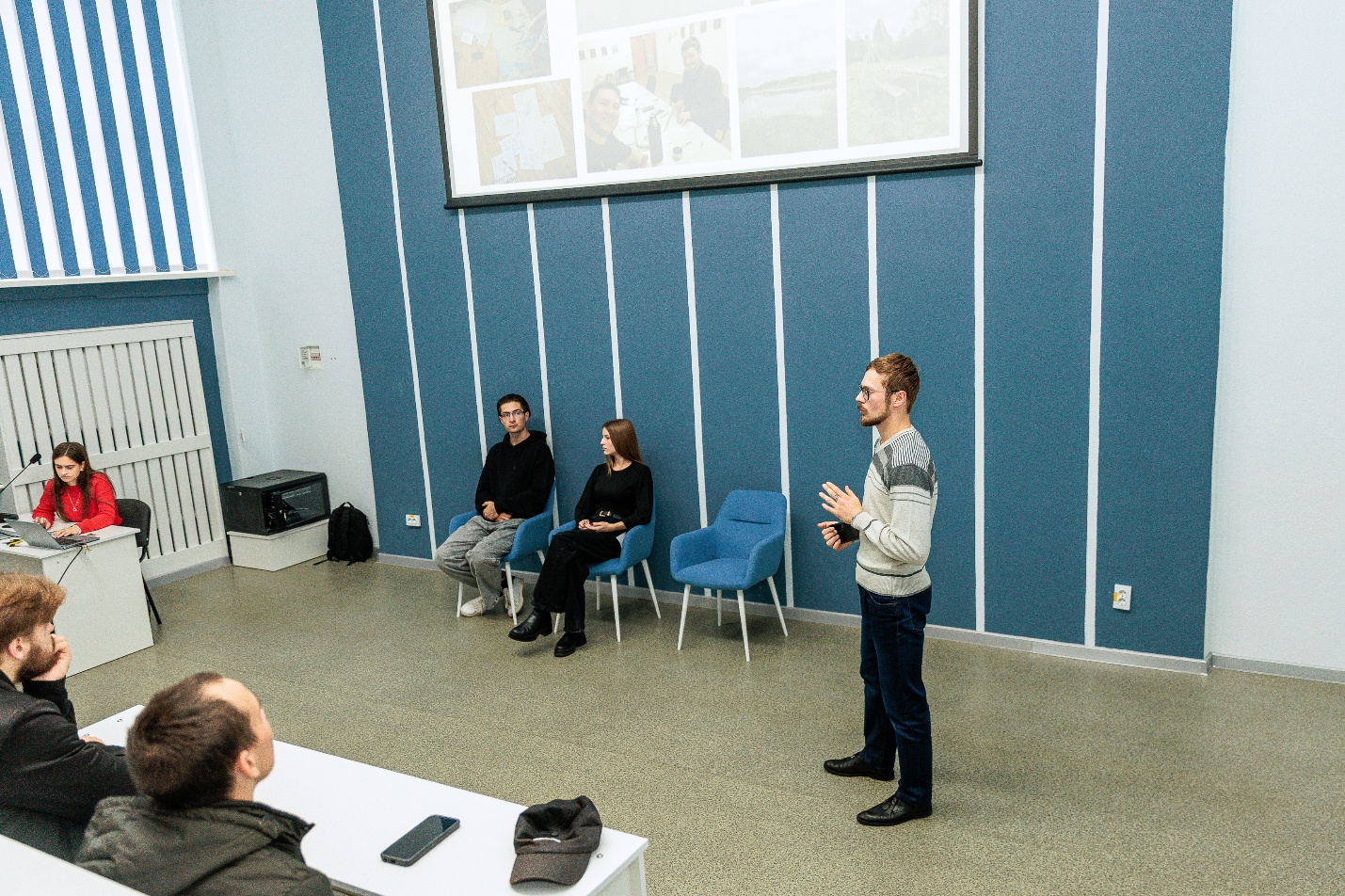
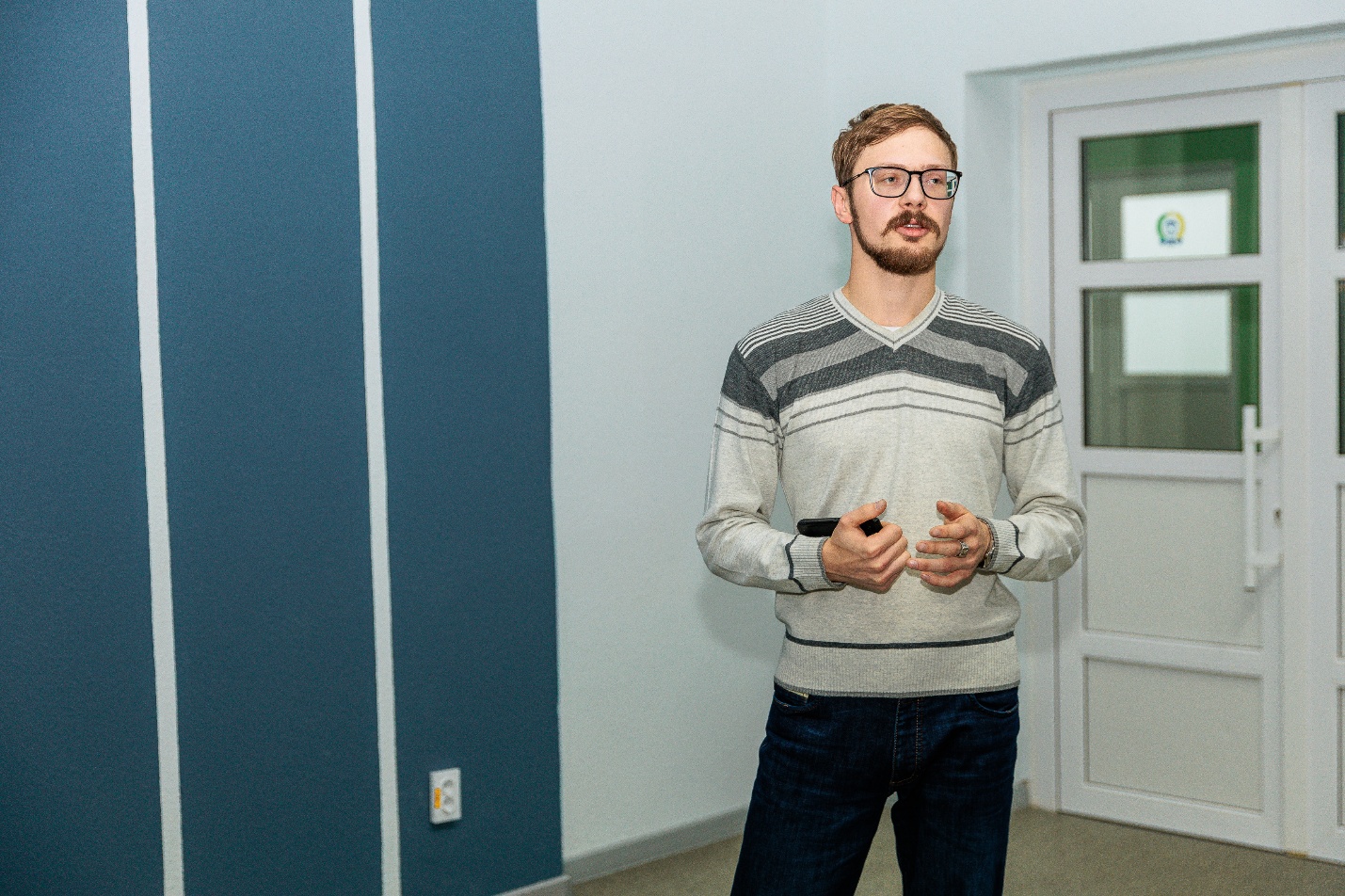
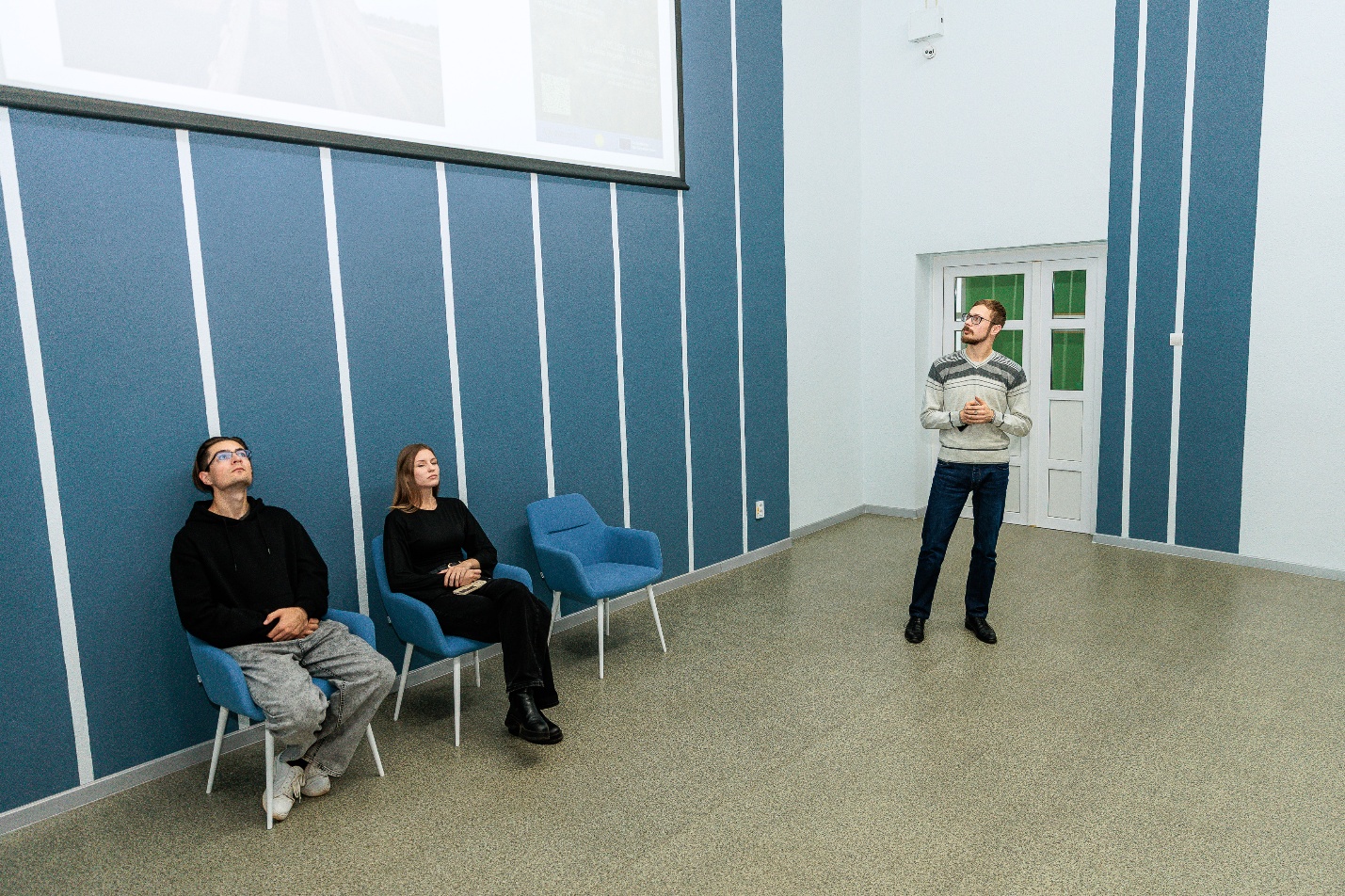
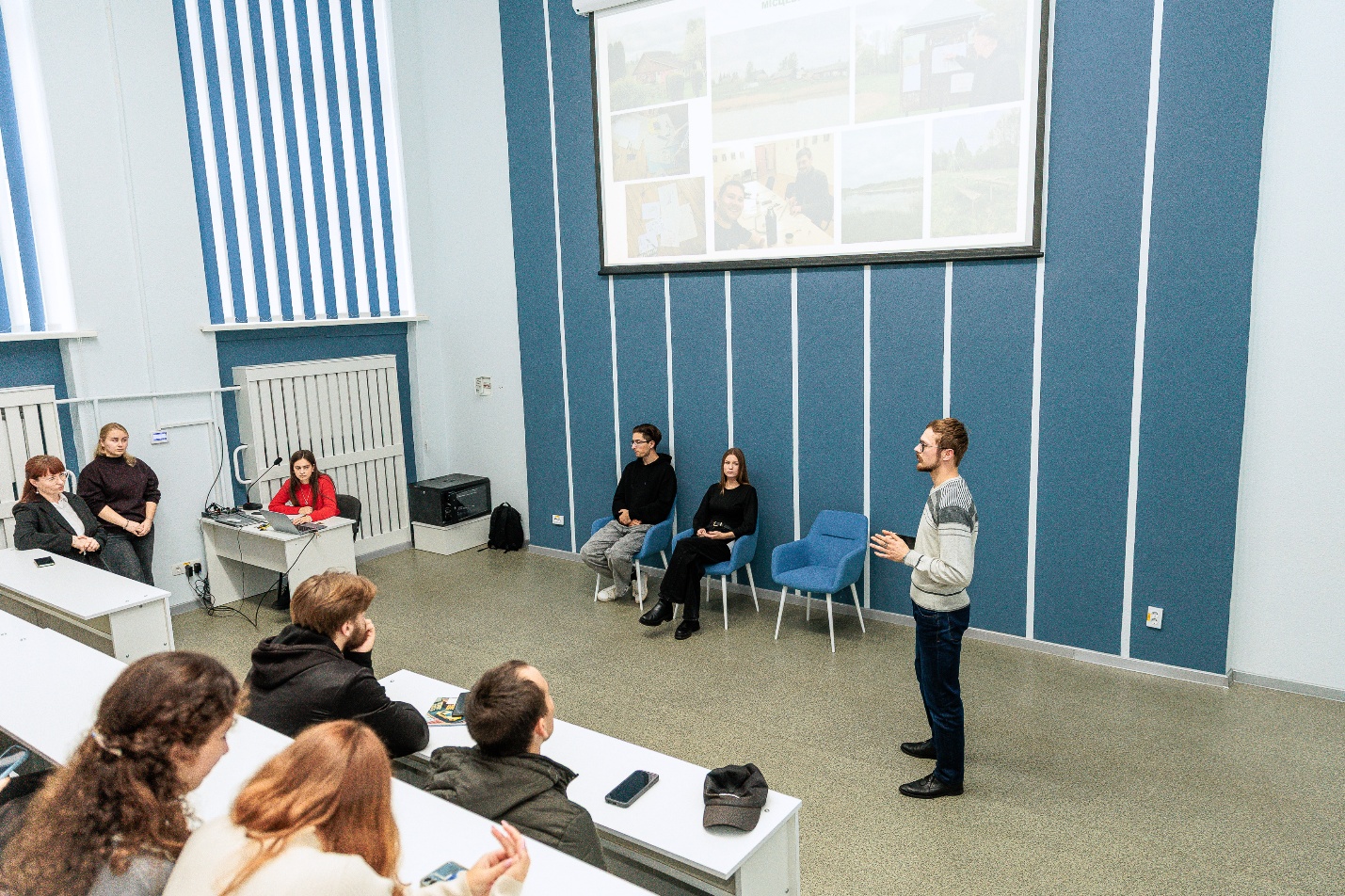
Polina Khlystun, a 4th-year student in group 402-A majoring in speciality 191 “Architecture and Urban Planning”, presented the results of her semester-long studies in Næstved at the Danish Zealand Academy of Technologies and Business.
Polina underscored the practice-oriented approach of Danish education, where the entire semester's curriculum centred on a single integrated project carried out in teams. The student undertook advanced training in the BIM modelling of digital parametric building models, detailed drafting of complex structural and engineering joints, and managing project documentation in strict compliance with Danish national building standards.
The future architect was particularly inspired by Scandinavian minimalism in architecture, the extensive development of cycling infrastructure, widespread electric vehicle adoption, the harmonious coexistence of people and nature, and the culture of mutual assistance. In addition to rigorous English-taught coursework, student life included visits to fine arts and classical museums, an excursion to the picturesque white chalk cliffs of Møns Klint on the Baltic coast, and a joint journey to Norway.
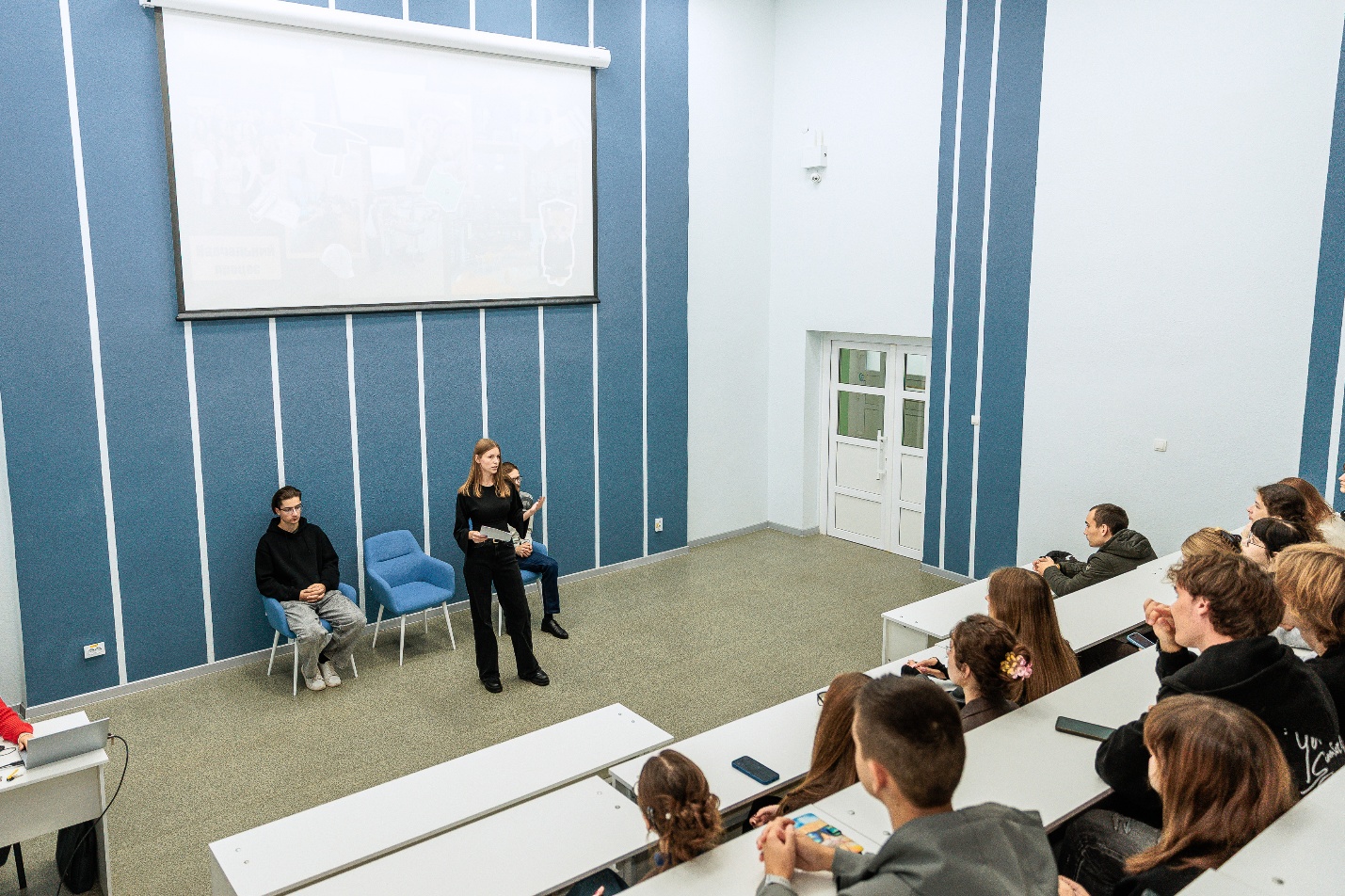
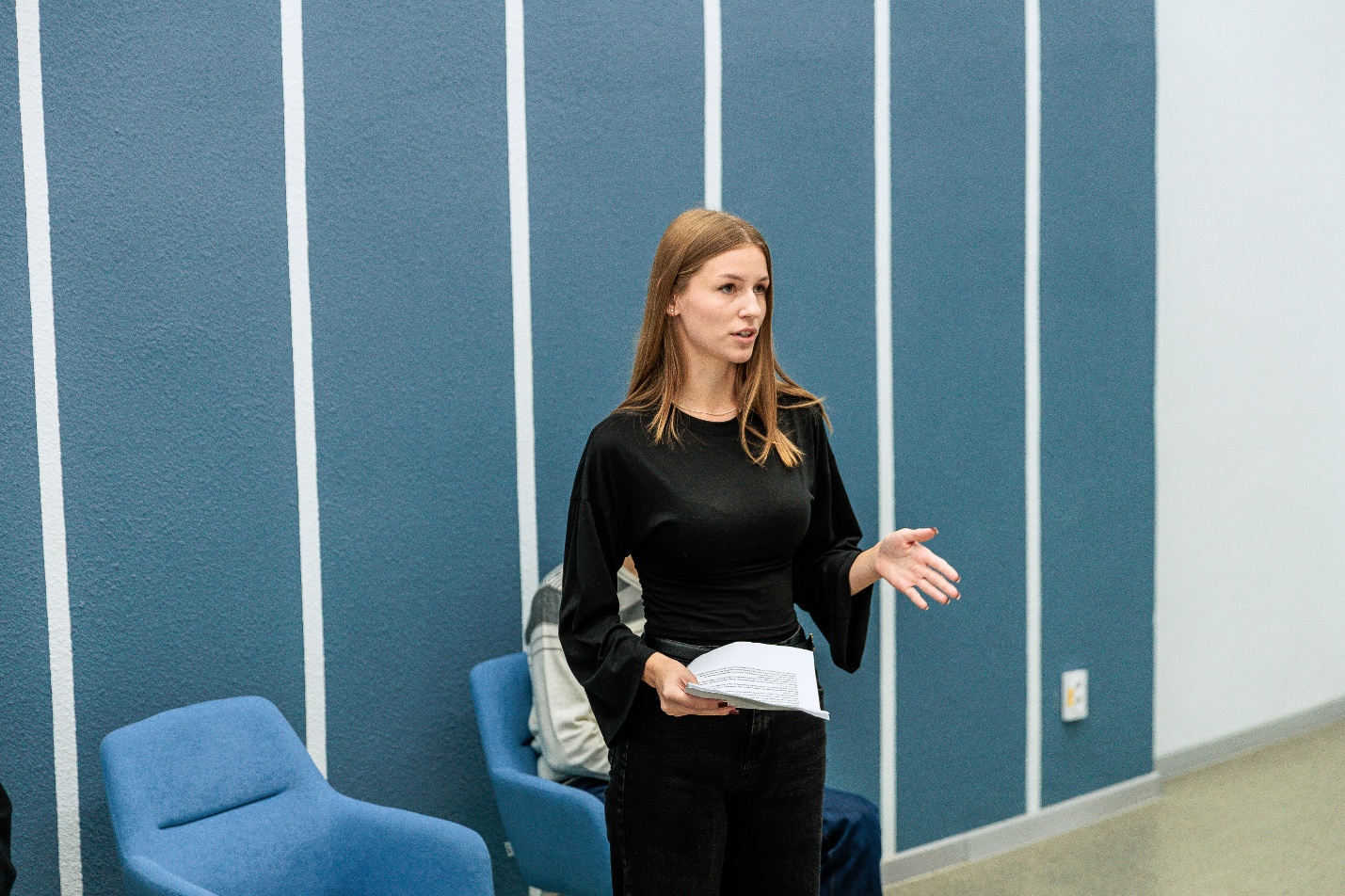
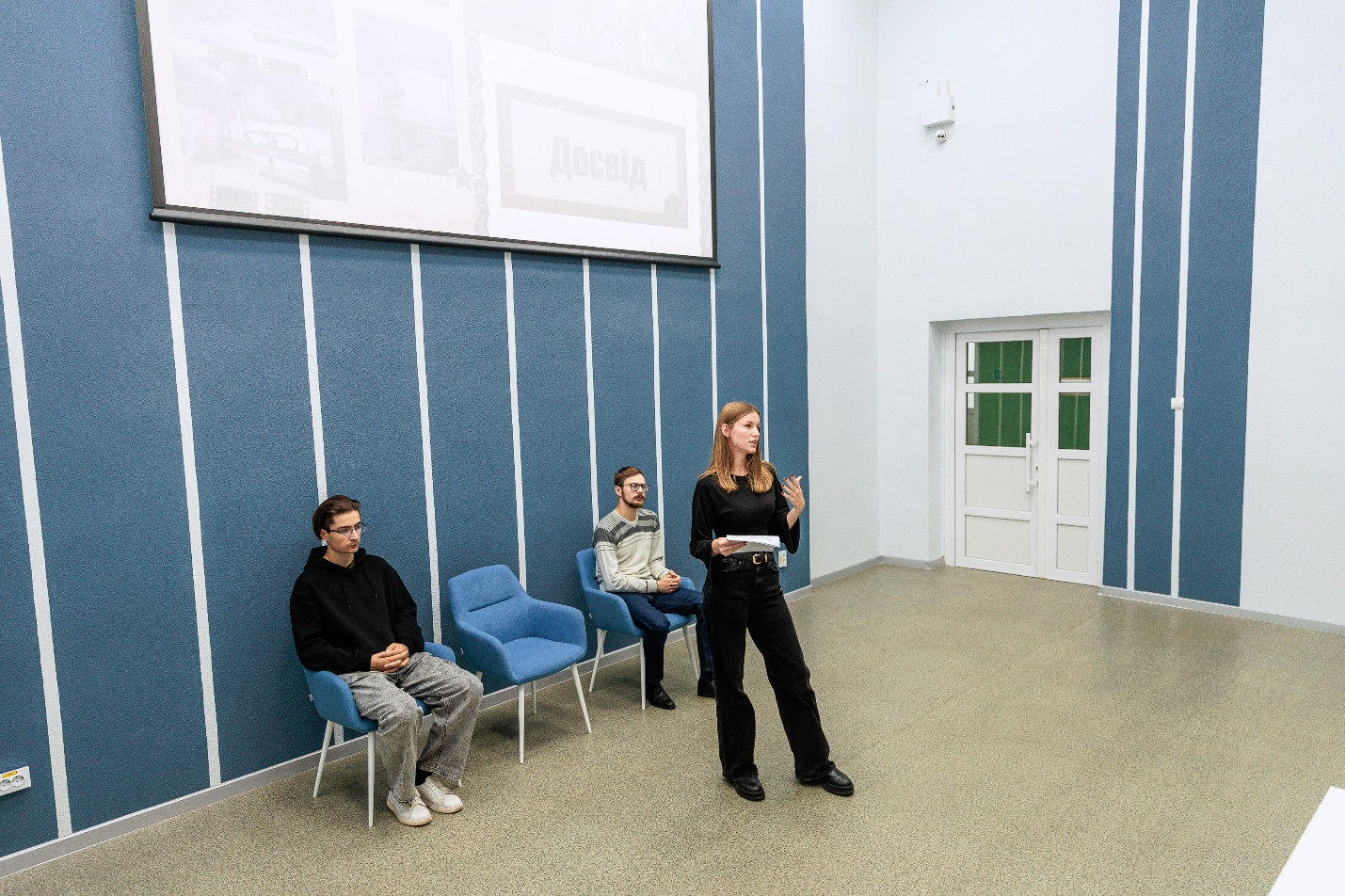
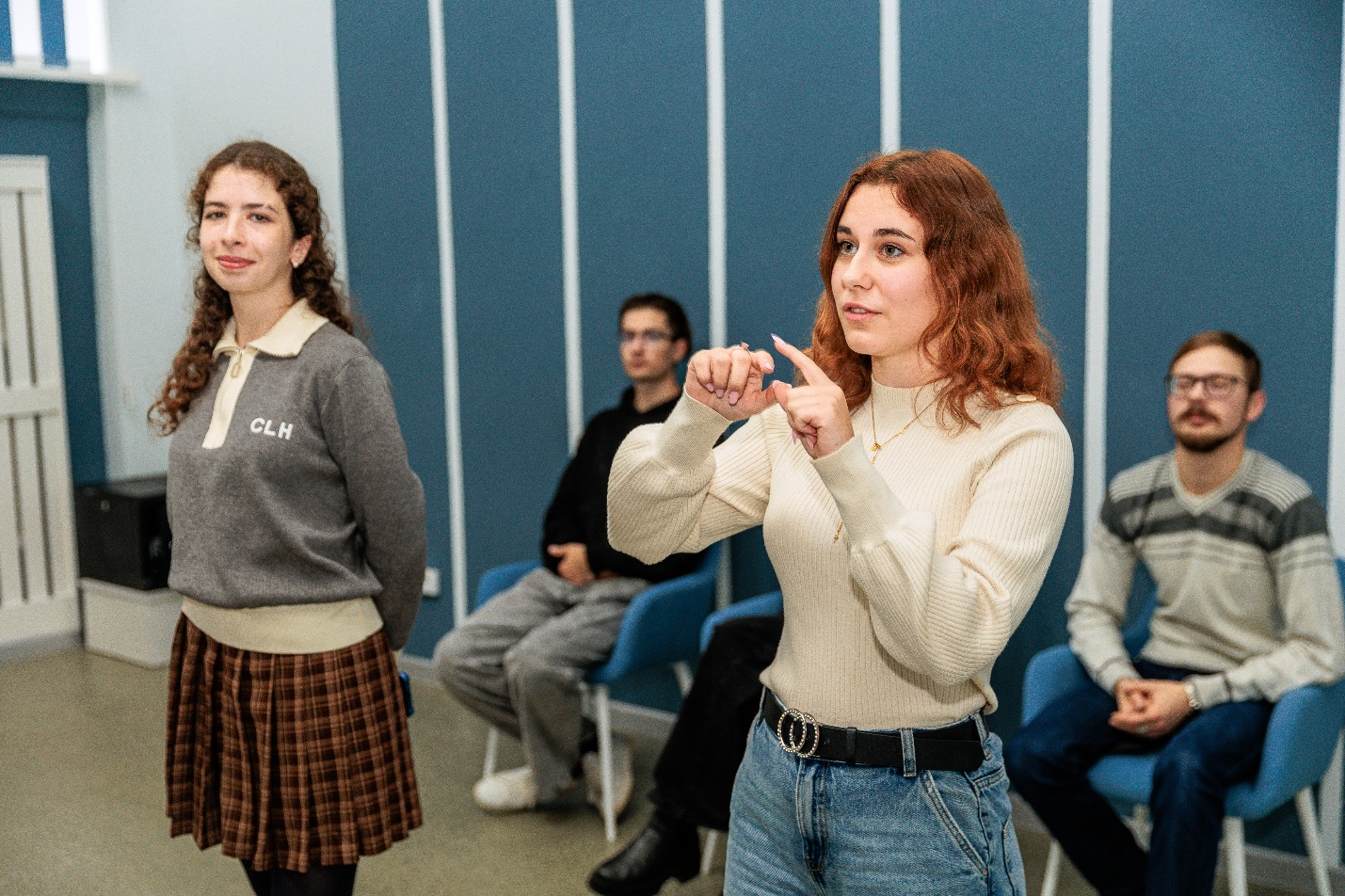
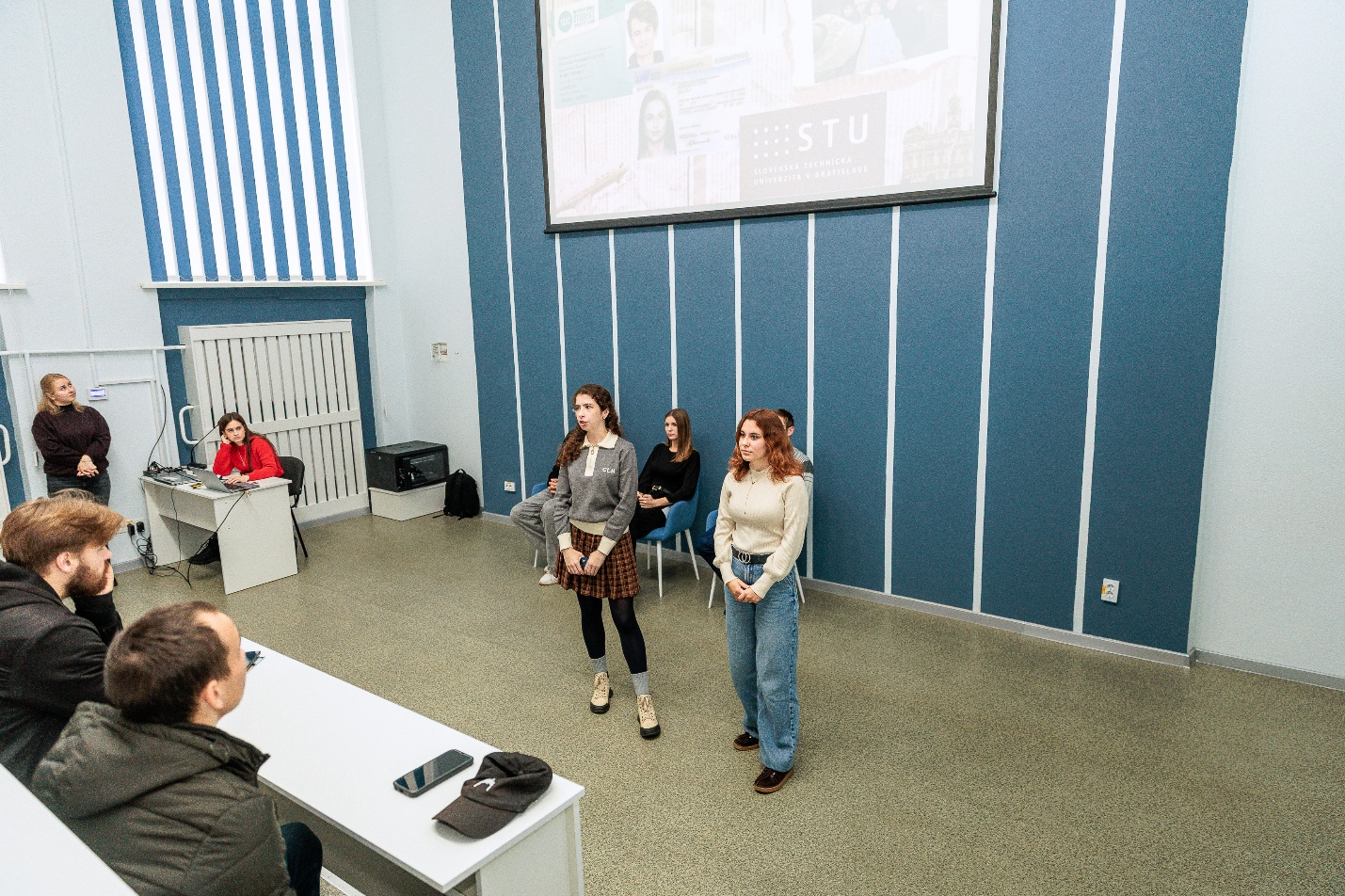
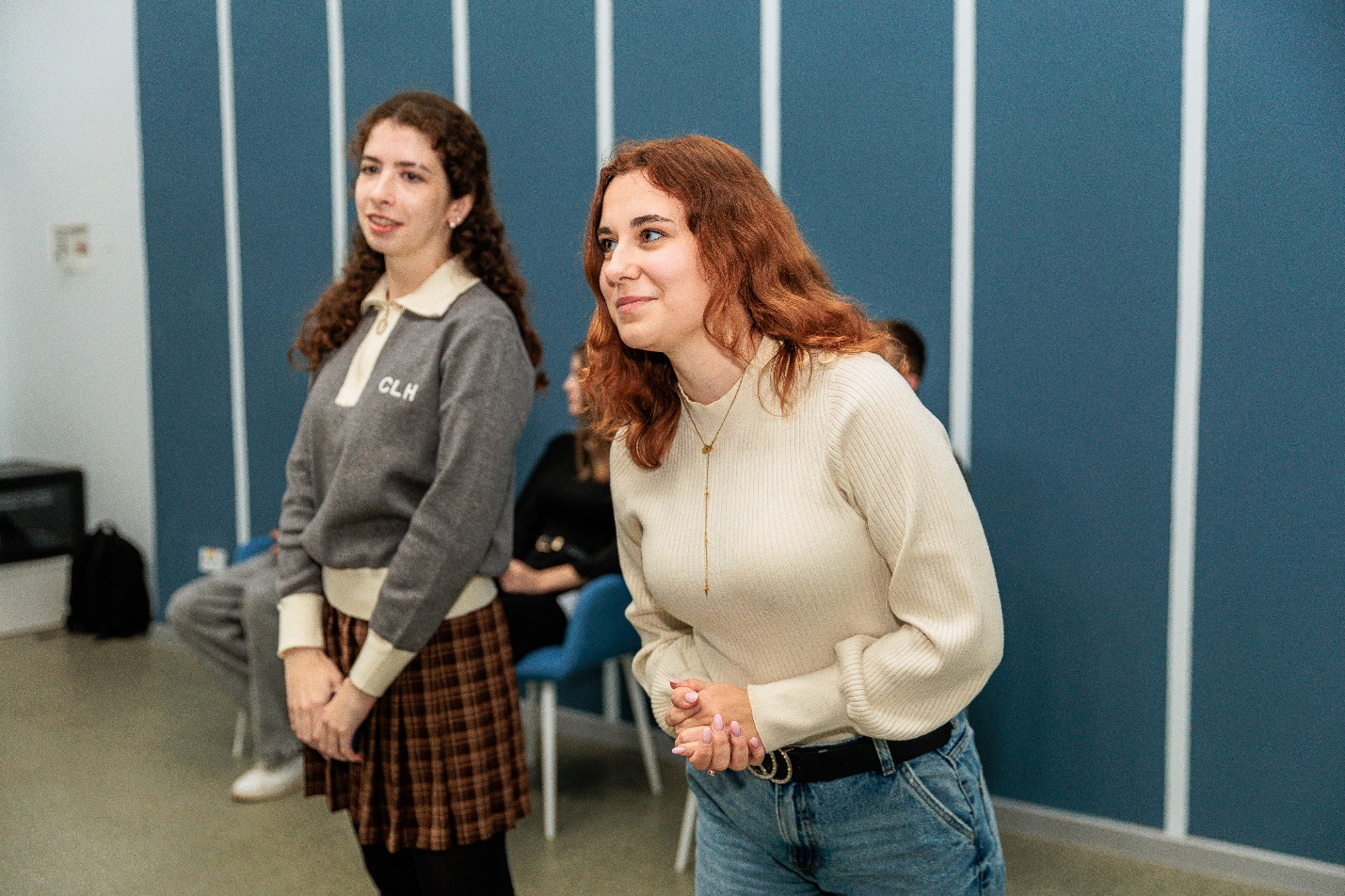
A prominent component of the event was the presentation of the semester-long study experience of 3rd-year students majoring in speciality G19 (192) “Building and Civil Engineering”, Maryna Klymovych (group 302-BM) and Alona Shapar (group 301-BP), at Slovakia’s leading technical higher education institution – the Slovak University of Technology in Bratislava (Slovenská technická univerzita v Bratislave, STU).
Attendees learned about Poltava students' practical immersion in European engineering standards. The primary academic focus was structural analysis and design, comparing European Eurocodes with Ukrainian State Building Codes (DBN) – “Eurocodes vs DBN”. At the STU Faculty of Civil Engineering, students completed laboratory material testing, technical drawing, and field visits to active construction sites and manufacturing plants producing modern building materials.
Beyond their demanding academic schedule, the students fully integrated into the international student community through the Erasmus Student Network (ESN), won the “2025 Oscar Award Ukraine” distinction at an intercultural evening, and significantly expanded their horizons. Supported by the European grant scholarship, they explored Vienna and Budapest landmarks, visited Christmas markets across Slovakia and Austria, and travelled to Prague, Brno, and Barcelona, once again confirming the motto: “Erasmus is about people who become a true family”.
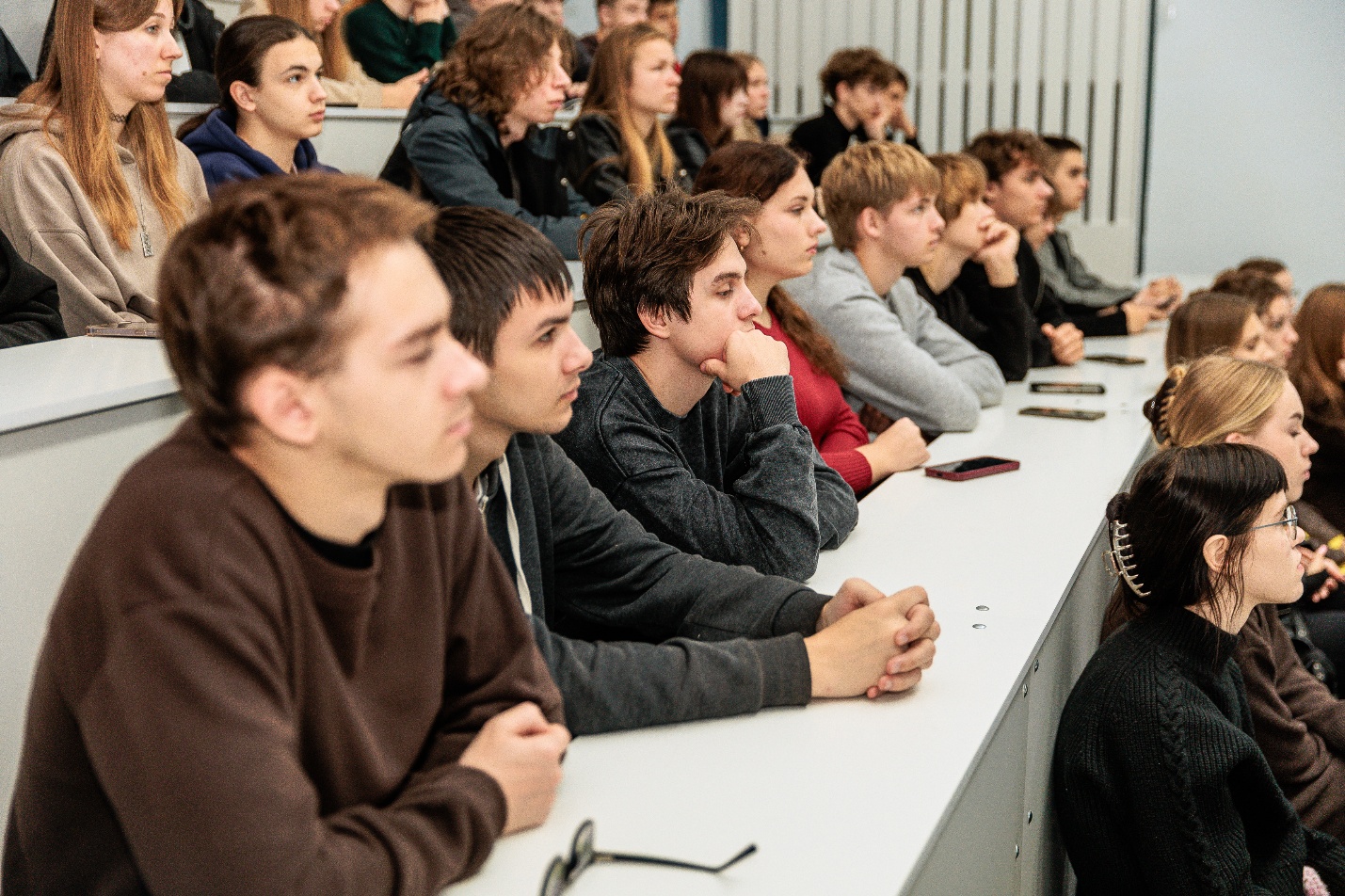
The event concluded with an active Q&A session: students asked about language examinations, drafting motivation letters for architecture and civil engineering, creating individual study plans, and practical training with European engineering software.
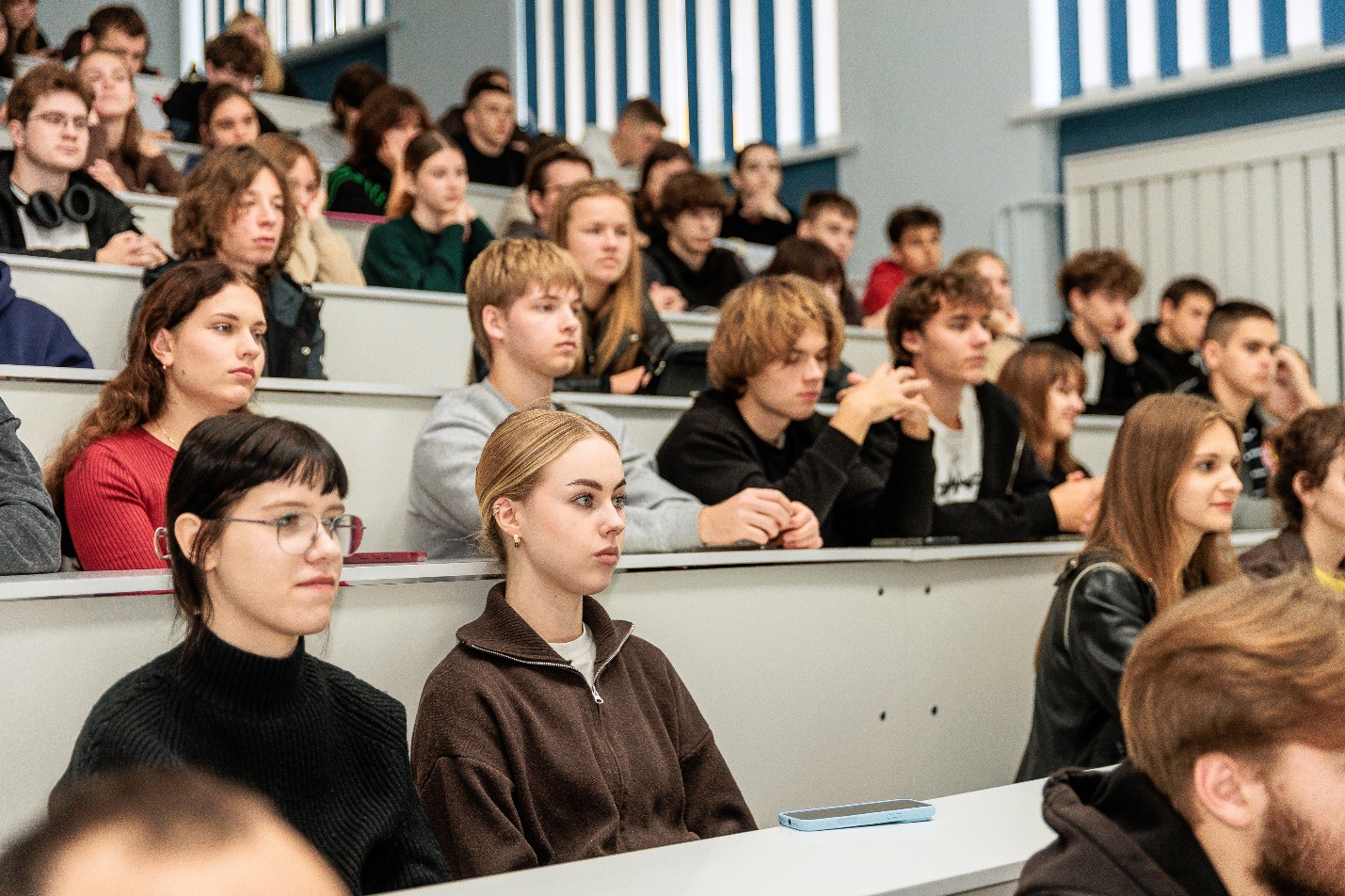
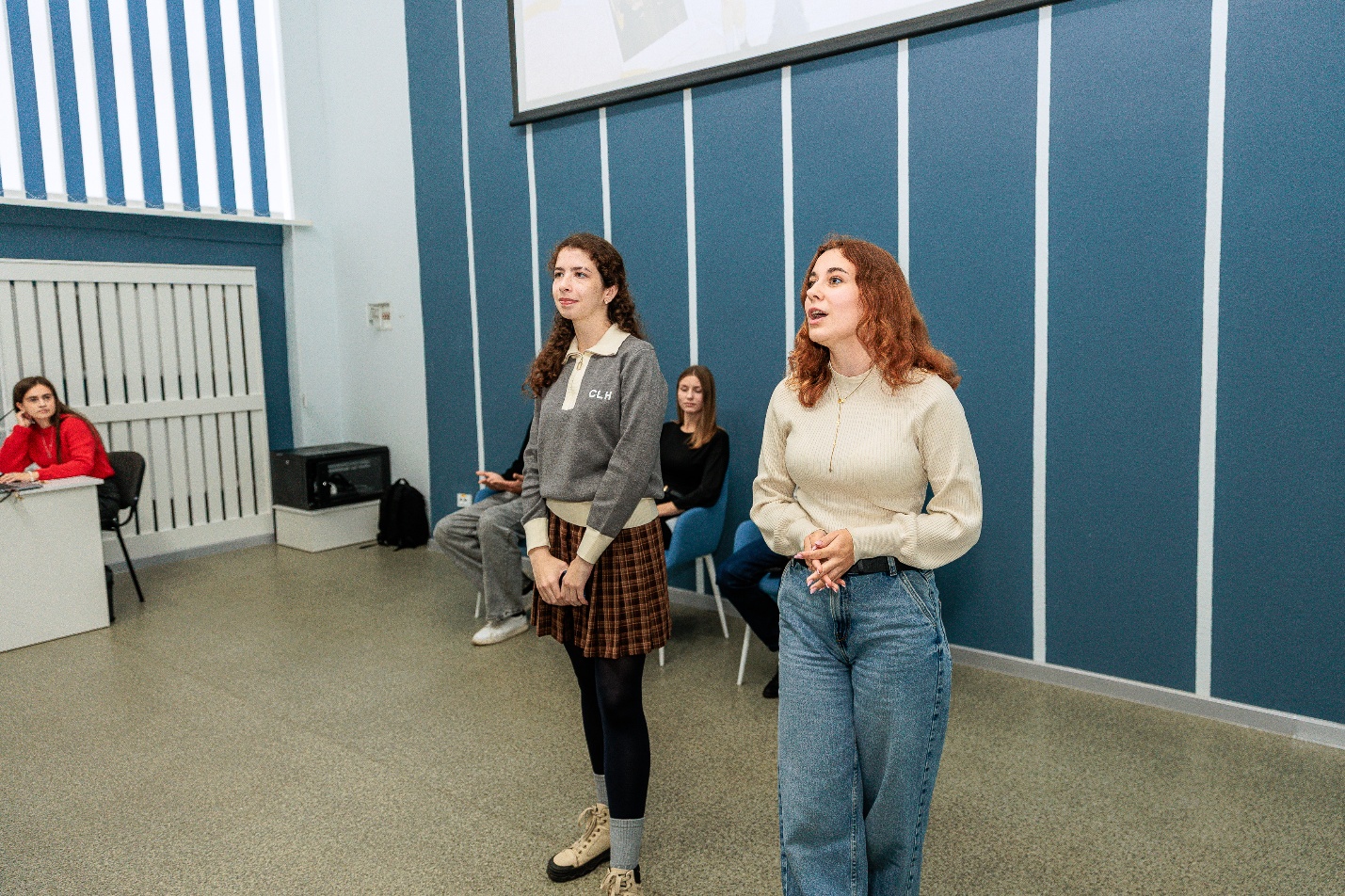
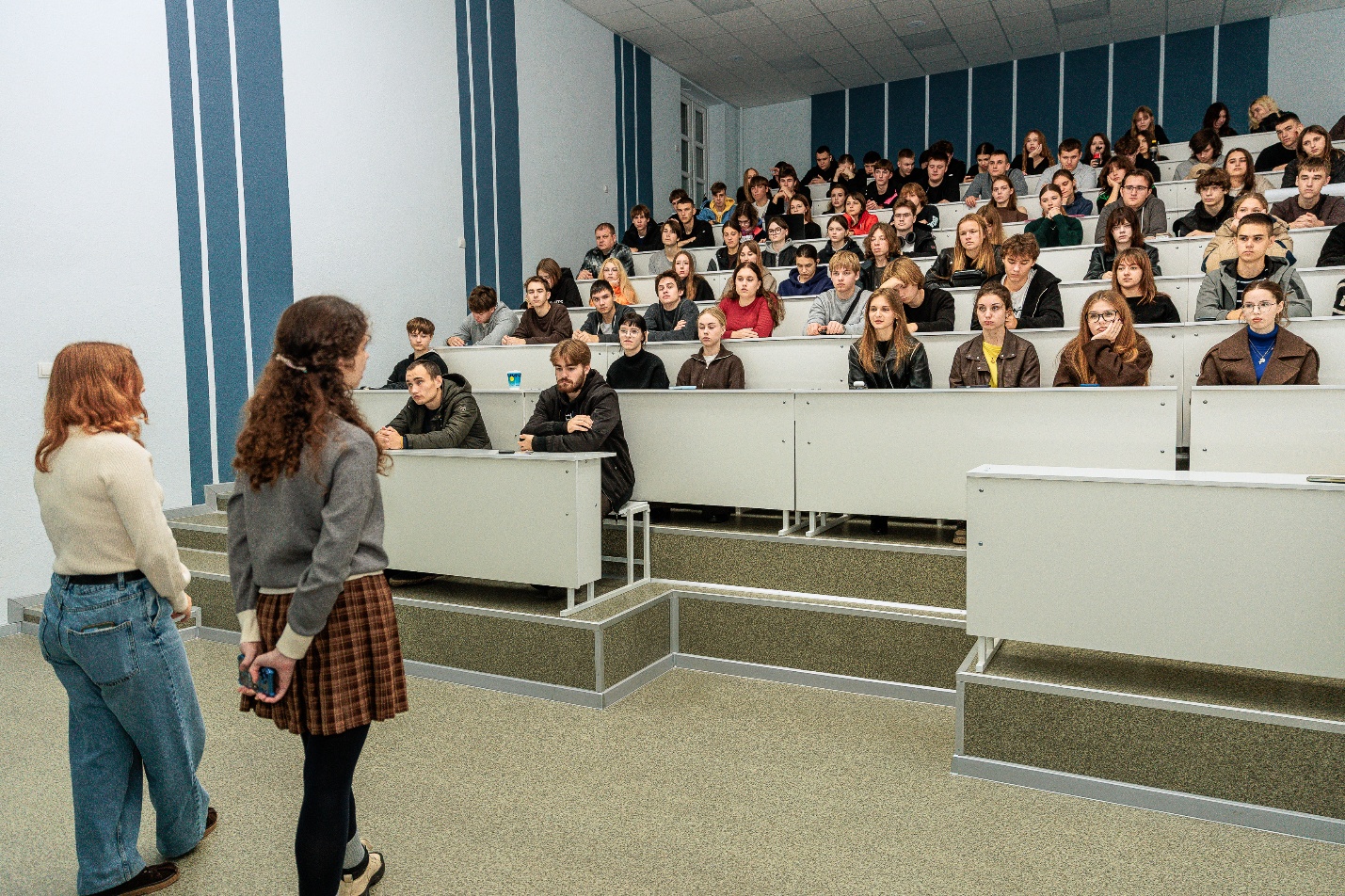
Summing up the meeting, International Relations Coordinator Anna Pavelieva emphasised that such academic mobility success stories reflect the university’s systemic approach: “The international openness of Poltava Polytechnic, the dozens of inter-institutional agreements concluded, and the opportunity for our students to master state-of-the-art European engineering technologies stem directly from the consistent strategy pursued by our university's leadership. We sincerely thank the President of Poltava Polytechnic, Professor Volodymyr Onyshchenko, for his resolute dedication to European integration in higher education, the development of ultra-modern material and technical infrastructure, and his enduring leadership that opens world-class opportunities for young people. We extend our heartfelt appreciation to the Rector of the University, Associate Professor Olena Filonych, for her ongoing support of student initiatives, comprehensive facilitation of academic mobility, and the implementation of high European educational standards. The practical experience our architects and civil engineers gain in Germany, Denmark, Slovakia, Latvia, and other EU member states will serve as a solid cornerstone for Ukraine's modern, safe, high-tech reconstruction!
How to join Erasmus+ programs?
Students, doctoral candidates, and academic staff of Poltava Polytechnic have the opportunity to study, teach, and undertake professional internships through Erasmus+ mobility programs at leading partner universities across Austria, Denmark, Estonia, Spain, Italy, Latvia, Lithuania, the Netherlands, Germany, Norway, Poland, Romania, Slovakia, Finland, the Czech Republic, and other countries.
Current grant calls and application deadlines are continuously updated on the university's official international cooperation portal:
international.nupp.edu.ua
Individual consultations regarding mobility participation, application document preparation, and institutional language testing are available at the International Relations Department of Poltava Polytechnic:
Room 213-C (Central Building)
Email: interoffice@nupp.edu.ua
Coordinator for International Activities: PhD, Associate Professor Anna Pavelieva (+38 (095) 91-08-192).