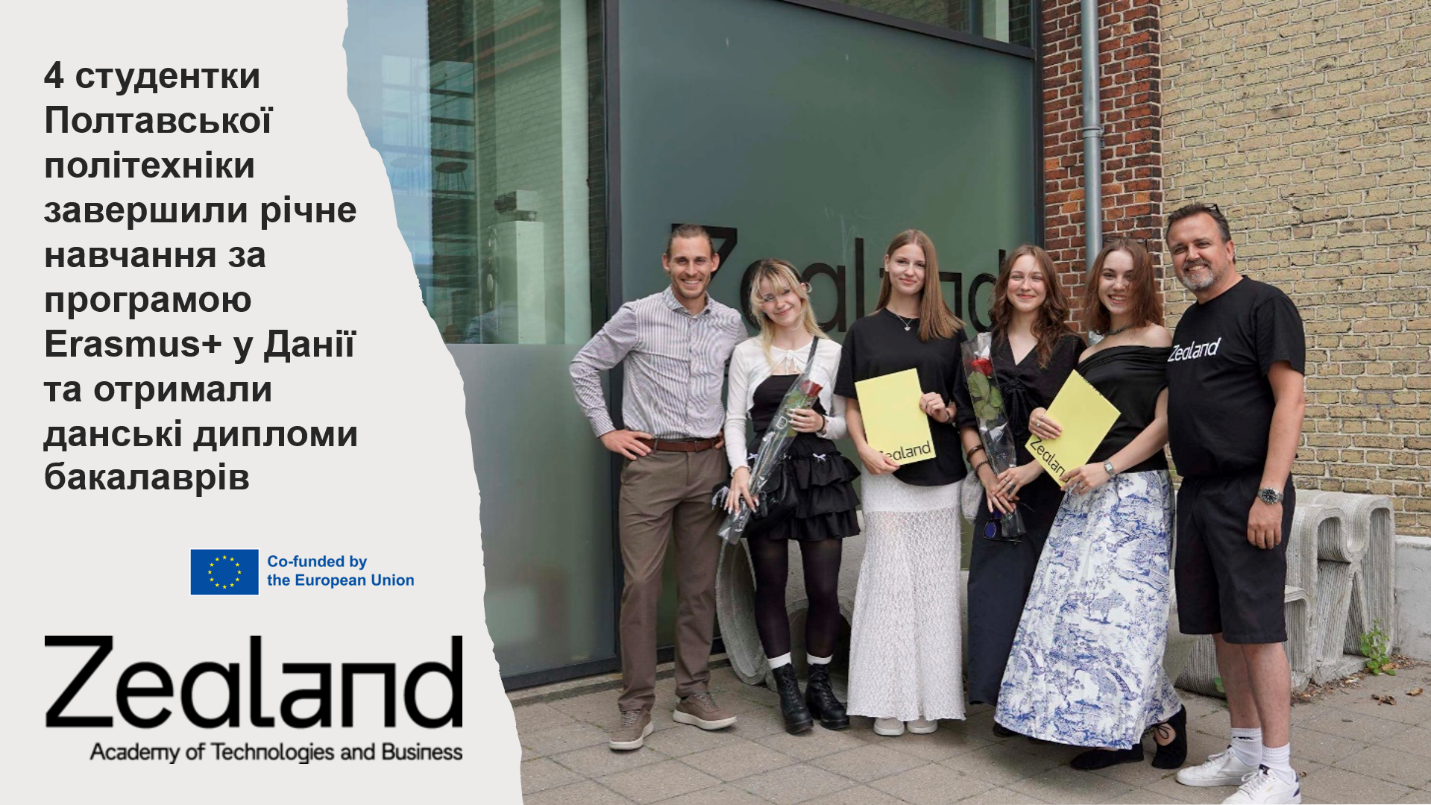
Third-year students majoring in 191 “Architecture and Urban Planning” – Yeva Domkina, Maria Parasotska, Ruslana Kravchenko, and Polina Khlystun – studied under the Erasmus+ ICM programme at a leading Danish higher education institution, the Zealand Academy of Technologies and Business (Denmark), throughout the entire 2025/2026 academic year (from August 19, 2025, to June 30, 2026). Having demonstrated strong academic achievement, professional English proficiency, and motivation during the autumn semester, the representatives of Poltava Polytechnic received support from the Danish coordinators. They extended their participation in the mobility programme for the spring semester.
The second half of the academic year focused entirely on hands-on practical work. The mandatory and most crucial stage was a 12-week industrial internship at Danish architectural and engineering firms: SKARK, Enemærke & Petersen A/S, and Christian Steel Design ApS. Working on actual commercial contracts (ranging from designing a modular student campus from shipping containers and residential homes to intricate facade calculations, technical specifications for multi-storey buildings, and engineering unique steel arches for a historic church), the students mastered advanced European design methodologies, deepened their proficiency in Revit, Inventor, and Twinmotion, and learned to conduct aerial surveys of construction sites using drones.
The final challenge was defending comprehensive stage A4–A6 projects, structural statics calculations, and project management before an academic panel and an independent external examiner. The results were triumphant: all four students achieved top marks in the Danish grading system (two grades of “10” and two maximum grades of “12”), as well as official Danish diplomas under the “Byggetekniker” professional programme (construction technician / architectural technologist).
The programme participants personally shared their insights into the features of the second semester, their experiences working within Danish teams, taking their final exams, and their personal discoveries:
“For me, this year in Denmark became something far greater than merely studying abroad” – says Maria Parasotska – “It was a bold step beyond the familiar, a deep immersion into another culture, and a genuine test of my capabilities in a real professional environment.
The Scandinavian approach to education impressed me from the very first days: there is no rote learning of theory here. Instead, studies are structured around real-life practice, team collaboration, and finding innovative solutions to actual construction challenges.
The greatest value of the second semester was the 12-week internship at the SKARK architectural bureau. I had an extraordinary opportunity to witness the everyday life of a European company from the inside: I worked on real projects, took on professional responsibility, and experienced the entire design pathway step by step – from initial conceptual sketches to developing a complete package of working documentation.
Working alongside Danish colleagues was a particular delight. Their sincerity and friendliness won me over from day one: they patiently explained the most intricate nuances, shared professional secrets, and always supported me in finding the right solution. Working in such a team became a continuous intercultural dialogue that helped me understand the unique Scandinavian design philosophy built on mutual respect, equality, and team spirit.
Naturally, balancing full-time work at the firm with preparing the final university project was a true test of endurance. It required iron discipline, as this project directly determined success in the final examination. Studying in Denmark certainly isn't easy. Still, it is precisely this high standard of requirements that makes it so meaningful: with every submitted drawing or resolved task, you physically feel your own professional leap forward.
The atmosphere at the academy was equally admirable. Here, the traditional distance between lecturer and student disappears: lecturers treat you as an equal junior colleague, take a genuine interest in your progress, and are always ready to offer guidance. This culture of unconditional respect and partnership helped us adapt very quickly to the new academic rules.
Moreover, living in the student residence turned this year into a vibrant intercultural kaleidoscope. When peers from the most diverse corners of the world live alongside you, every evening is filled with candid conversations, the discovery of new traditions, and the emergence of lasting friendships. This dynamic international community provided as many life lessons as the lectures and blueprint work.
It was a special pleasure to discover Denmark itself – a country of extraordinary internal harmony, aesthetics, meticulously designed urban space, and an absolute sense of safety. Exploring historic and modern towns, studying local architecture directly on the streets, and immersing myself in the Danish way of life became an inexhaustible source of professional inspiration for me.
Today, I clearly understand: this year was a turning point in my student life. It gave me far more than just practical office skills. The programme taught me to think freely in an international context, adapt quickly to change, embrace responsibility, and boldly set ambitious career goals.
I am profoundly grateful to my alma mater, Poltava Polytechnic, for their trust and this opportunity. Through such international opportunities, we, as students, stop doubting our abilities, step onto the global stage, and prove that the Ukrainian professional school can compete with dignity at the highest European standards. This year in Denmark became not just a traineeship abroad, but a powerful springboard in life, the experience of which will inspire me throughout my entire professional career”.
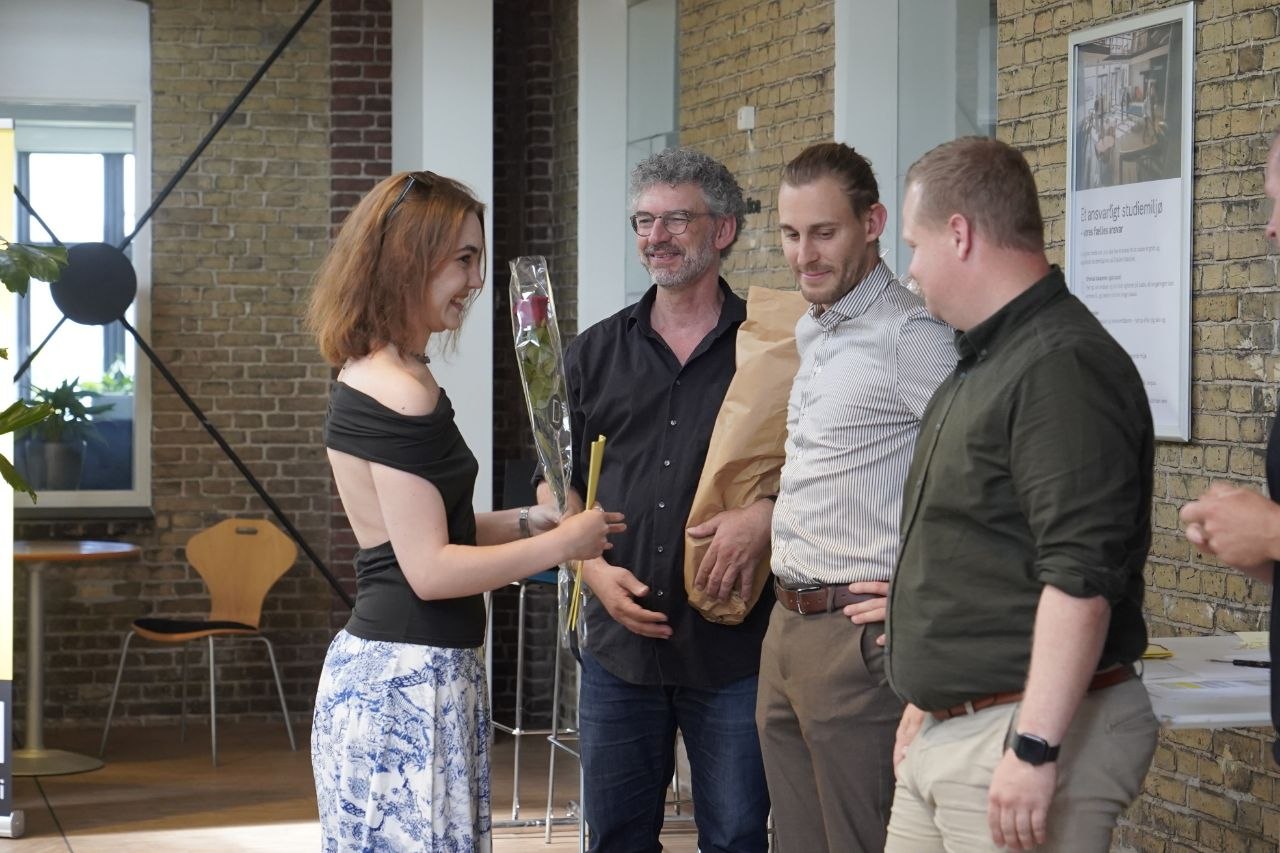
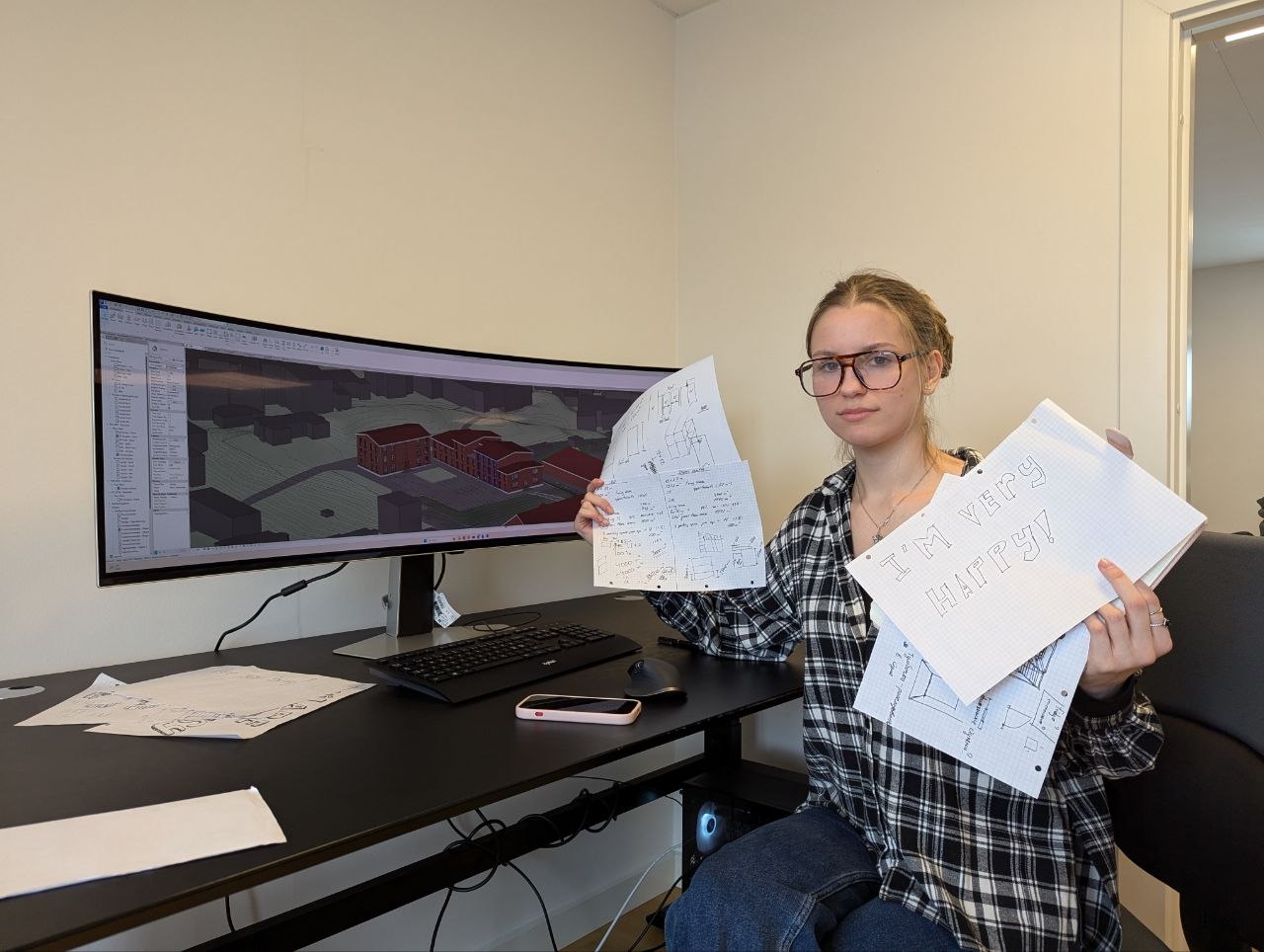
“The spring semester in Denmark became a logical and exceptionally rewarding continuation of my academic journey, – shares Polina Khlystun – During this period, I focused on mastering the Byggetekniker qualification (construction technician/technologist). The second half of the year allowed me to dive headfirst into Scandinavian engineering culture, where every theoretical premise is immediately validated by practice on real sites.
The programme was structured so that university projects constantly echoed practical work in the industry. One of our main assignments at the academy was designing a modern townhouse. We carefully planned layouts, calculated building structures, and explored non-standard spatial combinations. This experience helped us understand the inner philosophy of European low-rise housing design – functional, energy-efficient, and maximally comfortable for living.
The true heart of the semester was the 12-week industrial internship at the Danish architectural firm SKARK, which masterfully unites architects, engineers, and designers under one roof. Working in such an environment allowed me to observe the daily inner workings of a large-scale European bureau and see how genuine synergy emerges among professionals toward a shared outcome.
Among the company’s projects, I invested the most effort and soul into designing a modular student dormitory made of shipping containers. This project held special significance for me, as it aimed to address an issue close to our hearts: the acute shortage of affordable housing for international youth coming to study in Næstved each year.
My assignment encompassed the entire creative cycle: from ergonomic spatial planning and interior design to 3D visualisations and exterior modelling. A real challenge was finding the facade solution: I proposed over fifteen concepts, and we ultimately settled on a combination of noble larch and cedar. The natural wood helped visually warm up the containers' cold metal, transforming them into an aesthetic, cosy, and fully functional modern living space.
The internship represented a major technological leap forward for me. I significantly improved my proficiency in Autodesk Revit, discovered Twinmotion's potential for creating atmospheric architectural renderings, and tried aerial drone photography for the first time: we flew drones over construction sites. We converted the footage into precise three-dimensional terrain models.
Equally valuable was learning about Danish corporate culture. I was impressed by how meticulously all internal processes are organised there: each professional clearly manages their area of responsibility and does so impeccably. Thanks to this culture of mutual trust, the team has no chaos, projects are delivered strictly on deadline, and quality remains uncompromisingly high.
The most thrilling milestone of this year was receiving the official Danish diploma in the Byggetekniker programme. This credential is not merely a certificate of completed theory and industrial practice, but my first significant international step in the profession, inspiring immense confidence in my own abilities.
The year-long mobility transformed my perception of architecture and construction. It brought me into the global professional arena, introduced me to the Scandinavian approach to creating the urban environment, and strengthened my character. I am convinced that the experience gained in Denmark will serve as a solid foundation upon which I will confidently build my career both at home and internationally”.
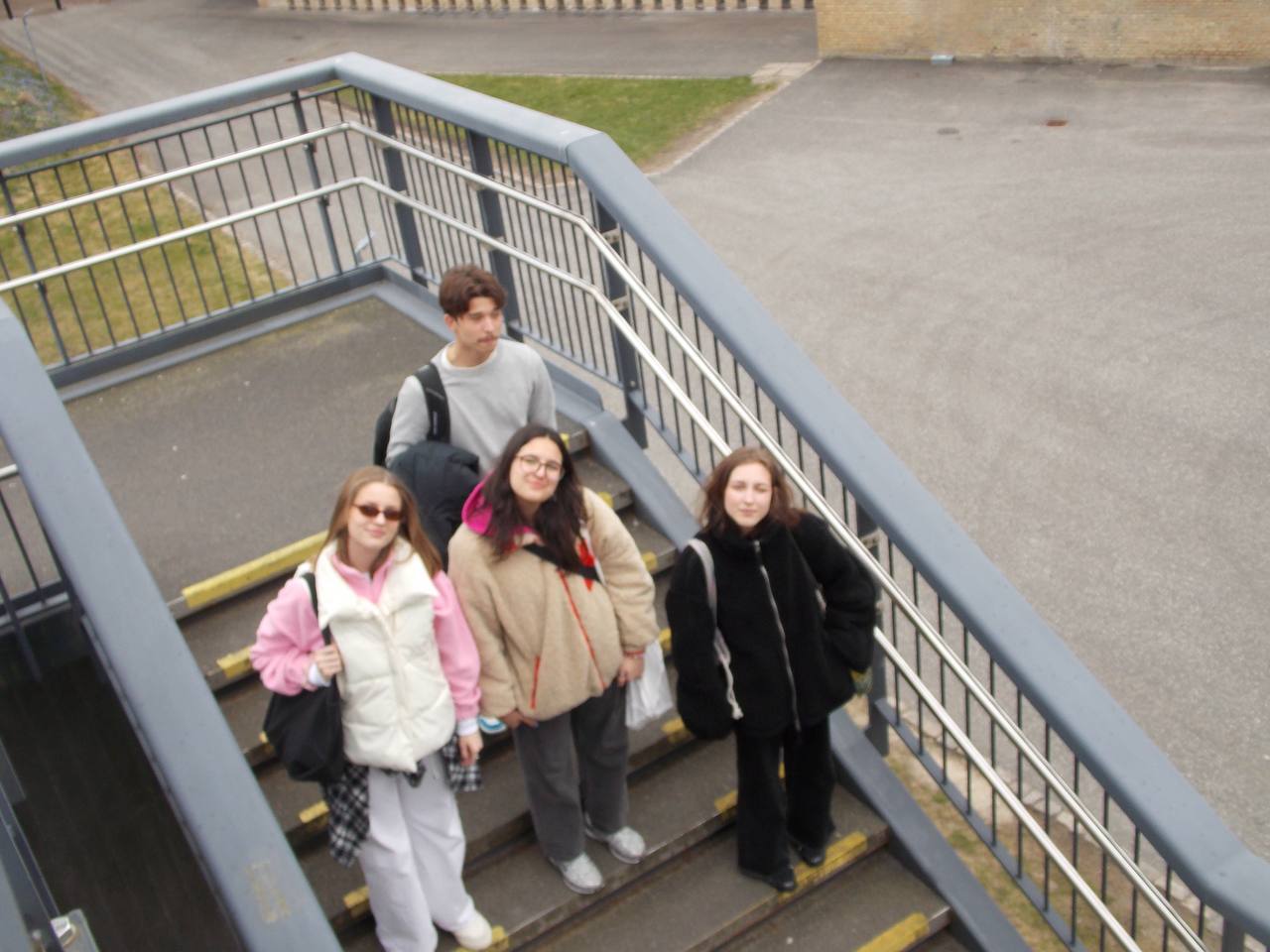
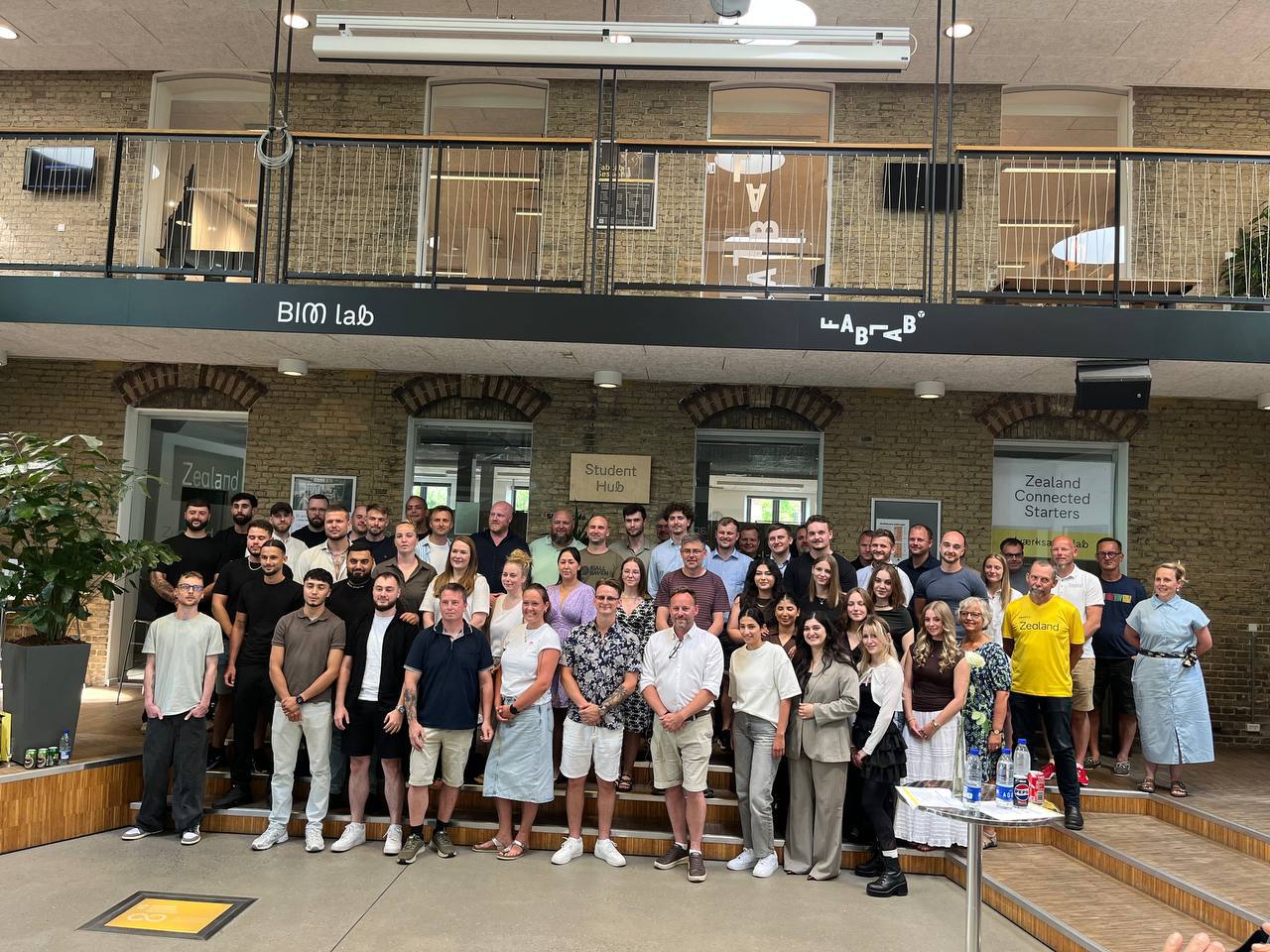
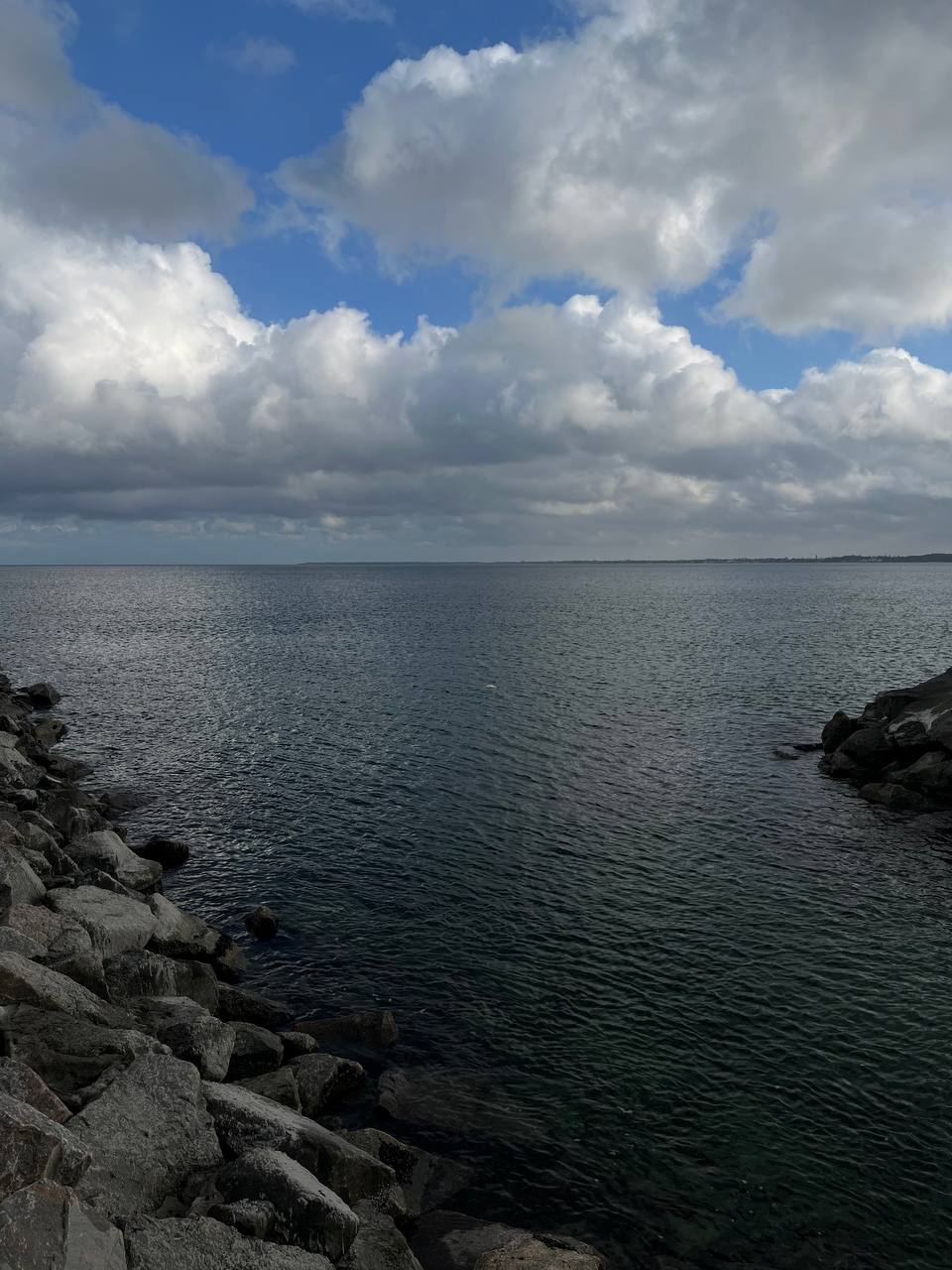
“Our Danish adventures continue, and love for our alma mater, Poltava Polytechnic, remains steadfast in our hearts! – warmly recalls Ruslana Kravchenko – It is hard now to recall the exact moment when we first spoke with our Danish coordinators, Anders and Per, about the second semester. But one day is etched in my memory forever.
We were driving in Anders's car on an excursion to a factory where prefabricated walls are printed on a construction 3D printer. He kept his eyes on the road and suddenly said: “This is a serious opportunity for you, but I am not pushing. Any decision is entirely yours”. Then he admitted how many documents he had to review, coordinate, and rewrite every day so we would have a chance to stay. I could not help asking: “Anders, honestly, why are you doing this? Nobody is paying you extra for it”. To which he replied very sincerely: “When I went on an exchange programme as a student, no one helped me like this. I was left alone with all my problems. And more than anything, I want to give you this opportunity. With all due respect to Ukraine, when else will you spend an entire year in Denmark?”.
After that, the four of us gathered every evening, weighing all our fears and doubts. “What if we don't understand the material? It's completely new, just translated, and they’ll essentially be testing it on us for the first time”, – Polina worried – “Then we will sit down together and patiently explain to each other everything that each of us understands”, – we decided. Such conversations continued evening after evening until we finally voiced our shared, firm decision: “We're staying!”.
After the Christmas break, starting on February 9, we hurried to the academy every Friday for individual lectures and consultations with instructor Matias. Although these sessions were entirely voluntary, we did not miss a single one – because we knew Matias was dedicating this time exclusively to the four of us! Overall, we managed the curriculum well, but on one occasion, he explained the local software for construction cost estimation so clearly that I later broke it down and explained it to the girls in plain, accessible terms.
Overall, we developed amazing team synergy, where each of us had her own “superpower”. Polina and Yeva understood the intricacies of roofing better than anyone; I helped with foundations, and Mariia proved to be a true master of flawless spreadsheets. Her calculations were not just formal numbers in green cells, but a genuine masterpiece of systematic design with well-thought-out detailing and colour-coded legends!
In parallel, the crucial search for internship placements was underway, and geographically, it ended up being quite contrasting. Mariia and Polina were fortunate to remain in our town of Næstved: they were warmly welcomed by the SKARK architectural bureau, which was practically around the corner – a mere 20-minute walk (with working hours from 7:30 to 15:00). Meanwhile, Yeva and I faced real suburban commutes! Yeva joined the construction company Enemærke & Petersen A/S in Køge (working from 7:00 to 15:00), while I joined the engineering bureau Christian Steel Design ApS in Præstø, with the earliest start at 6:30 AM. We both had to travel nearly an hour each way.
With the start of February, a new rhythm of life began, which temporarily separated our group of four. Yeva and I lived in different rooms, so because our schedules differed, we saw each other less often. We mentally prepared ourselves for the fact that these 12 weeks would be the toughest marathon of our lives: our alarm rang at 4:00 AM sharp, lights out was at 8:00 PM, and the commute to work took us through Danish February snowstorms and pitch-black morning darkness.
However, neither the Scandinavian snowstorms nor the February darkness actually frightened us. Every morning at 5:40 AM, I watched Danish municipal workers clean the streets to a shine with special vehicles. Over time, we even grew accustomed to greeting them warmly, like old friends. And how could a pre-dawn town in Denmark – one of the most peaceful and safest countries in the world according to the Global Peace Index – be frightening?
Over time, I grew genuinely fond of this rigorous routine. It was a revelation even to myself how capable I was of iron discipline. When your day is measured by the minute, all hesitation vanishes: there is a clear focus on work and a fixed amount of free time where, like in a game of Tetris, you must fit all your plans with precision. This rhythm disciplines you wonderfully: if something doesn't fit into the schedule, you either postpone it until tomorrow or realise it wasn't that important after all.
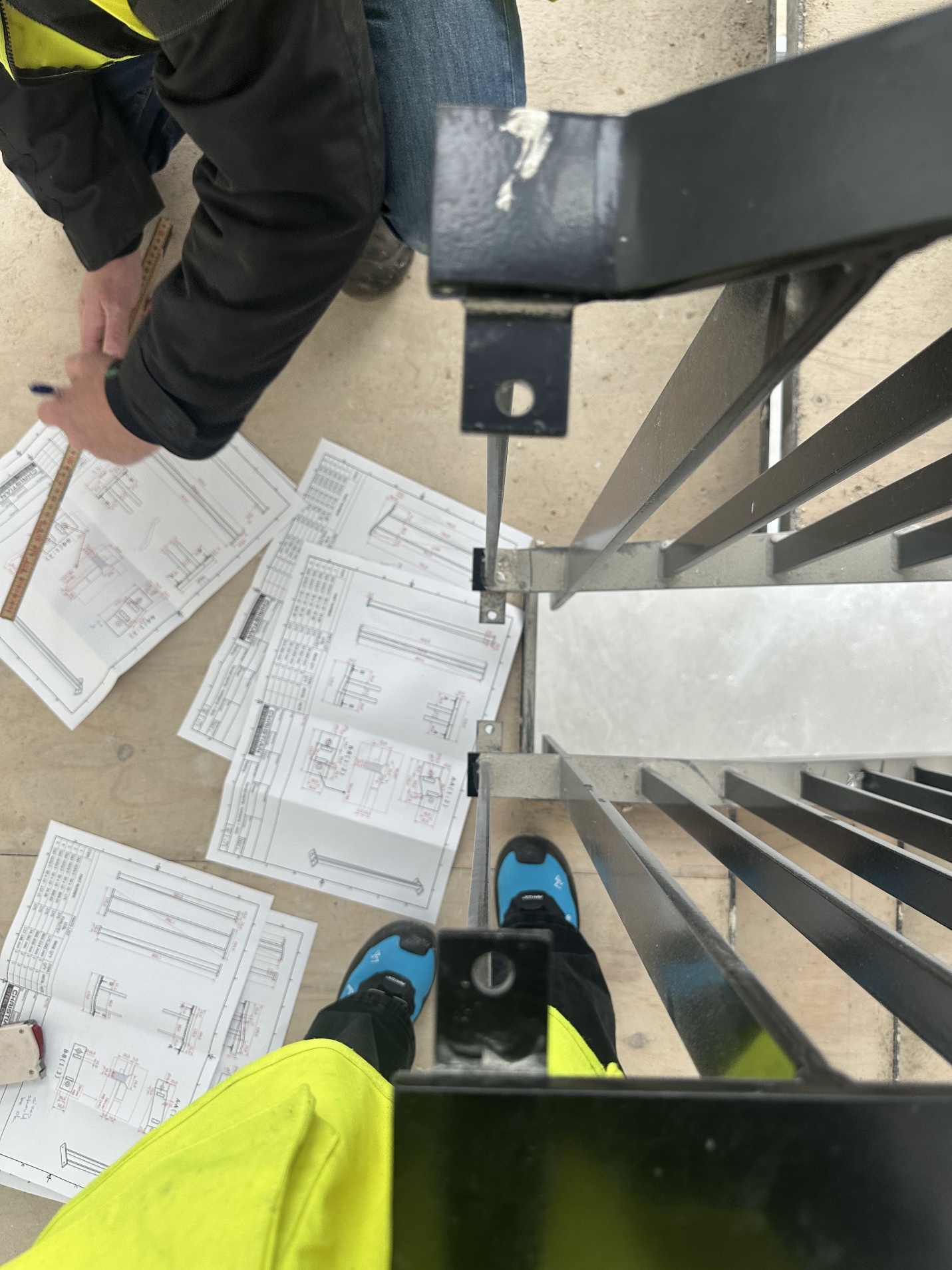
Formally, my workday ended as early as 11:30 AM every Friday. Yet at that hour, I was rarely ready to go home: I almost always spent the end of the week visiting actual construction sites. You know that feeling when a task that takes half an hour turns into two hours because of your professional passion to get to the bottom of the smallest details? Of course, that was entirely my own choice: I could have told my supervisor at any moment that my working hours were over. But I wanted to be there, see the process in person, and absorb every nuance.
During my internship, colleagues helped me gain a comprehensive command of AutoCAD, Autodesk Inventor, and entirely new software for processing 3D laser scans. And, of course, the lio’s share of time was devoted to Revit. Here, I felt incredible gratitude and pride: fortunately, our native Polytechnic had taught me to use this software 100%, so in Danish production, I felt completely at ease and confident!
One day, an event changed everything and moved me to tears: management saw potential in me and entrusted me with managing my own project from start to finish! Hearing those words, I literally froze – excitement took my breath away, and my knees trembled.
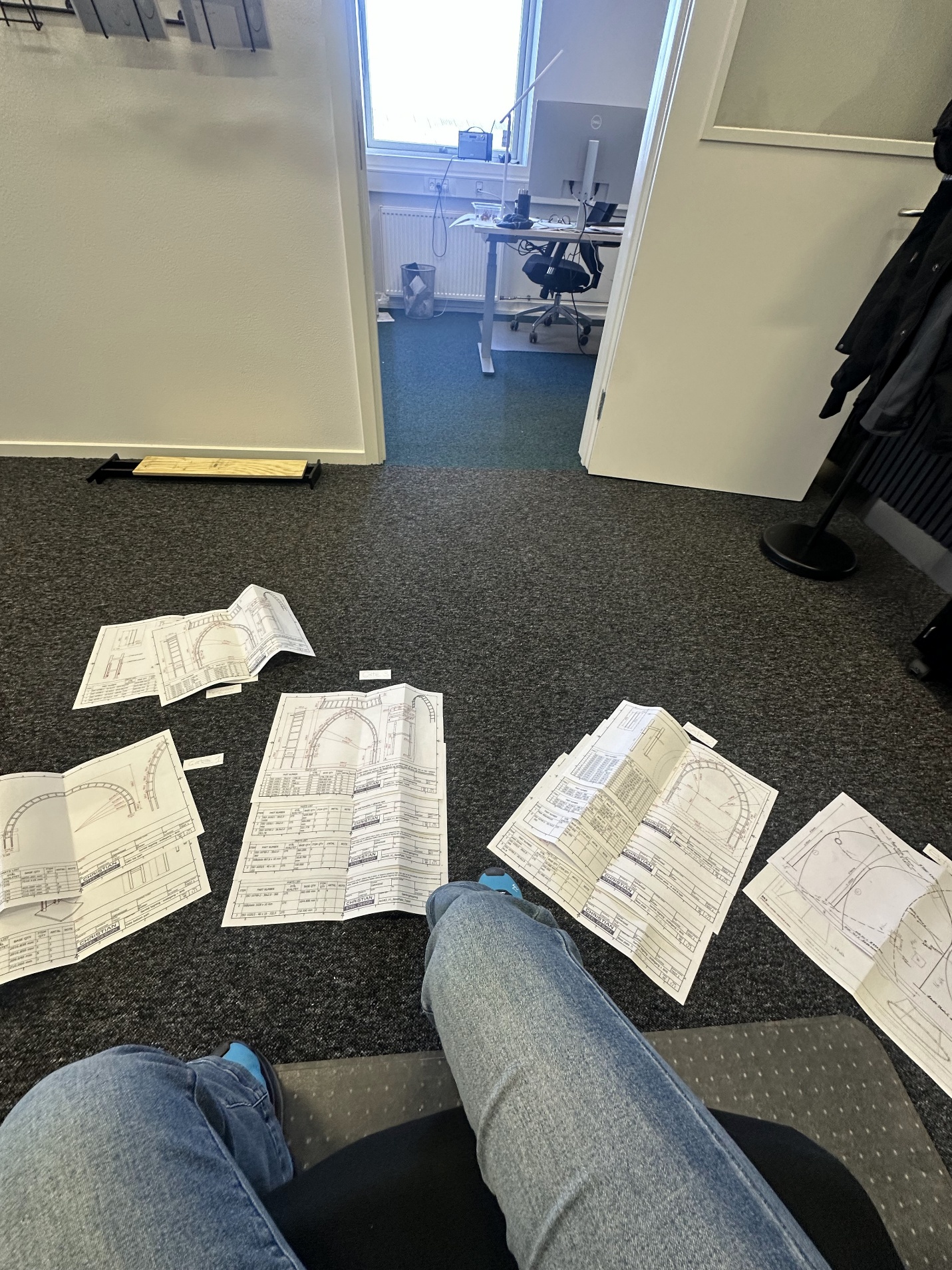
The assignment was remarkably beautiful yet extraordinarily complex: an affluent family was celebrating a wedding and hired French designers and florists for fresh floral decorations. At the same time, I was tasked with designing the steel structural elements. The project involved three grand double arches of imposing dimensions and nearly twenty smaller elements connected into a single suspended framework above the banquet tables.
The first massive arch had to be erected at the estate entrance, anchored into a massive four-meter concrete wall. But the real engineering challenge was the two other arches for an ancient church in Vordingborg: one framed the entrance portal, while the other traced the contour of the internal vault. Time had left its mark on the medieval masonry – the shape of the church arch had become asymmetrical and slightly tilted. Furthermore, under strict restoration regulations, the structure was strictly forbidden to touch the historic walls – it could only rest on the floor! I had to think carefully about developing a self-supporting structural design.
I was even granted special permission to spend several hours alone in the semi-darkness of the empty church to take the most precise on-site measurements. I am immensely grateful to my Danish mentors for this trust and discretion: they stepped in with support only when I asked for advice. The wedding went off without a hitch: the structures reliably supported the festive crowd, and the French designers were absolutely thrilled with my work!
Our Yeva also achieved remarkable success during her internship. Her company was constructing modern residential multi-storey buildings, and Yeva masterfully tackled the complex process of specifying and procuring building components. She visited sites, took precise measurements of wall openings, selected the right window and door systems, and consolidated everything into a single cost estimate. When Yeva showed me this “kitchen” on her work laptop, I was astonished by the Scandinavian attention to detail: countless modifications of the same windows differ only by tiny components! And her calculation sheets are a masterclass in handling massive amounts of data and numbers.
Meanwhile, Maria and Polina contributed to an important urban planning project right in Næstved. The girls helped develop the architectural concept for a cosy residential quarter on a hillside, designed to breathe new life into the grounds of an abandoned skate park that had stood empty for years.
The logical culmination of the industrial stage was the official internship defence, where each of us presented our completed work. Before that, we prepared comprehensive 10-page reports detailing all the drawings, calculations, and production workflows we carried out at the enterprises.
Our university supervisor conducted the examination itself – the very same lecturer who had personally visited us at the companies over those three months, asked employers about our progress, and shown paternal care regarding our well-being within the teams. His questions during the examination were strictly practical: the mentor needed to see not memorised phrases, but our genuine professional growth, our ability to think like engineers, and our confidence in navigating complex building codes.
Immediately following the internship, we immersed ourselves headlong in university coursework. Back in February, we had managed to complete stage A4 – the schematic concept design, where general architectural forms and layout schemes are approved. Now, it was time to enter the home stretch with the most labour-intensive stages: stage A5 – detailed construction drawings for builders, with every joint worked out, and A6 – final “as-built” documentation.
During the first semester, we also completed stage A7, creating an operational digital 3D model of the structure with meticulous detail down to every single nail. However, because of the intensive three-month internship, we did not complete this stage in the spring semester due to time constraints, so we focused on producing flawless working drawings and connection details.
The design requirements were characteristically uncompromising in the Scandinavian manner. In addition to general drawings and assembly nodes, each project necessarily included precise structural statics calculations – a detailed verification of the load-bearing framework for strength, dead load, and resistance to wind loads. We also prepared a distinct project management component, demonstrating our ability to navigate Danish building regulations, contract law, and cost estimation.
The final challenge was the qualification defence before the faculty panel and an independent external examiner. This was a comprehensive, interdisciplinary examination where you had to hold your ground across all subjects simultaneously. The procedure was exceptionally strict: exactly 15 minutes were allocated for your presentation, followed by half an hour of cross-examination by the examiners, where every line and every number in your project had to be defended with academic precision.
A specific requirement of the programme was to select an individual focus: each of us had to choose a key structural component of the building and develop drawings of its nodes in maximum detail. Mariia and Polina chose roofing as their specialisation, while Yeva and I focused on walls. And if anyone might think we copied from one another – absolutely not! While there are only so many structural components in a cottage, each of us found it a matter of principle to investigate the matter independently and find her own engineering solutions.
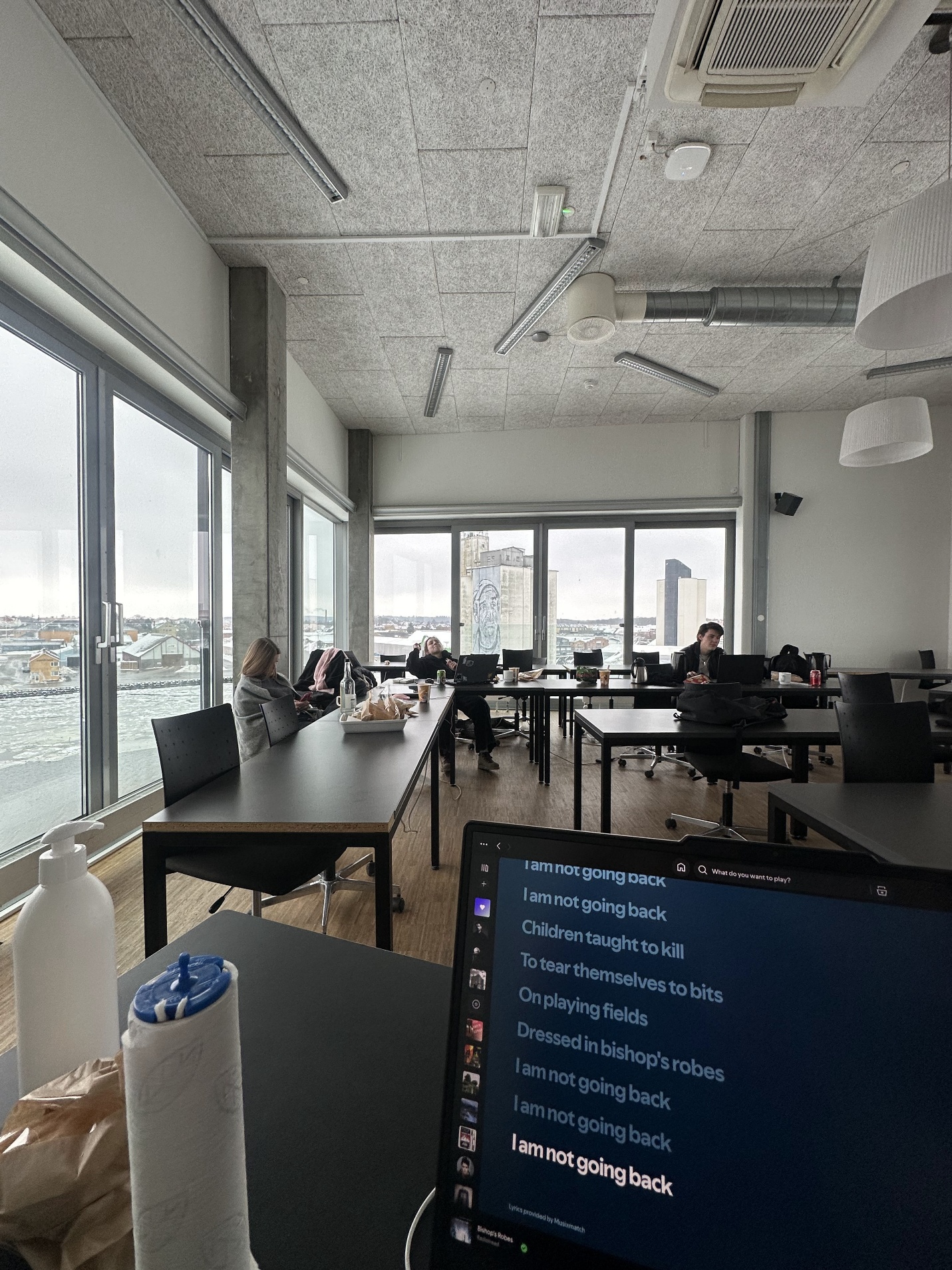
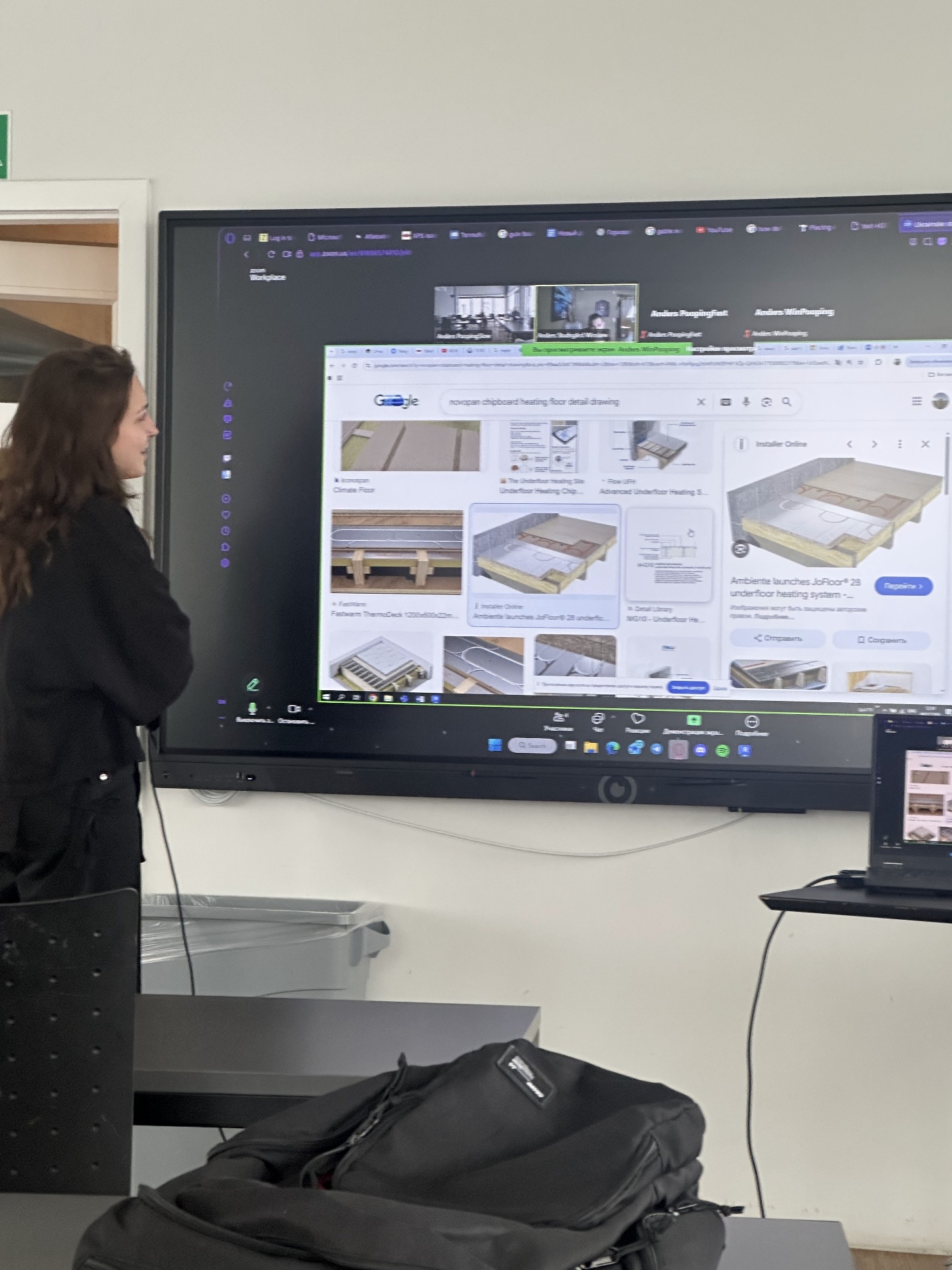
It was an incredibly exciting time: in the evenings, we gathered, held brainstorming sessions, and debated complex junctions for hours: “Girls, my floor construction doesn't align with the wall here, how would you solve this?”. These heated discussions and shared advice bonded us even closer and turned our studies into a true creative workshop.
I was profoundly impressed by the Danish teaching philosophy: here, mentors look not for your mistakes, but for your strengths – what you are genuinely talented at. Frankly, I was very anxious about my wall drawings: I felt they were far from perfect – somewhere the text leader lines were slightly off, somewhere the colour coding for the vapour barrier differed from the previous sheet (even though for the Danes this is immaterial, as long as there is a clear pointer with the correct material name). I feared this would spoil the overall impression.
However, when the instructors opened my drawings of rainwater and wastewater engineering utilities, their reaction changed everything. They looked at me with genuine admiration and asked: “Ruslana, why didn't you choose drainage and sewage systems as your primary focus? Look, you've done this amazingly well!”.
At that moment, I literally froze. It had never even crossed my mind that this could be my strength! The truth is, engineering networks put me into a true flow state: I genuinely enjoy plotting pipe runs, calculating their diameters and slopes, predicting potential hydraulic issues, and finding solutions in advance. When I draw pipes, I actually find peace of mind! But I had always considered it secondary, and my inner critic kept whispering that I had probably made plenty of unnoticed mistakes.
And suddenly Anders, looking closely at my storm sewer drawing, said: “I'm going to ask a question now, it is quite deep and tricky, so you don't have to answer: explain what these specific coefficients mean in your calculations?”. Out of sheer surprise, my heart skipped a beat, but... I answered! Perhaps a bit timidly due to nerves, but completely accurately and correctly. Seeing the warm smiles of the lecturers, I smiled back, and inside, everything just blossomed. It was an incredible, incomparable feeling of professional triumph!
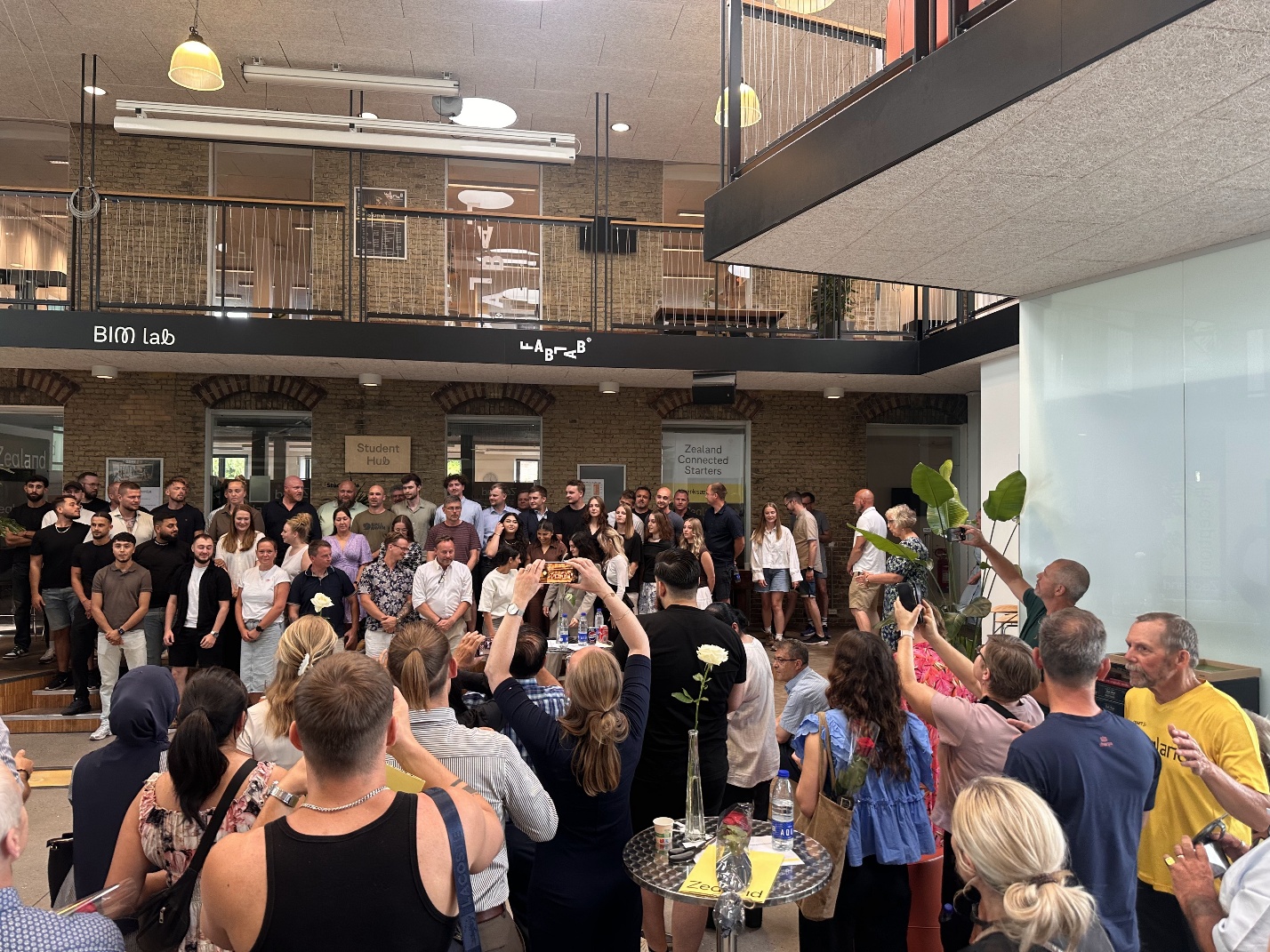
The announcement of the exam results exceeded all expectations: two marks of “12” and two of “10” on the 12-point Danish scale. Which one of us received which mark will remain our friendly secret, as in Denmark both grades represent top-tier preparation and evoke genuine admiration from both lecturers and external censors.
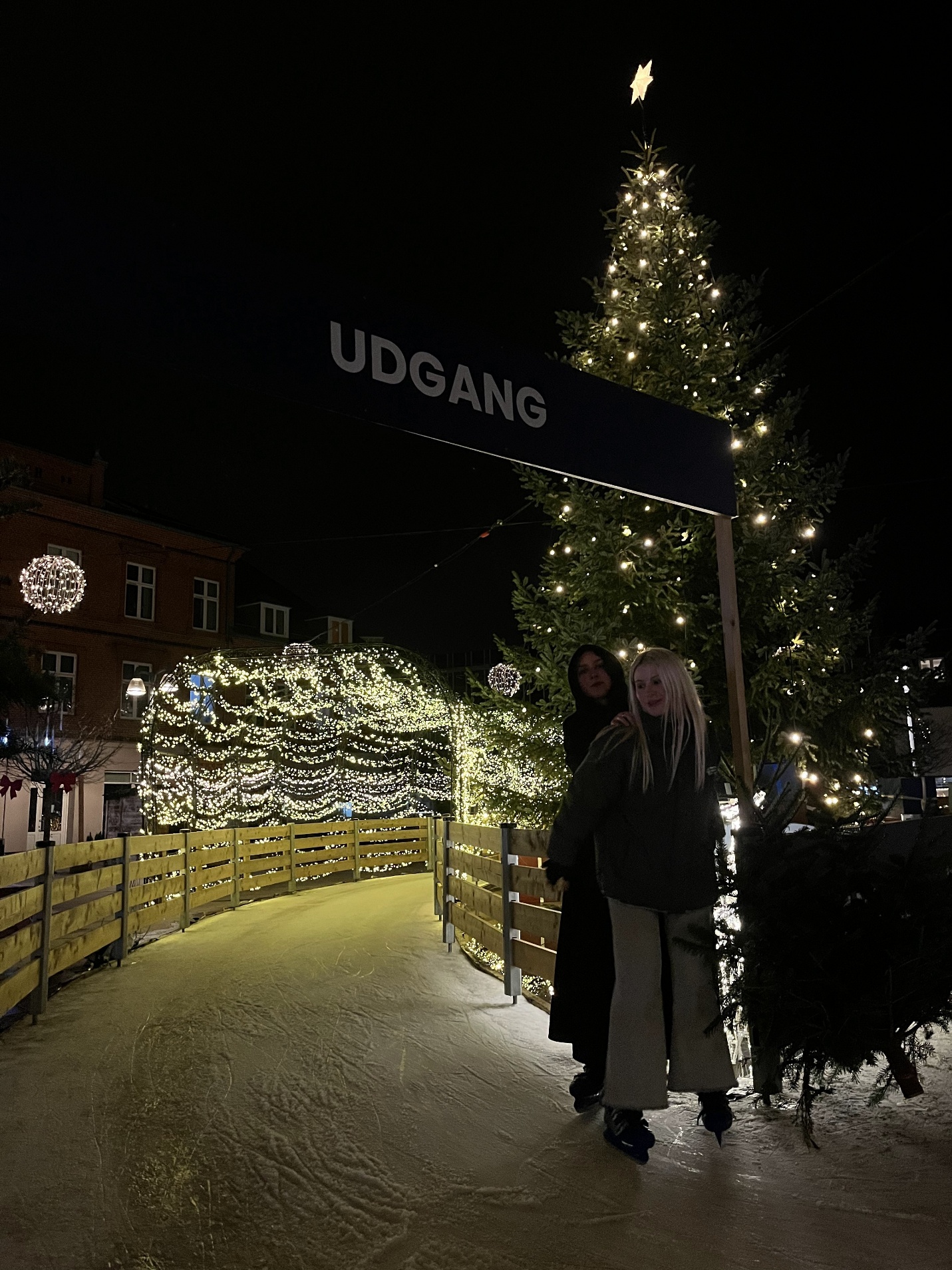
We celebrated this triumph in a warm, student fashion: gathering around a large table at a pizzeria near the campus, enjoying pizza, reminiscing about all the challenges of this whirlwind year, laughing heartily, and feeling that our grand Danish adventure had culminated in the best possible finale!”
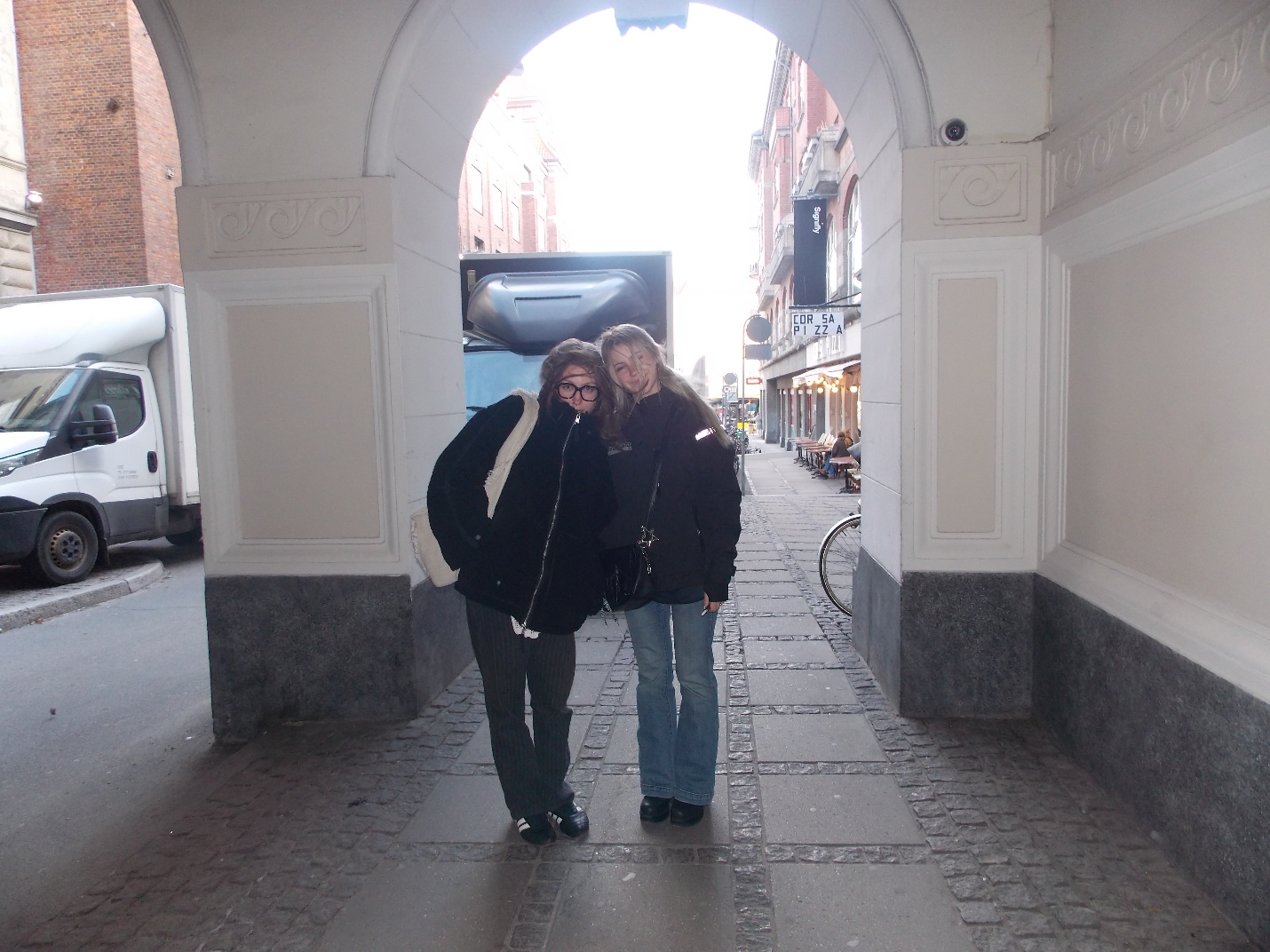
“The success of this year-long programme is the direct result of tremendous joint efforts, unwavering mutual trust, and genuine international solidarity,” –emphasizes PhD in Philology, Associate Professor, and International Relations Coordinator of Poltava Polytechnic Anna Pavelieva – “I would like to express my deepest and most heartfelt gratitude to our esteemed Danish colleagues and great partners – Ole Kolling (Director of International Relations and Programmes), Marie-Josée Giasson Jensen and Anders Studsgård Winsløw (International Mobility Ambassadors and Per Mejer (Lawyer and Assistant Professor in Law, Project Management, and Construction)!
Your comprehensive assistance throughout the organisation of this mobility process – from the very first preparatory stages and complex administrative coordination to its triumphant completion – as well as your warm, personal mentorship of our students, goes far beyond the boundaries of routine professional collaboration. It is truly priceless. This is a deeply moving manifestation of genuine humanity, dedication, solidarity with Ukraine, and selfless devotion to our shared mission. Your tireless daily commitment and heartfelt care for every participant's success give our students far more than high-level technical expertise; they give them wings, profound self-confidence, and the reassuring feeling of having reliable friends by their side.
We extend our deepest respect and gratitude to the faculty and academic mentors of the Zealand Academy of Technologies and Business, particularly instructor Matias and all academic tutors, for their inexhaustible patience, professional generosity, pedagogical wisdom, and empathy. You did not merely share the nuances of the Byggetekniker profession and cutting-edge digital BIM methodologies – you cultivated an environment of unconditional acceptance, equal partnership, and steady encouragement, where questions were welcomed, challenges were turned into learning opportunities, and creative engineering solutions were genuinely celebrated. Thank you for your wholehearted support, your faith in Ukrainian students' capabilities, and your openness of heart!
Achieving such high-impact international milestones would be impossible without the strategic foresight and continued commitment of our university leadership. We express our profound gratitude to the President of National University “Yuri Kondratyuk Poltava Polytechnic”, Professor Volodymyr Onyshchenko, and Acting Rector, Associate Professor Olena Filonych, for their steadfast support of international academic mobility, their active promotion of innovative educational partnerships, their constant faith in our talented students, and their dedication to creating unparalleled opportunities for integrating Ukrainian higher technical education into the European and global academic community!
You can read more about the first term in Denmark of Yeva Domkina, Mariia Parasotska, Ruslana Kravchenko, and Polina Khlystun here and here.
This international cooperation opens up new opportunities for young people every semester. In particular, in the autumn of 2023, Iryna Hasan, Mariia Dykan, and Viktoriia Viazovska gained their first experience studying in Denmark (their impressions are detailed here and here). In autumn 2024, four students from the Education and Research Institute of Architecture, Civil Engineering, and Land Management took over the relay (read about their achievements here and here). In the spring semester of that same academic year, Denmark became our students' next destination. Representing the university were Maksym Perepelytsia and Sofiia Kostiuchenko (International Economic Relations), as well as fourth-year “Architecture and Urban Planning” student Yelyzaveta Vasylieva and third-year Computer Science majors Anastasiia Zolotayko and Anastasiia Kosach.
As a reminder, Poltava Polytechnic academic staff can participate in academic mobility programs and internships. At the same time, students can study abroad under Erasmus+ credit academic mobility grant programs for a semester or an entire academic year at leading universities in Austria, Greenland, Denmark, Estonia, Spain, Lithuania, Latvia, Norway, the Netherlands, Germany, Poland, Portugal, Romania, Slovakia, Finland, and the Czech Republic.
For more detailed information regarding current internship, teaching, and academic mobility programs abroad, please get in touch with the International Relations Department (Room 213-C, interoffice@nupp.edu.ua) or the university’s International Relations Coordinator, Anna Pavelieva (+3-8-095-91-08-192).