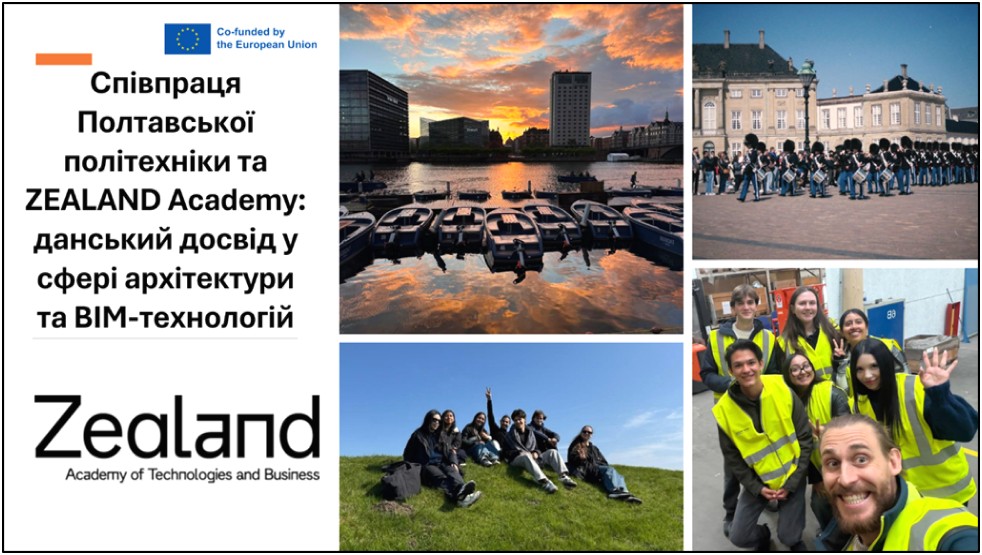
International academic mobility within the Erasmus+ program is a key factor in integrating Ukrainian higher education into the European area and a powerful tool for the professional development of future specialists. Recently, Yelyzaveta Vasylieva, a fourth-year student majoring in “Architecture and Urban Planning” at the National University “Yuri Kondratyuk Poltava Polytechnic”, returned from her exchange studies at the Danish Zealand Academy of Technologies and Business. This semester-long exchange took place in spring 2026. It enabled her to immerse herself in a unique educational process based on Scandinavian standards, where theoretical knowledge is closely intertwined with real practical challenges in the construction industry.
The main theme of the exchange semester at the academy was the design of industrial buildings and prefabrication technologies (prefabricated construction). The educational approach was based on an interdisciplinary practical project in which students simulated working in a real Danish consulting firm. Collaborating with an imaginary English-speaking client and contractor, participants developed a comprehensive package of design documentation that replicated the atmosphere and requirements of a real professional environment as closely as possible. The program assessed students by having them defend a comprehensive portfolio of calculations and technical drawings before an examination board.
Particular attention should be paid to the deep immersion in the managerial and legal aspects of the construction sector, which Yelyzaveta studied within the “Project Management/business” course. This extensive educational component not only taught the student to use specialised software for financial and construction planning but also provided practical knowledge on assessing working conditions at construction sites and resolving potential conflicts. Students analysed legal norms in detail, including tender laws (The Tenders Act), occupational safety (The Working Environment Act), contracting rules, and basic business tax regulations. The program also placed significant emphasis on building sustainability certifications, teaching future specialists to consider environmental and social factors when developing new facilities.
The “Construction” discipline opened new horizons for the student in structural building design, with a focus on materials science and modern technologies. During her classes, Yelyzaveta studied the origin, physical properties, and applications of brick, concrete, metal, and timber, including advanced materials such as CLT (cross-laminated timber). Practical assignments included developing technical drawings for earthworks, concrete, and sewage works, as well as producing working drawings for roof truss systems and roof cassettes. Special attention was paid to sustainable production: developing solutions that allow easy dismantling of elements after the building's life cycle is complete (design for disassembly) and minimise negative environmental impacts.
The engineering and technical block of studies was reinforced by the “Statics” course, which directly influences the reliability and safety of building structures. Within this course, Yelyzaveta learned to determine load distribution and transfer paths in structures, as well as to identify critical joint nodes and vulnerable structural elements. Calculations were performed at the intersection of mathematical analysis and engineering assessment for beams made of various materials – steel, timber, and concrete. Using specialised software to calculate shear forces and support reactions, the student mastered load-reduction methodologies and learned to prepare official static documentation in accordance with Danish national standard SBi 271.
Energy independence and indoor environmental comfort were the key topics in the “Energy and installations” course, which was based on the principles of building physics. The studies focused on analysing energy consumption in commercial buildings and assessing moisture-accumulation risks in structures. Yelyzaveta learned to calculate energy balance using the official BE18 software in compliance with Danish building regulations BR18, as well as to design complex building utility networks. The practical coursework included calculating sewage systems, rainwater harvesting for reuse, and designing efficient heating schemes, which is critical for creating modern eco-friendly housing.
The digitalisation of the architectural process was covered in detail during the “Drawing and BIM” course, which introduces students to advanced building information modelling standards and the Molio paradigm. Yelyzaveta explored different Levels of Detail (LOD) and the principles of interaction between parametric and non-parametric objects. Students worked in a cloud-based Revit environment, where they created their own drawing templates, configured worksharing in projects, and developed intelligent schedules and MEP designs for utility networks. The course also covered exporting data in the open IFC format and working with the Dalux platform, which serves as a standard for transmitting digital documentation during tendering procedures in European countries.
The development of essential business and presentation skills was fostered by the “Communication” course, which focused on report writing and mastering English construction-technical terminology. Students learned to structure major written assignments, combining an introduction, problem statement, methodology, and conclusions into a single logical whole. At the end of the program, as part of the elective component, Yelyzaveta conducted independent research on a current issue in the modern construction industry. She prepared a comprehensive 20-page research paper and successfully defended her ideas before the faculty.
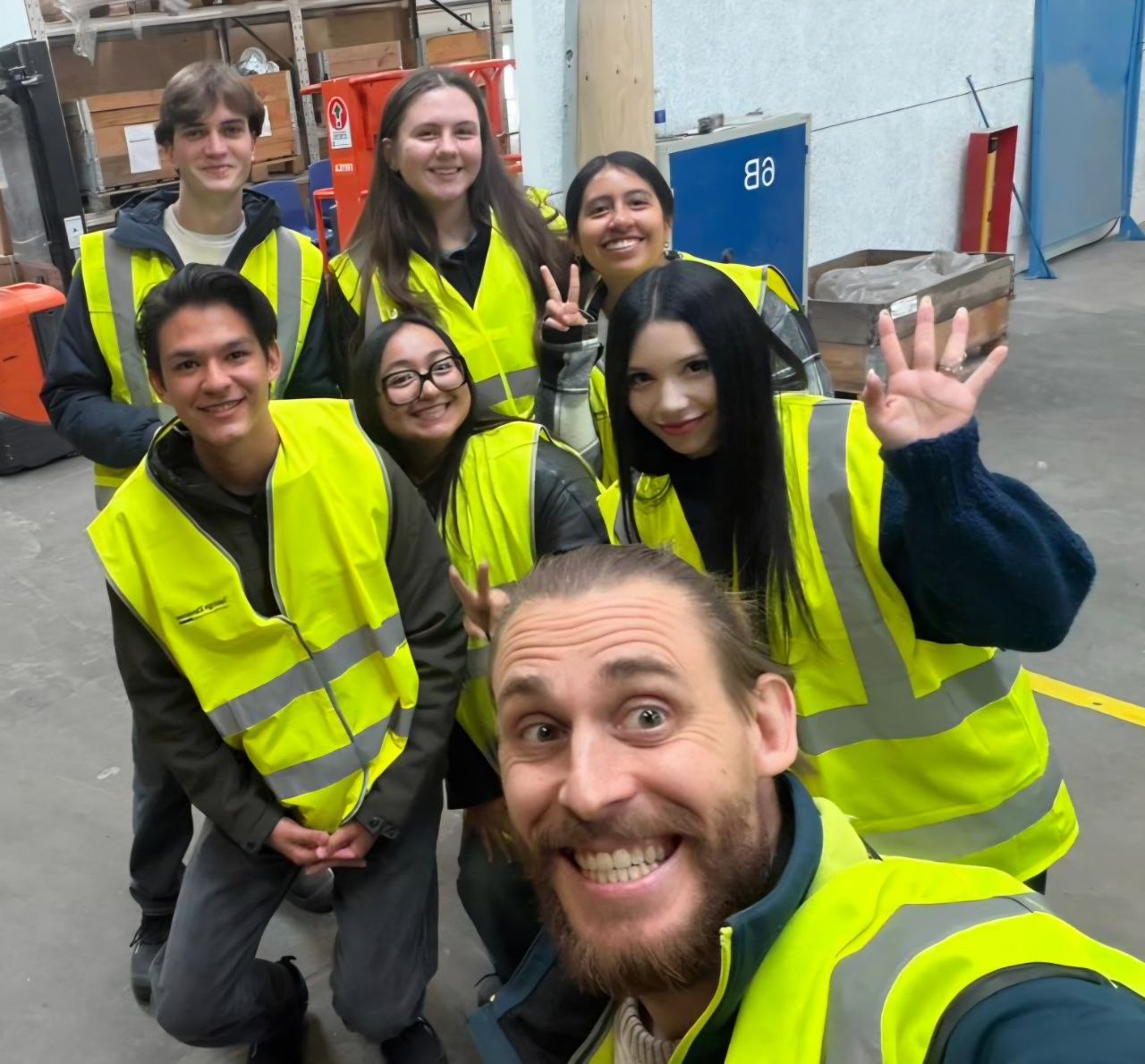
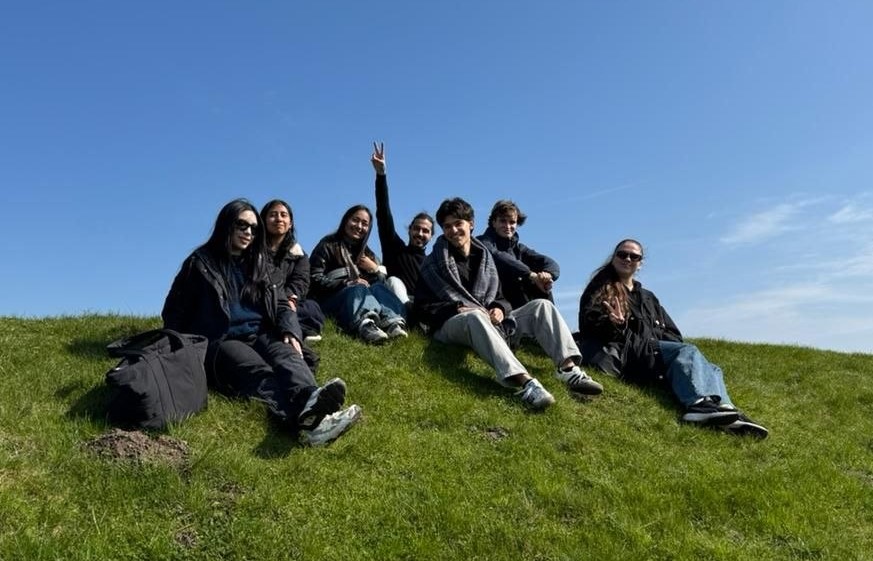
This deep immersion into theory was accompanied by continuous practice outside the classroom. Students visited building material stores to analyse materials and took a study tour to a factory producing large-scale prefabricated building components. Studying and working in teams with representatives from Denmark, the Netherlands, Chile, and Mexico allowed Yelyzaveta not only to overcome the language barrier but also to acquire valuable skills in cross-cultural dialogue and time management. A separate phase of the program consisted of a two-week intensive course at another campus of the academy.
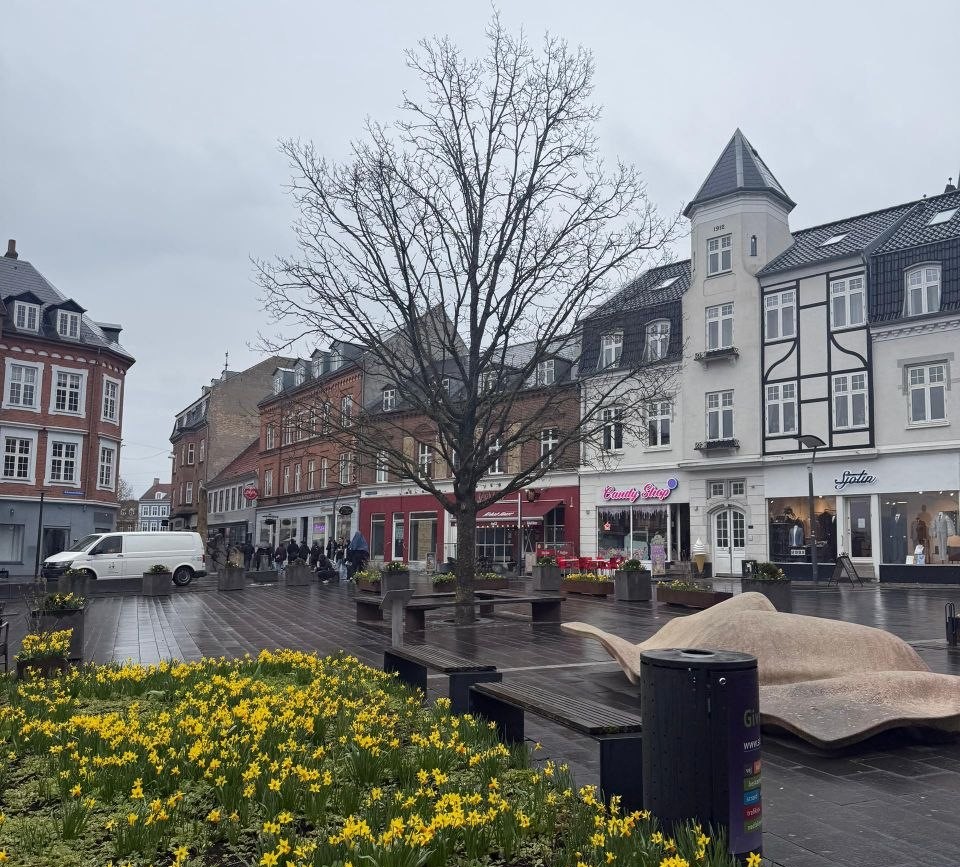
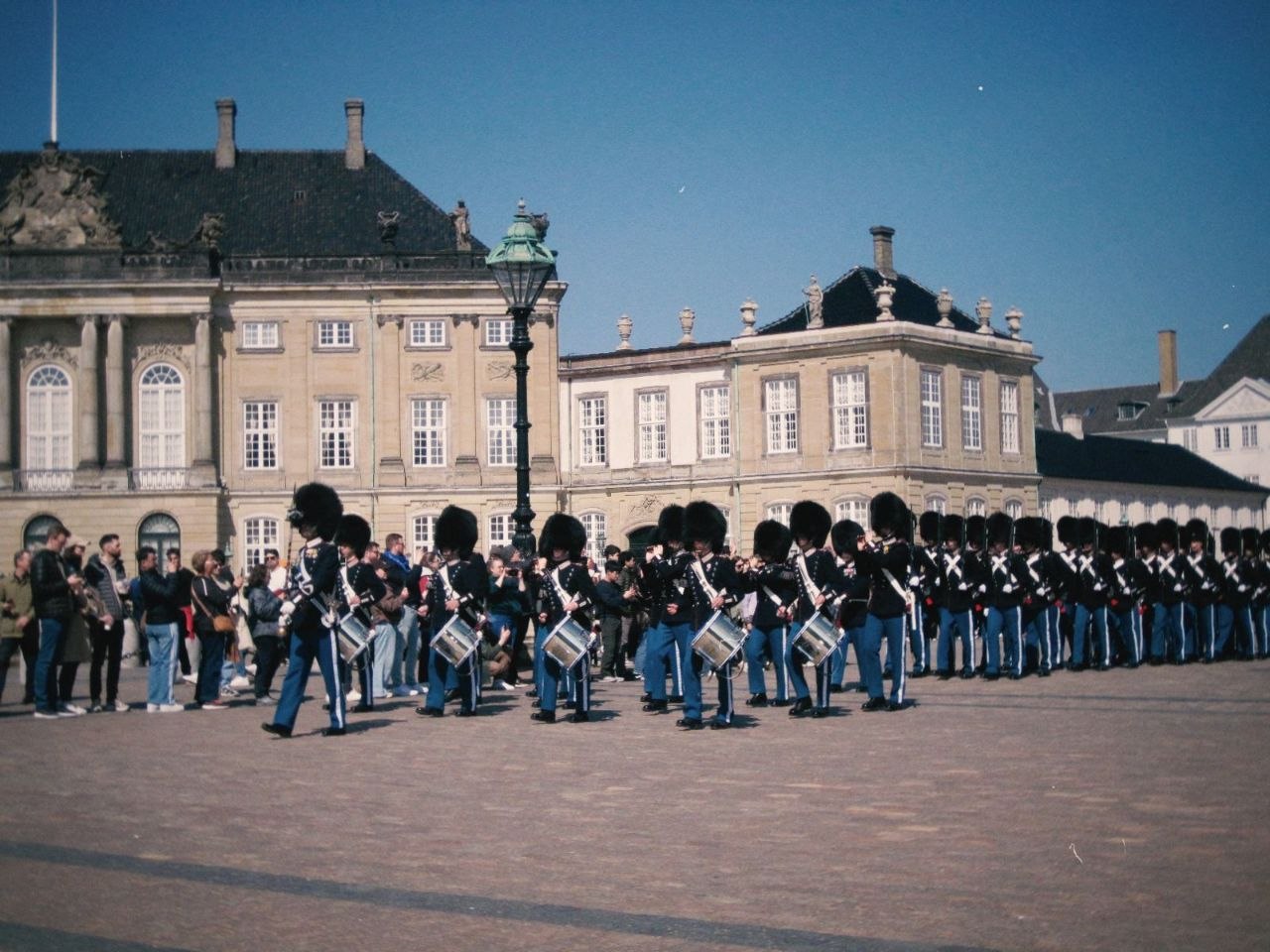
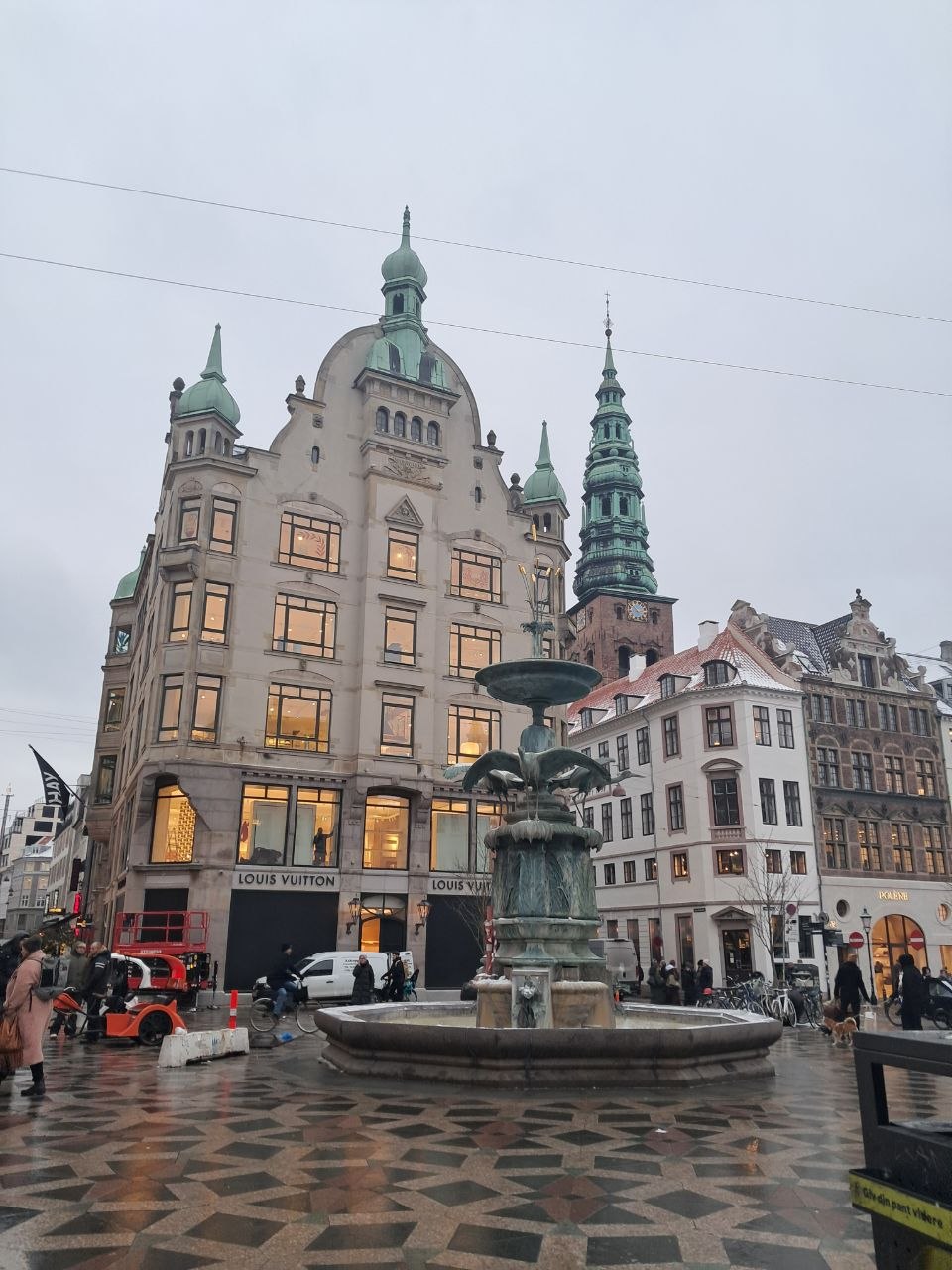
For the future architect, Denmark became a living space for creative research and inspiration. Throughout the semester, Yelyzaveta explored the contrasts between classical heritage and modern urbanism: from the cosy half-timbered streets of Næstved to the progressive Ørestad district in Copenhagen, which showcases the latest approaches to planning residential quarters and organising public spaces. Another inspiring highlight was a trip to Odense and a visit to the Hans Christian Andersen Museum designed by the Japanese architect Kengo Kuma, a structure delicately integrated into the surrounding natural landscape.
Favourable living conditions in cottages near the university, comprehensive support from her coordinator, and the faculty's mentoring attitude helped the student focus entirely on academic work. The experience gained at the Zealand Academy of Technologies and Business became a milestone in Yelyzaveta Vasylieva's professional growth, as knowledge of European design standards and modern BIM modelling methodologies constitutes valuable capital that she can successfully apply in her future professional activities in Ukraine.
“The successful implementation of academic mobility programs is always the result of joint efforts and a reliable bilateral partnership. We are sincerely grateful to the Zealand Academy of Technologies and Business for many years of cooperation, which opens up new professional and life horizons for our youth. I want to express special gratitude to our Danish colleagues: Ole Kolling, Director of the International Relations and Programs Department; Marie-Josée Giasson Jensen, International Mobility Coordinator; Anders Studsgård Winsløw, International Mobility Ambassador, and lecturer Per Mejer. Your comprehensive assistance in resolving all organisational matters, coordinating mobility processes, and warmly welcoming our student, Yelyzaveta Vasylieva, helped her adapt quickly to the new environment and realise her potential in Denmark as effectively as possible. We highly appreciate your support and look forward to continuing this wonderful cooperation.

The implementation of such large-scale international initiatives is made possible thanks to the comprehensive facilitation provided by the leadership of our educational institution. We express our deep gratitude to Volodymyr Onyshchenko, President of the National University “Yuri Kondratyuk Poltava Polytechnic”, and Rector Olena Filonych for their strategic support of our international development vector, their trust, and for creating conditions for the professional growth of talented students who worthily represent Poltava Polytechnic at the global level,” – commented Anna Pavelieva, International Relations Coordinator of the National University “Yuri Kondratyuk Poltava Polytechnic”.
This international cooperation opens up new opportunities for young people every semester. In particular, in the autumn of 2023, Iryna Hasan, Mariia Dykan, and Viktoriia Viazovska gained their first experience studying in Denmark (their impressions are detailed here and here). In autumn 2024, four students from the Education and Research Institute of Architecture, Civil Engineering, and Land Management took over the relay (read about their achievements here and here). During the 2025/2026 academic year, students Yeva Domkina, Mariia Parasotska, Ruslana Kravchenko, and Polina Khlystun completed their studies at the academy (whose stories can inspire you here and here). In the spring semester of that same academic year, Denmark became our students' next destination. Representing the university were Maksym Perepelytsia and Sofiia Kostiuchenko (International Economic Relations), who travelled alongside third-year Computer Science majors Anastasiia Zolotayko and Anastasiia Kosach.
As a reminder, Poltava Polytechnic academic staff can participate in academic mobility programs and internships. At the same time, students can study abroad under Erasmus+ credit academic mobility grant programs for a semester or an entire academic year at leading universities in Austria, Greenland, Denmark, Estonia, Spain, Lithuania, Latvia, Norway, the Netherlands, Germany, Poland, Portugal, Romania, Slovakia, Finland, and the Czech Republic.
For more detailed information regarding current internship, teaching, and academic mobility programs abroad, please get in touch with the International Relations Department (Room 213-C, interoffice@nupp.edu.ua) or the university’s International Relations Coordinator, Anna Pavelieva (+3-8-095-91-08-192).