On October 2, 2026, a synchronous online session for lecturer-facilitators was held within the framework of a large-scale international Erasmus+ project under the “Virtual Exchanges in Higher Education and Youth” strand – “Acquiring Transversal Competences through Virtual Voyages” (registration number ERASMUS-EDU-2024-VIRT-EXCH No. 101193593), implemented with the support of the European Union.
The international project consortium, which brings together leading educational institutions and expert organisations from seven countries, is coordinated by Aurel Vlaicu University of Arad (Romania). The partnership network includes prestigious institutions, among which are the Millennium Center and the consulting company Predict CSD Consulting (Romania), IUL Online University (Italy), Fırat University (Türkiye), Moldova State University, Caucasus University and Batumi Shota Rustaveli State University (Georgia), Gavar State University (Armenia), as well as National University “Yuri Kondratyuk Poltava Polytechnic”, which worthily represents national higher education in this distinguished academic alliance.
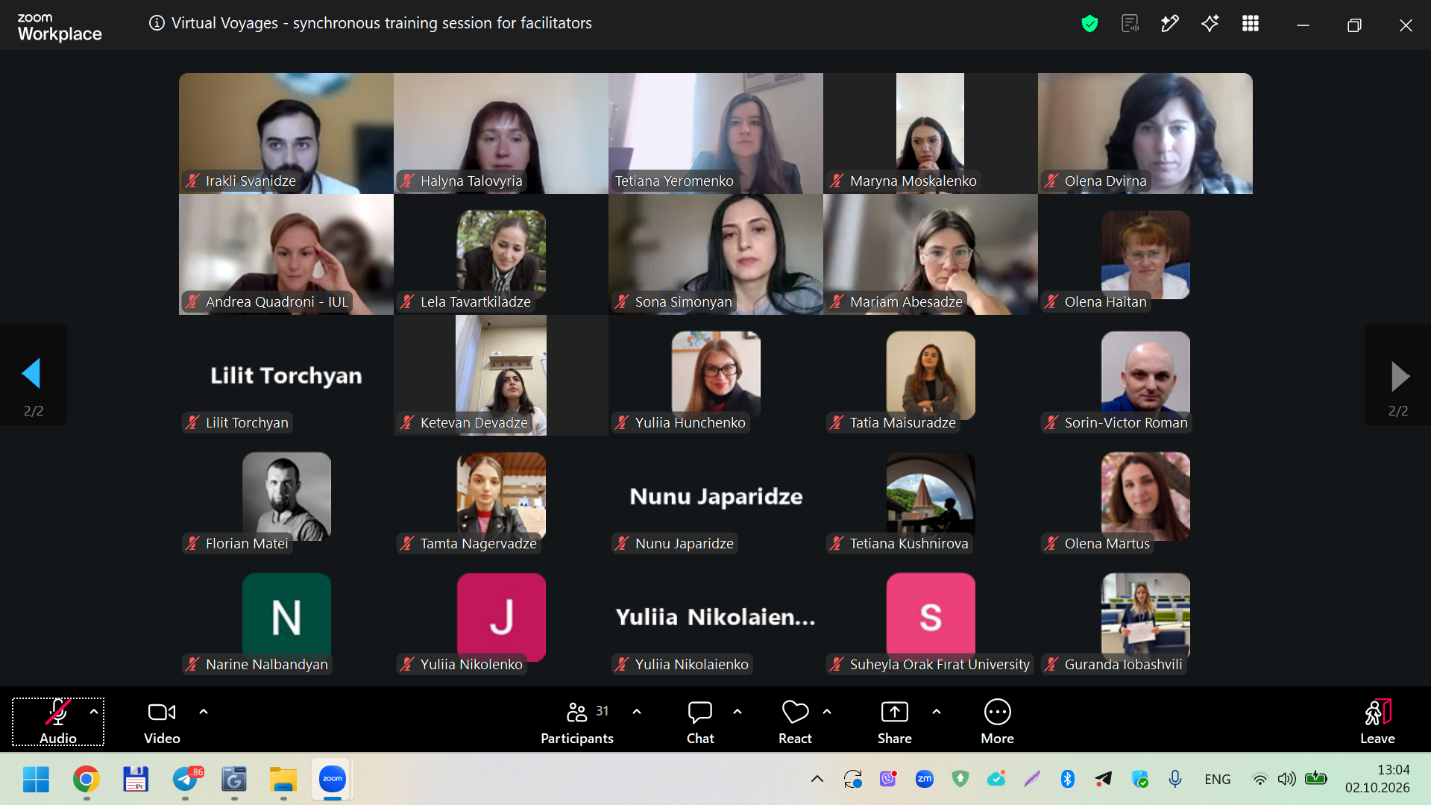
A strong team of 15 academic staff members from Poltava Polytechnic, who successfully passed the competitive selection process, joined the initiative. Together with their foreign colleagues, they continue to master modern methodologies for organising international virtual exchanges aimed at developing transversal (soft) skills among young students.
The interdisciplinary team of lecturer-facilitators from Poltava Polytechnic included:
• Olena Haytan – Senior Lecturer at the Department of Computer and Information Technologies and Systems of the Educational and Research Institute of Information Technologies and Robotics;
• Alina Hlushko – PhD in Economics, Associate Professor at the Department of Finance, Banking and Taxation of the Educational and Research Institute of Finance, Economics, Management and Law;
• Yuliia Hunchenko – Senior Lecturer at the Department of General Linguistics and Foreign Languages of the Faculty of Philology, Psychology and Pedagogy;
• Olena Dvirna – PhD in Physics and Mathematics, Associate Professor at the Department of Computer and Information Technologies and Systems of the Educational and Research Institute of Information Technologies and Robotics;
• Tetiana Yeromenko – Lecturer at the Department of General Linguistics and Foreign Languages of the Faculty of Philology, Psychology and Pedagogy;
• Oleksandra Kuzmenko – PhD in Economics, Associate Professor at the Department of Computer and Information Technologies and Systems of the Educational and Research Institute of Information Technologies and Robotics;
• Tetiana Kushnirova – Doctor of Philological Sciences, Professor at the Department of Germanic Philology and Translation of the Faculty of Philology, Psychology and Pedagogy;
• Olena Martus – Assistant at the Department of Oil and Gas Engineering and Technologies of the Educational and Research Institute of Oil and Gas and Energy;
• Oleksandra Maslii – PhD in Economics, Associate Professor at the Department of Finance, Banking and Taxation of the Educational and Research Institute of Finance, Economics, Management and Law;
• Maryna Moskalenko – Lecturer at the Department of General Linguistics and Foreign Languages;
• Yuliia Nikolaienko – PhD in Pedagogical Sciences, Associate Professor at the Department of Germanic Philology and Translation of the Faculty of Philology, Psychology and Pedagogy;
• Yuliia Nikolenko – Assistant at the Department of General Linguistics and Foreign Languages of the Faculty of Philology, Psychology and Pedagogy;
• Anna Pavelieva – PhD in Philological Sciences, Associate Professor at the Department of Germanic Philology and Translation of the Faculty of Philology, Psychology and Pedagogy;
• Halyna Talovyria – PhD in Pedagogical Sciences, Associate Professor at the Department of General Linguistics and Foreign Languages of the Faculty of Philology, Psychology and Pedagogy;
• Iryna Chernetska – PhD in Technical Sciences, Associate Professor at the Department of Heat and Gas Supply, Ventilation and Heat Power Engineering of the Educational and Research Institute of Oil and Gas and Energy.
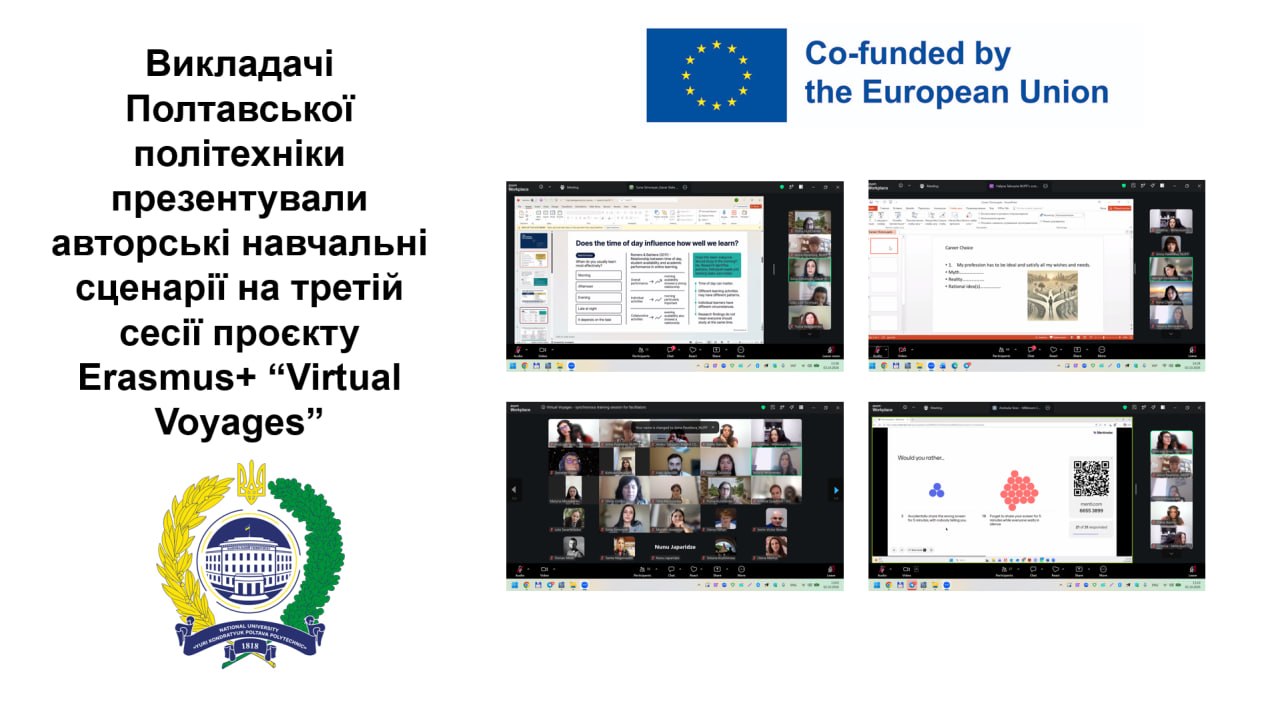
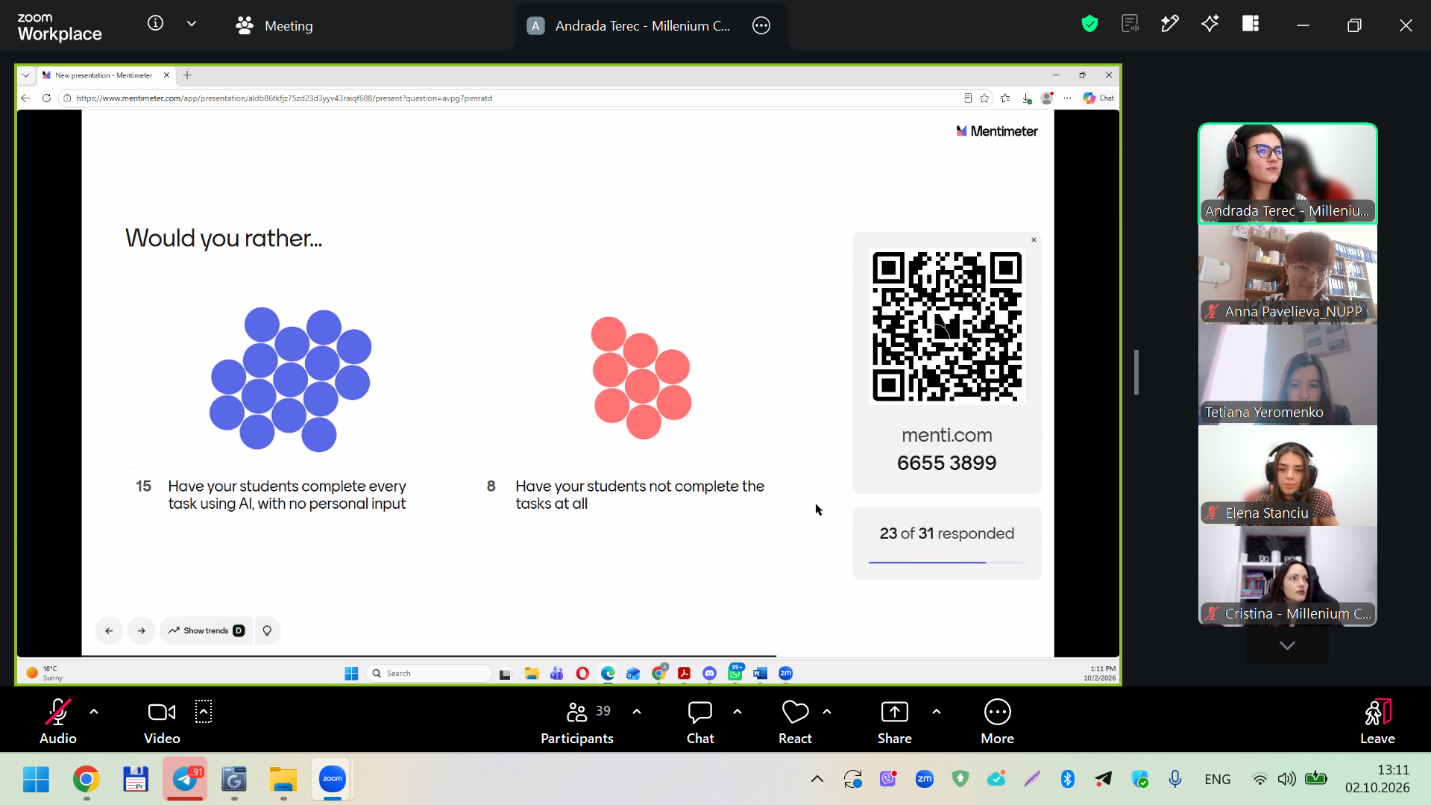
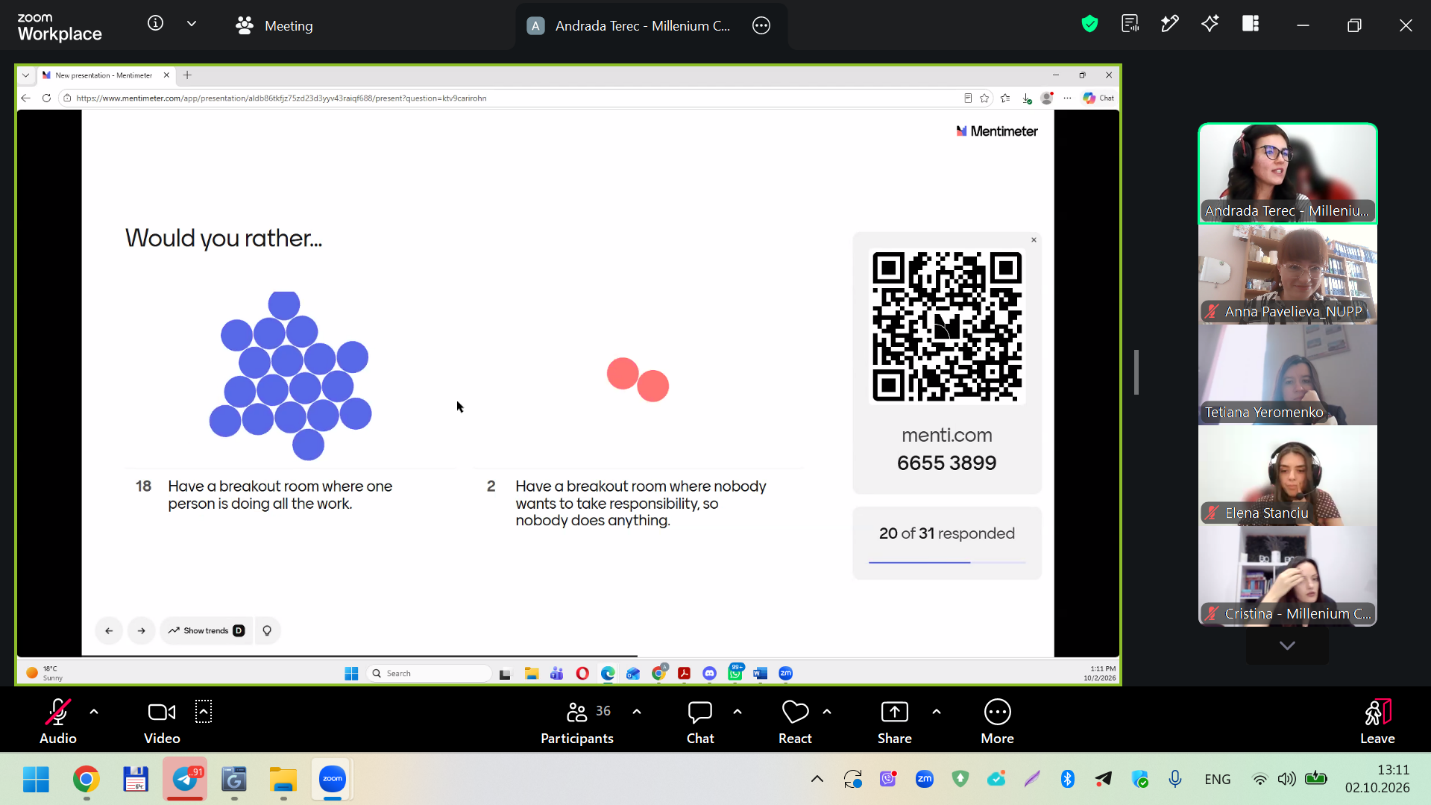
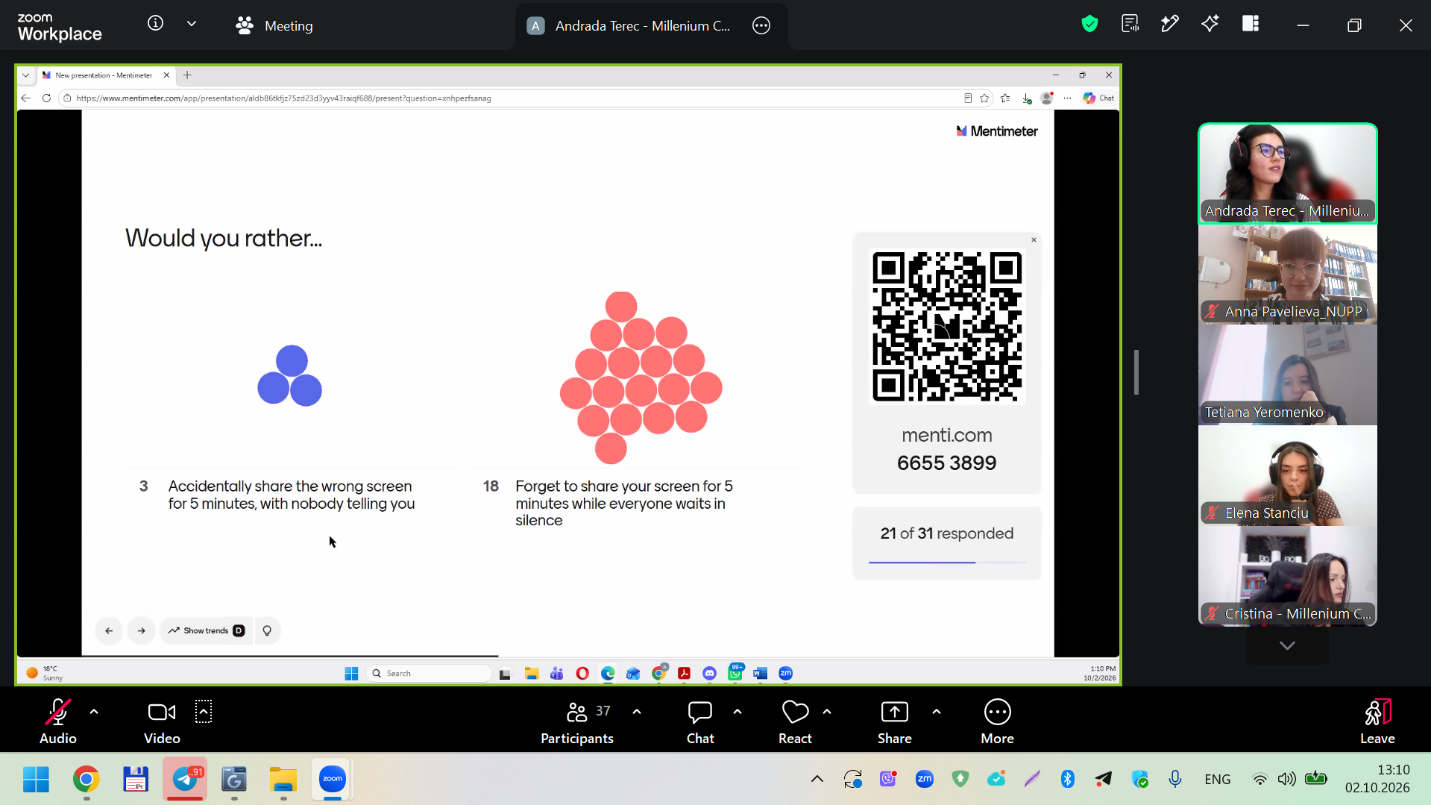
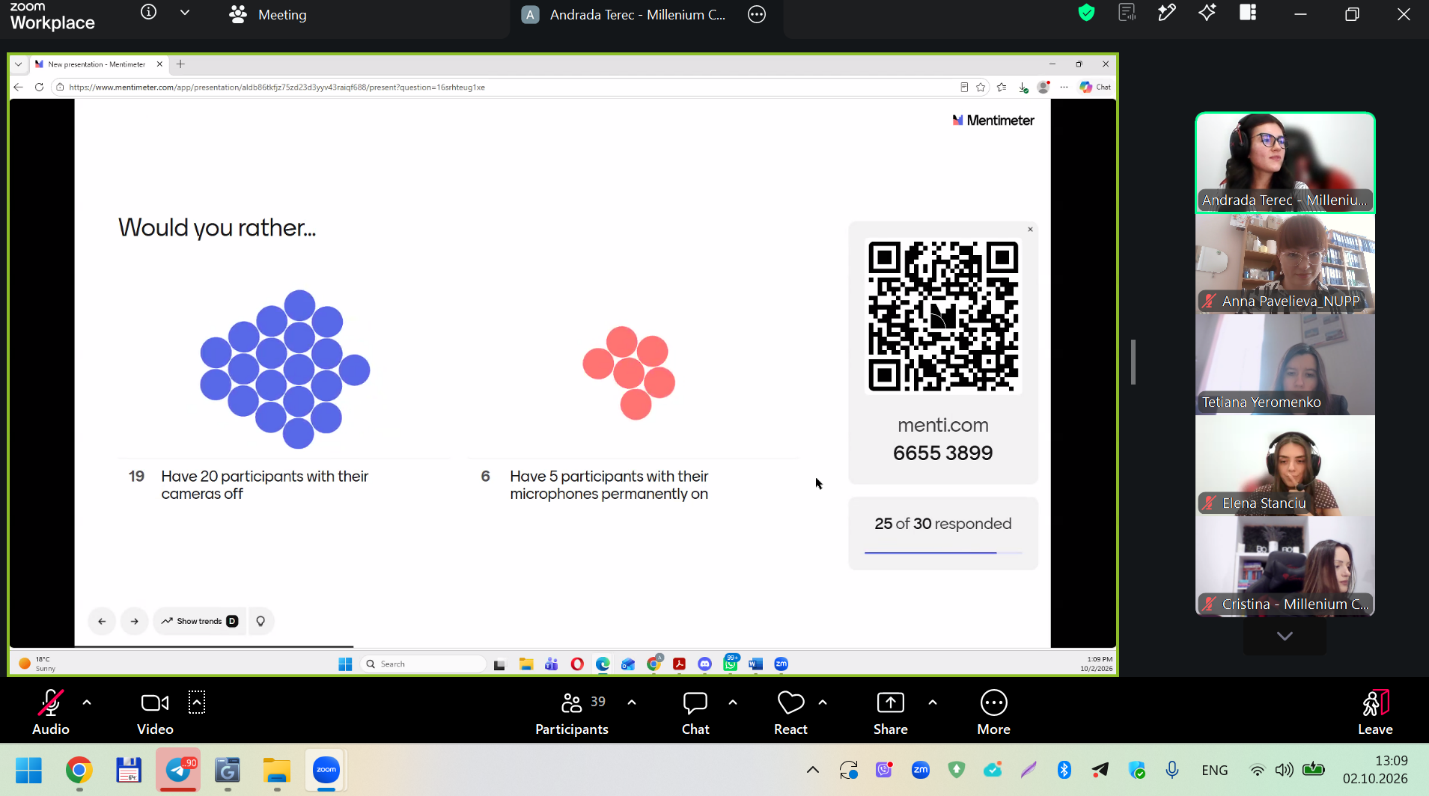
The meeting commenced with an interactive warm-up on the Mentimeter platform, moderated by Andrada Terek (Millennium Centre). Instead of a conventional introduction, the educators examined typical distance-learning challenges by choosing between two operational dilemmas.
During the flash poll, lecturers overwhelmingly preferred working with students' cameras off rather than dealing with uncontrollable background noise (19 votes to 6). Also, they favoured a slide broadcast delay over displaying extraneous windows on the screen. On interaction in breakout rooms, 18 participants agreed that having at least one proactive team leader is preferable to complete inactivity. A distinct debate was sparked by the issue of students' use of artificial intelligence: the majority of facilitators (15 to 8) still chose assignments completed with the assistance of AI over the complete absence of submitted work. This poll created an opportunity for open discussion of the psychological challenges of online teaching before presenting original materials.
This reflection provoked a lively discussion regarding the boundaries of moderator control, strategies for engaging passive listeners, and the ethical dimensions of AI utilisation in virtual projects.
The centrepiece of the session was the practical implementation of the home assignment given by the instructors during the second meeting: presenting and analysing designed lesson plans for 2-hour synchronous classes based on the educational modules of thevoyage.eu platform.
The practical part of the event became an open, interactive platform for sharing original methodologies, instructional scenarios, and innovative materials. Because the programme was distinguished by its exceptional intensity and variety of approaches, only some exemplary developments and case studies presented by participants are highlighted below.
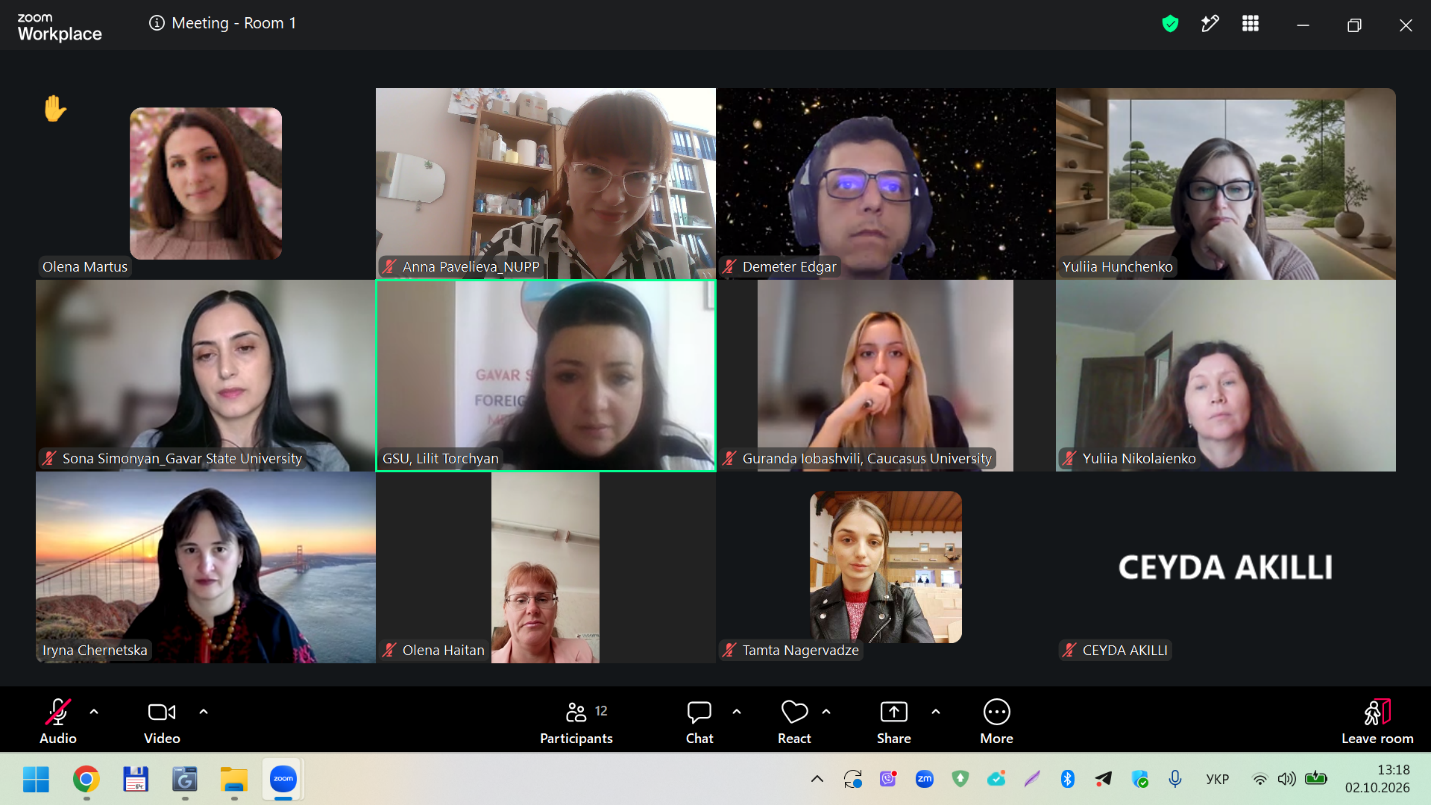
In particular, an atmosphere of fruitful international synergy prevailed in breakout room No. 1. Researchers and academics from Poltava Polytechnic (Anna Pavelieva, Yuliia Hunchenko, Yuliia Nikolaienko, Iryna Chernetska, Olena Haytan, Olena Martus), together with colleagues from Georgia, Armenia, Romania, and Türkiye, conducted a successful simulation of facilitated discussions, carried out mutual peer review of timing plans, and shared effective tools for maintaining student attention during intensive remote sessions.
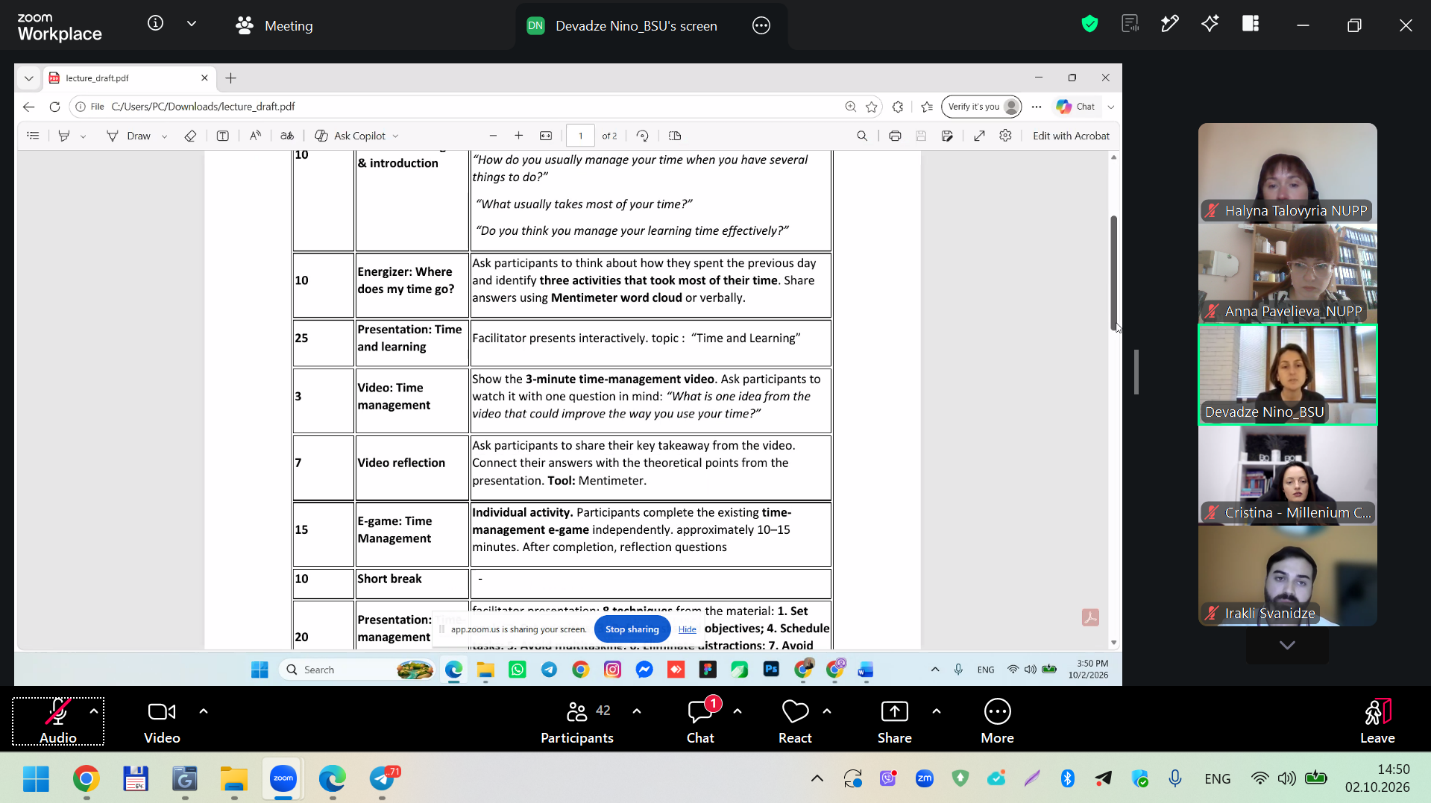
A striking example of well-calibrated pedagogical design was the presentation delivered by Nino Devadze, representative of Batumi Shota Rustaveli State University. As part of the workshop “Time Management for Effective Learning”, she demonstrated a detailed hour-by-hour lesson scenario, masterfully combining Mentimeter flash polls, concise three-minute videos, and educational gamification mechanics. Such an approach enables flexible maintenance of audience engagement while preserving an indispensable space for reflection.
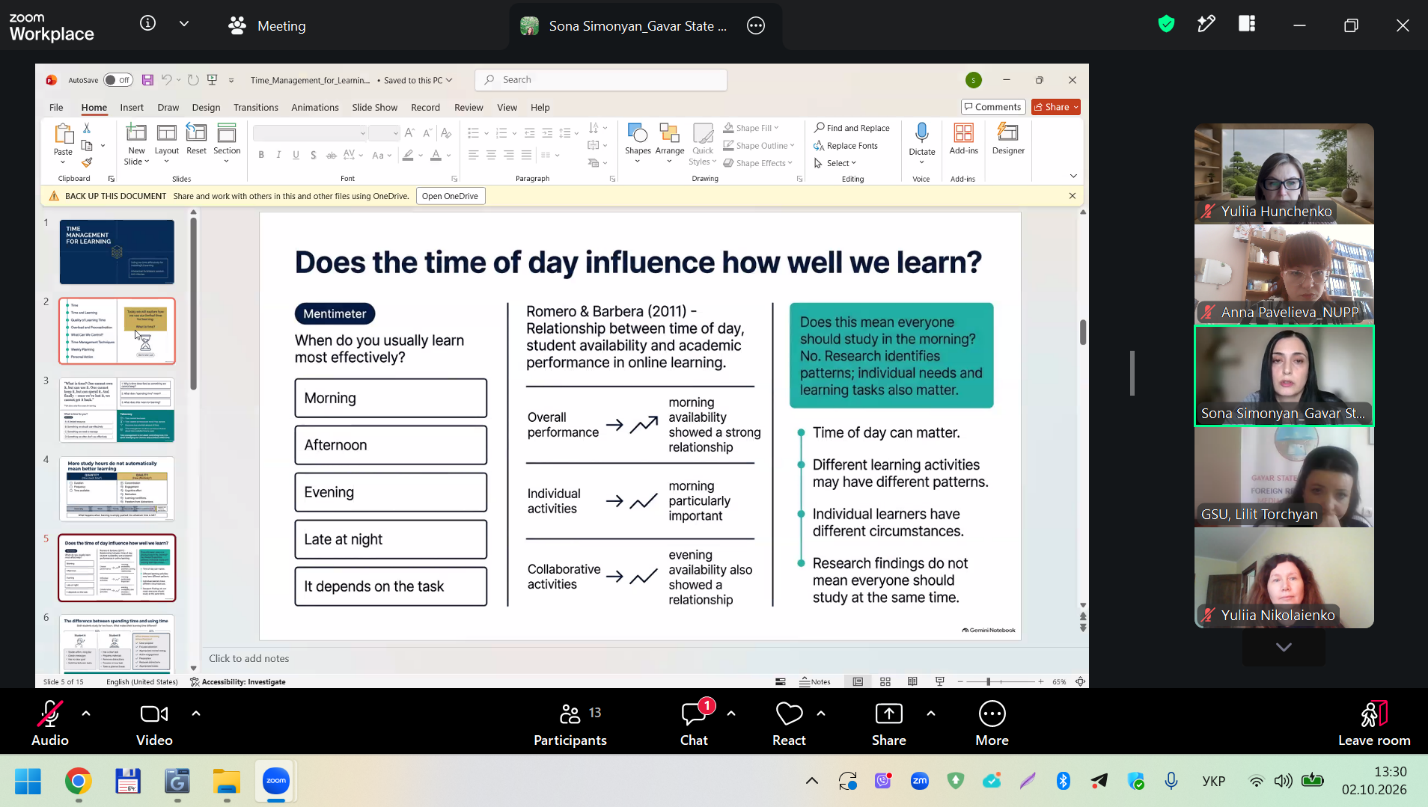
A logical continuation of this theme within the “Learning to Learn” module was the presentation by Sona Simonyan from Gavar State University. Drawing upon research by M. Romero and E. Barberà, the speaker invited colleagues to test a biorhythm questionnaire and professionally discuss the correlation between chronotypes and attention span, which directly influences the selection of optimal times for individual or group work among students.
A separate block of presentations focused on personal development and self-identification for future specialists. Tetiana Yeromenko delivered an insightful presentation entitled “Navigating Choices: Unlocking Your Decision DNA”. At the same time, Fred Kasirye presented the concept “An Authentic Personal Brand”, emphasising how to diagnose and mitigate factors that hinder efficient use of working time. Olena Dvirna’s initiative, “Self-Knowledge: Tools for Self-Discovery,” also contributed significantly by organising interactive online sessions to develop self-awareness skills, identify key value orientations, and deepen intercultural engagement.
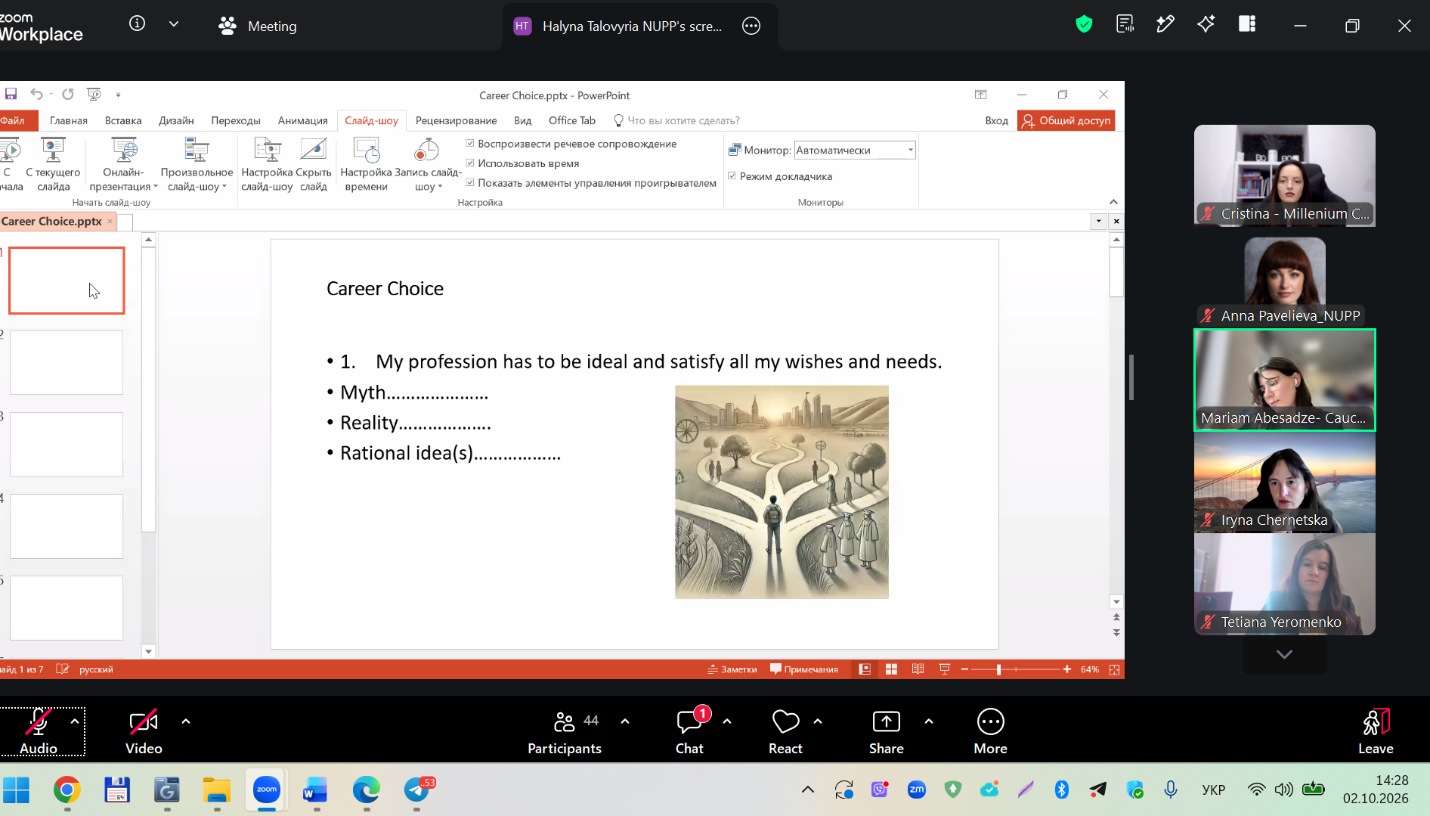
The career guidance track also generated particular interest: Poltava Polytechnic Associate Professor Halyna Talovyria presented a lesson design under the “Career Box” programme. The speaker focused on the psychological dimensions of career choice and debunking established stereotypes – particularly the belief in the a priori existence of an “ideal” profession. The proposed case studies aim to teach young people to realistically assess the realities of the modern labour market and build a well-considered career trajectory.
These developments were only part of the extensive methodological output demonstrated during the sessions, attesting to the high level of participant expertise and the powerful potential of international academic dialogue.
Participants discussed effective time-management techniques to prevent burnout and sustain motivation when mastering new material, as well as building a personal brand that helps individuals stand out in today's digital and professional landscapes. The discussion sparked a lively exchange on how personal traits, experience, and critical thinking shape an individual's day-to-day and strategic actions.
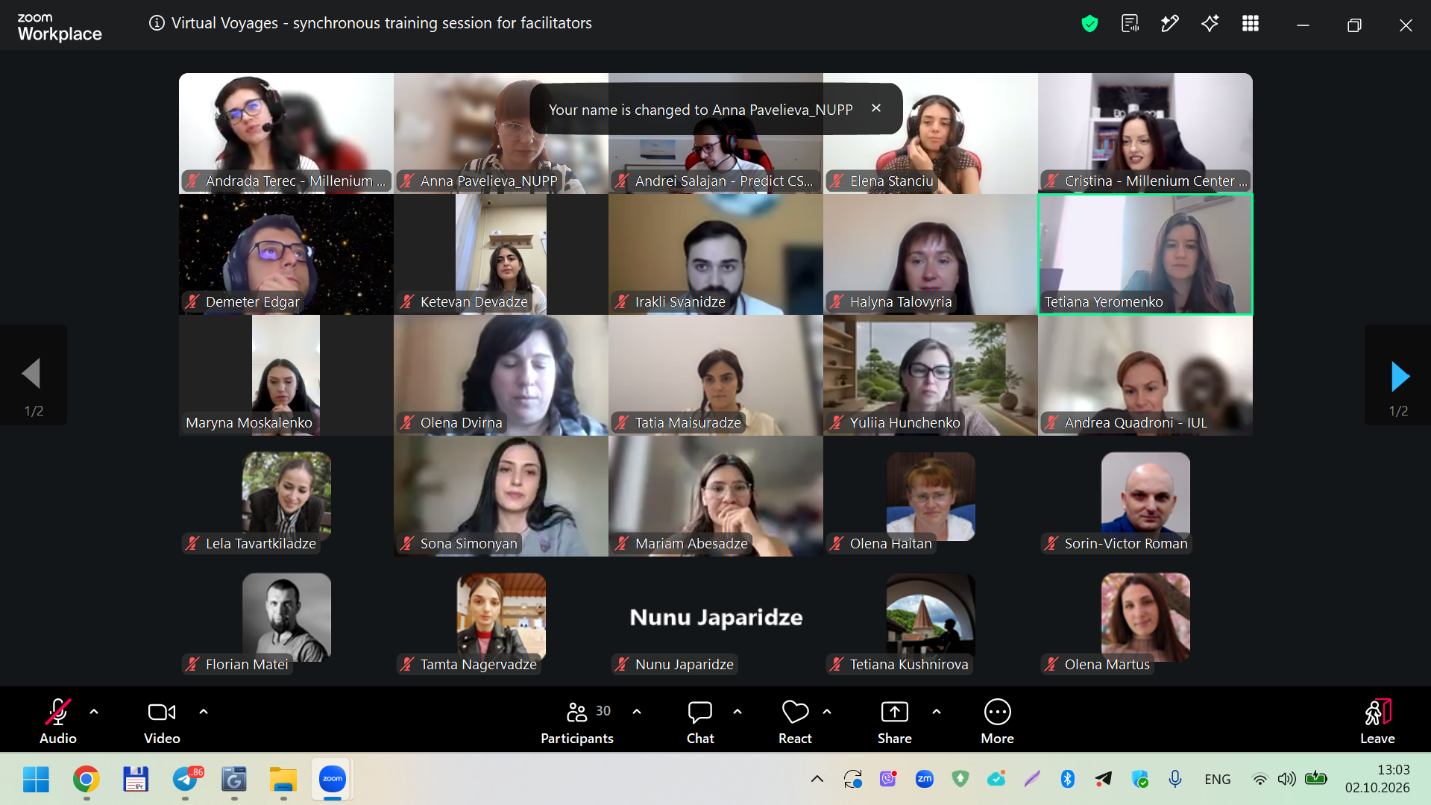
The third synchronous session helped Poltava Polytechnic educators align their methodological toolkit before moving toward the practical launch of pilot student virtual exchanges scheduled by the consortium for the upcoming period.
“Each new session of the Erasmus+ project ‘Virtual Voyages’ reveals new facets of pedagogical excellence for our educators. Today, we did not merely discuss methodology; we carefully simulated live situations, tested colleagues’ original designs, and acted as facilitators for future international audiences. We extend our sincere gratitude to the President of Poltava Polytechnic, Volodymyr Onyshchenko, and the Rector of the University, Olena Filonych, for their unconditional support of our innovative educational initiatives, fostering an enabling environment for academic and professional growth, and systematically establishing our university on the European academic map. Thanks to this synergy, Polytechnic students will soon gain a unique experience of barrier-free international mobility and the development of transversal skills recognised worldwide”, – summarised the project coordinator from National University “Yuri Kondratyuk Poltava Polytechnic”, Associate Professor Anna Pavelieva.
It is worth noting that practical implementation at the local level is already well underway: on September 24, 2026, the university team participated in a coordination meeting of partners of the Erasmus+ project “Acquiring Transversal Competences through Virtual Voyages” (No. 101193593), during which, together with colleagues from seven countries, the educators reviewed the outcomes of the first implementation phase and agreed upon the launch of virtual exchanges for students; a team of 14 university lecturers has already participated in two facilitator sessions, where, alongside colleagues from seven countries, they mastered virtual facilitation methodologies for future work with students, refined their virtual facilitation expertise, simulated group interaction cases, and mastered digital tools for the successful delivery of international student exchanges.
National University “Yuri Kondratyuk Poltava Polytechnic” continues to demonstrate high standards of project management and is confidently moving toward the official launch of international virtual exchanges.