International academic mobility today is not merely a change of educational environment but a robust foundation for developing a new generation of specialists capable of working effectively in a global context. For three consecutive years, a strategic and highly productive partnership has been maintained between the National University “Yuri Kondratyuk Poltava Polytechnic” and the “1 Decembrie 1918” University of Alba Iulia (Romania). This strong cooperation, based on shared academic values, opens doors for our students to leading European practices, allowing them to integrate into the international scientific community and improve professional competencies.
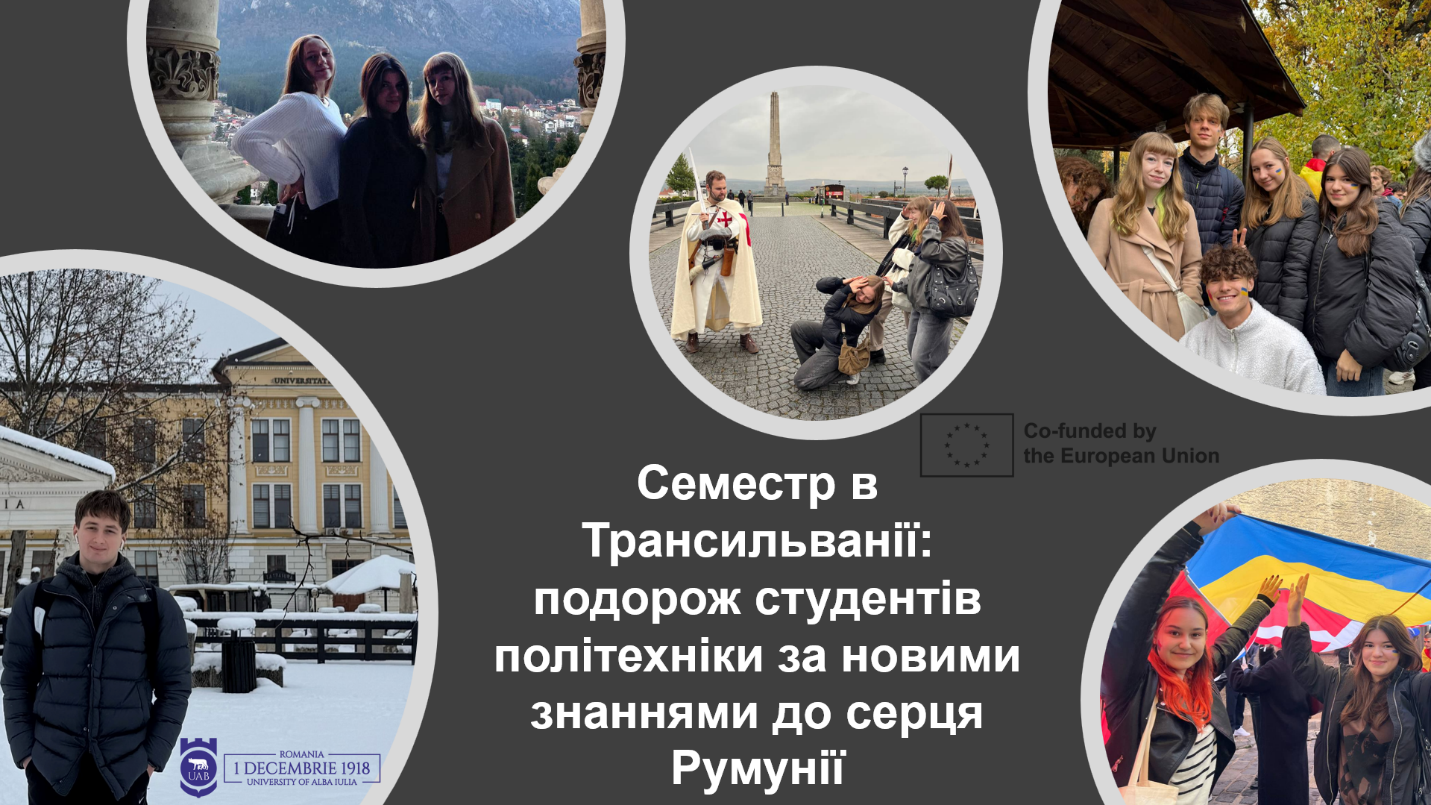
Within the framework of the Erasmus+ credit mobility program during the autumn semester of the 2025/2026 academic year, four ambitious representatives of Poltava Polytechnic – future lawyer Orest Denysenko and “Philology” students Daria Lavrenko, Olesia Suzdaltseva, and Diana Savchenko – are studying at the “1 DECEMBRIE 1918” University of Alba Iulia in Romania, located in the very heart of Transylvania.
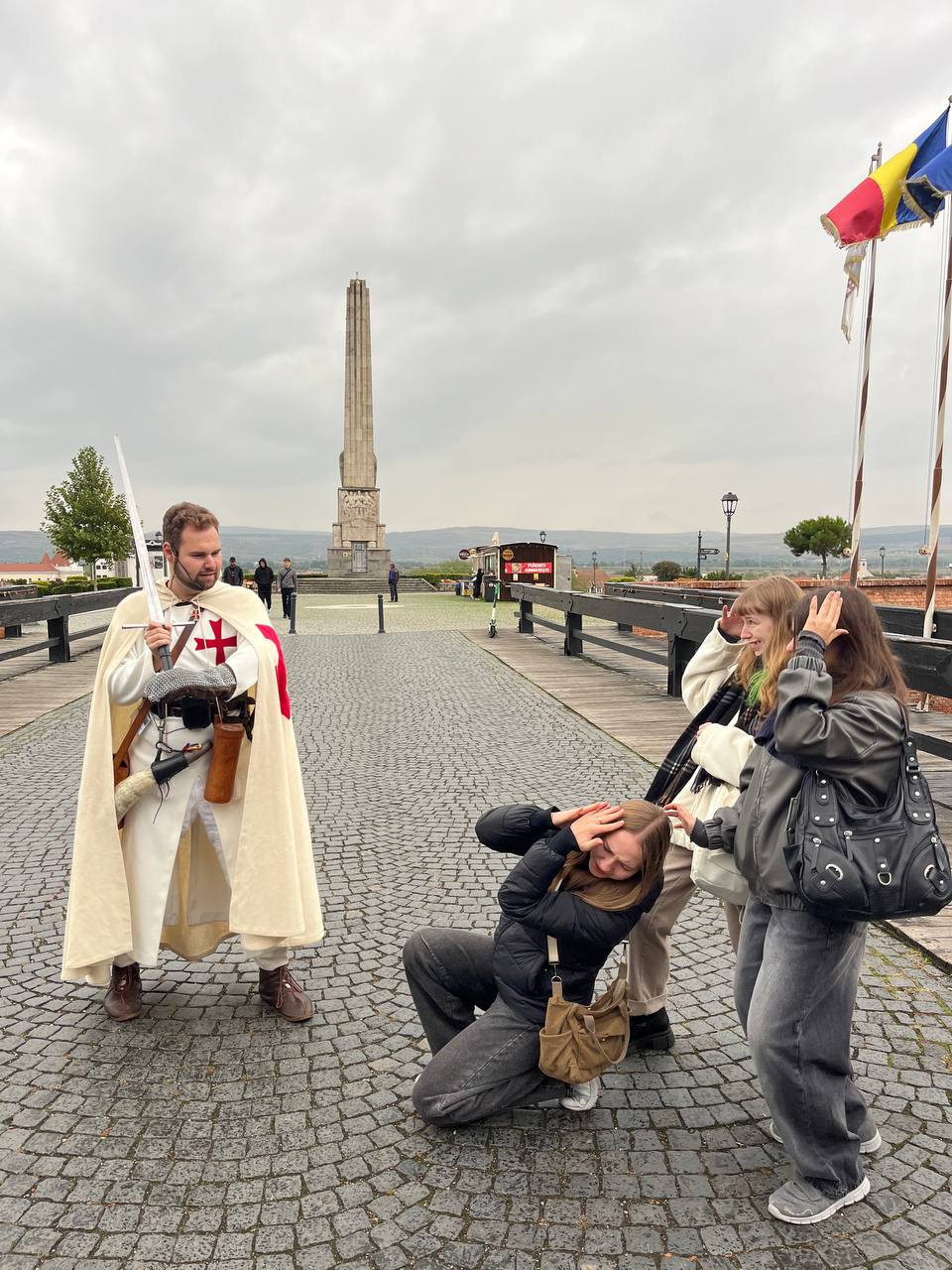
Residing in the unique historical environment of the magnificent Alba Carolina Citadel, they are not only mastering complex professional disciplines but also undergoing a true personal transformation, overcoming challenges, and discovering new horizons. They kindly shared their stories about their studies, cultural discoveries, and the challenges that profoundly shaped their outlook.
Orest Denysenko, student of group 201-P, speciality 081 “Law”: “The 2025-2026 academic year has become a landmark milestone in my life thanks to the Erasmus+ program. Currently, I am gaining knowledge at the “1 DECEMBRIE 1918” University of Alba Iulia, in the picturesque Romanian city.
This experience has been more than just a stage of professional growth; it has been a true transformation – both personal and cultural. Studying abroad enabled me to move beyond familiar paradigms, rethink the role of the lawyer in the contemporary European context, and deepen my understanding of the diversity of legal traditions. For a future lawyer, such an experience is an invaluable foundation for developing critical thinking and cross-cultural communication skills.
A strong emphasis on the applied aspects of jurisprudence characterises the university. My curriculum is centred on European law, international legal relations, and Legal English. Studying here is not just about theory; it is primarily about working with live cases, analysing judicial precedents, and participating in open debates. The university’s academic culture is built on the principles of partnership: teachers encourage critical thinking and the articulation of one’s own position, fostering a space of mutual respect. A significant professional experience for me was the comparative analysis of the civil and criminal legislation of Ukraine and Romania, conducted in close cooperation with the faculty.
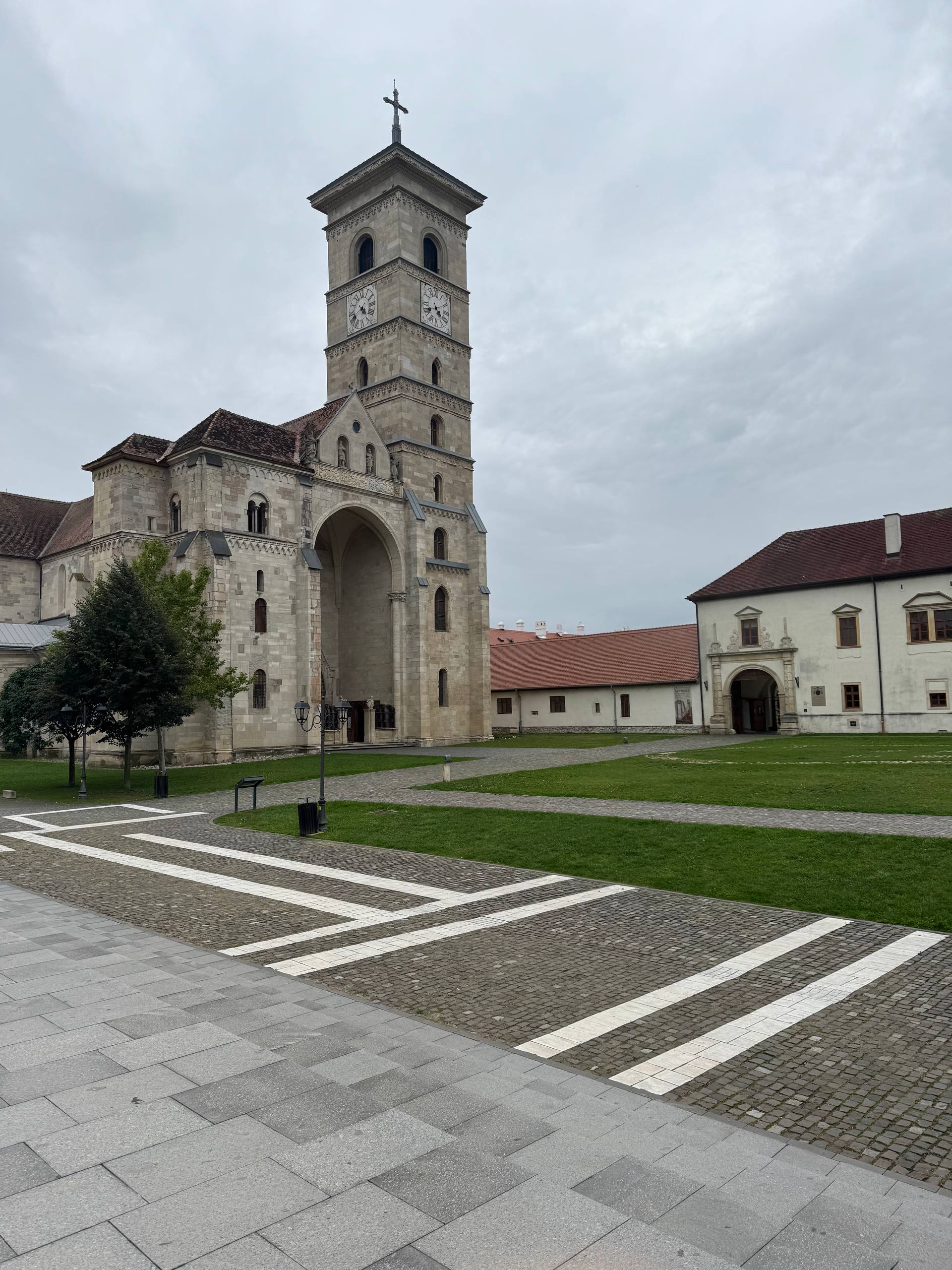
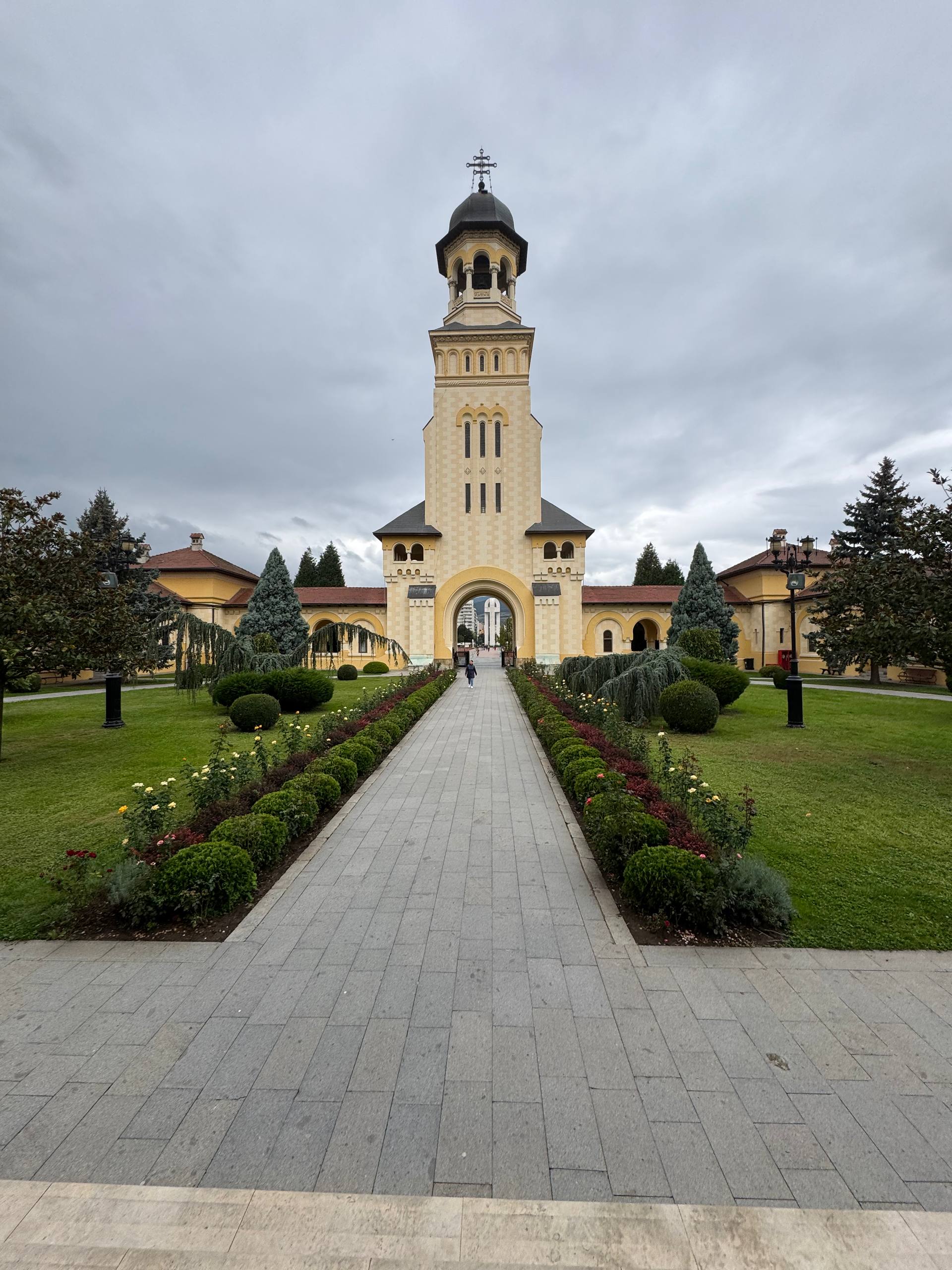
A separate source of inspiration is Alba Iulia itself. The university campus is located in the heart of the historical Alba Carolina Citadel. Studying in the architectural grandeur of the past fosters a unique symbiosis of academic tradition and cultural heritage, thereby stimulating new achievements every day.
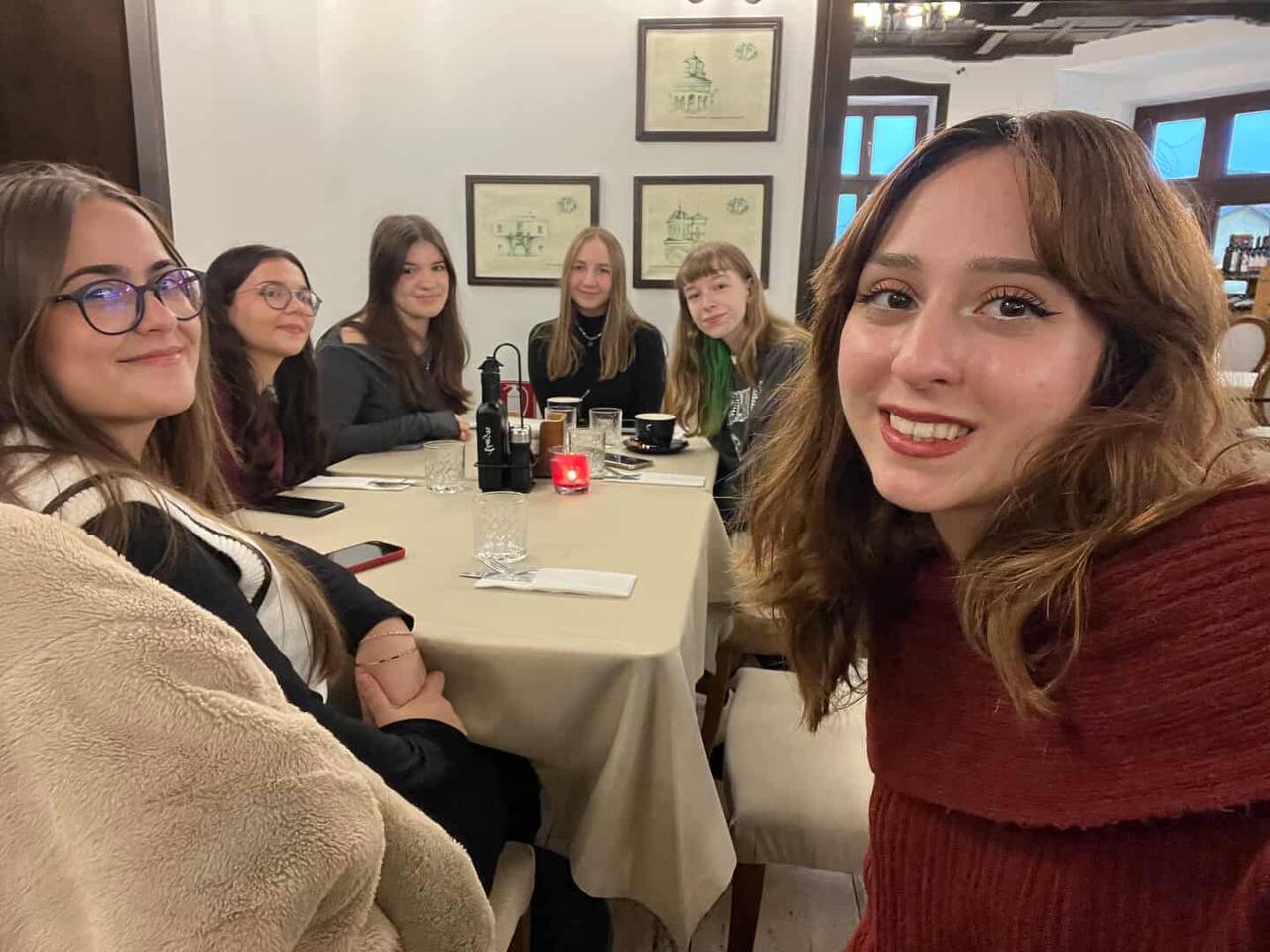
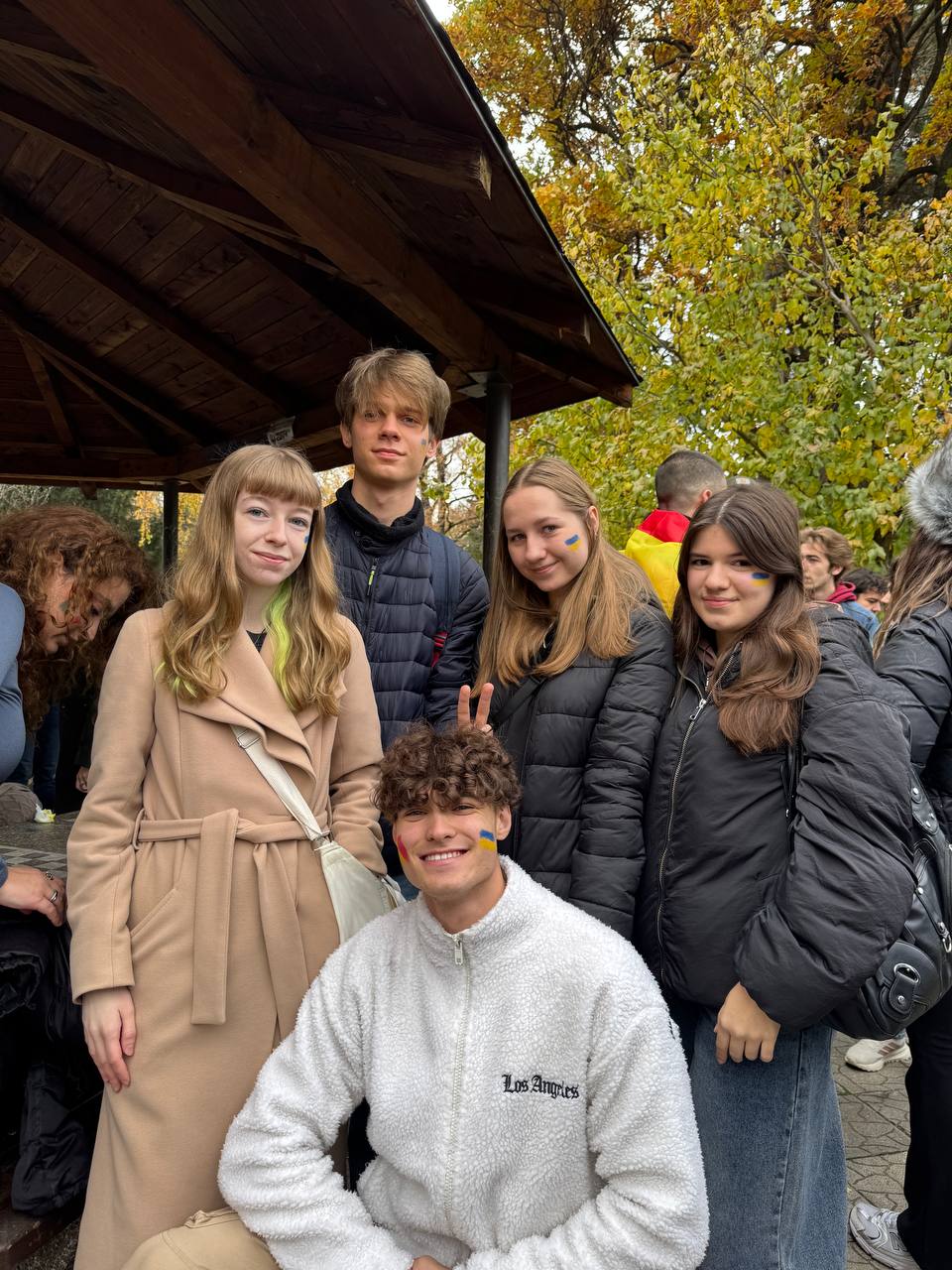
Student life here is a real kaleidoscope of events, driven by the ESN. From the vibrant Welcome Week to cosy international dinners and exciting trips – every event becomes a bridge to new acquaintances. It’s not just entertainment, but a space for live communication, where English becomes a natural means of communication and friends from different parts of the world become a true international family.
Beyond the classrooms, I discovered an amazing Romania. The country conquered me with its majestic architecture, the depth of its historical roots, and the incredible hospitality of its people. Every trip to new cities added colour to my experience, turning this period into a memorable adventure.
Participation in Erasmus+ is a point of my personal and professional growth. The program taught me to be open to the world, independent, and confident in my abilities. I sincerely believe that this experience is worth living. It is a unique opportunity to step outside the usual, become part of a global community, and gain knowledge without borders.
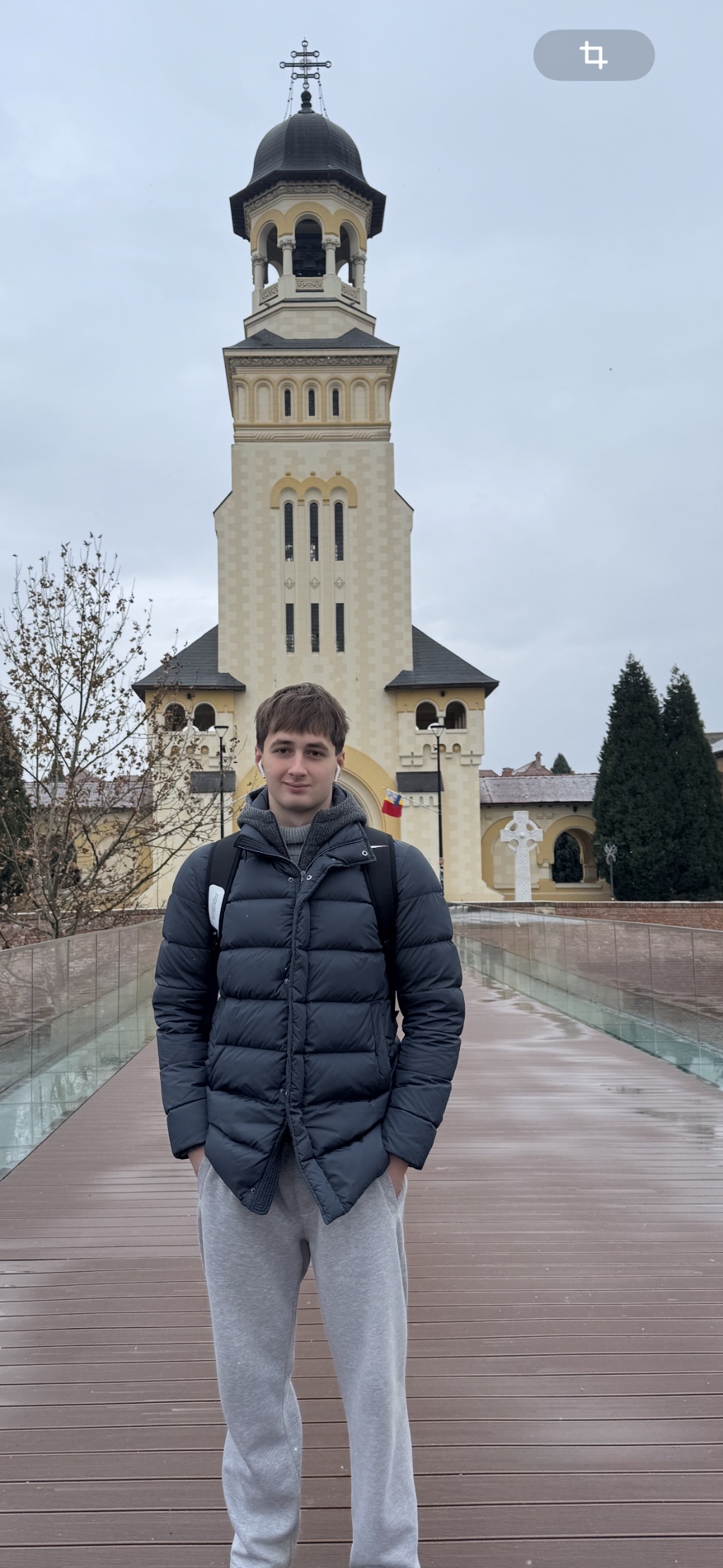
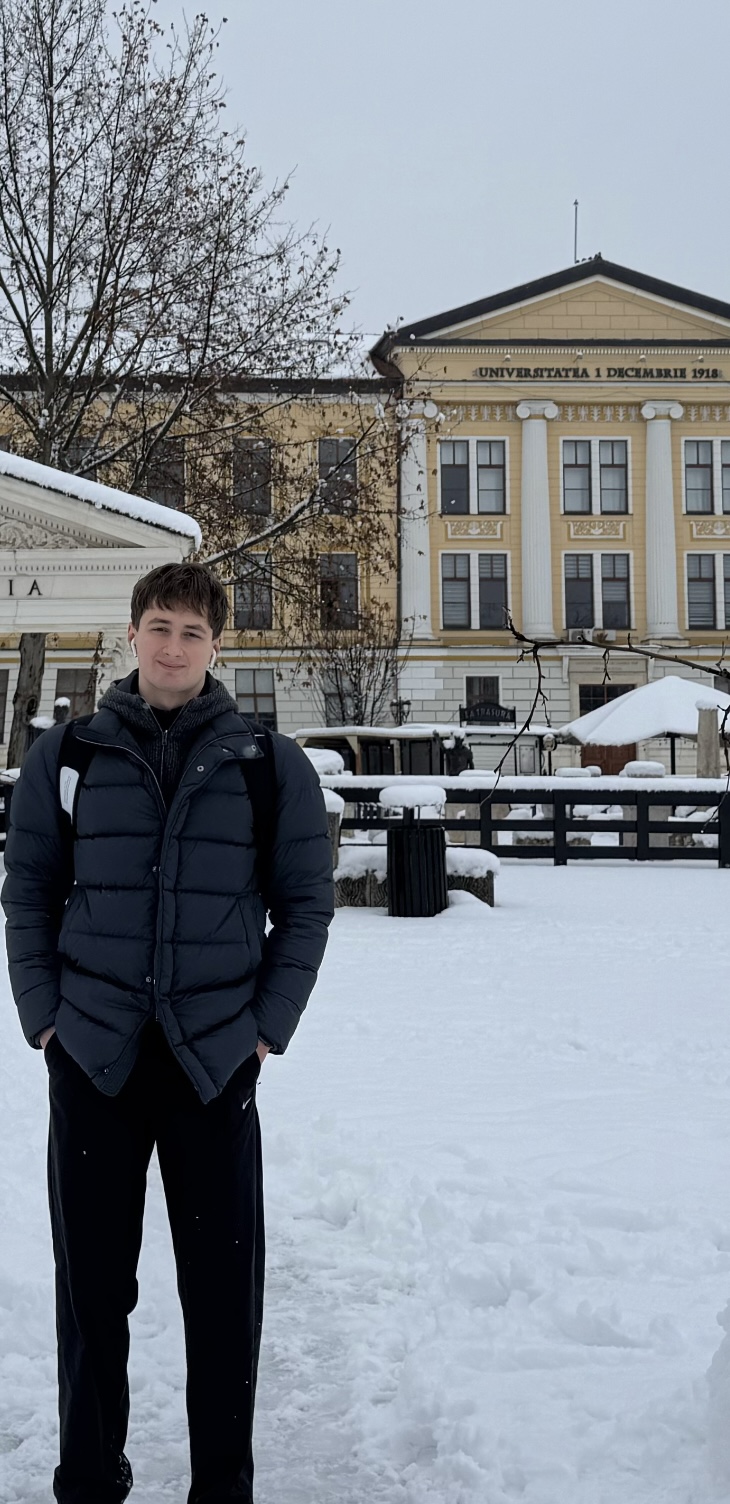
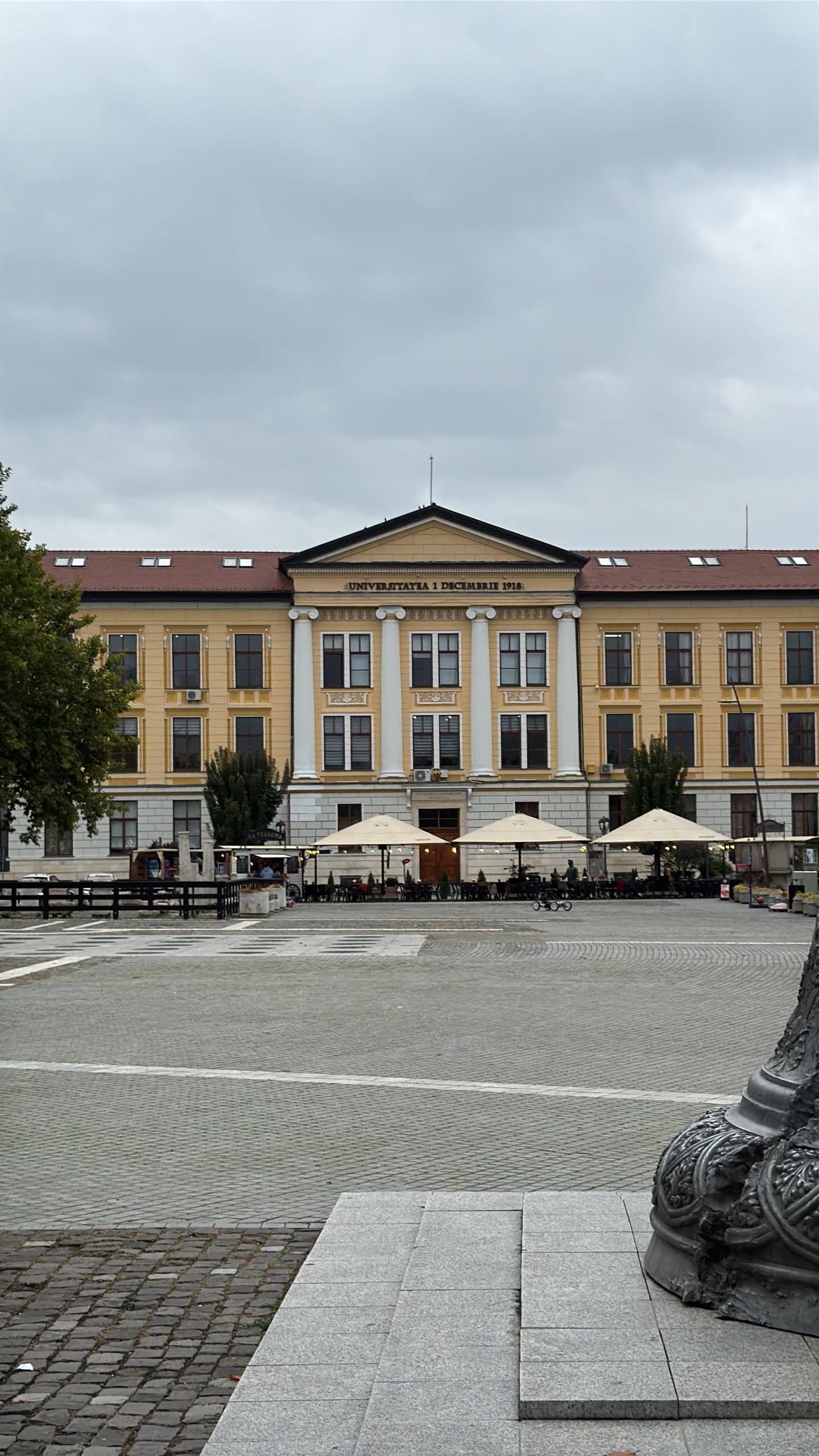
Daria Lavrenko, student of group 402-FF, 035 “Philology”: “This academic semester has become a special chapter in my life because, thanks to the Erasmus+ program, I discovered Romania. My studies are currently taking place at the “1 Decembrie 1918” University of Alba Iulia, located in the heart of Romania. In this city, the cosiness of the streets intertwines with the grandeur of history.
The first steps in the new environment were filled with warmth and support. The ESN team helped us not only to adapt quickly but also to feel the rhythm of this city. A tour of the historical centre was particularly etched in my memory: getting to know the architectural masterpieces and legends of Alba Iulia helped us feel like part of this amazing space from the very first days.
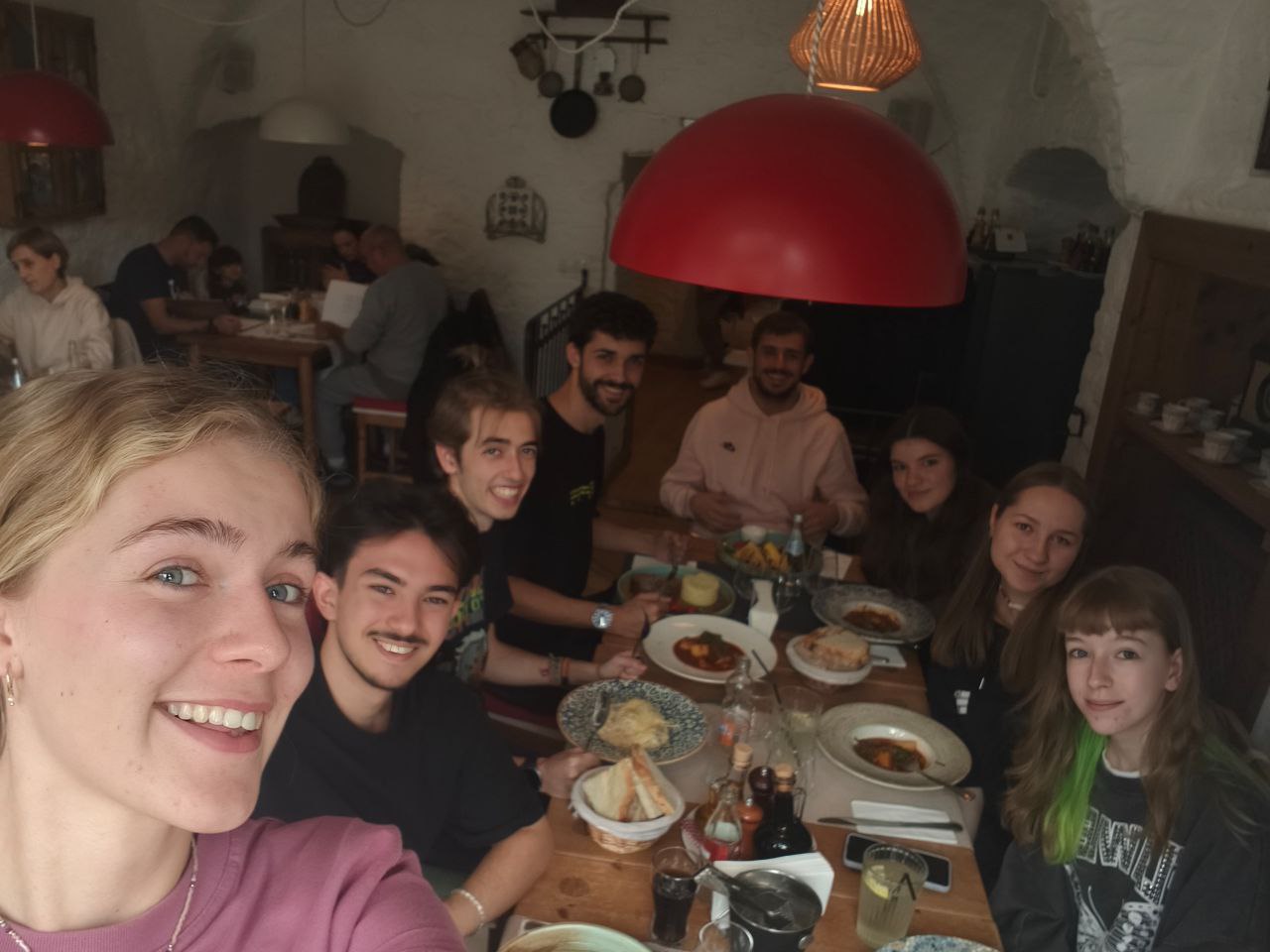
Our students’ leisure time turned into a real kaleidoscope of cultures. I had the honour of meeting incredible people from Egypt, France, Spain, Italy, Poland, Greece, and Turkey. Our evenings in the cosy study room of the dormitory, filled with board games and sincere conversations, became the best classroom for intercultural dialogue. For me, as a future philologist, it was extremely exciting to explore the linguistic features and mindset of representatives of different nations, finding commonalities and admiring differences.
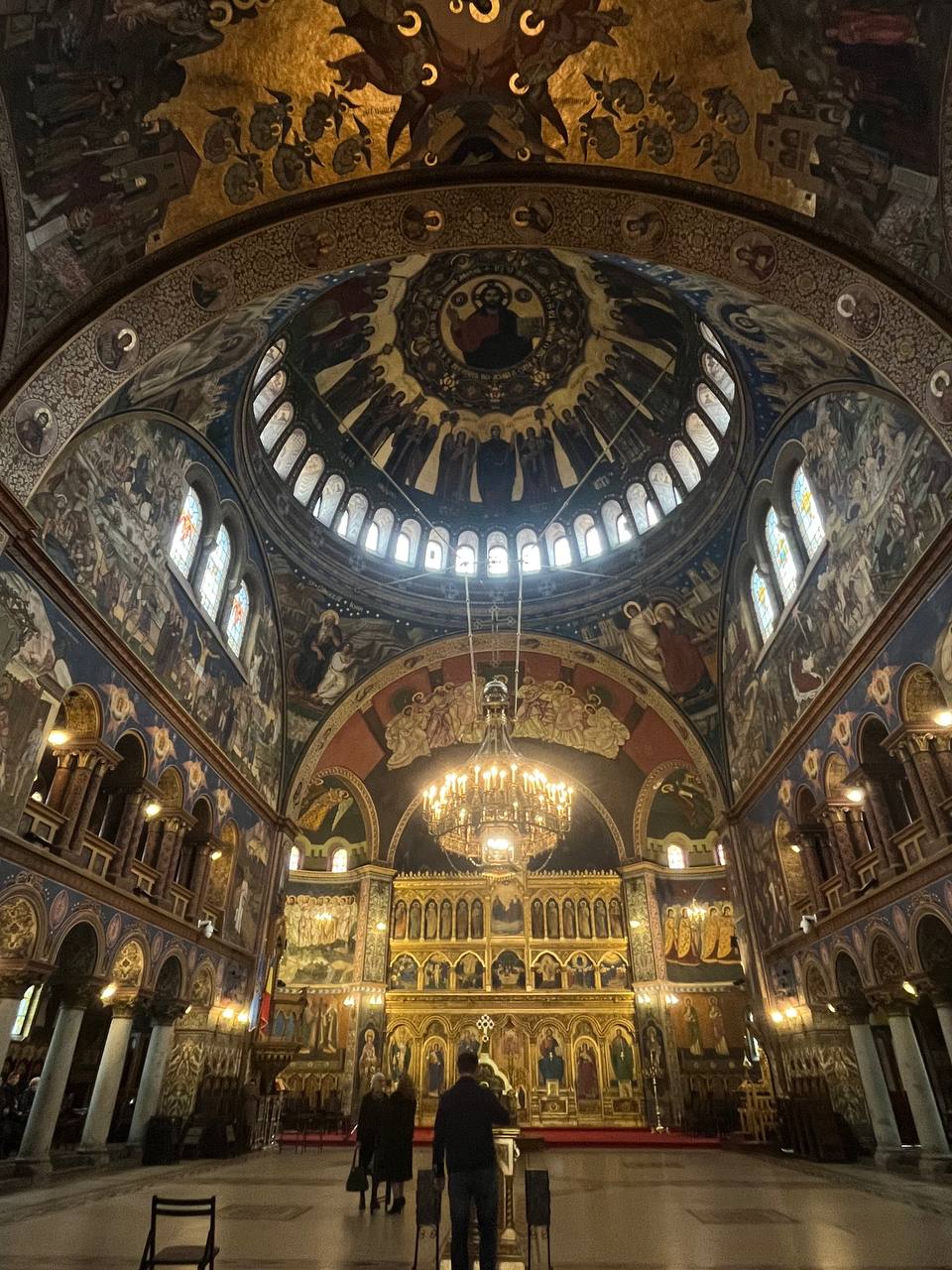
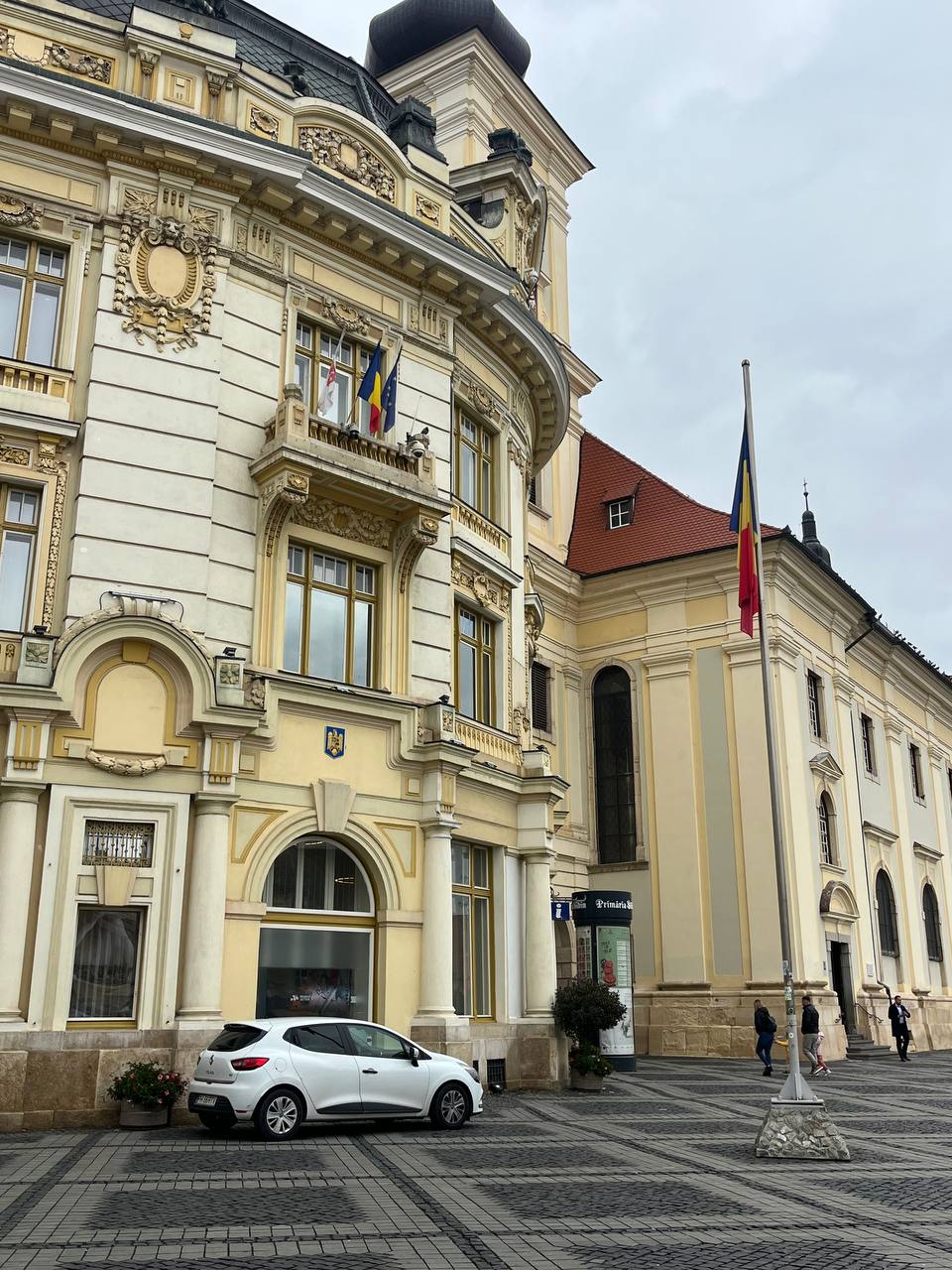
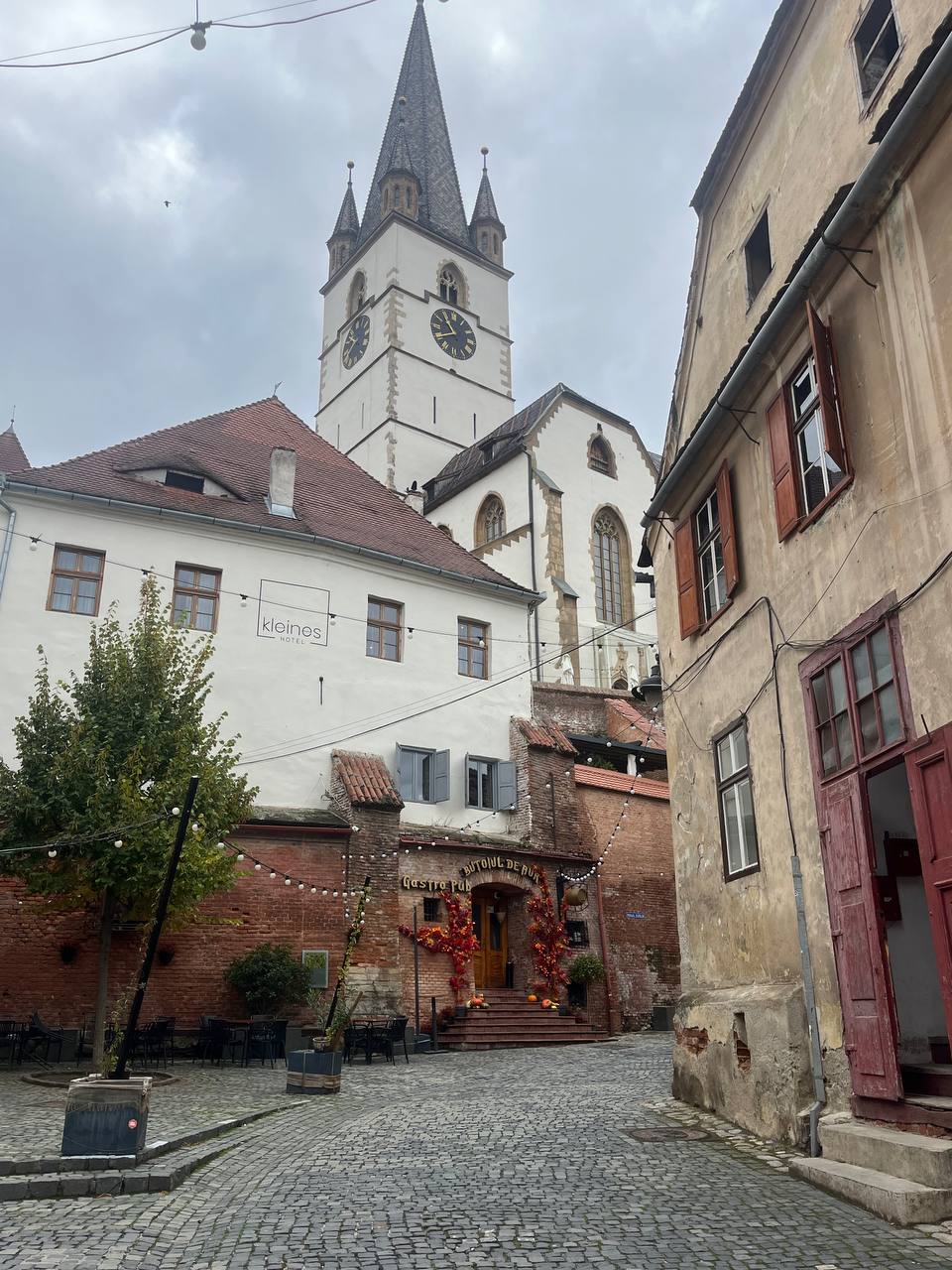
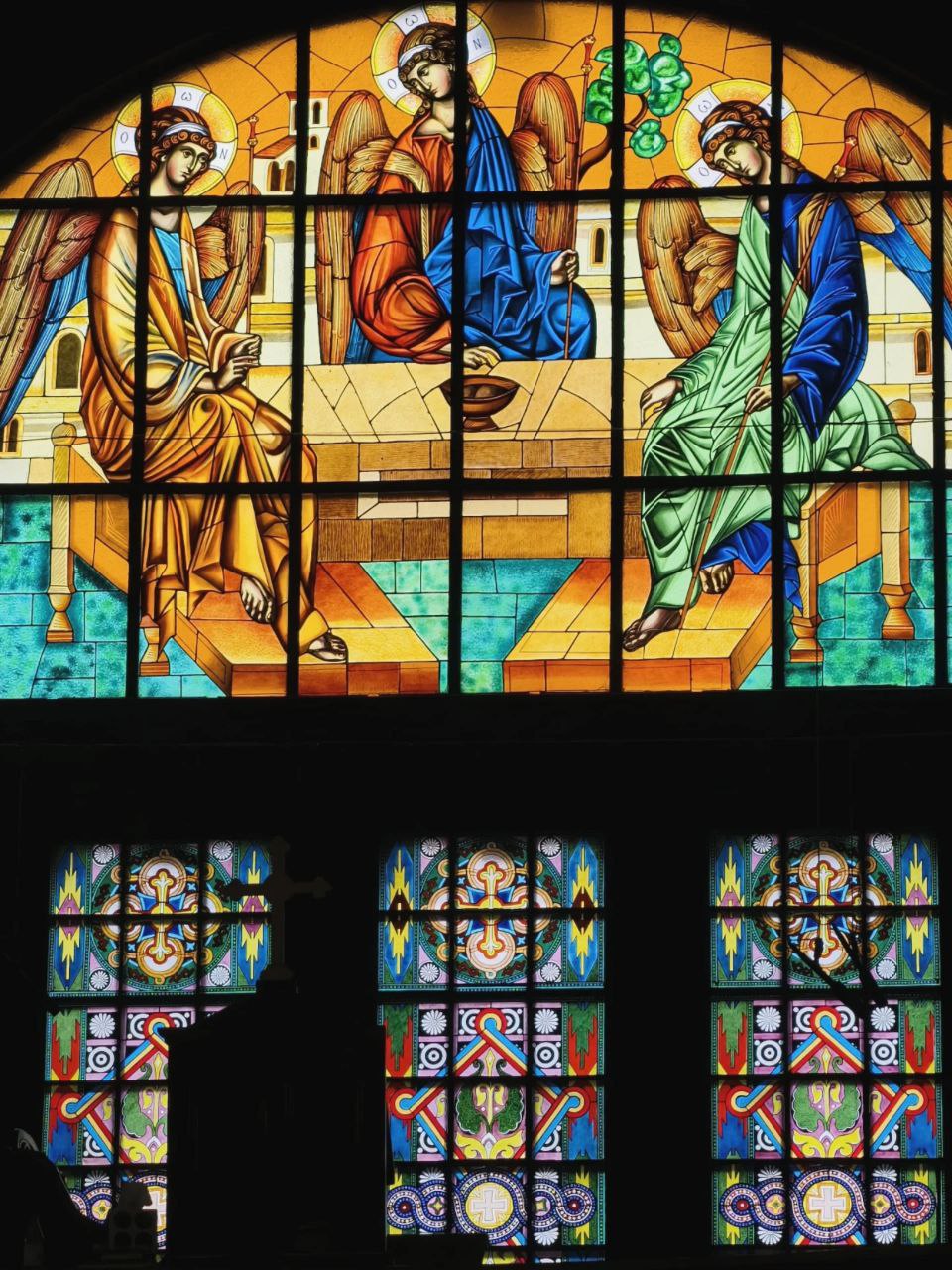
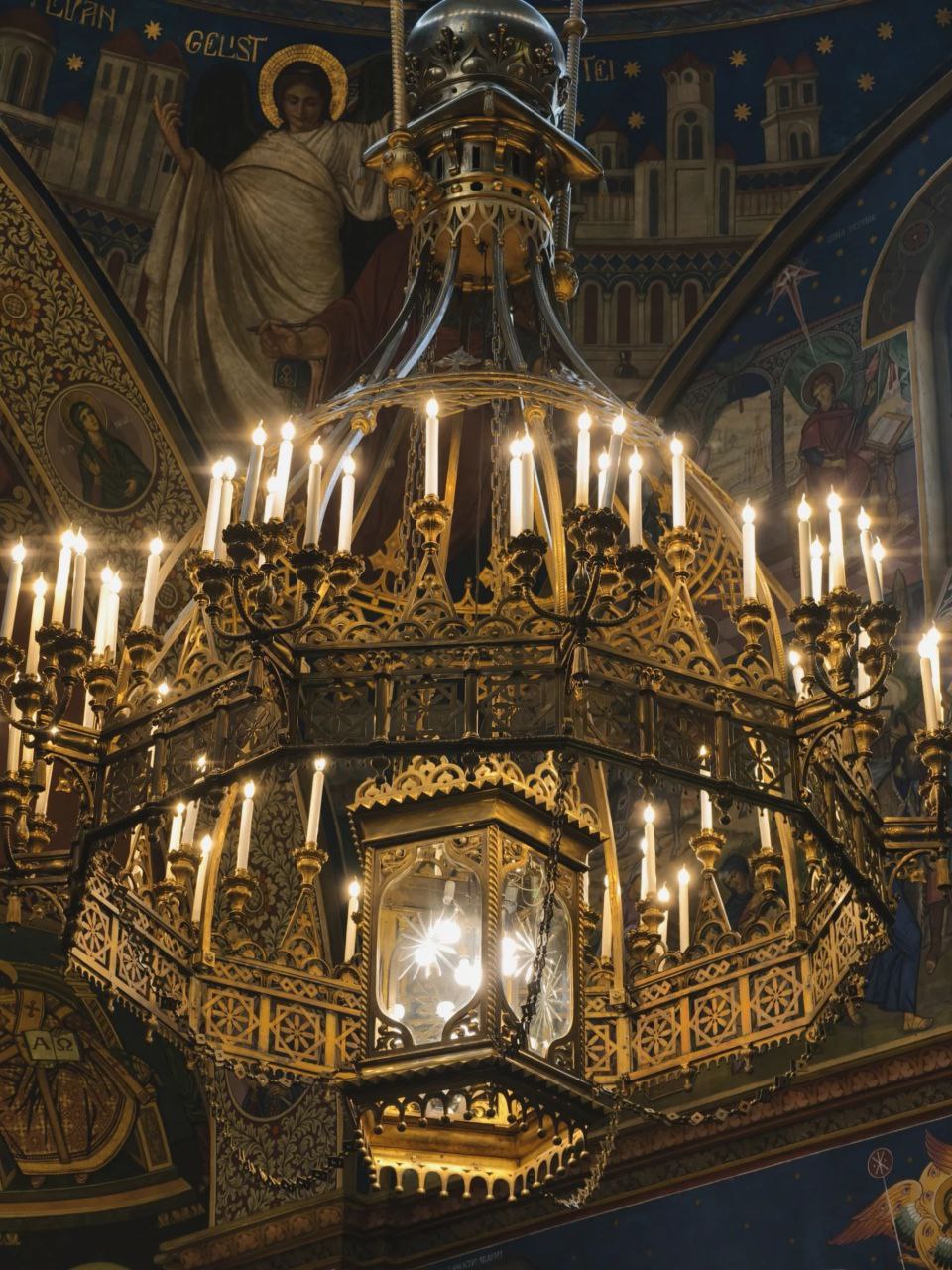
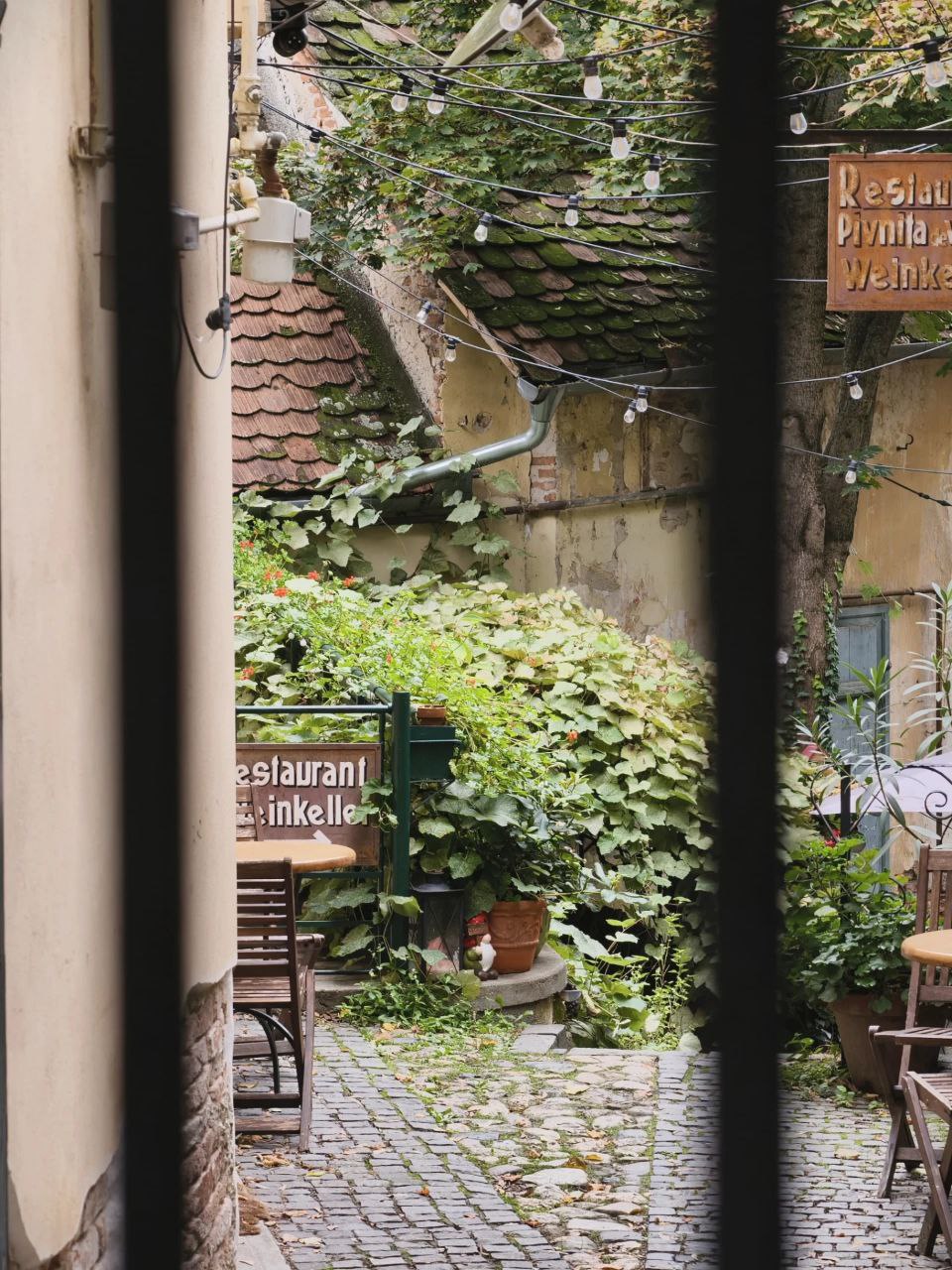
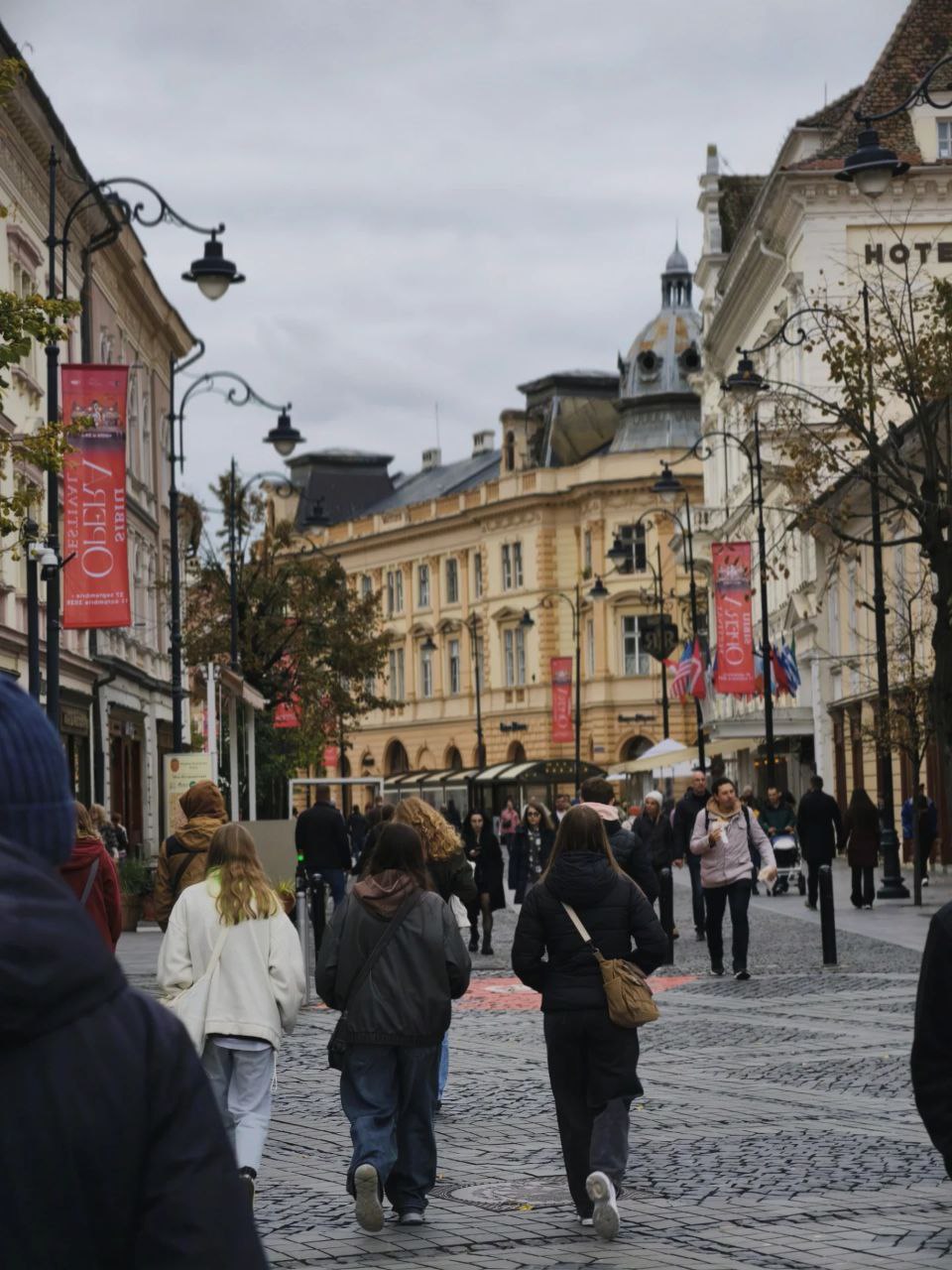
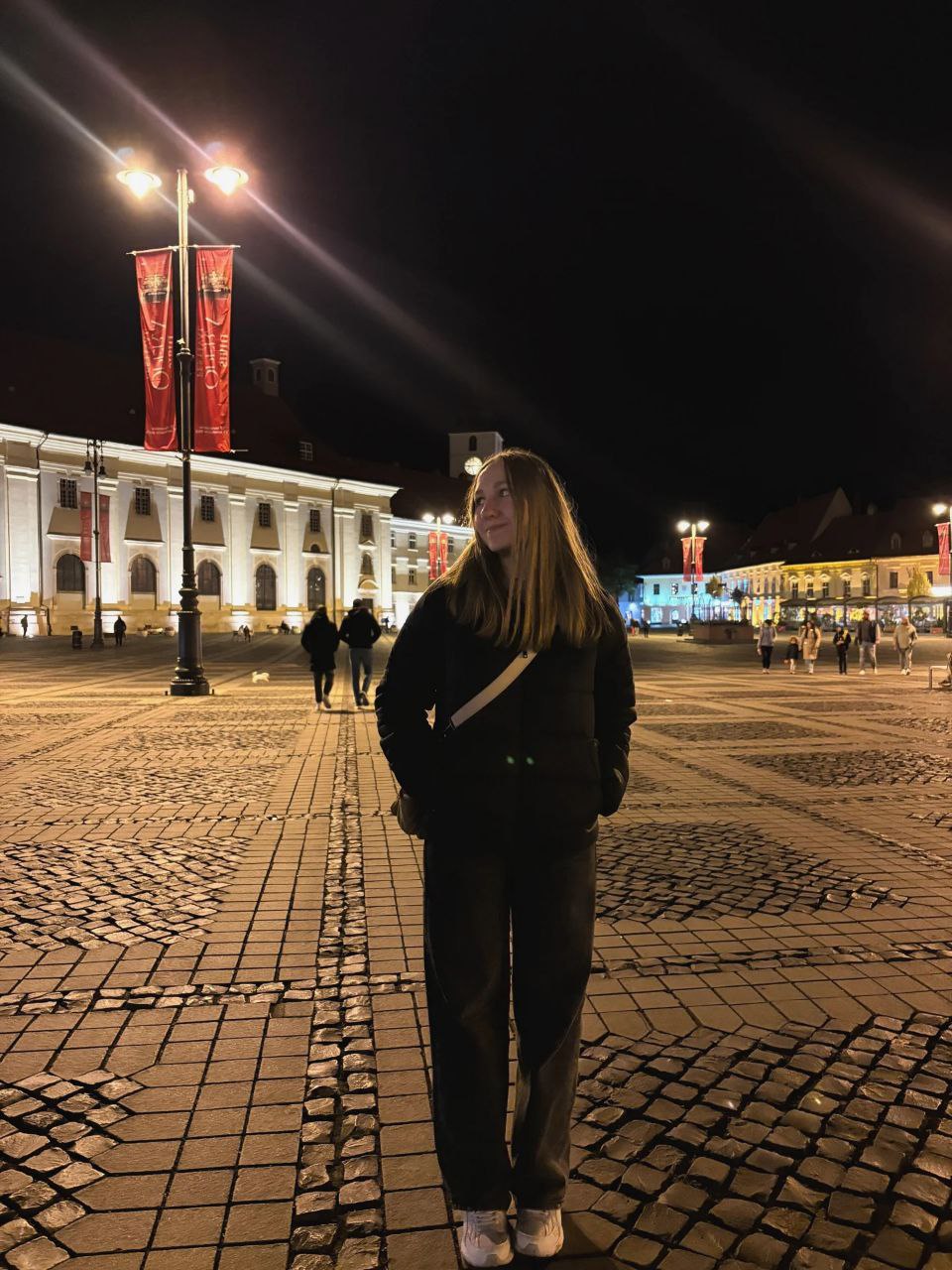
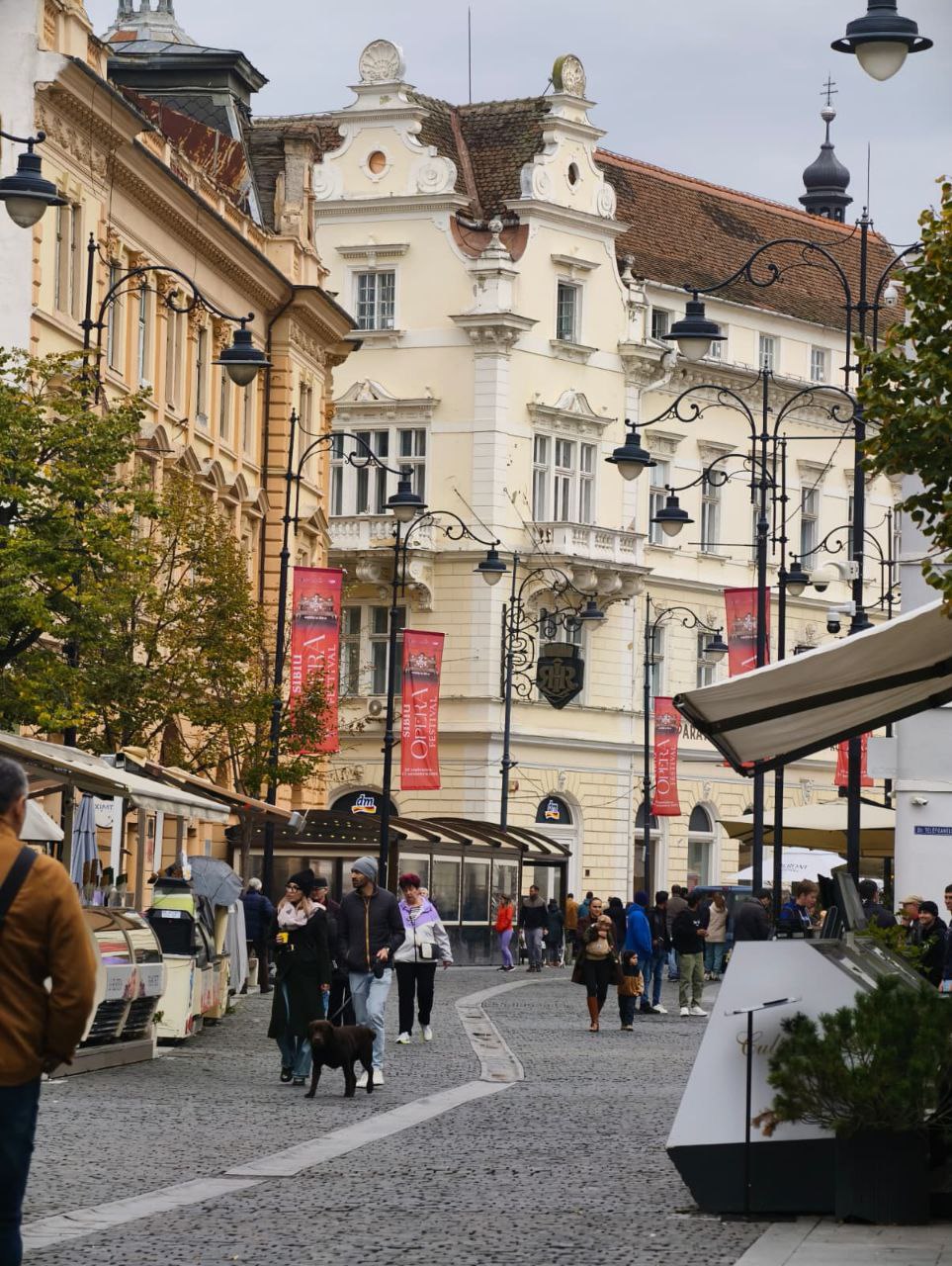
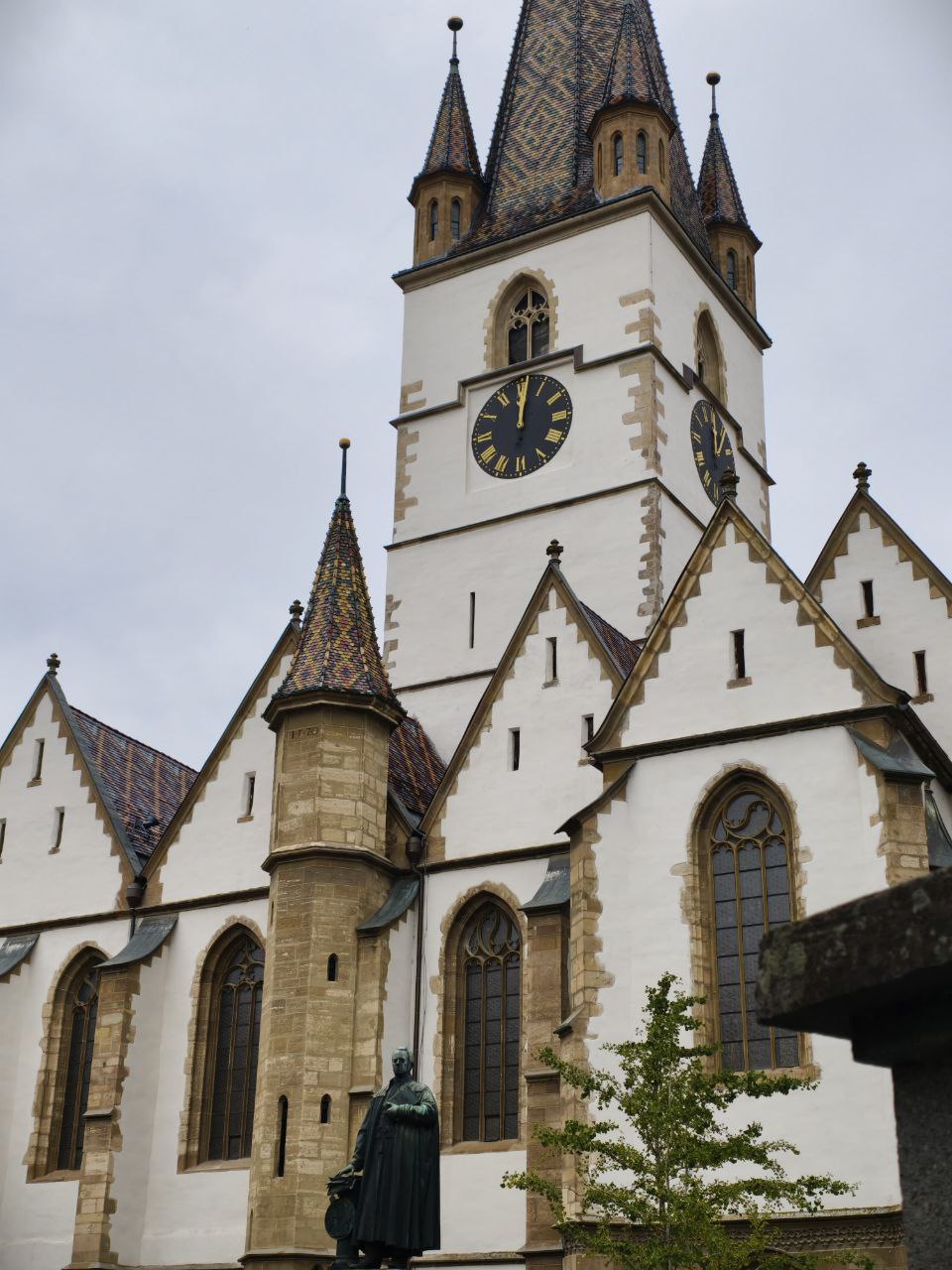
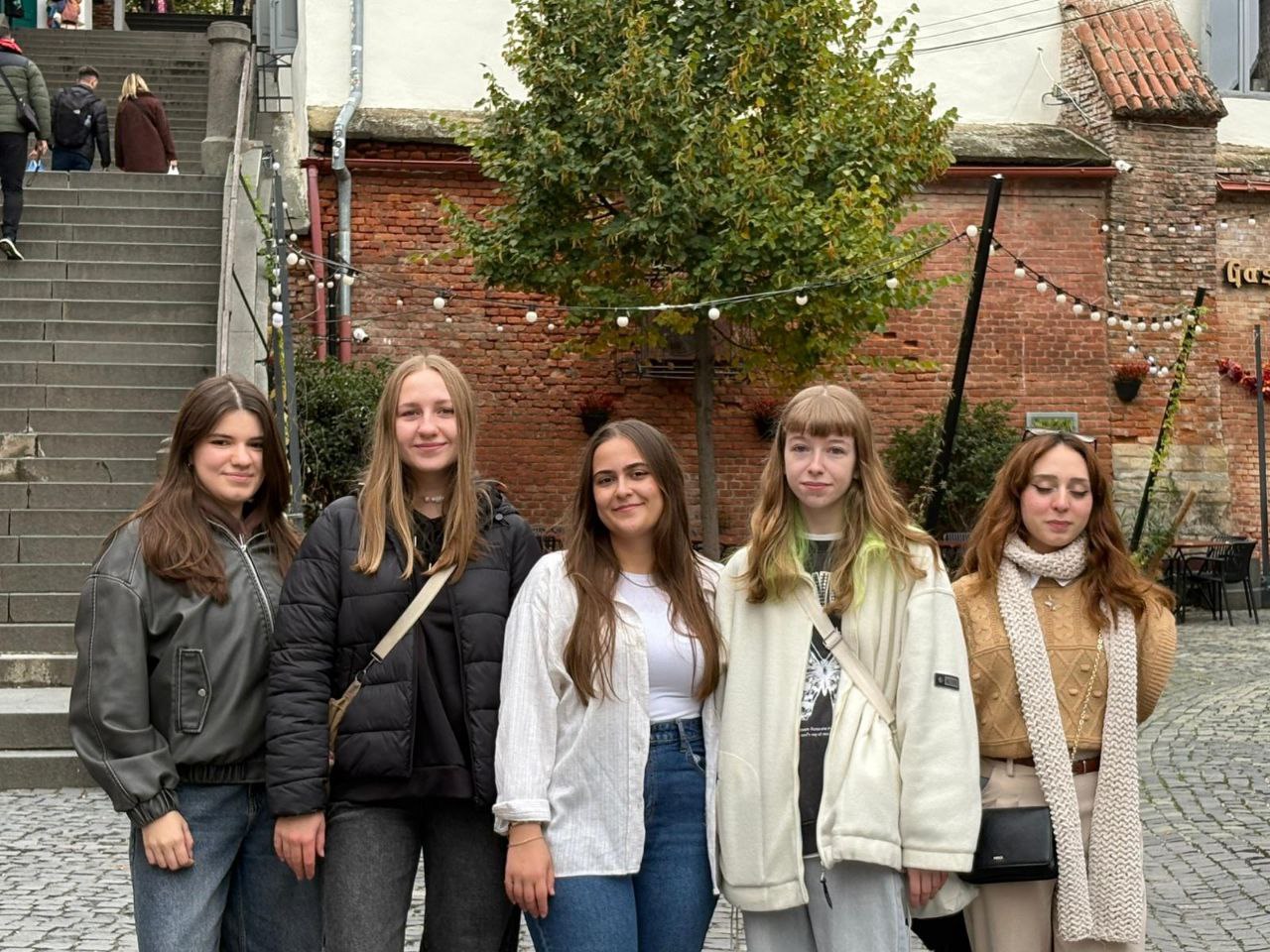
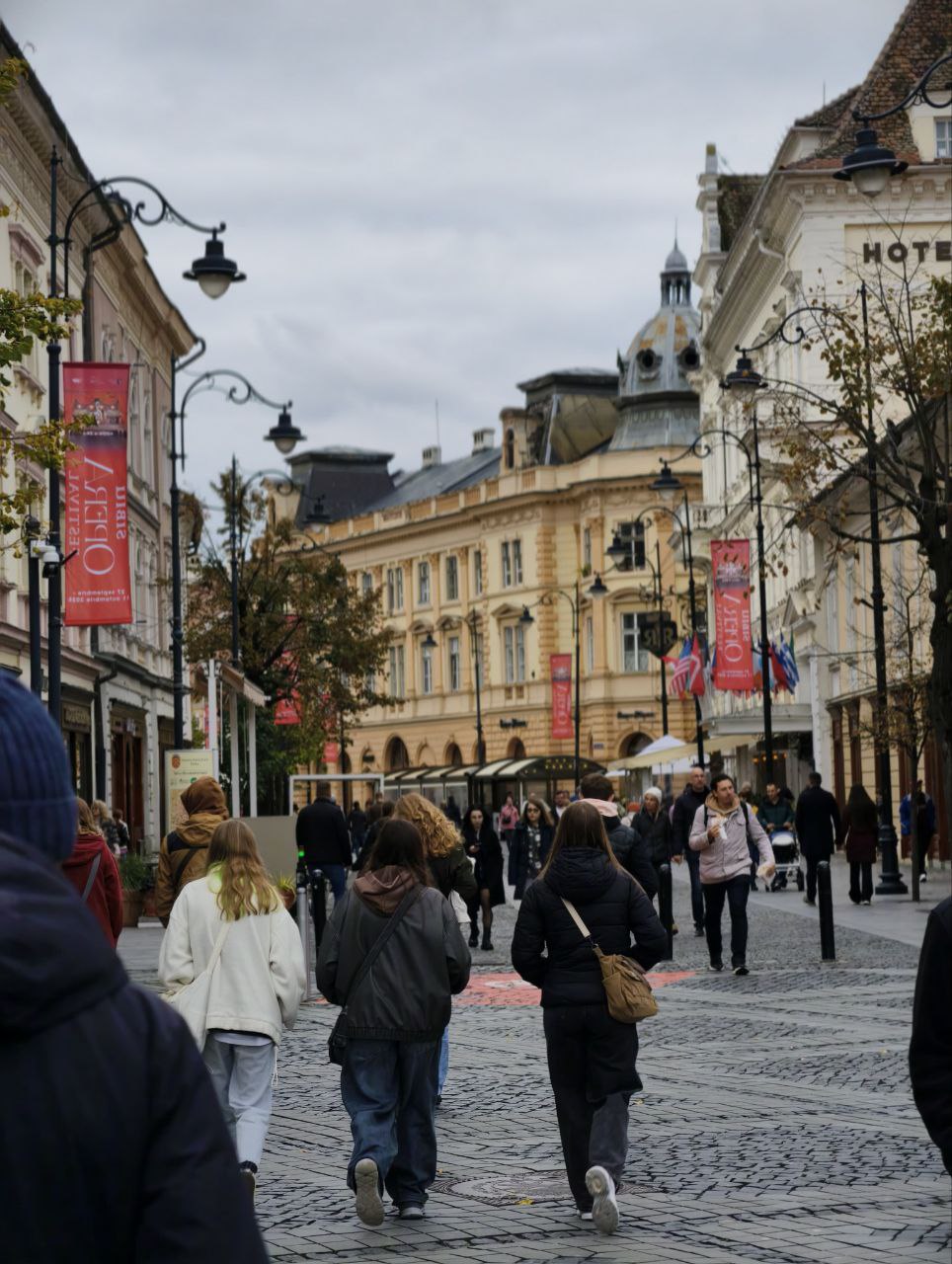
The culmination of our bonding was a joint trip to the mystical Sibiu, the famous “city with eyes”. There, we immersed ourselves in the atmosphere of ancient streets, enjoyed the flavours of traditional Romanian cuisine, and discovered the architectural secrets of a city that seems to be watching its guests.
Two weeks later, our main academic journey began. The curriculum was rigorous and covered key aspects of Philology: Contemporary English (Translation Theory and Practice), techniques of verbal and written communication, specialised terminology, and the study of the German language. A real challenge was the course “Initiation into Consecutive and Simultaneous Interpretation”. I admit that at first, I had doubts about the effectiveness of studying translation in a foreign-language environment. Still, the high professionalism of the Romanian teachers opened an entirely different perspective for us. We immersed ourselves in practice in an atypical way for us: from mastering translation shorthand for oral interpretation to the nuances of comic book localisation – an experience that was a true revelation for me.
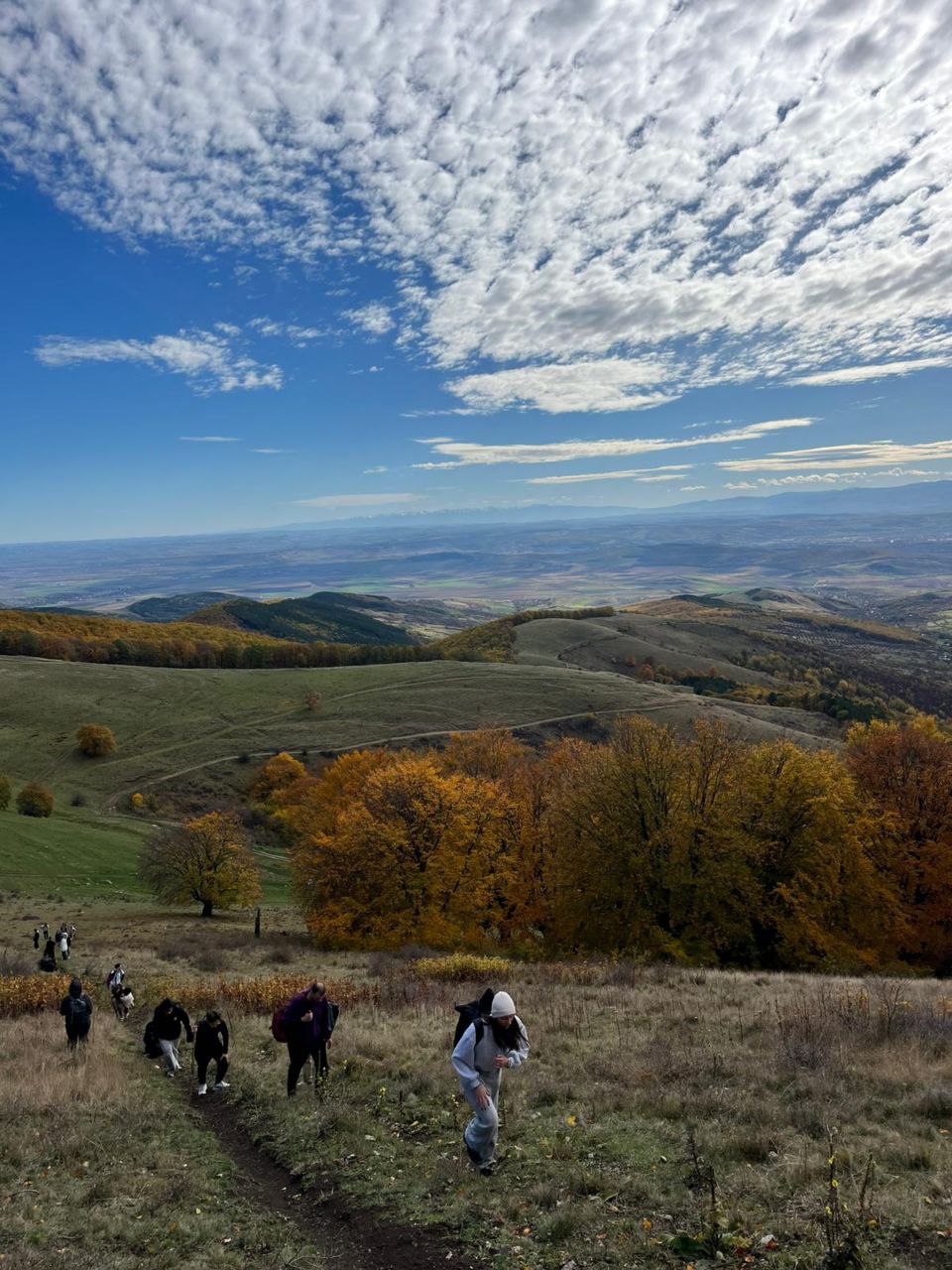
The ESN became an integral part of my international experience. In addition to getting to know the city, our program was filled with activities: from mountain hikes and atmospheric themed parties to an exquisite gastronomic banquet where everyone could present their country’s traditional cuisine.
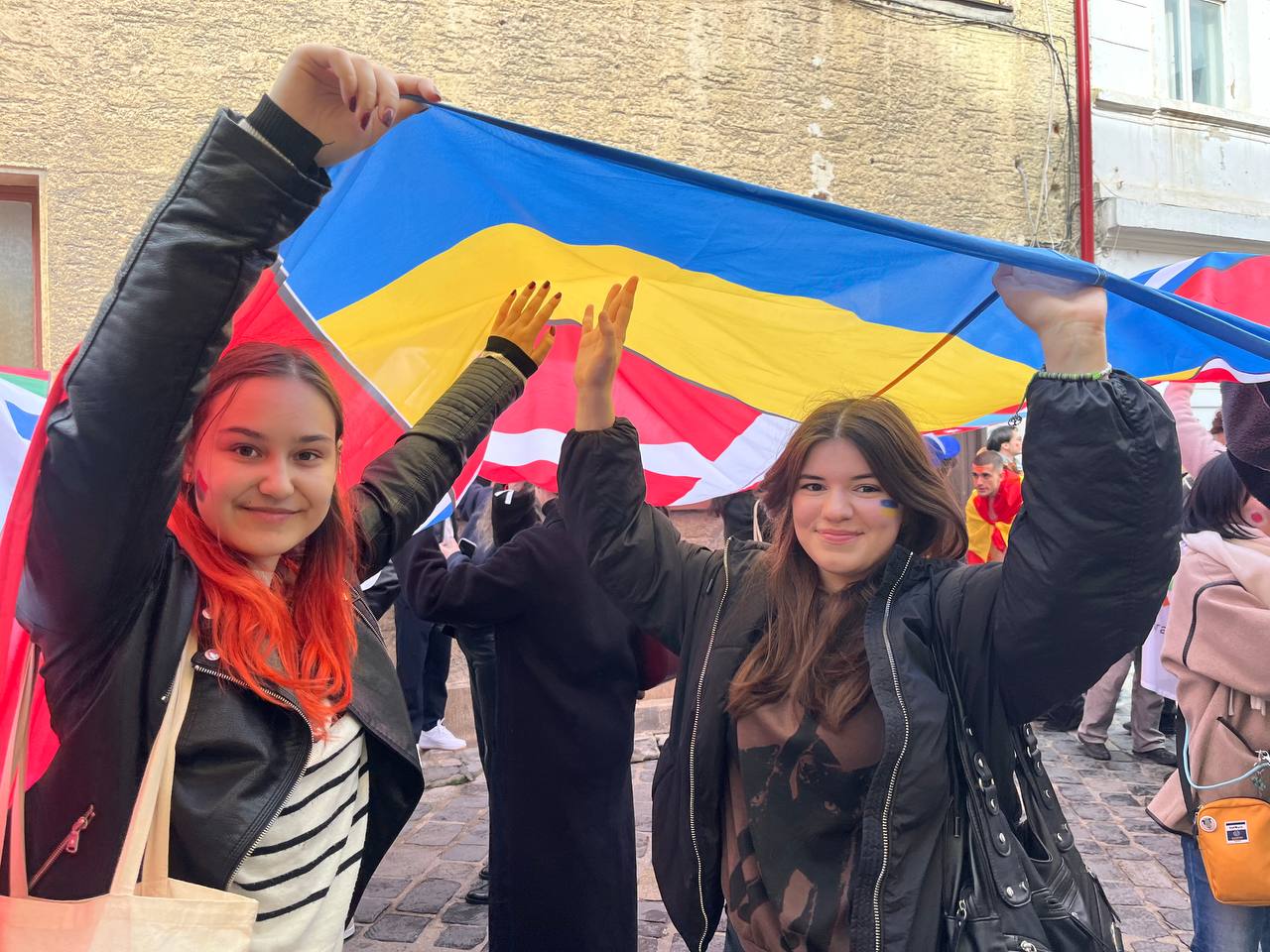
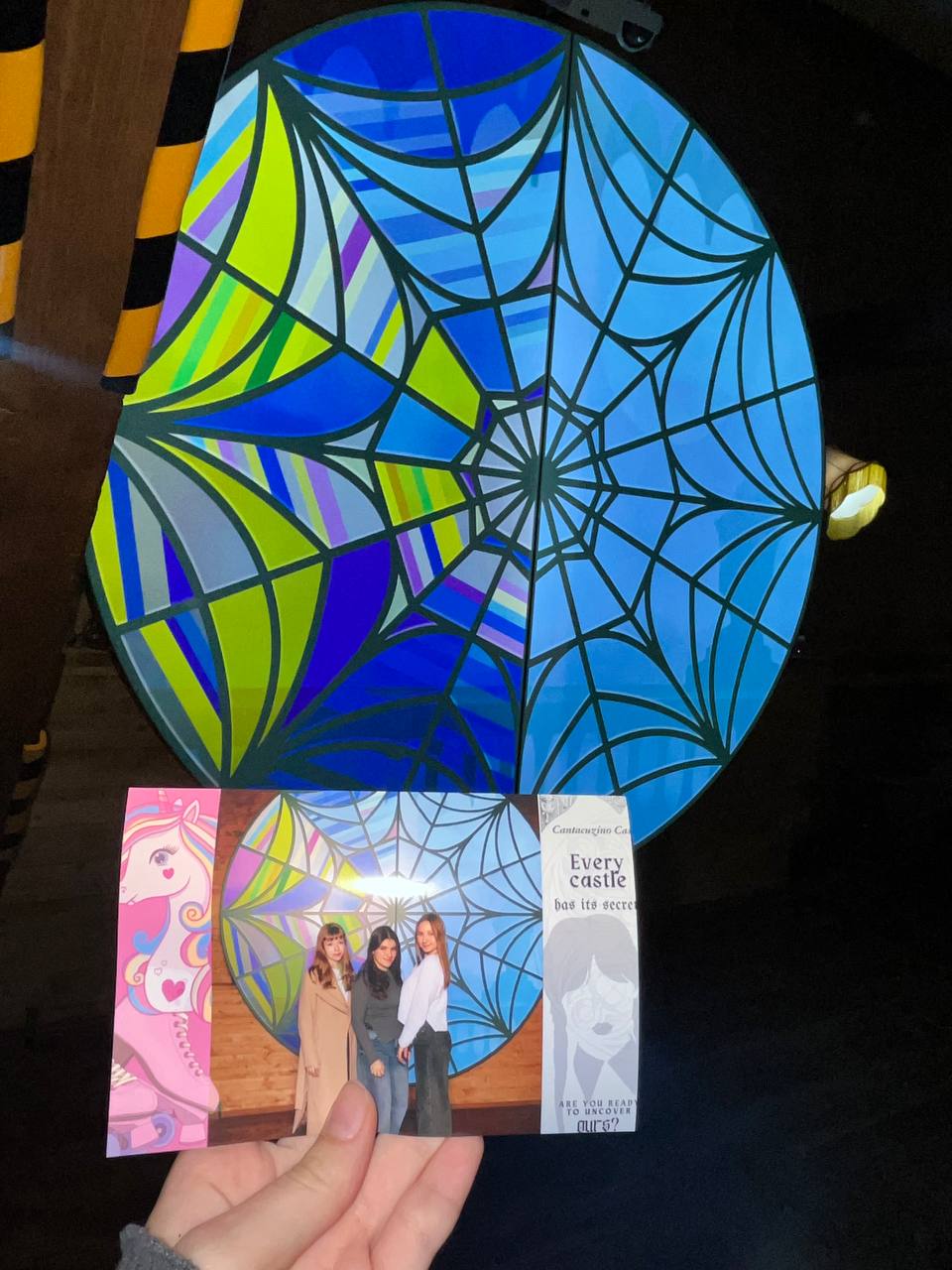
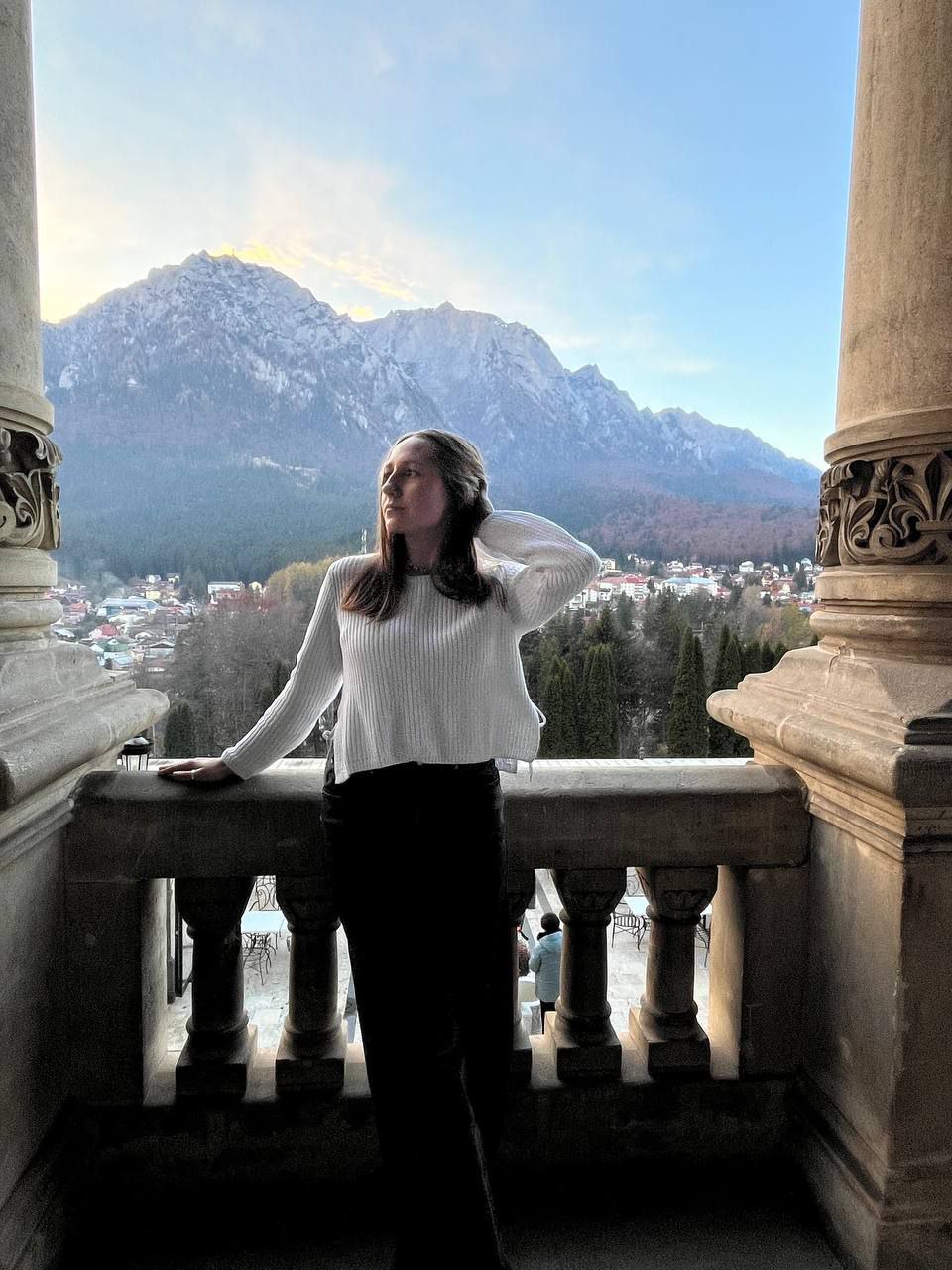
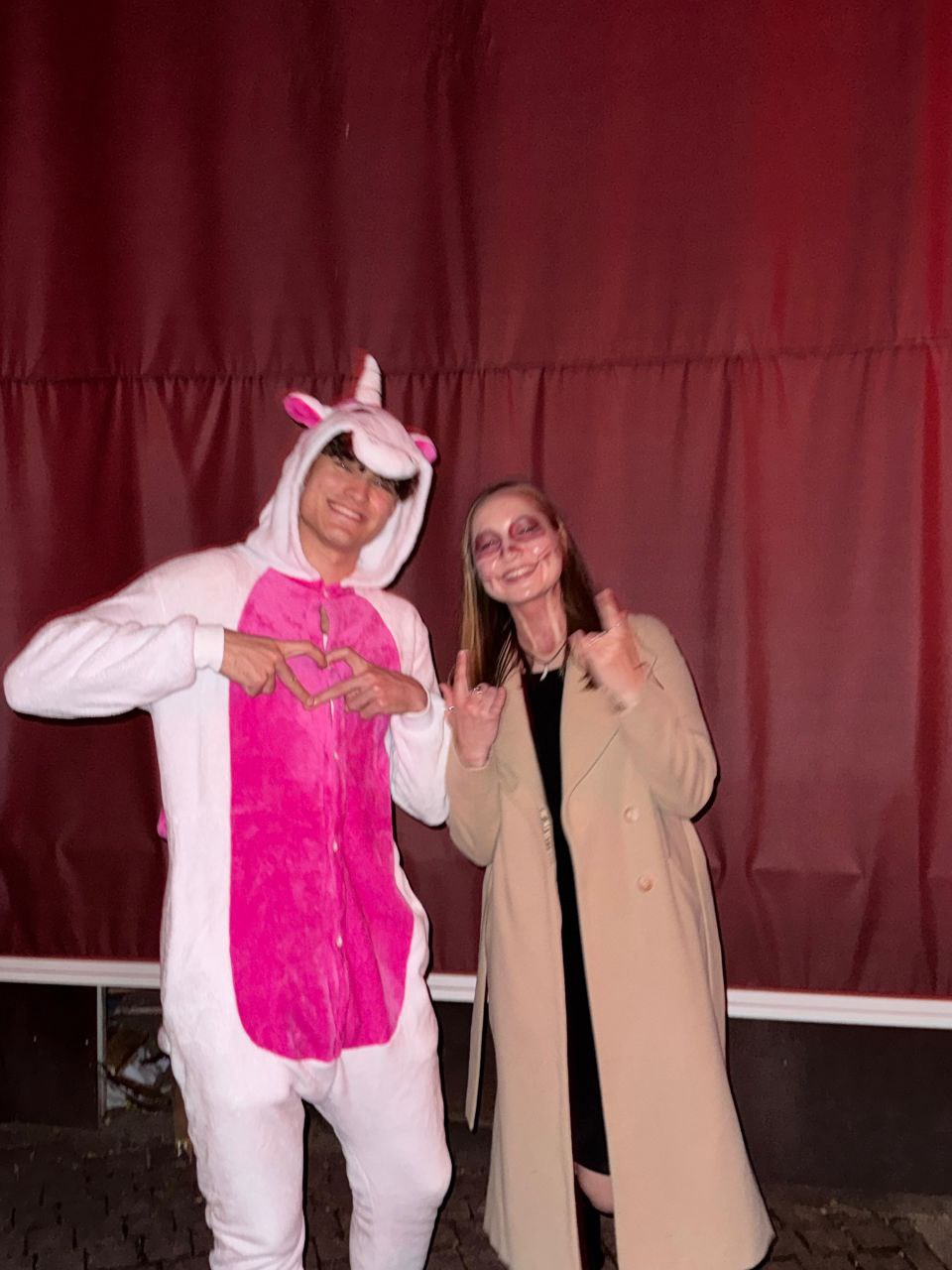
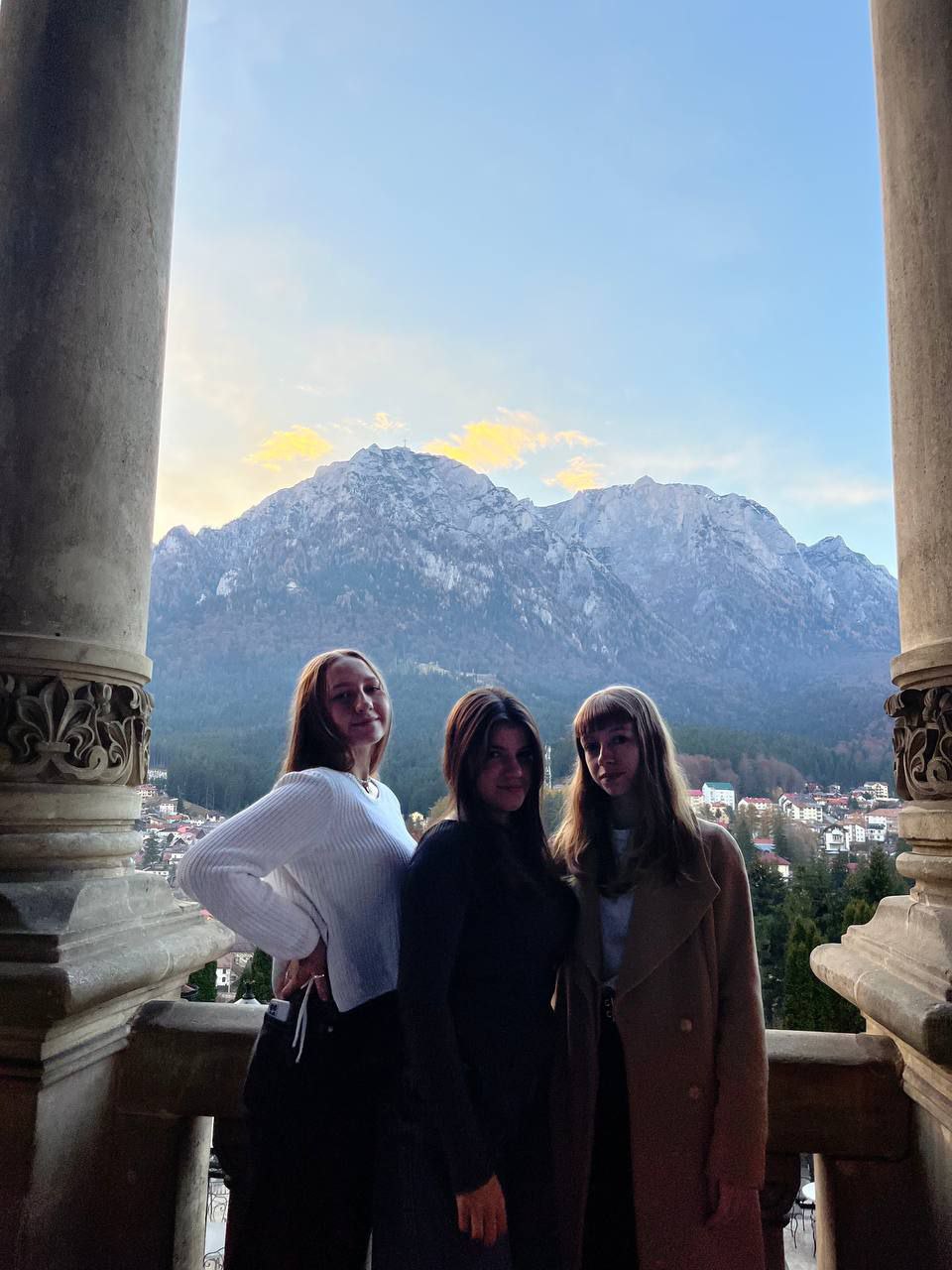
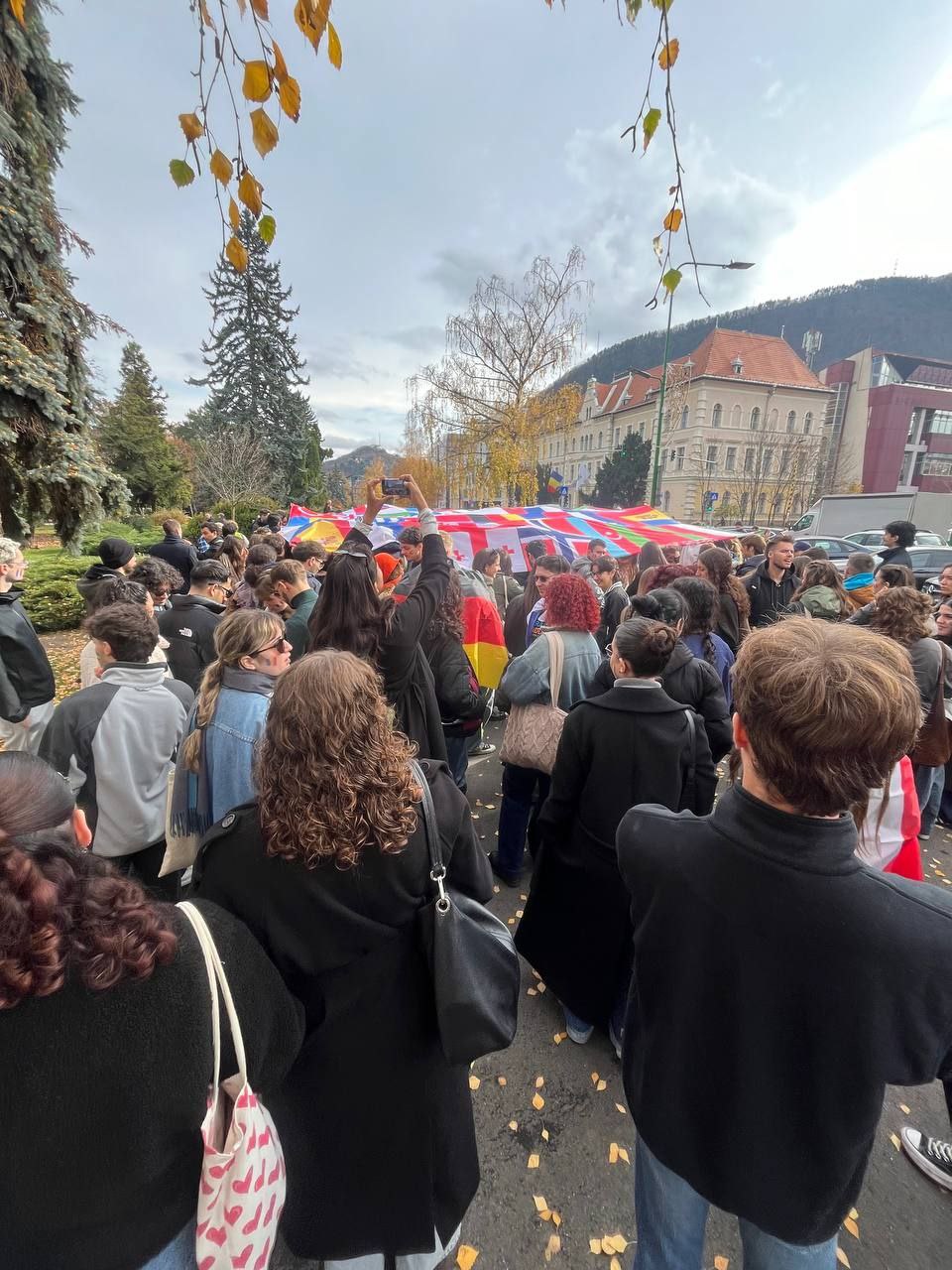
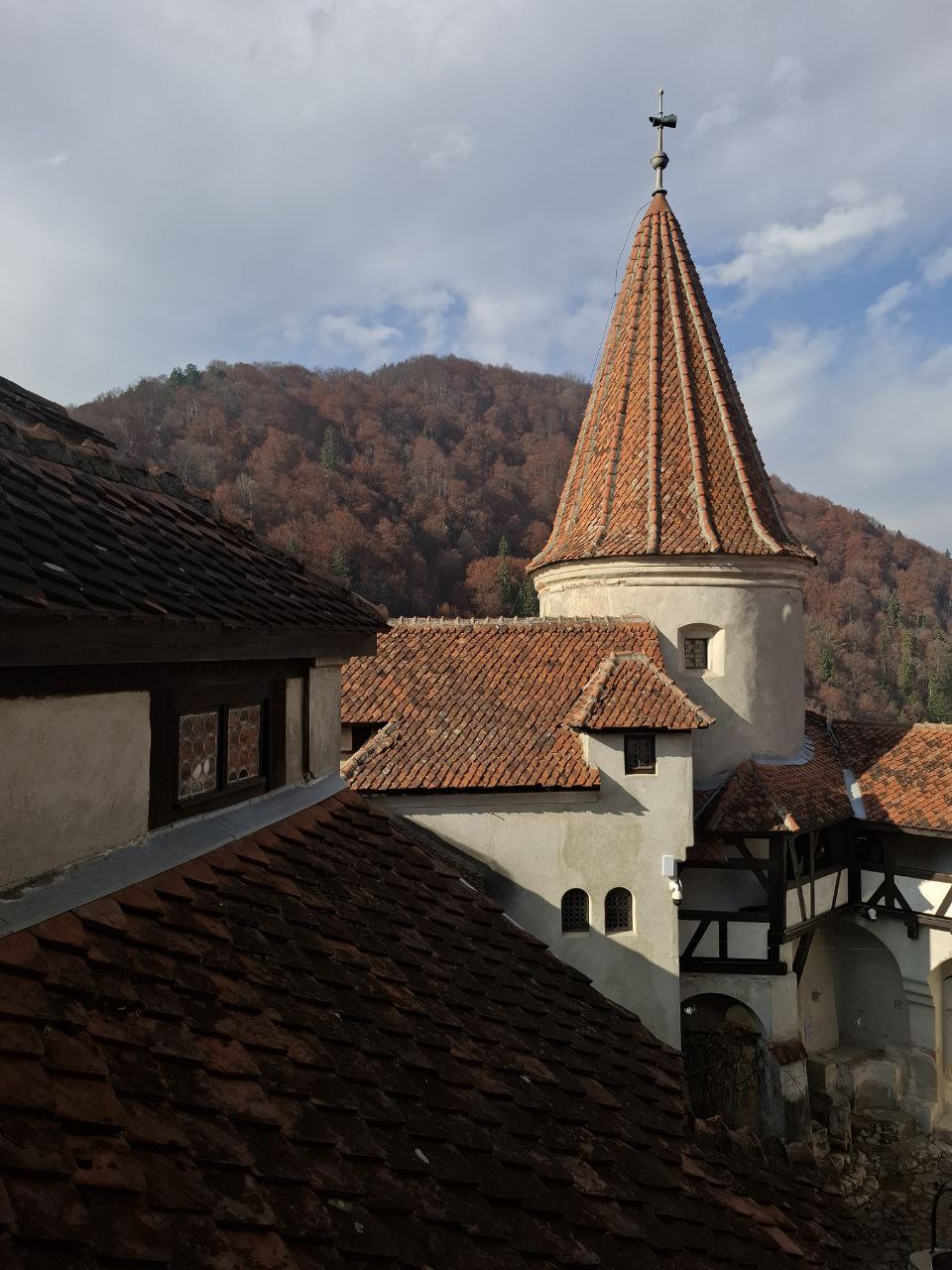
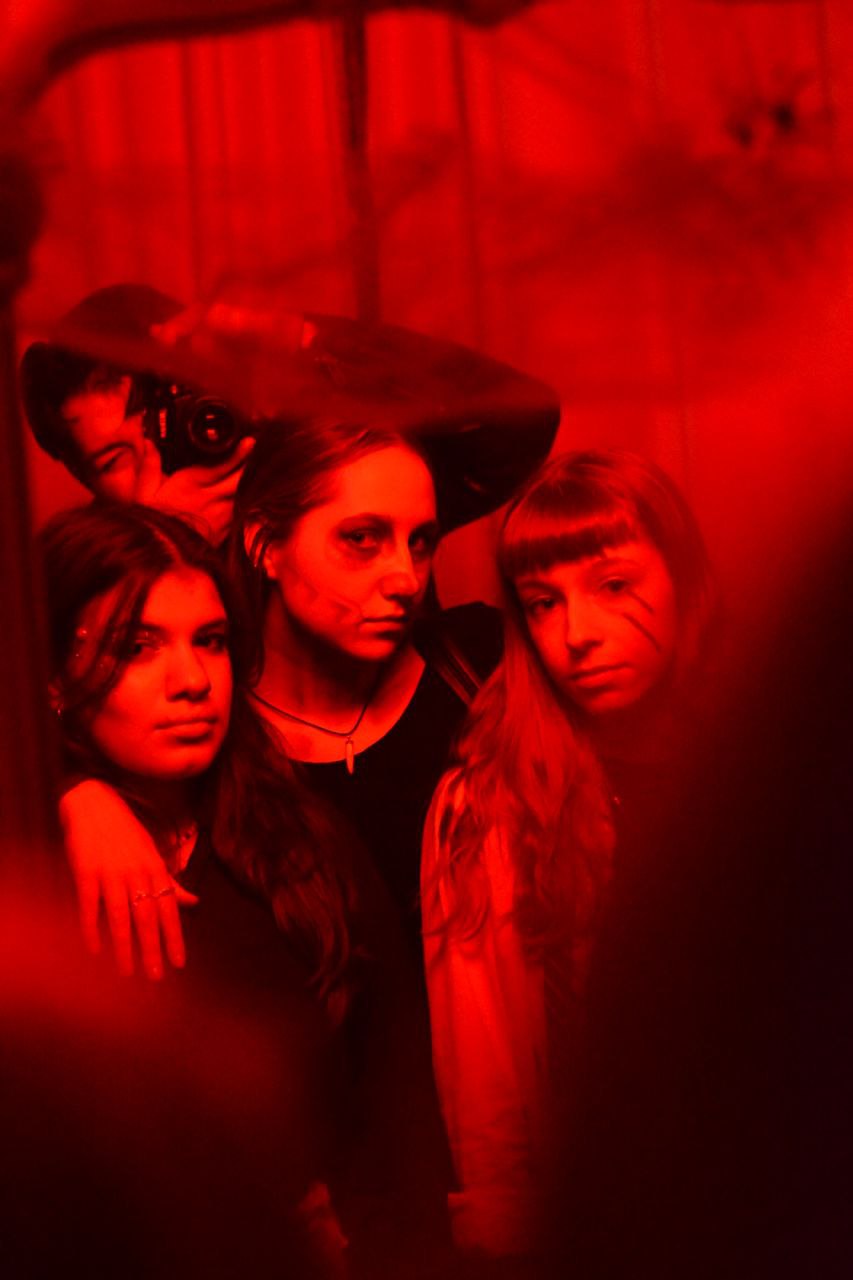
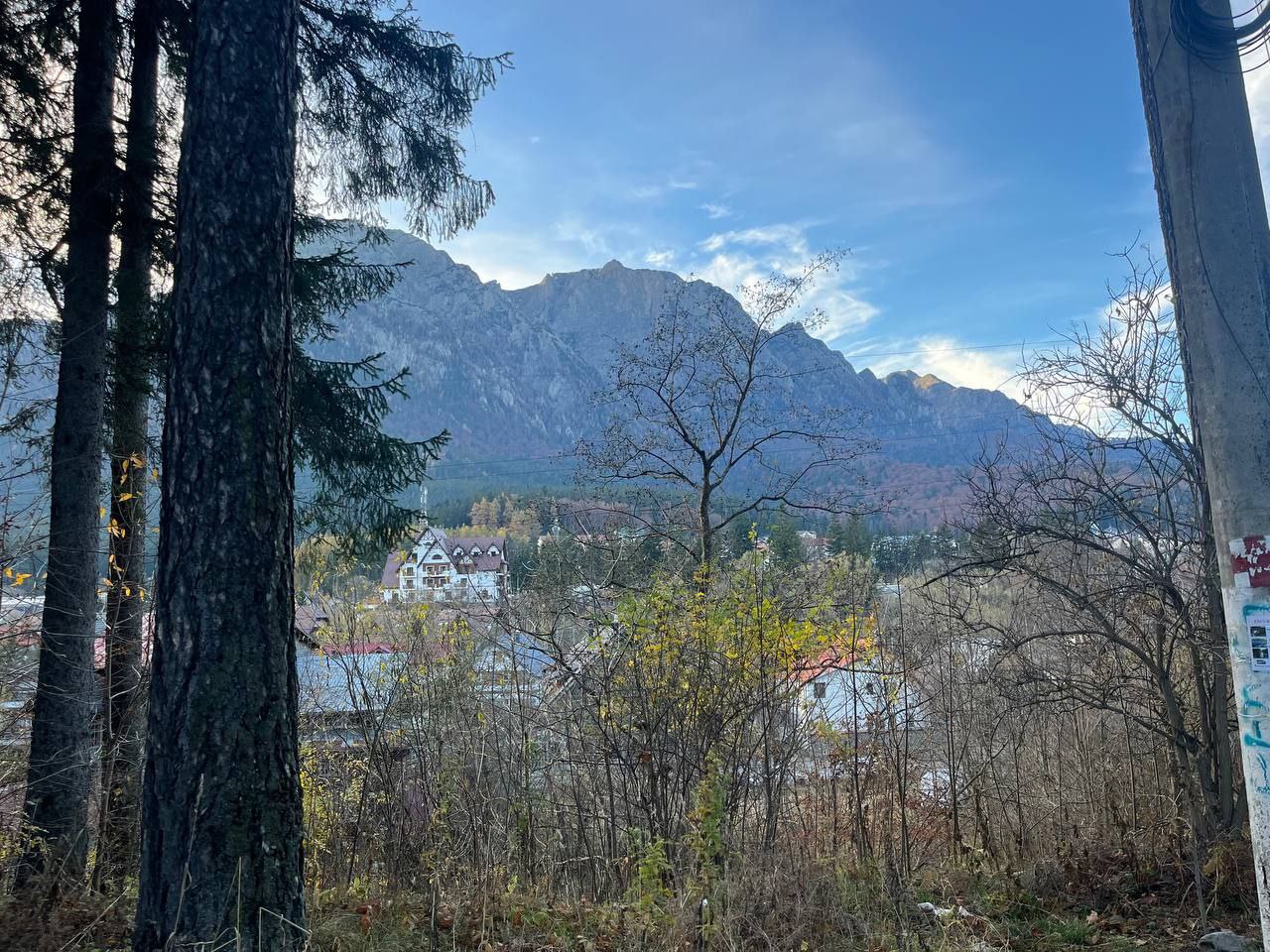
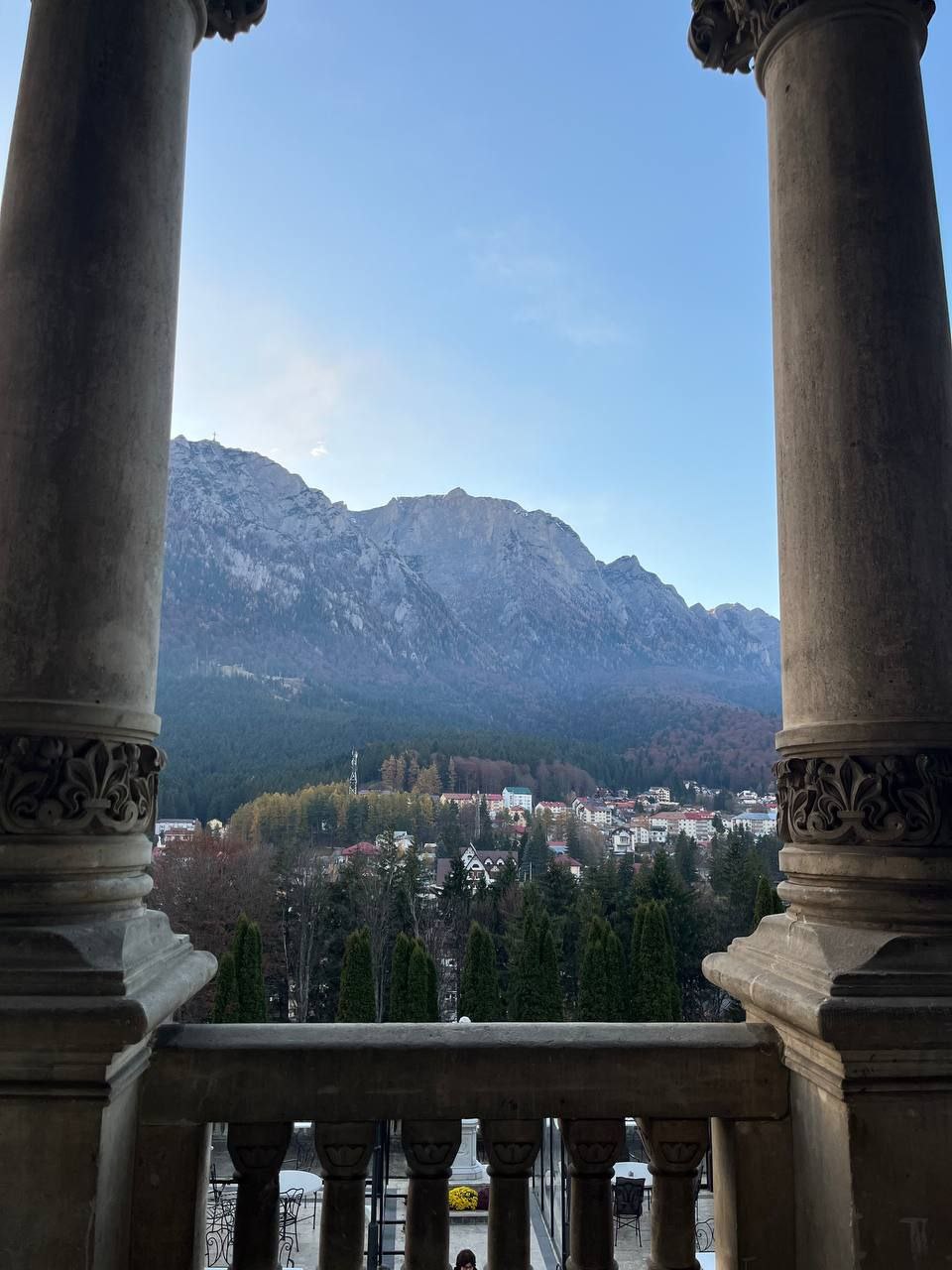
However, the actual apex of our adventure was a three-day trip to Brașov titled “Halloween in Transylvania”. We examined the mysticism of Bran Castle, known worldwide as Dracula’s Castle. We also visited the majestic Cantacuzino Castle – the very location where scenes for the “Wednesday” were shot. In addition to exciting excursions, we participated in engaging workshops and a large-scale Flag Parade. Seeing over 600 students from different parts of the world, united by one idea, is a remarkable experience! A pleasant surprise in this sea of people was an unexpected meeting with a student of Poltava Polytechnic, Iryna Pastushenko, who is also studying under the Erasmus+ program in the city of Sibiu. This proves once again: the Erasmus+ world is small and full of extraordinary meetings!
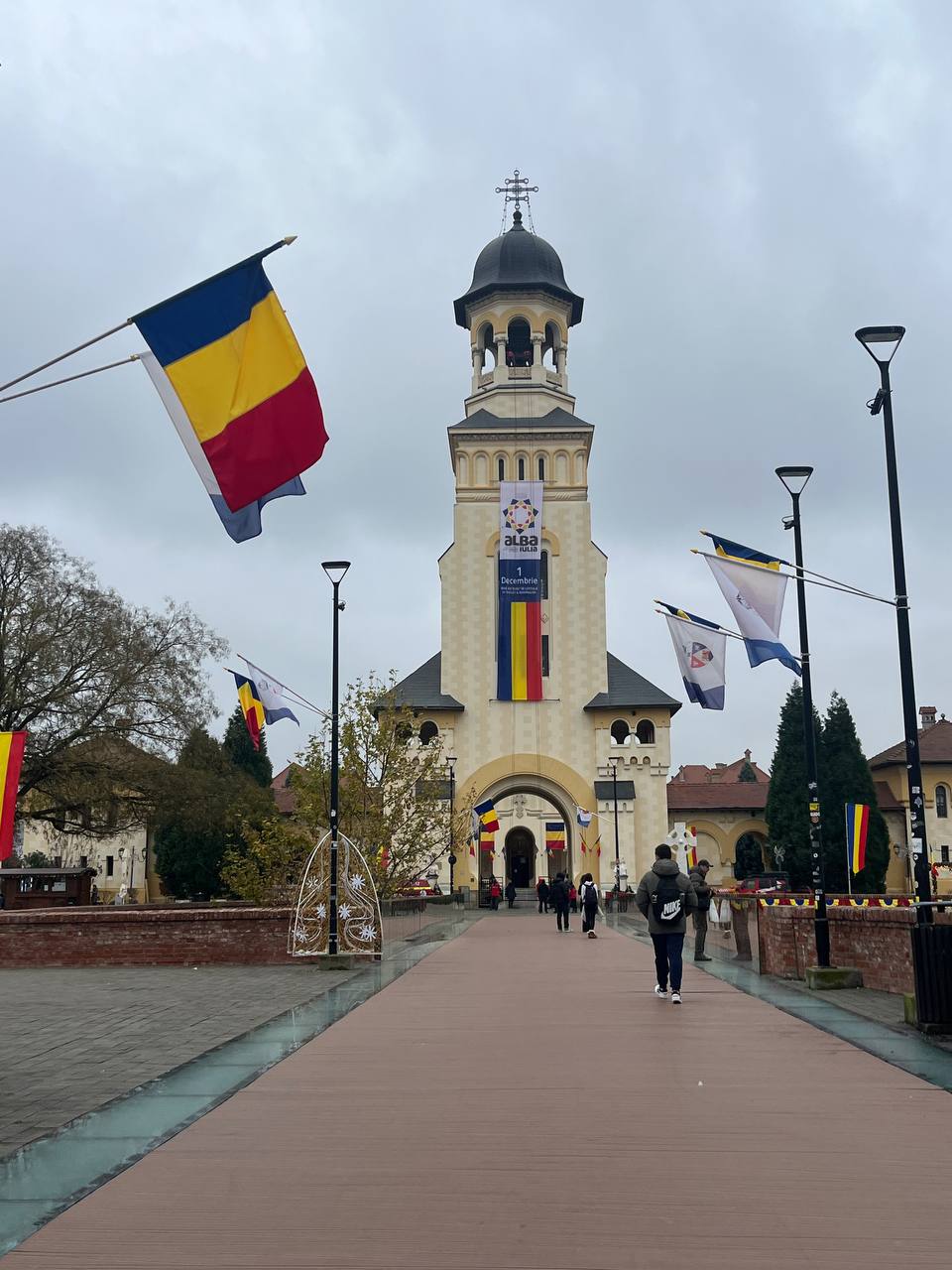
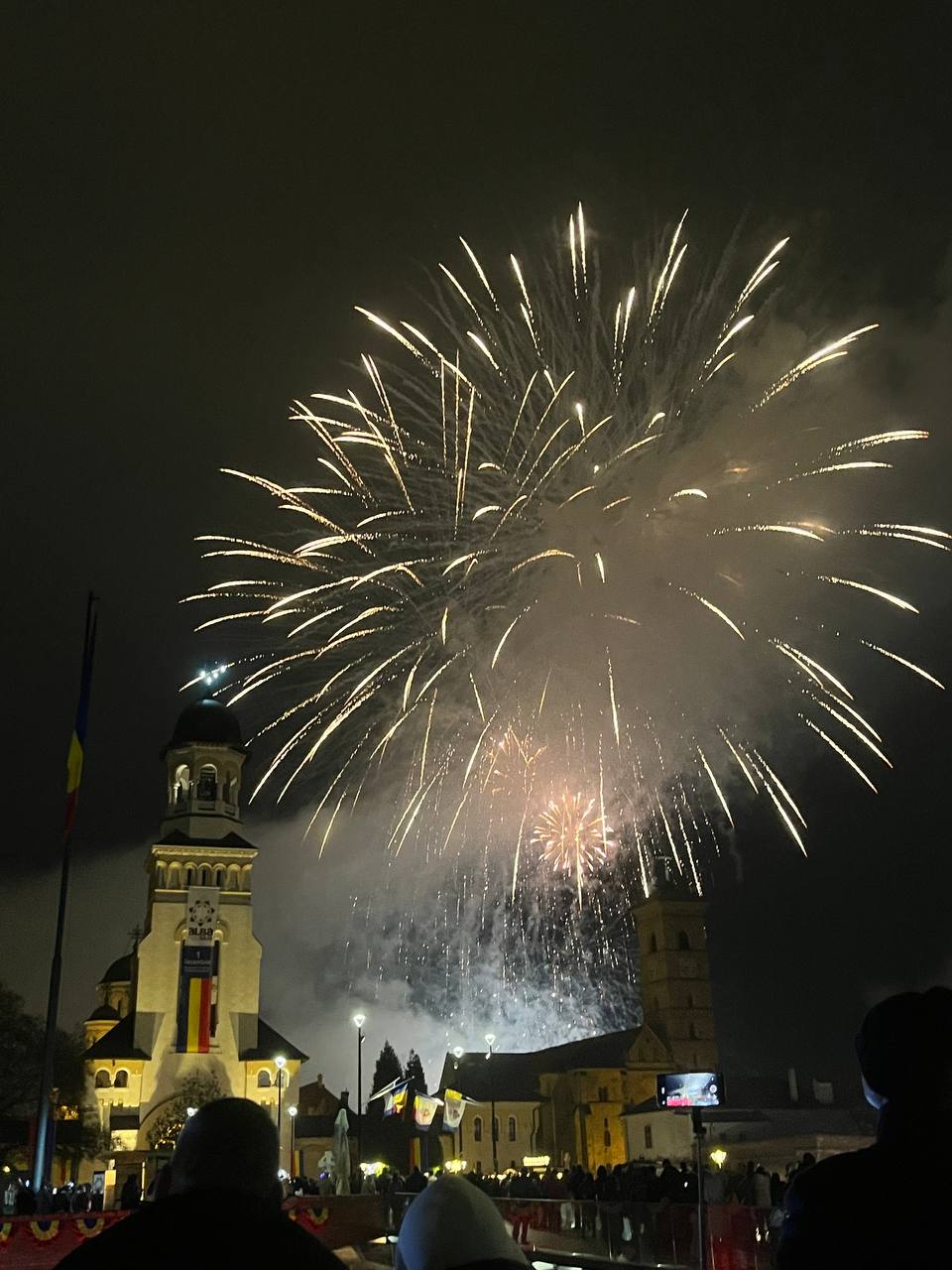
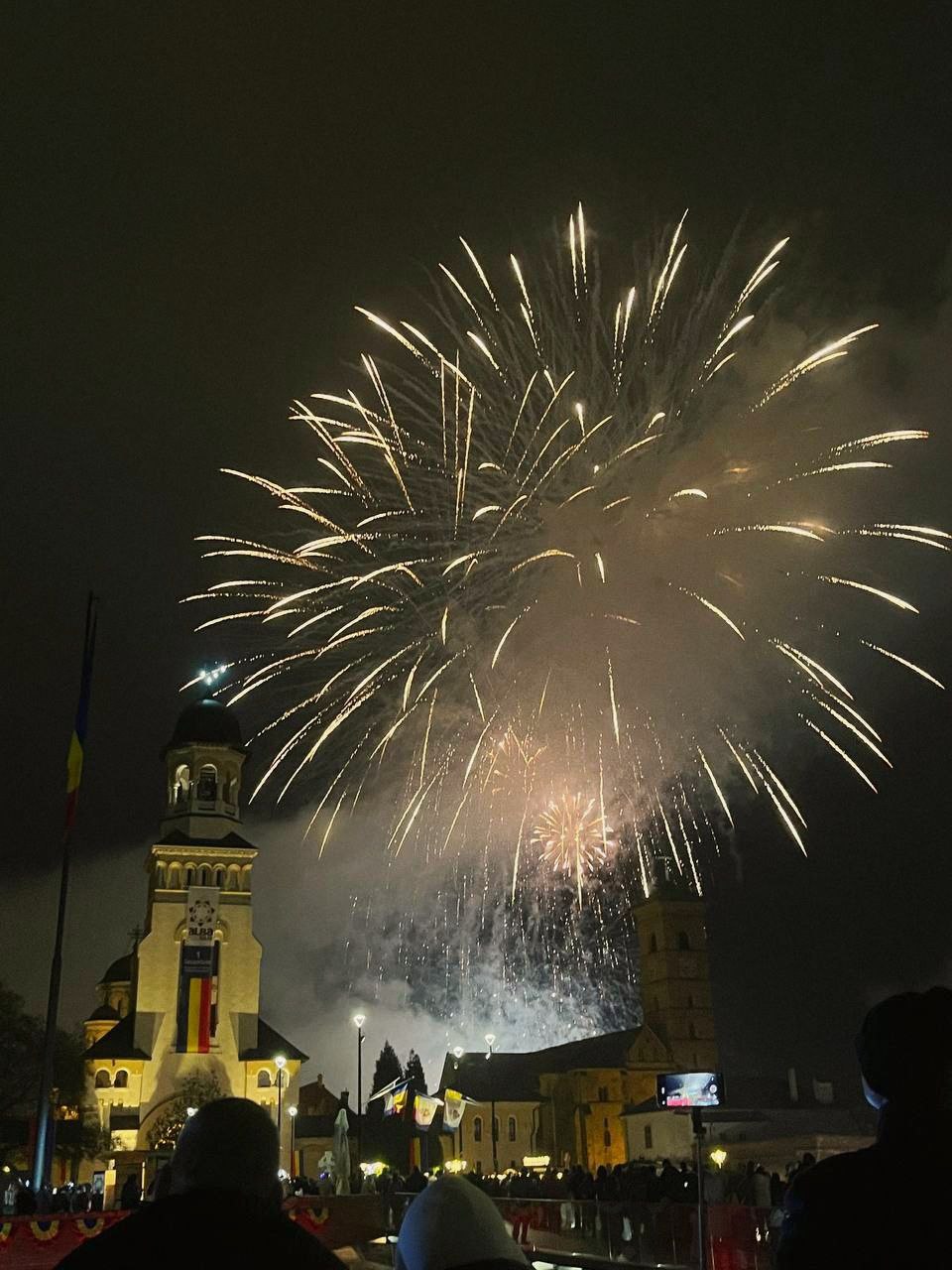
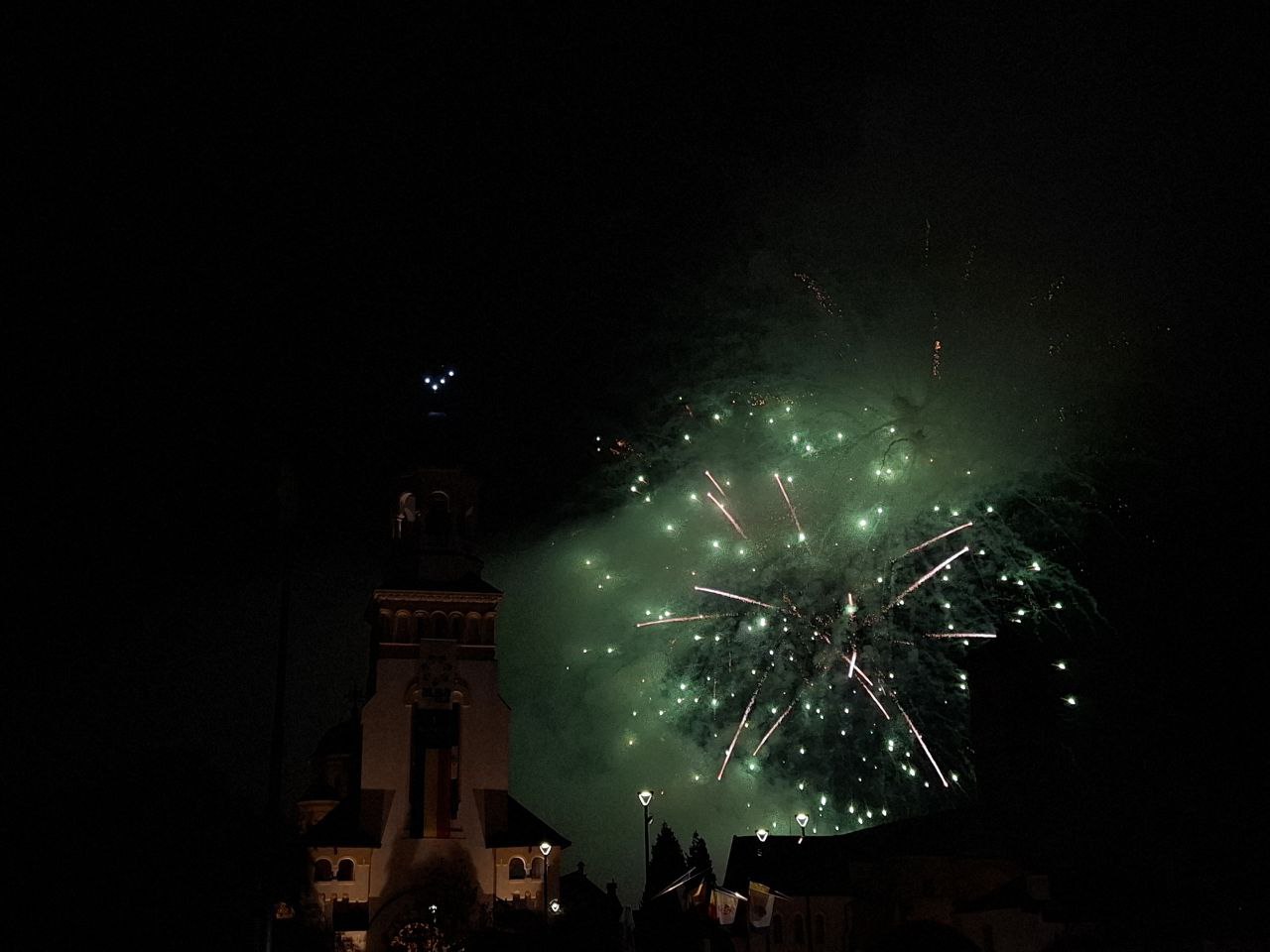
December 1st for Alba Iulia is not merely a date but a moment of historical triumph. It was here in 1918 that the union of Transylvania with Romania was proclaimed; therefore, the city observes National Union Day with particular significance. Alba Iulia fills with thousands of people, streets come alive to the sounds of parades, and the night sky blooms with bright fireworks. Nearby, in the very heart of the city, a fairy-tale Christmas market unfolds. This is a place where time seems to stand still: you can glide on ice under the open sky, warm up with aromatic mulled wine or hot chocolate, and choose unique handmade souvenirs.
This semester has been a whole epoch for me. It taught me not only to live in another environment but also to feel it, broaden my horizons, and find friends in every corner of the world. Erasmus+ became a challenge that forced me to leave my comfort zone, overcome doubts, and open up to the new. Today, I view the world with entirely different eyes – this experience did not merely complement my education; it forever changed my worldview.
Olesia Suzdaltseva, student of group 301-FF, speciality 035 “Philology”: “This semester spent under the Erasmus+ program has become one of the most important chapters of my studies and personal growth. My academic journey to the “1 DECEMBRIE 1918” University of Alba Iulia in Alba Iulia, Romania, proved to be much more than a change of classrooms. It was a deep immersion in a foreign-language environment and a new culture. I am convinced that, for a future translator, such an experience is fundamental: it allows one to rethink familiar things and to understand that language is not merely words in a dictionary but a living organism best mastered through direct communication and cultural context.
The educational model at the University of Alba Iulia impressed me with its distinctly applied vector. My curriculum consisted of disciplines that form the foundation of translator training: English Language Practice, Written and Oral Communication Techniques, and Discourse Analysis. Special attention is paid here to the art of oral interpretation. The techniques used by local teachers enable maximum immersion in the profession: we work with authentic speeches, model real cases, and hone the ability to respond quickly to linguistic challenges. We gained a deep understanding of the structure of the English language through comparative analysis and the juxtaposition of different linguistic systems. Separately, it is worth noting the collegial atmosphere: teachers serve as experienced mentors who support initiative and create space for open professional dialogue.
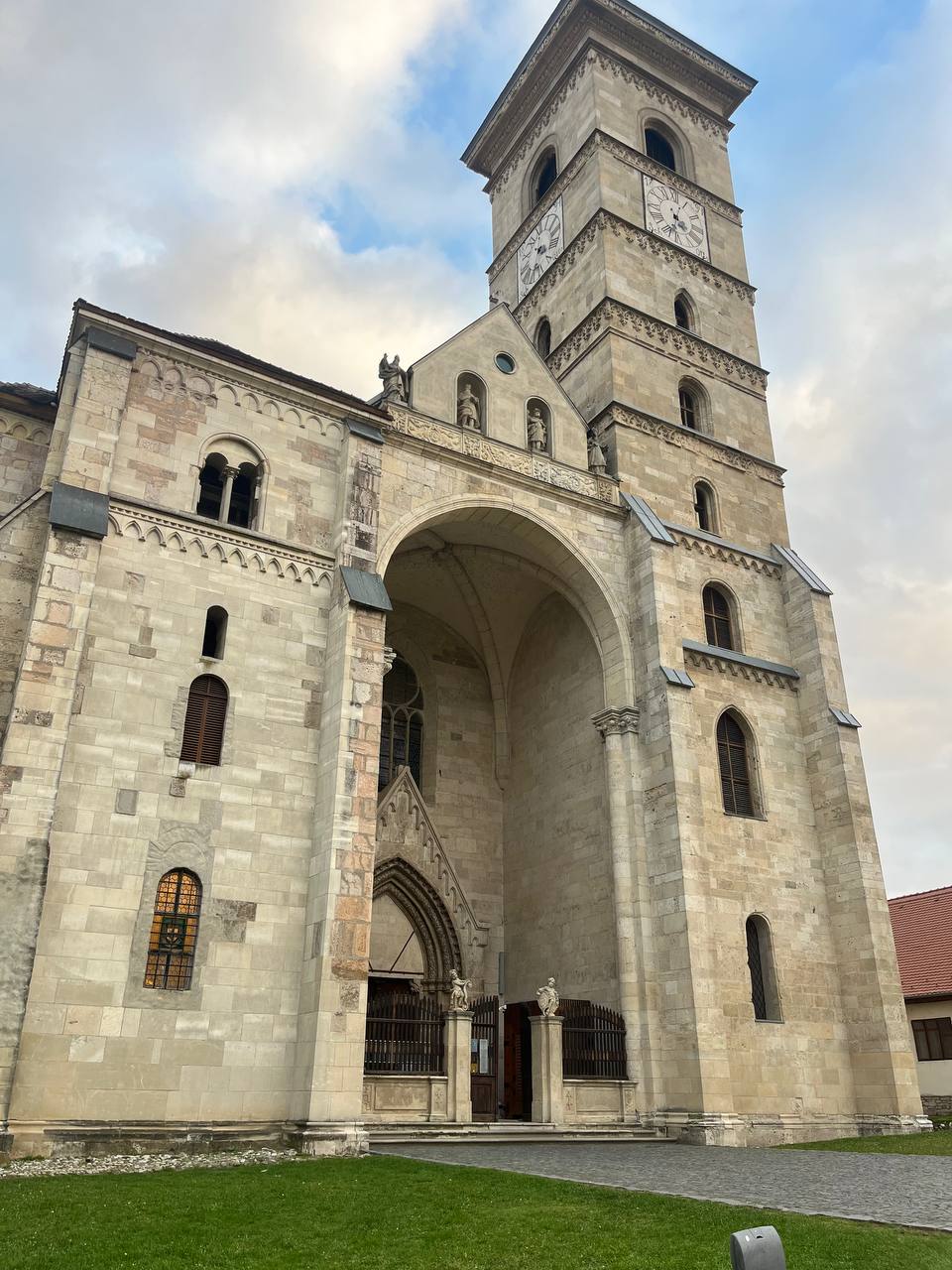
Our university’s location is distinctive, as the campus is situated within the heart of the magnificent Alba Carolina Citadel. Every morning, my walk to classes becomes a little journey through the centuries: past fortress walls, ancient cathedrals, and architectural monuments that breathe with history.
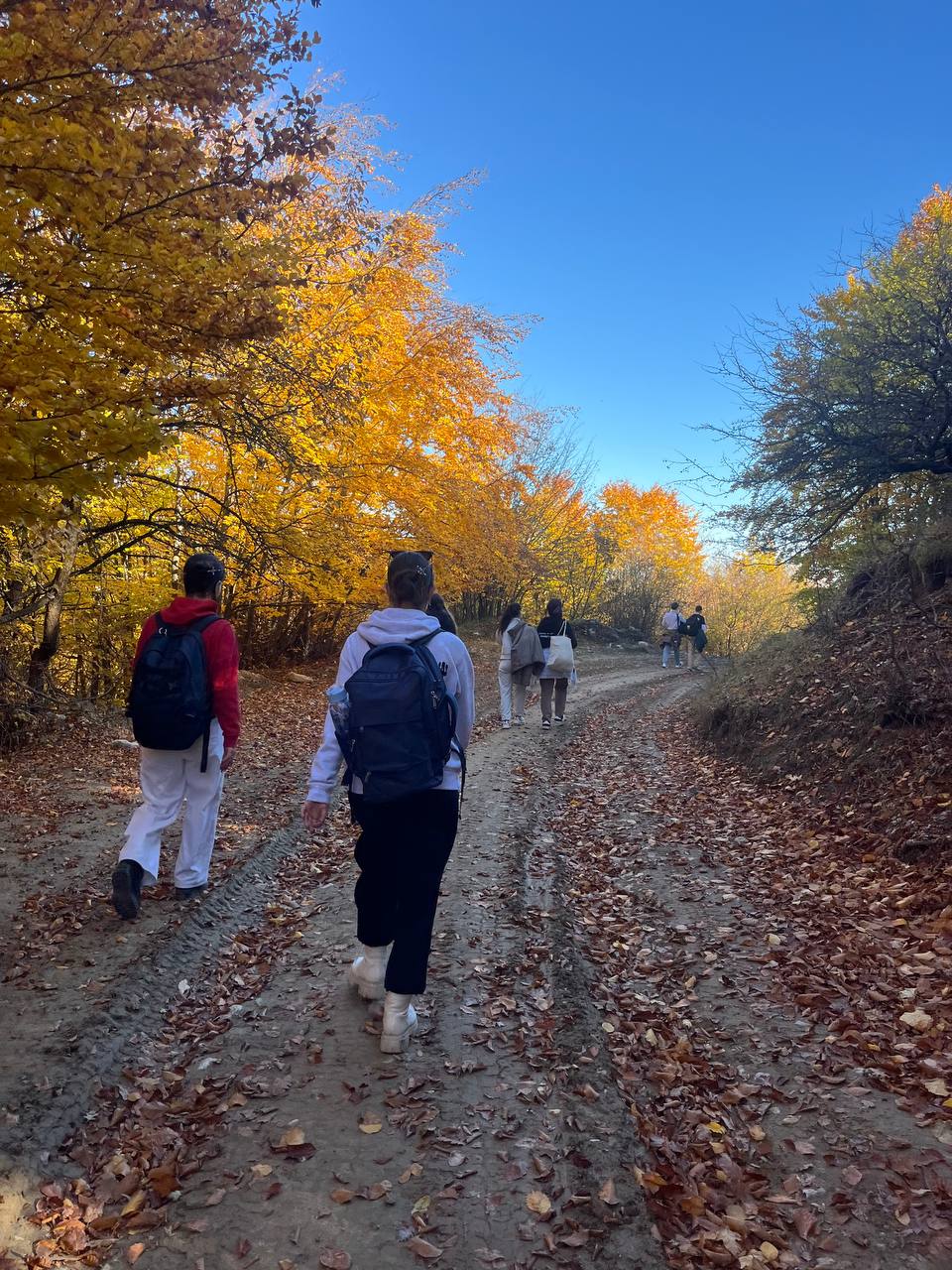
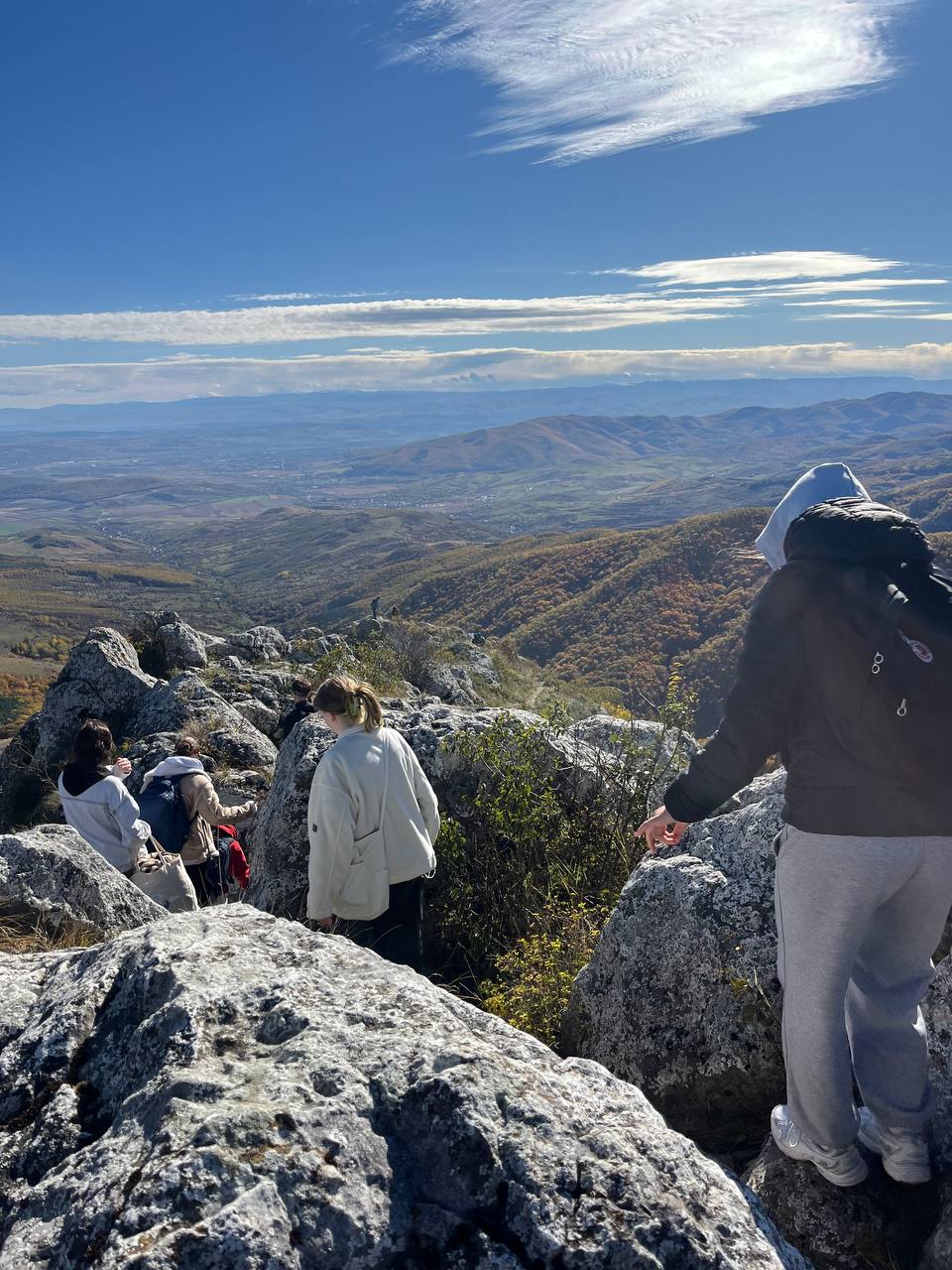
The incredible drive from the ESN community complements this inspiring environment. Thanks to Welcome Week, mountain hikes, and gastronomic evenings, we instantly became part of a large international family. For me, as a philologist, this became a true linguistic immersion: when your friends are people from different parts of the world, English becomes the only bridge for communication. This is live practice that is equivalent to hundreds of hours of textbook work.
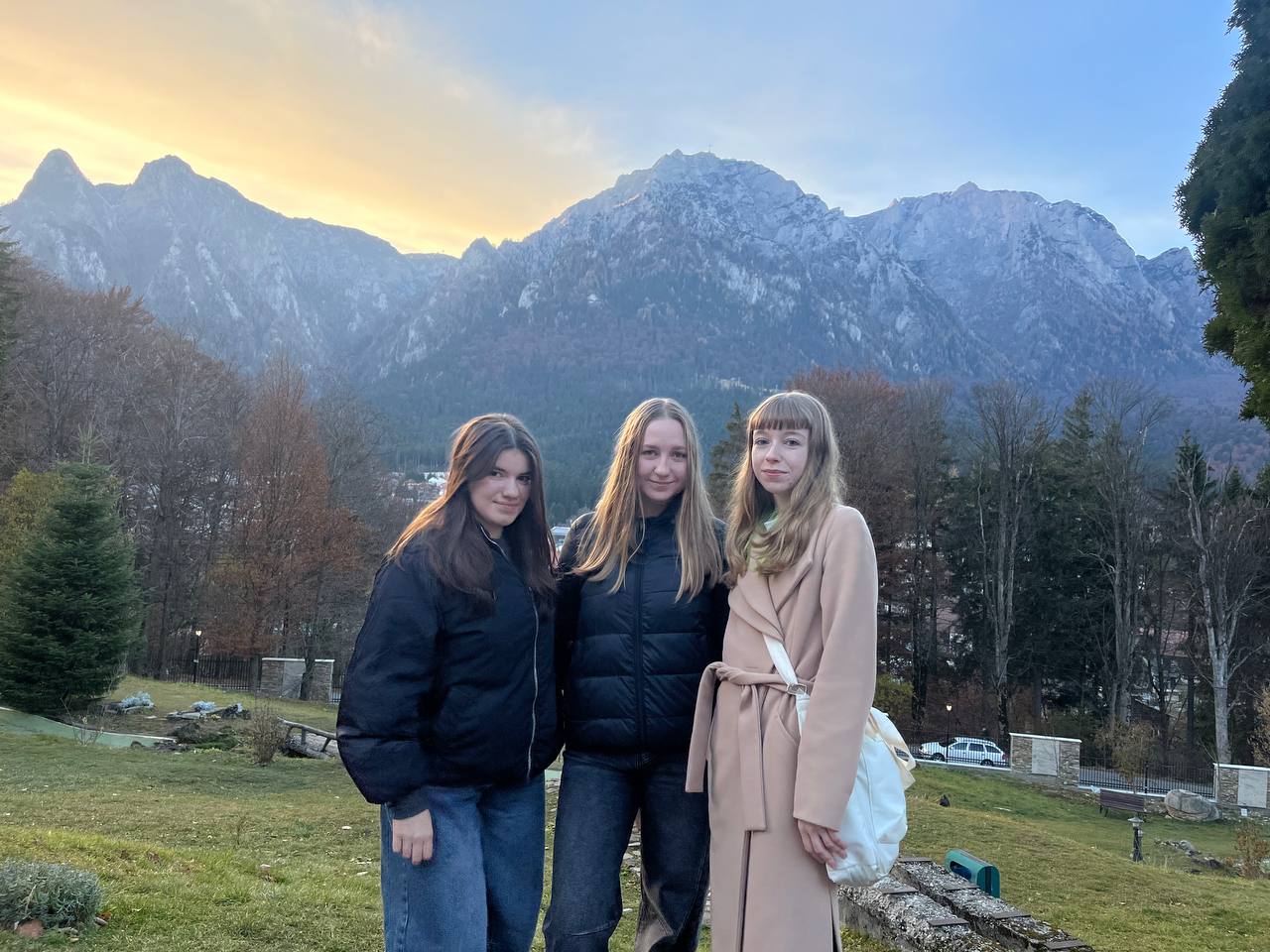
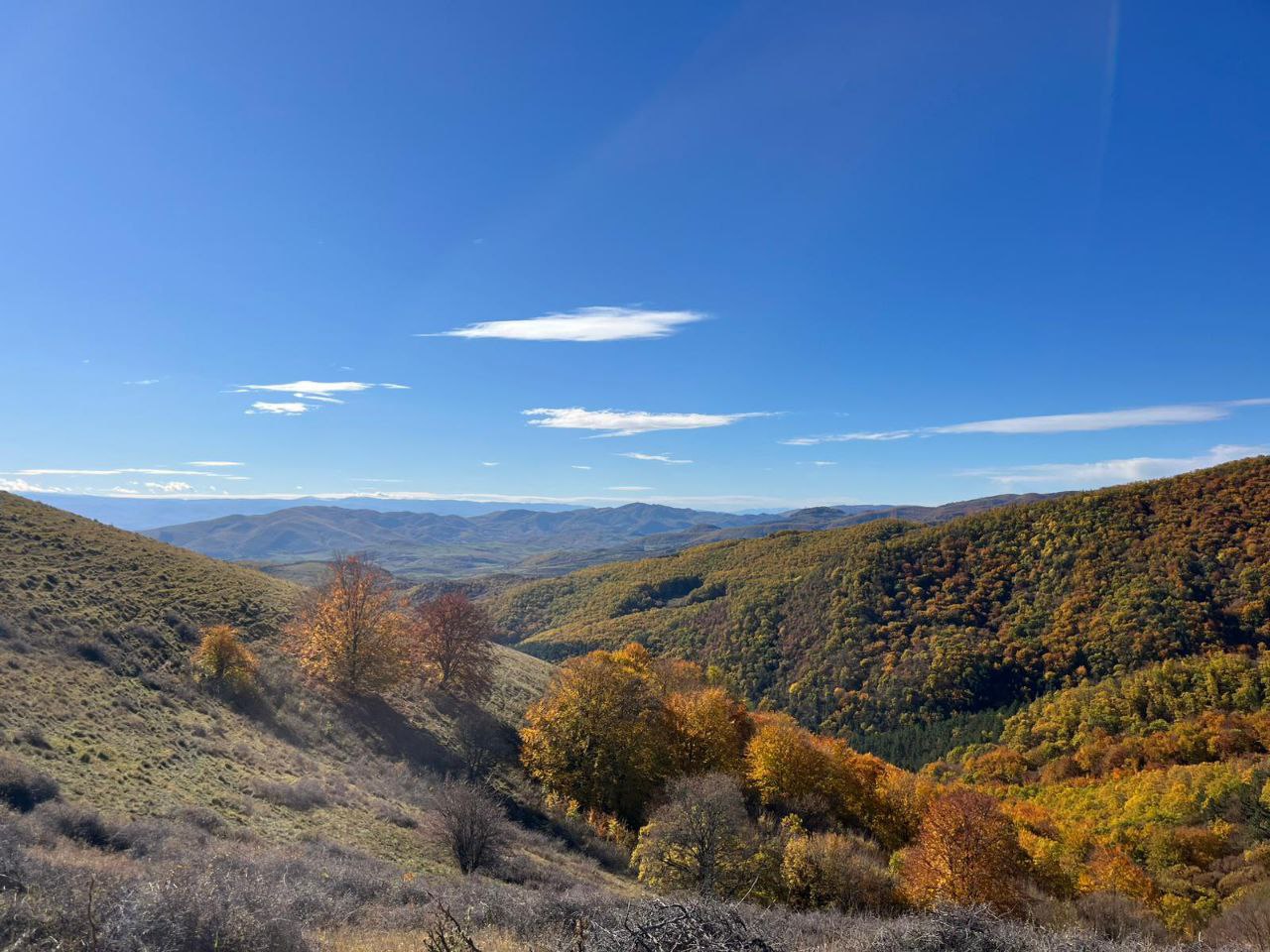
Outside the academic halls, Romania appeared to be a country of incredible contrasts and natural grandeur. The autumn palette made our trips to Sibiu and Brașov truly magical: these cities captivate with their cosy architecture and special atmosphere. Thanks to our “buddies” from ESN, we were able to touch the legends of Transylvania by visiting its famous castles.
Romania struck me with its hospitality – it is a space where deep respect for traditions harmoniously coexists with the rhythm of modernity. This experience became a school of openness and linguistic confidence for me. Now my gallery is filled with hundreds of shots, each of which is a warm memory of people and moments that changed my worldview. I sincerely believe: Erasmus+ is not just a program, it is the shortest path to becoming part of a big world”.
Diana Savchenko, student of group 202-FF, 035 “Philology”: “The educational experience in Romania has been a true intellectual challenge and a source of inspiration for me. The curriculum of the “1 DECEMBRIE 1918” University of Alba Iulia offered a new perspective on professional training, which significantly expanded my professional horizons. During the semester, I focused on mastering disciplines such as Literary Translation, Discourse Analysis, German, and comprehensive courses in communication techniques. The course “Introduction into Consecutive and Simultaneous Interpretation” deserves special attention, as the training was distinctly applied. Under the guidance of an experienced teacher, we mastered the art of translation shorthand, practised summarising English-language content, and refined our translation accuracy into Ukrainian. This approach contributed to the development of not only linguistic abilities but also cognitive flexibility, concentration, and speed in making translation decisions.
The academic component of the program harmoniously combined applied training with solid theoretical preparation. The culmination of the lecture courses was the defence of individual projects, which required in-depth analysis and a creative approach. Specifically, within the “Discourse Analysis” discipline, I conducted my own linguistic research, focusing on specific aspects of language functioning in a chosen textual context. This experience allowed me to feel not just like a student, but like a true researcher.
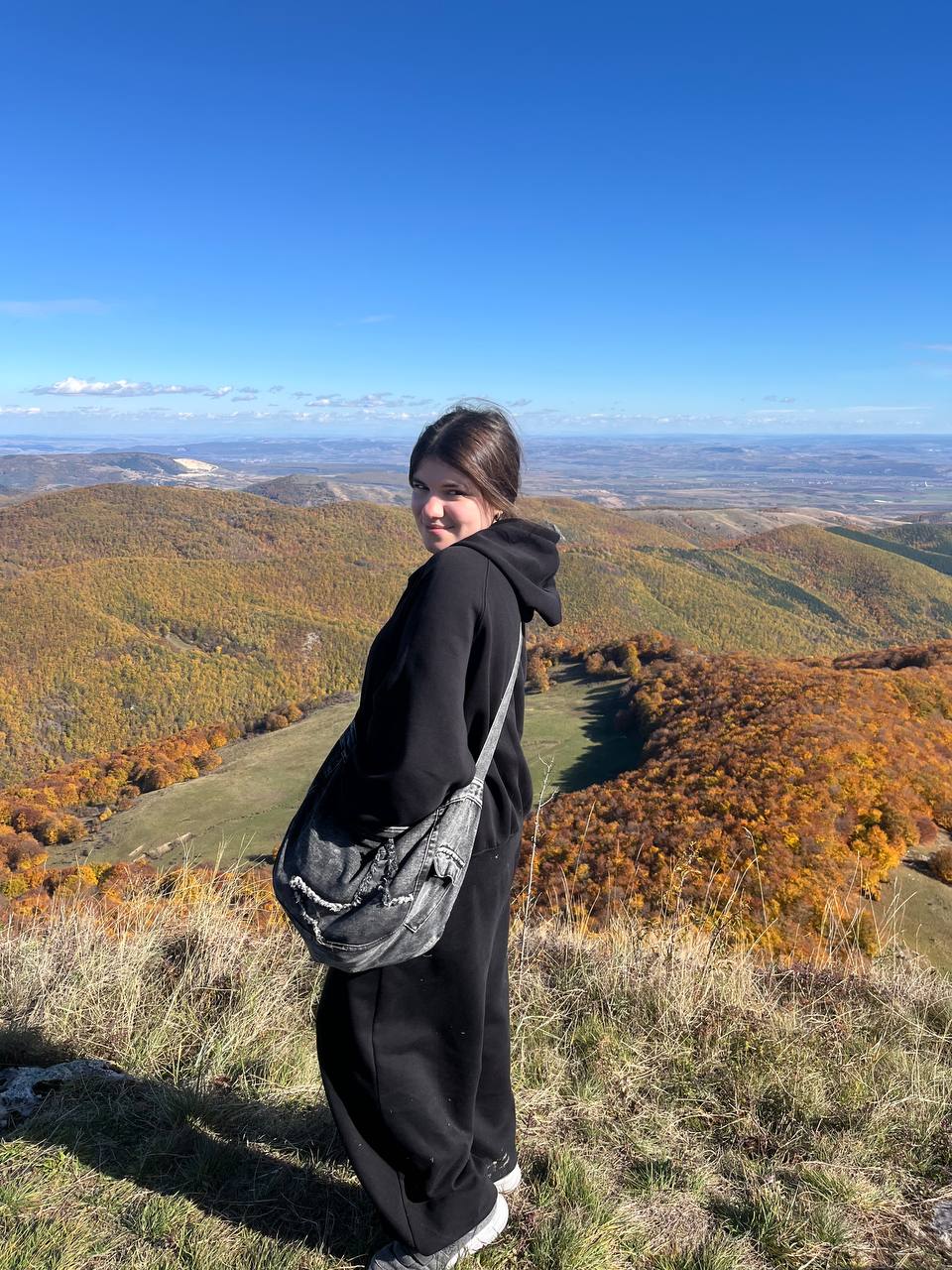
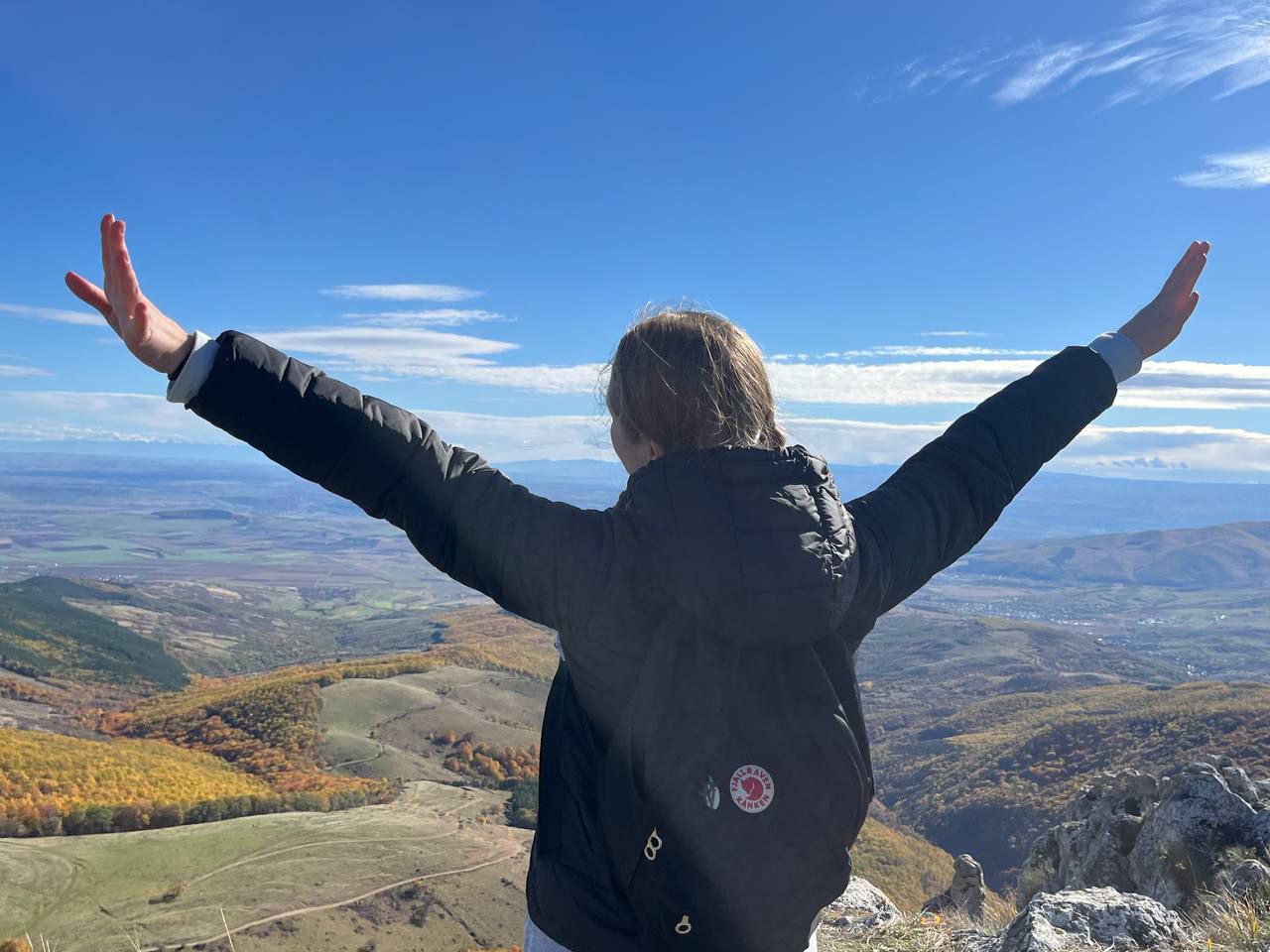
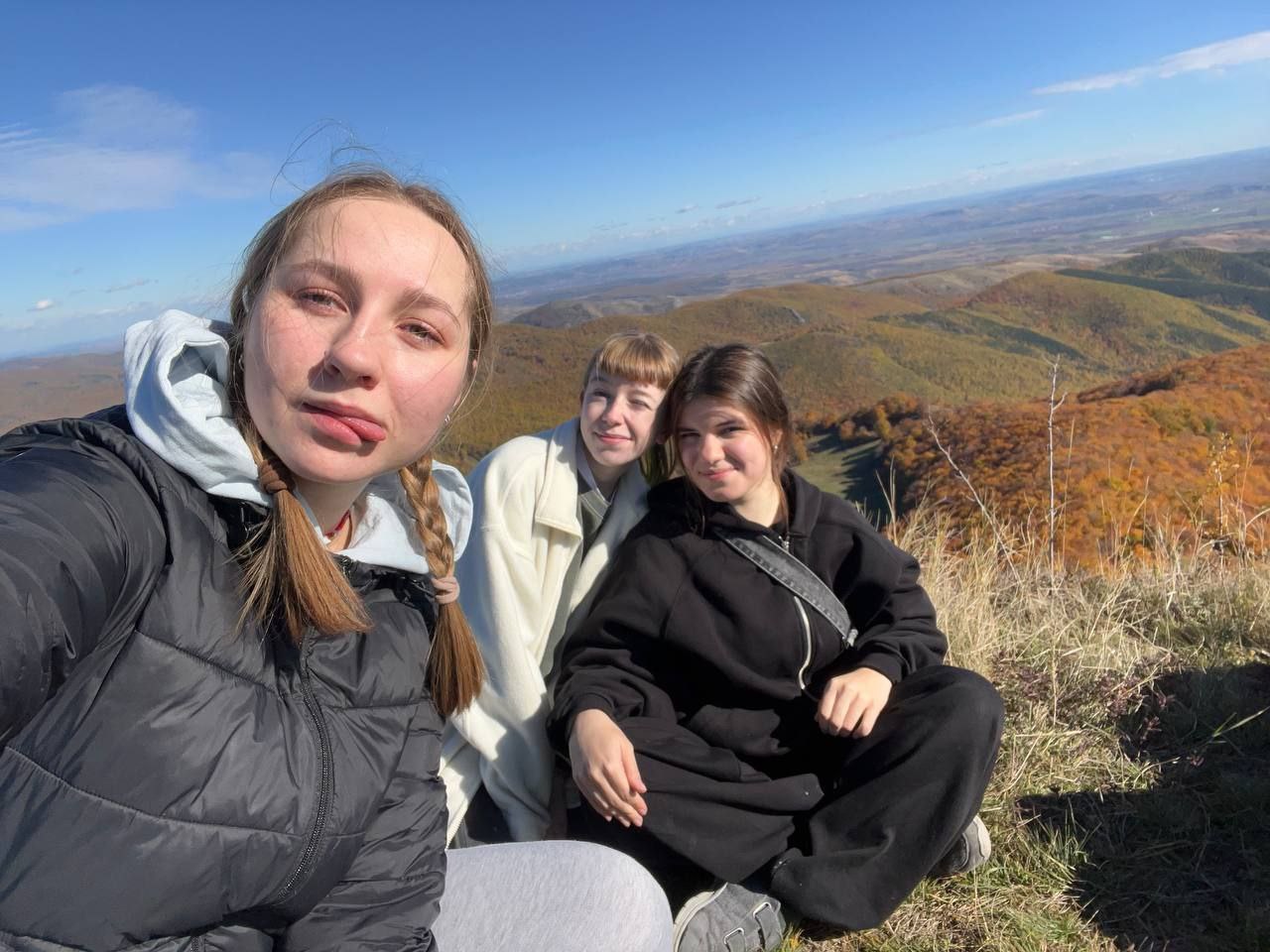
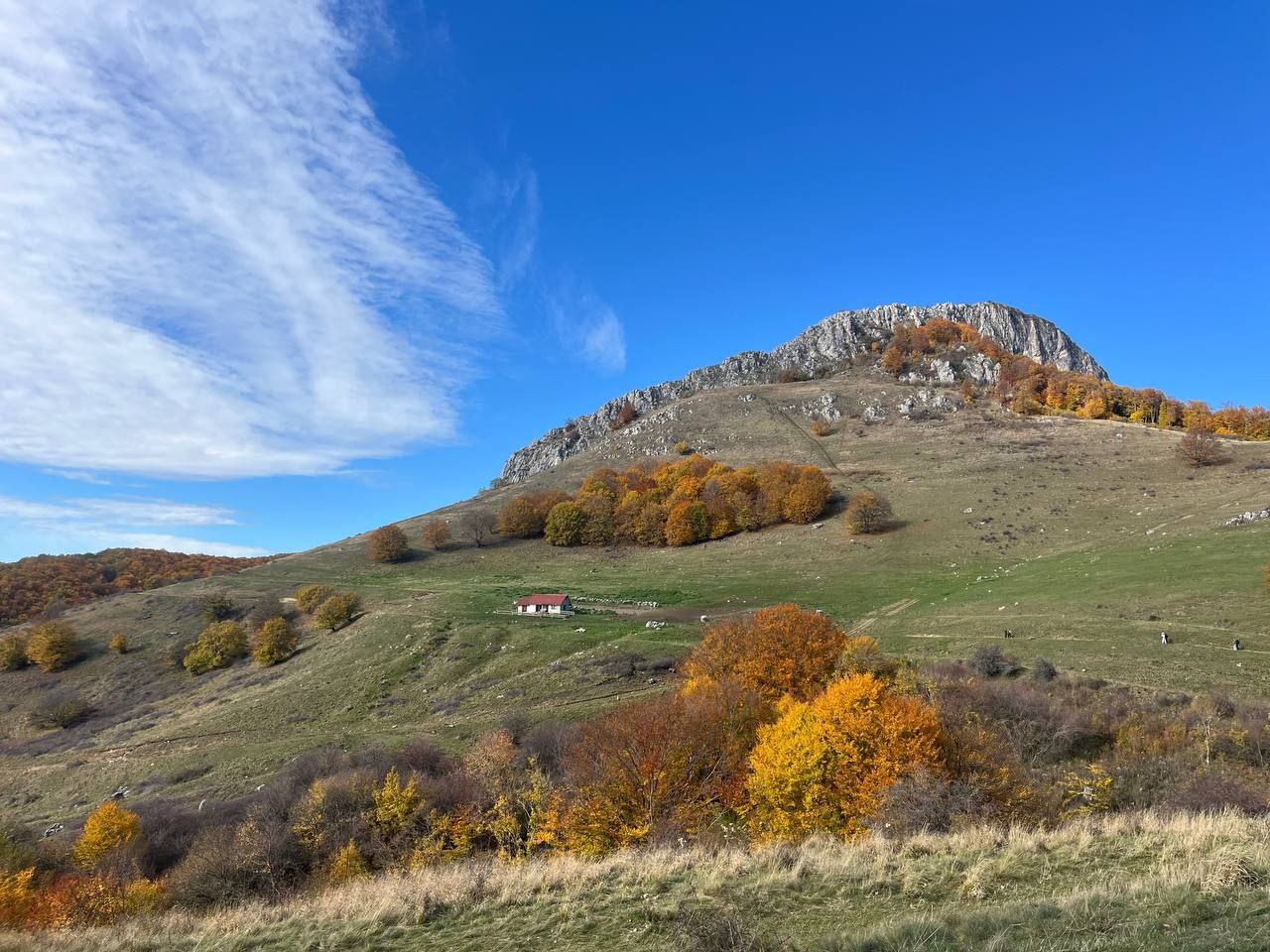
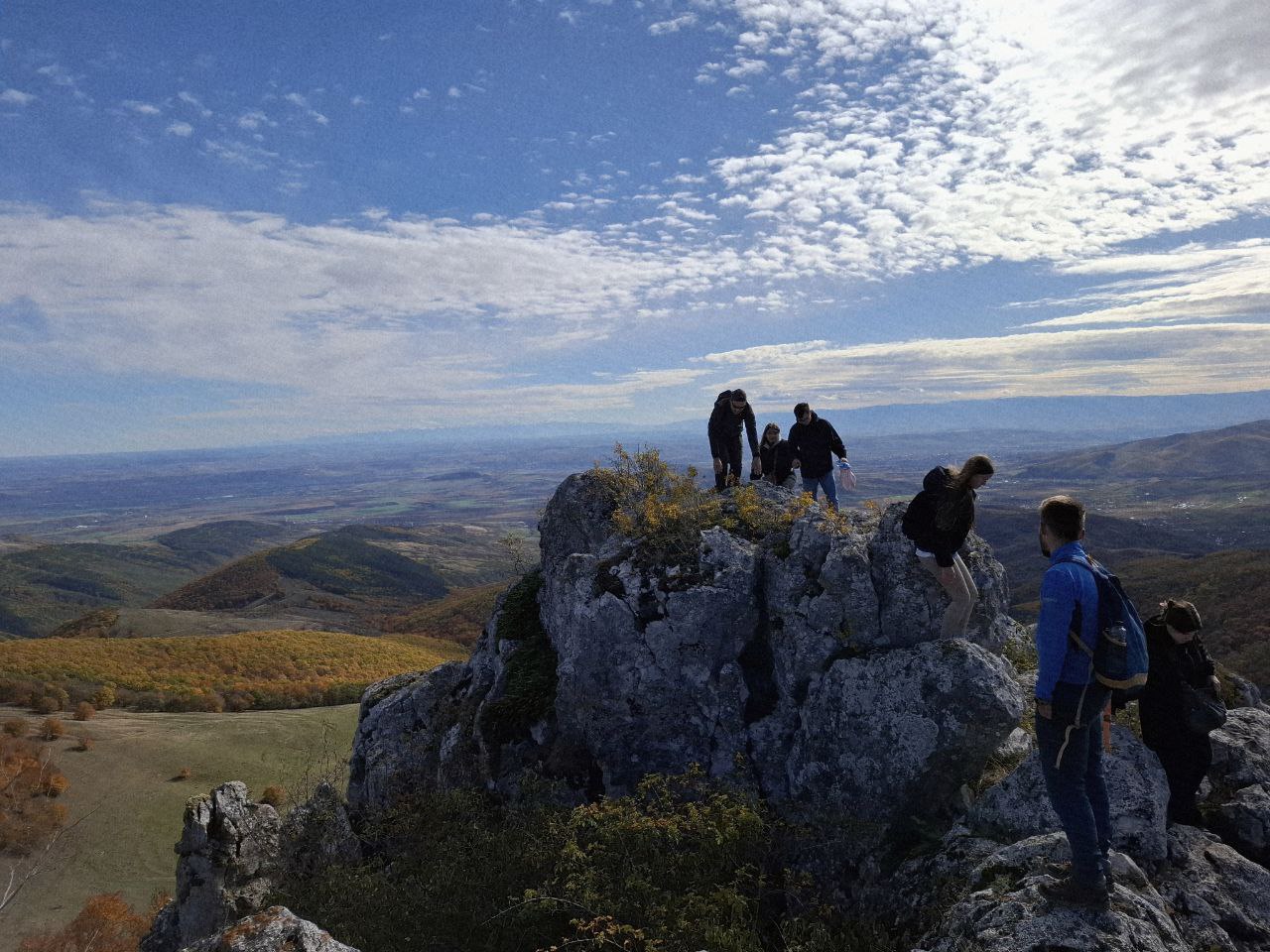
However, life in Romania was not limited to classrooms – thanks to the efforts of ESN, we immersed ourselves in a world of cultural discoveries. From the first steps through the historical streets of Alba Iulia to conquering the mountain peak of Piatra Craivii, every event contributed to our closeness. The true culmination of autumn was a trip to mystical Transylvania. The celebration of Halloween in Brașov was etched in my memory with visits to legendary castles, enchanting parties, and participation in the Flag Parade – a grand celebration of unity where you feel the rhythm of a large international community.
December 1st turned Alba Iulia into the true heart of Romania, because it was here in 1918 that the fateful signing of the document on National Union took place. Being in the epicentre of such a large-scale holiday is a remarkable experience: the city was filled with thousands of people, and every corner exuded history and culture. During the day, we observed events that revealed the depth of Romanian traditions, and as twilight fell, the sky over the citadel was illuminated by a grand firework display. The festive mood continued at the cosy Christmas market: the aroma of mulled wine, laughter on the open-air skating rink, and exquisite handmade Christmas tree decorations created the atmosphere of a real winter fairy tale.
Despite the inevitable challenges of adapting to a new cultural landscape, participation in the Erasmus+ program has been a fundamental milestone for me. This experience enabled me to move beyond familiar paradigms, enriching me not only with sound academic knowledge but also with a global perspective. Today, my worldview is filled with new meanings and the faces of friends from different corners of the planet, which is the most valuable result of this unforgettable journey!”.
The stories of Orest, Daria, Olesia, and Diana are not merely reports on studying abroad but vivid testimony to how a single semester can shape a personality and alter a professional trajectory. The successful three-year experience of cooperation between the National University “Yuri Kondratyuk Poltava Polytechnic” and the “1 Decembrie 1918” University of Alba Iulia once again confirms that international mobility is an integral part of modern quality education. By overcoming internal barriers and stepping outside their comfort zones, our students become part of the global intellectual community, gaining skills that will form the foundation of their successful careers.
Poltava Polytechnic continues to confidently expand the boundaries of opportunity, proving that for ambitious youth, the European educational space is open today.
As a reminder, faculty members of Poltava Polytechnic are eligible to participate in academic mobility and internship programs. Students can study abroad through Erasmus+ credit academic mobility grant programs for a semester or a full academic year at leading universities in Austria, Greenland, Denmark, Estonia, Finland, France, Germany, Greece, Ireland, Italy, Latvia, Lithuania, Luxembourg, the Netherlands, Norway, Poland, Portugal, Romania, Slovakia, Spain, Sweden, and the Czech Republic.
For more detailed information on current internship, teaching, and academic mobility programs abroad, please get in touch with the International Relations Office (office 213-C, interoffice@nupp.edu.ua) or the coordinator of international activities at the National University “Yuri Kondratyuk Poltava Polytechnic” – Anna Pavelieva, Ph.D. in Philology, Associate Professor of the Department of Germanic Philology and Translation (email: kunsite.zi@gmail.com, phone: +38-(095)-91-08-192).