In today’s landscape, the participation of Ukrainian students in ICM programs, particularly Erasmus+, carries profound significance. These initiatives not only foster the integration of Ukraine’s higher education system into the broader European Higher Education Area, but also unlock pathways for the holistic development of young minds. Studying abroad exposes students to innovative teaching methodologies, refines their foreign language proficiency, and offers invaluable intercultural communication experience – all of which lay a strong foundation for their journey toward becoming competitive, modern professionals.
For the spring semester of the 2025/2026 academic year, this opportunity was extended to two third-year students majoring in Philology (speciality 035) at the National University “Yuri Kondratyuk Poltava Polytechnic”: Anzhela Velychko and Yeva Molotkovets. They are currently studying through the Erasmus+ ICM program at the TTK University of Applied Sciences (TTK UAS) in Estonia. This esteemed institution is highly regarded for its practice-oriented approach, modern facilities, and close industry partnerships, which enable students to align theoretical knowledge with hands-on professional skills seamlessly.
For these aspiring philologists, studying in Estonia has become a period of intensive academic work, adaptation to new standards, and firsthand immersion into European academic culture. In their reflections, they share detailed accounts of Tallinn’s educational structure, the challenges they have navigated, and the lasting impressions left by the initial months of their mobility.
Yeva Molotkovets, a student of group 302-FF majoring in 035 Philology, shares: “Participating in the Erasmus+ program for the second time has offered me a valuable opportunity to integrate more deeply into the European educational space and feel like an active part of it. This spring semester at Tallinn University of Applied Sciences has become a catalyst for professional growth, introducing me to new academic standards and applied research.
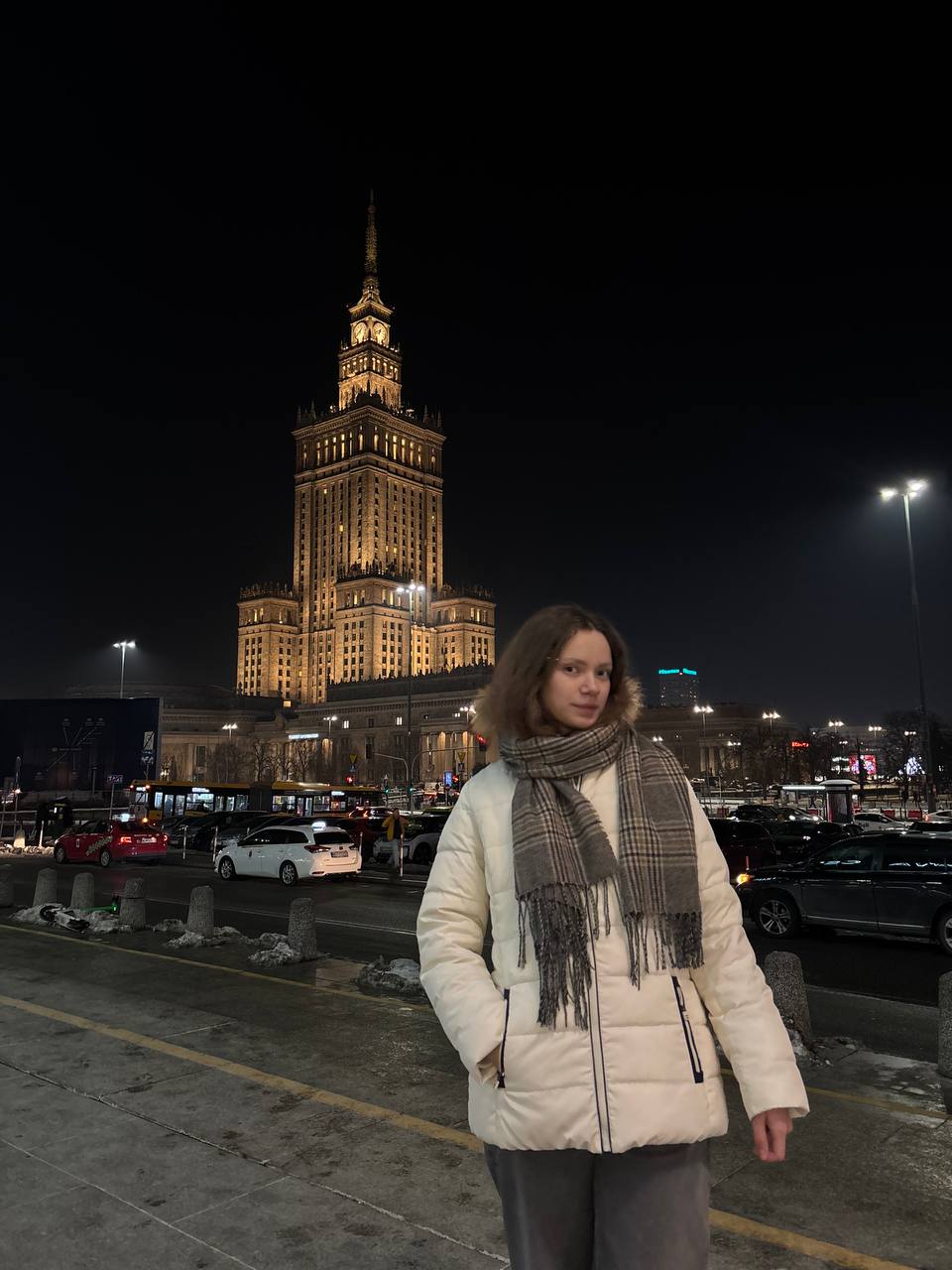
Our journey began with an orientation week and meetings with the coordinators, which helped us adapt more quickly to the new environment and become familiar with the university and the city. The campus is situated in the very heart of Tallinn, nestled within a vibrant and dynamic district. The university stands out for its modern, practical approach to education, in which a solid theoretical foundation is seamlessly integrated with the development of skills essential to our future careers.
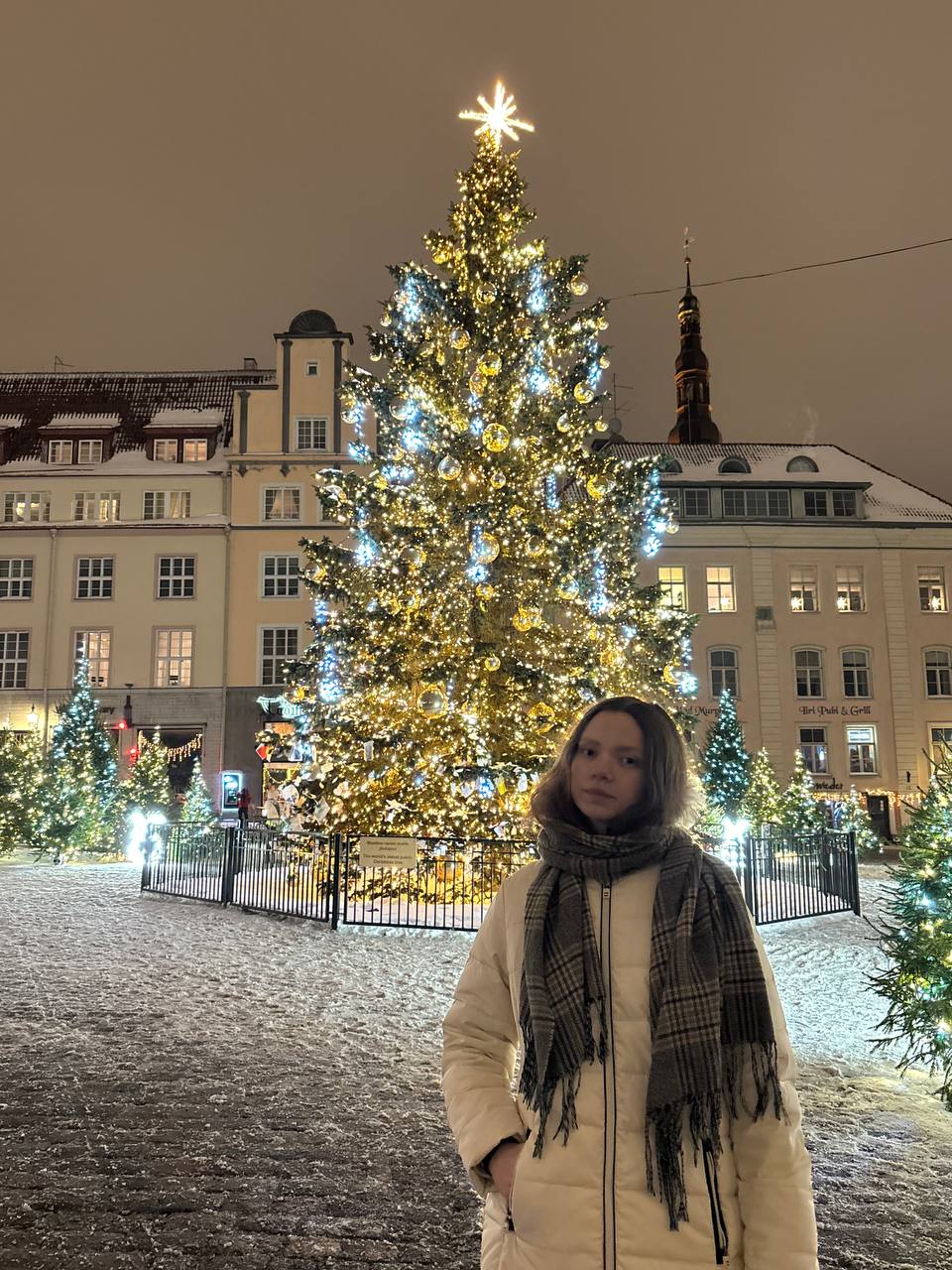
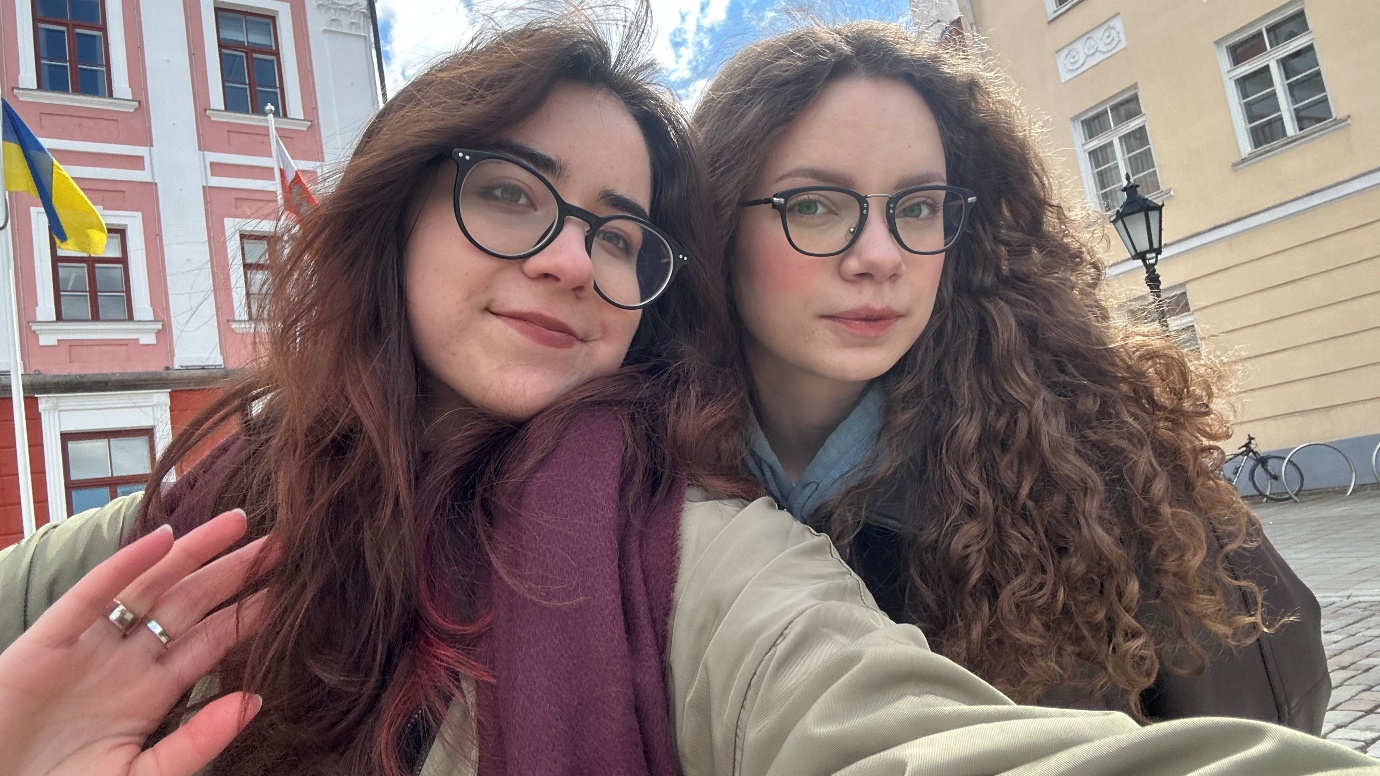
Despite Estonia’s relatively small geographic size, its capital, Tallinn, stands as a remarkably progressive and technologically advanced European hub. For us, genuine solidarity with Ukraine is deeply meaningful and felt everywhere: blue and yellow flags fly proudly along the streets, and the facades of modern buildings and skyscrapers are illuminated in Ukraine’s national colours each evening.
The curriculum at Tallinn University has distinct features that differ slightly from the familiar academic process at our home institution, Poltava Polytechnic. In particular, our industry-specific English classes allow us to delve deeply into complex, specialised terminology and learn to identify precise professional equivalents in both languages.
For instance, in the course “Field-specific English: Technical Fields”, we explore the foundational concepts of mechanics and robotics while collaborating in teams alongside future engineers. This interactive format not only refines our professional English, but also deepens our understanding of technical processes through direct, hands-on cooperation.
A particular highlight of my studies this semester has been the “Entrepreneurship” course. The curriculum focuses on designing original business models in international teams, enabling us to examine diverse business environments across regions through detailed micro- and macro-level analyses. Notably, our collaborative project, “Heated Bus Stops in Estonia”, secured a place in the top twenty at the university's startup competition – a milestone we consider a significant and rewarding practical achievement.
The course “English for Written and Oral Communication” focuses on cultivating academic and business communication skills. Collaborating in pairs, we role-play various professional scenarios, from navigating job interviews to pitching and promoting products or services. The curriculum also covers essential practical skills, including drafting press releases, analysing graphical data, working with tables, and properly referencing scientific articles. Furthermore, a key component of this program is our participation in the international COIL (Collaborative Online International Learning) project, which awards an official certificate of completion upon successful completion.
Extracurricular life in Tallinn has been a delightful surprise, offering a rich and diverse array of integration events. In particular, the thematic cultural evenings provided a wonderful opportunity to become more closely acquainted with Estonian traditions and history, and we even got to try our hand at traditional folk dancing.
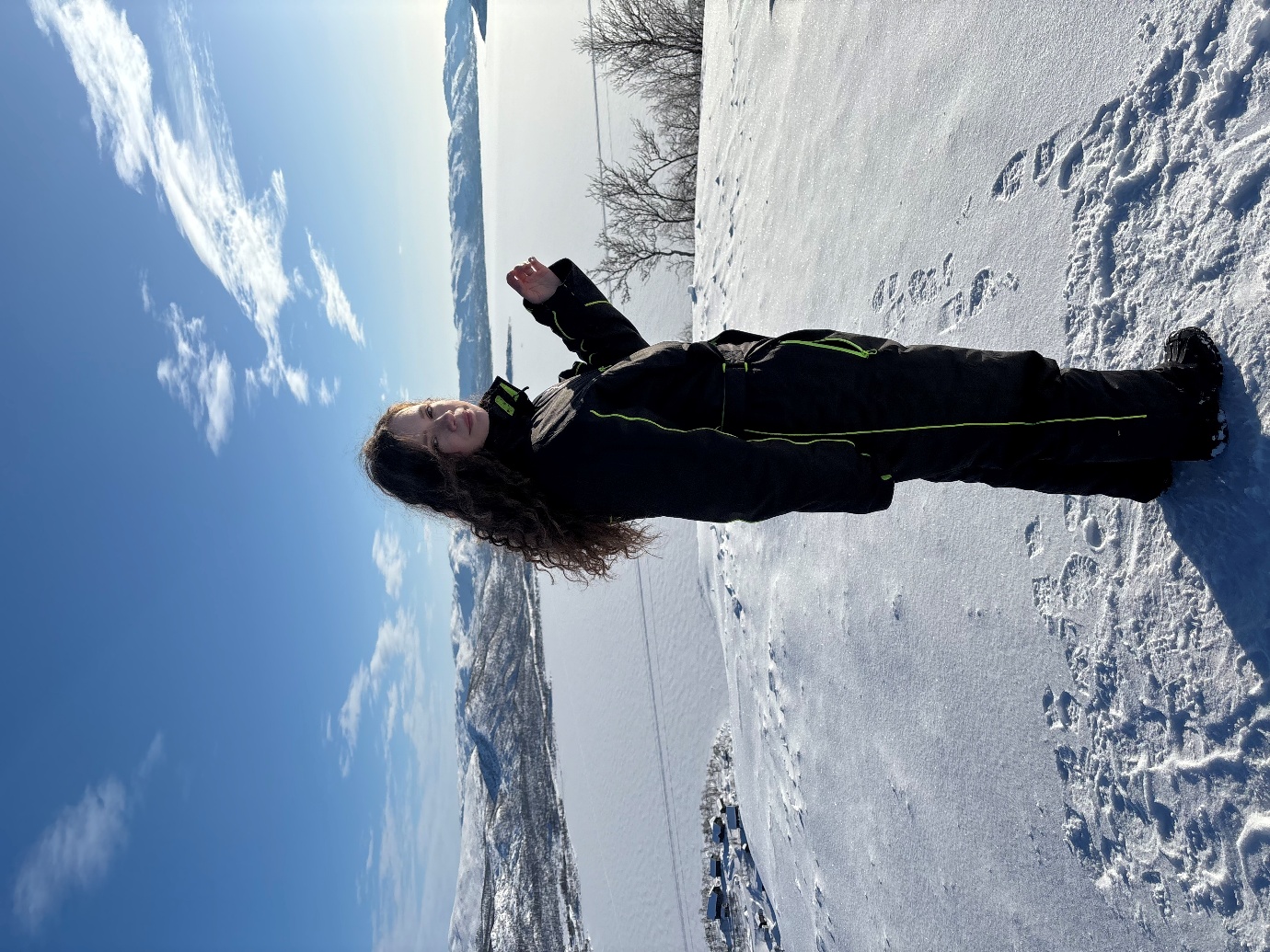
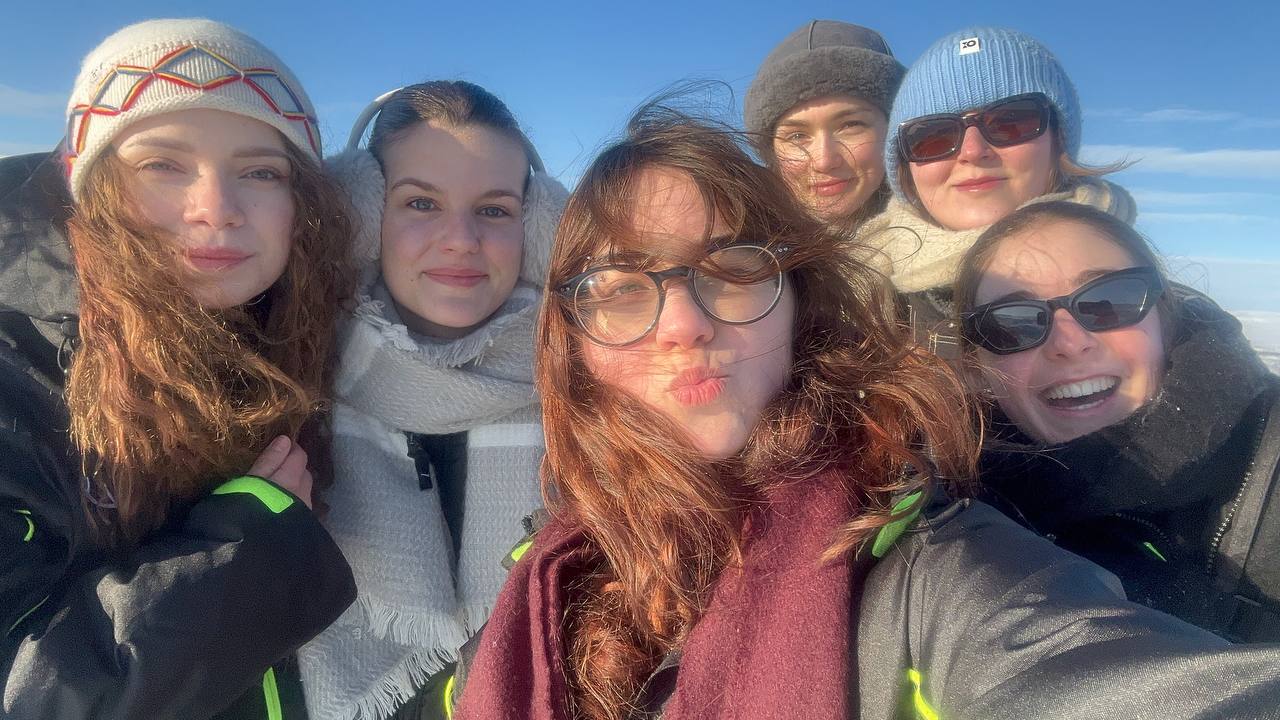
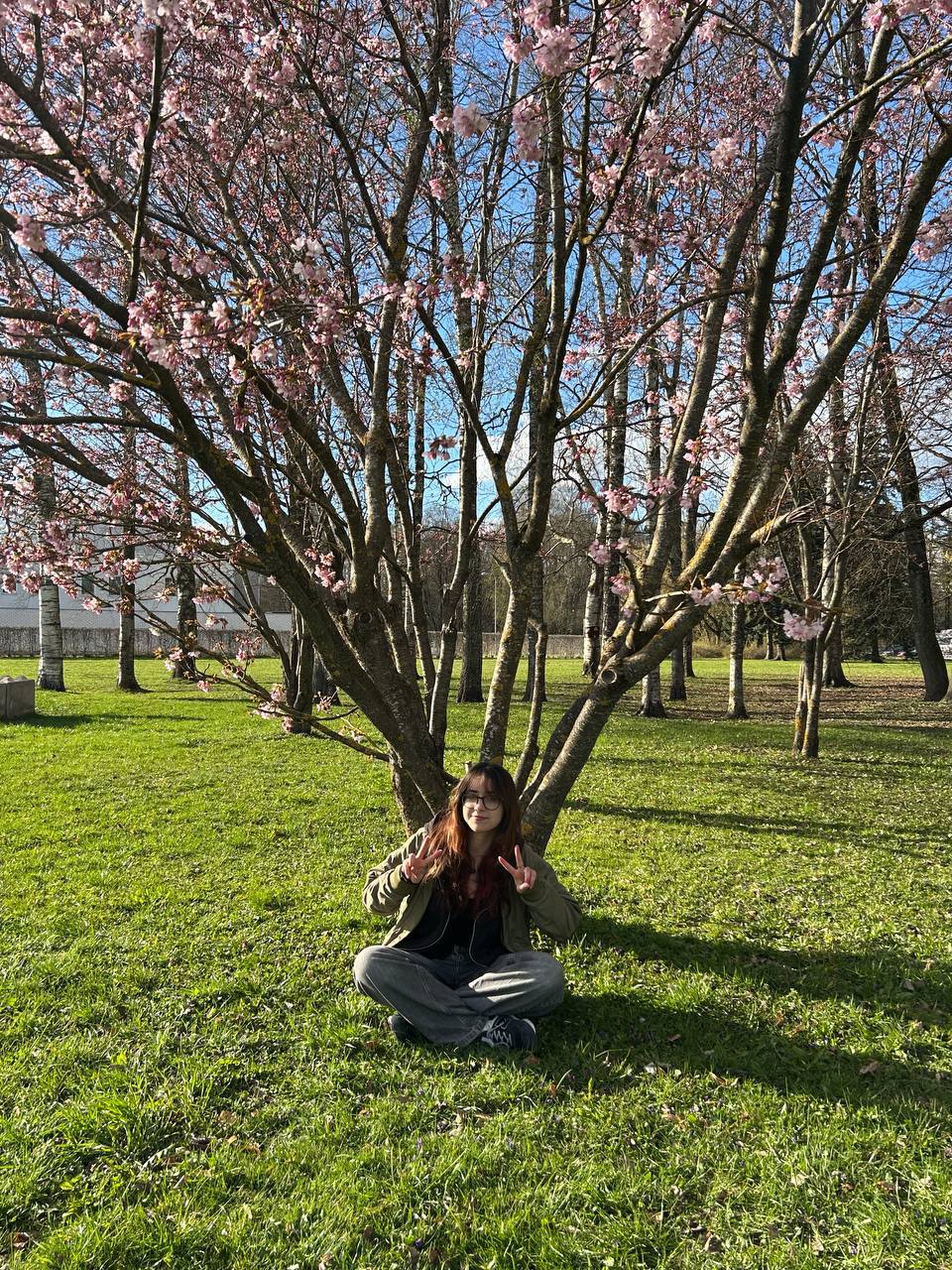
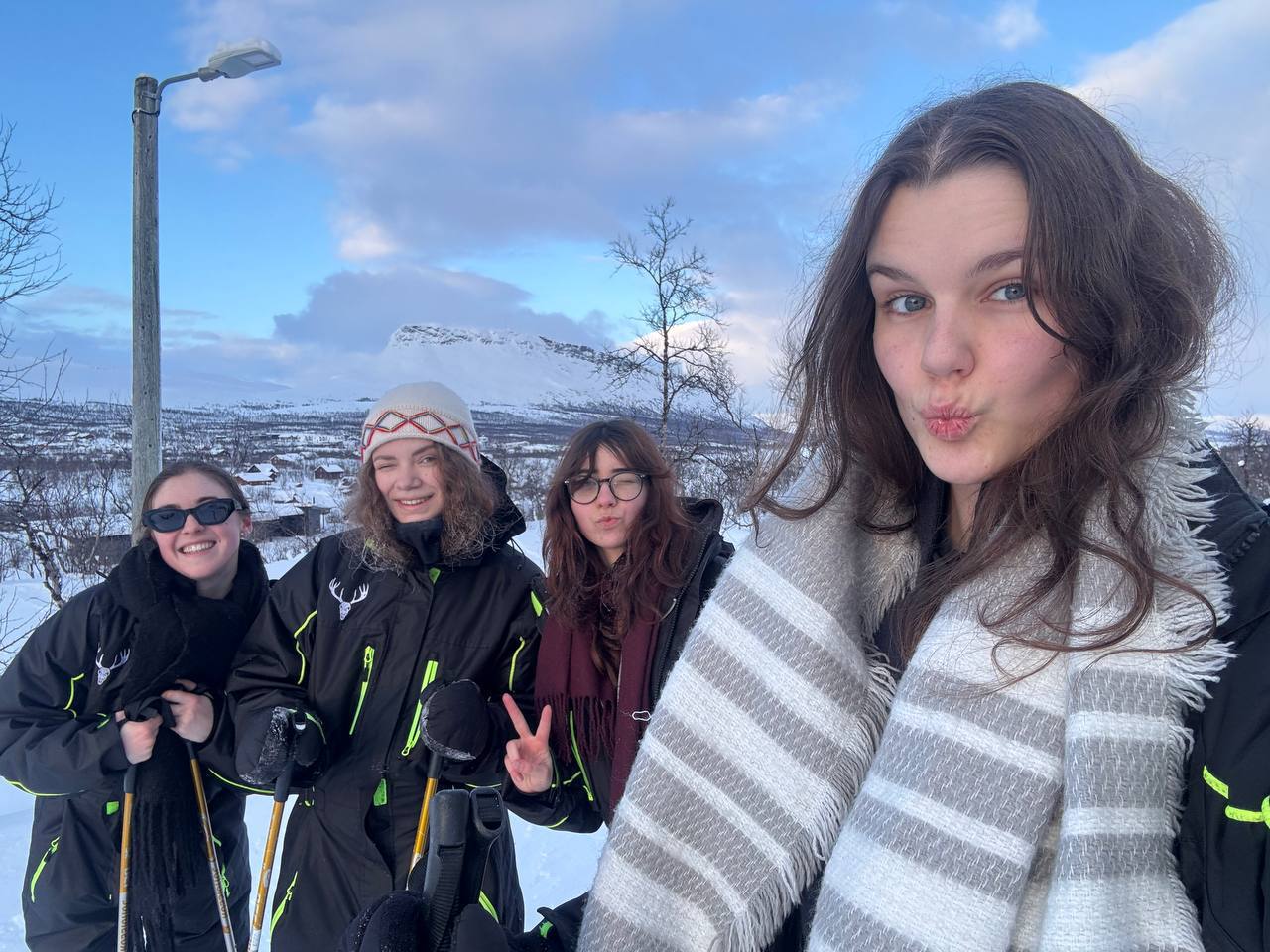
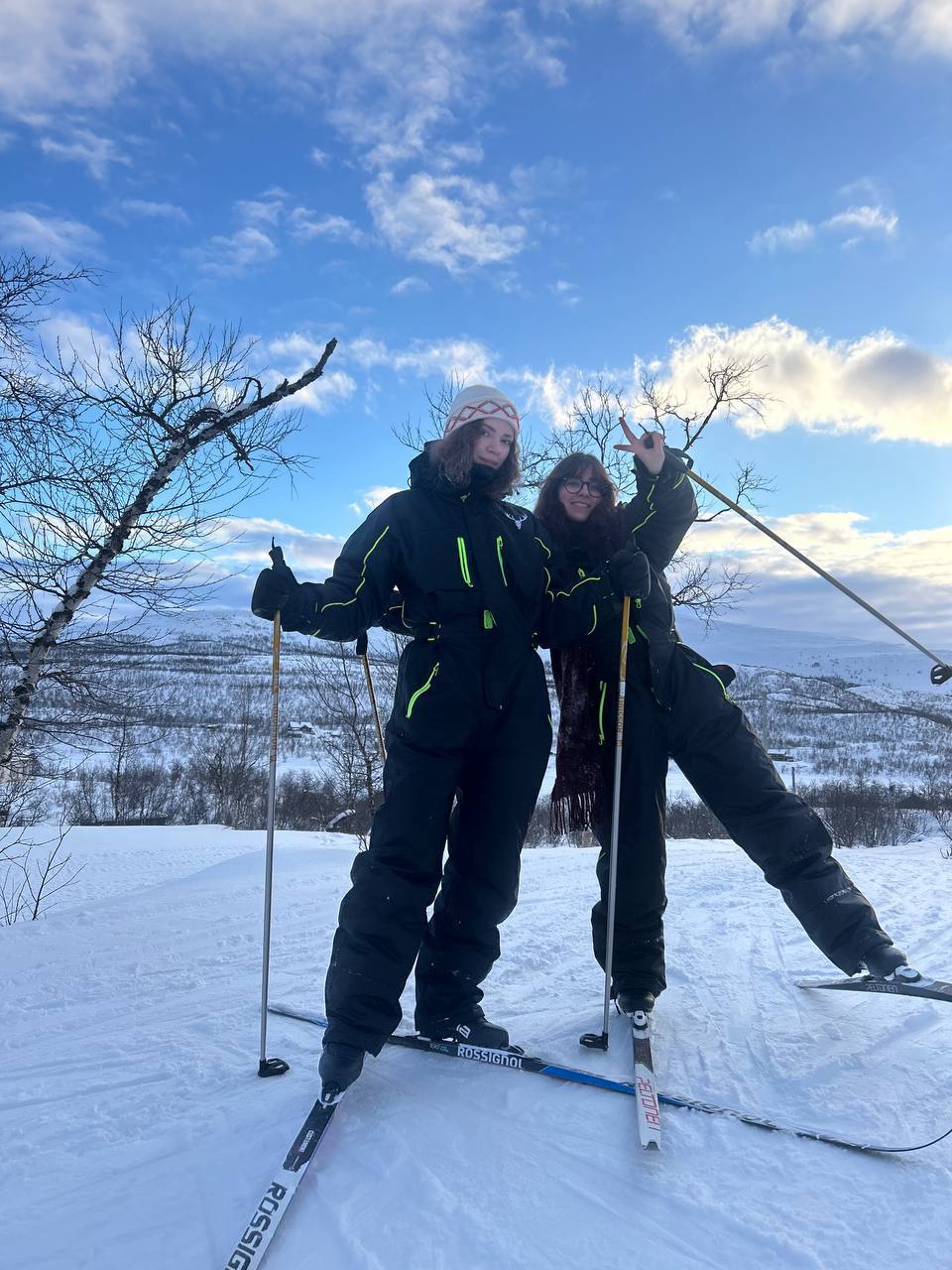
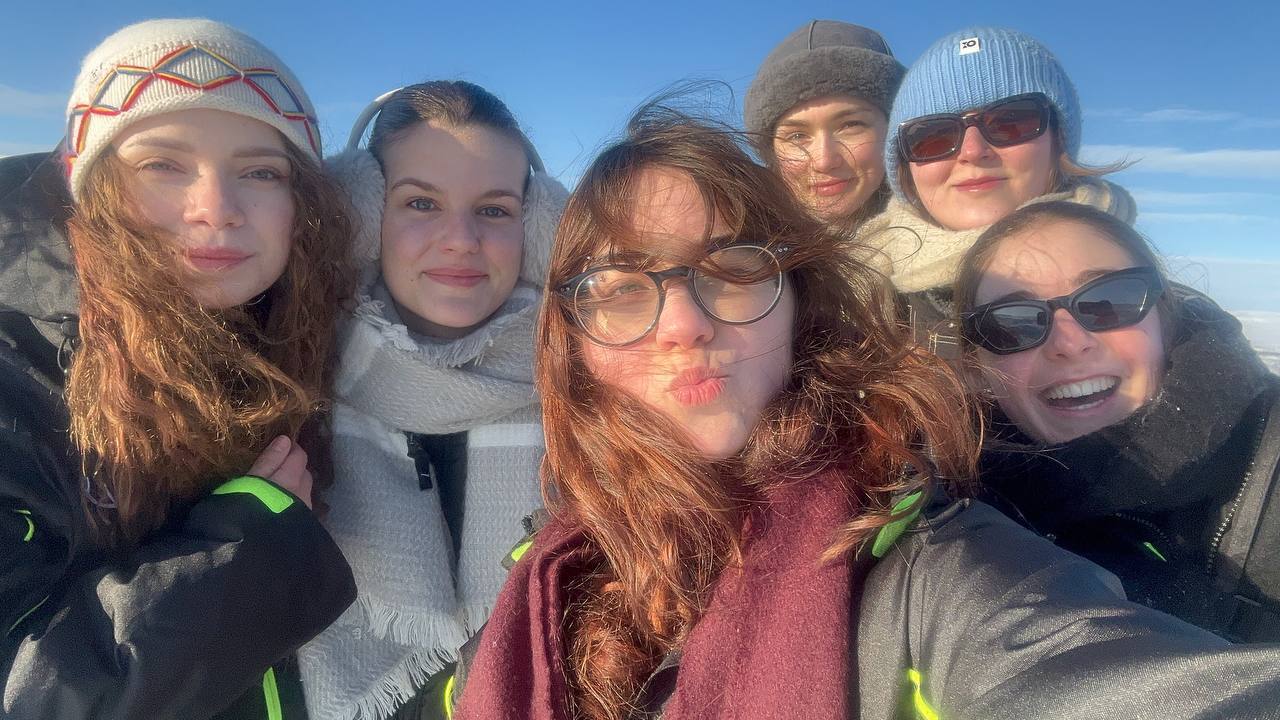
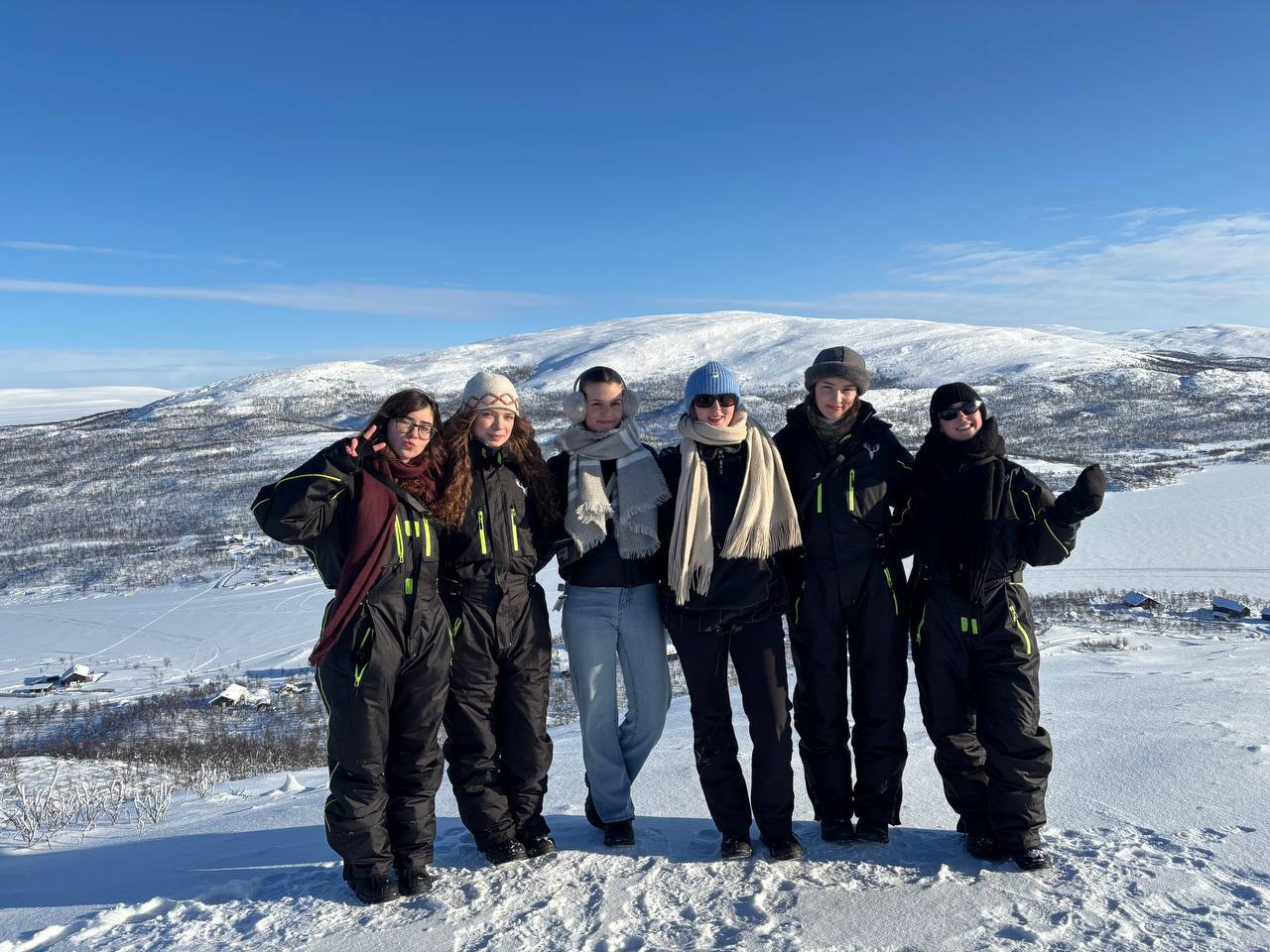
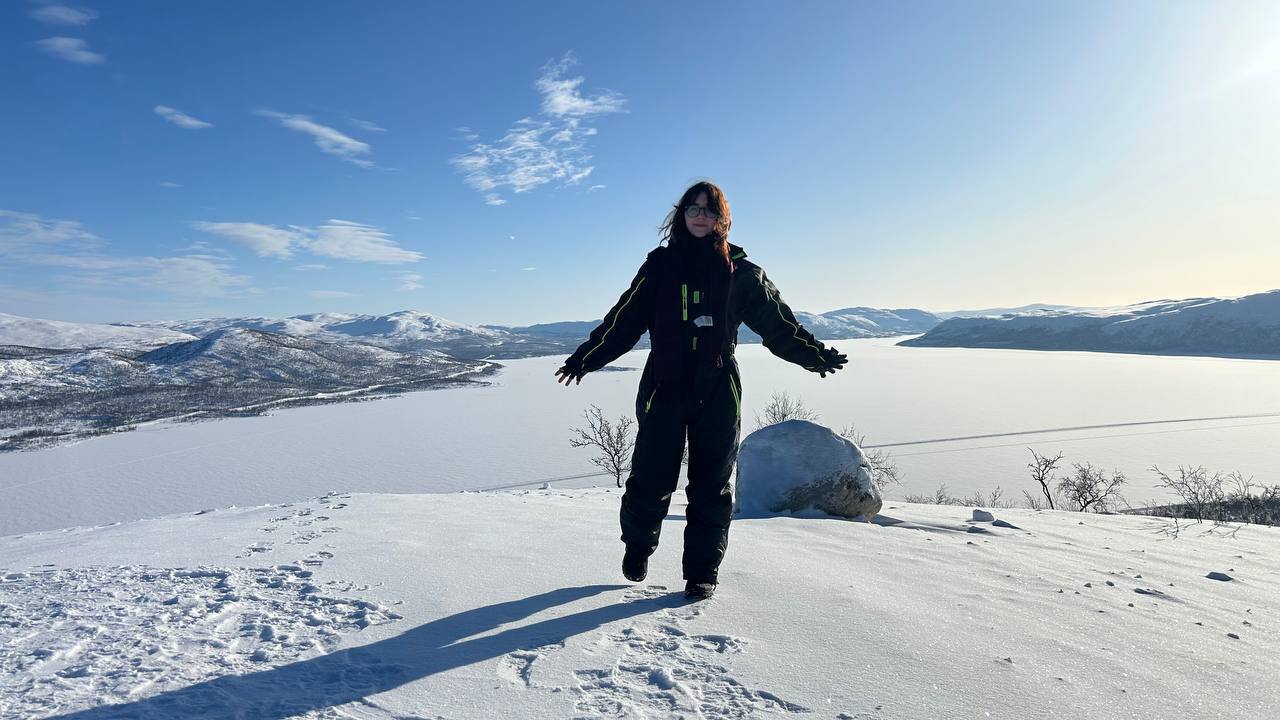
Another unforgettable highlight of the semester was our trip to Lapland. We stayed in cosy cottages surrounded by a picturesque mountainous landscape in the settlement of Kilpisjärvi in northern Finland.
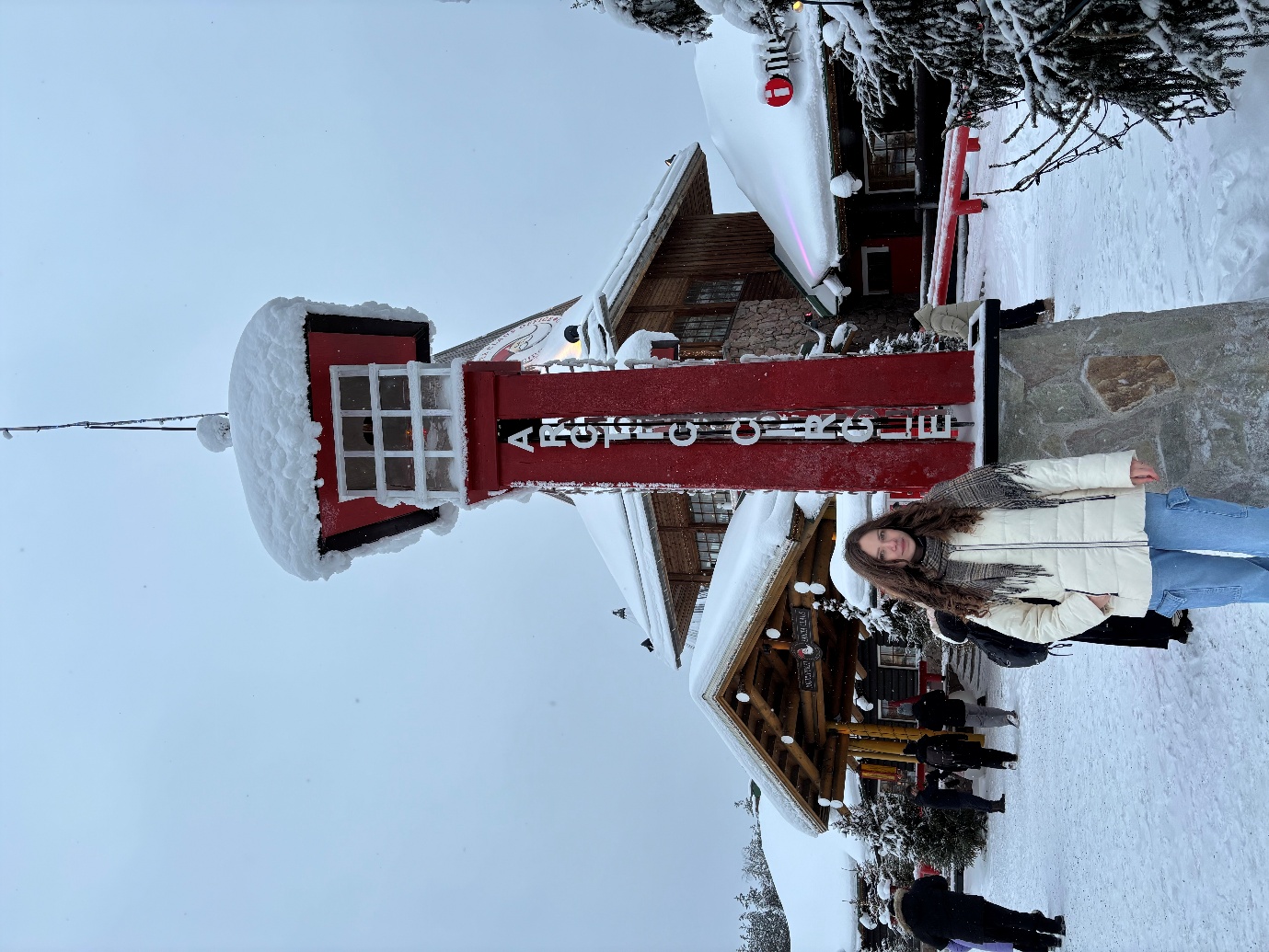
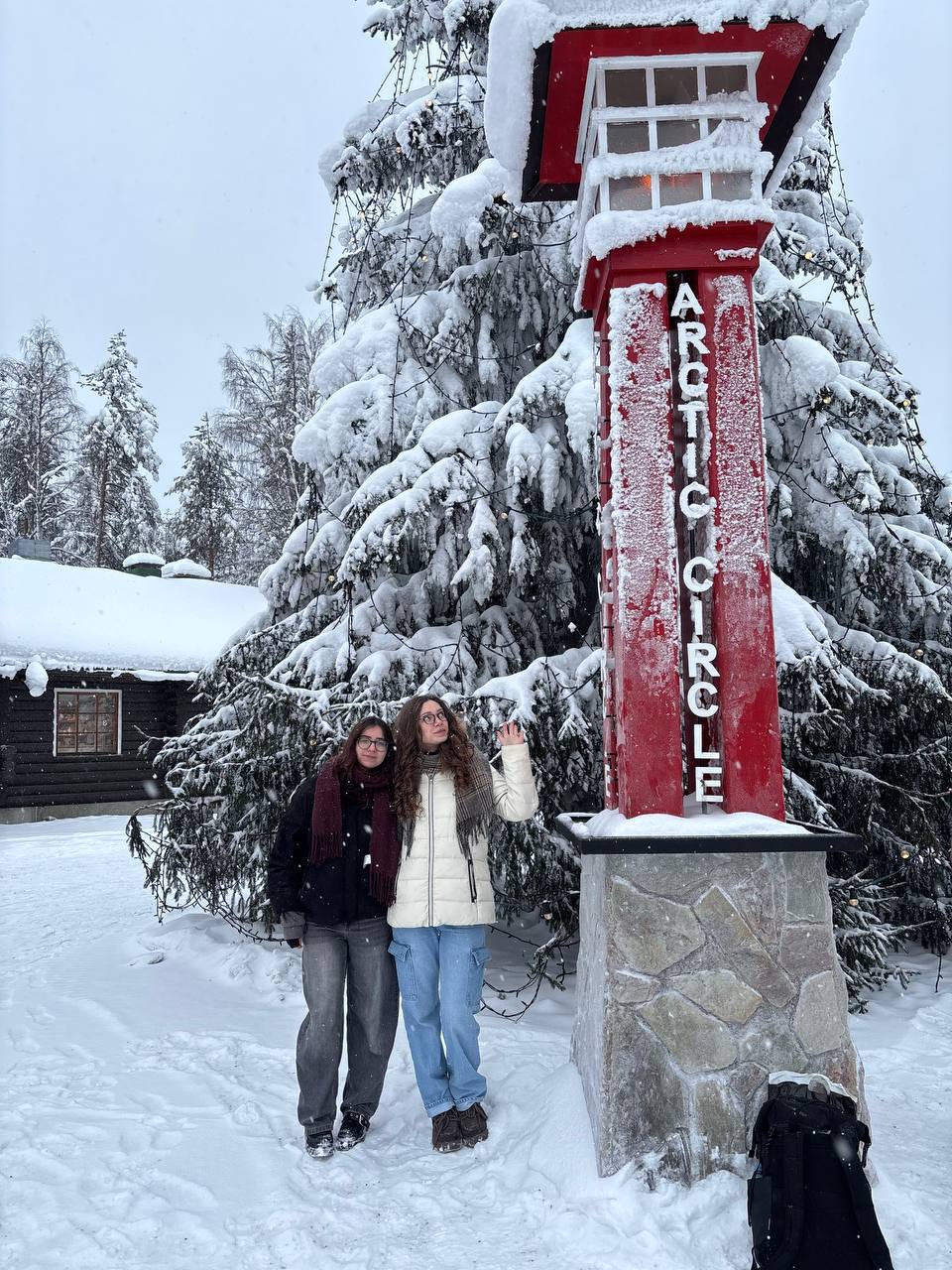
During our travels, we visited the famous Santa Claus Village, witnessed the stunning Northern Lights, and learned how to build a campfire in the wild. Connecting with the Sami, the indigenous people of Finland, was an incredibly rewarding experience; they shared stories of their traditional way of life and the centuries-old customs they so carefully preserve to this day.
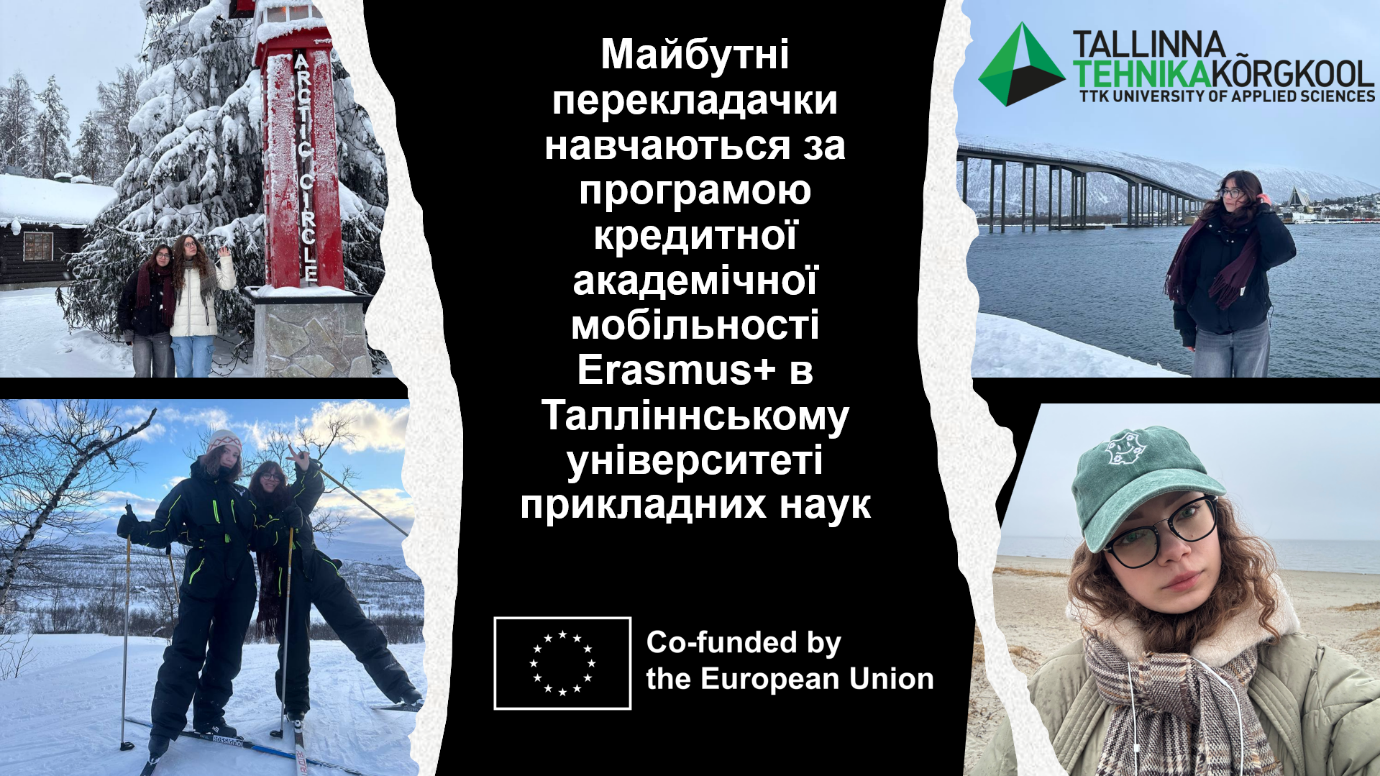
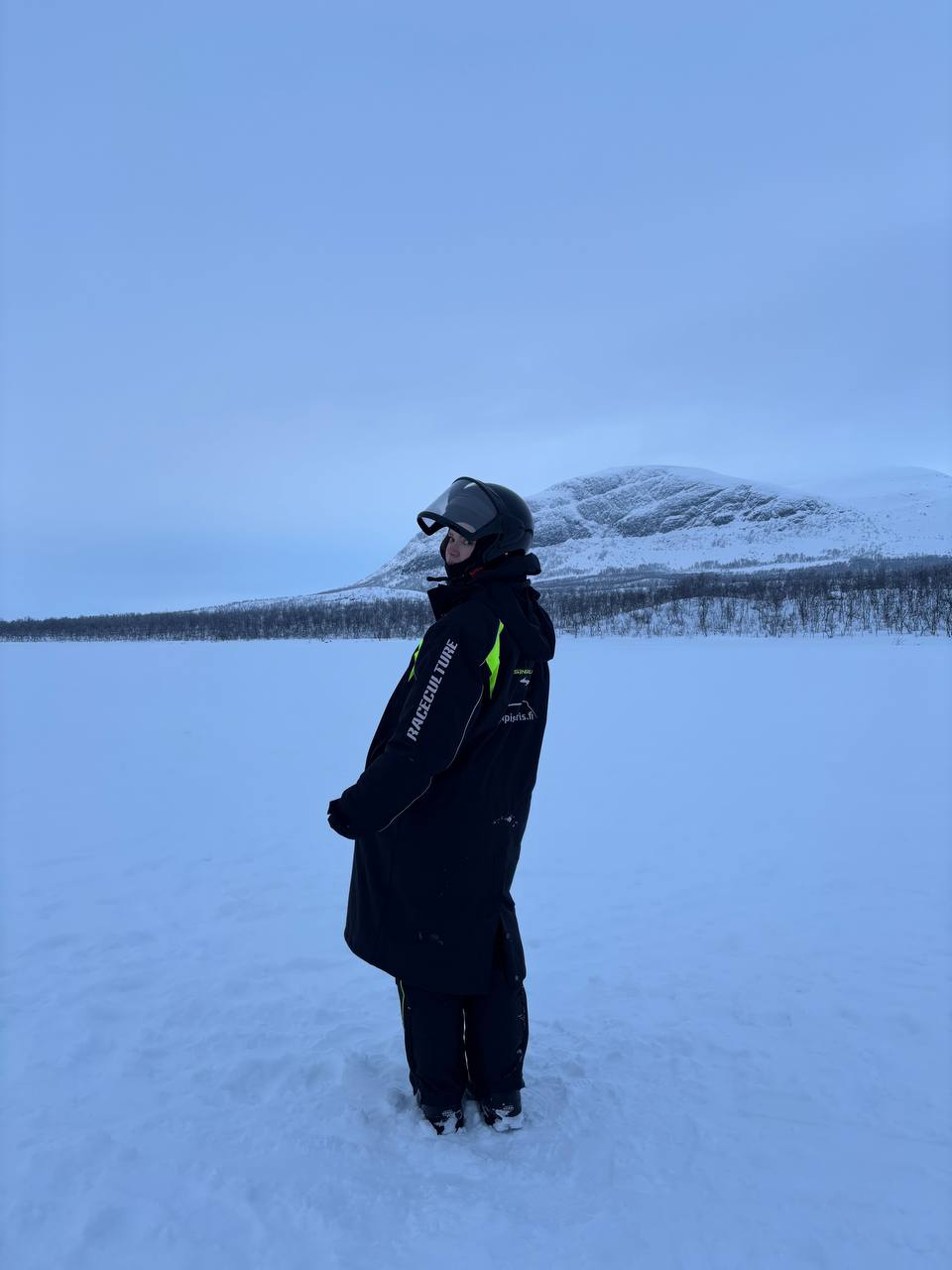
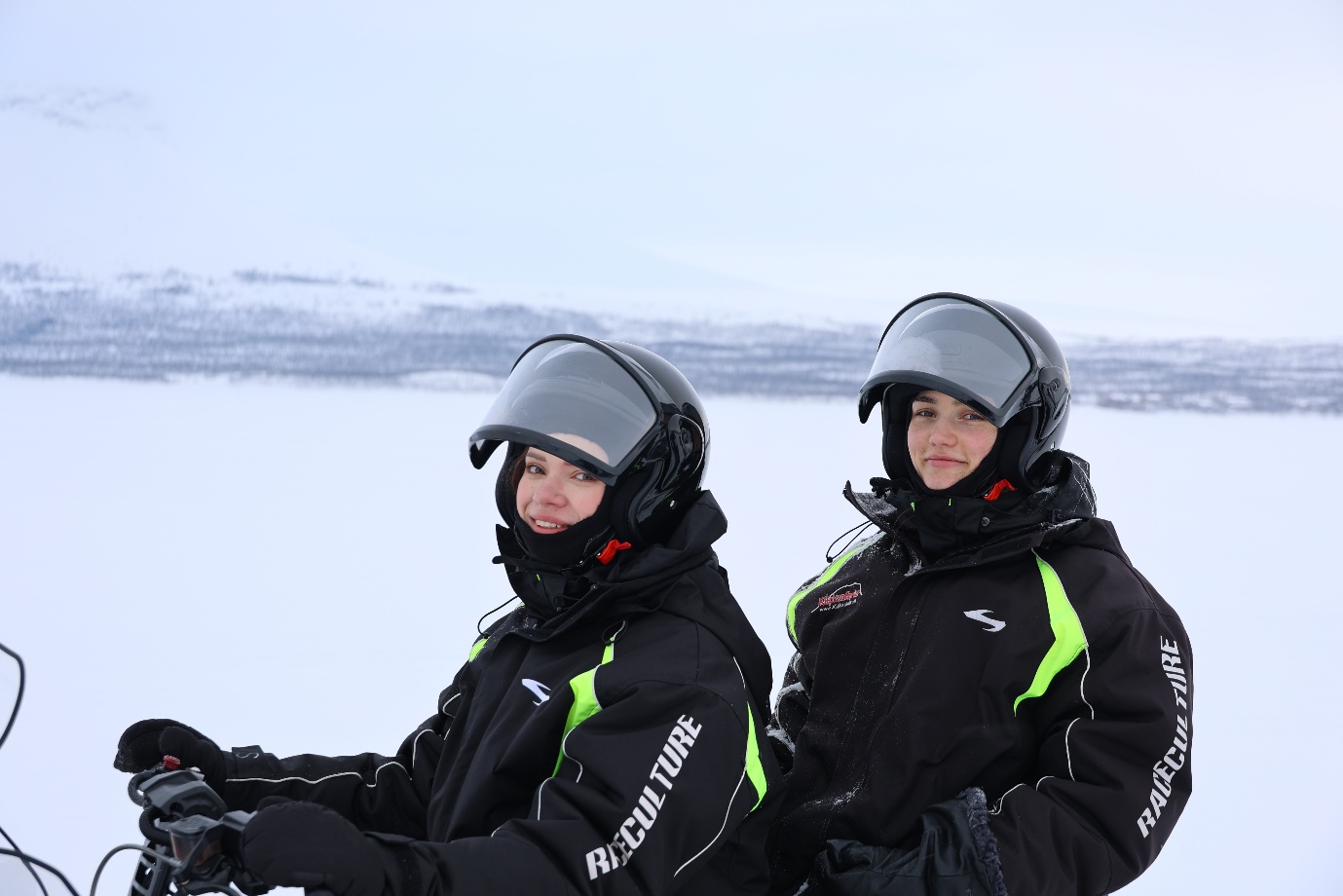
Our leisure time was also packed with outdoor adventures. We rode snowmobiles across a frozen lake at the point where the borders of Finland, Sweden, and Norway intersect, went skiing, and even fed reindeer by hand.
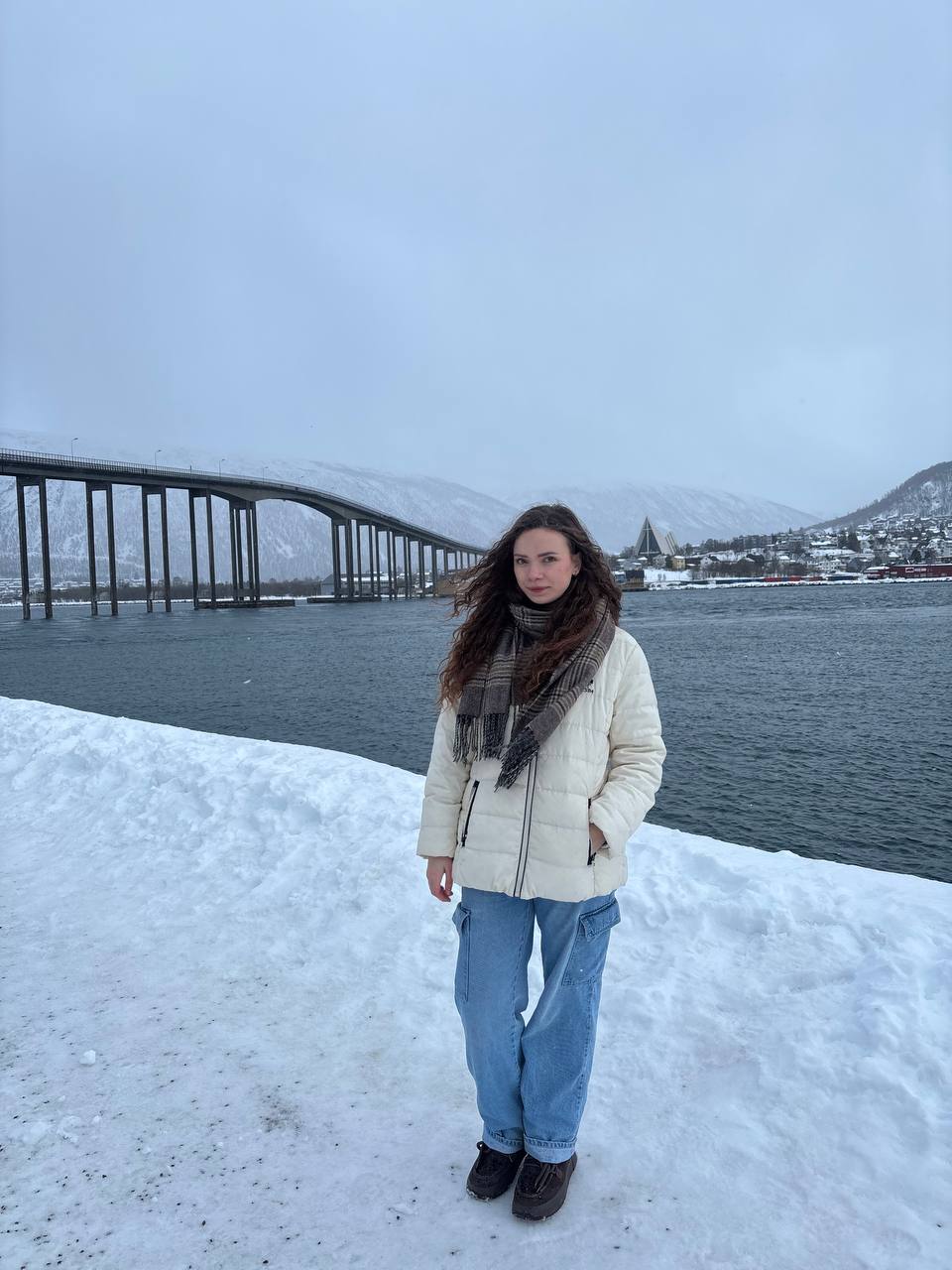
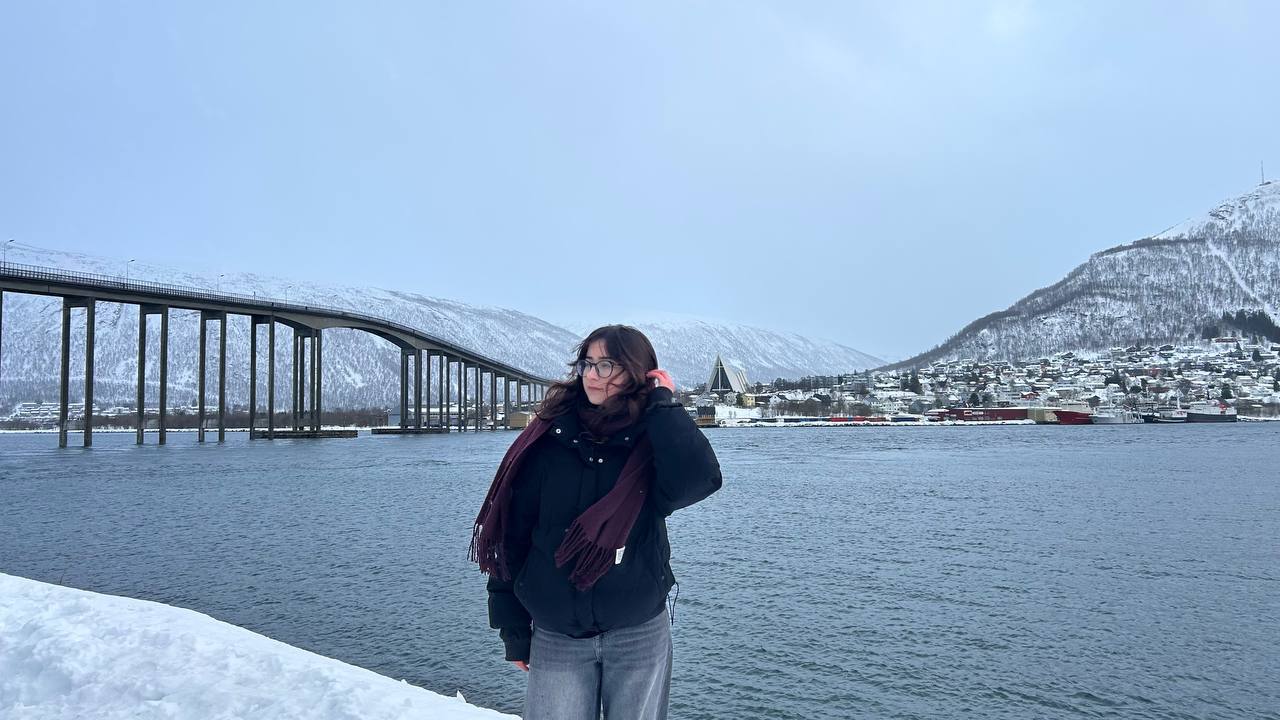
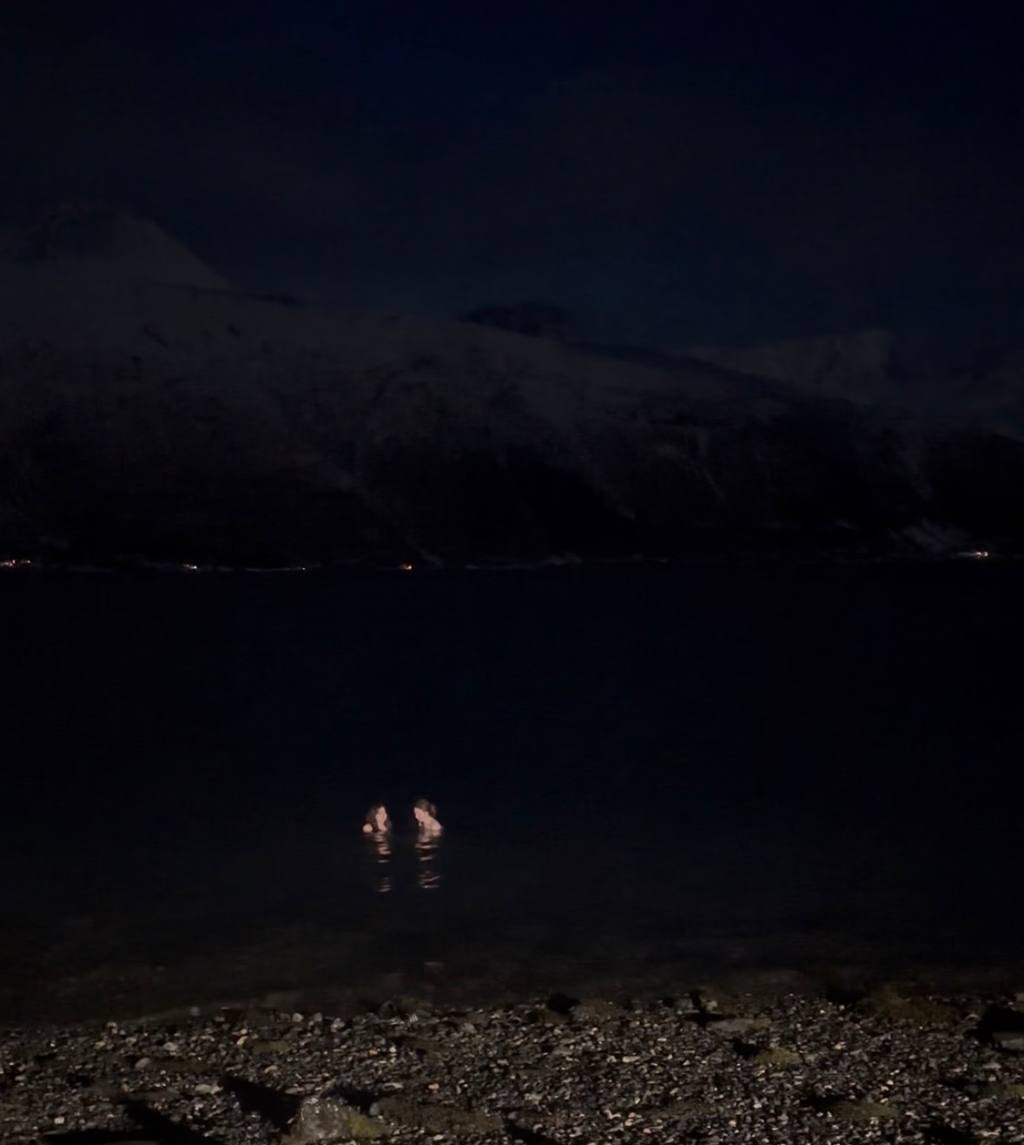
The next leg of our journey took us to northern Norway, where we had the unforgettable experience of plunging into the Arctic Ocean after warming up in a traditional Norwegian sauna. We were particularly captivated by the city of Tromsø, which seamlessly blends the rugged charm of the Arctic with the comforts and amenities of a modern European city.
I am deeply grateful to Poltava Polytechnic for allowing me to join this vibrant international academic community. Learning in such an environment has allowed me to expand my professional horizons, hone my language and communication skills, and build lasting friendships with people from all over the world. This experience has deepened my understanding of the European education system, vastly enriched my perspective, and set new benchmarks for my future studies and personal growth”.

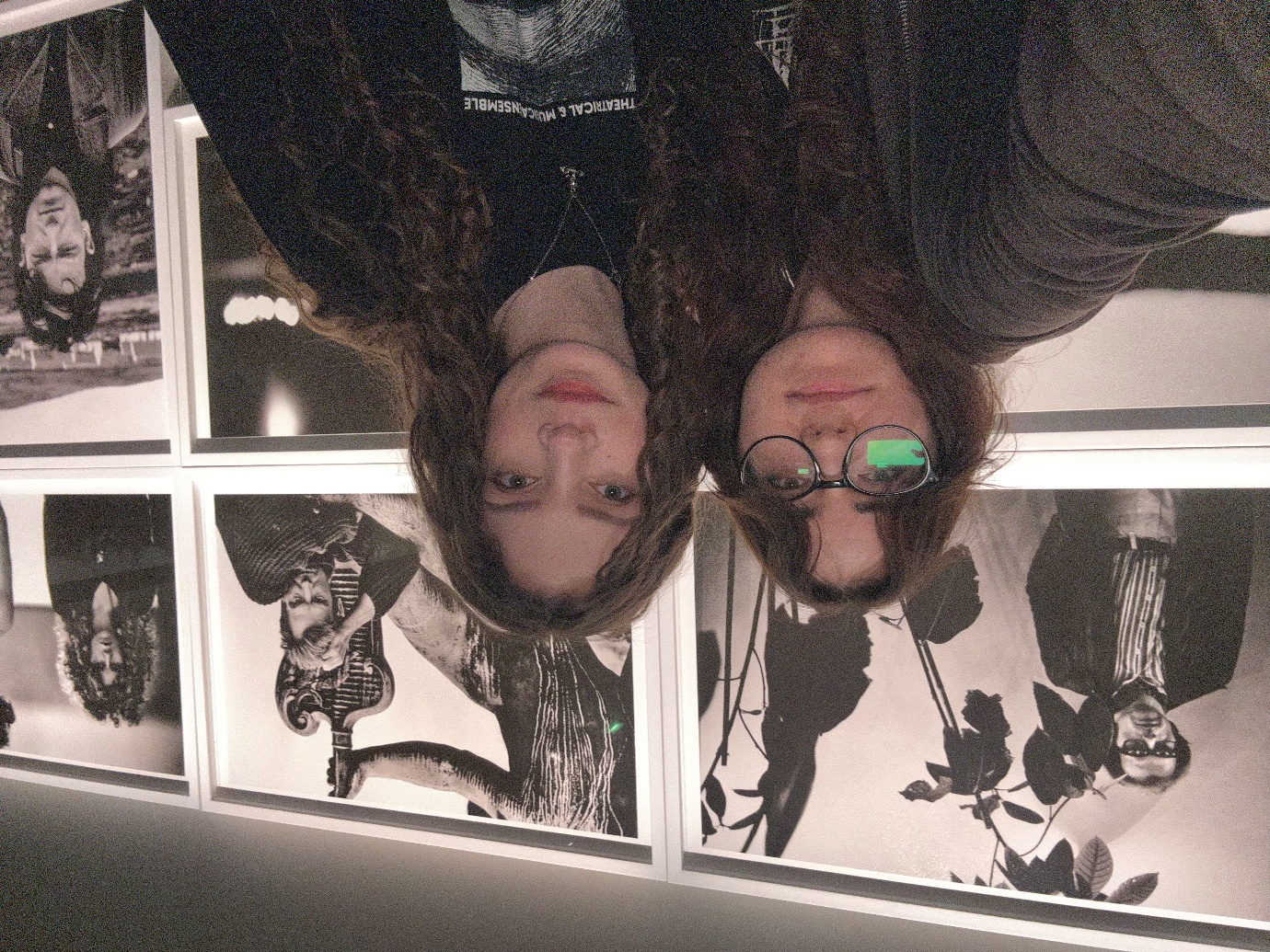
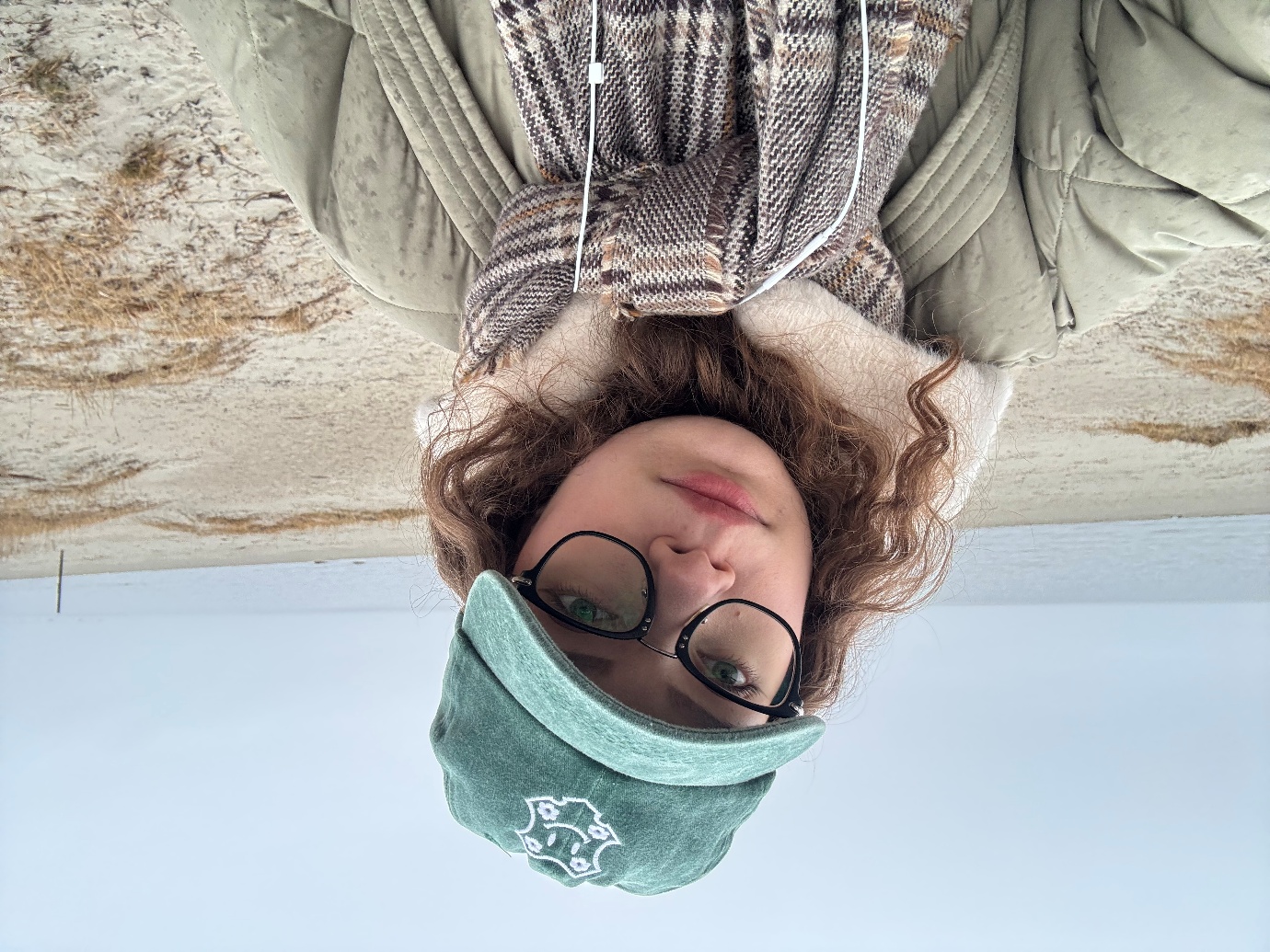
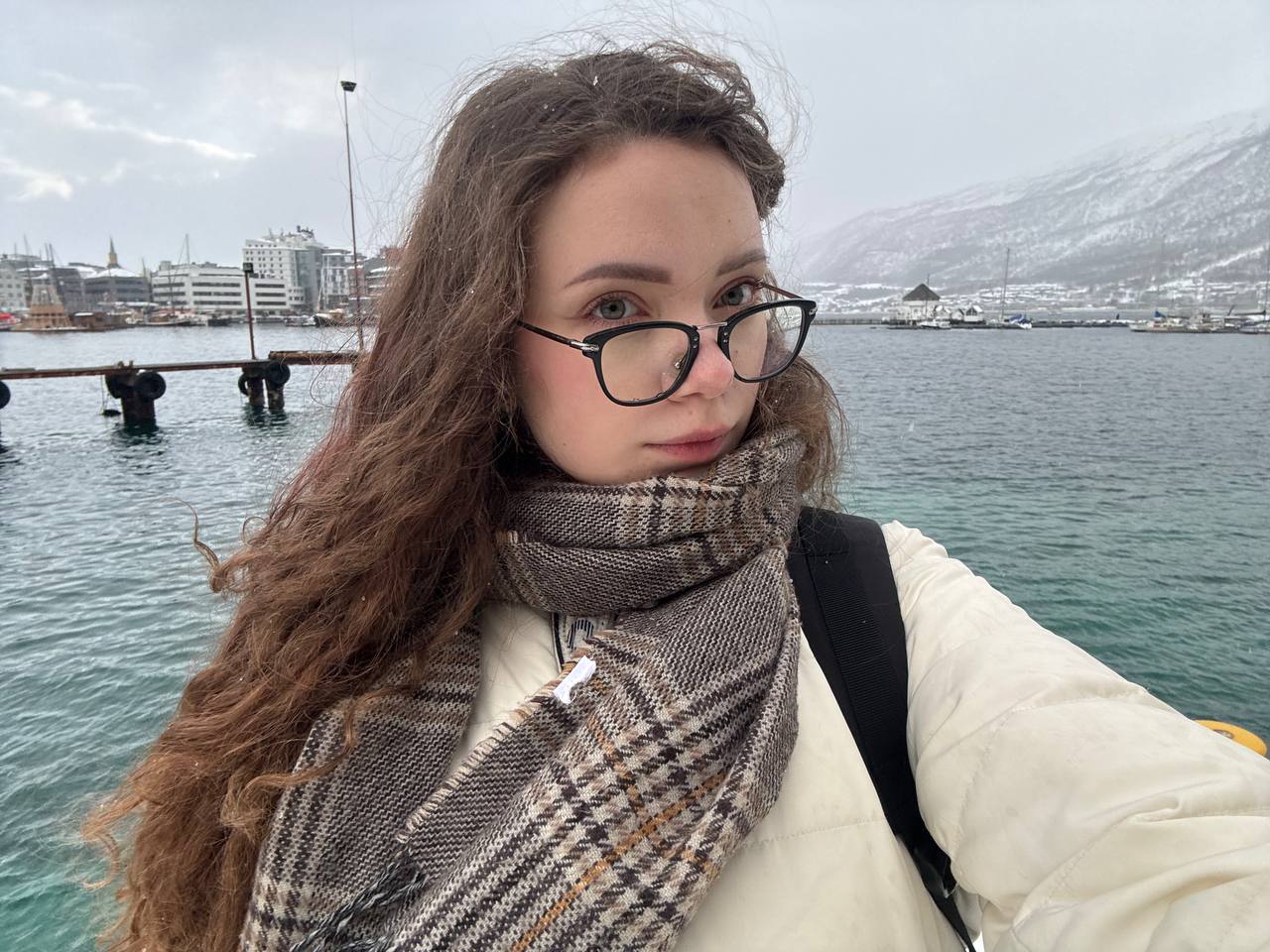
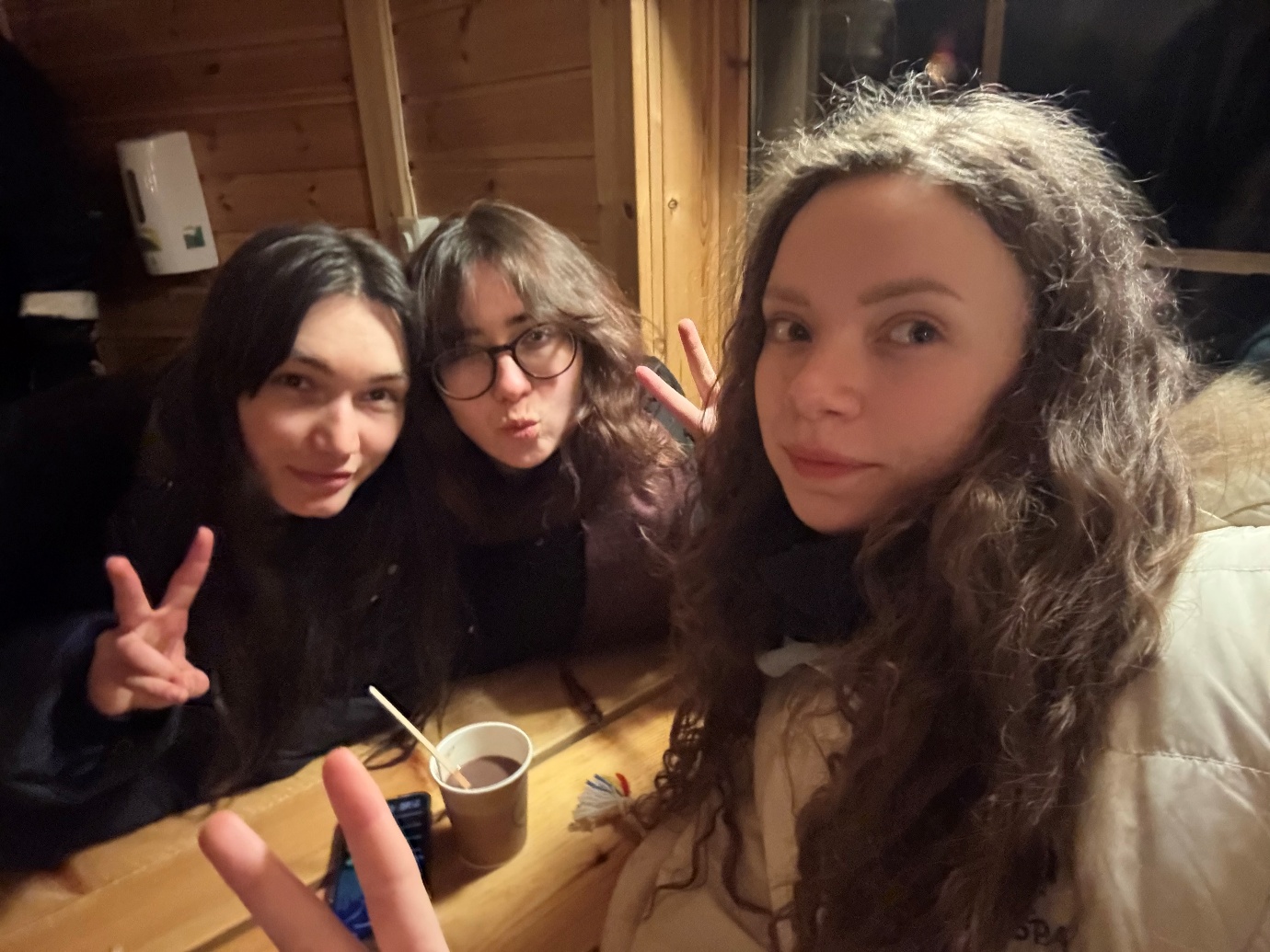
The experience of another participant in the academic mobility program, Anzhela Velychko, has proven to be equally rewarding and profound. While this semester gave Yeva a chance to structure her knowledge and explore entrepreneurship, Anzhela’s journey to Tallinn began with overcoming personal doubts. It evolved into a deep, practical immersion in the nuances of specialised translation and intercultural engagement. Here, Anzhela reflects on her adaptation to a new country, the unique aspects of mastering professional terminology, and the unexpected linguistic discoveries that pushed her beyond her comfort zone:
“The spring semester of 2025/2026 in Tallinn has been a transformative chapter in my life, far exceeding all my expectations. While preparing for the Erasmus+ academic exchange, I was naturally anxious about how quickly I would adapt to a foreign country, having never lived abroad for an extended period. Looking back on this journey, however, I realise those fears were entirely groundless. The decision to study in Estonia has brought nothing but positive growth and incredibly valuable experiences.
For me, as an aspiring philologist, studying at Tallinn University of Applied Sciences has been an invaluable practical learning experience. It offers a highly supportive environment for anyone looking to explore the diverse landscape of specialised, industry-specific translation. Throughout the semester, we delve into the nuances of translation across three distinct fields: textiles, technical subjects (specifically electronics), and logistics. Among these, the transport and cargo shipping sector has particularly captured my interest.
It has been incredibly rewarding to grasp the intricacies of these processes not only from our instructors’ explanations, but also through direct communication with other students. Their passion for their respective fields is truly inspiring. Since these industries were completely new to me, this encouraging atmosphere and the opportunity to exchange experiences have been vital to my development.
I would also like to highlight the approach to teaching industry-specific English. The classroom atmosphere is consistently warm and highly professional: we regularly work in groups, our instructors employ modern, interactive methods to help us absorb the material effectively, and all interactions are grounded in mutual respect and partnership.
Our classes on the basics of entrepreneurship have been equally rewarding and informative. Throughout the semester, we have built a wide range of essential soft skills required for business planning and management. As a tangible testament to our efforts, our team’s project ranked among the top 20 of all registered startups at the university. This collaborative experience taught us invaluable teamwork skills that proved highly beneficial in our oral and written English communication classes. In these lessons, we analyse various real-world case studies, which require us to apply our newly acquired knowledge and professional vocabulary directly.
The mobility program also offers us a wonderful opportunity to study Estonian, which deepens our understanding of local culture and everyday life. Learning extends far beyond the classroom: for instance, we recently visited the Estonian History Museum alongside our instructor. Our Estonian language classes are characterised by a warm, welcoming atmosphere, as we take the course alongside other international students. Acquiring a new language together not only makes the learning process more approachable, but also fosters close connections, helping to unite our diverse international student community.
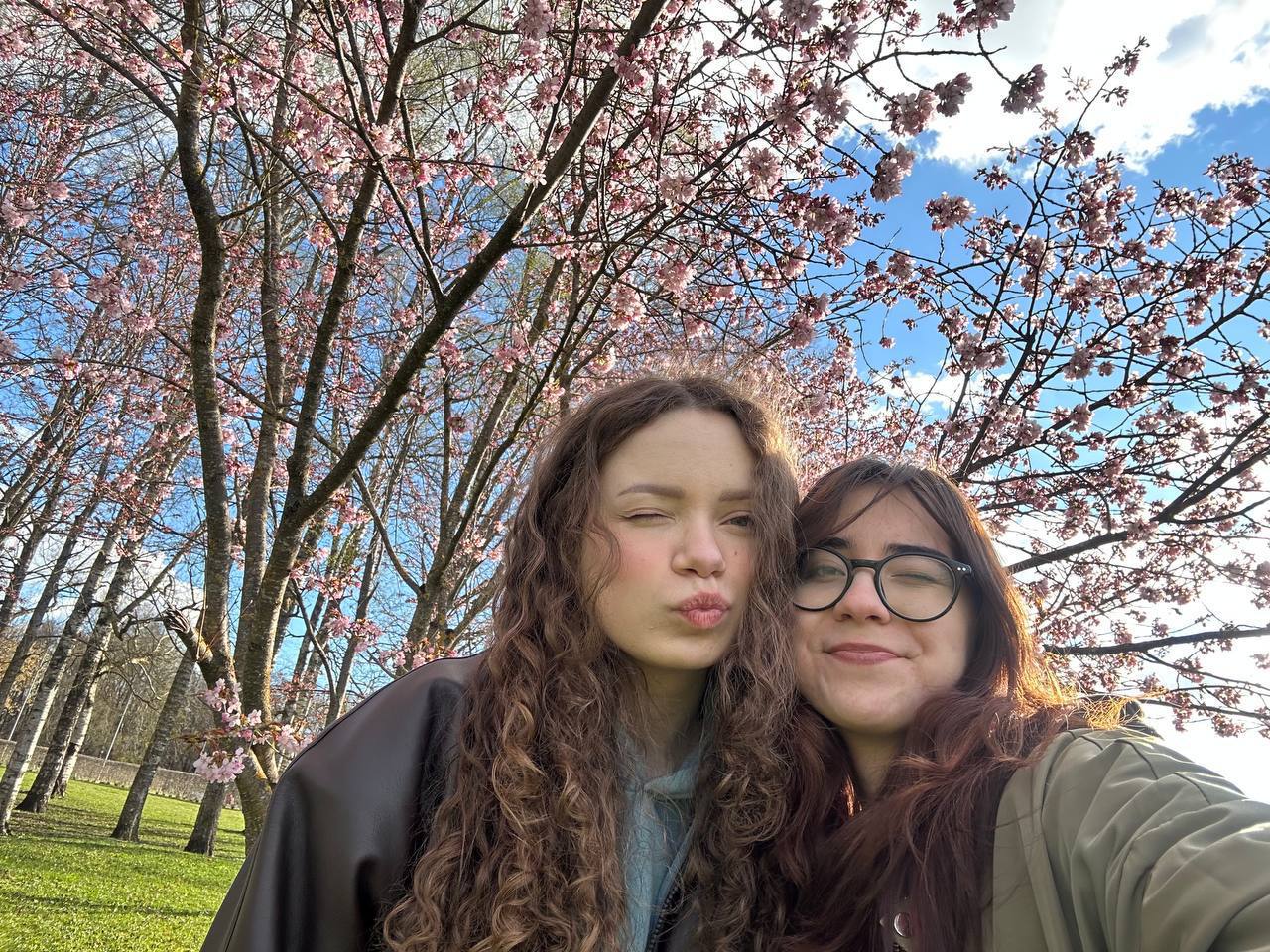
Studying in such an international environment has allowed me to form close friendships with students from Belgium, Germany, France, Hungary, and, of course, Estonia itself. Together, we travelled to Finland, where we had the chance to delve into the lifestyle, culture, and historical heritage of the Nordic countries.
The journey also brought some delightful personal discoveries. For instance, we met a German student who is currently learning Ukrainian. Since we study German at our home university, this shared linguistic interest created an excellent opportunity for mutual support and real-time language practice. This friendly exchange has proved to be both highly practical and deeply inspiring for us.
Plunging into the freezing waters of the Arctic Ocean was both a unique challenge and an incredibly vivid memory. In the past, I would never have dared to take such a leap, but the vibrant atmosphere of an academic exchange inspires courage and invites you to test your own limits. Through continuous social engagement, public speaking, and everyday interactions, I was able to step outside my comfort zone and substantially refine my communication skills. Moreover, connecting with other Ukrainian exchange students in Estonia – who generously shared their own experiences and practical advice – provided us with a deeply reassuring and vital support system.
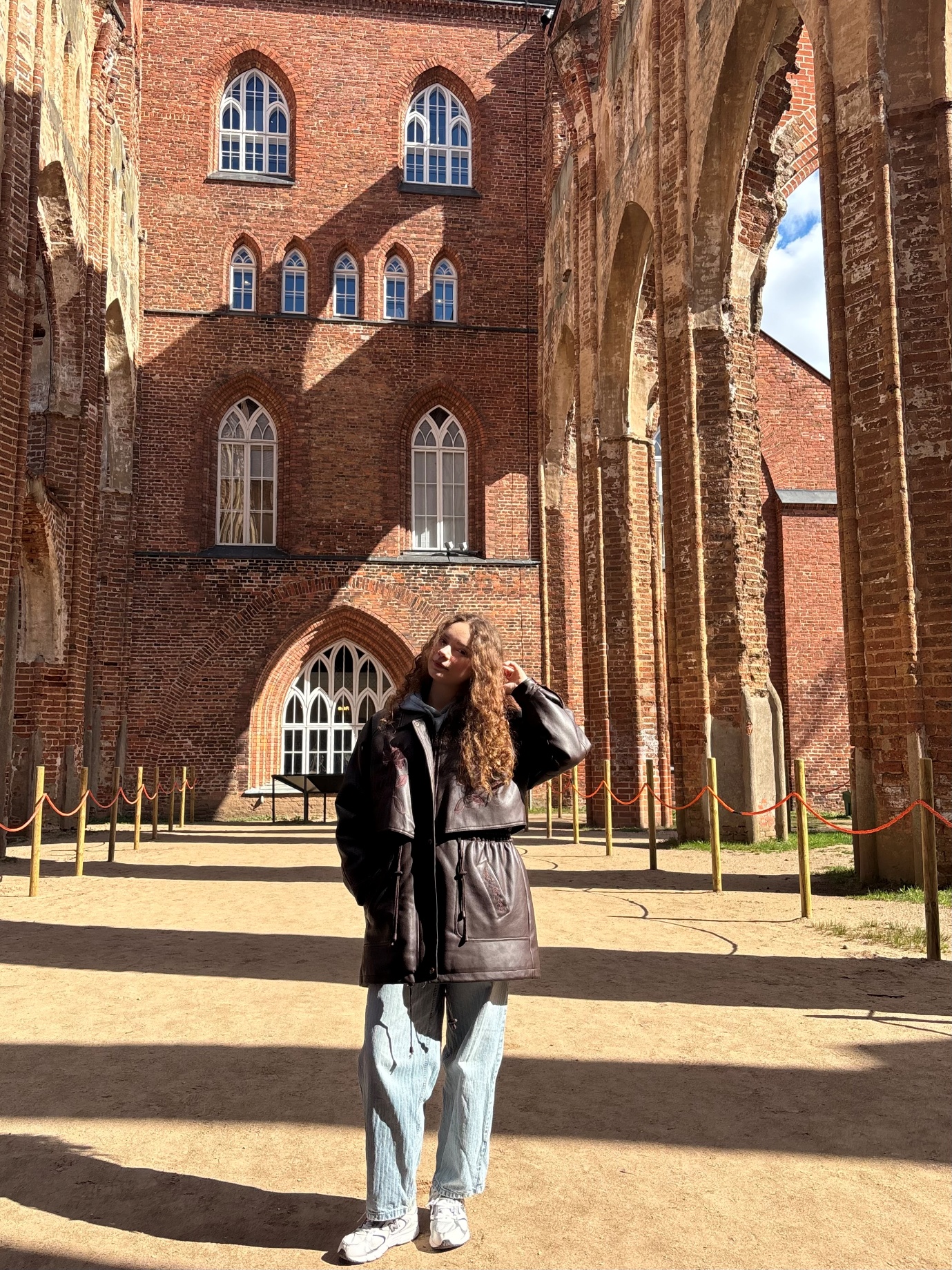
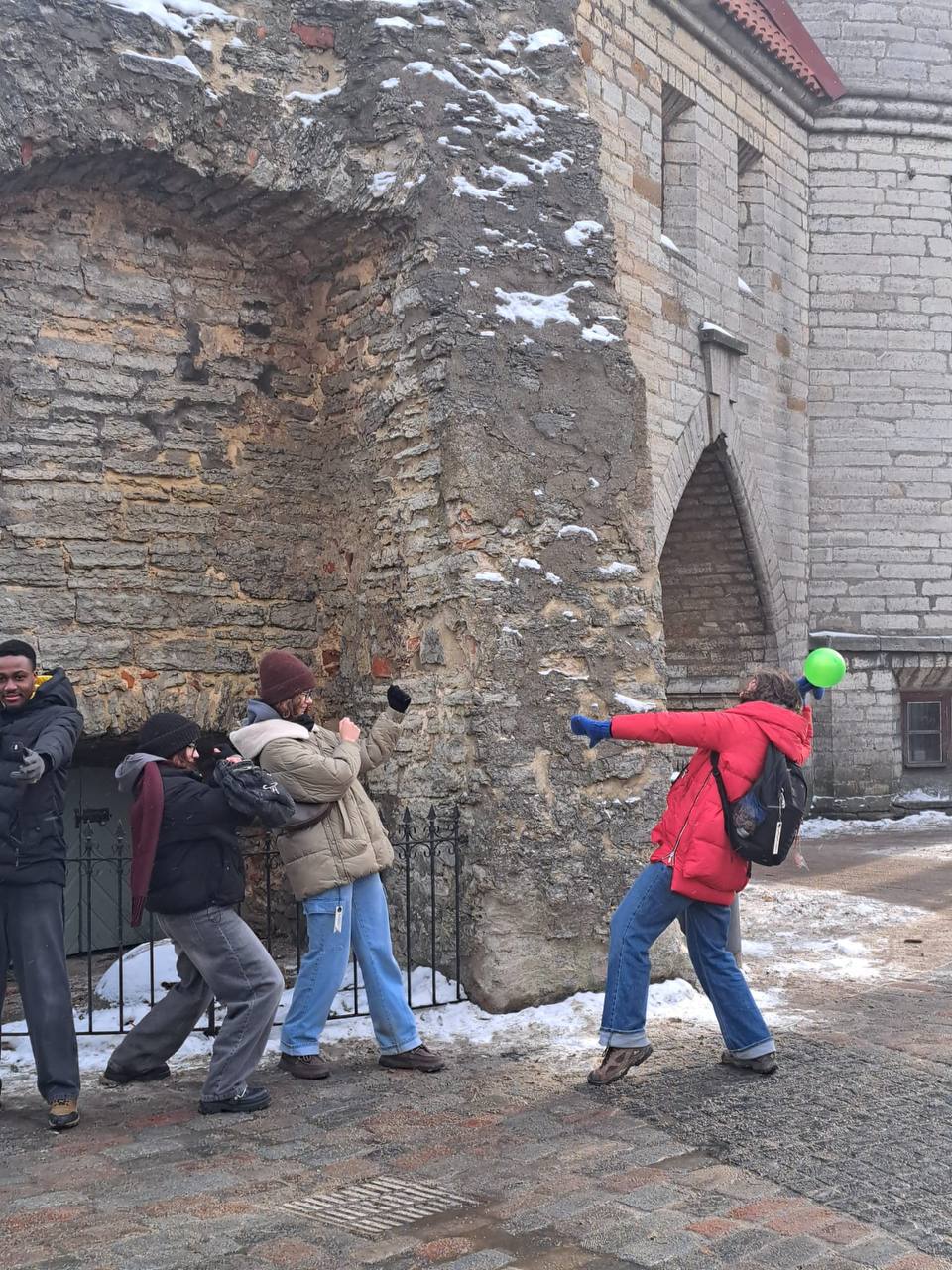
The Erasmus Student Network (ESN) played a pivotal role in enriching our social lives. From the very beginning of our stay, its representatives warmly supported newly arrived students during their transition, hosting a variety of integration events designed to expand our social circles. Throughout our first month, thematic gatherings were held almost daily. Together with ESN, we explored Tallinn’s Old Town – a UNESCO World Heritage site – in wonderful detail. It is a unique historical district where the ancient past organically blends with the dynamic rhythm of modern life. Through these shared activities, we participated in quests, took informative tours, completed interactive team challenges, and strolled through the historic streets, deepening our connection to the city.
Additionally – and this was an unexpected gift for me – I had the opportunity to converse with native Japanese speakers! This marked my very first time practising the language directly with native speakers. Although my grasp of Japanese is still quite limited, I was absolutely on cloud nine. It was incredible not only to practice what I know, but also to hear firsthand answers to questions that you cannot find in online blogs or documentary videos.
Immersing myself in such a diverse environment has helped me better grasp the socio-cultural dynamics of different countries. As an aspiring philologist, I find this understanding vital; engaging in cross-cultural communication requires us to consider differences in worldviews and linguistic contexts actively. Consequently, our daily interactions were guided by a universal intercultural rule: extending politeness, treating others with respect, and genuinely valuing the opportunity for dialogue. These simple yet profound principles united us all, transcending our diverse countries of origin.
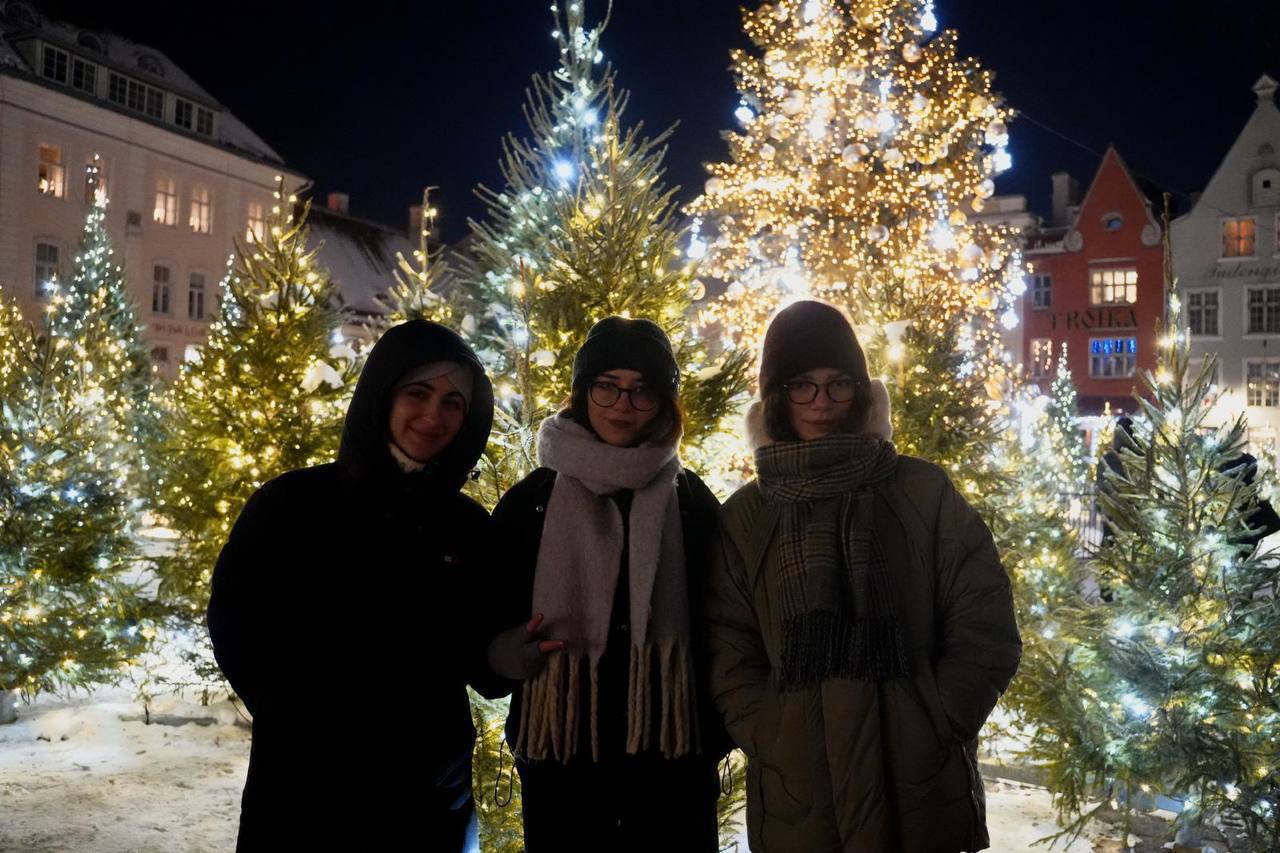
This semester has been a deeply significant personal and academic milestone for me. Looking back, it is rewarding to see how my initial anxiety about the unknown gave way to genuine communication and lasting friendships with students from all corners of the globe. I have thoroughly enjoyed adapting to Estonia’s measured pace of life and admiring its rich architectural heritage. The winter season, a true calling card of this northern nation, also deserves a special mention. It was here in Tallinn that I rediscovered the beauty of winter; despite the persistent winds and low temperatures, the snow-covered city evokes a unique sense of harmony and cosiness.
I am deeply grateful to my home institution, National University “Yuri Kondratyuk Poltava Polytechnic” for their continuous support, assistance, and for providing me with the opportunity to gain such an inspiring experience. Participating in this academic mobility program has been a vital and timely milestone on my path toward professional and personal growth!”.
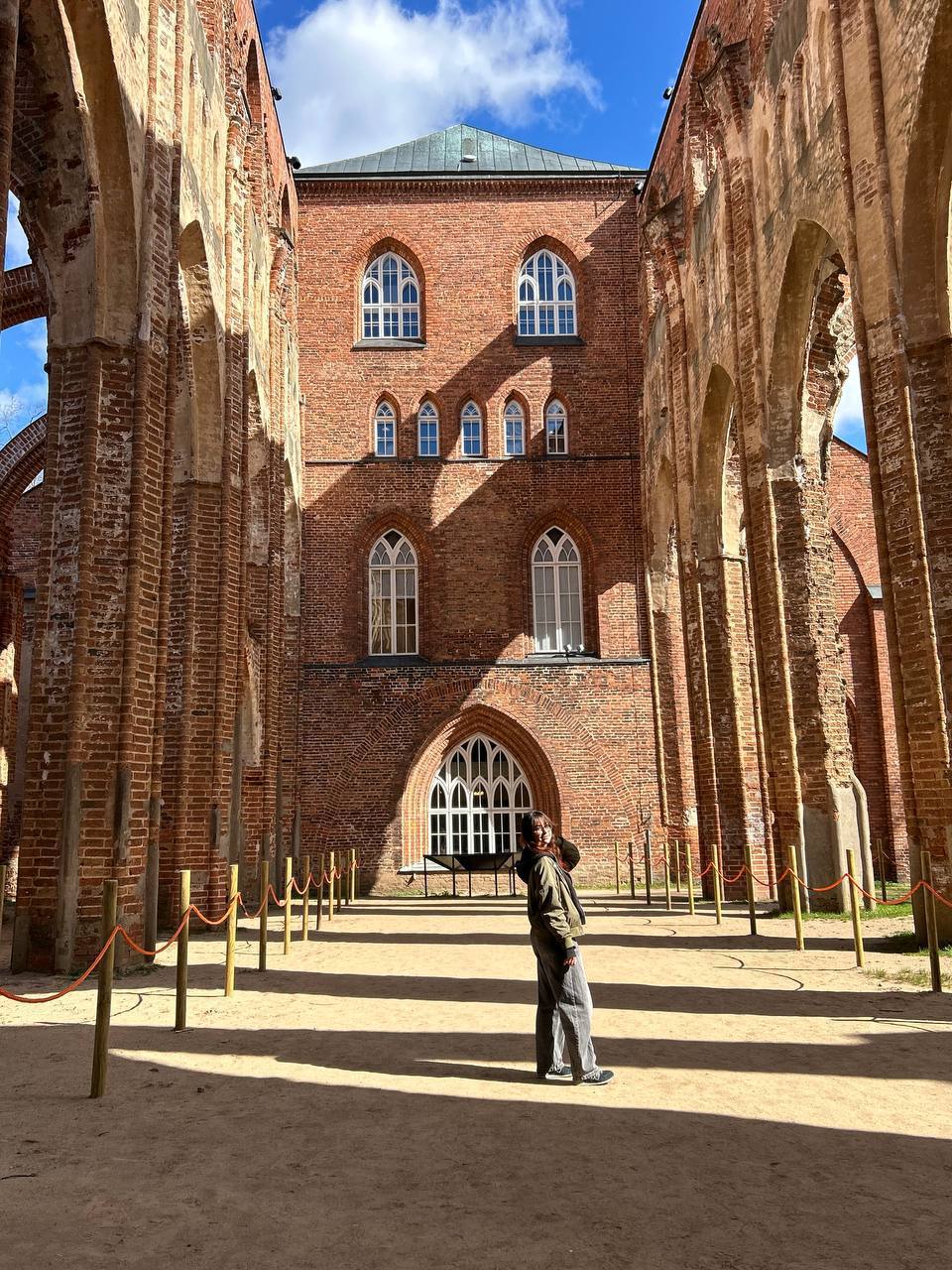
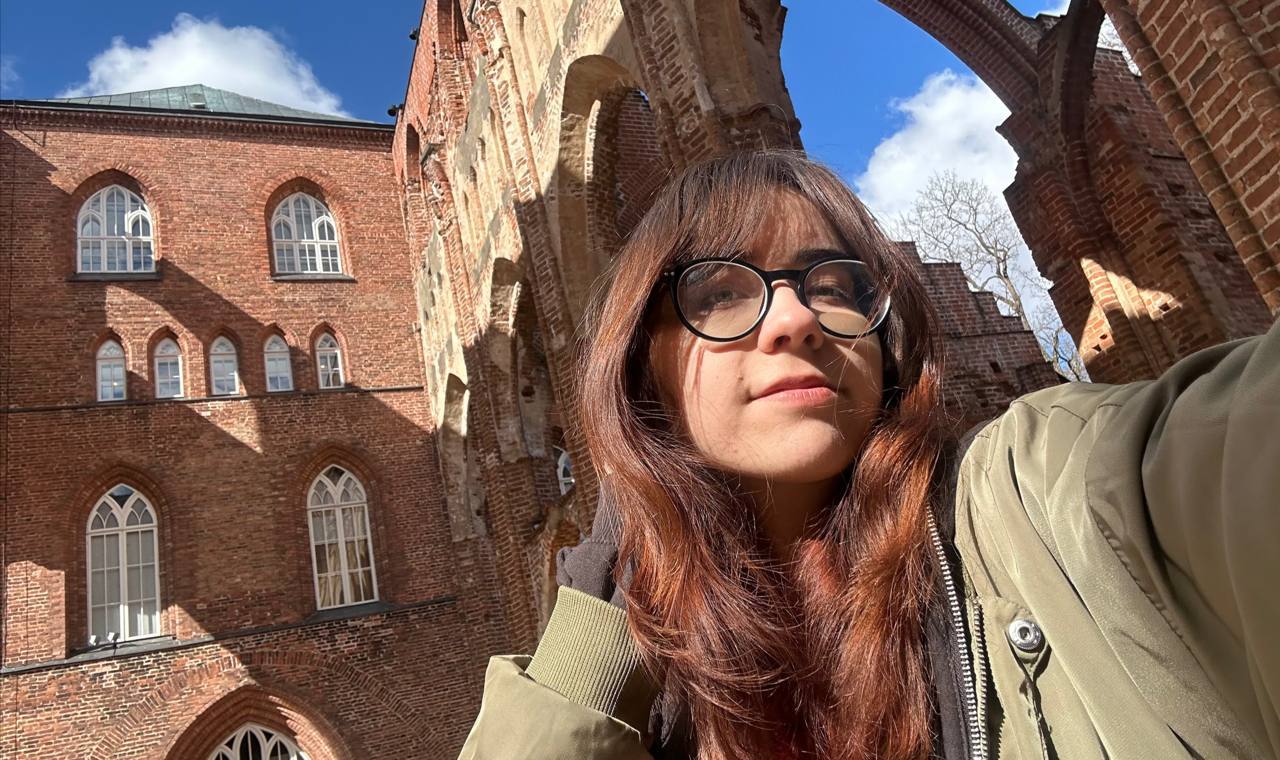





“As Poltava Polytechnic’s International Relations Coordinator, I am deeply pleased to witness the academic and personal achievements of our students. Yeva and Anzhela’s journey demonstrates that participating in credit mobility programs like Erasmus+ goes far beyond classroom learning; it is about building resilience, adaptability, and the capacity to collaborate within diverse international teams. Our university remains dedicated to supporting such initiatives, as we understand the vital importance of providing today’s youth with access to progressive European educational practices and practical expertise. I am confident that the skills they have acquired will greatly support them in their future professional growth. At the same time, their successful adaptation and academic accomplishments will inspire other students at our polytechnic to explore new academic horizons,” – says Anna Pavelieva, PhD in Philology, Associate Professor of the Department of Germanic Philology and Translation, and Poltava Polytechnic’s International Relations Coordinator.
The partnership between Poltava Polytechnic and TTK University of Applied Sciences has been successfully developing for the past three years. A particularly dynamic area of this cooperation is participation in Erasmus+ Blended Intensive Programmes (BIP). During this time, representatives of our university – both teachers and students – have participated in such projects three times: in the spring and autumn of 2024 and in the autumn of 2025.
As a reminder, faculty members of Poltava Polytechnic can participate in academic mobility and internship programs. At the same time, students can study abroad under credit academic mobility grant programs of Erasmus+ for a semester or an entire academic year at leading universities in Austria, Greenland, Denmark, Estonia, Spain, Lithuania, Latvia, Norway, the Netherlands, Germany, Poland, Portugal, Romania, Slovakia, Finland, and the Czech Republic.
For more detailed information regarding current internship, teaching, and academic mobility programs abroad, please contact the International Relations Department (Room 213-C, interoffice@nupp.edu.ua).