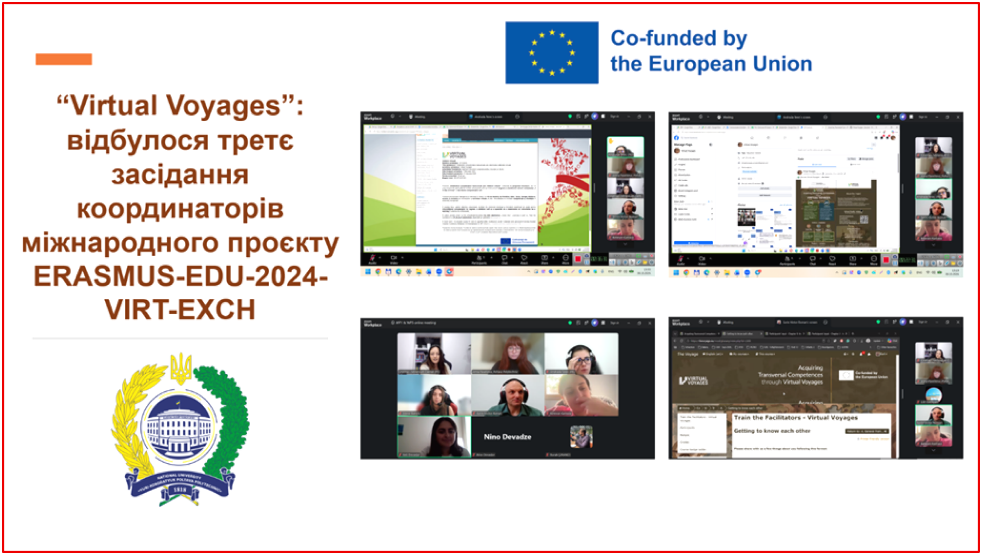
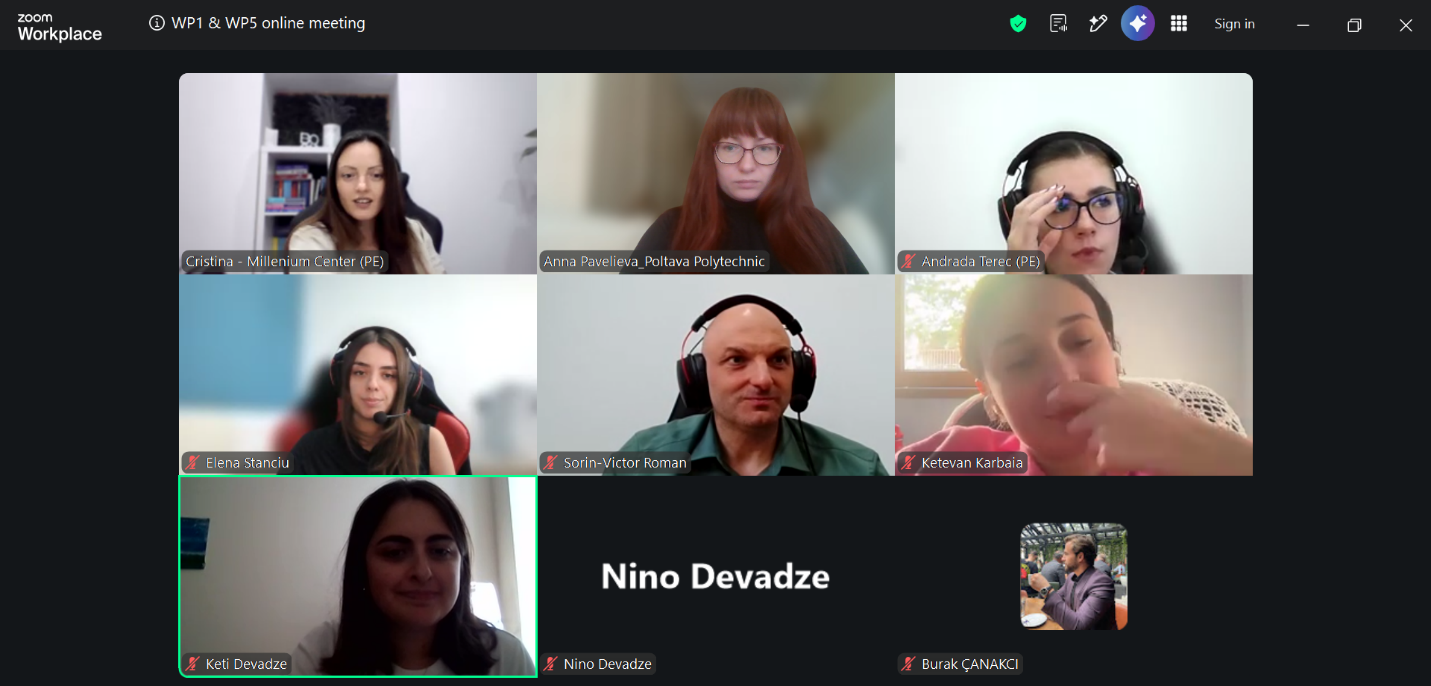
On October 8, 2026, the third extended online coordination meeting of the partners of the international project “Acquiring Transversal Competences through Virtual Voyages” (registration number ERASMUS-EDU-2024-VIRT-EXCH No. 101193593), implemented under the European Union’s Erasmus+ programme in the field of virtual exchanges in higher education and youth, held its third online coordination meeting.
The meeting brought together work package leaders and representatives of higher education institutions and partner organisations from seven European countries. The meeting aimed to review interim outcomes from the initial implementation period, align the consortium's strategic steps, and finalise preparations for launching the first wave of student virtual exchanges.
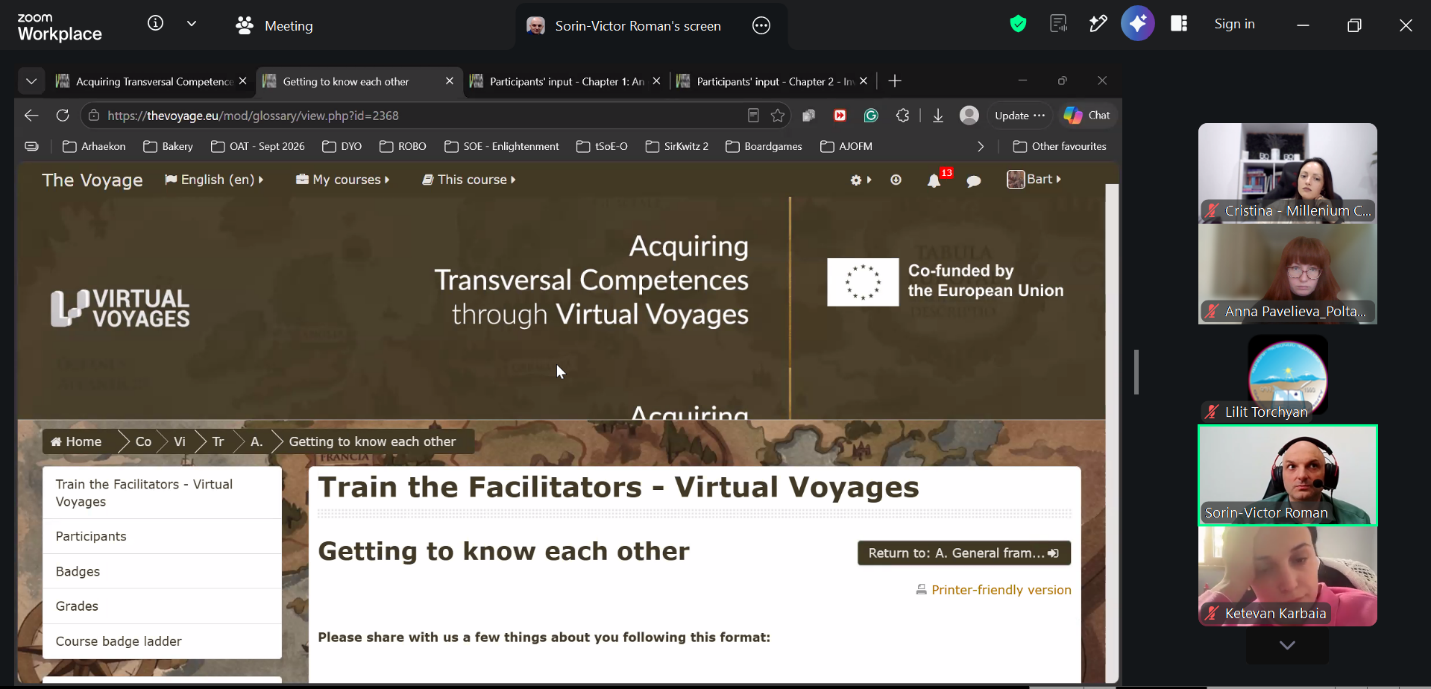
Participants focused on the testing results of the innovative digital educational platform developed specifically for virtual voyages. The partners thoroughly analysed the initial alpha-testing outcomes for the learning environment, the integration of interactive and gamified tools, and user feedback. The partners agreed on a schedule to transition to the final version of the platform, with the full release scheduled for early November. This will ensure students' uninterrupted access to interactive modules geared towards the practical development of transversal competences, adaptability, and critical thinking.
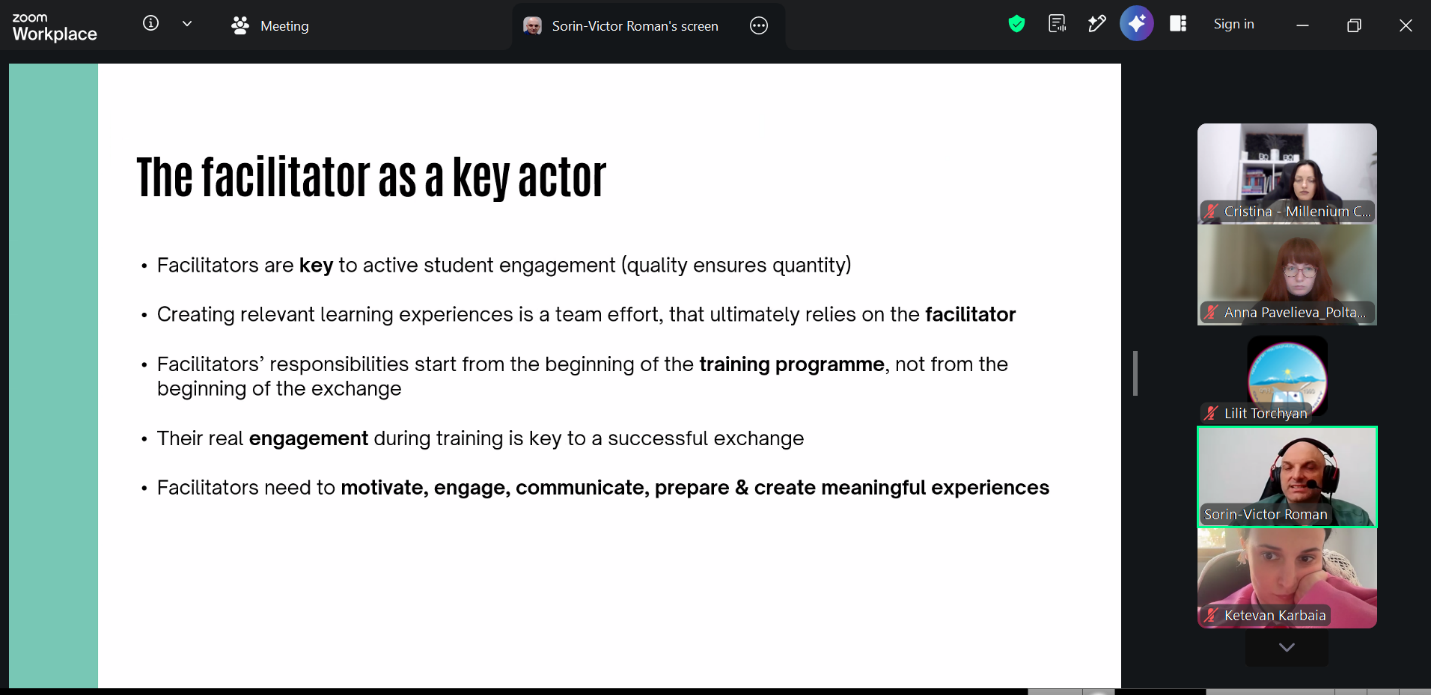
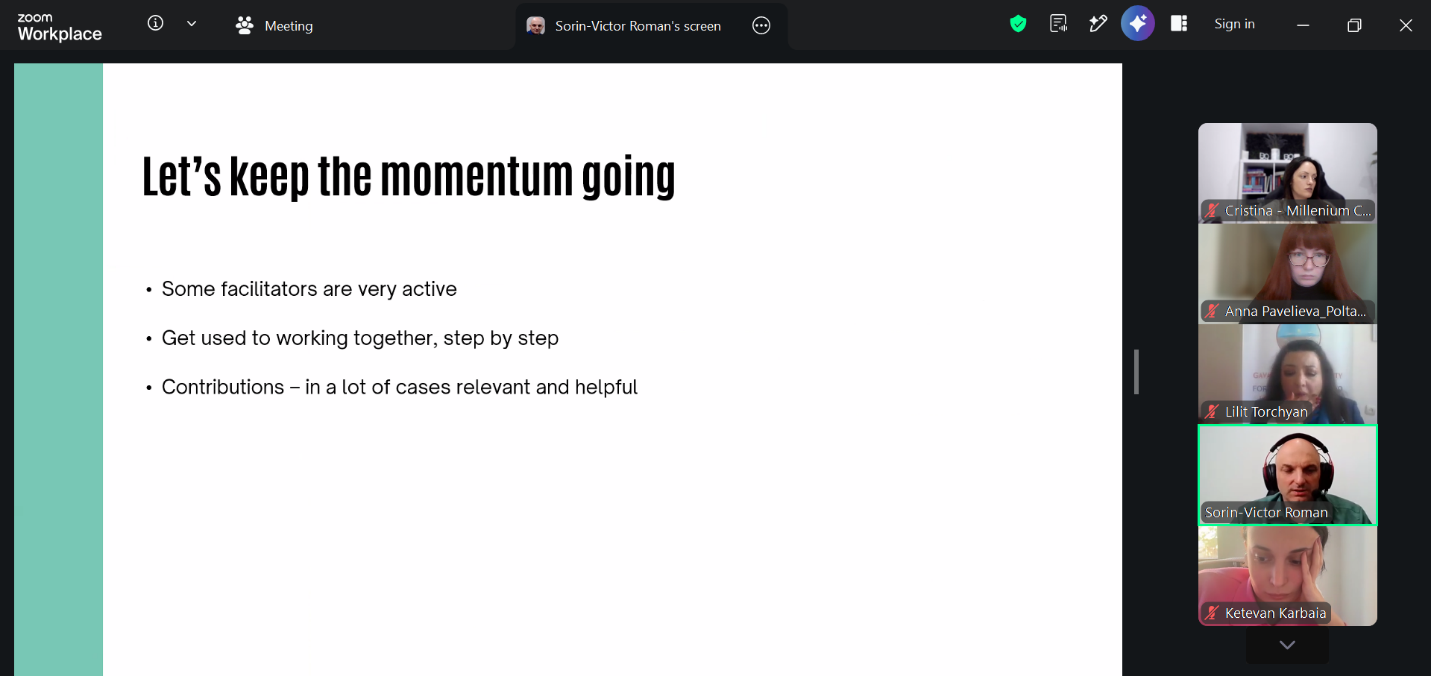
A key focus of the discussion was progress in preparing an international pool of facilitators who will provide substantive, psychological, and pedagogical support during intercultural sessions. Consortium representatives highlighted the strong momentum of training sessions focused on dialogue-modelling methodologies, synchronous and asynchronous interaction, and learning-achievement assessment algorithms. Successful completion of the preparatory stage will pave the way for verifying acquired knowledge and issuing international certificates to participants according to the Youthpass standard.
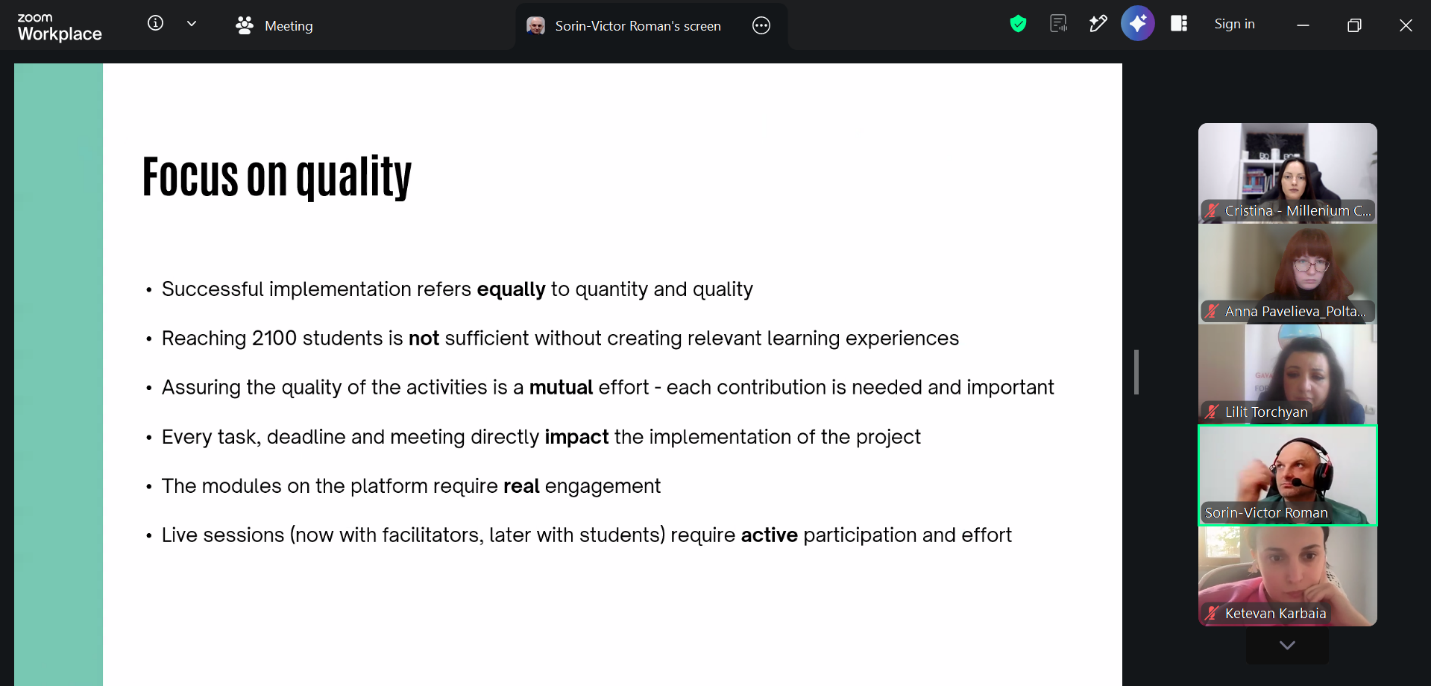
The agenda prioritised the internal quality assurance system and the methodology for evaluating the effectiveness of the virtual exchanges. The coordinators emphasised that the consortium's key benchmark is not merely quantitative metrics of youth engagement, but, above all, the depth and practical value of their learning experience. For this reason, the program combines flexible asynchronous study of materials on the platform with “live” synchronous online sessions and individual mentoring support. This approach fosters a strong culture of engagement, enabling each student to demonstrate leadership skills, actively participate in resolving real-world case studies, and gain hands-on experience in intercultural interaction.
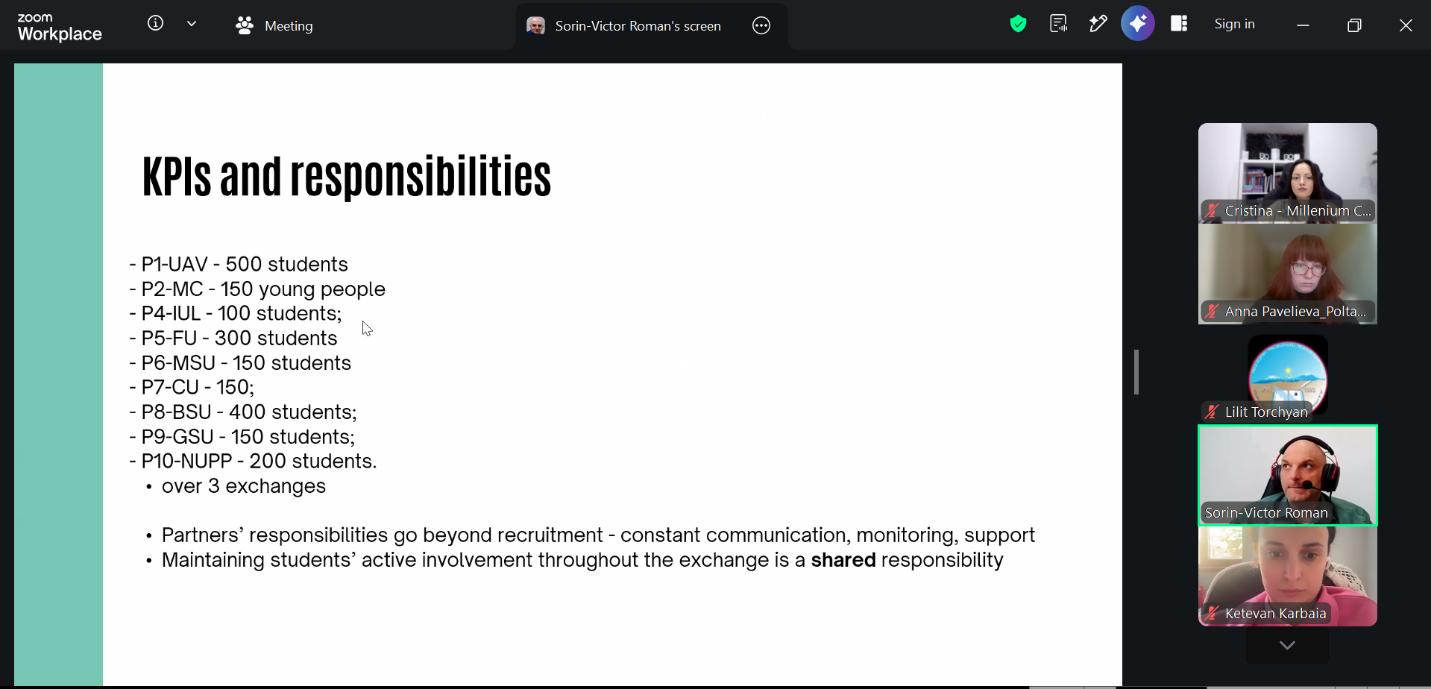
The initial outcomes of the recruitment campaign targeting student youth also inspired considerable optimism among the partners. Consortium coordinators noted extraordinary interest in participation: at several partner universities, the number of submitted applications has already surpassed 200. Overall, the initiative aims to bring together more than 2,100 students from various countries through virtual exchanges, and the first international academic cohorts have already formed. They are preparing to launch their joint learning voyages.
In parallel, the meeting participants agreed on a joint dissemination strategy and project communication tools. The partners are currently localising and translating promotional and methodological materials into their national languages, including Ukrainian, and actively updating the official website and social media communication channels. Beyond internal academic cooperation, the consortium has begun developing a partner network with external stakeholders, secondary educational institutions, the civil society sector, and the business community, to involve practising experts in delivering guest lectures and ensure the maximum applied value of the skills acquired.
The online coordination meeting concluded with agreement on a clear action plan for the immediate period and reaffirmed strong synergy among all international partners. Implementing the “Virtual Voyages” project represents a significant contribution to our university's internationalisation processes, opening opportunities for Ukrainian students to develop a global mindset, leadership, and intercultural cooperation within the European academic community.
According to Anna Pavelieva, Project Coordinator from National University “Yuri Kondratyuk Poltava Polytechnic”, participation in such a large-scale initiative is of strategic importance for the development of the academic community: “The “Virtual Voyages” project opens up unique opportunities for our students and faculty to integrate into the European educational space without borders. In today's context, developing transversal competences, critical thinking, adaptability, digital literacy, and intercultural interaction is a key prerequisite for a young person's success in the labour market. The synergy and mutual trust among partners from seven countries prove that virtual exchanges are a powerful instrument of resilience and global solidarity. The successful implementation of such ambitious international initiatives is possible thanks to the comprehensive support of our university's leadership. I express my sincere gratitude to Volodymyr Onyshchenko, President of Poltava Polytechnic, and Olena Filonych, Rector of the University, for their continuous attention to the development of international activities, full support of researchers' project work, and the creation of modern conditions for the active participation of university youth in the European Union's Erasmus+ programmes”.
It is worth noting that practical implementation at the local level is already well underway: on September 24, 2026, the university team participated in a coordination meeting of partners of the Erasmus+ project “Acquiring Transversal Competences through Virtual Voyages” (No. 101193593), during which, together with colleagues from seven countries, the educators reviewed the outcomes of the first implementation phase and agreed upon the launch of virtual exchanges for students; they also continued aligning key steps during the second meeting of project coordinators on October 1, 2026; a team of 14 university lecturers has already participated in two facilitator sessions within the Erasmus+ project “Acquiring Transversal Competences through Virtual Voyages” (No. 101193593), where, alongside colleagues from seven countries, they mastered virtual facilitation methodologies for future work with students, refined their virtual facilitation expertise, simulated group interaction cases, and mastered digital tools for the successful delivery of international student exchanges.
National University “Yuri Kondratyuk Poltava Polytechnic” continues to demonstrate high standards of project management and is confidently moving toward the official launch of international virtual exchanges.