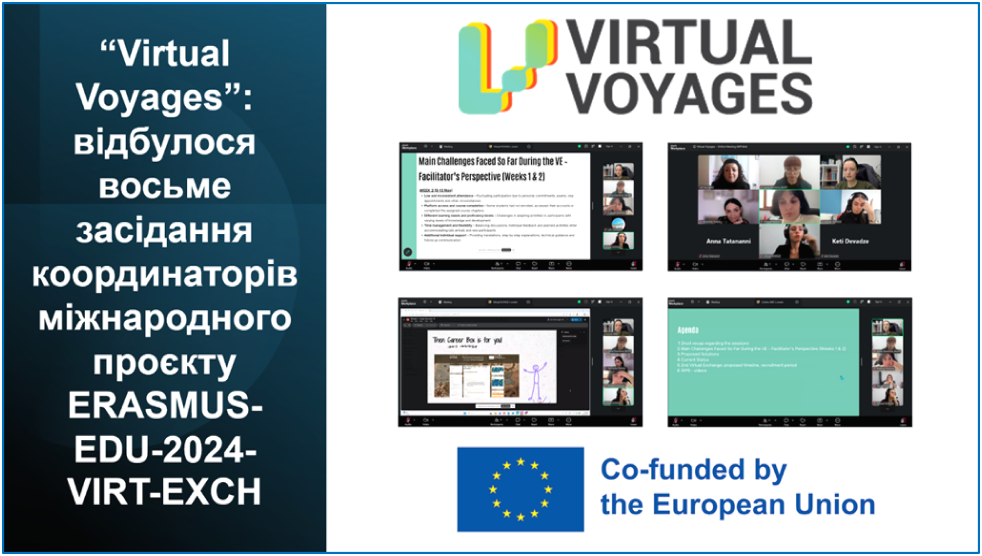
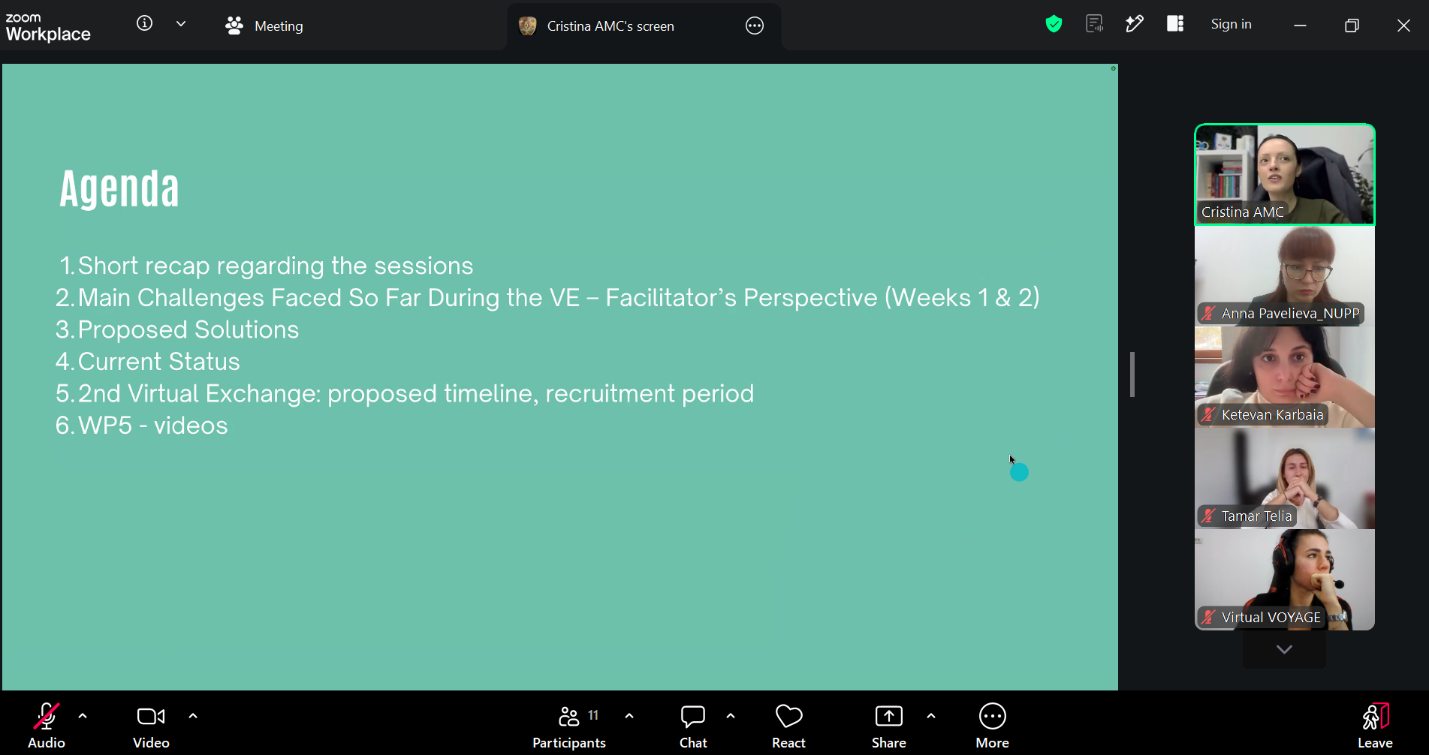
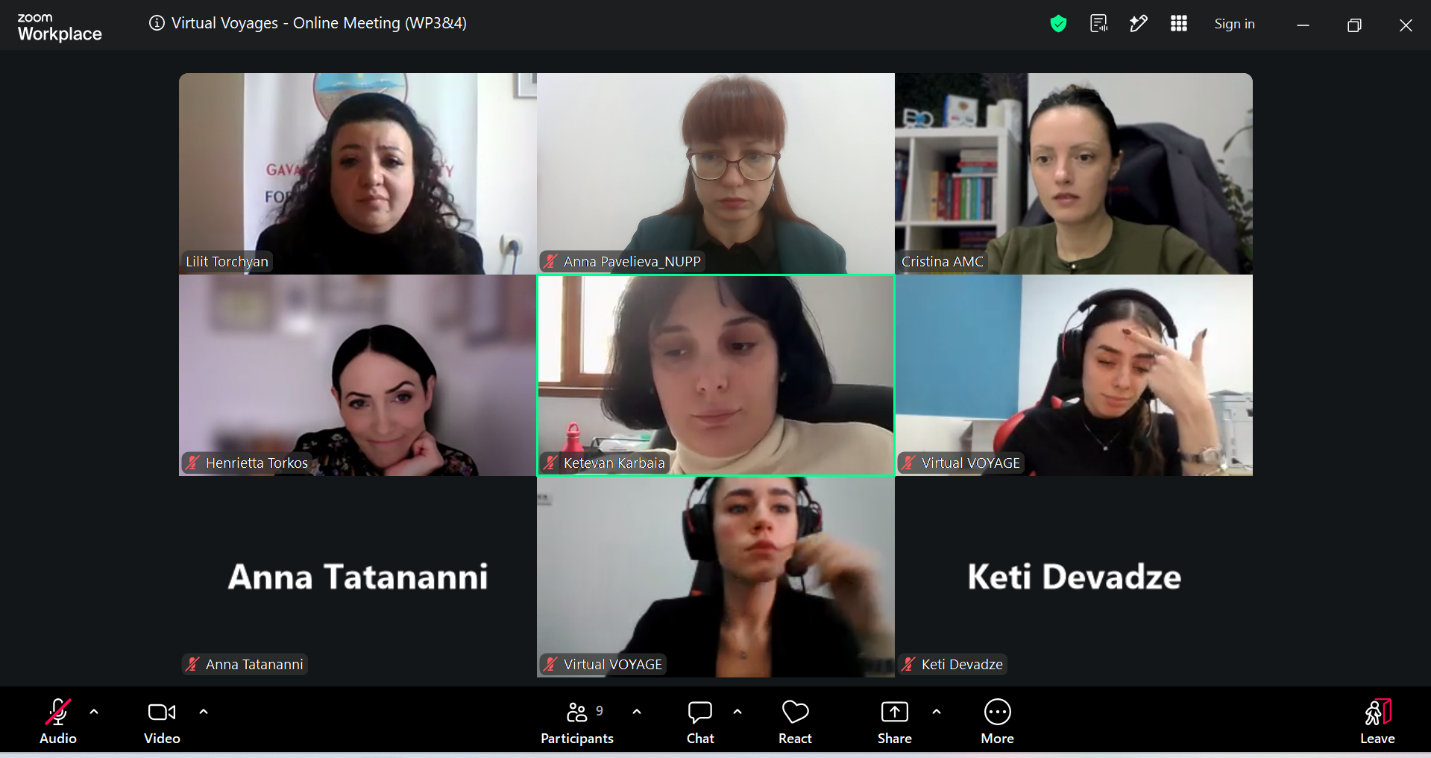
On November 19, 2026, members of the international consortium of the Erasmus+ project “Acquiring Transversal Competences through Virtual Voyages” (registration number ERASMUS-EDU-2024-VIRT-EXCH No. 101193593), co-funded by the European Union, held an online coordination meeting covering Work Packages WP3 and WP4. This large-scale educational initiative, under the overall leadership of Aurel Vlaicu University of Arad (Romania), is jointly implemented by the Millennium Centre and Predict CSD Consulting (Romania), IUL Online University (Italy), Fırat University (Türkiye), Moldova State University, Caucasus University and Batumi Shota Rustaveli State University (Georgia), Gavar State University (Armenia), as well as National University “Yuri Kondratyuk Poltava Polytechnic”. The Ukrainian higher education institution was traditionally represented at the meeting by the institutional project coordinator, PhD in Philology, Acting Vice-Rector for Academic Affairs, International Relations and Cooperation, Anna Pavelieva.
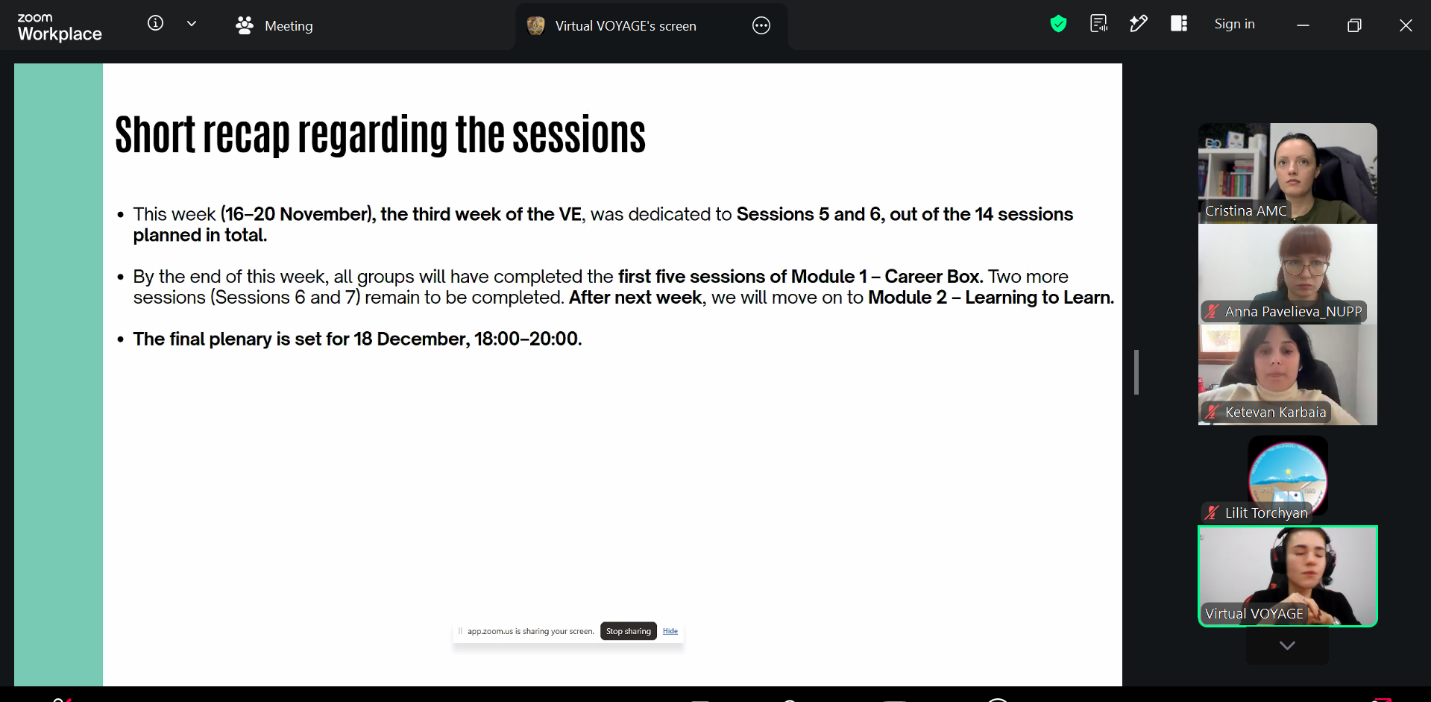
At the beginning of the meeting, the partners focused on an operational review of the progress of the first wave of virtual exchanges. The coordinators noted that by the end of the current week, all international student groups will have completed the first five sessions of the first training module, “Career Box”, leaving two final sessions in this unit, after which participants will proceed to master the second module, “Learning to Learn”. An important organisational decision was to approve the date and time for the official closing plenary session of the first exchange cycle, which will take place on December 18, 2026, from 18:00 to 20:00 and will bring together students and academic staff from all seven partner countries to summarise overall educational outcomes.
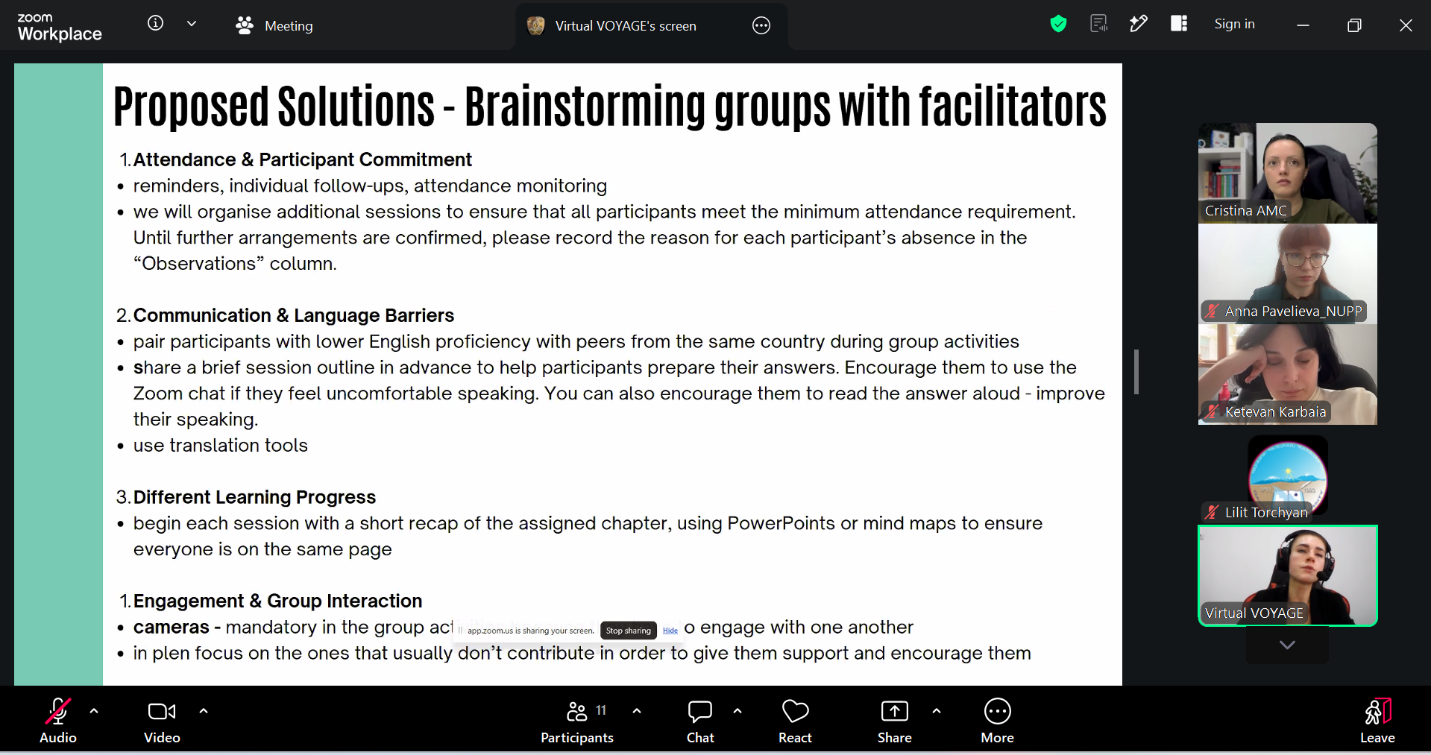
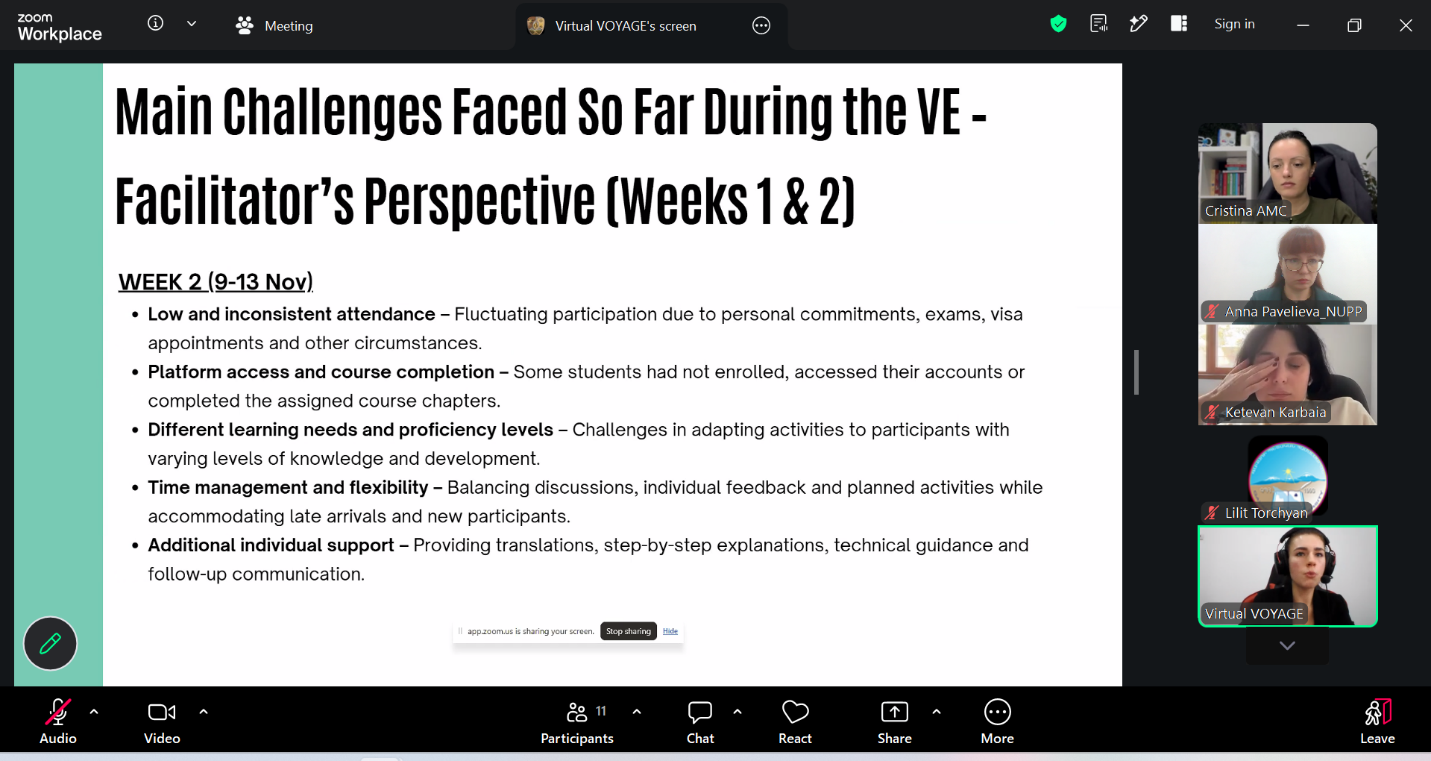
A separate discussion block was devoted to analysing facilitator feedback based on the results of the first two weeks of training and developing joint methodological solutions within the framework of weekly mentoring sessions. Drawing on the trainers’ reports, the partners identified key areas requiring greater pedagogical attention, particularly adapting learning activities to varying levels of English language proficiency, synchronising schedules with university academic calendars, and encouraging active interaction in virtual micro-groups. To enhance the effectiveness of classes, the consortium agreed on a number of practical tools, including familiarising students in advance with a concise session plan, a mandatory brief introductory review of previous material using mind maps and presentations, active use of video communication during work in breakout rooms, as well as combining oral discussions with chat communication. At the same time, the coordinators were presented with updated analytical dashboards of the centralised databases, which display in real time the attendance dynamics of synchronous sessions and the completion rate of asynchronous modules on thevoyage.eu platform, enabling prompt, targeted academic support for each participant.
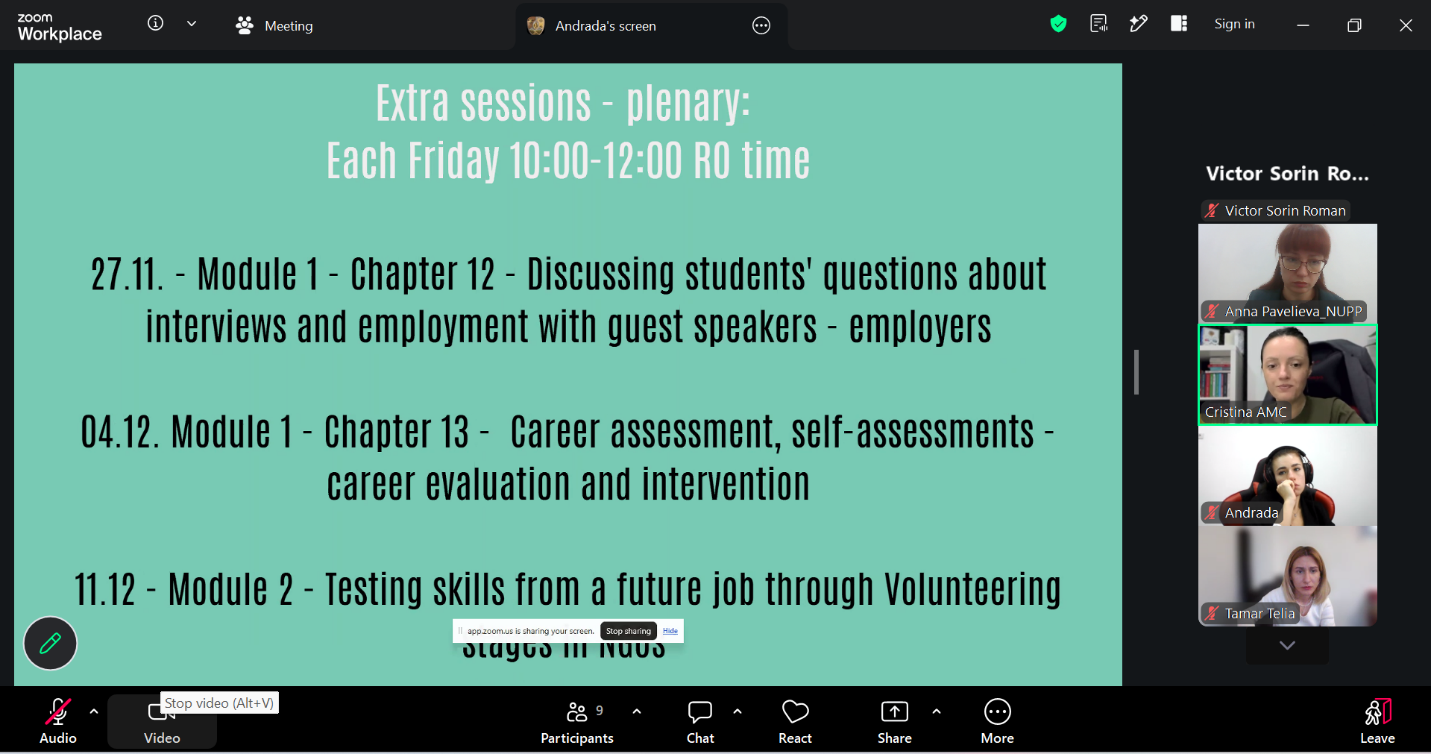
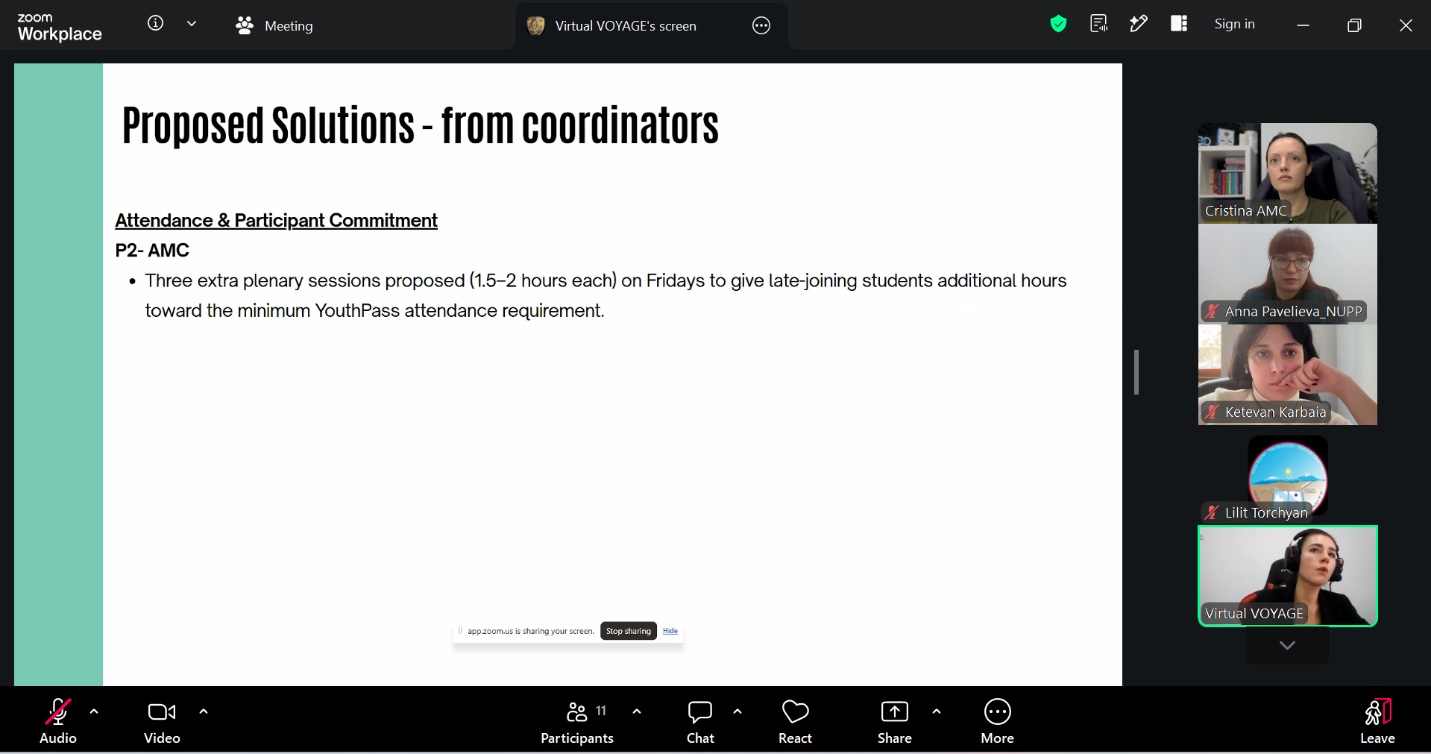
To expand educational opportunities for university youth and provide flexible support to participants who joined later or combine their studies with examination periods, the consortium decided to hold three additional plenary sessions every Friday from 10:00 to 12:00, lasting up to two hours. The first meeting will take place on November 27, 2026, in the twelfth section of the “Career Box” module, and will focus on pressing issues in employment and job interviews, with invited employers and business representatives participating. The second session, scheduled for December 4, 2026, and covering the thirteenth section of the same module, will focus on career assessment, self-diagnostics, and career guidance counselling, with specialists from career centres and human resources departments. The third additional plenary meeting will be held on December 11, 2026, within the “Learning to Learn” module, and will offer practical opportunities for students to test their future professional skills through volunteer internship programmes in non-governmental organisations across the participating countries. Participation in these open interdisciplinary events will not only deepen young people’s practical preparation for the European labour market, but also help them meet the formal requirements for obtaining a Youthpass certificate.
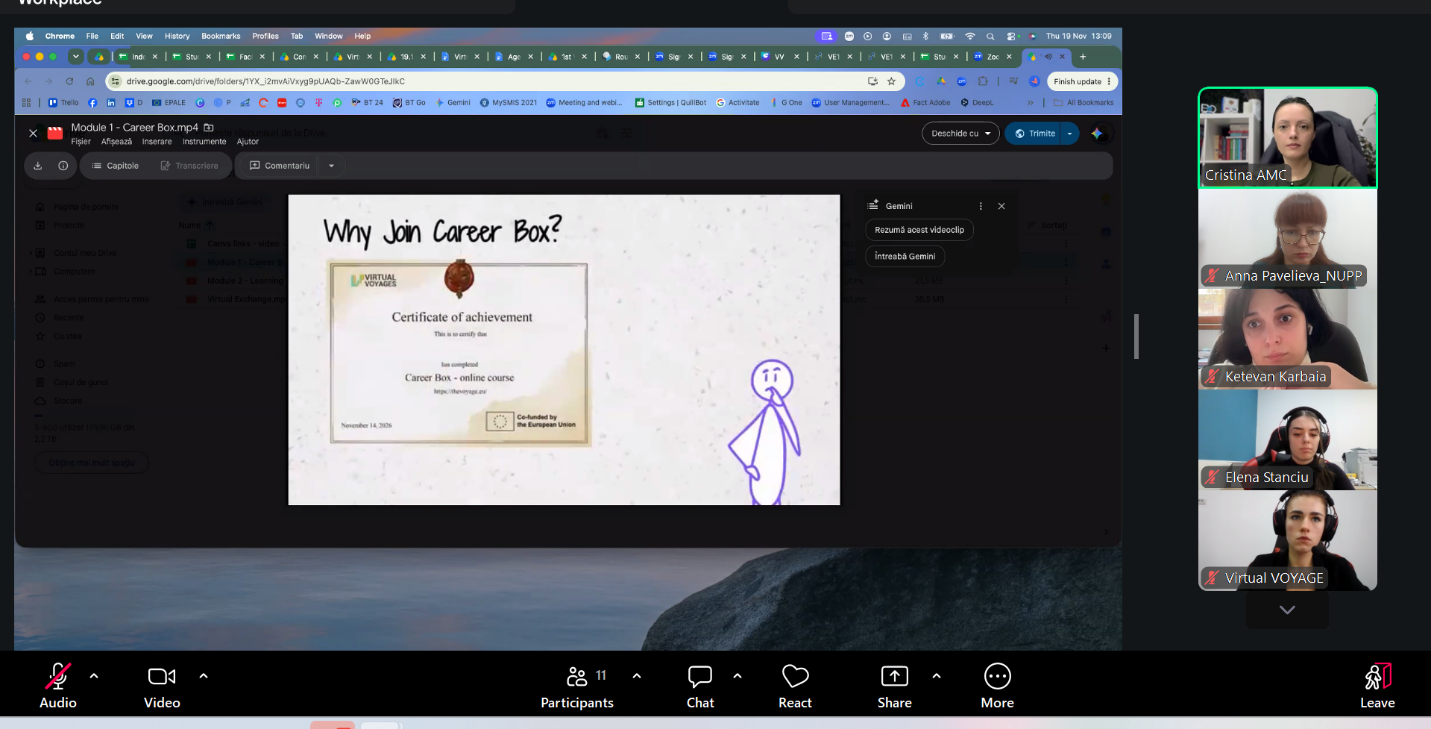
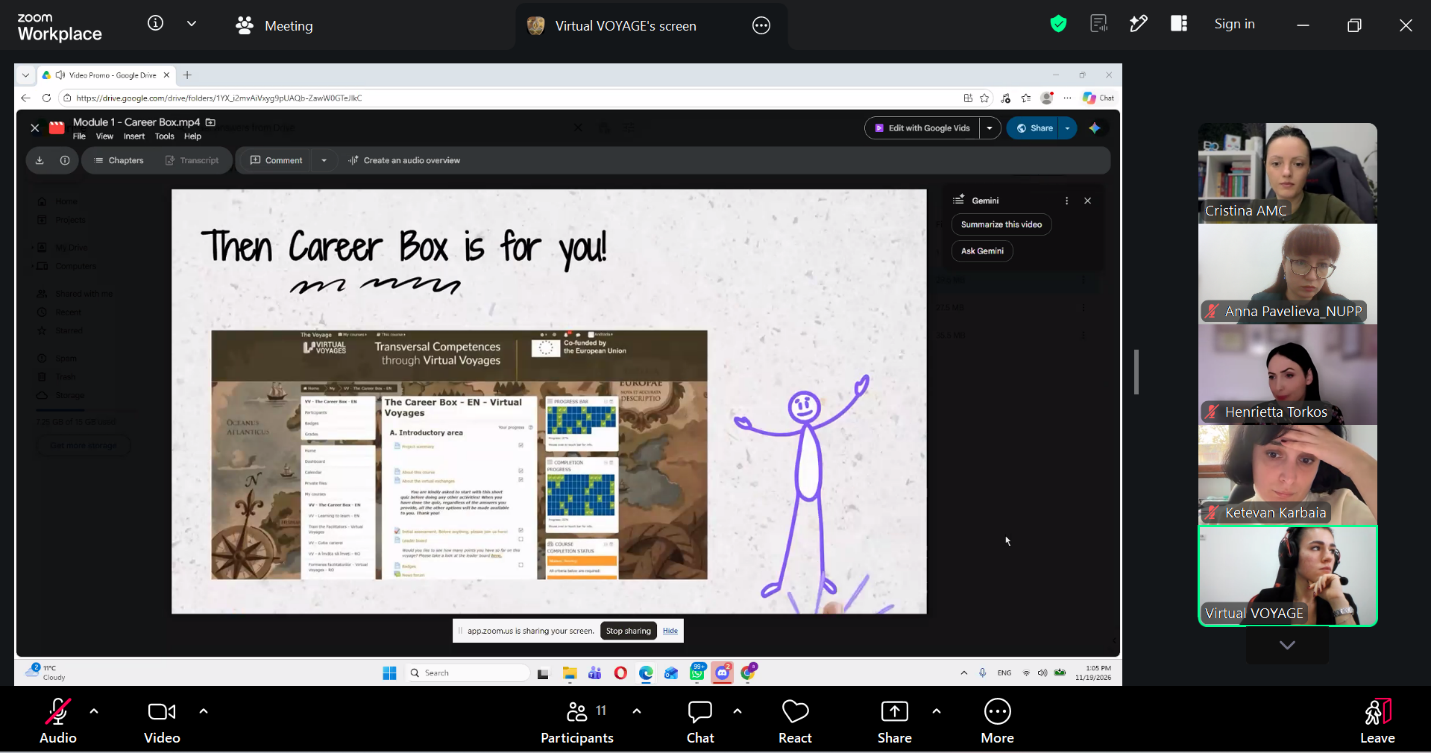
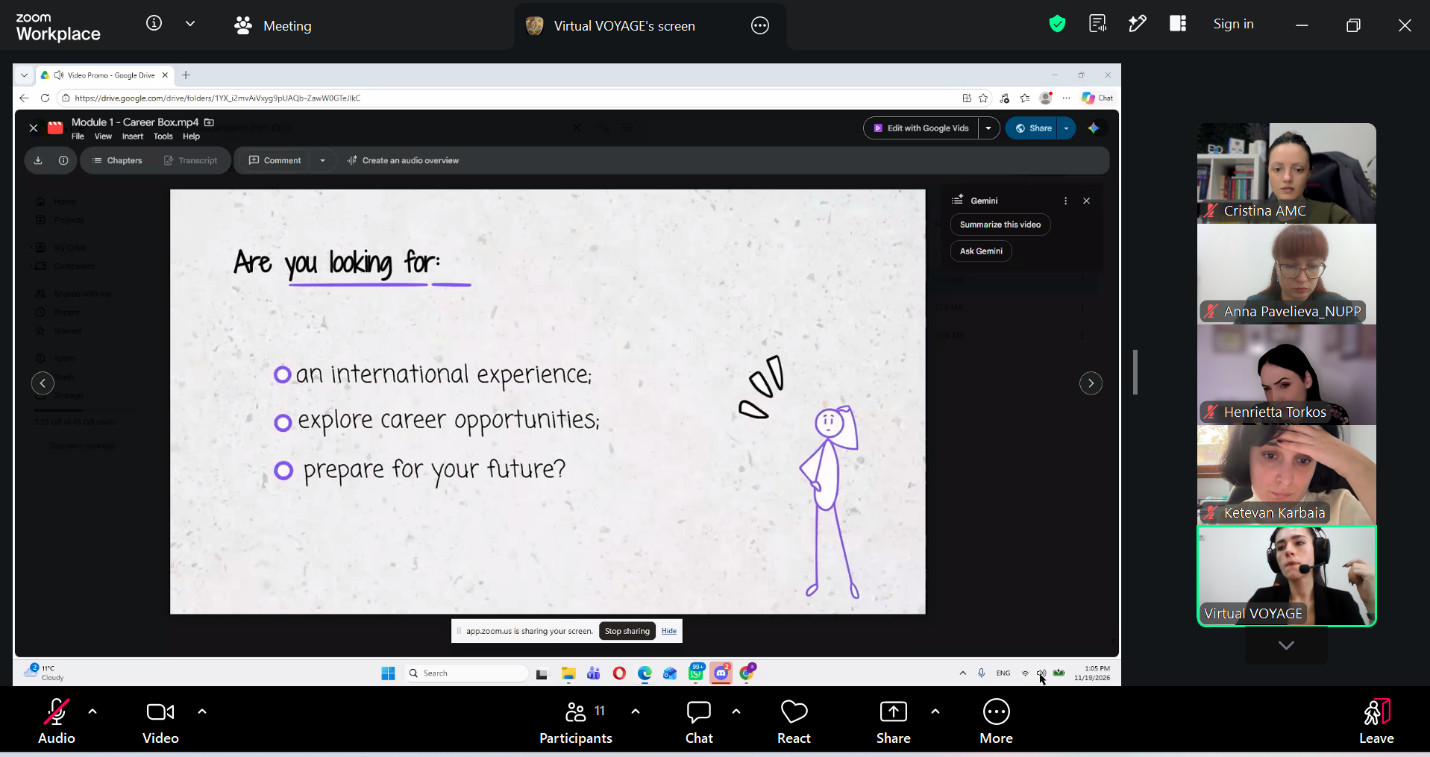
A significant component of the work programme was presenting information and promotional materials for Work Package WP5, aimed at increasing the project’s visibility and attracting new cohorts of learners. The development team demonstrated a completed animated video for the “Career Box” module and reported on preparing similar video presentations for the “Learning to Learn” module and promoting virtual exchanges more broadly. The presented material highlights the advantages of studying on the digital platform thevoyage.eu, where students have access to interactive handbooks, audio and video digests, mind maps, thematic missions, tests, and peer-assessment mechanisms, while successful completion of the course ensures the receipt of an official certificate to strengthen their professional portfolio. The partners agreed to actively disseminate the promotional materials through official university channels and social media, recording the results of dissemination activities in the shared electronic reporting system.
A substantial part of the meeting focused on long-term planning for the subsequent stages of project implementation, taking into account academic schedules and examination periods at higher education institutions across the consortium countries. An updated 8-week schedule was presented for each upcoming wave: the second wave of virtual exchanges is scheduled to run from March 1 to April 23, 2027, and the third from May 10 to July 2, 2027. Separately, the coordinators agreed on the timeframe for training the second cohort of trainers under the “Train the Facilitators” learning module, with asynchronous preparation beginning in late December after the current session concludes, and seven mandatory synchronous sessions taking place from January 11 to February 26, 2027. This proactive approach will enable universities to effectively organise student recruitment and certify new facilitators from among academic staff, higher education students, and representatives of local partners before the spring exchange cycle begins.
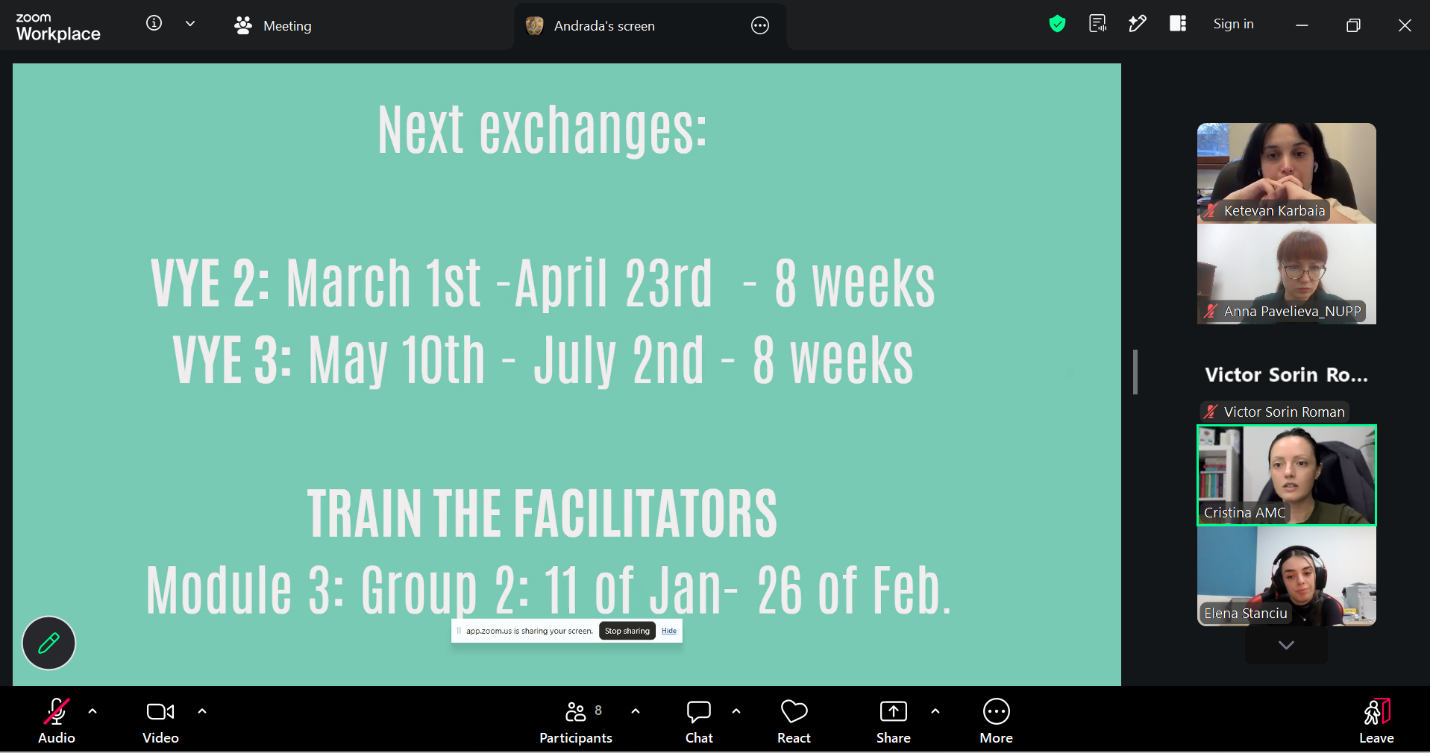
Commenting on the outcomes of the meeting, the institutional project coordinator from National University “Yuri Kondratyuk Poltava Polytechnic”, Anna Pavelieva, emphasised the importance of systematic dialogue among partners and strategic support for international initiatives at the level of university leadership: “Reaching the midpoint of the first virtual exchanges demonstrates how valuable the continuous exchange of pedagogical experience between universities and analytical centres from different countries is. The introduction of open plenary meetings with employers and the civic sector, as well as clear planning for the next cycles in 2027, opens even broader horizons of professional growth for our students. We are sincerely grateful to the President of Poltava Polytechnic, Volodymyr Onyshchenko, and the Rector, Olena Filonych, for their consistent support of the internationalisation of education, fostering youth participation in European projects, and creating all necessary conditions for the implementation of innovative digital learning formats”.
Poltava Polytechnic consistently carries out its systematic work within the international consortium of the Erasmus+ project “Acquiring Transversal Competences through Virtual Voyages” (No. 101193593) across all coordination stages. Specifically, on September 24, 2026, the university team participated in a coordination meeting of partners of the Erasmus+ project “Acquiring Transversal Competences through Virtual Voyages” (No. 101193593), during which, together with colleagues from seven countries, the educators reviewed the outcomes of the first implementation phase and agreed upon the launch of virtual exchanges for students; they also continued aligning key steps during the second meeting of project coordinators on October 1, 2026; on October 8, 2026, discussed the results of testing the digital platform, the training of the facilitators’ pool, and the finalization of the launch of the first student exchange wave; on October 15, addressed the synchronisation of academic schedules, finalising the preparation and certification of the international pool of facilitators, structuring intercultural student cohorts, and deploying a comprehensive dissemination campaign ahead of the launch of the first wave of virtual exchanges; on October 22, discussed forming student cohorts, certifying facilitators according to the Youthpass standard, and coordinating dissemination materials ahead of the official launch of the 7-week virtual exchange cycle, on October 29, confirmed operational readiness at the sixth meeting; and on November 5, demonstrated exemplary student engagement during the seventh coordination session; and on November 5, 2026, addressed the optimisation of digital academic monitoring, weekly mentoring support for facilitators, and the involvement of stakeholders in joint interdisciplinary sessions.
Following the outcomes of the eighth coordination meeting, National University “Yuri Kondratyuk Poltava Polytechnic” once again reaffirmed its status as a reliable and proactive partner in the European educational space, consistently implementing modern standards of digital academic mobility. Constructive cooperation within the consortium, the integration of practical experience from employers and non-governmental organisations into the educational process, and clear strategic planning of the upcoming waves of virtual exchanges for 2027 establish a solid foundation for the high-quality development of transversal competences among Ukrainian youth, the strengthening of international solidarity, and the successful achievement of all project target indicators.