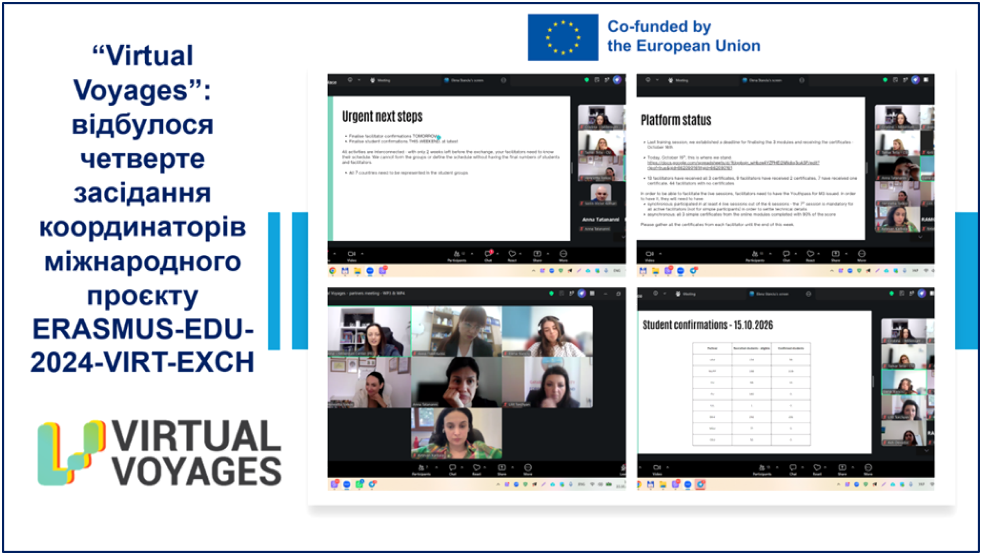
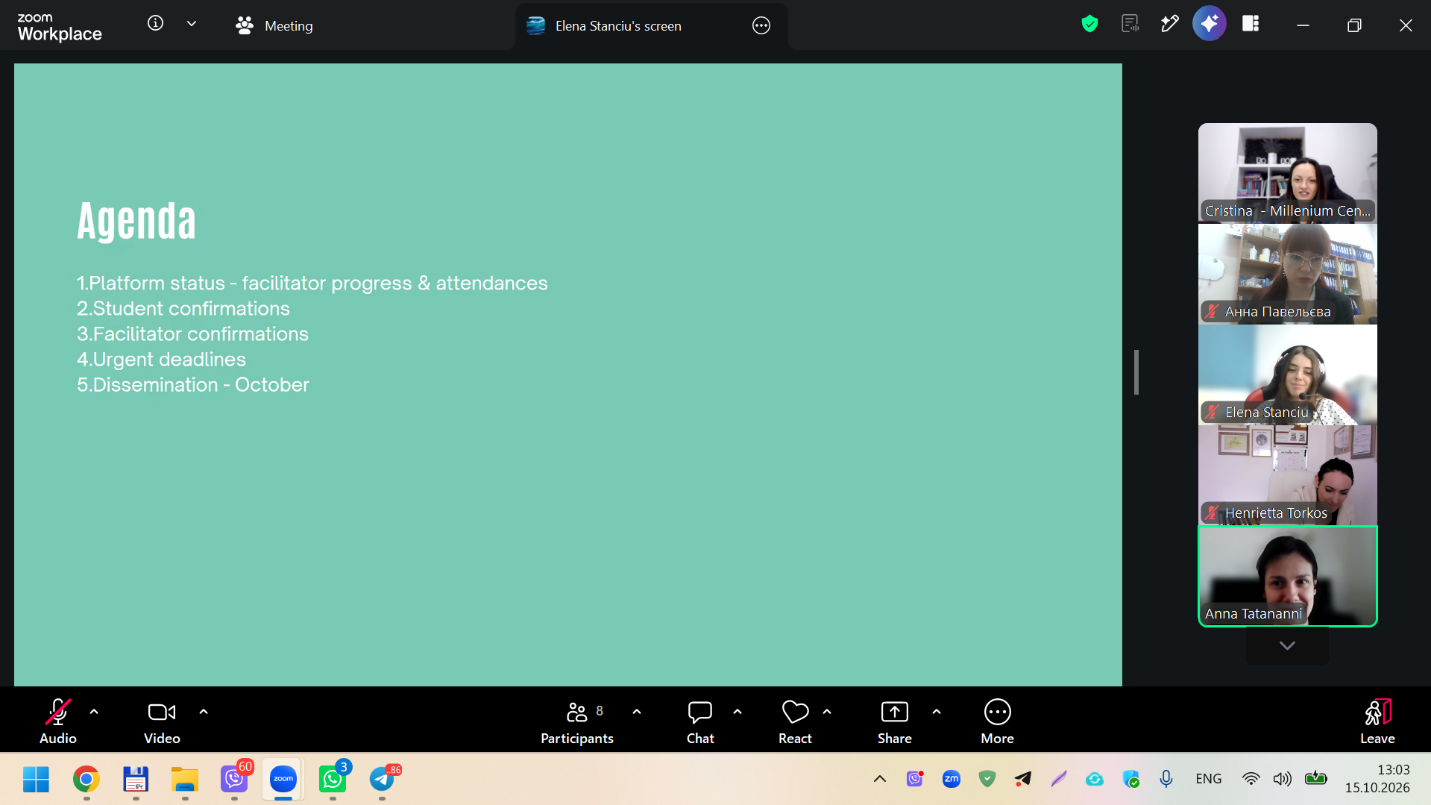
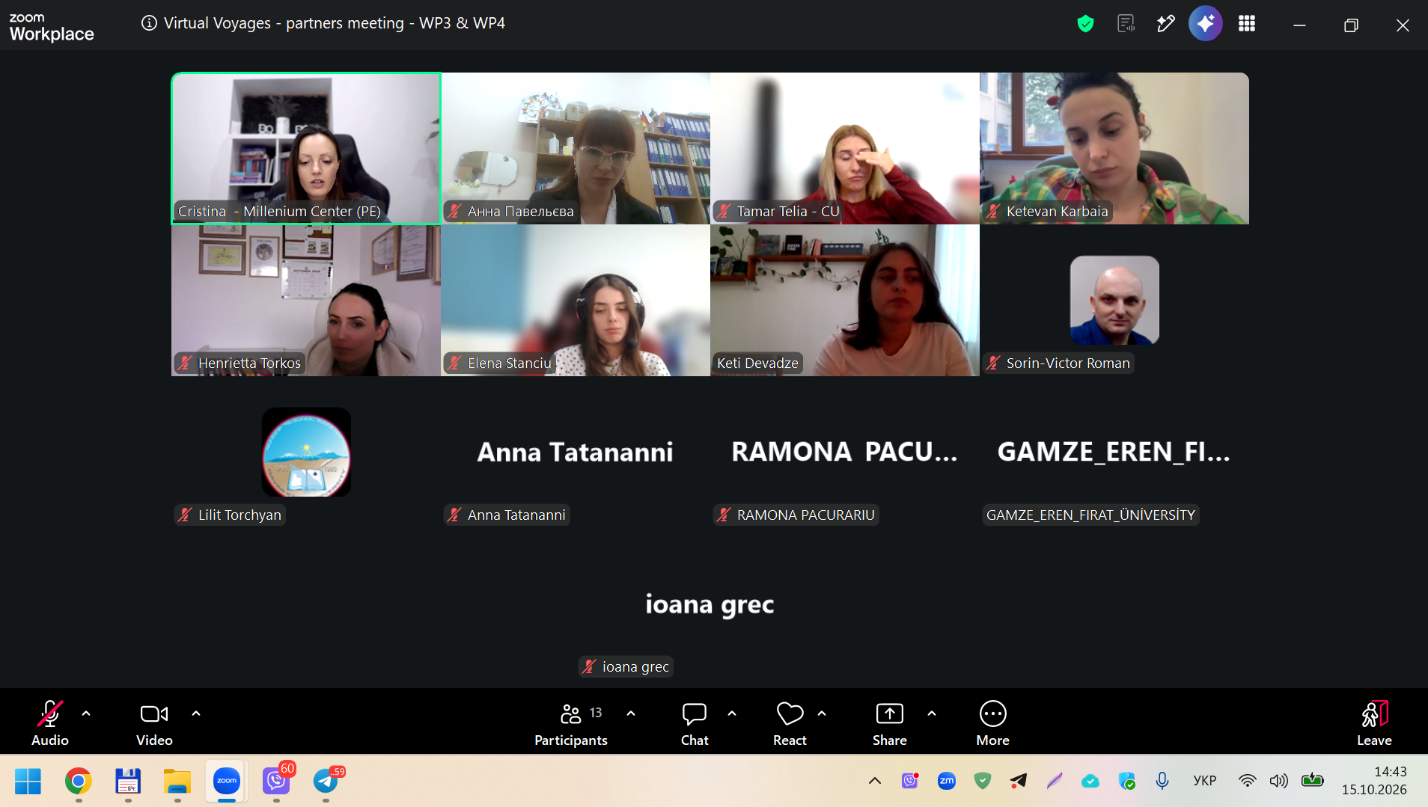
On October 15, 2026, the fourth meeting of the executive leadership and work package coordinators of the international project “Acquiring Transversal Competences through Virtual Voyages” (registration number ERASMUS-EDU-2024-VIRT-EXCH No. 101193593) took place. The initiative is implemented under the European Union’s Erasmus+ programme in the field of virtual exchanges in higher education and youth.
Aurel Vlaicu University of Arad (Romania) coordinates the international project consortium, which brings together leading educational institutions and expert organisations from seven countries. The partnership network includes prestigious institutions, among which are the Millennium Centre and the consulting company Predict CSD Consulting (Romania), IUL Online University (Italy), Fırat University (Türkiye), Moldova State University, Caucasus University and Batumi Shota Rustaveli State University (Georgia), Gavar State University (Armenia), as well as National University “Yuri Kondratyuk Poltava Polytechnic”, which worthily represents Ukrainian higher education in this distinguished academic alliance.
The meeting on October, 15, 2026, brought together coordinators, academic experts, and technical specialists from leading higher education institutions and partner organisations across seven countries: Romania, Italy, Georgia, Armenia, Moldova, Turkey, and Ukraine. National University “Yuri Kondratyuk Poltava Polytechnic” was represented at the meeting by the project coordinator, PhD in Philology, Associate Professor of the Department of Germanic Philology and Translation, Anna Pavelieva.
The meeting’s main objective was to coordinate the organisational framework and timelines for the first seven-week cycle of student virtual exchanges, officially launching in early November 2026.
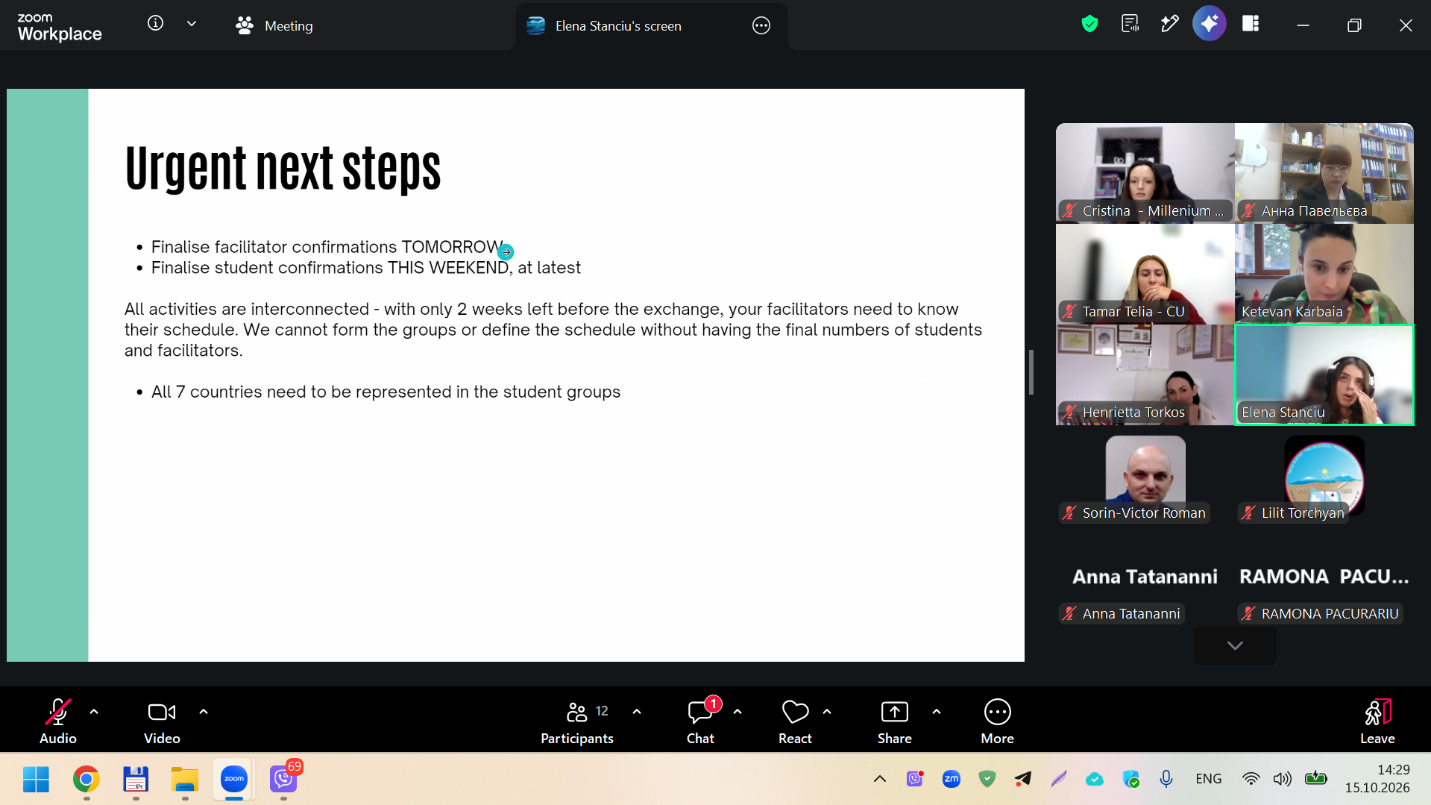
The first key agenda item was monitoring the progress of the international pool of facilitators who will provide substantive, psychological-pedagogical, and intercultural mentorship to student teams.
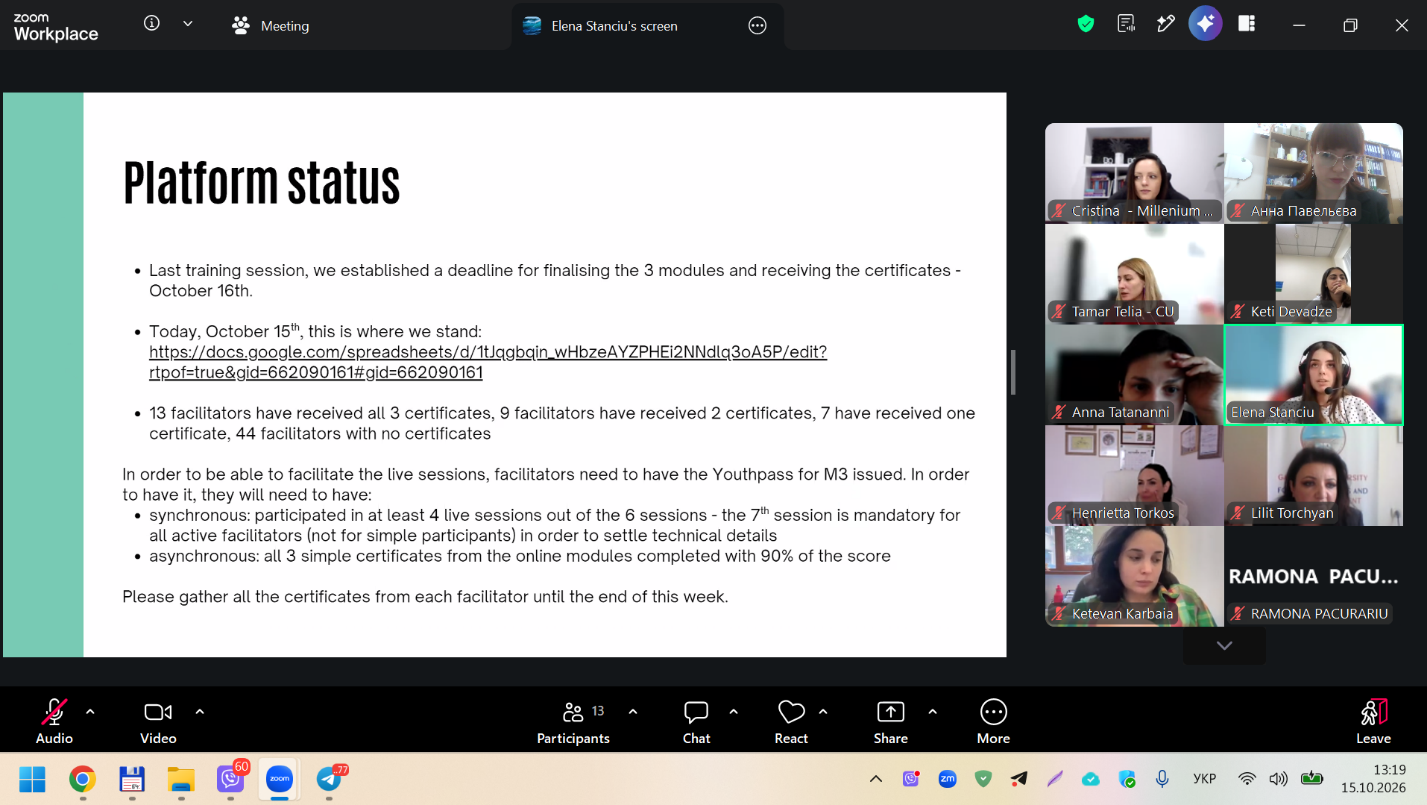
The work package coordinators presented a detailed analysis of the instructors’ performance on the project’s innovative educational platform. The training program includes three specialised educational modules focused on virtual facilitation methodologies, techniques for moderating intercultural dialogue, tools for overcoming communication barriers, and nonviolent communication algorithms. Particular attention was paid to distinguishing between levels of verification for the acquired competencies: basic certificates certify successful asynchronous completion of thematic units on the learning portal, whereas the final European-standard Youthpass certificate is a mandatory prerequisite for direct engagement with academic cohorts during the exchanges.
To obtain Youthpass verification, consortium trainers must successfully pass the final assessment of the third module (scoring at least 90%) and actively participate in synchronous online sessions led by prominent European experts (at least four mandatory training sessions out of the six planned, as well as the final technical-instructional workshop).
Considering the active period of the global #ErasmusDays2026 campaign events and the scheduled teaching loads at partner universities, the consortium coordinators unanimously supported granting instructors an additional flexible window until the end of the current week to finalise asynchronous tasks and complete the assessments on the platform.
A cornerstone issue of the meeting was establishing an optimal timetable grid for future joint classes. Organising a virtual exchange on this scale requires synchronising universities’ educational processes across different time zones, class schedules, mid-term examination periods, and modular assessments.
The meeting participants conducted interactive schedule modelling to identify common ground convenient for both academic staff and students. Based on the findings of a comprehensive survey of university representatives, a consensus-based model was developed:
• Balanced weekly time management: the total workload per student will be approximately 4 hours per week, harmoniously combining 2 hours of live synchronous group interaction, asynchronous individual work with interactive cases on the digital platform, and advisory sessions with mentors.
• Optimal time slots: the majority of higher education institutions confirmed the feasibility of holding synchronous online sessions in the afternoon (between 4:00 PM and 7:00 PM Kyiv/Bucharest time), allowing students to participate in international debates without disrupting their primary departmental class schedules.
• Flexibility in scheduling days: the timetable is structured to offer participants a choice among several alternative weekdays (Monday through Friday), keeping weekends free for independent study and rest.
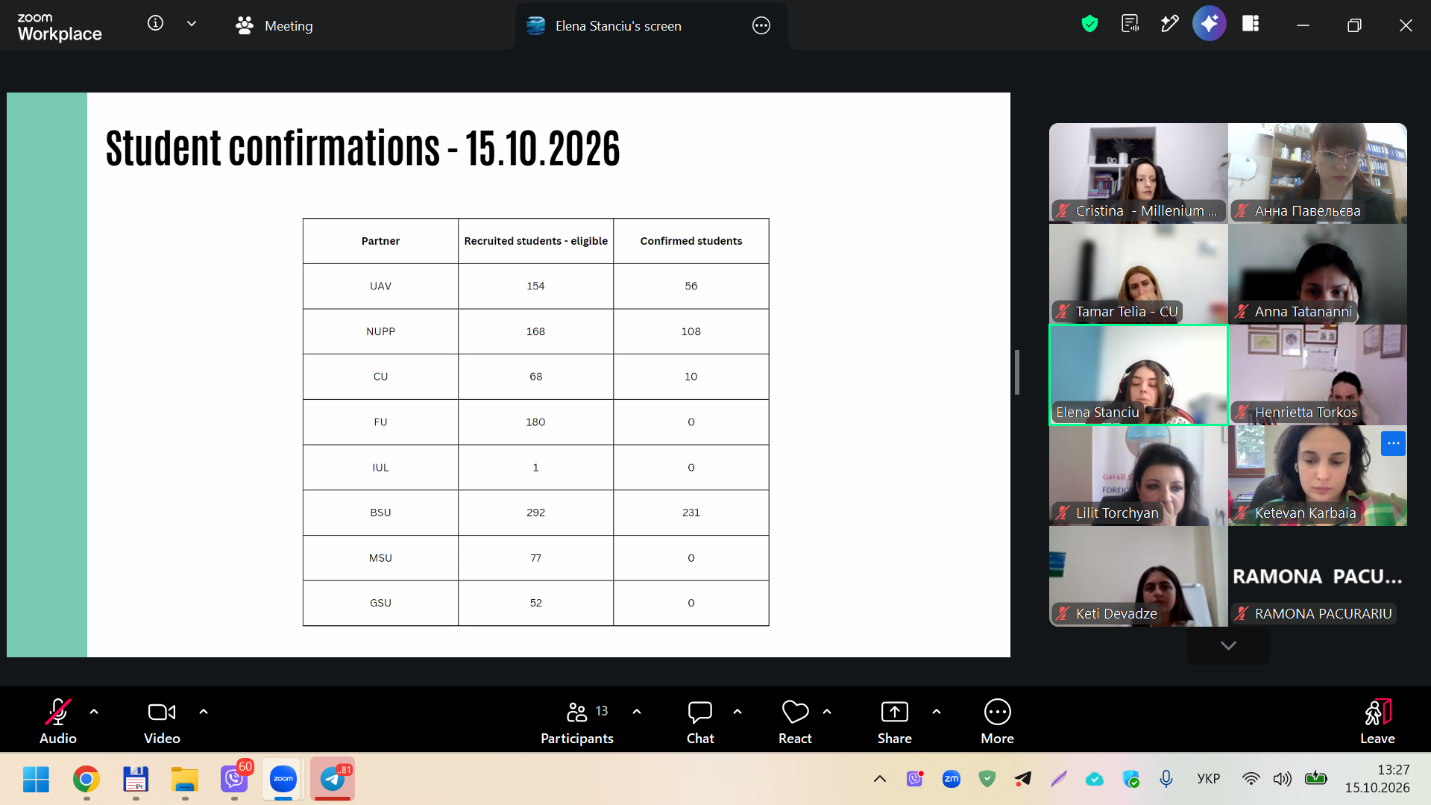
The session placed special emphasis on the principles of forming student teams. According to the initiative’s architects, the virtual exchange is designed to provide authentic immersion into a multicultural environment.
The consortium members adopted several key methodological criteria:
• Comprehensive country representation: each micro-group (consisting of 15 to 20 students) will be established on an international basis, engaging representatives from all seven partner countries. This will prevent insularity within national cohorts and create conditions for ongoing intercultural communication practice in English.
• Gender and academic balance: the allocation of participants will be conducted in accordance with equal opportunity principles, representation across diverse academic majors, and a balanced ratio of participants from EU Member States and Erasmus+ third countries associated with the Programme and partner countries.
• Staff reserve and reliability: a primary facilitator will be assigned to each group, supplemented by a reserve roster of moderators in case of technical issues or academic overlaps, thereby ensuring the continuity of the educational process throughout the seven-week course.
Furthermore, the partners reviewed a proposal to integrate Master’s degree students (second cycle of higher education) pursuing programs in pedagogy and psychology, specifically in online learning and career counselling, into selected project modules. For this category of learners, participation in the project will serve as an applied practical placement, the outcomes of which may be accredited toward their university curricula during the winter examination session.
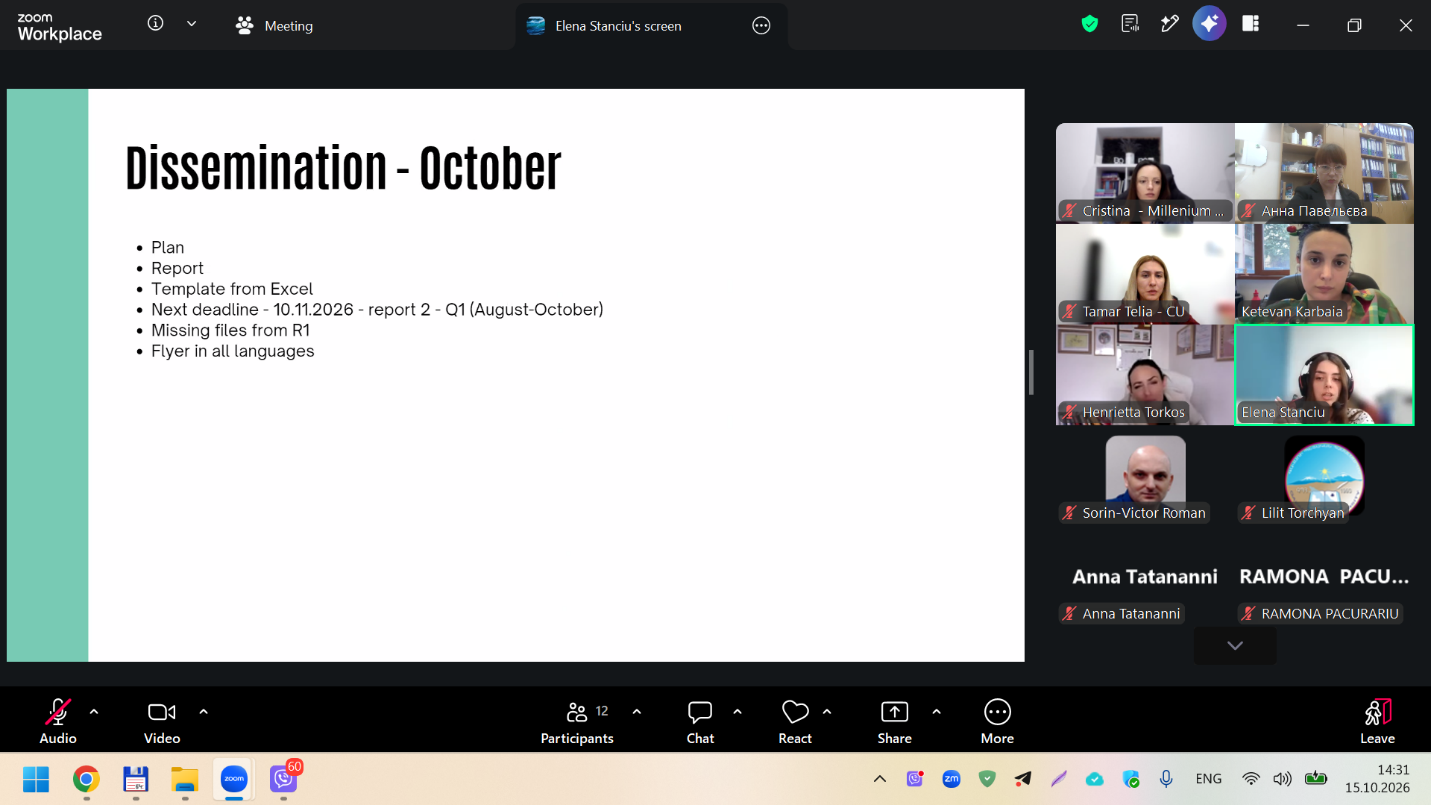
The meeting devoted considerable time to reviewing progress on the information campaign under Work Packages WP3 and WP4. Partner universities reported on the status of promotional materials developed in alignment with the project's unified brand identity:
• The finalisation of translations and localisation of information brochures, banners, and posters into the national languages of the partners (including Ukrainian) is underway;
• Branded informational roll-up banners with direct registration QR codes are being installed in the academic buildings of the institutions;
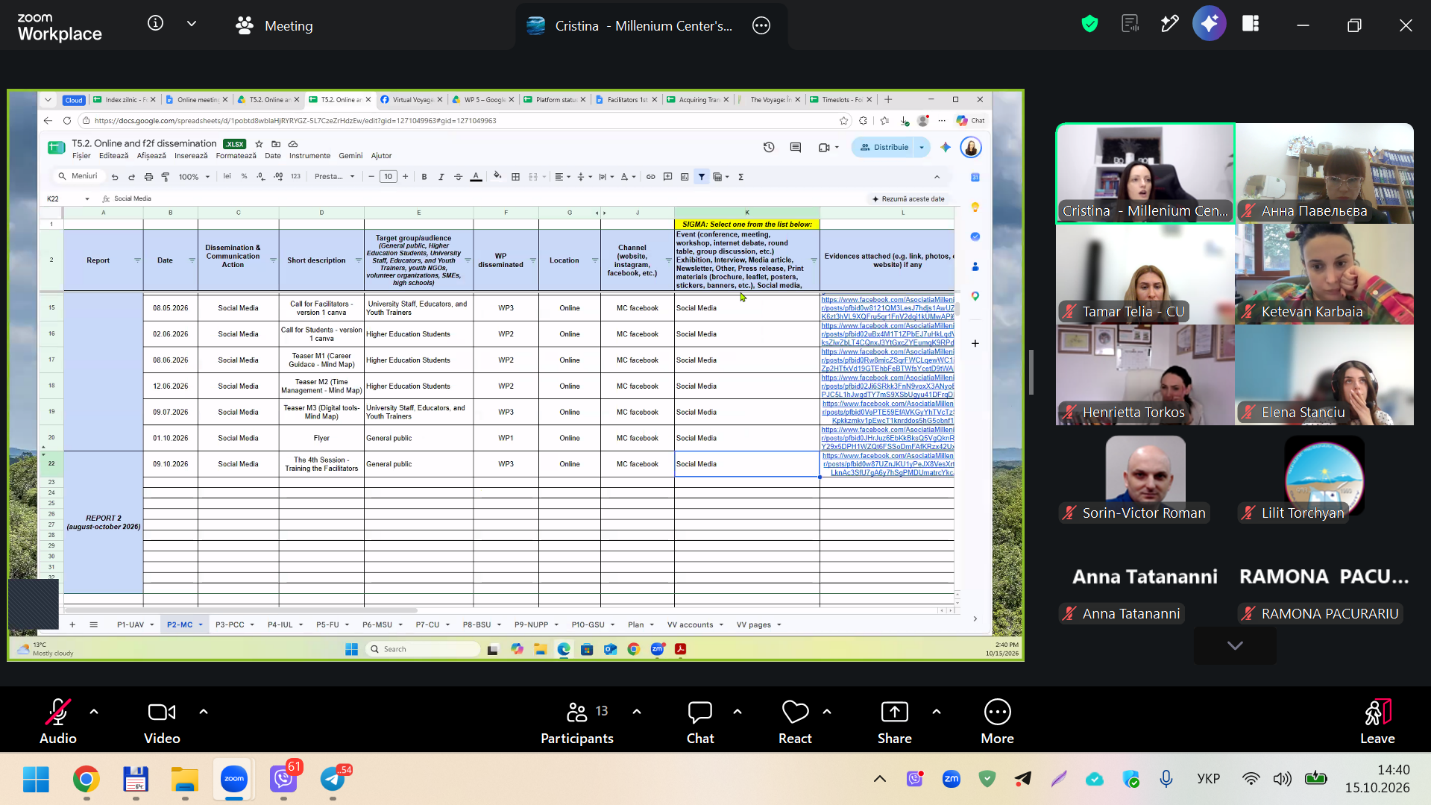
• Official web resources and social media pages (Facebook, Instagram) are being actively updated using a unified monitoring system to track audience reach and engagement;
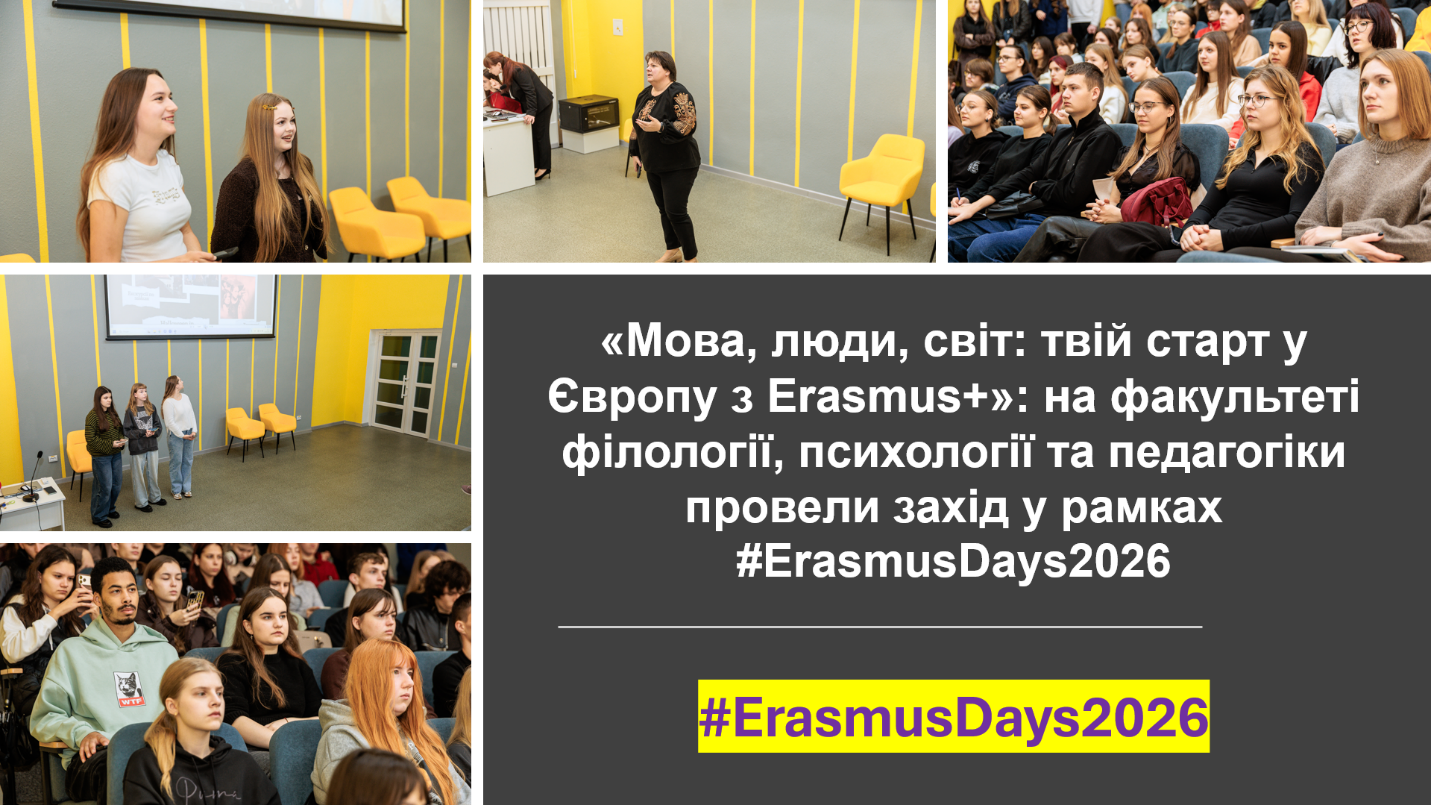
The partners agreed to maximise the opportunities presented by the global #ErasmusDays2026 campaign to organise in-person information sessions, round tables, and live meetings with students.
Additionally, the partners initiated the process of establishing a joint project Steering/Advisory Committee, comprising at least one representative from each partner institution. This body will ensure long-term quality assurance of educational content, oversee mentoring consultations, and conduct the final expert evaluation of students’ project initiatives developed during their studies.
National University “Yuri Kondratyuk Poltava Polytechnic” once again reaffirmed its standing as a reliable, disciplined, and proactive consortium partner by completing preliminary registration stages on schedule and actively preparing its instructional cohort.
The university’s project coordinator, Anna Pavelieva, emphasised the strategic significance of the initiative for cultivating a new generation of Ukrainian professionals: “The “Virtual Voyages” project is an exceptionally sophisticated and modern tool for internationalisation. Today, we are not merely coordinating hours or scheduling tables; we are laying the groundwork for barrier-free collaboration among hundreds of young people from across Europe. For Poltava Polytechnic students, this is a unique opportunity to strengthen critical thinking, adaptability, teamwork in a virtual environment, and professional English fluency.
Our priority is to make the study schedule as convenient and flexible as possible, ensuring that every participant can easily combine the international exchange with their core university studies. We see a genuine commitment across the entire international team to find the best solutions for our youth.
The successful implementation of such large-scale international initiatives is made possible by the systematic support of our university leadership. I express my profound gratitude to the President of Poltava Polytechnic, Professor Volodymyr Onyshchenko, and the Rector of the University, Associate Professor Olena Filonych, for their constant attention to international activities, comprehensive facilitation of innovative faculty educational initiatives, and the creation of state-of-the-art conditions for the professional and personal development of our students”.
Looking ahead, the consortium is finalising the technical configuration of virtual classrooms and will notify participants individually of their group allocations. The official commencement of classes for the first cohort of “Virtual Voyages” will take place during the first week of November 2026.
It is worth noting that practical implementation at the local level is already well underway: on September 24, 2026, the university team participated in a coordination meeting of partners of the Erasmus+ project “Acquiring Transversal Competences through Virtual Voyages” (No. 101193593), during which, together with colleagues from seven countries, the educators reviewed the outcomes of the first implementation phase and agreed upon the launch of virtual exchanges for students; they also continued aligning key steps during the second meeting of project coordinators on October 1, 2026; and on October 8, 2026, discussed the results of testing the digital platform, the training of the facilitators’ pool, and the finalization of the launch of the first student exchange wave; a team of university lecturers has already participated in two facilitator sessions within the Erasmus+ project “Acquiring Transversal Competences through Virtual Voyages” (No. 101193593), where, alongside colleagues from seven countries, they mastered virtual facilitation methodologies for future work with students, refined their virtual facilitation expertise, simulated group interaction cases, and mastered digital tools for the successful delivery of international student exchanges; presented their own two-hour workshops on the “Learning to Learn” and “Career Box” modules and practiced peer feedback in Zoom breakout rooms, as well as mastered drafting Personal and Professional Development Plans (PPDP), simulated mentoring in Zoom rooms, tested the thevoyage.eu platform, and prepared for the launch of student exchanges.
National University “Yuri Kondratyuk Poltava Polytechnic” continues to demonstrate high standards of project management and moves confidently toward the official launch of the international virtual exchanges.