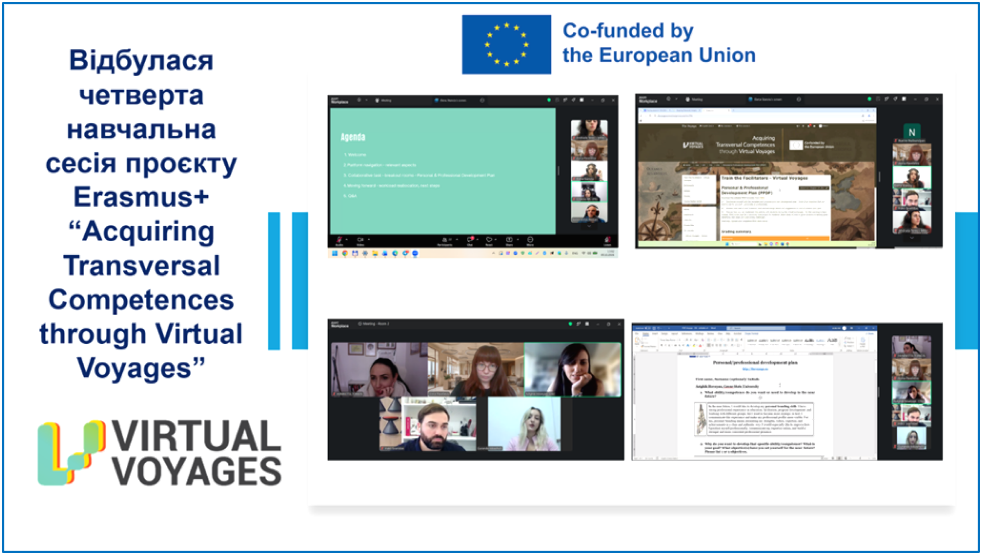
On October 09, 2026, the fourth synchronous online session for lecturer-facilitators was held within the framework of a large-scale international Erasmus+ project under the “Virtual Exchanges in Higher Education and Youth” strand – “Acquiring Transversal Competences through Virtual Voyages” (registration number ERASMUS-EDU-2024-VIRT-EXCH No. 101193593), implemented with the support of the European Union.
Aurel Vlaicu University of Arad (Romania) coordinates the international project consortium, which brings together leading educational institutions and expert organisations from seven countries. The partnership network includes prestigious institutions, among which are the Millennium Centre and the consulting company Predict CSD Consulting (Romania), IUL Online University (Italy), Fırat University (Türkiye), Moldova State University, Caucasus University and Batumi Shota Rustaveli State University (Georgia), Gavar State University (Armenia), as well as National University “Yuri Kondratyuk Poltava Polytechnic”, which worthily represents Ukrainian higher education in this distinguished academic alliance.
Our university’s academic staff continue their active work within the large-scale international project focused on developing virtual academic mobility, digitising higher education, and training qualified facilitators for youth programmes. The training course’s regular online session, organised by the international partnership consortium under the leadership of coordinators from Aurel Vlaicu University in Romania, marked an important practical milestone ahead of direct engagement with the student audience.
The event brought together lecturers, researchers, and youth trainers from higher education institutions across different countries, providing an opportunity not only to enhance online facilitation skills, but also to thoroughly examine key methodological components of the educational modules and verify the readiness of the digital platform to receive students.
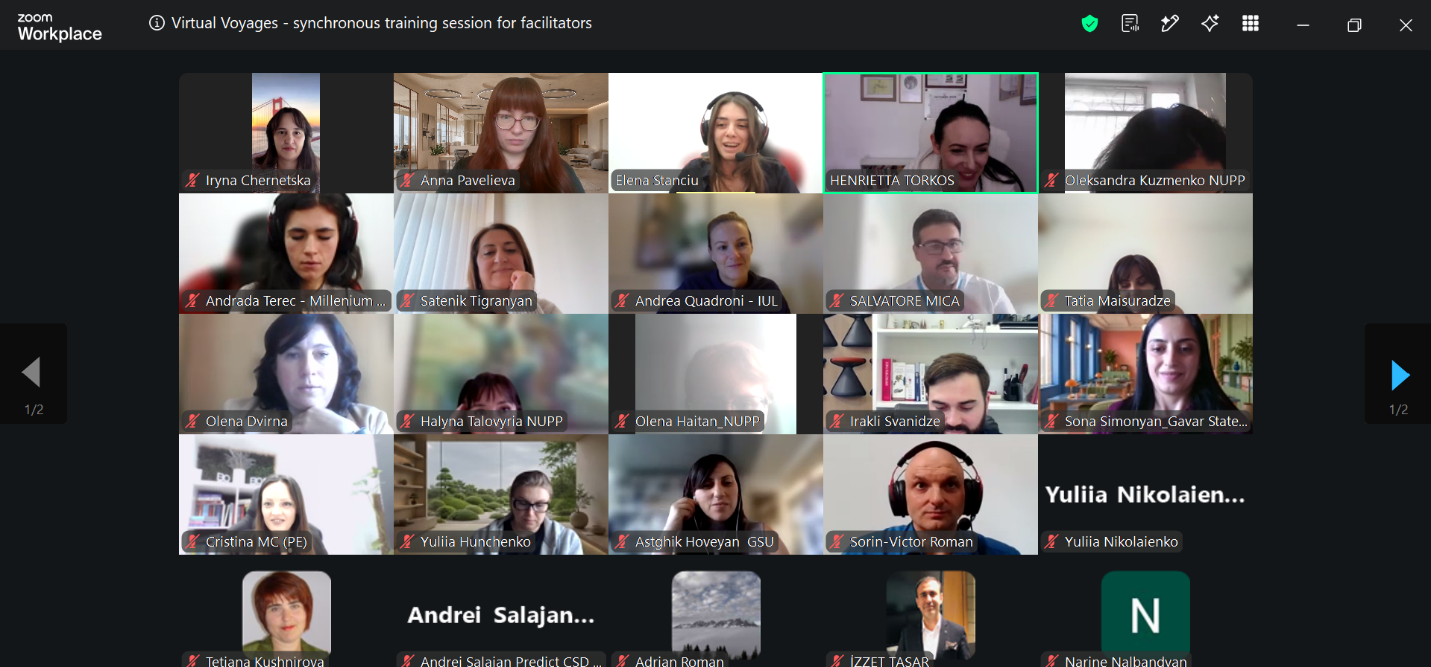
The fourth session was attended by 13 lecturers from the interdisciplinary team of Poltava Polytechnic:
• Olena Haytan – Senior Lecturer at the Department of Computer and Information Technologies and Systems of the Educational and Research Institute of Information Technologies and Robotics;
• Yuliia Hunchenko – Senior Lecturer at the Department of General Linguistics and Foreign Languages of the Faculty of Philology, Psychology and Pedagogy;
• Olena Dvirna – PhD in Physics and Mathematics, Associate Professor at the Department of Computer and Information Technologies and Systems of the Educational and Research Institute of Information Technologies and Robotics;
• Tetiana Yeromenko – Lecturer at the Department of General Linguistics and Foreign Languages of the Faculty of Philology, Psychology and Pedagogy;
• Oleksandra Kuzmenko – PhD in Economics, Associate Professor at the Department of Computer and Information Technologies and Systems of the Educational and Research Institute of Information Technologies and Robotics;
• Tetiana Kushnirova – Doctor of Philological Sciences, Professor at the Department of Germanic Philology and Translation of the Faculty of Philology, Psychology and Pedagogy;
• Olena Martus – Assistant at the Department of Oil and Gas Engineering and Technologies of the Educational and Research Institute of Oil and Gas and Energy;
• Maryna Moskalenko – Lecturer at the Department of General Linguistics and Foreign Languages;
• Yuliia Nikolaienko – PhD in Pedagogical Sciences, Associate Professor at the Department of Germanic Philology and Translation of the Faculty of Philology, Psychology and Pedagogy;
• Yuliia Nikolenko – Assistant at the Department of General Linguistics and Foreign Languages of the Faculty of Philology, Psychology and Pedagogy;
• Anna Pavelieva – PhD in Philological Sciences, Associate Professor at the Department of Germanic Philology and Translation of the Faculty of Philology, Psychology and Pedagogy;
• Halyna Talovyria – PhD in Pedagogical Sciences, Associate Professor at the Department of General Linguistics and Foreign Languages of the Faculty of Philology, Psychology and Pedagogy;
• Iryna Chernetska – PhD in Technical Sciences, Associate Professor at the Department of Heat and Gas Supply, Ventilation and Heat Power Engineering of the Educational and Research Institute of Oil and Gas and Energy.
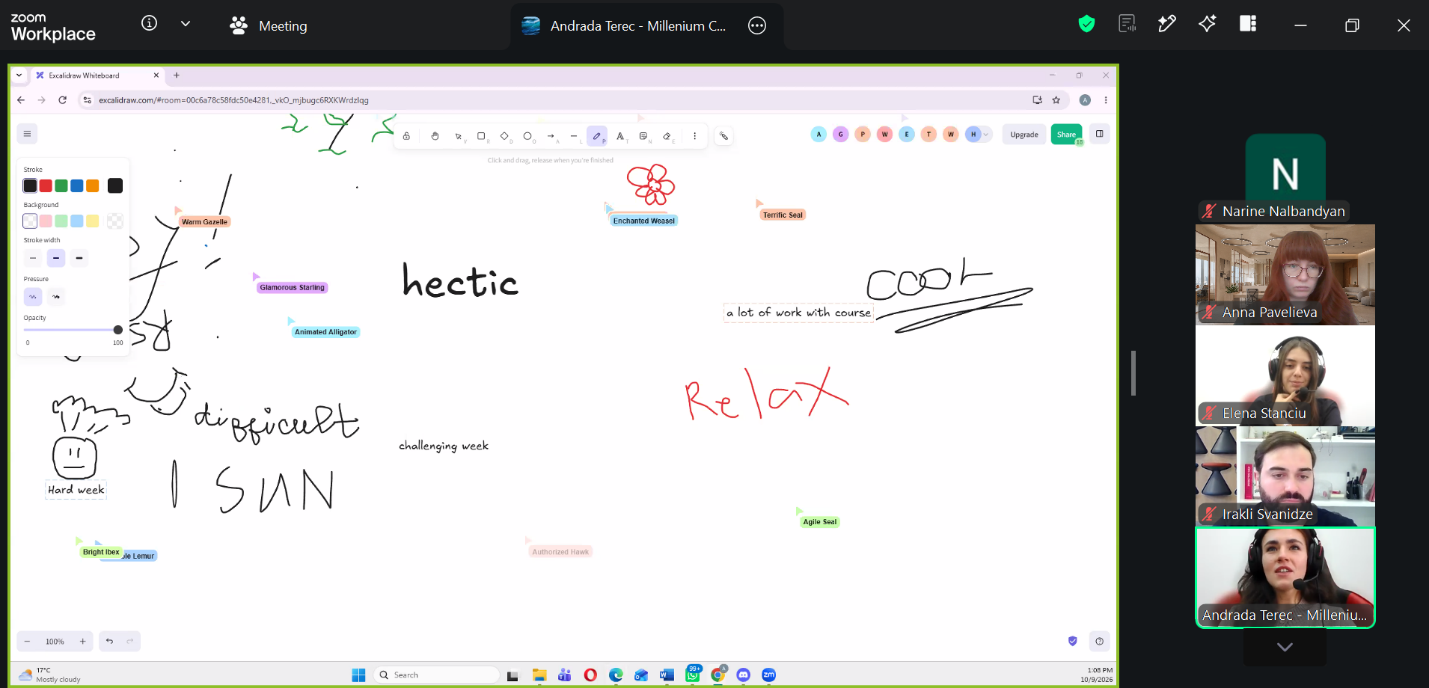
The meeting began with an interactive psychological warm-up session led by trainer Andrada Terec (Millennium Volunteer Centre) using the Excalidraw digital collaborative whiteboard. Participants were invited to visualise their current emotional state, share reflections following an intensive working week, and leave brief comments or drawings. This approach demonstrated the importance of using informal tools at the start of any group interaction, as building trust, mutual understanding, and openness is an indispensable prerequisite for successful work in remote learning settings. The organisers highlighted that facilitators would use such straightforward yet effective icebreakers to help students overcome cross-cultural communication barriers.
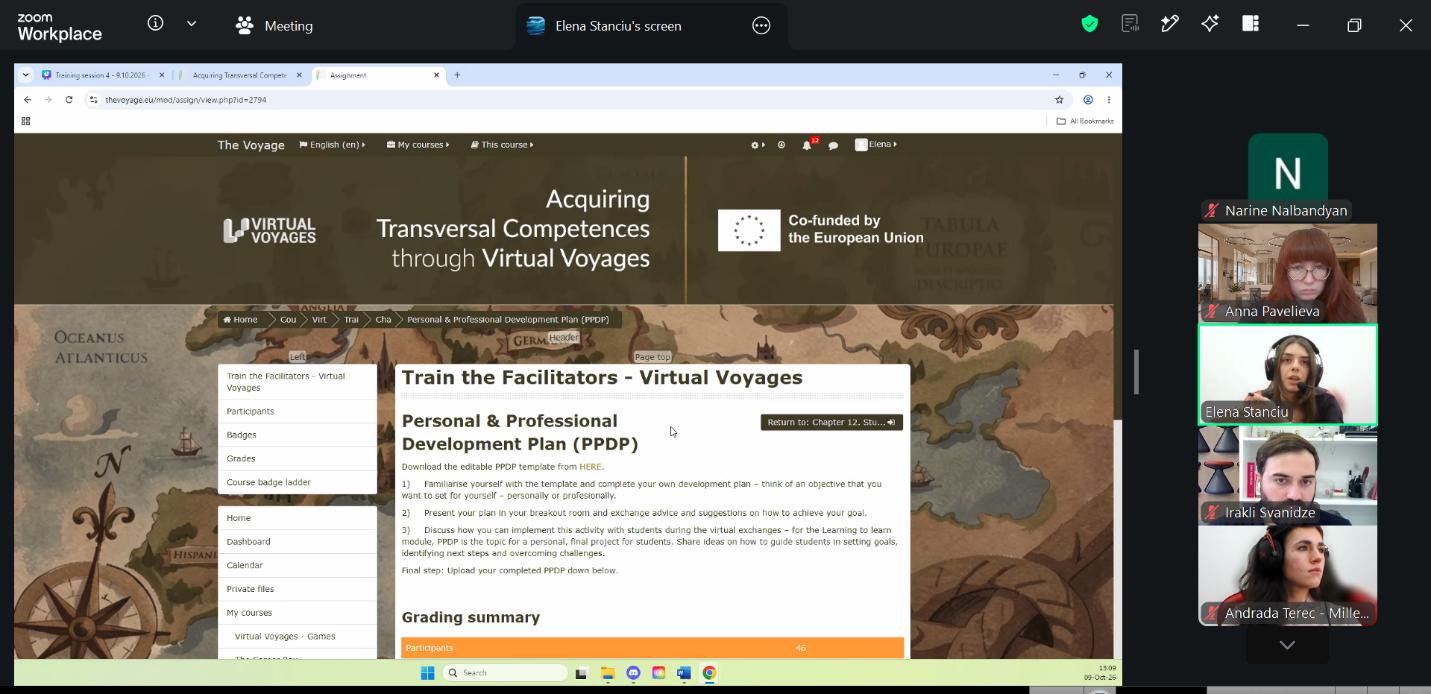
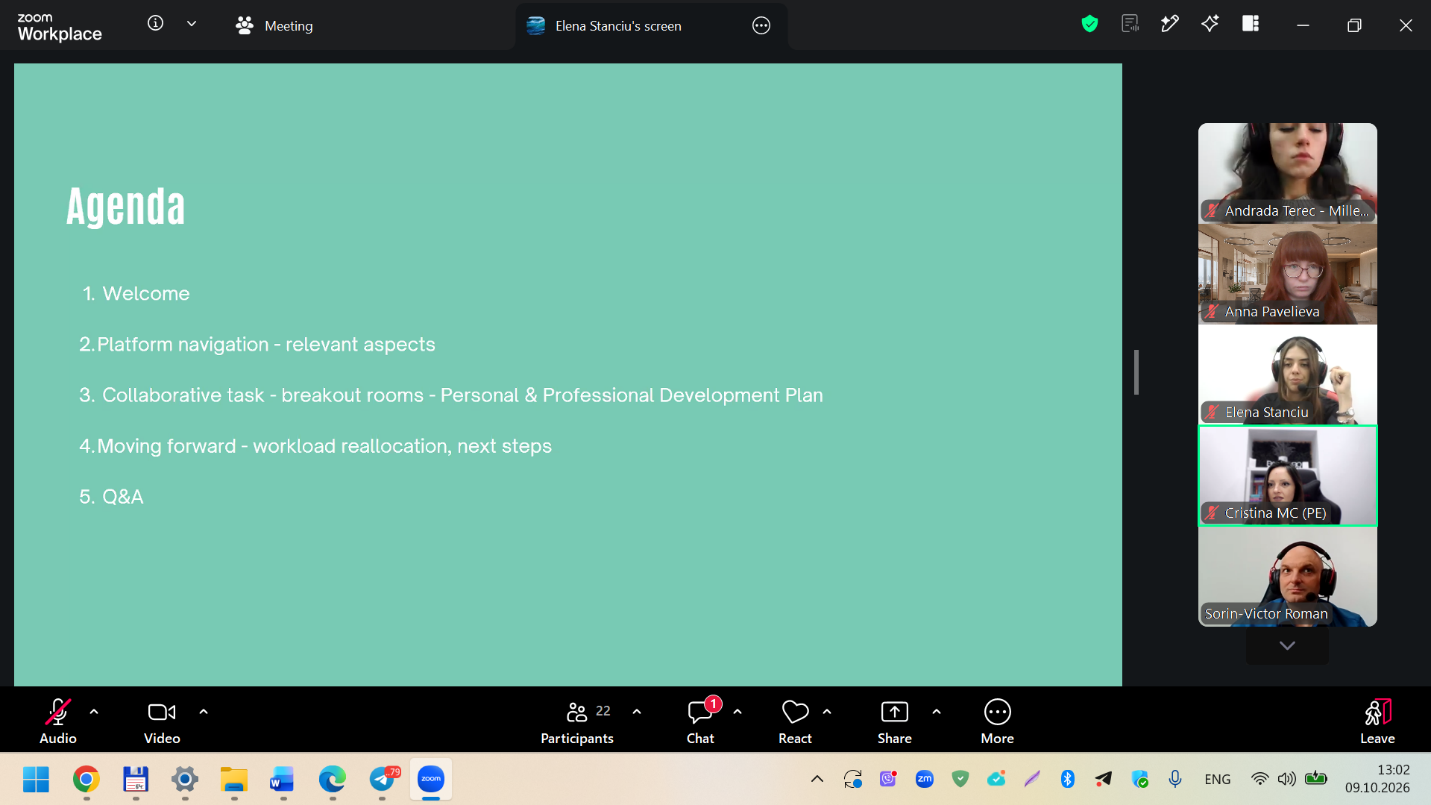
After the introduction, coordinator Elena Stanciu moved to the session’s central thematic block, dedicated to practical mastery of the Personal and Professional Development Plan (PPDP) tool. This instrument is integrated into Chapter 12 of the facilitators' module (“Train the Facilitators”) and also serves as the final capstone project of the foundational course “Learning to Learn”. The organisers emphasised that mentors undertaking this activity themselves is an essential practical rehearsal. Only when educators complete the form themselves and experience the complexities of goal-setting and self-potential evaluation can they professionally support students, provide high-quality feedback, and help them navigate the typical difficulties of planning their own educational pathways.
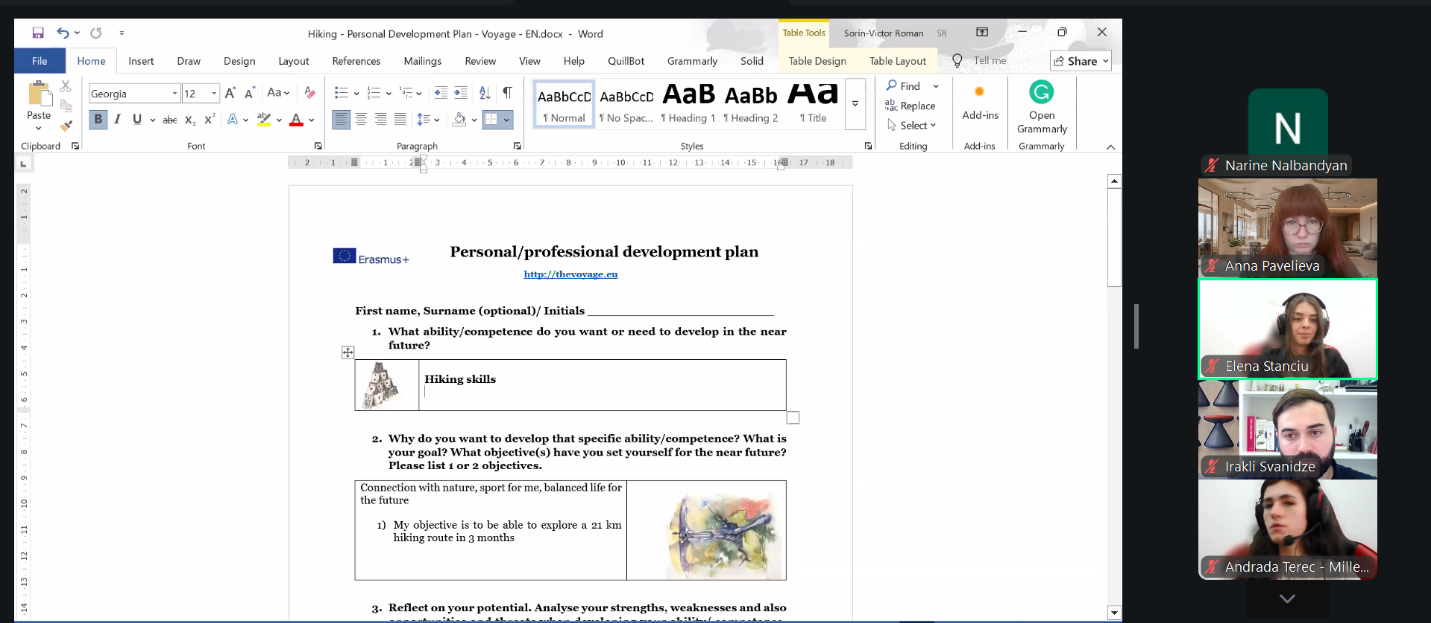
To clarify the form’s specifics, trainer and project expert Sorin-Victor Roman presented an illustrative model case focused on developing hiking skills as a way to achieve a student-life balance between learning, professional commitments, and a healthy lifestyle. Using his own plan as an example, he showed how a general intention becomes a measurable long-term objective: traversing a 21-kilometre mountain route over three months. Participants conducted a detailed SWOT analysis, contrasting internal strengths with time limitations and seasonal challenges (the onset of winter), while external opportunities were represented by proximity to natural landscapes. Sorin-Victor also showed how to build a step-by-step action plan with a weekly workload of 10 hours over 12 weeks, calculate incremental increases in distance (from 5 km to 10 km and beyond), and track progress through a reflective diary.
The practical execution of the assignment also involved resolving real-time technical issues, which provided valuable experience for future facilitators. While editing the downloaded templates, some participants had difficulty entering text within document frames in the word processor. The moderation team responded promptly to the inquiries, prepared an alternative editable version of the form, and immediately distributed it via the meeting chat and updated it on thevoyage.eu portal. This situation clearly illustrated the agility required in digital facilitation, where technical nuances must be addressed swiftly and in a coordinated manner, without disrupting the learning process.
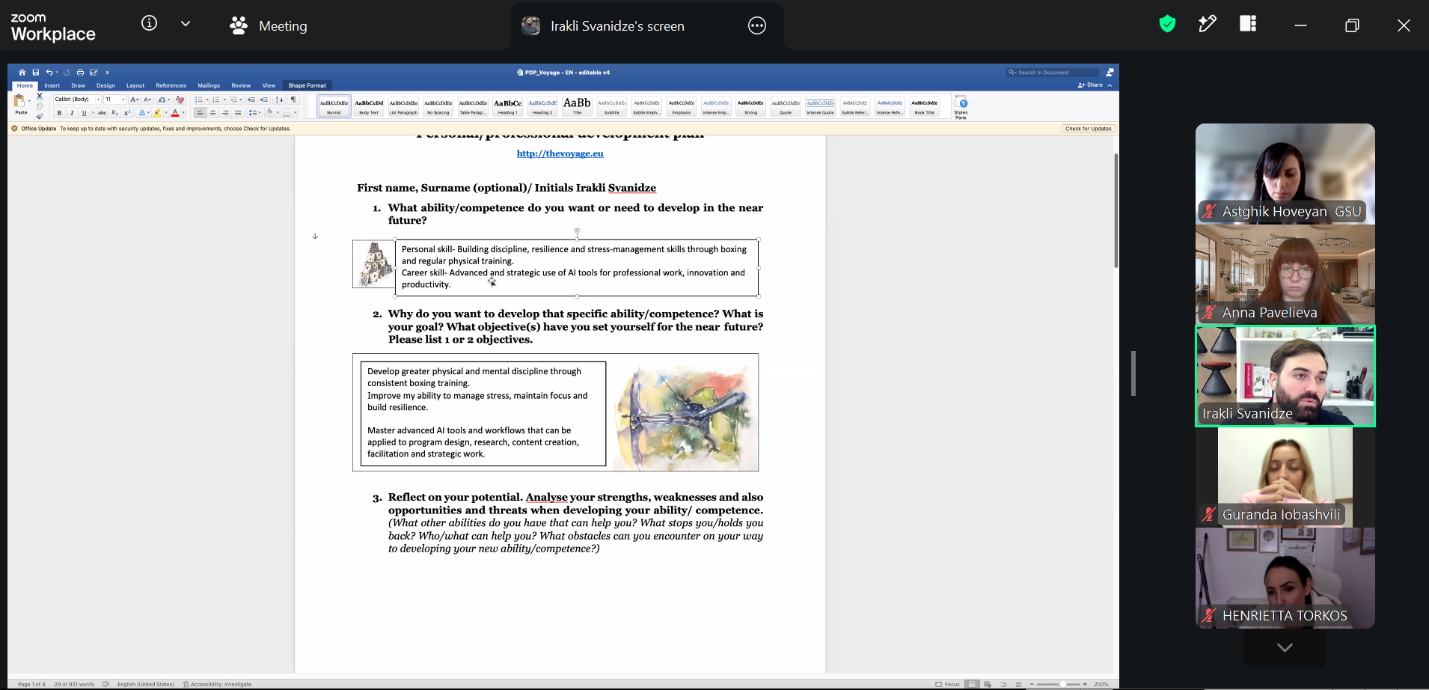
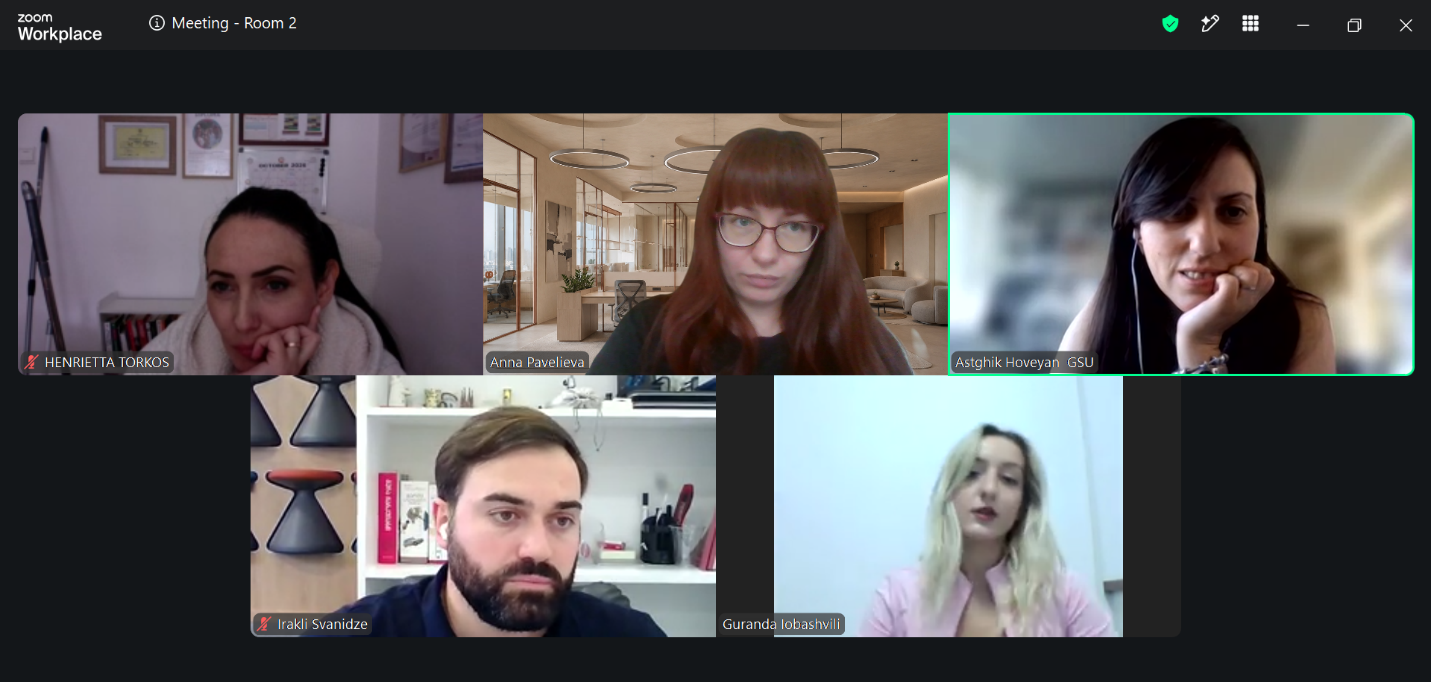
The main stage of the workshop took place within breakout rooms, where educators presented their own development projects and discussed strategies for facilitating relevant themes among students. In particular, in Breakout Room 2, the project coordinator from Poltava Polytechnic, Associate Professor Anna Pavelieva, worked productively alongside international colleagues: Henrietta Torkos (Romania), Astghik Hoveyan (Armenia), Irakli Svanidze, and Guranda Iobashvili (Georgia). The participants’ developments reflected a wide spectrum of priorities relevant to the contemporary academic environment.
Specifically, Associate Professor Anna Pavelieva presented a strategically oriented Personal and Professional Development Plan to transition from administering student exchanges and academic mobility to a new level: designing large-scale Erasmus+ grant proposals (specifically under the KA2 Cooperation Partnerships action) and effectively managing international project consortia.
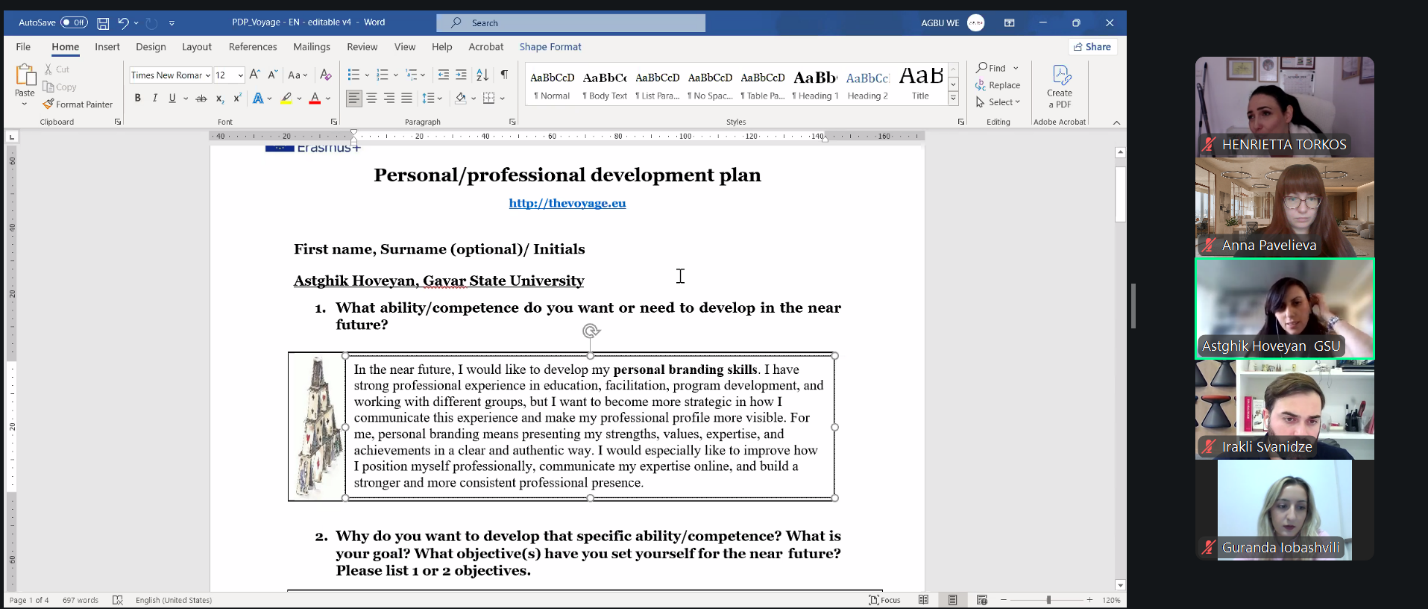
Gavar State University representative Astghik Hoveyan focused on building an authentic personal brand as an expert in the international education arena. Her three-month plan includes modernising her LinkedIn profile, updating her CV and biography to the Europass standard, creating professional visual content using Canva and AI tools, and publishing at least two expert posts per month to expand international partnerships.
The participant from Georgia, Irakli Svanidze, demonstrated a comprehensive approach, combining personal goals of strengthening endurance, discipline, and stress resistance through regular boxing training with career development in the field of artificial intelligence technologies. His professional plan centres on advancing from basic AI usage to strategic command of sophisticated tools, prompt engineering, and workflow automation for curriculum design, scientific research, and facilitation.
An essential component of the group work was a presentation by the Dean of the Faculty of Educational Sciences, Psychology and Social Work at Aurel Vlaicu University of Arad, Associate Professor and PhD Henrietta Torkos, who identified strengthening conflict management and mediation competences as her priority. As an educator in psychopedagogy and head of the faculty, she emphasised that one of the primary obstacles during acute disagreements is maintaining emotional self-regulation and objectivity. Her six-week programme is based on case study analysis, active listening techniques, simulation role-plays, maintaining a reflective journal, and obtaining comprehensive feedback from students and faculty colleagues. In parallel, participants discussed inclusive education methodologies and integrating Universal Design for Learning (UDL) principles when working with student groups from diverse socio-cultural backgrounds.
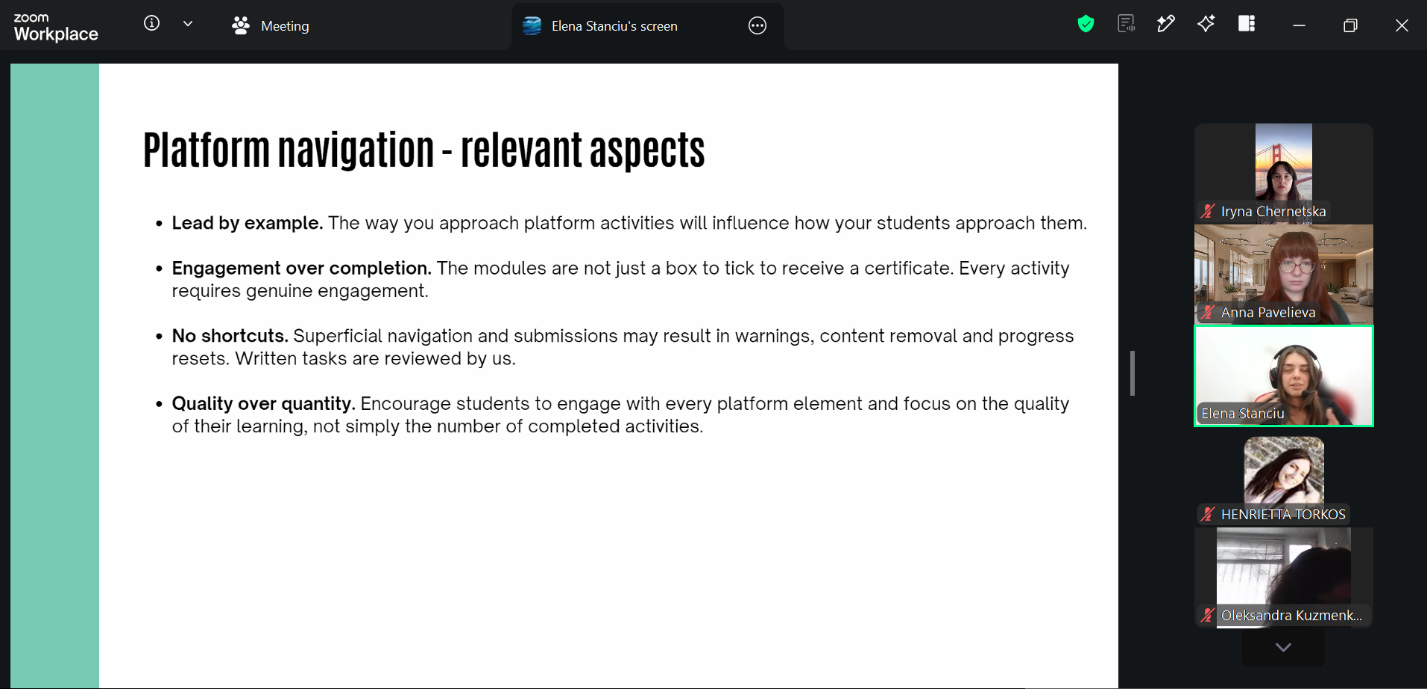
During the plenary synthesis, coordinator Elena Stanciu emphasised academic integrity and high-quality standards for platform performance. Special emphasis was placed on the importance of deliberate and deep engagement with each stage of the course (quality over quantity), as opposed to a perfunctory, box-ticking approach. The moderators noted that they thoroughly review submissions and reset superficial responses to foster genuine learning – a standard facilitators will uphold in their work with students as well. The moderators also highlighted the developmental potential of the platform’s educational games (particularly the resource-balancing “Stability game”), whose great difficulty is designed to teach users to overcome obstacles through repeated attempts and critical error analysis.
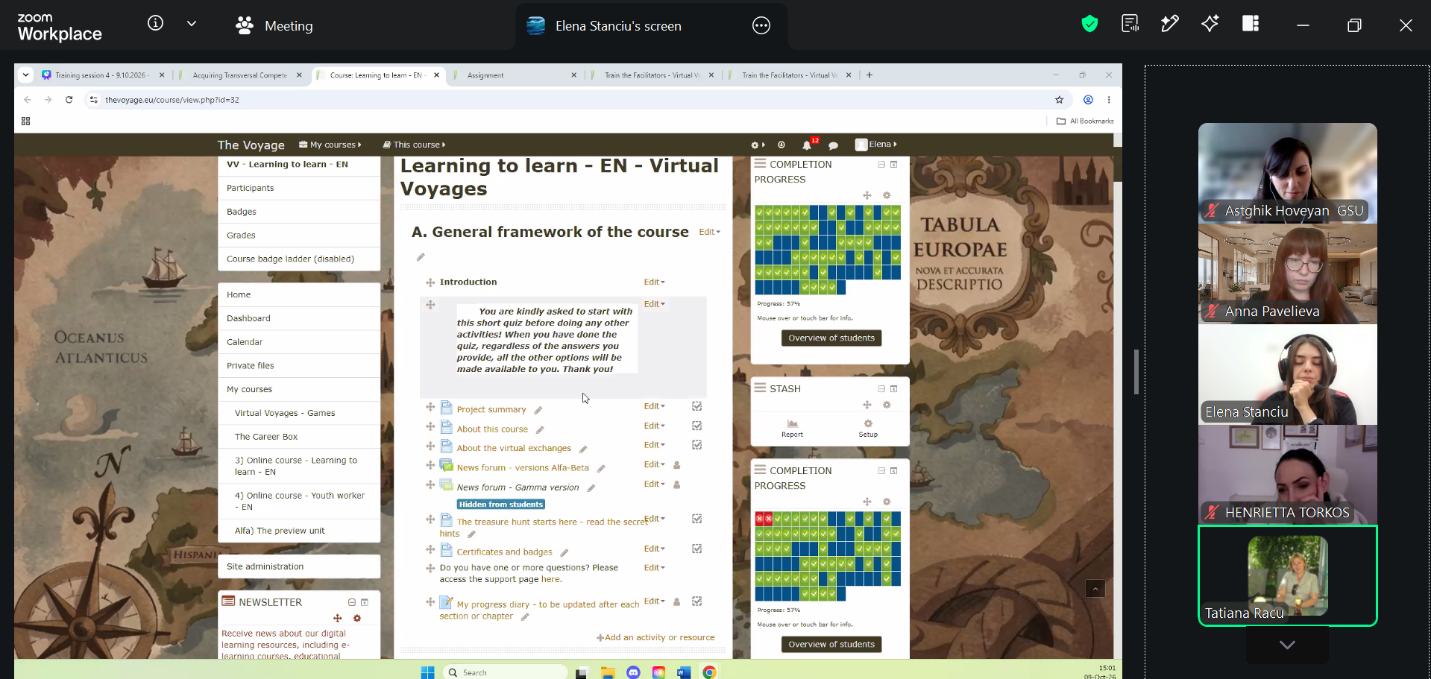
A dedicated segment discussed the results of testing thevoyage.eu portal. A representative of Moldova State University, Tatiana Racu, who connected to the session from Canada (despite the significant time difference), along with other colleagues, provided feedback regarding user interface convenience, the functionality of the course language versions (English and Romanian), and accurate progress tracking, which will ensure optimal system readiness before student groups begin their work.
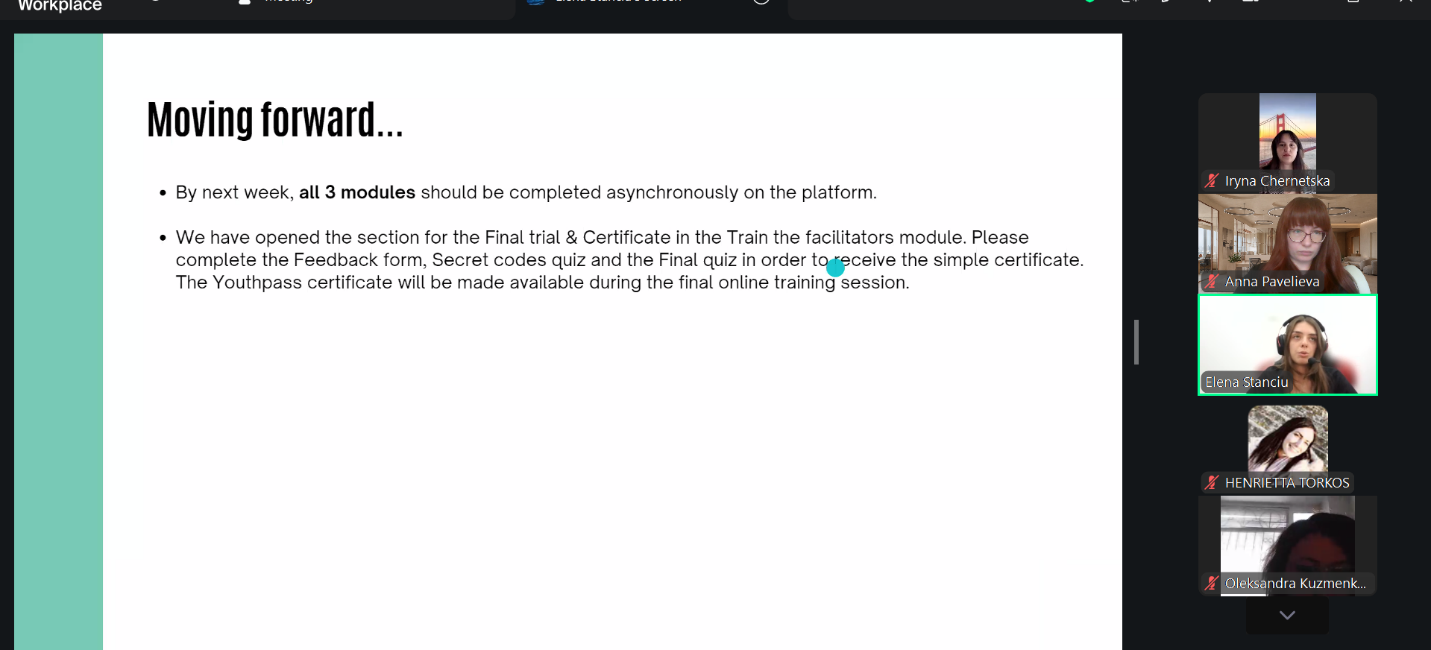
In the concluding segment, coordinators Cristina Matei-Cebotaru (Predict CSD Consulting) and Ramona Lile (Aurel Vlaicu University) outlined the structure and timeline of the upcoming student virtual exchanges, with the selection process concluding next week. Students will work in international cohorts of 15–20 participants guided by facilitators. The curriculum includes 30 hours of synchronous sessions (15 hours each for the “Career Box” and “Learning to Learn” modules), delivered as two weekly two-hour meetings, plus 15 hours of asynchronous individual study on the online portal. To provide continuous methodological support to lecturer-facilitators, plenary mentorship sessions will take place every Friday, and all course materials will be delivered in the form of tailored electronic handbooks.
The project will culminate in the final Project Fair, where students will present their deliverables, and the 20 best personal development plans will receive special consortium awards. All educators and students who complete the programme will be awarded official European certificates and Youthpass competence passports. The participation of lecturers from National University “Yuri Kondratyuk Poltava Polytechnic” in this project opens new opportunities to integrate innovative digital practices into the university's educational process. It substantially strengthens our institution's international academic cooperation.
It is worth noting that practical implementation at the local level is already well underway: on September 24, 2026, the university team participated in a coordination meeting of partners of the Erasmus+ project “Acquiring Transversal Competences through Virtual Voyages” (No. 101193593), during which, together with colleagues from seven countries, the educators reviewed the outcomes of the first implementation phase and agreed upon the launch of virtual exchanges for students; a team of university lecturers has already participated in two facilitator sessions, where, alongside colleagues from seven countries, they mastered virtual facilitation methodologies for future work with students, refined their virtual facilitation expertise, simulated group interaction cases, and mastered digital tools for the successful delivery of international student exchanges, resolved online facilitation dilemmas, presented their own two-hour workshops on the “Learning to Learn” and “Career Box” modules, and engaged in mutual feedback within Zoom rooms.
The successful implementation of international initiatives of such a prominent scale is made possible through the strategic vision, systemic support, and steadfast commitment of the university leadership. The team of lecturer-facilitators extends its sincere gratitude to the President of National University “Yuri Kondratyuk Poltava Polytechnic”, Professor Volodymyr Onyshchenko, and Rector, Associate Professor Olena Filonych, for their unwavering institutional support, their encouragement of innovative academic projects, and for cultivating an inspiring, dynamic environment that empowers faculty development.
Driven by a clear institutional strategy towards internationalisation, digital transformation, and European integration led by the university’s executive leadership, Poltava Polytechnic continues to reinforce its role as a proactive and trusted partner within prestigious global academic alliances, opening new horizons of virtual mobility and transversal learning for Ukrainian students and educators alike.
National University “Yuri Kondratyuk Poltava Polytechnic” continues to demonstrate high standards of project management and is confidently moving toward the official launch of international virtual exchanges.