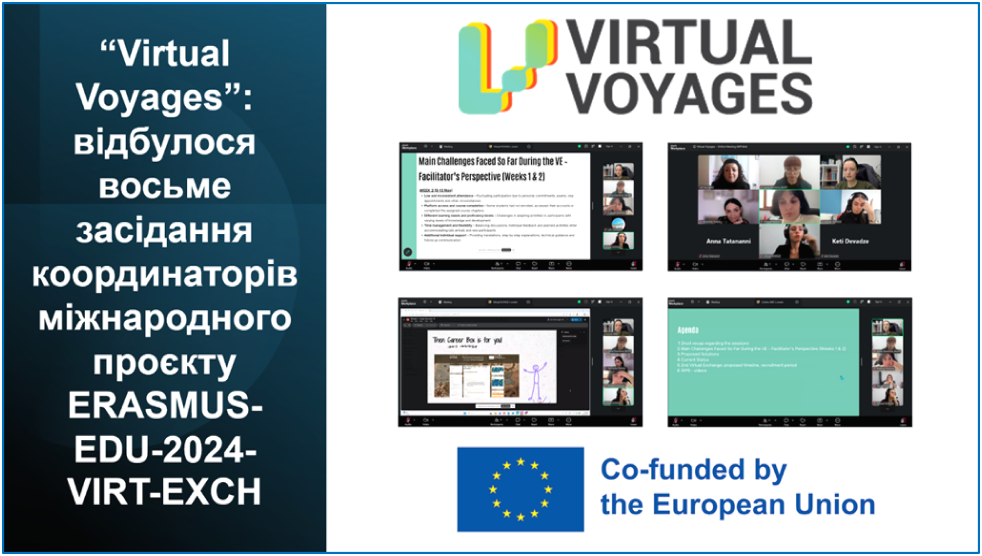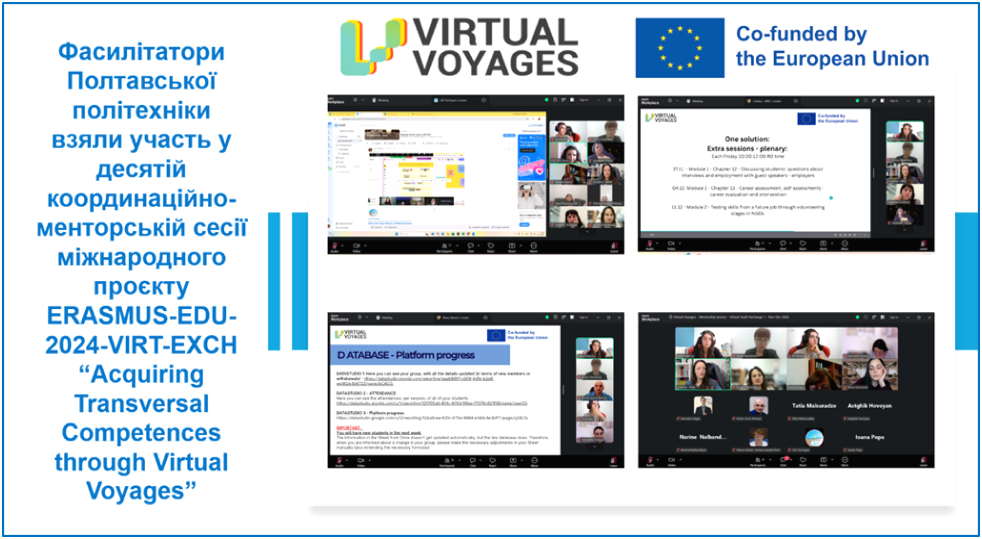
On 20 November 2026, lecturer-facilitators and coordinators of National University “Yuri Kondratyuk Poltava Polytechnic” joined the tenth international coordination and methodological online meeting of the Erasmus+ programme project “Acquiring Transversal Competences through Virtual Voyages” (registration number ERASMUS-EDU-2024-VIRT-EXCH No. 101193593), co-funded by the European Union. The event brought together an international academic partnership under the overall coordination of “Aurel Vlaicu” University of Arad (Romania), with the participation of specialists from the Millennium Centre and Predict CSD Consulting (Romania), IUL Online University (Italy), Fırat University (Türkiye), Moldova State University, Caucasus University, Batumi Shota Rustaveli State University (Georgia), and Gavar State University (Armenia), to align key methodological, technical, and strategic steps for implementing the first wave of student exchanges.
The meeting began with a presentation of the project’s dissemination materials, particularly a new promotional video for the first learning module, “Career Box”. The video clearly demonstrates the advantages of studying on the project’s digital platform, where students have access to online handbooks, audio and video summaries, mind maps, additional reading materials, interactive quizzes, practical missions, and peer assessment. The partners emphasised the importance of actively sharing promotional content across the academic community, announced plans to prepare similar video presentations for virtual exchanges in general and for the second module, “Learning to Learn”, and reminded participants to systematically record all outreach activities in the shared dissemination register.
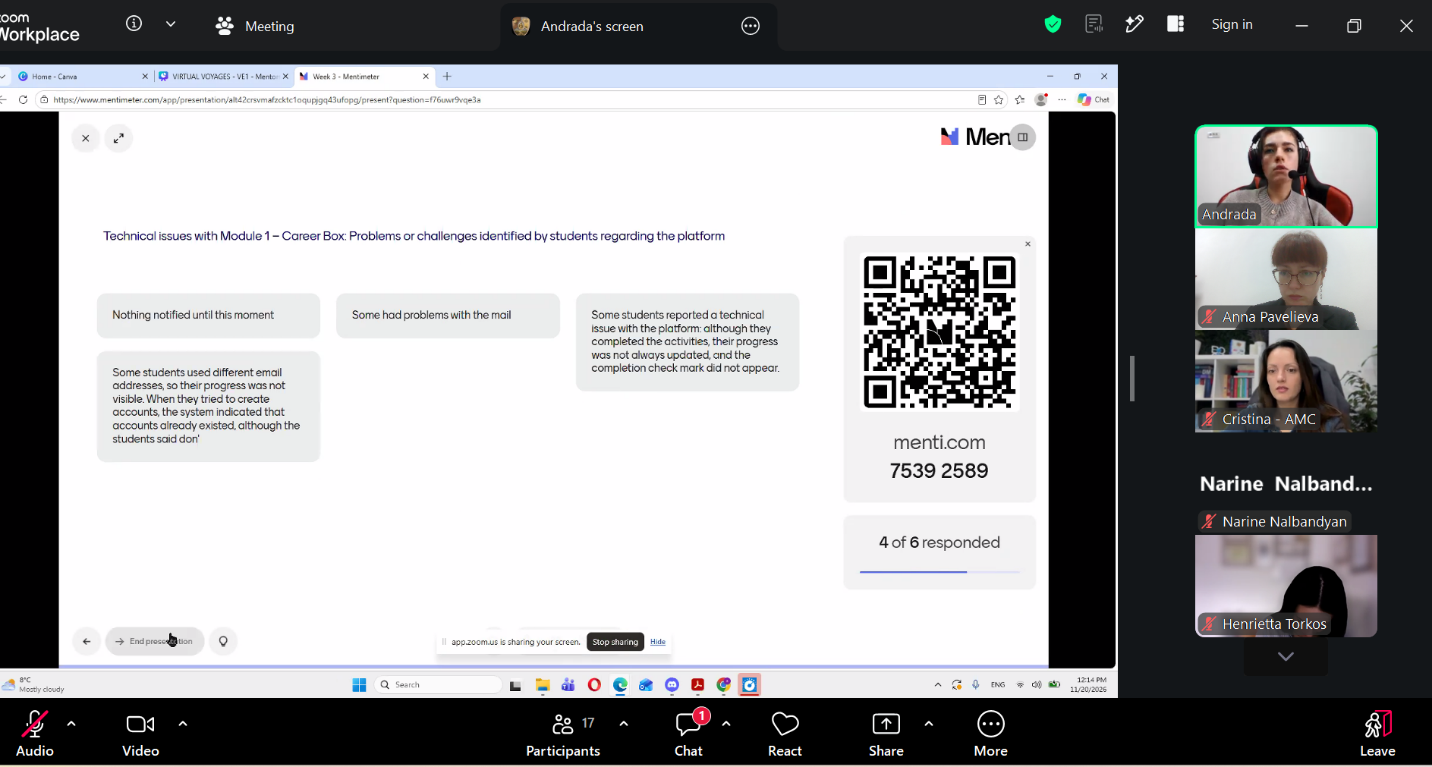
An important component of the reflection on the third academic week – during which groups successfully completed the fifth and sixth sessions out of the fourteen planned – was an interactive poll of facilitators conducted on the Mentimeter platform. The educators summarised student feedback regarding the use of the educational platform while completing the “Career Box” module, drawing attention to isolated technical aspects, such as the accurate display of progress in asynchronous assignments or students’ use of different email addresses during registration, and agreed upon prompt recommendations to support users.
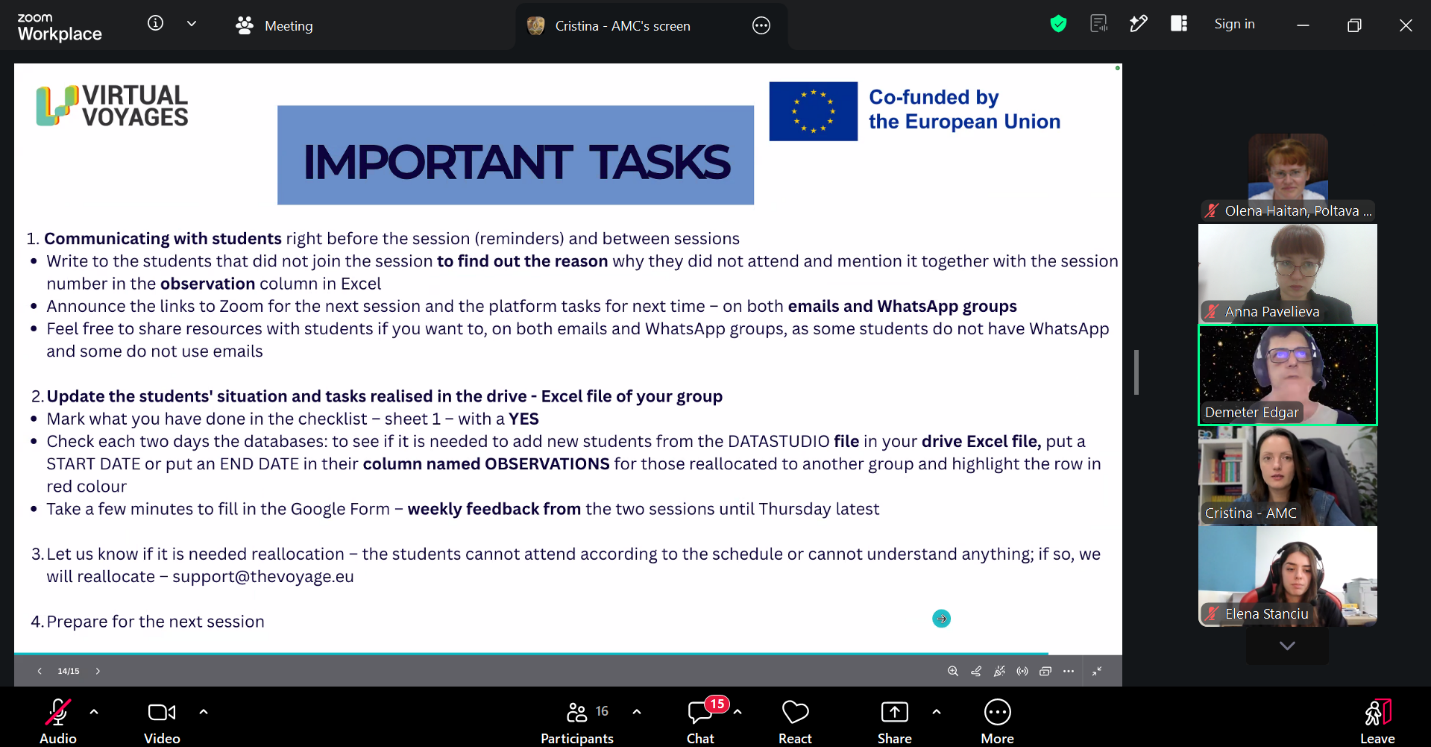
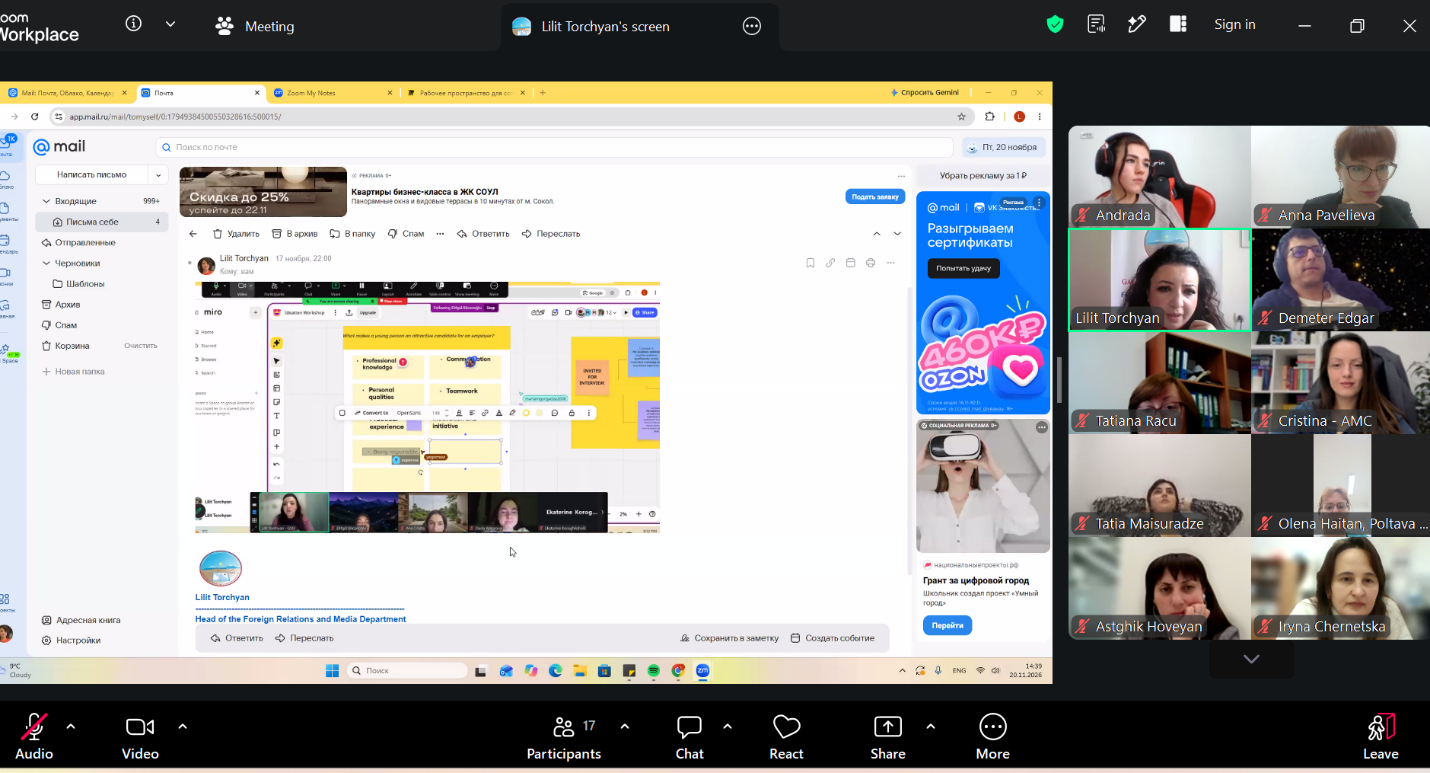
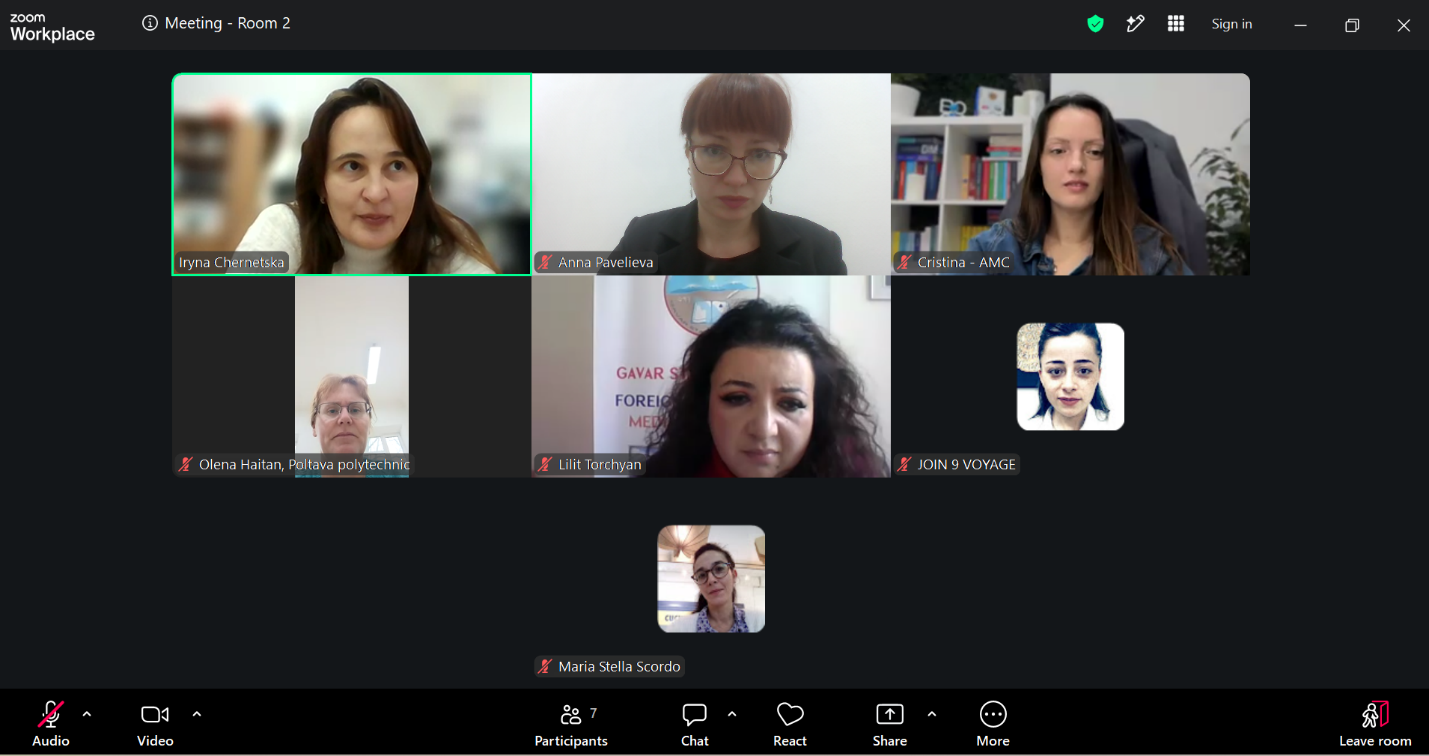
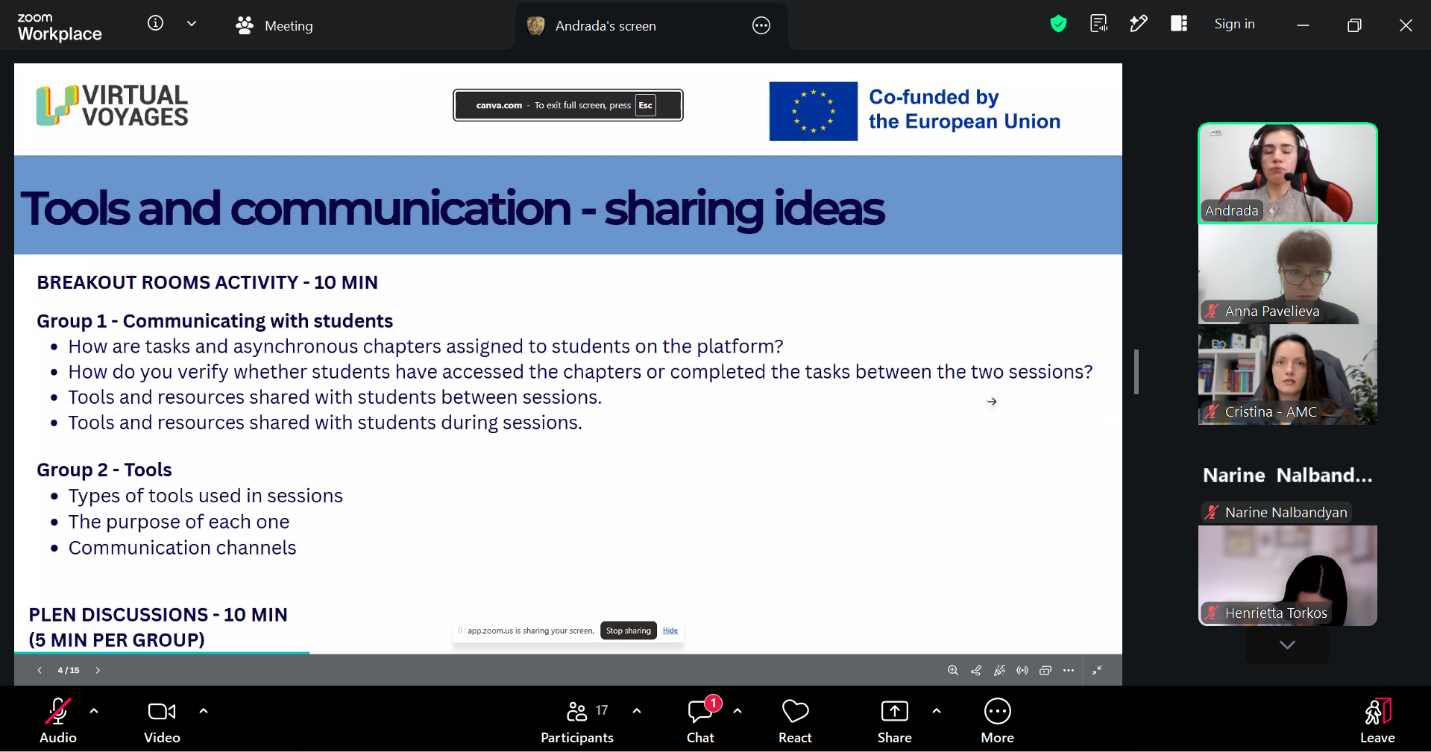
The central analytical block of the meeting consisted of work in thematic breakout rooms as part of the “Tools and communication – sharing ideas” discussion, followed by a plenary summary. Participants in the first working group focused on effective student communication practices, including procedures for assigning and verifying the completion of asynchronous units on the platform, as well as selecting resources that facilitators share with learners between sessions and directly during online meetings. The second group synthesised experience in using interactive digital tools and communication channels, underscoring the effectiveness of Miro interactive boards, Mentimeter polls, and Zoom’s built-in functionality. As a result of the discussion, the educators exchanged effective pedagogical techniques, including delivering a brief content recap of the previous unit at the start of each session, providing students with a concise meeting outline in advance to help them prepare their responses more confidently, combining oral discussions with Zoom chat participation, and regularly duplicating reminders via email and WhatsApp.
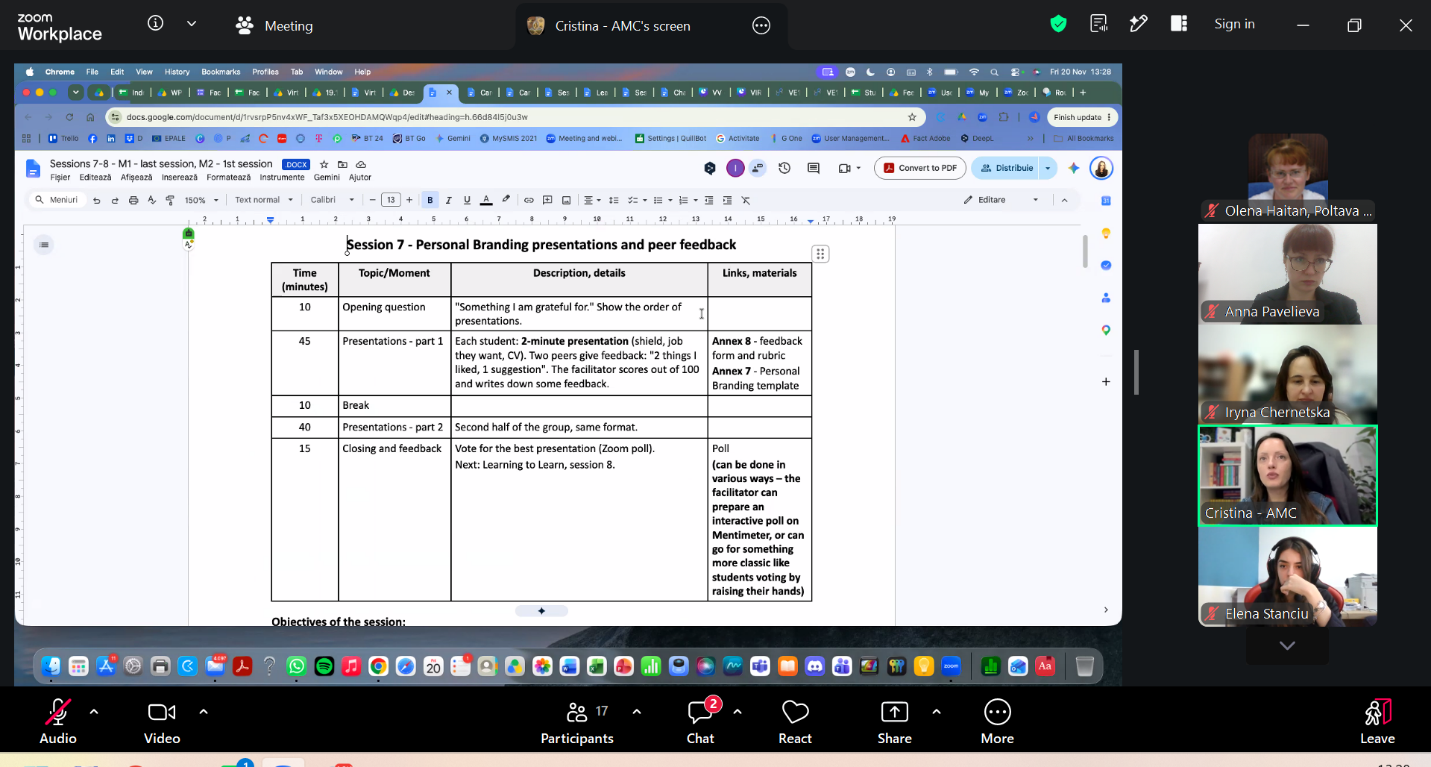
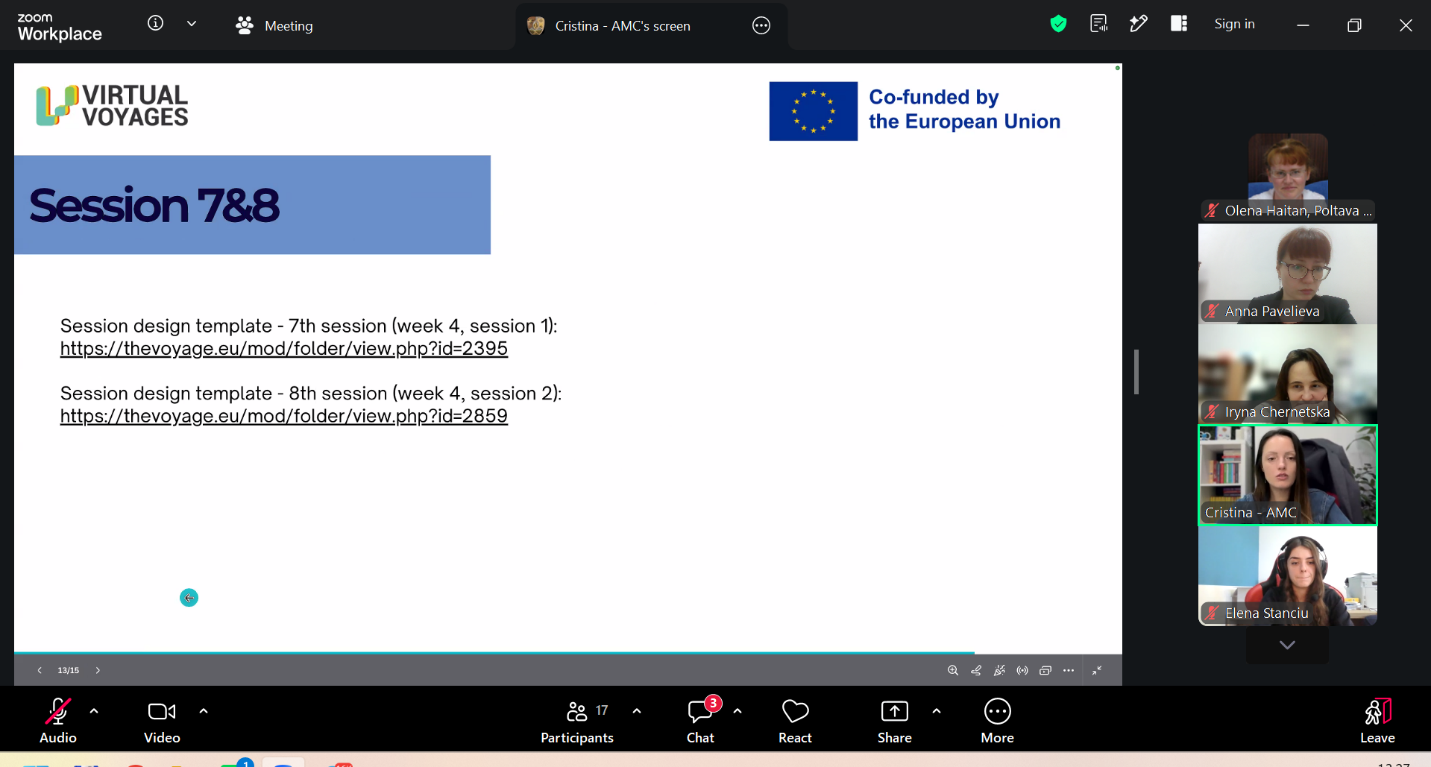
During the coordination session, the partners also examined in detail the instructional scenario for the fourth week of virtual exchanges, encompassing the seventh and eighth sessions and marking the transition from the first to the second module of the course. Specifically, the seventh session will serve as the concluding meeting within the “Career Box” module and will focus on personal branding project presentations and peer assessment. Following an introductory reflection question, each student will have two minutes to present their symbolic personal brand shield, chosen career goal, and updated CV. The approved format provides for constructive feedback from two peers following the “two strengths and one suggestion” principle, professional evaluation by the facilitator against standardised criteria, and a final interactive vote for the best presentation, after which the next session will open the “Learning to Learn” module.
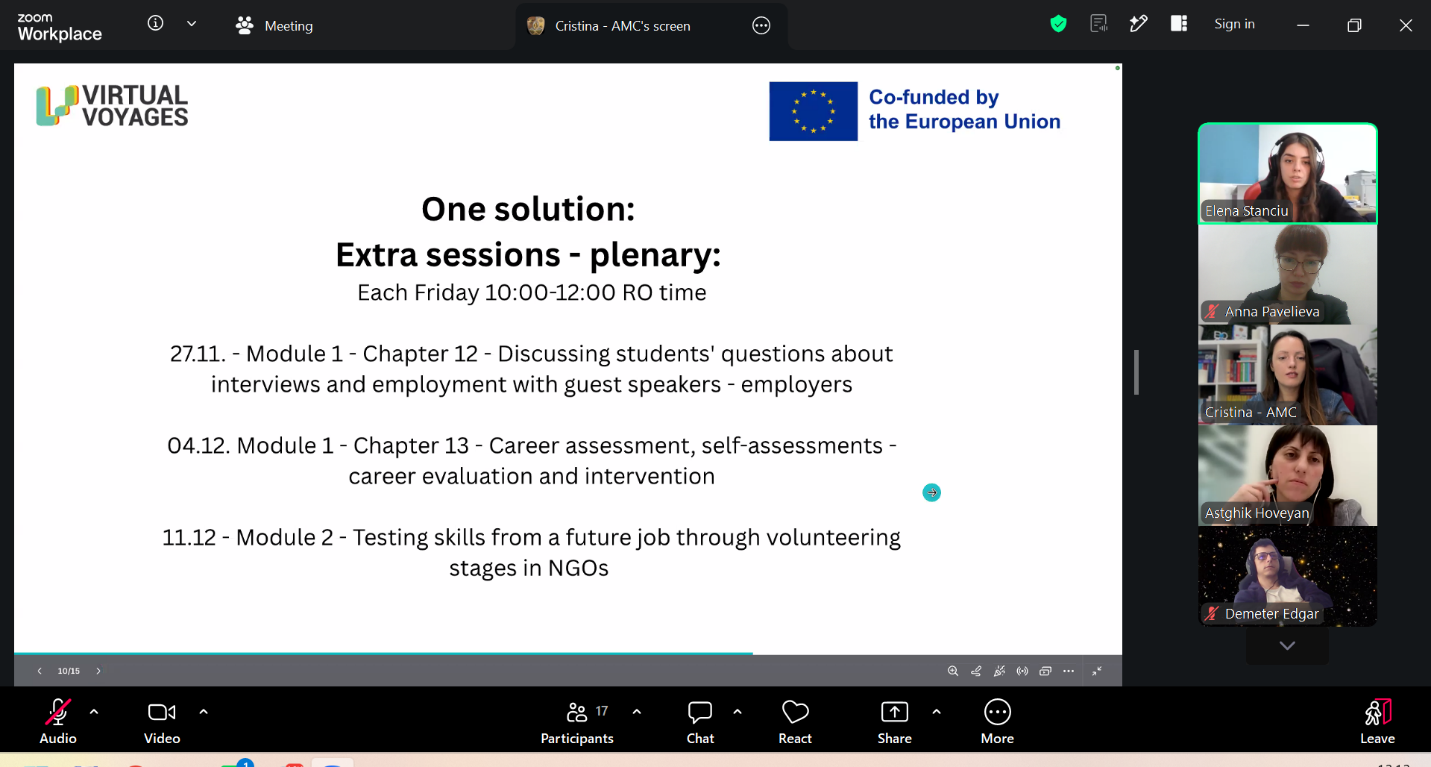
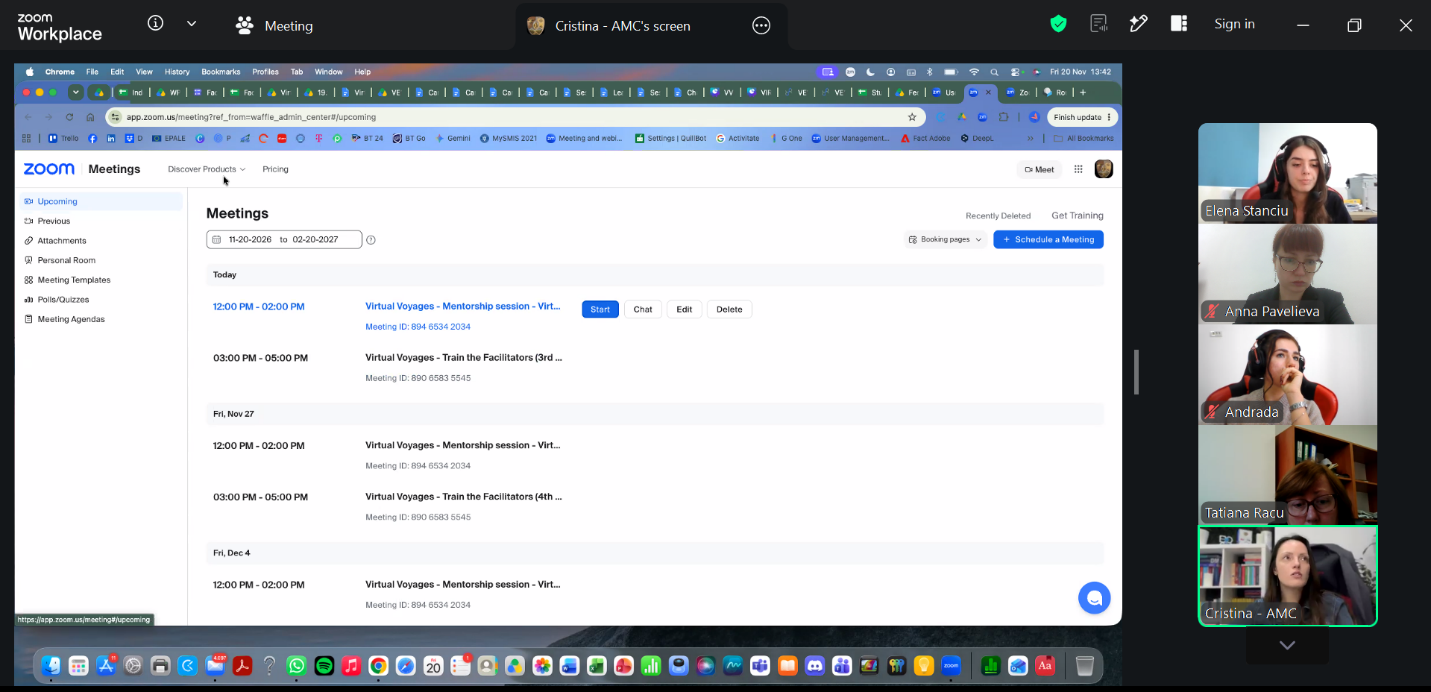
During the meeting, particular attention was devoted to approving the schedule and thematic content of three additional joint plenary sessions, which will take place every Friday from 10:00 to 12:00 Kyiv time. This format gives students maximum flexibility to combine the international project with university schedules and ensures they can accumulate the required hours for certification under Youthpass and Europass standards. According to the approved plan, on 27 November 2026, a session covering Unit 12 of the first module will address student questions about job interviews and employment, with invited employers and representatives of partner organisations participating. On 4 December 2026, the plenary meeting will focus on Unit 13, covering career assessment, self-diagnostics, and psychological support for professional development, with human resources specialists involved. On 11 December 2026, participants will explore opportunities in the second module to test professional skills through volunteer internships in non-governmental organisations, while the concluding plenary session of the first exchange wave will take place on 18 December 2026 at 18:00 Kyiv time.
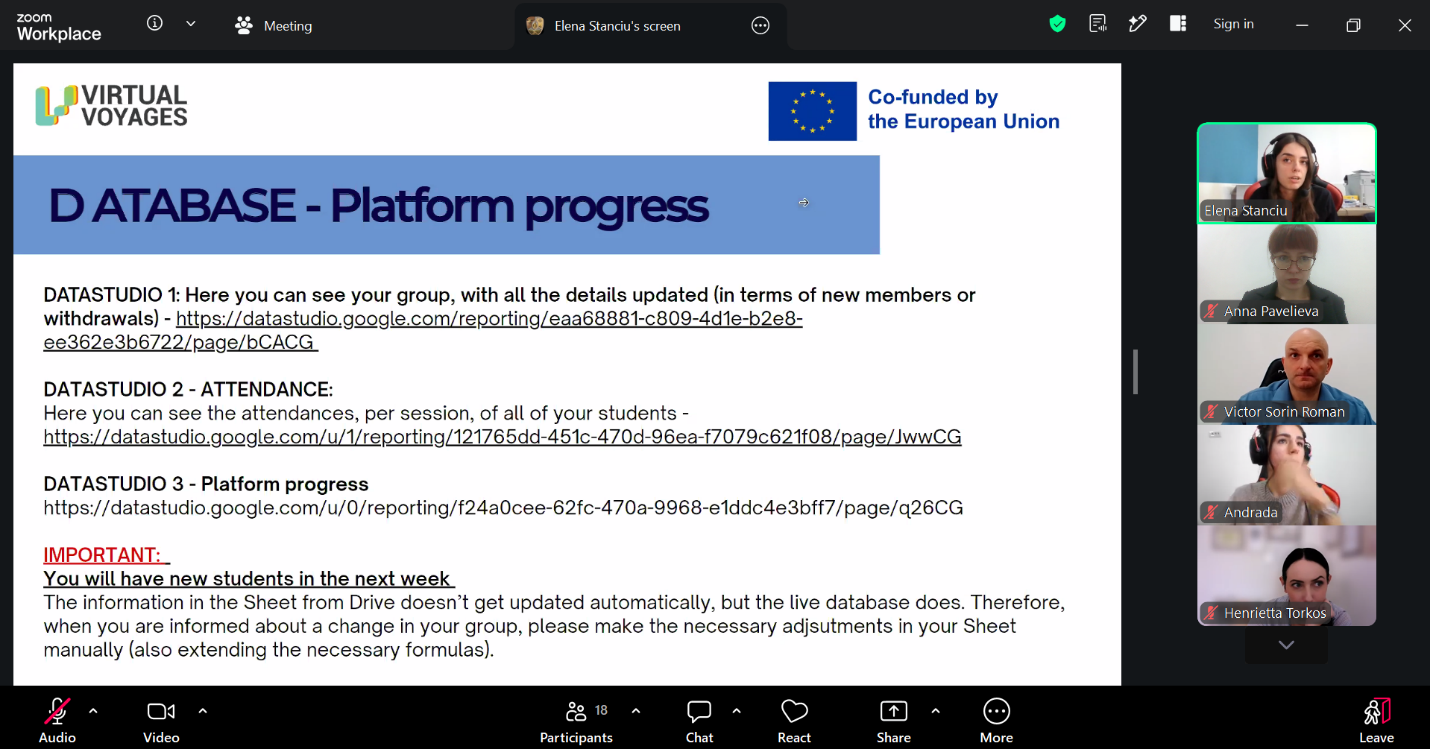
In the digital administration segment, the technical coordinators presented updated functionality for three interactive Google Data Studio dashboards that monitor student group composition, track synchronous session attendance in Zoom, and monitor learners’ asynchronous progress on the educational platform. Facilitators were reminded to cross-check data every two days between the centralised dashboards and local tracking spreadsheets on Google Drive, record updates to group rosters and reasons for participant absences in the designated observation columns, and complete the feedback form weekly.
At the end of the meeting, the consortium outlined strategic guidelines for further implementation of the project, including a preliminary calendar for the next waves of virtual exchanges, scheduled for March–April and May–July 2027. Separately, the training schedule for the second international pool of facilitators was presented: asynchronous study of materials on the platform will begin ahead of the New Year, and seven mandatory synchronous training sessions will run from 11 January to 26 February 2027, enabling high-quality preparation of mentors for upcoming learning cycles.
The tenth coordination and mentoring session confirmed the international consortium's strong cohesion, the team’s high methodological readiness to conclude the first learning module, and a shared commitment to creating a supportive and effective educational environment for university youth. For National University “Yuri Kondratyuk Poltava Polytechnic”, systematic participation in the project remains an important instrument for advancing facilitation practices, integrating modern digital solutions into the educational process, and upholding high European standards of higher education.
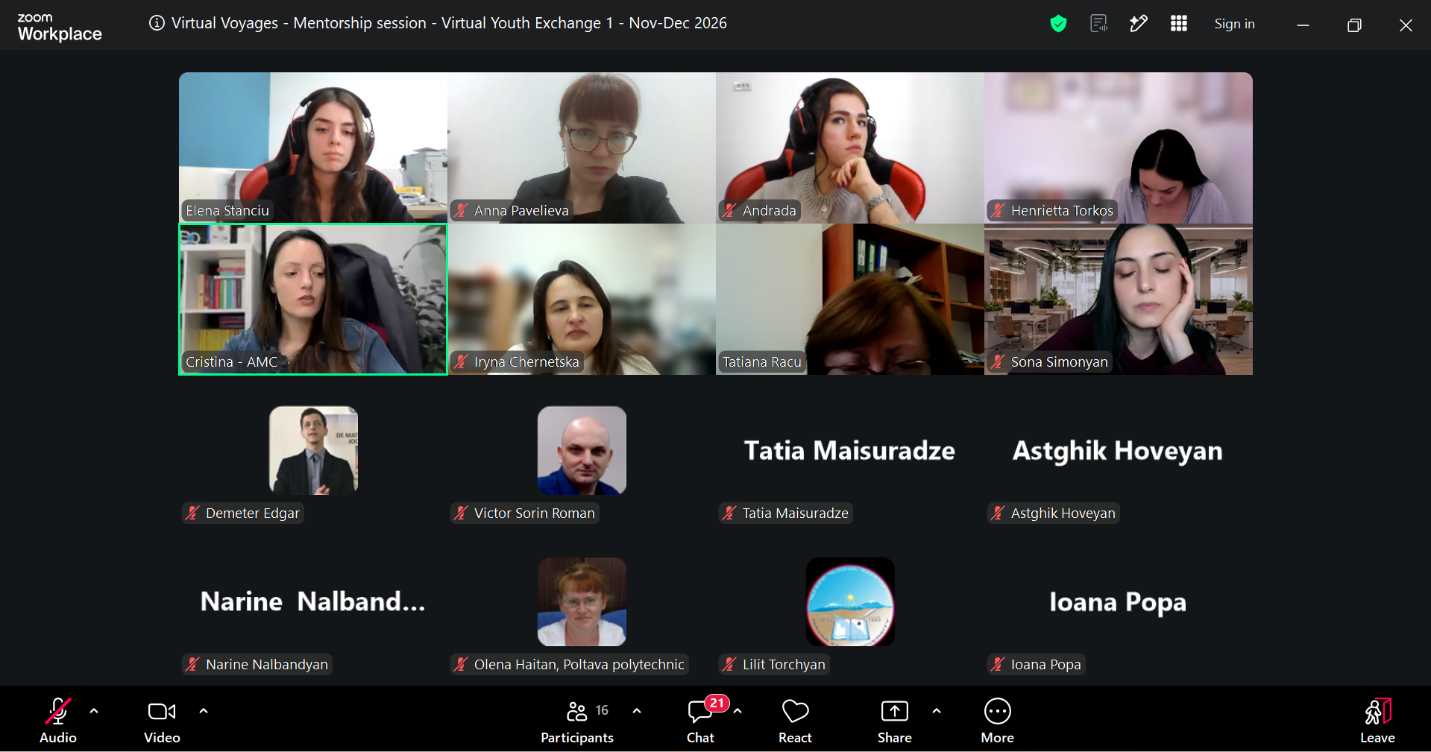
This latest weekly mentoring session once again demonstrated the high level of cohesion within the international partnership and the shared focus on quality educational outcomes for every learner. For representatives of National University “Yuri Kondratyuk Poltava Polytechnic”, participation in such coordination meetings ensures continuous enhancement of facilitation mastery, exchange of advanced digital practices, and reinforcement of the university’s standing as an active champion of European standards in higher education.
The university’s participation follows a steady and consistent pathway: on September 24, 2026, the university team participated in a coordination meeting of partners of the Erasmus+ project “Acquiring Transversal Competences through Virtual Voyages” (No. 101193593), during which, together with colleagues from seven countries, the educators reviewed the outcomes of the first implementation phase and agreed upon the launch of virtual exchanges for students; they also continued aligning key steps during the second meeting of project coordinators on October 1, 2026; on October 8, 2026, discussed the results of testing the digital platform, the training of the facilitators’ pool, and the finalization of the launch of the first student exchange wave; on October 15, addressed the synchronisation of academic schedules, finalising the preparation and certification of the international pool of facilitators, structuring intercultural student cohorts, and deploying a comprehensive dissemination campaign ahead of the launch of the first wave of virtual exchanges; on October 22, discussed forming student cohorts, certifying facilitators according to the Youthpass standard, and coordinating dissemination materials ahead of the official launch of the 7-week virtual exchange cycle, on October 29, confirmed operational readiness at the sixth meeting; and on November 5, demonstrated exemplary student engagement during the seventh coordination session, and on 6 November, analysed the outcomes of the inaugural week of student exchanges, optimised the digital monitoring system, and agreed on the scenarios for the subsequent sessions of the “Career Box” module; and on 13 November, they discussed effective solutions for enhancing youth engagement, mastered the built-in tools of the Zoom platform, and developed the format for additional plenary meetings for students.