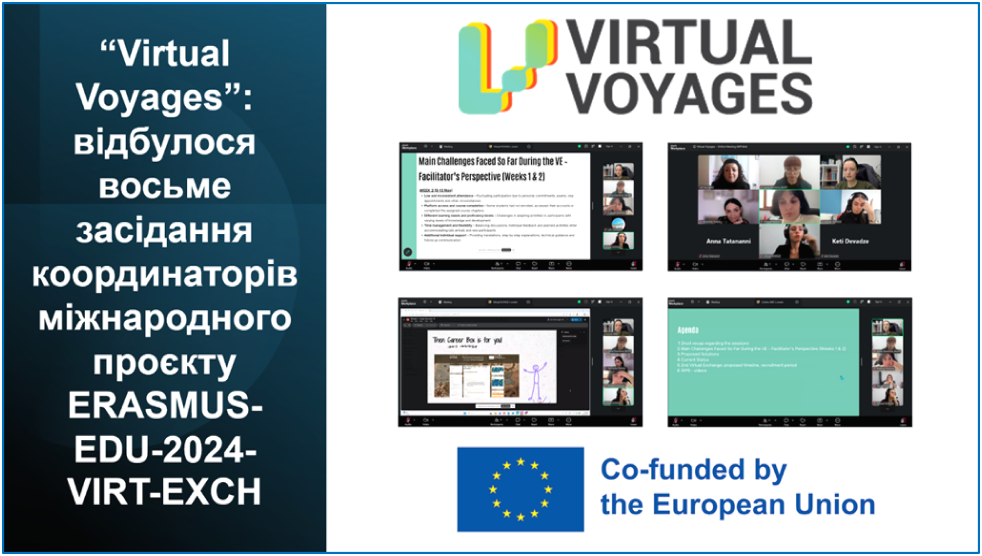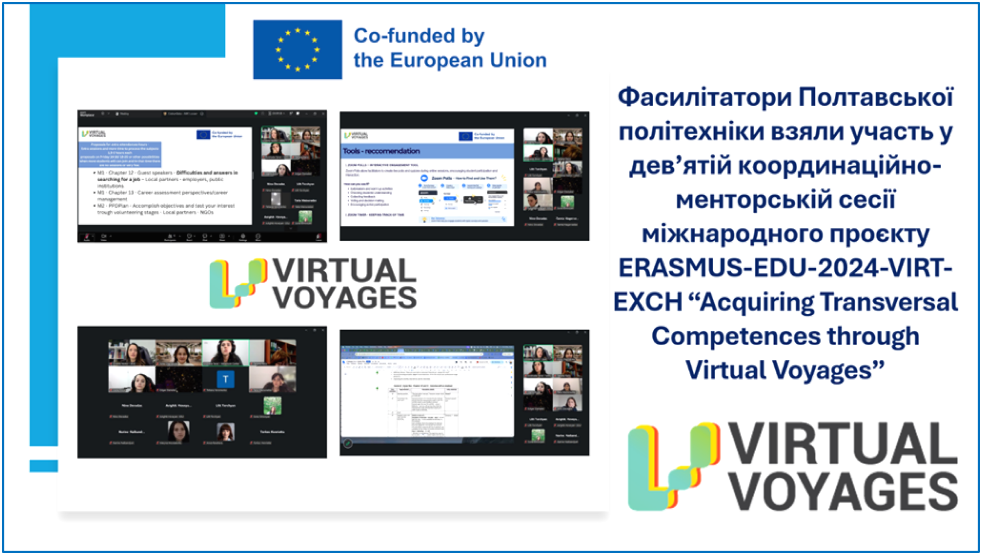
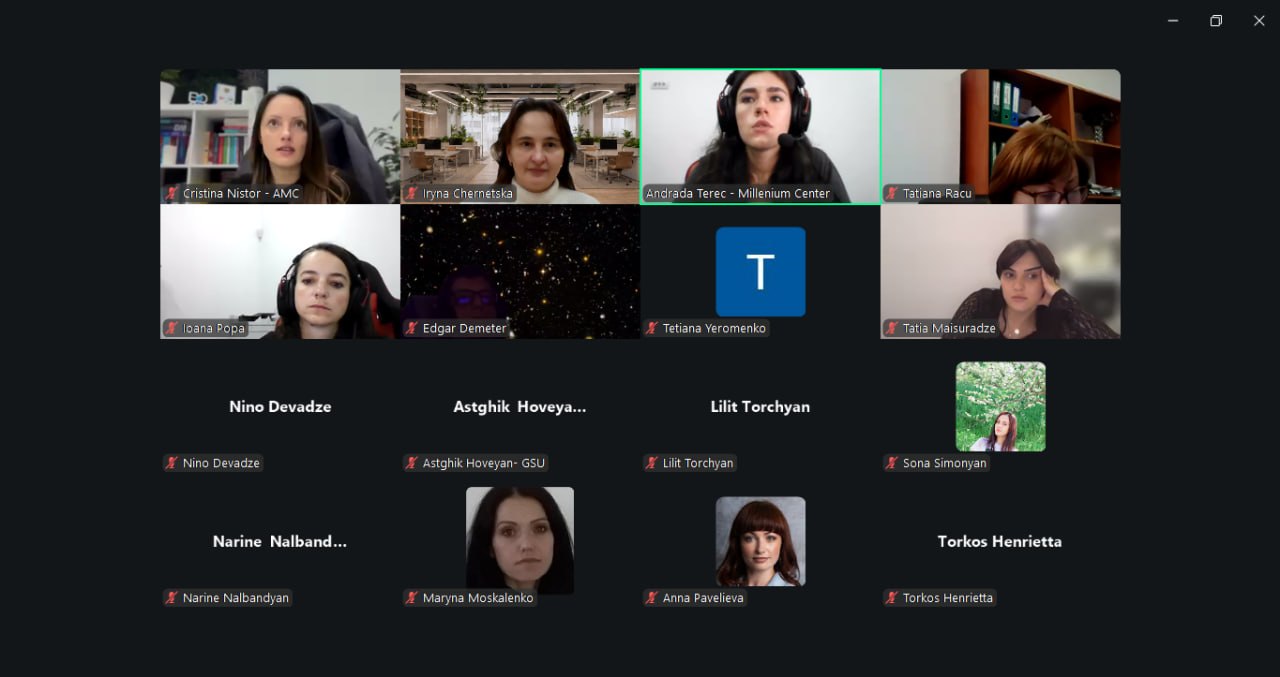
On 13 November 2026, lecturer-facilitators and coordinators of National University “Yuri Kondratyuk Poltava Polytechnic” took part in the ninth international coordination and methodological online meeting of the Erasmus+ programme project “Acquiring Transversal Competences through Virtual Voyages” (registration number ERASMUS-EDU-2024-VIRT-EXCH No. 101193593), co-funded by the European Union. The meeting served as a platform for in-depth professional reflection on the second academic week, seeking shared pedagogical responses to organisational challenges, improving digital administration practices, and planning participants’ further educational trajectories in detail.
The international academic partnership of the project – implemented under the overall coordination of “Aurel Vlaicu” University of Arad (Romania) with the participation of experts from the Millennium Centre and Predict CSD Consulting (Romania), IUL Online University (Italy), Fırat University (Türkiye), Moldova State University, Caucasus University, Batumi Shota Rustaveli State University (Georgia), and Gavar State University (Armenia) – demonstrated high cohesion and effectiveness at the outset of practical teaching. Poltava Polytechnic, represented by an interdisciplinary team of certified academic staff, once again reaffirmed its status as an active and reliable driver of European integration processes in Ukrainian higher education.
The session commenced with a creative emotional reflection exercise using Dixit associative cards on an interactive Miro board. Each facilitator selected an image that best conveyed their impressions of the second week of collaborative work with students. This informal opening enabled educators from different countries to candidly share their discoveries, successes, and concerns, and to adopt a constructive mindset for identifying practical solutions to strengthen group dynamics.
The key analytical component of the meeting involved work in two thematic breakout rooms, where participants examined the educational process from the perspectives of both students and facilitators before presenting their conclusions during a joint plenary discussion. The educators candidly outlined the main challenges of the first two weeks, the most pronounced of which were uneven participation among some learners, communication overload experienced by young people due to a large volume of emails from unfamiliar addresses or chat messages – which occasionally caused invitations to be routed to the Spam folder – as well as varying levels of English proficiency and isolated technical difficulties. Particular attention was paid to insufficient prior preparation among some students for synchronous sessions, which required facilitators to spend additional time familiarising the group with basic platform materials instead of focusing on practical small-group exercises.
In response to these challenges, the consortium team developed a set of effective, practice-tested recommendations. To overcome information fatigue and retain the student audience, the educators agreed to combine clear and concise reminders via email and WhatsApp with personalised support and native-language communication through home university coordinators and student representatives. The facilitators also shared positive experiences in fostering a welcoming atmosphere of mutual respect and emotional connection. They emphasised the importance of compellingly motivating young people by highlighting the real career value of free participation in a European course compared to costly commercial programmes. To optimise time during sessions, the educators proposed preparing brief overview presentations summarising the key points of each unit (including using artificial intelligence tools, followed by methodological adaptation), as well as incorporating interactive exercises on the Wordwall and Mentimeter platforms to maintain a dynamic pace and audience engagement.
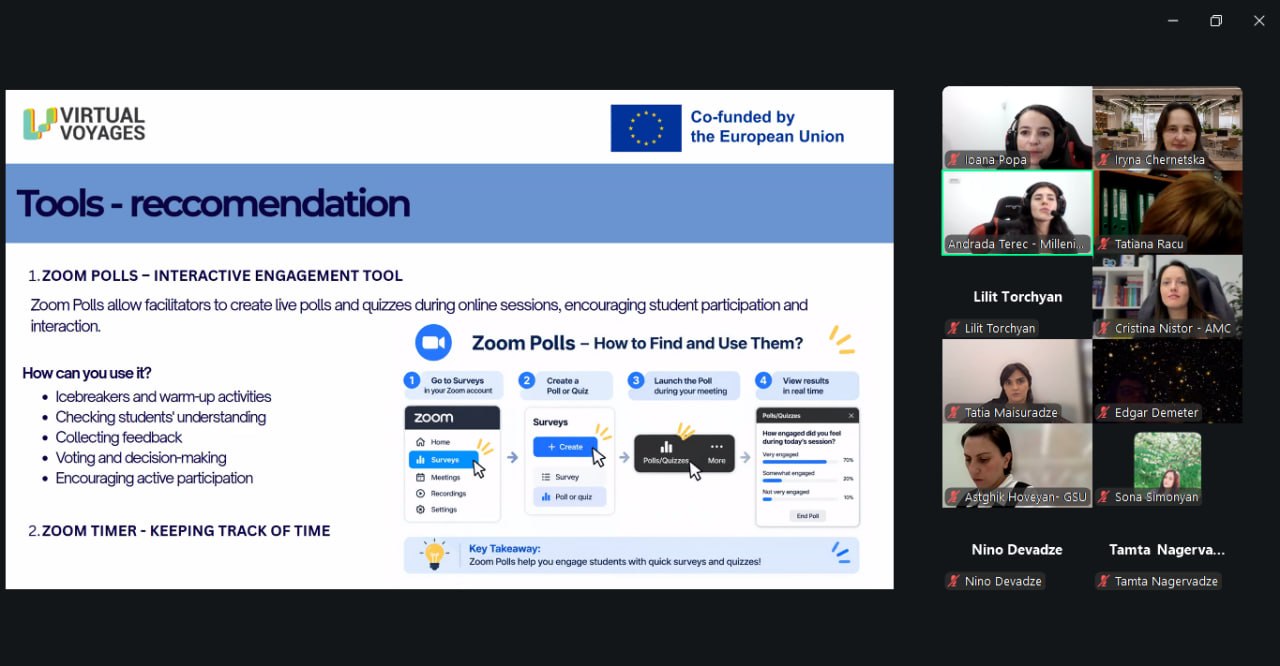
A dedicated part of the mentoring meeting focused on practical recommendations for using Zoom's built-in digital tools, which help avoid unnecessary navigation to external links, QR code scanning, or additional student authentication. The facilitators were shown the capabilities of the Zoom Polls feature, which allows users to create quick polls and quizzes in advance under the “Surveys” tab for warm-up activities, comprehension checks, or immediate collection of feedback on the platform, and subsequently review individual responses in reports to discreetly assist students who may feel hesitant to voice their difficulties in the main session room. Furthermore, participants were introduced to the functionality of the built-in Zoom Timer for strict adherence to speaking time limits (both in a mode visible to the entire group and in a private mode visible only to the moderator), as well as an application for group photographs and the option to accompany breaks with pleasant music featuring an automatic notification to resume work.
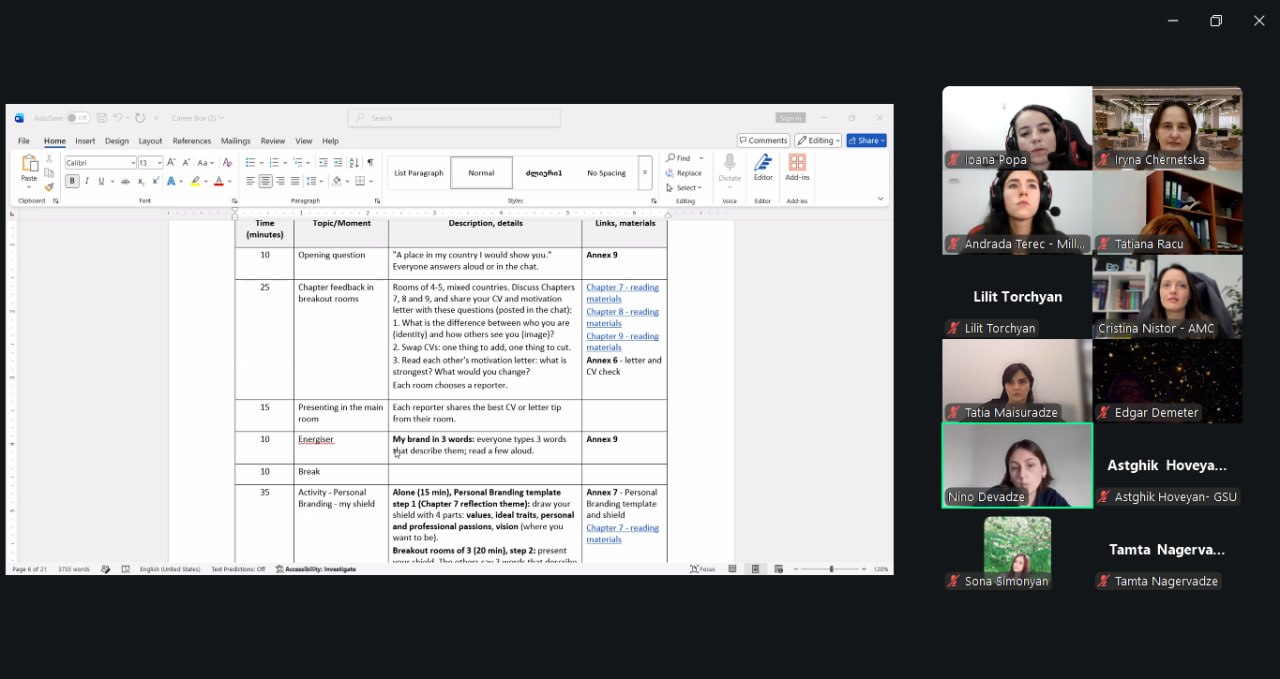
The next stage of the meeting comprised a detailed presentation of the instructional scenarios for the third week of exchanges. Colleagues from Batumi Shota Rustaveli State University presented a step-by-step plan for the fifth session of the “Career Box” module, focused on Units 7–9 of the educational programme. After a traditional introductory question designed to familiarise participants with one another’s cultural contexts, students in mixed international small groups will analyse their CVs and motivation letters against criteria that examine discrepancies between self-perception and external image, giving each other concrete advice on improving their documents. After an interactive energiser titled “My Brand in Three Words”, the session will continue with a two-stage practical exercise, “Personal Brand – My Shield”, during which students will first individually create their own symbolic shield comprising four elements (values, ideal traits, personal and professional passions, and vision for the future), and then present it in triads to receive constructive feedback.
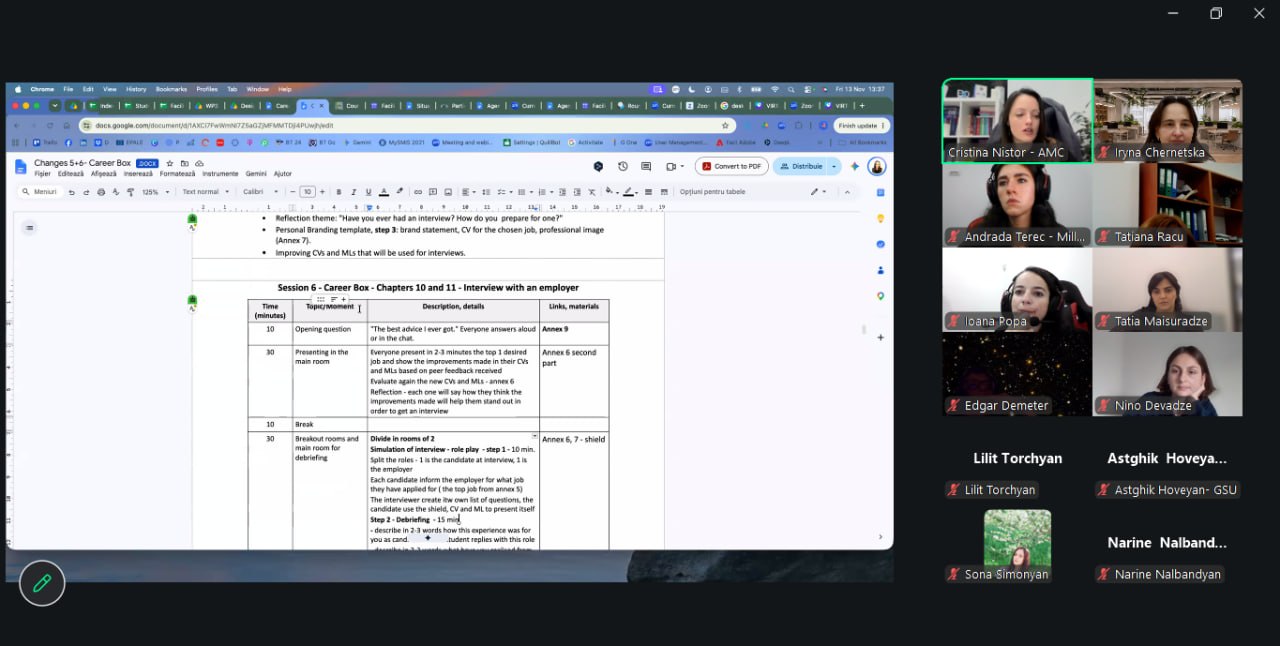
The Romanian partners from the Millennium Centre and Predict CSD Consulting presented the scenario for the sixth session, dedicated to Units 10 and 11 under the topic “Job Interview with an Employer”. Based on the facilitators’ feedback on workload balance, the consortium moved Unit 12 to a separate format, focusing the sixth session on practical preparation for employment. Throughout the session, students will present their priority target position alongside their CVs and motivation letters, updated following peer review, after which they will conduct a role-play interview simulation in breakout rooms in pairs (or triads with an observer), taking on the roles of candidate and employer. During the subsequent collective discussion, participants will analyse speech culture, argumentation, non-verbal cues, and readiness for a real selection process, and formulate at least three relevant questions from each group for invited employer-experts in preparation for the final presentation of their personal branding projects in the seventh session.
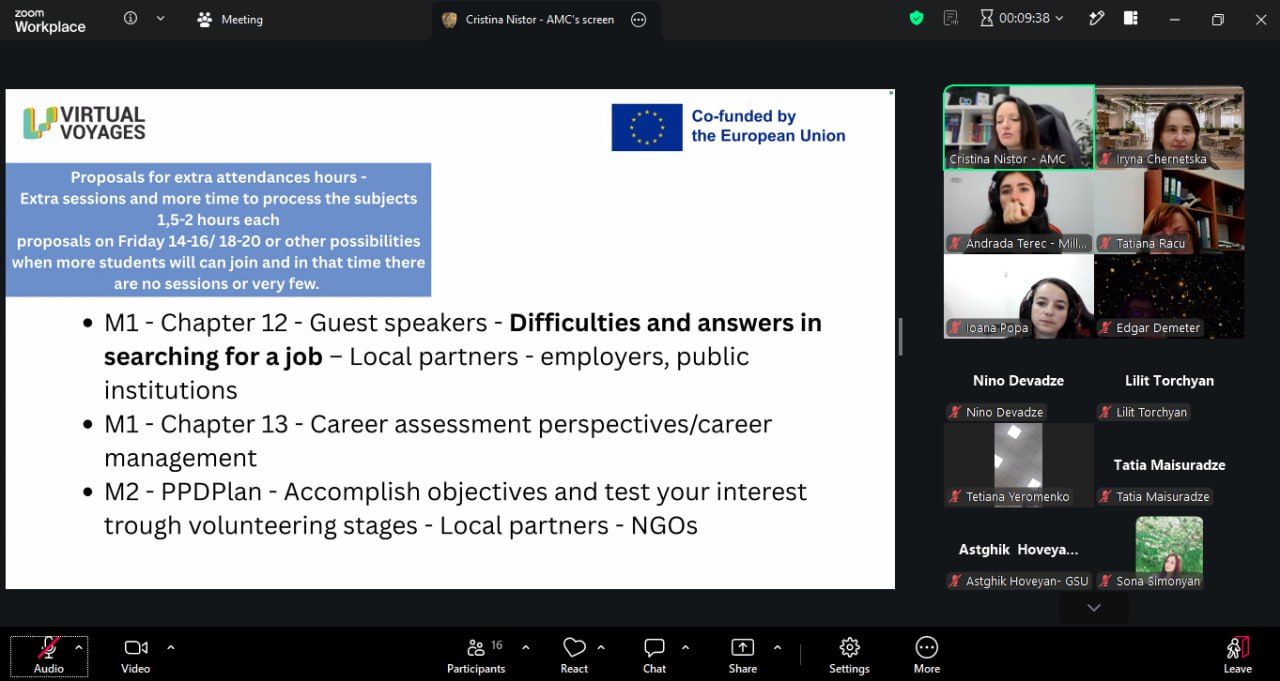
To ensure flexibility and maximum support for the more than 900 enrolled students, the coordinators proposed holding three additional joint plenary sessions lasting one and a half to two hours each Friday, including a concluding meeting on 18 December 2026. This format is designed to compensate for potential absences caused by university examination periods or late joining of groups and to help learners accumulate the required number of study hours for certification under Youthpass and Europass standards. Thematically, these plenary meetings will cover Unit 12 – with the participation of local partners, employers, and representatives of state institutions who will shed light on the realities of job searching and recruitment – Unit 13 on career assessment and the psychological profile of a specialist, as well as preparation for the second module of the course, namely designing an individual Personal and Professional Development Plan (PPDP) with the opportunity to complete volunteer internships at a minimum of two non-governmental organisations from each partner country.
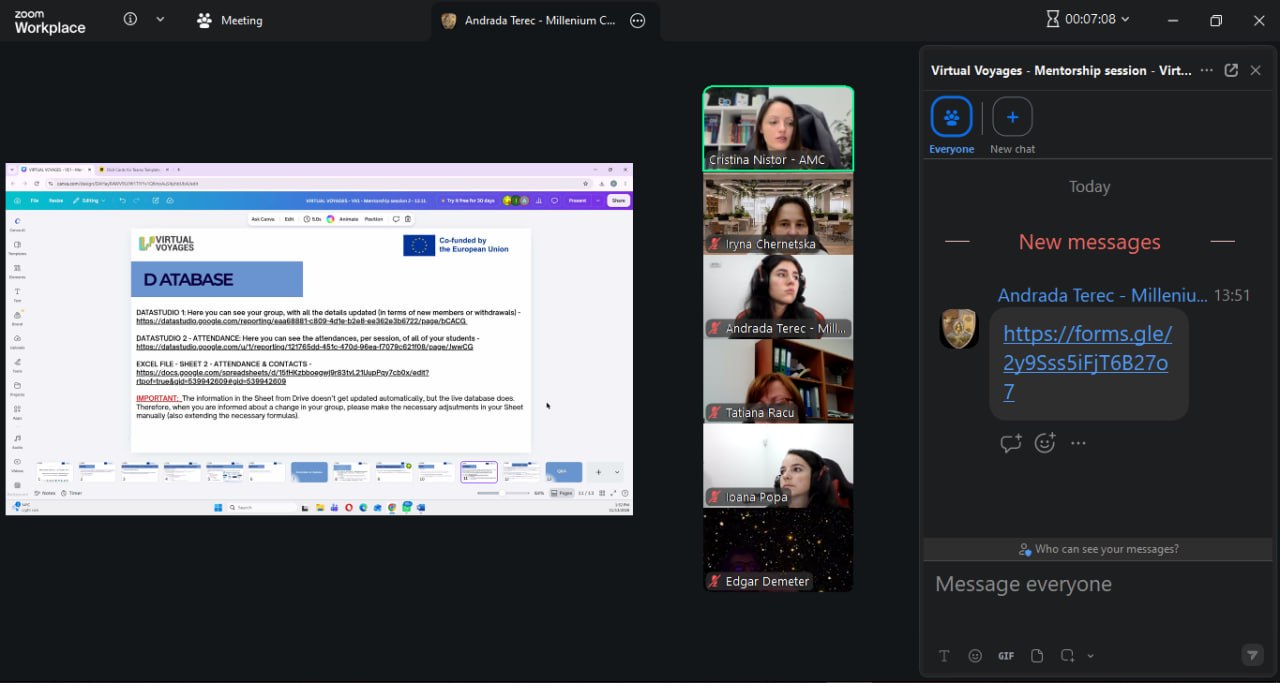
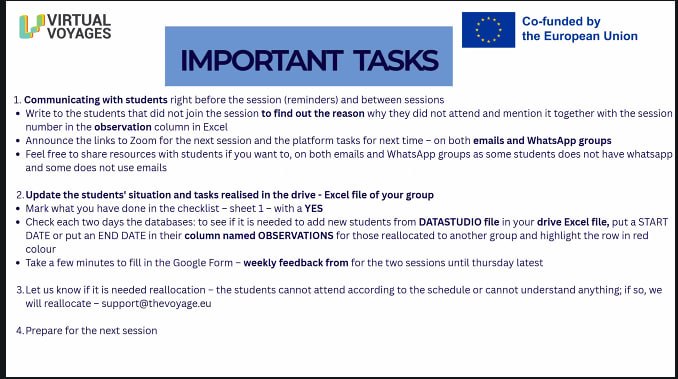
At the conclusion of the meeting, the technical coordinators reiterated the procedures for daily digital support and group administration. Educators were reminded of the need to cross-check information every two days between the centralised Google Data Studio dashboards (which display updated participant lists and aggregated Zoom attendance with an acceptable update lag of up to one or two days) and local Excel spreadsheets on Google Drive, promptly adding new students, using calculation formulas, recording participation start or completion dates, marking students transferred to other groups in red, and noting reasons for excused absences in the observations column. The mandatory weekly completion of a concise feedback form in Google Forms and adherence to European GDPR requirements were also confirmed: sessions with students are not video-recorded so that young people feel free and confident during live communication; instead, mandatory group screenshots (in the monitoring of which students themselves should be involved at the end of the session) and Zoom technical reports serve as documentary evidence, while for convenience in working with individual groups, the option to switch from Waiting Room mode to password-protected access has been provided.
This latest weekly mentoring session once again demonstrated the strong cohesion within the international partnership and the shared commitment to achieving high-quality educational outcomes for every learner. For representatives of National University “Yuri Kondratyuk Poltava Polytechnic”, participation in such coordination meetings ensures continuous enhancement of facilitation expertise, exchange of advanced digital practices, and strengthening of the university’s standing as an active champion of European standards in higher education.
The university’s participation follows a steady and consistent pathway: on September 24, 2026, the university team participated in a coordination meeting of partners of the Erasmus+ project “Acquiring Transversal Competences through Virtual Voyages” (No. 101193593), during which, together with colleagues from seven countries, the educators reviewed the outcomes of the first implementation phase and agreed upon the launch of virtual exchanges for students; they also continued aligning key steps during the second meeting of project coordinators on October 1, 2026; on October 8, 2026, discussed the results of testing the digital platform, the training of the facilitators’ pool, and the finalization of the launch of the first student exchange wave; on October 15, addressed the synchronisation of academic schedules, finalising the preparation and certification of the international pool of facilitators, structuring intercultural student cohorts, and deploying a comprehensive dissemination campaign ahead of the launch of the first wave of virtual exchanges; on October 22, discussed forming student cohorts, certifying facilitators according to the Youthpass standard, and coordinating dissemination materials ahead of the official launch of the 7-week virtual exchange cycle, on October 29, confirmed operational readiness at the sixth meeting; and on November 5, demonstrated exemplary student engagement during the seventh coordination session, and on 6 November, analysed the outcomes of the inaugural week of student exchanges, optimised the digital monitoring system, and agreed on the scenarios for the subsequent sessions of the “Career Box” module.