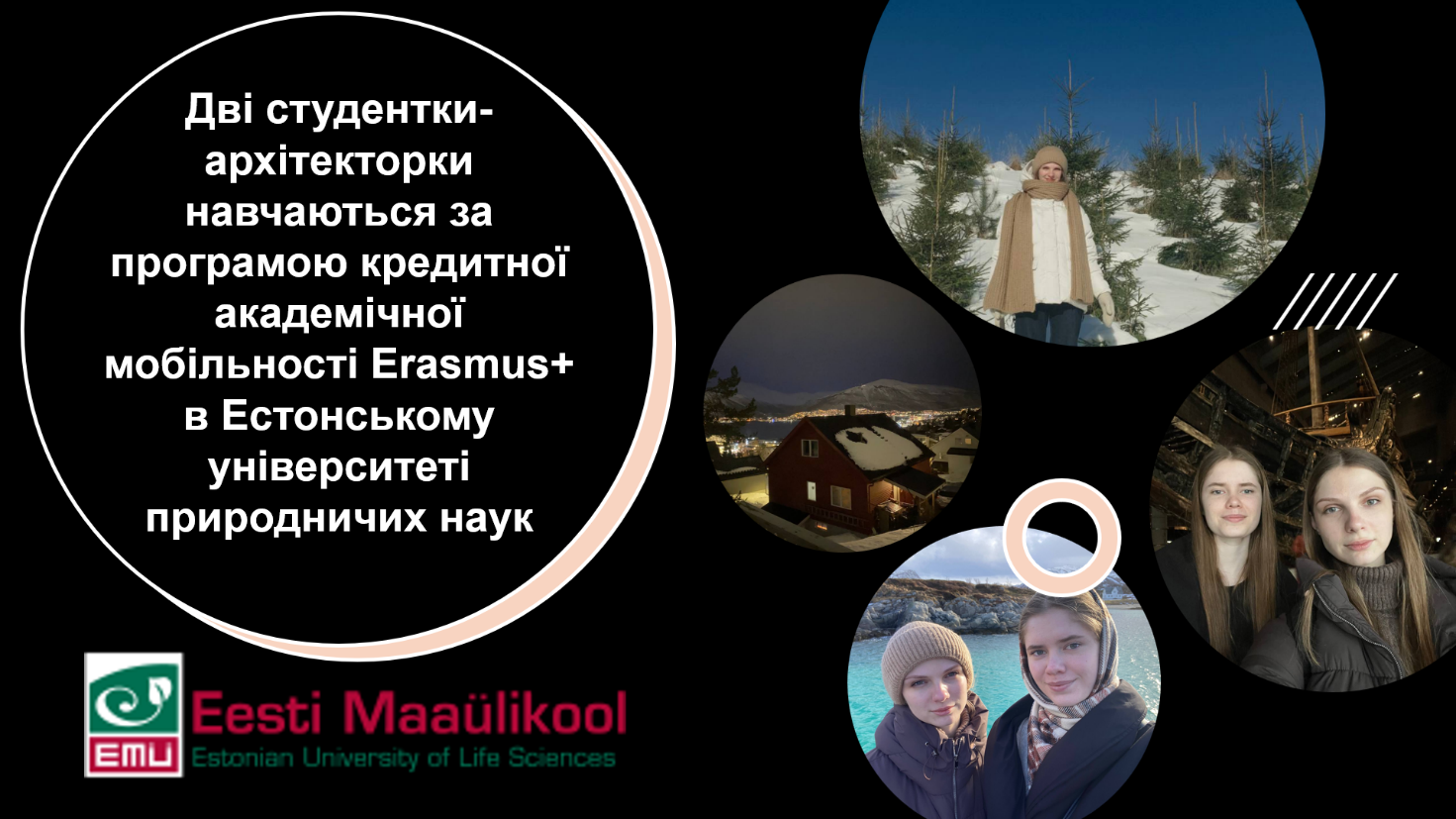
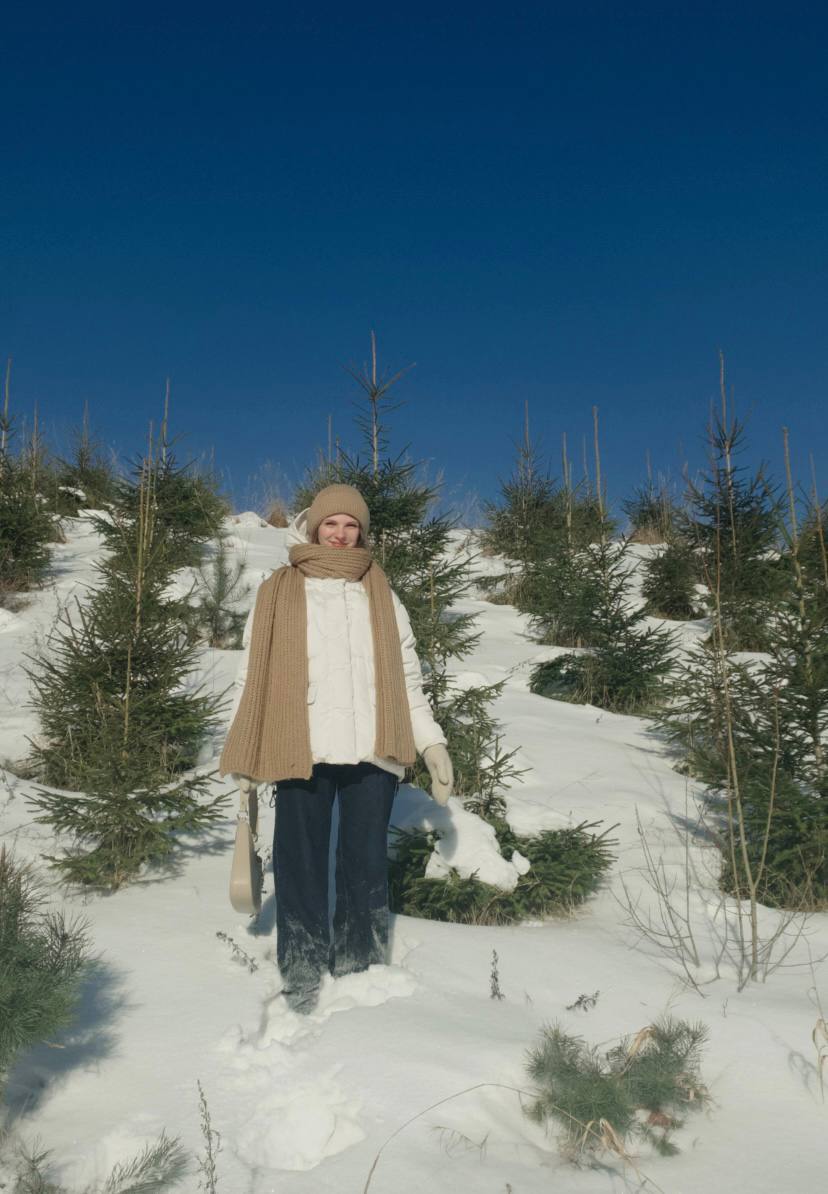
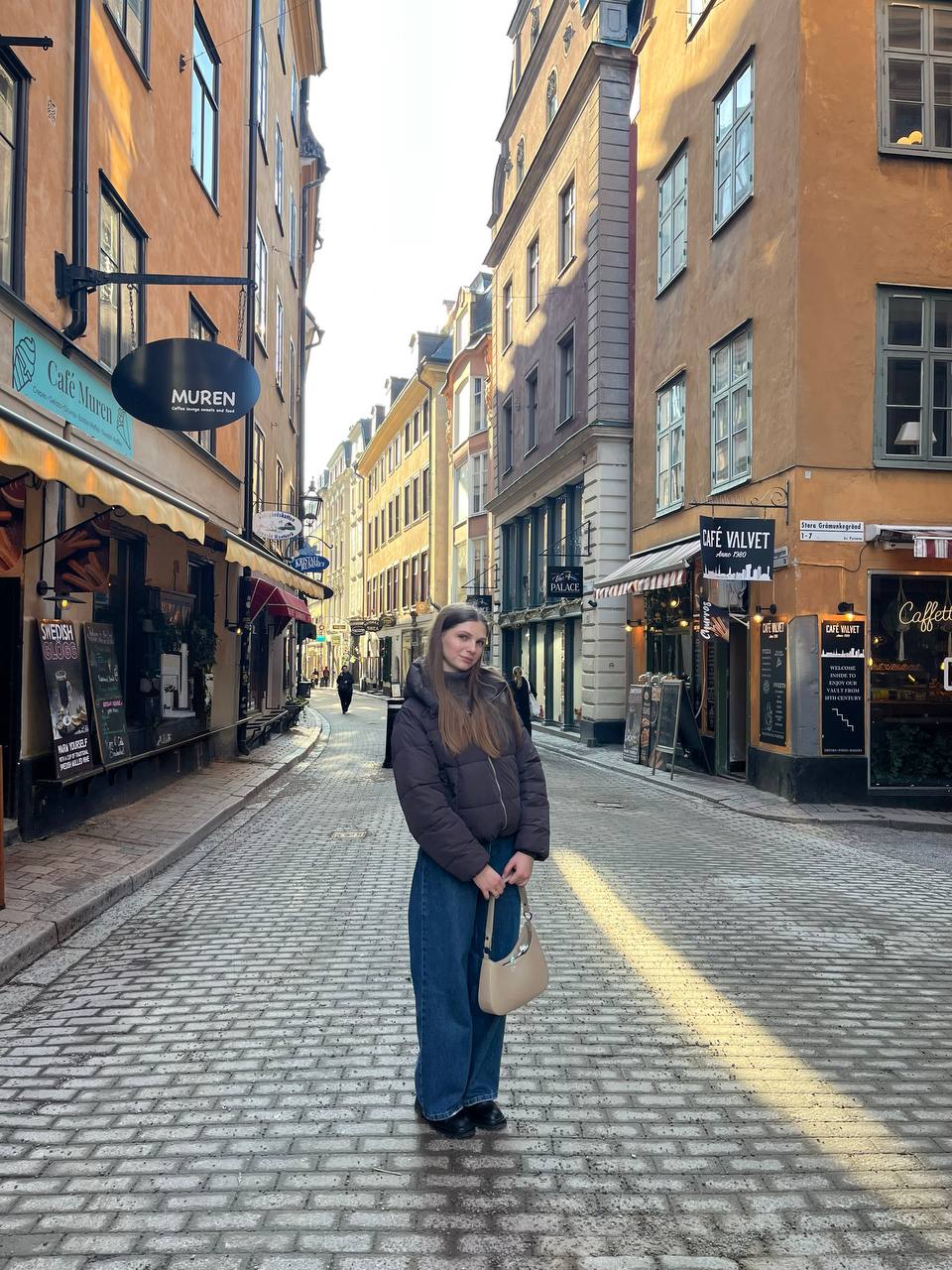
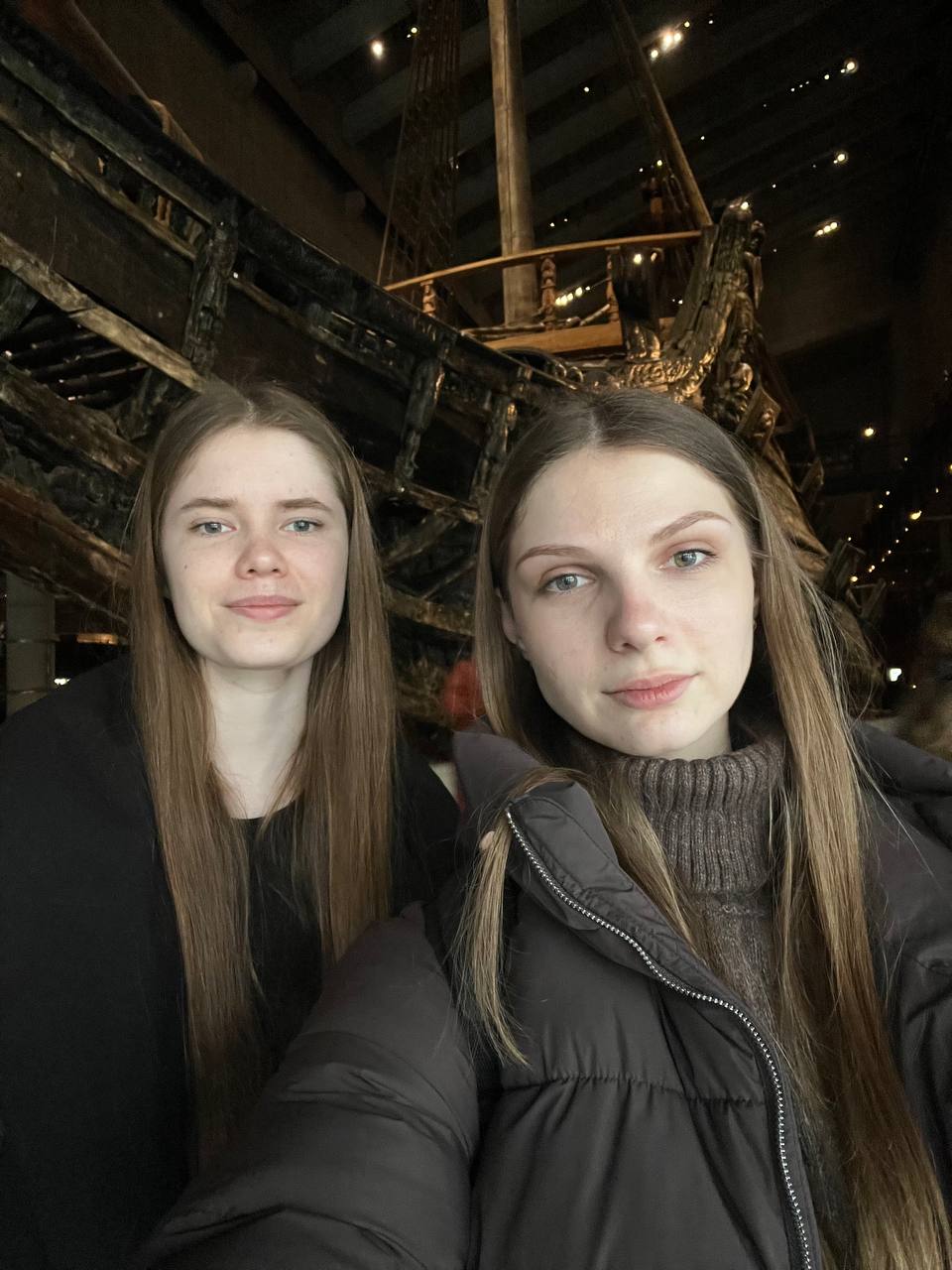
Erasmus+ International Credit Mobility (ICM) programs open vital pathways for professional development and intercultural exchange among today’s students. They empower learners to engage with leading European educational methodologies, broaden their horizons, and integrate into the global scientific community. Among the notable educational institutions offering robust training in this field is the Estonian University of Life Sciences, situated in the cosy, vibrant student city of Tartu. During the spring semester of the 2025/2026 academic year, this institution is hosting two fourth-year students majoring in Speciality 191 “Architecture and Urban Planning” (group 402-A): Ruslana Zhadan and Anna Korostashova. This mobility experience has enabled these aspiring architects to deepen their expertise in landscape design, collaborate with international teams, and explore the distinctive Estonian approach to harmonising urban and natural spaces.
This semester abroad has proven to be not only a milestone in the students’ professional education but also a profound period of personal growth, new connections, and exploration. Both students are eager to share their experiences, their insights into the Estonian educational system, and practical advice for future exchange participants.
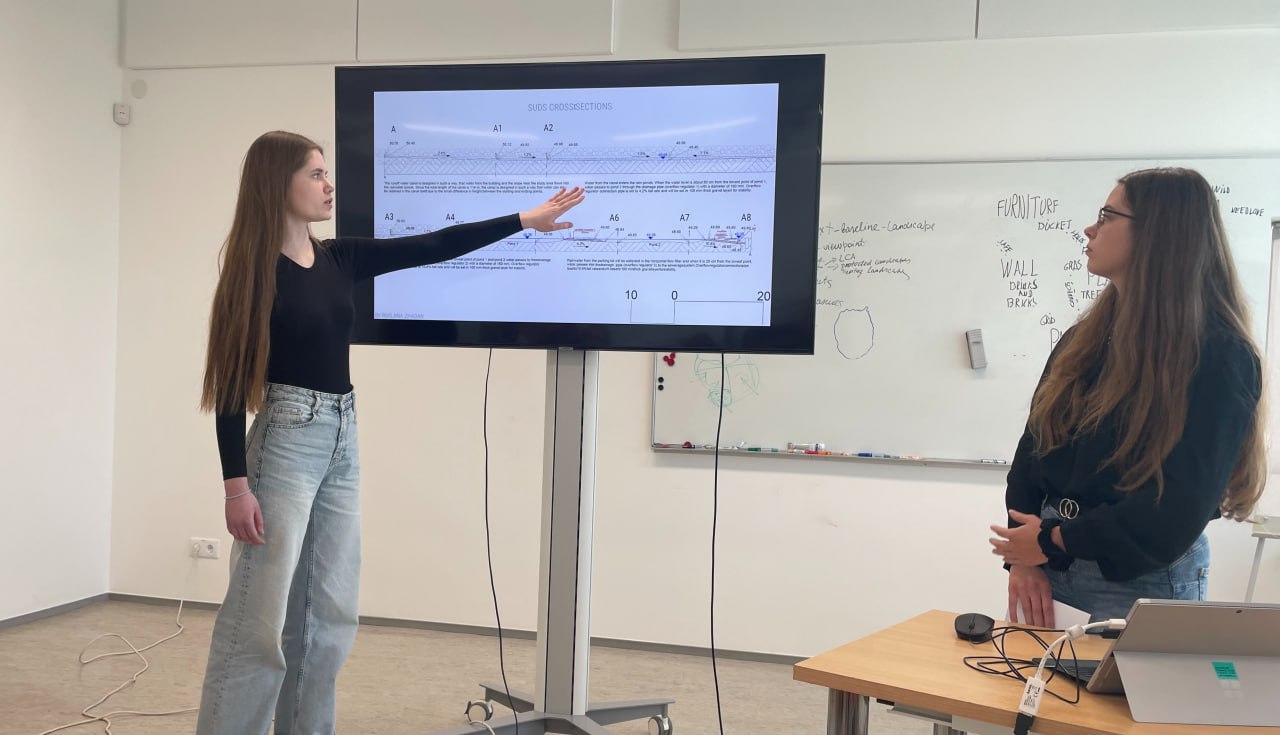
Ruslana Zhadan is the first to offer her perspective on studying in Tartu, reflecting on the welcoming campus atmosphere, collaborative project work, and the memorable travels that enriched her academic journey: “My academic mobility to the Estonian University of Life Sciences in Tartu has been an incredibly enriching and unforgettable experience, both academically and personally. First and foremost, I was deeply impressed by the atmosphere of the university campus – it is remarkably open, welcoming, and highly conducive to both learning and creative exploration. The professors played an invaluable role in helping me adapt. A genuine commitment to student success matched their high level of professionalism. Always approachable and open to dialogue, they were ready to answer any questions and offer guidance through any challenges, which allowed me to transition smoothly and comfortably into this new academic environment.
The academic process was both well-structured and highly diverse. The curriculum seamlessly integrated theoretical lectures with practical workshops, allowing for a much deeper comprehension of the subject matter. Particularly valuable were the assignments that demanded a creative mindset and real-world application, as this approach directly fostered critical thinking and essential professional skills.
Throughout the exchange, I also significantly enhanced my English proficiency. Even when minor language barriers or misunderstandings occurred, they never posed an obstacle, as both professors and peers were incredibly supportive and always willing to help clarify things.
A vital component of the program was the series of field trips to various project sites and study areas. This firsthand exploration allowed us to analyse landscape features directly on-site and apply theoretical knowledge to real-world scenarios. This experience is immensely beneficial for my future professional career.
Collaborating within international teams deserves special mention. Students from diverse backgrounds came together to work on joint projects, fostering a rich intercultural exchange, enhancing communication skills, and building new connections. This collaborative environment greatly eased my transition and helped me form lasting friendships.
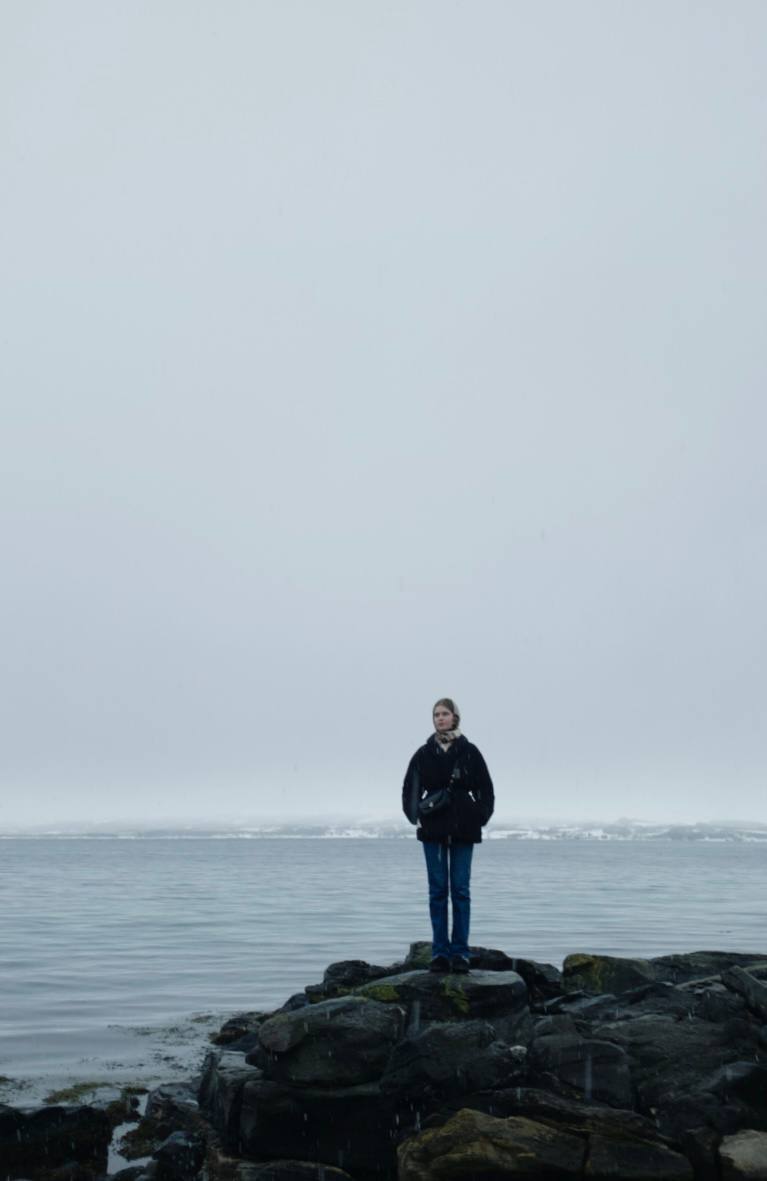
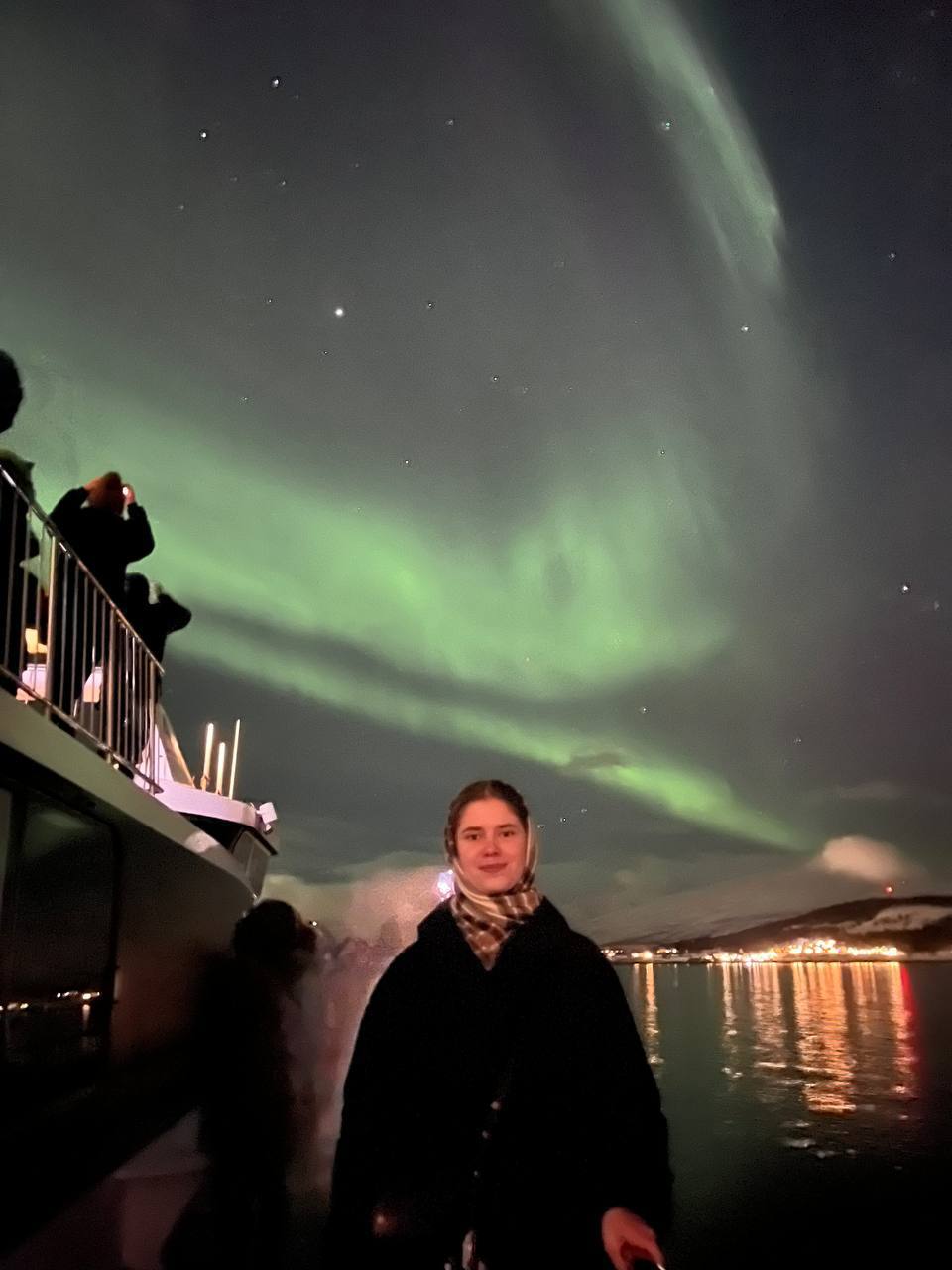
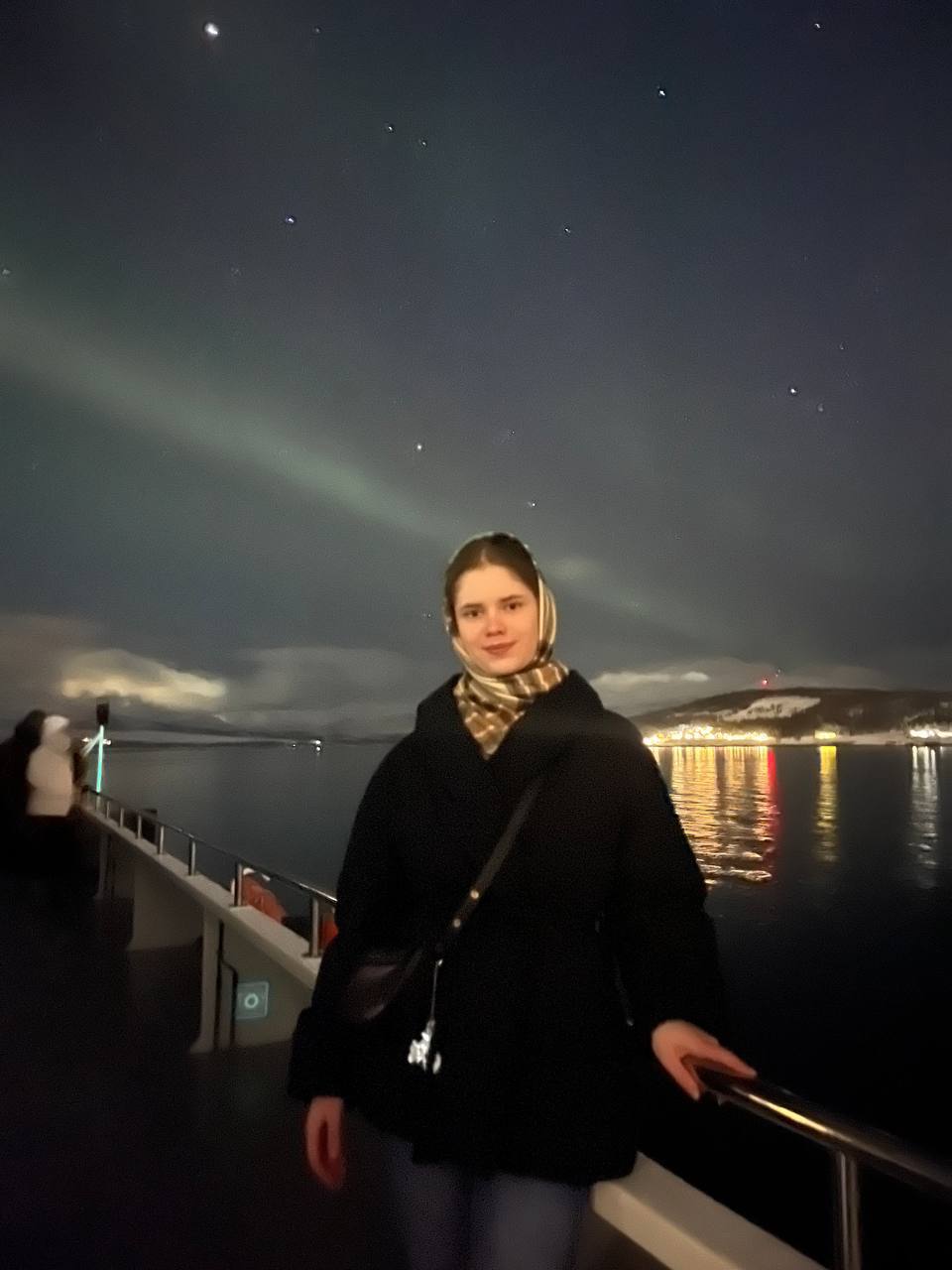
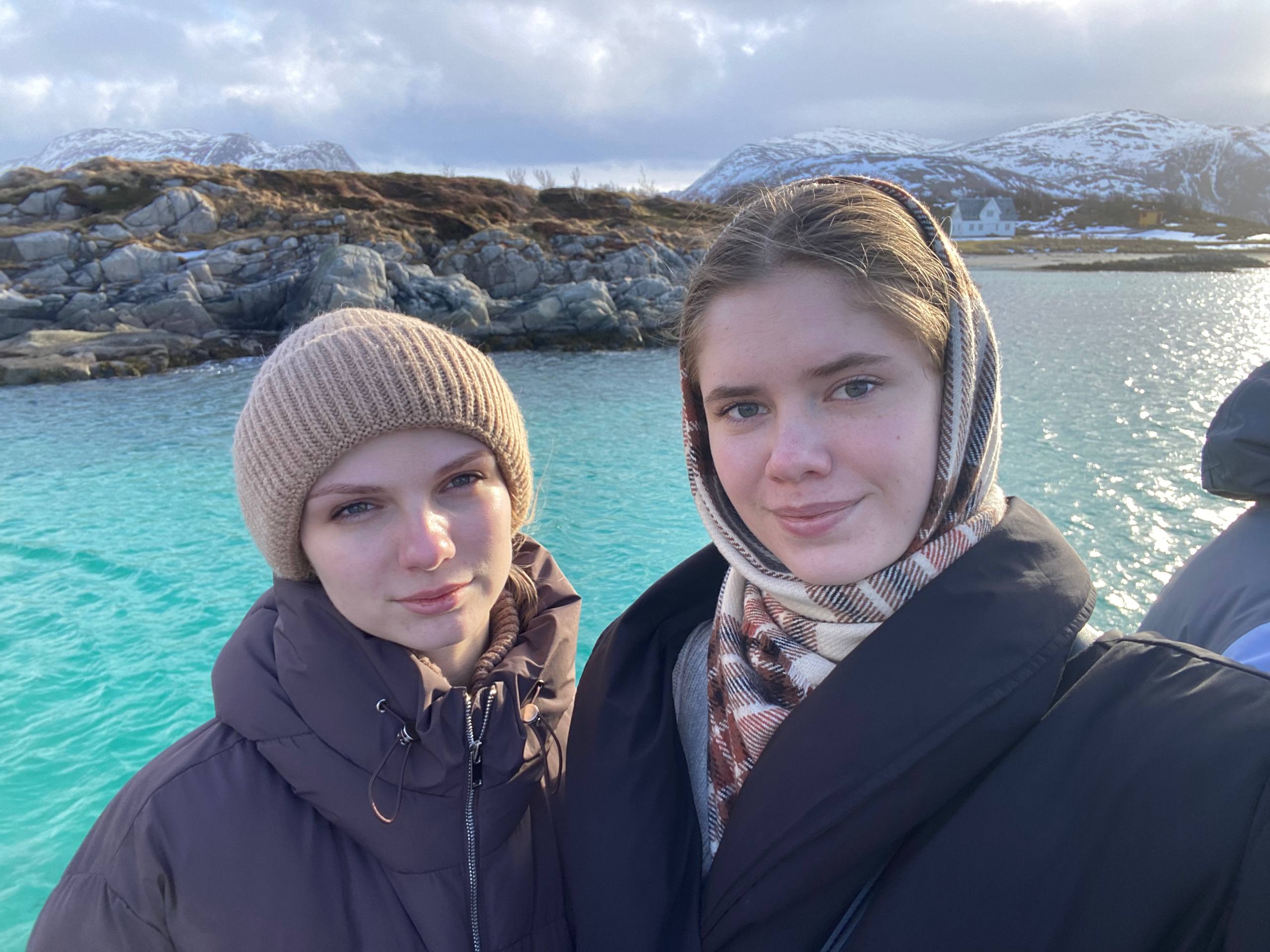
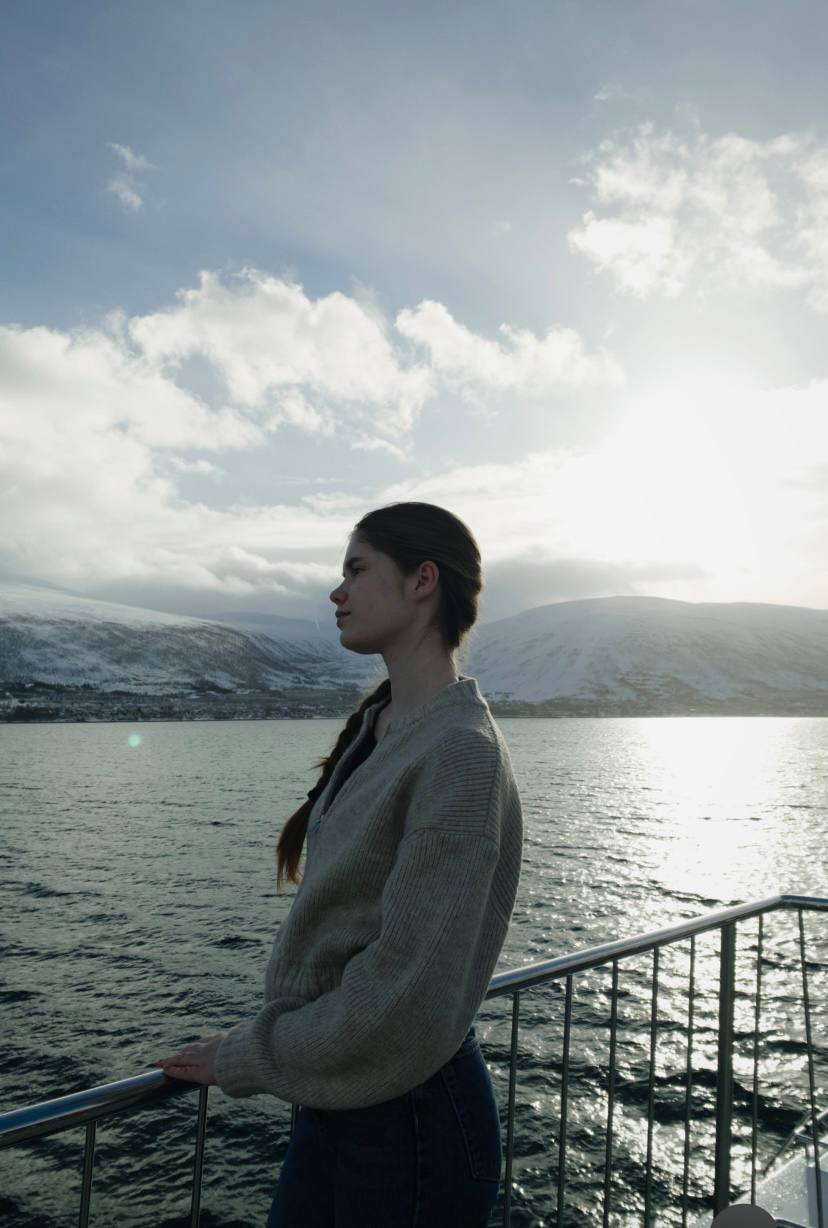
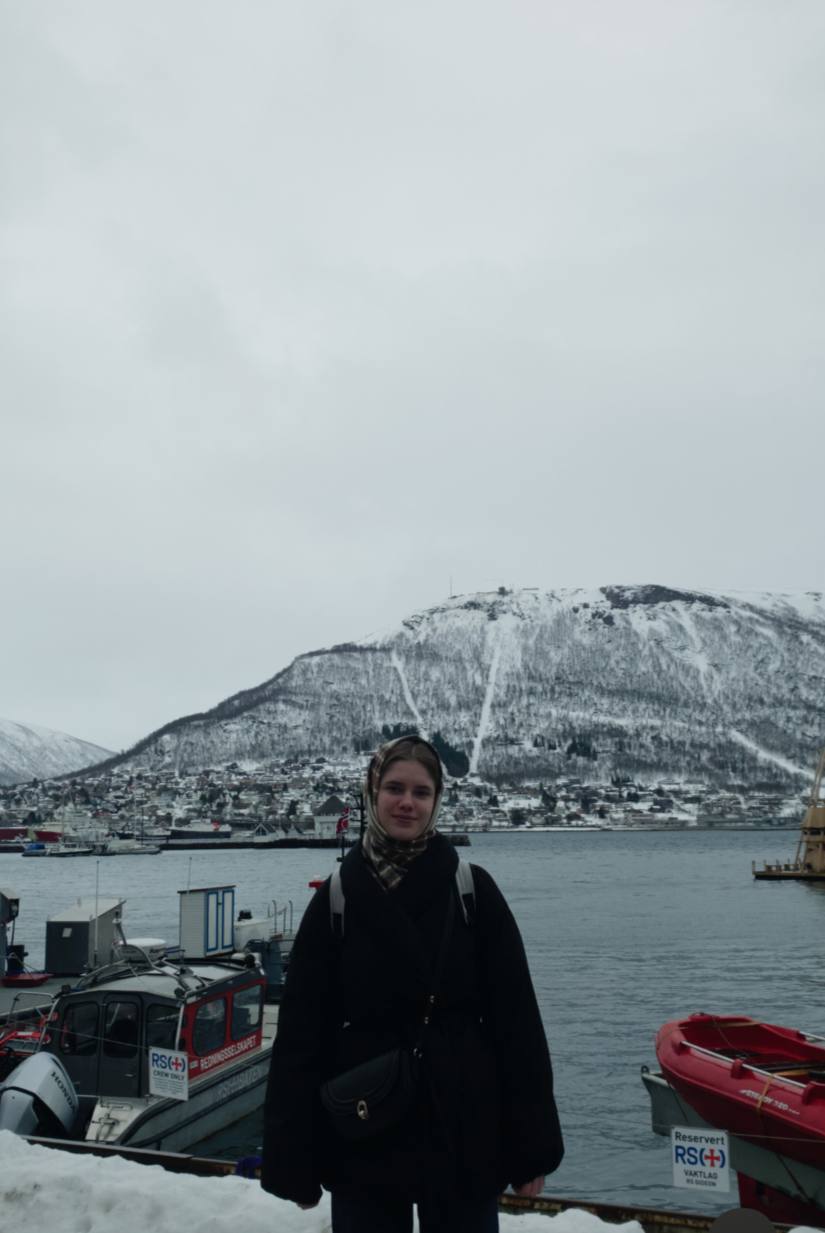
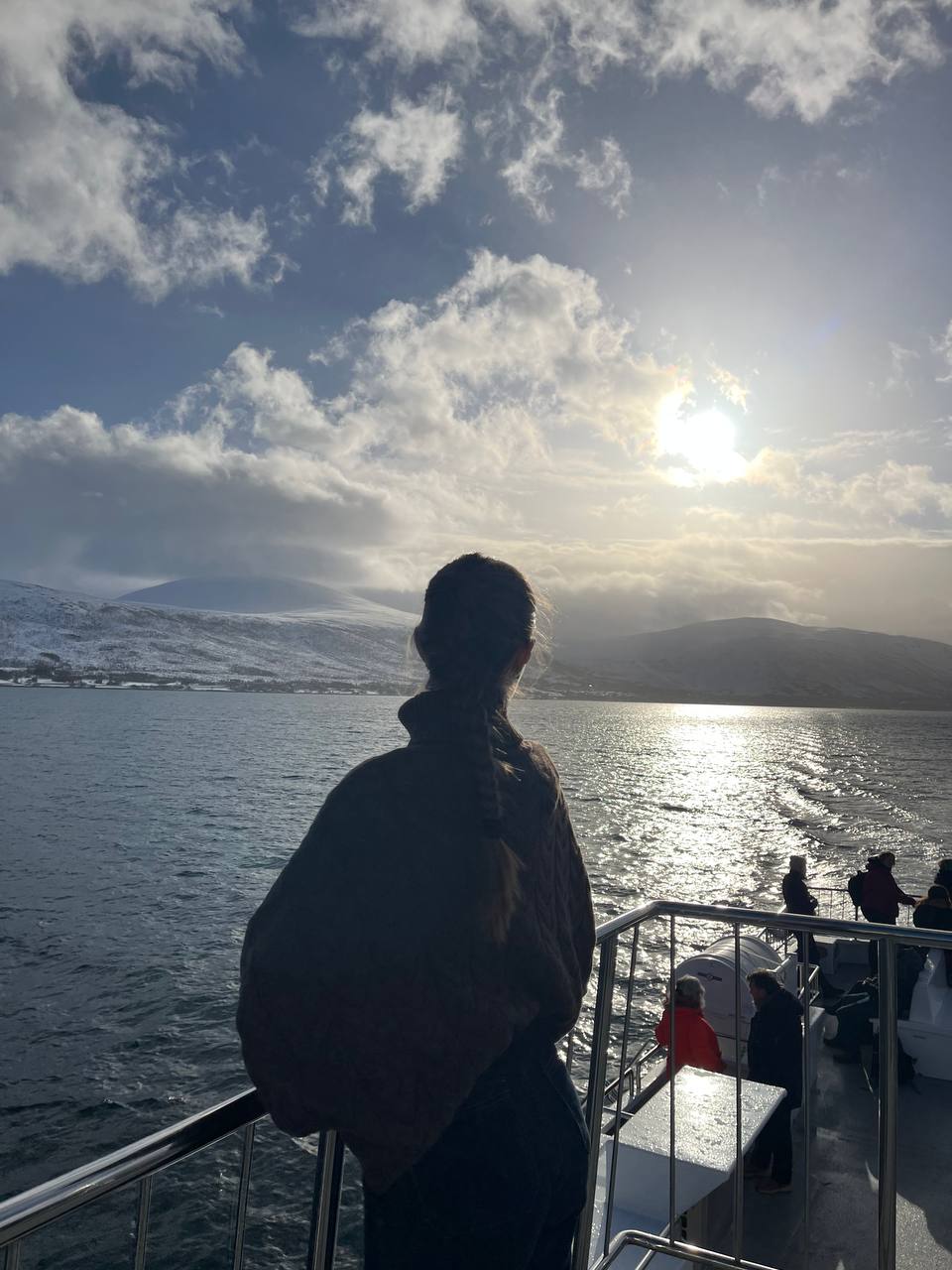
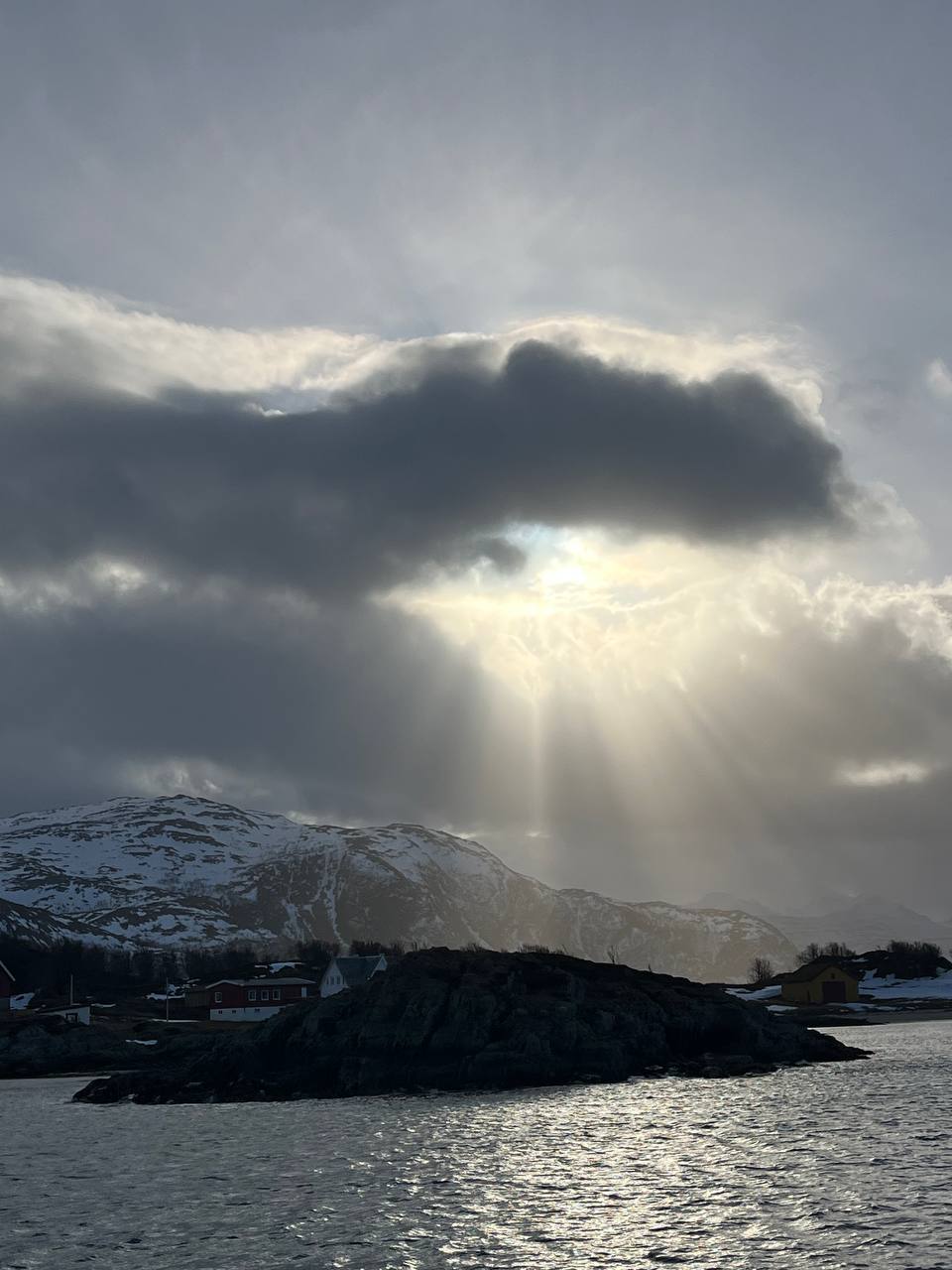
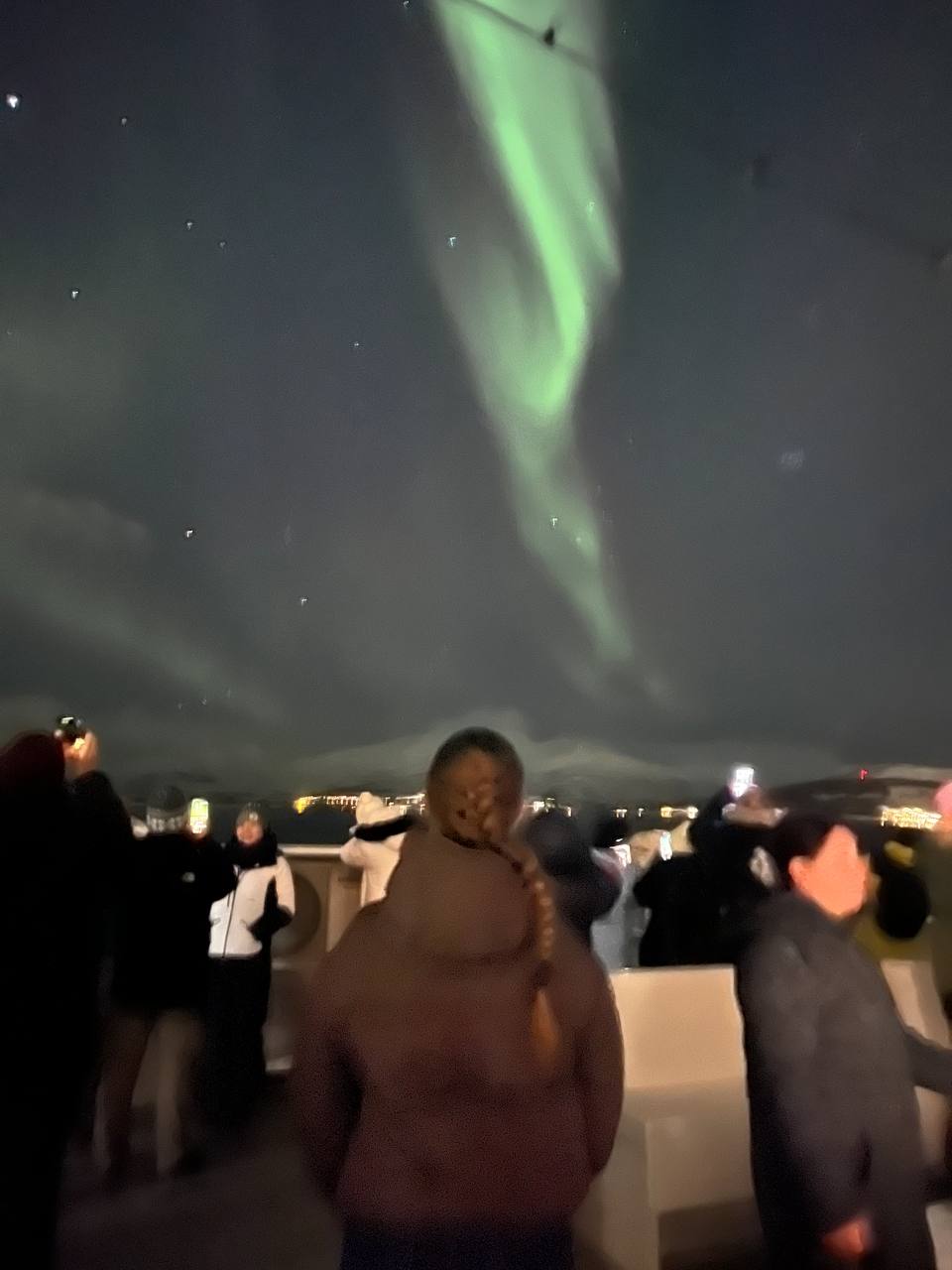
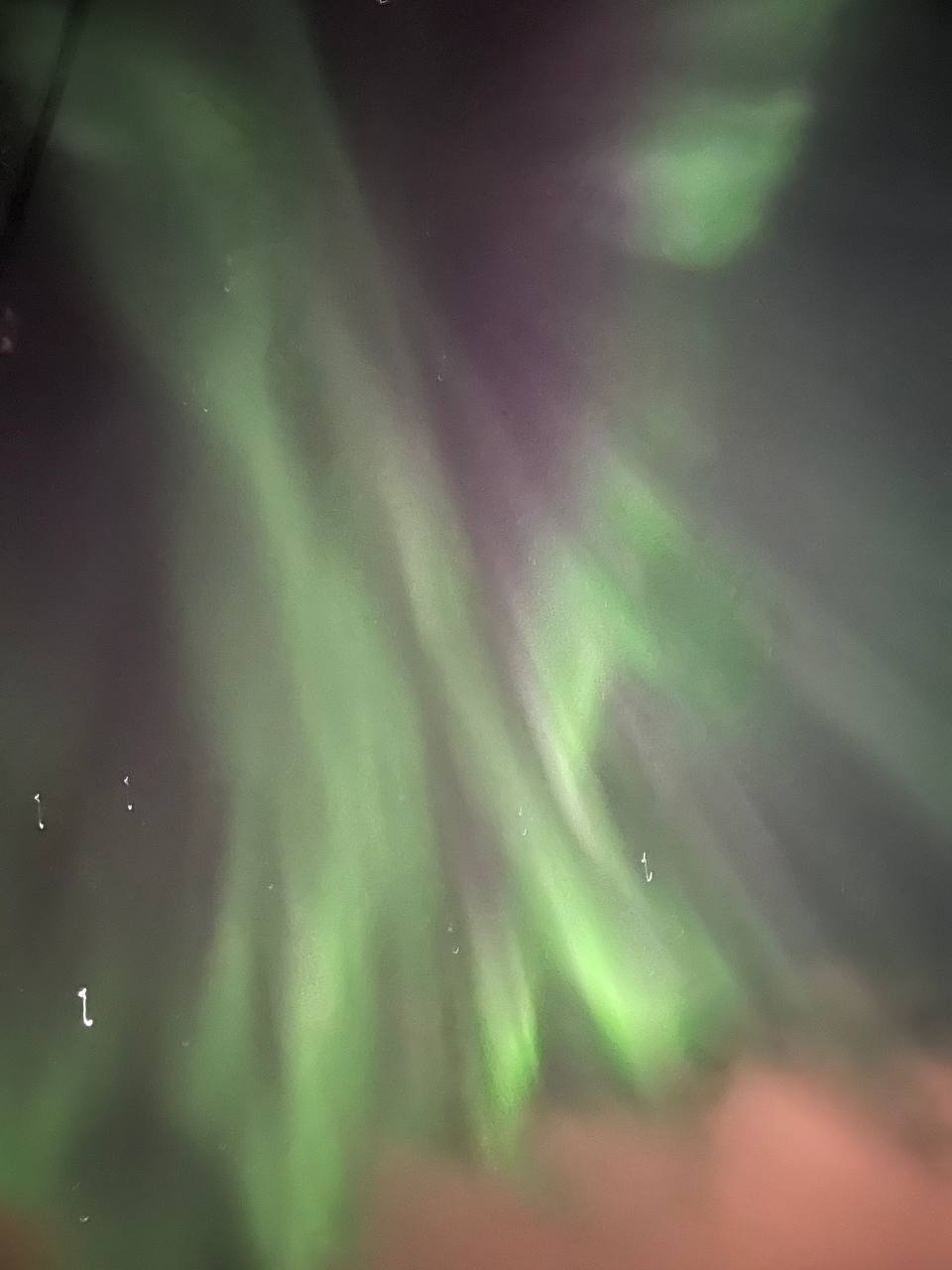
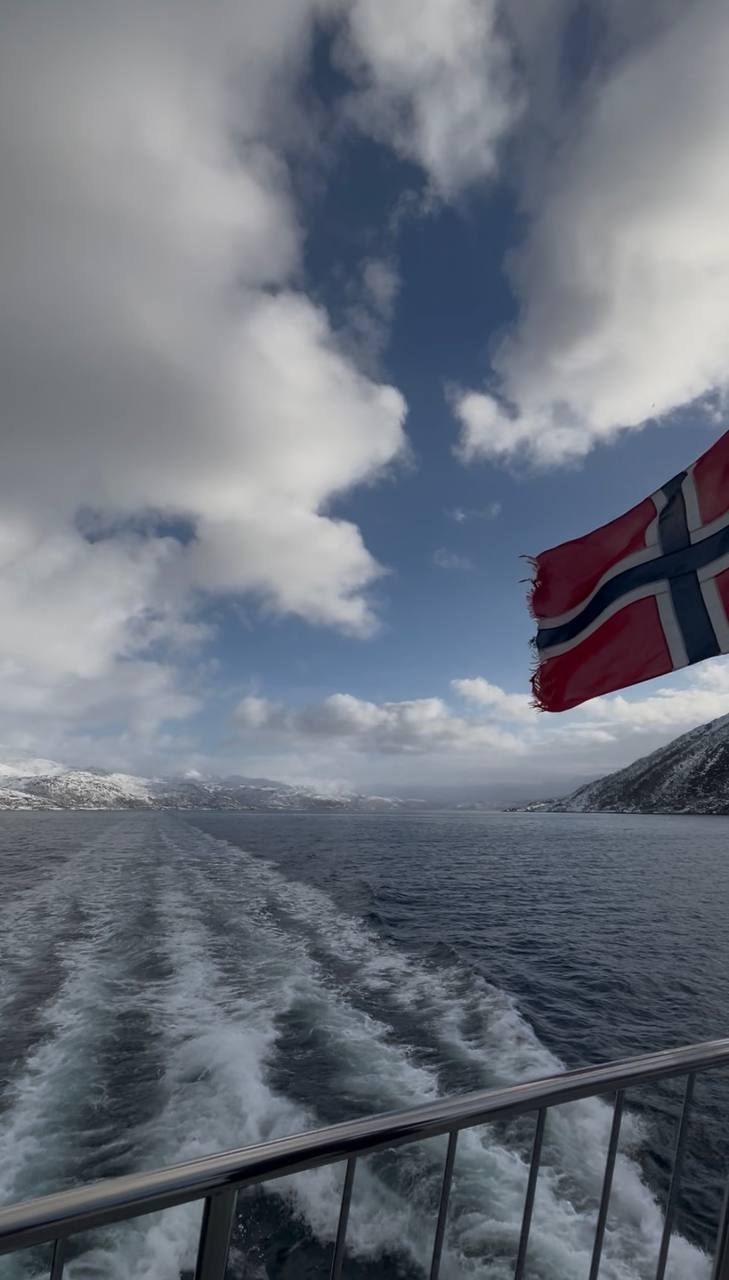
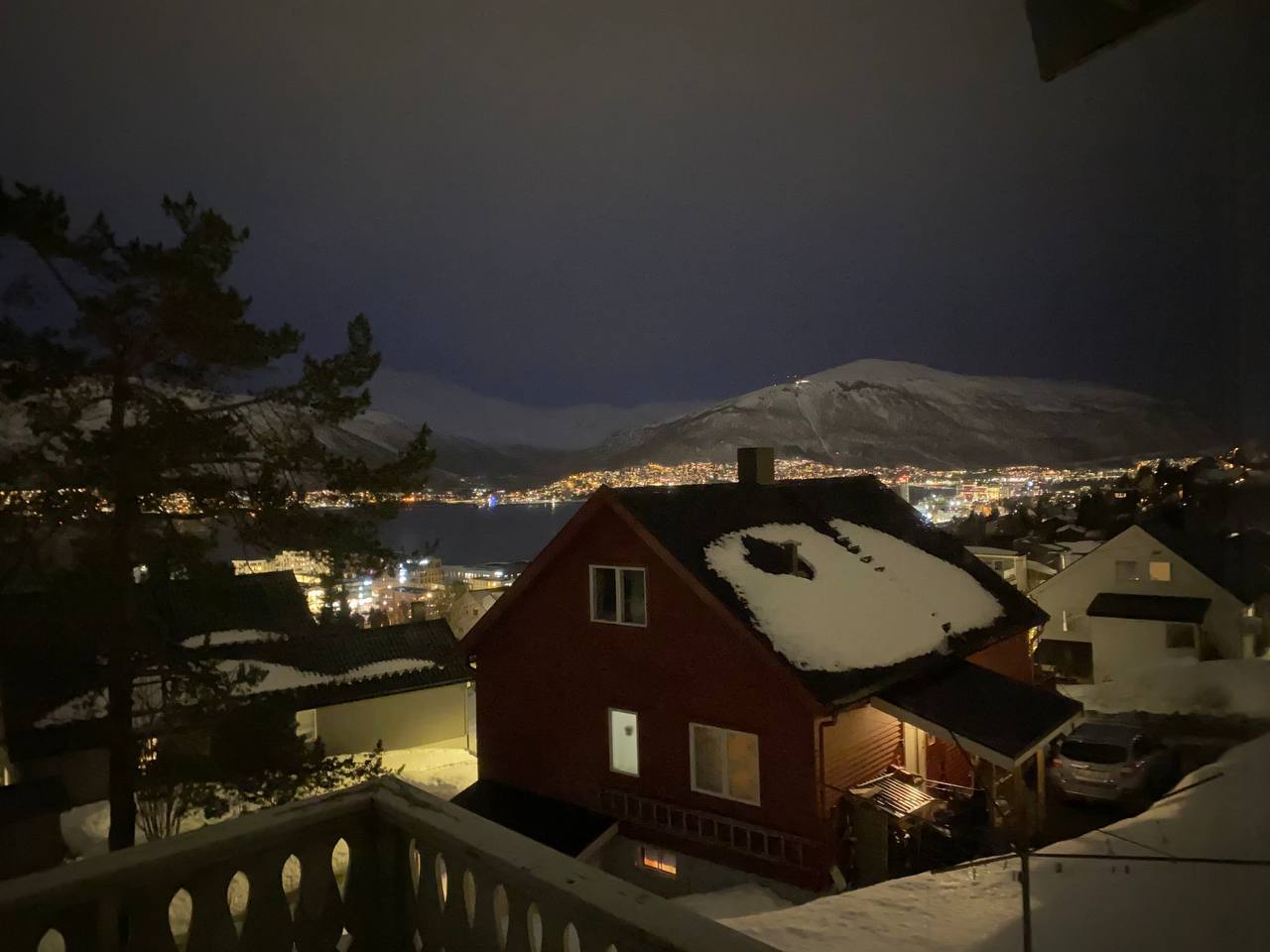
Beyond our academic routine, the university actively organised a variety of excursions and cultural events. The absolute highlight of my stay was a trip to Norway, where I was fortunate enough to witness the majestic Northern Lights. It was a truly profound and unforgettable experience that I will cherish for the rest of my life.
My time at the university was characterised by a remarkably warm and supportive atmosphere. This exchange period has been a pivotal milestone in my academic and personal growth, broadening my horizons and providing me with invaluable international exposure. The knowledge, skills, and intercultural communication experience I gained will undoubtedly prove highly beneficial in my future academic and professional pursuits. Furthermore, I can confidently say that this mobility experience has made me more self-assured and receptive to new challenges”.
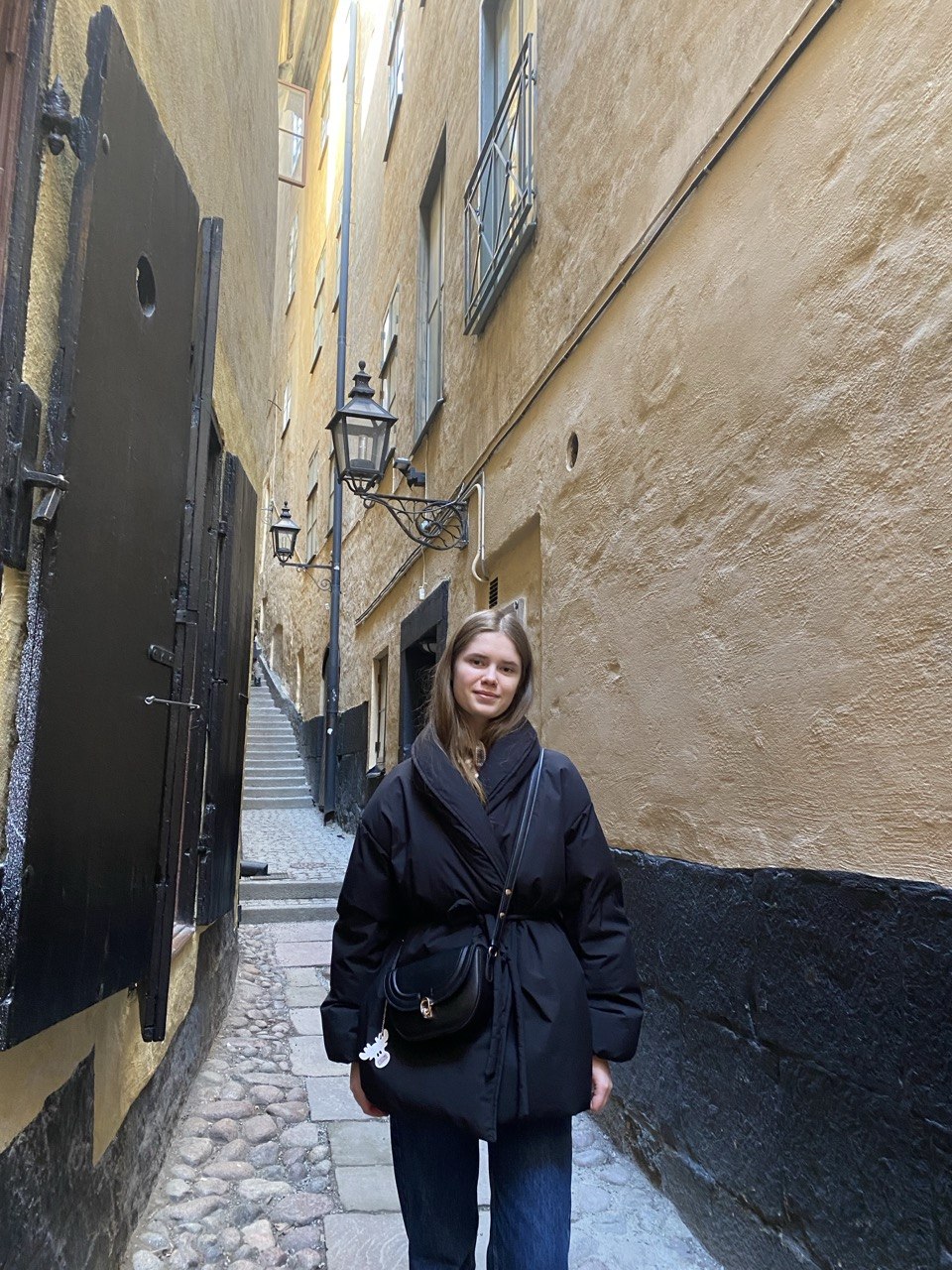
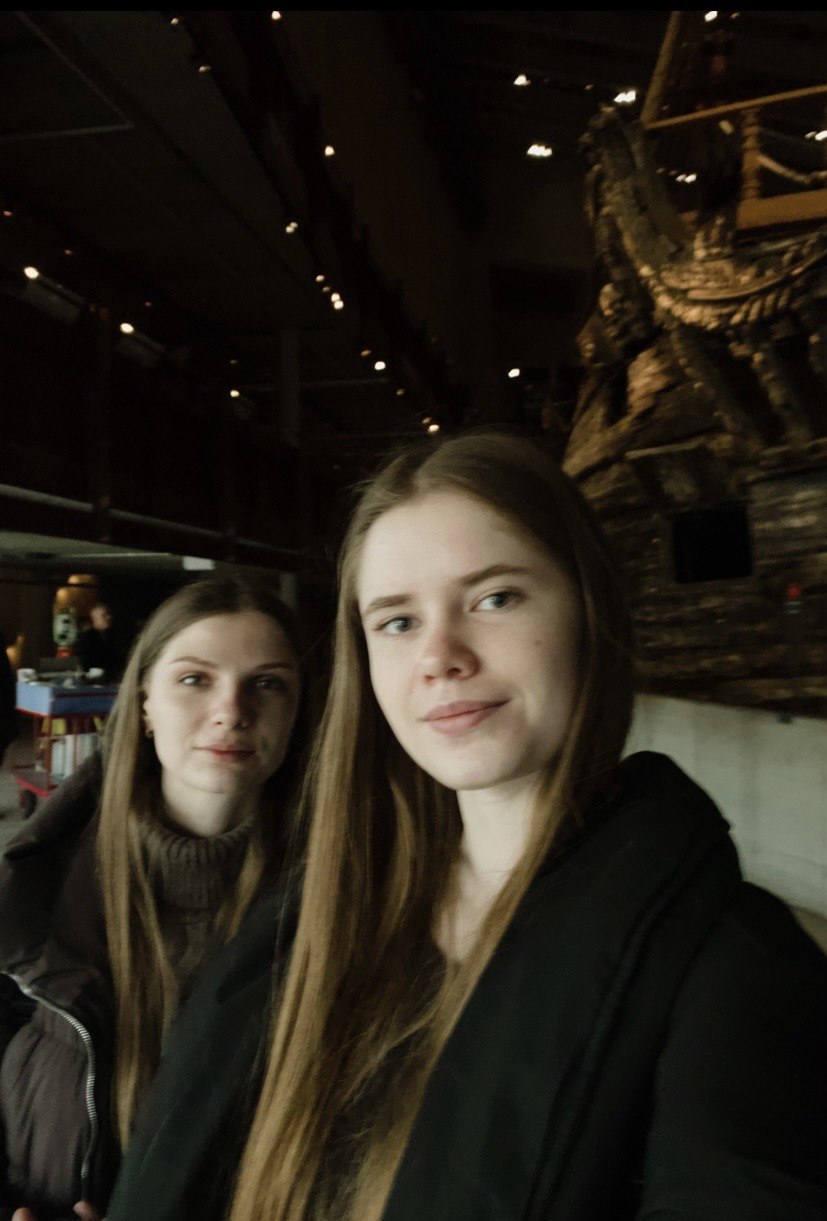
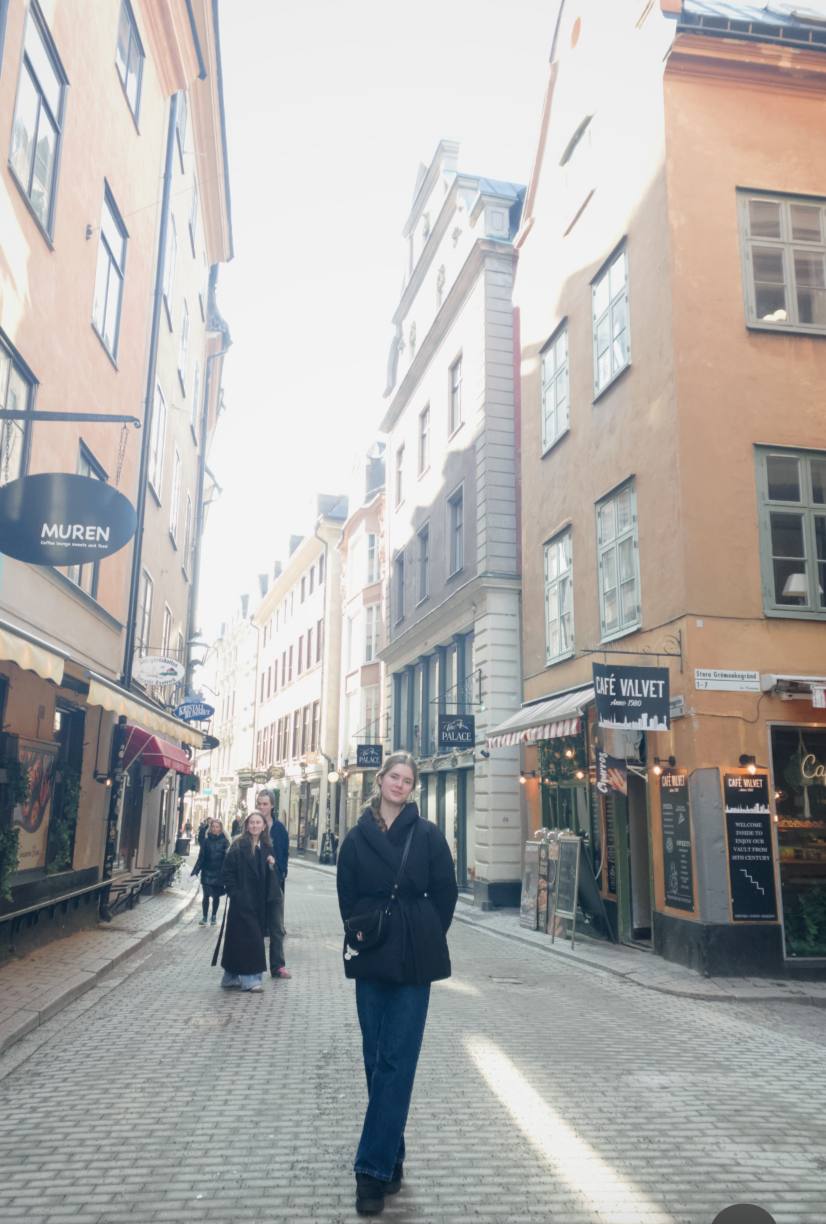
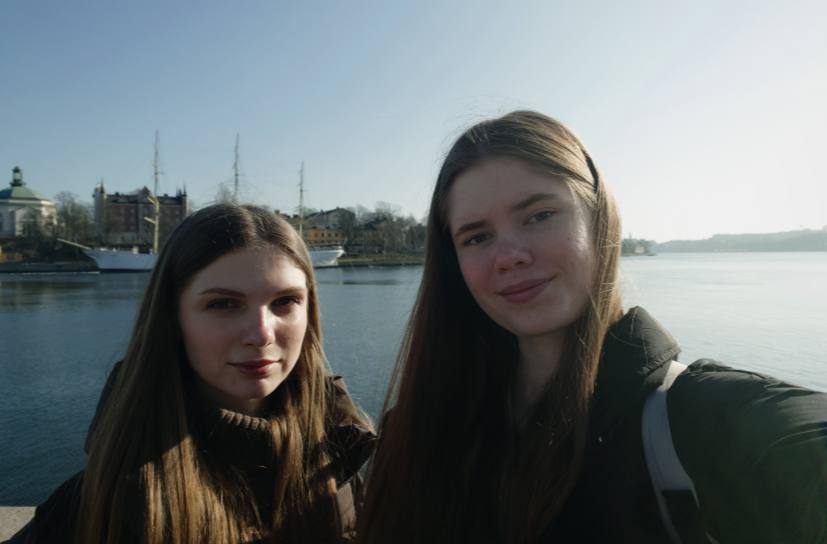
The other participant in the program, Anna Korostashova, fully shares her colleague’s perspective on the vital importance of international experience. For her, the semester in Estonia represented a comprehensive phase of both practical and personal development, offering her a fresh perspective on landscape architecture as a global discipline. Below, Anna shares her reflections on collaborating in mixed groups, embarking on field trips to real-world sites, and learning from an international faculty: “My semester-long exchange at the Estonian University of Life Sciences has been one of the defining milestones of my professional and personal growth. Focusing on Landscape Architecture not only significantly expanded my professional horizons but also allowed me to integrate into a dynamic international environment where diverse cultures, design approaches, and project traditions interact in harmony. Tartu – a student city steeped in history yet boasting a highly developed modern infrastructure – provided the ideal environment for academic pursuit, research, and creative exploration.
One of the most rewarding aspects of my time in Estonia was working on projects within diverse international teams. Since the university strongly fosters cross-cultural interaction, each project group comprised students from various European countries and beyond. This created a unique collaborative synergy, where every member contributed their distinct experience, vision, and technical skillset. Collaborating on shared tasks demanded not only professional competence but also effective communication, negotiation, and the flexibility to adapt to differing design methodologies and perspectives. Ultimately, this very diversity became the key catalyst in broadening my understanding of landscape architecture as a global discipline.
A vital component of our studies was the series of regular field trips to actual sites, which served as the foundation for our design assignments. The faculty organised excursions to parks, nature reserves, urban plazas, and rural landscapes, allowing us to engage directly with these territories, analyse their unique characteristics, and observe the dynamic interplay between natural systems and human intervention. This hands-on approach made our education exceptionally practical; rather than simply studying theoretical models, we applied them directly in the field, which significantly elevated both our design quality and analytical depth. Every trip offered a valuable opportunity to explore new landscapes, comprehend local ecological processes, and experience firsthand the distinct nuances of the Estonian approach to spatial planning.
Equally vital was the international character of the faculty. The Estonian University of Life Sciences actively recruits specialists from across the globe, meaning our lectures and practical workshops were led by experts from Estonia, Finland, Germany, the Netherlands, and other nations. Each instructor represented their respective country’s distinct design lineage, making our learning experience exceptionally multifaceted and enriching. I particularly valued the sessions where instructors shared insights from their professional practice, presented diverse international case studies, and explained how different regions address comparable landscape challenges. This exposure helped me develop a broader perspective on the discipline and realise the critical importance of versatility in a landscape architect’s career.
Beyond my academic pursuits, the exchange period offered wonderful opportunities for travel and regional exploration. One of the most unforgettable highlights was a journey to Norway, where I was fortunate enough to witness the Northern Lights. The sight of the sky over the majestic fjords, painted with shifting green and purple ribbons of light, left an indelible impression on me. This journey not only broadened my cultural horizons but also served as a profound source of creative inspiration: the unique aesthetic of northern nature inspired me to rethink spatial design and pursue innovative landscape solutions.
Living in Tartu was another vital and enriching dimension of my exchange experience. The city beautifully blends the cosy charm of a historic European centre with vibrant, dynamic student life. Here, it is effortless to strike a balance between rigorous study, leisure, and cultural engagement. With its libraries, museums, welcoming cafes, science centres, and countless student initiatives, Tartu offers an inclusive environment where everyone can find something to inspire and engage them.
This ICM program in Estonia was far more than just another academic semester; it was a holistic journey that profoundly shaped my worldview and marked a defining milestone in my professional growth. The practical nature of the curriculum, working directly with actual landscapes, collaborating with international experts, and travelling all imbued this period with profound meaning. I returned home with systematised knowledge, practical skills, and renewed inspiration to pursue my path in this field. This experience has taught me to think on a broader scale, deeply value teamwork, and perceive the landscape as a complex, multidimensional system that demands thoughtful and responsible stewardship”.
Previously, within the framework of cooperation with the Estonian University of Life Sciences under the Erasmus+ program, associate professor Alina Zyhun had already completed her staff mobility program, master’s student Polina Ostapenko had studied, as well as two 4th-year students of speciality 191 “Architecture and Urban Planning”, Dmytro Kriuchko and Anna Kvasnevska.
As a reminder, teachers of Poltava Polytechnic can participate in academic mobility programs and internships. Students can study abroad under grant programs of Erasmus+ credit academic mobility for a semester or an entire academic year at leading universities in Austria, Greenland, Denmark, Estonia, Spain, Lithuania, Latvia, Norway, the Netherlands, Germany, Poland, Portugal, Romania, Slovakia, Finland, and the Czech Republic.
For more detailed information regarding current internship, teaching, and academic mobility programs abroad, please get in touch with the International Relations Department (room 213-C, interoffice@nupp.edu.ua).