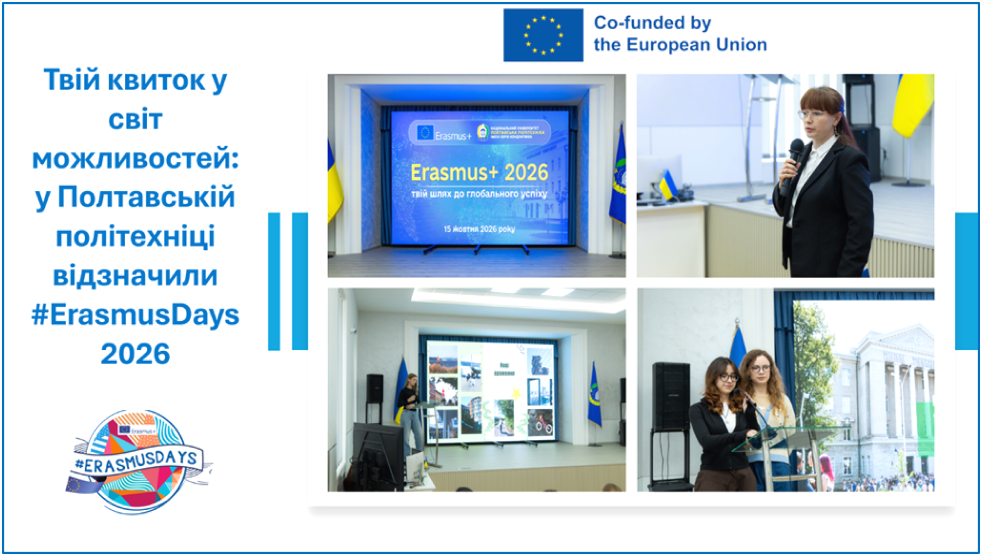
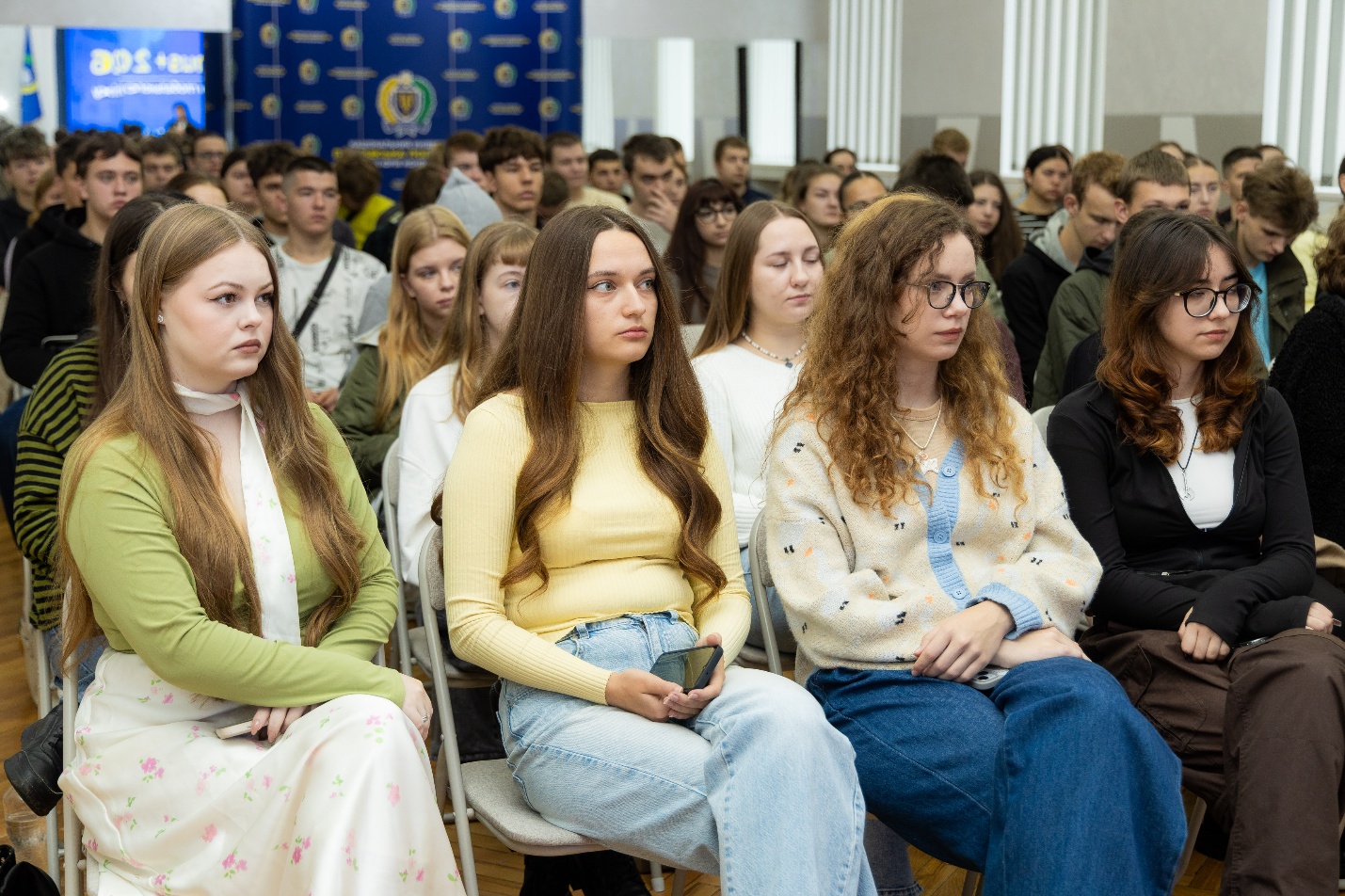
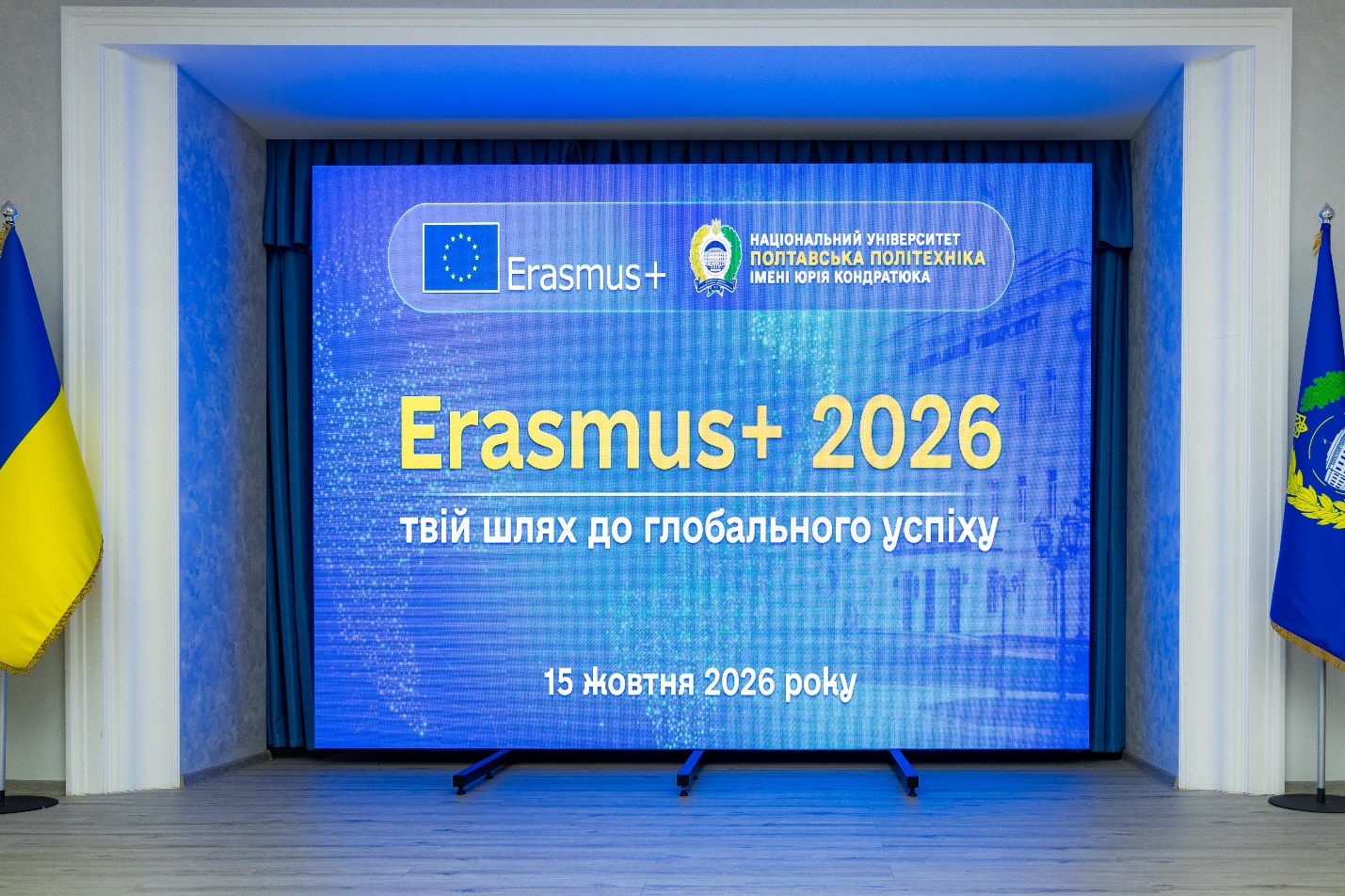
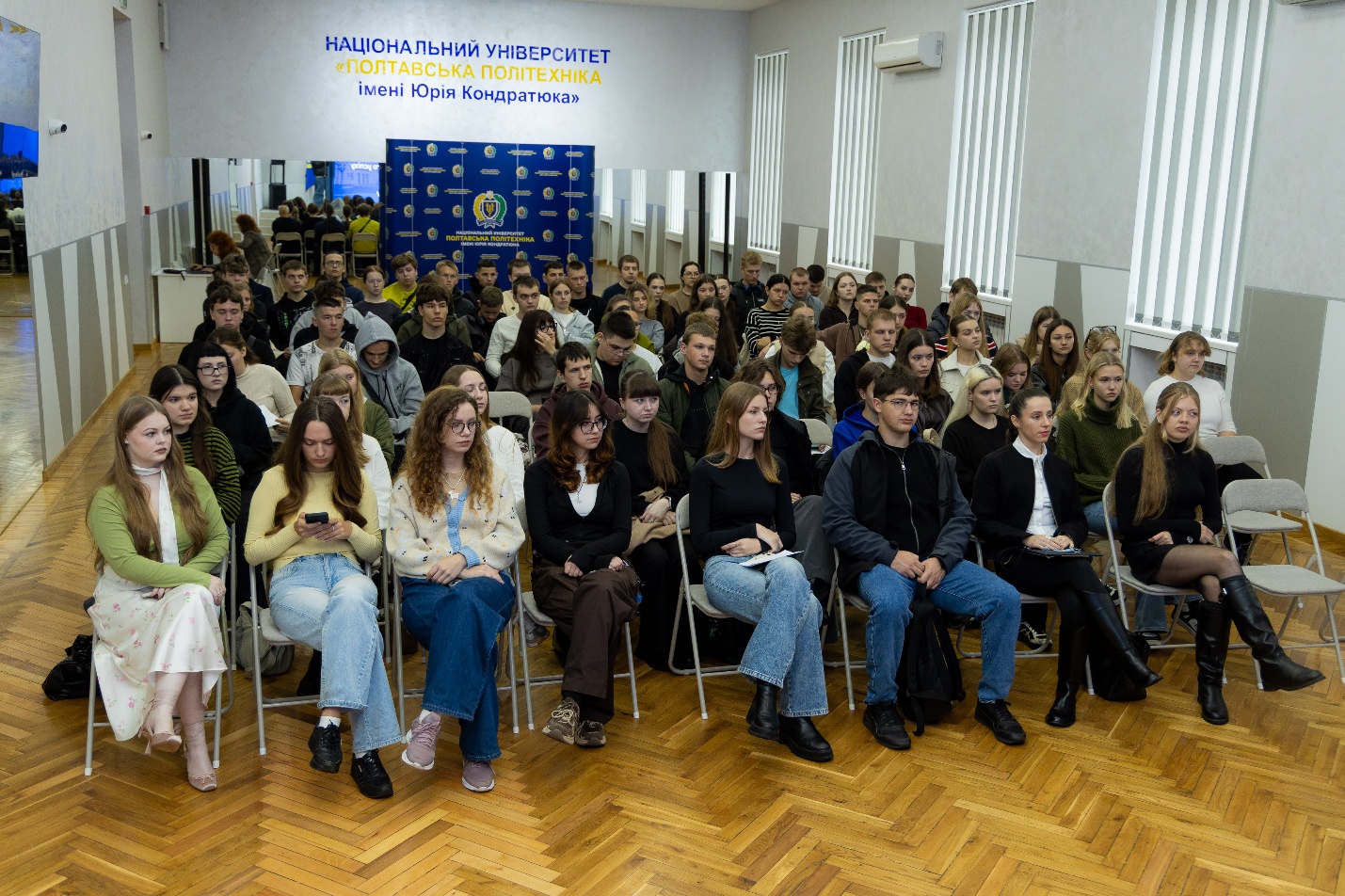
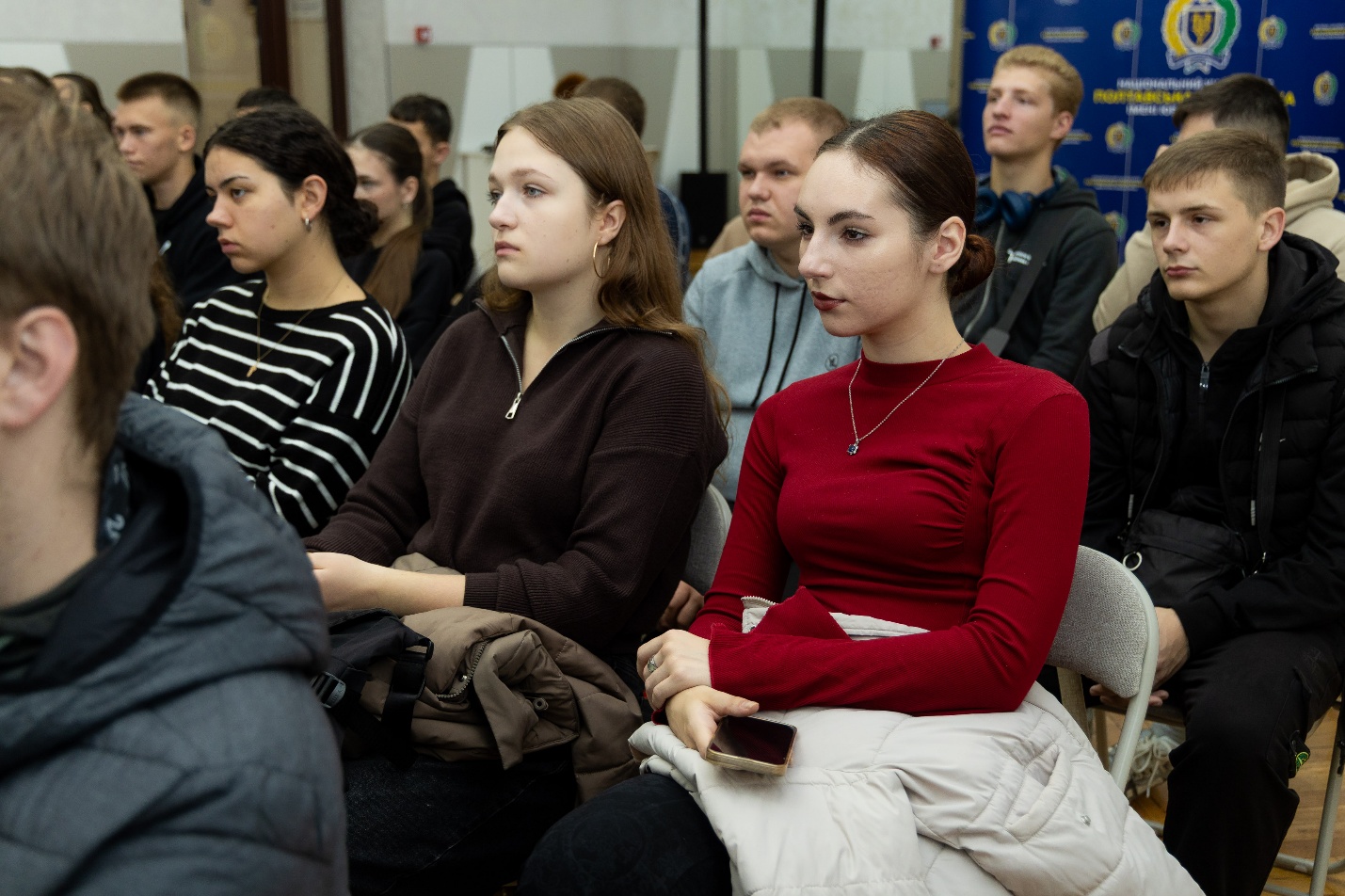
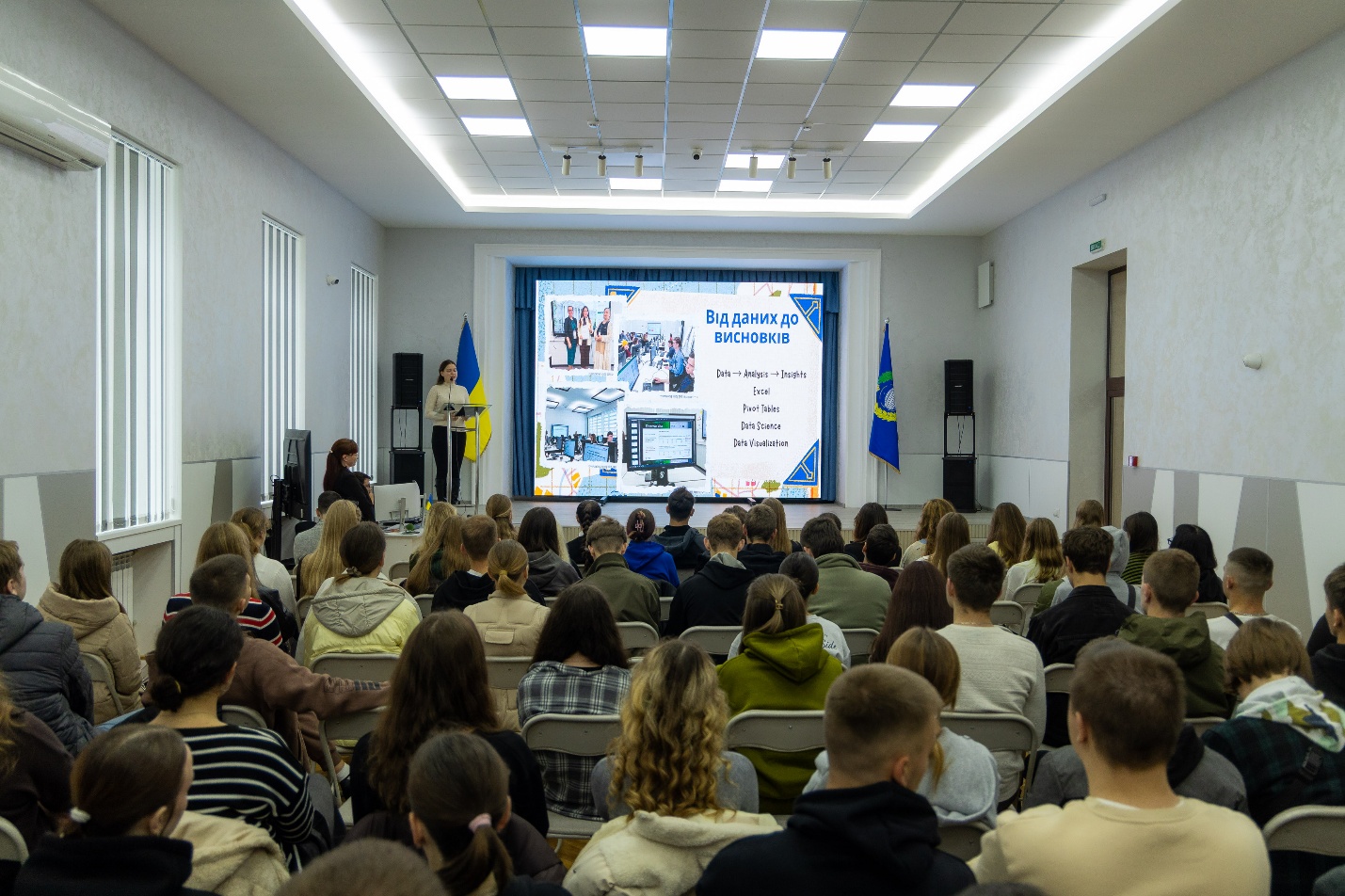
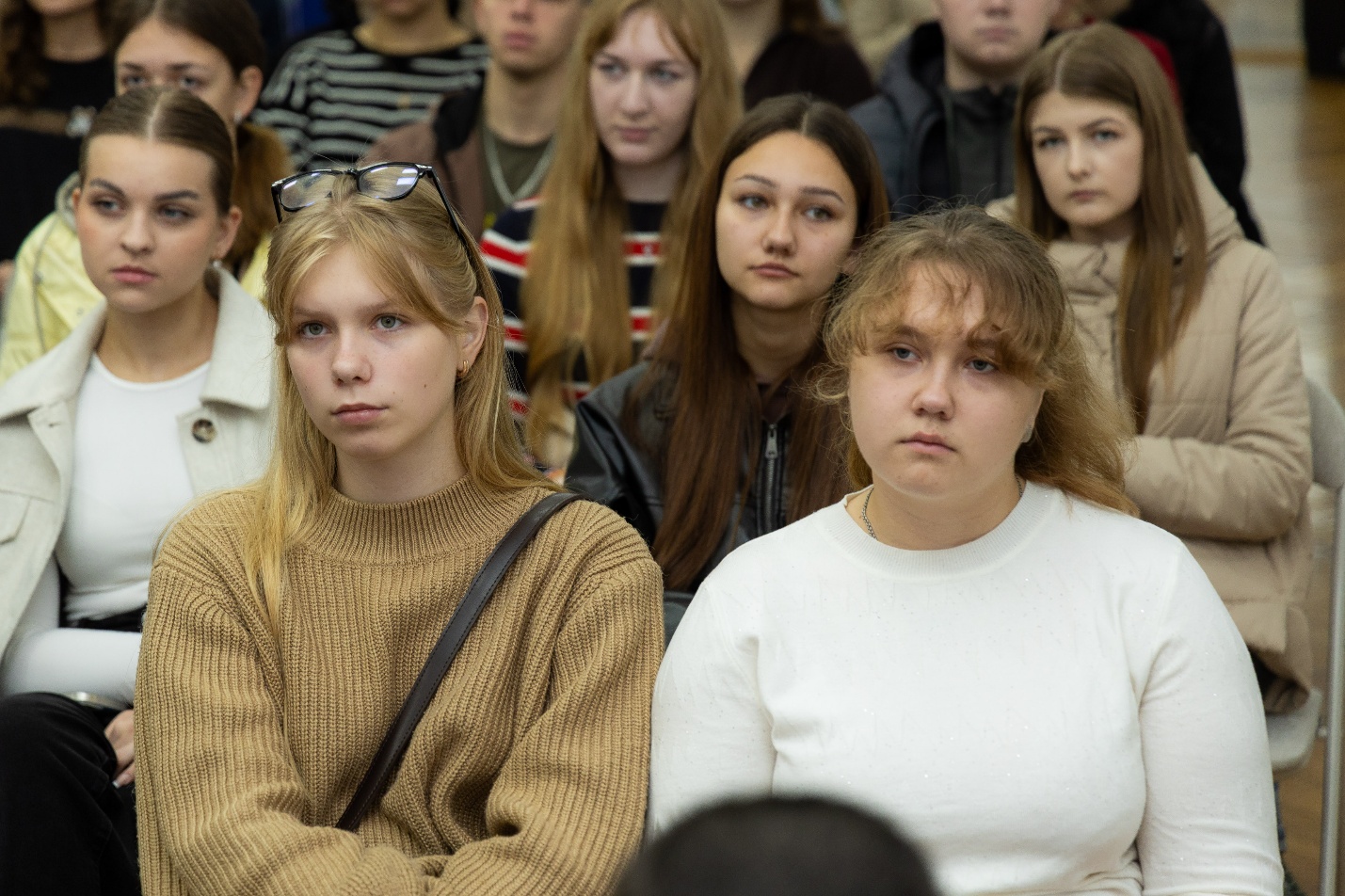
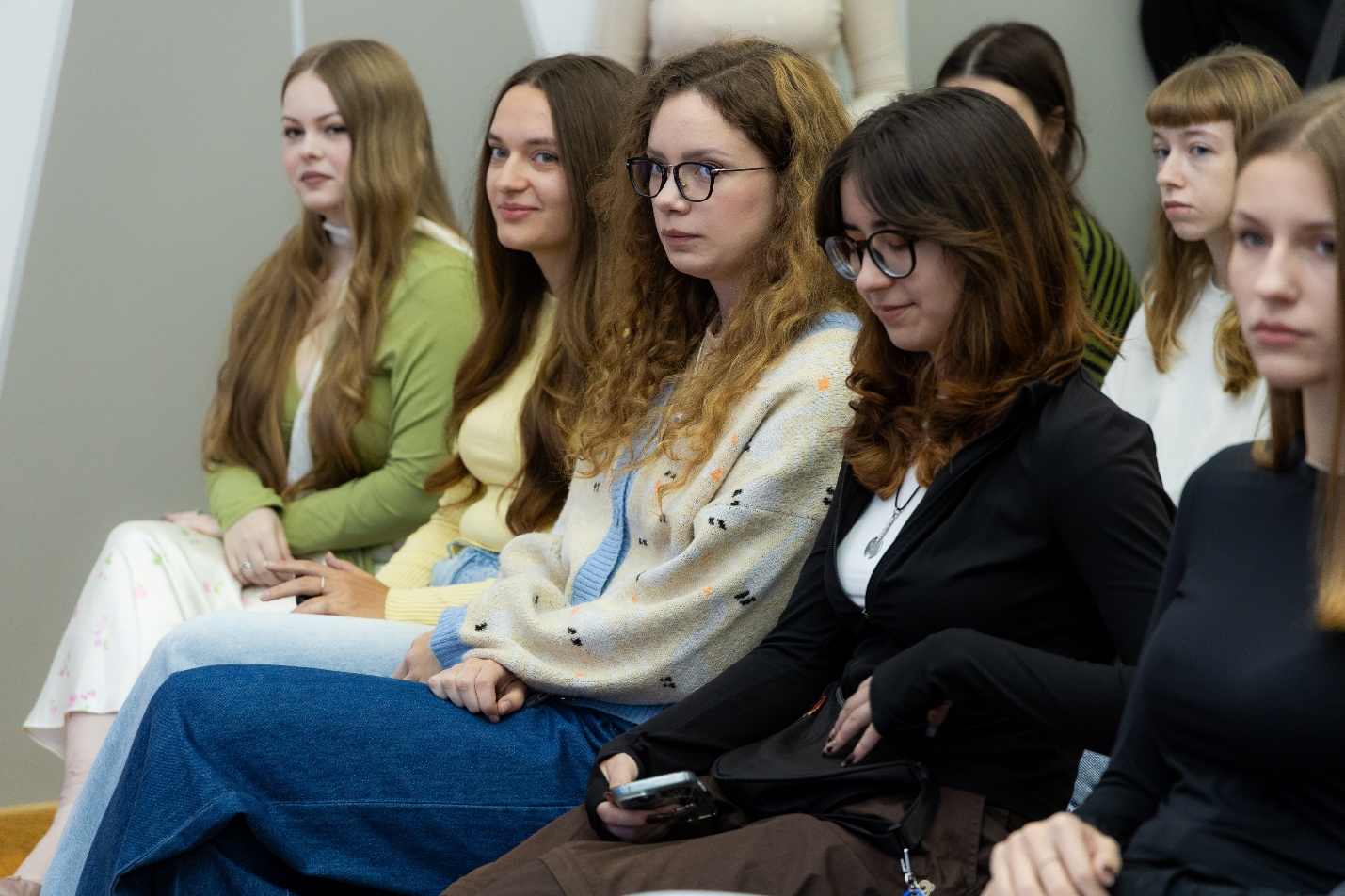
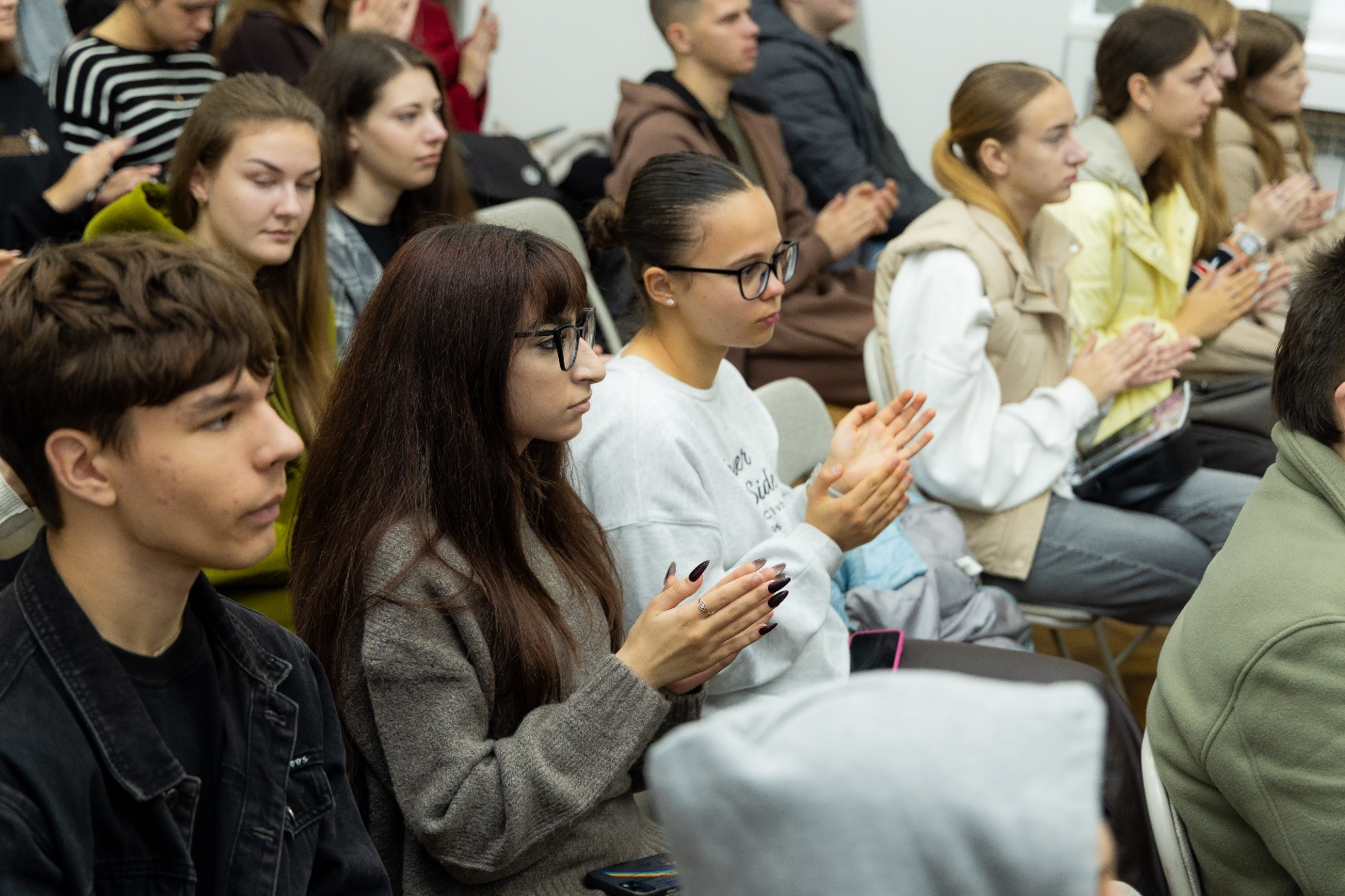
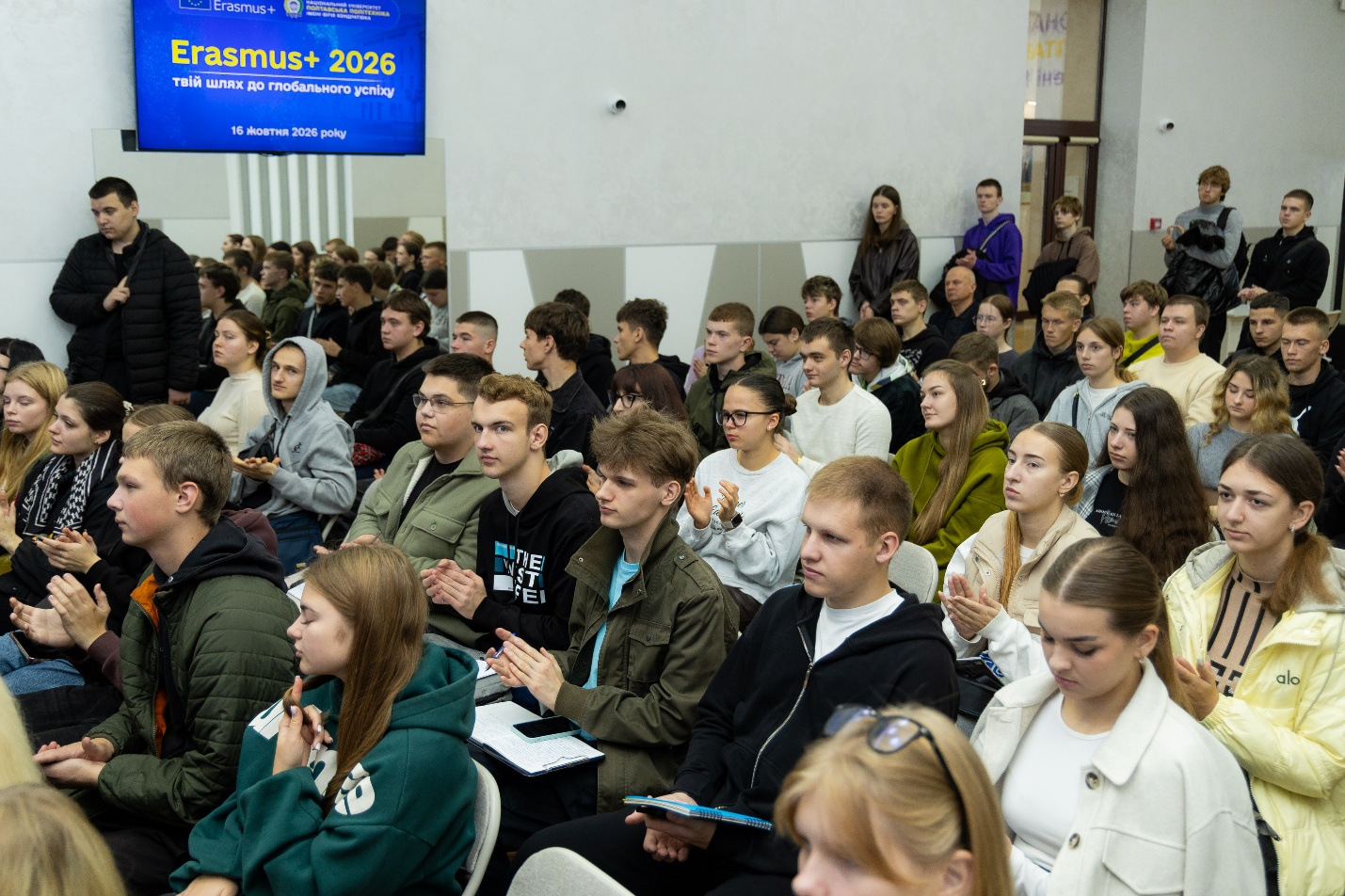
On 15 October 2026, National University “Yuri Kondratyuk Poltava Polytechnic” hosted a major university-wide information and motivation event entitled “Your Ticket to Europe: Discover a World of Opportunities at #ErasmusDays 2026!”, dedicated to the European Union’s global #ErasmusDays 2026 initiative. The event brought together engaged students from all years of study, educational and research institutes and faculties, alongside academic staff and international programme coordinators, transforming the university’s conference hall into an open space for European opportunities, meaningful interaction and inspiration. The event’s primary objective was to present a wide range of academic mobility programmes, from semester-long studies and work placements at leading EU higher education institutions to short-term Blended Intensive Programmes (BIPs), available to students across a broad spectrum of disciplines, including philology, management, civil engineering, architecture and finance.
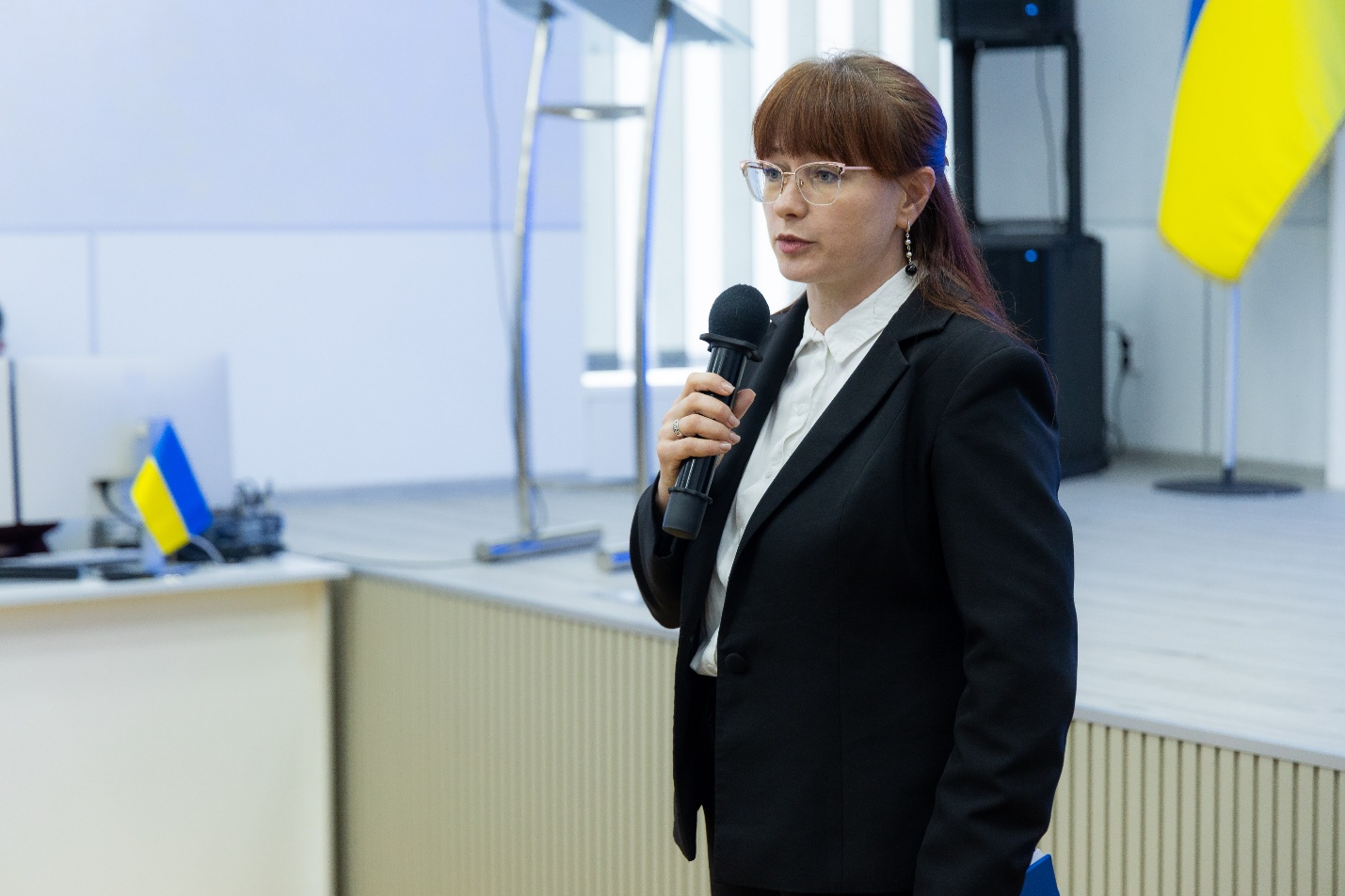
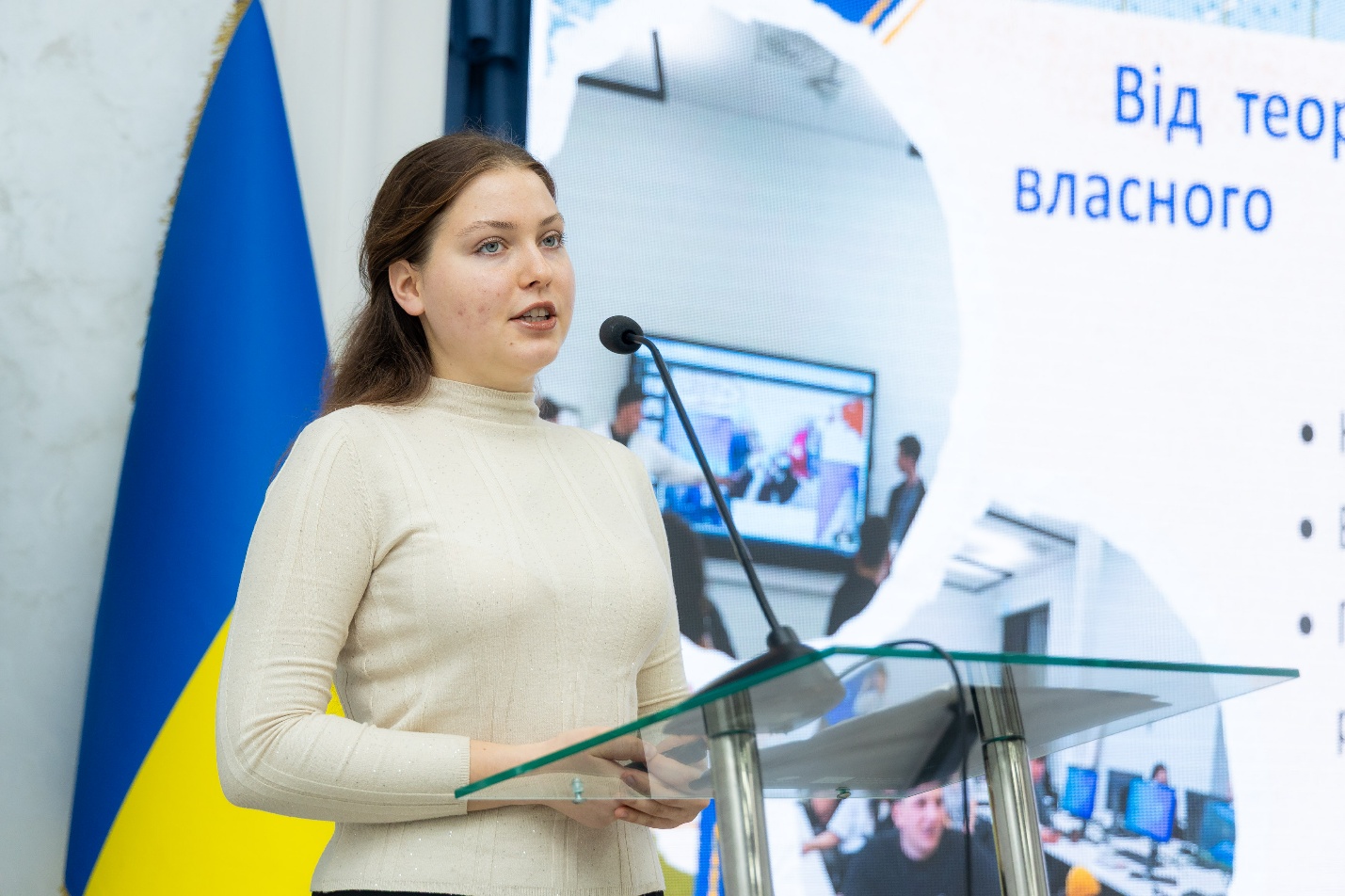
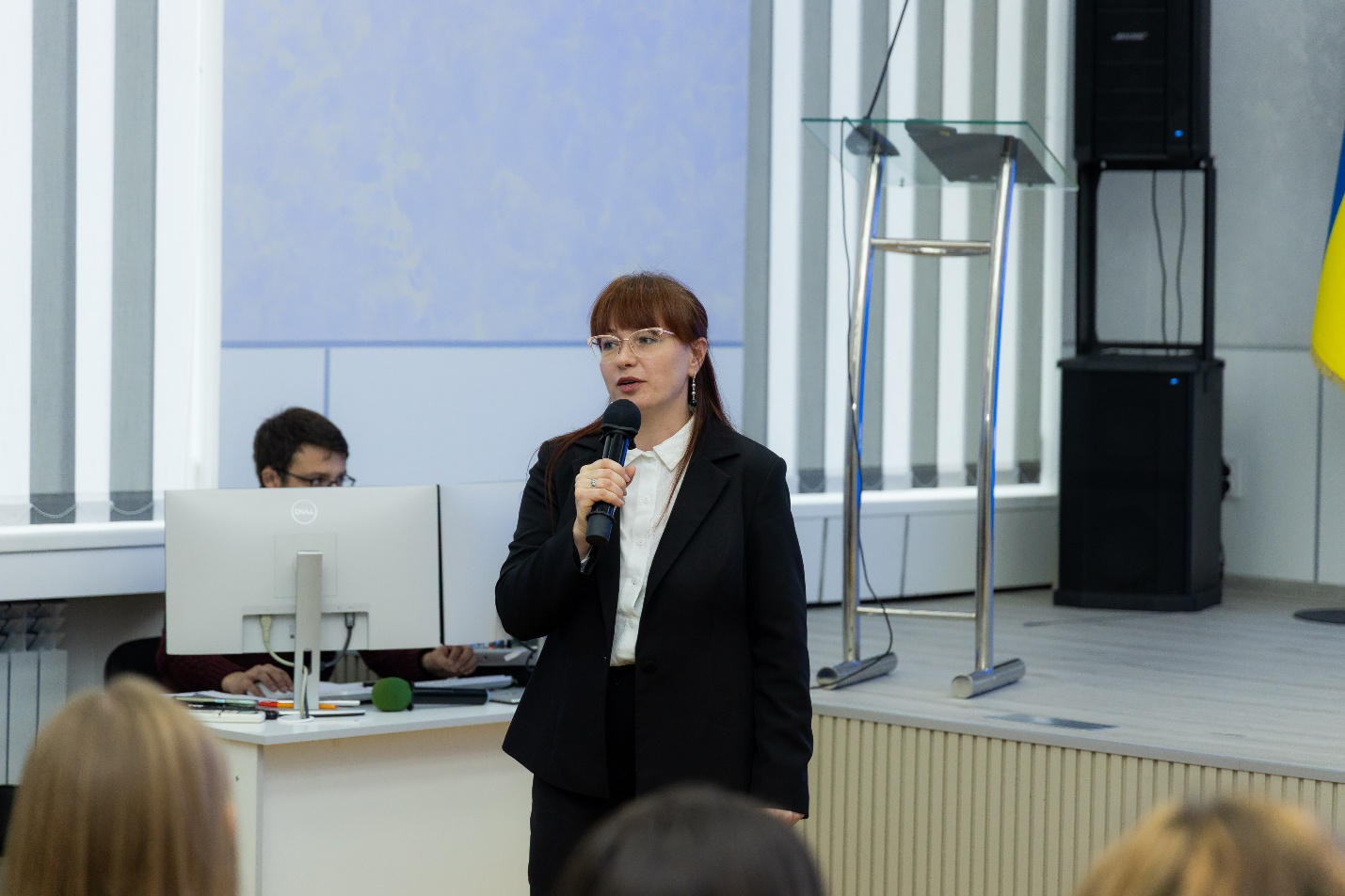
Anna Pavelieva, the university’s International Relations Coordinator, PhD in Philology and Associate Professor at the Department of Germanic Philology and Translation, welcomed the students and provided a comprehensive overview of international academic mobility opportunities. She outlined the principal Erasmus+ activities successfully implemented at the university, ranging from conventional semester-long credit mobility and long-term Erasmus+ Traineeships to the flexible format of Blended Intensive Programmes (BIPs), which combine a virtual component with one week of in-person study abroad.
The speaker challenged common misconceptions among young people, emphasising that exchange programmes are open to students of all disciplines and years of study, from first-year bachelor’s students to master’s students. Participation does not require native-level language proficiency or consistently outstanding grades: confident English at B1–B2 level, sincere motivation and a proactive approach are sufficient.
Anna Pavelieva paid particular attention to the financial and academic guarantees available to every successful applicant in the university’s selection process. She emphasised that studies at partner universities abroad are entirely tuition-free and that the European Union provides non-repayable grant support of approximately €1,100 per month for semester-long programmes, together with a separate contribution towards travel costs, fully covering comfortable accommodation, meals and student travel.
The coordinator explained in detail how participants retain their student status at Poltava Polytechnic. Thanks to a well-established European Credit Transfer and Accumulation System (ECTS) and individual study plans, participants do not need to take academic leave or repeat an entire examination session upon their return: the grades obtained in Europe are formally recognised. Concluding her presentation, she outlined a straightforward, step-by-step application procedure through the university’s International Relations Office and encouraged students to invest confidently in strengthening their CVs, as the skills, professional contacts and global outlook acquired in Europe open doors to leading employers in Ukraine and worldwide.
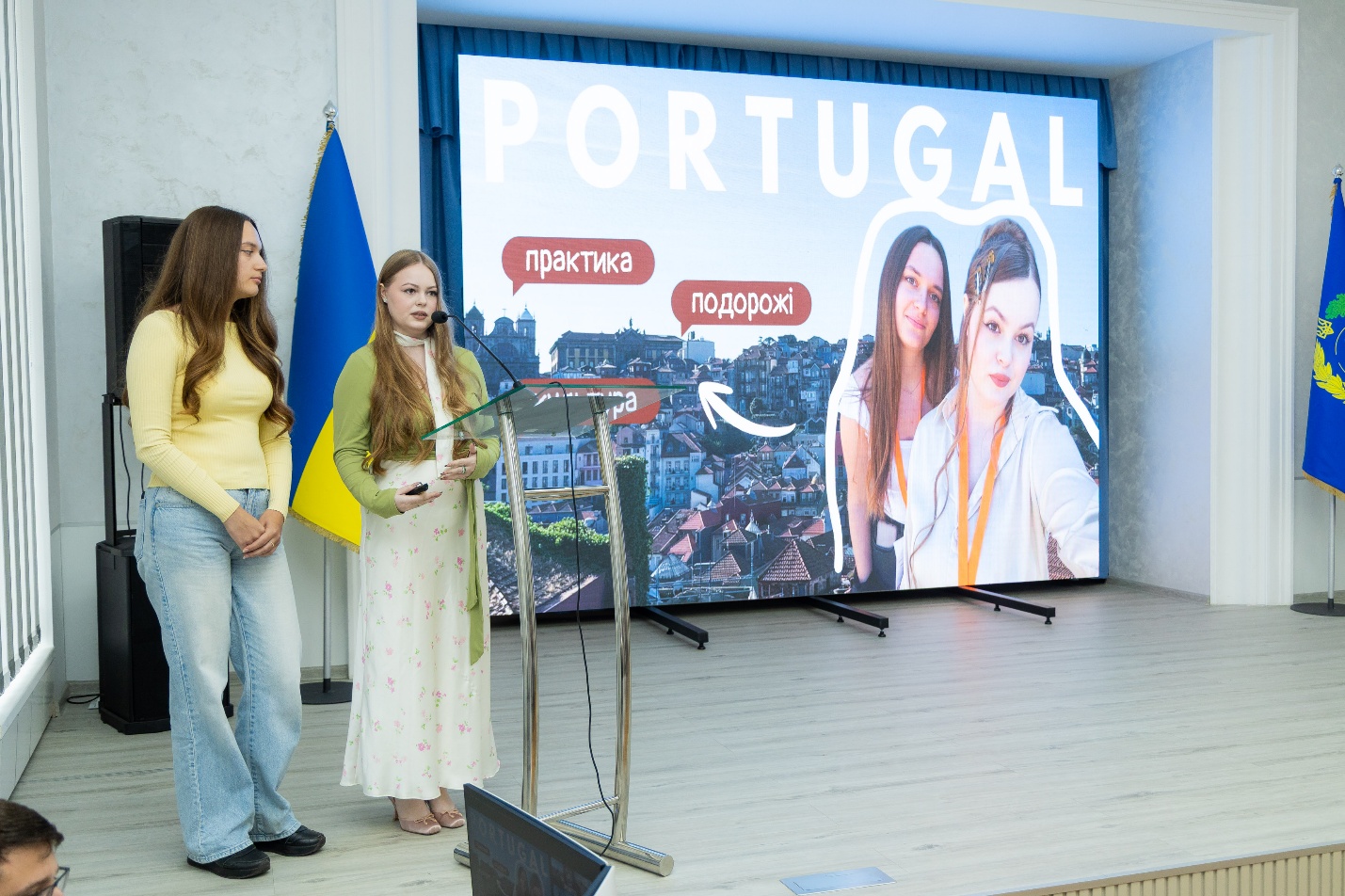
The students’ own success stories provided the strongest confirmation of these statements and the most compelling evidence of the accessibility of European education. Through interactive discussions and presentations, mobility participants took the audience on a journey across Europe, from Tallinn on the Baltic Sea and Næstved in Denmark to the sunny Atlantic coast of Porto, Portugal.
Students from different disciplines openly shared their experiences and practical advice on everyday life, studying and travelling, demonstrating that becoming part of the global academic community is within everyone’s reach.
1. Anna Bukhalo (second-year student, Entrepreneurship and Trade)
Programme: Erasmus+ Blended Intensive Programme (BIP), “Data Analytics and Visualization”.
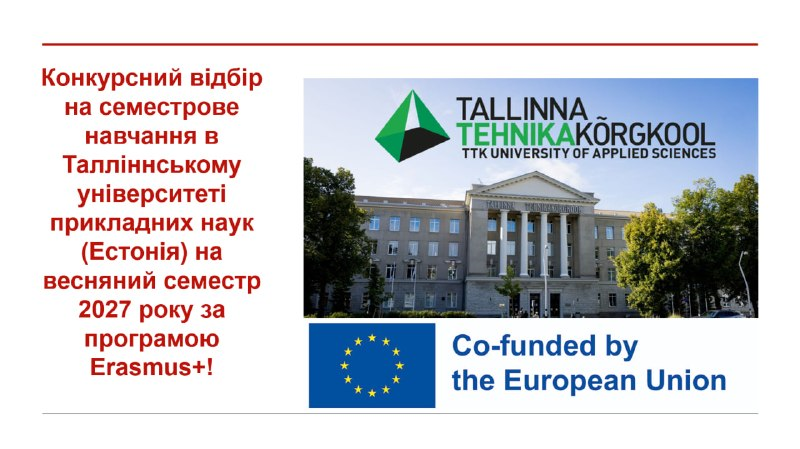
University: TTK University of Applied Sciences (TTK UAS), Estonia.
Presentation highlights: drawing on her own experience, Anna challenged the misconception that Erasmus+ participation necessarily requires spending six months or a year abroad. She presented the flexible blended mobility format offered by BIPs, in which her studies combined a virtual module with an intensive week of in-person learning in Tallinn. Together with a group of eight Polytechnic students and lecturer Nataliia Ichanska, she explored the practical applications of data analytics, progressing from raw data tables to business insights through data analysis. Working in multicultural groups with students from nearly ten European countries, the participants developed their skills in advanced Excel functions, Pivot Tables and visualisation tools.
Anna placed particular emphasis on Estonia’s innovative infrastructure. The students gained a behind-the-scenes understanding of Statistics Estonia, discovering how big data analytics underpin public administration, and visited the innovative Ülemiste City district, a “city of the future” where universities, technology start-ups and contemporary urban development converge. The speaker encouraged first- and second-year students to take advantage of short-term BIP grants as an excellent opportunity to experience European education without waiting until their later years of study.
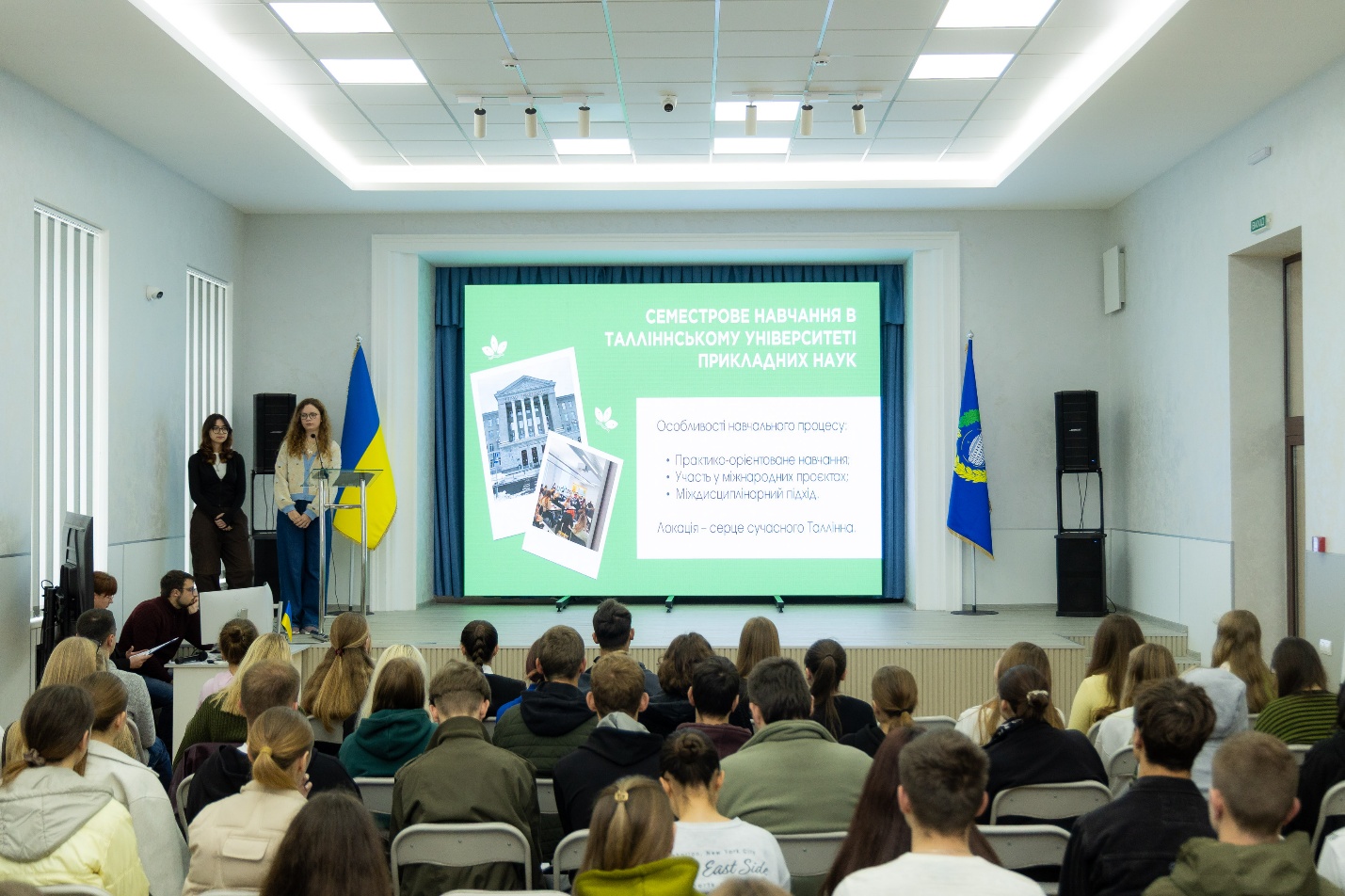
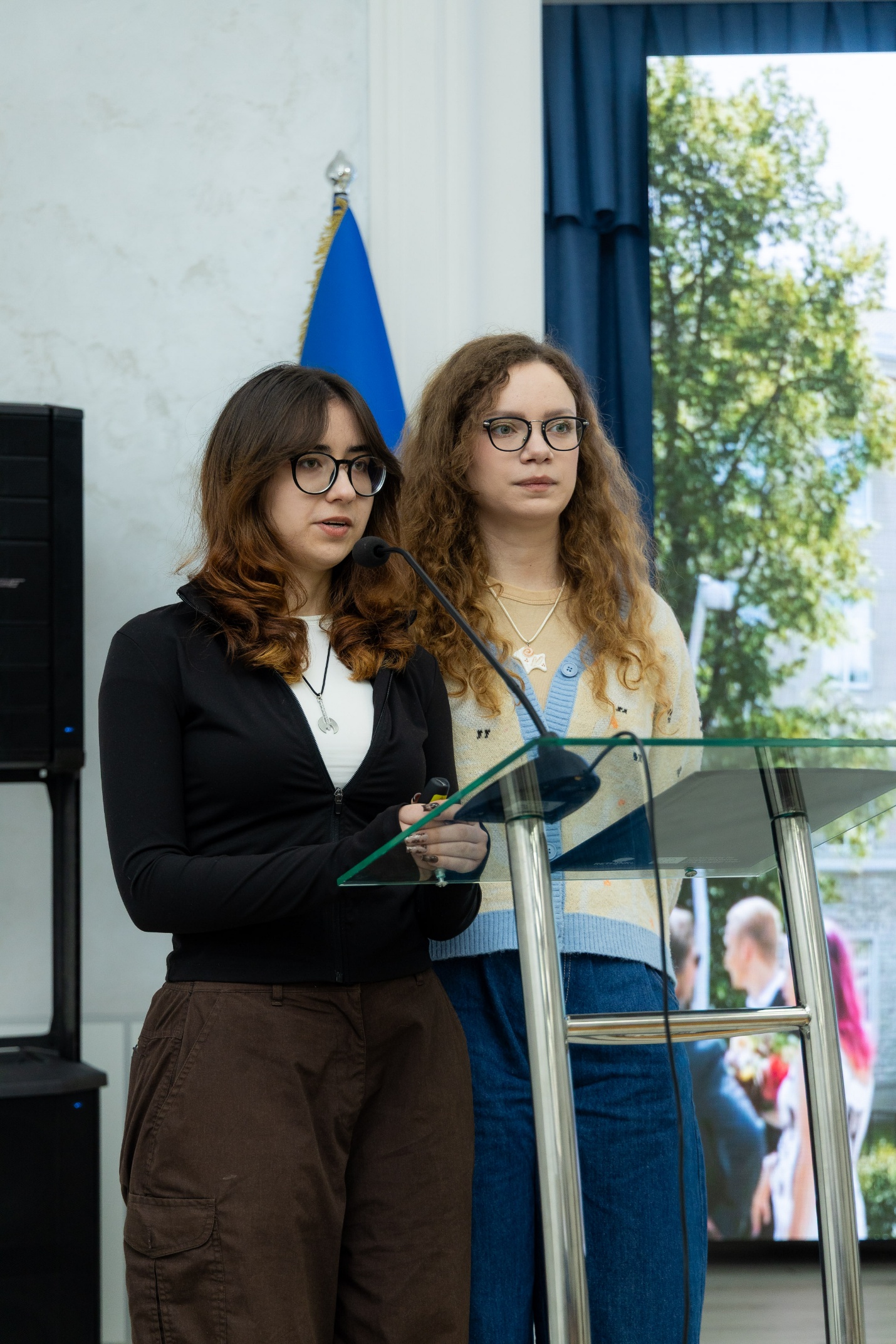
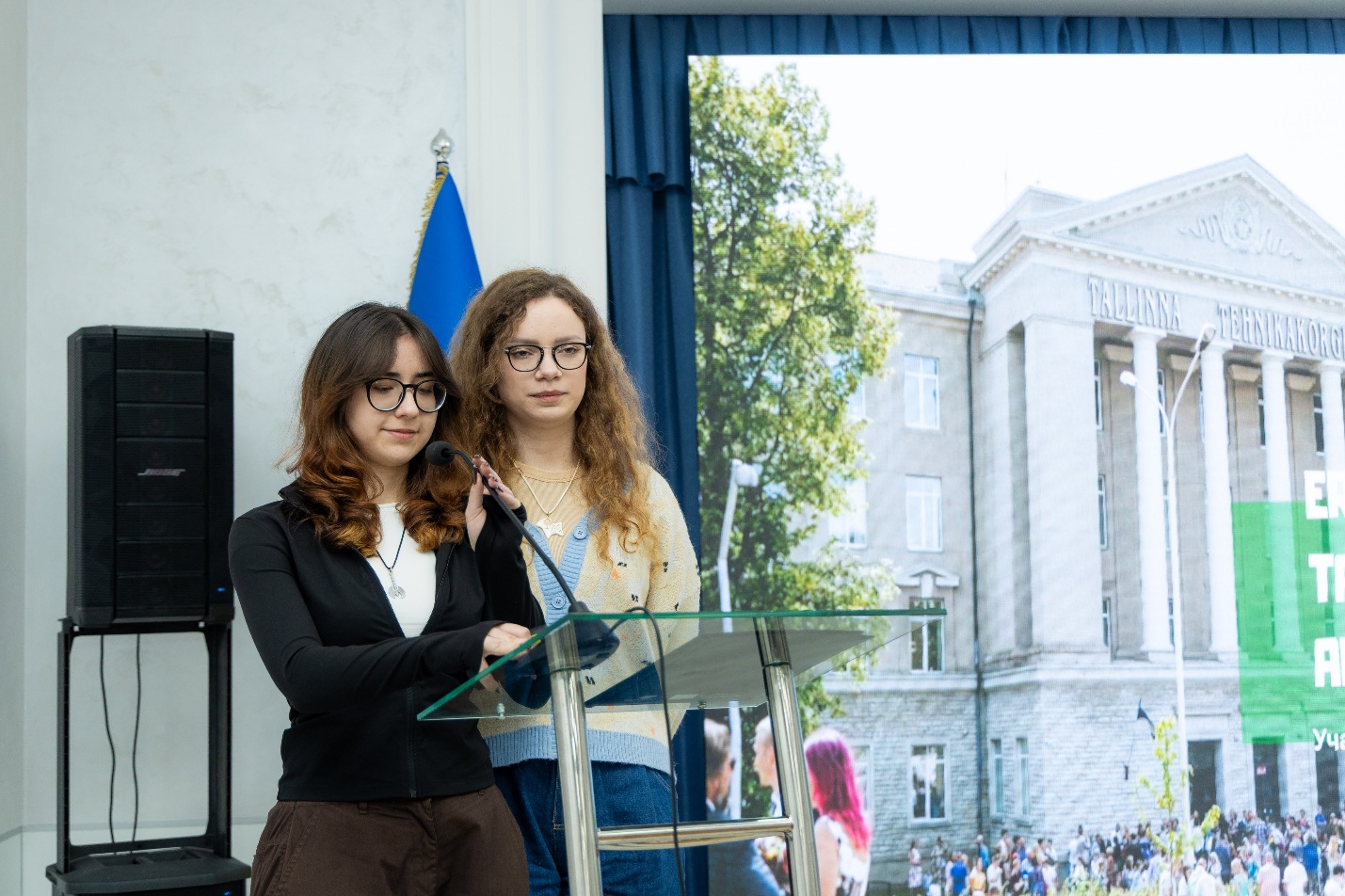
2. Yeva Molotkovets and Anzhela Velychko (fourth-year students, Philology)
Programme: Erasmus+ ICM program.
University: TTK University of Applied Sciences (TTK UAS), Estonia.
Presentation highlights: the translation students showcased a video tour and shared insights about their spring semester in Tallinn, emphasising that Erasmus+ provides opportunities to acquire contemporary specialised terminology that is difficult to find in conventional textbooks. They described their studies in English for technical and transport-related fields, including mechanical engineering, logistics and textiles, as well as business communication, the fundamentals of entrepreneurship and interactive courses in Estonian language and culture. Classroom learning followed a peer-to-peer approach: the Ukrainian students helped their Estonian peers improve their spoken English, while the Estonian students, in turn, helped them understand engineering concepts and technical diagrams.
The students also offered a vivid account of comfortable living conditions in Estonia, including the safe and accessible TTK UAS campus, the Daily cafeteria, the free fitness facilities and the strong environmental awareness reflected in separate waste collection. With comprehensive monthly grant support from the EU, they actively participated in ESN Tallinn events, ranging from tasting the iconic Vastlakukkel buns to ice skating, and enjoyed extensive opportunities to travel. They explored Baltic cities, including Tartu, Riga and Vilnius, and travelled to Lapland and Norway during the holidays, where they rode snowmobiles through Arctic landscapes.
3. Anna Korostashova and Ruslana Zhadan (fifth-year students, Architecture and Urban Planning)
Programme: Erasmus+ ICM program.
University: Estonian University of Life Sciences (Eesti Maaülikool / EMÜ), Tartu, Estonia.
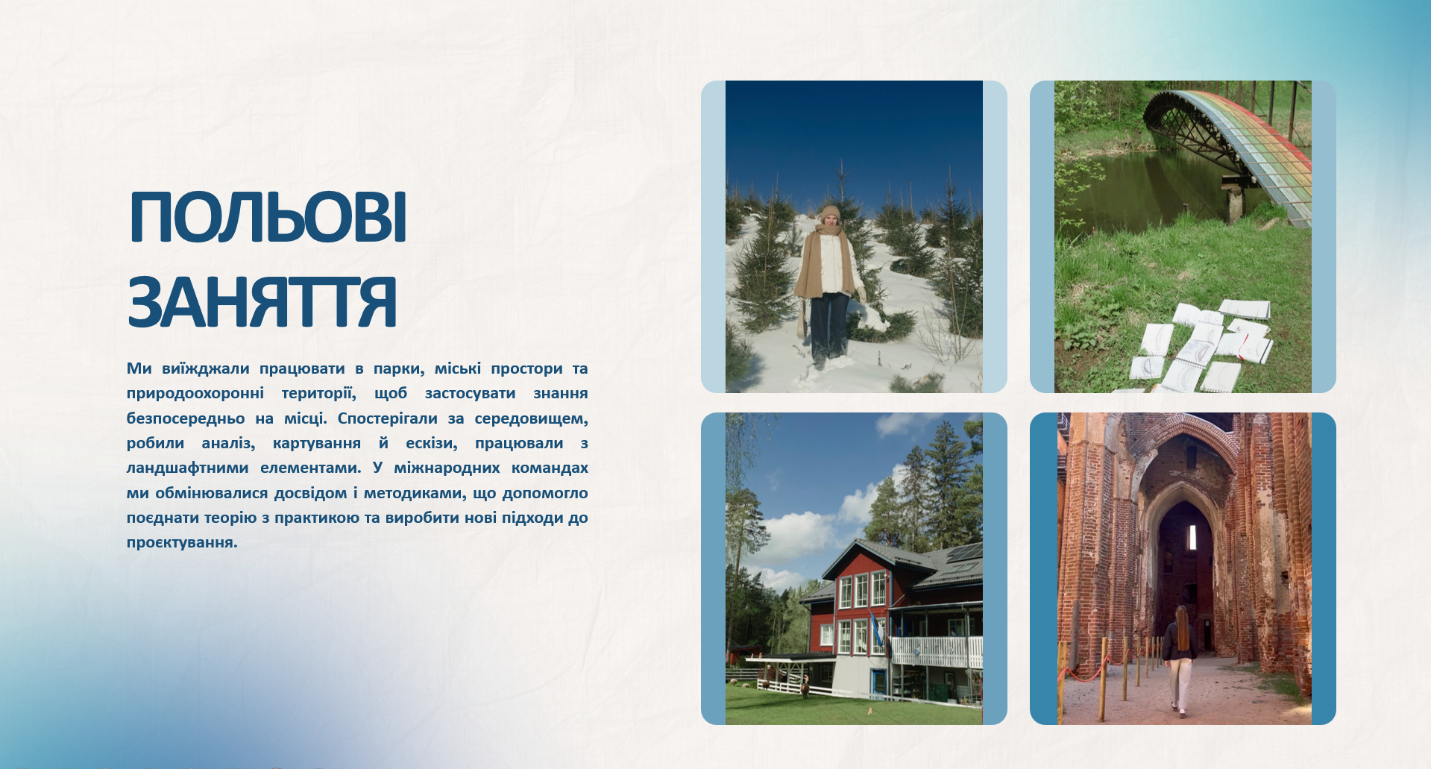
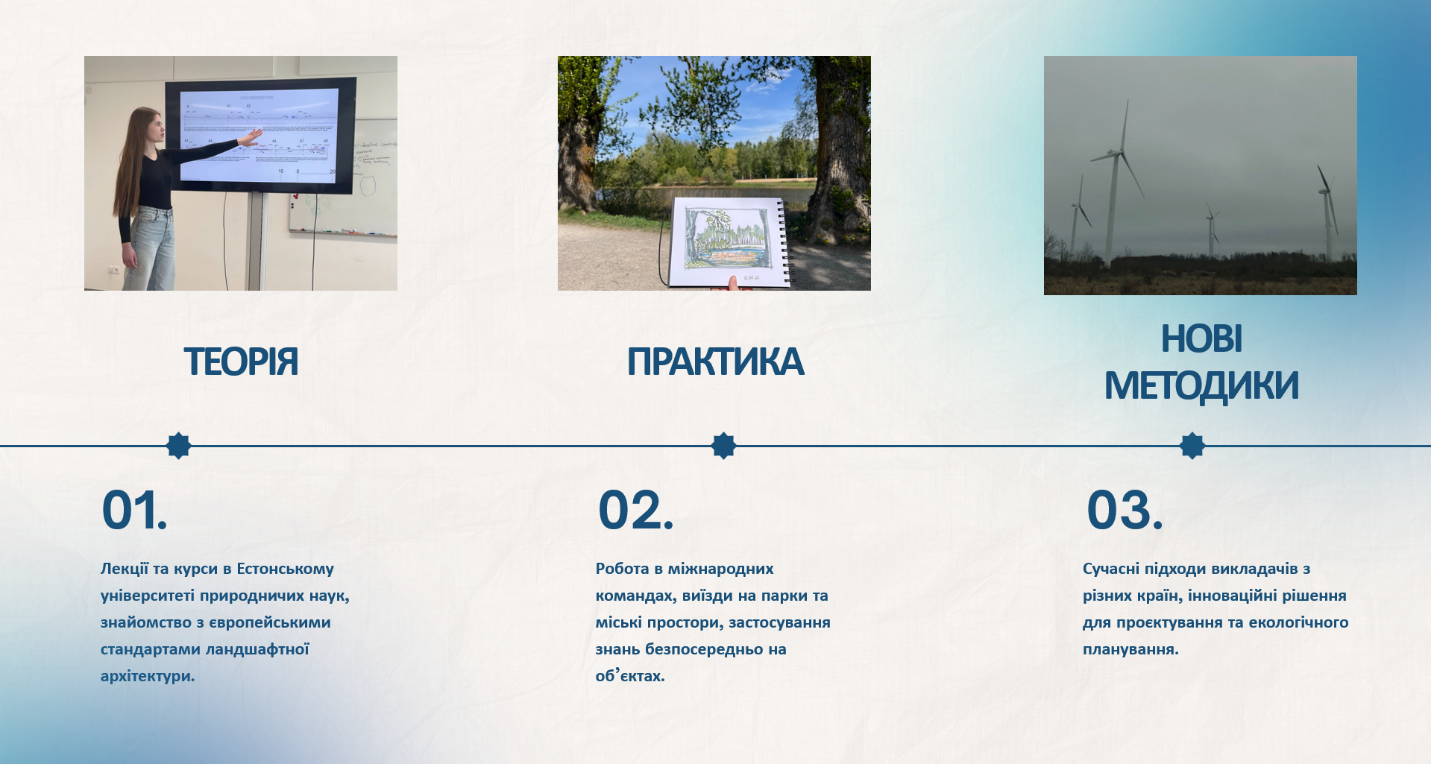
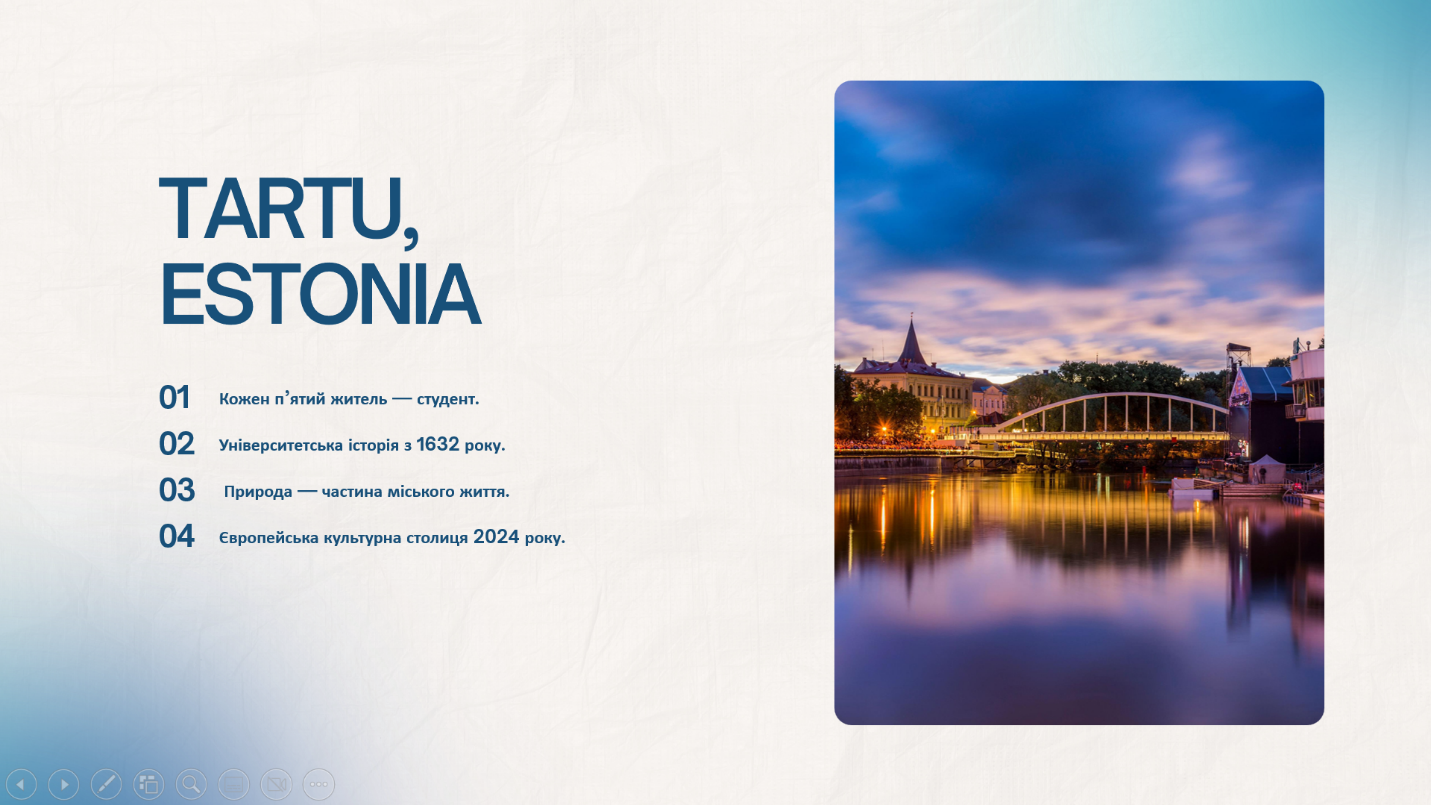
Presentation highlights: the future architects explained how Erasmus+ provides access to Europe’s most advanced laboratories and leading international practices in environmentally sustainable urban planning. They studied in Tartu, Estonia’s intellectual centre and the European Capital of Culture in 2024, where student life permeates the city’s atmosphere. The university’s concept of the “campus as a living laboratory” enabled them to study sustainable landscape architecture, green energy, including wind farms, and European standards for site regeneration through practical experience.
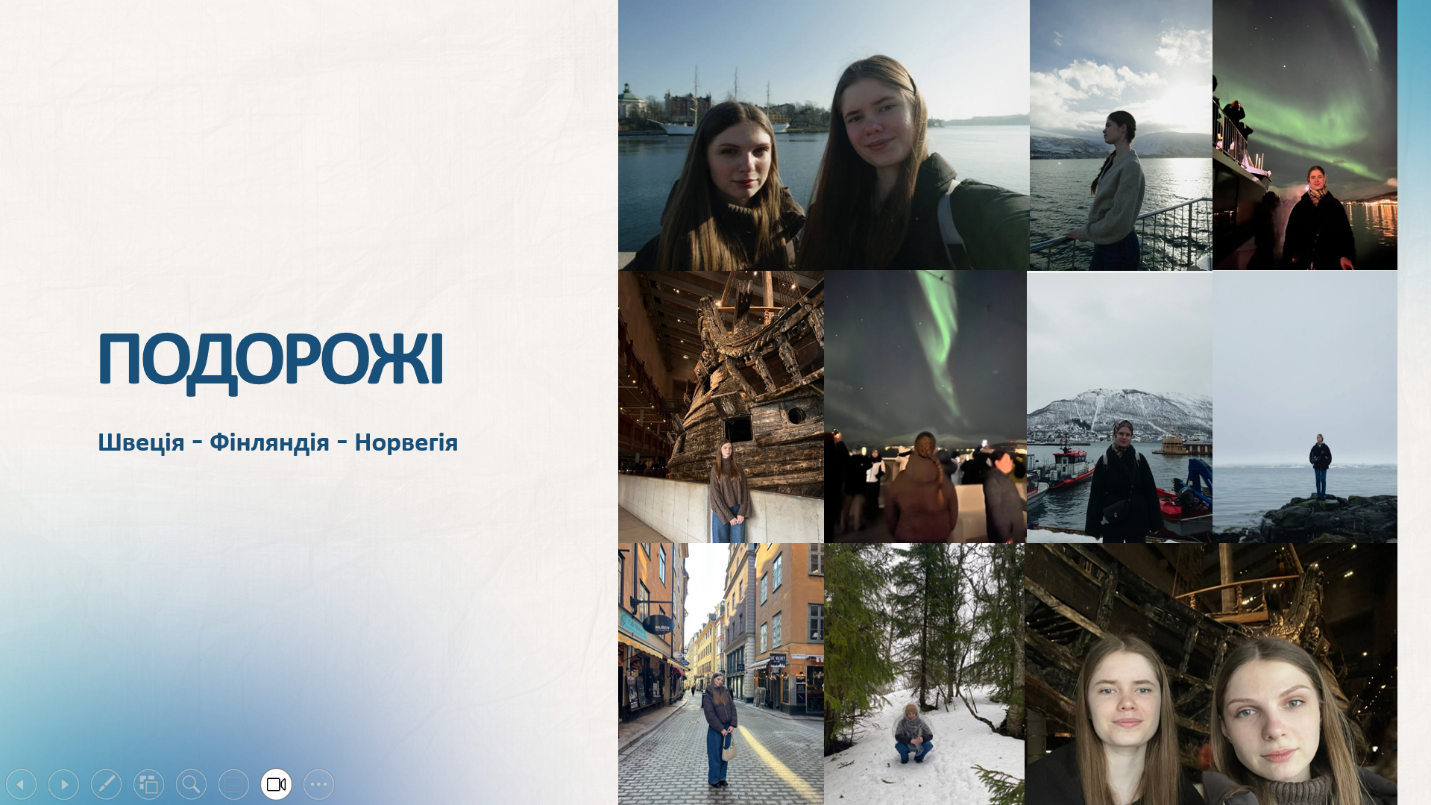
Their presentation focused primarily on fieldwork. The students visited nature reserves, urban parks and the medieval ruins of Tartu Cathedral, conducting on-site spatial analysis, mapping landscape features and producing architectural sketches. The financial independence provided by Erasmus+ enabled them to enjoy Estonia’s natural environment, including its lighthouses, waterfalls and forest trails, and to travel by ferry to Sweden, where they visited the Vasa Museum in Stockholm, and to Finland. They also travelled to Norway to see the Northern Lights and spent summer days on the Croatian coast.
4. Polina Khlystun (fourth-year student, Architecture and Urban Planning)
Programme: A full academic year on exchange, including a work placement and the award of a Danish diploma.
Institution: Zealand Academy of Technologies and Business, Næstved, Denmark.
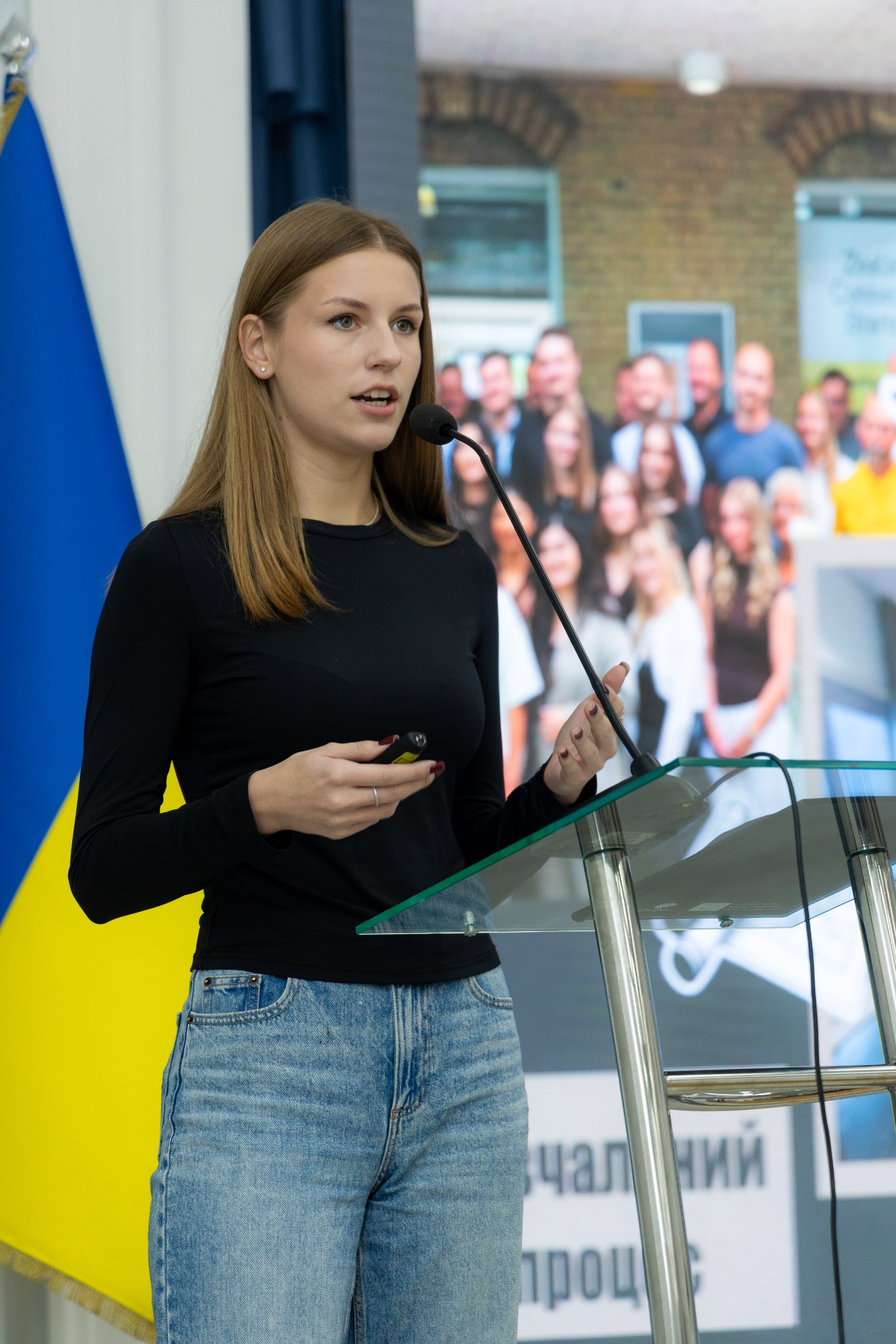
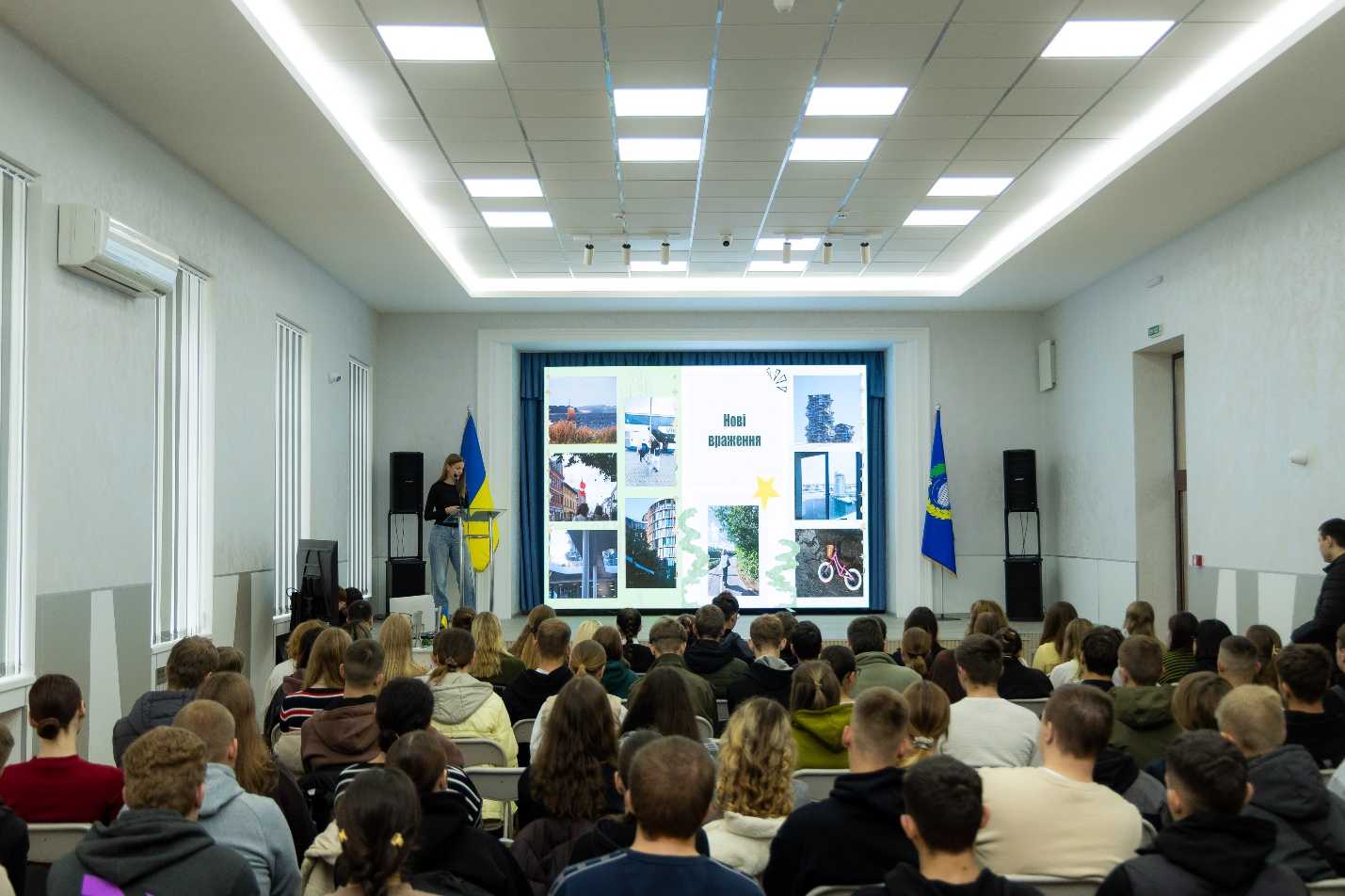
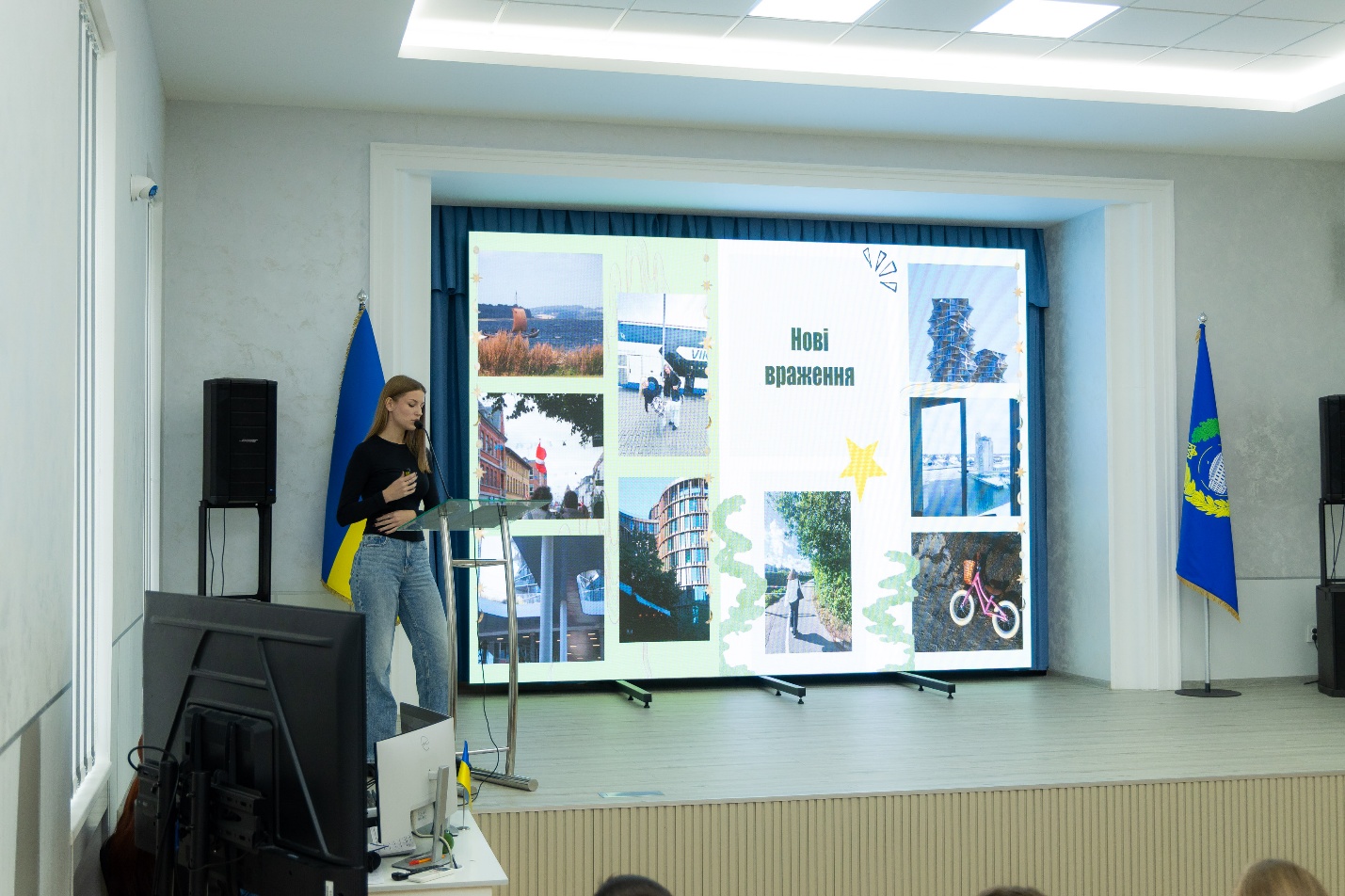
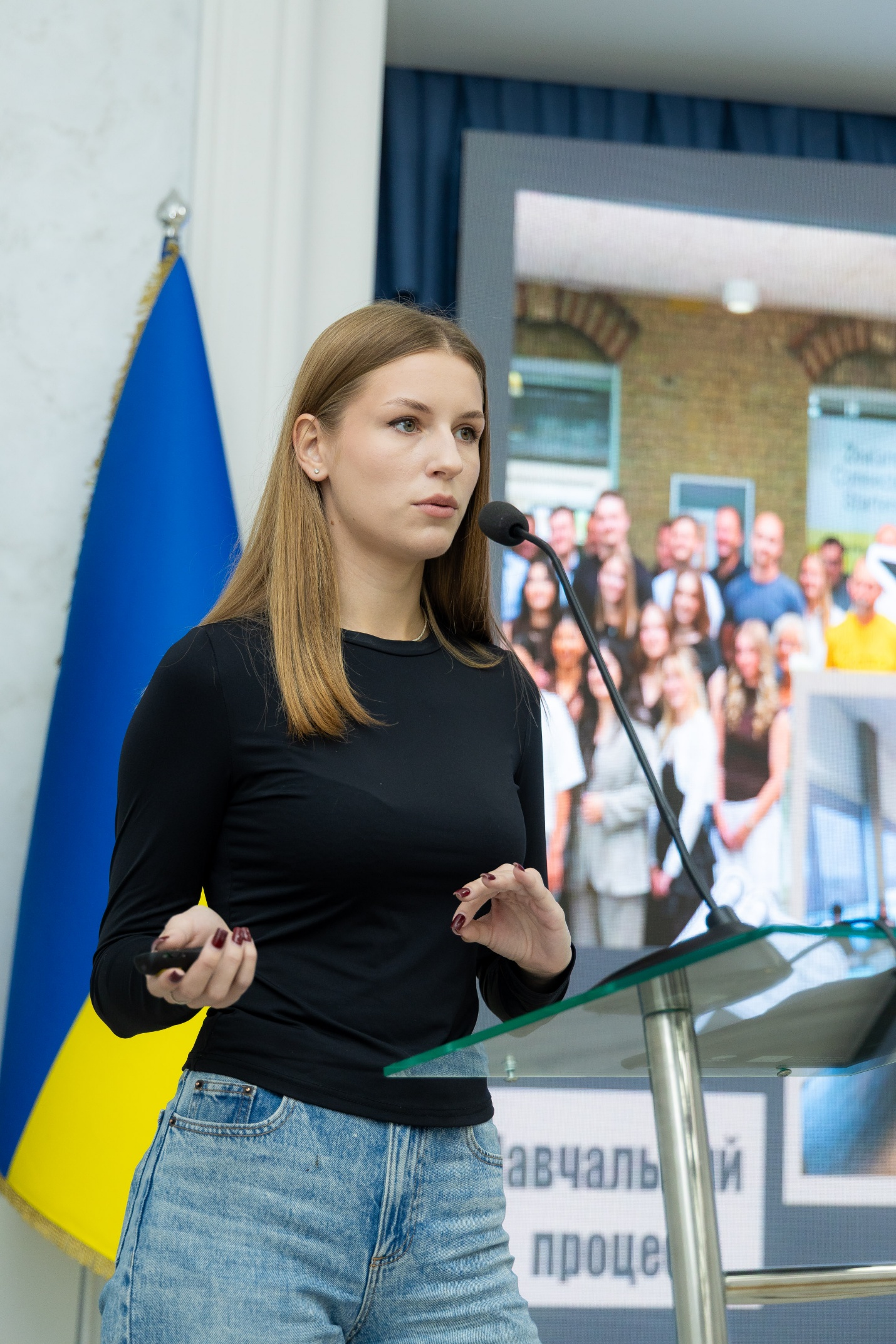
Presentation highlights: Polina’s presentation provided clear evidence of the central message of the event announcement: mobility substantially enhances graduates’ value in the labour market. She described her year on the Byggetekniker programme, which combined academic studies with a 12-week placement at Danish architectural and engineering firms, including SKARK and Enemærke & Petersen A/S. Polina shared images of herself wearing a hard hat while working directly on site, illustrating activities ranging from drone-assisted construction site inspections to preparing drawings in Revit and Inventor, producing models using laser equipment and developing projects to revitalise disused industrial buildings.
The account culminated in the successful defence of projects before independent external examiners appointed by the Danish state, with grades at the top end of the Danish scale, 10 and 12, followed by the award of official Danish bachelor’s diplomas. In addition to discussing demanding engineering tasks, Polina shared her impressions of hygge culture, daily bicycle rides through picturesque Næstved, walks near the chalk cliffs of Møns Klint and visits to Danish museums of contemporary art and design.
5. Anastasiia Stepanenko (third-year student, Geodesy and Land Management)
Programme: Erasmus+ ICM program.
University: Slovak University of Technology in Bratislava, Faculty of Civil Engineering (STU SvF), Slovakia.
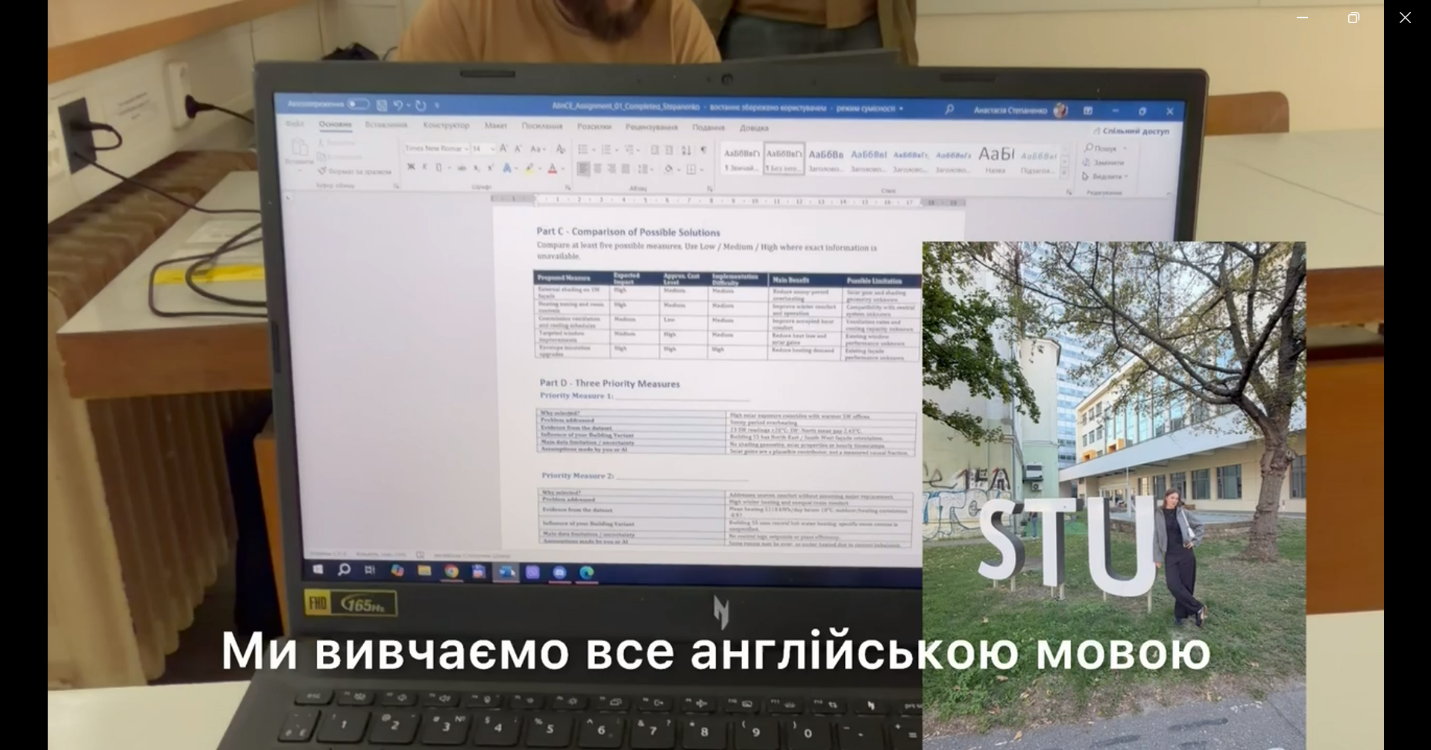
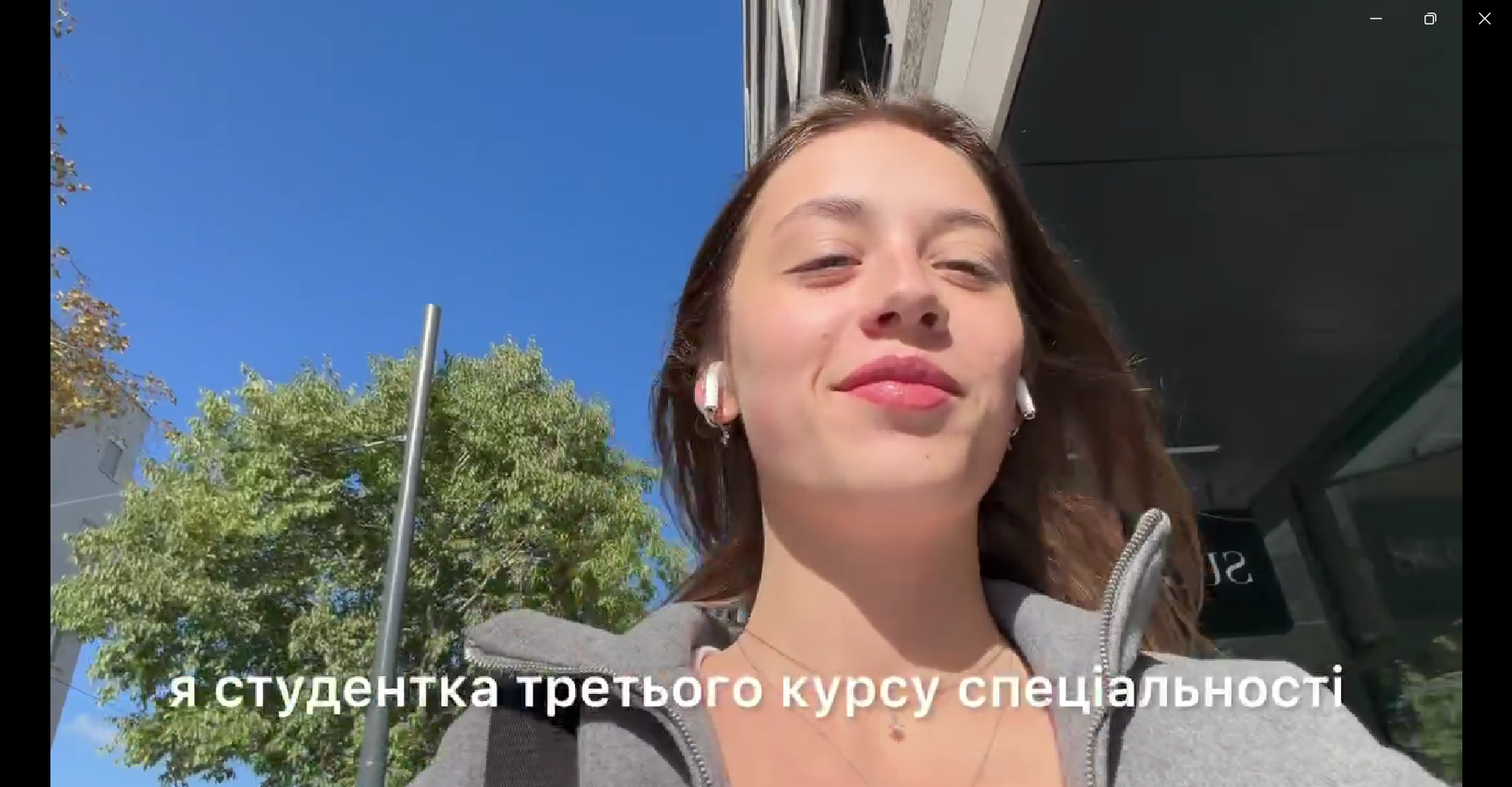
Presentation highlights: in her video greeting, “Ahoj, kamarat!”, Anastasiia challenged the misconception that language makes studying abroad excessively difficult for engineering students. She showed the classrooms of STU’s Faculty of Civil Engineering and explained how she successfully completed lectures, laboratory calculations and computer-based field assignments in geodesy and cartography in English. This approach enabled her to become familiar with European professional terminology and integrate smoothly into the international student community.
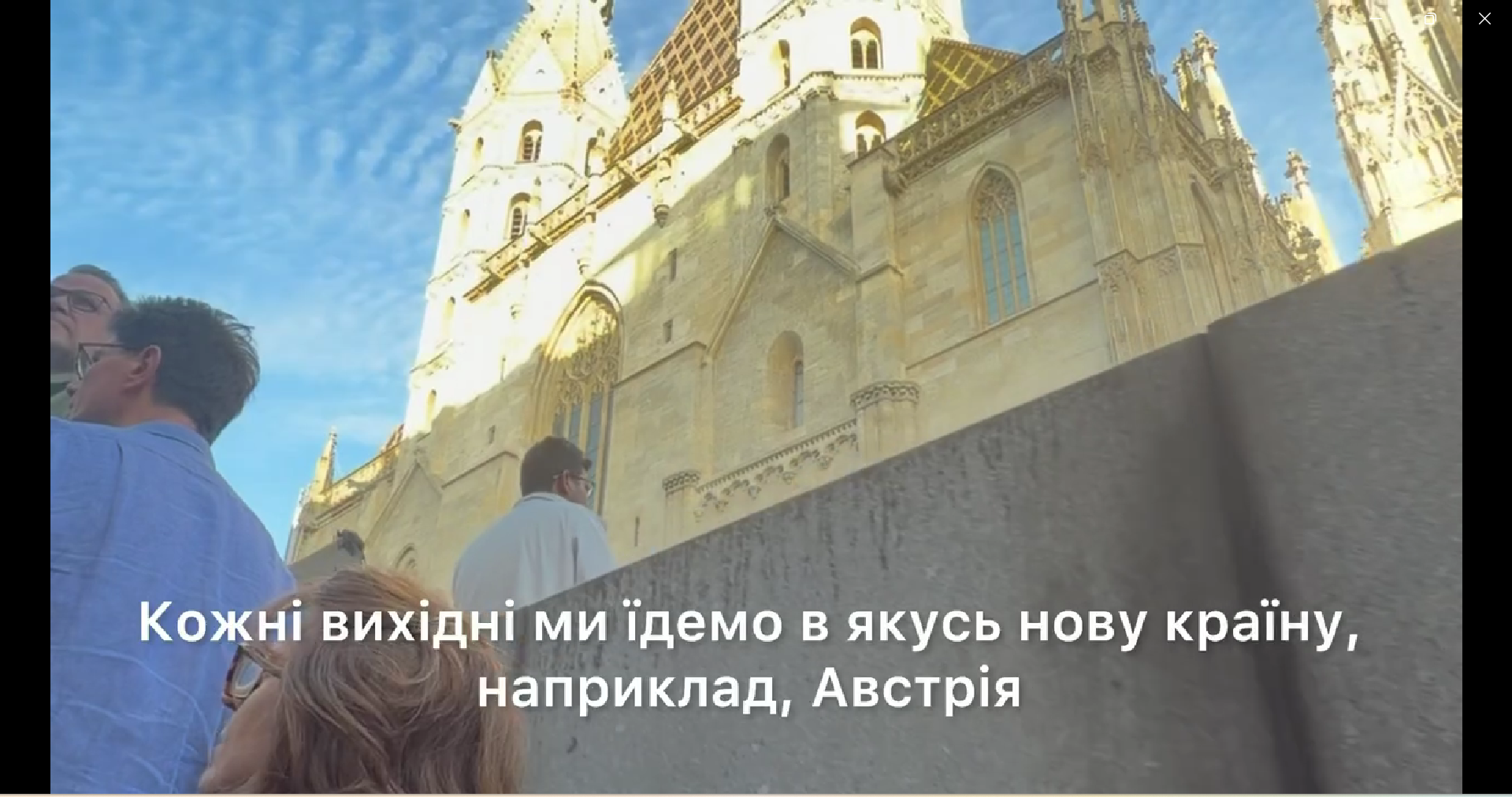
Her story also illustrated the richness of the student mobility experience: Bratislava’s convenient geographical location enabled her to discover new parts of the continent every week. Anastasiia shared footage of an adventurous river kayaking trip, visits to Vienna and the magnificent Parliament building in Budapest, a trip to Oktoberfest in Munich, student flash mobs featuring acrobatic human pyramids in city squares, and relaxed evenings around a campfire with a guitar.
6. Anna Bukka (third-year student, International Economic Relations)
Programme: Erasmus+ ICM program.
University: University of Applied Sciences Burgenland (Hochschule Burgenland), Eisenstadt, Austria.
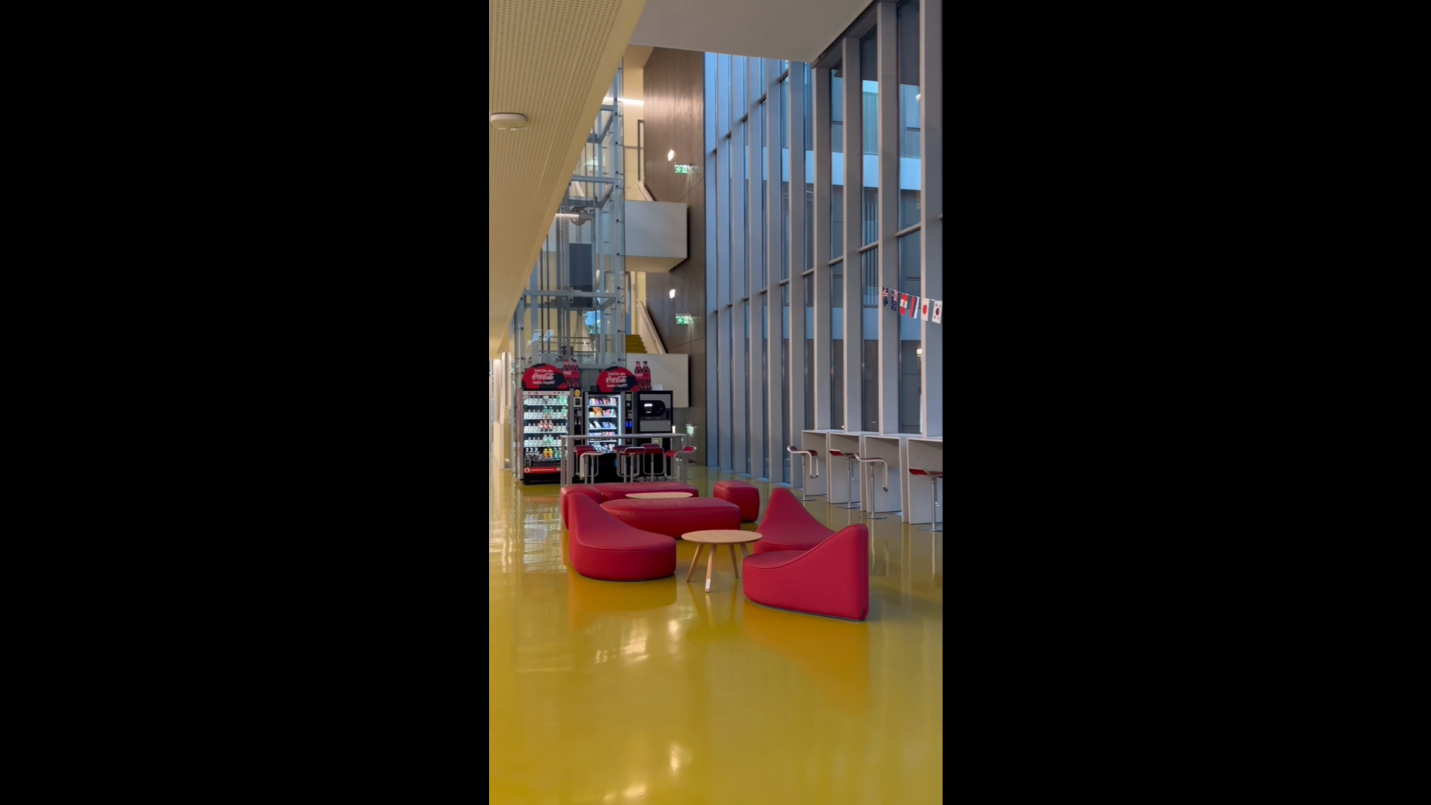
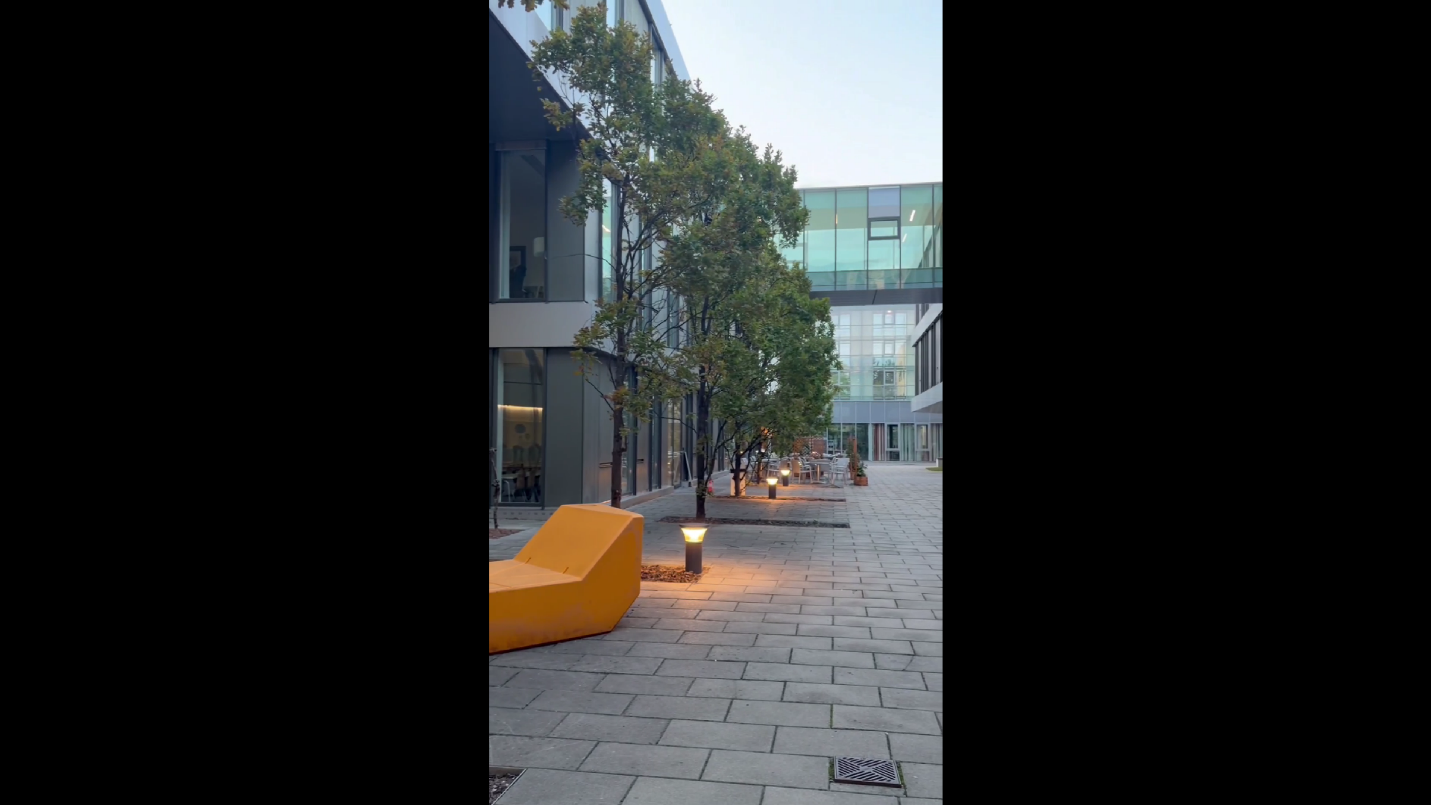
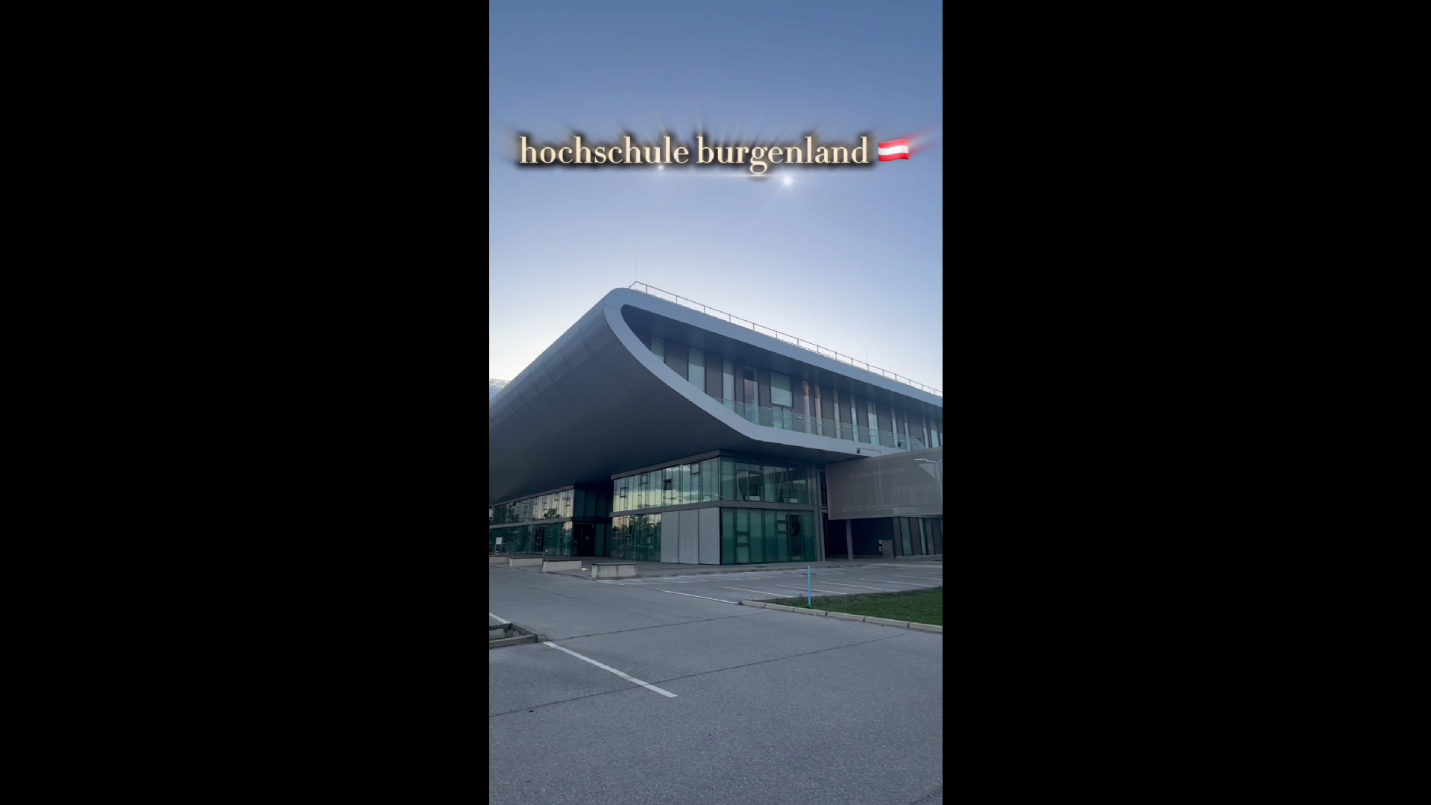
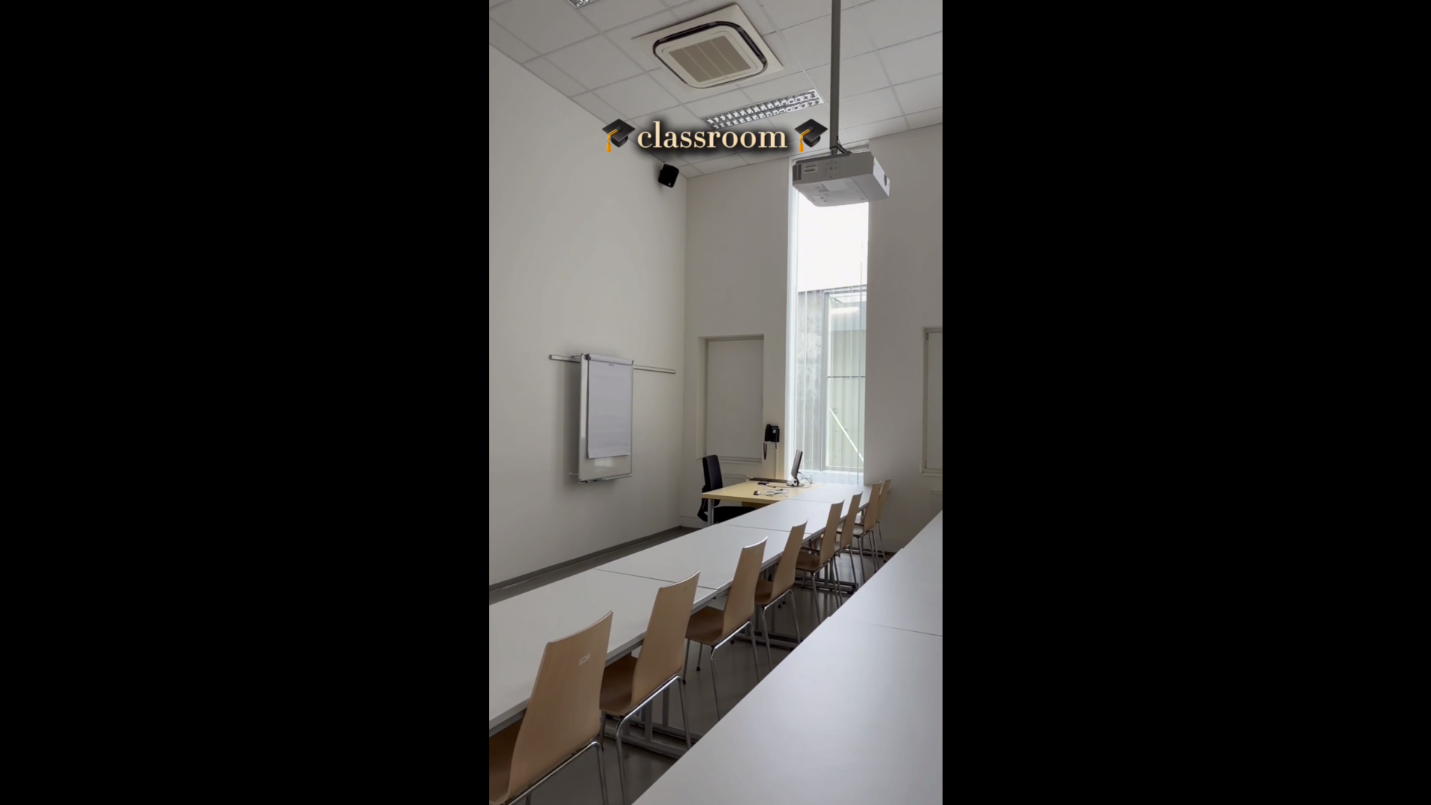
Presentation highlights: using the Hochschule Burgenland campus as an example, Anna provided a detailed overview of European standards in the organisation of higher education. She guided the audience through spacious, bright classrooms with panoramic windows, coworking areas and peaceful green courtyards. A defining feature of studying in Austria is its practical orientation: classes are structured around open discussions, real-world economic case studies and team-based business simulations involving participants from different continents.
Anna presented everyday life in the student residence situated immediately beside the academic buildings, with well-appointed rooms, a gym, a library and a large kitchen that became a venue for international culinary evenings. She also described the distinctive character of Eisenstadt, a cradle of Austrian classical music, highlighting the magnificent Esterházy Palace, the park with its pond and Leopoldine Temple, and the peaceful atmosphere that provides an ideal setting for research and personal development.
7. Maksym Popov (fourth-year student, Finance, Banking and Insurance)
Programme: Erasmus+ ICM Program.
University: University of Applied Sciences Burgenland (Hochschule Burgenland), Eisenstadt, Austria.
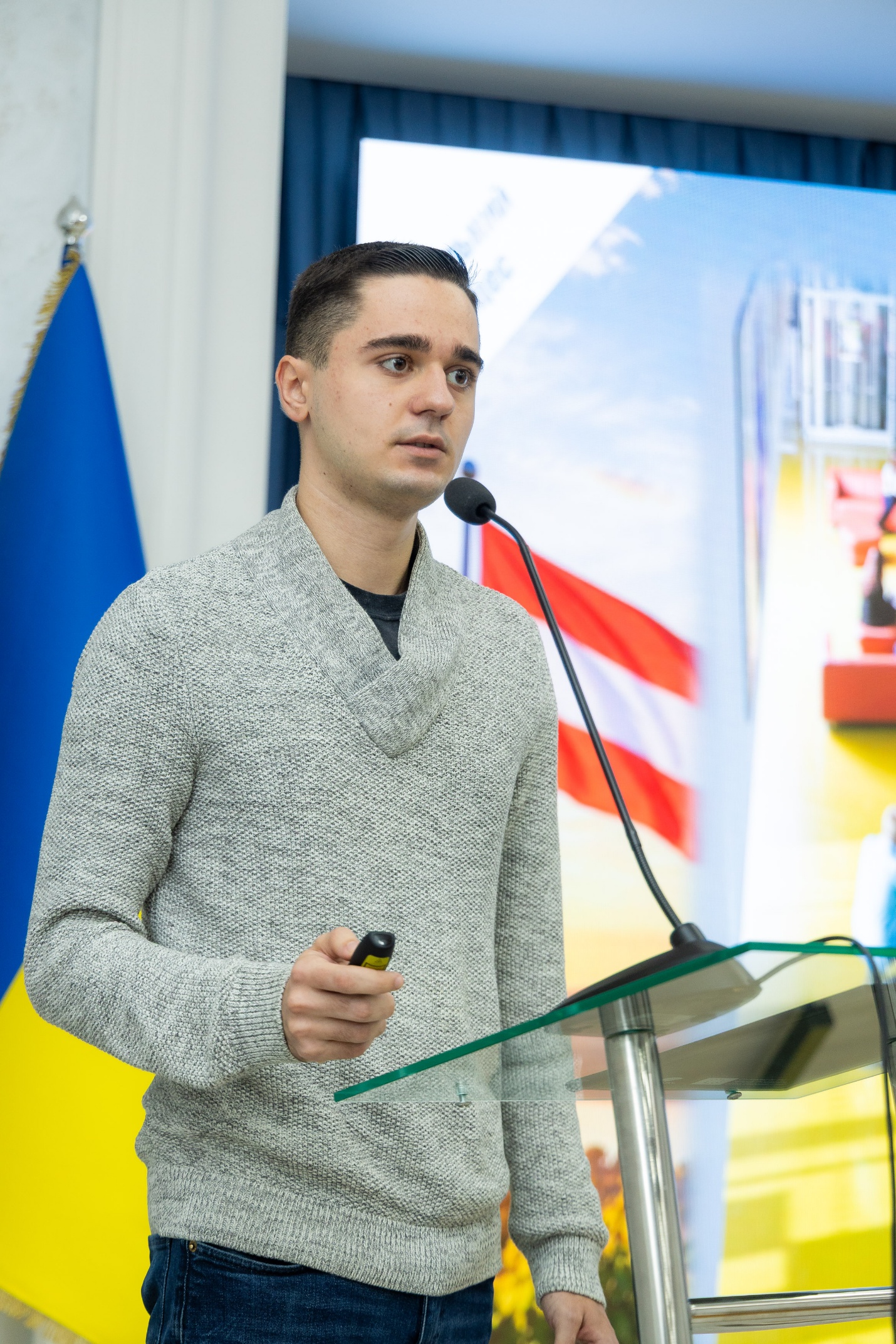
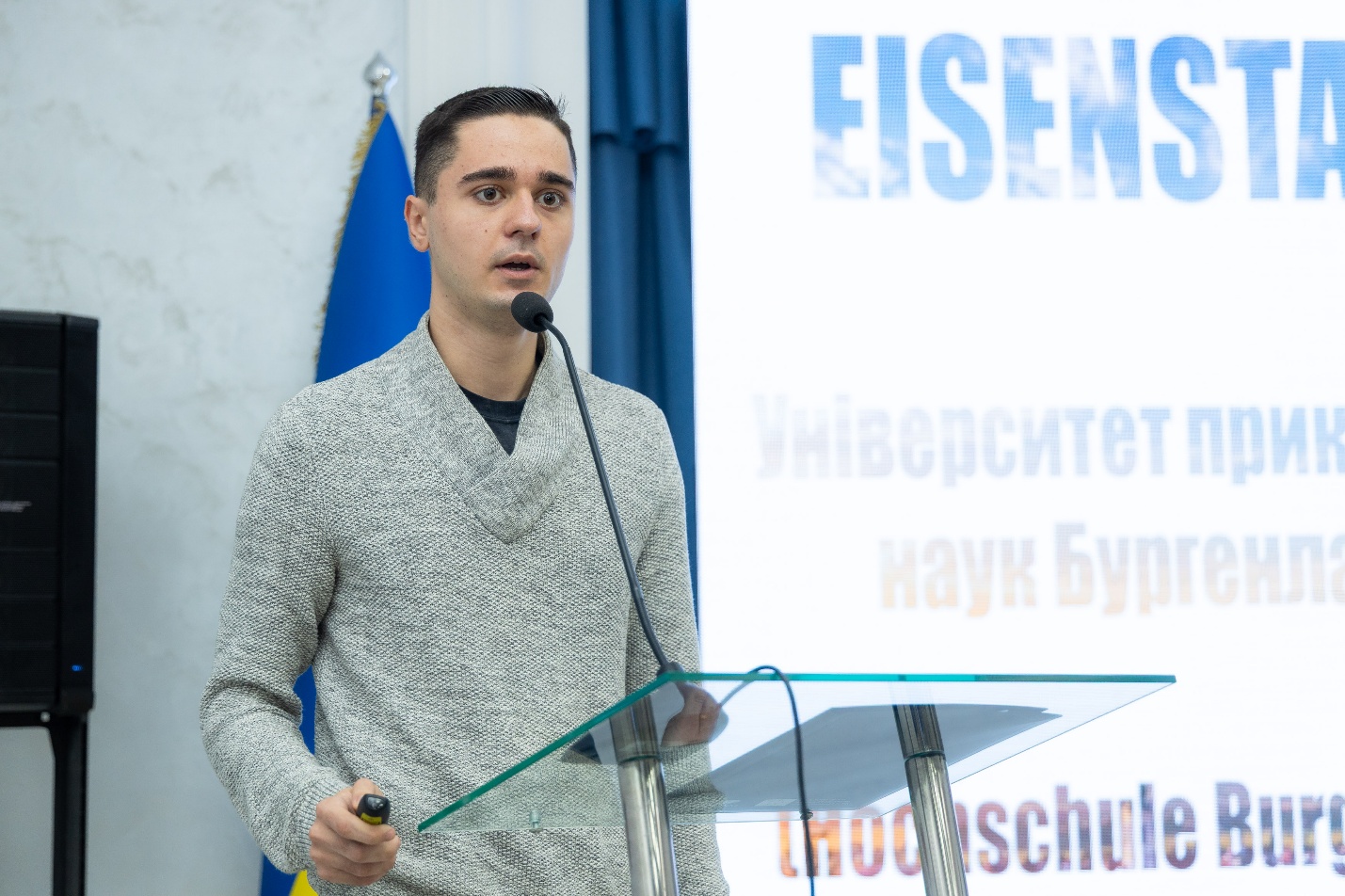
Presentation highlights: Maksym complemented the account of a semester in Austria from the perspective of a future finance professional, emphasising that the ECTS credits earned abroad are fully recognised by his home university, Poltava Polytechnic, without leaving any outstanding academic requirements. He described working in the university library with contemporary European financial databases and economics journals, which enabled him to compare regulatory policies in the EU and Ukraine.
Alongside the academic dimension, Maksym shared fond memories of intercultural adaptation, including table football tournaments, friendly picnics among picturesque Austrian vineyards and excursions to Vienna. He emphasised that spending time in the country of Haydn and Mozart broadens one’s horizons and encourages a global perspective when approaching any task.
8. Daria Shurduk (fourth-year student, Economic Cybernetics and Analytical Economics)
Programme: Erasmus+ ICM Program.
Universities: University of Applied Sciences Wiener Neustadt (FH Wiener Neustadt) and FH Burgenland, Austria.
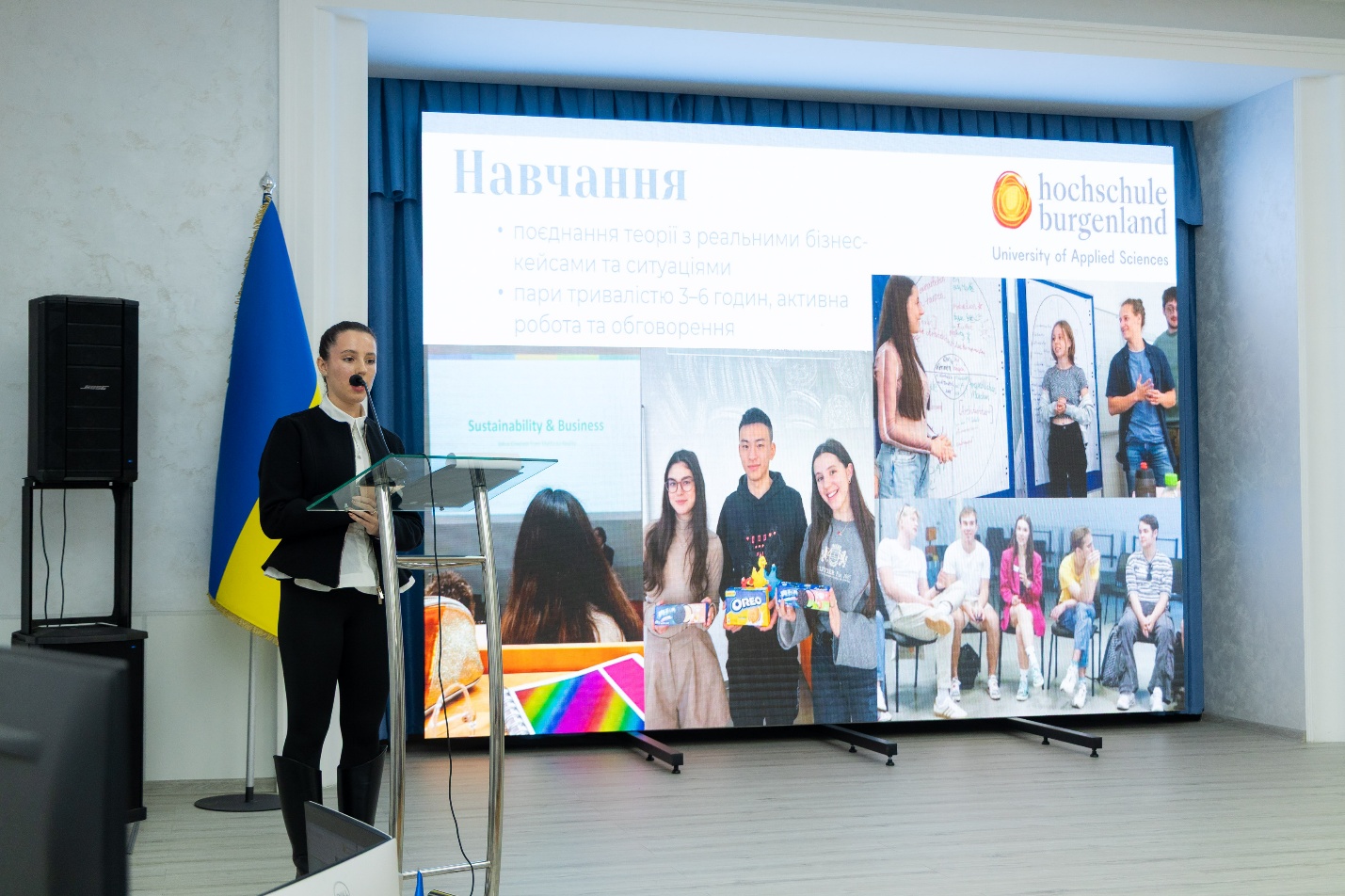
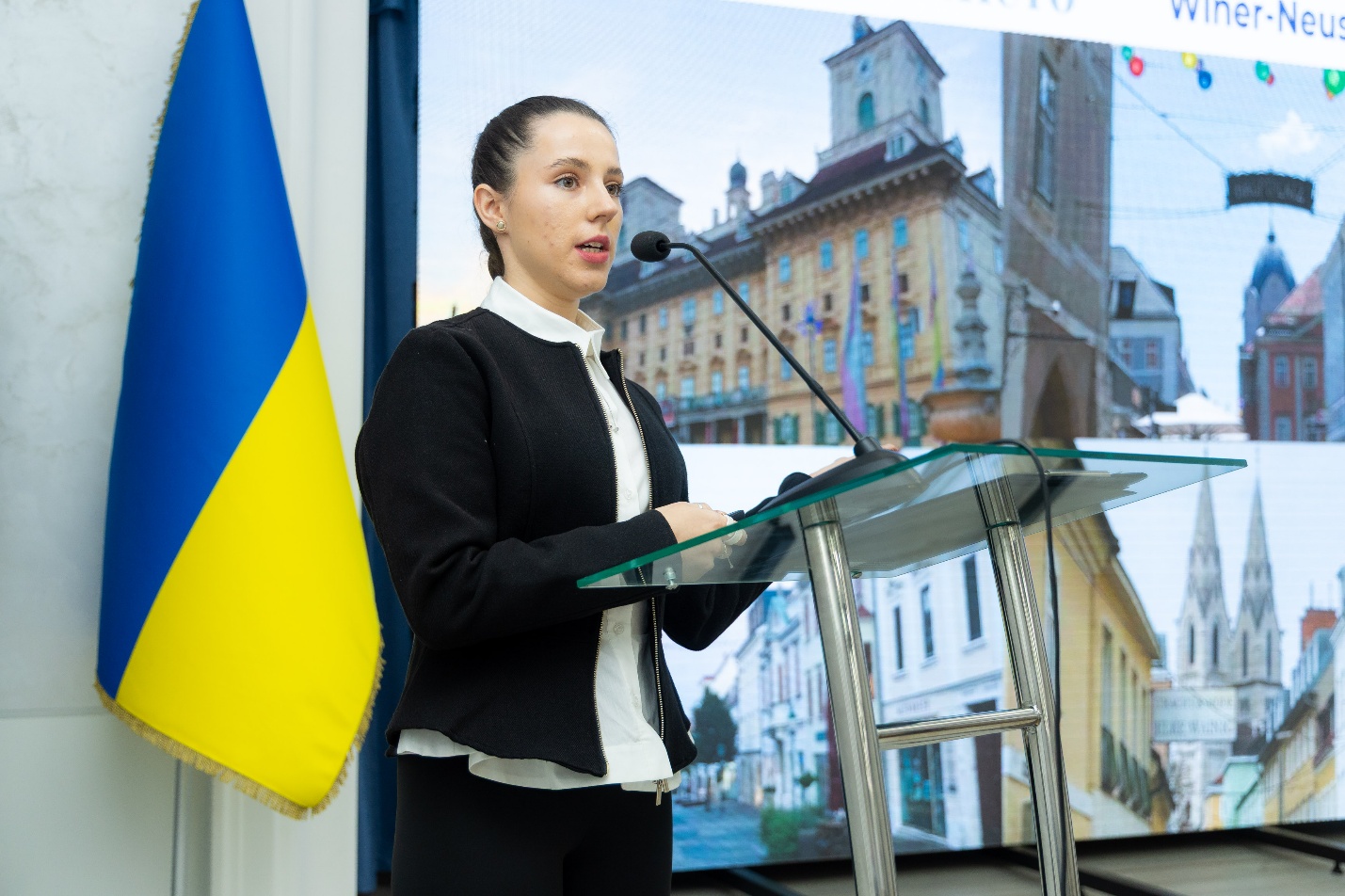
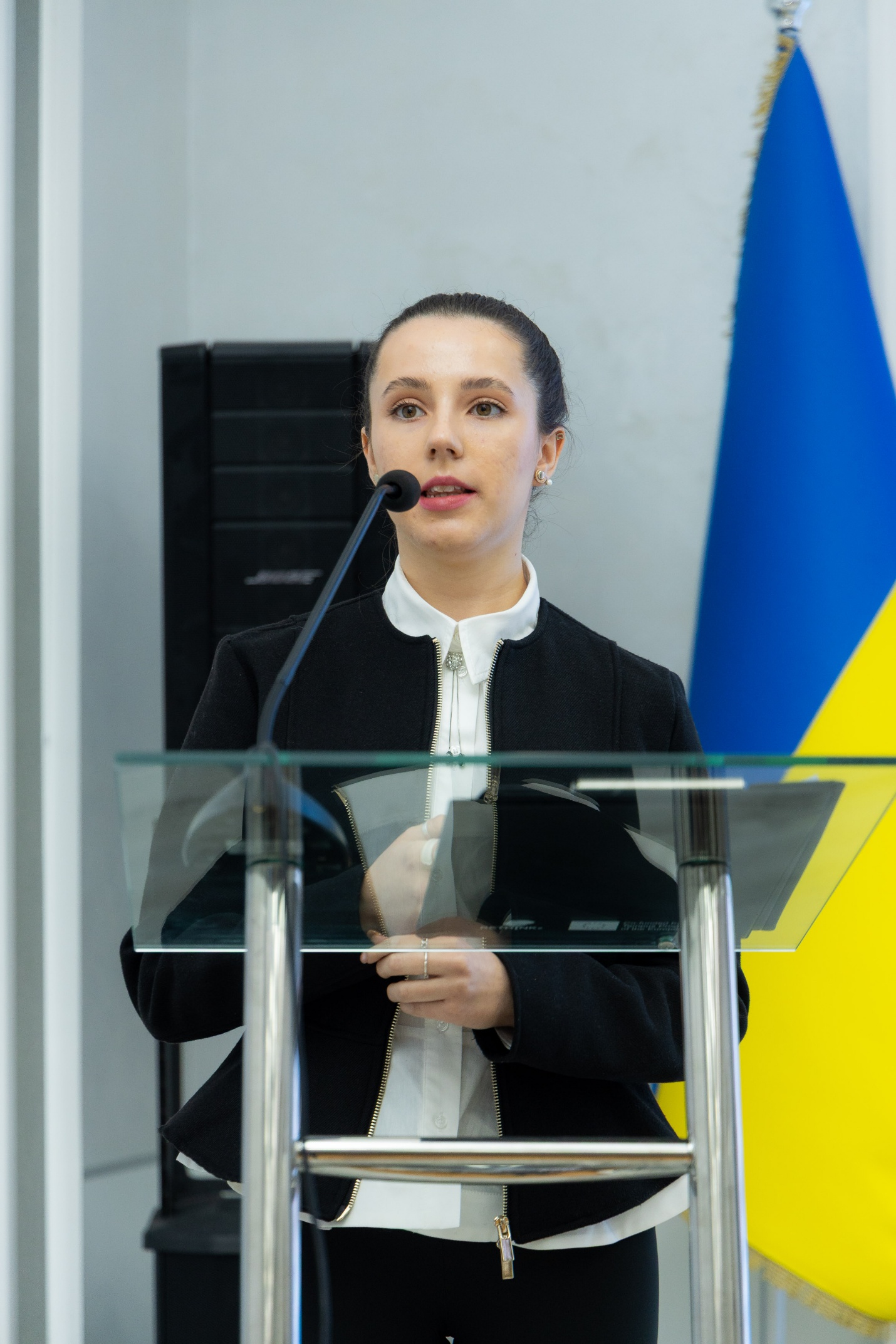
Presentation highlights: Daria compared her experience of studying at two leading Austrian universities, focusing on the dynamic atmosphere of Wiener Neustadt, located just 30 minutes by train from the Austrian capital, and the quieter setting of Eisenstadt. She described the distinctive format of university classes lasting between three and six hours, in which students explore subjects through practical simulations. These ranged from corporate social responsibility and sustainable business development strategies, using the Oreo brand as a case study, to workshops and guest lectures delivered by executives from consulting firms.
Daria spoke enthusiastically about memorable student activities, including the Cross-Cultural Workshop, which featured presentations of national dishes from different countries, an official visit to the Austrian Parliament and an adventurous white-water rafting trip on the River Salza in the Alps at Wildalpen. Her Erasmus+ grant enabled her to explore Austrian cities and destinations, including Graz, Salzburg, Hallstatt and Vienna, and to travel to Copenhagen, Venice and Milan.
9. Alina Mozul and Anna Stupar (Management and Secondary education)
Programme: Erasmus+ ICM Program.
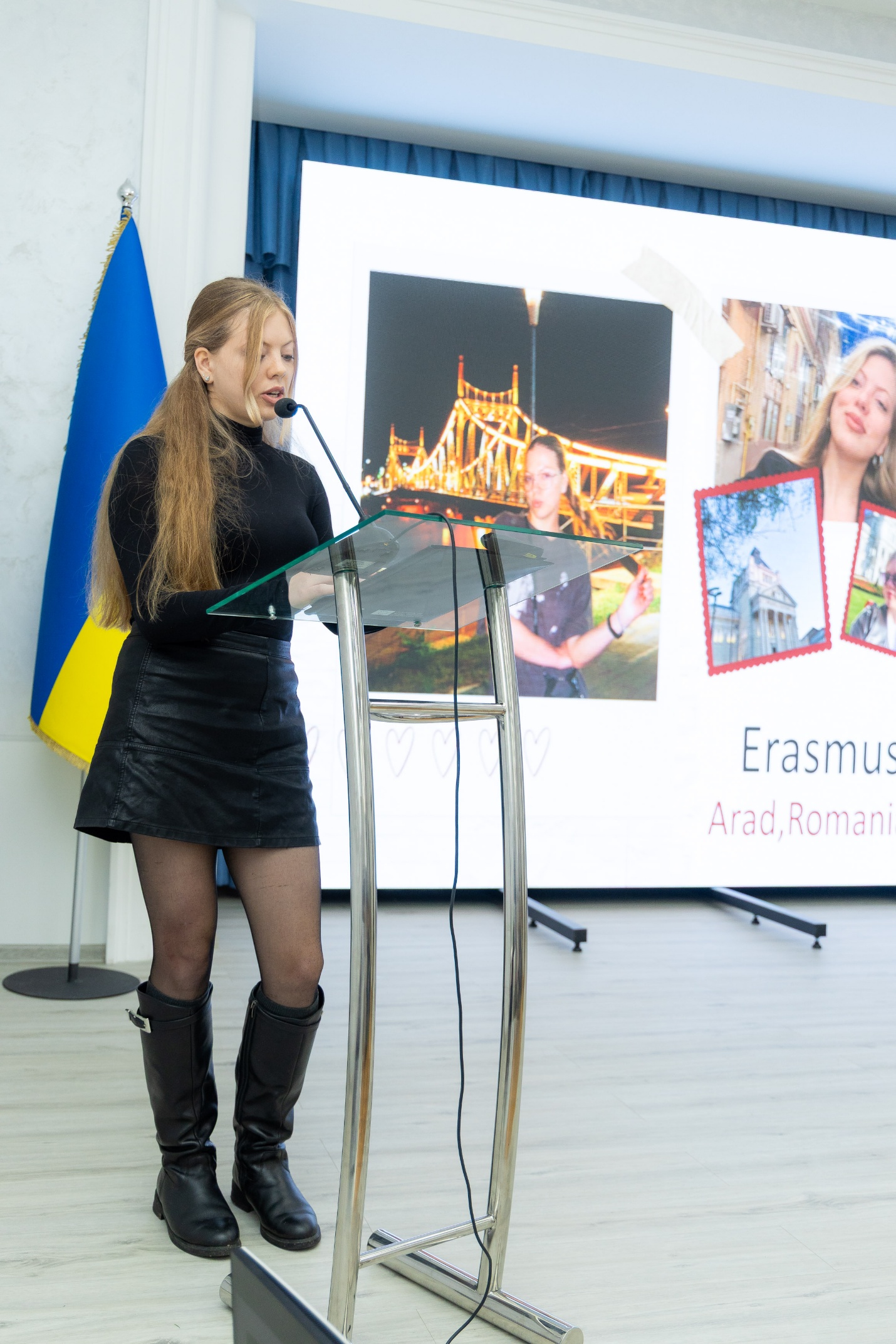
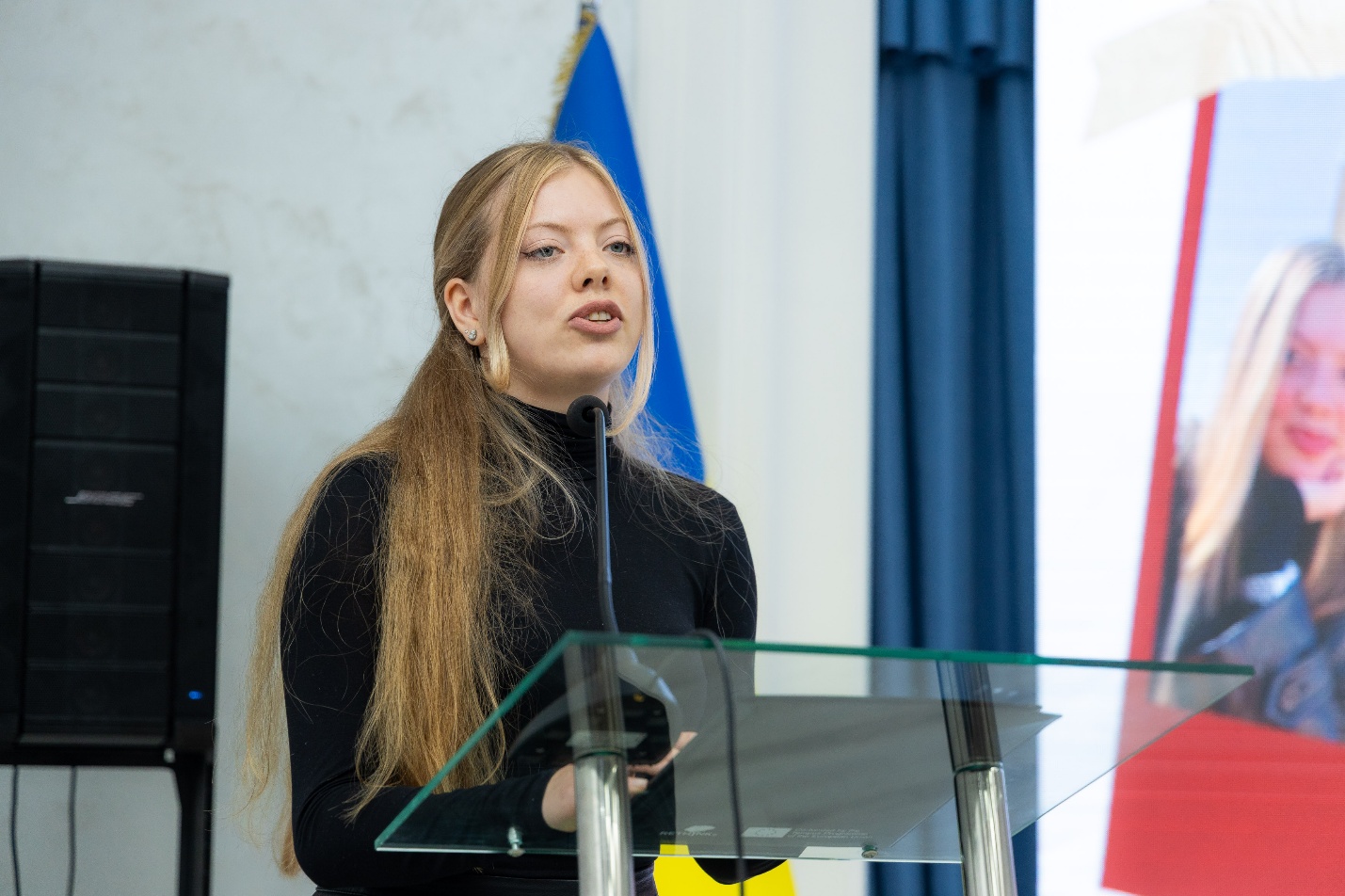
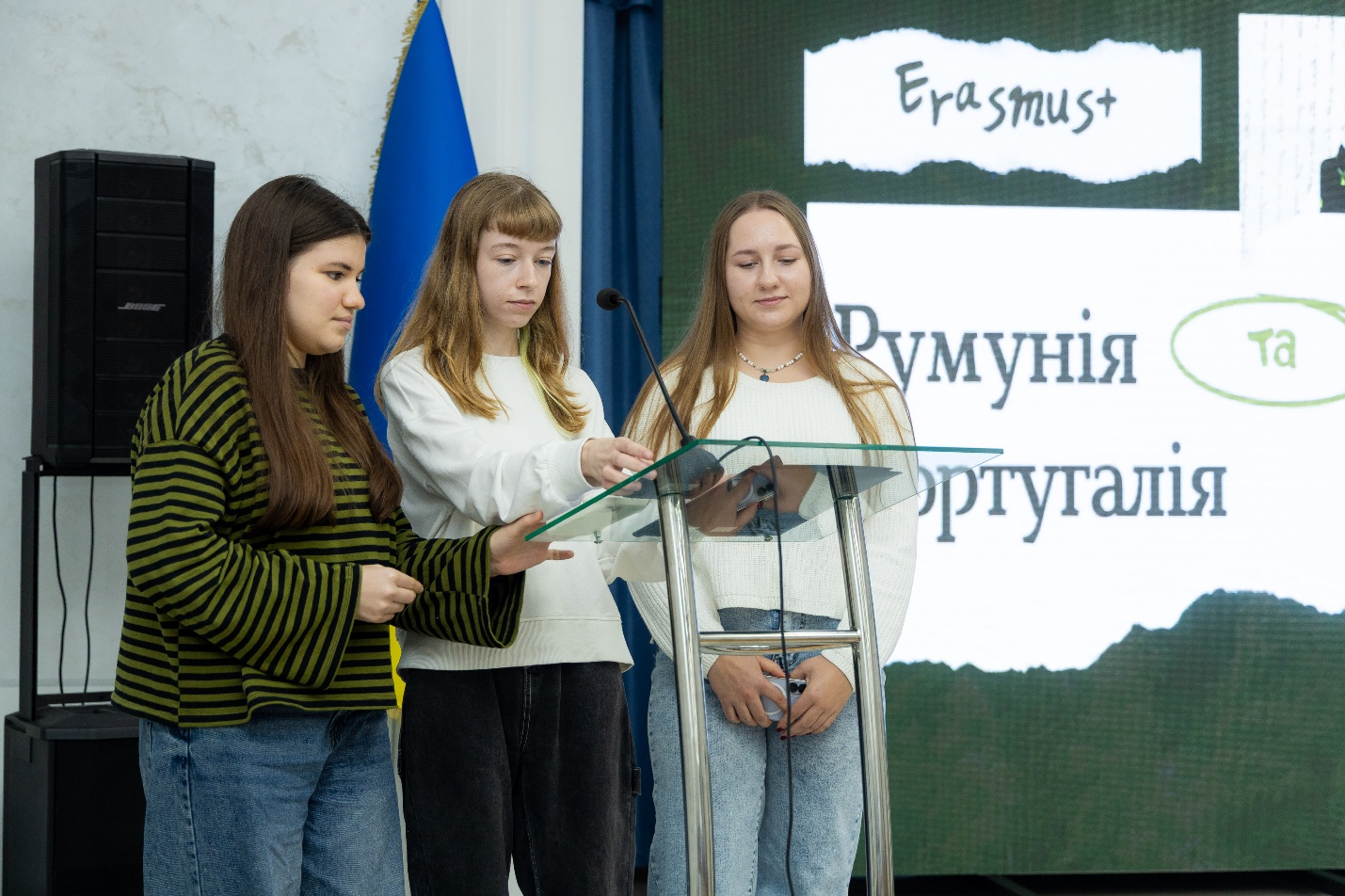
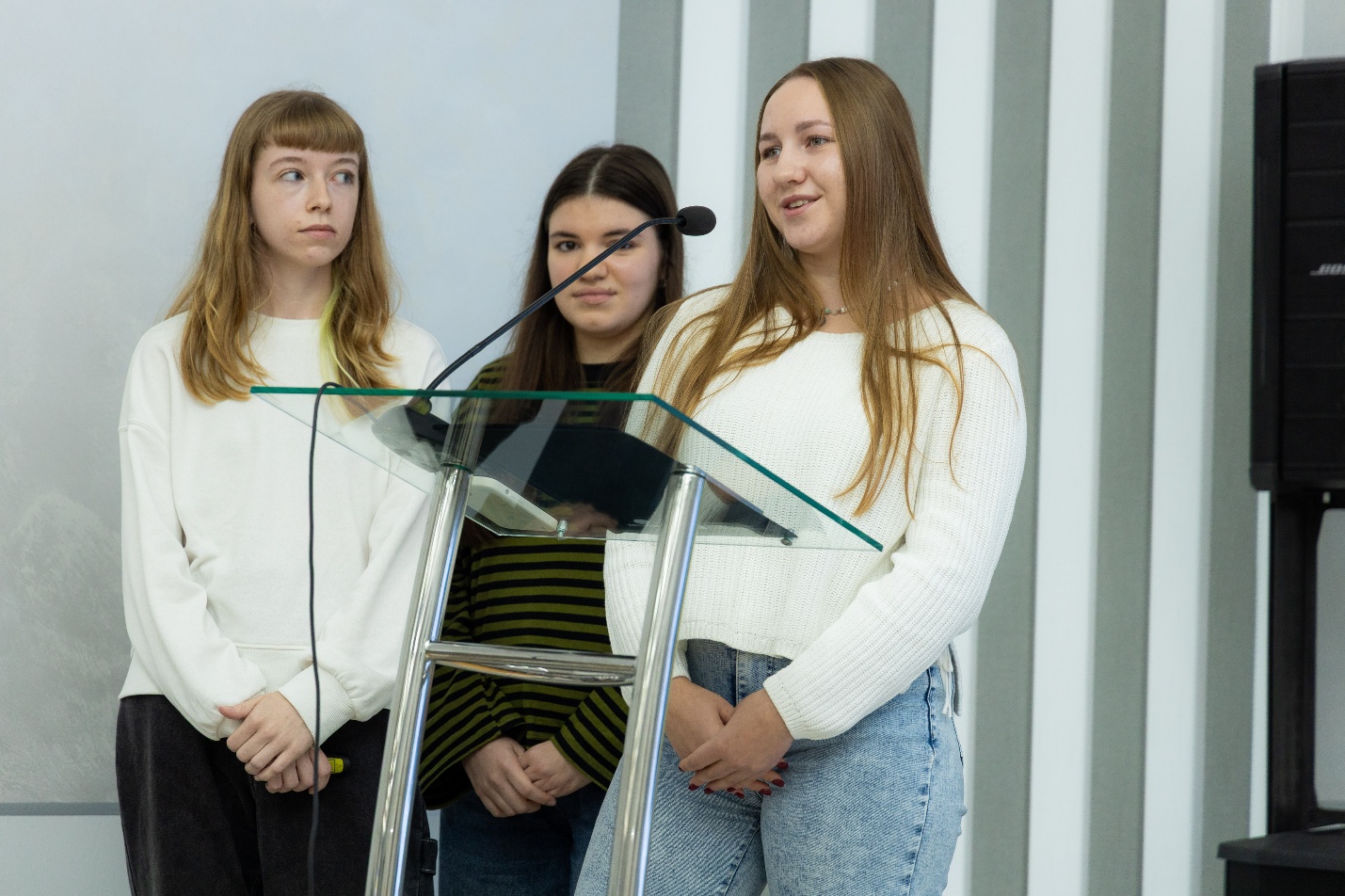
University: Aurel Vlaicu University of Arad (UAV), Romania.
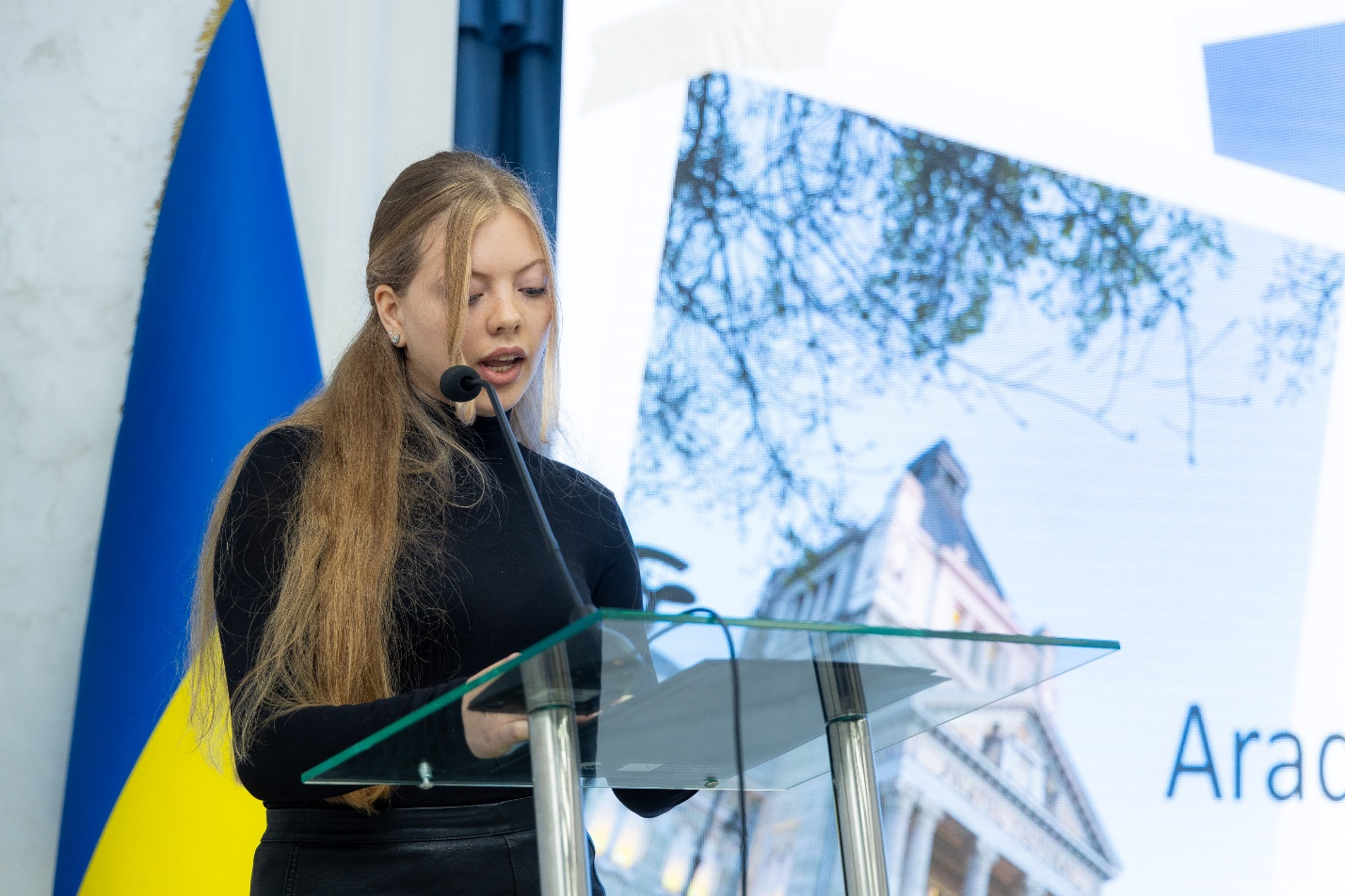
Presentation highlights: Alina Mozul energised the audience with the Romanian greeting “Bună ziua!”, demonstrating that studying abroad is an unforgettable adventure filled with opportunities to meet new people. She described modern classrooms and management lectures at UAV, formal events in the Festivitate conference hall and convenient living arrangements, including comfortable student accommodation, shared cooking evenings with other international students, billiards tournaments and evening walks along Arad’s avenues of blossoming cherry trees.
Another focus of her presentation was the vibrant atmosphere of student life. She attended spectacular car drifting shows and a major music festival featuring special effects and pyrotechnics, where Romanian pop icon INNA performed live. They also shared images of their travels through historic Romania, including the medieval Șoimoș Fortress (Cetatea Șoimoș) and trips to Timișoara, and described taking the opportunity to fly to France, where they saw the illuminated Eiffel Tower in the evening, the galleries of the Louvre and the magnificent white cliffs of Étretat on the English Channel coast in Normandy.
10. Diana Savchenko, Daria Lavrenko and Olesia Suzdaltseva (4th and 5th grade Philology students)
Programme: Two complementary experiences – Erasmus+ ICM and an internship.
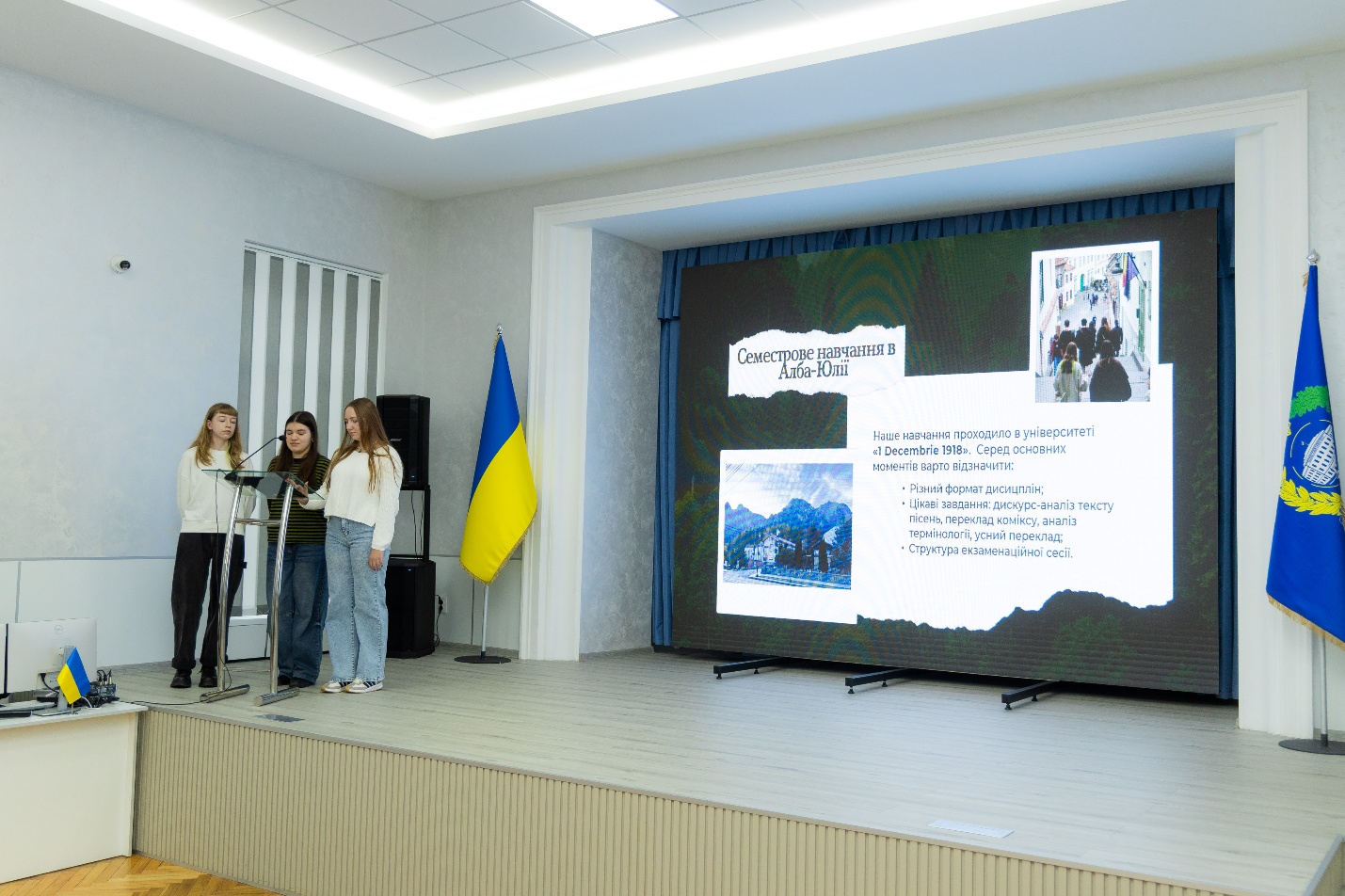
Institutions: “1 Decembrie 1918” University of Alba Iulia, Romania, and the Polytechnic Institute of Porto (ISCAP P.PORTO), Portugal.
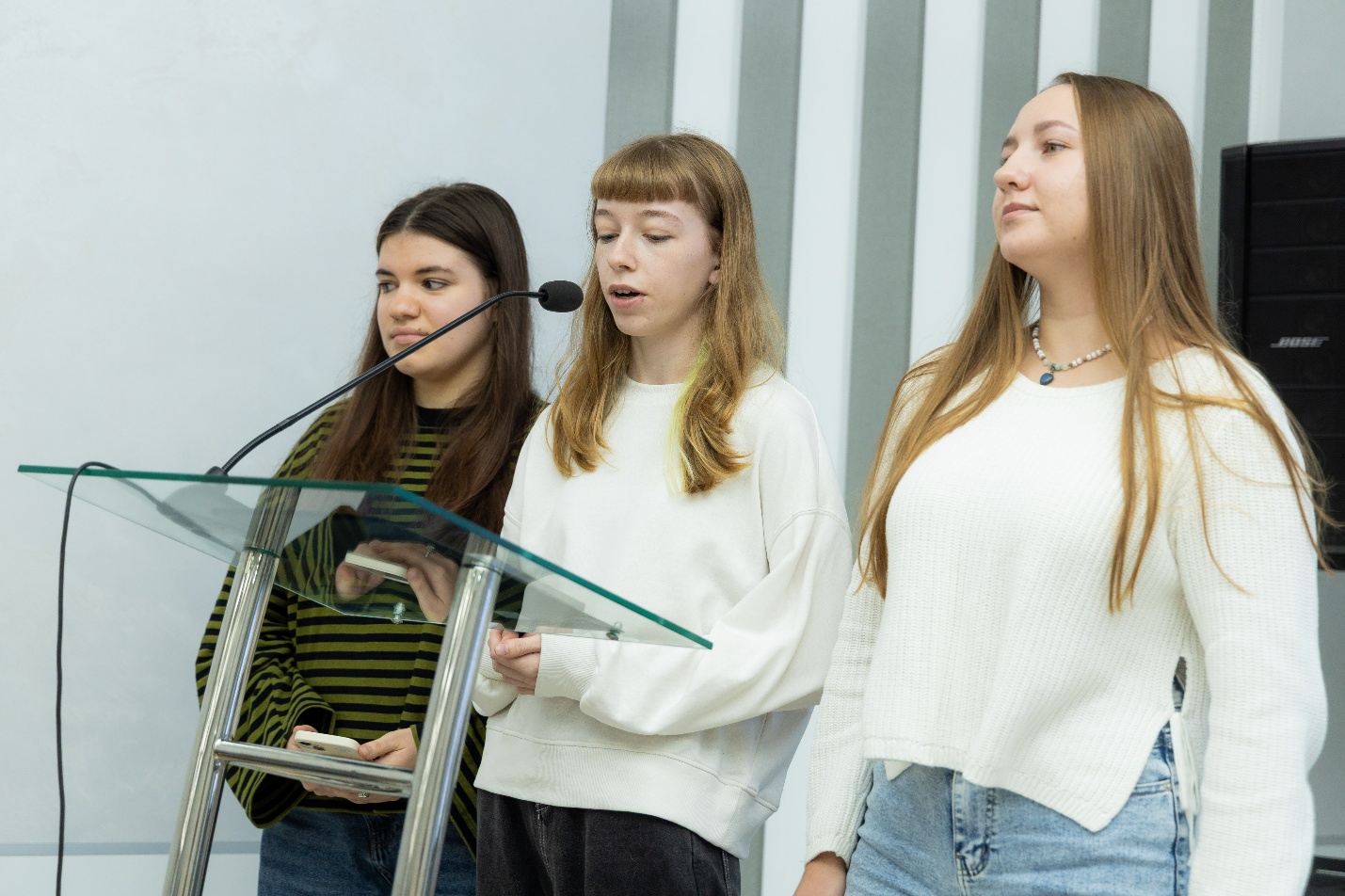
Presentation highlights: the philology students impressed the audience with their account of participating successively in two grant-funded mobility programmes during their studies at Poltava Polytechnic. Their autumn semester in the Transylvanian city of Alba Iulia was marked by unconventional philological assignments, including discourse analysis of rock song lyrics, comic book translation, work with complex legal and economic terminology, and consecutive interpreting practice. These academic activities were accompanied by experiences of Transylvanian folklore, including Halloween in Transylvania parties, excursions to Bran and Corvin Castles, a Parade of Flags and a hike up Piatra Craivii.
In spring, the students travelled to ISCAP in Portugal for a professional traineeship, where they undertook research and coordination activities. They developed an international digital database of academic publications, wrote a chapter for a jointly authored scholarly monograph and coordinated the International Week conference. The students introduced the audience to the colourful Portuguese traditions of Porto’s São João festival, during which people playfully tap one another with plastic hammers and release paper lanterns over the Atlantic, and shared photographs from their travels to Rome, Vienna, Prague and Sintra.
11. Khrystyna Natalchuk and Yelyzaveta Samoilenko (4th-year Philology student)
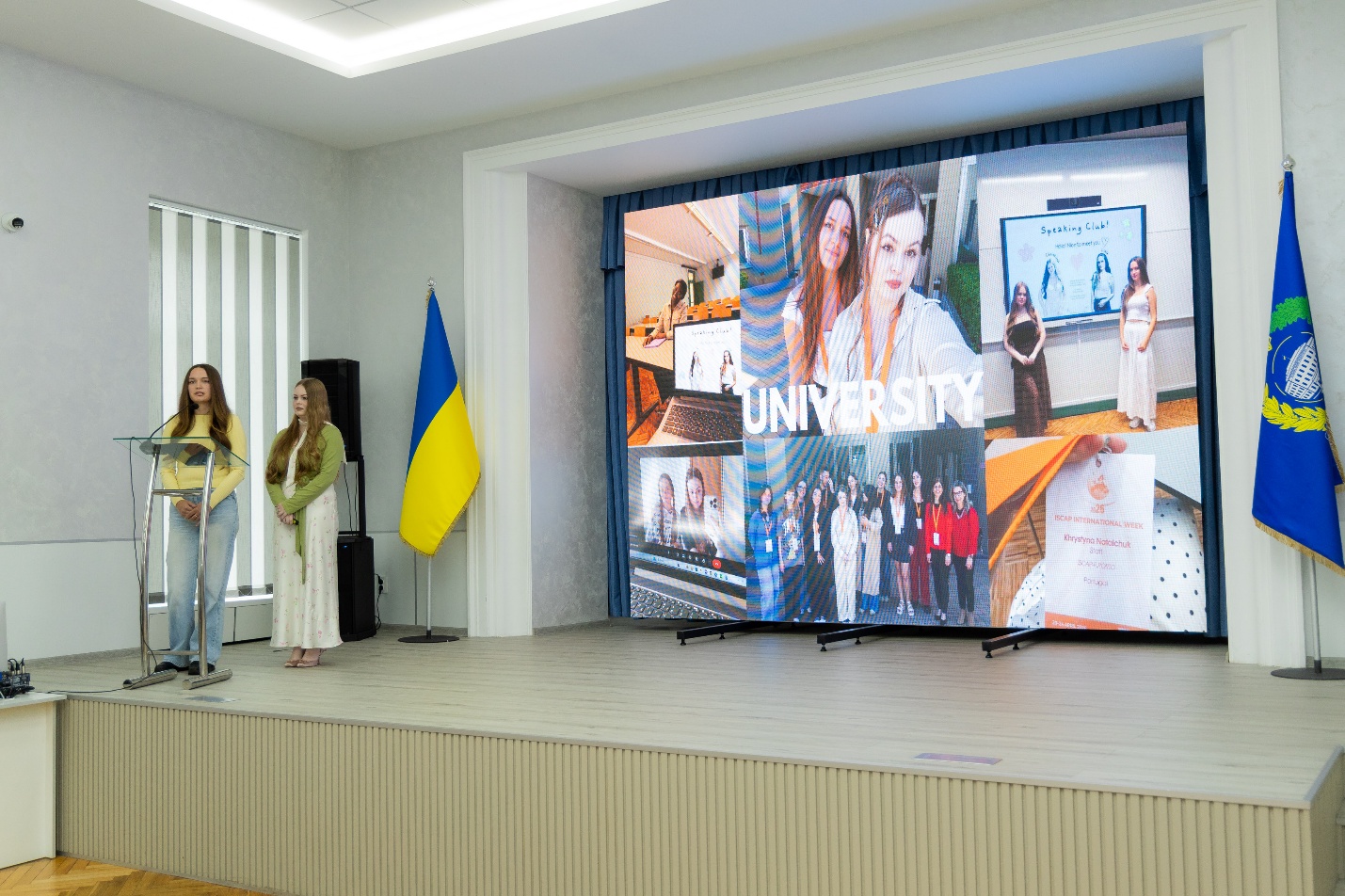
Programme: A four-month work internship in a university international office.
Institution: Institute of Accounting and Administration of the Polytechnic Institute of Porto (ISCAP – P.PORTO), Portugal.
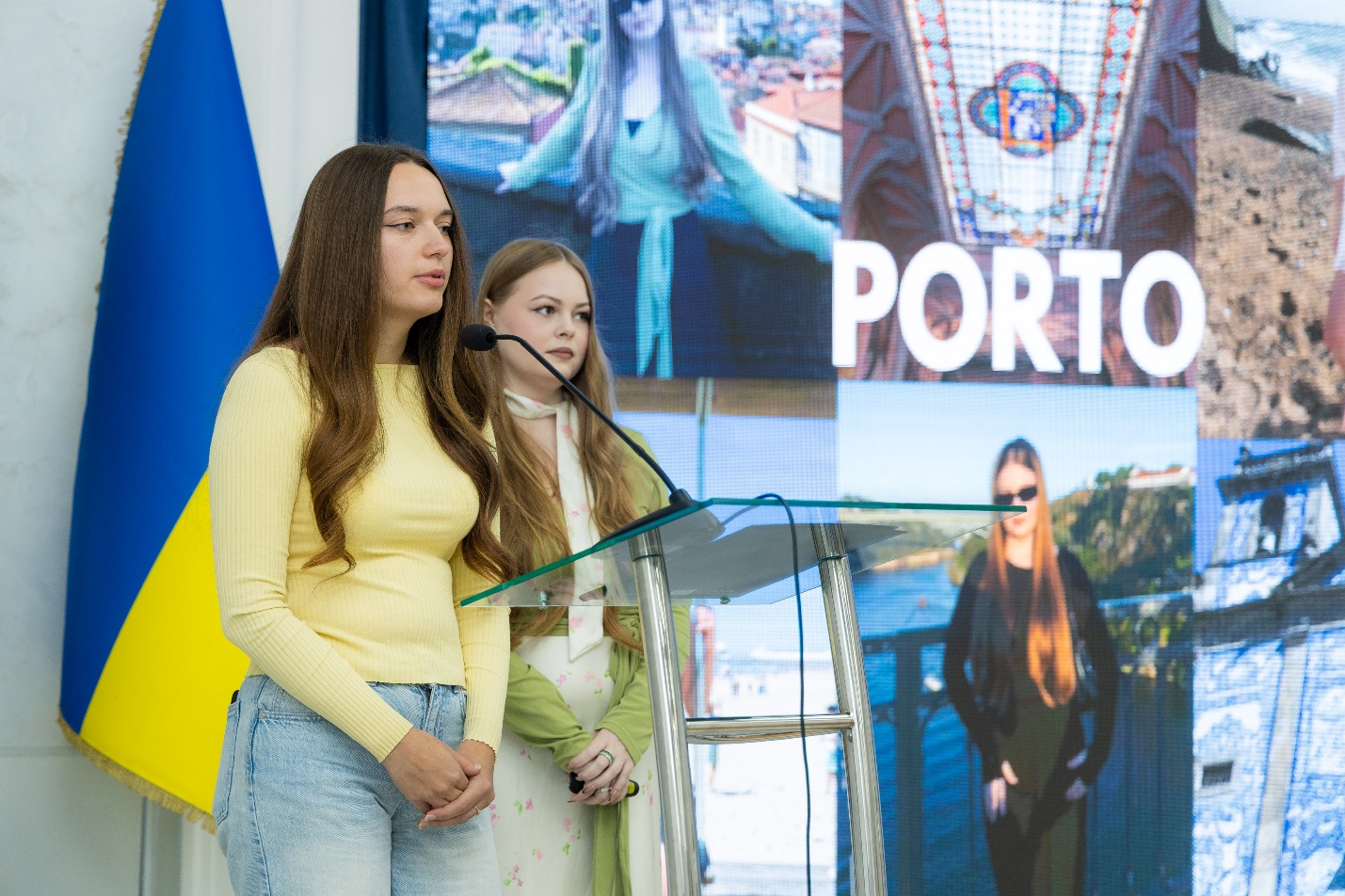
Presentation highlights: Khrystyna and Yelyzaveta demonstrated how an Erasmus+ Traineeship transforms a translator’s theoretical knowledge into advanced professional competence at an international level. Working directly in ISCAP’s International Relations Office, they helped administer the global ISCAP International Week forum, handling business correspondence and welcoming and coordinating academic delegations from more than 50 countries. They also developed and successfully ran a weekly English conversation club, “Speaking Club! Hello! Nice to meet you”, helping Portuguese lecturers and students overcome language barriers.
The students enthusiastically recalled the long-established academic celebration Queima das Fitas, during which students wear top hats decorated with ribbons in their faculty colours and tap them with canes to wish one another a successful career. In addition to walking along the River Douro in Porto, admiring azulejo tiles and tasting octopus dishes, the students used their European grant support to travel to Lisbon and Sintra, including Cape Cabo da Roca, and fly to Madeira, where they explored volcanic black-sand beaches, ocean cliffs and Monte’s tropical botanical gardens with pink flamingos.
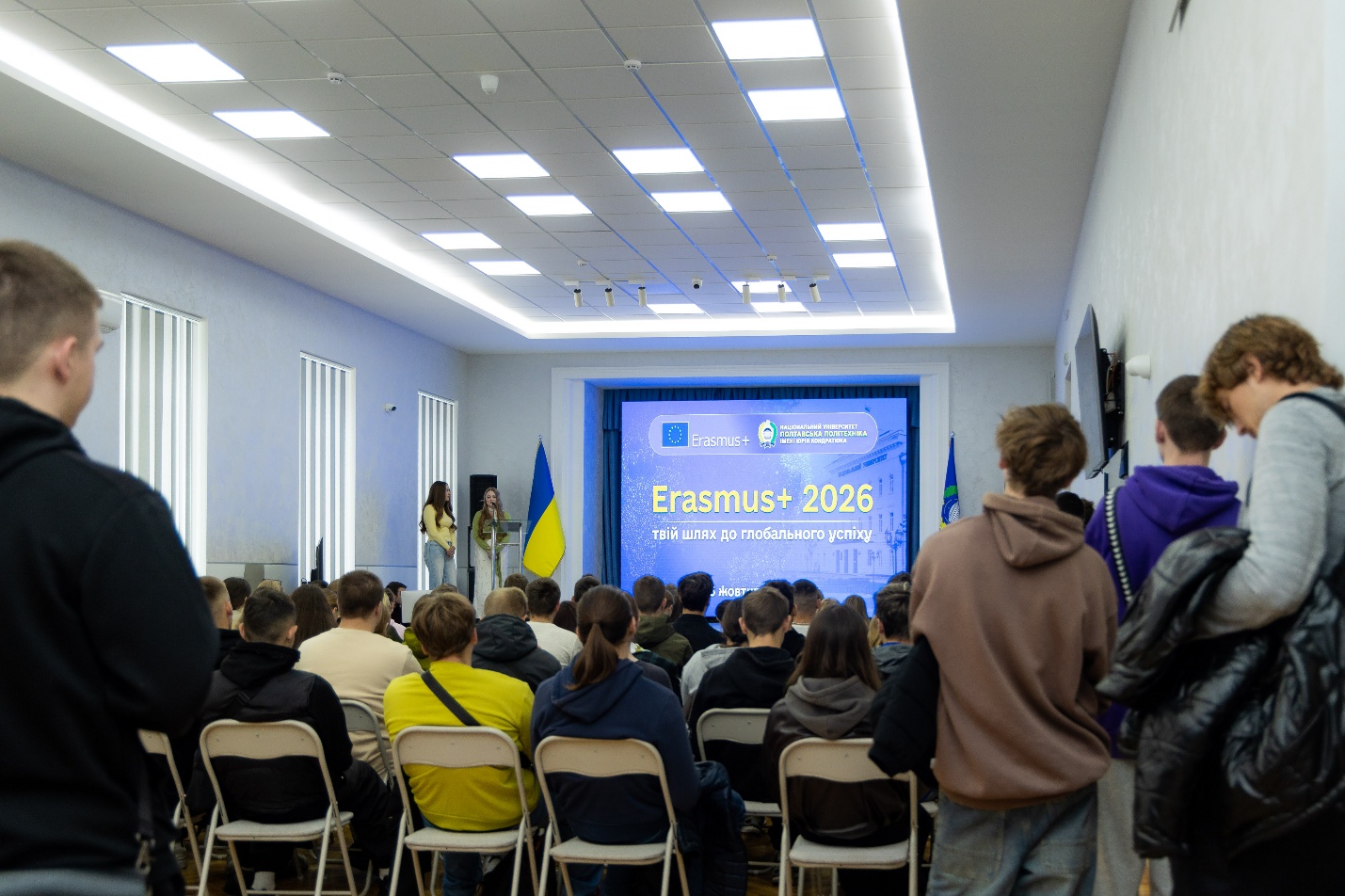
“International academic mobility at Poltava Polytechnic ceased to be an unattainable dream long ago. Today, it is an established, accessible and fully transparent pathway to social advancement for every one of our students. Look at our speakers: they represent a remarkably wide range of disciplines, from philology and management to architecture, economics and geodesy. Each of them once simply believed in themselves, came to the International Relations Office and completed an application form. Do not be afraid to step outside your comfort zone! Discover the world, learn languages and undertake placements in Europe’s leading laboratories, because the unique European experience, contacts and global outlook that you bring home will become your principal contribution to building a strong, progressive and European Ukraine!” – says Anna Pavelieva, International Relations Coordinator at Poltava Polytechnic.
How Can You Participate in Erasmus+ Programmes?
Students, doctoral students and academic staff at Poltava Polytechnic have opportunities to study, teach and undertake traineeships through Erasmus+ mobility programmes at leading partner universities in Austria, Denmark, Estonia, Spain, Italy, Latvia, Lithuania, the Netherlands, Germany, Norway, Poland, Romania, Slovakia, Finland, Czechia and other countries.
Current calls for grant applications are regularly updated on the university’s official international cooperation portal:
Individual consultations on participation, document preparation and language testing are available from Poltava Polytechnic’s International Relations Office:
Room 213-Ц (Main Building)
Email: interoffice@nupp.edu.ua
International Relations Coordinator: Anna Pavelieva, PhD in Philology, Associate Professor (+38 (095) 91-08-192).