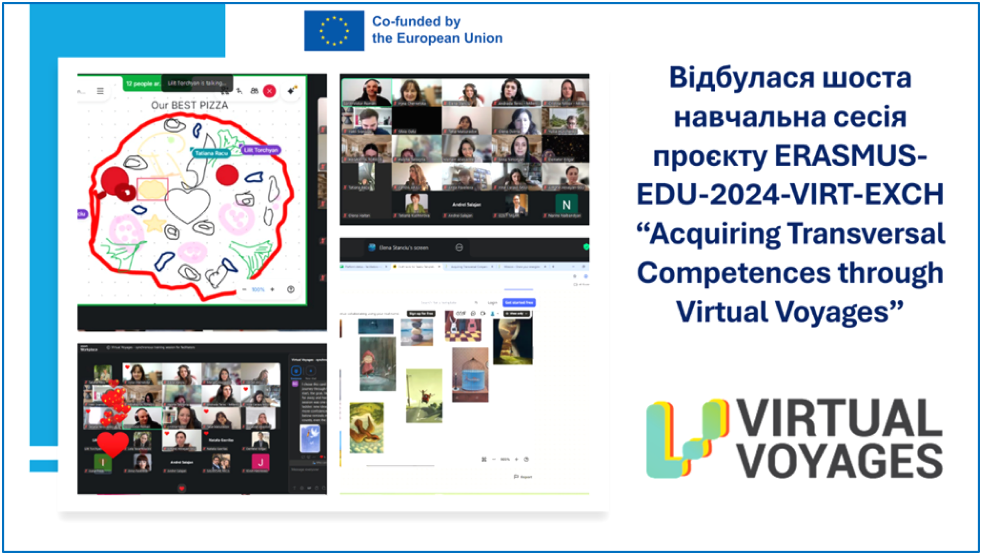
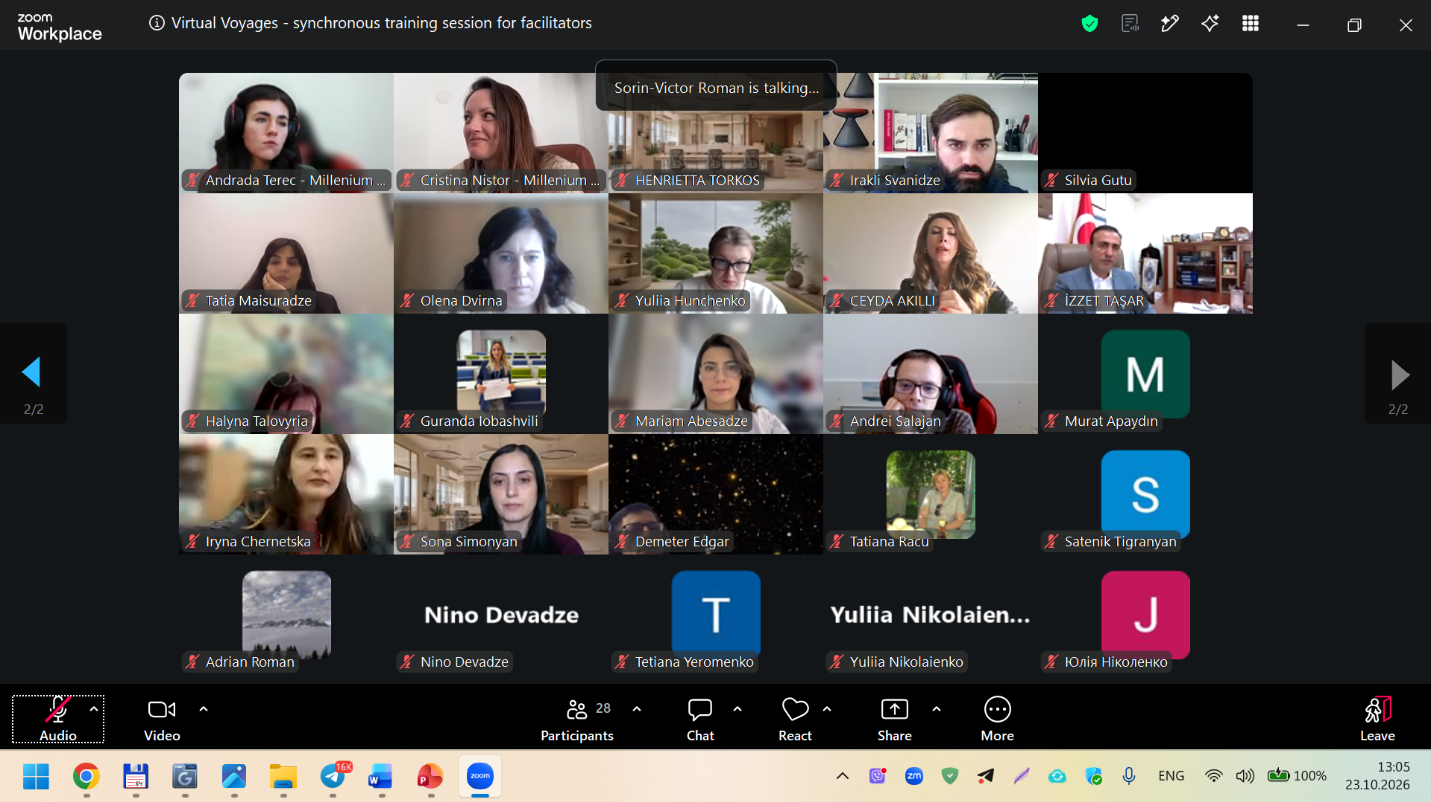
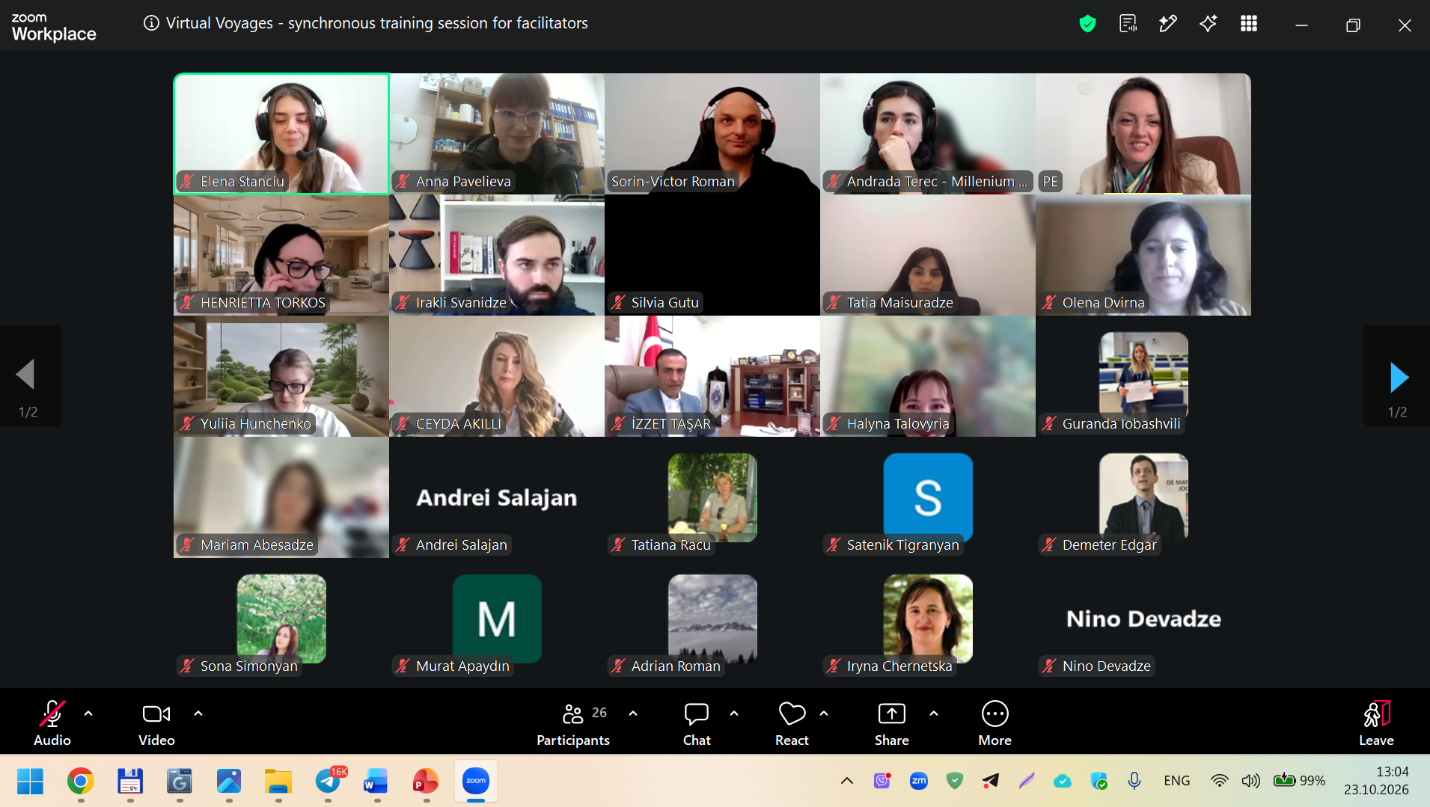
On October 23, 2026, the sixth and final online training session for lecturer-facilitators was held within the framework of the large-scale international Erasmus+ project under the “Virtual Exchanges in Higher Education and Youth” strand – “Acquiring Transversal Competences through Virtual Voyages” (call ID ERASMUS-EDU-2024-VIRT-EXCH, project No. 101193593), implemented with the comprehensive financial support of the European Union.
The international project consortium, bringing together leading educational institutions and expert organisations from seven countries worldwide, is coordinated by the “Aurel Vlaicu” University of Arad (Romania). The partnership network comprises esteemed institutions, including the Millennium Centre and the consulting company Predict CSD Consulting (Romania), IUL Online University (Italy), Fırat University (Türkiye), Moldova State University, Caucasus University and Shota Rustaveli Batumi State University (Georgia), Gavar State University (Armenia), as well as National University “Yuri Kondratyuk Poltava Polytechnic”, which represents Ukrainian higher education within this distinguished academic alliance.
The session aimed to review the practical toolkit of the “Career Box” module and jointly develop the methodological framework for the final student project focused on building the personal brand of future professionals.
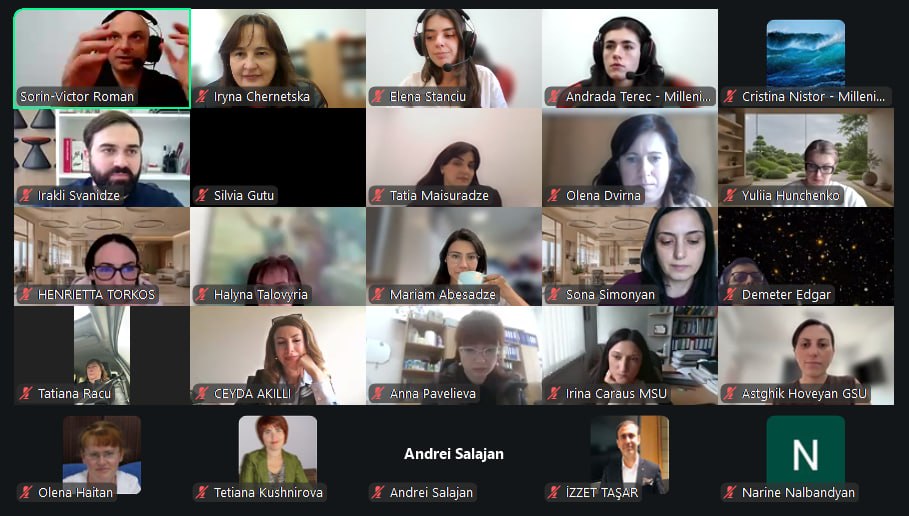
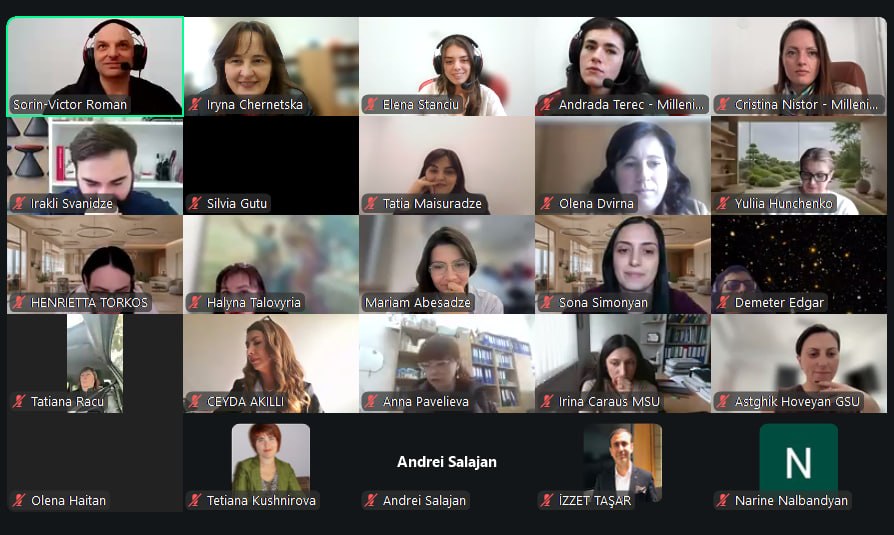
The event was attended by 13 lecturers from the interdisciplinary team of Poltava Polytechnic:
• Olena Haytan – Senior Lecturer at the Department of Computer and Information Technologies and Systems of the Educational and Research Institute of Information Technologies and Robotics;
• Yuliia Hunchenko – Senior Lecturer at the Department of General Linguistics and Foreign Languages of the Faculty of Philology, Psychology and Pedagogy;
• Olena Dvirna – PhD in Physics and Mathematics, Associate Professor at the Department of Computer and Information Technologies and Systems of the Educational and Research Institute of Information Technologies and Robotics;
• Tetiana Yeromenko – Lecturer at the Department of General Linguistics and Foreign Languages of the Faculty of Philology, Psychology and Pedagogy;
• Oleksandra Kuzmenko – PhD in Economics, Associate Professor at the Department of Computer and Information Technologies and Systems of the Educational and Research Institute of Information Technologies and Robotics;
• Tetiana Kushnirova – Doctor of Philological Sciences, Professor at the Department of Germanic Philology and Translation of the Faculty of Philology, Psychology and Pedagogy;
• Olena Martus – Assistant at the Department of Oil and Gas Engineering and Technologies of the Educational and Research Institute of Oil and Gas and Energy;
• Maryna Moskalenko – Lecturer at the Department of General Linguistics and Foreign Languages;
• Yuliia Nikolaienko – PhD in Pedagogical Sciences, Associate Professor at the Department of Germanic Philology and Translation of the Faculty of Philology, Psychology and Pedagogy;
• Yuliia Nikolenko – Assistant at the Department of General Linguistics and Foreign Languages of the Faculty of Philology, Psychology and Pedagogy;
• Anna Pavelieva – PhD in Philological Sciences, Acting Vice-Rector for Academic and Pedagogical Work, International Relations and Cooperation;
• Halyna Talovyria – PhD in Pedagogical Sciences, Associate Professor at the Department of General Linguistics and Foreign Languages of the Faculty of Philology, Psychology and Pedagogy;
• Iryna Chernetska – PhD in Technical Sciences, Associate Professor at the Department of Heat and Gas Supply, Ventilation and Heat Power Engineering of the Educational and Research Institute of Oil and Gas and Energy.
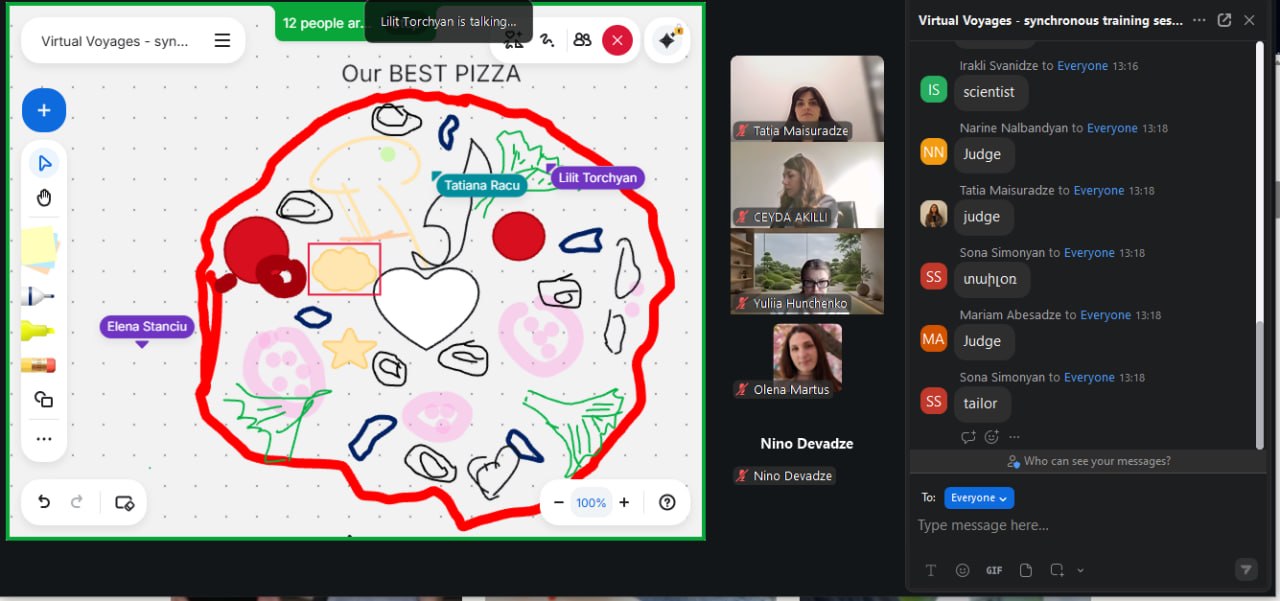
The practical work began with a dynamic, interactive energiser led by coordinator Sorin-Victor Roman, directly related to career guidance and the “Career Box” module content. The task entailed simulating a classic game of charades via digital communication channels: the lead participant received the title of a specific profession – such as farmer, plumber, football referee, detective, or judge – via private message and was expected to convey the essence of this occupation to colleagues exclusively using gestures, facial expressions, and body movements, without making any sounds or using props. The remaining participants were tasked with promptly guessing the profession in the conference chat, sparking an engaging, friendly competition based on quick responsiveness. This activity not only fostered authentic team cohesion but also showed educators that student engagement can be maintained without sophisticated software, relying instead on fundamental non-verbal communication techniques.
A natural progression from this warm-up was to address the methodological and technical barriers instructors highlighted during earlier training sessions. Project coordinator Elena Stanciu highlighted the apprehension of technical overload common among educators, where a facilitator must simultaneously maintain audience contact, switch between screen sharing, generate survey links, and monitor the chat stream. To reduce this psychological hesitation through hands-on practice, we divided participants into three international breakout rooms of 10 to 11 people each. Each participant had ten minutes to design a three-minute warm-up exercise and then test it with colleagues while acting as the session moderator.
In the breakout rooms, the educators simulated a full range of facilitation scenarios, using digital platforms such as Mentimeter and Kahoot with QR codes and PINs, as well as original verbal icebreakers for rapid introductions and emotional decompression. Colleagues actively supported one another during public presentations, shared time-management recommendations, and tested technical tools within tight timeframes. The return to the main plenary room included a collective mood check: on a five-point scale, virtually all participants reported an increase in energy from an initial three to a solid five. The group agreed to systematise and upload all newly developed individual exercises to a designated section of the educational platform, creating an open database of interactive activities for use during forthcoming youth exchanges.
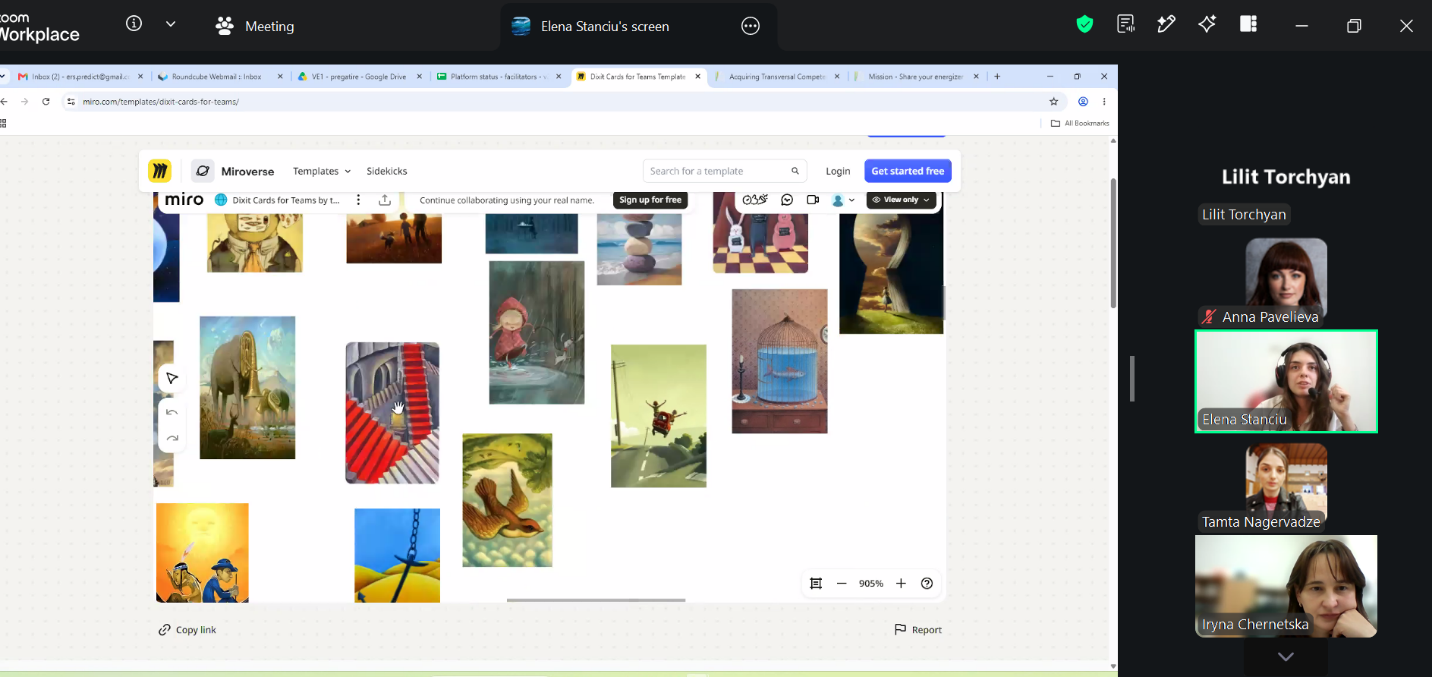
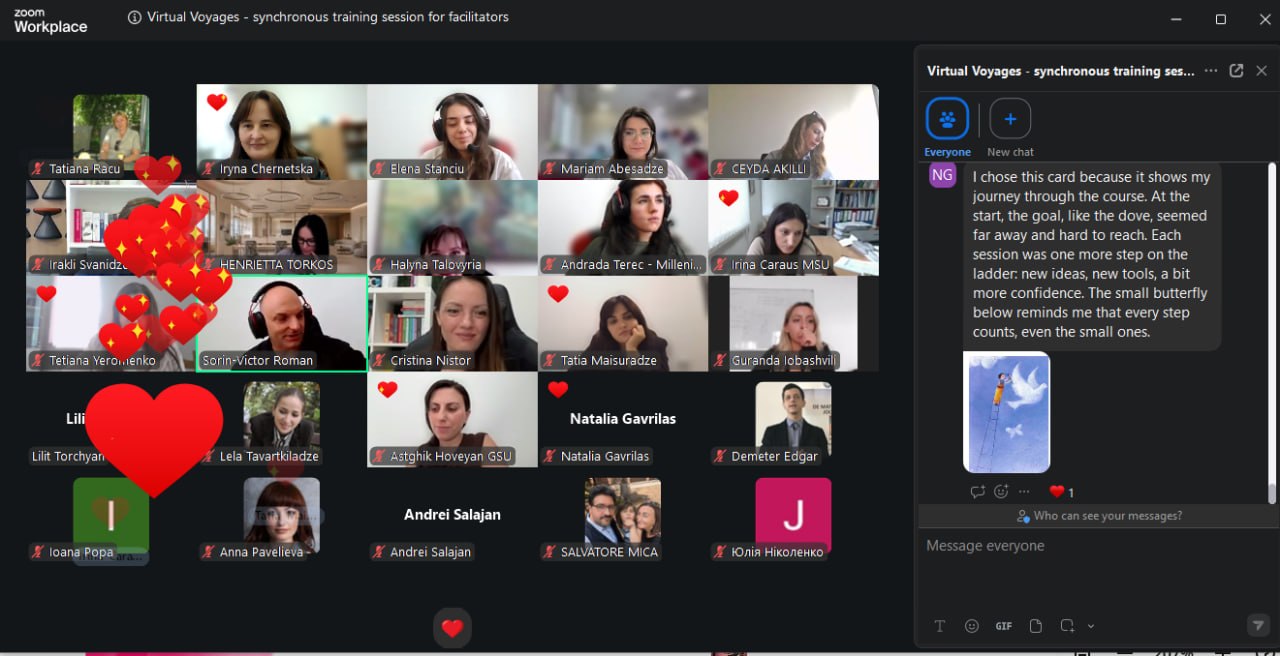
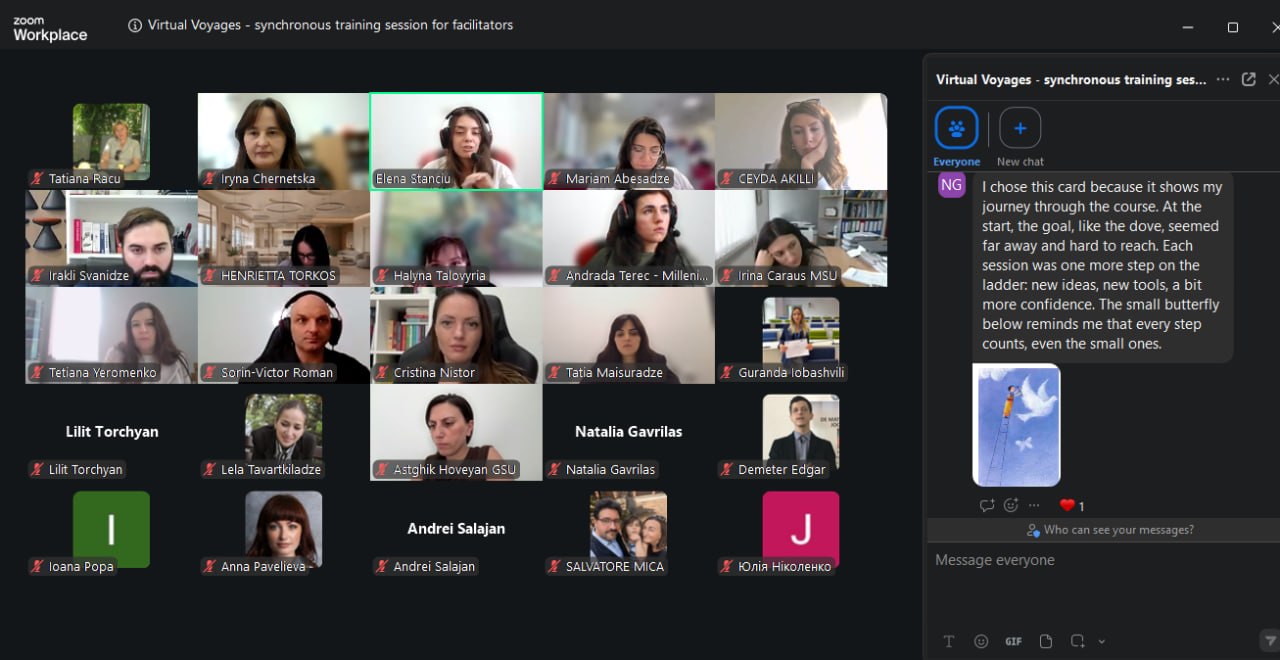
A particularly insightful and profound segment of the meeting focused on mastering non-linear reflection tools through the virtual integration of the renowned board game “Dixit”. The coordinators shared a link to an interactive board featuring a gallery of surreal and abstract art cards, inviting each educator to select a visual metaphor that best embodied their personal journey and achievements throughout the training course. This approach moved beyond formulaic responses, encouraged imaginative and critical thinking, and revealed each educator’s unique perception of their transformation into an internationally certified facilitator.
As they elaborated on their chosen visual imagery, participants shared deep pedagogical reflections that reaffirmed the project’s immense value for their professional development. For instance, the image of a young woman holding keys against a red background evoked the meticulous process of searching for answers and code words while completing assignments on the learning platform, where each error necessitated revisiting and reconsidering the material. Cards depicting stairways and arches served as an allegory for lifelong learning and personal progress, reminding us that true growth lies not in abstract perfection, but in steady daily advancement and overcoming internal doubts with mentors' reliable support. The image of a tree taking root through stones against the backdrop of an endless sea was interpreted as a symbol of adaptability, resilience, and balance amidst ongoing challenges, while a blindfolded figure standing beside a peacock captured the initial sense of uncertainty that, through collaborative creativity and the unlocking of latent potential, transformed into a vibrant spectrum of novel ideas. Many also noted the course's gamification elements, which rekindled the childlike excitement of reaching new learning milestones.
In the final part of the session, Elena Stanciu reiterated in detail the rigorous academic integrity criteria and the requirements for completing mandatory certification to obtain the international European Youthpass Facilitator Certificate. Essential prerequisites for direct interaction with student groups include the successful completion of the three core online modules – “Learning to Learn”, “Career Box”, and “Train the Facilitators” – with an overall progress rate of at least 90%, alongside attendance at a minimum of four out of the six synchronous online sessions. The organisers also encouraged all participants to record brief video testimonials or share written reflections on the platform to document their personal success stories for the wider European educational community.
The organisers also verified international interaction schedules by surveying national team coordinators on the designated time slots for scheduled classes. Representatives of National University “Yuri Kondratyuk Poltava Polytechnic”, along with their colleagues from Georgia, Armenia, Moldova, and Italy, officially confirmed that their time slots fully align with the consolidated schedule and that they are ready to launch the live online sessions on schedule. To keep communication seamless among mentors, the organisers announced weekly mentoring sessions where instructors can exchange constructive feedback, analyse real group-dynamics scenarios, and collaboratively refine session plans for upcoming exchange cycles.
The culminating step of this extensive preparatory campaign will be the final technical briefing scheduled for October 30, 2026, during which educators will receive access to personalised Zoom accounts and detailed operational protocols for running the opening plenary session. In early November 2026, the first wave of international virtual exchanges will officially begin under the project framework, allowing university students – guided by certified instructors from Poltava Polytechnic – to embark on virtual journeys that hone vital transversal skills, advance their career prospects, and deepen intercultural understanding.
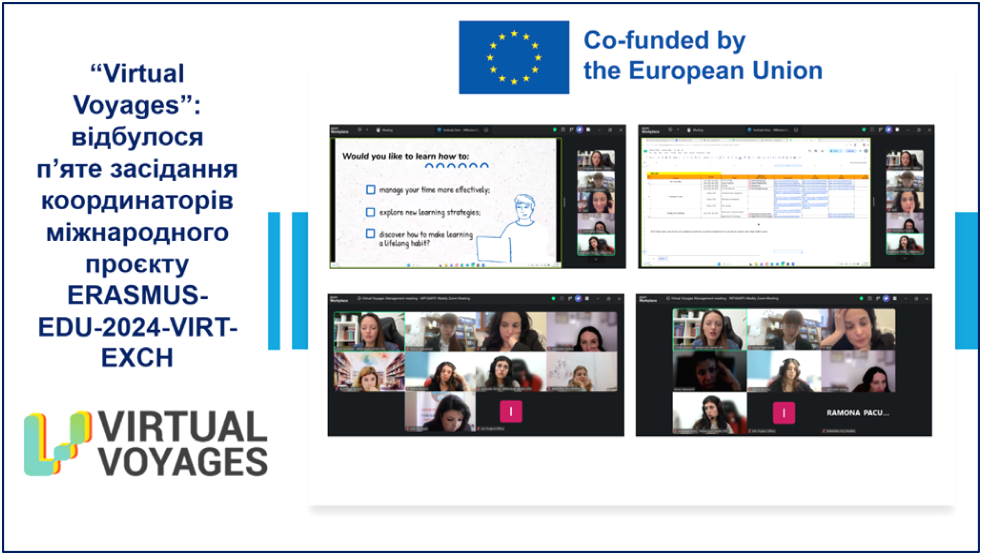
It is worth noting that practical implementation at the local level is already well underway: on September 24, 2026, the university team participated in a coordination meeting of partners of the Erasmus+ project “Acquiring Transversal Competences through Virtual Voyages” (No. 101193593), during which, together with colleagues from seven countries, the educators reviewed the outcomes of the first implementation phase and agreed upon the launch of virtual exchanges for students; they also continued aligning key steps during the second meeting of project coordinators on October 1, 2026; on October 8, 2026, discussed the results of testing the digital platform, the training of the facilitators’ pool, and the finalization of the launch of the first student exchange wave; and on October 15, addressed the synchronisation of academic schedules, finalising the preparation and certification of the international pool of facilitators, structuring intercultural student cohorts, and deploying a comprehensive dissemination campaign ahead of the launch of the first wave of virtual exchanges; a team of university lecturers has already participated in 5 facilitator sessions, where, alongside colleagues from seven countries, they mastered virtual facilitation methodologies for future work with students, refined their virtual facilitation expertise, simulated group interaction cases, and mastered digital tools for the successful delivery of international student exchanges; presented their own two-hour workshops on the “Learning to Learn” and “Career Box” modules and practiced peer feedback in Zoom breakout rooms, as well as mastered drafting Personal and Professional Development Plans (PPDP), simulated mentoring in Zoom rooms, tested the thevoyage.eu platform, and prepared for the launch of student exchanges, presented their own 2-hour workshops on the “Learning to Learn” and “Career Box” modules and practiced peer feedback in Zoom breakout rooms, mastered the elaboration of Personal and Professional Development Plans (PPDP), simulated mentoring in Zoom rooms, tested the thevoyage.eu platform, prepared for the start of student exchanges, developed a methodology for personal branding for the Career Box module, agreed on the debate schedule, and prepared for final certification.
Demonstrating thorough professional preparation and consistently high project management standards, National University “Yuri Kondratyuk Poltava Polytechnic” approaches the official launch of the international virtual exchanges fully prepared to deliver high-quality, seamless integration into the European educational space for Ukrainian students.